

TheAutoBuilder.com

Hot Rods

All Mocked Up

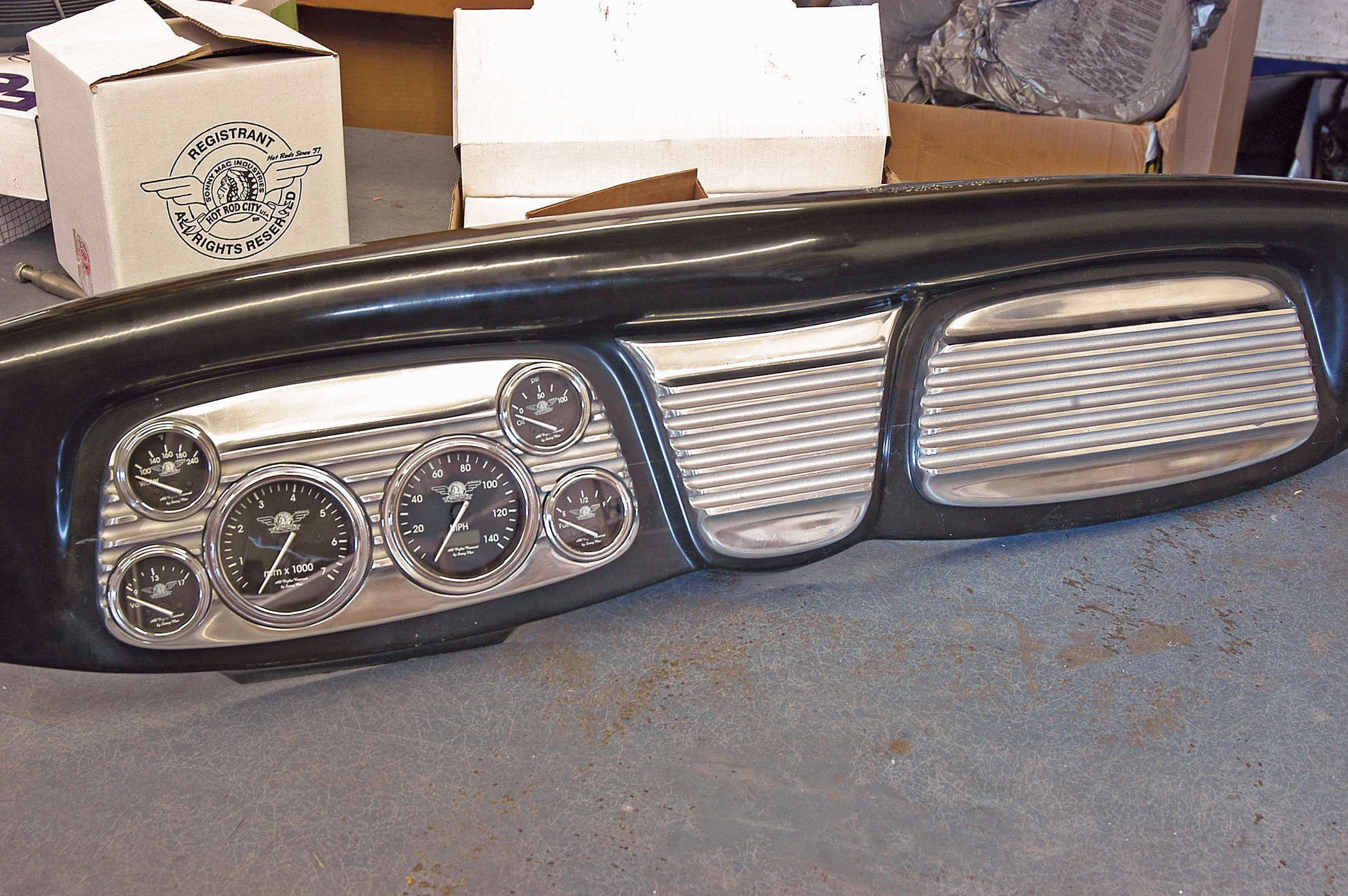
When building a street rod, unless you are building it to look like the day it rolled off the showroom floor, you find yourself constantly hiding whatever you can, wherever you can. One area that usually ends up hiding more items than was ever intended is the dashboard.

The dash is the one area that lives up to the old saying, “10 pounds of stuff in a 5-pound bag,” which generally carries with it a whole set of challenges and/or problems. When it comes to the ’33-’34 Ford, conditions are worse than normal, as there’s practically no space behind or under the dash. By the time you place your gauges and an A/C unit, there is little room left for much else, including a glovebox. When your needs are such that you require a certain amount of equipment behind the dash, most of the time the answer to your dilemma is a smooth dash.

Action Packed

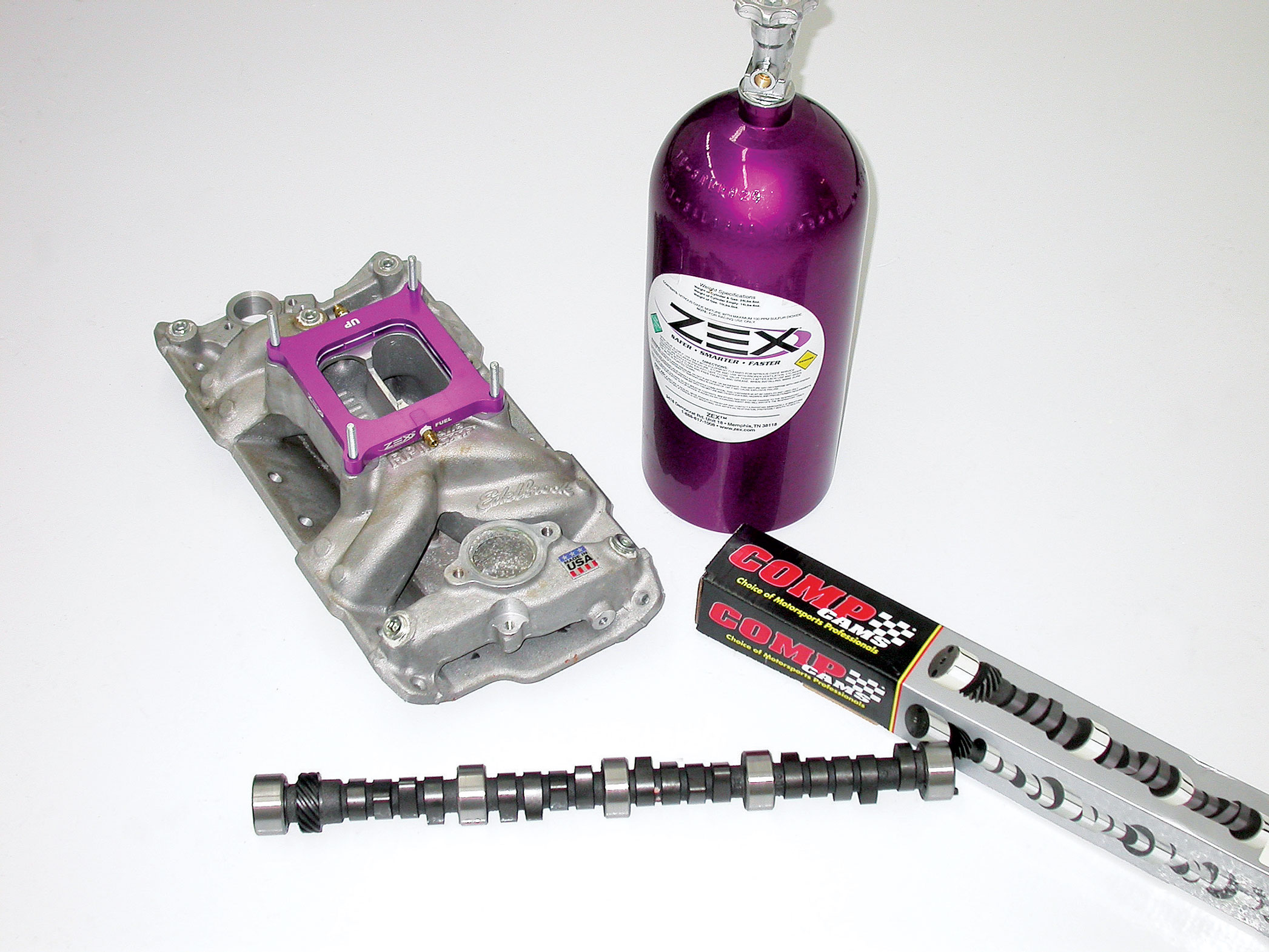
While the factory cast-iron four-barrel Q-Jet intake manifolds have performed admirably on literally thousands of GM applications—and if you are picking your engine from a used lot to use in a swap, it will likely be so equipped—every last one of them should be torn off the car and thrown in the dumpster.

Installation Tips For Those Tough Spots

Most every pre-’48 car came with fender/body welting, consisting of a simple combination of a narrow strip of vinyl (or similar material) folded over a small-diameter woven cord and glued shut. Its purpose was, and still is, to insulate one piece of body metal from another when bolted together—not an electrical or temperature insulation, but essentially to eliminate squeaks and rattles, and to prevent paint from chipping (or cracking) as the two pieces flexed and vibrated together under normal road use. Generally referred to as fender welting, this product can also be found throughout certain car models; used to mount grilles, running boards and bumper gravel shields.

Killer Chiller

There was a time when most hot rods had only stick shift transmissions. We can remember running a ’39 Ford transmission behind several different engine combinations, which quite often ended up with gear teeth on the bottom of the transmission case. If the transmission didn’t break the rear axle in the ’40 Ford, the rearend would. It wasn’t a solution, but it was a start.

The Cold Facts

Typically, winter isn’t the time of year when we are thinking about a car’s air-conditioning system…or is it? It’s understandable that we would tend to think about “fixing” the A/C during the dog days of summer, July or August, but once the car is put up for the winter, those hot and humid days are often forgotten. And short of those comfortable windows-down driving months, when we first pull out the car again for the next season, it’s smart to think about giving the A/C system the attention it needs. So, we think this is a great time to present to you troubleshooting highlights so that you can rip into the car and upgrade the necessary areas before the cycle continues.

Final Assembly Tips From The Pros

When building a street rod there are a great many facets of the construction process that go into making the car an award-winning creation. First, there’s planning. The planning of the car can and should include attention to each and every area of the car, from concept to reality. Even the most basic of projects should have the proper planning involved, no matter what the final product might be. Once work has begun on the project, countless hours are generally involved in attending to every detail. From making the many modifications to the chassis to attain the desired drive train, to the matching and mating of the different components together, this becomes an involved process requiring a great deal of skill in fabrication and engineering.

Classic Looks For A Classic Camaro

Back in ’69, the average Camaro came with an instrument panel that most people today would find pretty pointless. Aside from the speedometer and fuel gauge, there wasn’t much going on in the way of information. Most functions, such as oil pressure and engine temperature, were monitored by a series of dummy lights, which meant you were pretty far gone by the time they blinked. By then most of the damage had been done. We don’t know what the auto experts at the time were thinking of…maybe saving a nickel. In an effort to fix all that and to update the instrument panel so that it would provide information, H&H turned to Covan’s Classic and AutoMeter gauges. They have created an up-to-date yet nostalgic instrument panel containing all the customary gauges with a look that is right for this project.

Good As Gold

Tech presentation is something anyone can do to his or her existing Camaro, since it takes no special skill, yet the results are worthwhile. Those are the rewards of personalizing a cool Chevy, and it’s what drives us in the first place to tackle such jobs.

1958-1961 Factory Carb Listing

Okay, okay! After listening to oh so many of you, we are providing information you have been requesting, and perhaps searching for, for some time. That information is carburetor data, information that we used to take for granted but that has become more and more difficult to find of late. It seems that much of this data for numerous models and years has somehow slipped through the cracks. This could be mostly due to the age of the information, plus the fact that many of those applications are more rare today. We suppose there are numerous other reasons as to why this information has virtually dried up, so we present a basic listing here for the correct carburetor number for the respective engine application.

Dialed In

When it comes to performance, the devil really is in the details. Ever wonder why one engine makes more power than another, when both are seemingly identical? The answer to this very common performance question lies in the attention to detail. Basic performance elements such as engine tuning, spark timing curves, and, yes, even oil selection all come into play when you attempt to extract the maximum amount of power from your existing combination. 

Scroll to Top