Keeping the Classic Look Intact
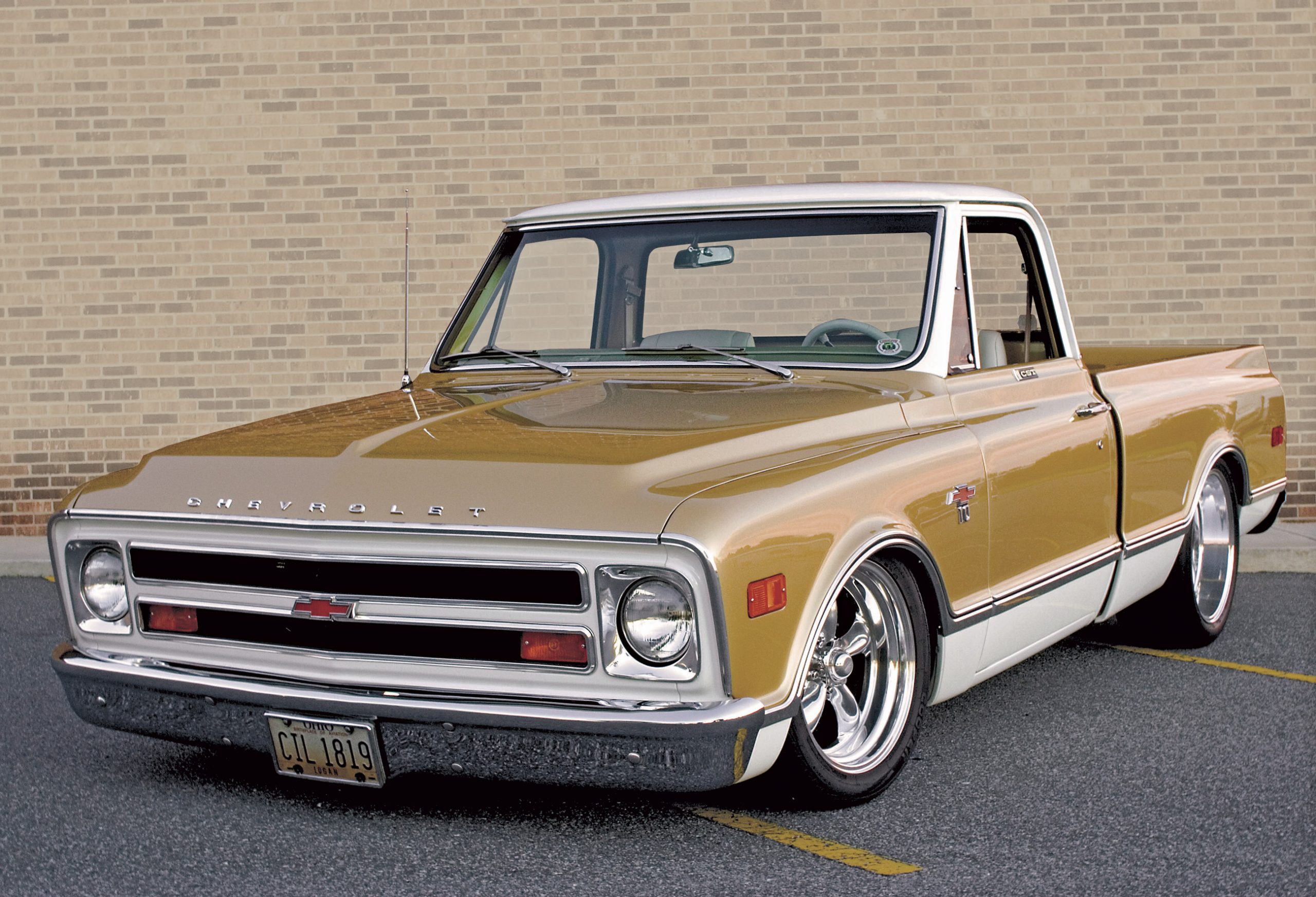
When Parsons purchased this worn-out ’68 Chevy, he decided that rather than alter the great looks of the truck by overly modifying any of the original sheet metal, he would simply improve upon the stance and clean up its good looks with a few modifications.
The original idea was to keep it simple and drivable. Nothing that would affect the drivability of the truck would find its way into the build. All of the modifications would be beneath the skin, so the beautiful lines of the ’68 could be retained, which is just what he did—Parsons created this image for his truck and stuck with it.
Exterior Restoration and Subtle Modifications
One glance at the truck going down the road gives you the impression that it’s a nicely restored 50th anniversary CST with a good-looking set of wheels and a lowered stance. And while all of this might be true, Parsons only restored the truck on the outside. Underneath is a meticulously detailed chassis, featuring late-model drop spindles, new disc brakes, new sway bars, and a power steering unit. In the rear, Parsons removed the six-lug axles, replacing them with Moser five-lug axles coupled to a custom rear disc brake setup. The rear end is narrowed by 4 inches to accommodate the massive 12-inch-wide rear wheels. Parsons also decided on air suspension in the front and rear.
Power and Performance Upgrades
Underneath the hood is an evil ’76 Chevy 400 small block bored to 410 ci. The original truck’s engine was long gone, giving Parsons the perfect excuse for building a more radical engine, which he did. The vintage Chevy features a .040-inch overbore and is stuffed with the best parts money can buy. Parsons began the rebuild with a freshly bored block, Crower crank and rods, Sealed Power pistons, and a Crower camshaft. On top of the new Dart II cylinder heads are a Holley aluminum intake and carb.
The 410 looks as good as it sounds and is dressed with a Wysco billet air cleaner, valve covers, and wire looms. All the stock brackets were replaced with polished aluminum units, which not only look great but also accommodate the Sanden A/C compressor and polished high-amp alternator. The ceramic-coated headers exit through polished Flowmaster mufflers, giving the truck a finished look with a sinister exhaust note. Backing the 410 is a Saginaw four-speed with a Hurst shifter.
Finishing Touches on the Body
The vintage sheet metal is about 99 percent restored, which Parsons began by removing all of the sheet metal and finishing the bodywork to provide the underlayment for the illustrious shine. While working on the bed, he filled the bed stake pockets, widened the rear wheel tubs for the larger rear tires and wheels. Parsons applied a coat of BASF R&M BMW gold and GM white basecoat/clearcoat, and then buffed it smooth before calling it finished. Underneath, he applied a flat black finish since the plan all along was to build a driver.
The finished results speak loudly, as Parsons purchased every possible emblem and new piece of trim to complete the truck. Since it is a factory CST model and a 50th-anniversary truck to boot, Parsons chose to install the chrome trim, bumpers, and windshield molding. Each of the lenses and side markers were replaced with new reproductions, and rather than opt for a set of rolled pans, Parsons had the bumpers replated. And while the gold and white exterior draws your attention, it’s the wheels that retain it. Tucked neatly inside the front fenders are American Racing 18×8-inch Torq-Thrusts, while a massive set of 20x12s fill the rear openings.
Interior Customization
Inside, Parsons opted for a subtle factory style with little tweaks. Since the original buddy buckets were missing, Parsons decided to adapt a set of Fiero buckets and utilize the factory center console. After test-fitting the seats, Baker’s Upholstery in Urbana, Ohio, upholstered them in a brilliant white Ultraleather. The reproduction ’68 door panels are also upholstered to match the custom buckets.
The dash received some much-needed attention. Not quite pleased with the factory gauges, Parsons chose to install a Covan molded dash and fill it with Auto Meter white face gauges. Since Parsons stands about 6-feet tall, and C10 cabs do not traditionally cater to such heights, he opted to install an ididit tilt column and a small-diameter LeCarra three-spoke steering wheel. This added increased driving comfort. Parsons also chose to add power windows, a Hot Rod Air system, and a Pioneer stereo.
A Daily Driver and Showpiece
After more than 3 years of working at home in the garage, Parsons completed the project two years ago. Since completion, the truck has been driven all over the country to numerous rod runs and truck shows, and in addition, Parsons makes a point to drive the truck every day if possible. He enjoys the truck whenever he has the chance and has logged more than 11,000 miles on the well-restored/modified Chevy.