




THE AUTO BUILDER
Featured

Right Rod
If you attend car events in California, such as NHRA’s California Hot Rod Reunion in Bakersfield, the West Coast Kustoms show in Paso Robles or the L.A. Roadster Show in Pomona, you will notice that rat rods are a growing segment of the hot rod hobby. Years ago, when they started becoming a common sight at many of the shows, the mechanical aspects of most of the cars were scary at best. You could see cars with no springs, some without floorboards, and many constructed with less-than-desirable stick welding. It is this type of construction that created the name “rat rod.” Fortunately, over the past few years there has been an attempt to upgrade the construction of rat rods, even though the enthusiasts want to use as many original parts as possible.

RESURRECTION
While cruising down an old Southern Virginia back road some 38 years ago, Ted Hayes, along with a couple of local friends, happened upon a well-worn ’37 Chevy Master Deluxe coupe. Now, mind you, it looked nothing like the gem here. It had original paint, and the interior had seen better days, but it was complete and running. At some time during its life, the Chevy had received a 327 and a four-speed trans, a familiar combination for a vintage car during the 1960s.

Two-Hour Tech
Improving your S197 Mustang doesn’t have to be an arduous affair. You’re supposed to enjoy working on your car, RATHER than dreading getting off work because you “have” to wrench on the Ford. With that attitude in mind, we recently spoke with Al Kamhi, of Control Freak suspensions, to get his advice on what enthusiasts could do to further the concept of upgrading a Mustang in just an hour or two. But there’s a catch: the upgrade had to make a real difference in the car’s performance.
Spotlighter
POPULAR READS
ELECTRIFYING PONY
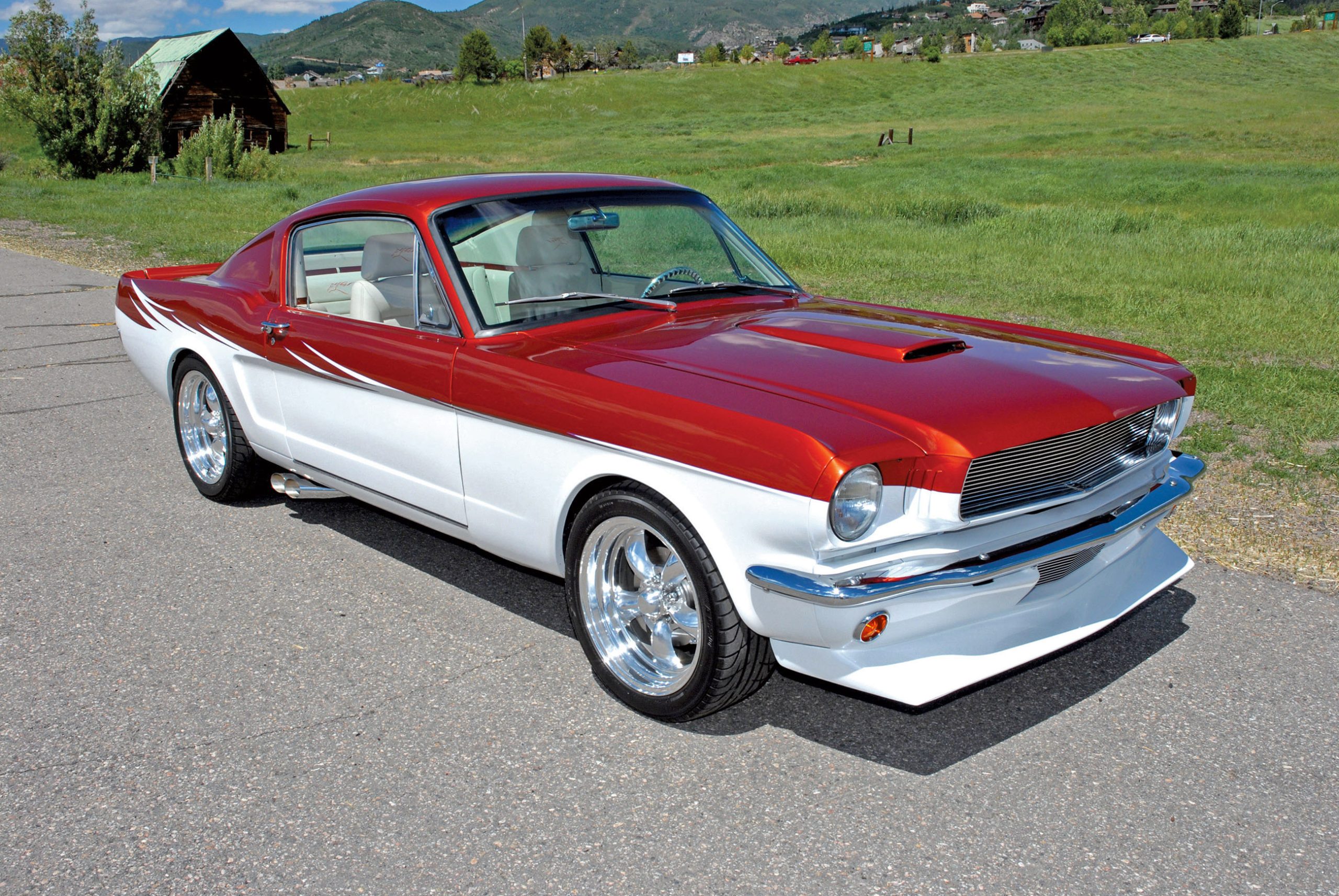
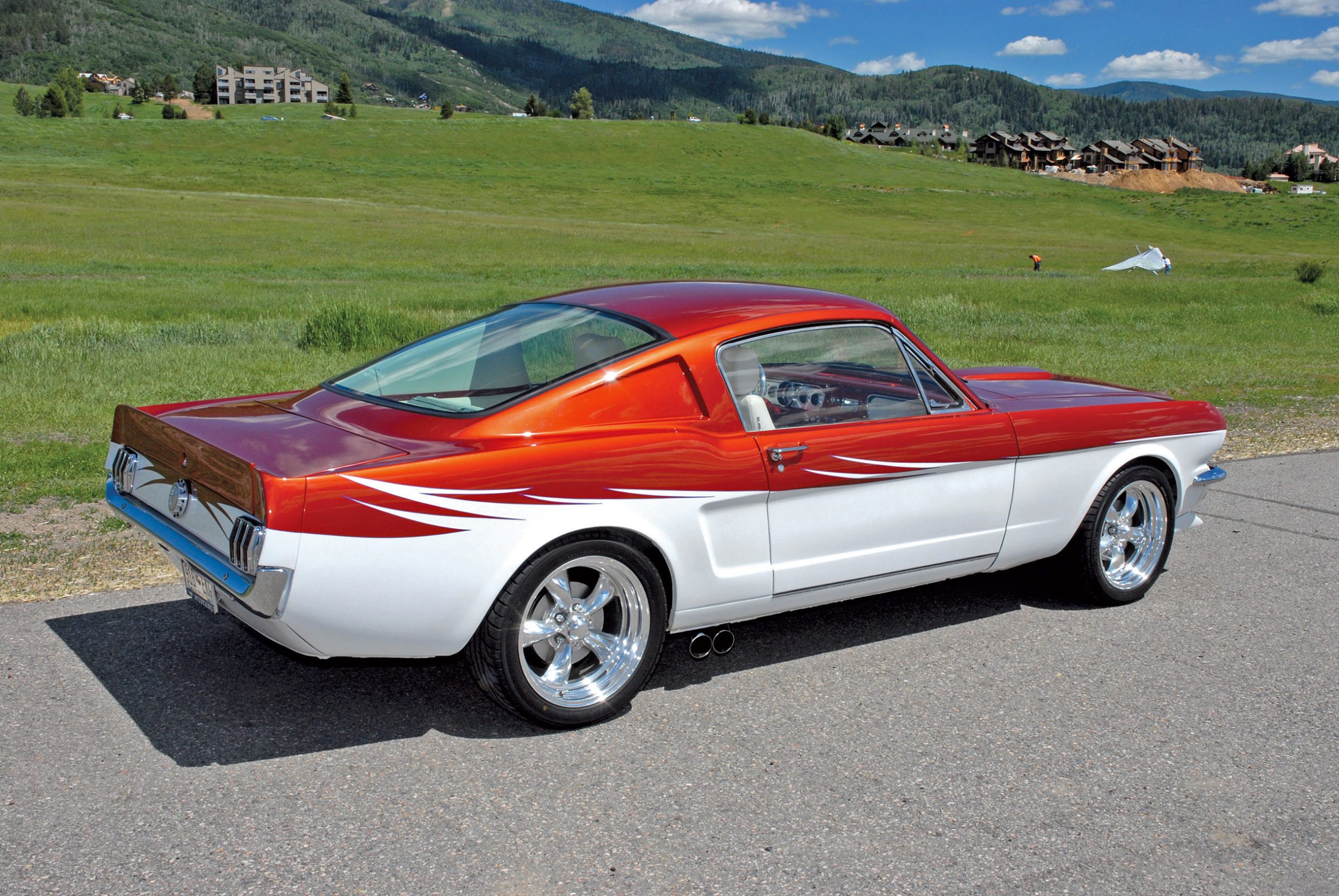
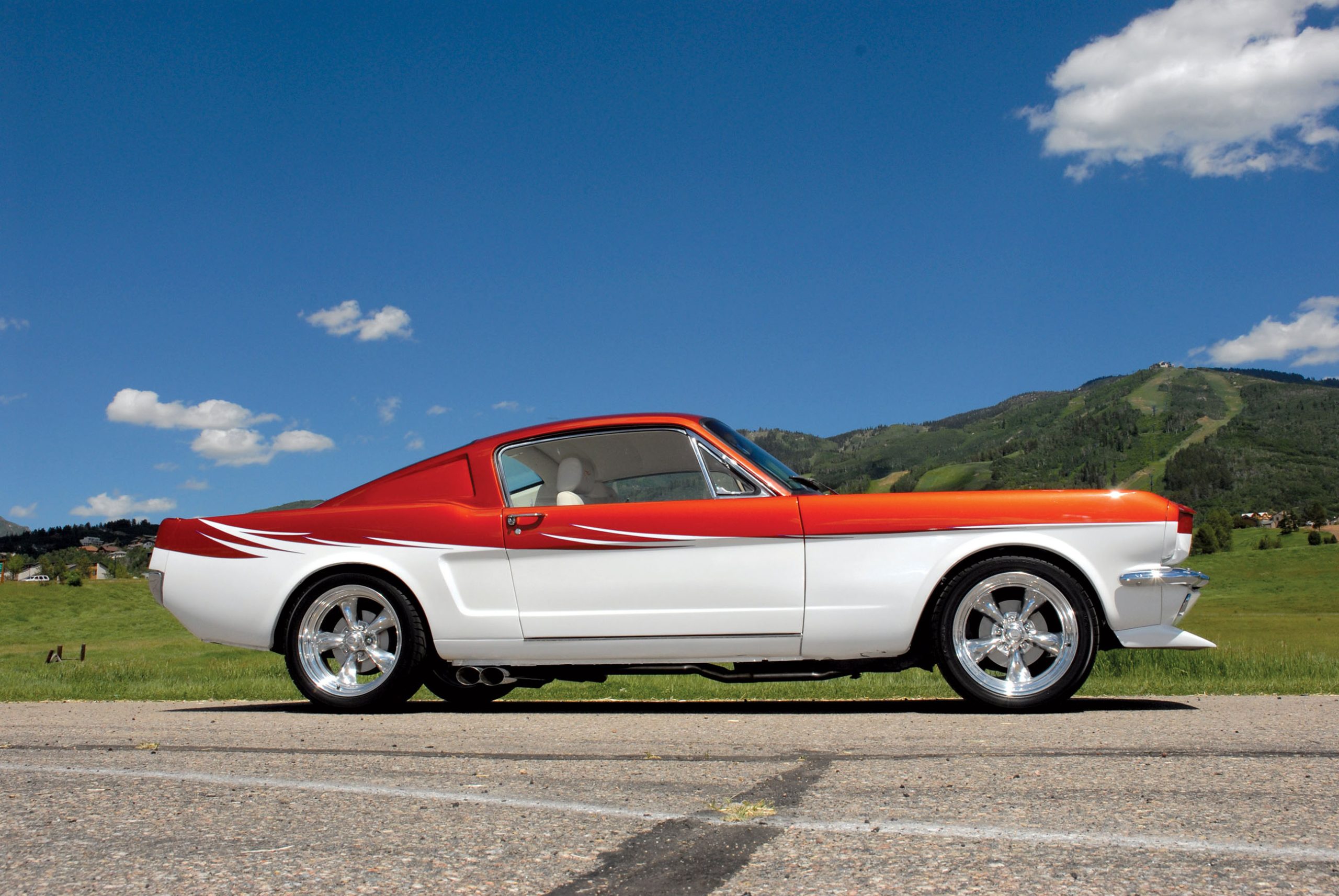
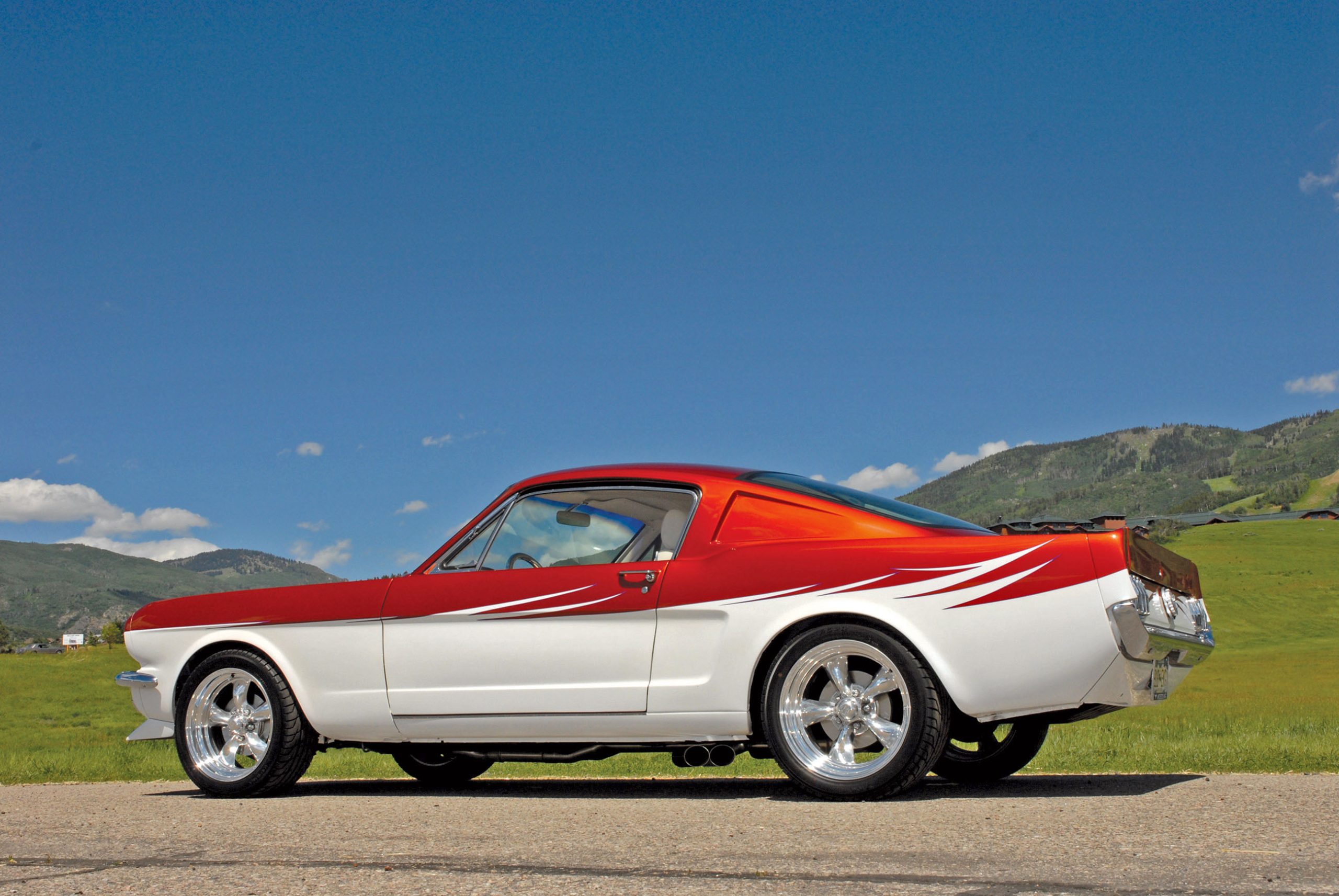
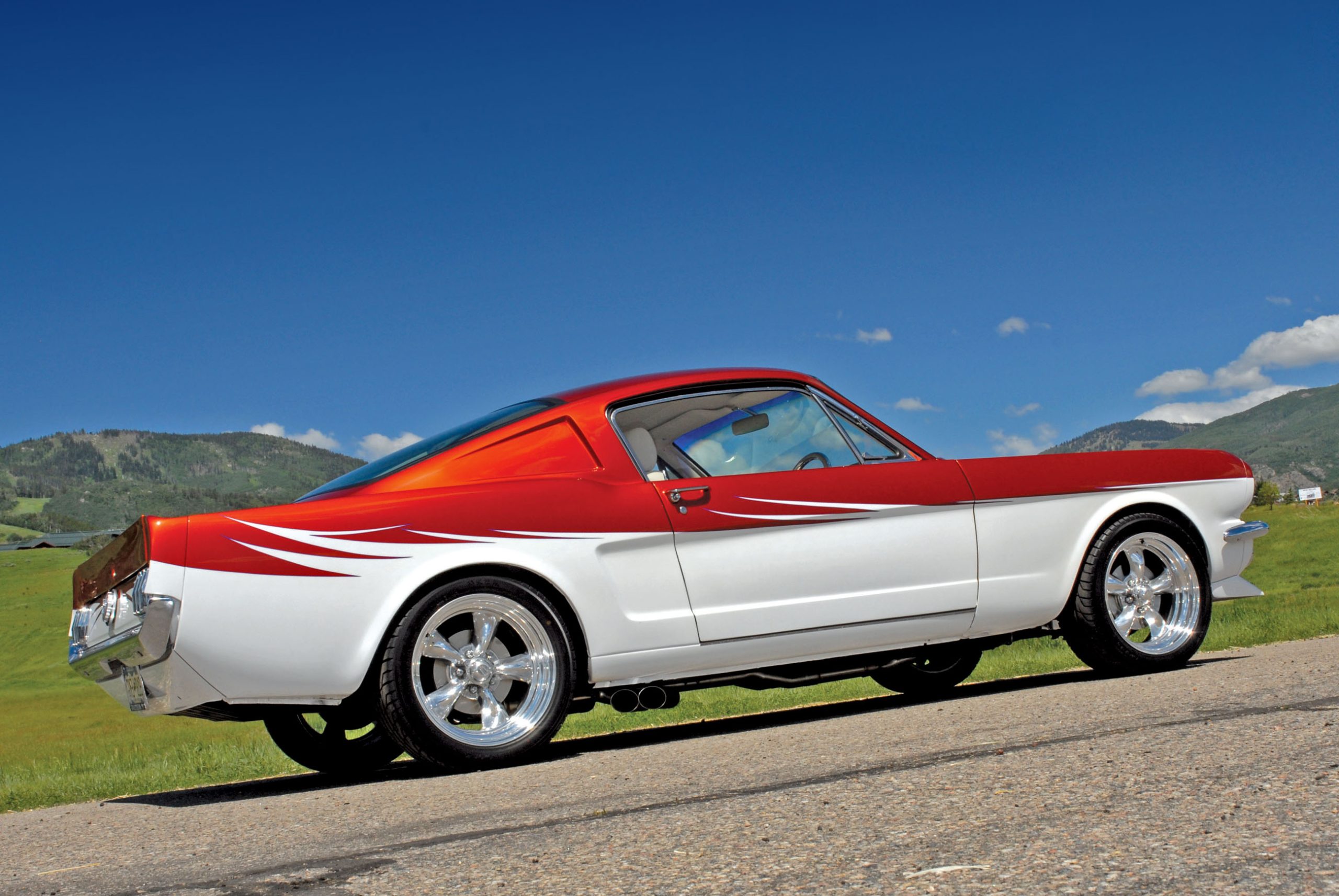
This ’66 Mustang 2+2 Has All the Right Stuff
Author
Bob McClurg
Story & Photography
Finding the Right Mustang
“The car had been through five different owners,” Seader said. “It seemed as though the car had charging-system gremlins that nobody seemed to be able to diagnose.”
Since Seader happens to be an electronics technician, he wasn’t too worried about something as minor as an electrical problem, so he bought the car and drove it to and from work for three years. However, after he started to tackle the problem in earnest, even he was stumped.
“Eventually I discovered that the car had been built with the wrong wiring harness. Ford had installed a 1964-1/2 to 1965 Mustang generator wiring harness by mistake, and there was no return wire in the loom to recharge the alternator.”
Suspension and Drivetrain Upgrades
With the wiring harness problems fixed, Seader began to prepare the Mustang’s unibody platform. First, he rebuilt the 3.00:1-geared Ford 8-inch live rear axle, reinstalling it on a set of Mustang Specialties reverse-spring-eye rear leaf springs equipped with a pair of Monroe Magnum shock absorbers and a 3/4-inch anti-sway bar.
Front suspension on the fastback consists of rebuilt versions of the stock upper and lower control arms along with a pair of 1-inch Mustang Specialties front coil springs, a 1-inch front anti-sway bar and a pair of Monroe Magnum shocks.
Wheels and tires on Seader’s Mustang consist of a set of 17×8-inch American Racing Torq-Thrust II wheels rolling on P235/45xZR17-inch Yokohama radial rubber.
Under the Hood
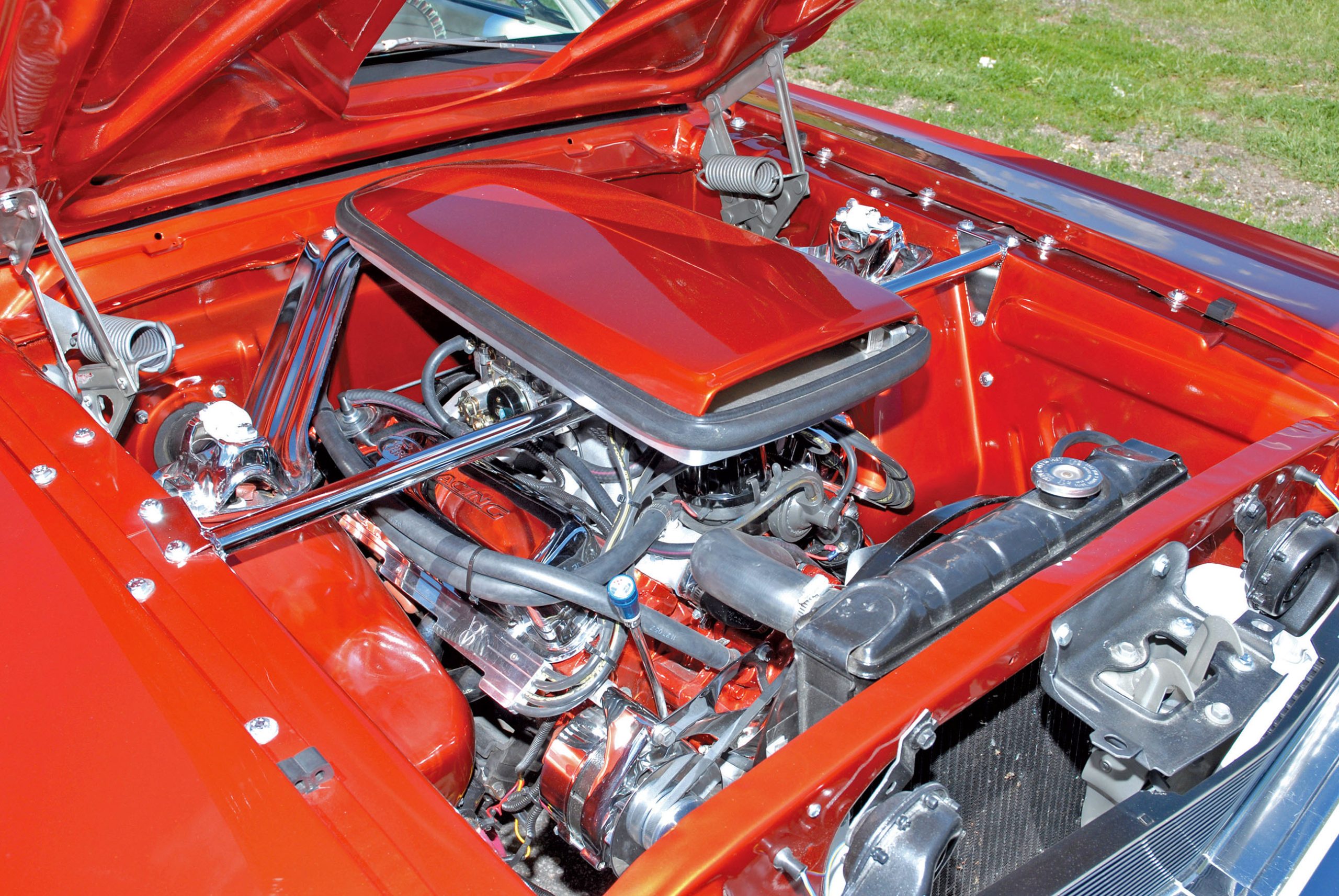
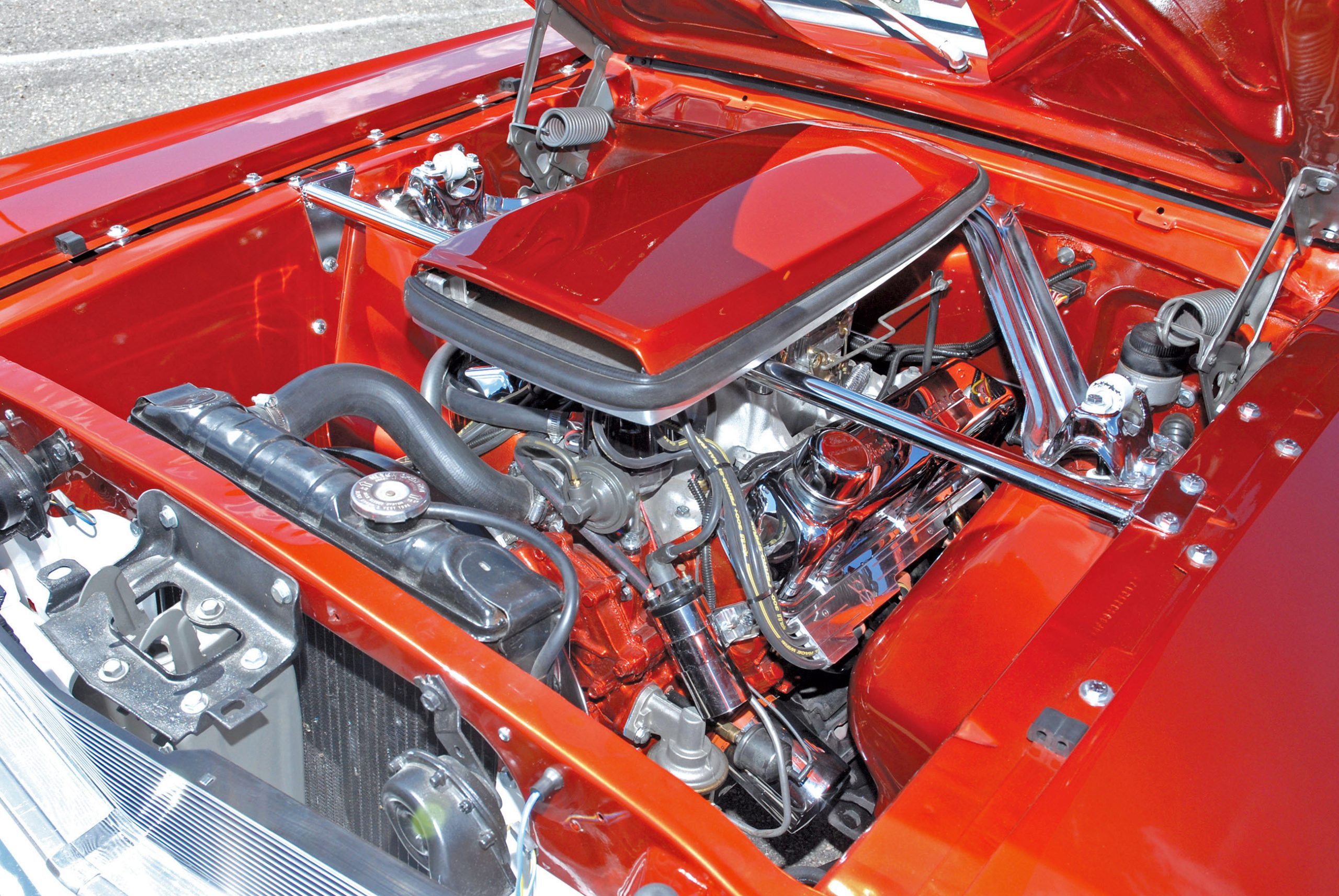
Power comes in the form of the original serial number 289 Ford small block, which is stock internally but externally was treated to an Edelbrock Air Gap four-valve intake and 600-cfm Edelbrock Performer carburetor protected by a handcrafted air cleaner. Also onboard is a PerTronix Ford breakerless electronic ignition firing a set of Autolite spark plugs through MSD wires. The exhaust consists of Triple Nickel Tri-Y headers and MagnaFlow mufflers with Shelby-style side-exit pipes. Backing all this up is a Ford Top Loader four-speed.
Bodywork and Paint
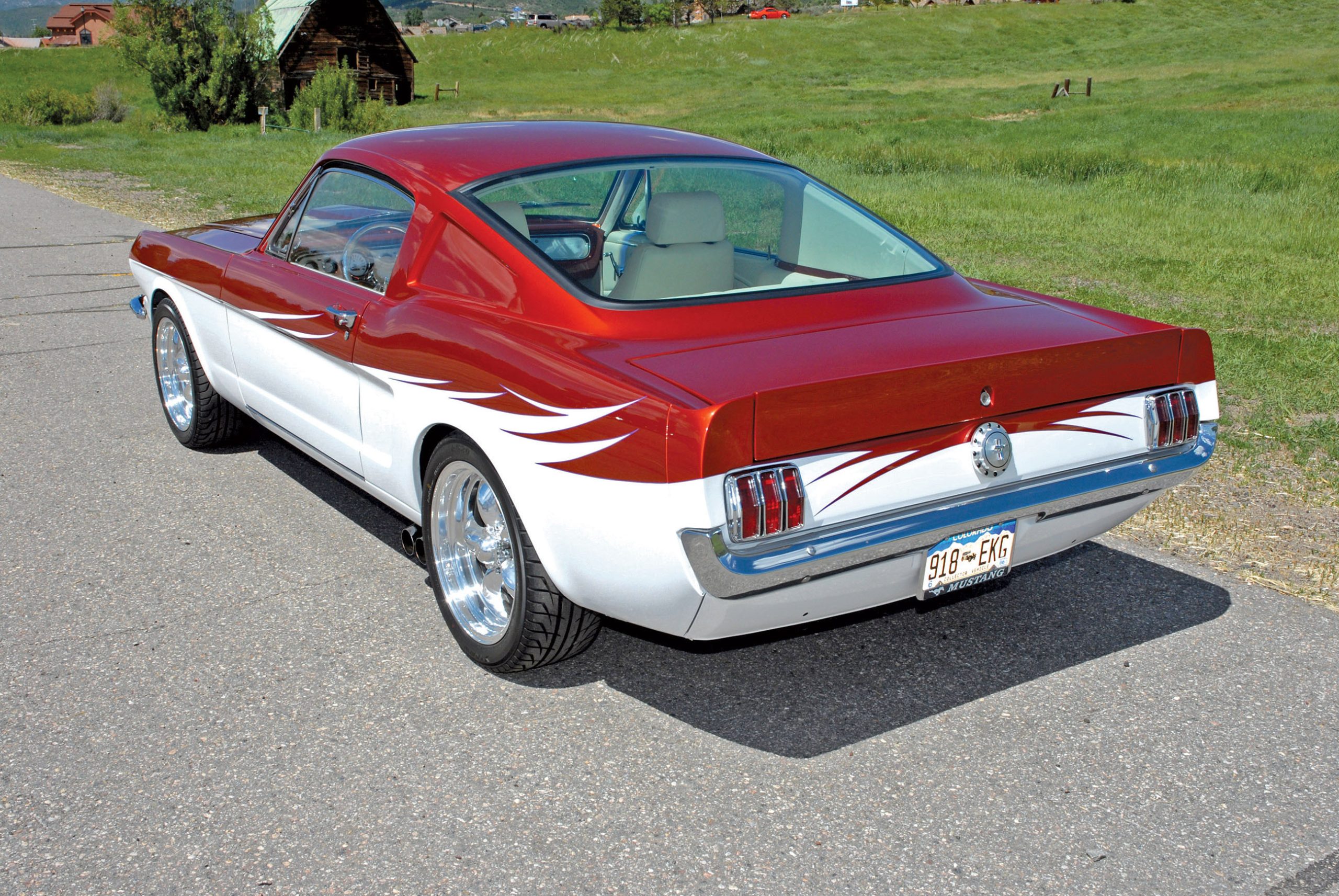
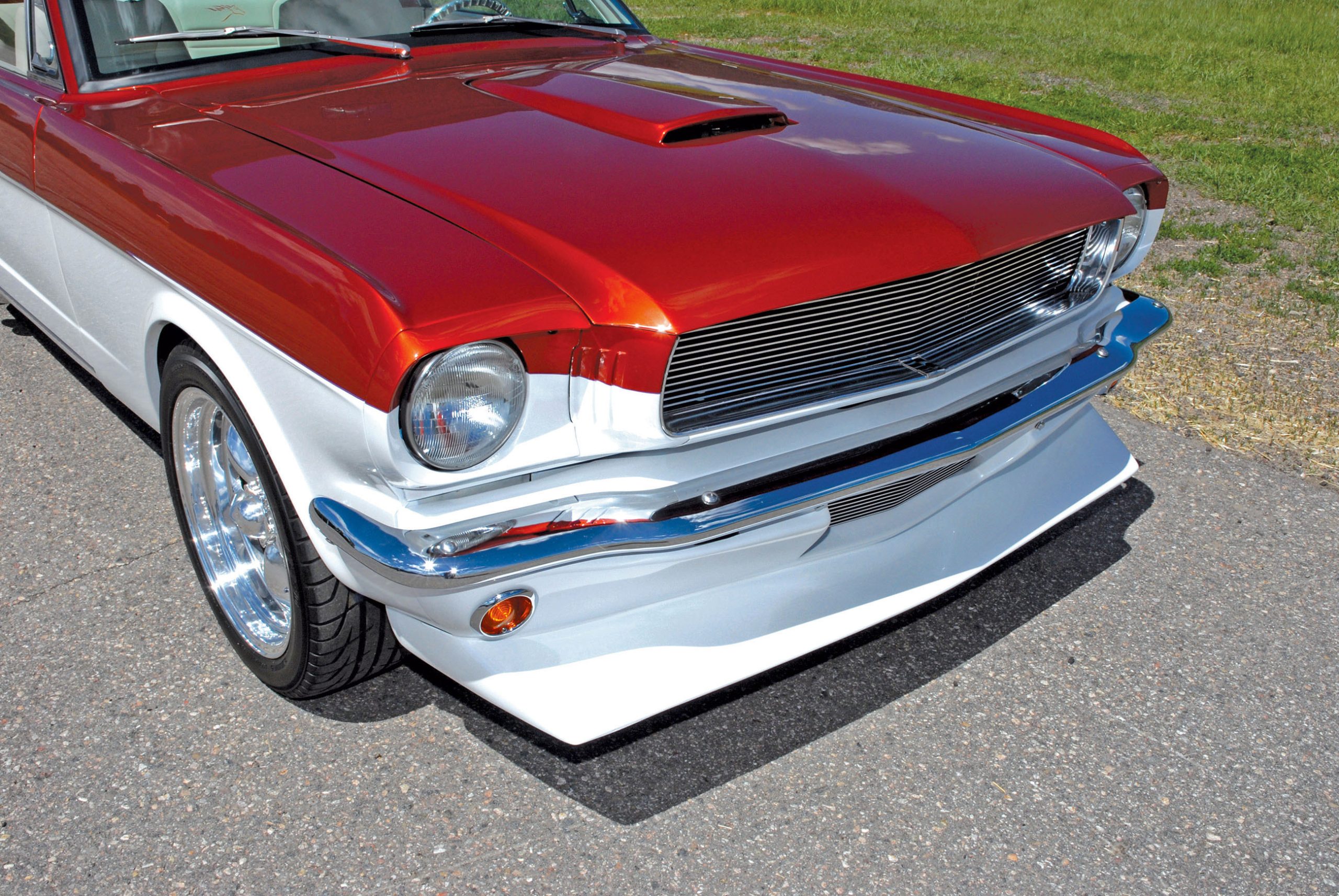
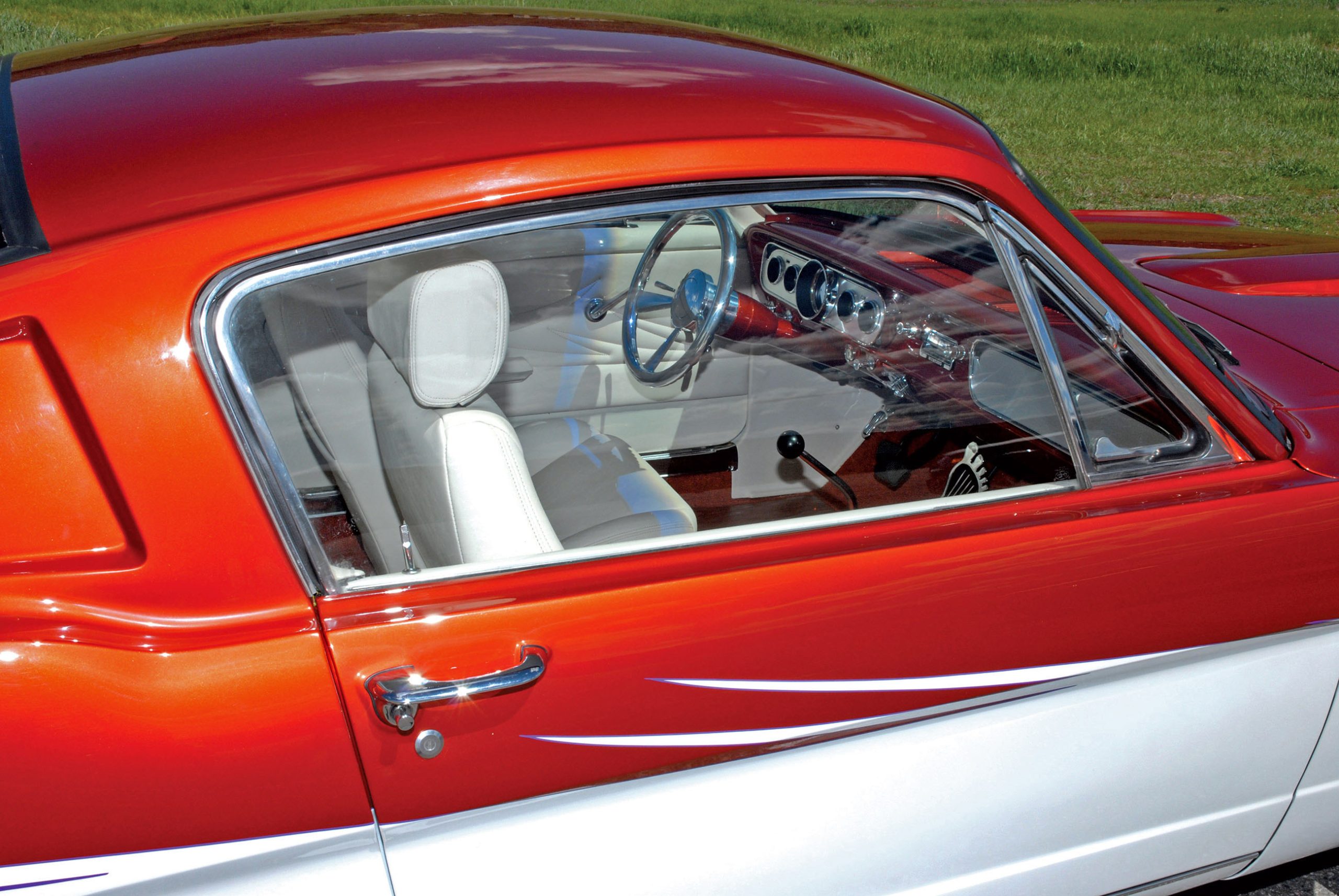
Credit for the extensive bodywork goes to Dan Ambrosio. For openers, a Shelby GT350R-model-style front valance was molded in. The cowl was smoothed and filled, the driprails were shaved, the rear louver areas were filled in, and a hand-fabricated rear deck spoiler was built. Then Ambrosio painted the fastback in PPG Burnt Orange and Pearl White, adding a lavender pinstripe to offset the two colors. Upon reassembly, both the front and rear window glass was glued in place to eliminate the stainless window trim, making the car look all the more slick.
Custom Interior Touches
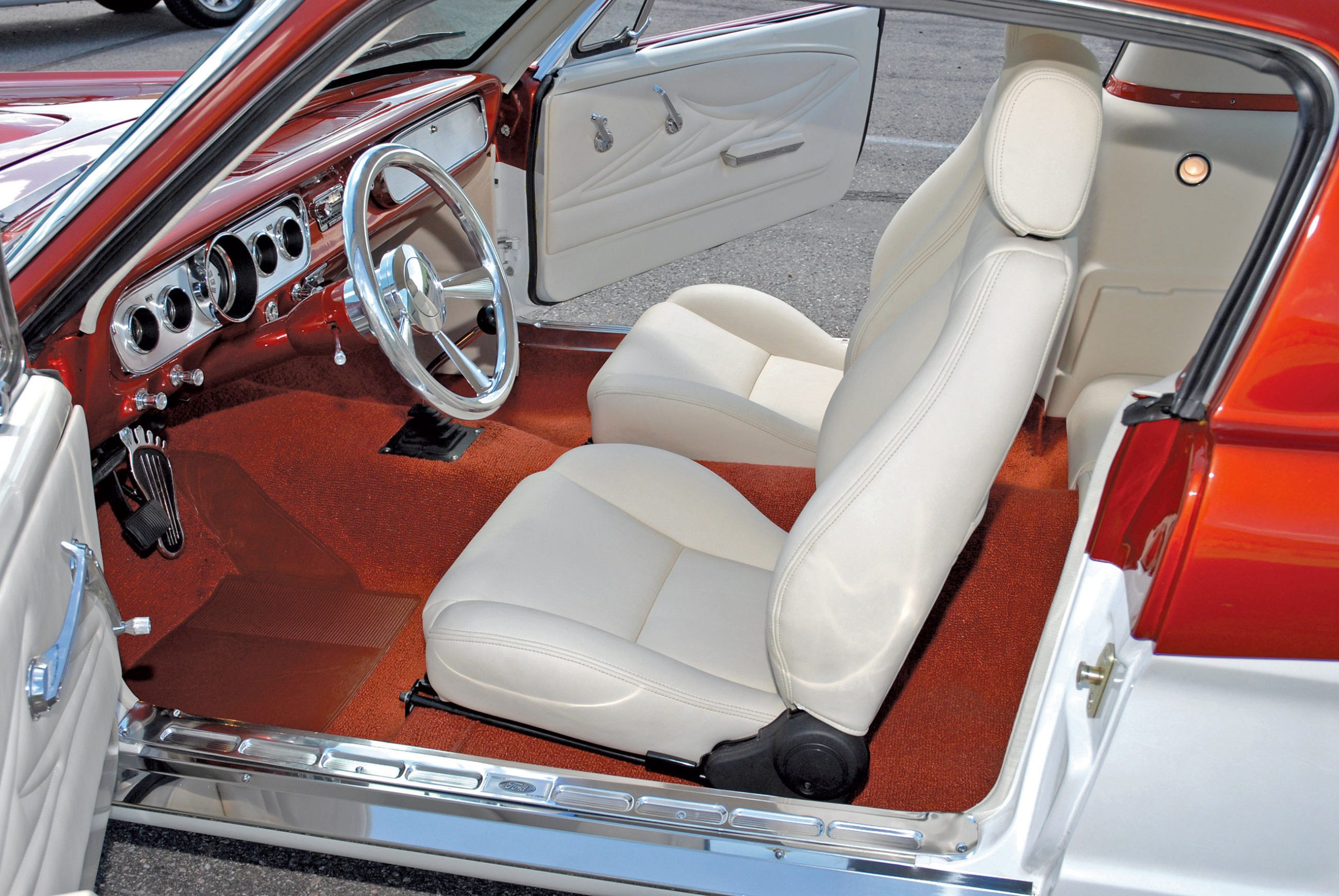
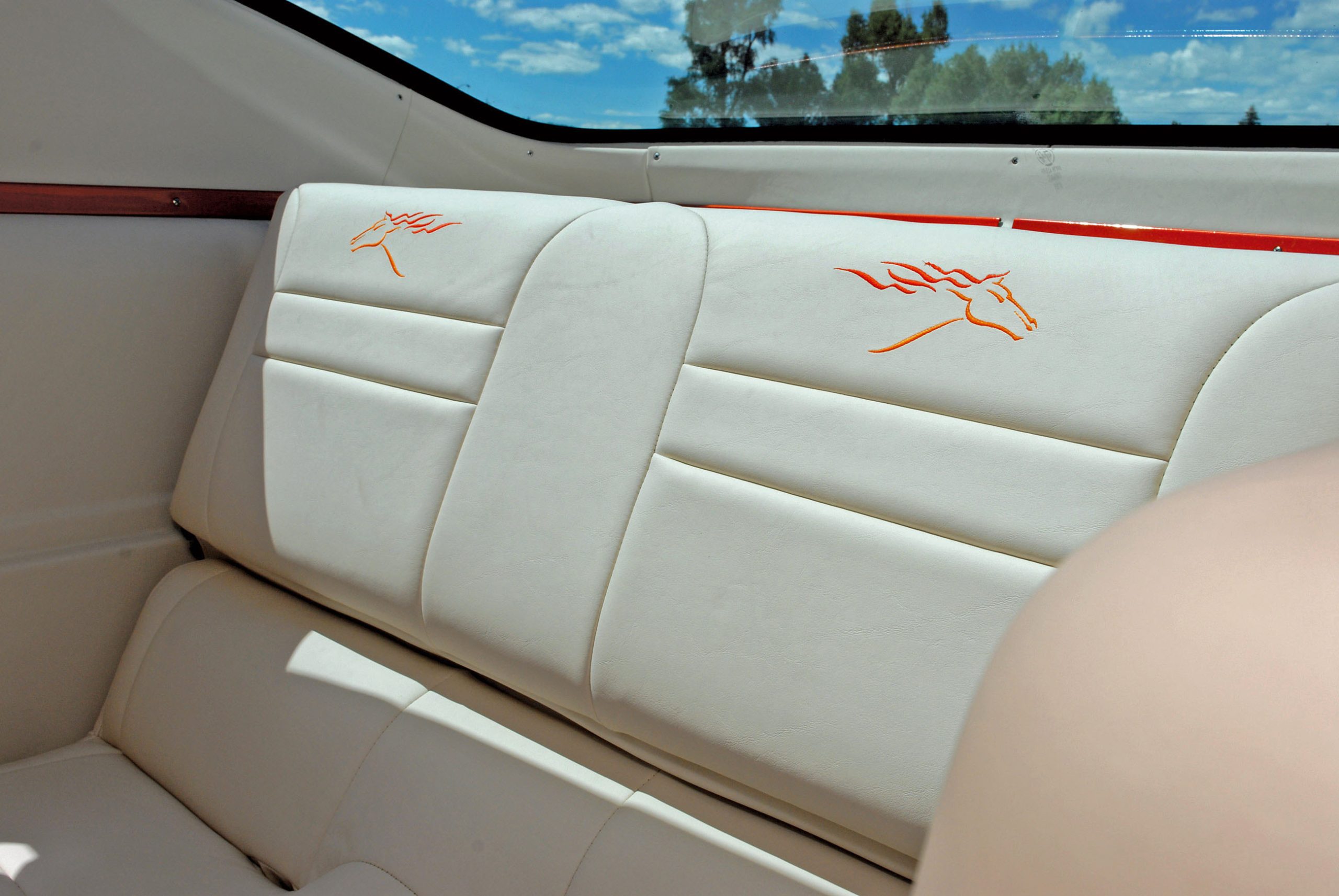
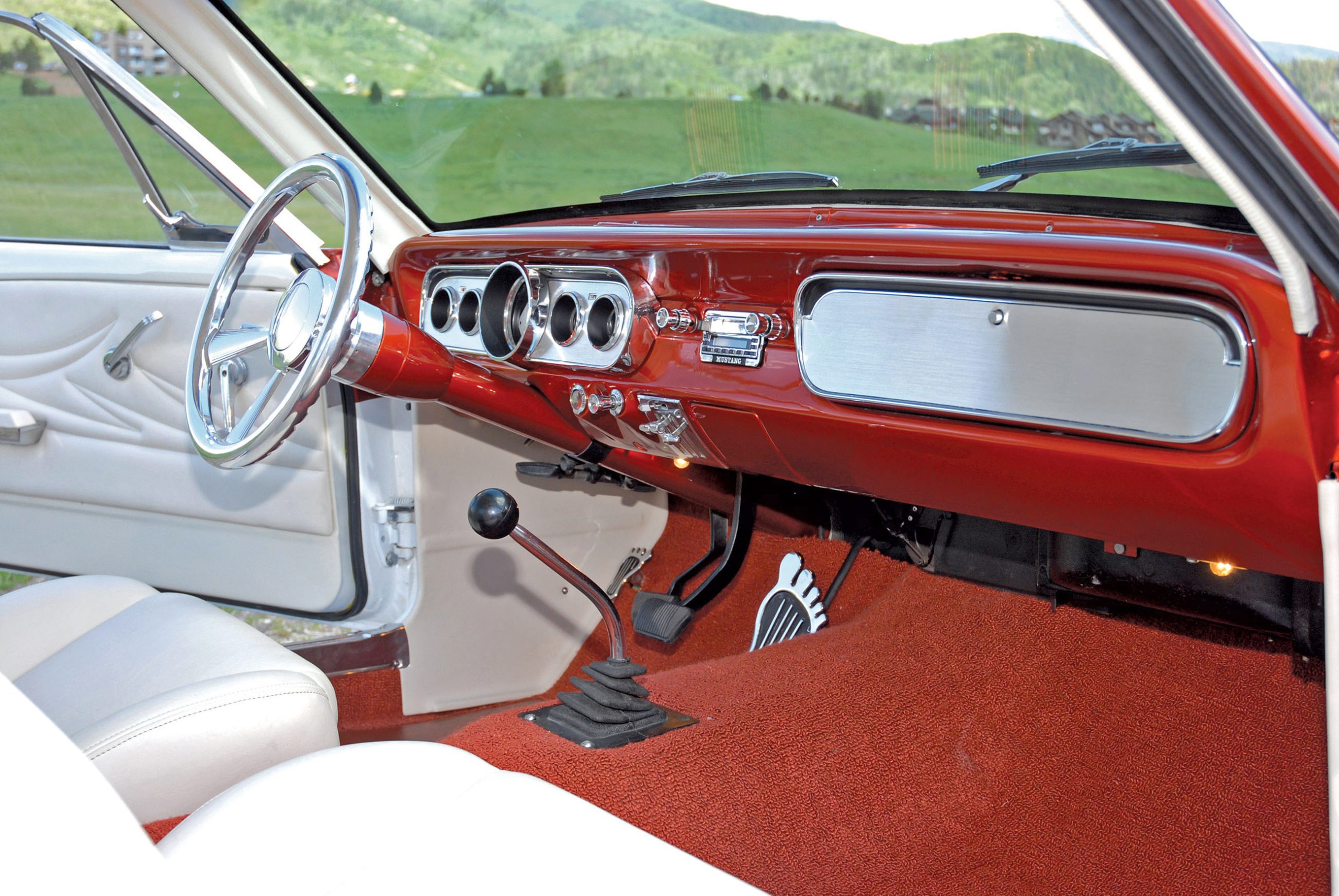
As with the exterior, the interior of the Mustang features numerous subtleties, including a smoothed dash in place of the customary dash pad, Auto Meter white-face gauges, a Colorado Custom billet steering wheel, burnt-orange carpet and a pair of ’69 Mustang bucket seats trimmed in soft oyster (white) leather, with the Mustang insignia by Jerry’s Upholstery of Greeley, Colorado.
Award-Winning Mustang
Completed just prior to last summer’s Rocky Mountain Mustang Roundup at Steamboat Springs, Colorado, this ’66 won the People’s Choice award and the Award of Excellence in the 1964-1966 modified class. The car also has won Best of Show at the Phil Long Ford Fest 2006 and a Top 10 at the Summerfest in Greeley, Colorado.