Always Tinkering for More Speed
In traditional drag-racing fashion, Corbin just can’t get enough of it, so he’s always working on ways to make his Pontiac faster, whether it means minor tuning or a substantial change in the setup. He’s a gearhead, which means he’ll never really be content with his car’s performance, no matter how fast it goes, but for the time being, his car is at a level most street cars will never reach.
The Evolution of Corbin’s Trans Am
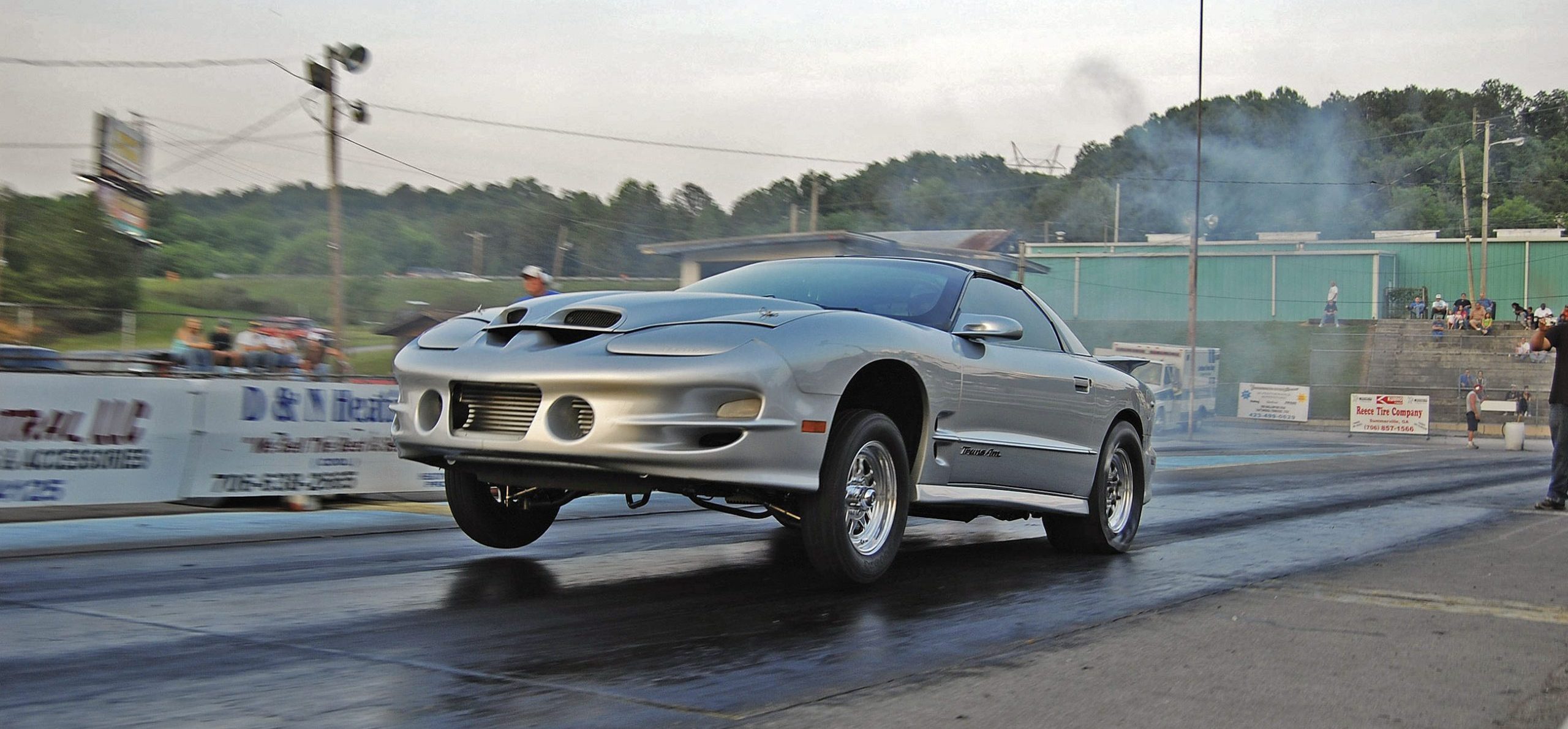
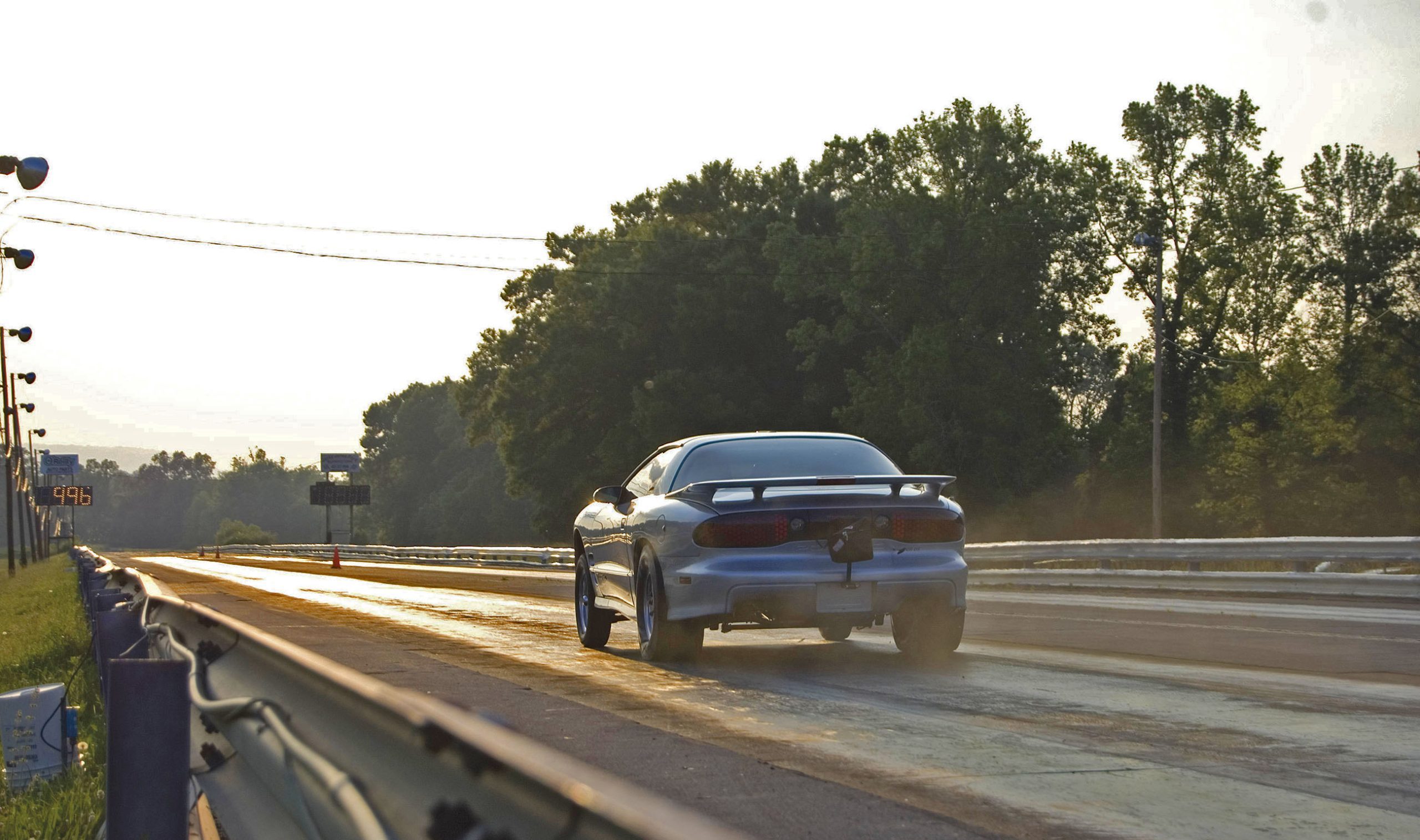
Like many car guys, Corbin didn’t plan to build his Trans Am to this extent, but that’s part of the car hobby. Originally, plans called for a small dose of nitrous oxide, but that was child’s play compared to the car you see here. Now it boasts over 1,000 hp at the wheels, as the 88mm Precision turbocharger screams, and the hefty Poncho flies down the 1/8-mile in 6 seconds flat at 118 mph—and that’s nowhere near full boost. And just because it runs insanely fast and proves to be reliable, Corbin is fast working on it so that it will run deep into the 5-second zone, and judging from that big mph he ran on the 6-flat pass, the 5’s are but an experience away.
Chevrolet Power in a Pontiac Package
Though it wears Pontiac badges, the power is purely Chevrolet, as a Gen III small block is the motivation of choice. The original LS1 from this Trans Am wouldn’t hold up to the extreme abuse from such a huge turbocharger, so the obvious choice was a 6.0-liter short block, from Weber Racing Equipment in North Ridgeville, Ohio. Capable of holding 1,500 hp, the stock crankshaft is in place, but the block is packed with Wiseco forged pistons and Carrillo K1 rods for durability. The dished pistons provide an 8.3:1 compression ratio, which is perfect for a boosted application like this one, and the additional 0.030-inch piston diameter brings the displacement up to 370 ci.
Maximizing Airflow and Fuel Delivery
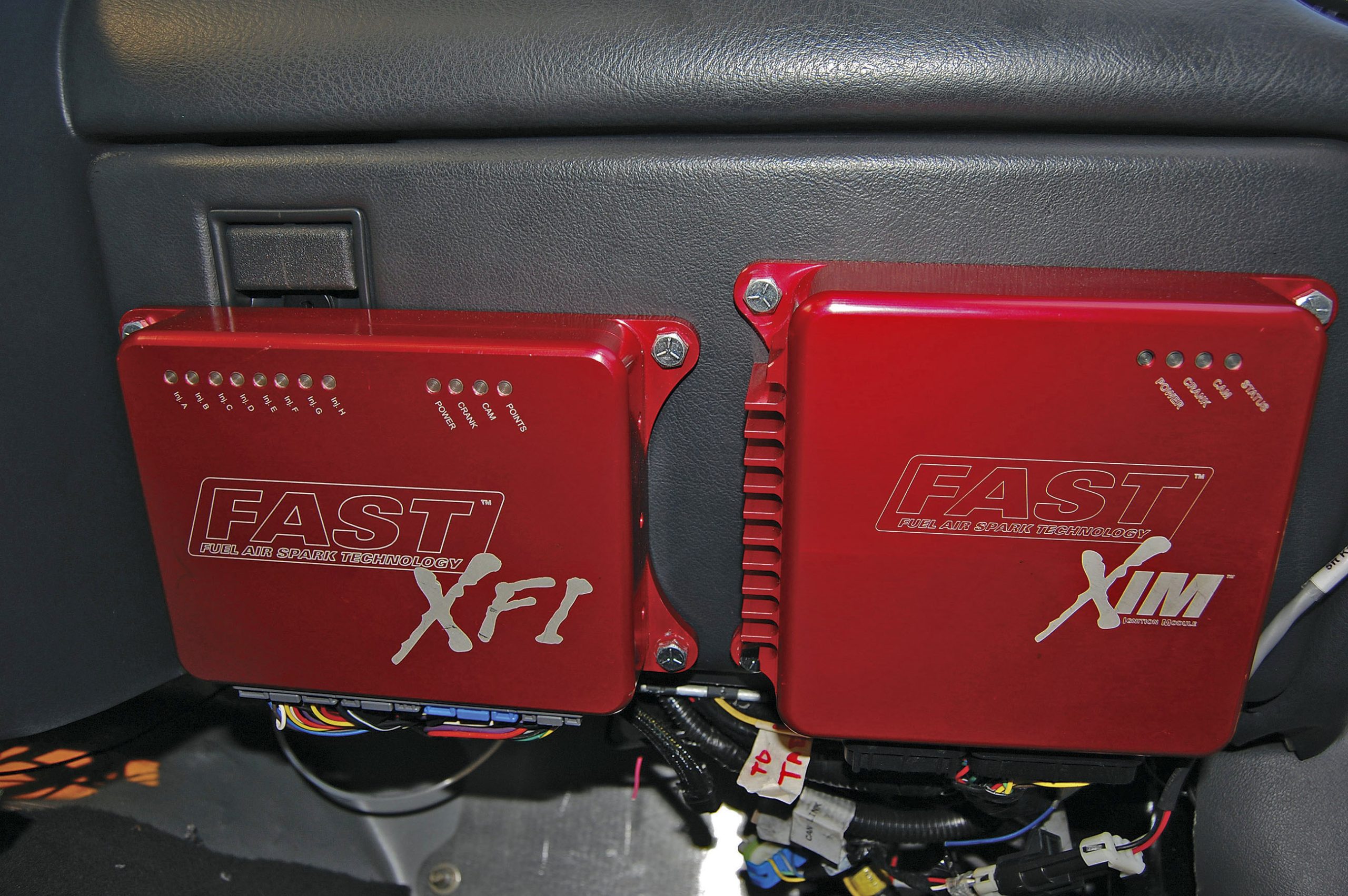
Airflow is a major part of making a turbocharged engine perform to its maximum capability, and Airflow Research offers an awesome line of heads for the LS family of engines. The “Mongoose” heads feature 225cc intake runners, 2.08- and 1.60-inch valves and 72cc combustion chambers right out of the box, so they needed minimal work to be perfect for Corbin’s engine before sliding over the ARP studs. Corbin calls upon a custom aluminum fuel cell, a MagnaFuel pump and a collection of Precision 95-pound injectors to supply fuel, while a FAST XFI fuel management system controls exactly how much of it to use. Even with all of these go-fast components, the stock ignition is in place and an LS6 intake manifold does a great job of dispersing fuel and air into the ports.
Precision Turbo Power
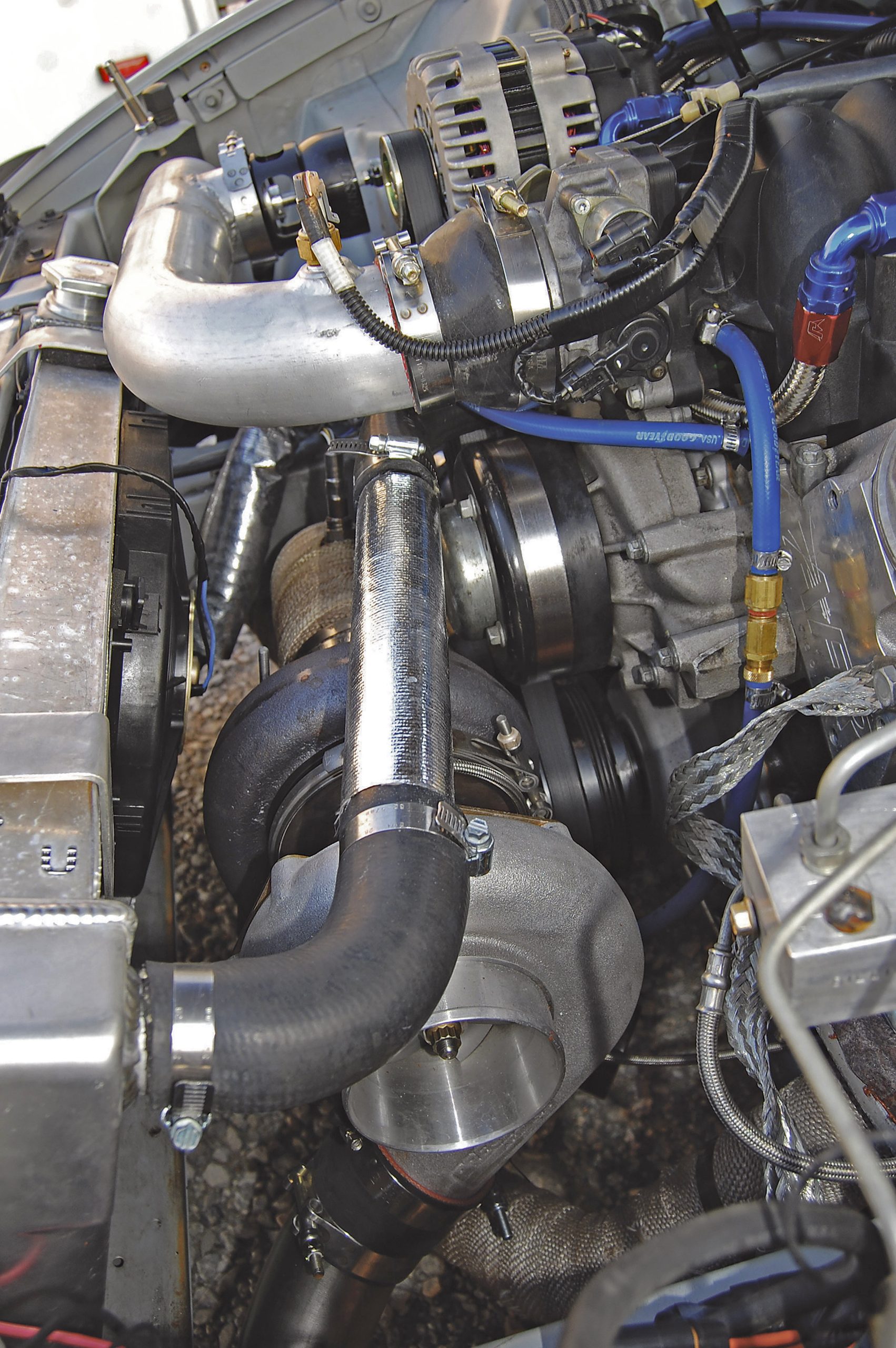
Just in front of the bulletproof engine is the heart of all this power—a Precision 88mm turbocharger, fitted with large-diameter piping and a big air-to-air intercooler that keeps the intake charge cool and allows for additional boost. From the turbocharger, the 4-inch exhaust has a short route to travel, as it exits through the front bumper just in front of the passenger-side front wheel.
Transmission and Rearend Setup
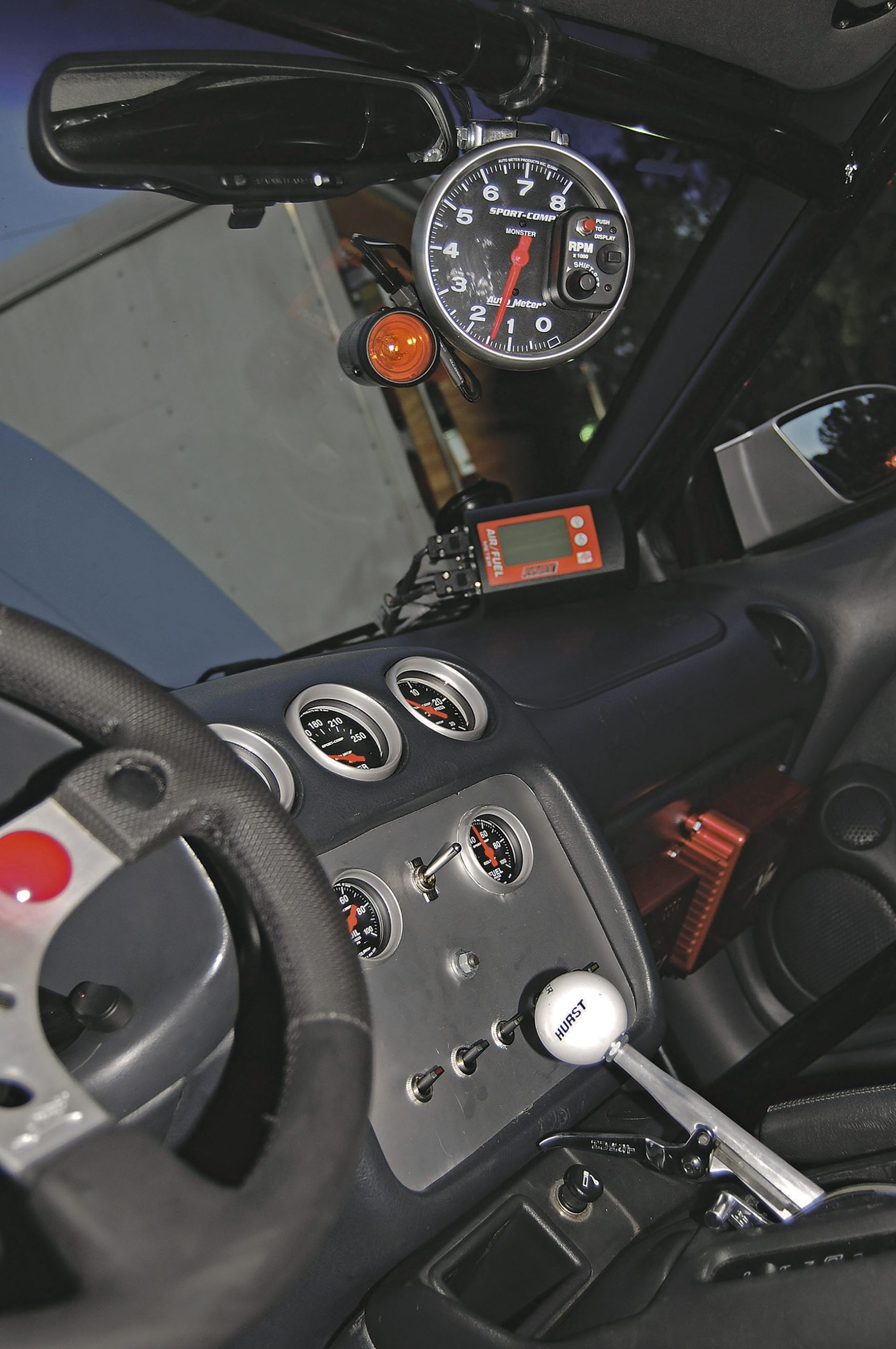
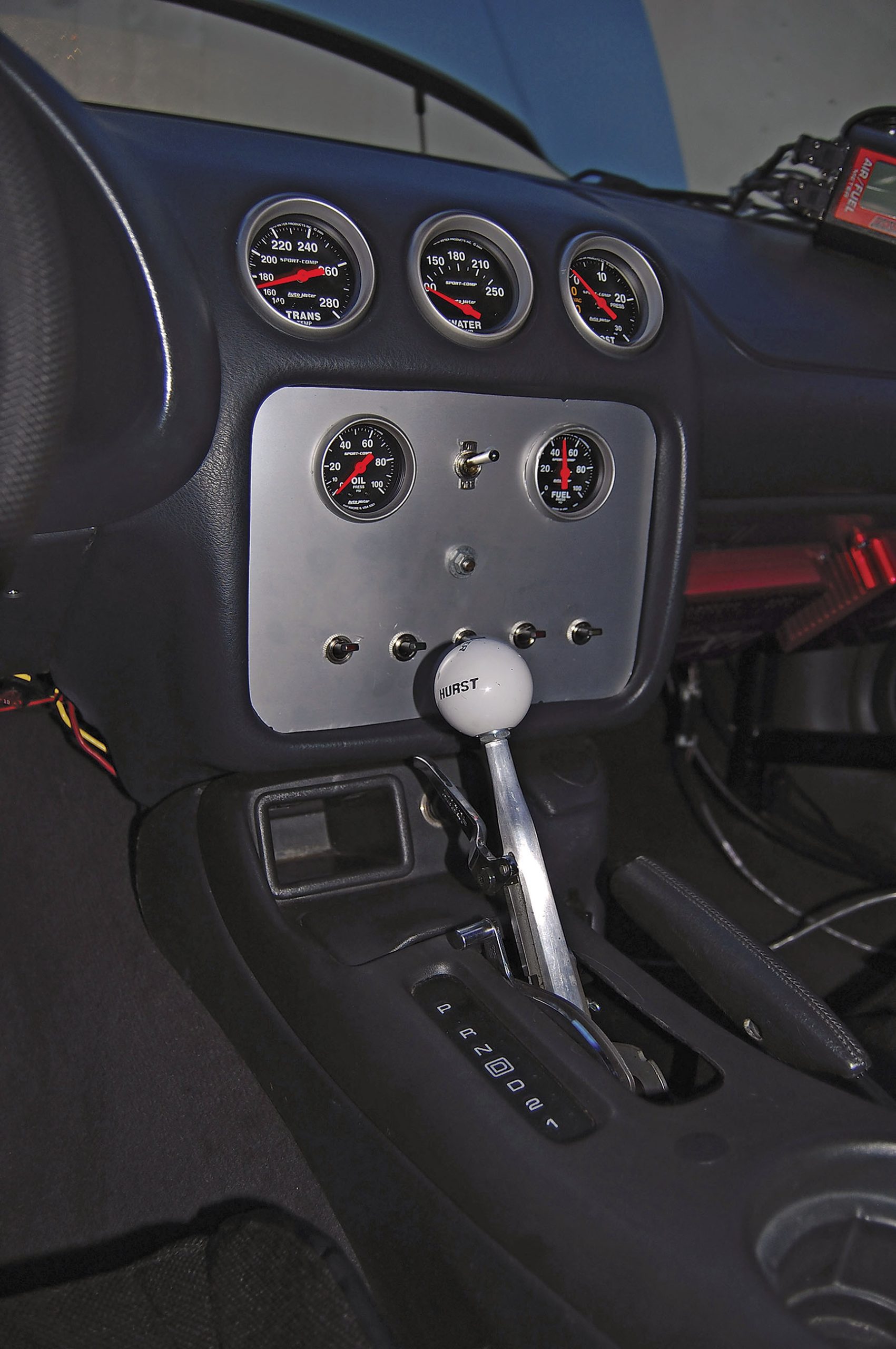
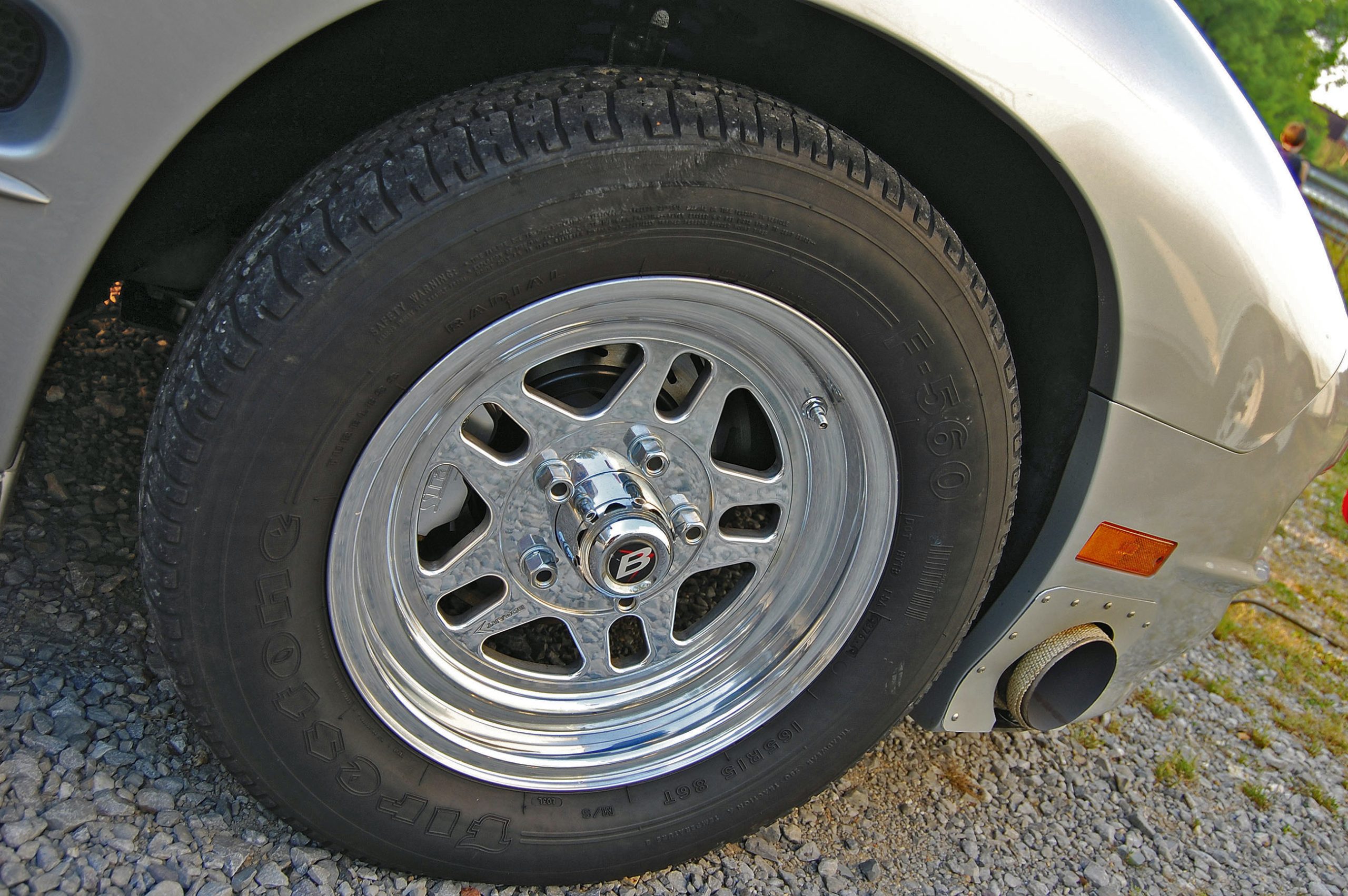
Moving rearward, a Glenn McCary-built TH400 automatic transmission sends power to the rearend through a PTC 5,000-rpm stall converter, while Corbin shifts with a Hurst Quarter-Stick. Out back, a Moser 12-bolt rear rides on a torque-arm setup, equipped with stock springs and Competition Engineering shocks. Inside the housing is a full spool, a 3.42 gear set and a couple of 35-spline axles to withstand the sudden shock of a boosted trans-brake launch. An adjustable Daffron Race Innovations Panhard bar keeps horizontal rearend movement to a minimum, while the DRI lower control arms offer adjustability and added strength over the stock units. For traction, Corbin used a pair of Mickey Thompson 28×10.5-inch slicks, wrapped around Bogart D-10 wheels that measure 15×9.75 inches. Up front, you’ll find a matching pair of Bogarts, measuring 15×4 inches, with a set of lightweight Strange drag brakes hiding behind the spokes.
Chassis and Suspension Improvements
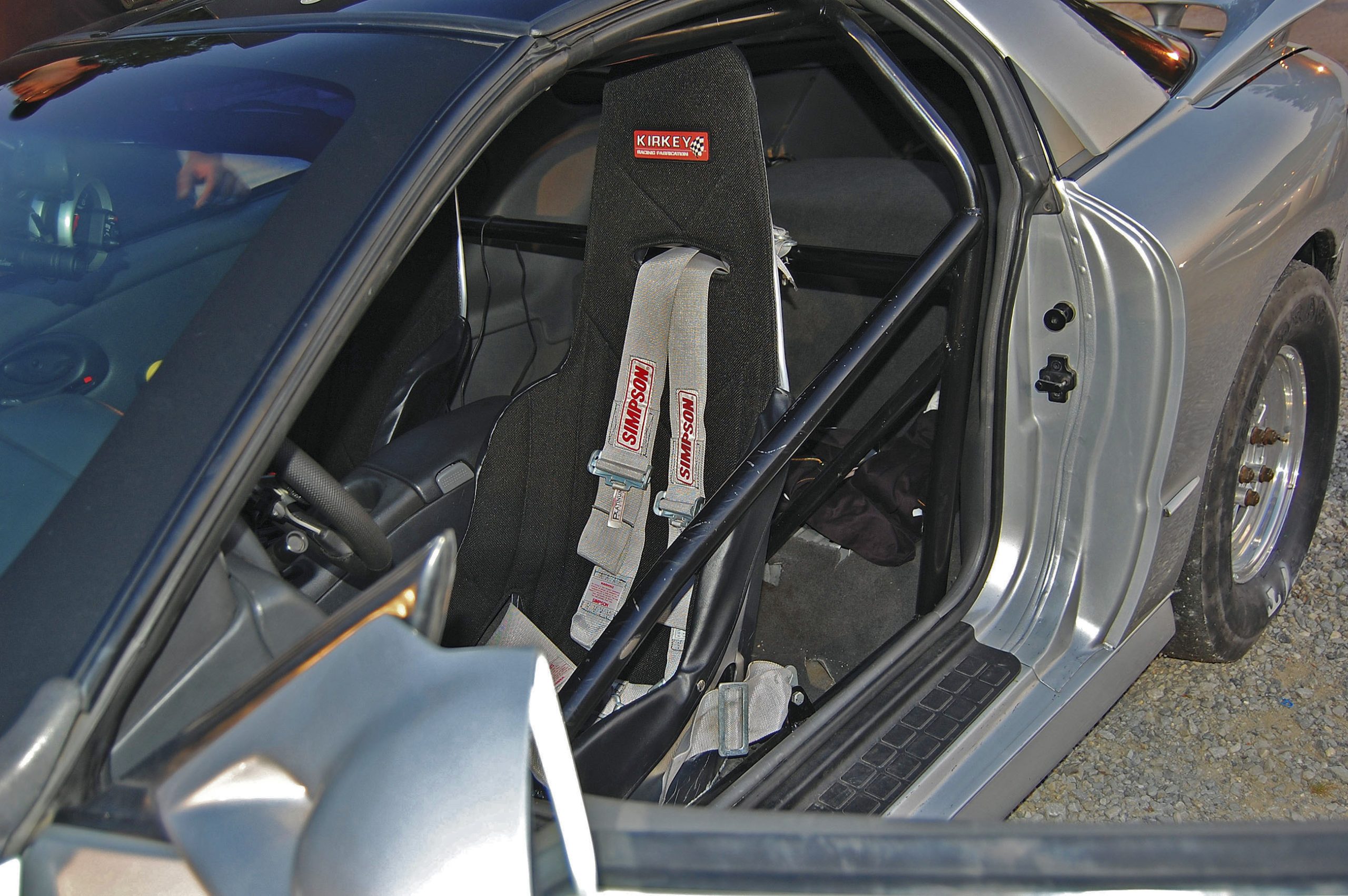
For additional weight savings, Corbin installed a BMR tubular K-member, which mounts a complete BMR front suspension. For better weight transfer, as well as softer landings from wheels-up launches, Corbin calls upon a pair of QA1 coilovers, fitted with Eibach drag springs, while a Flaming River manual rack keeps the steering system simple and effective. The weight savings continues inside with a pair of Kirkey aluminum race seats, which are fitted with five-point harnesses to keep Corbin restrained, while a Wolfe Race Craft 10-point rollcage adds weight, but also adds safety for this 1,000hp machine.
Record Runs and Future Goals
Considering the 6.08-second elapsed times he ran at Brainerd Optimist 1/8-mile dragstrip, Corbin’s Trans Am is sure to run in the 8’s off the trailer in the 1/4-mile. His recorded runs from the 1/8-mile started with a 6.60 on nearly no boost, before dropping to a 6.36, then down a full tenth, to a 6.24. Times went down again to a 6.08, but that was a low-boost run to combat a slippery track. He plans for 1/8-mile times in the 5.50 range when the track can hold it. And with 22 psi of boost, that will certainly be a possibility, which means mid-8’s in the 1/4 will come soon enough. Low-boost launches are the norm for now, but plans are to up the boost and hope the rear bumper doesn’t get damaged in the process.
A True Dragstrip Machine
And though Corbin’s car may not be as street-friendly as other late-model muscle cars, it’s no slouch at the dragstrip, and it helps prove that the LS line of engines is perfect for this kind of abuse, when aptly equipped. At the track, Sam Daffron from DRI is busy on the laptop, tuning the wicked 370ci engine to perfection, which is a huge part of getting it down the track in the quickest possible manner, according to conditions.
We look forward to seeing just how fast this Trans Am will go, but for now, we commend Corbin for running 6-flat in the 1/8-mile, as that is an awesome accomplishment for any street car. While more testing and tuning is in order, that’s the fun part, which Corbin can certainly attest to.