
THE AUTO BUILDER
Menu
Featured

THE ENGINE ROOM
Whether you’re in the driver’s seat or looking underneath the hood, it’s the first place enthusiasts come to find out what a car is all about. After all, without the right engine package, everything we long for in our cars would be nothing more than static displays of creative artistry.




Spotlighter
POPULAR READS
-
The Auto Builder’s Hottest Product Picks from The Triple Crown of Rodding 2026
-
Product Spotlight: Bill Mitchell Products Aluminum LS Engine Block
-
PRODUCT SPOTLIGHT: 60-66 Chevy C10 Fresh Air Vent Block Off Plate
-
Product Spotlight: Pyramid Optimized Design Sequential Aurora Taillight for 1964½–1966 Mustang




A BREATH OF FRESH AIR
Author

Josh Kaylor
Story & Photography
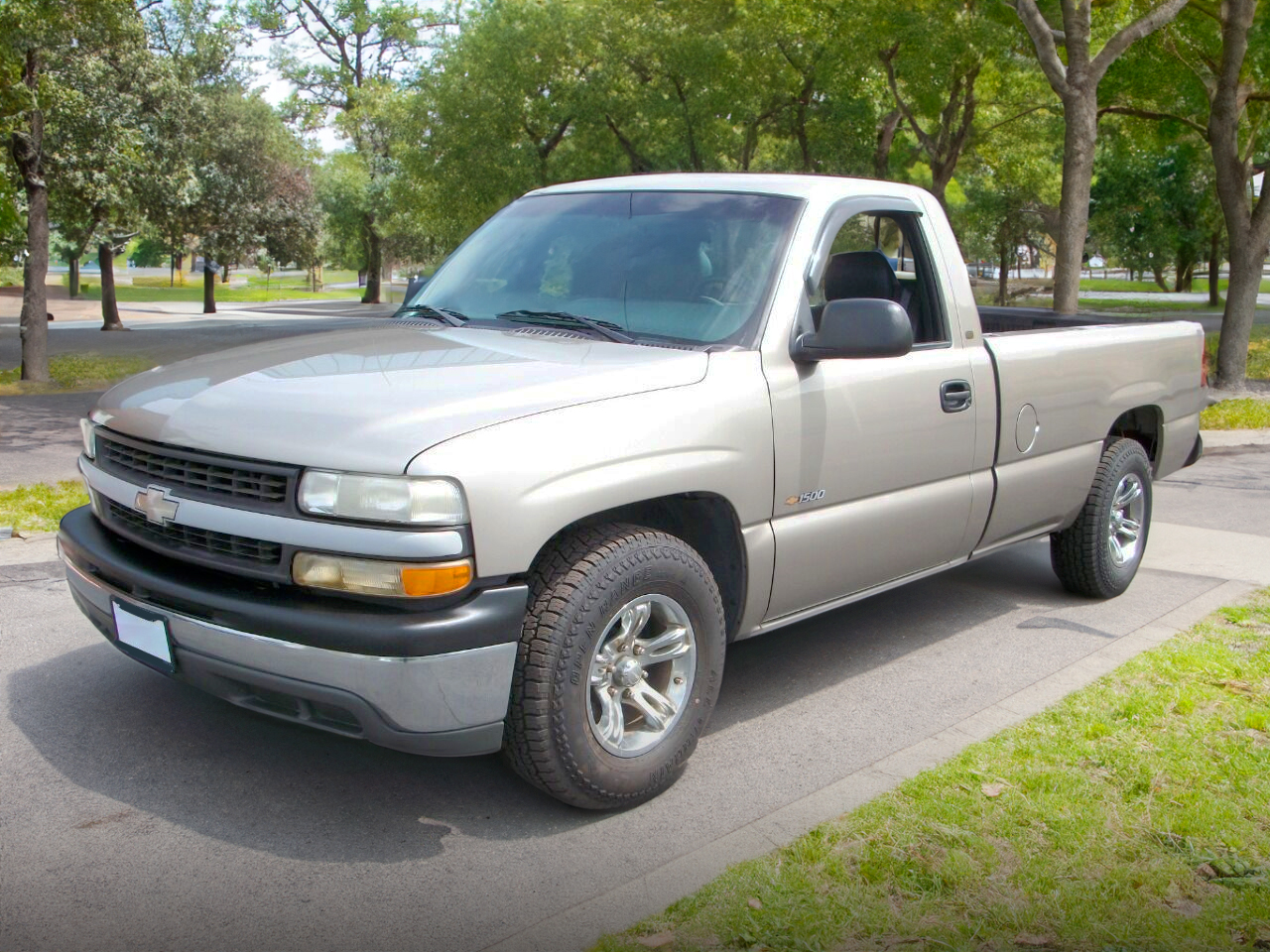
After purchasing this ’02 Silverado, the owner was looking to gain some additional horsepower and torque through a few small bolt-on performance parts. While the truck is still under warranty, there is a large variety of performance parts that not only meet certain warranty requirements, but also do not cause any problems at the dealership.
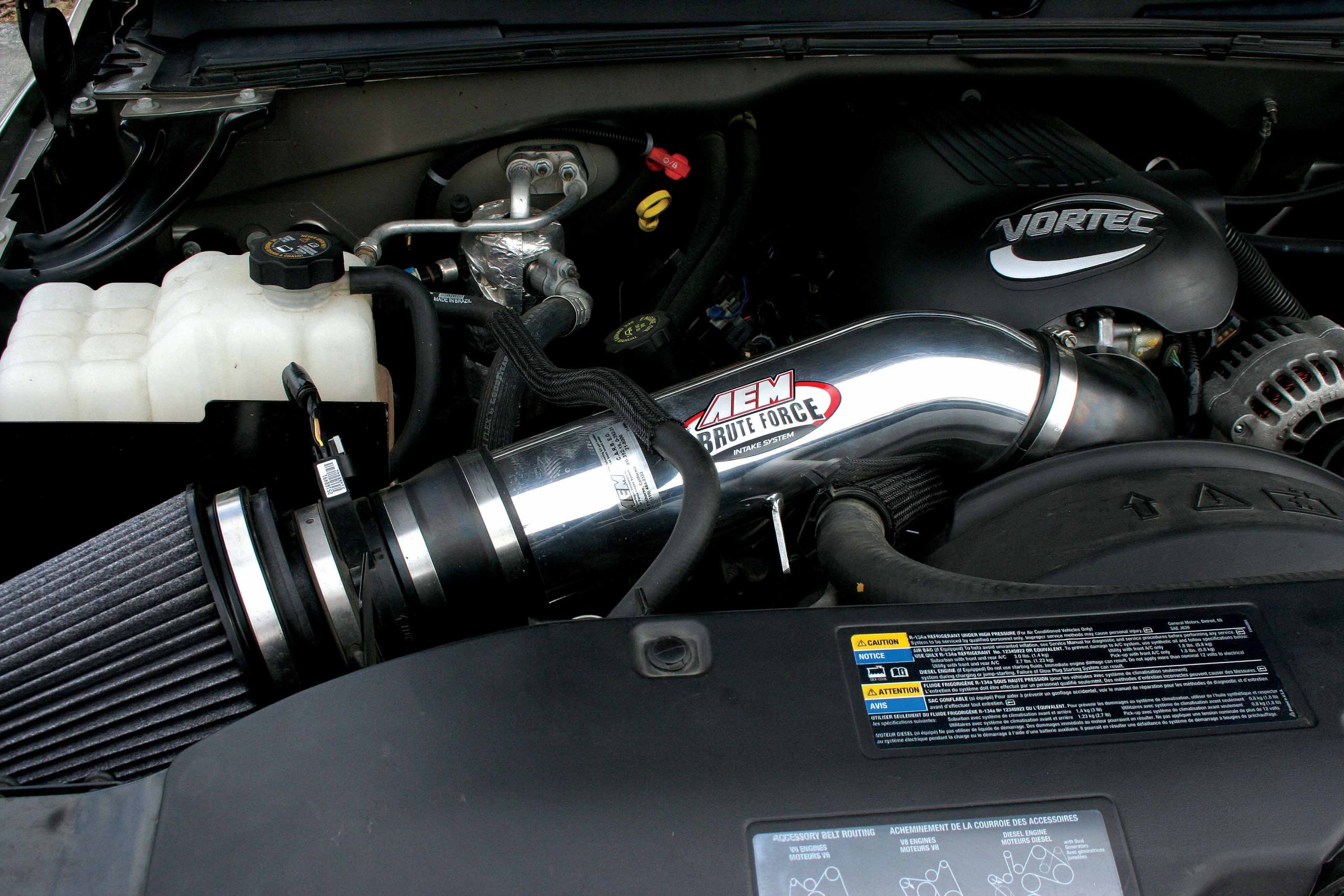
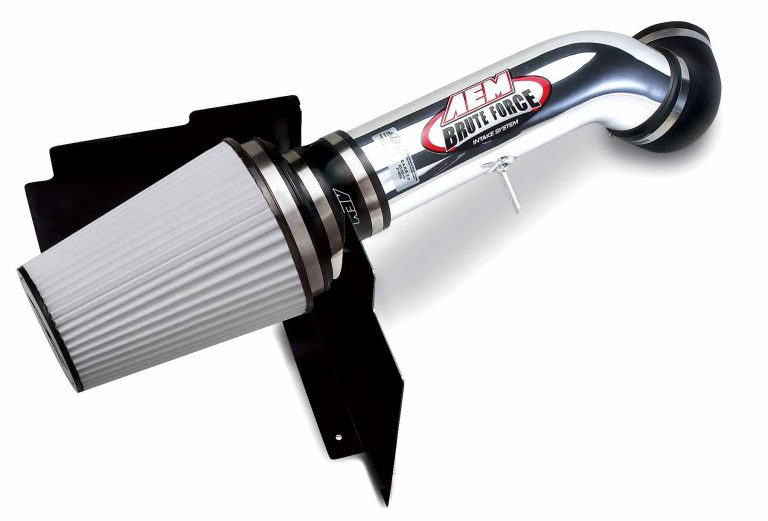
After looking at all the available options for this Silverado, it was decided that the first modification to the engine was going to be the addition of a new AEM Brute Force air intake. AEM offers a vast array of dyno-proven intakes for specific applications, including trucks such as this Silverado.
The truck is equipped with a 4.8-liter 294ci Vortec and 4L60E trans, which is rated at 295 hp and 305 lb-ft of torque. Since the truck is going to be used to haul parts to and from shops as well as pulling the occasional trailer, gaining any additional horsepower and torque is most welcome. The usual power loss through the drivetrain is around 15 percent. It was thought that such an intake would help make up some of this loss.
The AEM Brute Force intake is designed to improve airflow to the engine while keeping the incoming air cooler, thanks to the custom air box and filter design. AEM also claims fuel mileage gains, which will have to be proven through actual use.
The installation was a true bolt-on, just as AEM claimed, and the install required just a few hours. Removal and installation of the kit required only a simple set of hand tools. The AEM Brute Force kit included detailed instructions and hardware, including a 90-degree elbow for the throttle body, adapters, intake tubing, air box and new Dryflow filter. Everything was included in the kit and fit to the truck without any modifications. Going in, AEM delivered with its easy installation, and now that the installation is complete we set out to put the new air intake to the test.
Fuel Mileage Test Results
Factory GM Air Intake
Test 1: Factory GM air intake and box 89 octane 435 miles/26 gallons 16.7 mpg
Test 2: Factory GM air intake and box 91 octane 438 miles/26 gallons 16.8 mpg
AEM Brute Force Intake
Test 1: AEM Brute Force Intake and box 89 octane 460 miles/26 gallons 17.69 mpg
Test 2: AEM Brute Force Intake and box 91 octane 465 miles/26 gallons 17.88 mpg
These tests reflect normal driving conditions, and may vary slightly depending on temperature, acceleration and ratio of city/highway driving. The fuel test yielded a 25 miles per tank increase over the factory air intake, which translates to a 5-6 percent gain. We do admit to hitting the gas a few times, and when it came time to check the horsepower numbers to see how well the AEM Brute Force intake actually performed, the system shined. Below is the dyno sheet from the intake test.
The Brute Force intake made great power and proved to be well worth the $325 retail price tag. Power gains grew into the higher rpm range rather than falling off as we have seen in many other kits proving this is a great intake for those who spend more time on the highway where it counts, pulling a trailer or boat. Torque was also directly affected as a gain of lb-ft were recorded. The greatest horsepower and torque numbers came at around 5,200 rpm with gains of hp and lb-ft of torque. The installation and test was a huge success in our minds, considering that this cost can be recaptured in fuel costs alone.
The Verdict
Once the AEM Brute Force intake is installed, the directions say to start the engine and allow the truck to idle for a few minutes. This allows the engine to calibrate and learn the new airflow cfm entering the engine. After the engine ran awhile, we took a test run around the block. We immediately noticed the additional roar coming from beneath the hood. The air box is considerably louder on hard acceleration, but to us it sounds great!
After a few test runs, the truck seemed to have better highway acceleration during regular driving conditions. The horsepower and torque gains seem to be most noticeable at higher rpm levels. AEM claims that a fuel mileage increase up to 10 percent can be seen with this intake, so we decided to put it to the test. If you have a heavy foot and love hearing the grunt from beneath the hood, then this does not apply to you, as your driving habits will not be conducive to increased fuel mileage, but we tested fuel mileage three times, and these were the results.
These tests reflect normal driving conditions and may vary slightly depending on temperature, acceleration and ratio of city/highway driving. The fuel test yielded a 25 miles per tank increase over the factory air intake, which translates to a 5-6-percent gain. We do admit to hitting the gas a few times, and when it came time to check the hp numbers to see how well the AEM Brute Force intake actually performed, the system shined. After three dyno runs, the intake proved to be worth an additional 8 hp and 7 lb-ft of torque on average. This boosted horsepower from 226 to 234 and torque from 231.3 to 236 lb-ft at the wheels. The install was a huge success!
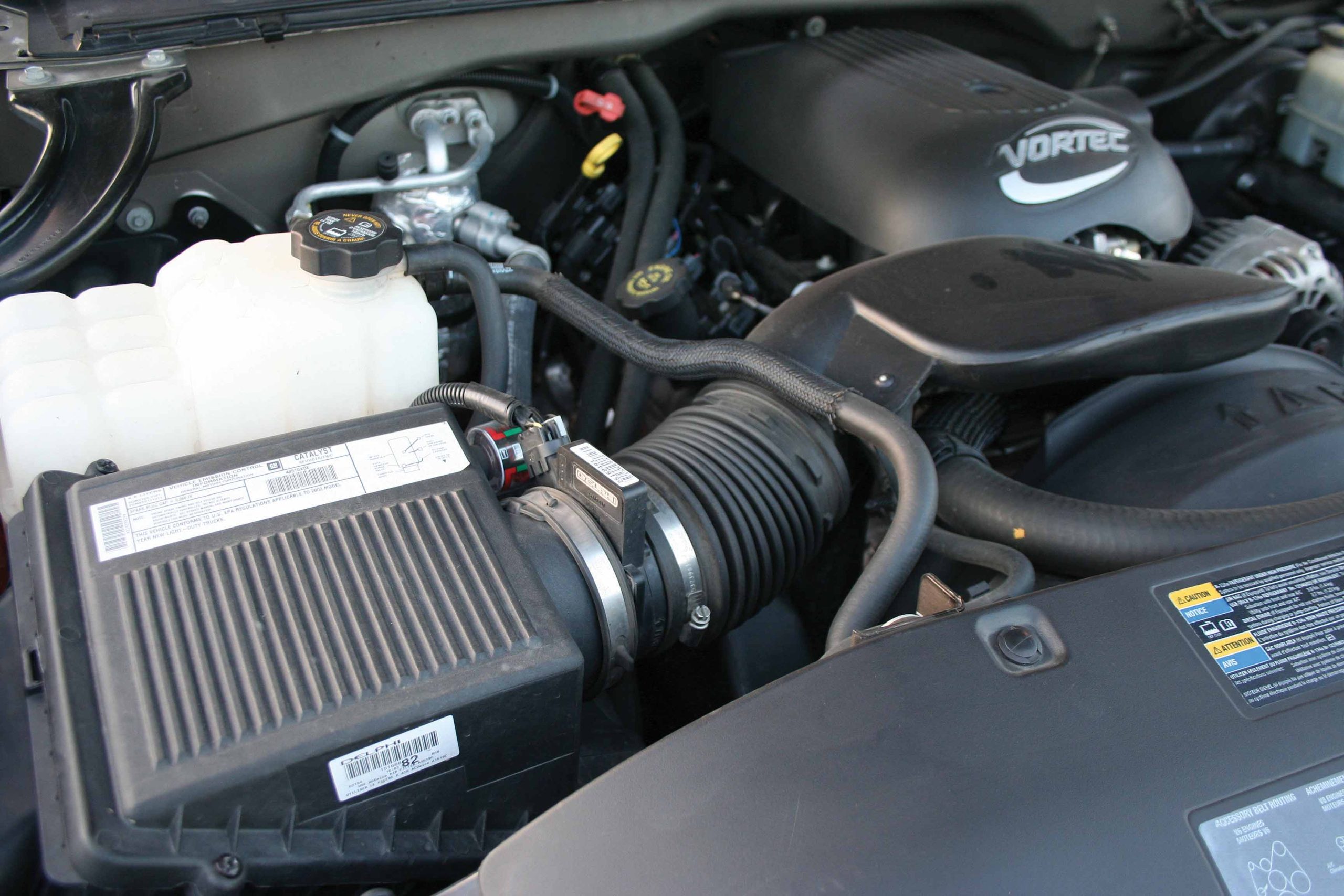
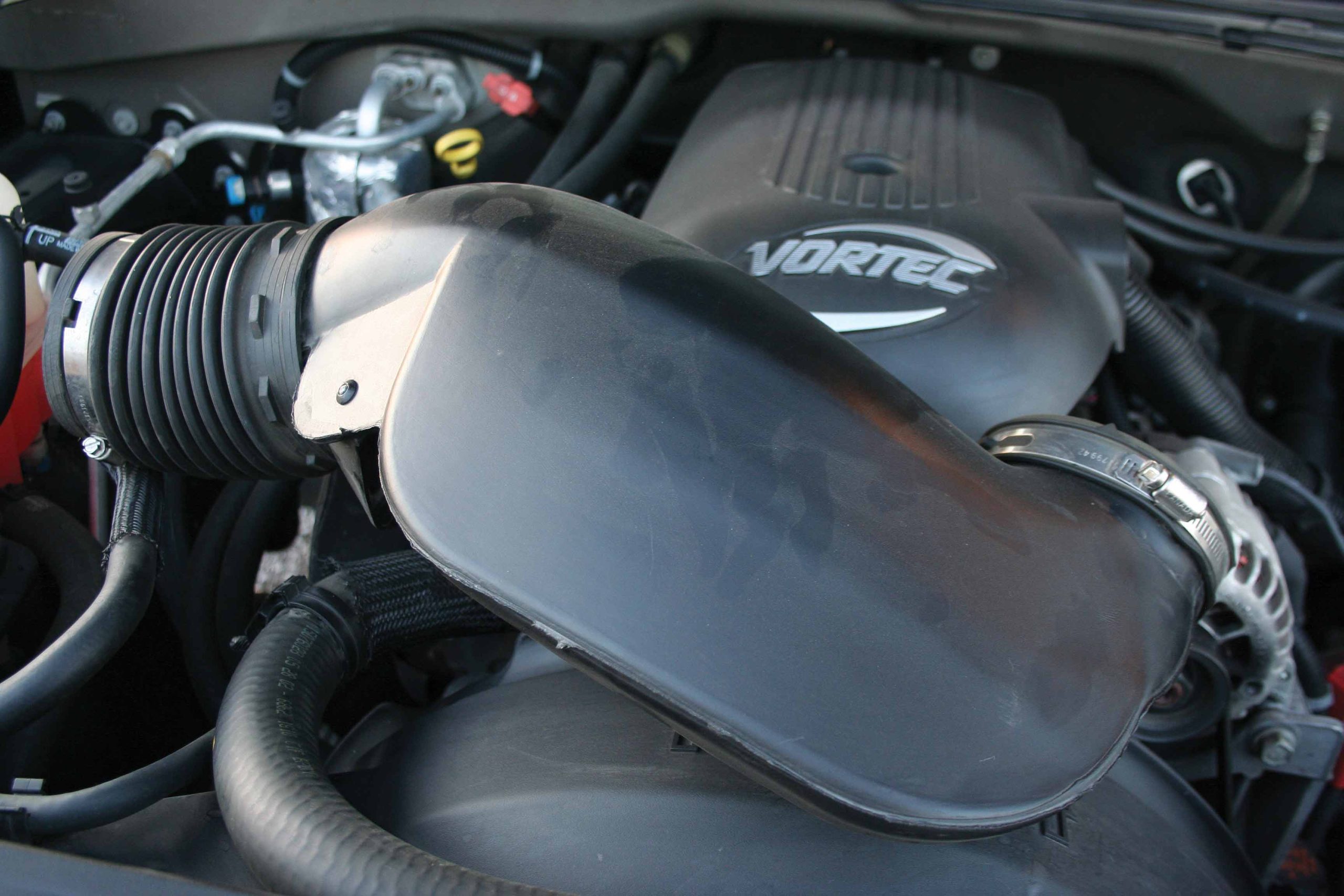
Here is the stock air intake on the ’02 Chevy Silverado. GM designed this piece to allow adequate airflow while keeping noise levels down. We will be removing the entire assembly.
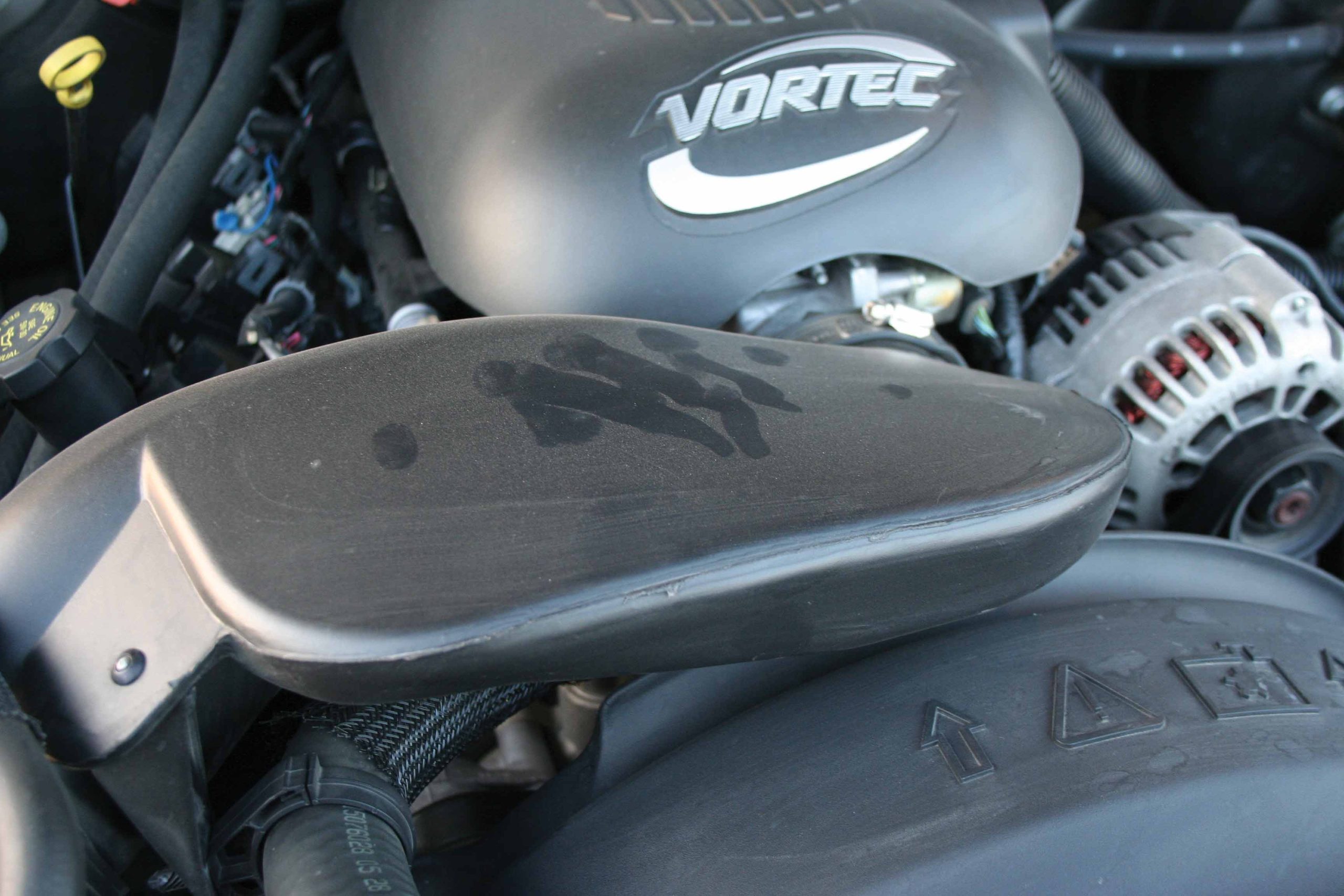
The stock intake is designed to fit inside the engine compartment nicely, but it is restrictive by design. The factory molding and bends limit airflow to the engine, which the new AEM intake will open up, allowing additional airflow to the engine and resulting in an increase in power.
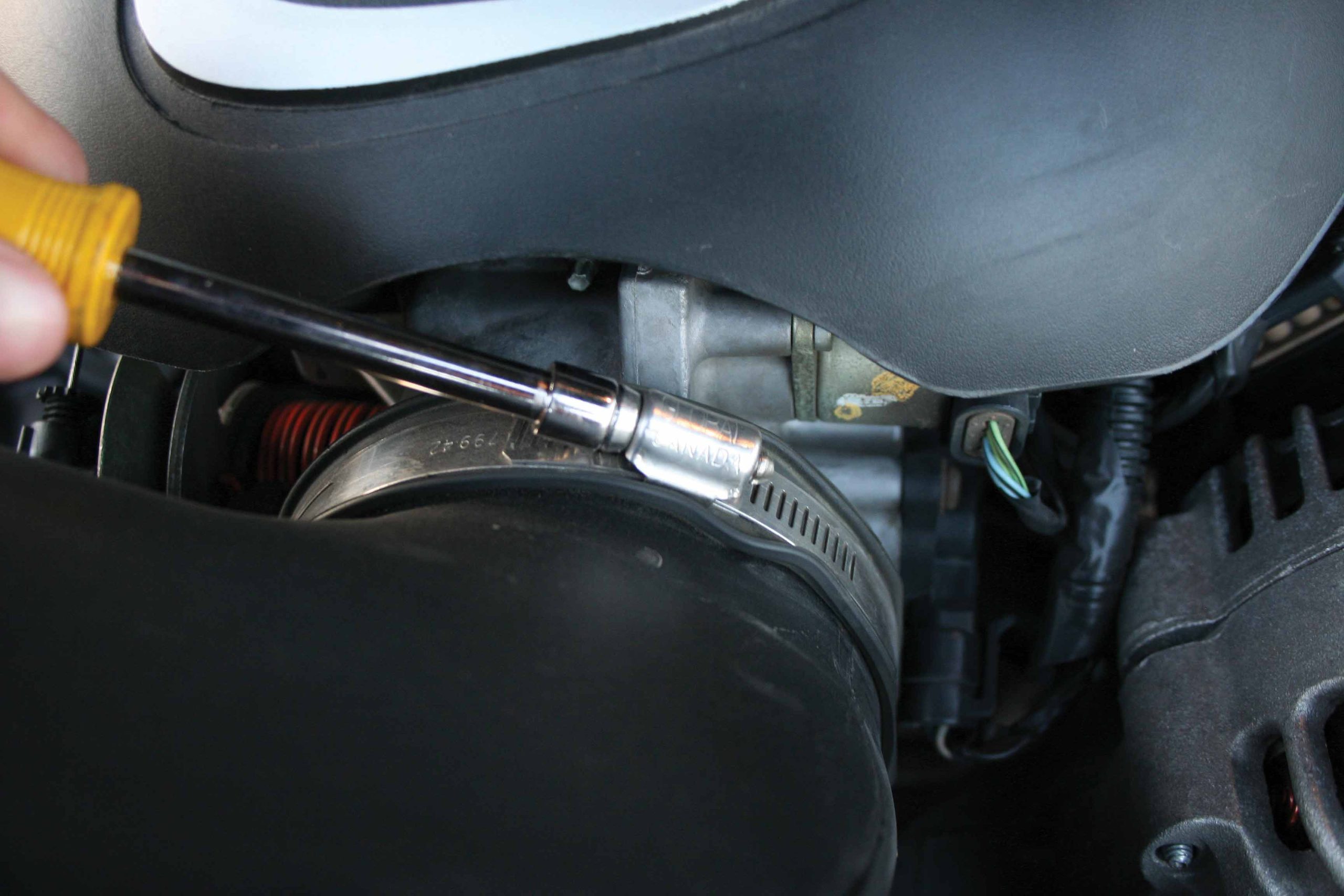
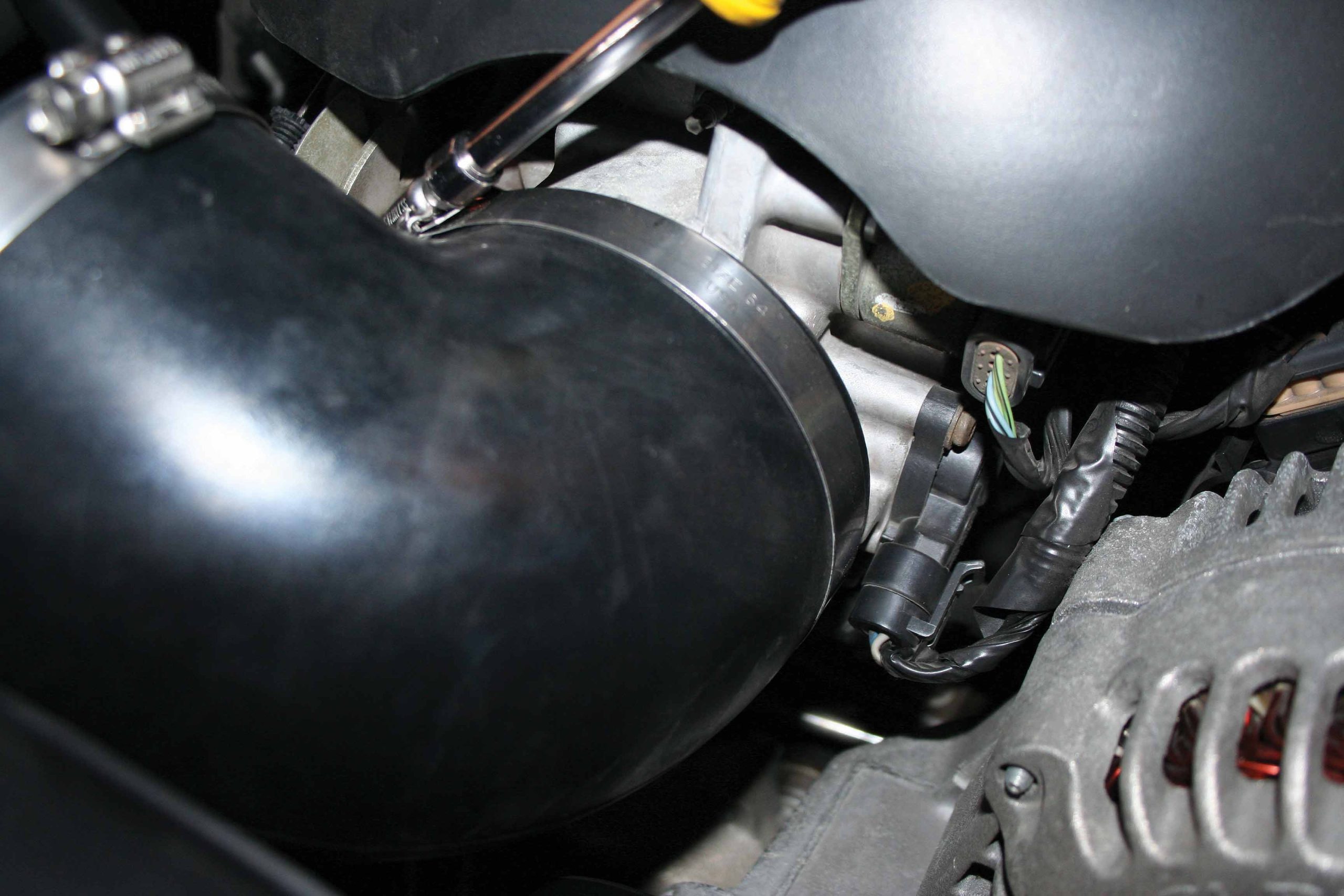
The installation begins with the removal of the air intake from the throttle body. A single hose clamp holds the assembly in place. A nut driver will make quick work of removing the intake tube.
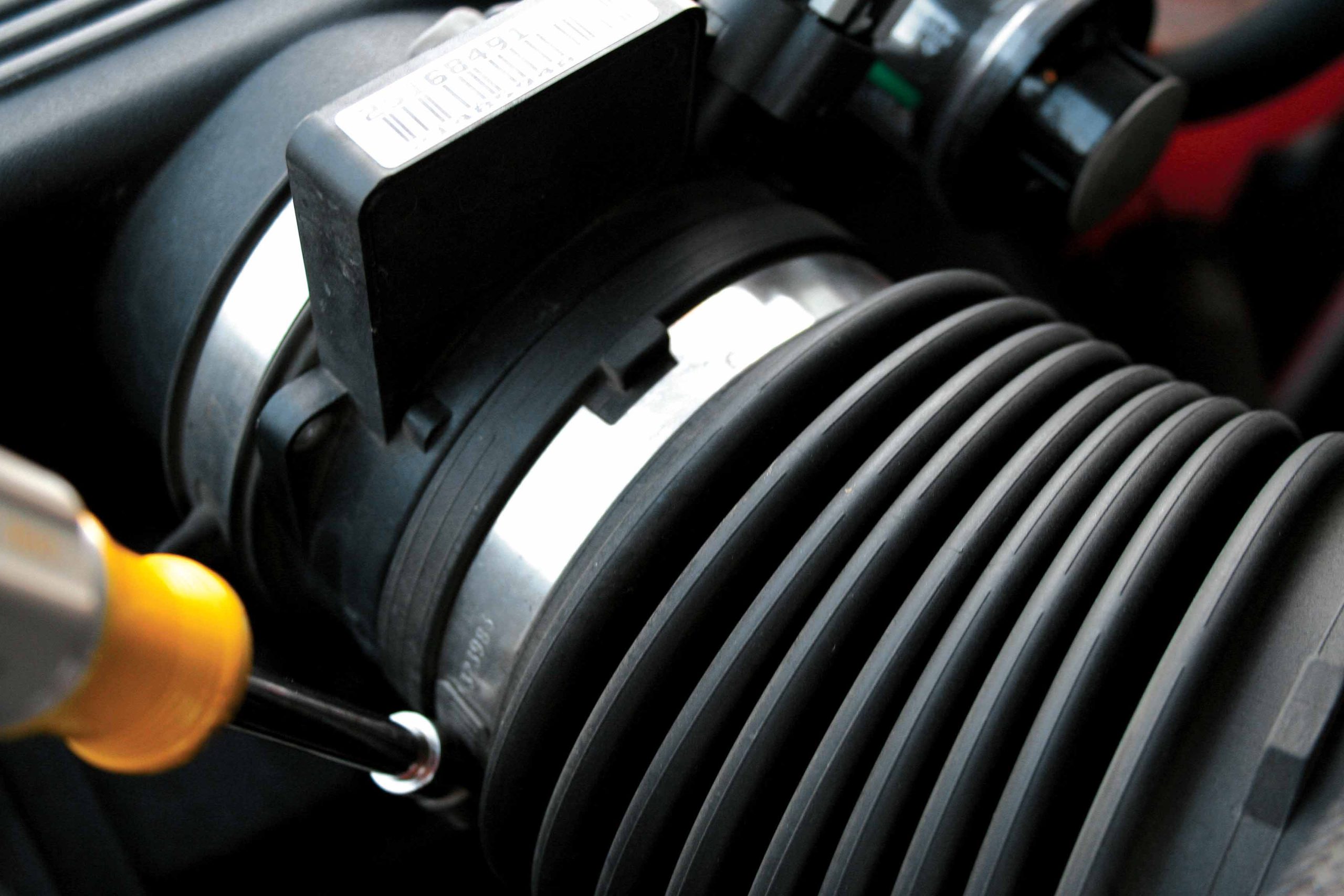
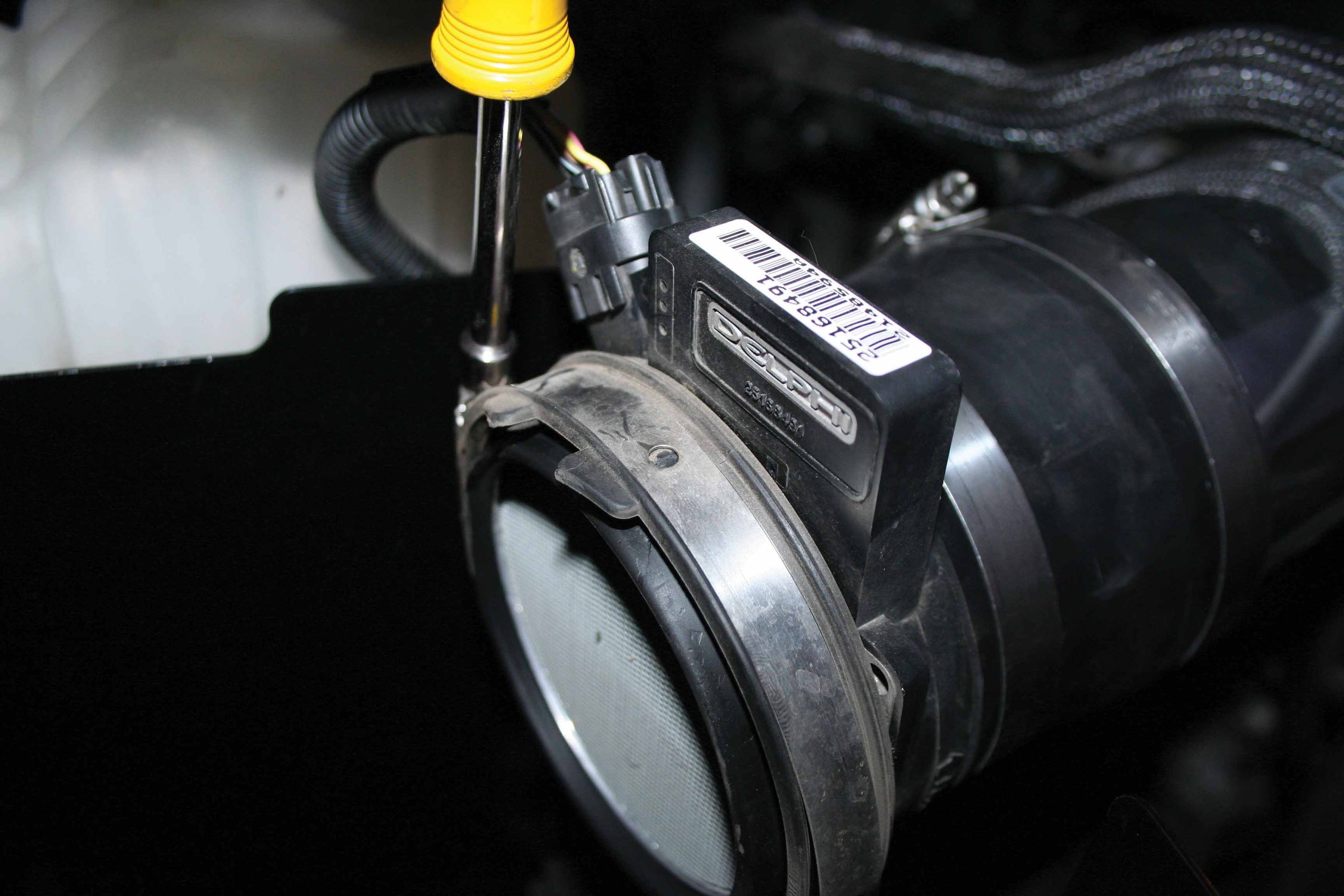
The opposite end of the air intake tube is the next part to be removed. This clamp attaches the air tube to the mass airflow (MAF) sensor. Once you have removed the nut, either unplug or lay the MAF sensor out of the way, and be careful with this sensor.
As you can see, the air intake tube will slide out as one piece. We opted to keep all the stock components in case we ever need them.
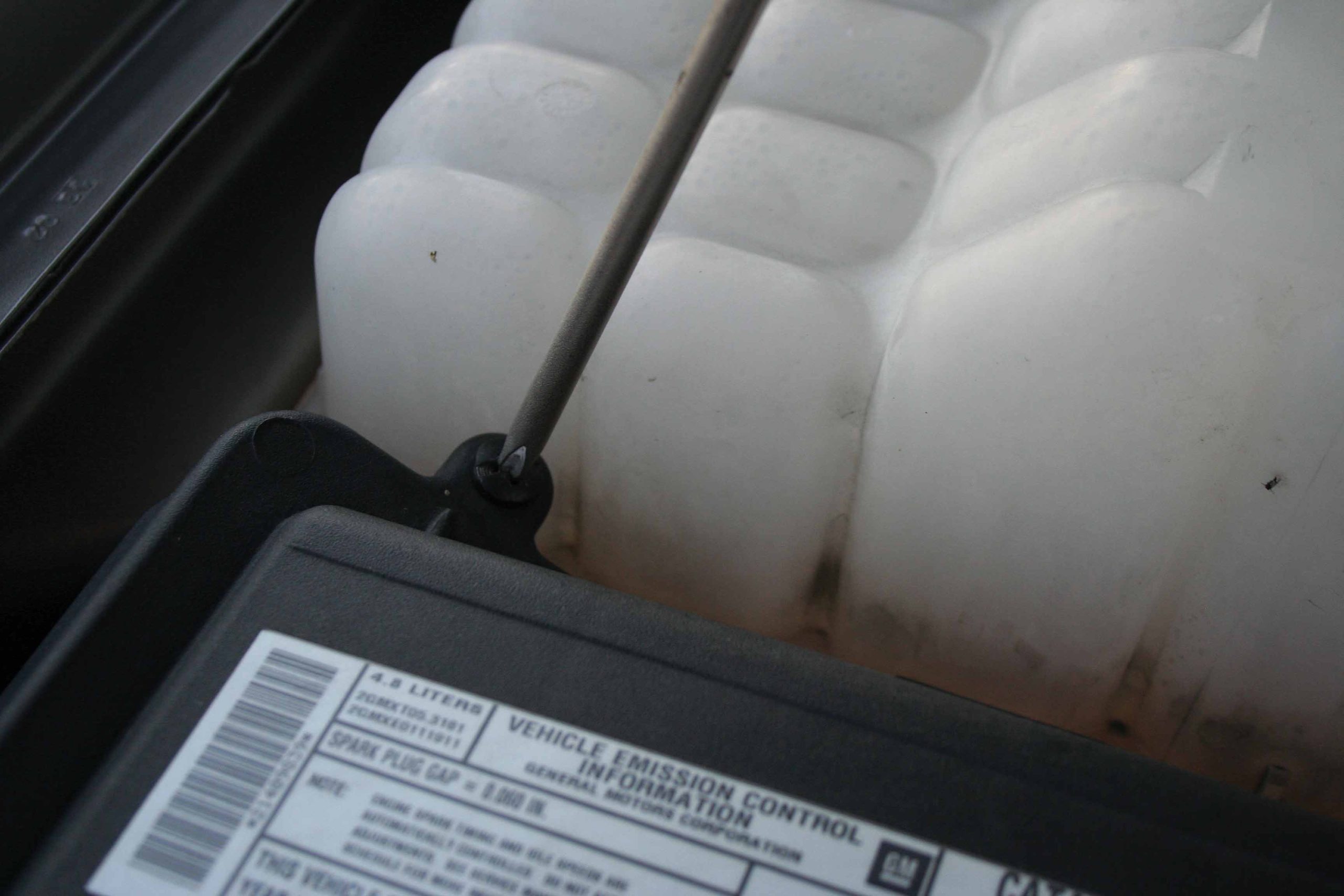
The air box is the next piece to be removed. Begin by removing the four screws from the top. This will allow you to access the air filter and the bottom casing for the filter.
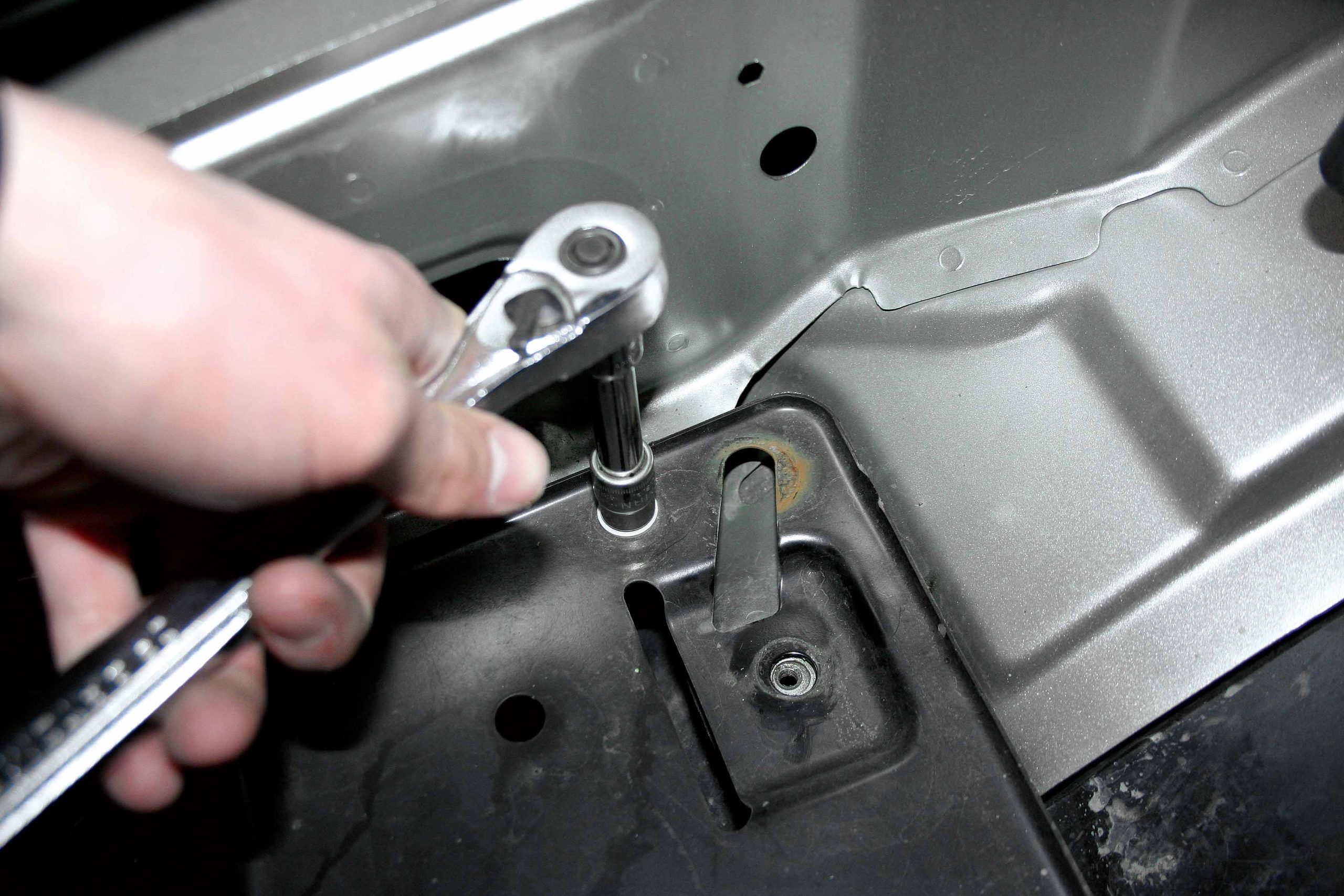
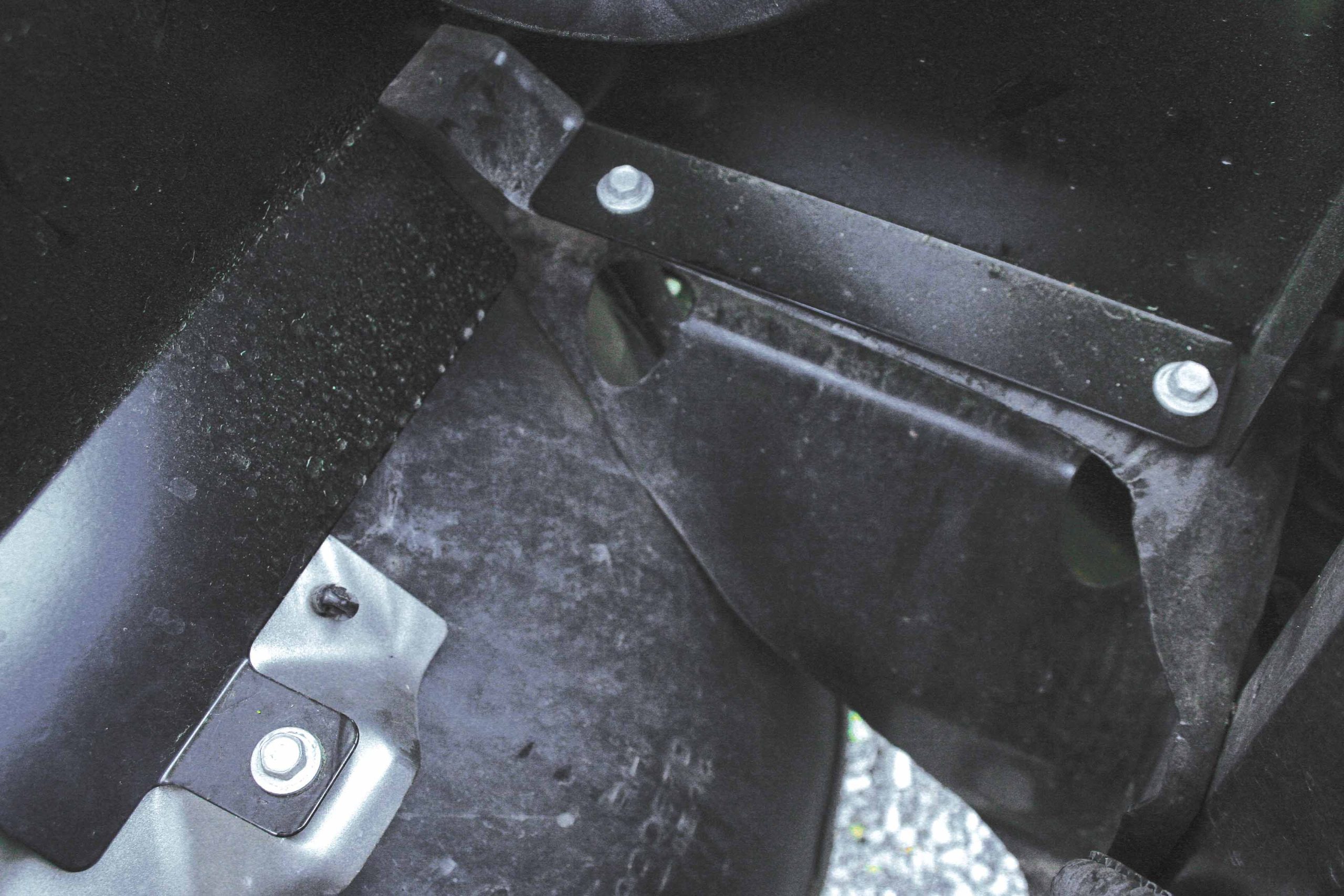
The bottom air intake box plate is mounted with six screws. Remove these six fasteners and remove the lower assembly from the truck.
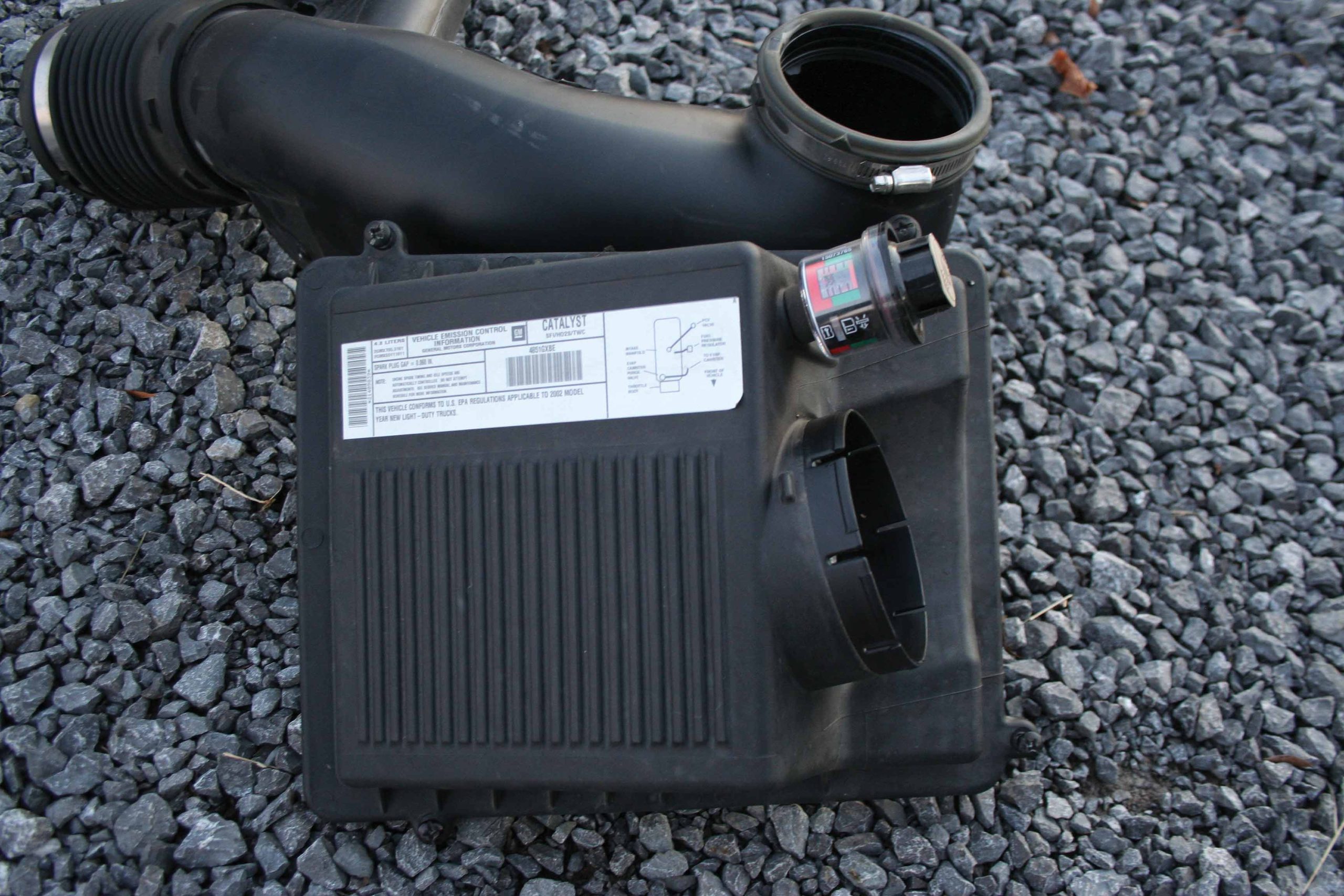
Here is the stock system, as removed from the truck. If you have no plans to ever reuse the stock unit, simply discard it. We decided to keep it, and stored it in the new AEM box.
We then slid the 90-degree elbow onto the throttle body and tightened the provided clamp. The kit includes all the necessary clamps to complete the installation.
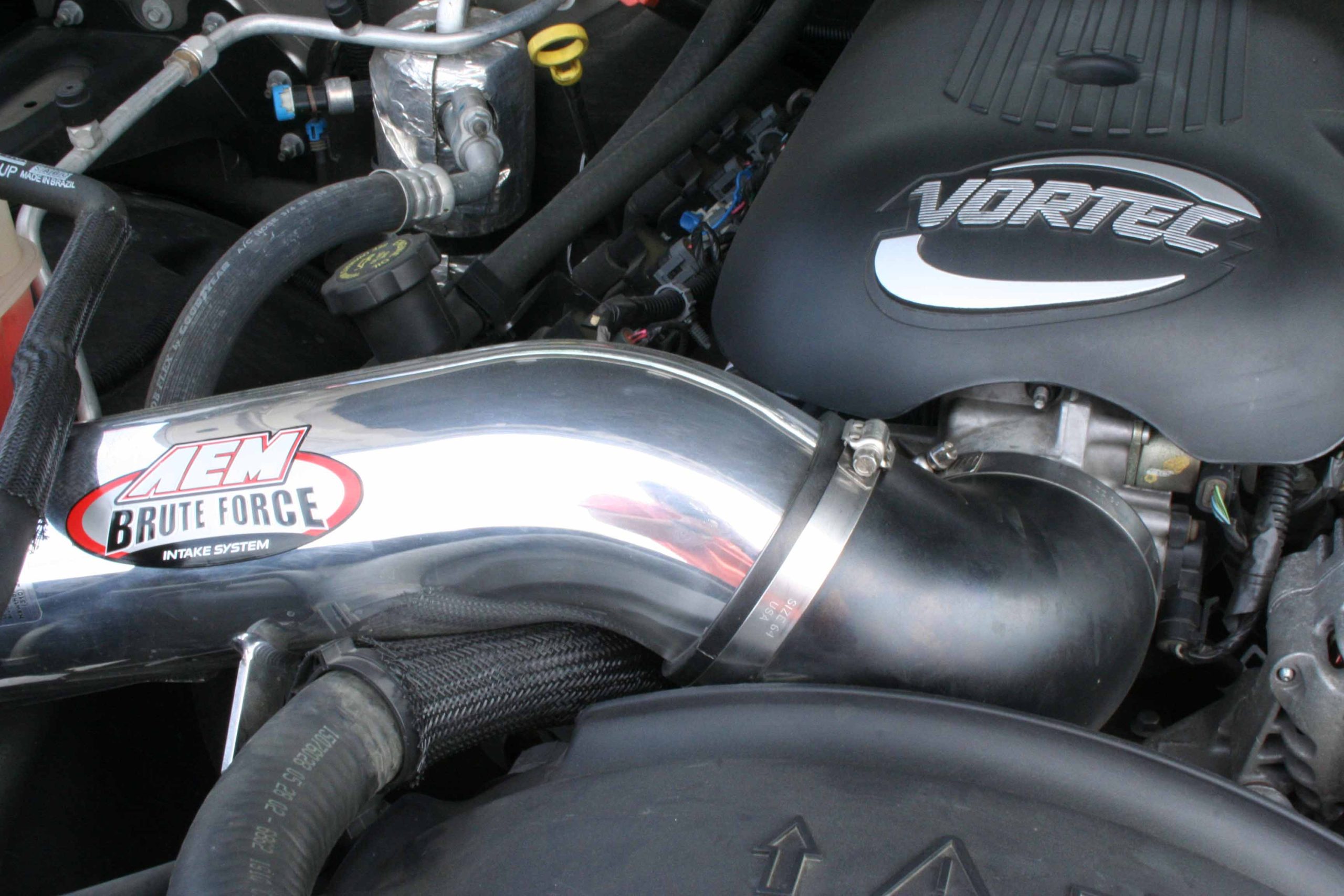
First slide a new clamp onto the elbow followed by the intake tube. The new intake is designed to open up the airflow to the engine, freeing up horsepower and torque. The small bracket on the bottom side is for reconnecting the coolant line.
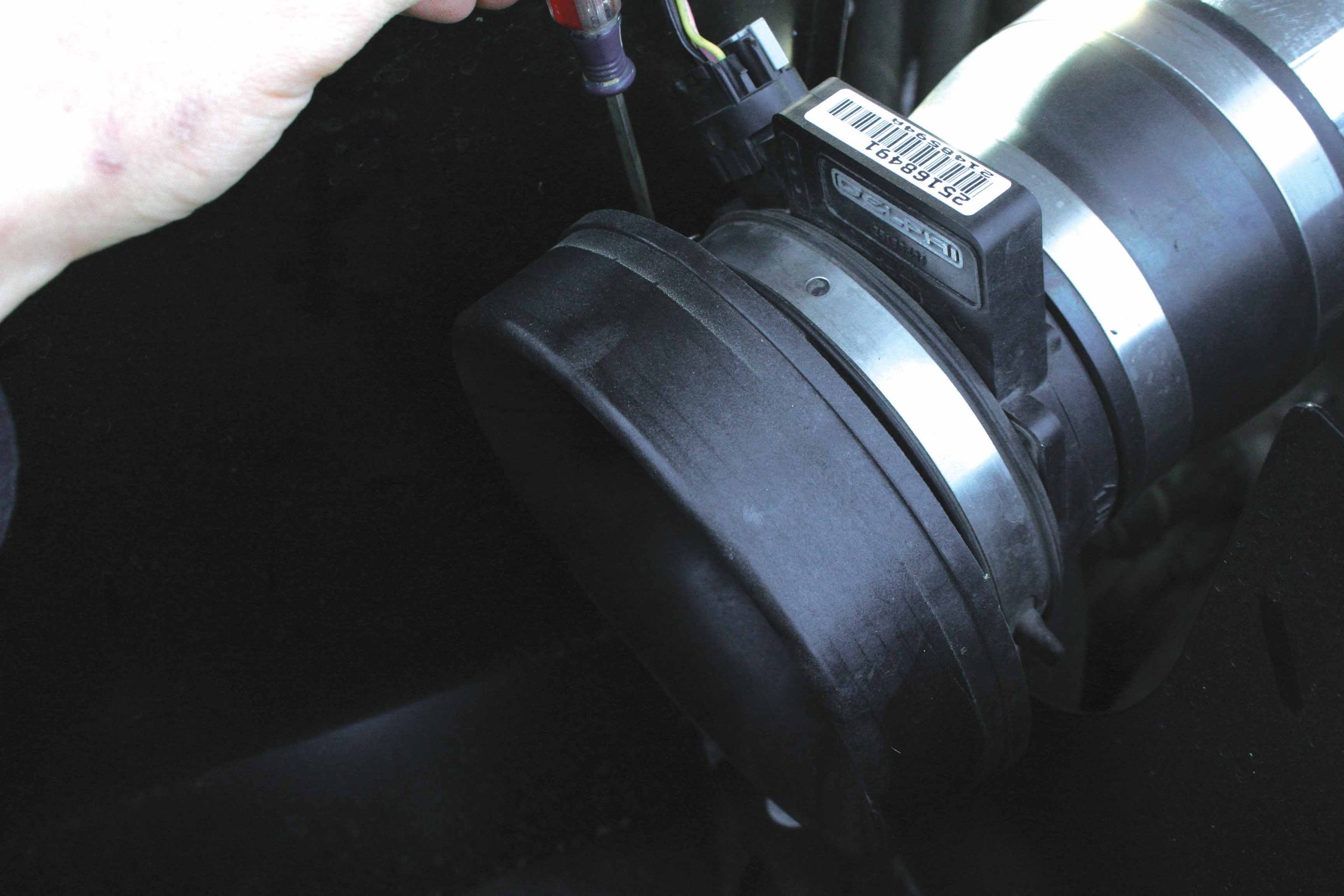
The MAF sensor must then be reinstalled into the air intake assembly. It mounts between the air filter and the air intake tube with the provided adapters.
Before installing the air filter, the new cold-air intake box must be mounted inside the engine compartment. This will keep the hot engine compartment air from heating the incoming air. The box mounts into the stock air box holes.
Here is the bracket that locates and supports the air intake tube and keeps the entire assembly from rattling beneath the hood.
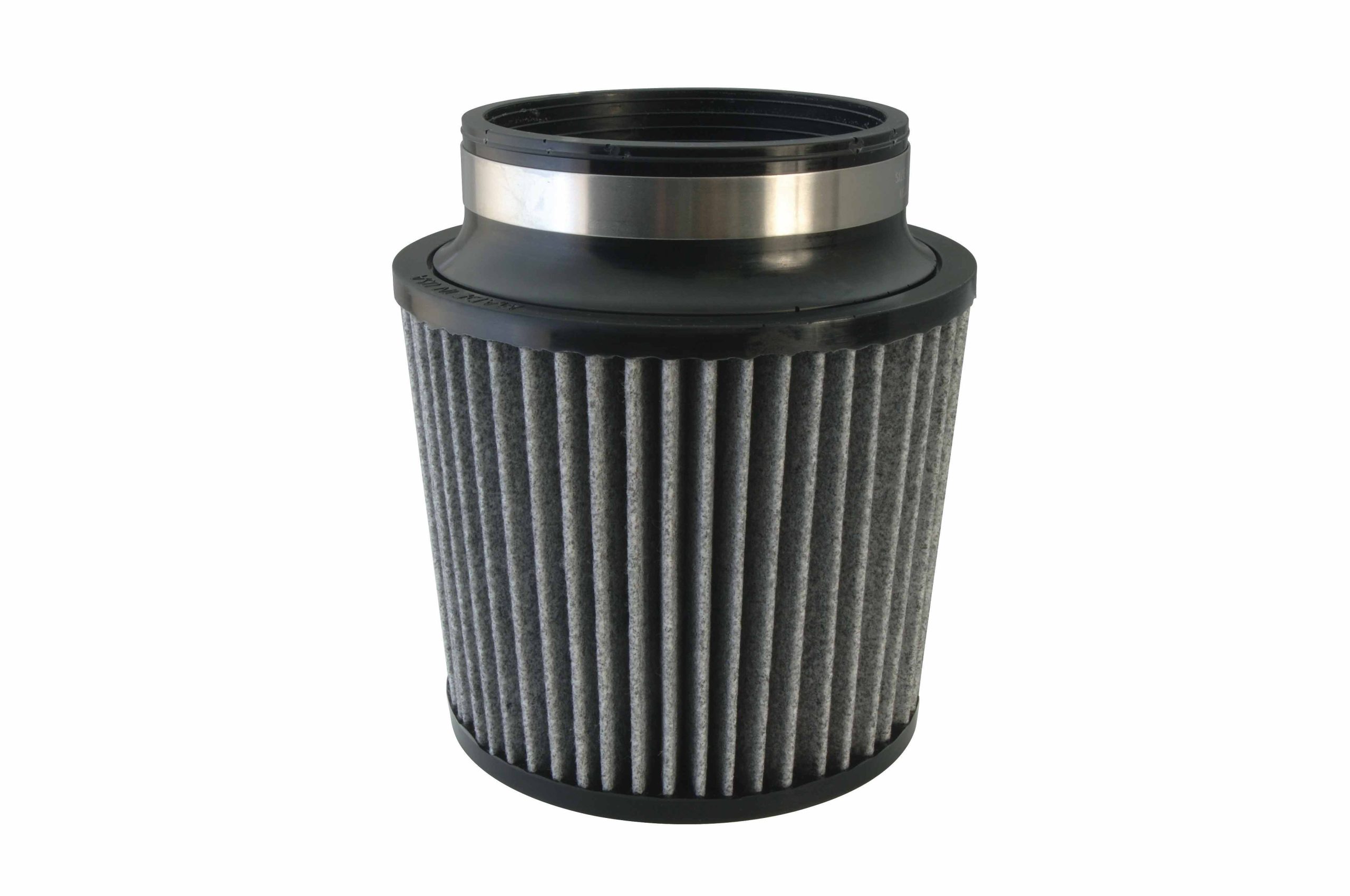
The air filter supplied with the AEM Brute Force kit features new Dryflow technology, which is a full synthetic filter that does not require oiling. All that is needed to clean the filter is an air blower.
Slide the adapter onto the MAF sensor and proceed to tighten the clamp.
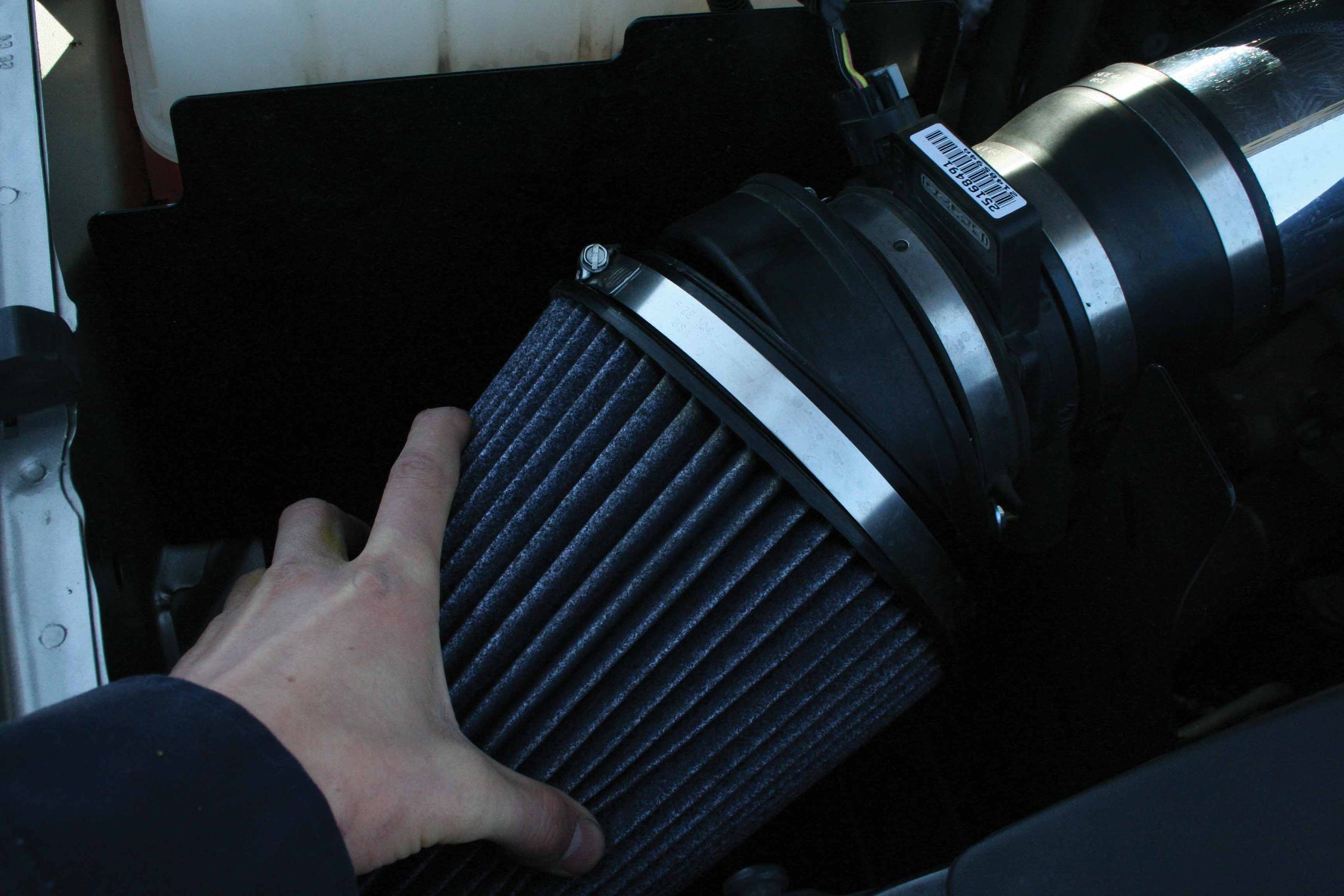
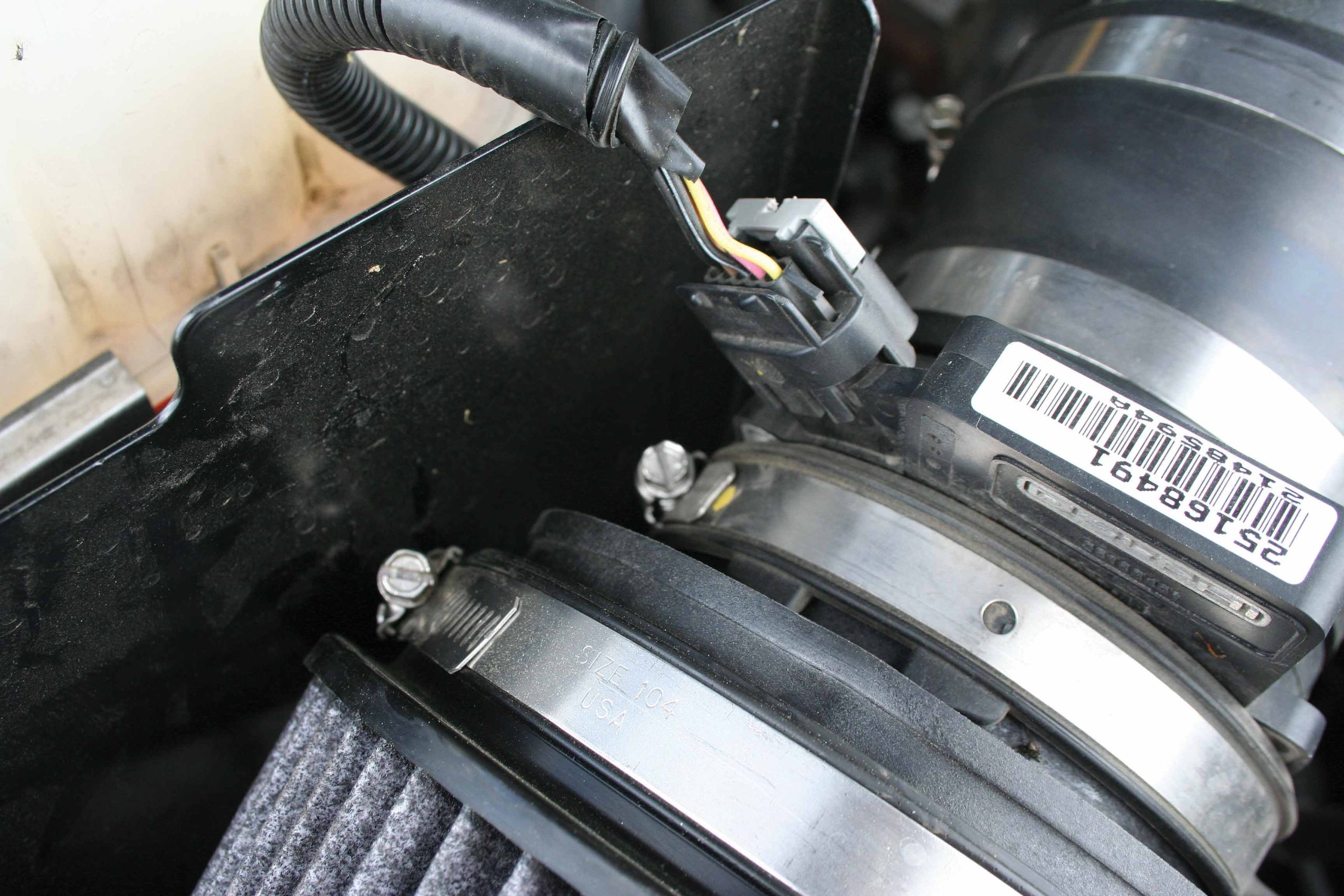
Lower the air filter into the air box, slide the neck onto the adapter ring and tighten the clamps. The new air filter is protected against the heat of the engine.
The new assembly is complete. Be sure to go back and double-check each of the clamps on the air intake assembly.
We now have a new AEM Brute Force intake. If it performs as stated, it will not only free up some horsepower but also dress up the dull engine bay nicely.
ARTICLE SOURCES
Advanced Engine Management Inc.
2205 126th St., Unit A
Hawthorne, CA 90250
1-866-464-6553