





THE AUTO BUILDER
Menu
Featured


PRODUCT SPOTLIGHT: Slant-Edge 100 Amp Alternators by Factory PerformanceTM Parts
In the world of high-performance builds, attention to detail sets great cars apart from the rest. That’s why Factory Performance™ Parts, a division of PROFORM® Parts, has taken a fresh approach to a time-tested workhorse with the launch of the new Slant-Edge 100 Amp Alternators—a stylish, high-output evolution of the iconic GM 10SI. Designed for those who care as much about what’s under the hood as how it looks when the hood is up, the Slant-Edge delivers form and function in equal measure.
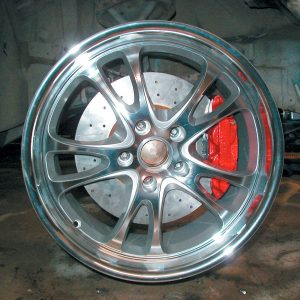
GETTING THE BIG BRAKE
It’s springtime and around here activity is definitely flourishing, as guys prep for all the events they plan to attend. Just about everybody is upgrading their cars for the season, adding a few new parts to really make an impact. This month we bring you an upgrade to Underground Motorsports’ demo 240SX. Stillen big brakes are hot items and we are psyched to present this install.
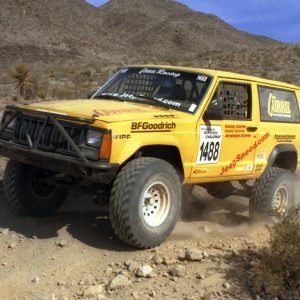
Jeepspeed
Between 1984 and 2001, Daimler Chrysler built about two million eight hundred thousand Jeep Cherokees. They were built in several combinations—two and four door, two and four wheel drive and stick or automatic and with three different engines. The vehicle was not well received. In print they were tagged as being too long, too heavy, under powered, poor brakes , and worst of all—uni-body construction. Before every Tom, Dick and Mary had an SUV in the driveway, young families were getting to work, going to school and having weekend fun. Give credit to Jeep for introducing a lot of young people to off-roading thru the Cherokee line.

Spotlighter
POPULAR READS
-
The Auto Builder’s Hottest Product Picks from The Triple Crown of Rodding 2026
-
Product Spotlight: Bill Mitchell Products Aluminum LS Engine Block
-
PRODUCT SPOTLIGHT: 60-66 Chevy C10 Fresh Air Vent Block Off Plate
-
Product Spotlight: Pyramid Optimized Design Sequential Aurora Taillight for 1964½–1966 Mustang
Dalton Boydster
Jim Dalton Decided on Another New Rod—This Time, Though, He Went the Way of Friends to Accomplish His Objective
Author

John Dianna
Photography: Photo Studio B
The Beginning of Our Publishing Journey
When we first began publishing back in 1999, I wrote about my friend’s ’32 Vicky. That car, and a ’57 Chevy, was photographed by Scott Killeen and graced that issue’s cover. This helped serve as our coming-out statement for our company—the rest is history.
Jim Dalton: A Key Figure in Our Growth
The owner of that car was my dear friend Jim Dalton. Many of you know him, as he has so willingly worked our subscription booths at many of the rodding events during those more formidable first years. This was before Garry McWhirter came aboard. McWhirter has been a relief to Dalton, taking most of that show duty, allowing Dalton now to schedule and arrange the coordination of our new 18-wheeler. Thanks to Dalton and his crew, we’ve come a long way in four years.
Dalton’s Unexpected Role in Our Team
I tell you this because it relates to the car pictured here, and because it is interesting that Dalton is a working part of our group at all—although he sat in on the initial what-if conversation I held when I asked a few close friends their opinions on whether I should embark on such a massive and risky undertaking. If memory serves me correctly, Dalton advised against me embarking on my second publishing career. He did so not because he questioned its potential commercial success, but because he wanted me to enjoy life, spending time with my cars and friends. He understood that we would become slaves to the never-ending demands and the 24/7 work schedule that these publications command. Dalton was correct on all counts, but rather than say anything as trite as, “I told you so,” he instead rolled up his sleeves, cast his private life aside, and has devoted as much time, emotion and hard work to us as anyone else involved. It has consumed Dalton, too!
Dalton’s Dedication to the Craft
No one asked Dalton to give up his own retirement or his life on his ranch in Vista, California, to work a full-time job, and then some. How could they? There could be no justification for such a conversation. This is something that simply occurred, and it happened more on account of our travels together than his involvement being a real job. We are living an existence that entails getting the word out. From the beginning, it’s been about the cars, and that is what bonded Dalton and me, and now to us.
Dalton’s Versatile Contributions
Dalton’s contribution to us cannot be thoroughly defined here; he fills so many roles, plays too significant a part in all that we do, even when it is not expected of him. The projects that we have undertaken have all occurred because of him, including this one. Being an individual who can build anything out of nothing in particular, he has a way of getting things done. He has the ability to round up all the elements to get a job done, and often very creatively. Dalton is perfectly capable of doing most if not all of the work himself—even though he is a master at selecting the right people for the right job on all our projects. His position as “Editorial Development” is loosely defined because it has to be. He brings to us as many editorial opportunities as he does in-house projects, so we have grown dependent upon his insights, as well as on his ability to accomplish such great projects as the Dalton Boydster.
A True Car Enthusiast
Dalton is, if not an editor, a true car guy. He has owned, built, bought and swapped more cars, trucks and motorcycles than an entire club of automotive enthusiasts. And, unlike those of us who sentimentally attach ourselves to our cars, when Dalton is done with his, if he outgrows it, he has no compulsion when it comes to selling or trading it, moving on to his next automotive love affair. I admire the fact that he is able to do this. I have much more difficulty in this area, and as a result, I listen to his advice.
The Birth of the Dalton Boydster
Because Dalton has been involved in every project we have done thus far, his personality can be found in each. When we learned of Boyd Coddington’s plans to offer fiberglass replicas of his Boydsters, Dalton and I discussed the possibility of building one. We both agreed that these ’32s truly represented modern rodding. They are about the prettiest, best-proportioned roadsters, and they are affordable. So, while we did no more than discuss what could be, unbeknownst to me, Dalton set out and made his own arrangements with Coddington, and what you see here is the result of these efforts.
The Build Process
This is, however, one car that Dalton did not build himself. He had a hand in the basic decisions of what would make up the car, including its looks, its color and interior, but he allowed Coddington’s shop to build the car. Dalton assembled the parts Coddington would need, beginning with a 320hp 302 Ford crate engine, topped with an Edelbrock manifold, Demon 750 four-barrel and MSD ignition. His reasoning for not putting a 351 or 396 in the little car was simple—he thought the car would perform well enough as is and would be fun to drive and, above all, dependable. He has been right on all counts. The car drives and handles as well as any we have driven. He also felt that if the car needed more spunk, a set of bigger cylinder heads, a camshaft and induction would quickly fix that. He is correct there, as well. He finished the engine installation with Zoops pulleys, Sanderson headers and Borla stainless exhaust and mufflers.
The Chassis and Components
The chassis is Coddington’s, with Coddington’s billet independent front and rear suspension. The transmission, an AOD TPI unit, includes a 2,200-stall-speed converter, controlled via a Lokar shifter. Ford Racing dress-up items finish the engine. Goodyear 175/55-15 front rubber rides on 7-inch one-off Boyd Coddington wheels. At the rear we also find a matching pair of knock-off-style Coddingtons, 17×9.5 inches wide, wrapped with 255/55-17 Goodyear Eagle RS-A tires. The coilovers are Carrera adjustables. Final drive is 3.70:1 rear gears, with positraction.
A Factory-Level Build
The car is as you would buy it from Coddington, if you were to have his shop build one. There is a “factory” at his shop to turn these things out in a personalized manner, and this allows you upgrades and wheel and tire choices, leaving only color, engine type and interior as alternatives. The BB incorporates Boyd’s unique IFS, which is mostly hidden by the sweeping front fenders. This car actually began life as a highboy, to better showcase the beautiful work that has gone into Boyd’s new design. However, early on, Dalton altered his plan to incorporate fenders, and we’re glad he did. The full-fendered version is just awesome to look at. To add to the swoopiness, Dalton incorporated flush-mount Precision Rodware LED taillights, so nothing protrudes on the body.
The Signature Boyd Red
The car was going to be red from the outset, so Dalton went with DuPont and ordered—what else?—its infamous Boyd Red. He then made a trip to Gabe Lopez’s upholstery shop and had the color matched for the leather used on the interior. Lopez created the interior design after discussing its details with Dalton.

Dalton Boydster Build-up
1) High demand means that Boydsters are produced on the closest thing street rodding sees to a production line. But this isn’t the production line you’ve heard stories about—no Coke bottles inside the doors, and each vehicle is built to customer specifications.
2) Each frame is built on a jig, a must when building to tight tolerances and when dealing with more than a few frames. The yellowish braces front and rear ensure alignment of the mounting points for the suspension.
3) The ladder-style frame at the rear of the chassis provides strength above the rearend and offers a stable mounting platform that allows the IRS to do its job. It also looks good and reflects the latest thinking in frame design.
4) The rear of the frame also incorporates a huge kick-up that keeps each Boydster as low as possible while still providing the needed clearance for suspension travel. Note the smooth metalwork on the framerails.
5) Here’s a good look at the suspension and frame during trial fitting, prior to paint. The Boyd rearend doesn’t have traditional upper arms, making it much like a Jaguar. Aside from the framerails, virtually everything here is round tubing.
6) From directly underneath the header you can see the routing of the steering shaft and the brake lines. The layout is extremely tidy, which illustrates why Boyd Coddington has earned his reputation for quality cars.
7) The Boydster’s interior features plenty of rectangular steel tubing for bracing, and even the fiberglass on the floor has molded ribs for additional rigidity.
8) Check out the gap between the grille shell and the hood panels. They’re extremely consistent even though they do curve at the top.
9) With a car like the Boydster, the details are what make one stand out from another. Precision Rodware built the LED strip that will soon fill this hole, and the size and shape make for a design that is easy to see without seeming large and out of place.
10) Sanding the body in preparation for paint produced a ton of red dust. All fiberglass bodies require considerable blocking and sanding, but the New Zealand-made Boyd’s body is one of the better ones, but it, too, must be properly prepped.
11) Coddington’s shop painted the car on the frame, so it had to do a lot of taping to make sure only those areas that needed paint got it. Note that many details, such as the door hinges and trunk latch, are left in place and taped so they won’t have to be removed and realigned.
12) The engine had to be readied for paint, too, which primarily meant taping off the intake and exhaust ports and preparing the surfaces to be painted. Those valve covers won’t be going on the finished car, but using a spare set is easier and safer than taping off the valvetrain.
13) Once they rolled the car into the paint booth, the crew taped off the wheels and then rubbed the body down using wax and grease remover to make sure that the primer would really stick to the fiberglass.
14) Here, the car gets its coat of primer. Already you can see that the bodywork has made the car extremely straight.
15) You can imagine that this shop always keeps a pretty good supply of Boyd’s trademark red paint around. This DuPont Chroma Premier paint will provide spectacular results.
16) You can’t just spray raw paint on a car and expect it to look good. You’ve got to mix in some additives to make it work properly. Again, Boyd’s used DuPont Chroma Premier materials, first adding an activator.
17) After the activator was added, the painters mixed in the proper amount of reducer to help prevent the nozzle on the paint gun from clogging and to help the paint flow. Paint guns don’t react well to thickened paints.
18) The final step in preparing the paint was to add a very small amount of accelerator before mixing it all together and pouring it into the gun.
19) And the painting begins. Specialized racks make sure there’s space for all the body panels at once while at the same time making it easy to get at both sides of each piece.
20) We thought this arrangement was especially cool. Check out how the doors hang from their hinges when placed on this special stand.
21) For the most part, the car was painted from the bottom up, and each panel was painted so that the gun could flow from one point to the next while stopping as little as possible.
22) Once the car emerged from the paint room, the Boyd’s crew gave it a healthy wet sanding to bring out the maximum shine. Of course, the immediate result is to remove the gloss, but a little polishing will bring it back better than ever.
23) The reflection of our photographer in the painted firewall is a better testament to the quality of the finish than our words could ever be. Just enjoy the results.
24) Before they could paint the frame, the builders had to treat it as if they were going to paint the body. That meant an application of body filler, since not even the best welder can make a bead glassy smooth.
25) The frame has already been painted and reassembly has begun. Of course, the engine is there, as are the steering, brake lines, driveshaft and rear centersection.
26) Almost everything except the tires got painted or polished on this car, and here are some of the small details that got one or another of those treatments. Even the U-joints got painted, while you can see that other pieces, such as the hood latch and spring, were polished.
27) Before reassembly, all the billet and stainless parts were polished, a task much easier now than when they’re back on the car. Here are just a few of the polished components on this Boydster. The brake calipers and suspension arms are among the absent polished pieces.
28) The polished Ford Racing valve covers look cool, but even they couldn’t escape a little red paint for the sake of detailing. The MSD distributor has also just been installed, and its red cap seems entirely appropriate.
29) All the different curves sprinkled throughout the design make for some interesting viewing angles. The front suspension shows off many curves, with nary a right angle in sight.
30) The Carrera coilover shocks used on this car incorporate polished springs and endplates. The shocks’ performance matches their looks.
31) Here’s one half of the rear suspension put together, minus only the brake caliper. The Boyd’s IRS is extremely attractive, and although built to look slender, it’s plenty strong for high-horsepower applications. Notice the notch in the frame that provides clearance for the rear knuckle.
32) With the suspension assembly done, the body is back on the frame, and aside from plumbing and wiring, the engine is complete as well.
33) The inside of the trunk was never painted, nor was the interior (other than the dashboard). There wouldn’t be much point, since carpet backing would just destroy the painted surface anyway. The fuel tank is stainless steel, and you can see the battery tray fitted alongside it.
34) Isn’t wiring everybody’s favorite part of a project? This Boydster is a pretty simple little car, without a radio or air conditioner, so there’s not a lot to the wiring system.
35) The engine wiring is all in place, as are the headers, exhaust pipes and steering shaft. Notice how smooth the framerail is after all the prep and paint work.
36) A view from underneath the car shows off the routing of the exhaust pipes and shows that there’s a surprising amount of room for larger exhaust systems, too. The construction of the frame means there’s plenty of room to work within the frame if you need to


