A Dream of the Perfect Ride
Imagine, if you will, a perfect world where we would all be able to drive the cars of our dreams, and those who couldn’t build one themselves would look to the world’s greatest racecar builders to craft that vehicle to suit their own tastes and desires. Yes, that would be nice, but we’re dreamin’ here.
The Pursuit of Perfection
Back in the real world, we’re reminded that, while perfection is rarely achieved these days, it is possible to acquire a vehicle that comes close, in terms of both its wide-ranging popularity and in the way it has been re-created to a higher standard. Here’s what we mean.
Richard Childress: A Racing Legacy
Since first taking to the high banks of NASCAR, Richard Childress earned a reputation as one of the most enthusiastic and successful team owners in the history of the sport, winning more than 175 races and 10 major NASCAR championships. Yet, long before he entered the fray of top-tier racing, Childress spent every waking hour building the cars and the engines he won with, often forgoing sleep for a chance at his next win. It was this intense need to build the best that drove Childress to his amazing string of achievements, and it’s what led him to this new endeavor.
The Birth of the RCR Series3 Camaro
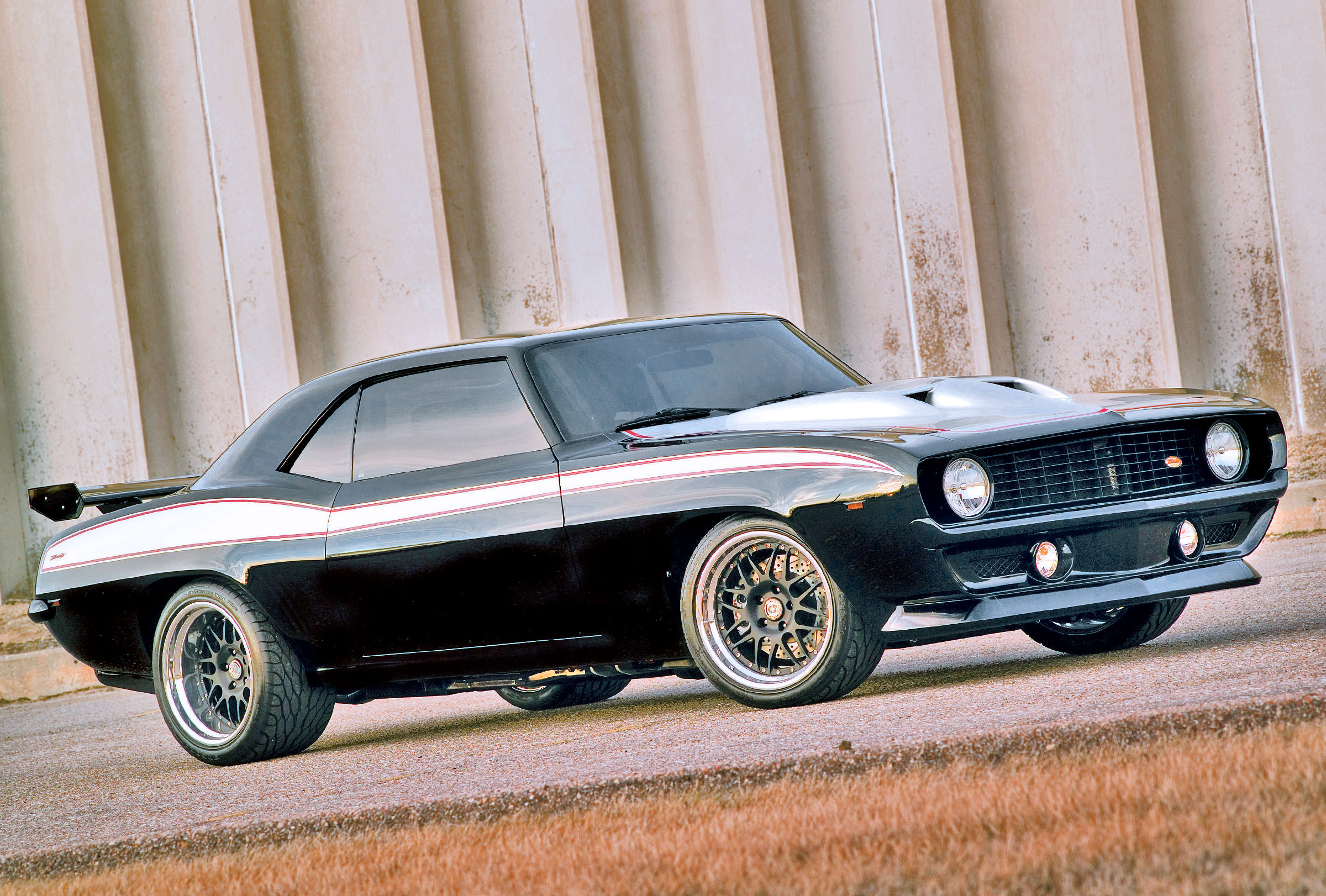
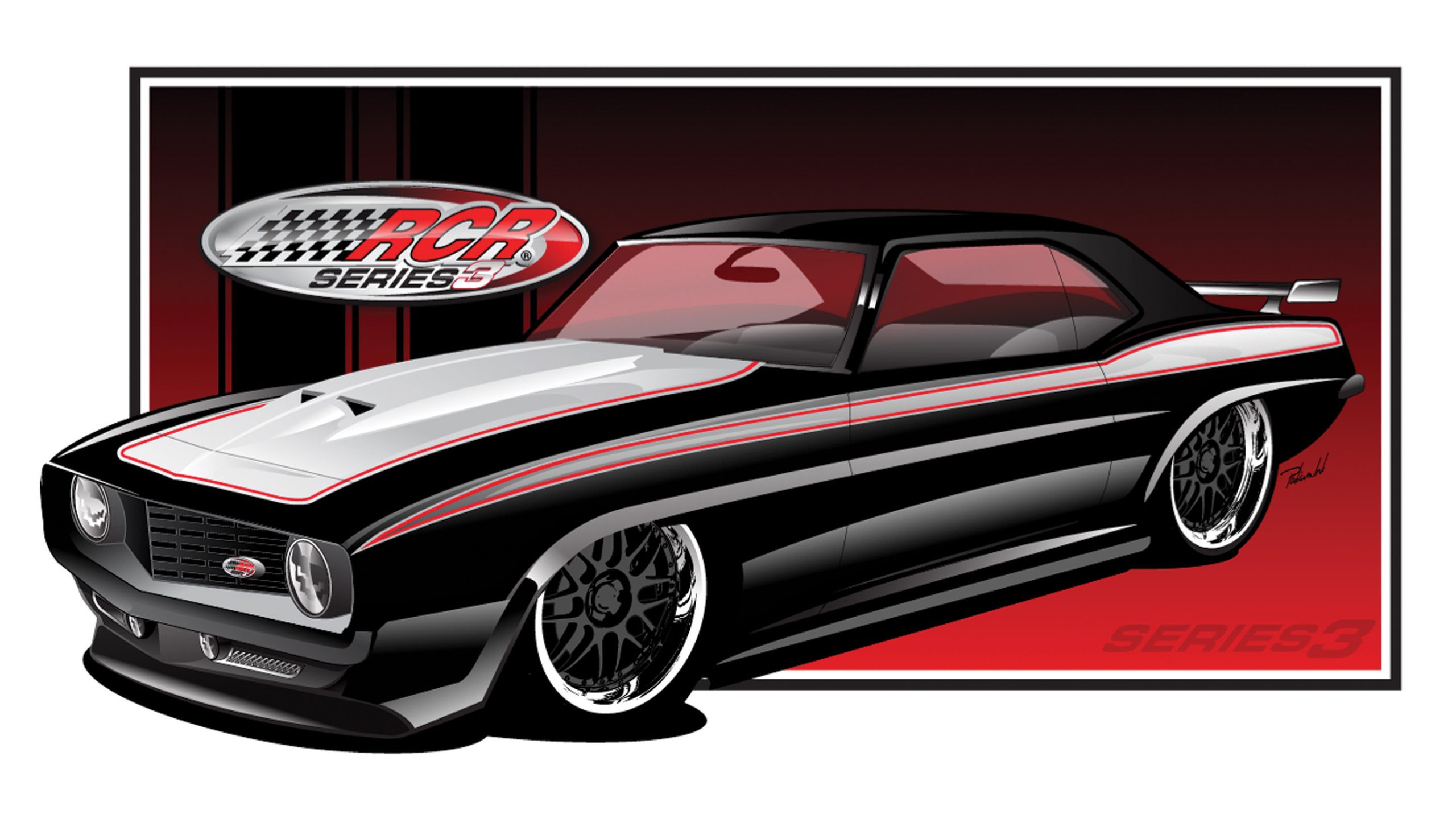
Enter the Richard Childress Racing Series3 Camaros, each an extension of the spirit that led the late Dale Earnhardt and other great racers into history. Only 50 of these cars will be crafted, every one a vision of Childress himself, since he embraced this clever endeavor from the start. Working closely with RCR’s team of engineers and fabricators, Brook Phillips and his crew at Total Performance, Inc. (TPI) in Wichita, Kansas, developed these new-age ’69 Camaros, based on knowledge gained on the street and from circulating the most famous racetracks in the nation.
The Legendary “Intimidator”
This particular RCR Series3 Camaro is the first model, serial No. 3, known affectionately as the “Intimidator,” as it was fitted with the actual engine block and components used in Dale Earnhardt’s No. 3 GM Goodwrench Service Plus Chevrolet Monte Carlo in the 2000 Daytona 500. Sold for $575,000 at the Barrett-Jackson auction, it instantly earned its place in history, yet every one of the remaining 49 cars will be equally awesome and identical—other than the engines—in every way.
A Modern Take on a Classic Body
Rather than searching for original ’69 Camaros, which would have proven to be both costly and difficult at best, RCR opted for Dynacorn’s beautiful body shells, licensed by GM Replacement Parts. Beyond the body shell is an array of ZFX aircraft composite/carbon-fiber body panels, including a special one-piece hood that tells of the power within. Other extreme pieces include special rocker panels, a front fascia with an integral spoiler, shaved driprails and door locks, a rear rolled pan, custom bumpers, and a NASCAR Car of Tomorrow (COT) rear wing.
Add to this flush-mounted glass in back, a matching windshield with a custom logo, and black Planet Color paint accented with red outlines around silver panels laid down by TPI, and everything’s in place for future owners to make a little history of their own.
Performance and Chassis Upgrades
In keeping with the looks of these Camaros, the chassis will utilize a wealth of refined hardware, including a bolt-in subframe connector and a Chassisworks G-Machine bolt-in frame clip that tie everything together. This greatly improves rigidity to the unibody structure, allowing the triangulated four-link, Hypercoil springs, and Bilstein shocks to maintain the Chassisworks FAB9 Direct Fit 9-inch axle housing fitted with Eaton Detroit’s Truetrac and streetable 3.55:1 gearing.
Wheels, Tires, and Braking Power
It’s here that special mini-tubs house three-piece 18×12-inch HRE Competition Wheels and 335/30ZR18 BFGoodrich g-Force T/As that instantly turn power into motion, and lots of smoke if you’re careless. Up front, a set of fully adjustable A-arms and a 1-inch sway bar add to this capability, making the most of 18×10-inch rims and 245/40ZR18 rubber.
As for braking, RCR opted for Baer’s Track System with PBR two-piston calipers and 13×1.1-inch rotors pressurized by an ABS master cylinder applied through a NASCAR-inspired billet pedal assembly.
Powerhouse Engine Options
Each RCR Series3 Camaro comes with two engine packages, the first being an all-aluminum 427 small-block Chevy developing 500 hp, and a second RCR SB2 NASCAR race engine tuned by RCR to 603-plus hp at 7,200 rpm. Both of these engines are fully documented with dyno sheets, along with a full race history on the RCR race engine.
To secure the engines properly, special motor plates are utilized up front and in the center, again demonstrating the serious nature of these cars. Beyond these tremendous engines, there’s a Tremec five-speed manual transmission with a Ram 10.5-inch clutch pack backing them up, while a Be Cool modular radiator keeps things cool.
The Thrill Behind the Wheel
While all of the hardware is impressive to see and hear, the real thrill comes behind the wheel when all that power raises the pulse, testing every aspect of car and driver with performance that promises no lies. These cars return an absolutely thrilling driving experience, from the custom steering wheel and tilt column to the RCR Series3 Auto Meter gauges set within a specially built carbon-fiber/composite dash assembly and pad.
A Refined Interior for Maximum Comfort
This theme continues in the custom carbon console, door and side panels, and other trim pieces that tell of this car’s special nature, including a five-point harness augmenting the rollcage. Add details such as billet trim, leather-covered ProCar Series 1 seats from Walt’s Interior, a custom rear seat, Vintage Air A/C, and power windows, and little else will be needed to achieve automotive nirvana—a perfect world indeed!
A Piece of NASCAR History
As legions of pony car enthusiasts center their attention on the ’69 Camaro, there’s no question that each of the 50 RCR Series3 Camaros will be treasured by collectors and feared by those who know their performance potential. Equally stunning and capable, these cars are destined to become a part of history, as they benefit from a lengthy lineage that can be traced to the roots of NASCAR and those who made the sport what it is today.