Hot Rods
Becky Walker, a housewife and career woman from Jarrell, Texas, has two hobbies: raising Great Pyrenees show dogs and her purple prism 53 Chevrolet show truck, appropriately named 53 PAW. About six years ago, my husband, Billy, dragged this raggedy old 53 Chevrolet farm truck home and told me he was going to fix it up for me to drive. That was the beginning of a major project that lasted over two years. We worked every night, weekend and holiday on that truck. In fact, I distinctly remember spending one New Year’s Eve, back in 2004, helping Billy change out two sets of springs.
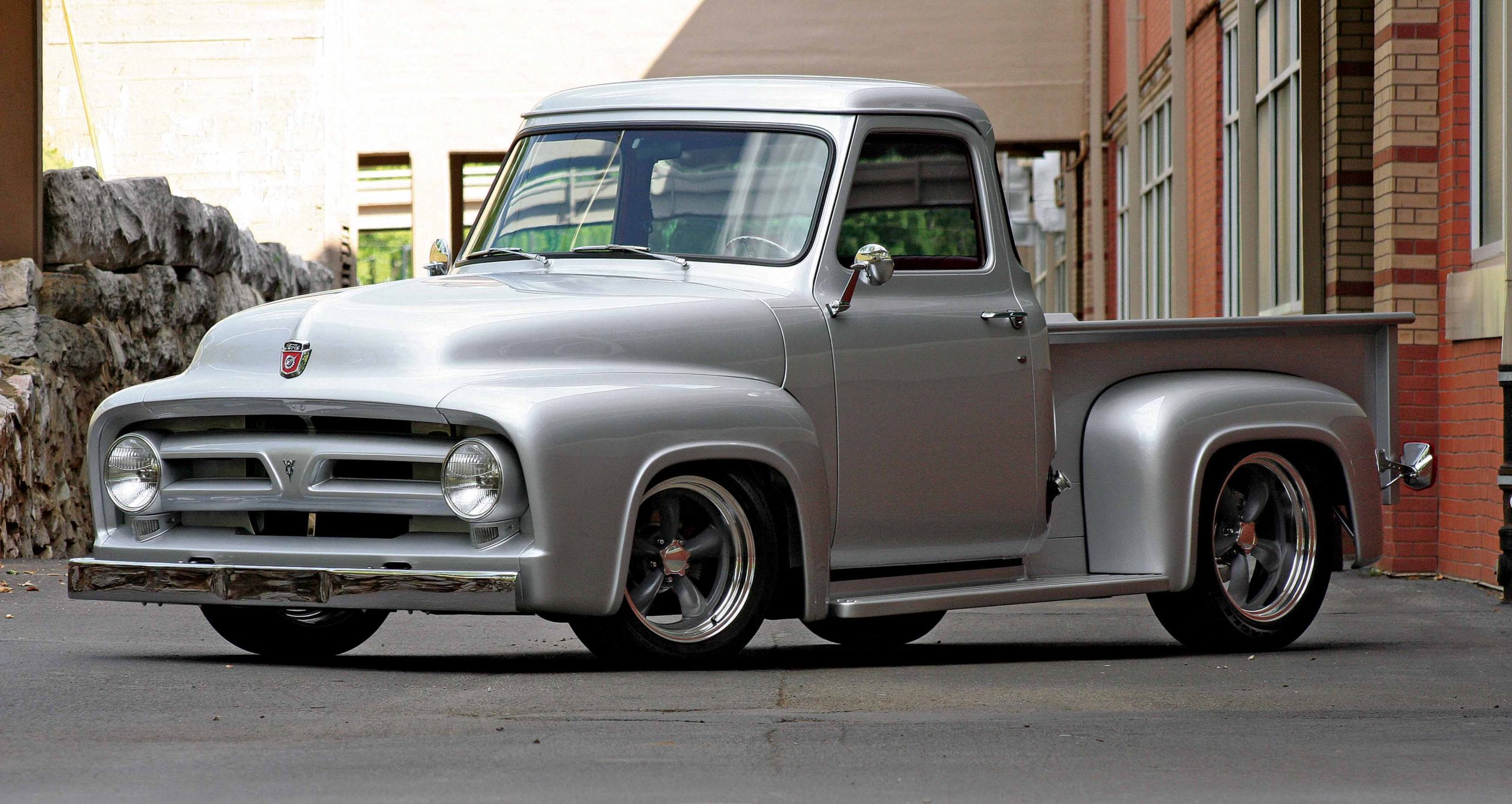
Longtime classic truck enthusiast Mark Coleman has built countless classic cars and trucks over the years, including a trio of early Mustangs, a ’56 F-100 Ford panel truck and a ’55 Ford SuperCab, which have graced these very pages. When it came time to build another truck, Coleman took a long, hard look in his own backyard and decided that his old ’53 F-100 would be the prime candidate.
Be Cool is no newcomer to cooling heavy metal. For years it has provided cooling solutions for some of the most impressive high-performance engines to rumble down the streets and dragstrips of America. The folks at Be Cool understand that having the proper cooling components in any car or truck is vital to keep an engine safely within its operating temperature range. They also understand that to make cooling and installation easier, they had to design a full bolt-in system, a system that would fit hundreds of applications for classic cars and trucks, as well as more modern vehicles that also need cooling help.
Say you drive an older pickup in which the original designers weren’t all that interested in engine management. Thanks to the addition of that high-horsepower engine, however, you are very interested in what it is up to. But you are also interested in keeping the dash area clean and don’t want to put a bunch of holes into it. You also don’t really want to have an old-style gauge panel hanging beneath the dash. What to do? For those who drive a 1947-’53 Chevrolet pickup truck, the ideal way to handle this problem is to install Haneline’s 3-in-1 gauge clusters.
The owner of this ’56 Ford pickup purchased it for a daily driver, and after driving it for a short time decided to make it more comfortable. Still running the original suspension, it rode rough and typically handled like an old truck, which it happens to be. He wanted a softer ride, and for the truck to handle like a modern sports truck, so several chassis improvements were in order.
After 1-1/2 years of preparing a rock-solid foundation for our Cimtex Rods-constructed ’56 Chevrolet Super Cameo pickup, the time finally came to hang sheetmetal, but not without experiencing a few major disappointments. “All I can say is, before you buy a truck cab or any kind of old car body, look before you leap,” commented Darrell Cimbanin of Cimtex Rods after picking up our ’56 Chevy big-?window cab from True Grit Sandblasting in Hutto, Texas. This cab was in worse condition than we originally thought. It’s easy to disguise what appears to be a good-looking truck cab with plastic filler and a nice paint job. Sometimes even the experts can be fooled.
Adding power windows has long been a popular aftermarket option for restyled pickups, as much for practical reasons as for comfort convenience. Worn-out window regulators will give people fits, and replacement parts have become increasingly harder to find, not to mention the lack of availability or the cost of retro units. So, if the vehicle is to have smooth, trouble-free window operation, it’s often easier and cheaper to replace the old regulators with new electric ones.
Dean Brown, a longtime rodder, was in the market for a new project car and stumbled across this ’52 Chevy panel truck, which turned out to be one of the original Helms trucks. The bakery cabinets had been removed but the body was in good condition, and it was still running with the original six-cylinder engine. Brown thought the truck was very cool, so he made a deal with its owner and drove it home. He formulated a plan of attack and started acquiring the parts he needed to turn it into a hot Chevy panel. The parts included a strong-running V-8 engine, a Turbo 350 transmission, a Fat Man Fabrications IFS front suspension and a new rear suspension that would provide a softer ride quality.
There are a few things you need to know about Sonny Wells. First, Sonny, who is a cabinetmaker in Clearwater, Florida, owns an Elkhart Blue 1967 Corvette with a black stinger hood. Actually, his wife, Jill, lets him share the Corvette with her. Second, Sonny has always had a hankering for an old truck. Third, Jill was tired of sharing the Corvette with Sonny and having to listen to him constantly complain that he wanted an old truck. With that in mind, Sonny began his quest for an old pickup.
Dave Kaminski wanted a custom-built truck, but he also wanted a vehicle he could take to a dealer for repairs, plug it into a computer for a diagnosis and determine the problem. In this hobby, that is hard to do with an old truck, given that computers rule the functions of today’s engines. Kaminski met with Frank Strianese, owner of The Car Shop in Springville, New York, and explained that not only did he want an old new truck, he wanted it to blend in with the Ford service trucks used by his Besroi roofing and contracting business in Buffalo. Ideas were passed back and forth, and soon a project began to unfold. Once you read how it was accomplished you will know that nothing is impossible to do.