


THE AUTO BUILDER
Featured

THE CAGED BIRD SINGS
The poor Falcon.
Were it not for Ford’s inglorious first compact car, who knows what the early Mustangs would have been like, built as they were on Falcon architecture? Today, everyone wants a Mustang, yet Falcon fans are few. Fewer still are those who crave Falcon wagons, and initially, Norman Schmitt was not one of them, either. He wasn’t after a Falcon, or a wagon, but when a friend told him about an old wagon for sale, he went to check it out. What he found was a rare ’63 Falcon two-door wagon, and it was in great shape. The price was right, so he bought it, with visions of a wicked Pro Street Falcon in his head, and he set out to transform those dreams into steel.

The All-Steel Dynacorn ’47-’53 Chevrolet Five-Window Cab
For years, truck builders have searched, looking for that much-sought-after early five-window Chevy pickup project. They are still around and are occasionally found, but it’s getting tougher, and their condition is ever worsening. It’s simple math really: Only so many remain, and many of the really solid ones have been spoken for. To The Delight Of Custom Truck Builders Everywhere, The All-Steel Dynacorn ’47-’53 Chevrolet Five-Window Cab Is Now A Reality!

Too Cool
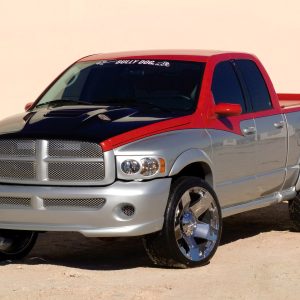
When Billy Durant approached Louis Chevrolet about designing a new automobile, Chevrolet was a famous race car driver whose exploits in the Indianapolis 500 were legendary. The year was 1911 and Durant, who could see the writing on the wall for his horse-drawn buggy business, figured who better to design an all-new, high-performance vehicle than a successful driver. Chevrolet, a company that was founded by racers and has produced some of the best high-performance vehicles ever to hit the pavement, has once again gone where no other manufacturer has dared to venture. With truck sales making up nearly 50 percent of their sales volume each year, Chevy wanted to create a Flagship vehicle for their pickup line. It had to be a totally new idea in pickups. But what was to be the angle? Luckily, someone at Chevy figured that since the Corvette holds that title for the autos, maybe the new truck should be equally as high performance. With that, the new Chevrolet Silverado Coolside II was born.
Spotlighter
POPULAR READS
TOYOTA STEERING SOLUTIONS
Solving the Steering Issues on Early Toyotas
Author
Matt Rust
Story & Photography
Overview of Early Toyota Off-Road Capability
Early Toyota four-wheel-drive pickup trucks are regarded as some of the most capable off-road vehicles around. The model years from 1979 to 1985 came equipped with a stout solid front axle, which was replaced in 1986 with an independent suspension design. These highly sought-after early Toyota trucks make terrific rock crawlers and trail rigs with relatively little modification. There is even a spec class of competitive rock crawling, based on these vehicles, known as Formula Toyota.
Common Modifications for Serious Off-Road Use
While early Toyota trucks are a great foundation, they do require a few modifications to make them capable of serious off-road use. Sure, you’ll need the basics, such as larger tires, lower gears and some kind of traction-aiding device in the differentials, but first there is a more important issue at hand.
Steering System Challenges
The steering on these early Toyota trucks was not designed with hardcore off-road use in mind. The stock system utilizes a front-to-back moving Pitman arm with an oddly shaped steering “horn,” keeping all of the steering linkage and components on the driver’s side of the vehicle. This design works fine for the type of use that Toyota had in mind, but with the extreme axle articulation required for rock crawling, this setup is virtually useless. The stock setup also limits the truck to about 3 inches of lift. Anything over that and the stock steering system begins to bind and becomes inoperable. It’s also a safety issue.
Tie-Rod Vulnerability
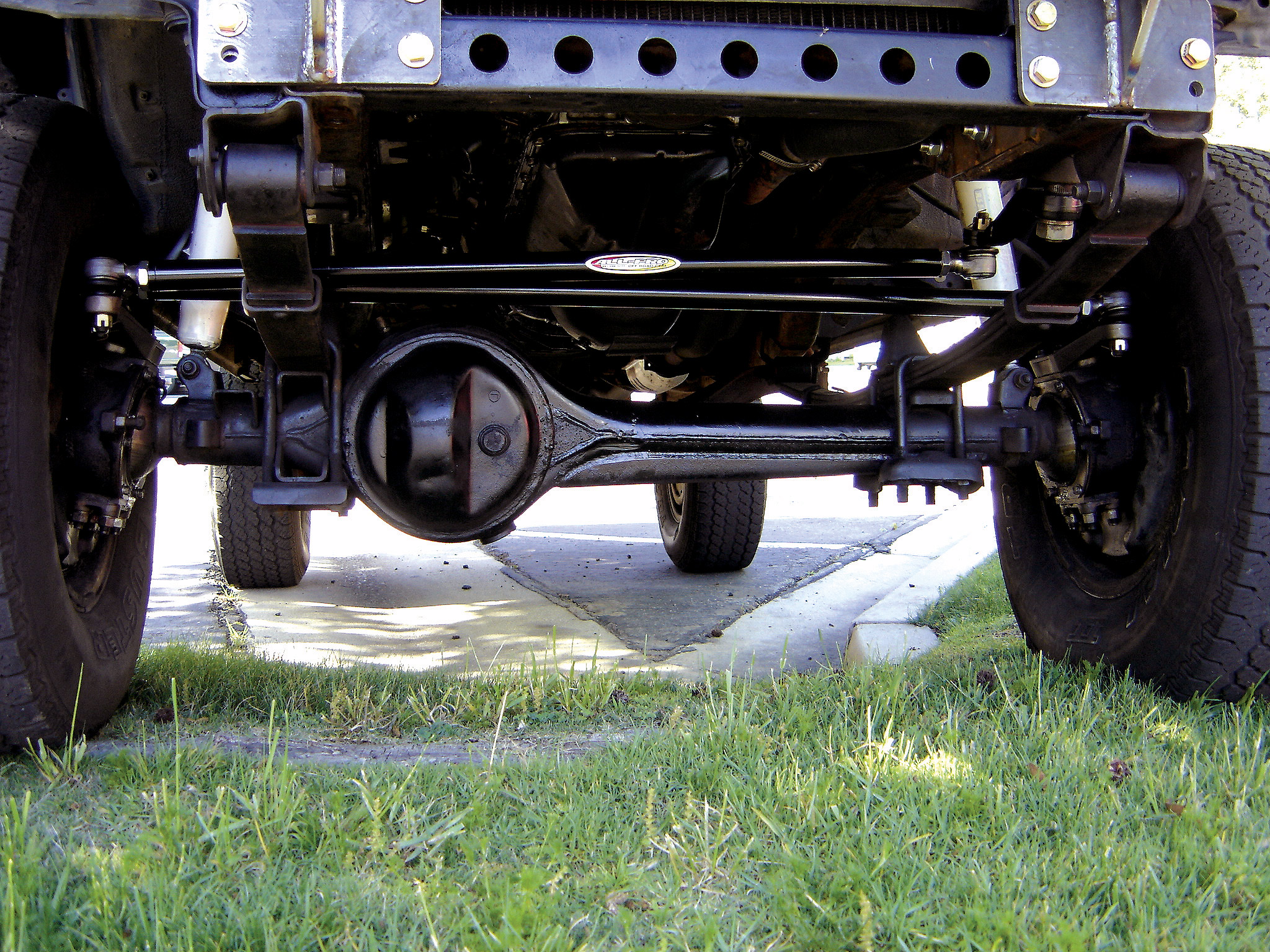
Another problem, common with any front, solid-axle four-wheel drive, is that the tie-rod linkage connecting the two front steering arms is positioned directly in front of the axle, below the leaf springs. With the tie rod in this location, it is extremely vulnerable to damage from oncoming rocks. If the tie rod is damaged from a good bash on the rocks, there is a good chance that you might not make it home.
All-Pro Hy-Steer(tm) Crossover Steering Kit Solution
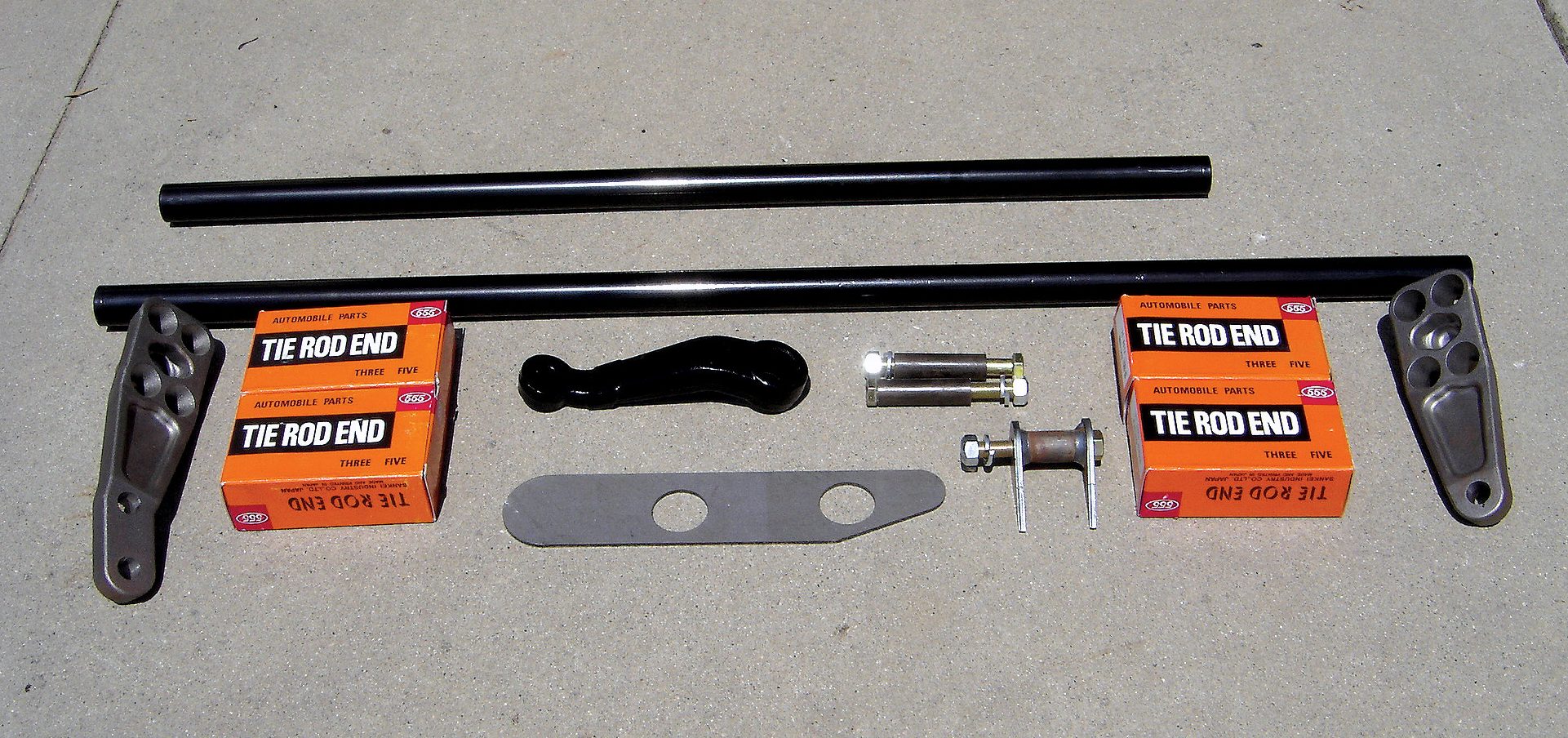
Fortunately, there is a single solution to both stock Toyota steering issues. All-Pro Off-Road has created a steering system for the early Toyota trucks that is built to exceed the demands of hardcore rock crawling. The All-Pro Hy-Steer(tm) Crossover steering kit actually replaces the steering arms on the knuckles with a custom-designed set that relocates the tie-rod above the leaf springs. This positions the tie-rod in a much safer location, out of harm’s way.
Benefits of the Hy-Steer System
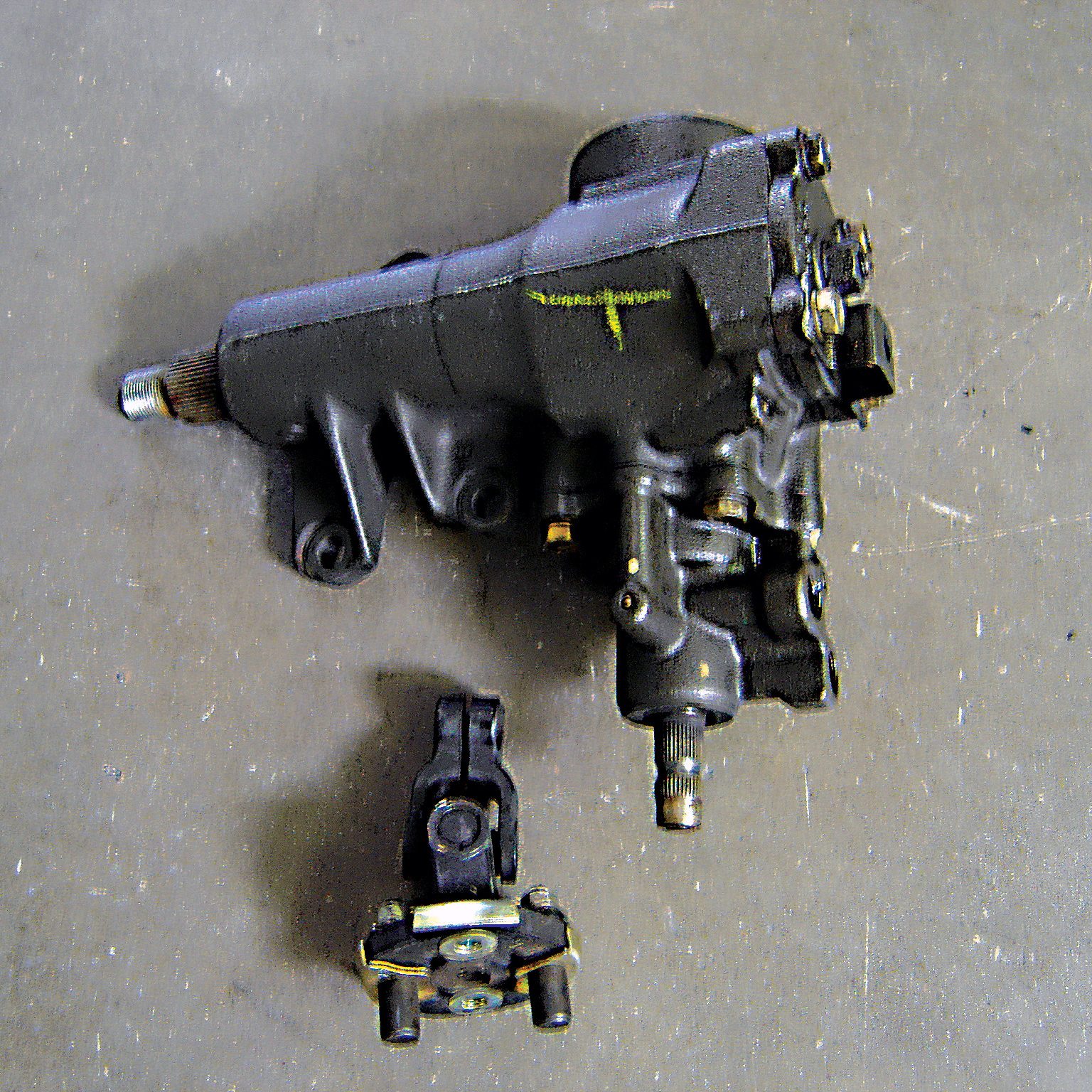
The other benefit to the All-Pro Off-Road Hy-Steer system is that it replaces the stock front-to-back driver’s side design with a crossover-style setup. This design works much better for the axle-twisting articulation needed for rock crawling, reduces bumpsteer on the road and will work with any size lift. The only drawback is that the stock steering box will not work with a crossover style setup. The stock pitman arm moves forward and backward, while the crossover design needs the pitman arm to move side-to-side. This is easily remedied by using the power steering box from a newer, IFS Toyota truck (’86-’95). This steering box is stronger than its predecessor and utilizes a side-to-side moving pitman arm. All-Pro Off-Road sells the newer IFS steering boxes, and carries all of the mounting hardware needed to complete the conversion.
Durability and Specifications
The All-Pro Hy-Steer(tm) kit is designed to take the abuse of serious rock crawling, and it’s backed with a lifetime warranty on all components. While there are similar kits on the market designed to accomplish the same thing, All-Pro’s newly improved Hy-Steer(tm) kit is the toughest one available to our knowledge. But that’s not to say it’s the only one that will work, so check around. Using re-designed one piece 4,130 Chromoly steel steering arms, these specially cast arms are more than 30% stronger than comparable billet steel versions. All-Pro also uses thick 0.250-inch-wall DOM tie rods and drag links, complimented with tough FJ-80 type rod ends. To complete the package, a special one-piece drag link is also included and the early Toyota truck can now steer through the roughest, toughest rocks with ease.
ARTICLE SOURCES
All-Pro Off-Road
541 N. Palm Ave.
Hemet, CA 92543
909/658-7077