







Hot Rods
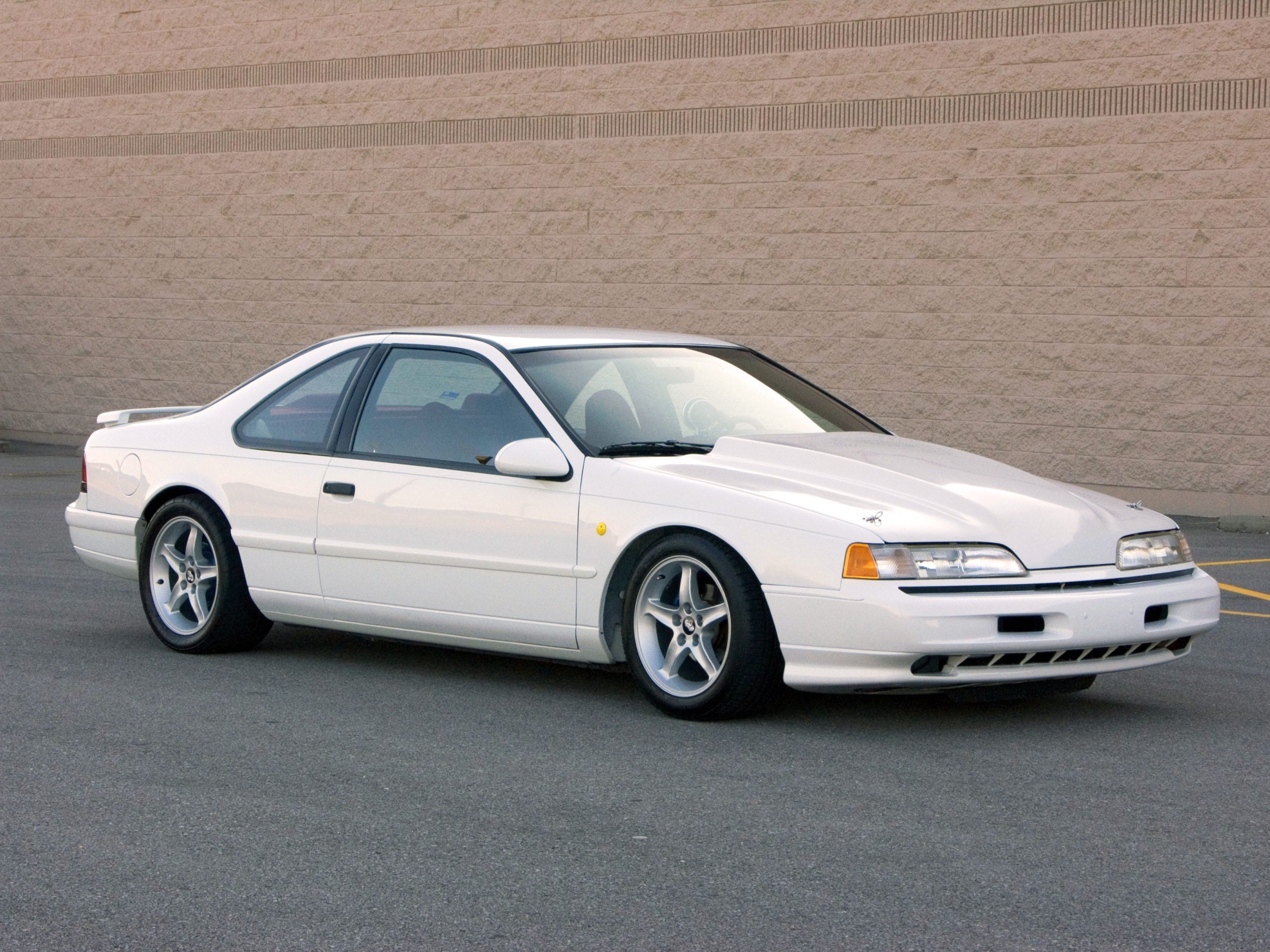
In 1992, Bruce Richards bought a new 5.0 Thunderbird. He wanted a spirited family car and daily driver, and he drove this car for 10 years before deciding that it had served its purpose. It now deserved a better, faster and powerful life. Richards liked the idea and wanted anything but a cookie-cutter T-Bird. He wanted a car that would run with the best of them, including Mustangs. The only problem was the size of the Bird. As it left the factory, the car weighed 3,940 lbs and made only 205 hp, so Richards’ decision was clear—he needed the car to have more power and weigh less.
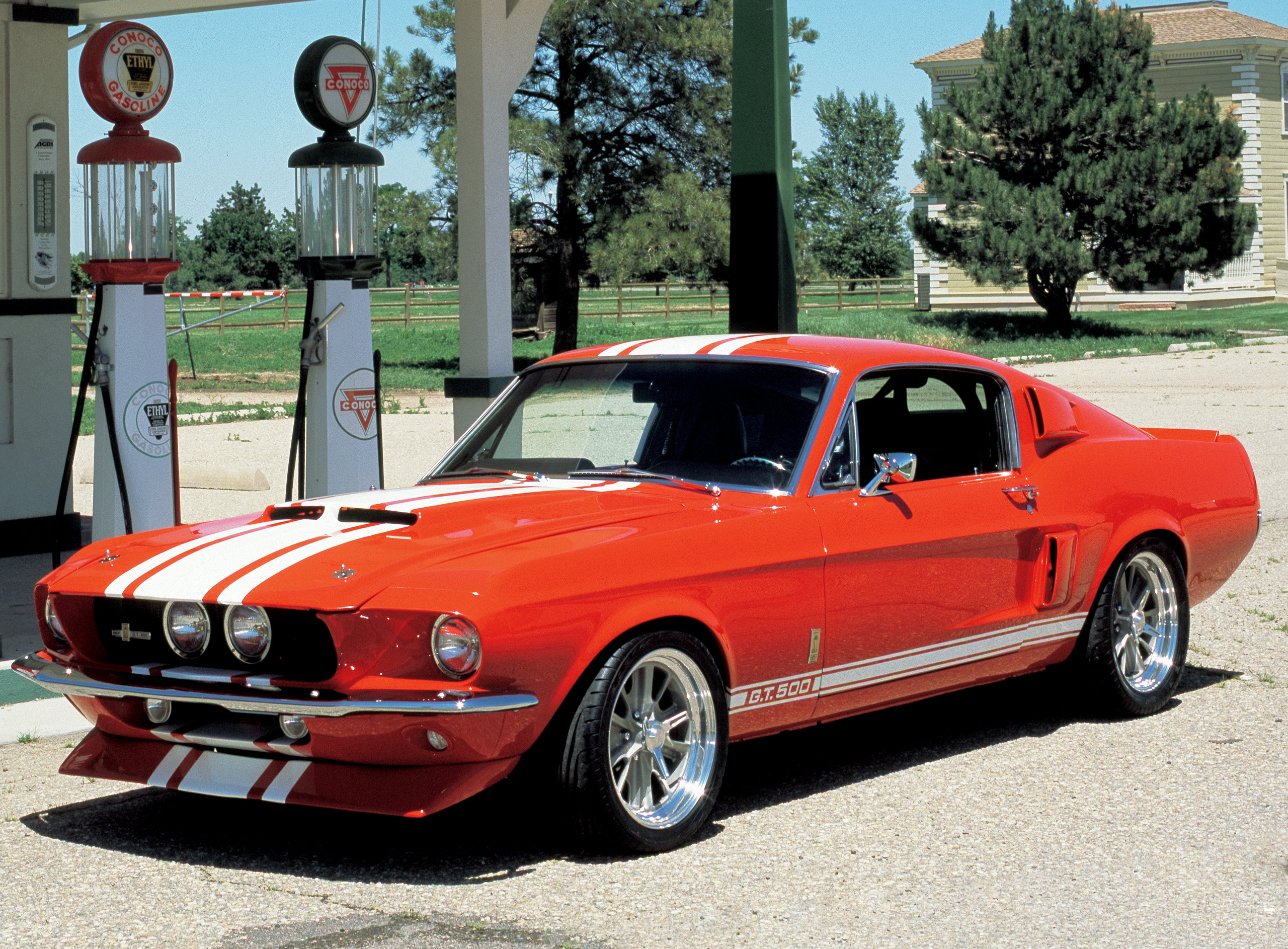
It’s funny how certain car-related associations work out. Maybe timing really is everything when it comes to cars. When Arvada, Colorado’s Ken Godsey was a teenager, his dream car was a ’67 big-block Mustang. “I always wanted to own a 1967 Mustang Fastback,” Godsey SAID. “And when I went looking for my first car with my father, we found a ’67 Mustang Fastback, one with a 428 FE engine that had been installed by the previous owner. It was the perfect car for me!” Godsey’s father, however, thought otherwise. “What I ended up with instead of that 428 Mustang was a ’70 Chevelle sedan with a 307 engine in it. I never forgave old dad for that one,” he SAID with a smile.
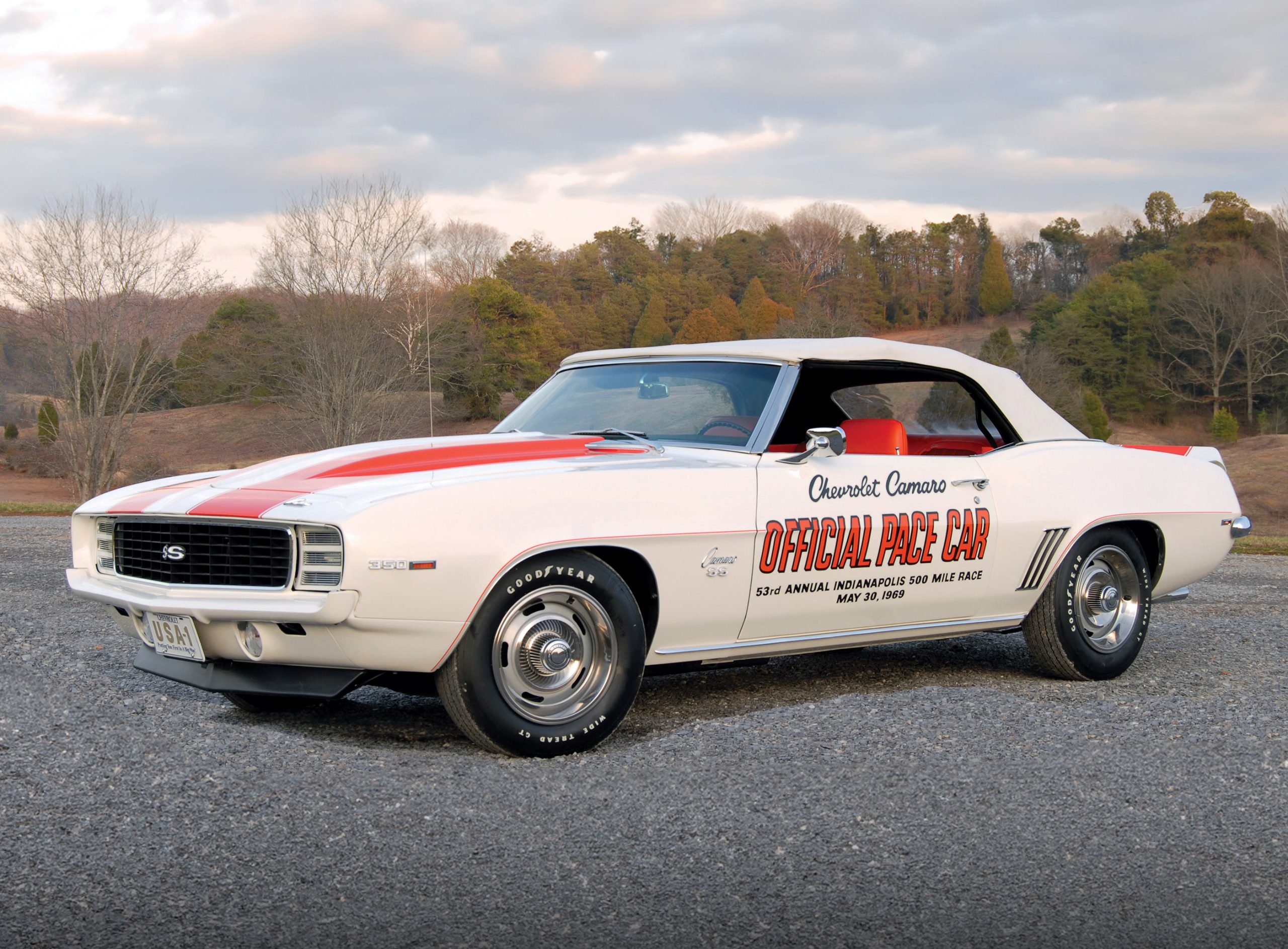
As recognizable as the first-generation Camaro coupes and convertibles are, distinguishing a ’67, ’68 or even the extremely popular ’69 can be difficult for the uninformed. This can be especially true when considering the number of available options, including hoods, SS and RS option combinations and custom body modifications. However, making an accurate and quick identification of a potential project car, as well as tracking its history, options and drivetrain, is simple if you’re armed with the correct information and tools.
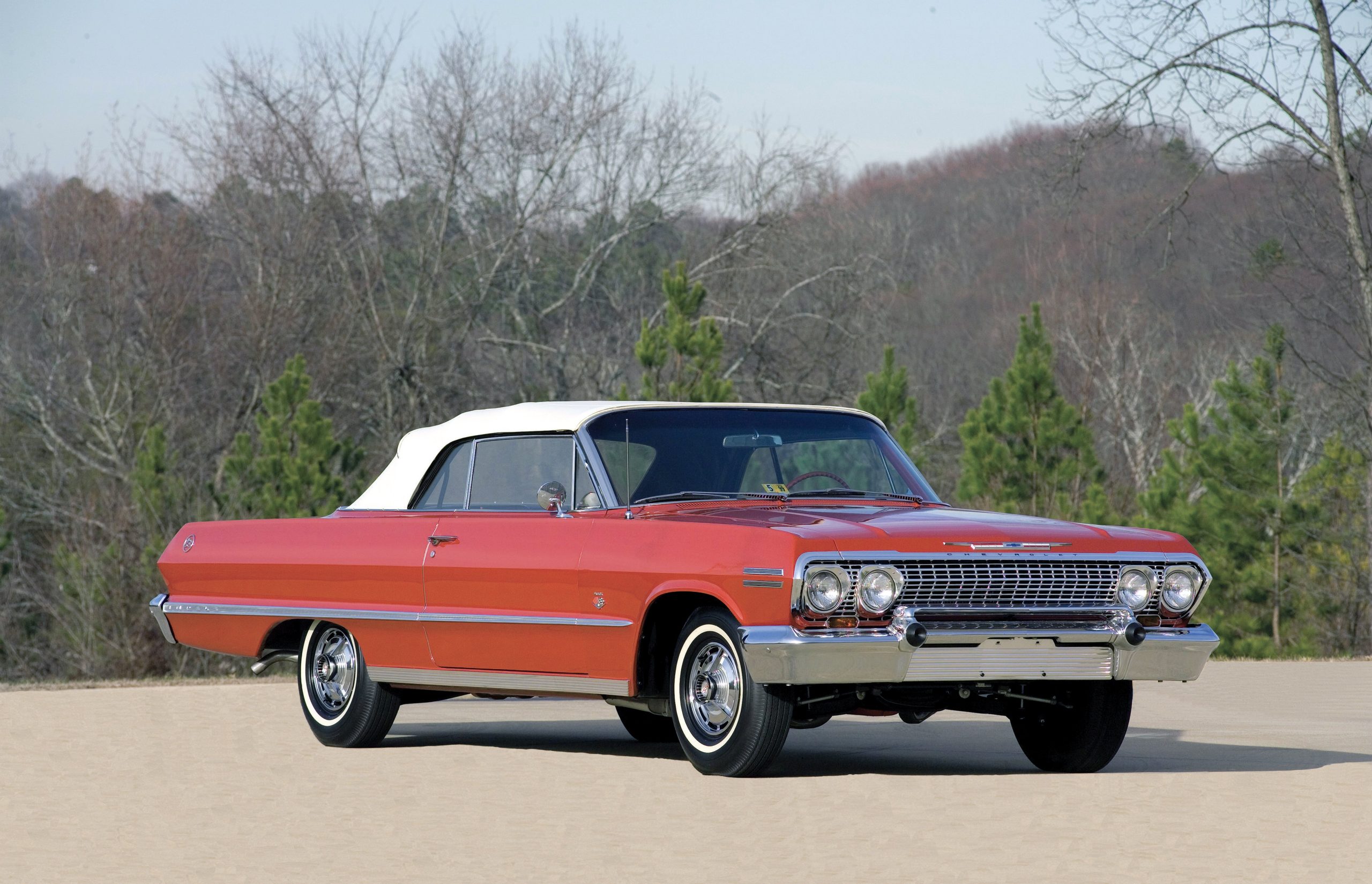
In much the same way that one person prefers chocolate and another vanilla, chicken over steak, college ball versus pro ball, Chevy enthusiasts tend to lean toward particular vintages, models, powertrains and other special Bow Tie features, which may be nothing more than a vehicle loaded with unusual options that make that car more unique, and valuable, than the next. Our love for such things is generally based upon a range of influencing factors.
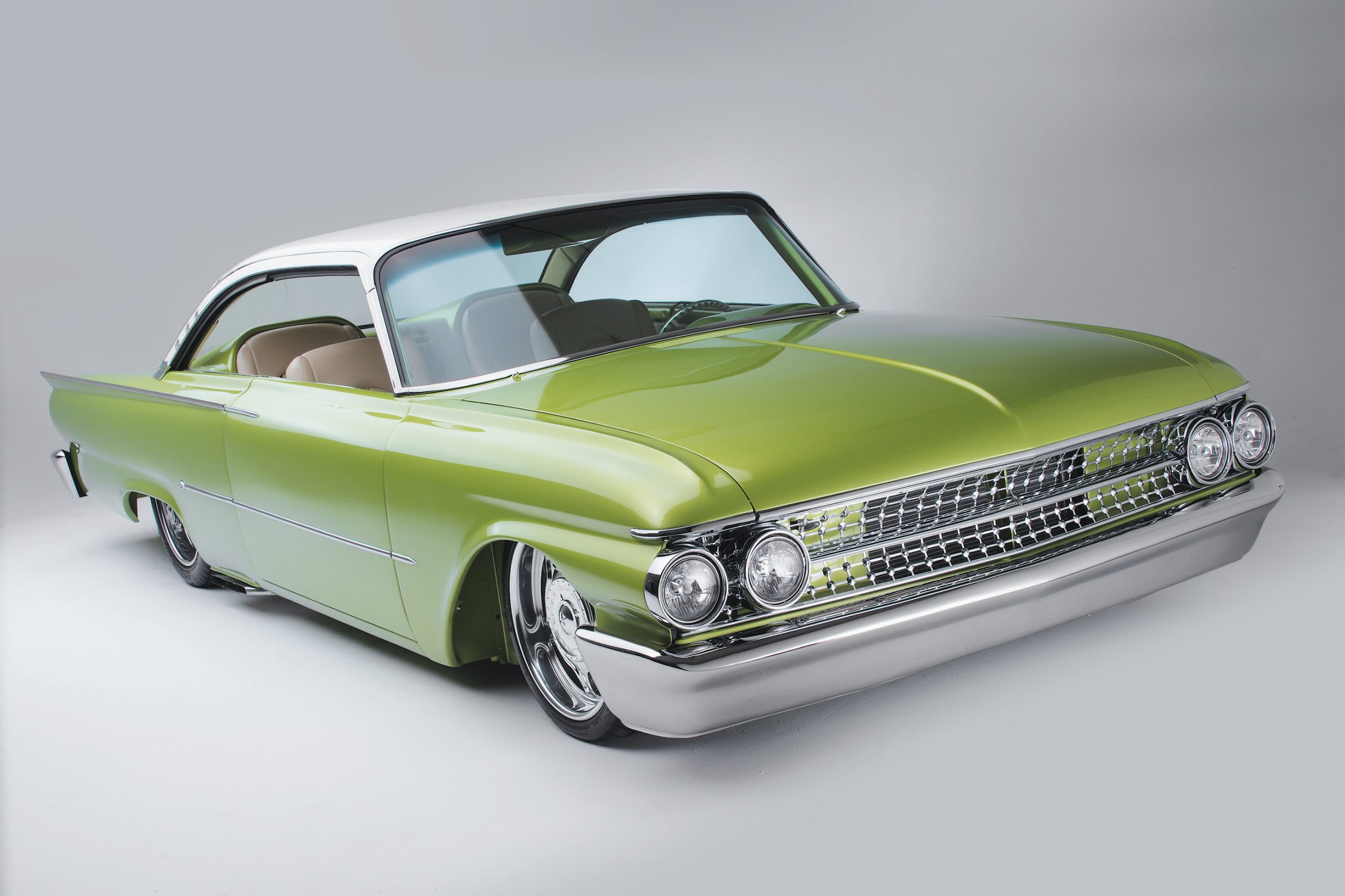
Long before we ever saw it in person, we were familiar with the ProRides-built SR61 Starliner. We ran a rendering of the car back when it was still on the drawing board, and we heard updates on its progress from time to time. But our first real introduction to the car was at Air Ride Technologies’ Street Challenge at Putnam Park Road Course. Among the sights we must admit we thought we’d never see was that of a big-dollar, 3,800-pound ’61 Starliner ripping around a road course. Immediately, we fell in love—a car this size, this expensive, this good looking, and a builder who’s not afraid to test his work to the limits? That sounds like the kind of car for us.
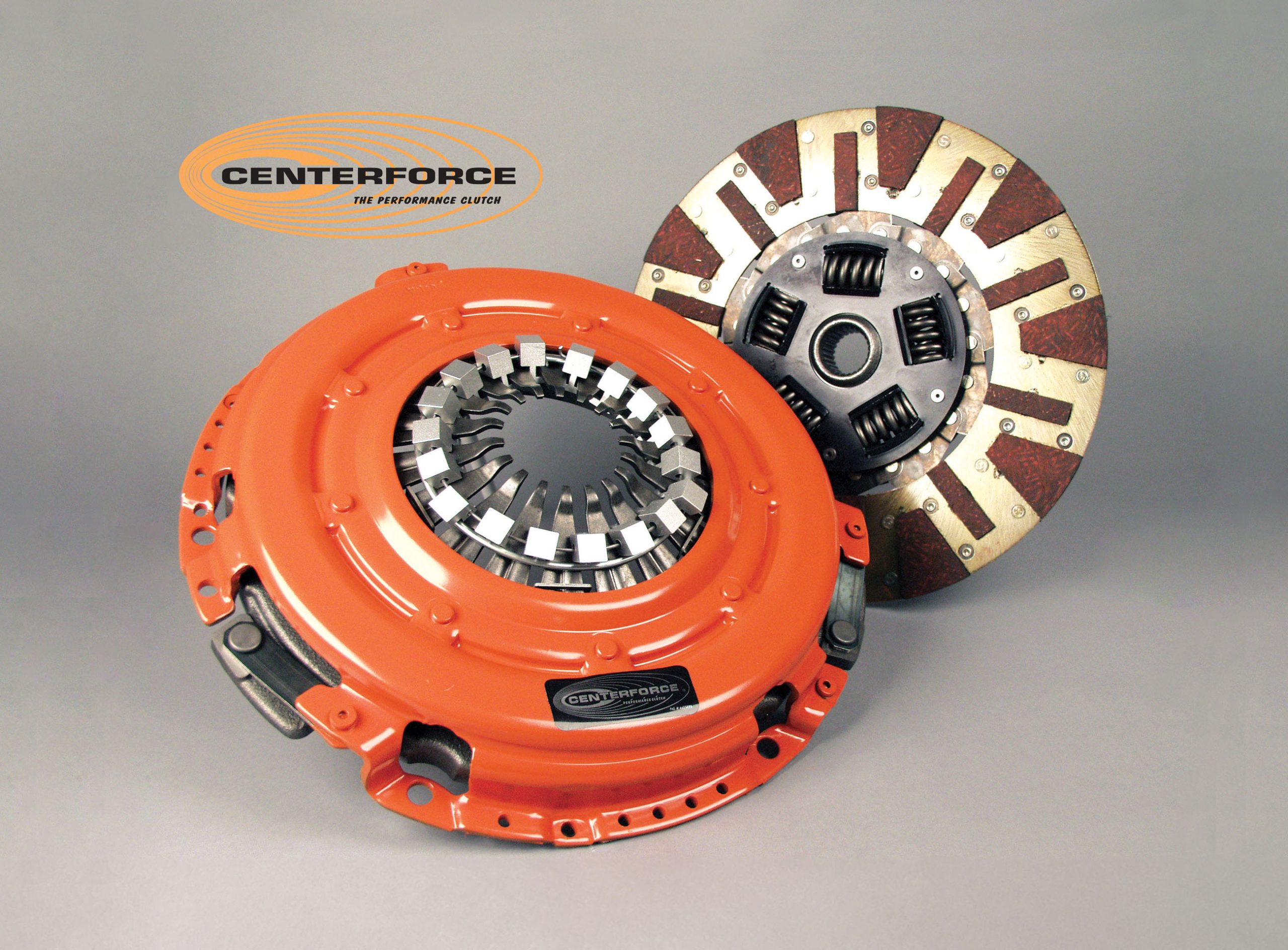
When it comes to enhancing the performance and reliability of performance cars, it seems as if enough is never enough, regardless of the vehicle, drivetrain or chassis. Then again, when you consider the problems that often cripple our cars despite the inherent strengths or improvements upon them, it’s often the driver that has the most detrimental effect on everything above the pavement.
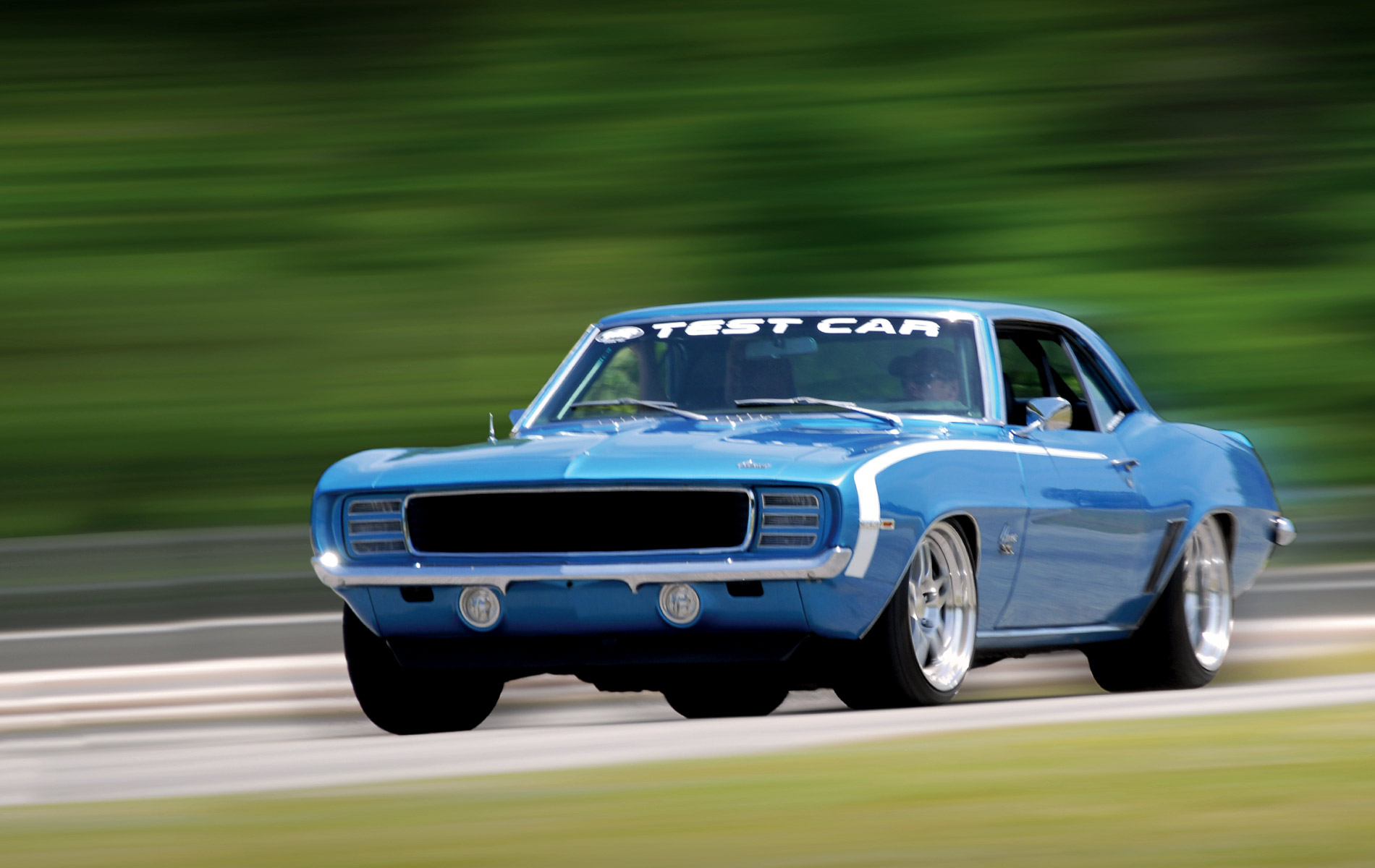
If you’ve attended a Goodguys event in the past couple of years, chances are you’ve seen this blue ’69 Camaro, owned by Stacy Tucker of Detroit Speed & Engineering. The car rarely sits still at a rod run, especially if there’s an autocross event on the grounds—then it’s time to race.
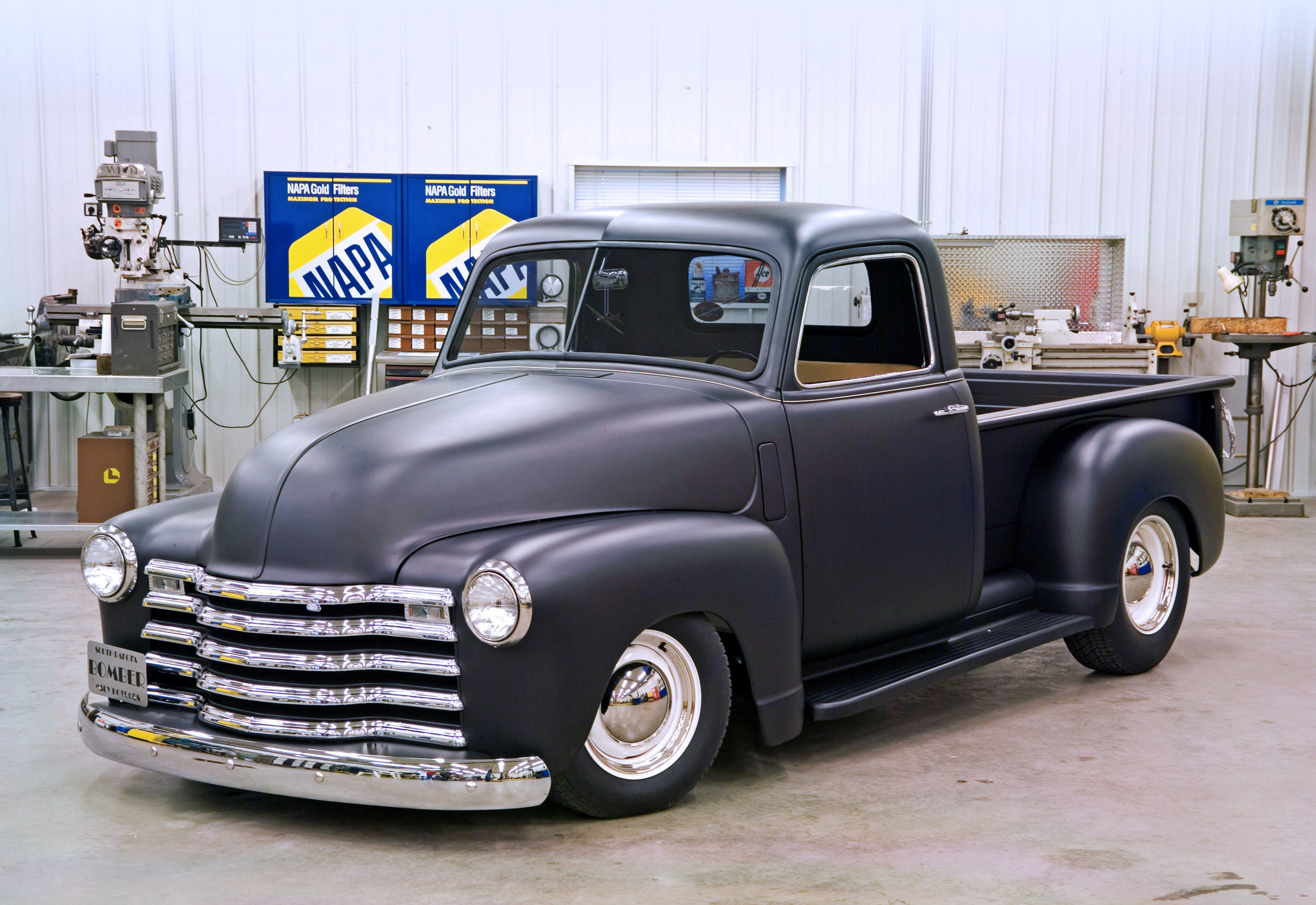
Instant gratification. It’s an addicting thing whereby somewhat suddenly, you find compete satisfaction. It’s the opposite of long, laborious projects that linger on for years, doling out their pain and pleasure in measured portions along the way. Sure, it can be fulfilling, but few things are more fun than putting things in fast-forward and doing what should take a long time in a short time. TV shows are based on just such rewards in this ever-accelerating time we live in, and in a reversal, we now find life imitating art as hot rodders do their own versions of Overhaulin’; we like to call it Over-Thrashin’. Generally, there are no cameras whirling, no lights and no scripts. It’s just a bunch of hot rodders, a good garage and maybe stacks of empty pizza and parts boxes in the corner.
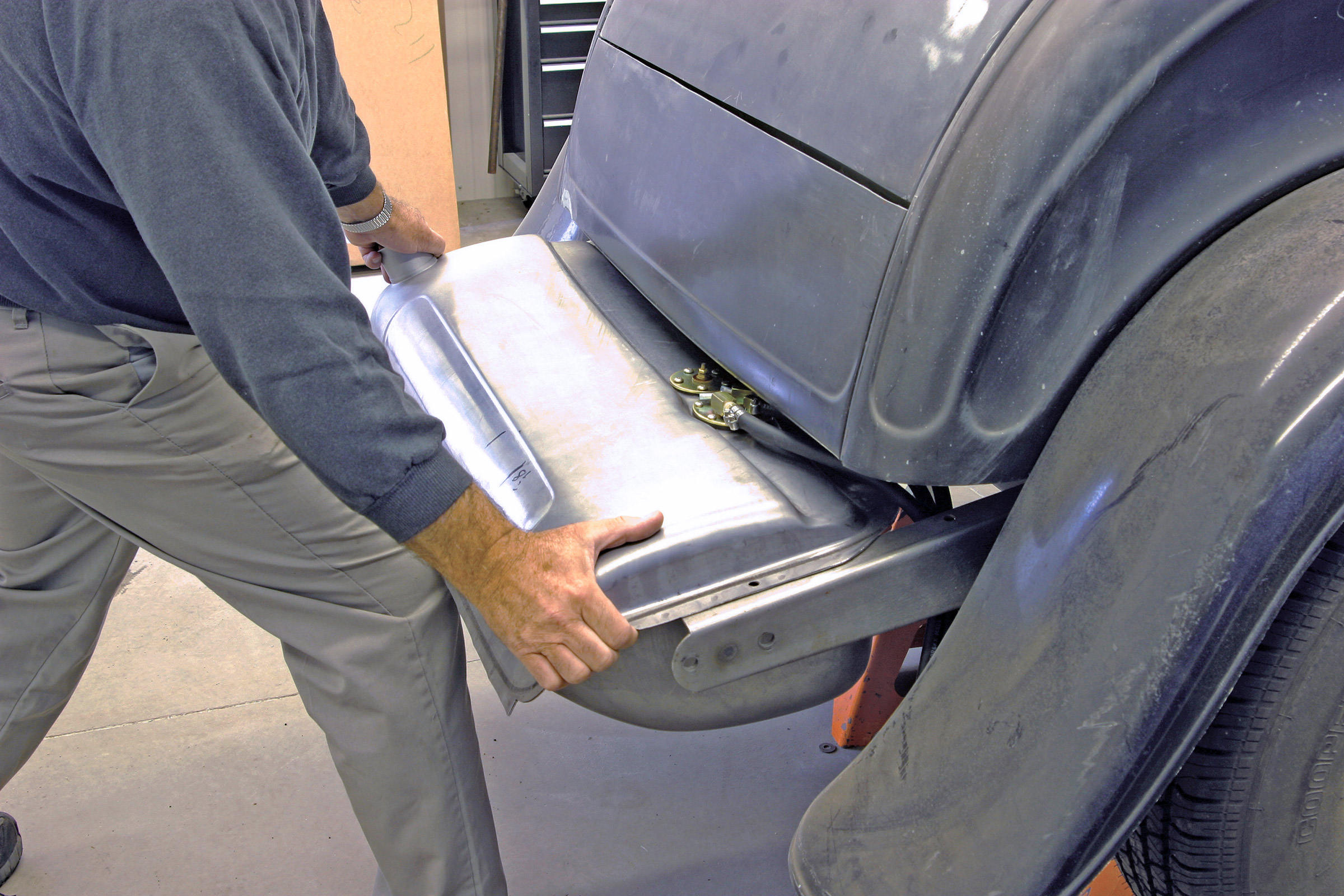
More than one technical article has been written about gas tanks. Some of these articles would lead you to believe that a foam-filled fuel cell is the only solution, and others give you the impression that any tank will work as long as you have a high-dollar, killer fuel pump. However, we believe that the truth lies somewhere between these two opinions.
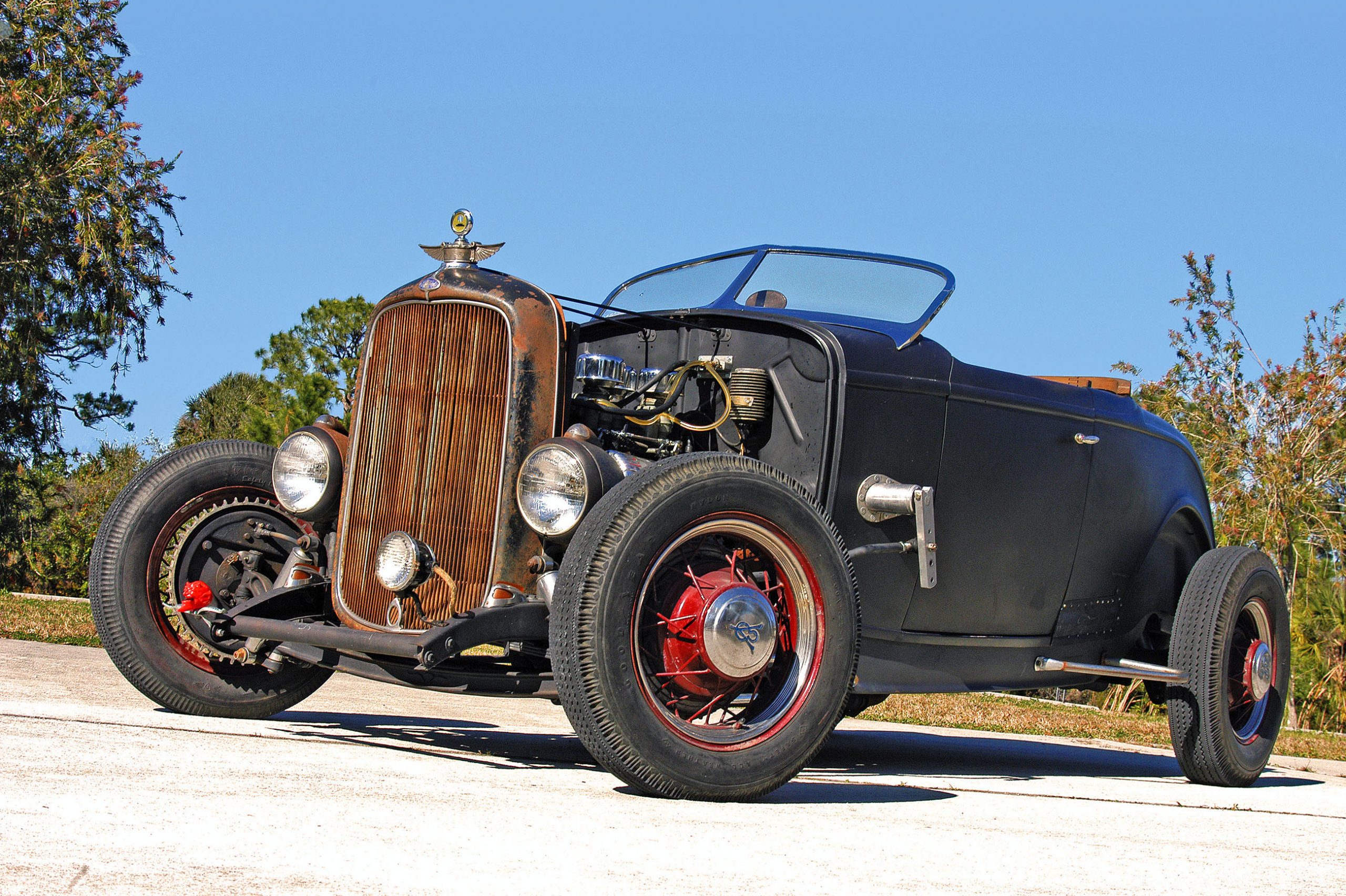
Building a vintage hot rod wrapped around a modern chassis and body is a popular segment of the hobby today. Over 10 years of parts collecting went into the construction of this hot rod. The finishes on this car all look 50 years old, but in reality, the car has only been built for 5 years. It is a masterful blend of the old and the new.
