Edit Template


THE AUTO BUILDER
Menu
Featured
PUMP THE POWER: PART 2
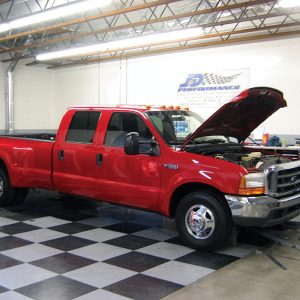
Auto manufacturers are constantly working to develop trucks that safely tow and haul more weight. However, the byproduct of high load capabilities is a rough unloaded ride. On a recent visit to J&D Performance, we found the crew beginning work on an Air Ride system for the owner of a 1999 F-350 two-wheel-drive dually. The owner of the truck was happy with its ability to tow and haul, thanks to Part-1’s addition of a full Banks Power Pack, but extremely unhappy with the truck’s ride when unloaded.
SUPERBIRD REBIRTH
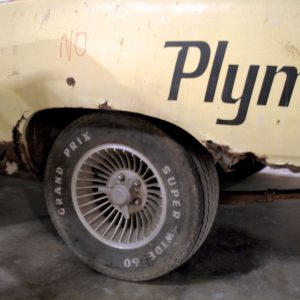
In 1970 Plymouth introduced the Superbird. It was equipped with an aerodynamic nose, a shape that was ahead of its time, and it had a ridiculously high wing that gave it track performance and a unique trademark. Only in 1970 were the Superbirds produced, and a mere 1,920 left the factory. Of those, 23 percent were painted Lemon Twist.

FREDDIE’S ’55
Once a West Coast gasser, this ’55 Chevy made its way to Lebanon, Ohio, thanks to longtime Chevy enthusiast Freddie Green. That was back in 1978, when his son Jason was just four years old. Fast forward a few years, and Jason, professing to be a Chevy man since birth, took ownership of the car from his father at the age of 10.

Spotlighter
POPULAR READS
-
The Auto Builder’s Hottest Product Picks from The Triple Crown of Rodding 2026
-
Product Spotlight: Bill Mitchell Products Aluminum LS Engine Block
-
PRODUCT SPOTLIGHT: 60-66 Chevy C10 Fresh Air Vent Block Off Plate
-
Product Spotlight: Pyramid Optimized Design Sequential Aurora Taillight for 1964½–1966 Mustang
SMOKIN’ SS – Part 3
Fabricating Custom Suspension Components
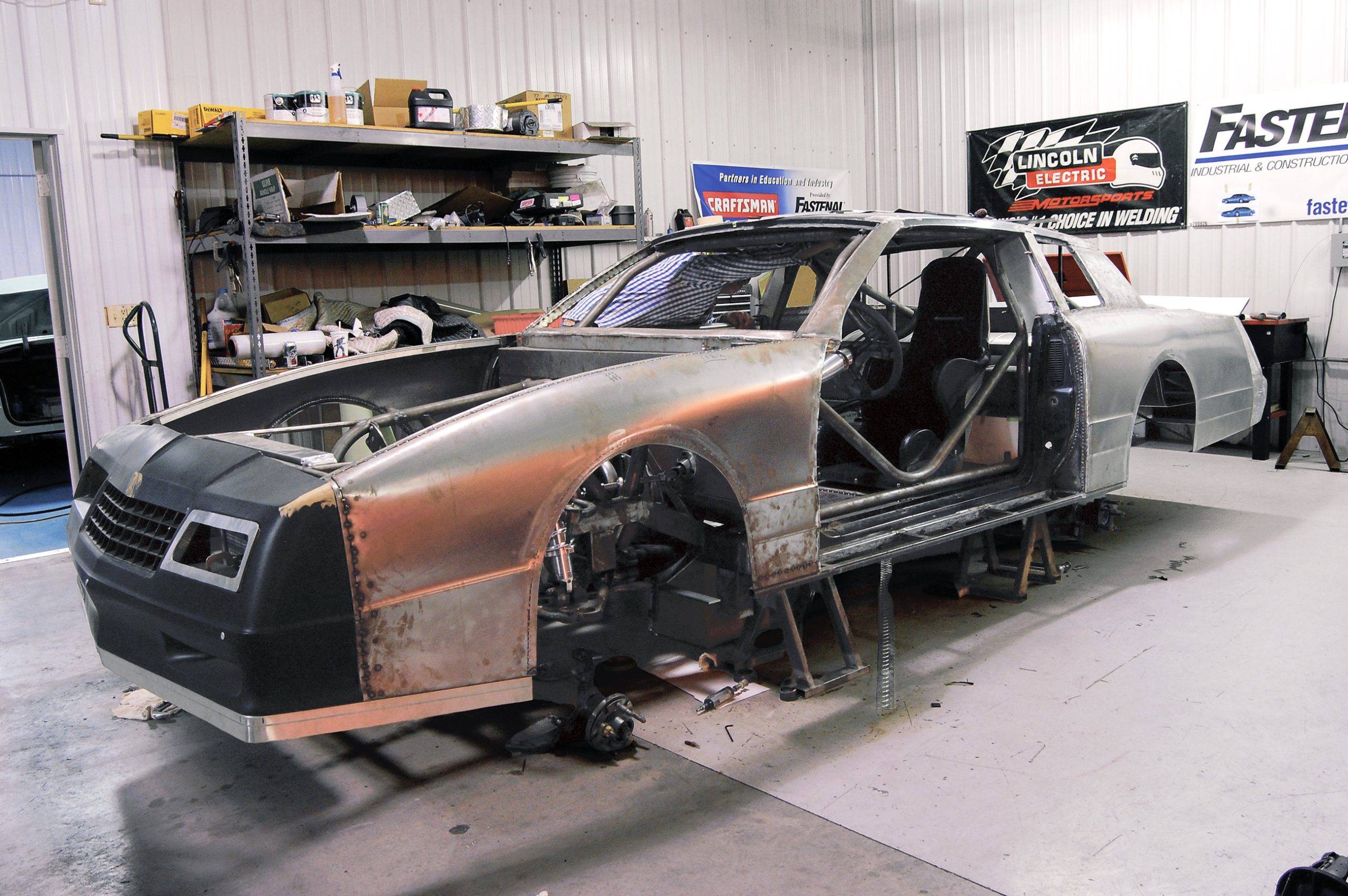
In a hobby where obtaining custom suspension pieces or a complete new tubular frame/chassis is as simple as picking up the phone, there are those enthusiasts who prefer a more hands-on role in the completion of such upgrades, which, of course, can mean many things to many people. Some simply want to be more a part of obtaining the parts they need, while others want to make every part exactly the way they want.
So how is a person to know which aftermarket parts are overbuilt and which are not, or to what extent a person should go as far as modifications are concerned? Admittedly, there are no easy answers to any of these questions, aside from considering the reputation of the companies building such parts, the quality of the parts themselves and the experience a person has to determine to what extent an upgrade should be taken.
Mark Davis of the Metalcraft Tools SkillCenter encourages his students to make their parts and build them in the configuration they desire. That is how he handled the suspension fabrication on the Smokin’ SS project Monte Carlo. But in the case of your own project, with all the aftermarket components available in the suspension department, why would you go to all this trouble to build nearly every component under the car? For the average tuner, this kind of fabrication isn’t feasible, but Davis puts his students through the paces of a real-world fab shop.
For Davis, he first laid out the specifics, and then his students designed, fabricated and assembled nearly every suspension component on the car. Here’s Mark Davis’ take on his students’ own project, and what he has to say about building parts:
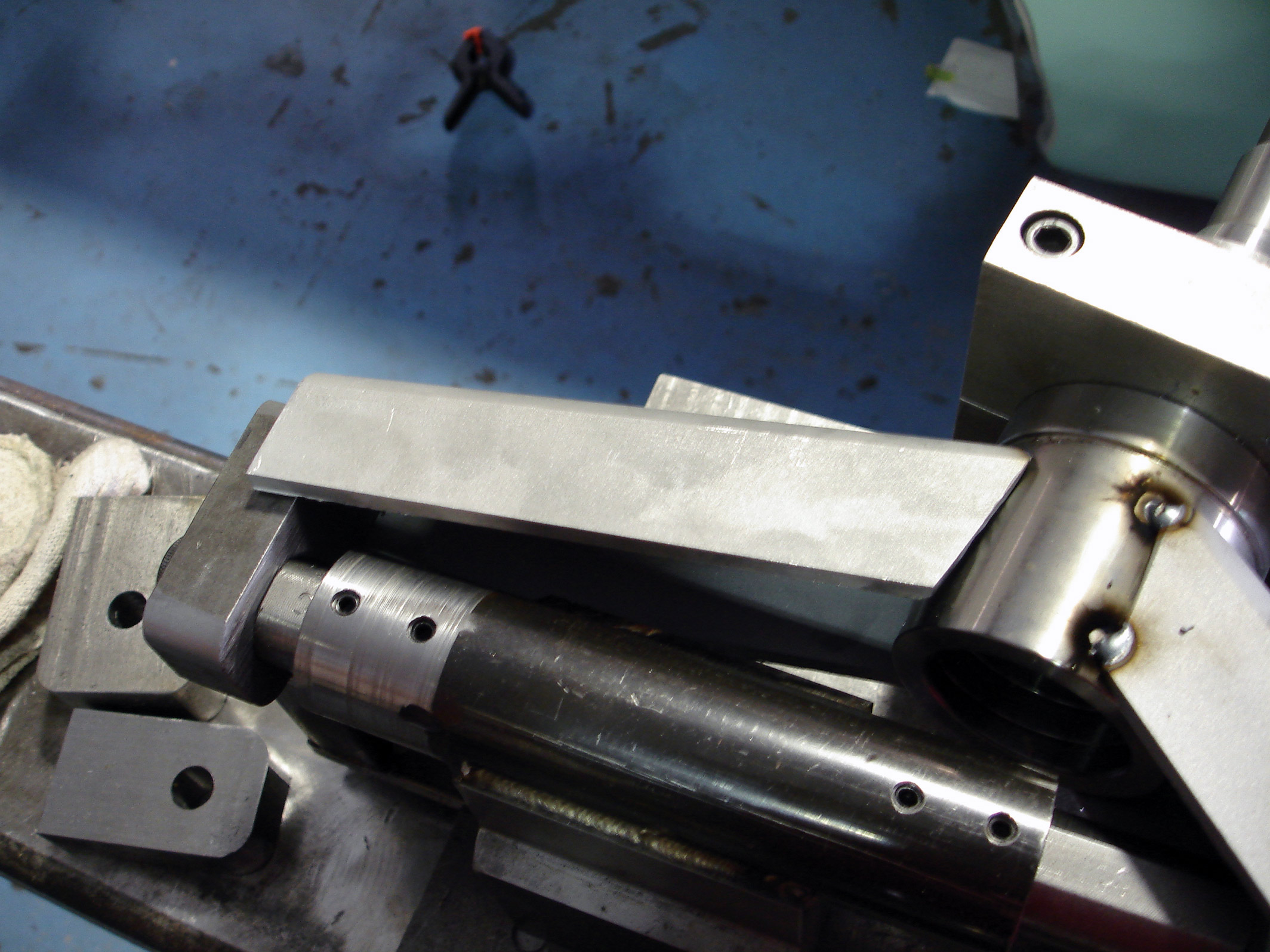
“The Smokin’ SS chassis is about performance. So, rather than tweak on 20-year-old technology, we chose to design a versatile chassis with a multitude of combinations that will allow us to tune the Smokin’ SS for any challenge. From AFCO double-adjustable shocks to strategically placed weight boxes, the chassis has built-in adjustability. Specially designed component slugs allow us to change caster, camber, ackerman, anti-dive, roll centers front and rear, pinion angle, wheel-base lead and track-bar heights. With static weight boxes located throughout the car, 40-pound blocks of tungsten can be shifted front to rear, right to left, so fine-tuning the chassis to perform on any surface or under any adverse condition is easy. Tire footprint can be optimized with a simple turn of a wrench, taking even the best of drivers to their limits. The ‘blacktop dyno’ will set the marks and our ‘zero to fear’ chassis will erase them.”
Obviously, Davis has confidence in the Metalcraft Tools SkillCenter students and realizes the potential of this Monte Carlo project. It will be versatile in many aspects and a tremendous learning platform for the students. The custom suspension system is a key factor in the build, allowing for complete adjustability—adapting to the dragstrip, oval track and autocross. These simple adjustments will require different front/rear weight balances for each venue. Even the folks at AFCO see the value in such an exercise, offering to send a couple of shock technicians to re-valve the shocks and swap out springs if necessary. While the Smokin’ SS project is far from that point in its journey, it won’t be long until Davis and his team of students take their Monte Carlo for that first trip around the block.
Look for the next installment of this unique project as the students at the Metalcraft Tools SkillCenter fabricate custom seats, set up the pedals and install the brake system. For now, check out the awesome suspension under the Smokin’ SS and see how it all came together.
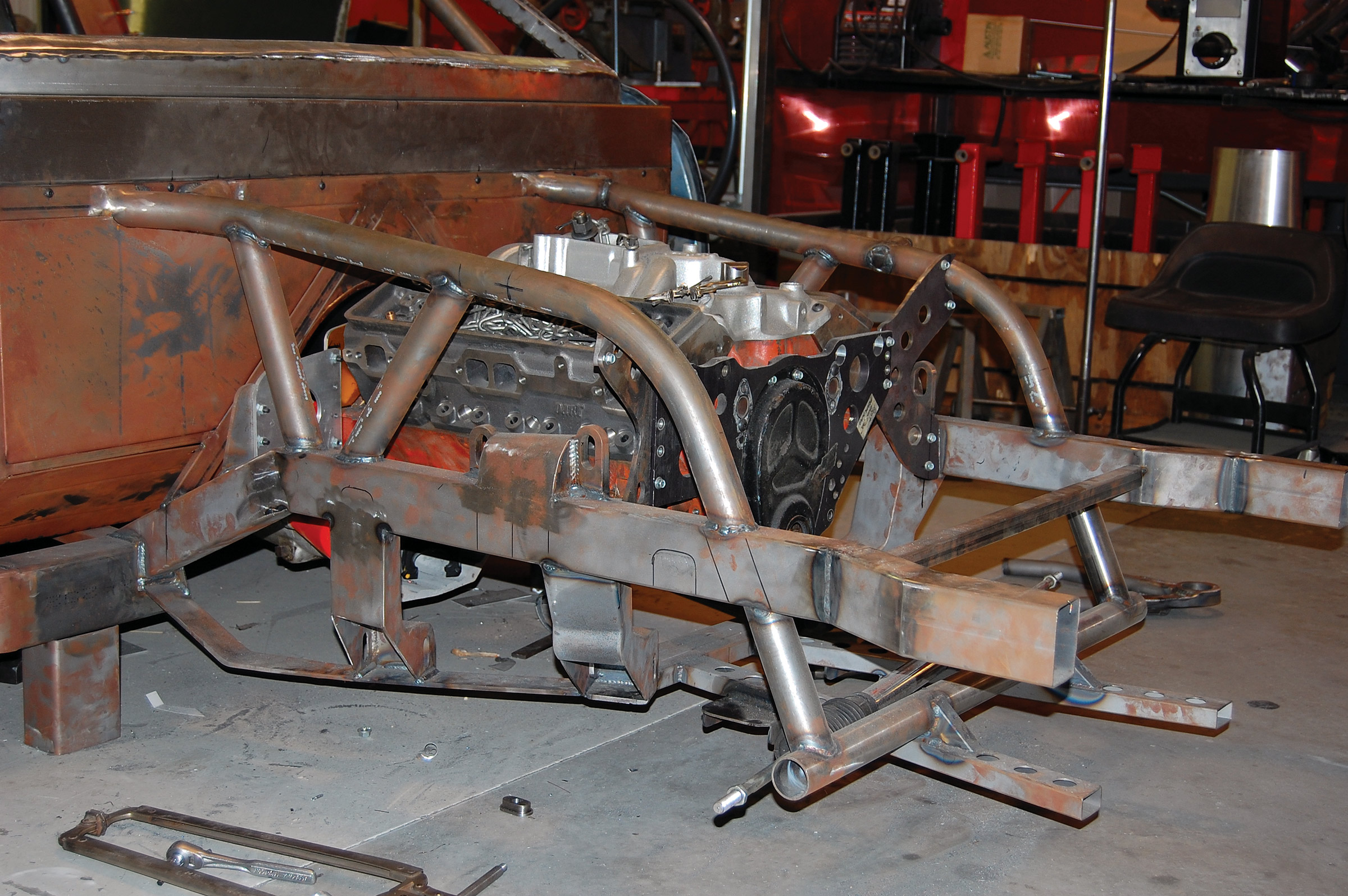
1. Before any suspension components could be fabricated, Chris Wilson and Daniel Keys had to build the custom chassis and mounts for the suspension. Here, you can see the upper and lower control arm mounts, while the coilover mounting tab is yet to be welded.
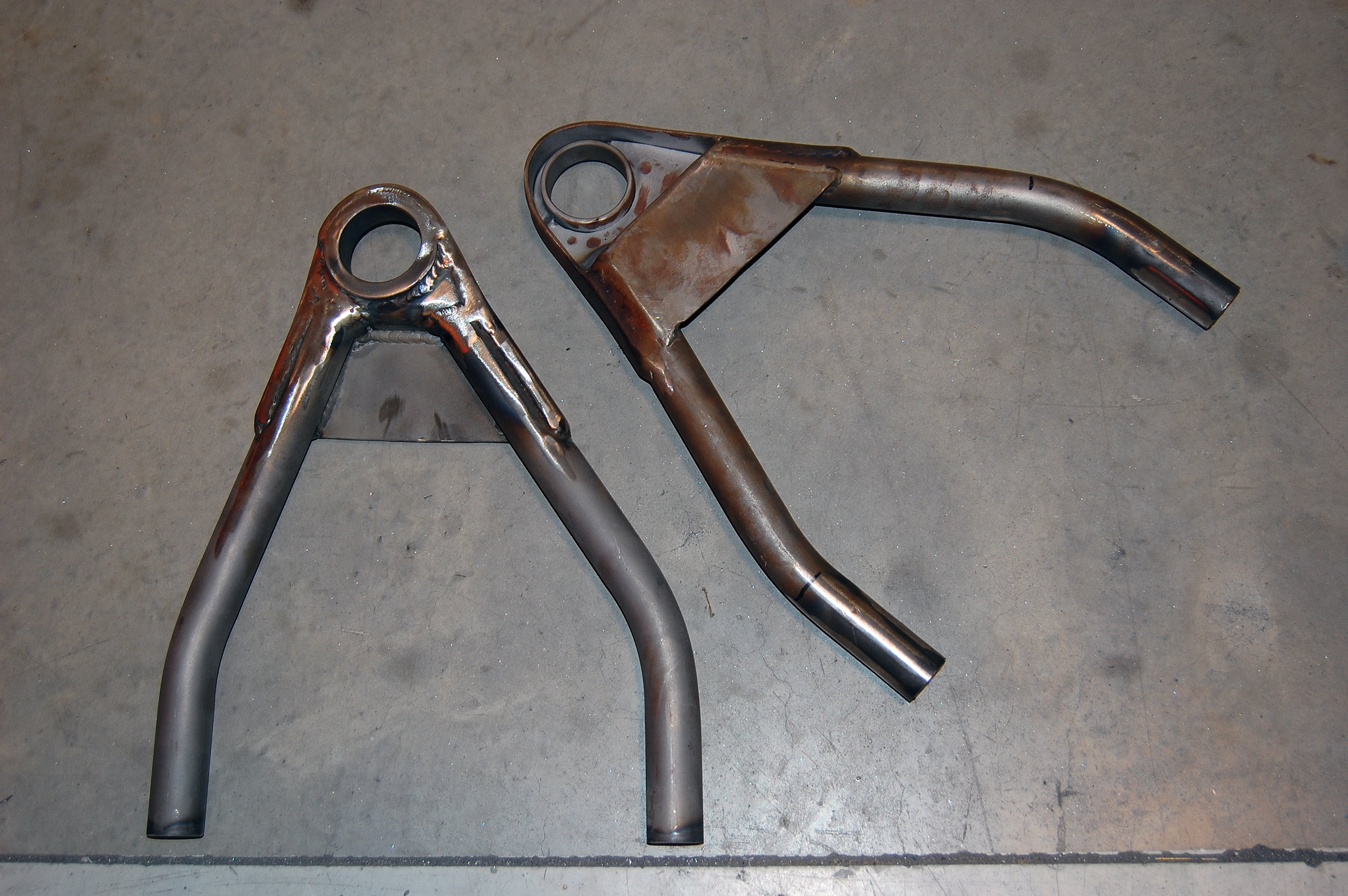
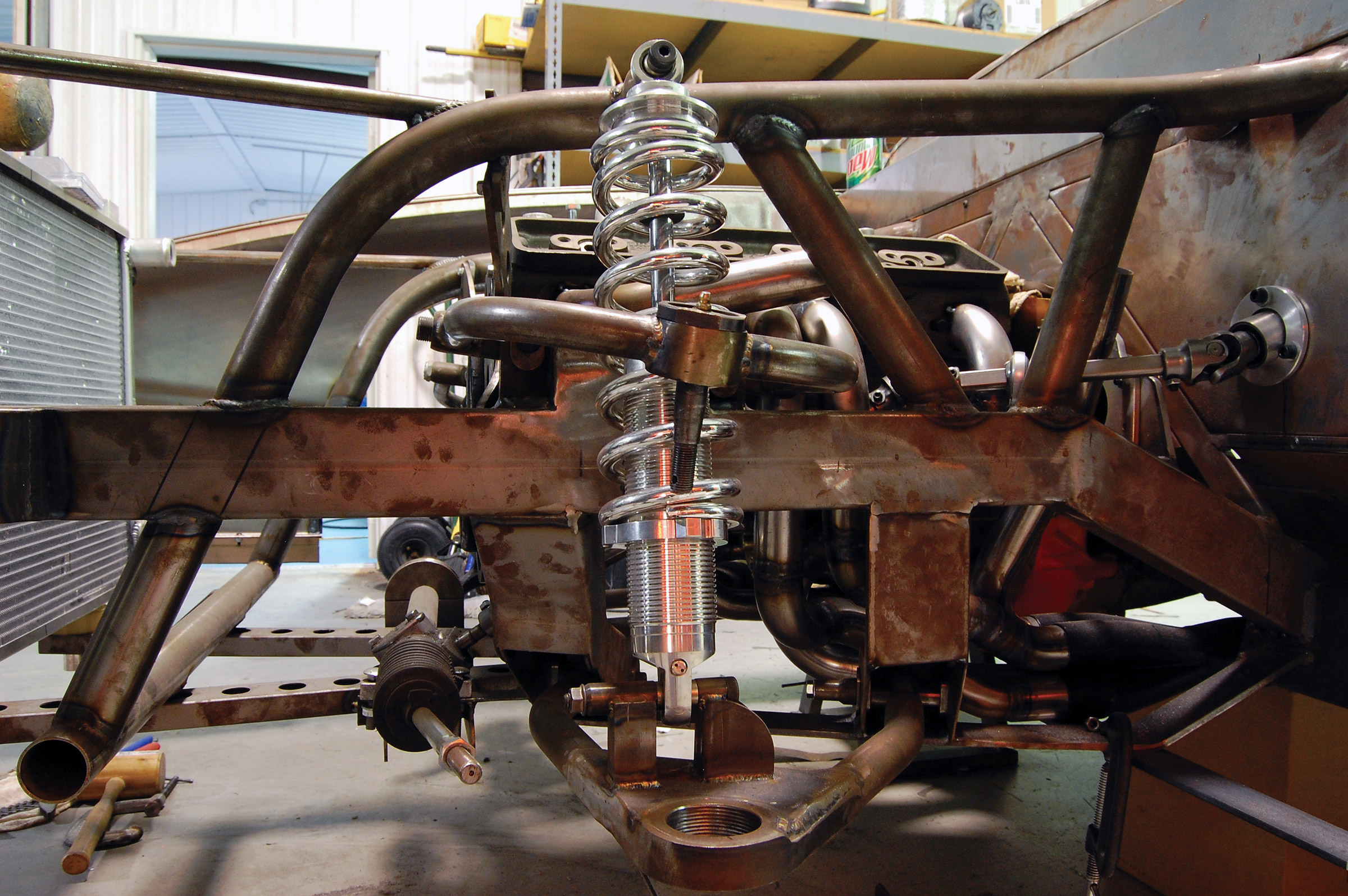
2. Here are the lower control arms in their most basic form. The guys built a fixture to ensure uniformity, but these arms are nowhere near finished. When the control arms are mounted, the guys can fabricate the coilover mounting brackets.
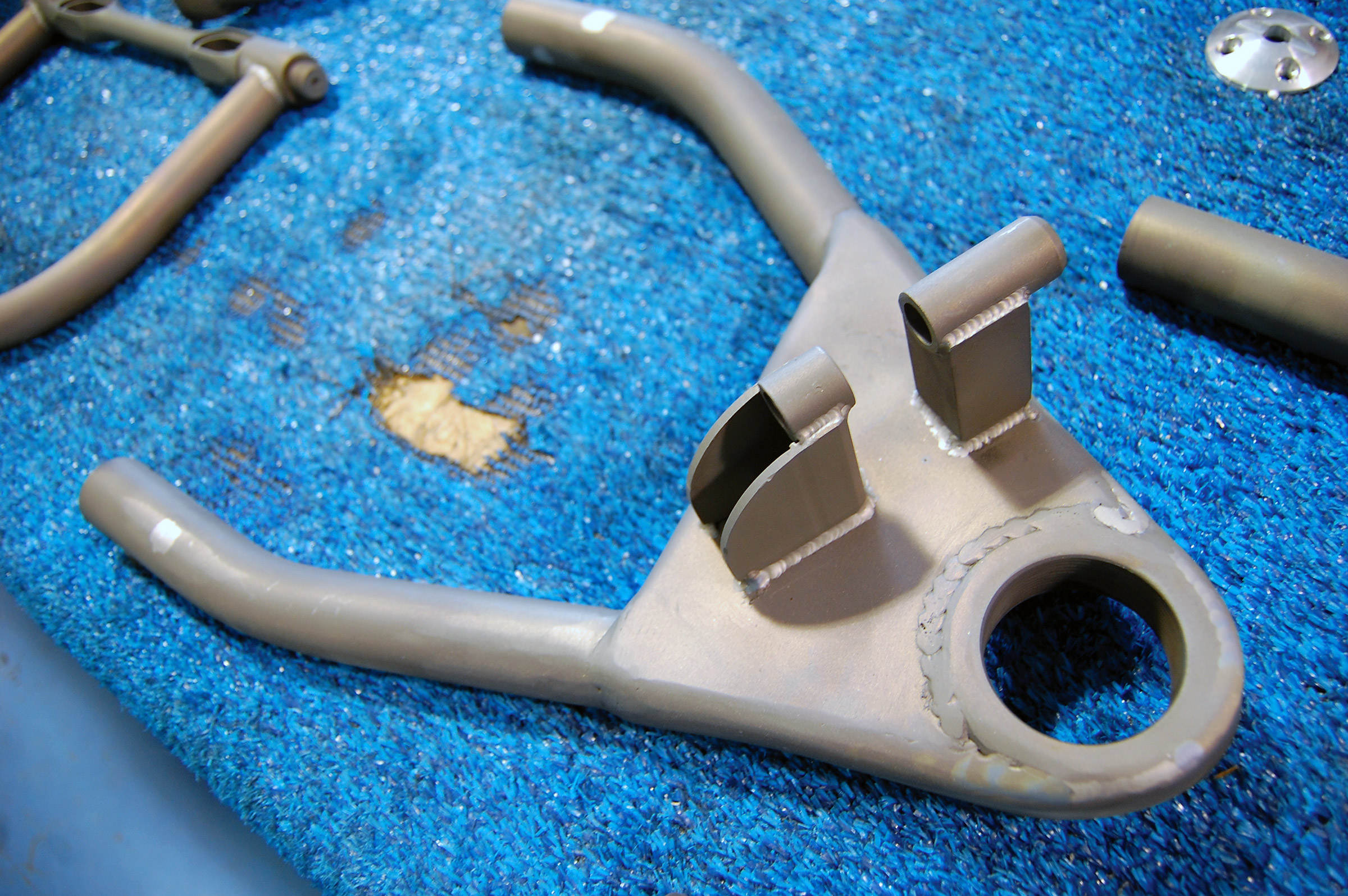
3. After fitting everything into place, the coilover mounts could be welded onto the flat plate on the lower control arm. A clean installation and super-clean welds are a testament to Davis’ experience and the students’ skill. These pieces are sandblasted and ready for powdercoating.
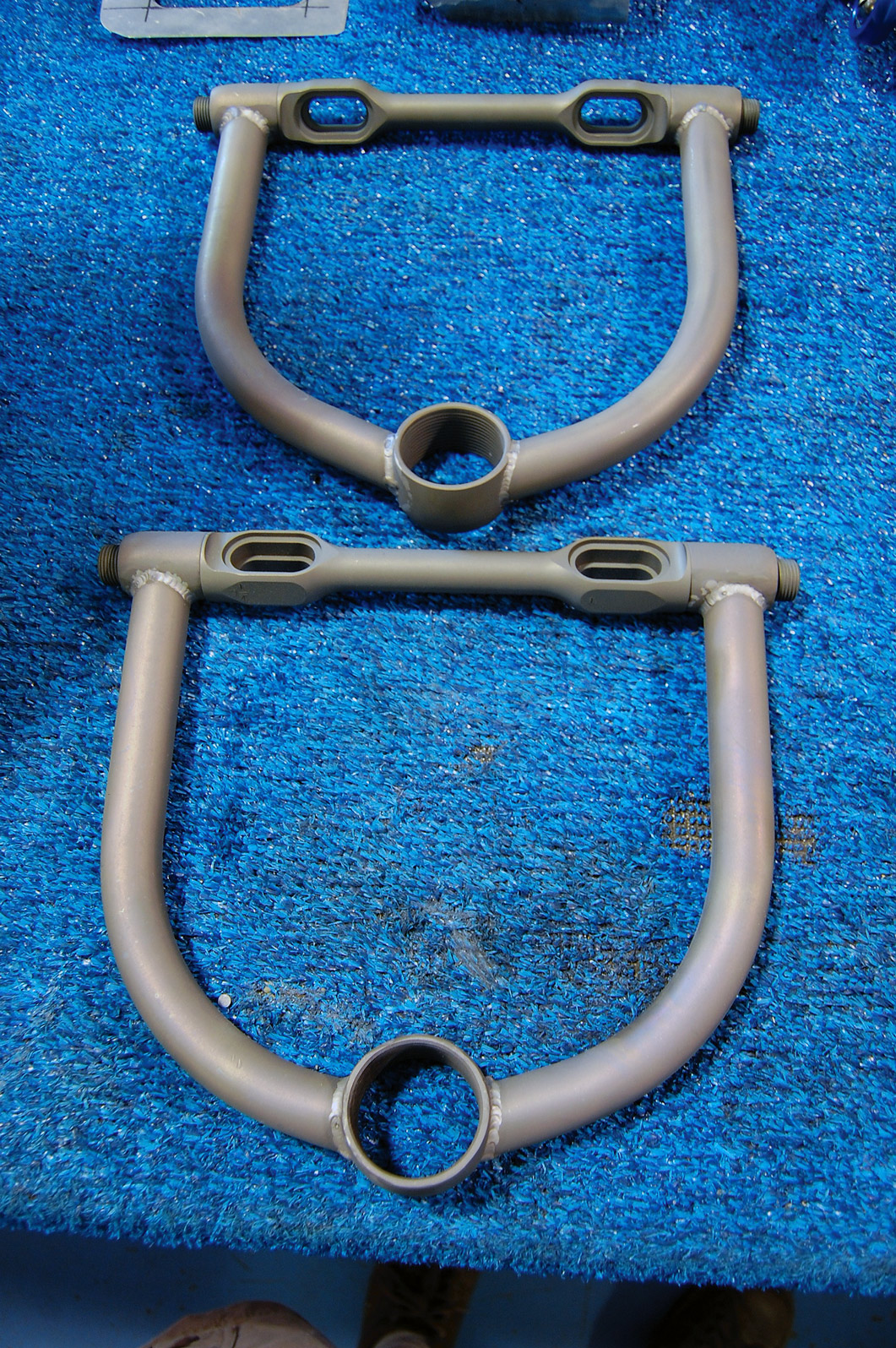
4. Fixtures were also fabricated for the upper control arms so the caster and camber would be precise and to Davis’ specifications. Camber can now be adjusted 2 degrees and caster adjusted 3 degrees, so changing from a short paved oval to an autocross course is an easy task.
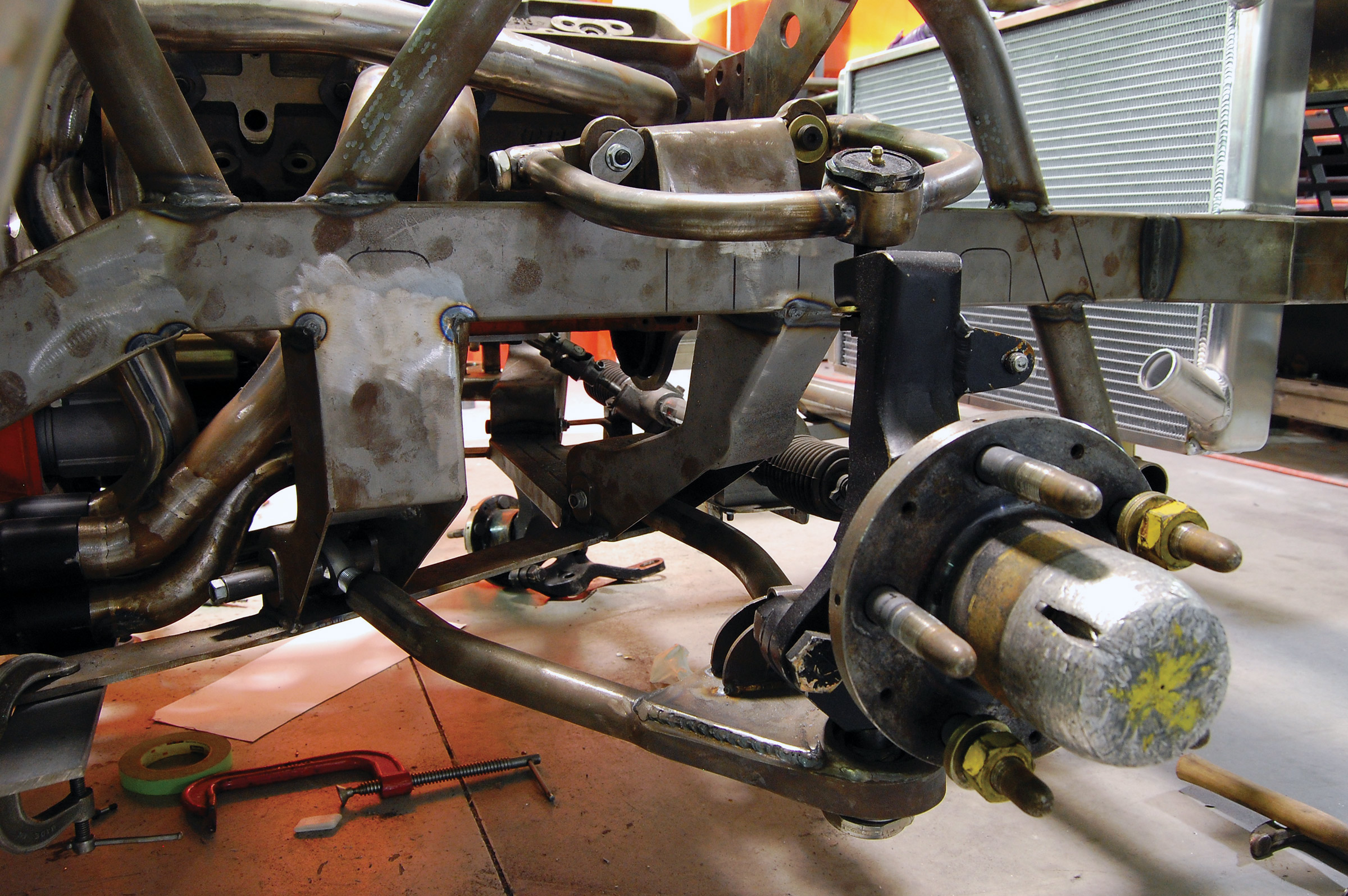
5. When the control arms took shape, the students could bolt them into place and check for fitment issues. The arms look awesome. They are based on GM geometry and will use stock-style ball joints and bushings, while the rod ends for the lower control arms come from Aurora Bearing.
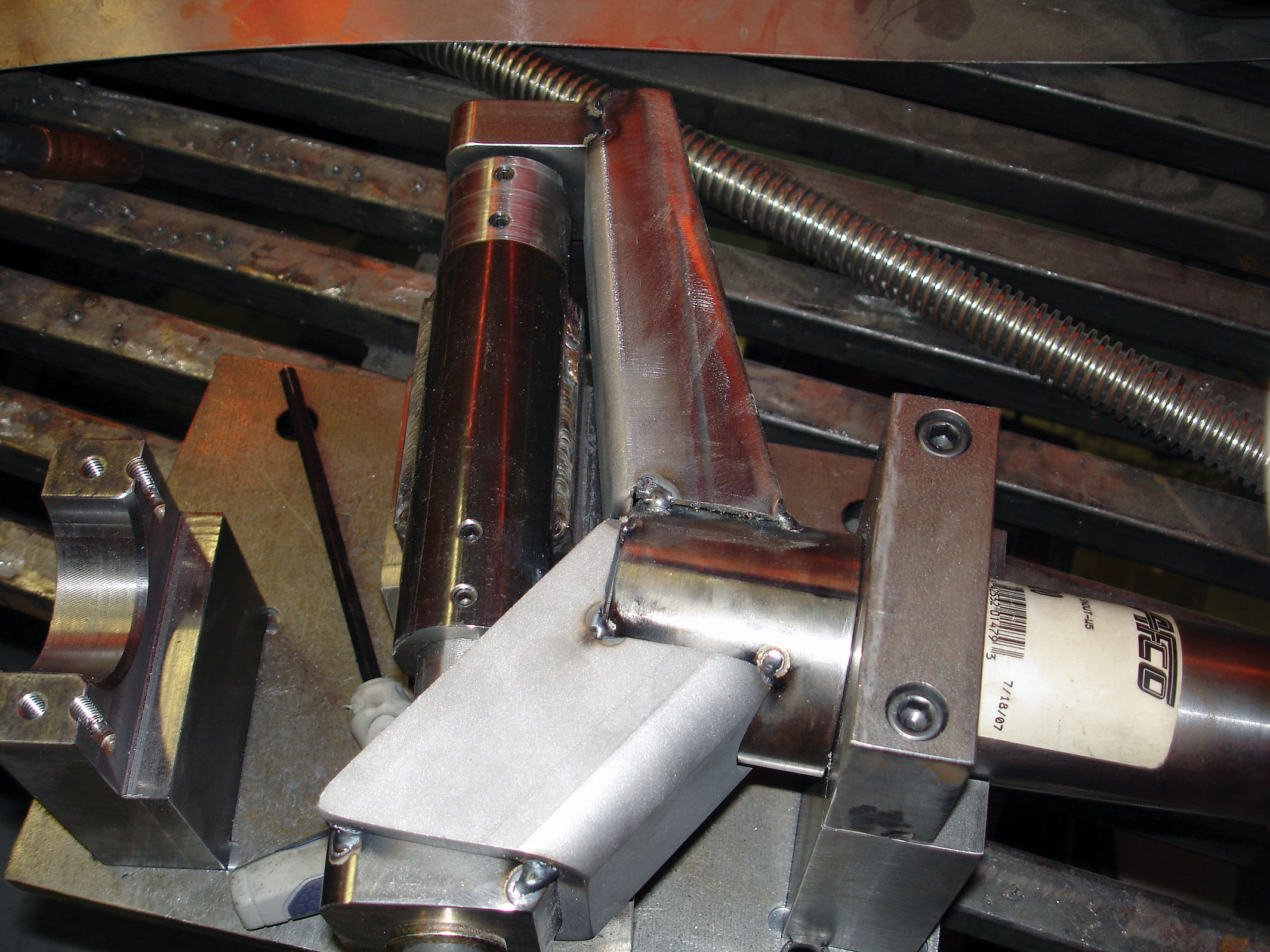
6. While the other side has a mock-up spindle in place, the crew will fabricate a custom pair that will be lightweight, strong and certainly unique for a street car. Here, you can see the suspension with a mock-up AFCO coilover in place before Davis ordered the coilovers that will actually be used on this car.
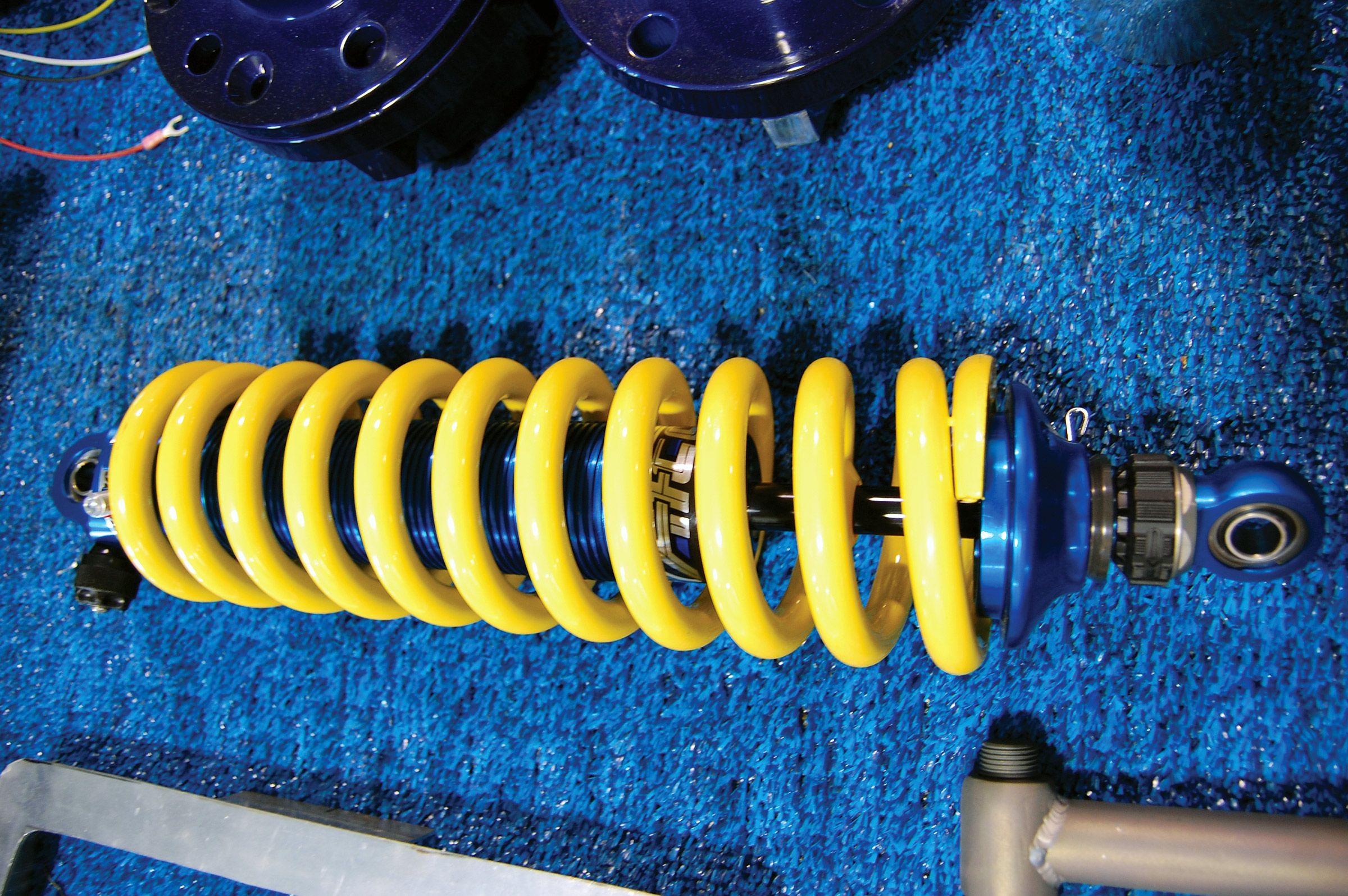
7. This is the coilover that the crew will install when the suspension fabrication is complete. It’s the same length as the mock-up shock, but it is double adjustable and fitted with a 550-pound-per-inch spring. Davis is definitely capable of adjusting these shocks, but when the time comes, the AFCO technicians will be on hand during the testing sessions.
8. We rarely see builders fabricate spindles for a street car, but the Smokin’ SS Monte Carlo isn’t your average street car. Building fixtures (jigs) for these components is essential to making them equal. The crew starts with a bare spindle snout from AFCO and builds from there.
9. Steel is used for the construction of the spindles, but weight is certainly a factor, so Davis and the crew take every step to shed a few pounds while keeping it safe. Here, you can start to see the shape, but Wilson and Keys still have a lot of welding to do.
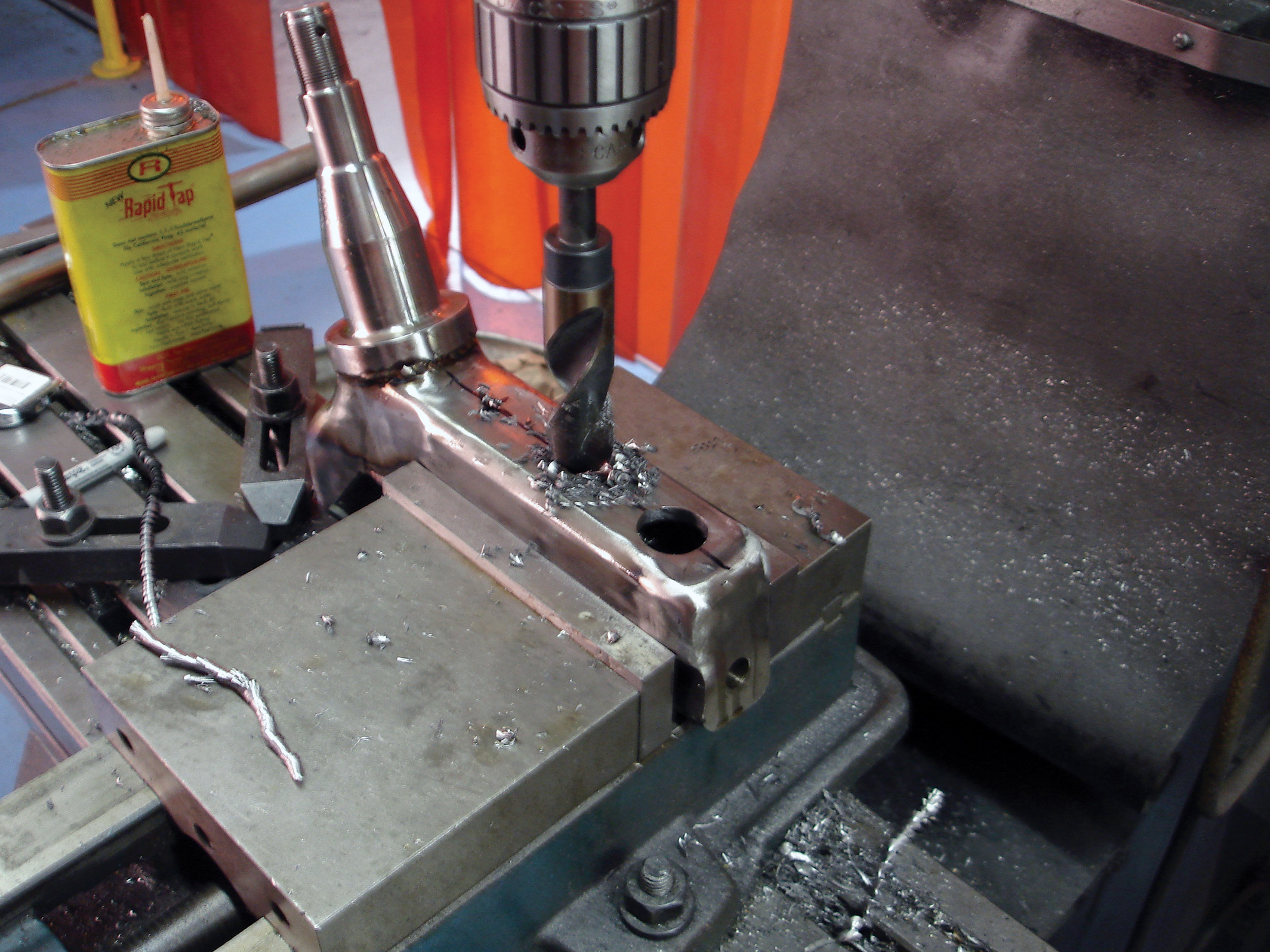
10. Rather than using forged steel, which is totally solid, the crew used thick steel plate and tubing to build the spindles. Here, they placed the spindle in the drill press and drilled three large holes to lighten the spindle.
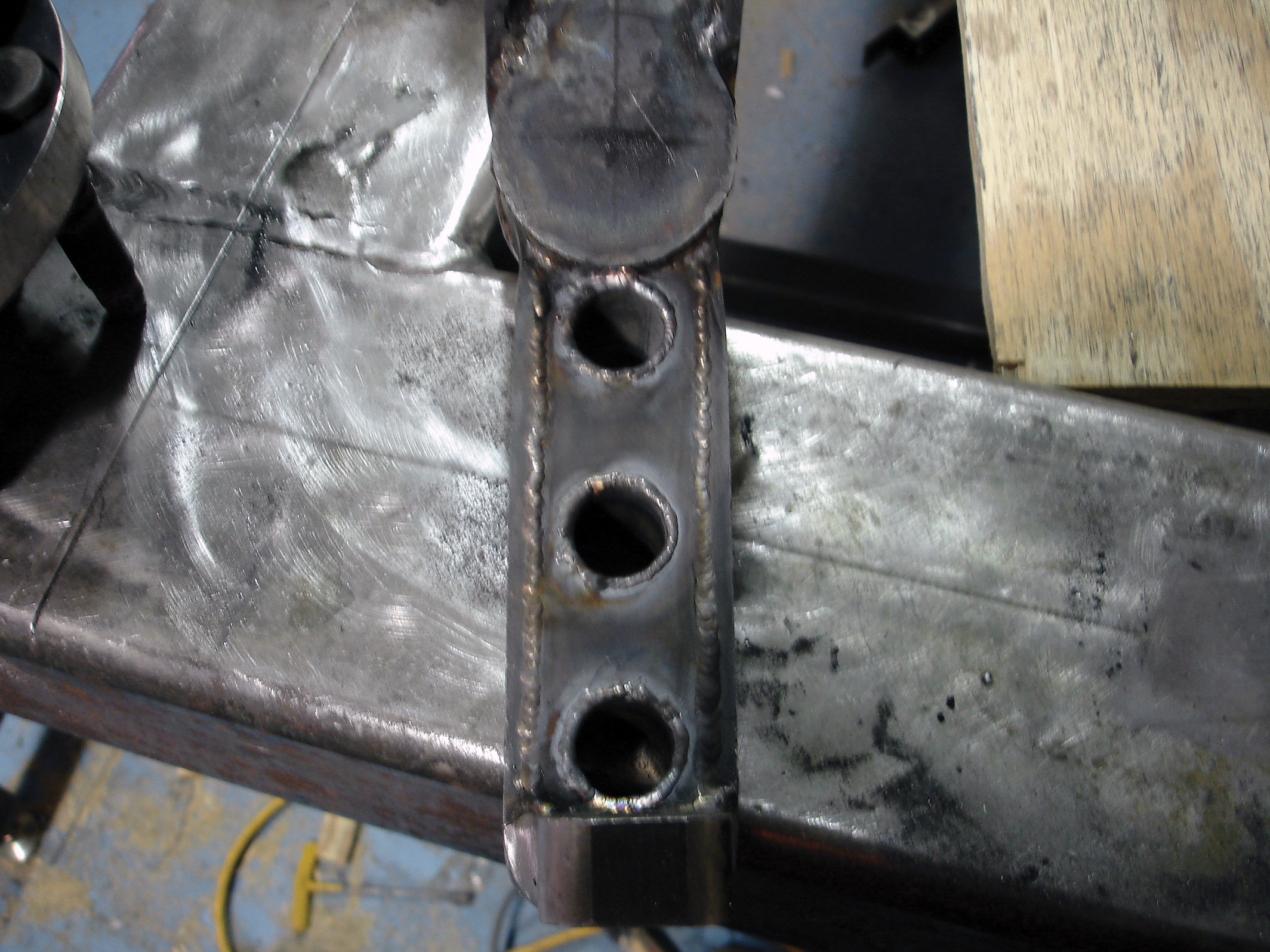
11. After drilling out the spindle, they sleeved the holes with round tubing, since the spindle is actually tubular. These sleeves add strength to the spindle and give it a cool appearance.
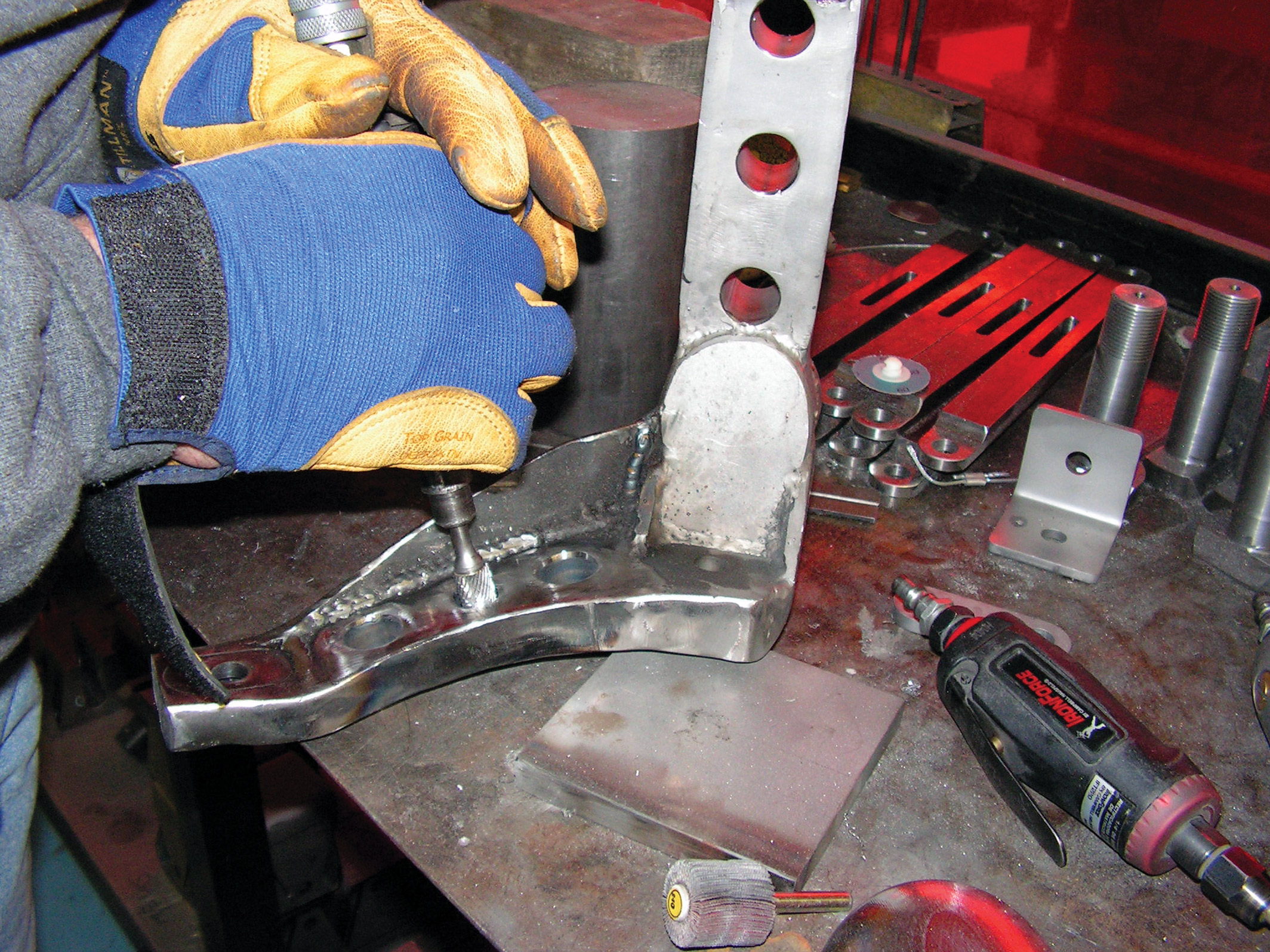
12. The same treatment is applied to the steering arm, which is built into the spindle. A curved gusset adds strength to the arm, while the sleeved holes provide strength and look awesome. Here, a burr grinder is used to smooth the welds on the sleeves.
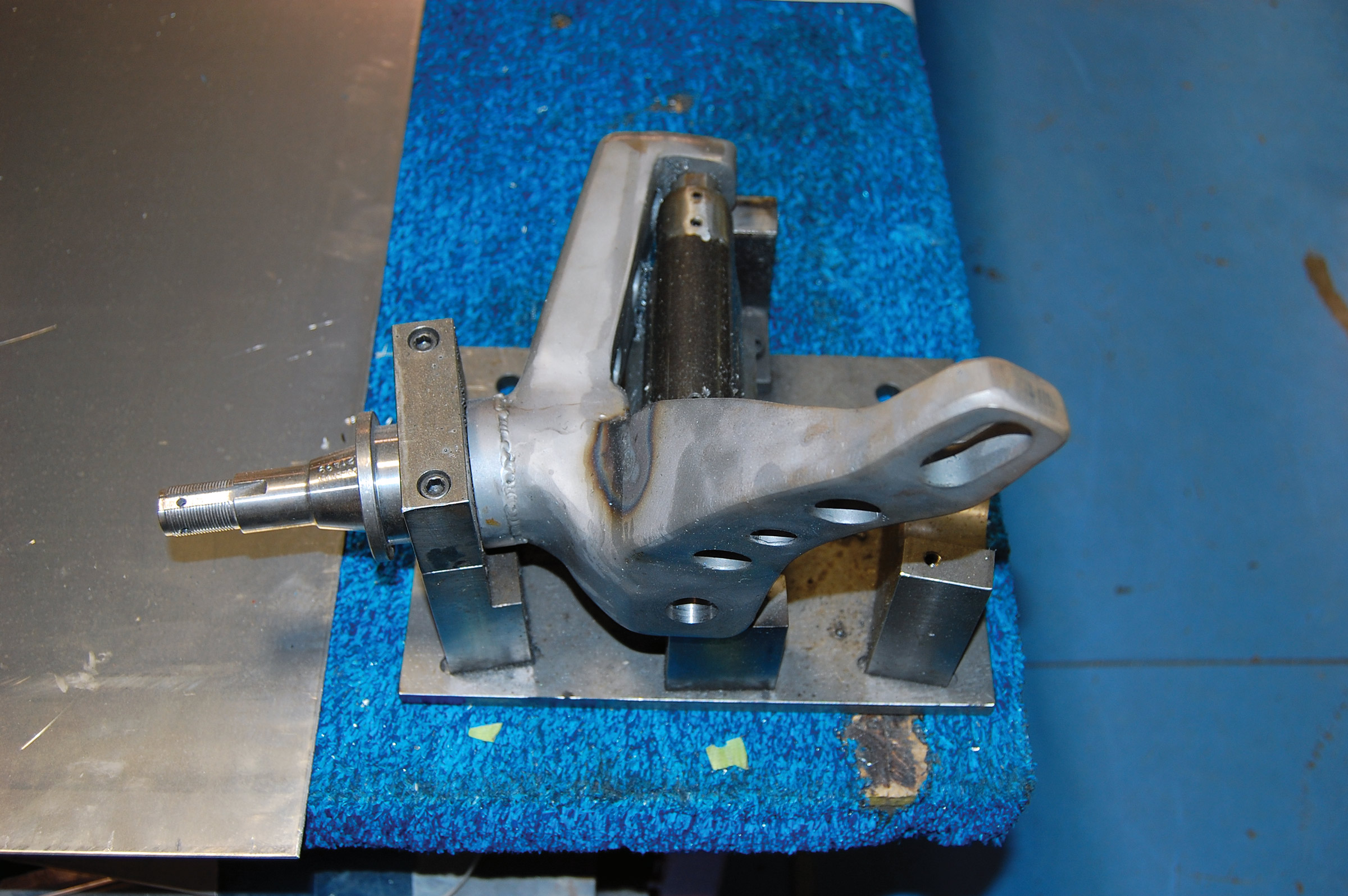
13. After hours of welding, grinding and fabricating, the spindle is ready for installation. The fixture you see here is reversible, so the opposite side can be built to the exact same specifications. This jig is simple in design, but it’s a major part of building a suspension system that really works.
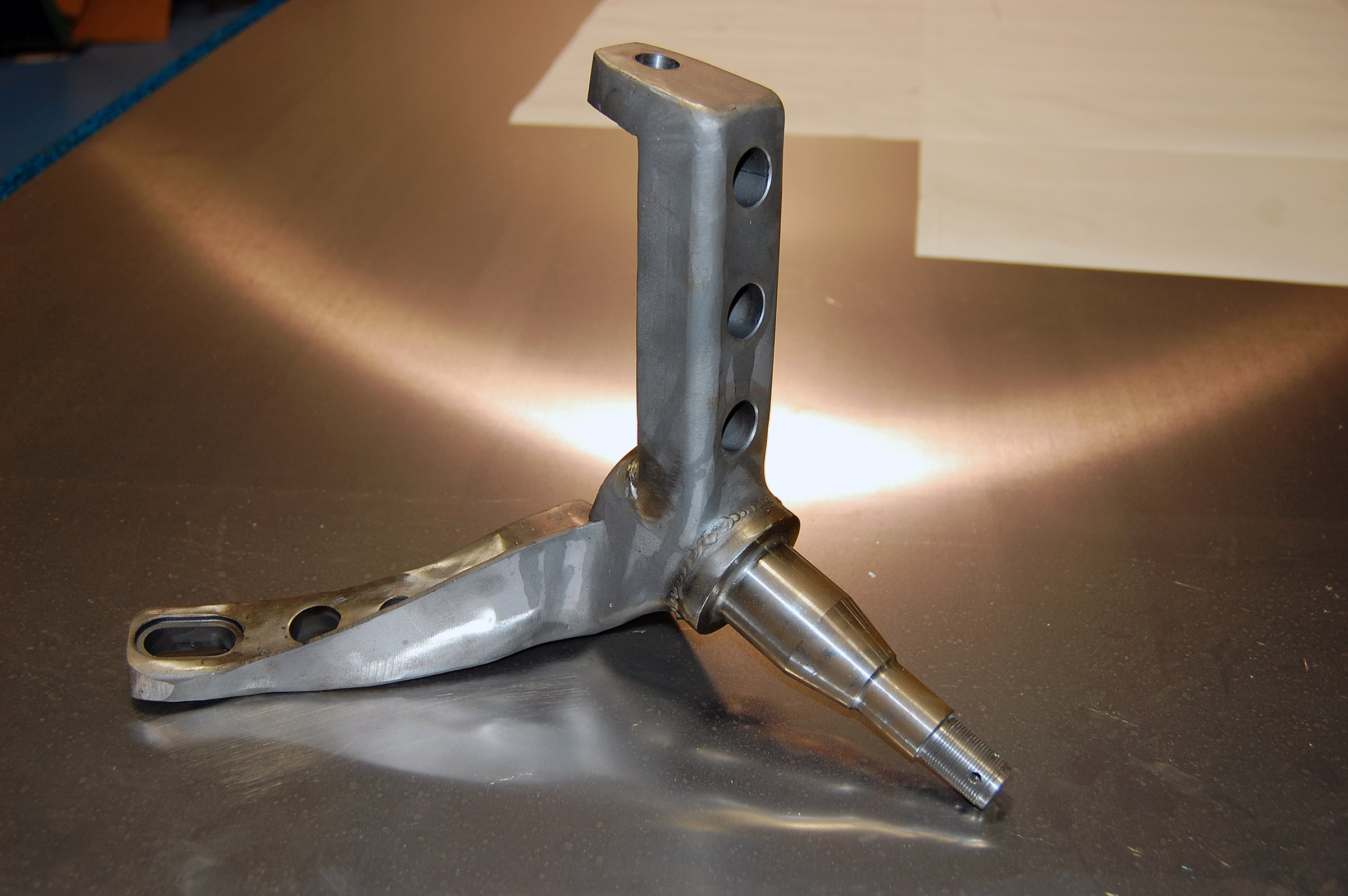
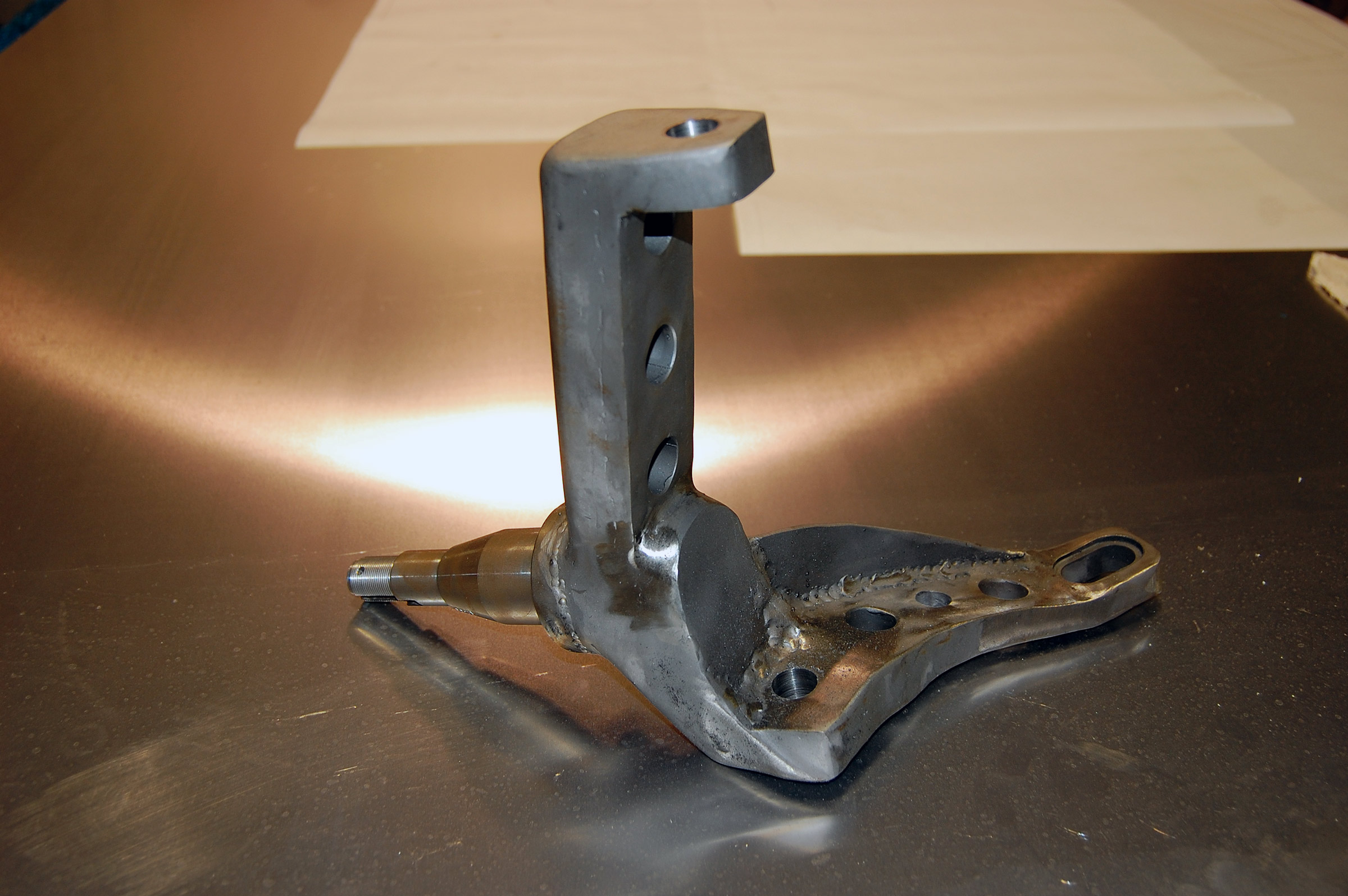
14-15. Here’s the finished product, after several hours of design, welding and grinding. This spindle is unique and strong, but most of all, it gave Wilson and Keys a lesson in suspension geometry and will prove its worth on the track.
14-15. Here’s the finished product, after several hours of design, welding and grinding. This spindle is unique and strong, but most of all, it gave Wilson and Keys a lesson in suspension geometry and will prove its worth on the track.
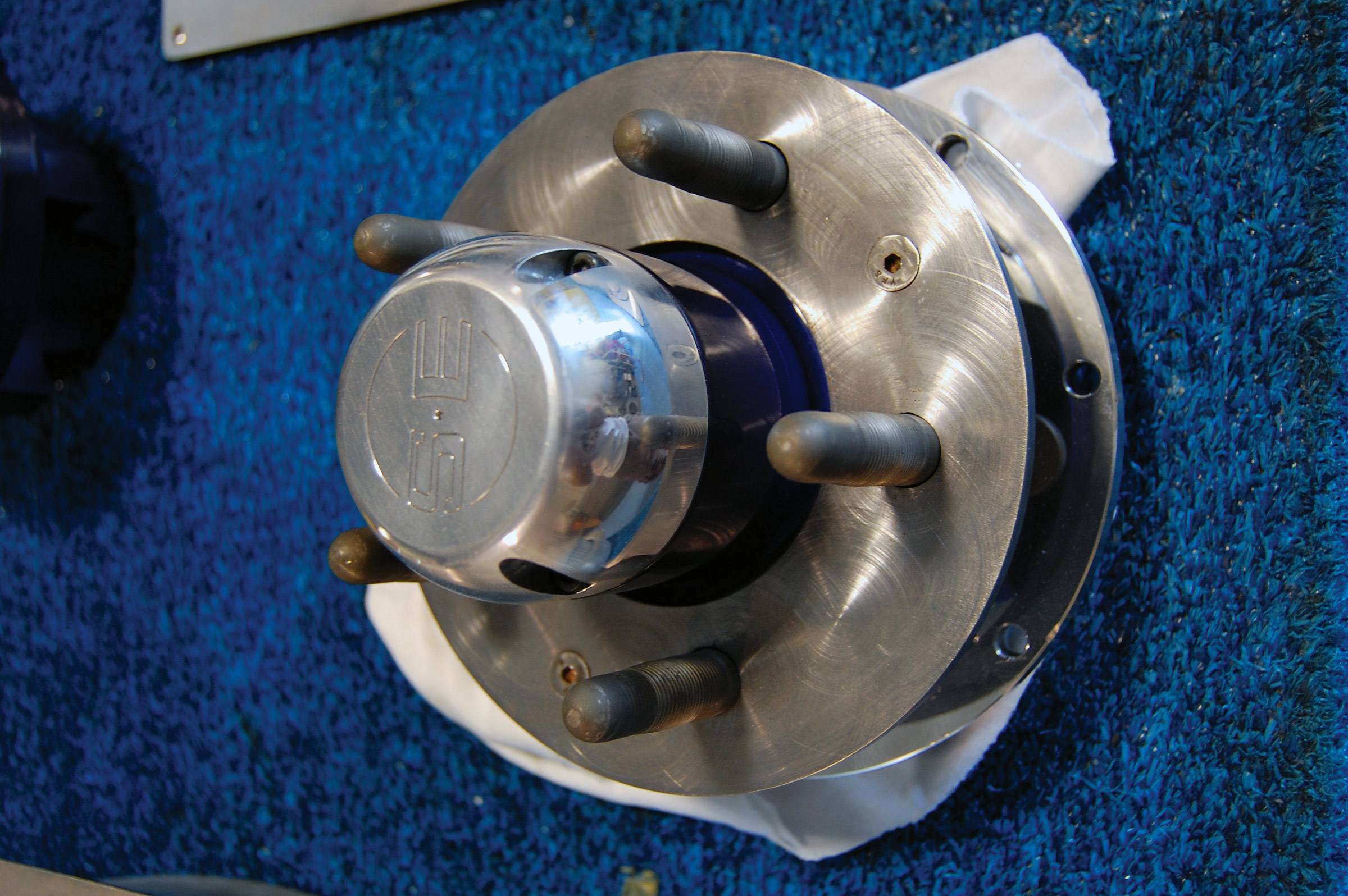
16. AFCO spindle snouts are being used up front, while 9-inch Ford equipment is used out back. Davis used Speedway Engineering lightweight aluminum hubs at all four corners. This example is for the front and it’s ready for the brake rotor to be installed.
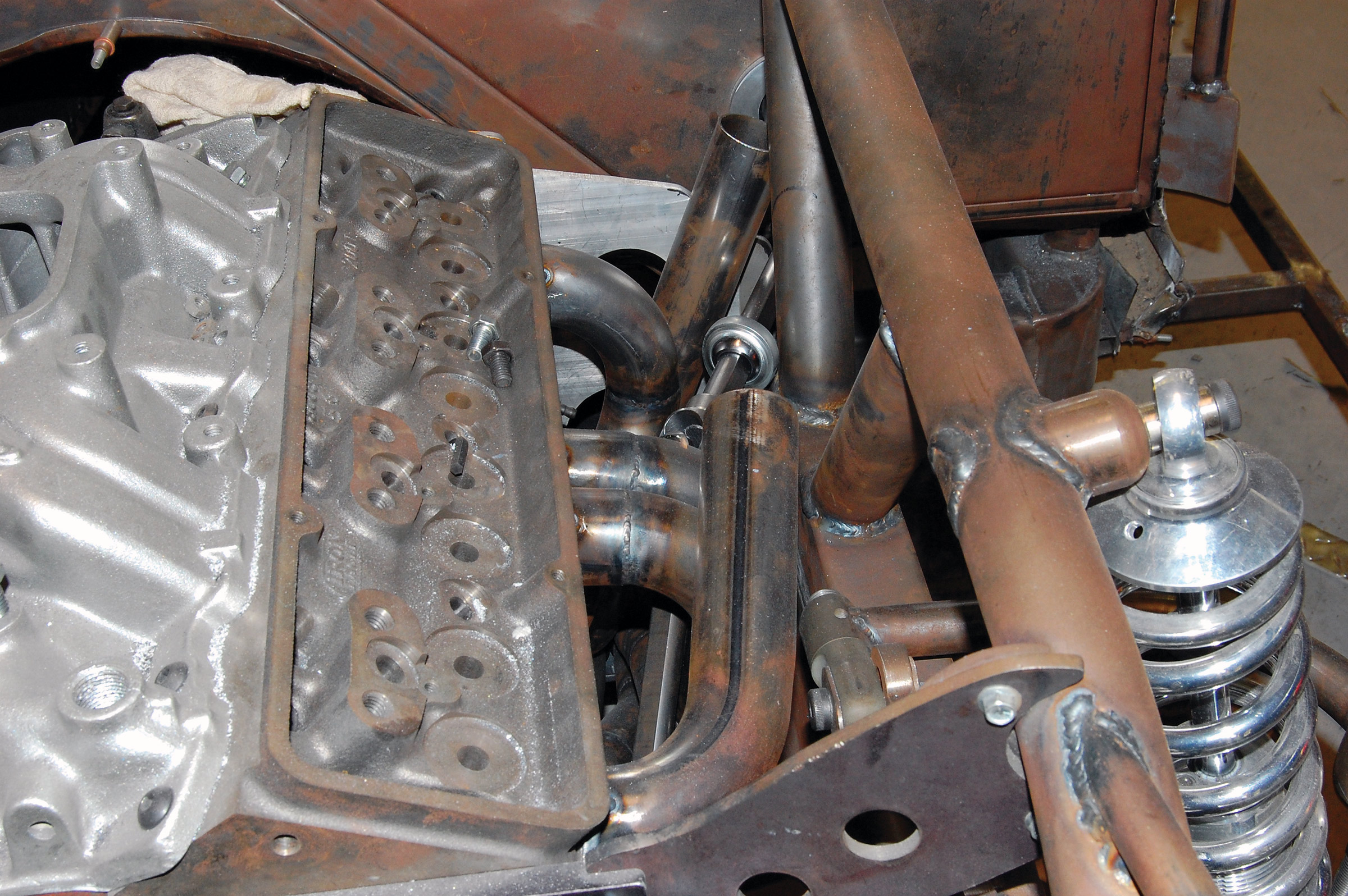
17. After most of the suspension work was complete, work moved on to header fabrication, with a basic weld-up kit. It comes with flanges, collectors and various bends, so you can make the headers to fit and to your specifications. The first tube is coming together nicely, but it’s not all about looks—Davis wants equal-length primaries for maximum performance.
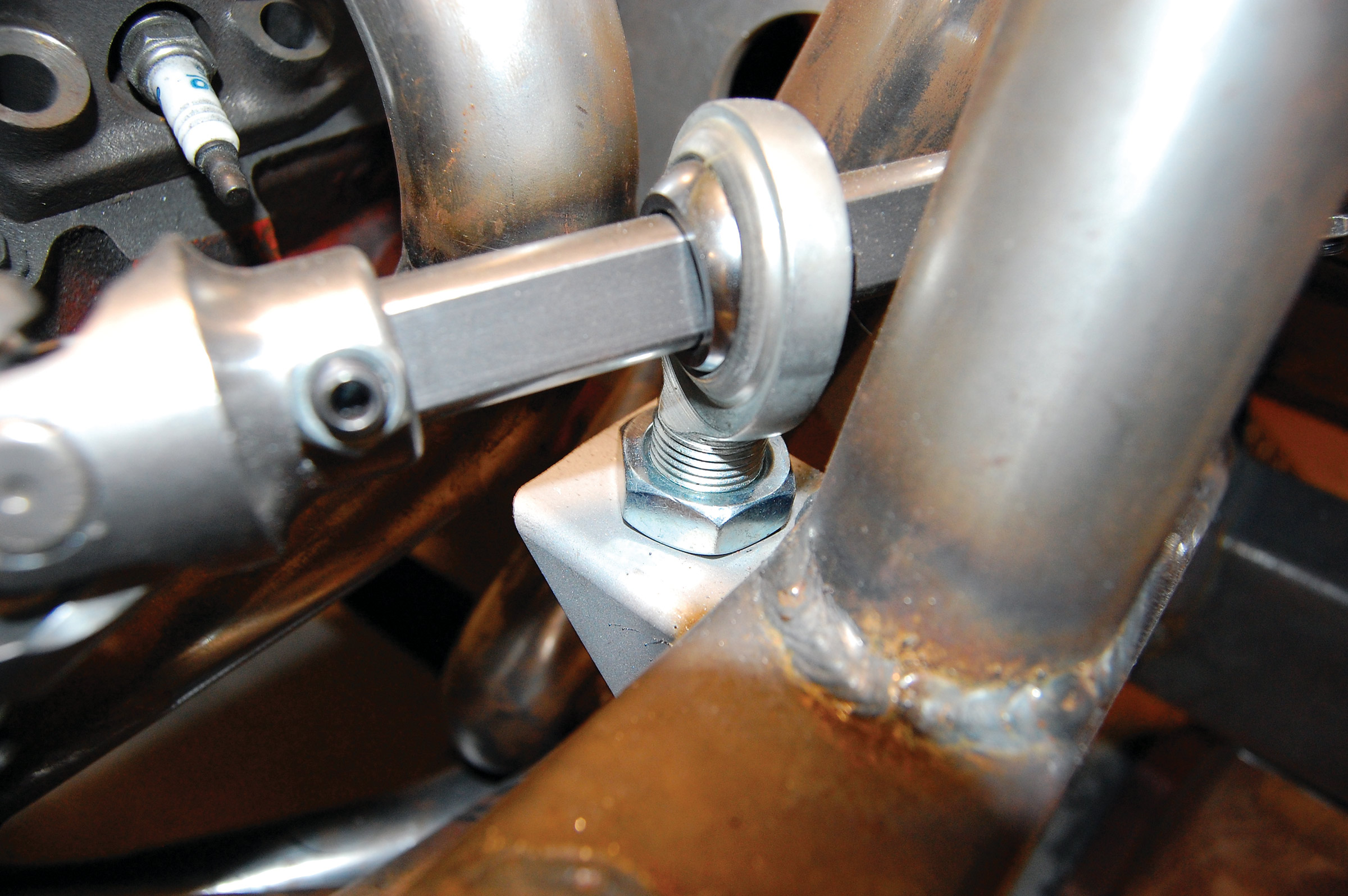
18. The header isn’t complete, as the crew had to mock up the steering shaft and U-joints before going too far. Clearance shouldn’t be an issue, so the guys can finish that last tube and fully weld the primaries to the flanges and the collectors.
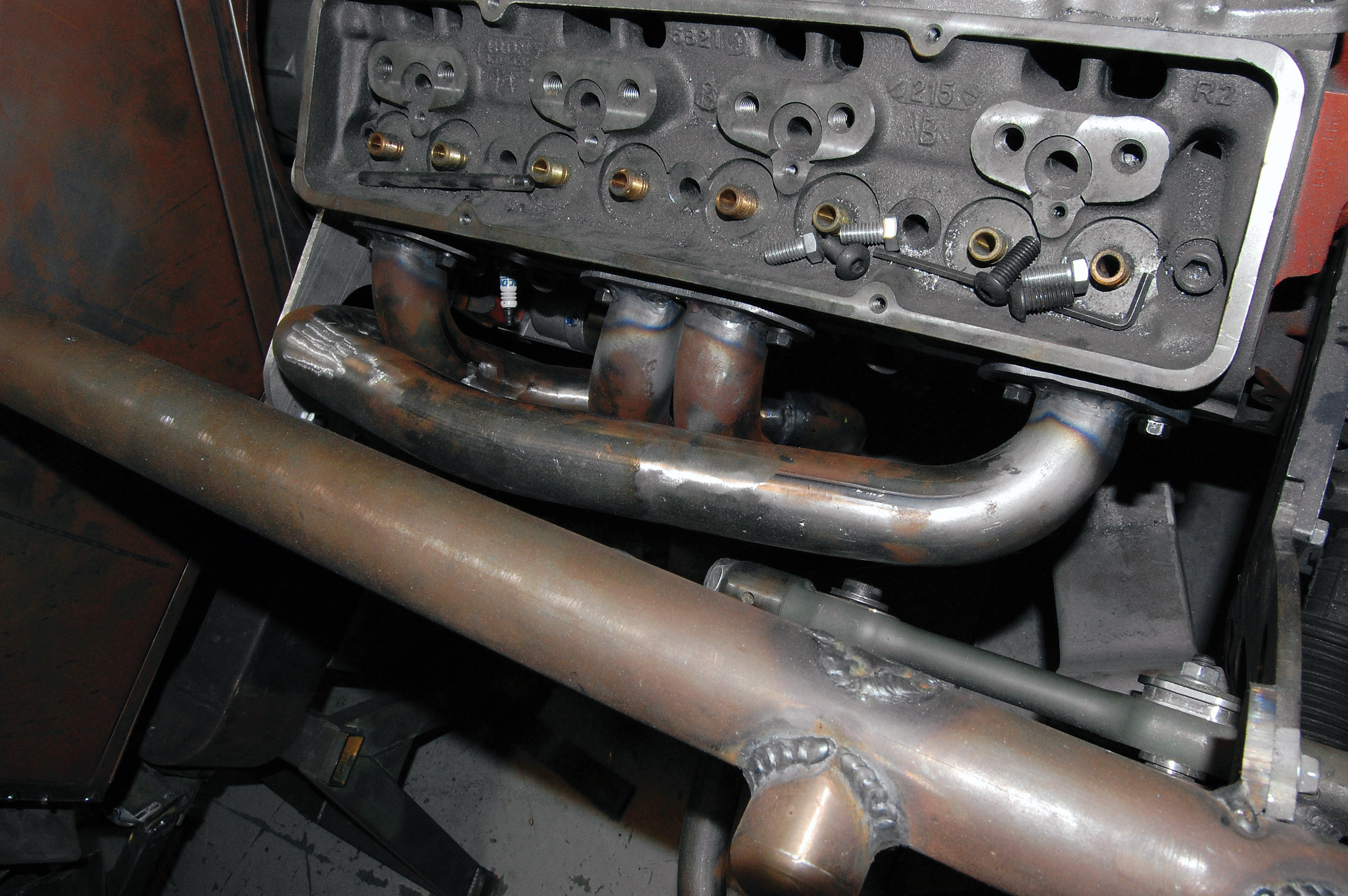
19. The passenger side of the Monte Carlo proved to be a little easier, as the only items to consider are the starter and front crossmember. This side went together quickly, and what you see here is the finished product after welding and grinding. Next, the headers will be coated.
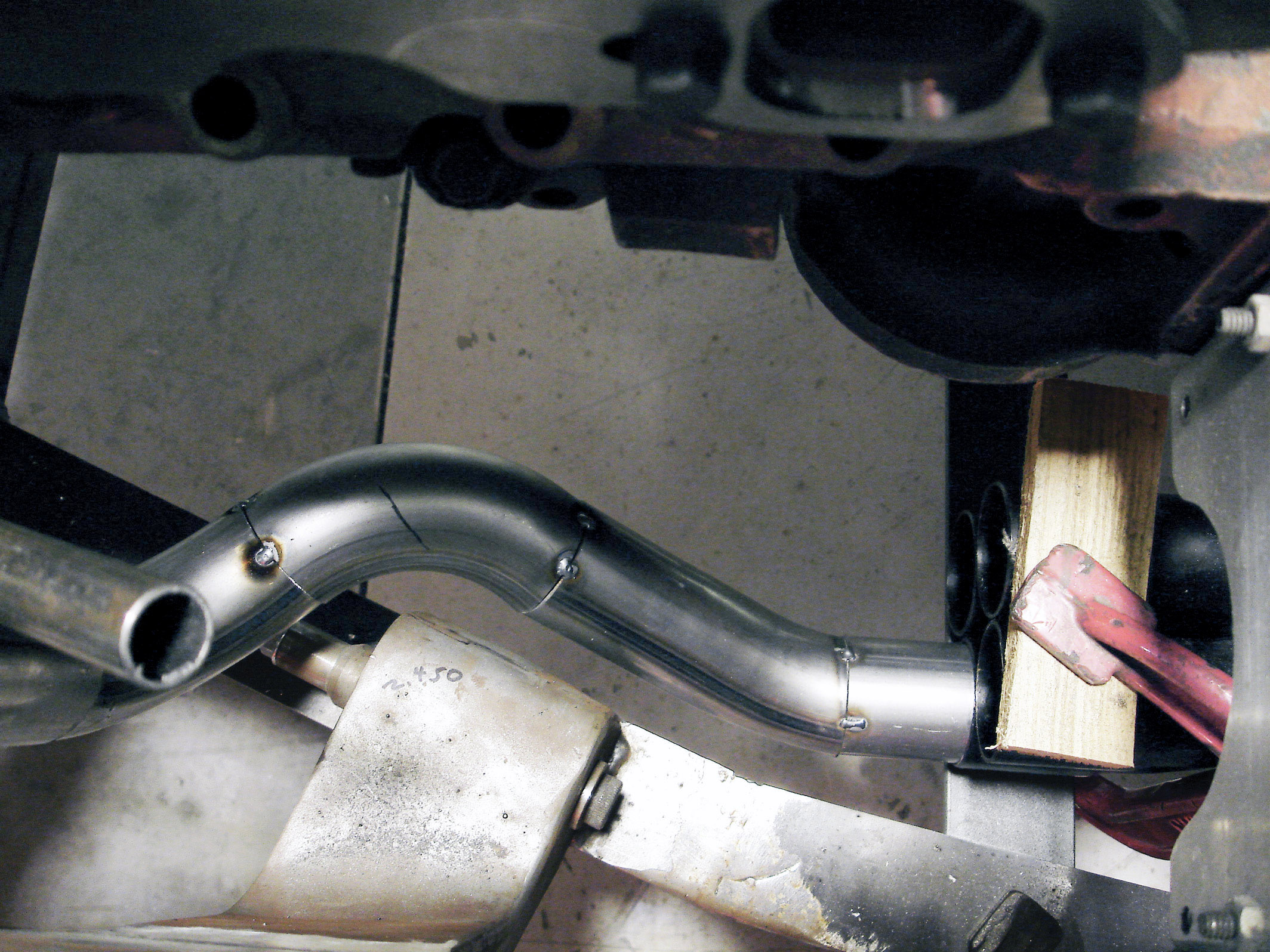
20. With the headers welded and smoothed, the students began fabricating the custom exhaust by merging two 90-degree bends to make an X-pipe. This exhaust kit comes from Dynatech, but Davis added his own touch to the system.
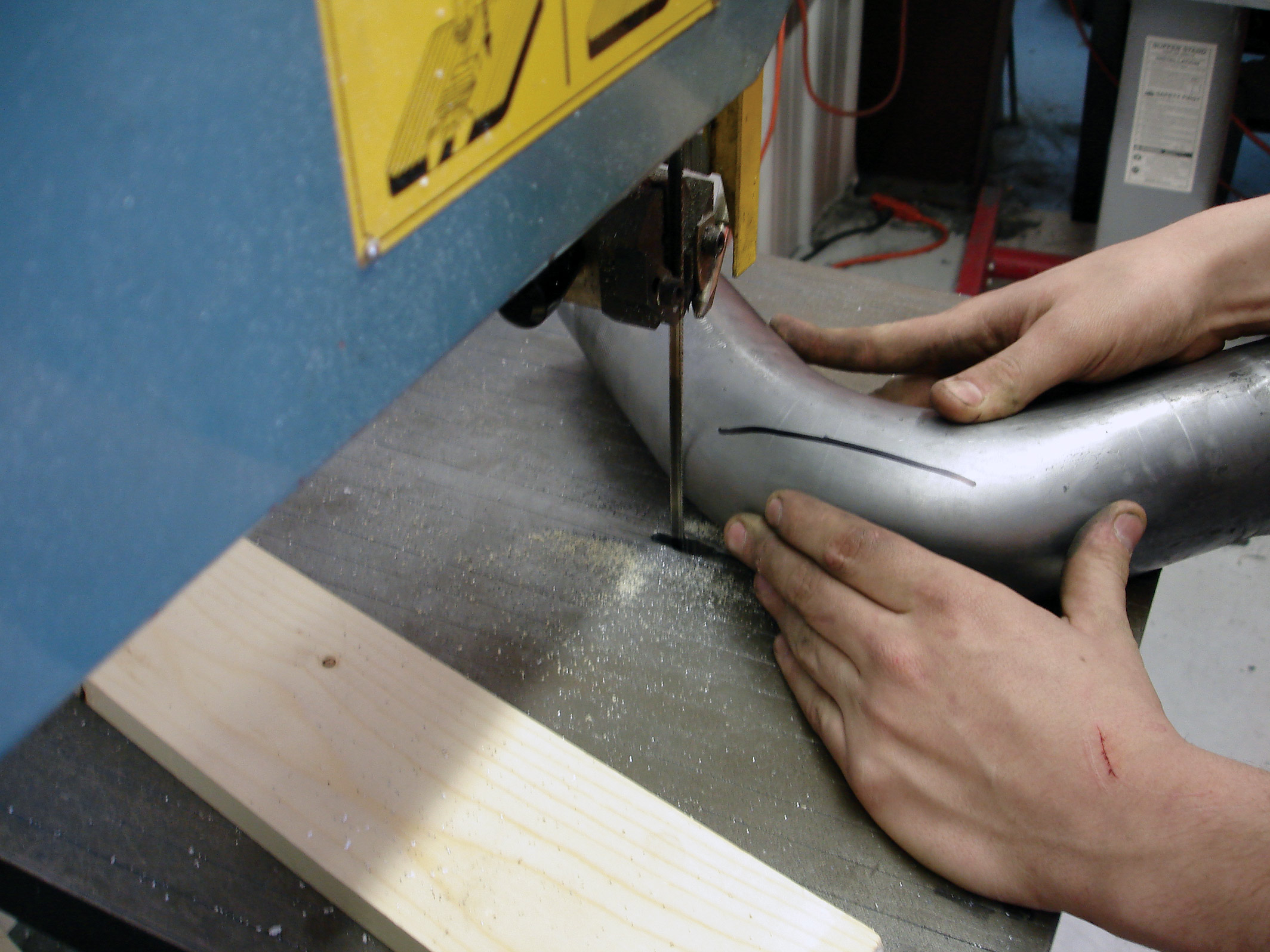
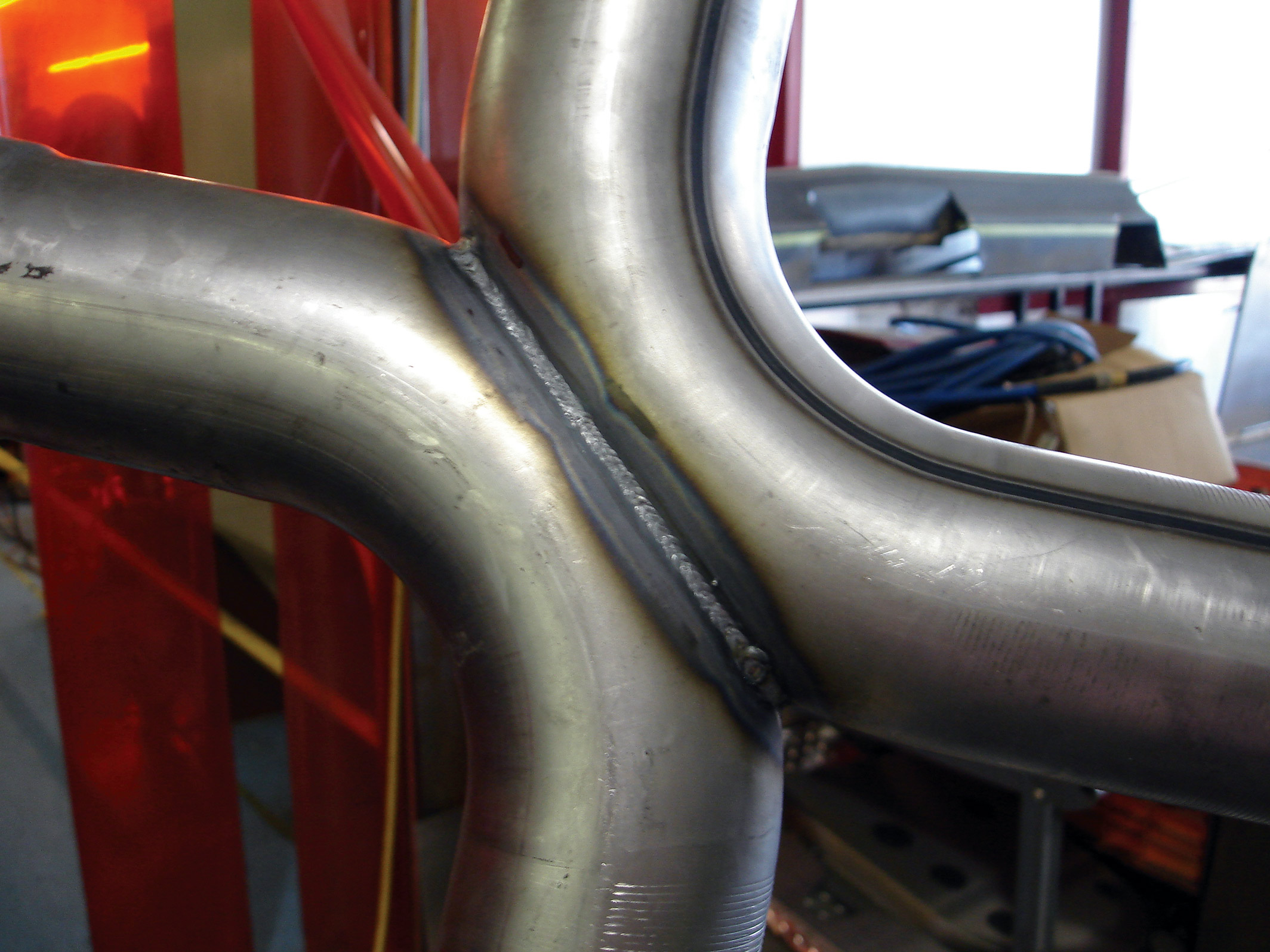
21. After cutting both bends, they fit the tubing together and made sure there were no large gaps or inconsistencies. Then it was simply a matter of clamping the two pieces together and firing up the welder—here’s the result.
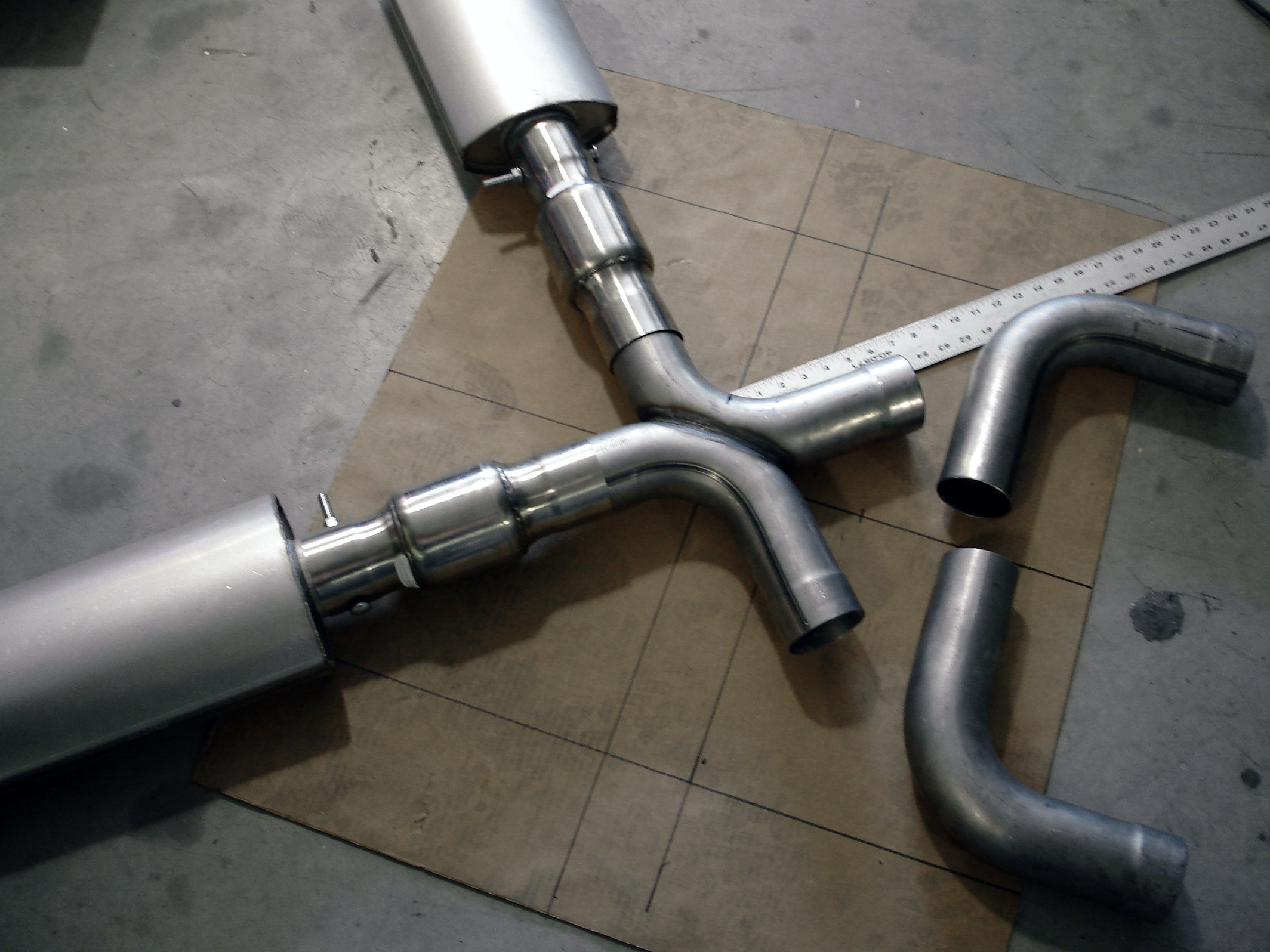
22. The Dynatech exhaust kit comes with various bends so you can build the exhaust system to fit your car, and Davis thought the most efficient route would be this X-design. The students will first lay it all out and then fit it to the car.
23. Moving to the steering setup, the Borgeson rack is in place, thanks to a couple of custom mounts fabricated by the students. The drilled frame that mounts the steering rack is multifunctional, as it also mounts the radiator.
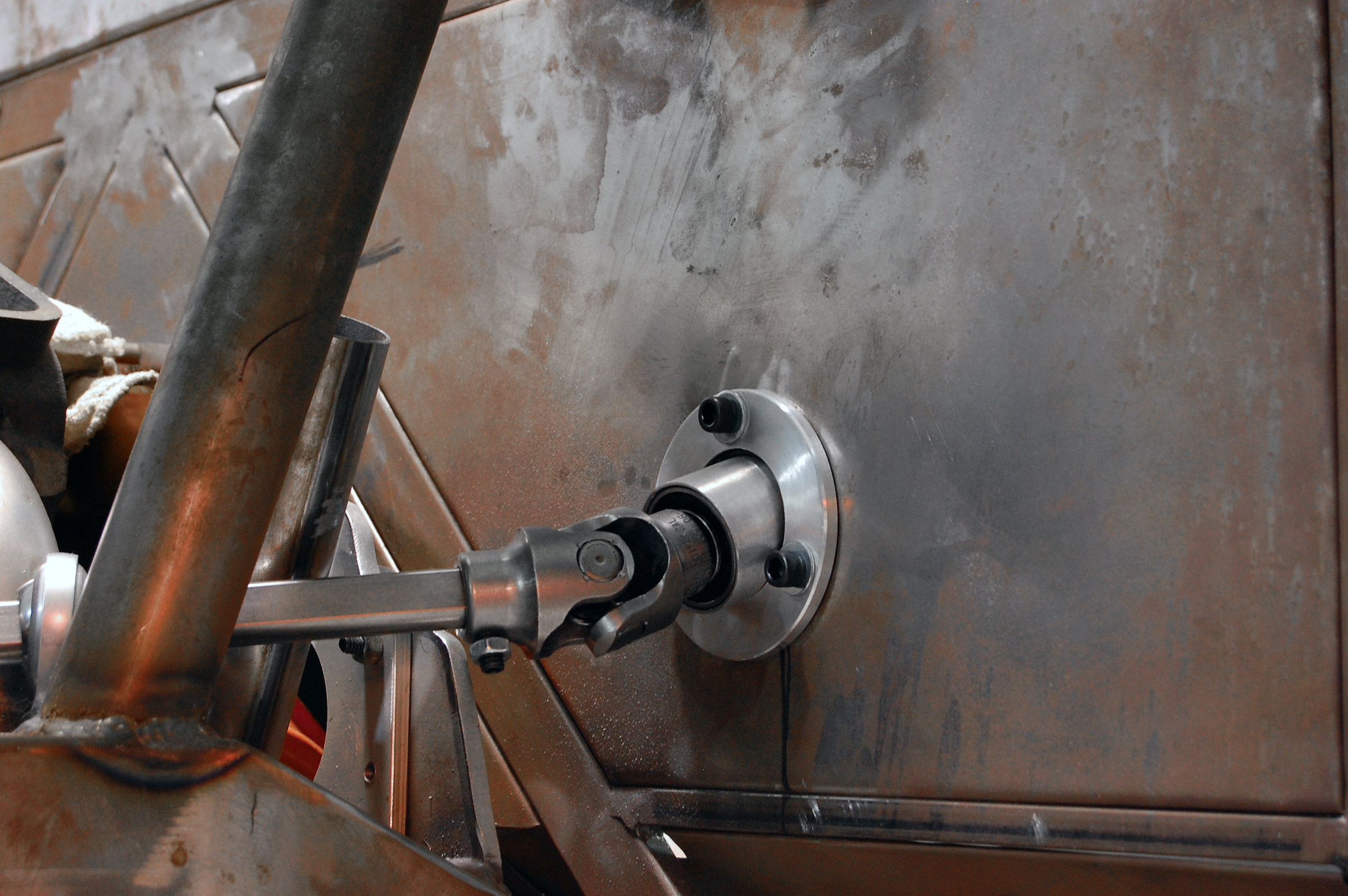
24. Davis and the crew ordered every steering component needed for the build from the folks at Borgeson, and built it all from there. Here, a support bearing holds the double-D shaft in place, and the Borgeson U-joints allow the shaft to snake around the headers.
25. Setting up the steering column and linkage was simple, and it made for a super-clean installation. Here you can see the first U-joint in the steering system, as it keeps the shaft from interfering with the headers and chassis.
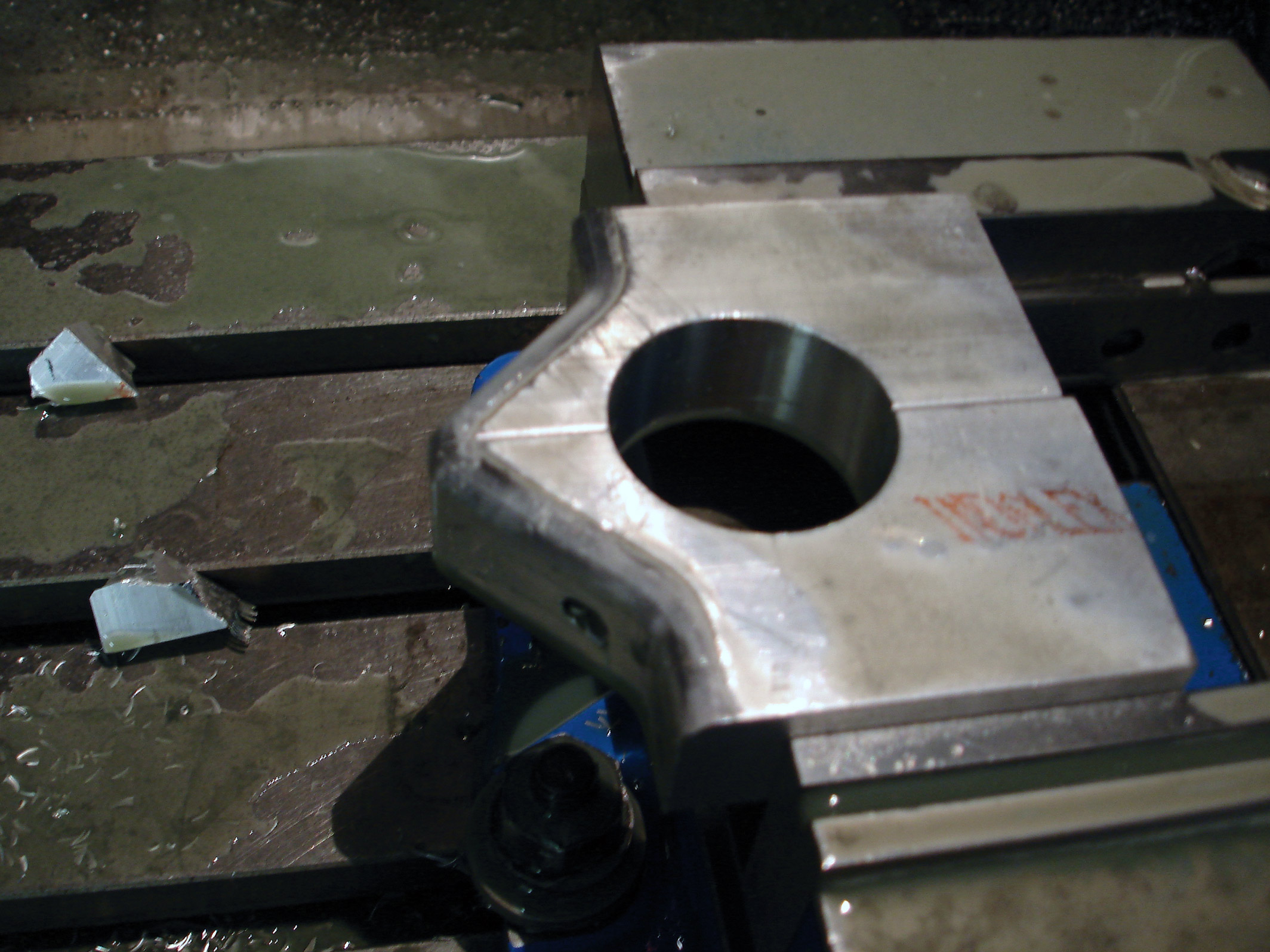
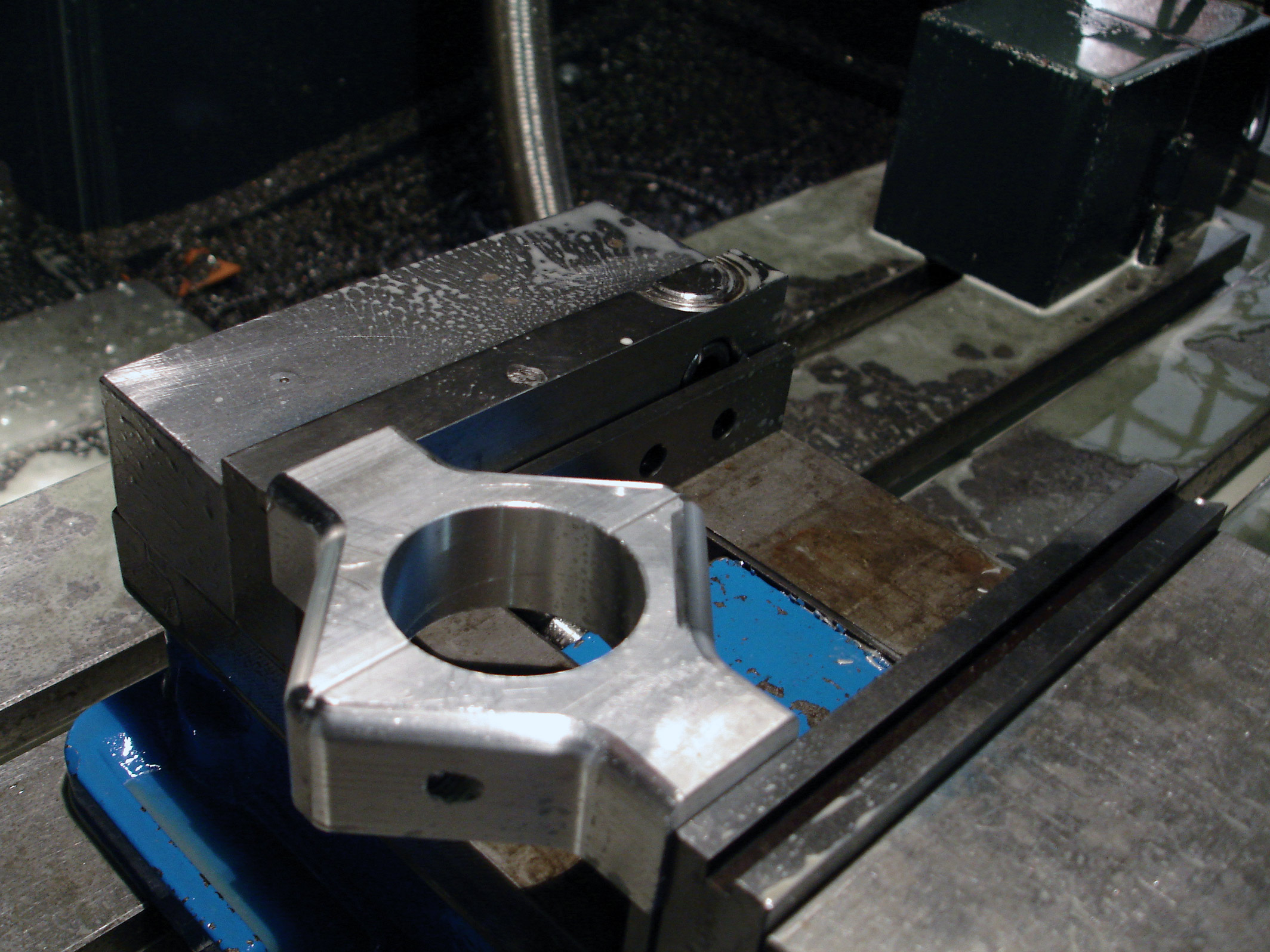
26. For the inside, the students did not want a traditional column drop, so they milled custom mounts out of aluminum for added racecar flavor. The flat edge will resemble the finished side when all is said and done.
27. With the other side milled to the desired shape, the mount can be removed, but two more mounts will be fabricated. Two Allen-head bolts will hold the two halves together, as one mount will attach the custom bracket to the rollcage and two mounts will bolt the column to the aluminum bracket.
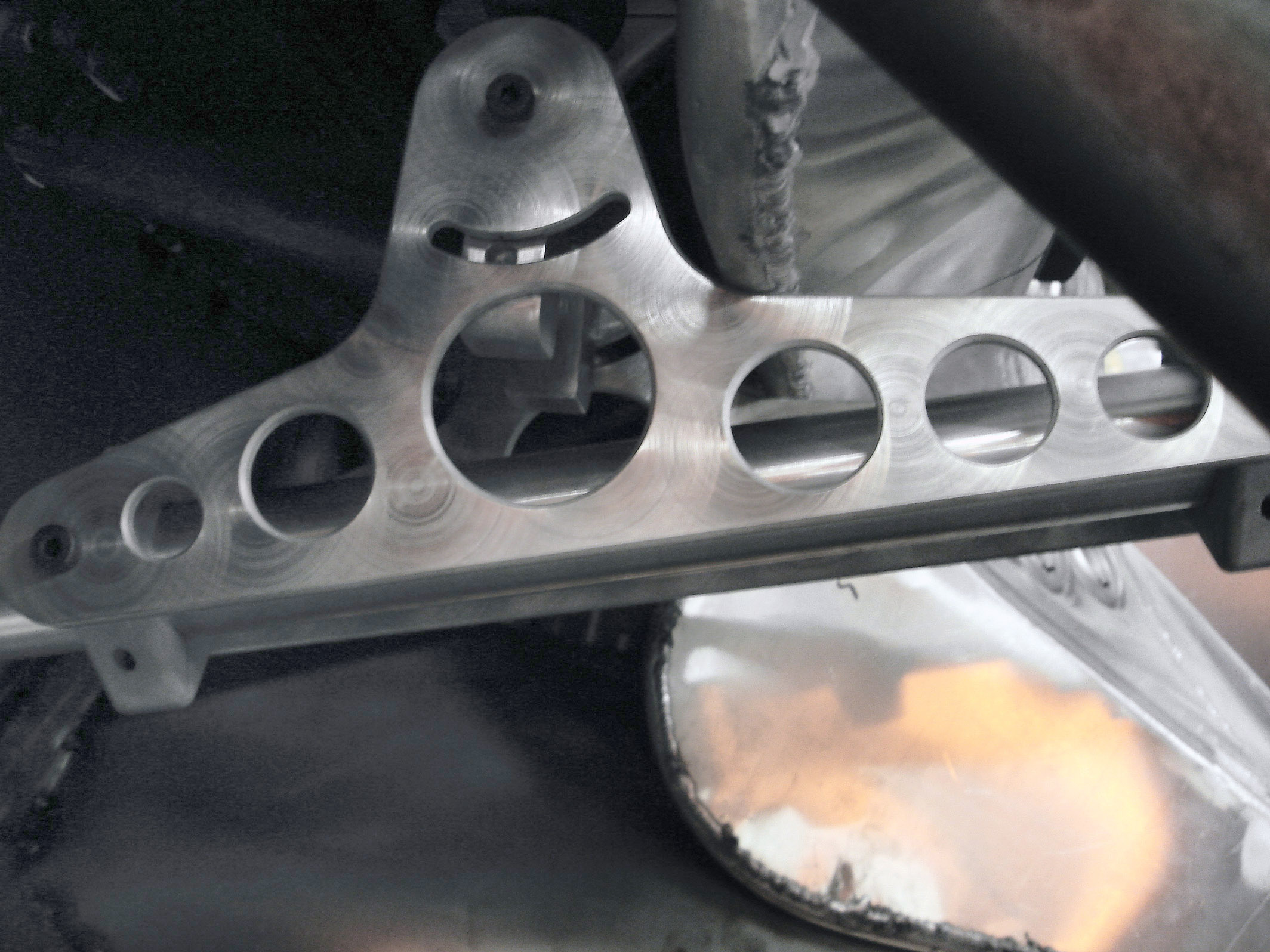
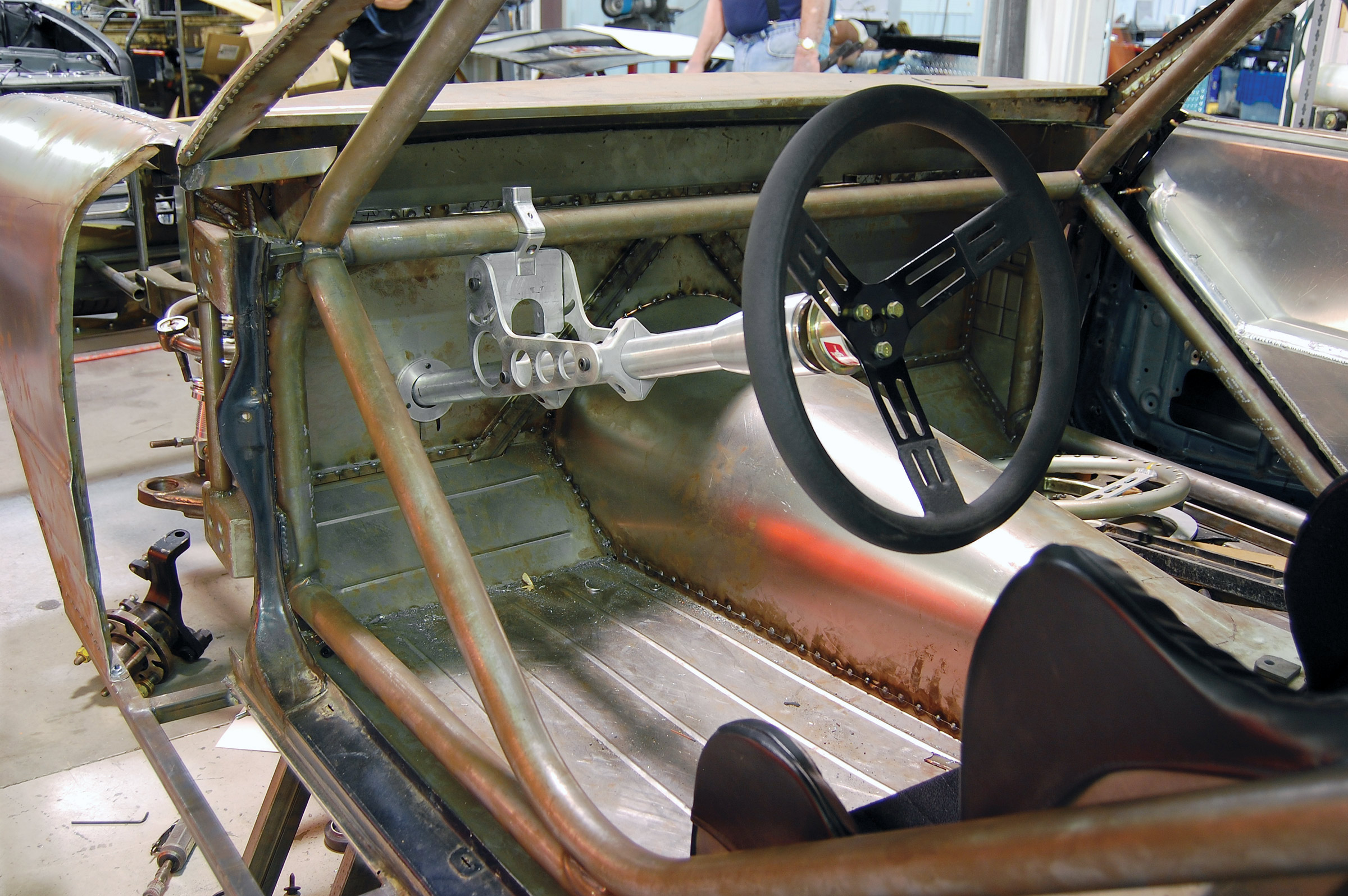
28. Also milled, this custom bracket for the steering column is very light and looks awesome. Notice the curved slot directly above the largest hole—that allows for adjustment (tilt) to fit different drivers.
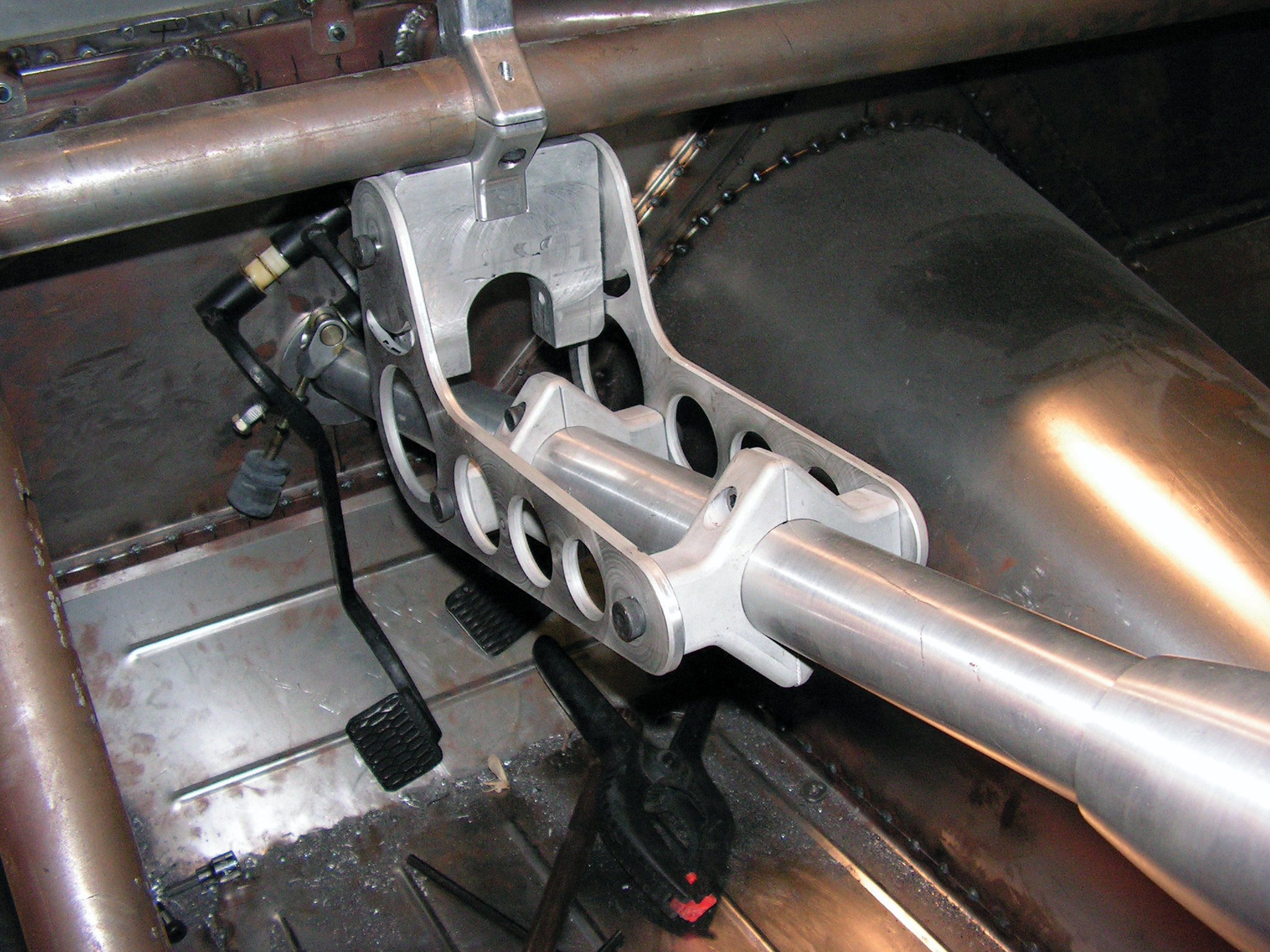
29. Here is the completed steering-column mount with the Borgeson column in place. This design is lightweight, good-looking and safe, and it’s even adjustable, so whoever is behind the wheel feels comfortable.
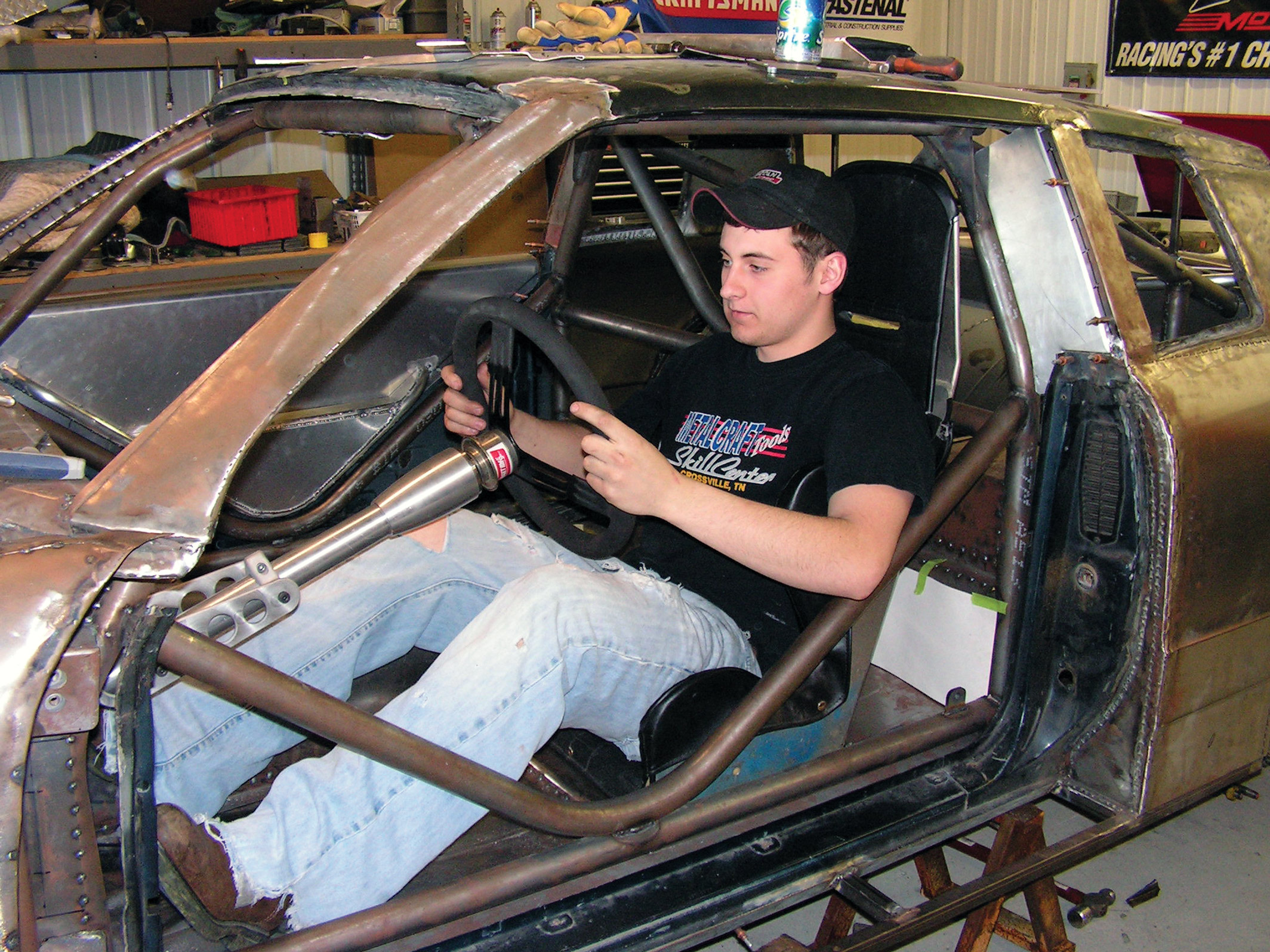
30. With the entire assembly bolted together and the detachable steering wheel in place, you can see that the hard work paid off—everything lines up nicely. An aluminum racing seat is placed in the cockpit for now, but next month we will see the process of building the seats, among other details.
31. Now for the important part—seeing how it feels behind the wheel of a car you helped build from scratch. Wilson feels comfortable at the helm of a racecar; he races Legend cars when he’s not hard at work on this Monte Carlo.
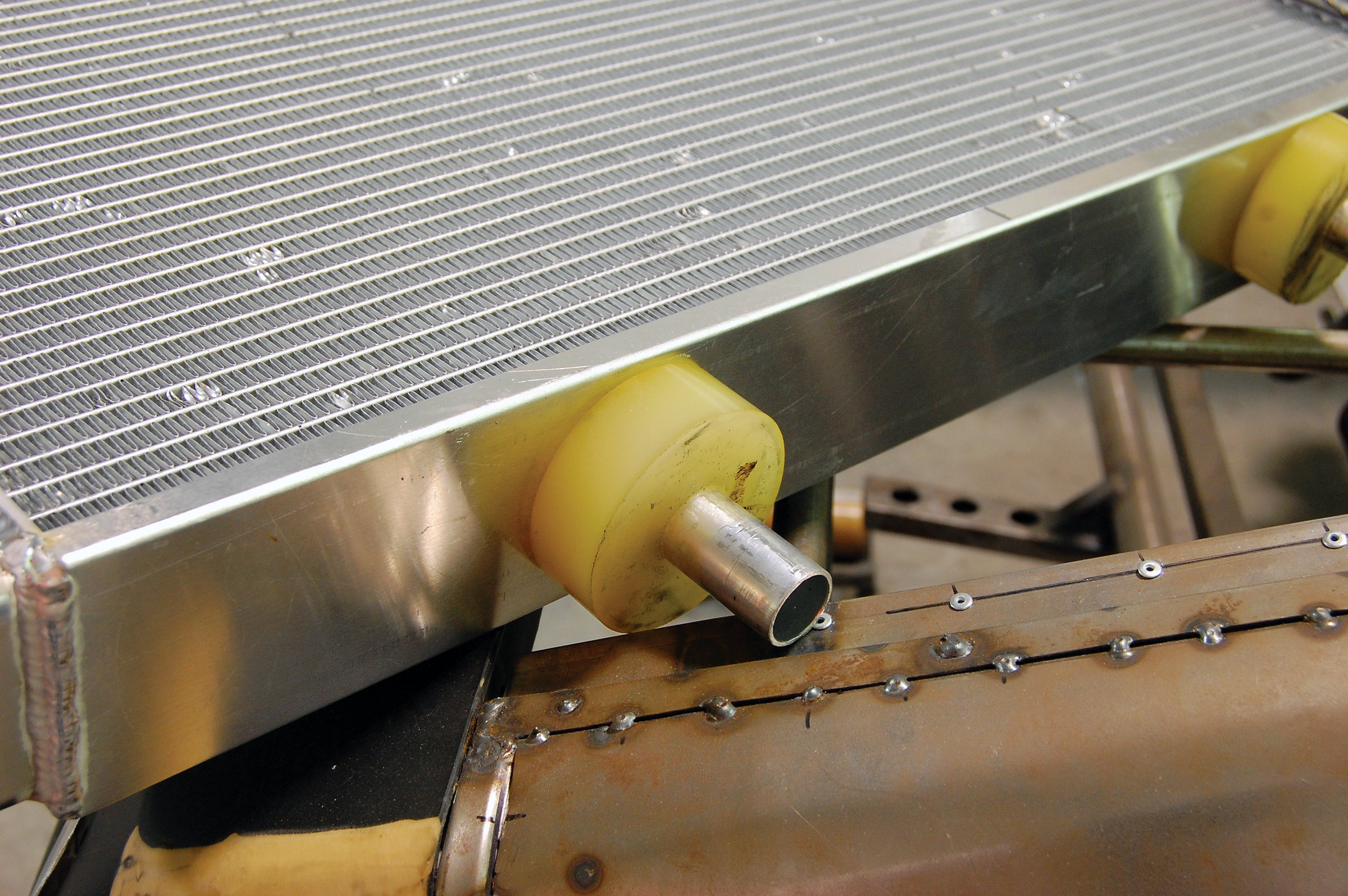
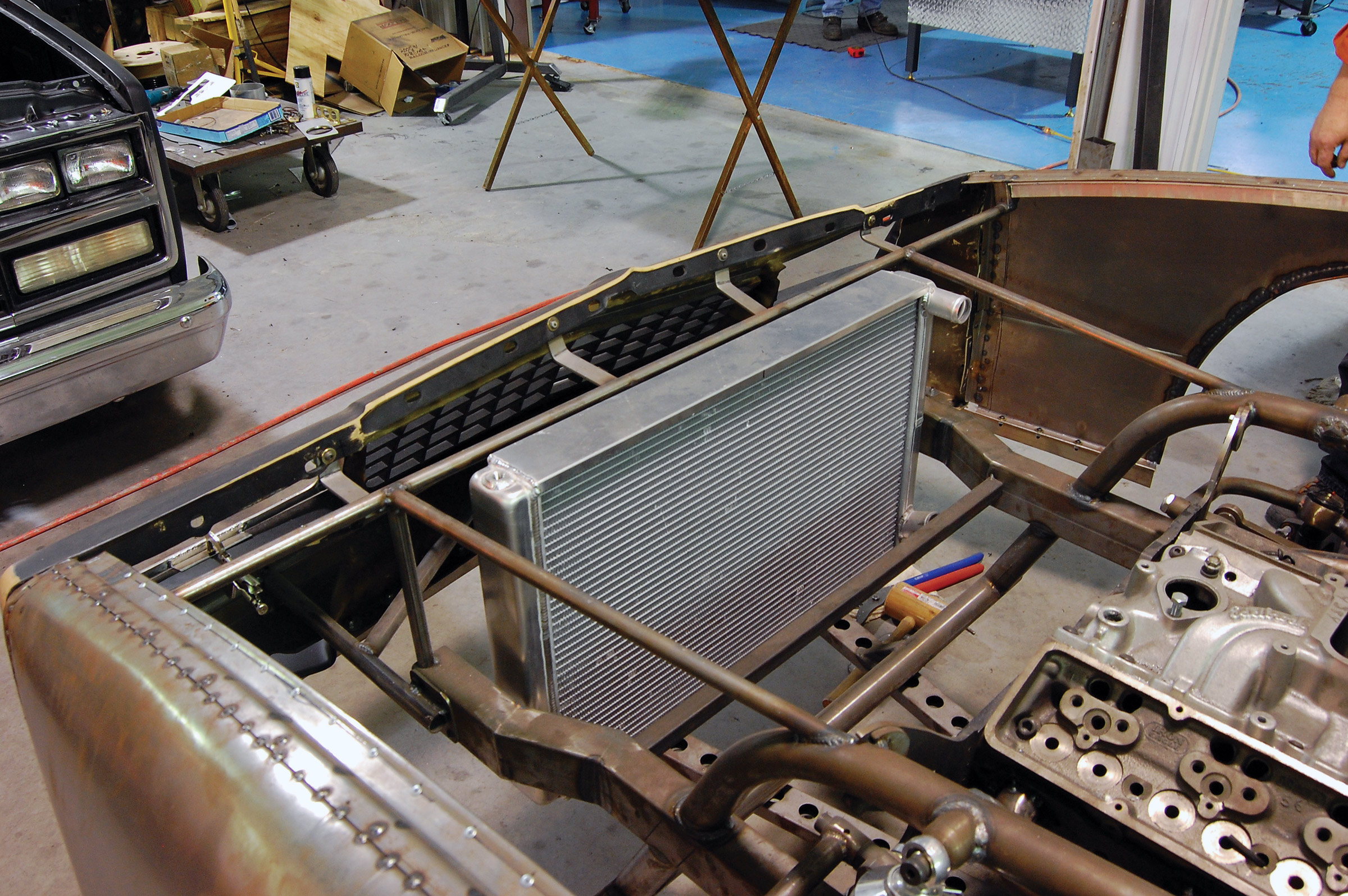
32. Before the engine is placed within the framerails, all of the under-hood fabrication needs to be complete. Here you can see the simple lower mounts for the radiator, as they consist of round tubing and bushings cut to size.
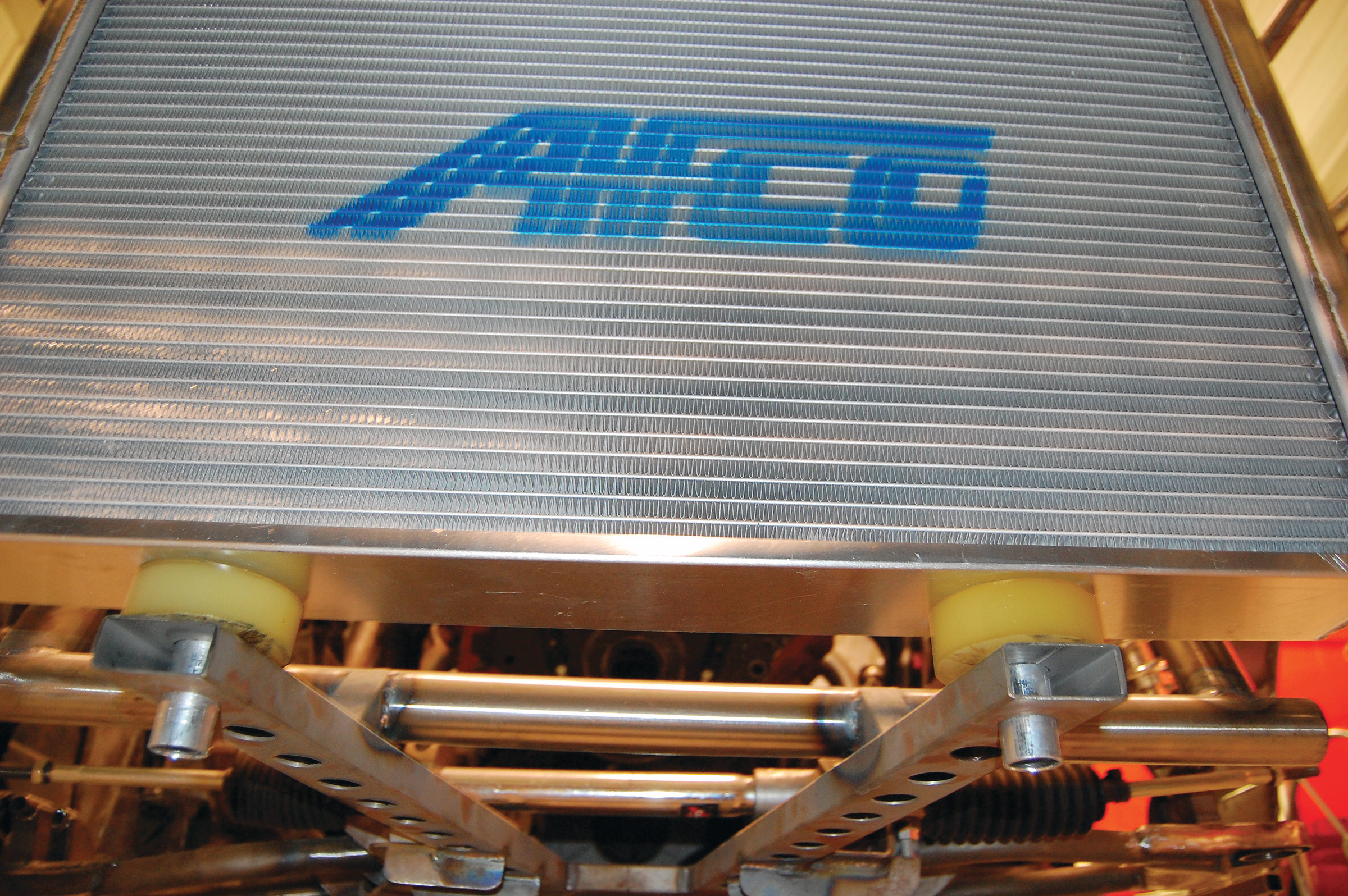
33. The AFCO radiator slides into place in the drilled substructure that runs from the main crossmember. The aluminum tubing is a perfect fit and this part of the chassis is super strong, thanks to several braces that tie it into the main rails.
34. Now, Wilson and Keys need to fabricate a custom upper mount to hold the AFCO radiator in place. With the amount of fabrication performed by the two students, a simple radiator mount was easy, even though the small mounts and brackets consume the most time.
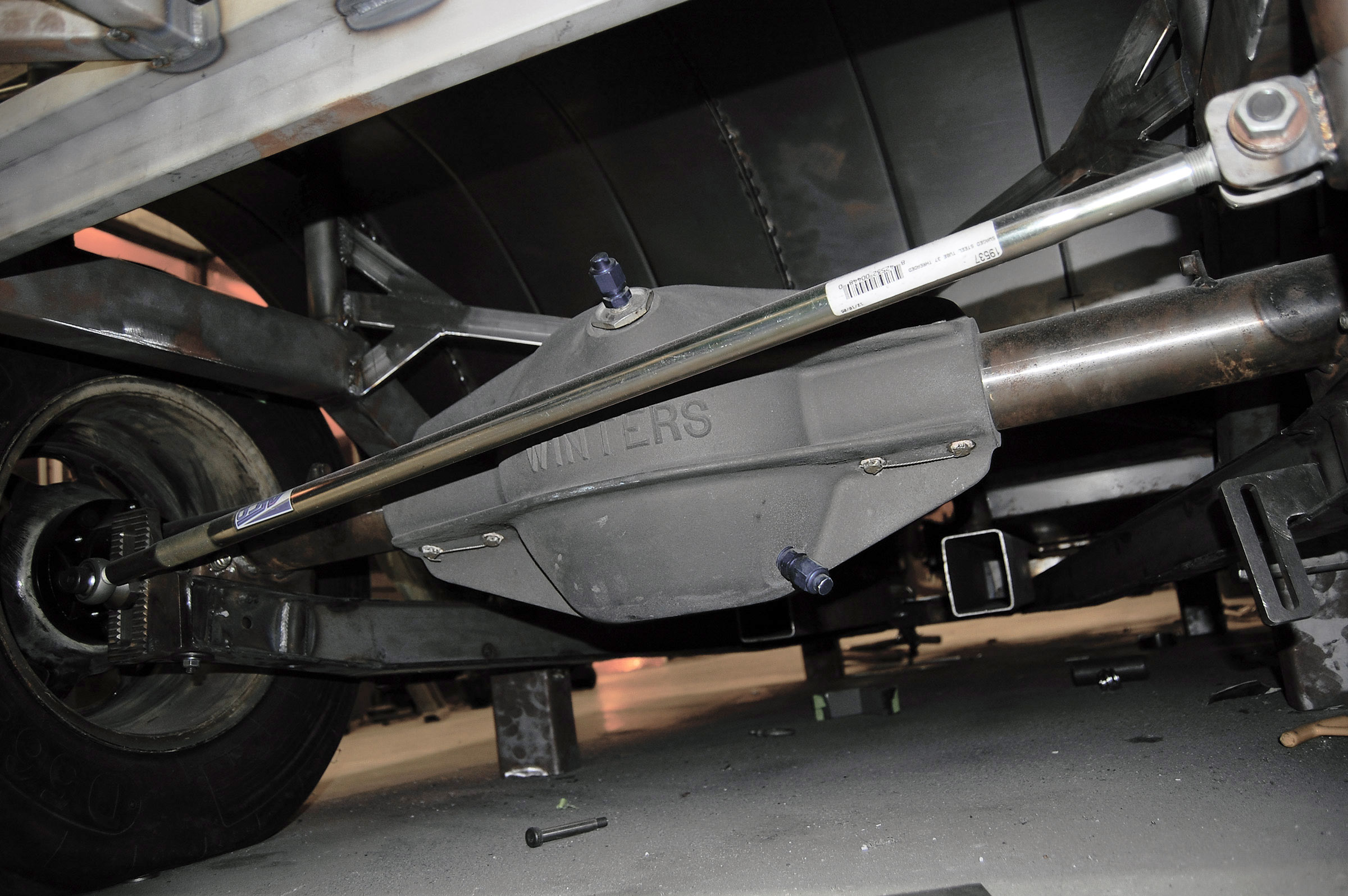
35. Here’s a sneak peek at the rearend under the Smokin’ SS. It’s a Winters 9-inch housing with new axle tubes. This gives the students a fresh start with welding on brackets and mounts for the truck arms, but they’re certainly not finished back here.
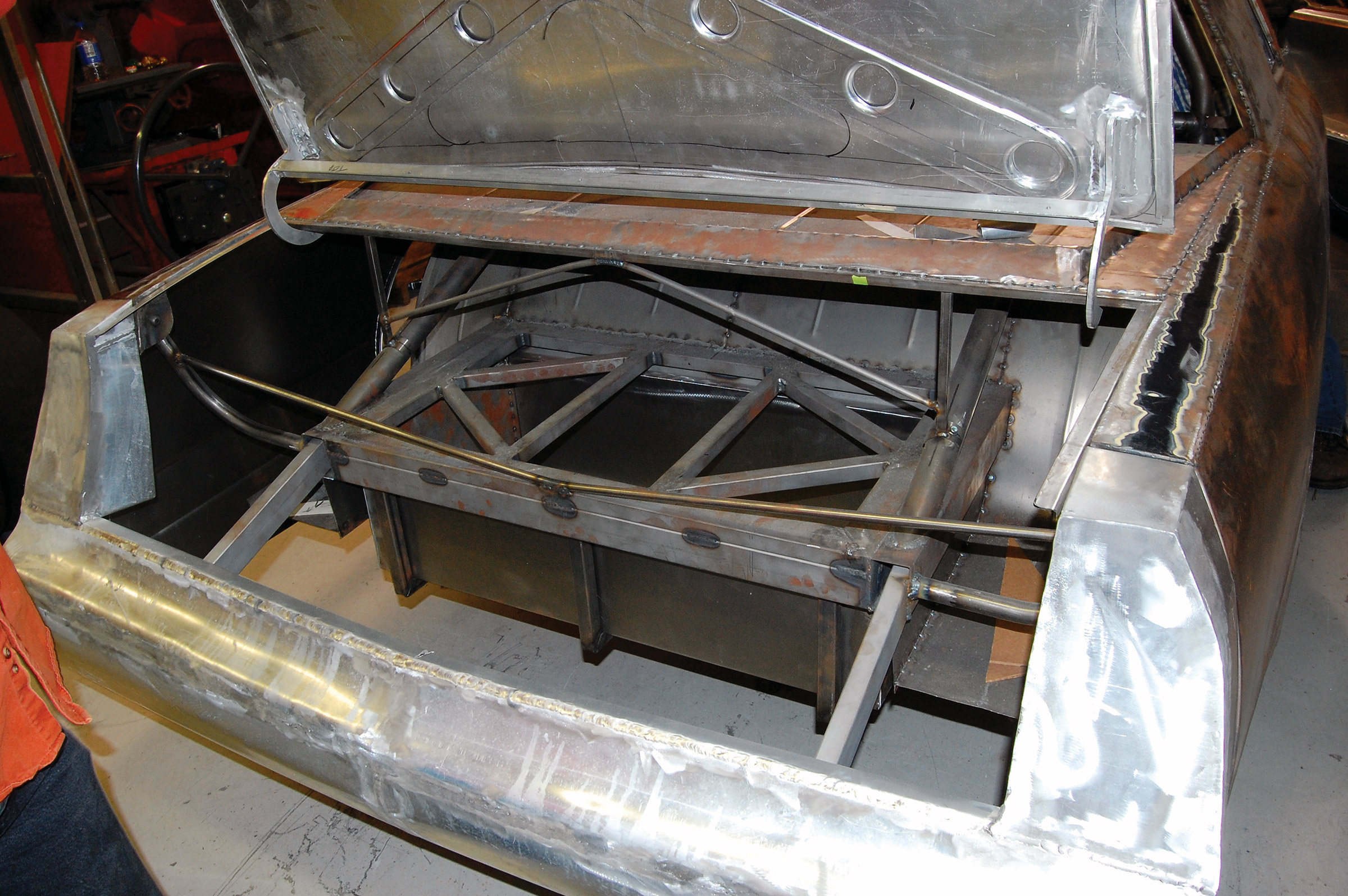
36. Moving farther back, we see that the rear of this Monte Carlo also is coming together nicely. The rear structure will hold the fuel cell, which will bolt up from the bottom side and will feature a bladder setup, similar to most modern racecars. Check back next month to see more finished progress on the Smokin’ SS Monte Carlo.
ARTICLE SOURCES
AFCO Racing
977 Hyrock Blvd.
Boonville, IN 47601
800/632-2320
Aurora Bearing Company
901 Aucutt Rd.
Montgomery, IL 60538
630/859-2030
Borgeson Universal
91 Technology Park Dr.
Torrington, CT 06790
860/482-8283
Dynatech
975 Hyrock Blvd.
Boonville, IN 47601
800/848-5850
Metalcraft Tools SkillCenter
17 Park Lane Spur
Crossville, TN 38571
931/707-7778
Speedway Engineering
13040 Bradley Ave.
Sylmar, CA 91342
818/362-5865