THE AUTO BUILDER
Featured


THE SMART CHARGER

The All-Steel Dynacorn ’47-’53 Chevrolet Five-Window Cab

CRATE OPPORTUNITIES
If you’ve ever imagined a time when you could simply pick up the phone or send an e-mail to General Motors and order the engine of your dreams, pull it out of a box delivered to your door and plug it into the car of your dreams, then stop dreaming as that time has come. While it’s not new information that GM Performance Parts provides an assortment of engines to choose from, it’s never been easier to select the one that is best for your budget and the intended purpose of your car.

FINDING THE RIGHT C10
The Action Line C10 series, produced from 1967 to 1972, is one of the most popular of the classic era of Chevy trucks. They have been transformed into every form imaginable, from sweet shop trucks to double-throwdown showstoppers, from strip-burning quarter-pounders to boulder-flattening off-roaders, and certainly everything in between. We’ll long remember the days when a black ’70 stepside would pass you on the street, dumped low in the front with Americans all around, running fat rubber out back and sweet-sounding exhaust dumping out in front of the rear wheels. You just knew that guy had something trick in the garage at home, too.

Detroit Riddles
Why is it we build top-end hot rods? We all have many different reasons, but the underlying one will always be to get a little attention. Even though it may not be your sole intent, there is a part of you that wants people to tell you “nice car” or, better yet, to win an award at a show every once in awhile. Many hot rodders and builders create their cars to win major awards, which gives your custom creation or your shop “pedigree,” in much the same way the right wins give a racehorse pedigree.
Spotlighter
POPULAR READS
-
Product Spotlight: Bill Mitchell Products Aluminum LS Engine Block
-
PRODUCT SPOTLIGHT: 60-66 Chevy C10 Fresh Air Vent Block Off Plate
-
Product Spotlight: Pyramid Optimized Design Sequential Aurora Taillight for 1964½–1966 Mustang
-
PRODUCT SPOTLIGHT: Cam Covers for GEN/3 Coyote from Pyramid Optimized Design
KEEPSAKE CAMARO
Super Car Workshop’s Joe Swezey Selects One of the Rarest Cars for His Personal Ride
Author
Brian Henderson
Photography by Bob McClurg
Drag racing history buffs are more than familiar with the name Dick Harrell, or “Mr. Chevrolet,” one of early drag racing’s pioneer match race/funny car stars. However, there was also Dick Harrell the innovator, and he should be recognized for his incredible streetcars.
In 1967, legendary Chevrolet dealer and road racer Don Yenko teamed up with Harrell to build the first of Yenko’s infamous Yenko 427 Camaros. While Yenko mechanics built these cars at his dealership in Canonsburg, Pennsylvania, for East Coast distribution, Dick Harrell and his crew in Kansas City, Missouri, also built Yenko Camaros for Yenko’s Midwestern and West Coast-based dealers.
History records that after a split with Yenko in 1968, Harrell became involved with another Chevrolet high-performance icon named Fred Gibb. That year, Harrell modified and campaigned a Fred Gibb Chevrolet-sponsored Camaro AA/Fuel funny car and the Fred Gibb Chevrolet 427 COPO Nova, which was raced primarily in AHRA classes. Then in 1969, Harrell again raced his funny car under Fred Gibb Chevrolet sponsorship, as well as the red number 1 Gibb ZL-1 Camaro Super Stock car, which was later raced by Jim Hayter, in AHRA competition.
The 1968 Dick Harrell Performance Center was not only supporting the Gibb-Harrell drag racing team, but they were also building some of the Midwest’s most feared streetcars. Since Harrell happened to be a performance shop owner and not a Chevrolet dealer, he customarily had the cars slated for conversion for other dealers (those other than the ones he was converting for Fred Gibb) shipped directly to him. Much like Yenko, Harrell had established a dealer network to sell his high-performance creations, and that brings us to Joe Swezey’s stellar example of a ’69 Dick Harrell 427 Camaro.
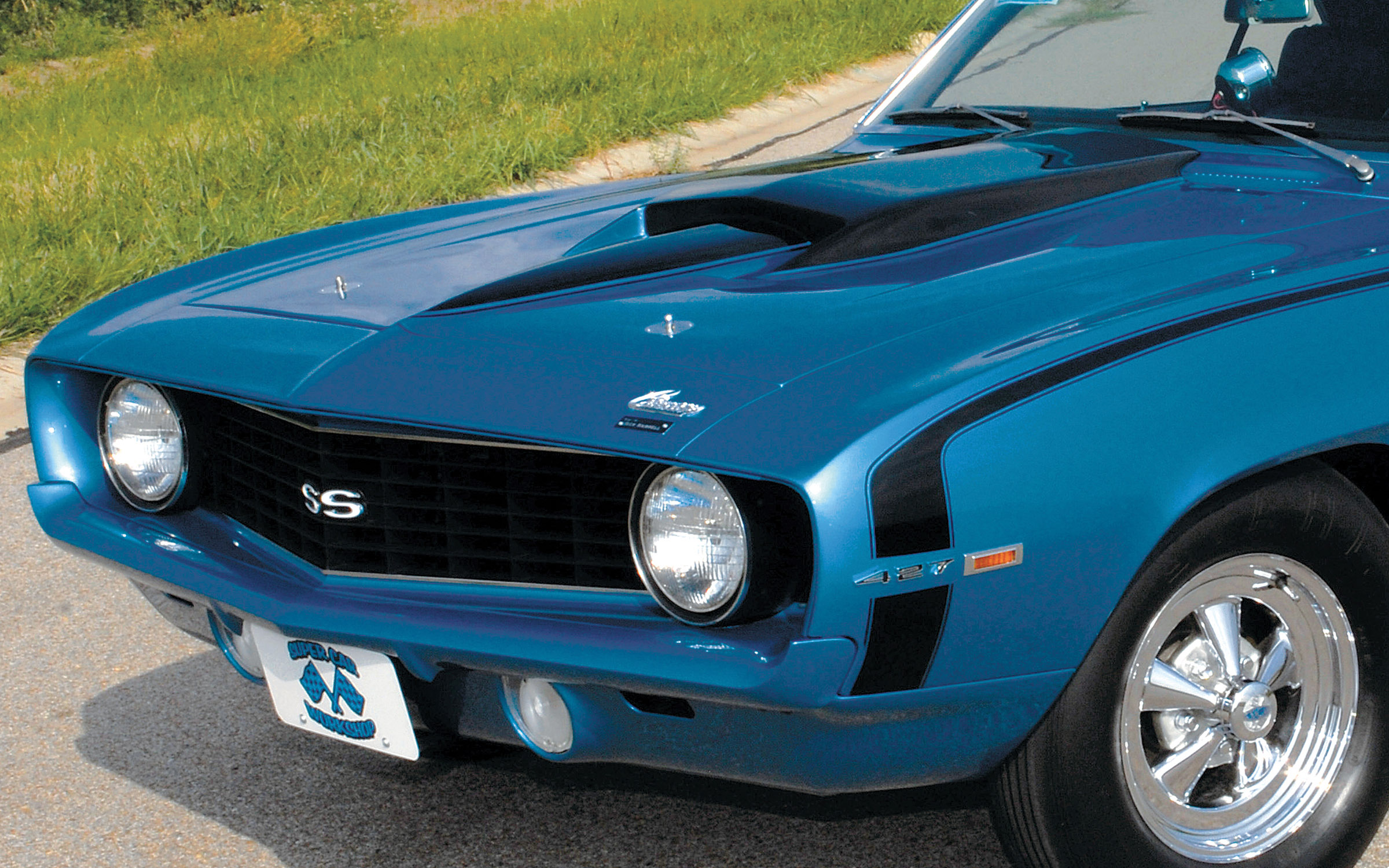
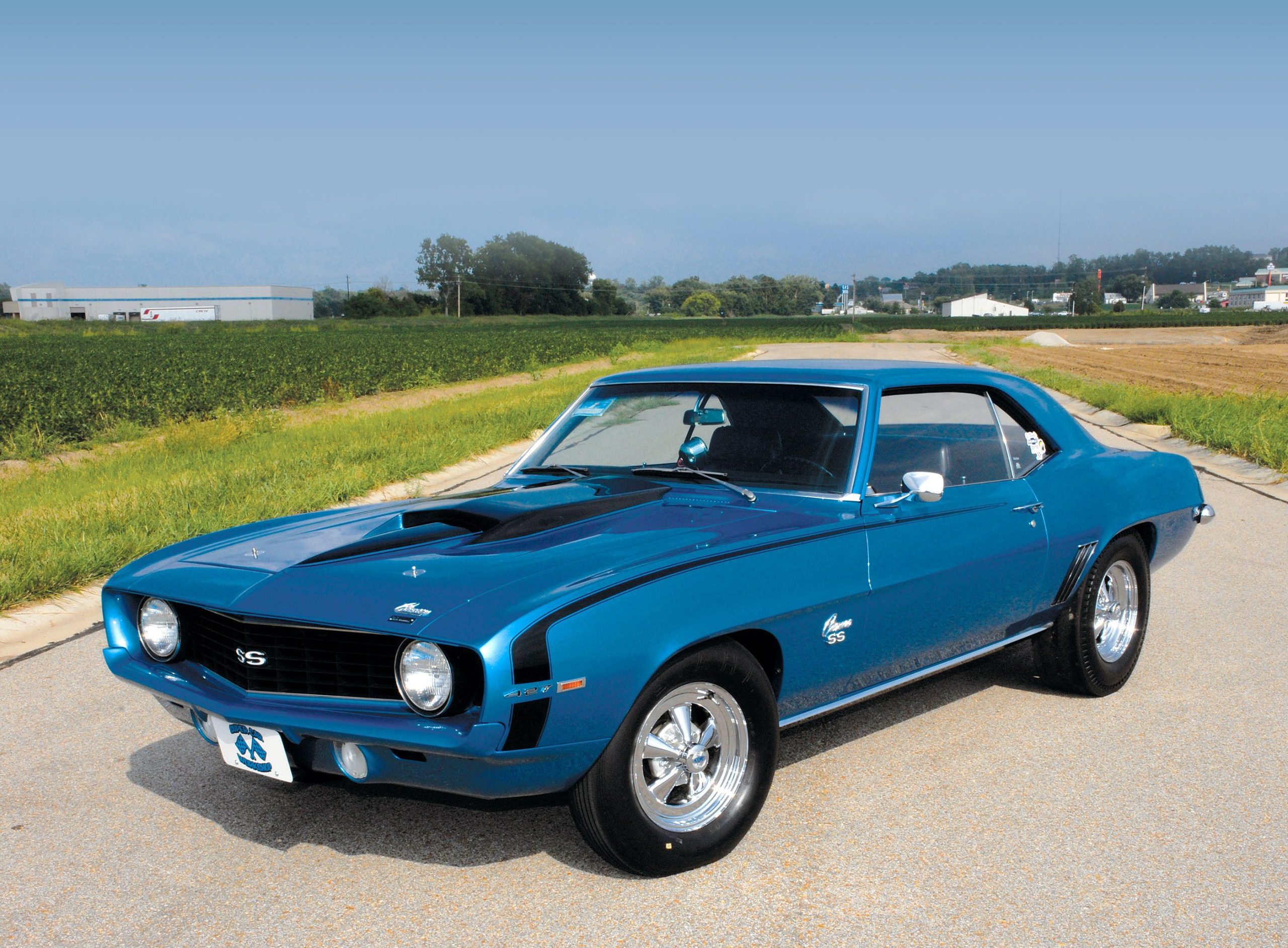
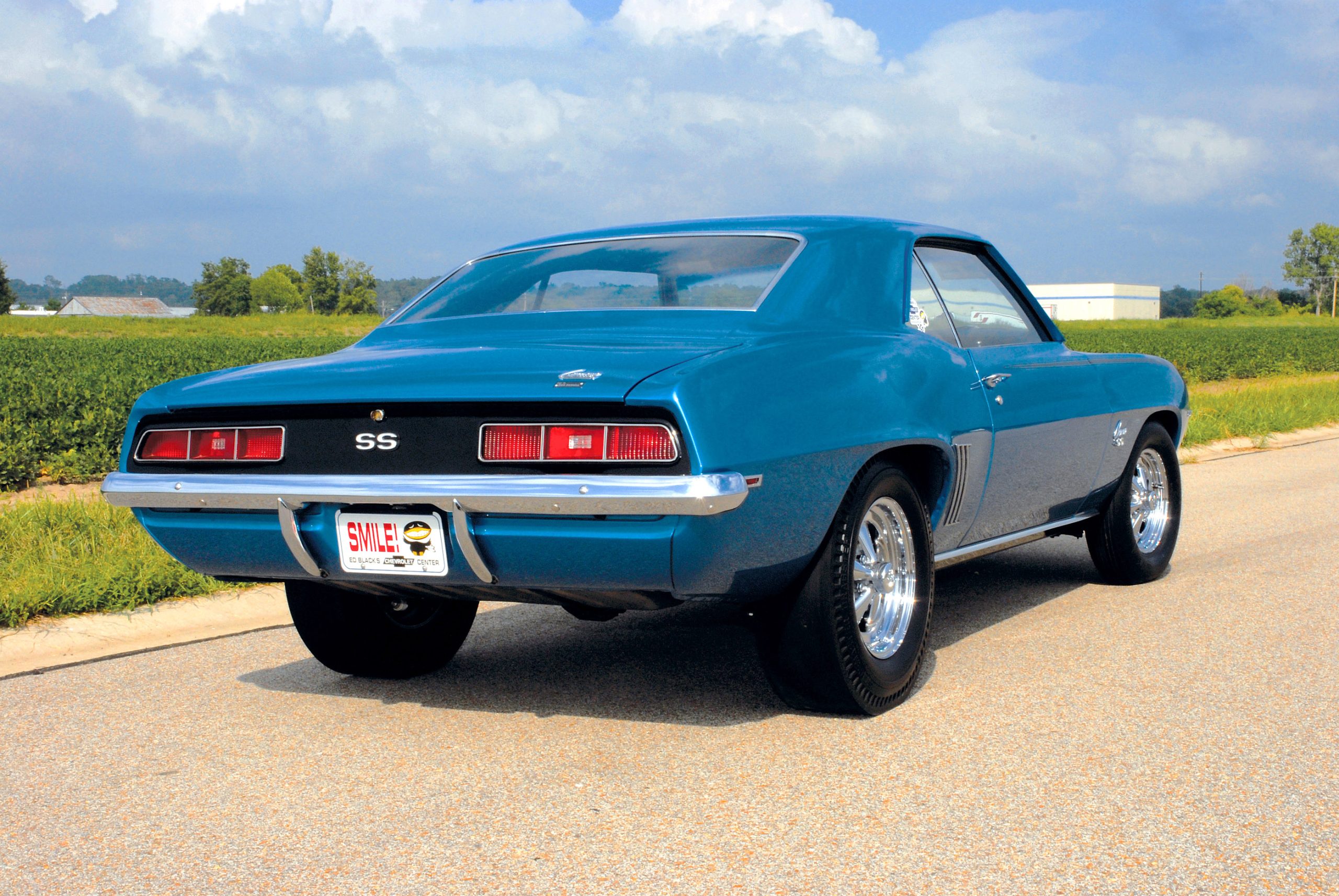
Swezey’s ’69 SS 427 Harrell Camaro rolled off the GM assembly line as a barebones L-78-option SS 396, devoid of the usual spoilers or even a factory AM radio. The Camaro was factory equipped with a Muncie M21 four-speed manual transmission and a 3.55:1-geared GM 12-bolt Positraction rearend. The Camaro was ordered in LeMans Blue with a standard black vinyl interior without the commonplace factory console. The car was converted by Harrell for Ed Black Chevrolet, located in Albuquerque, New Mexico.
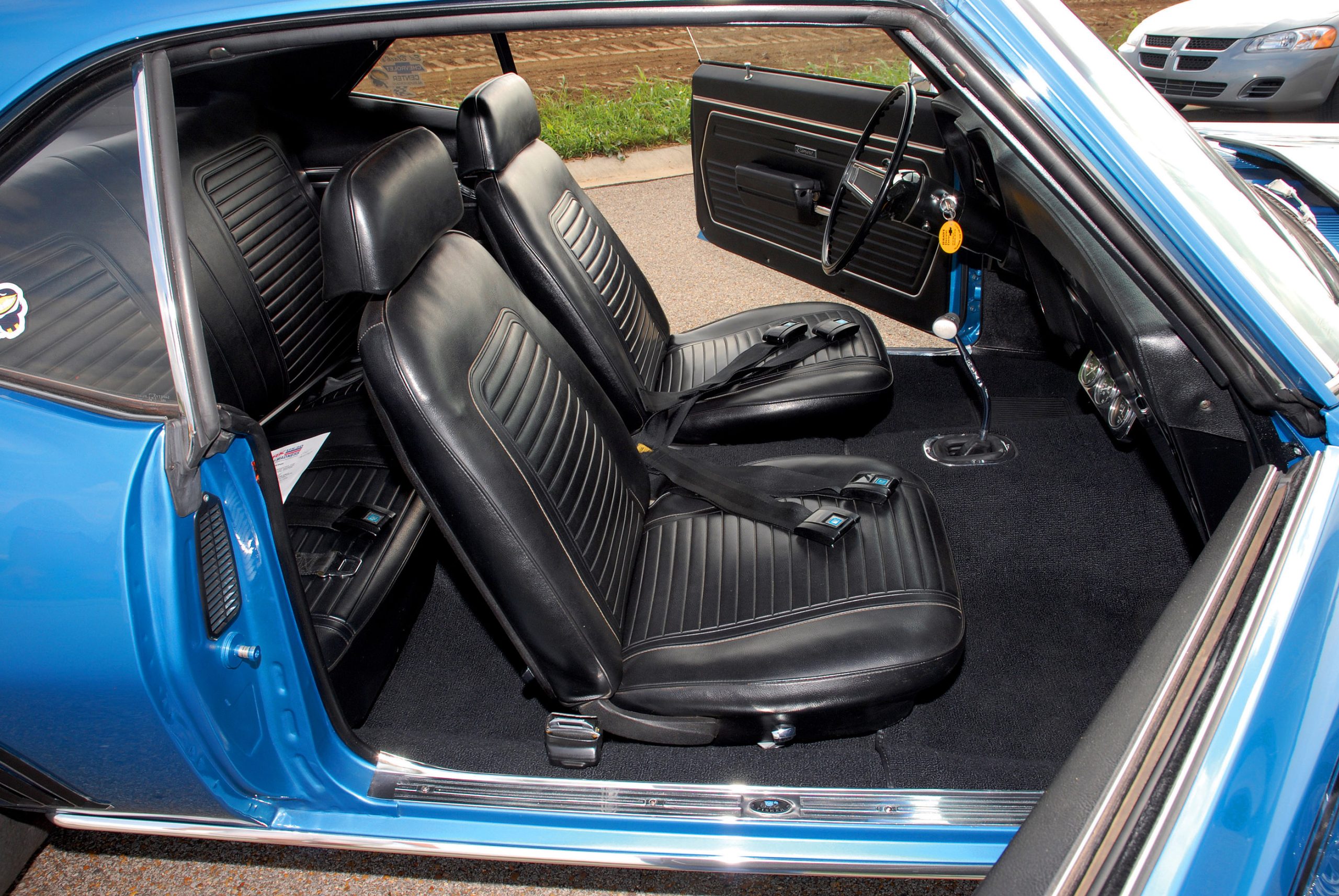
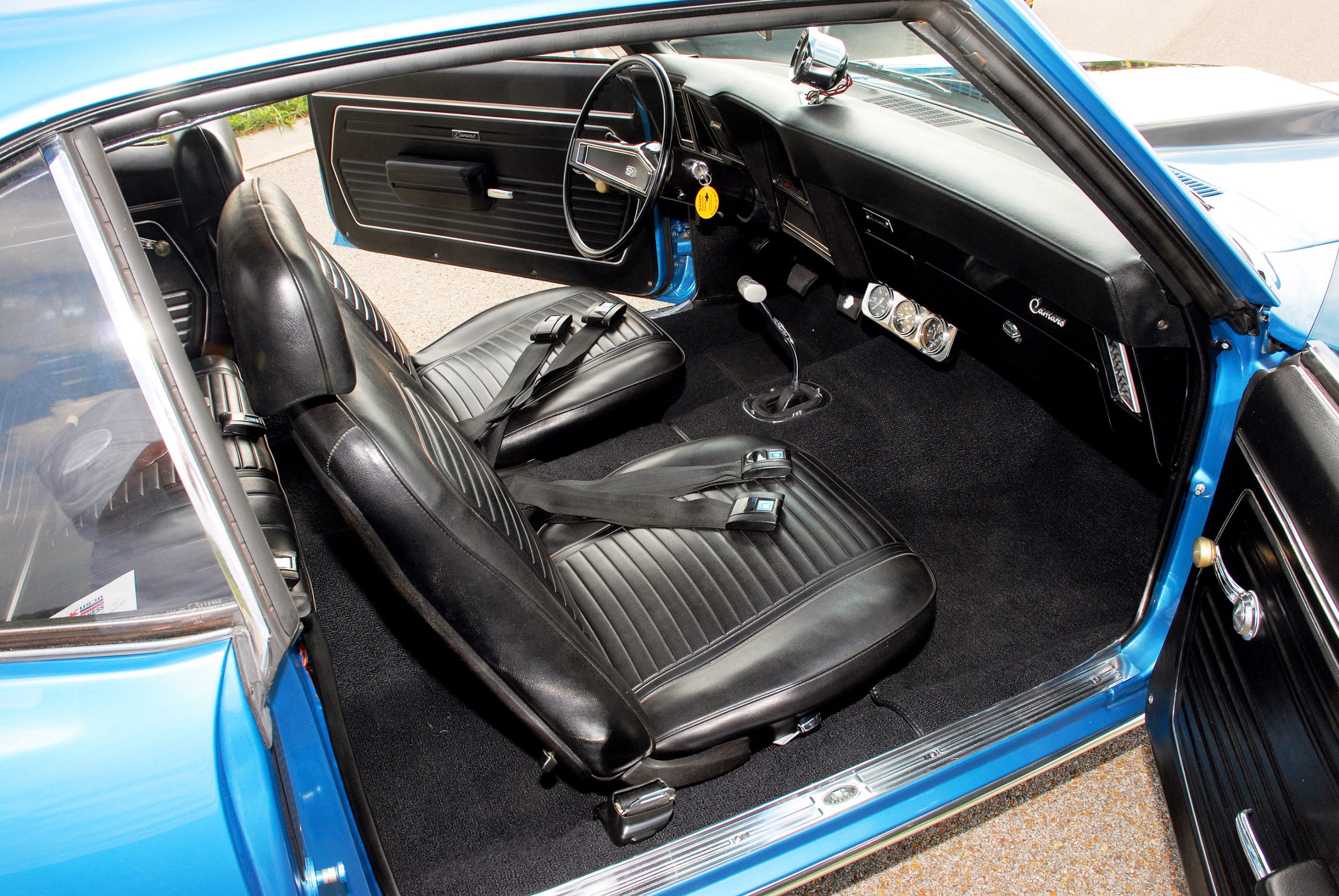
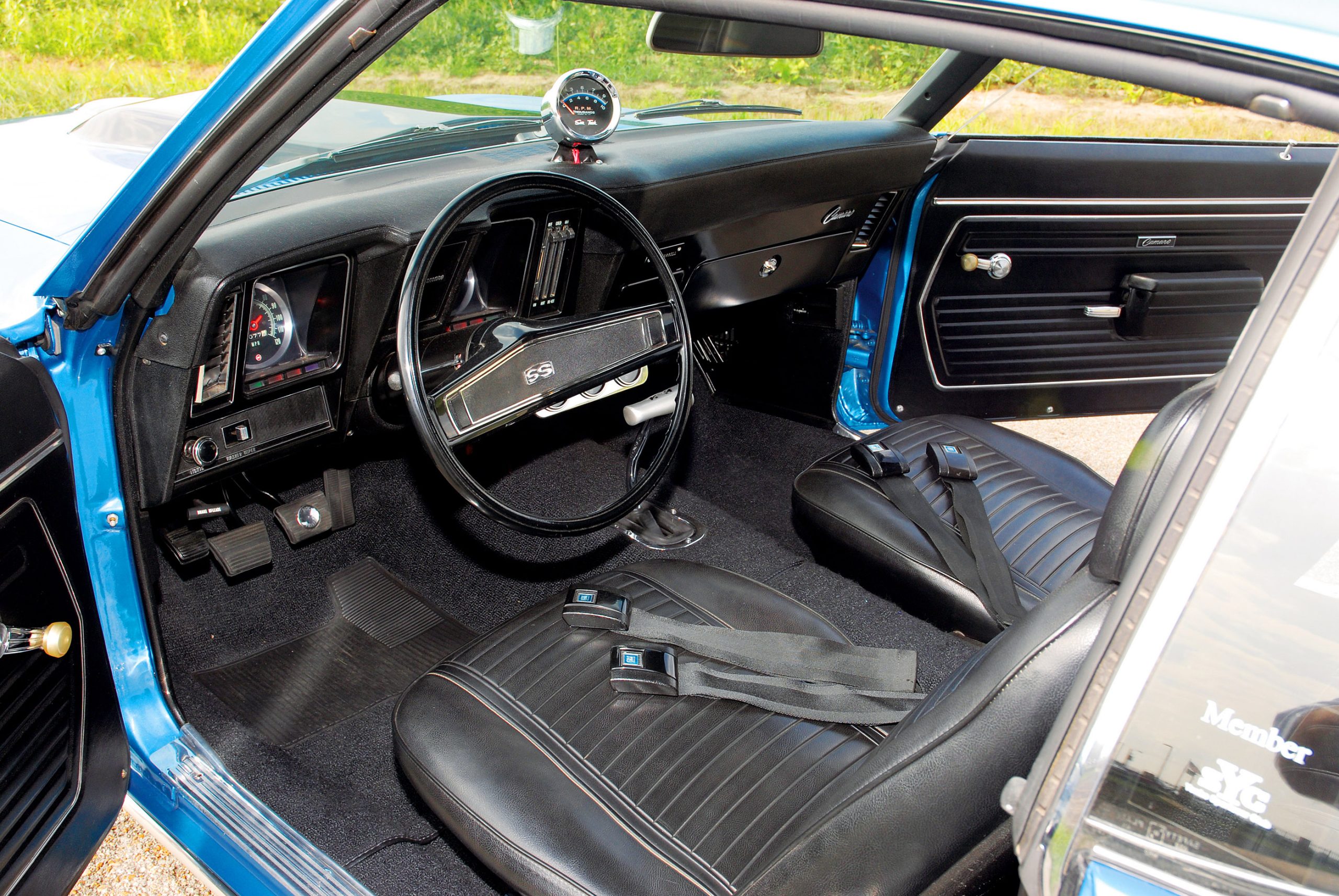
Swezey’s Camaro was ordered from the factory with a black vinyl bucket seat interior complete with radio-delete feature. There are no frills here, just a basic go-fast machine.
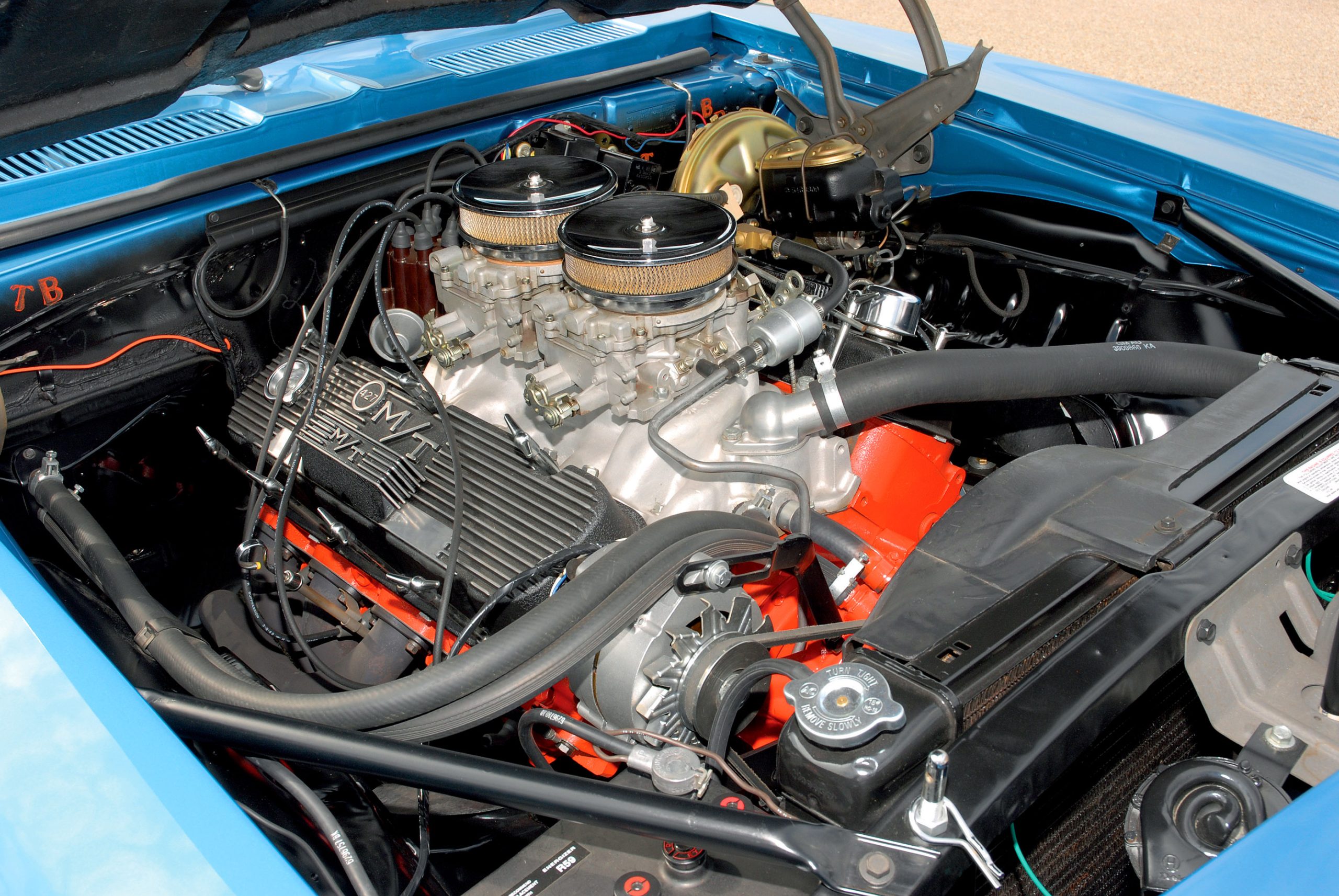
First, the crew at Harrell’s Performance Center removed the 396 big block and installed a 427/425hp big-block Chevrolet engine that had been fully balanced and blueprinted. However, prior to actually installing the engine, they re-painted the engine compartment in LeMans Blue glyptal paint to match the exterior of the car. The single 4-bbl 780cfm Holley carburetor, which came on these engines from the factory, was replaced by a pair of Carter WAFB carburetors (one of Harrell’s sponsors) as well as a Weiand 2×4 tunnel-ram intake manifold. The stock GM distributor was also modified, and a set of Jardine headers (another Harrell sponsor) and Cyclone mufflers were also added. Finally, a set of Mickey Thompson finned aluminum valve covers was added to the engine.
The suspensions on the Dick Harrell Camaros were modified with Harrell’s own special spring clamps using the original five-leaf GM rear springs, along with the substitution of Hurst Performance Dual-Duty drag shocks on all four corners. The rearend gearing was also updated to 4.88:1 Schiefer gears. The suspensions on these cars were further enhanced with the addition of Cragar S/S five-spoke 15-inch steel wheels, along with a set of M&H Racemaster tires providing the much-needed grip.
The interior of this and other Dick Harrell Camaros was modified with a Sun 601 tachometer mounted on top of the dash in plain sight, along with a trio of Stewart Warner (oil, water and amperage) gauges to mind the engine and a classic Hurst T-Handle sitting atop a Hurst Competition Plus shifter.
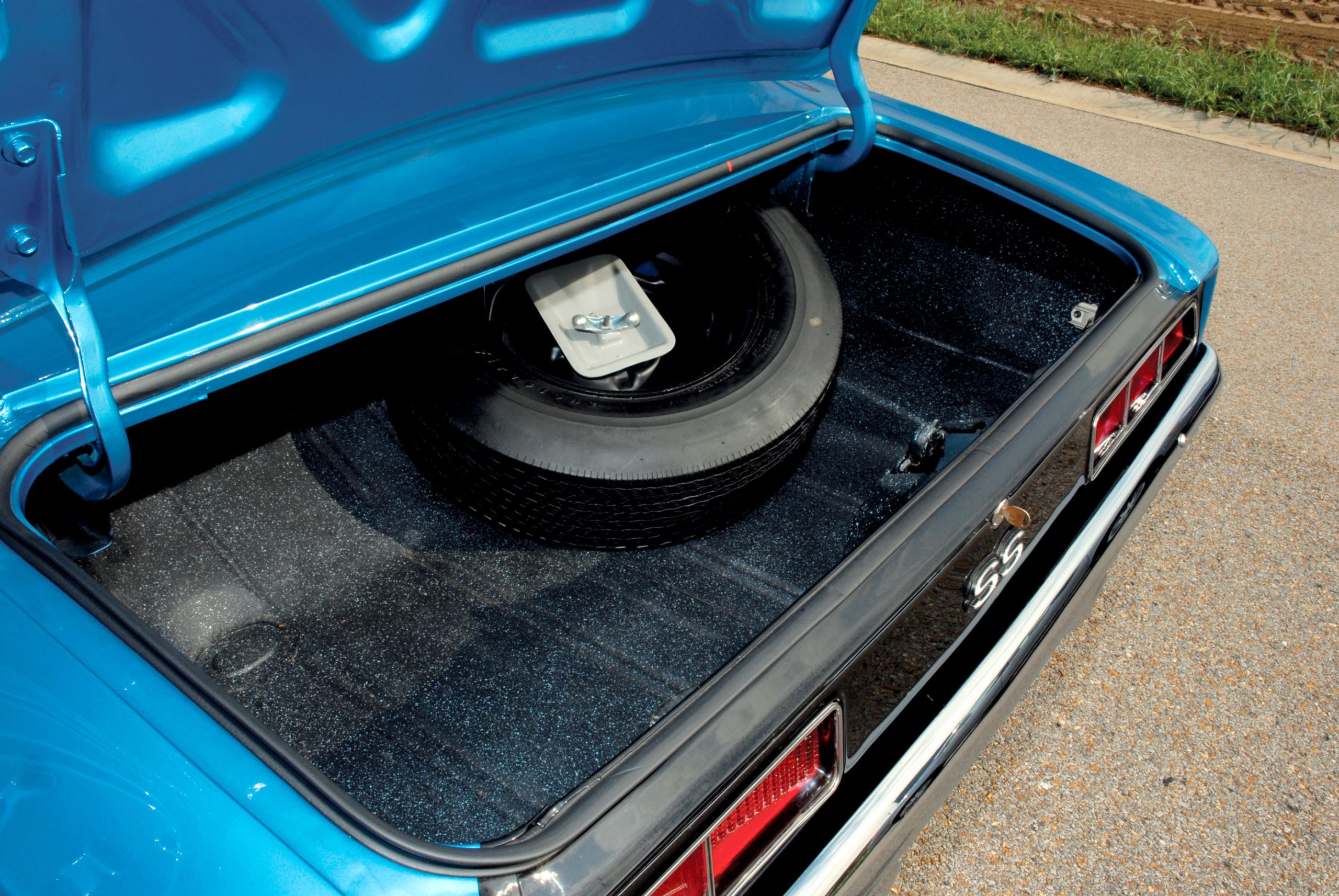
The exterior of the car was upgraded with an A&A Fiberglass (another Harrell sponsor) lightweight Stinger hood and a unique black paint stripe by “Oops,” Dick Harrell’s in-house painter. Then, special “Built By Dick Harrell” badges were pop-riveted on the header panel, decklid and dash to round out the package.
Sweezey located this Camaro while attending the Chicago Chevy/Vette Fest in the summer of 2003 and purchased it from a fellow collector who was thinning out his collection. Once a deal was struck, the car was brought back to Latrobe, Pennsylvania, for a complete, no-holds barred restoration. Since Swezey is co-owner of the Super Car Workshop, he and partner Brian Henderson used the car as a two-year in-house shop project.
The first thing that the two discovered was that since the car came from New Mexico, it was almost totally devoid of the rust that is so common with late ’60s F-body cars. They entrusted the car to Roberts Auto Body, located in Fayette City, Pennsylvania, where expert body man Bernie Matway made everything better than new prior to re-painting the Camaro in PPG LeMans Blue. From there, the car was returned to the Super Car Workshop for final detail and assembly. The Camaro was then debuted at the 2004 Yenko Sportscar Club Supercar Reunion (in Collinsville, Illinois), where it received rave reviews.
With only a handful of documented Dick Harrell cars in existence, seeing one today in all its splendor is truly a rare sight, and Joe and Brian are proud to say that not only have they restored this car, but they have also revived a ’68 Fred Gibb/Dick Harrell Super Tuned Nova and maintained both a survivor ’68 Dick Harrell 427 Chevelle SS and a Jones 427 Camaro SS. With the guys at the Super Car Workshop, it’s all in a day’s work.

Shown is Joe’s Dick Harrell-blueprinted and assembled 427 big-block, complete with Carter WAFB dual 4-bbl carburetors, Weiand 4×4 intake and Mickey Thompson valve covers. Also on board are Jardine headers and Cyclone mufflers.
EDITOR’S NOTE: For the sake of clarity, it should be noted that even though we refer to Dick Harrell as “Mr. Chevrolet,” Chevrolet racers Bruce “USA-1” Larsen and “Jungle Jim” Lieberman were also publicly known as “Mr. Chevrolet” within drag racing circles, with all three of these racers having won the “Mr. Chevrolet” title at numerous funny car events throughout the country, including Capitol Raceway’s highly publicized “Mr. Chevrolet’ funny car series staged throughout the late 1960s.
ARTICLE SOURCES
Super Car Workshop
Joe Swezey & Brian Henderson
Latrobe, PA
(724) 875-3546