Hot Rods
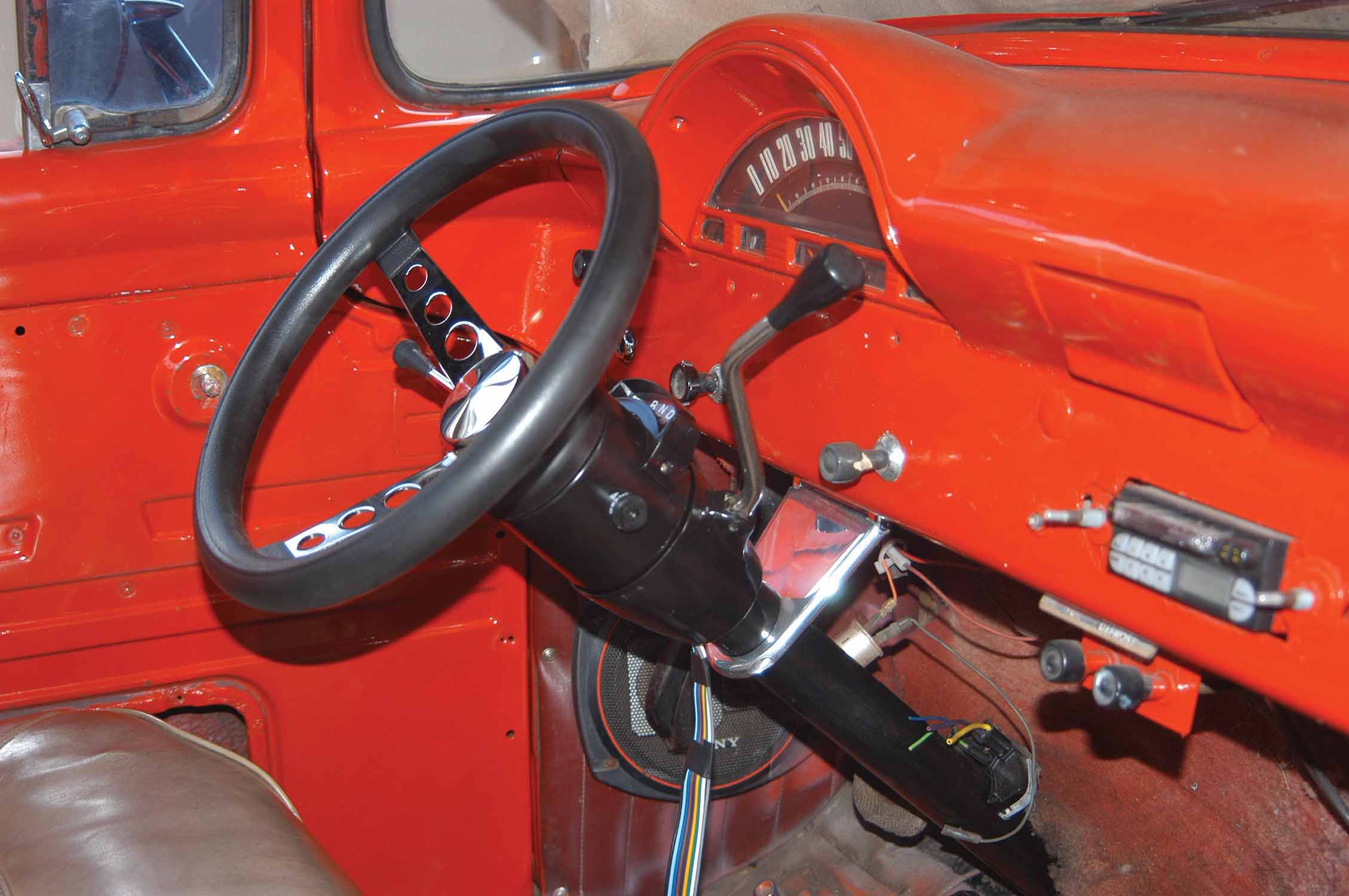
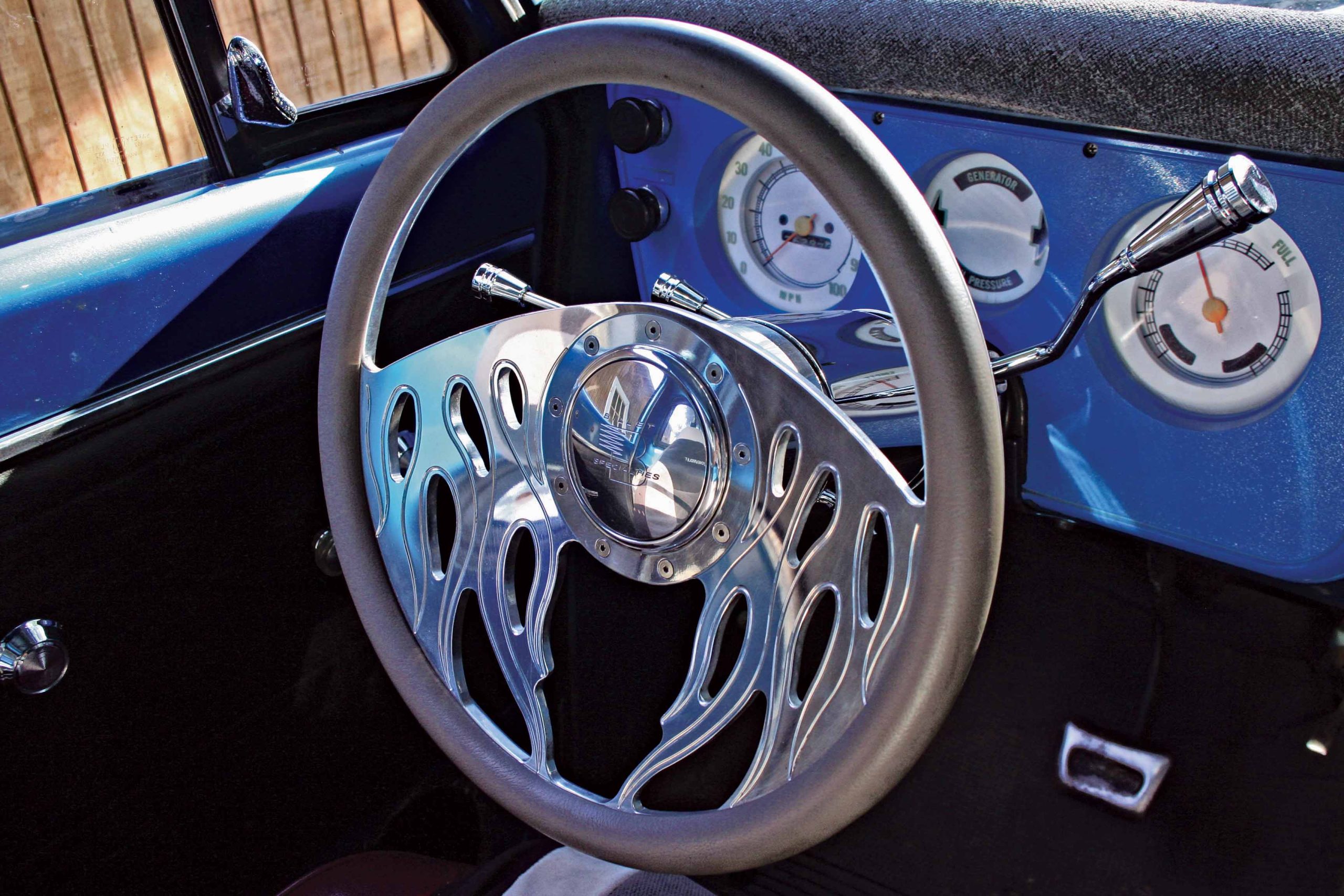
Tilt steering, cruise control, heated seats and A/C are all amenities that we have grown accustomed to without ever knowing it. We’ve come to expect our seat to power forward and our steering column to drop at the flick of a lever; after all, it’s a matter of driver comfort. As these driver comforts have become a part of our daily drivers, it’s not unthinkable that we would want the same for our classic trucks. Our resident ’68 Chevy makes the rounds to and from lunch, along with the occasional cruise-in, so why not build in many of the same conveniences? After looking online, we decided that our outdated straight column just had to go, and then we’d work on the rest of those comfort items.
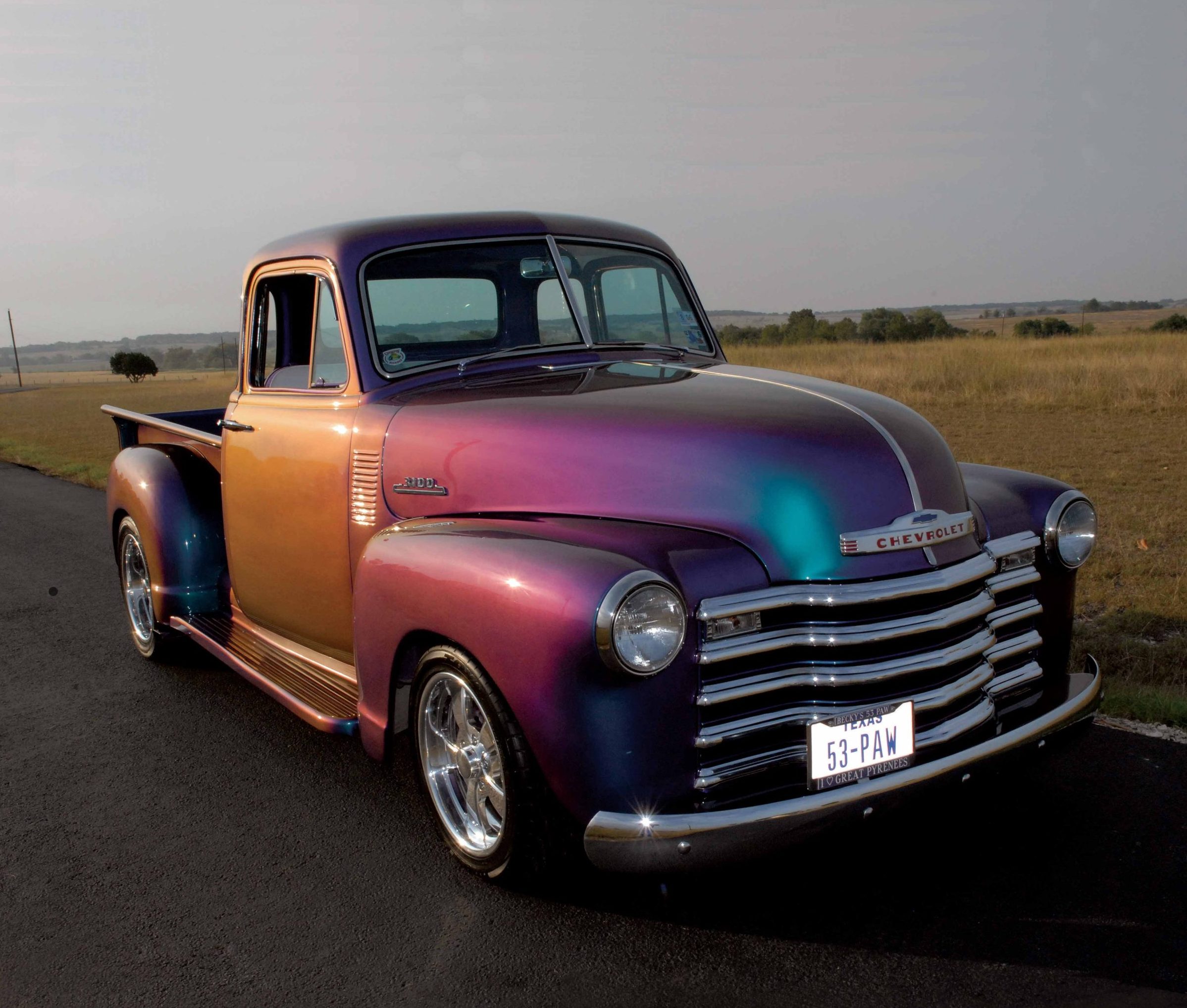
For years, truck builders have searched, looking for that much-sought-after early five-window Chevy pickup project. They are still around and are occasionally found, but it’s getting tougher, and their condition is ever worsening. It’s simple math really: Only so many remain, and many of the really solid ones have been spoken for. To The Delight Of Custom Truck Builders Everywhere, The All-Steel Dynacorn ’47-’53 Chevrolet Five-Window Cab Is Now A Reality!
The pictured F-100 is a 1954 model, and it was purchased by Carl and Marianne Lewis from Milwaukie, Oregon, in 1992. The truck had seen better days, as it had been sitting out in the elements under an awning next to a storage shed. In primer, and with a transplanted 289 small block, the truck was partially disassembled as it sat on four flat tires. It had not been moved for some 10 years. Mel Nichols was hired for the much needed makeover, which took 3-1/2 years to complete.
Our old 350 Chevy-powered ’47 International was running a three-speed 350 Turbo trans with 4.11 gears, which, as you know, is not a great combination for this type of highway cruising. It is fine, however, for those who absolutely love in-town, short-?distance, stop-and-go cruising, as it does prove great low-speed throttle response. On the highway, however, it spins up the engine and uses more fuel. We decided that after having our low-speed fun, we were using too much fuel and weren’t comfortable listening to the whine of the small block as we approached 70 mph. It was time to make a change. We looked around for a number of answers and talked to many classic truck owners who had either installed a new set of gears, an overdrive trans or a Gear Vendors overdrive/underdrive unit. We figured that the new 700R4 trans best fit our application budgetwise, although future plans may call for a Gear Vendors unit, as it represents the best of both worlds. But we first wanted to start with a newer, more modern trans.
In the ’50s, home-delivery baker Helms Bakery went door to door, delivering bread and bakery goods on the streets of Southern California. All you had to do was call and order what you needed, and the next day it was delivered to your door. You could also stop the drivers on their route to buy their goodies, and that’s how we remember the early ’50s Chevy Helms delivery trucks. We figured they must have a rather large fleet of them to cover the L.A. Basin. We aren’t sure exactly when it happened, but no doubt rapidly changing family lifestyles took their toll, and Helms stopped the delivery portion of the business. As a result, there were a lot of early Chevy panel trucks that went somewhere.
While attending the Goodguys Nashville Nationals, we happened upon this stunning Studebaker. Its owner, Jeff Wingo, informed us that during his high school years this same Studebaker served as his daily driver, providing him a ride to and from school and around town. Now a fast-paced computer consultant, Wingo travels around the world, which has allowed him a better lifestyle compared to his teen years. He also has two young sons, Grant and Jack, who love their dad’s cool truck. Let’s rewind to the summer of 2000, when Wingo made the decision to resurrect the tired and worn pickup.
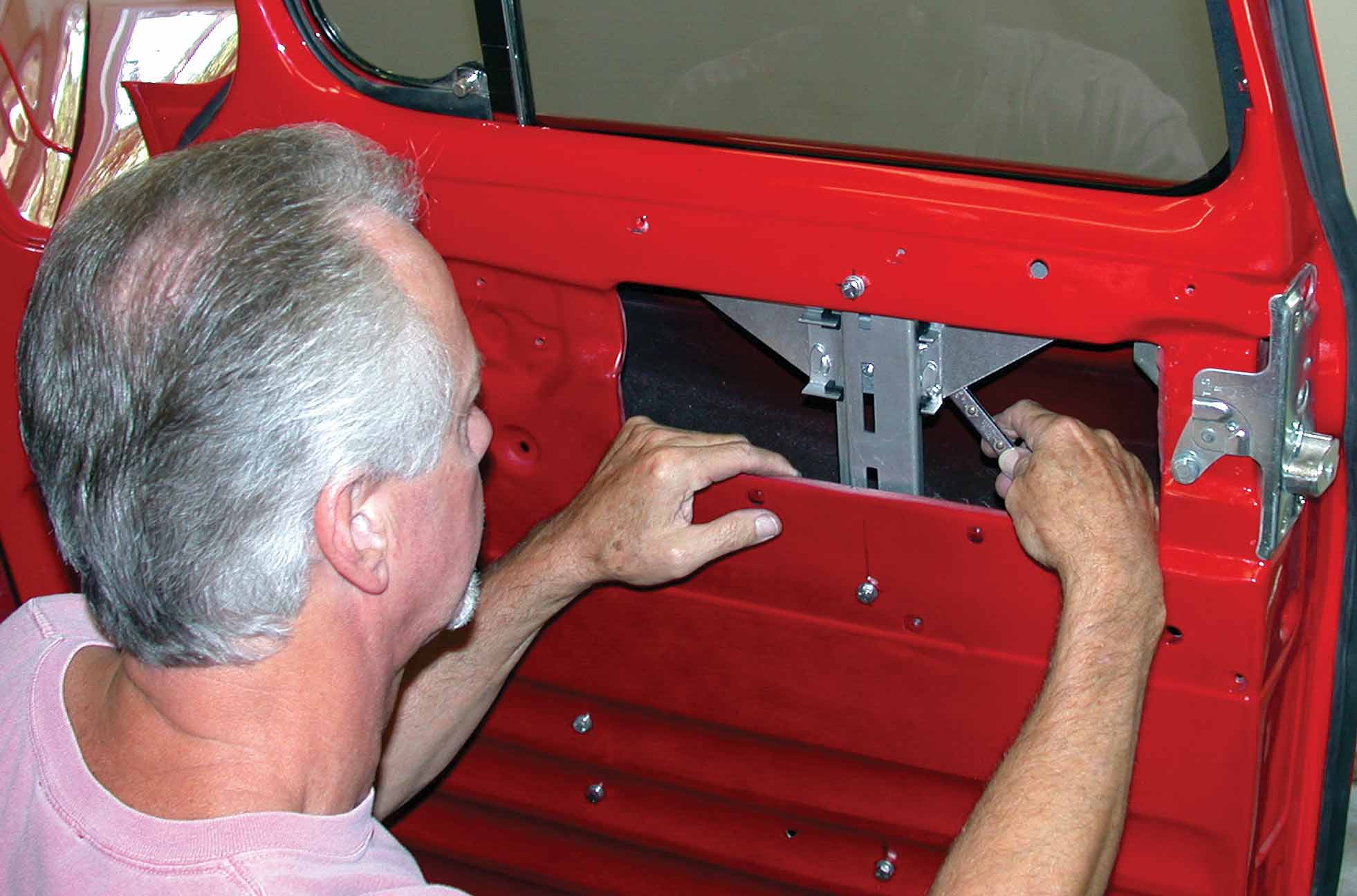
Before the advent of the “smoothie look,” people were slicking down the lines of their cars and trucks in numerous ways, and shaving door handles was one of the more popular mods. Today the trend is to fit later-model door handles rather than no door handles at all. This still provides a simple way to clean up your vehicle with very little effort, yet retains the convenience of manually opening the door. If you have the patience, talent and imagination, you can borrow the parts from a donor car or truck and fit them to your own project, thereby achieving a cool, smooth look that will be unique to your vehicle.
Air conditioning is a luxury that most early truckers agree they can’t be without, especially when they reside in a hot part of the country. But those big, clunky compressors, huge receivers hanging below the dash, bulky hoses running all over the place and extra wires showing are some of the reasons why air conditioning has deterred hardcore rodders for years. Of course, Vintage Air has eliminated those concerns with an excellent add-on system that not only works well, but also coexists with your engine compartment and interior aesthetics.
Vintage Air has kits that are designed for specific applications as well as universal kits. Its kits provide all of the required mounting hardware, brackets, vents, hoses, fittings, ducting, electrical wiring and switches needed to get you through your project. If you have any problems, Vintage Air has a tech support line that is second to none. You have a choice of either the internet or telephone (weekdays only).
Now, it may seem crazy that anyone would take sandpaper to a new paint job, but if you want to have a glass-like finish that is exactly what happens. Of course, it is special sandpaper, and the person doing the work needs to know exactly what he is doing or that paint job can be toast. One of the things that makes color sanding possible is that the paper used is meant to be wet while the job is taking place. The water not only works as a lubricant, but it also removes the fine paint sludge from the area. The problem is getting that water in the proper place and having enough of it to do the job. After all, who really likes sticking his arm into a cold bucket of water time after time?
The Power Programmer is designed so that once the parameters are established and loaded, the unit is pulled and the program remains in the onboard computer until you elect to remove it. The HyperPAC is different; this unit stays in place. In addition to the three stages of performance tuning—the HyperPAC has all of the performance programming benefits of the Power Programmer—it also has diagnostics; an engine monitor with a complete gauge display; a dynamometer, which includes such items such as a horsepower graph; and our favorite, a dragstrip program. This program actually monitors real-time engine operating conditions, has a Christmas tree start, displays a timeslip and will provide you with “magazine-type road test” acceleration times in 10-mile increments. It will record and display important engine operating conditions throughout the run and will display drive wheel horsepower versus vehicle speed after each run—in both table and graph formats.