
THE AUTO BUILDER
Menu
Featured

The Old EQUALIZER
To say that the Fox-body Mustangs have been among the favorites of Ford performance enthusiasts since they began production in 1979 is like saying Henry Ford did okay. Even those without an eye for the obvious know that, by sheer numbers alone, these highly effective, as well as affordable, machines rule the streets of America. And while ’79-’93 Mustangs may lack some of the technological advancements found in Ford showrooms today, there’s an abundance of components available through the aftermarket that will make up for that shortcoming, and lots more.

Hot Boats at the Grand National Roadster Show 2025
If you thought the Grand National Roadster Show was just about hot rods and customs, think again. Tucked away in Expo Building 8 was a full-blown horsepower fest on water, with a killer lineup of vintage drag boats, Grand National circle racers, and custom-built speed machines that make as much noise as they do waves. If you love anything that rips, this was the place to be.

Remembering a Legend
Whatever your preference in cars, Boyd Coddington took them to new heights through his exceptional ability to unite highly creative forces in a common effort, from the design stage to show-winning results.




Spotlighter
POPULAR READS
-
The Auto Builder’s Hottest Product Picks from The Triple Crown of Rodding 2026
-
Product Spotlight: Bill Mitchell Products Aluminum LS Engine Block
-
PRODUCT SPOTLIGHT: 60-66 Chevy C10 Fresh Air Vent Block Off Plate
-
Product Spotlight: Pyramid Optimized Design Sequential Aurora Taillight for 1964½–1966 Mustang


PACKED WITH POTENTIAL
The Benefits and Ease of Installing a Hypertech HyperPAC
Author

Matt Emery
Story & Photography
There is an old saying that if you build a better mousetrap, the world will beat a path to your door. But what about the people who already build a pretty darn good mousetrap?
Take the folks at Hypertech, for example. They already have one of the best and most popular hand-held automotive computer reprogrammers on the market—the Power Programmer III. But that was obviously not enough for them, because they went right ahead and made a programmer that has far more functions—a veritable computer in your car. They called this marvel the HyperPAC.
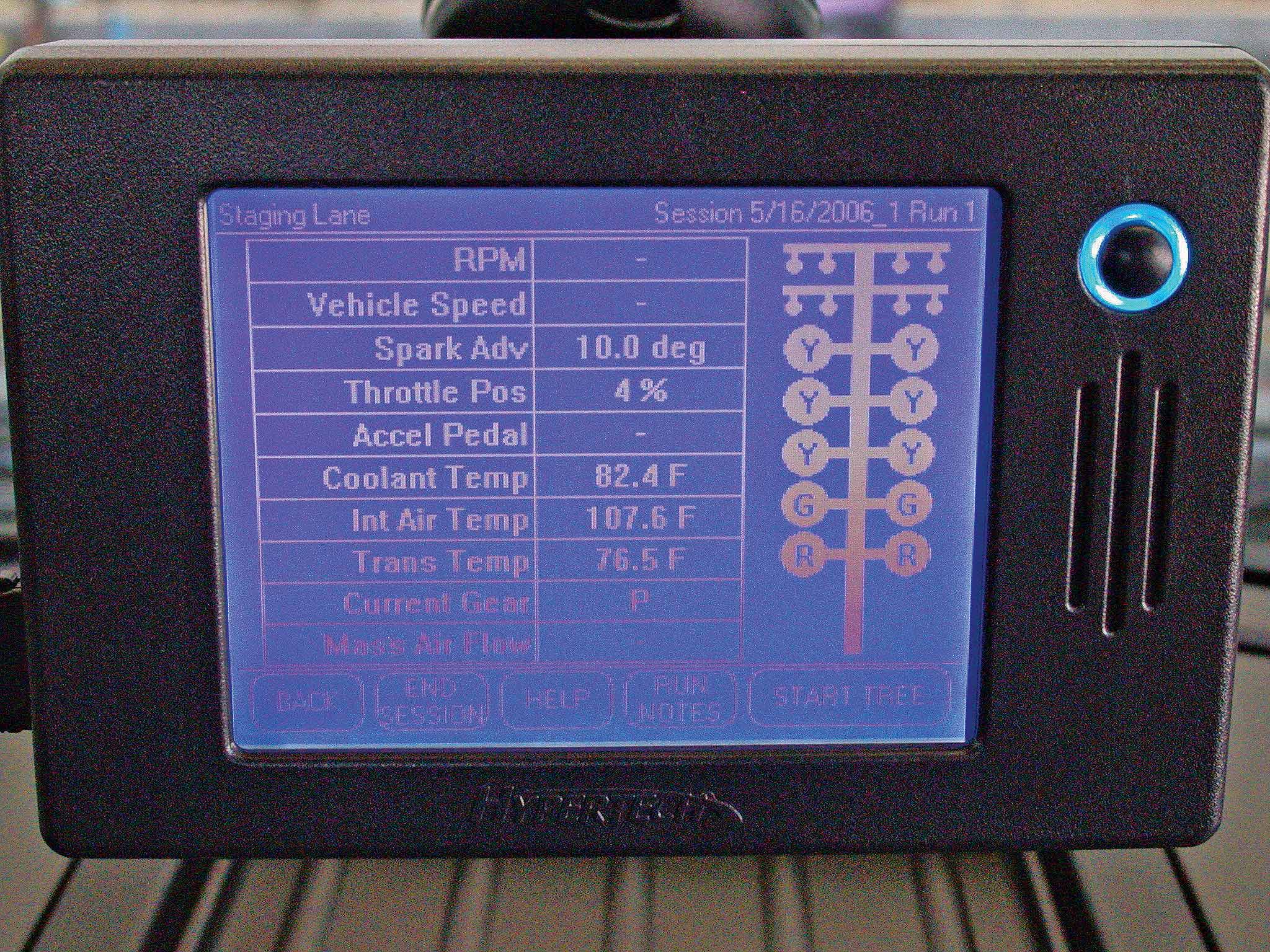
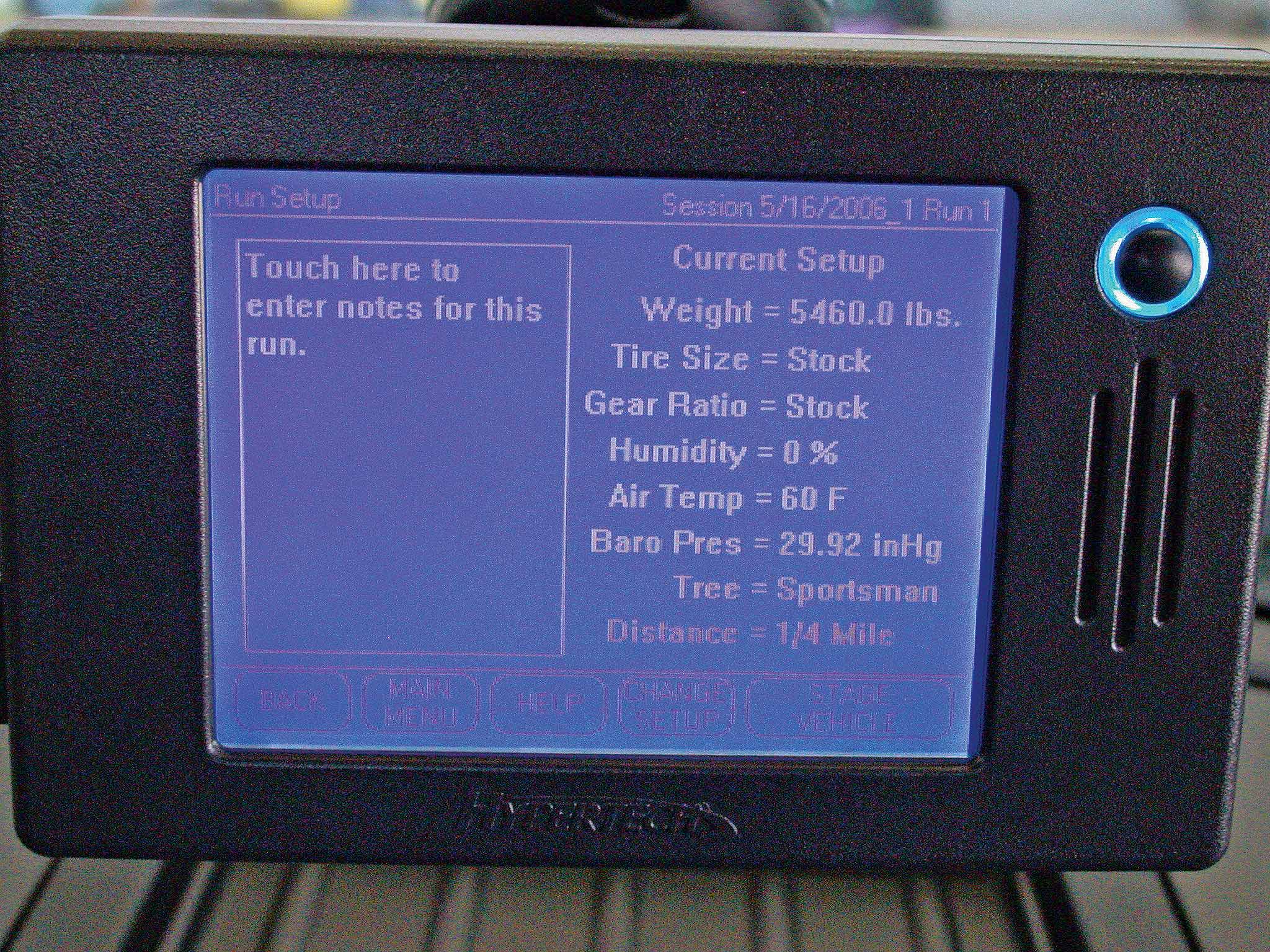
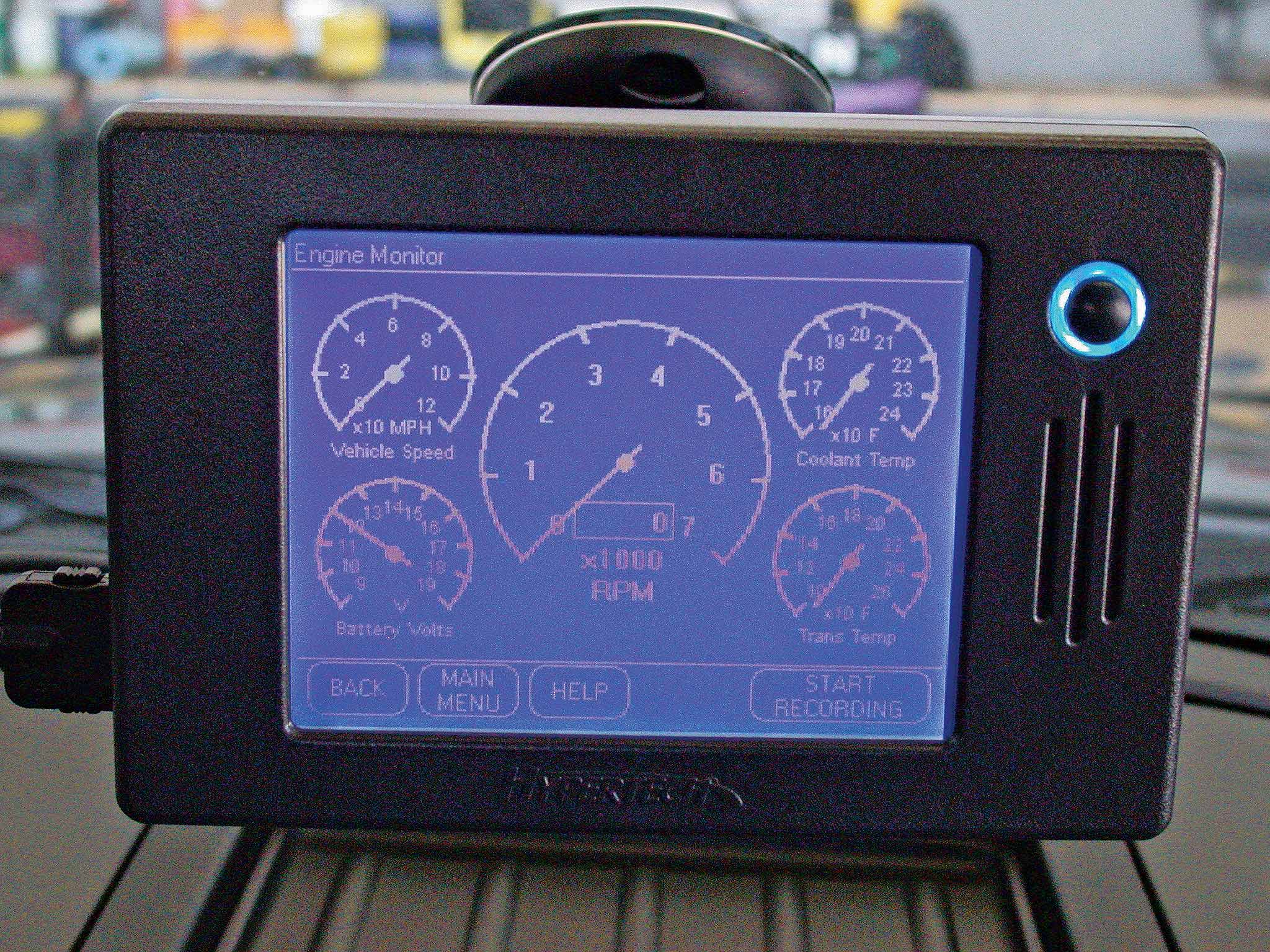
The Power Programmer is designed so that once the parameters are established and loaded, the unit is pulled and the program remains in the onboard computer until you elect to remove it. The HyperPAC is different; this unit stays in place. In addition to the three stages of performance tuning—the HyperPAC has all of the performance programming benefits of the Power Programmer—it also has diagnostics; an engine monitor with a complete gauge display; a dynamometer, which includes such items such as a horsepower graph; and our favorite, a dragstrip program. This program actually monitors real-time engine operating conditions, has a Christmas tree start, displays a timeslip and will provide you with “magazine-type road test” acceleration times in 10-mile increments. It will record and display important engine operating conditions throughout the run and will display drive wheel horsepower versus vehicle speed after each run—in both table and graph formats.
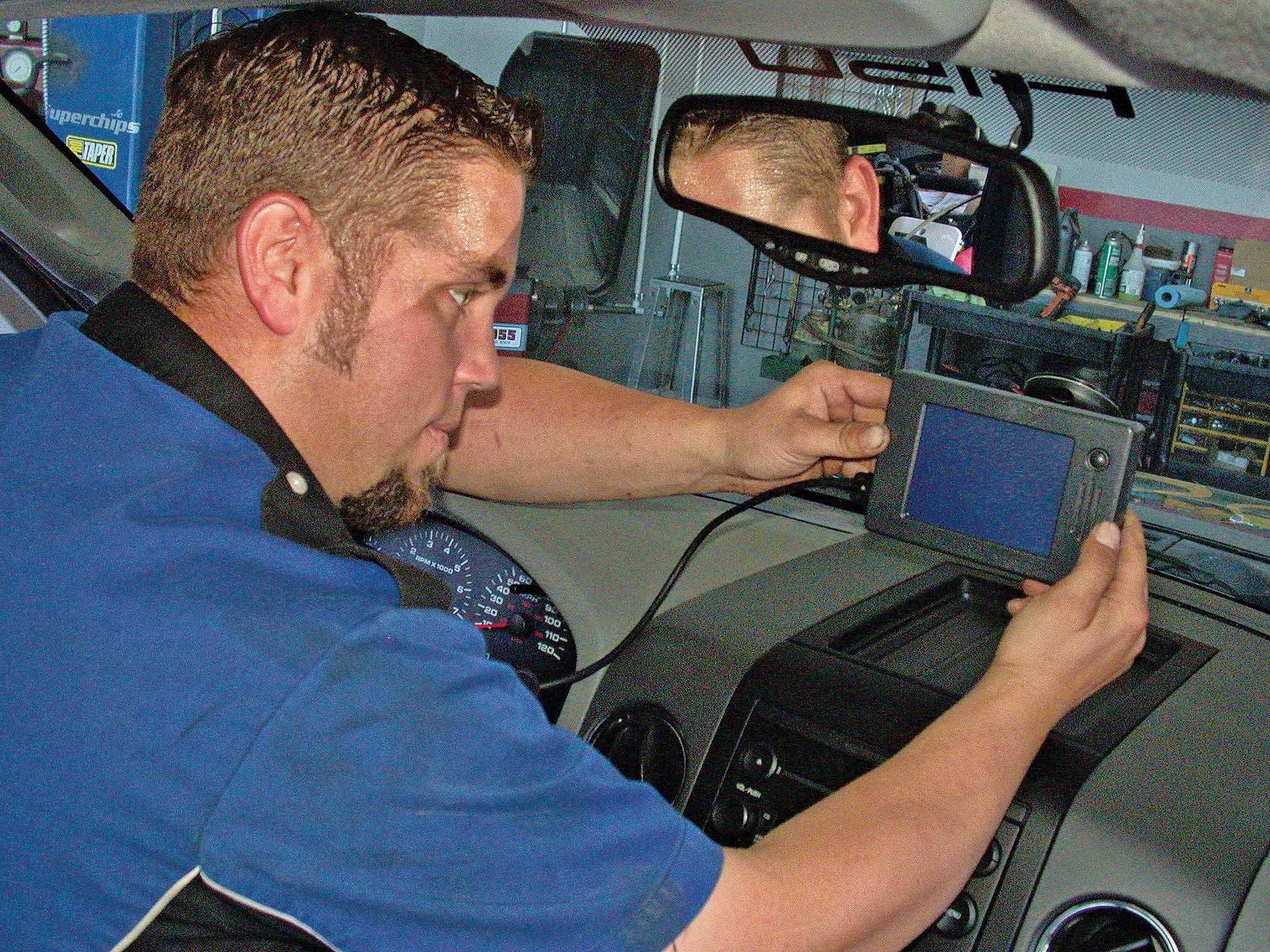
There’s a lot more to the HyperPAC, but the interesting thing about this powerful computer with built-in operating system is you don’t even need a instruction manual to use it—it’s that easy. Rather than to elaborate on all of the benefits and neat things you can do with the HyperPAC, which we will save for an upcoming on-the-road user’s test, here we wanted to see just how easy it was to install. We were on hand while American Offroad employee Trevor Shaffer installed the HyperPAC unit into this 2004 Ford F-150.
The word “install” may be a bit of a misnomer when speaking of the HyperPAC; “download” is probably a better term. Not a wrench was needed, and there was no chance of getting greasy unless you chose the optional data acquisition module (we’ll do that at a later time as well), where you need only to install (in some cases, hook up) the thermocouple sensor probe.
Take our advice: Lower the power windows before you get the install underway. We didn’t, and once you begin the process you can’t run any electrical components in the vehicle. The entire process takes about 20 minutes, and it was hot. The sun was shining into the cab and the windows were closed. It was not a pretty picture.
Follow along as this Ford F-150 gets a dose of not only more horsepower and other performance upgrades, but the driver also gets a whole box of new toys to play with. It’s important to begin understanding what the HyperPAC is about, as this is the future of high performance all packaged up in one neat and tidy, easy-to-install computer program and ?display screen. It’s a lot of fun and incredibly useful.
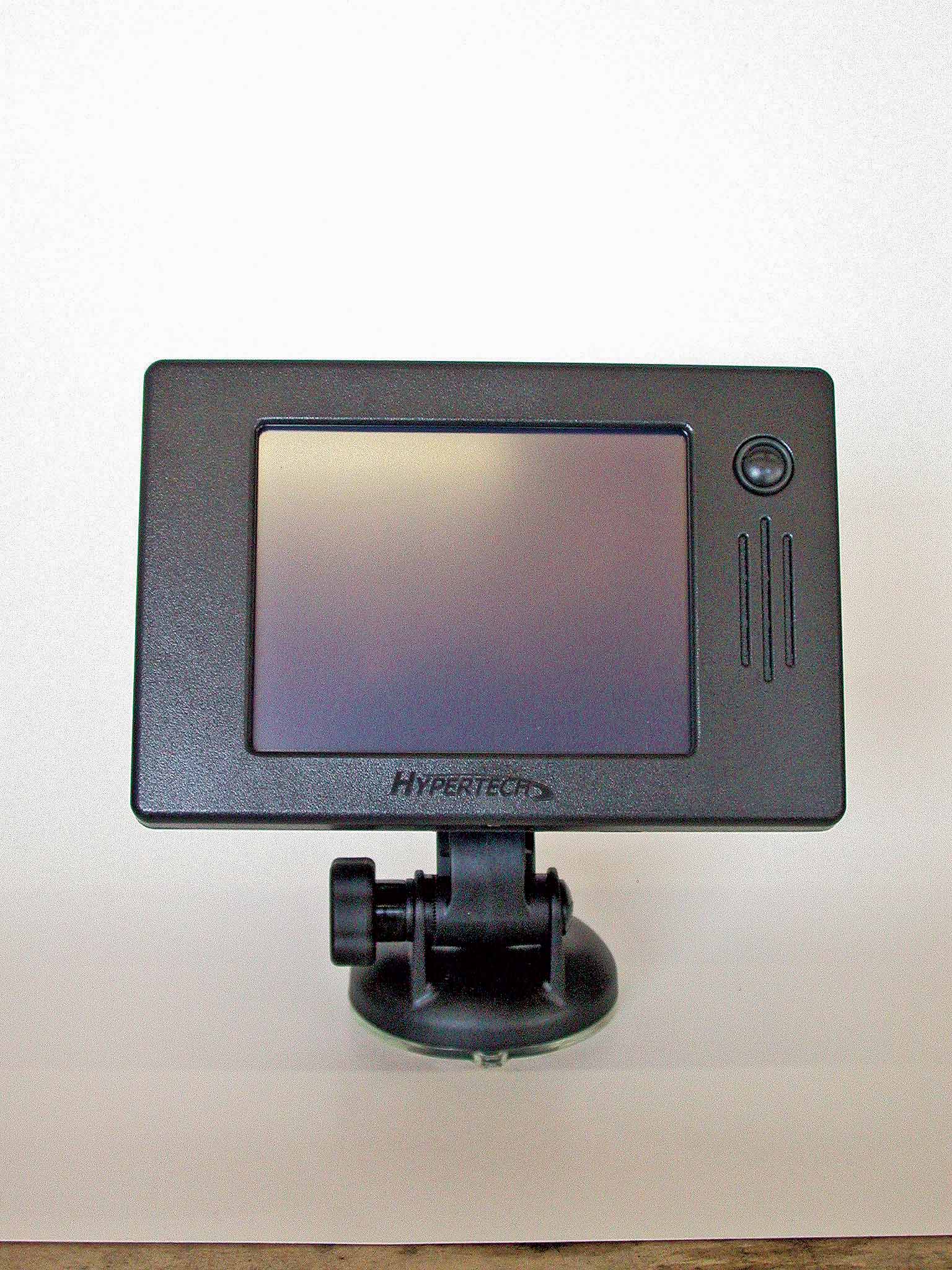
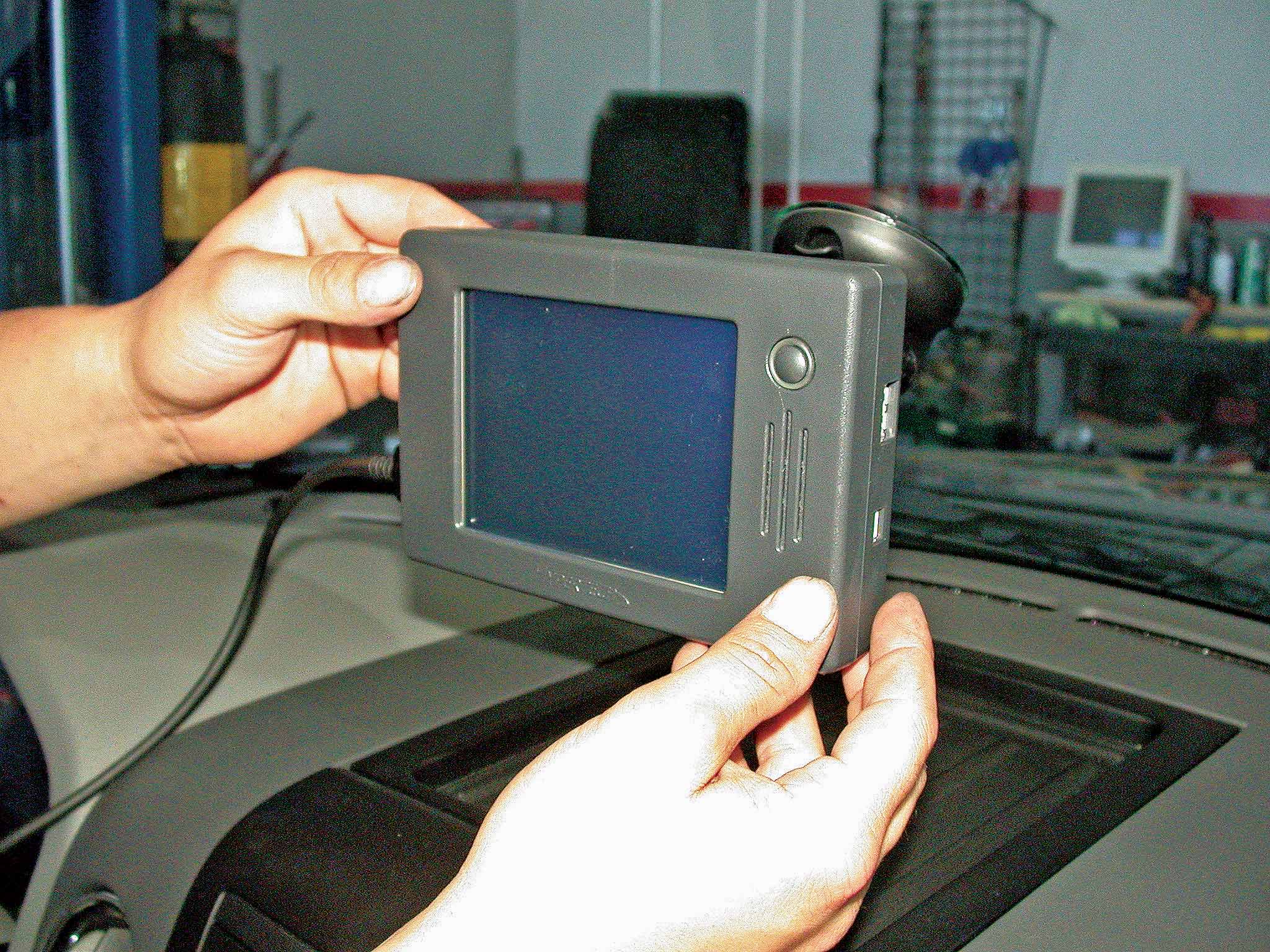
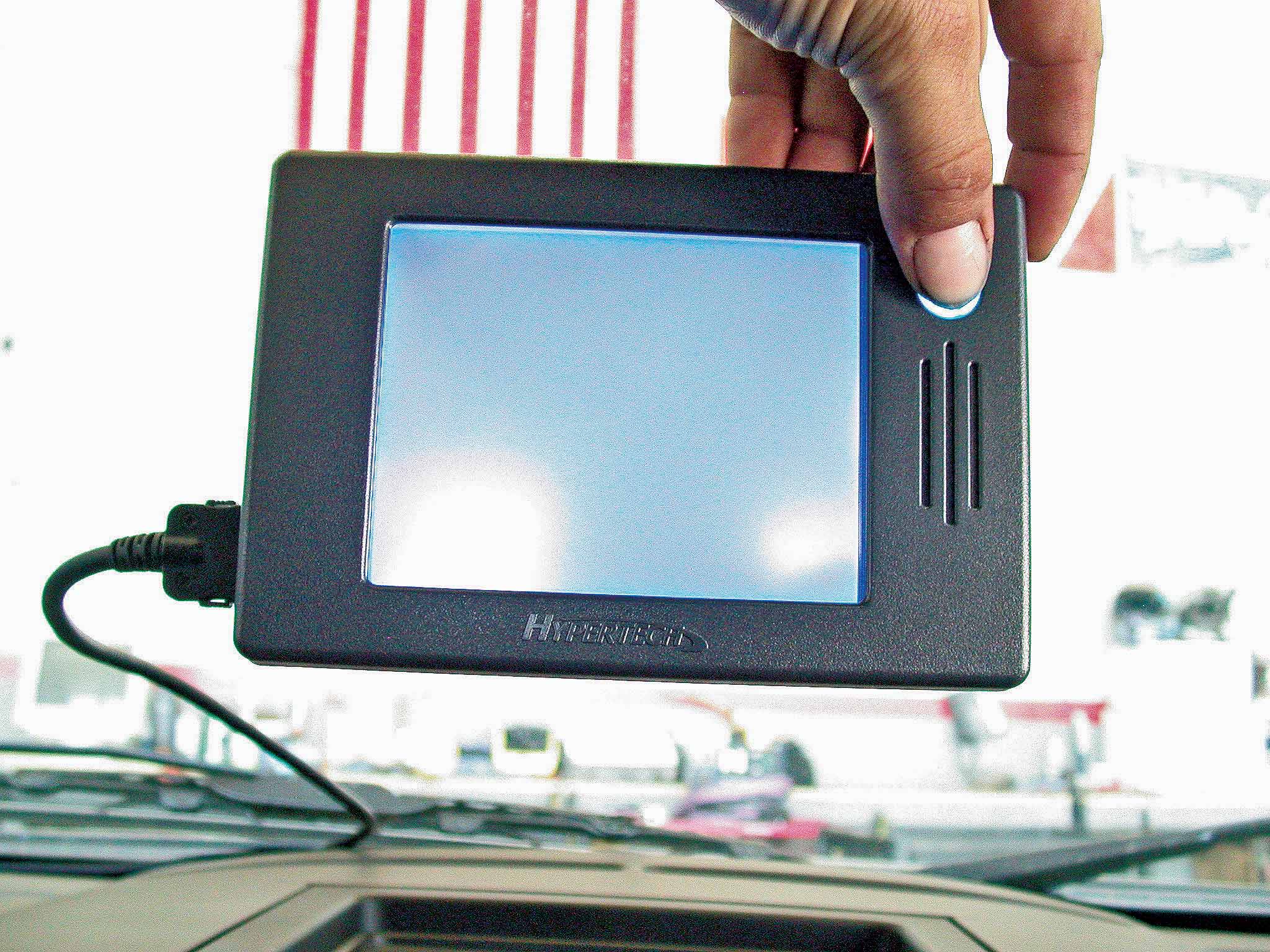
The Hypertech GuagePAC unit is not only good-looking enough to sit on the dash, but it is also full of tricks that only a hot rodder will love.
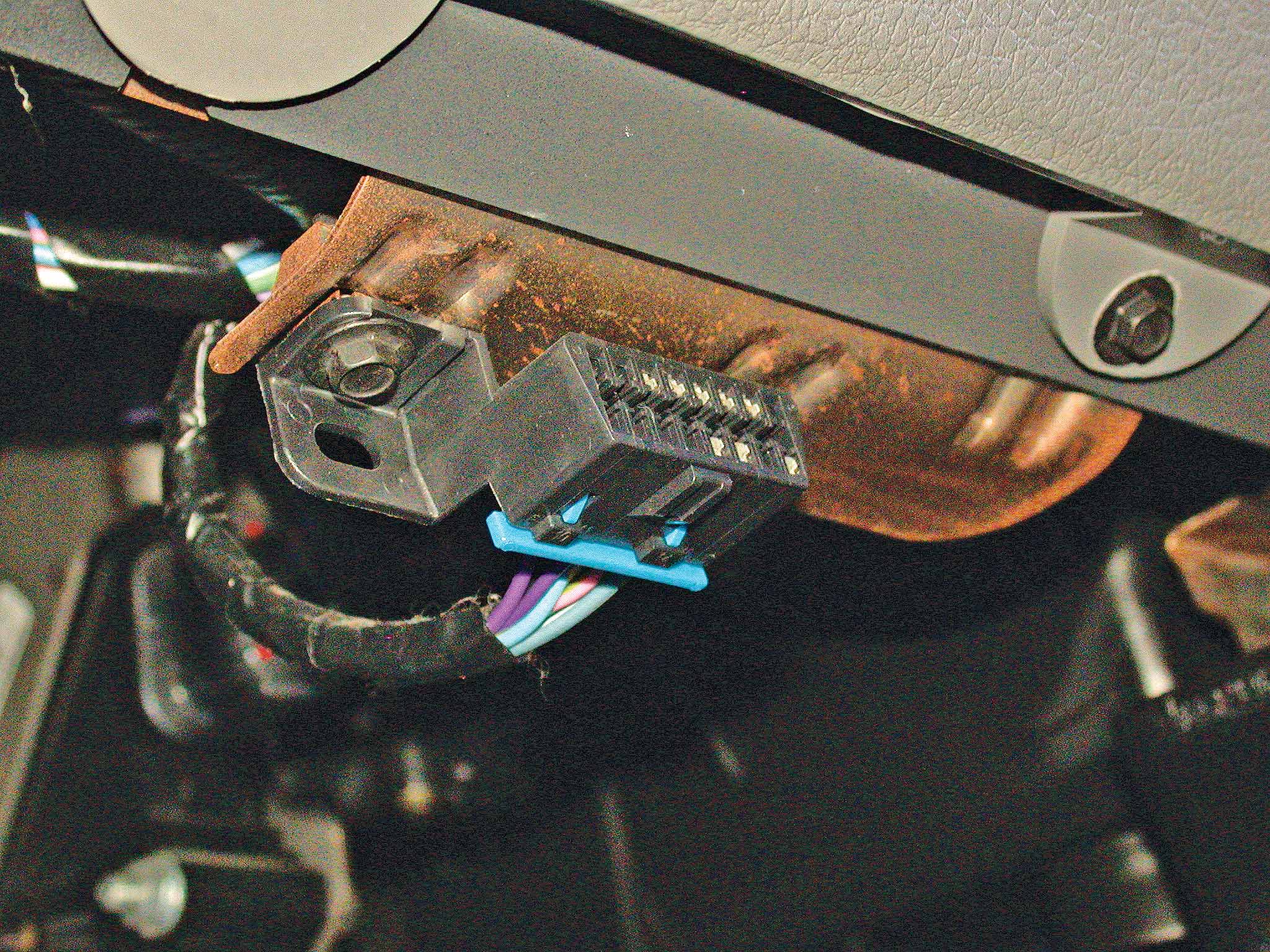
The first step is to locate the data link connector (DLC). It is beneath the dash panel, right about where the driver’s left knee is.
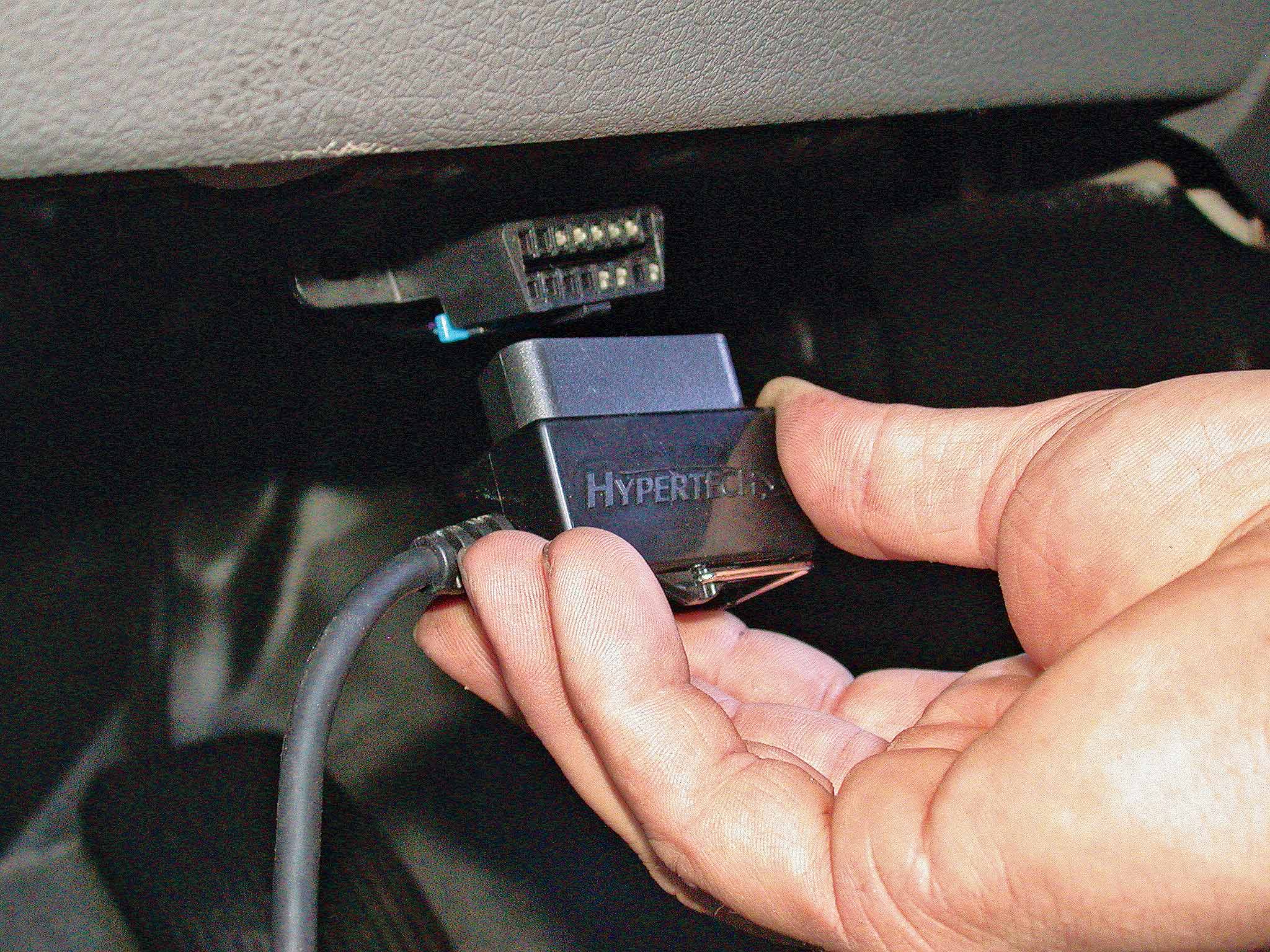
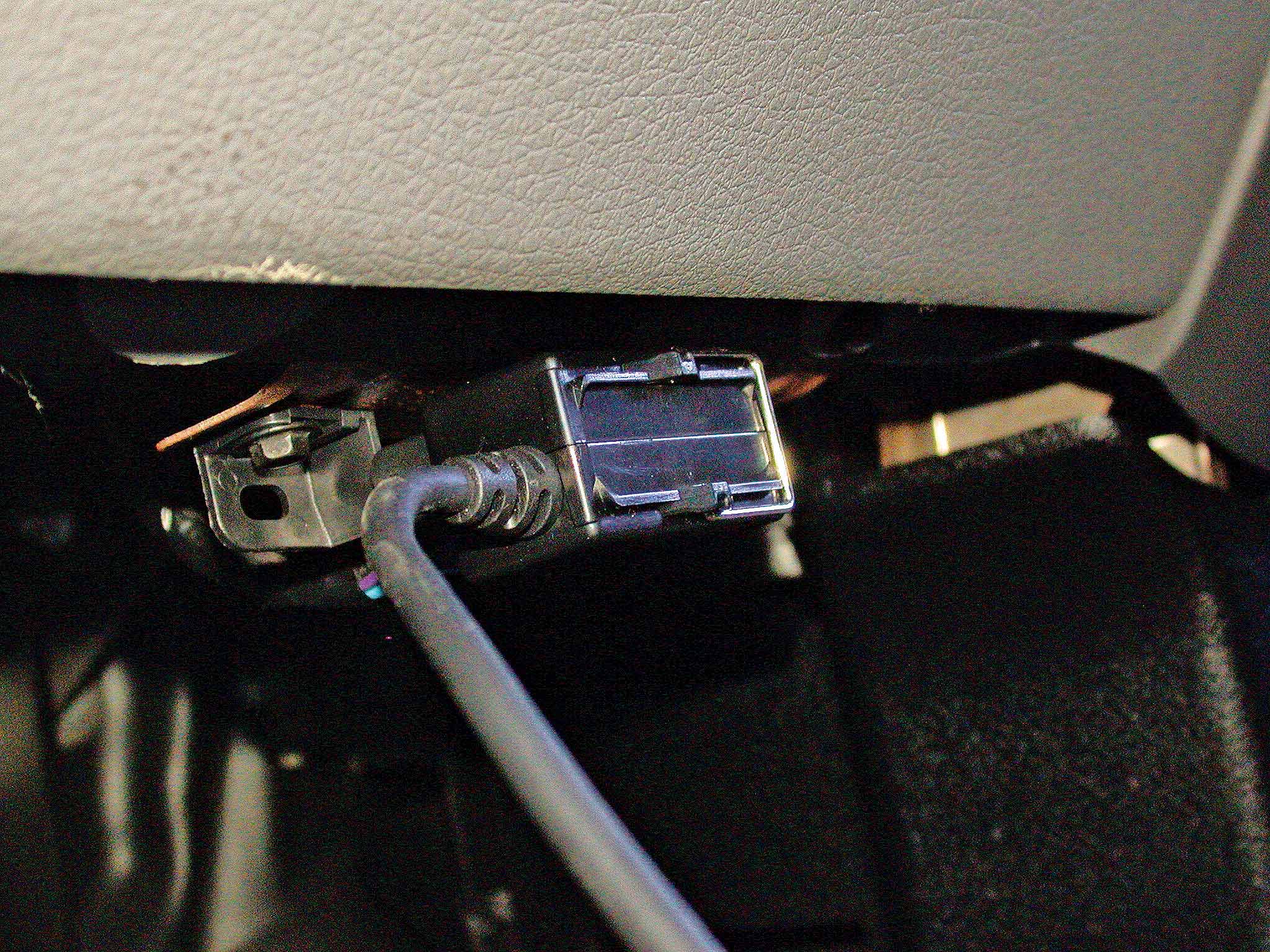
Simply plug the GuagePAC cable into the DLC, making sure that the connection is secure and the connector is plugged in all the way.
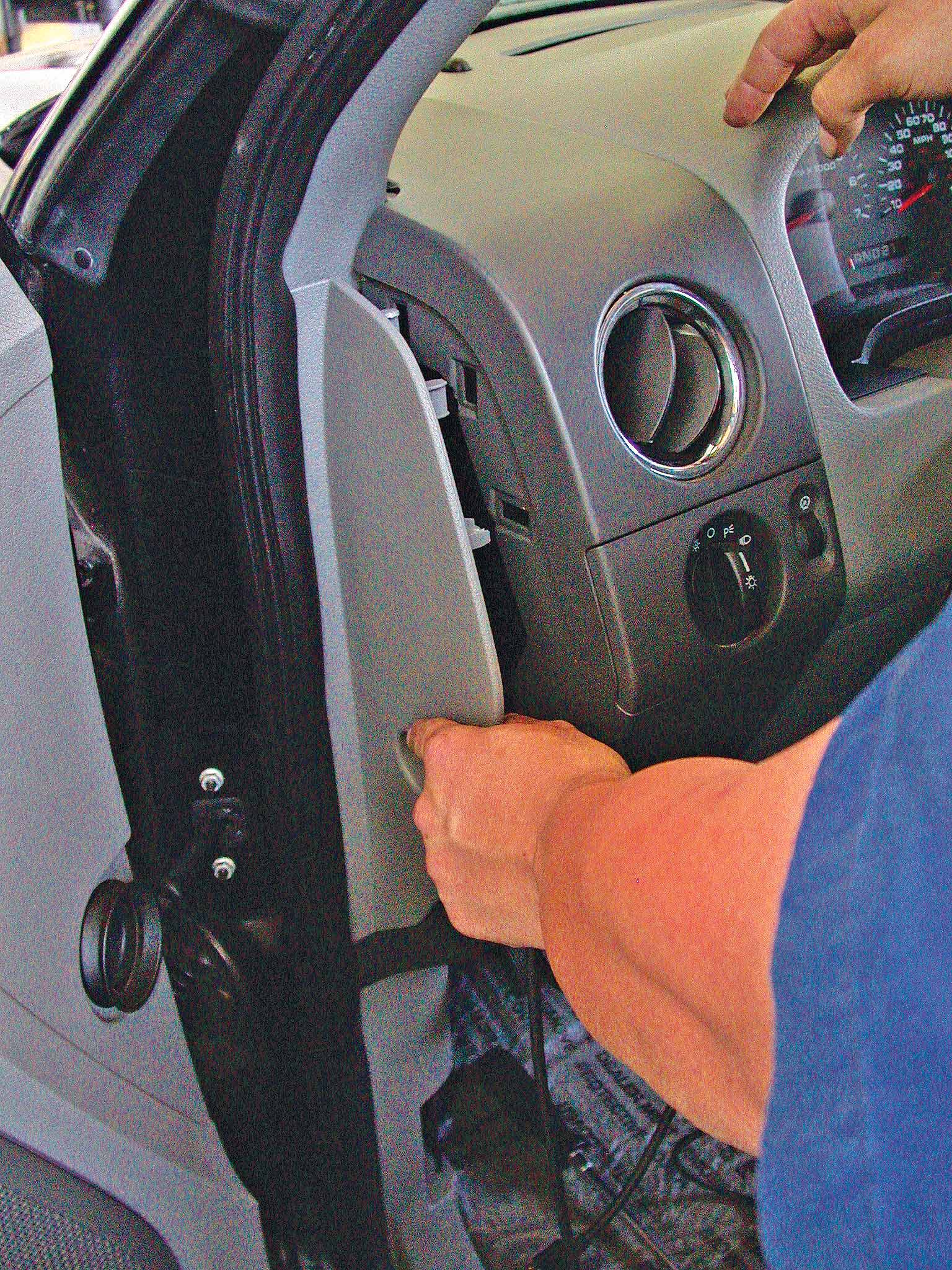
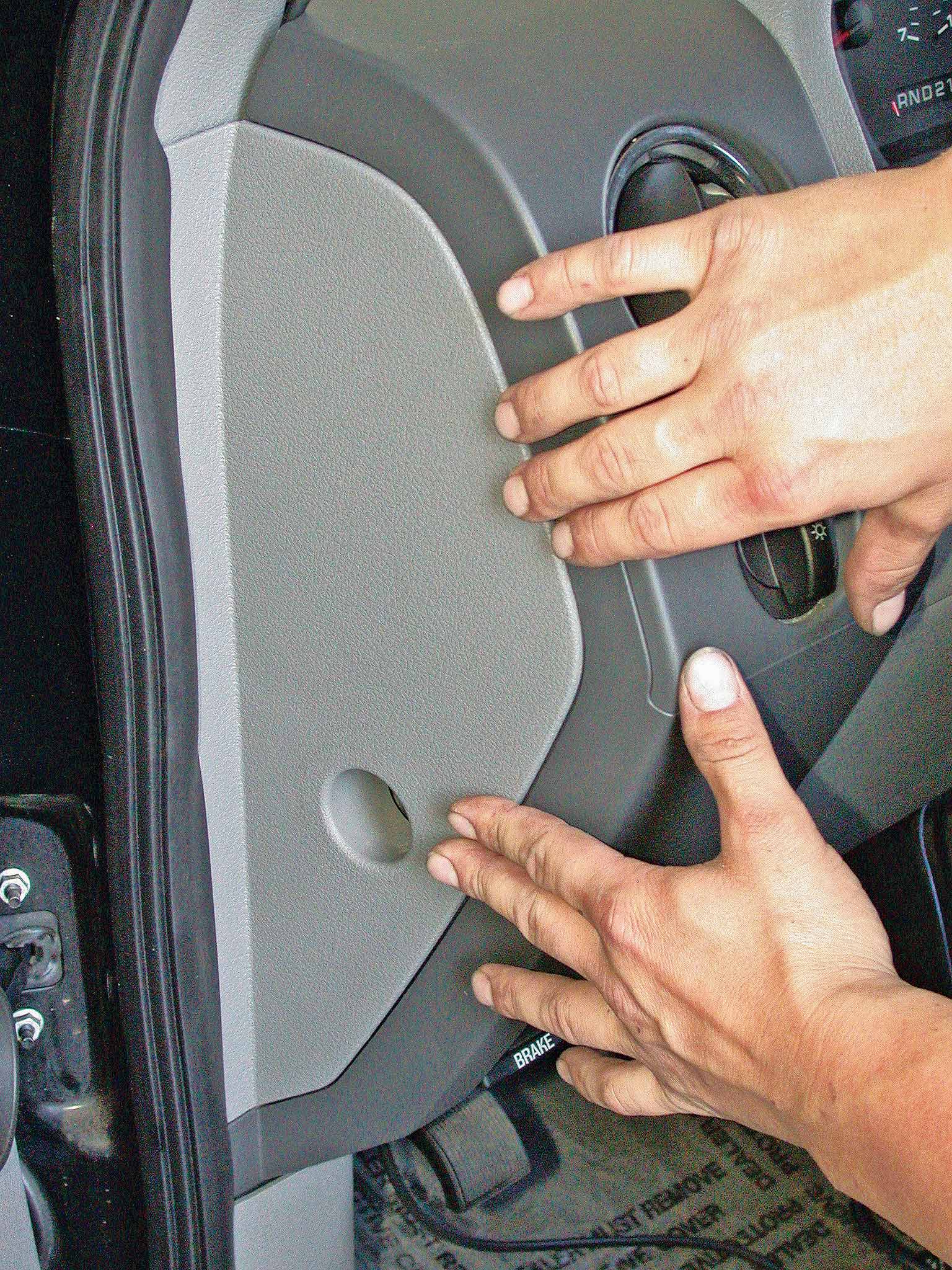
To make the install as clean as possible, Shaffer will run the cable under the dash and up out of the side cover. The cover can be removed by gently pulling it away from the dash.
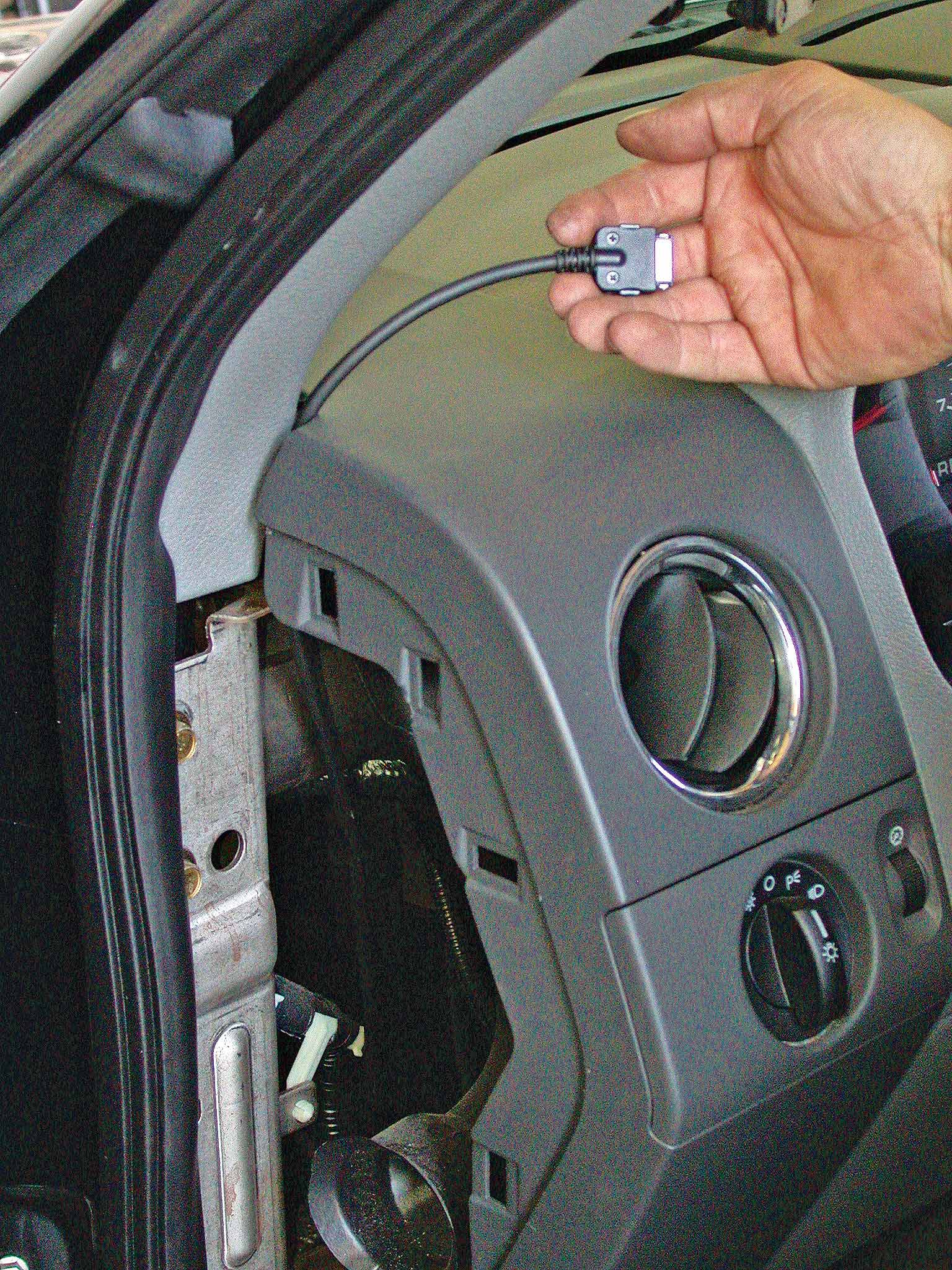
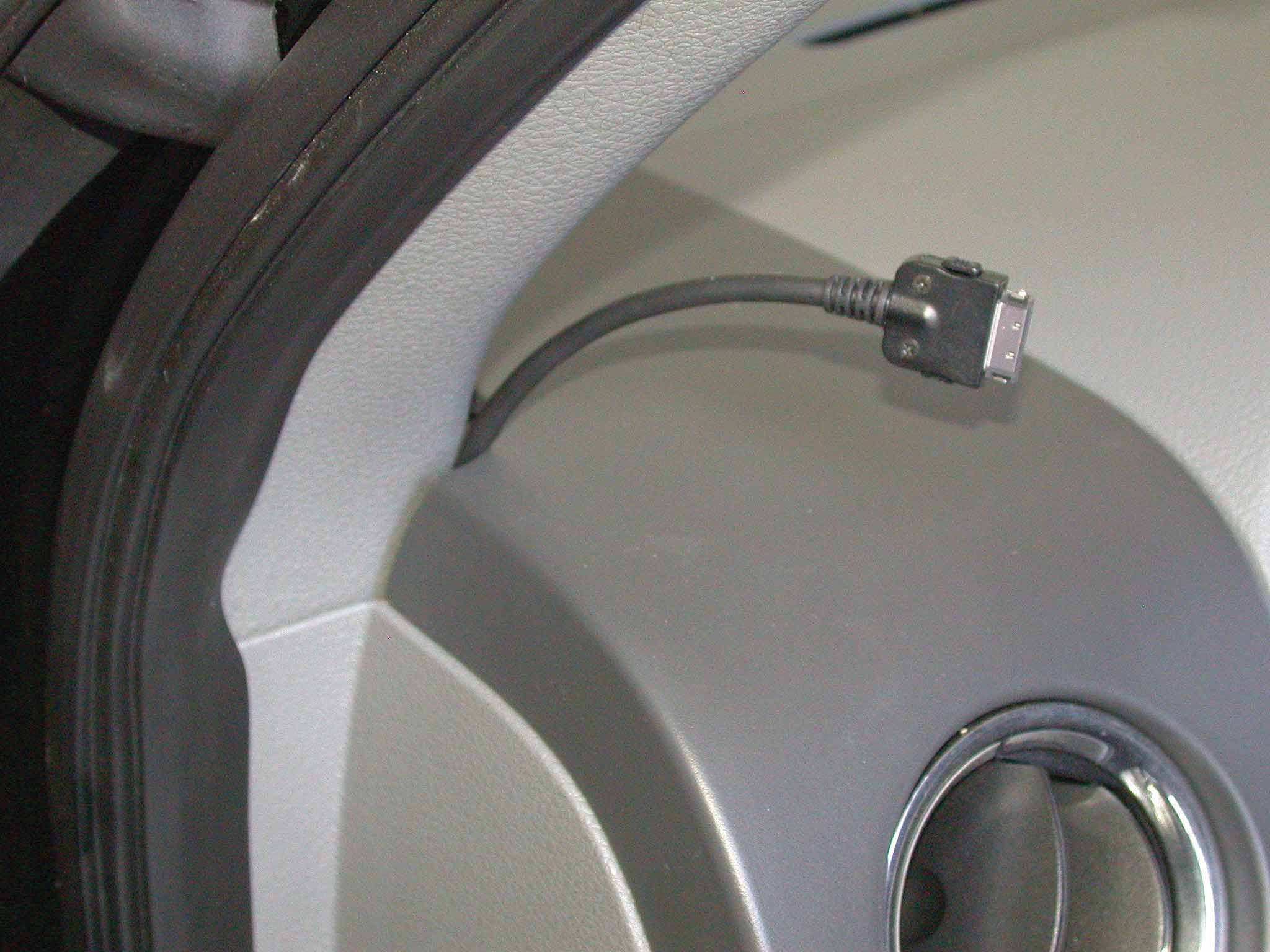
The cable is run up and out of the cover where the dash and the cover meet. Be sure that the cable is not anywhere near the parking brake mechanism so there is no chance it will be pinched when the brake is engaged.
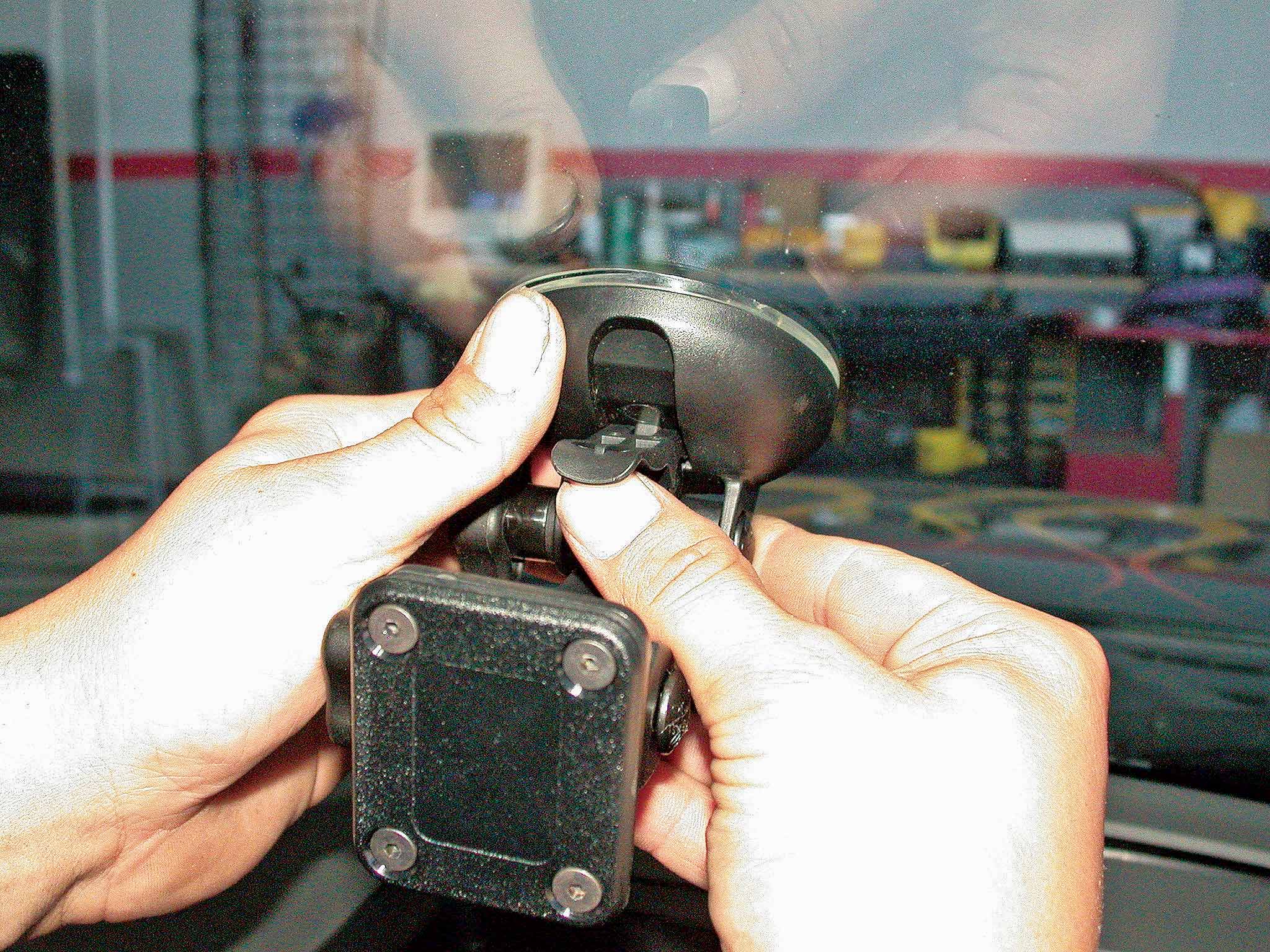
To mount the GuagePAC unit, first decide where the suction cup mount base will be located. Hypertech recommends a location that won’t impair the driver’s view of the road, such as near the A-pillar. The mount attaches to the windshield by simply putting the cup against the glass and flipping the lever.
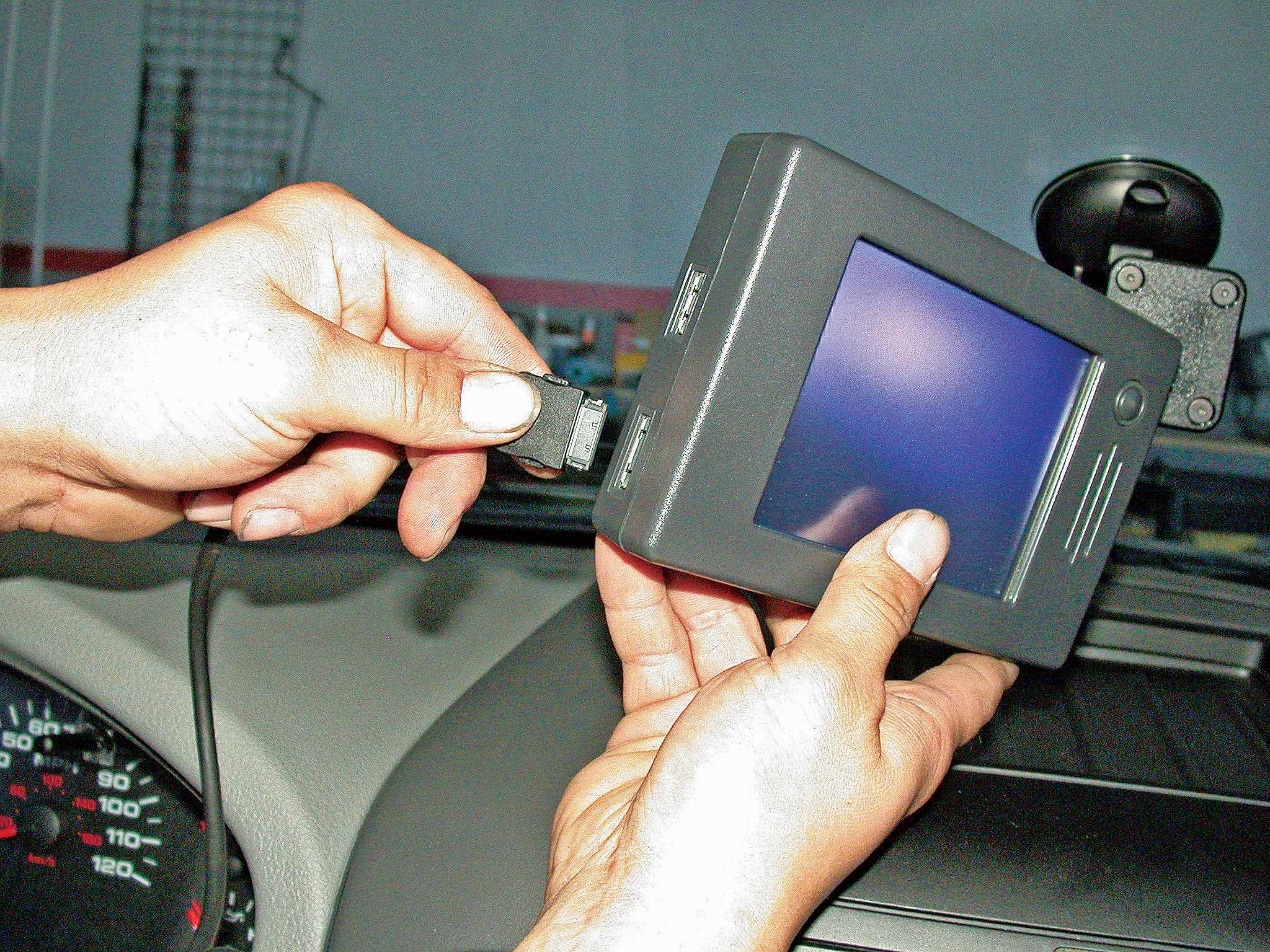
The other end of the cable is inserted into the GuagePAC unit.
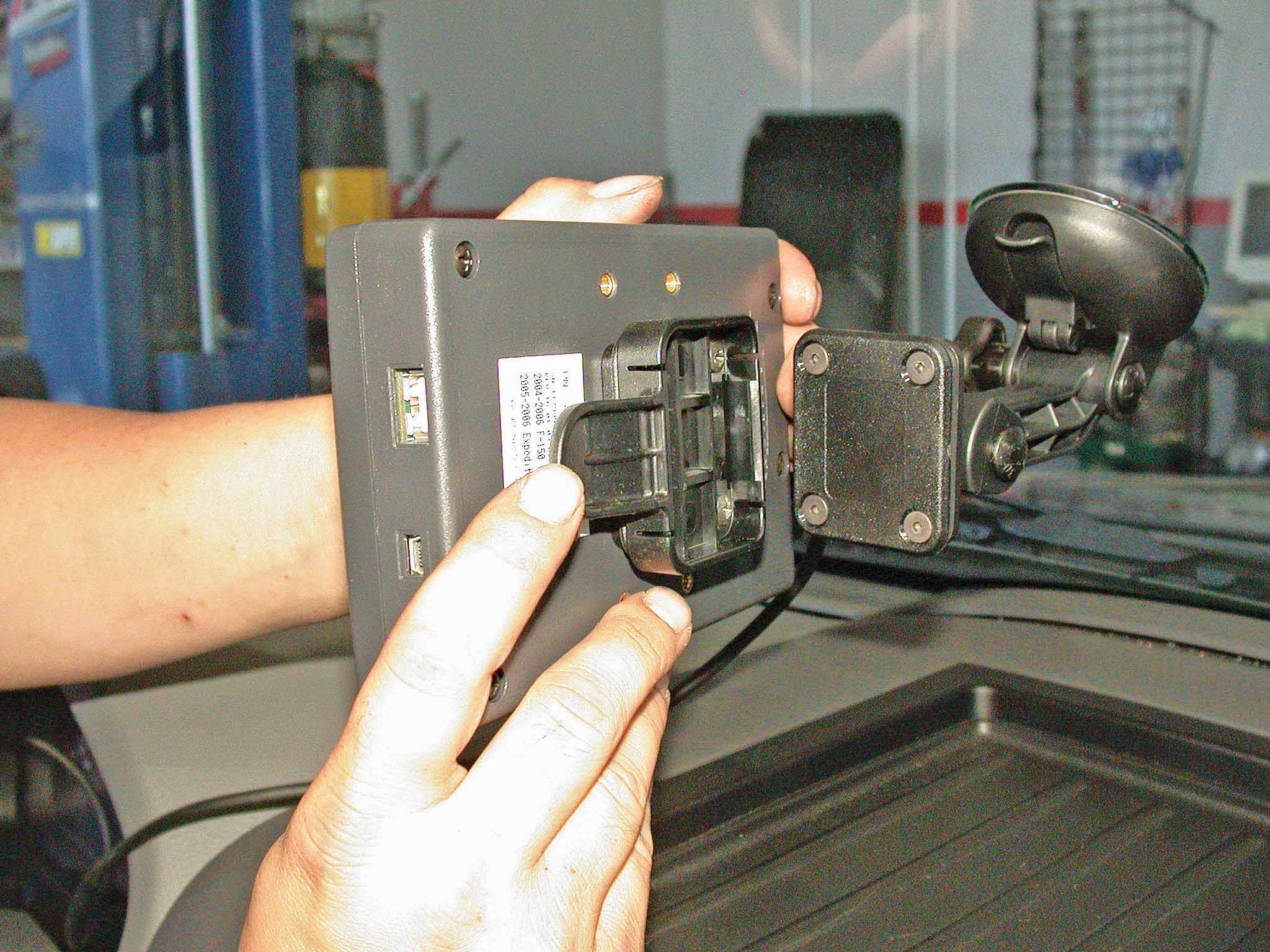
The clip on the rear of the GuagePAC unit snaps over the mount on the base. Note that the mount can be affixed to the rear of the HyperPAC unit in high, low or center positions.
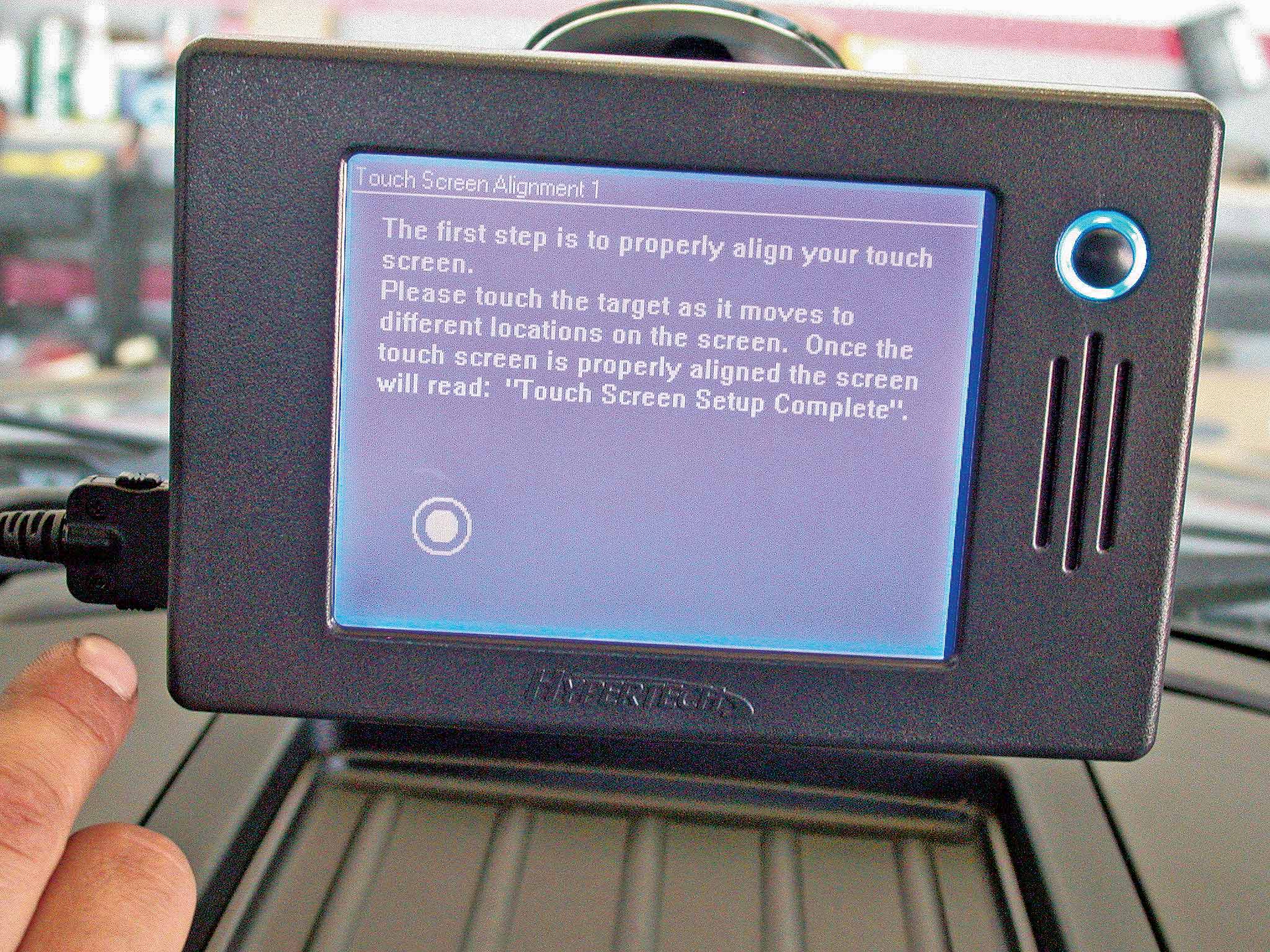
With a push of the button, the GuagePAC unit is on and the process can begin. Note that it will take about 10 seconds for the unit to boot up. The first thing it will ask you to do is align the touch screen. This is done by pushing the bull’s-eye wherever it pops up.
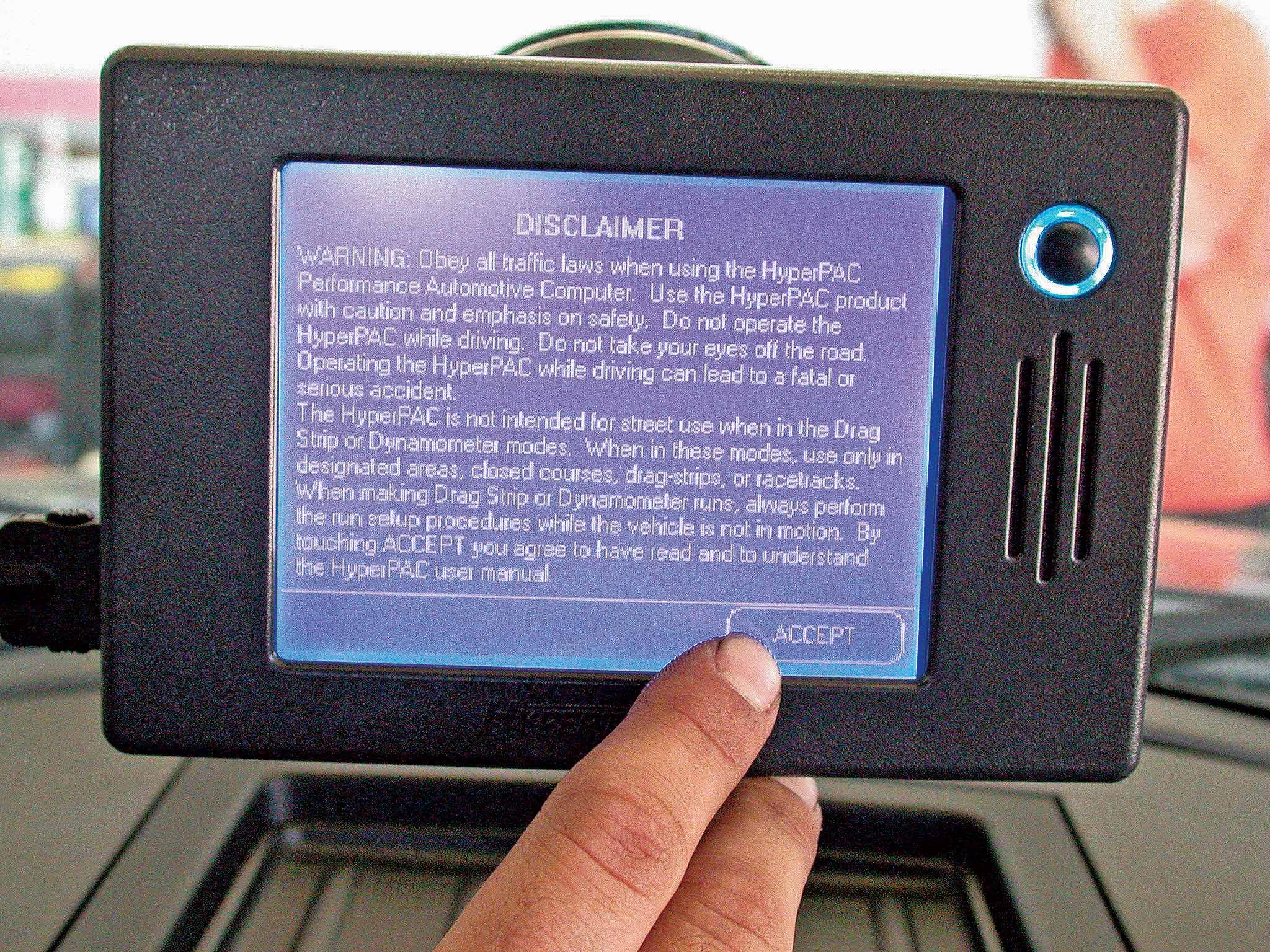
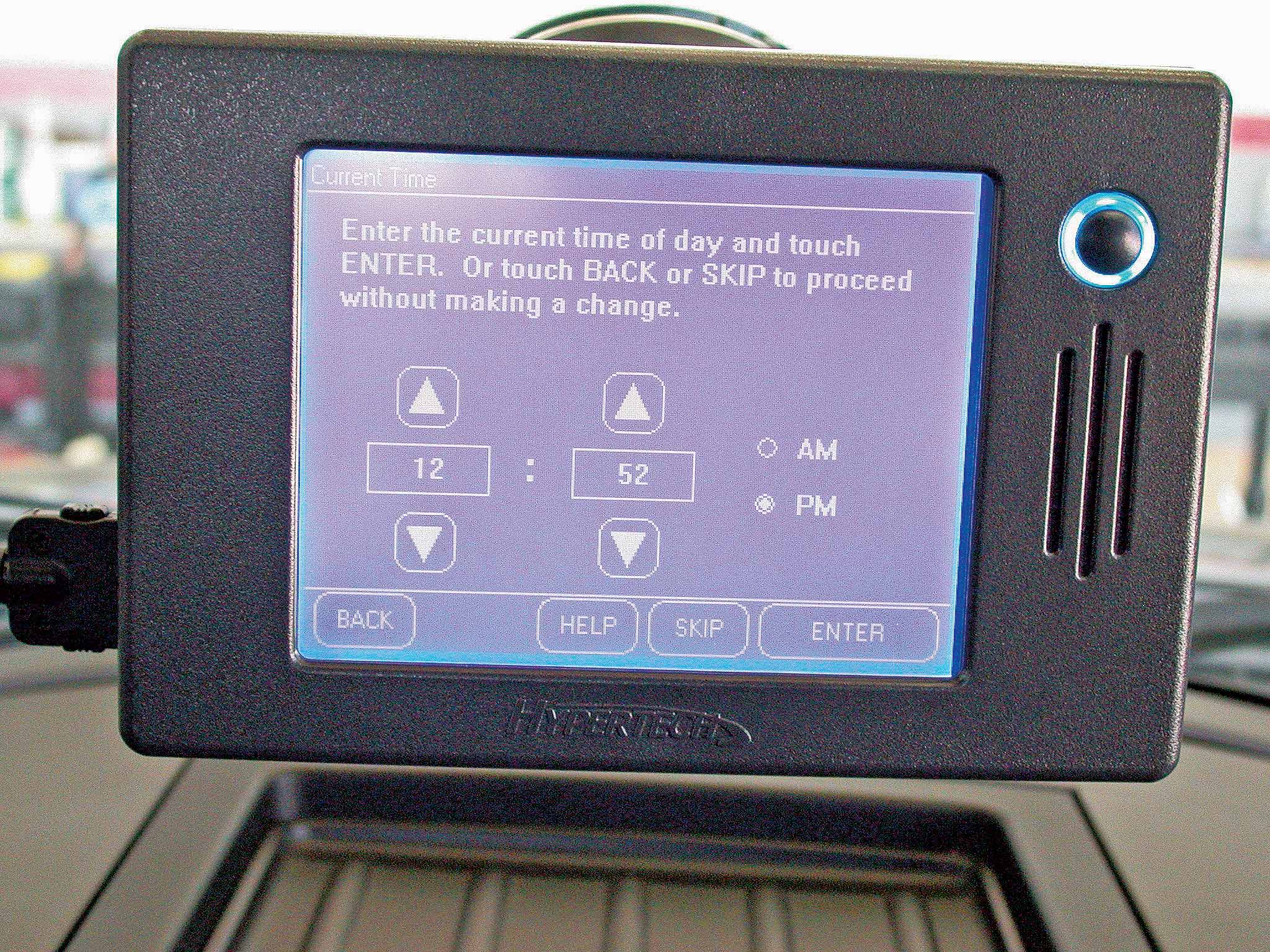
In this day and age of lawyers and lawsuits, the next screen will be a disclaimer. Read it and then push the button. This will be followed by a screen in which you are prompted to input the date and time.
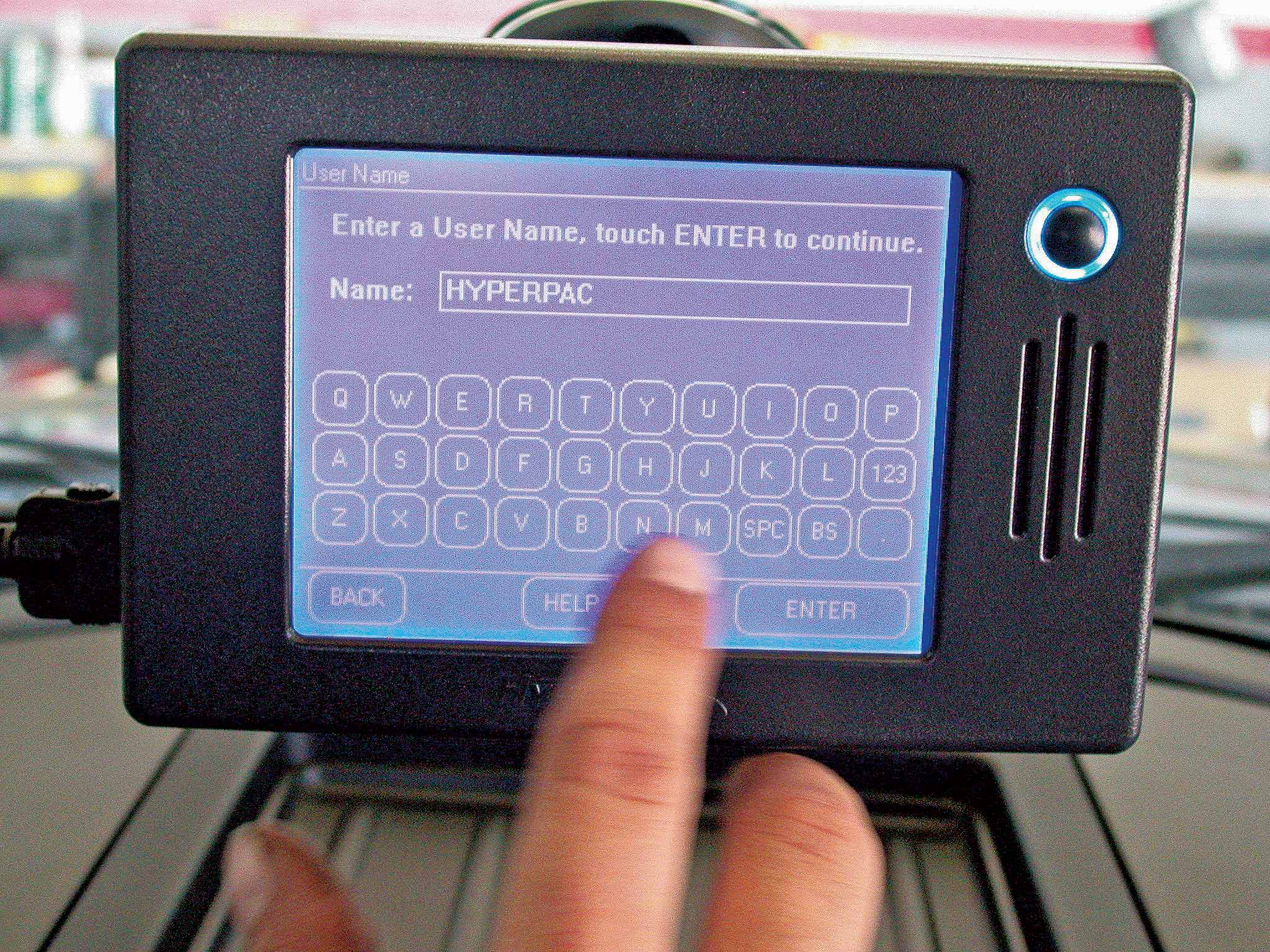
The next screen will ask you to input a user name, after which the Enter button is pushed.
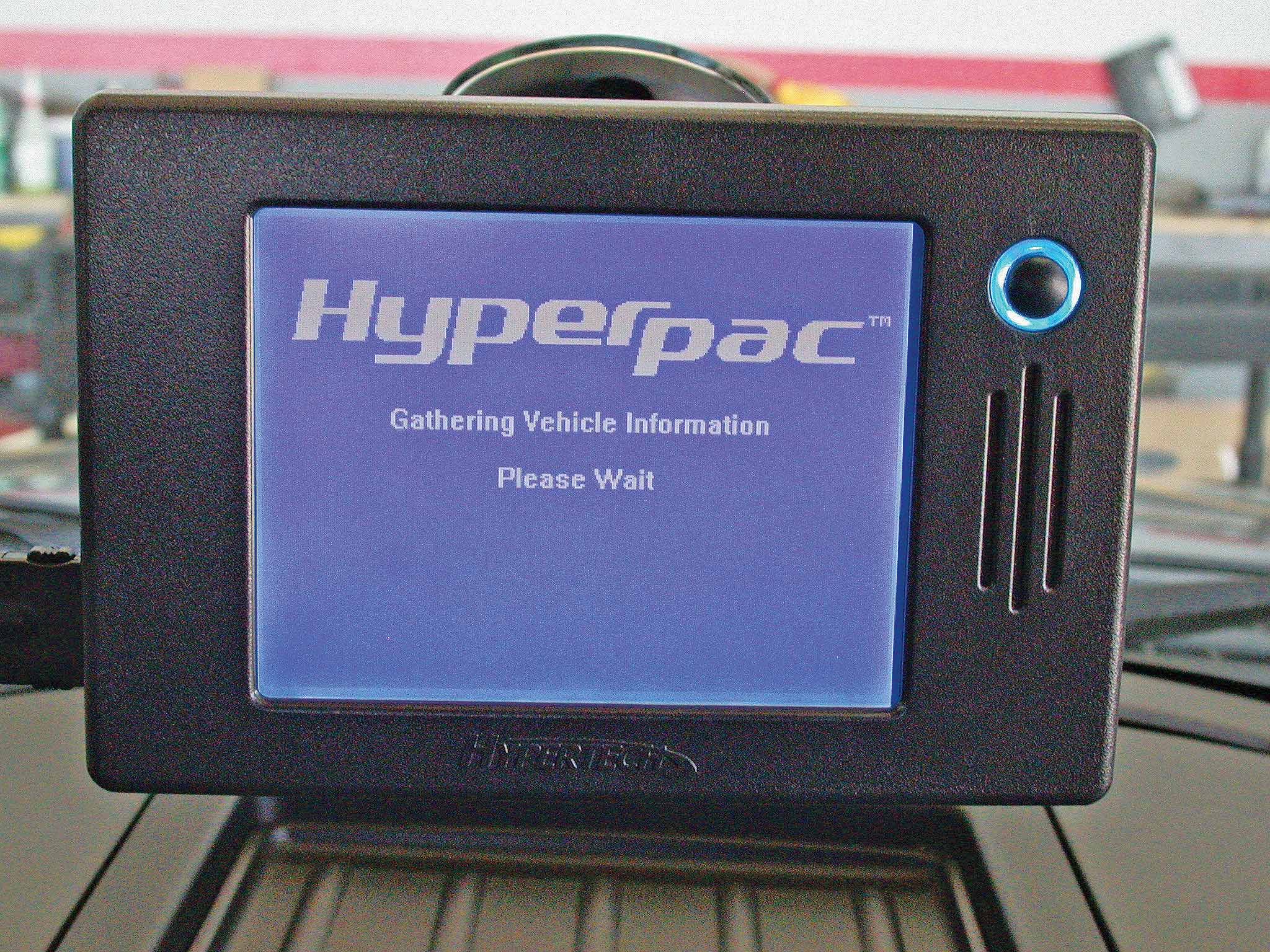
With that, the HyperPAC unit will begin to gather all of the information stored in the truck’s computer.
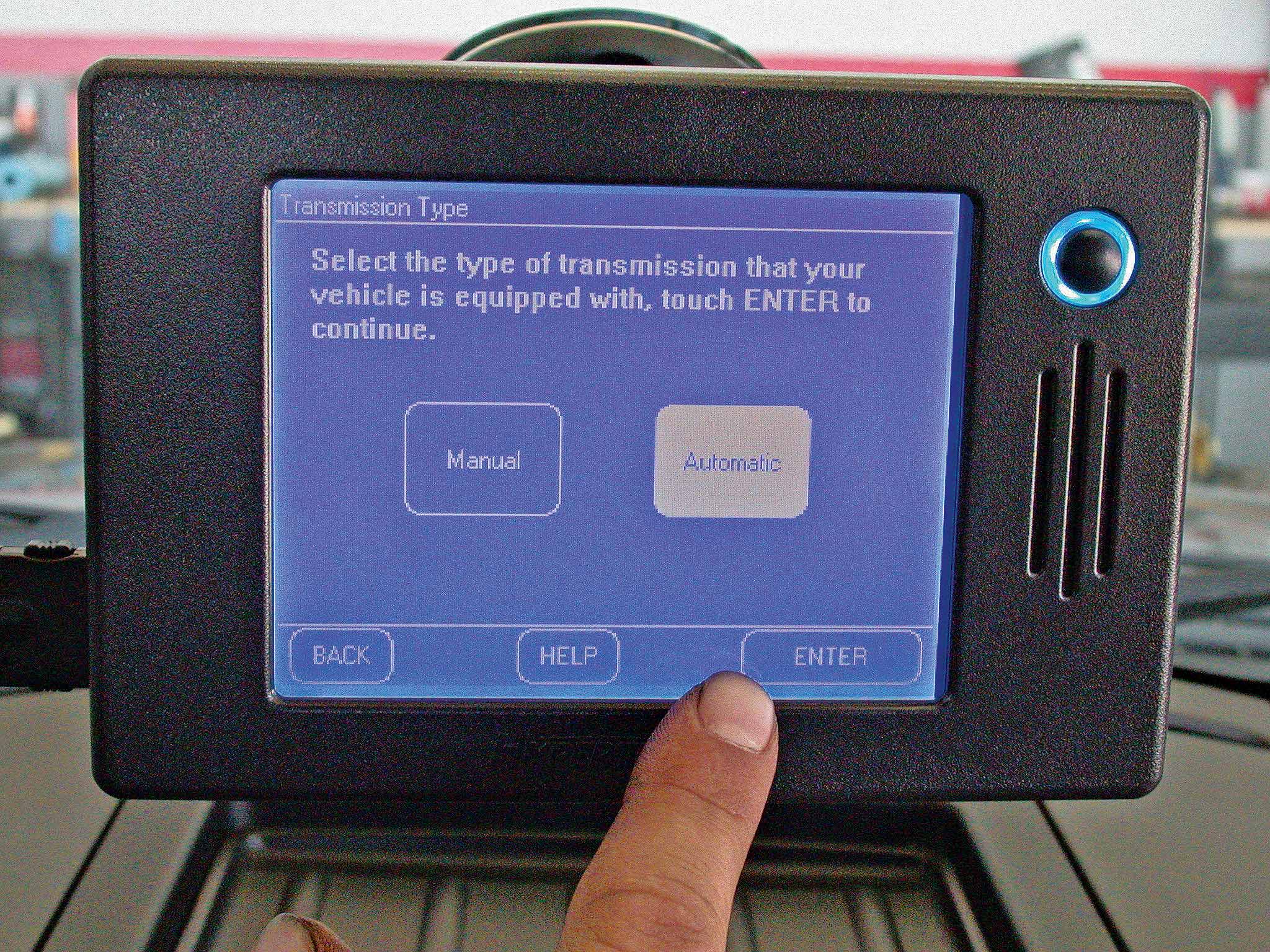
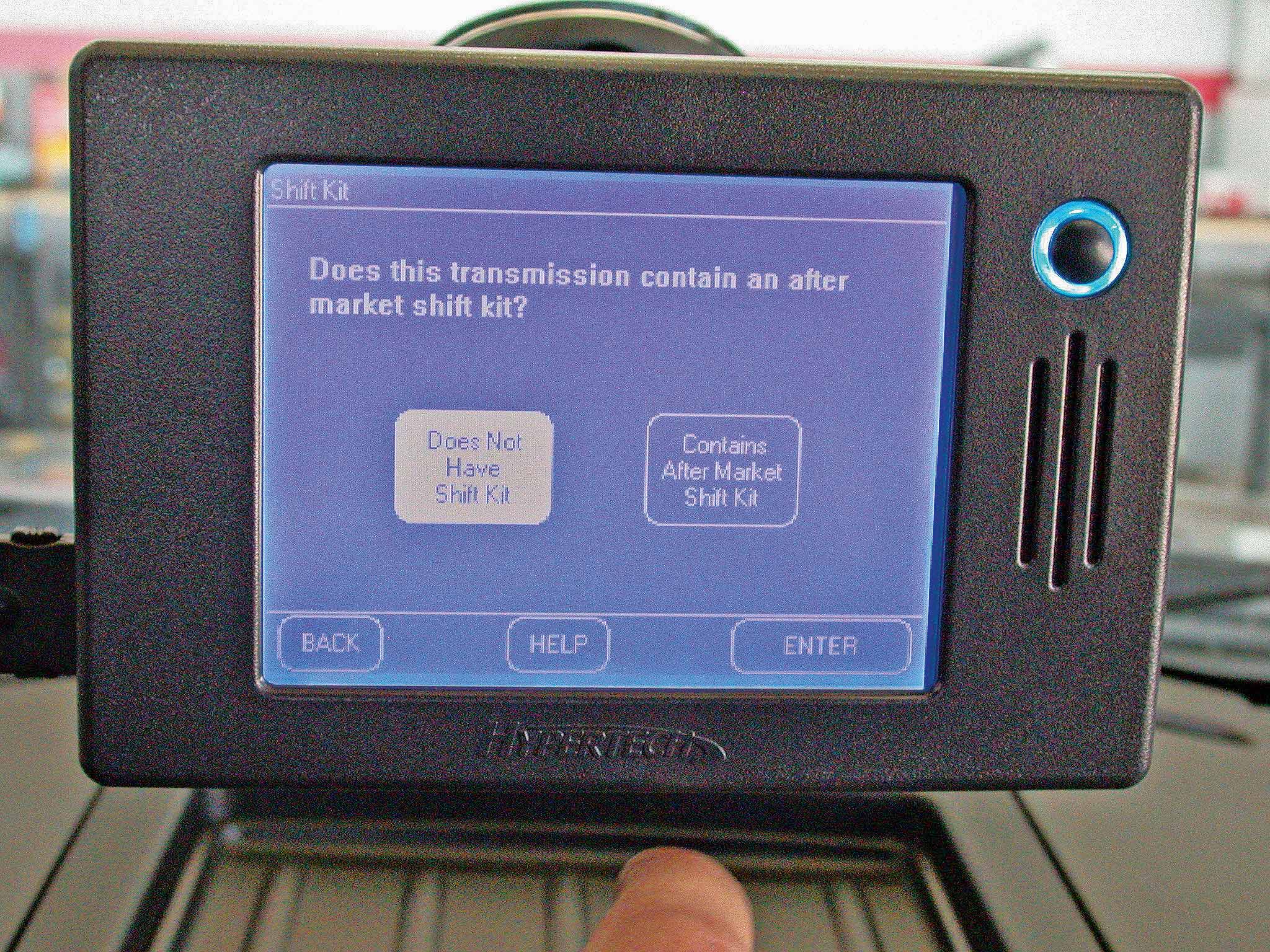
It will then begin to ask about the vehicle and its related pieces, such as whether it has an automatic or a manual tranny, and if that tranny has been upgraded with a shift kit.
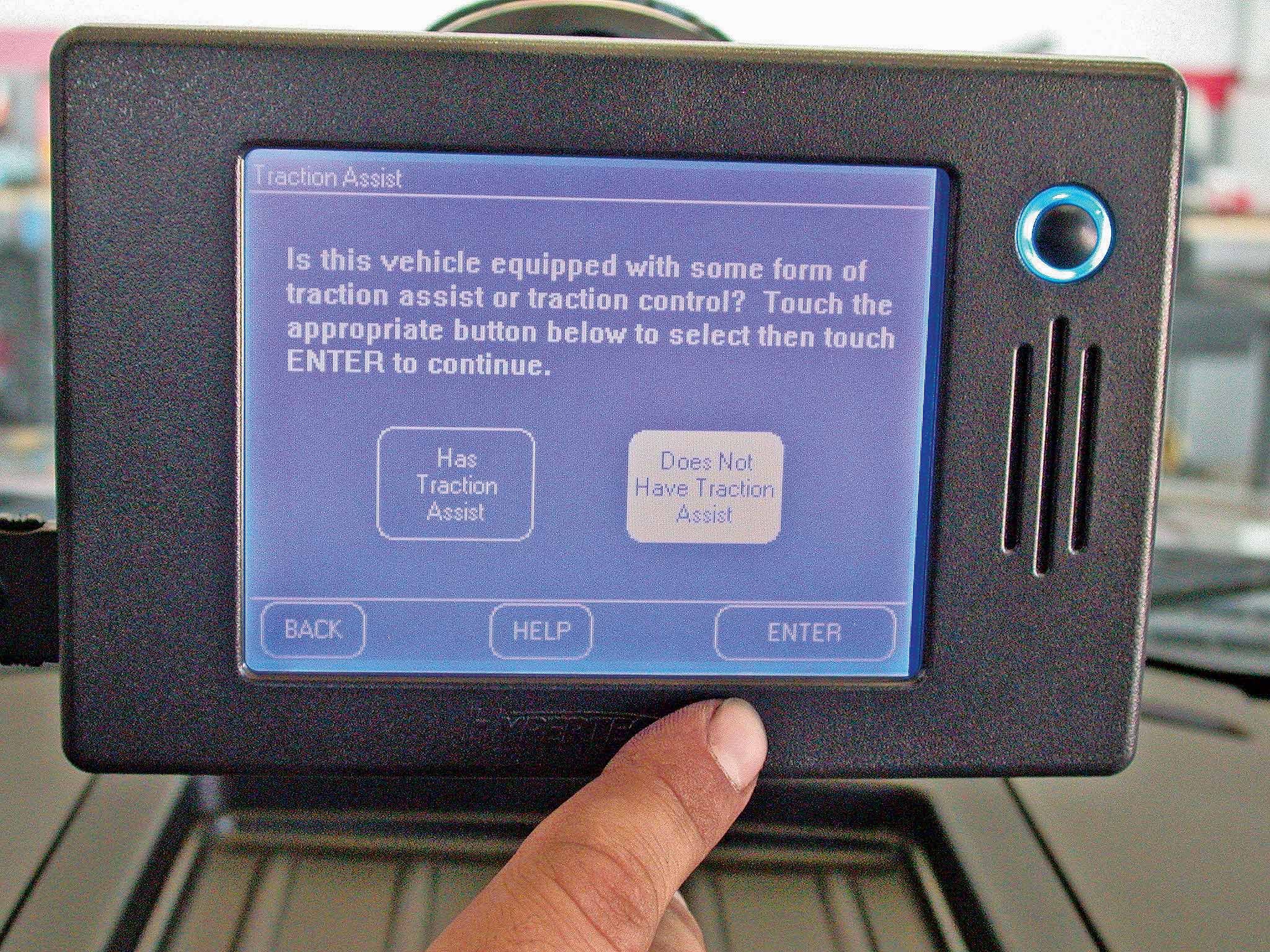
The Hypertech unit is very inquisitive, even to the point of asking if the vehicle has a traction control option.
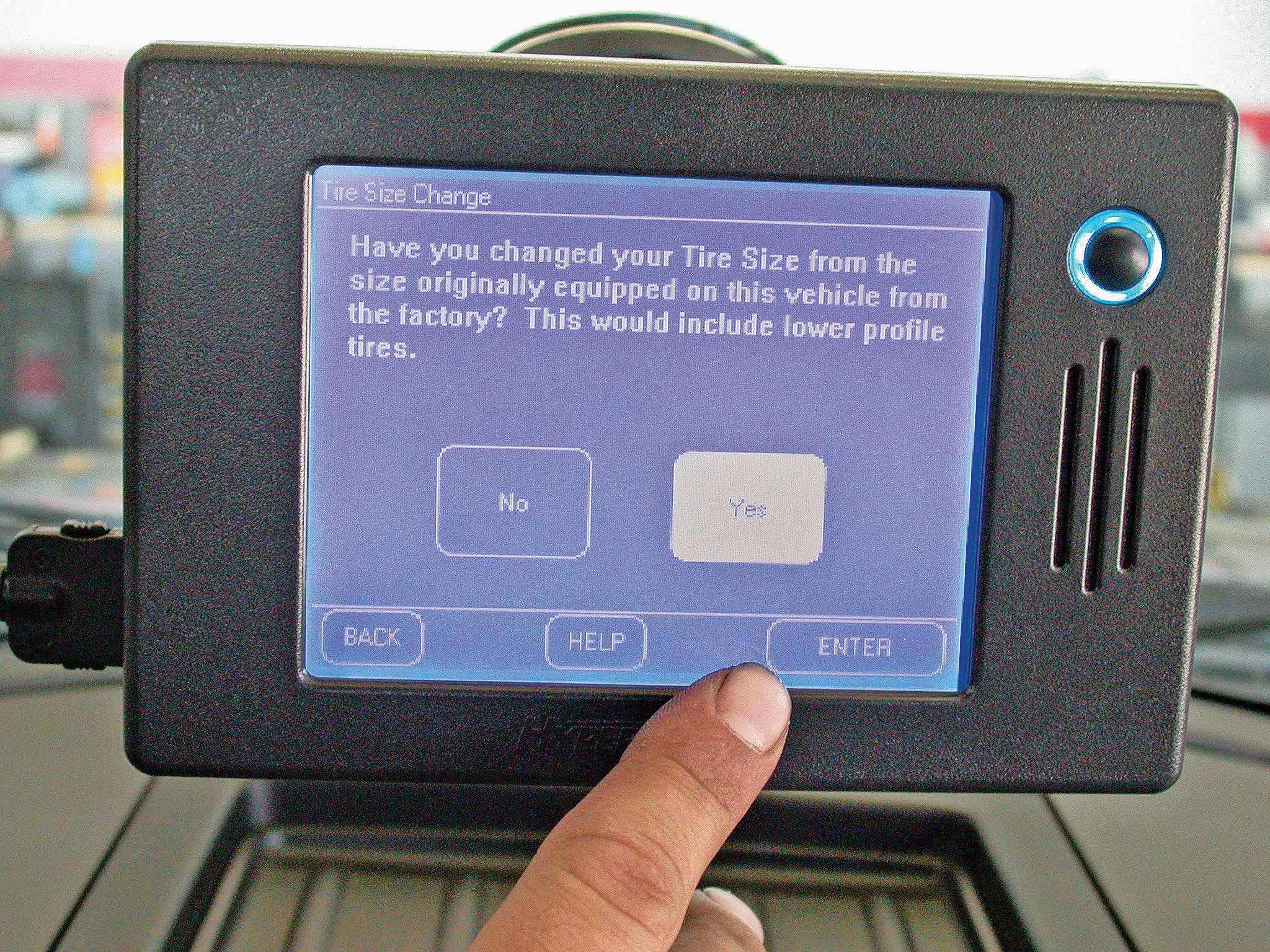
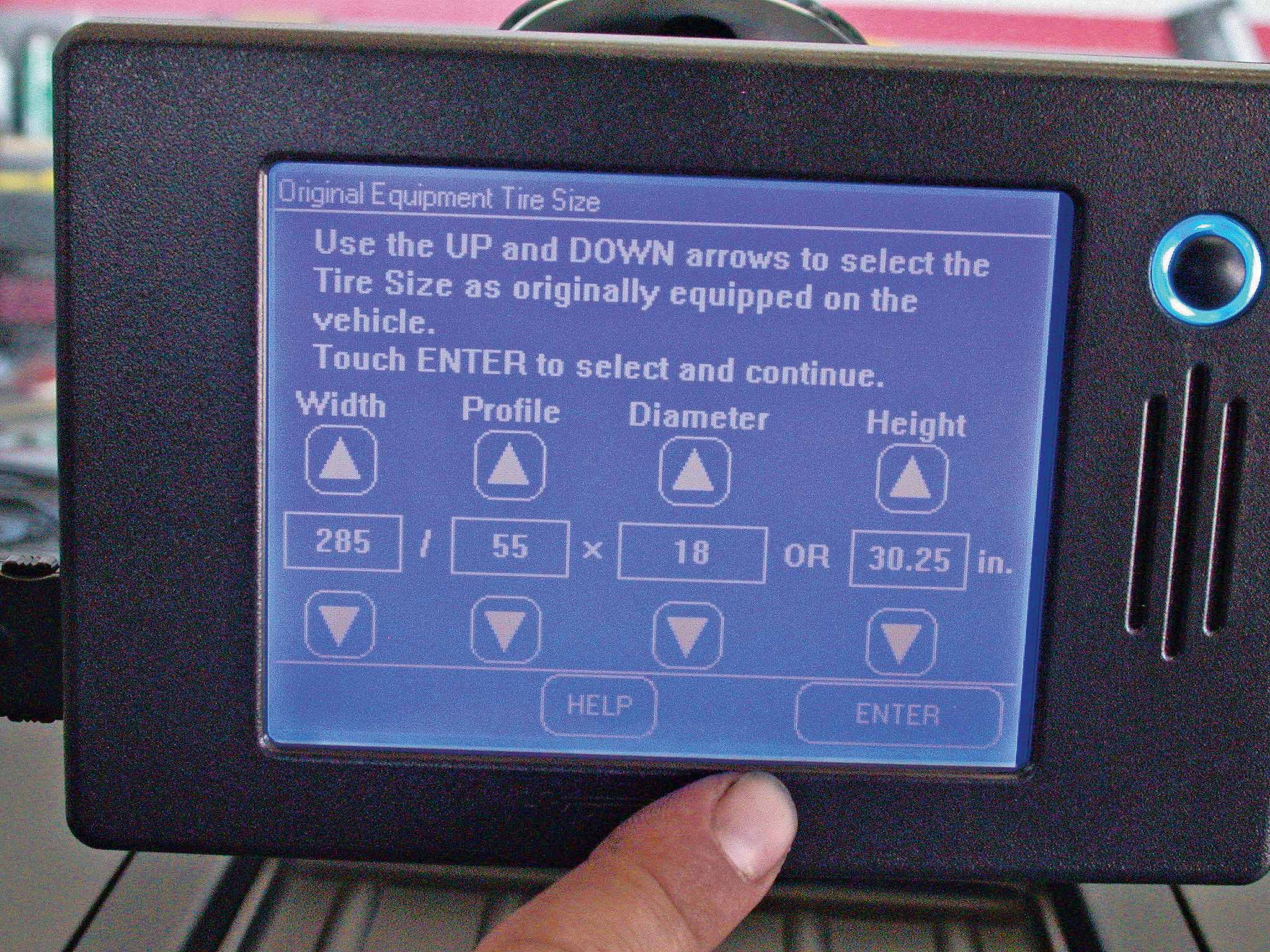
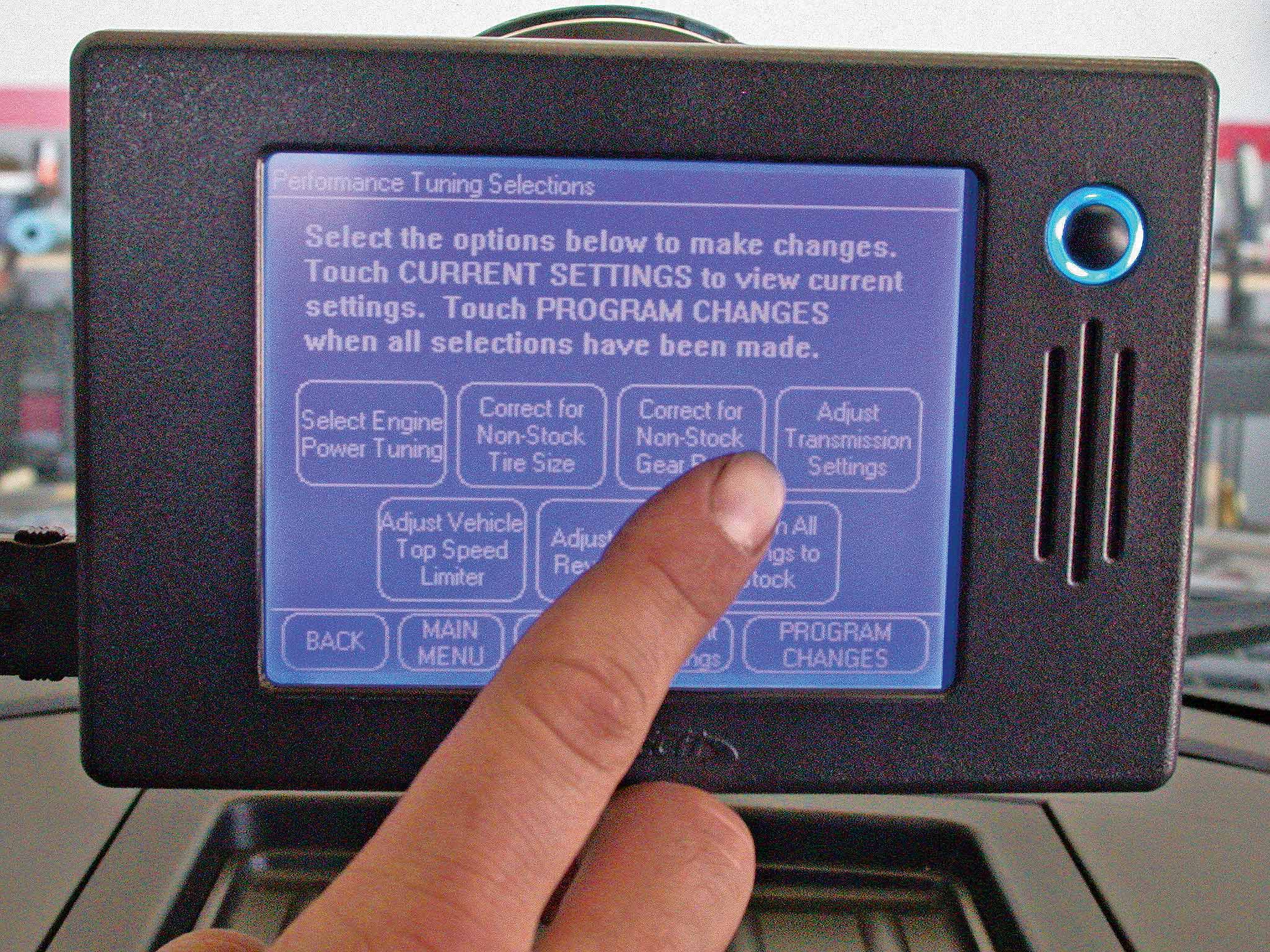
Next it will ask about tire size. This is really helpful, as it will calibrate the speedo for you if you have added larger tires.
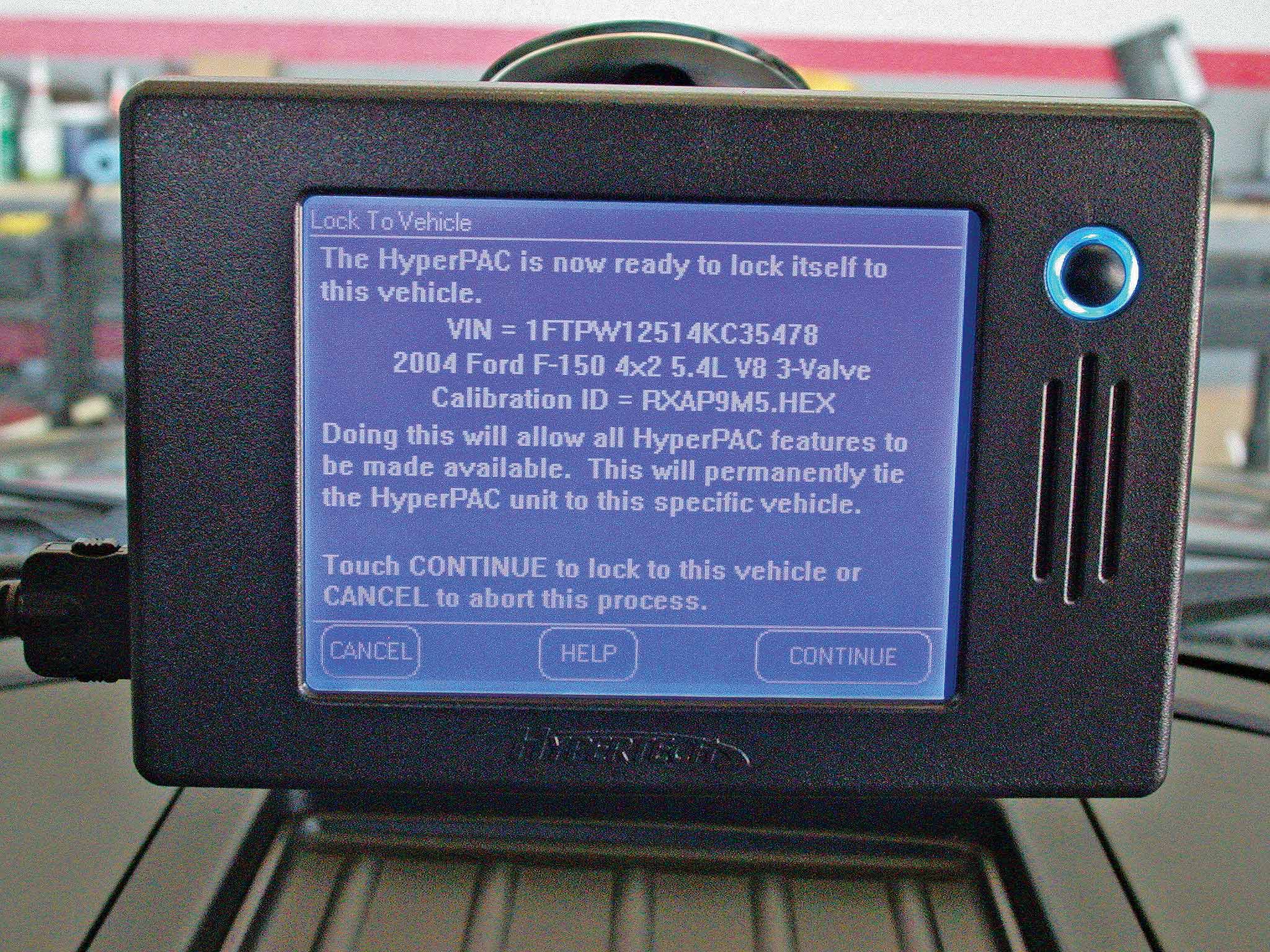
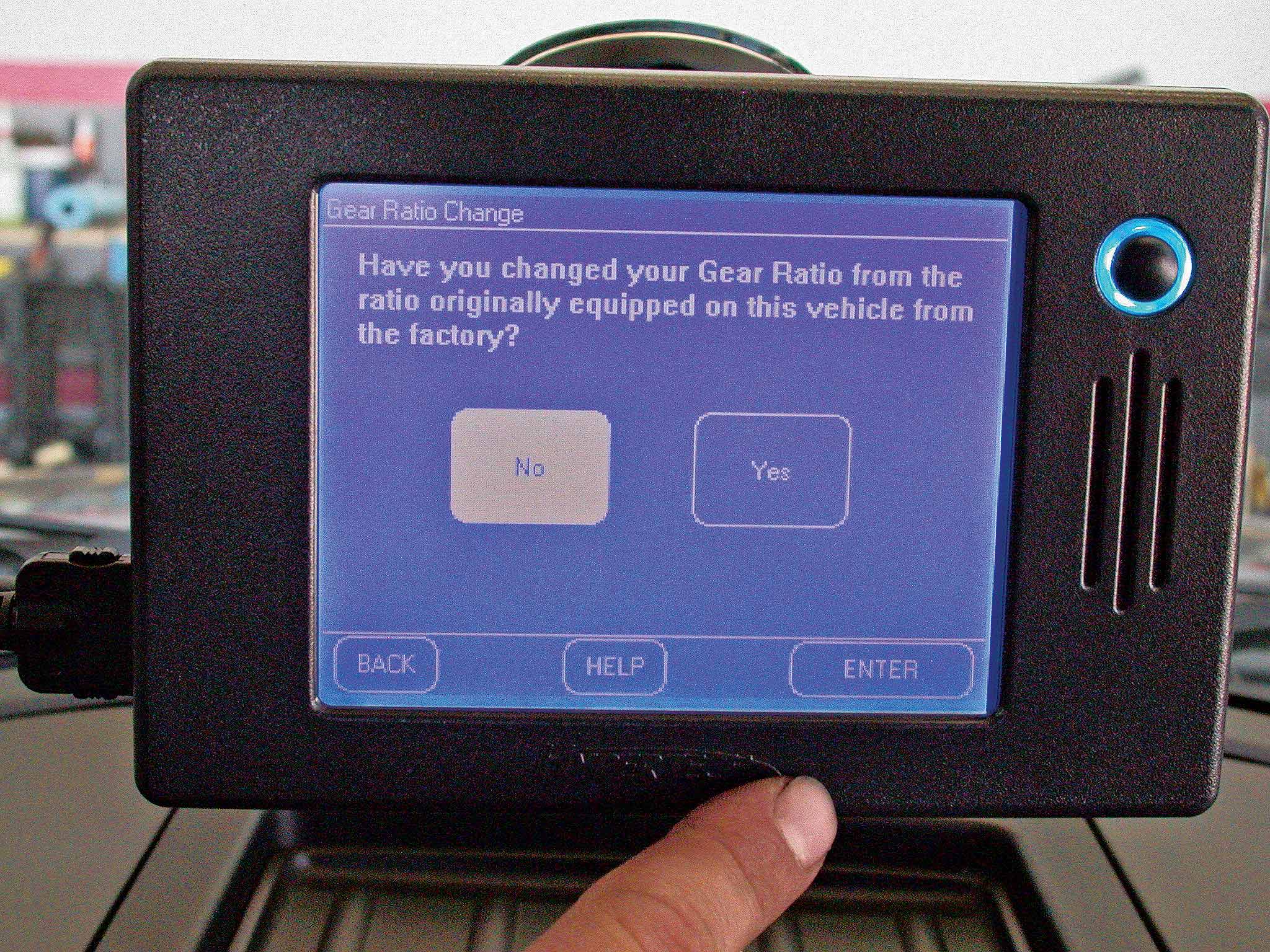
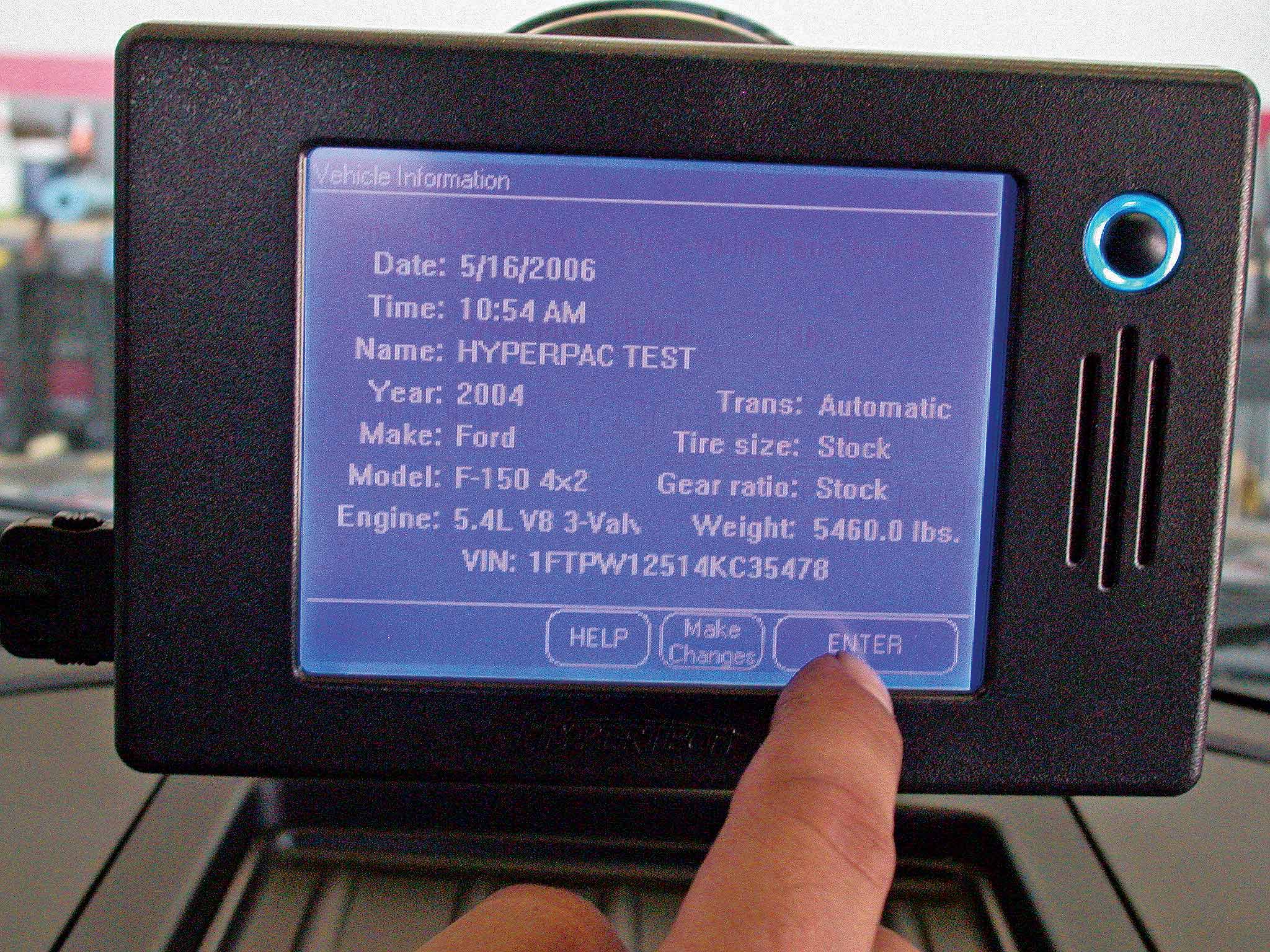
The gear ratio is next to be input, although in this case the stock gears are still in place. 17. A screen will show the details up to this point and ask you to confirm the data.
A screen will show the details up to this point and ask you to confirm the data.
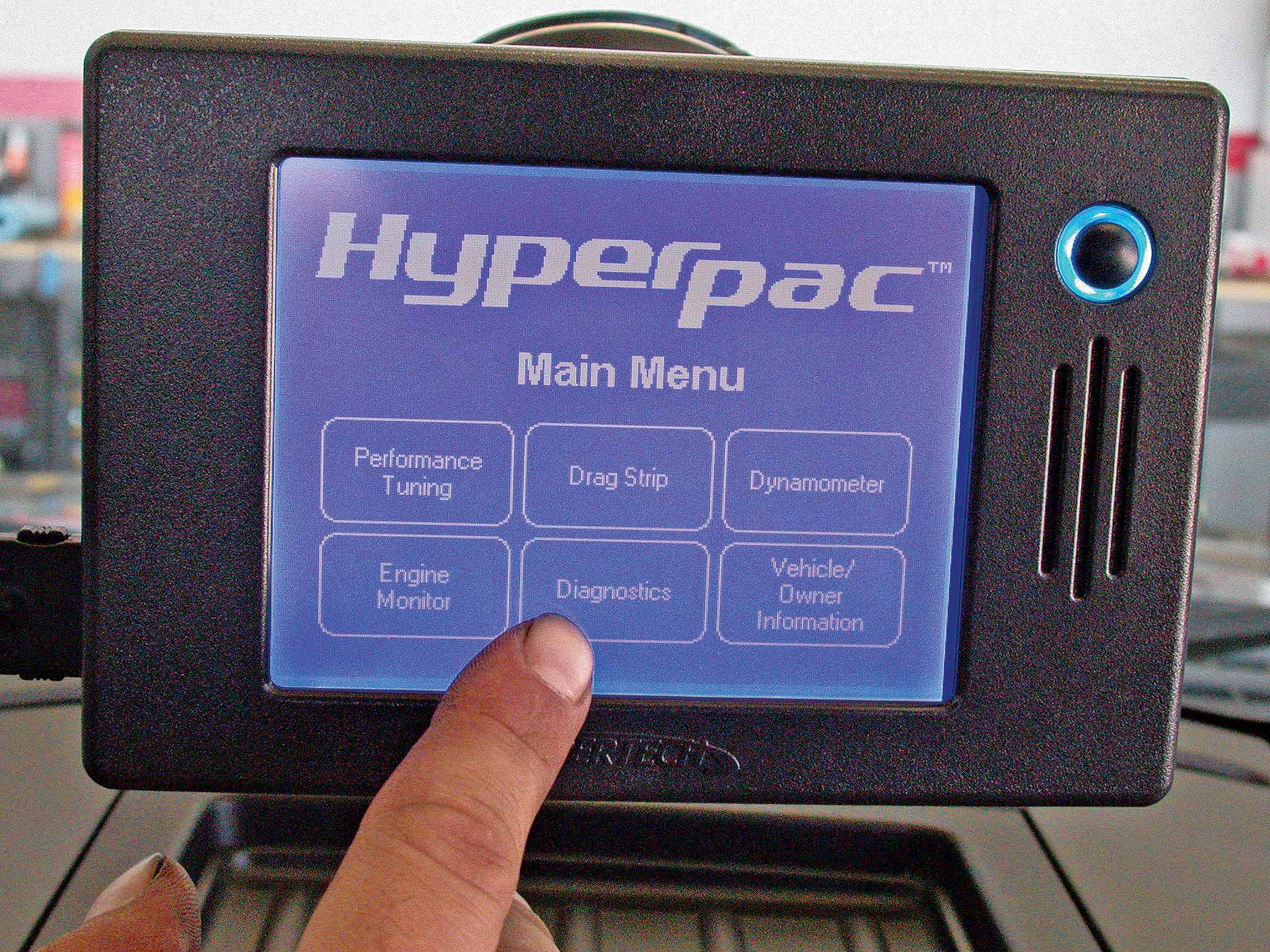
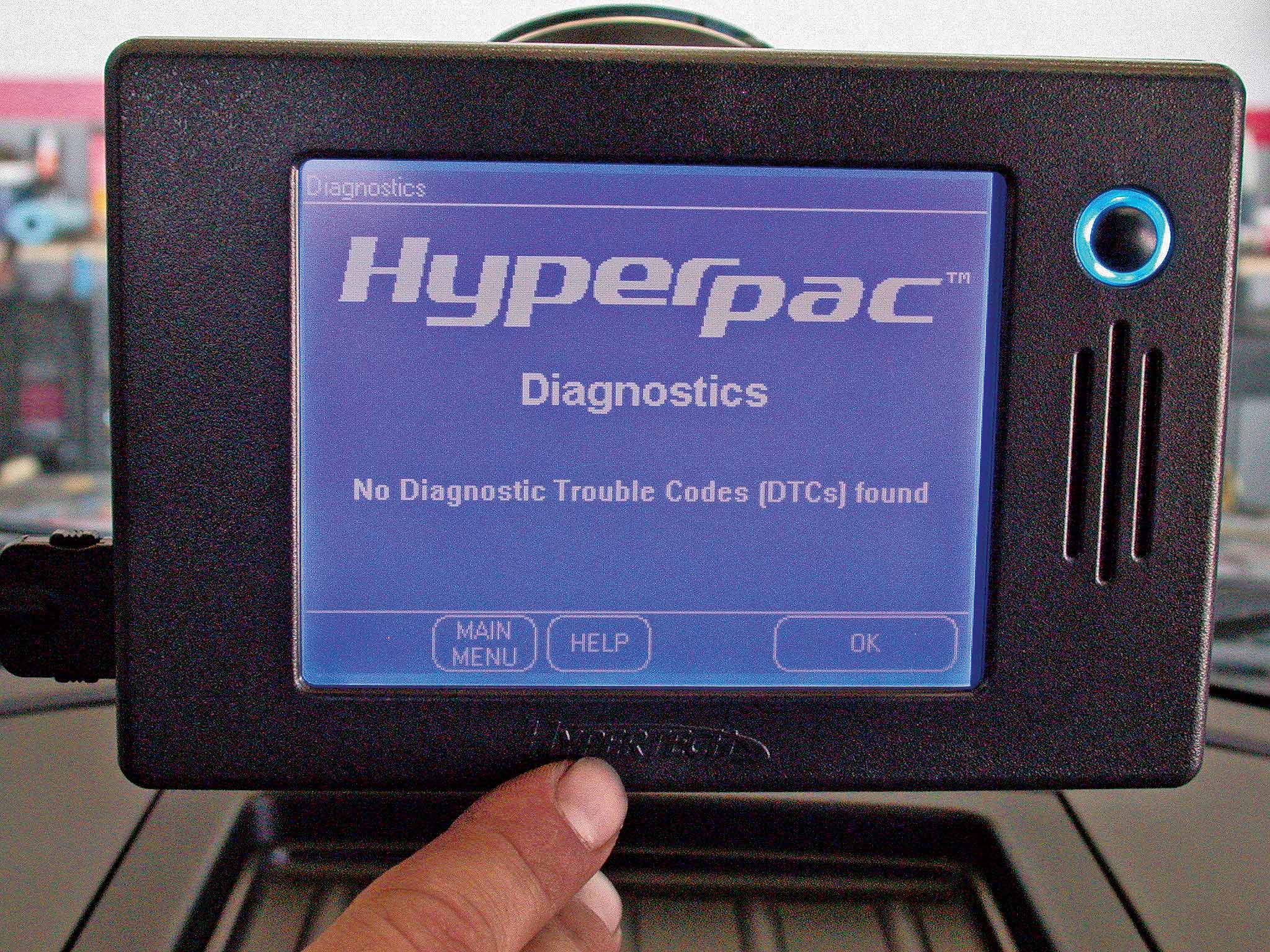
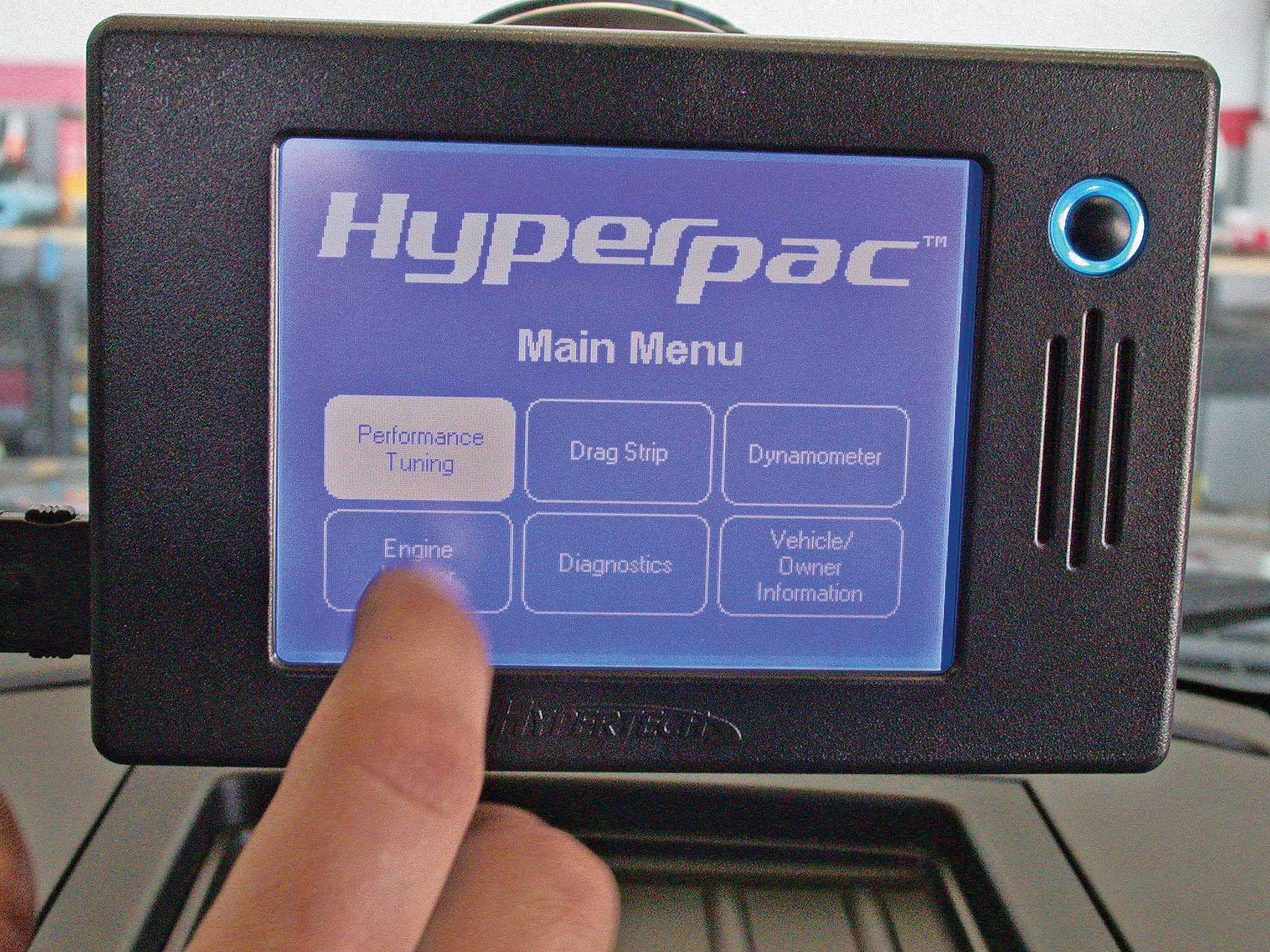
With the basic information added, the unit will take you to the main menu. The first thing to hit is the Diagnostics button. This will ask the computer to make sure that there are no problems with any sensor or anything prior to additional programming.
The “all clear” signal means that it is time for the fun to begin.
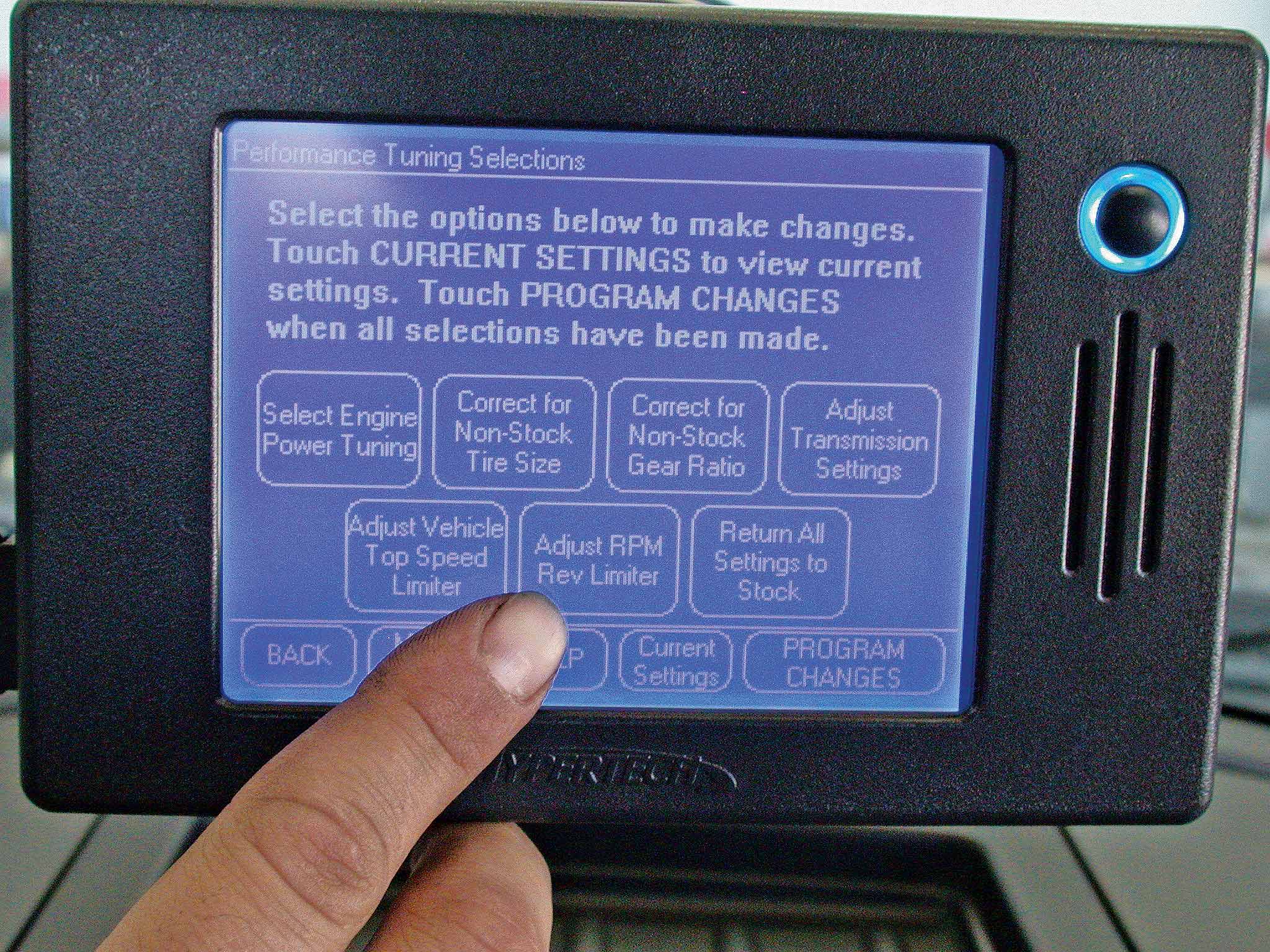
By that we mean adding more power and raising some of the factory limits.
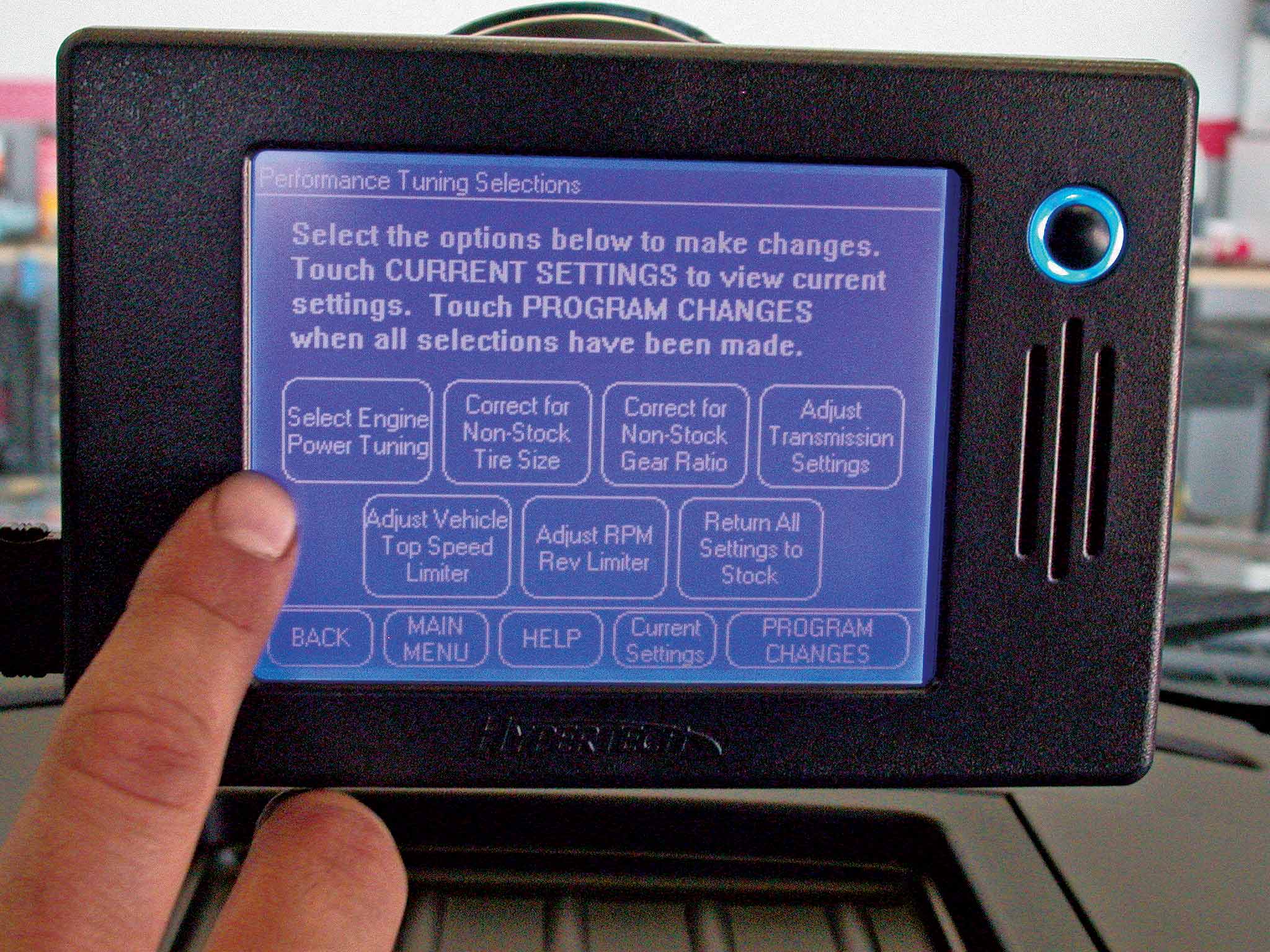
The screen will display the prompts so that the various changes can be made. When finished, all it takes is to push the Program Changes button to make them stick.
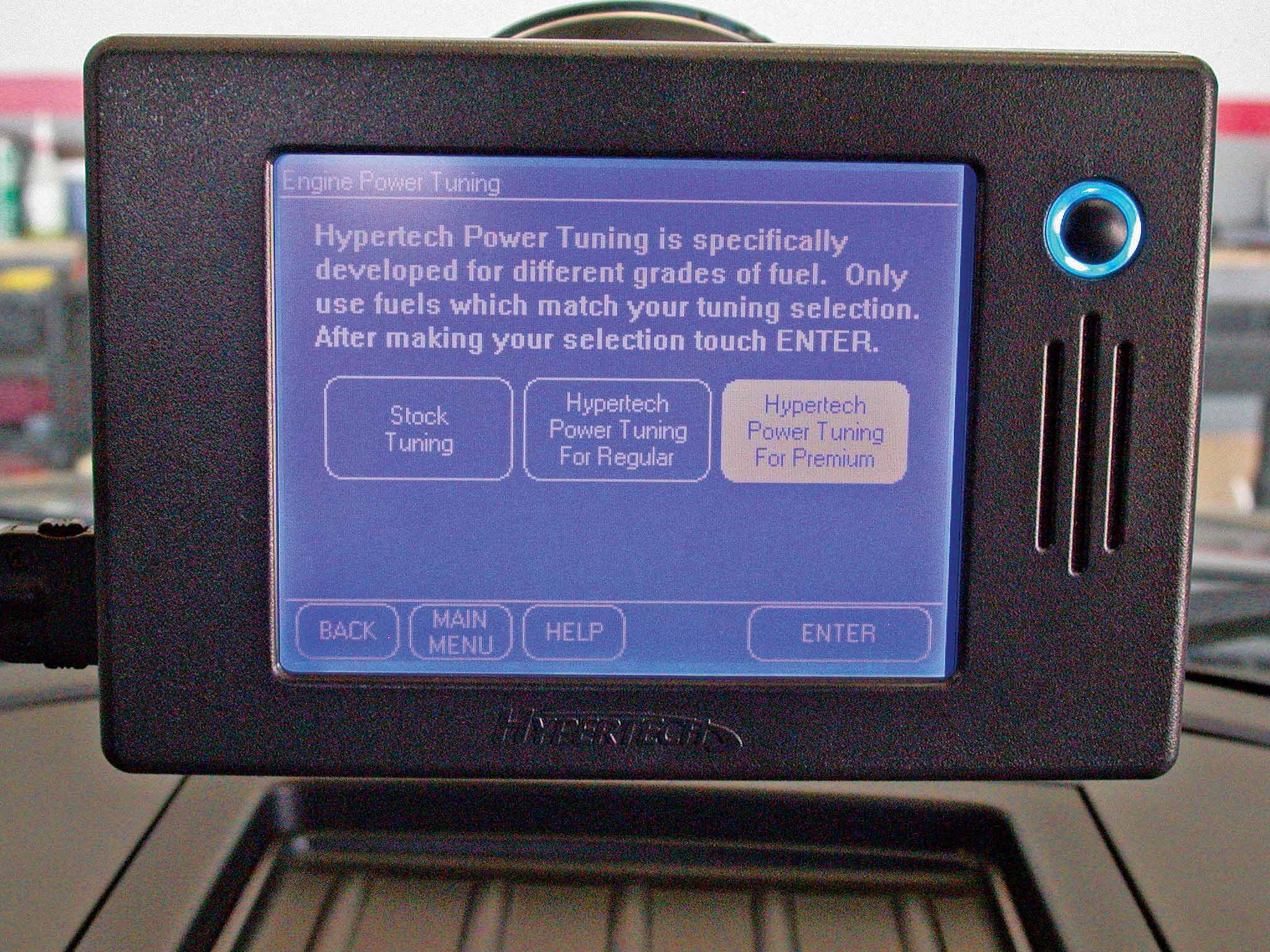
There are two power settings that can be changed (okay, actually there are three, but who wants stock?), depending on which grade of gasoline you will be filling up with. Know that if you push the Premium button, you had better run premium or the engine may be damaged as a result of not having enough octane in the mix.
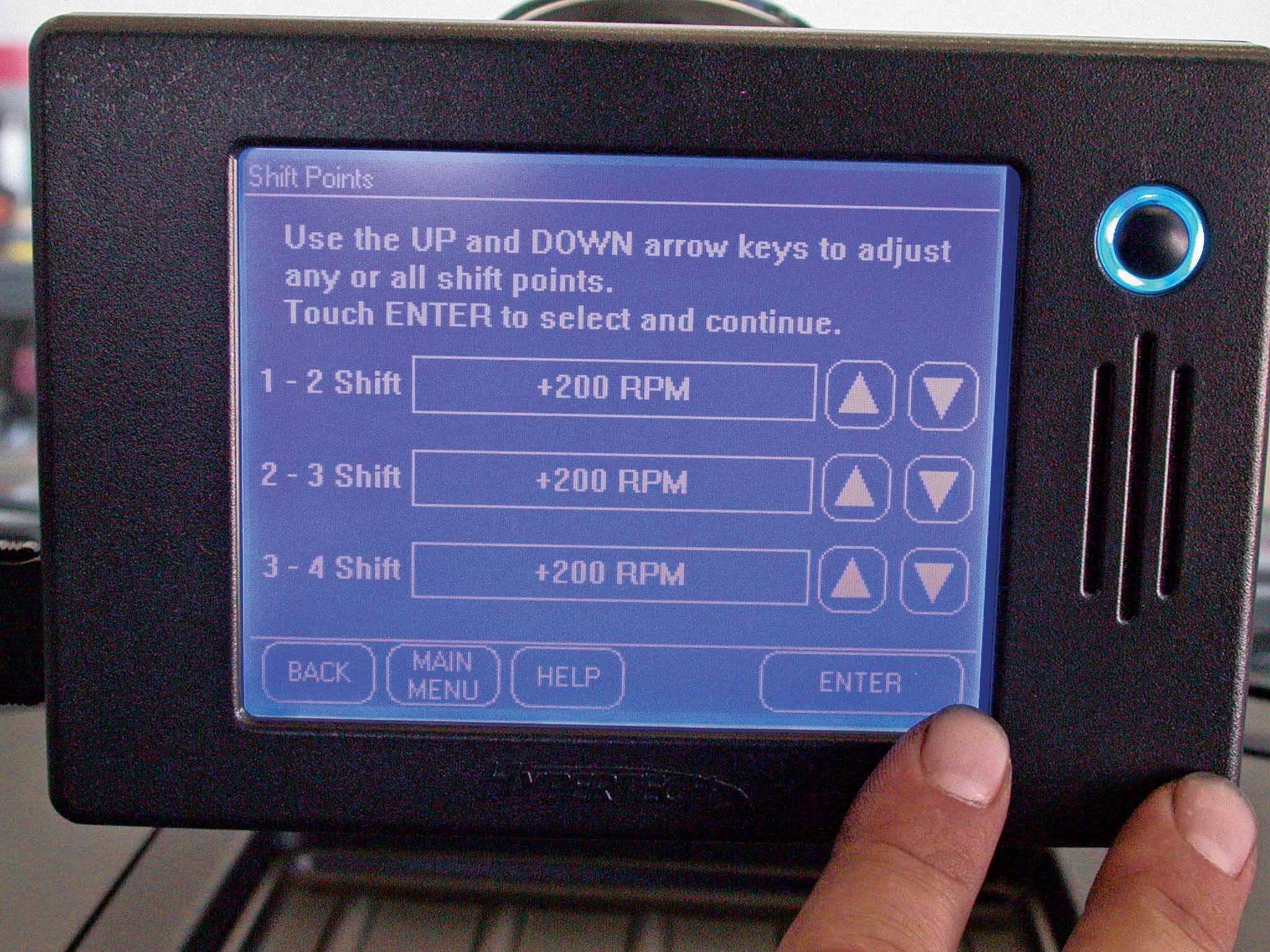
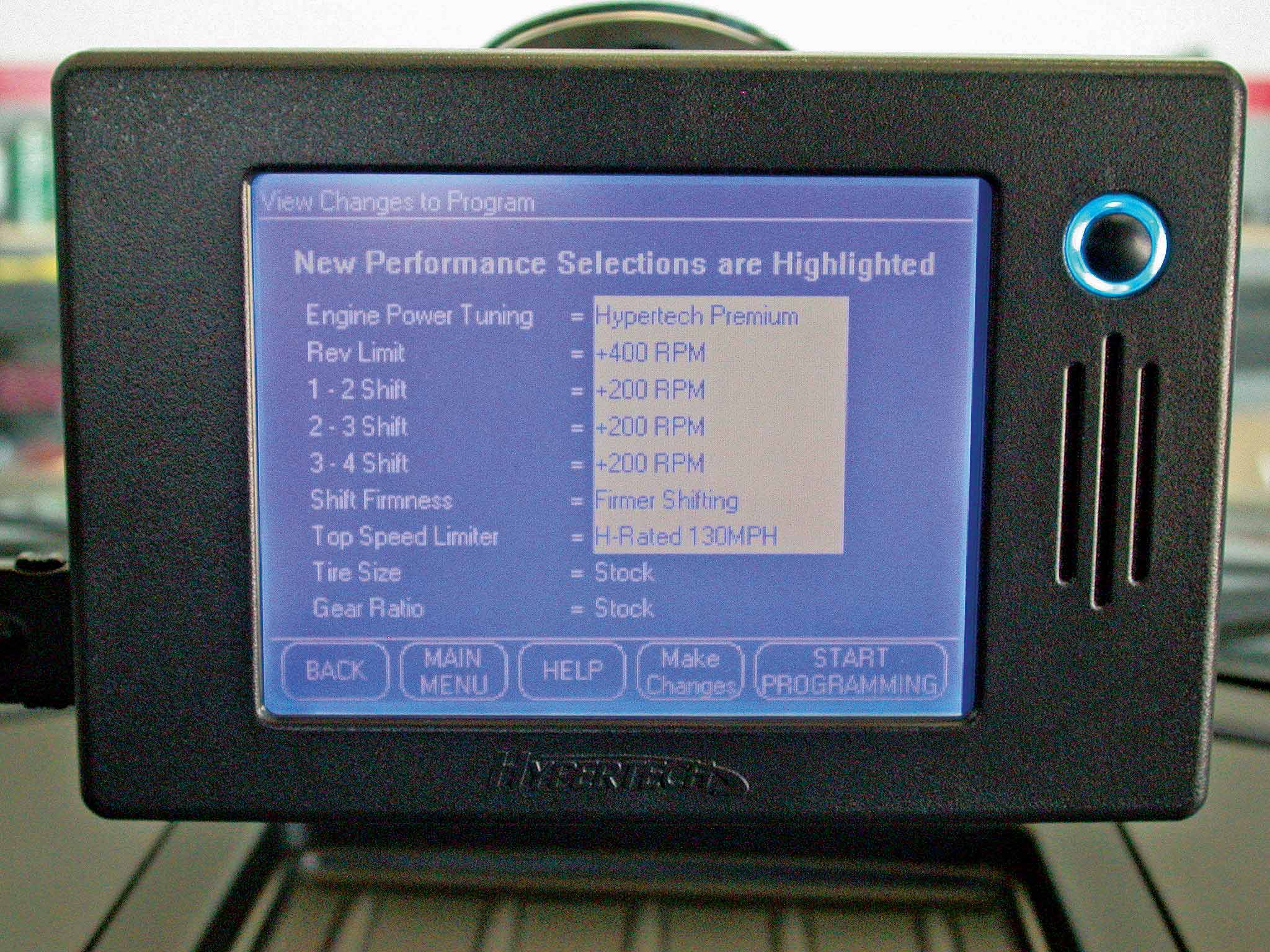
There is even a prompt that allows the shift points to be raised or lowered. Here these points are all raised by 200 rpm. That may not seem like a lot, but this is only the beginning of tuning for this vehicle, and any changes can be easily made in the future by simply pressing a few more buttons.
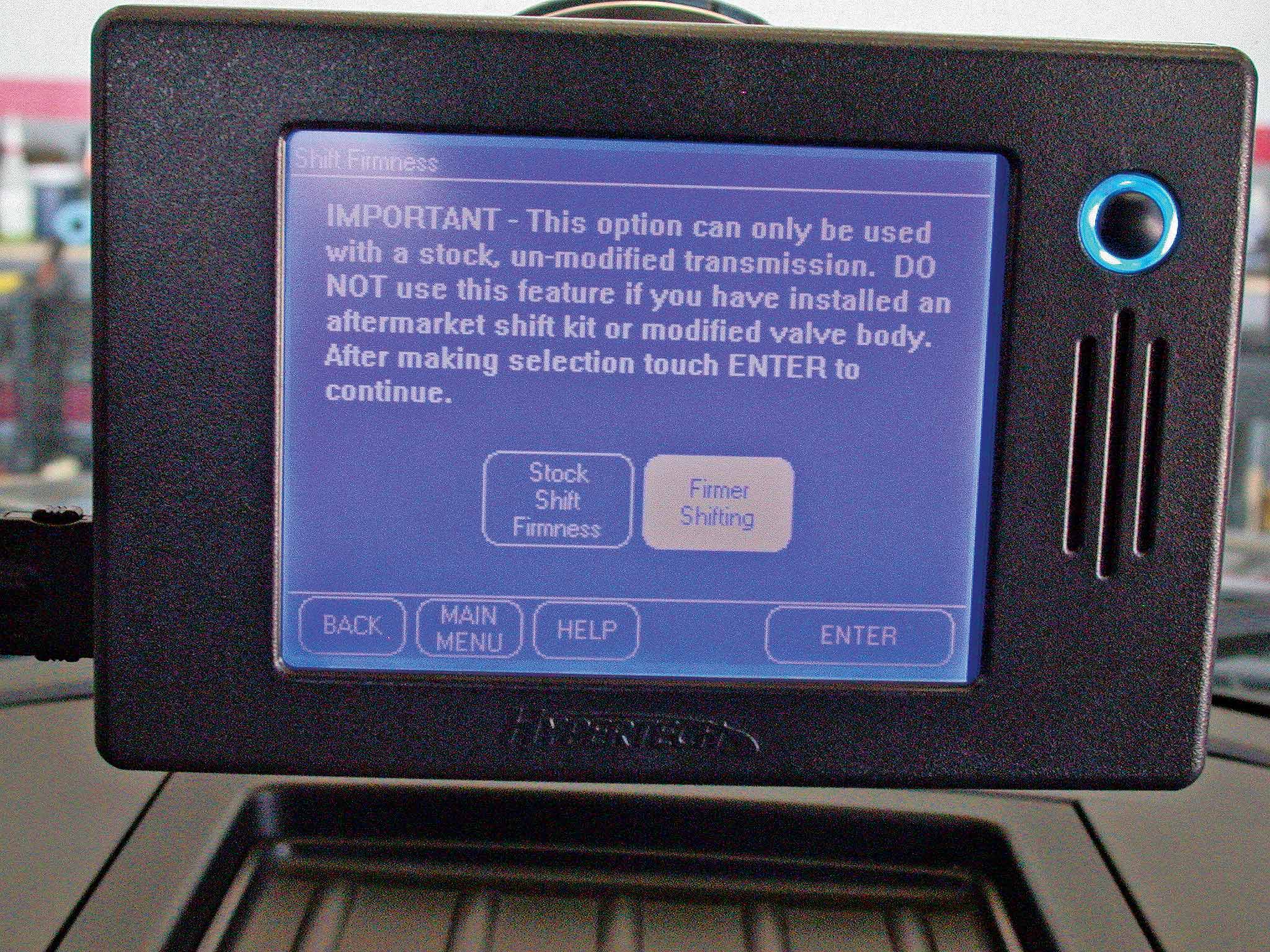
As this transmission is stock and without any upgrades, the firmer shifting feature can be used. As the screen says, do not add to the firmness if there are any aftermarket parts in your trans.
The HyperPAC unit will send you back to the main screen between some of the setting changes.
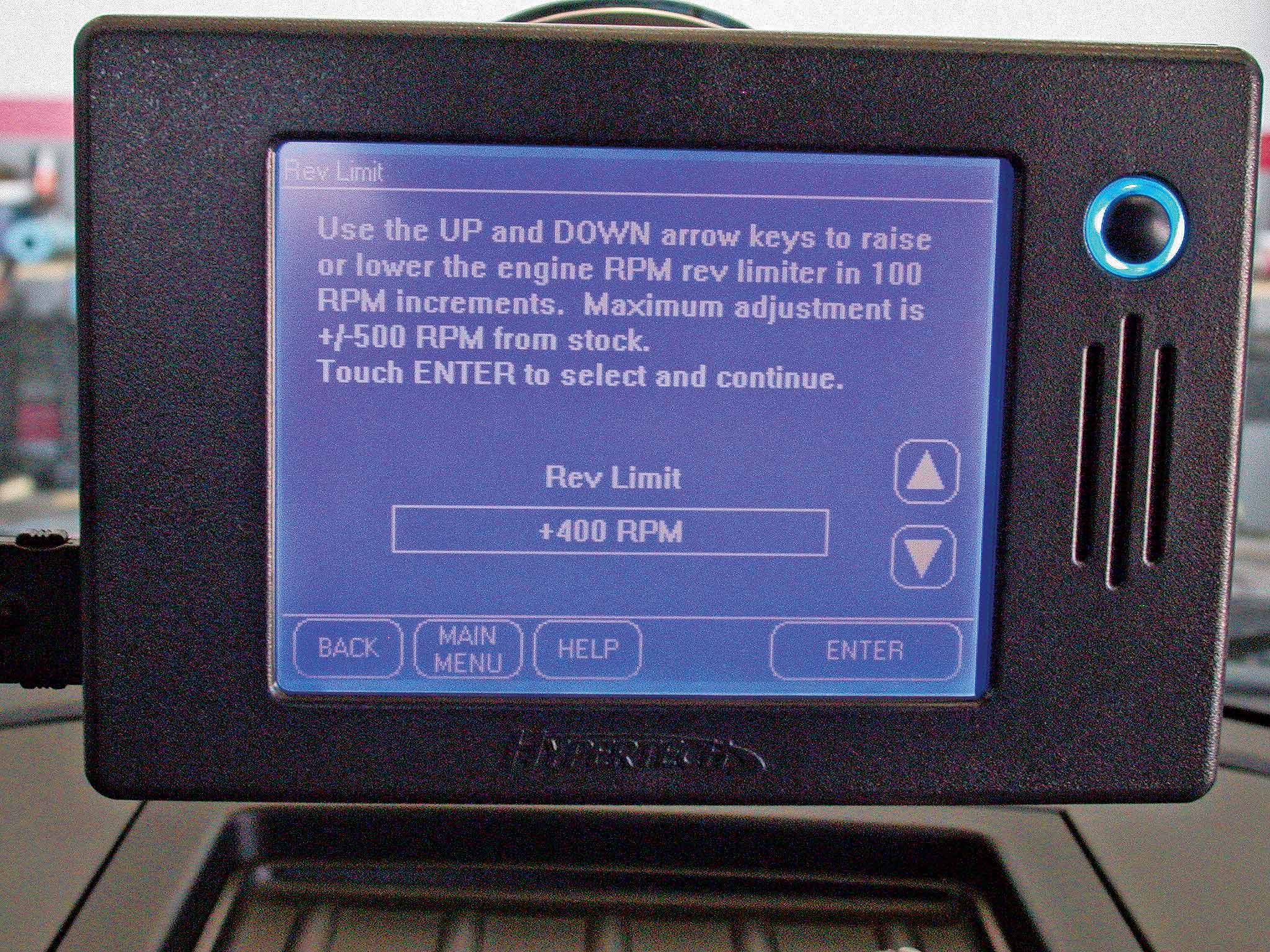
Have you added a cold air intake and a larger exhaust system? Well, then, you may want to add to the rev limiter. This owner did. In fact, another 400 rpm is now able to surge through the engine, and all with the push of a button.
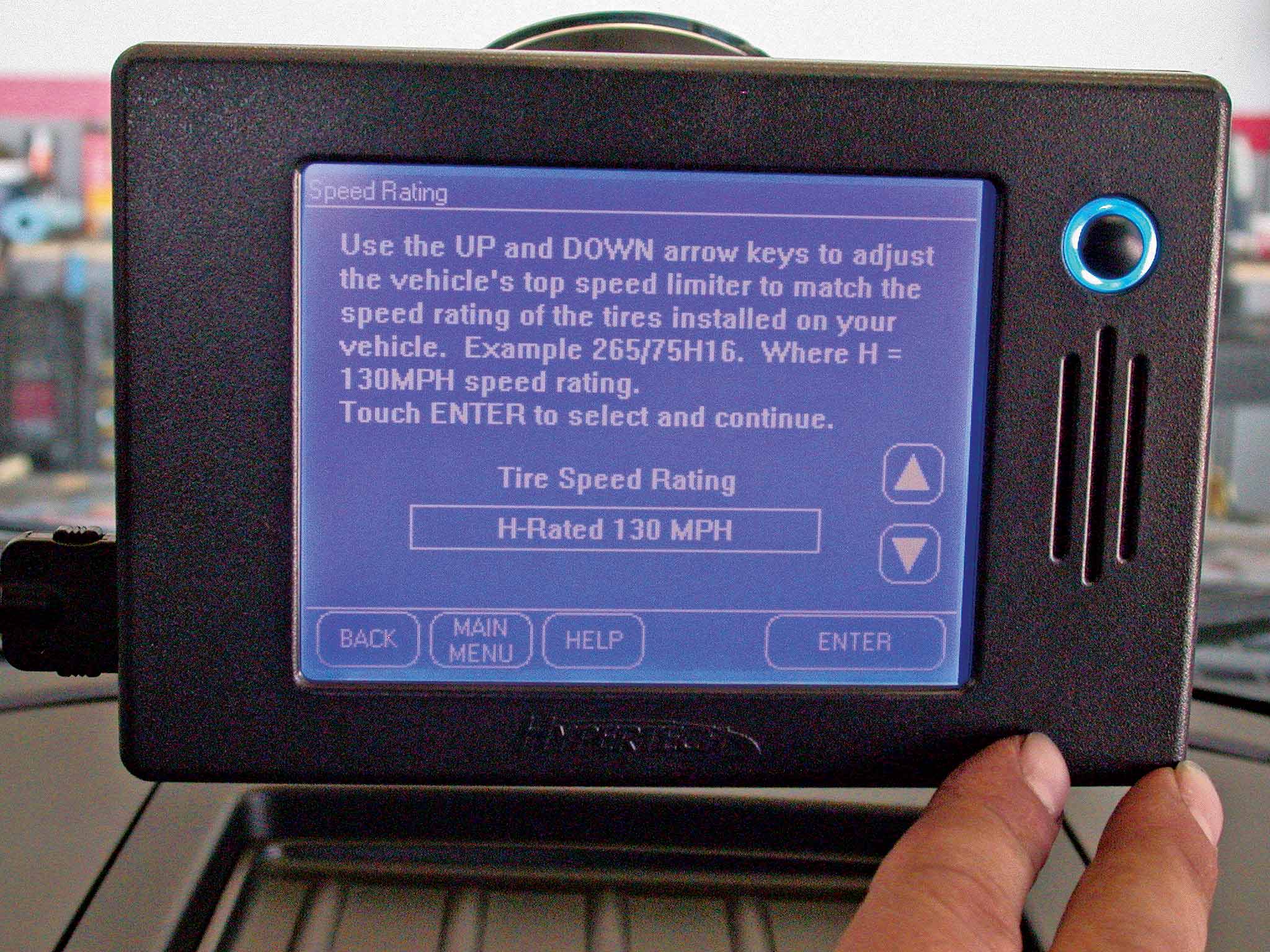
You are even able to increase the top speed limiter, provided you have the correct speed-rated tires on your truck, that is.
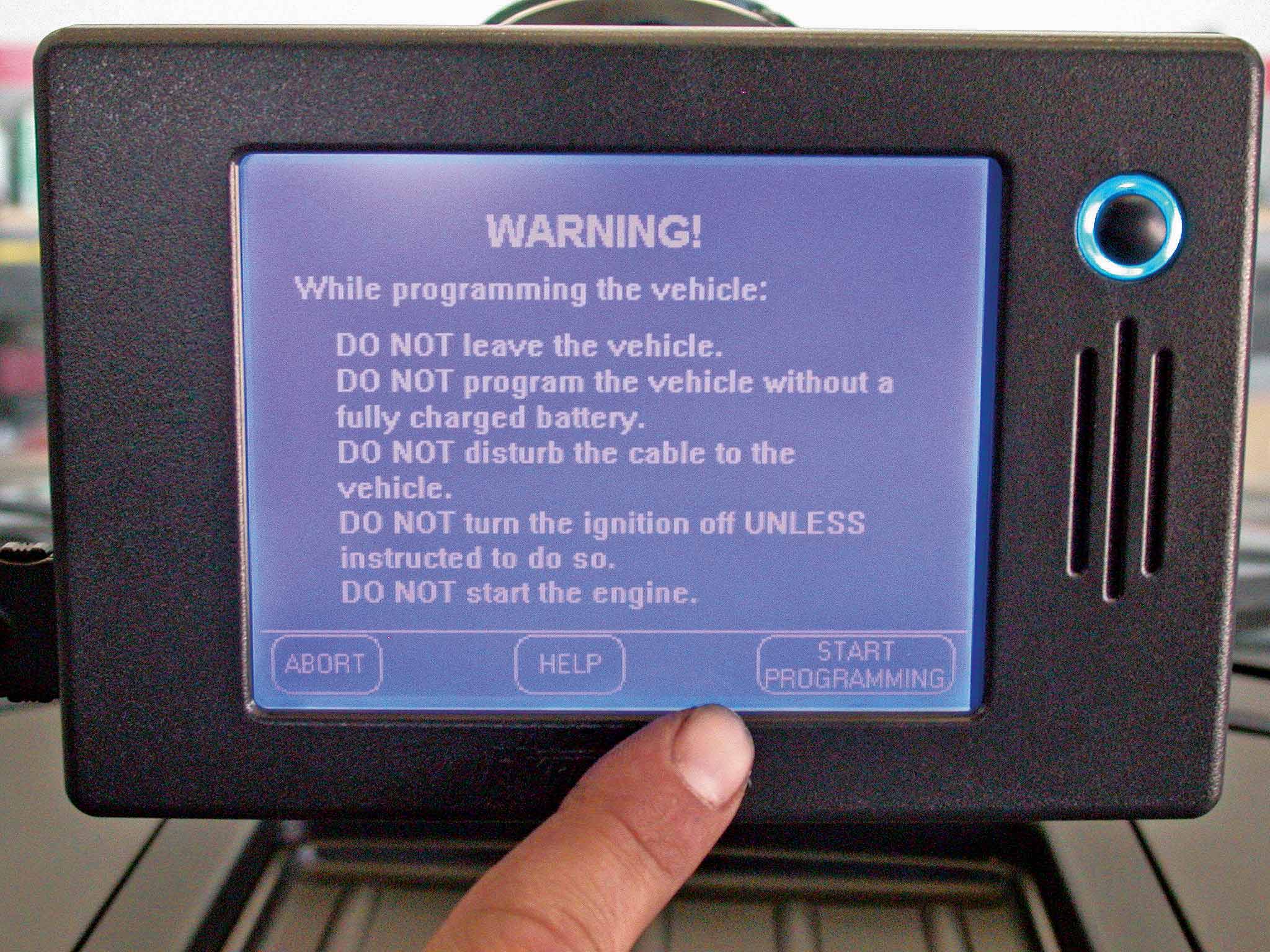
With the rating entered, the HyperPAC unit will show which changes have been made. The unit gives the tuner the ability to get back in and make any changes that may be wrong. If it is all good, then it is time to press the Start Programming button.
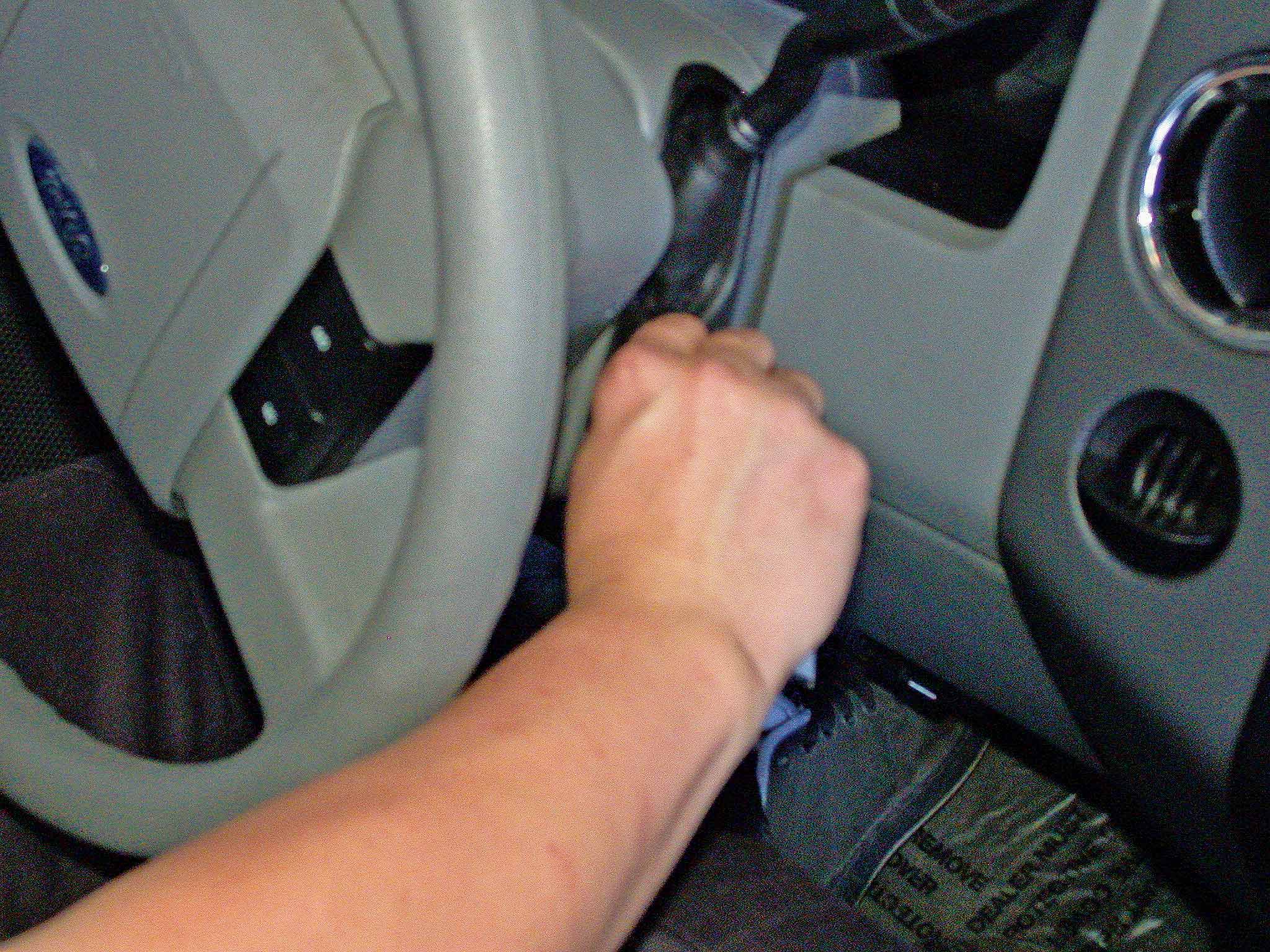
There are a few times when the unit will prompt you to switch on the ignition, or to turn the key to the “off” position.
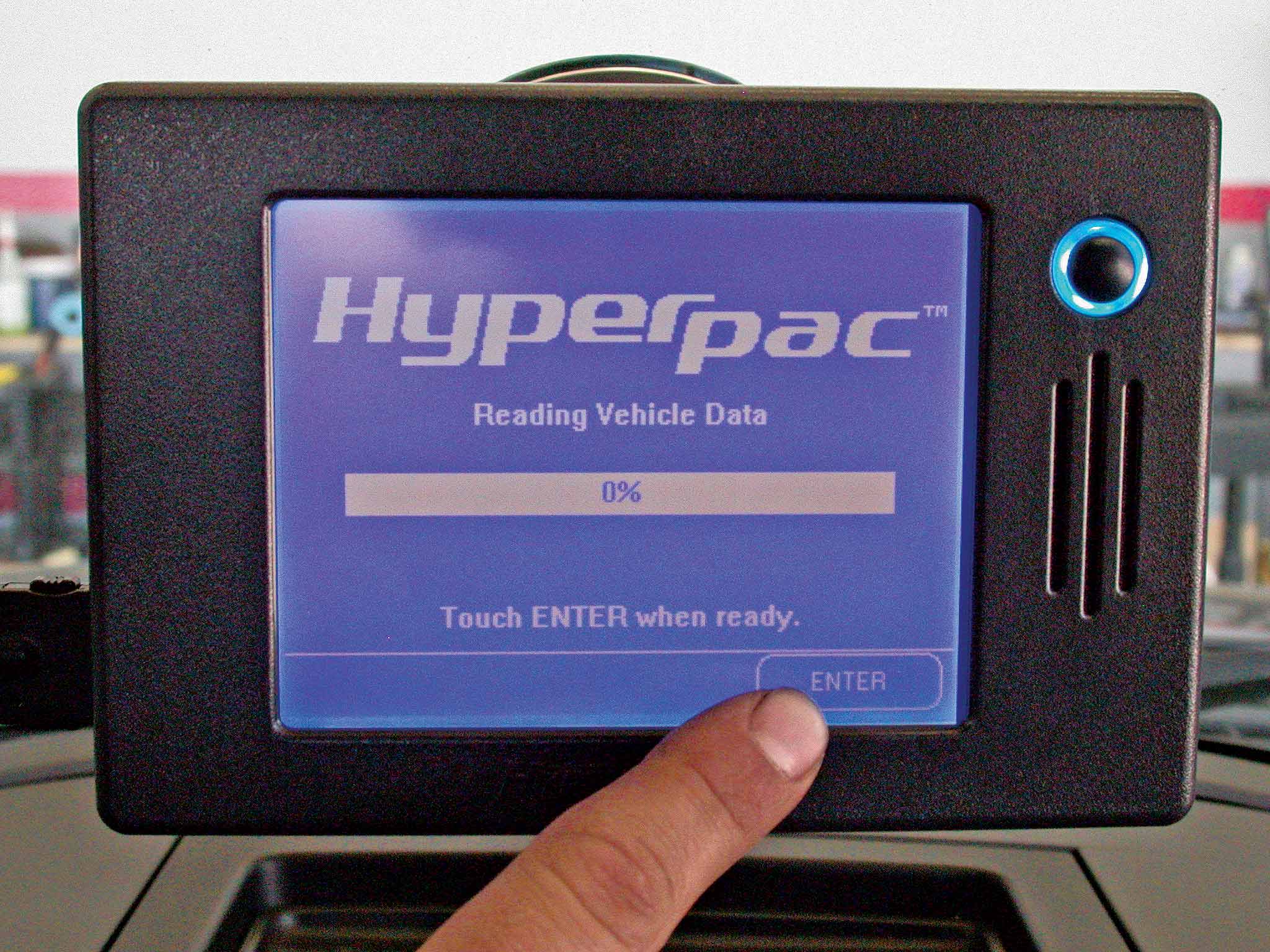
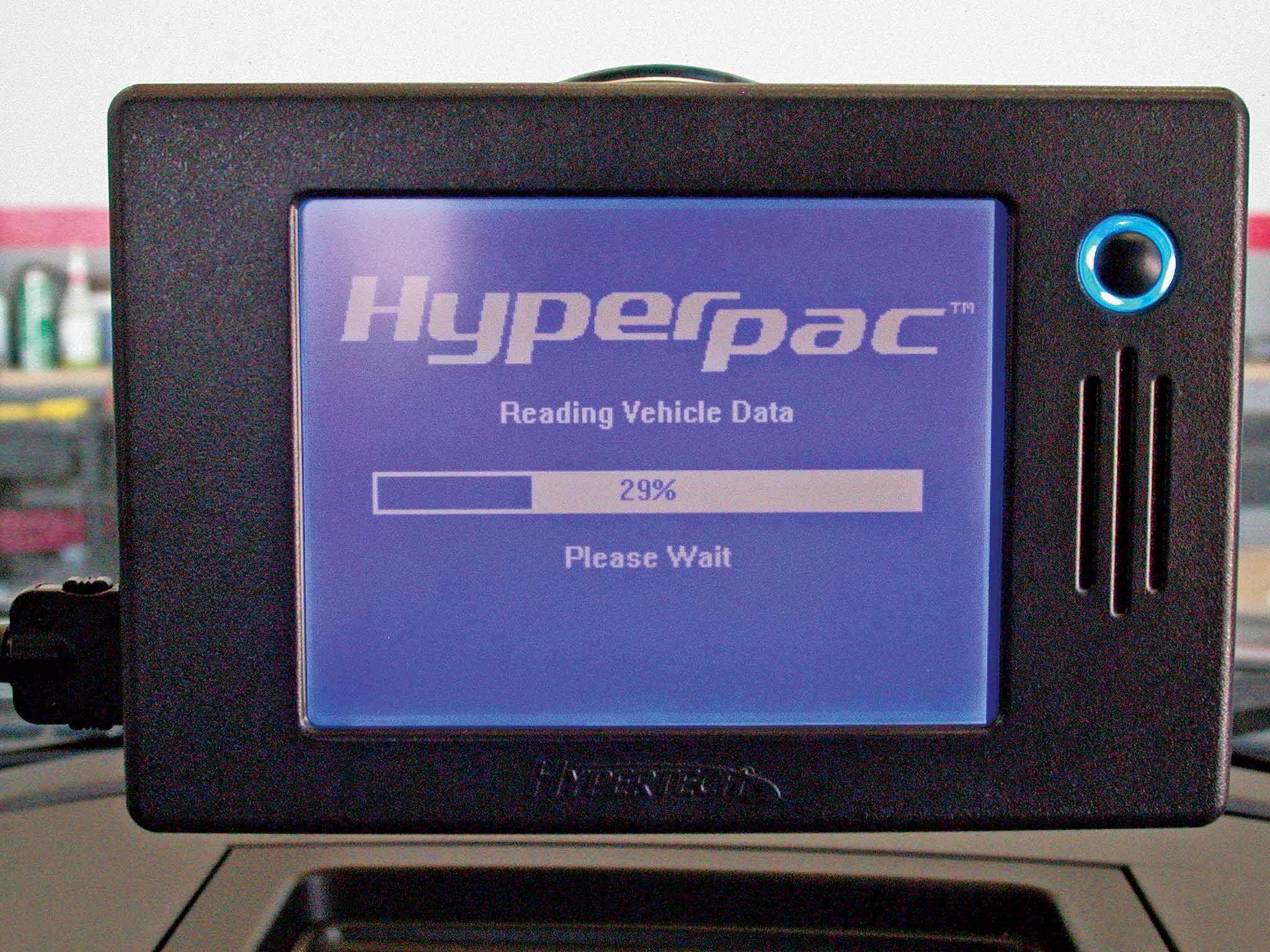
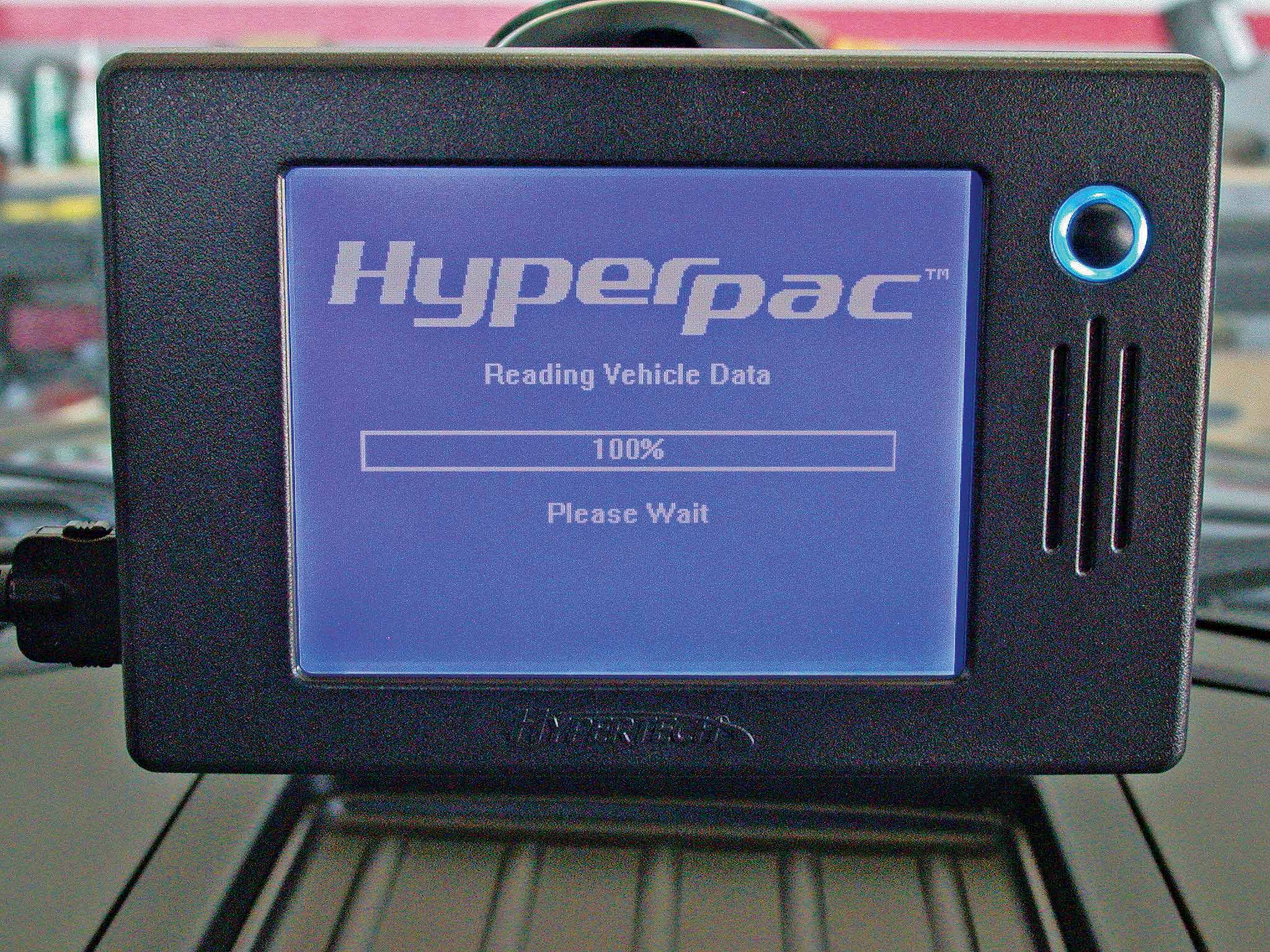
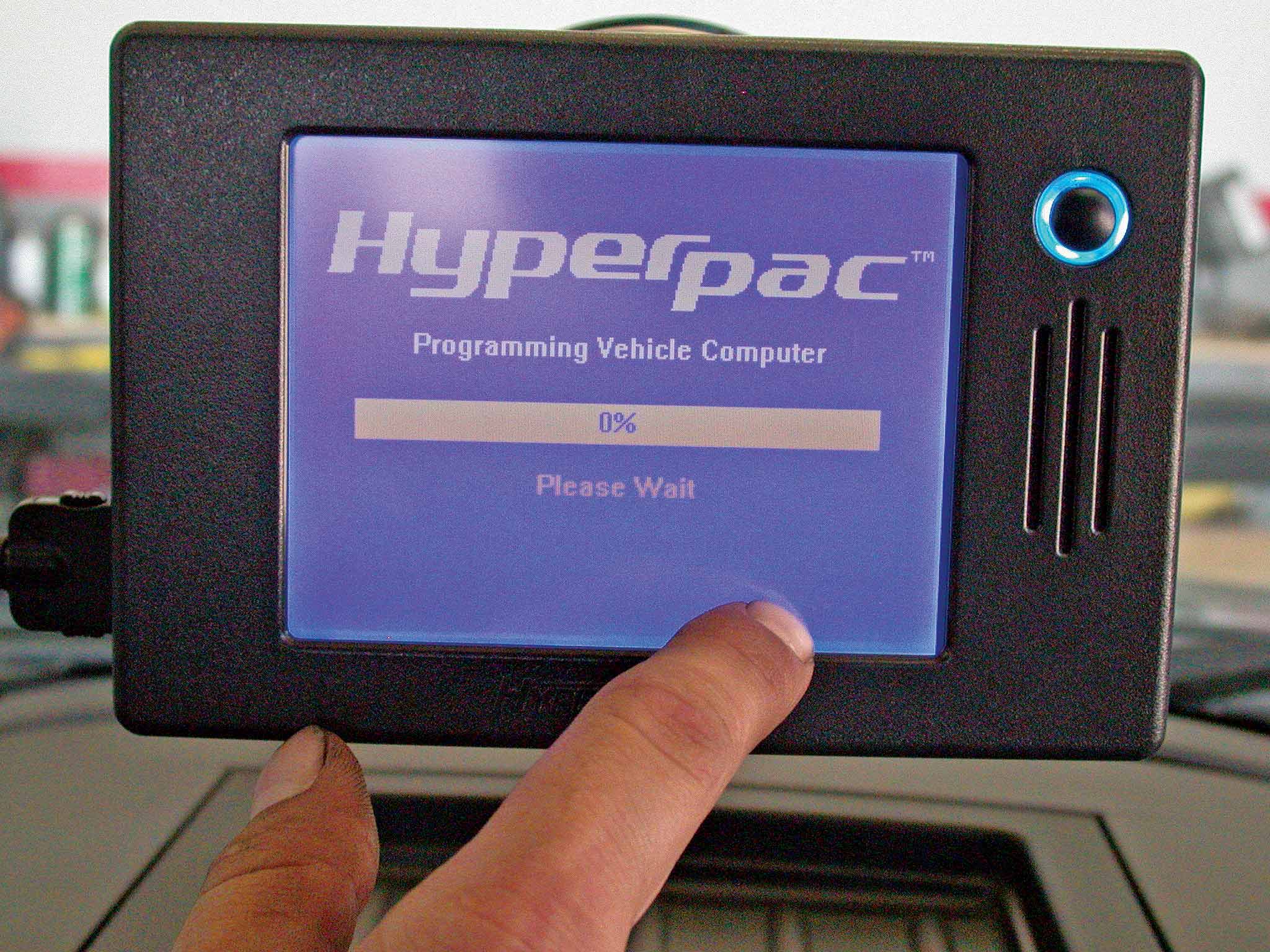
With a push of the button, the system will begin reading the vehicle’s data.
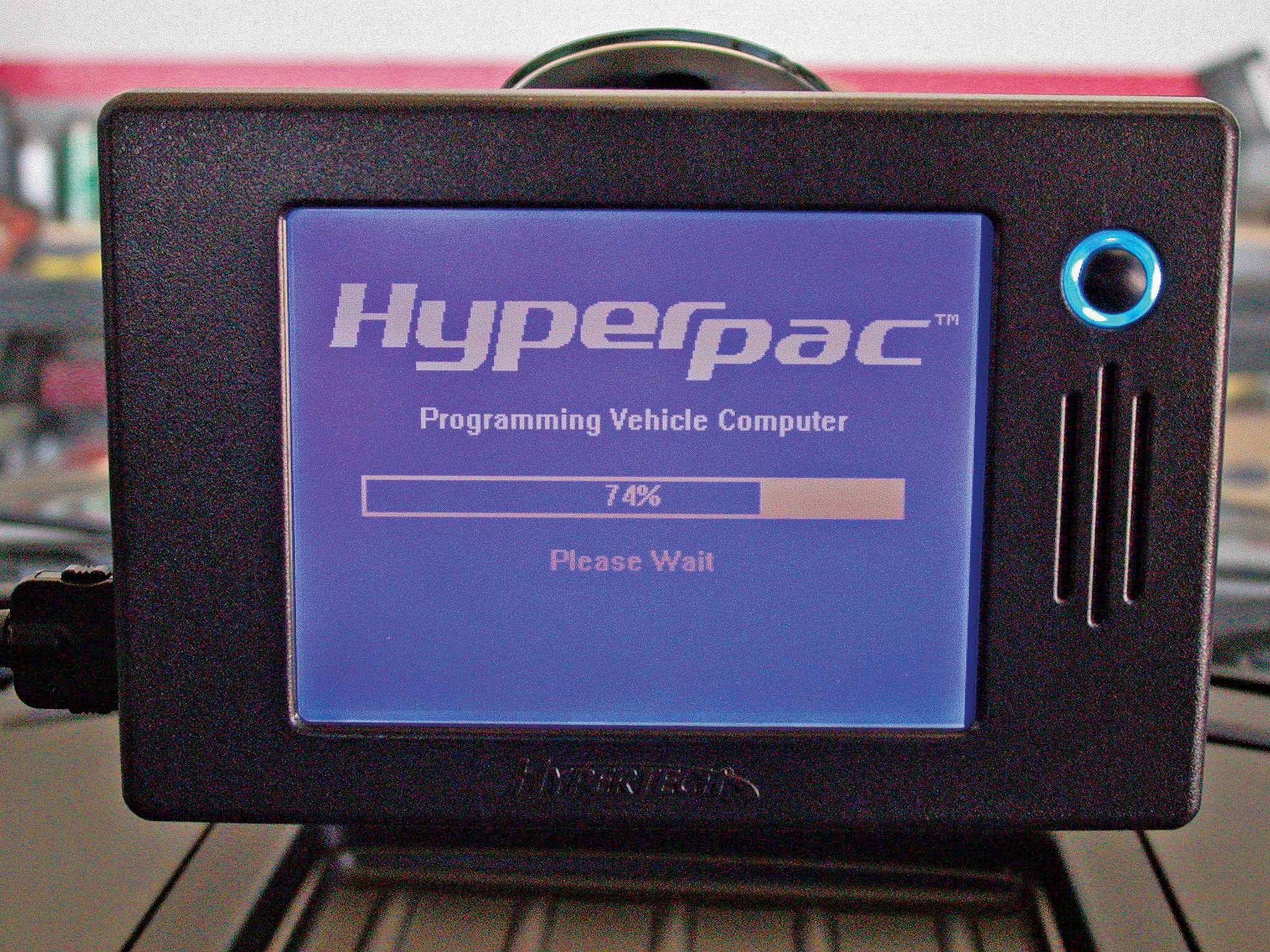
This will take a few minutes (up to 10) to do, but be patient. Do not open the door or turn on the stereo.
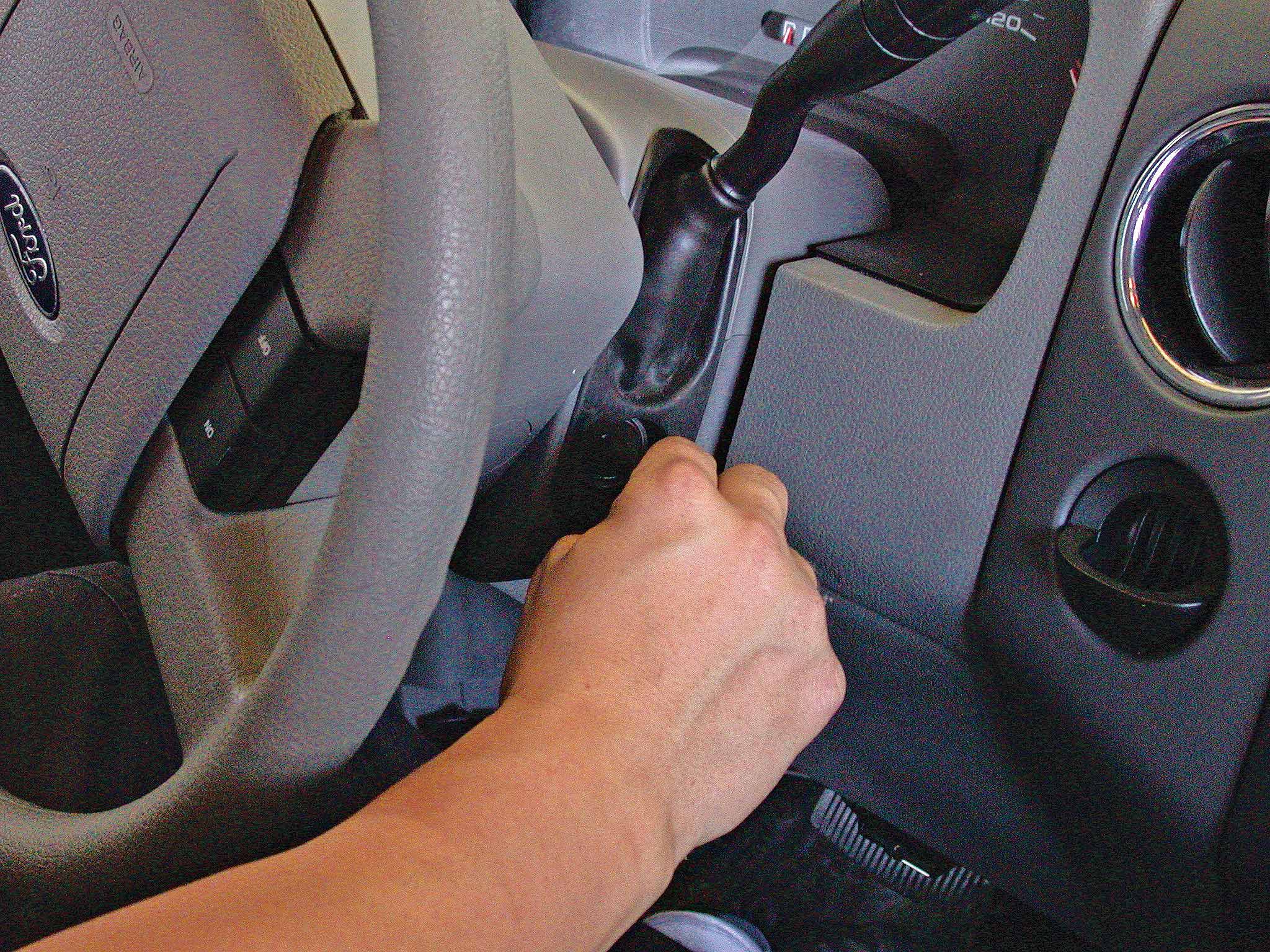
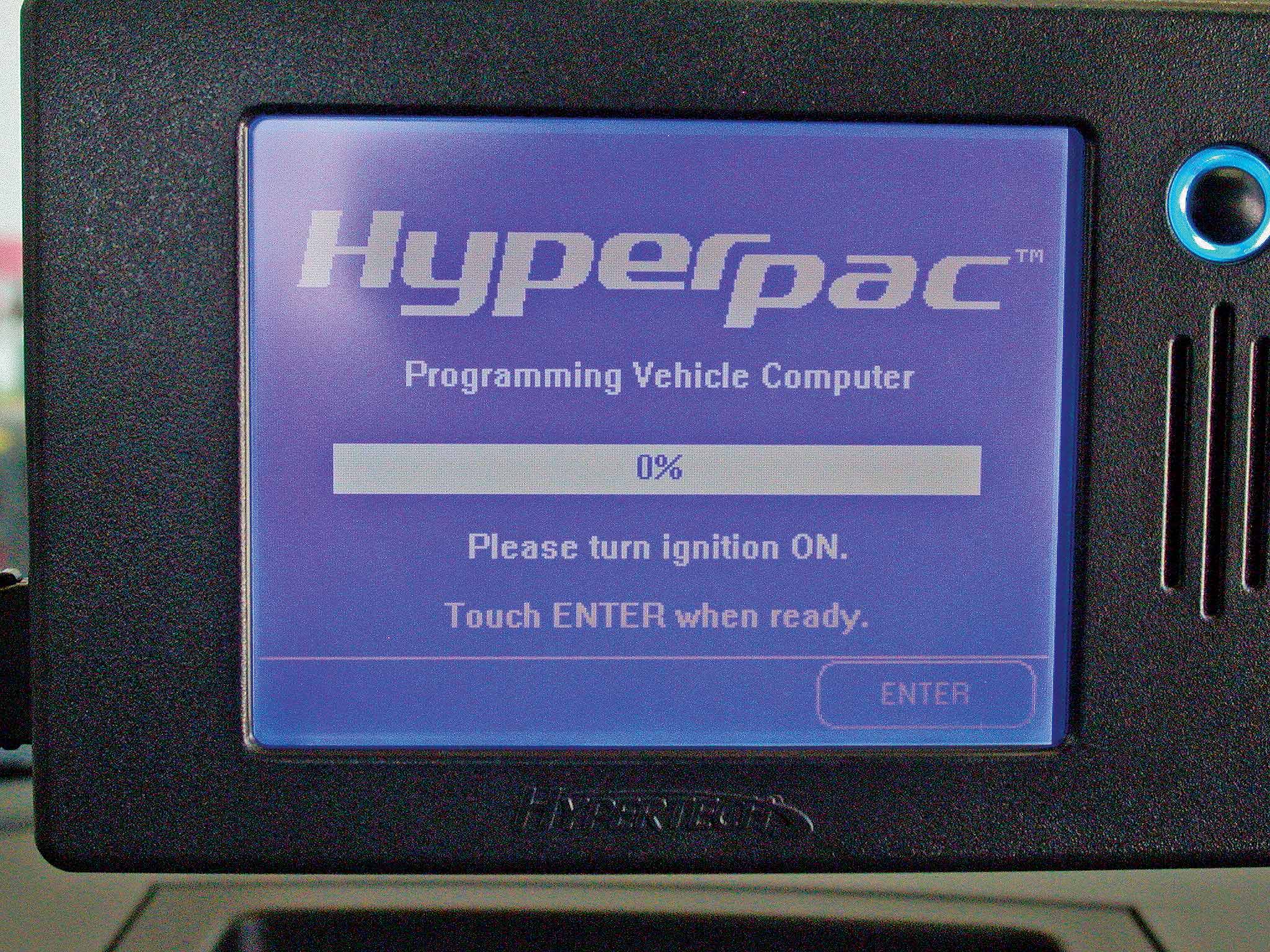
The unit says to turn the key to the “on” position. Be sure that when the unit says this, you do not actually start the truck.
When the Enter button is pushed, the HyperPAC unit begins to download the changes that were made. Again, patience is key, as this step will also take about 10 minutes.
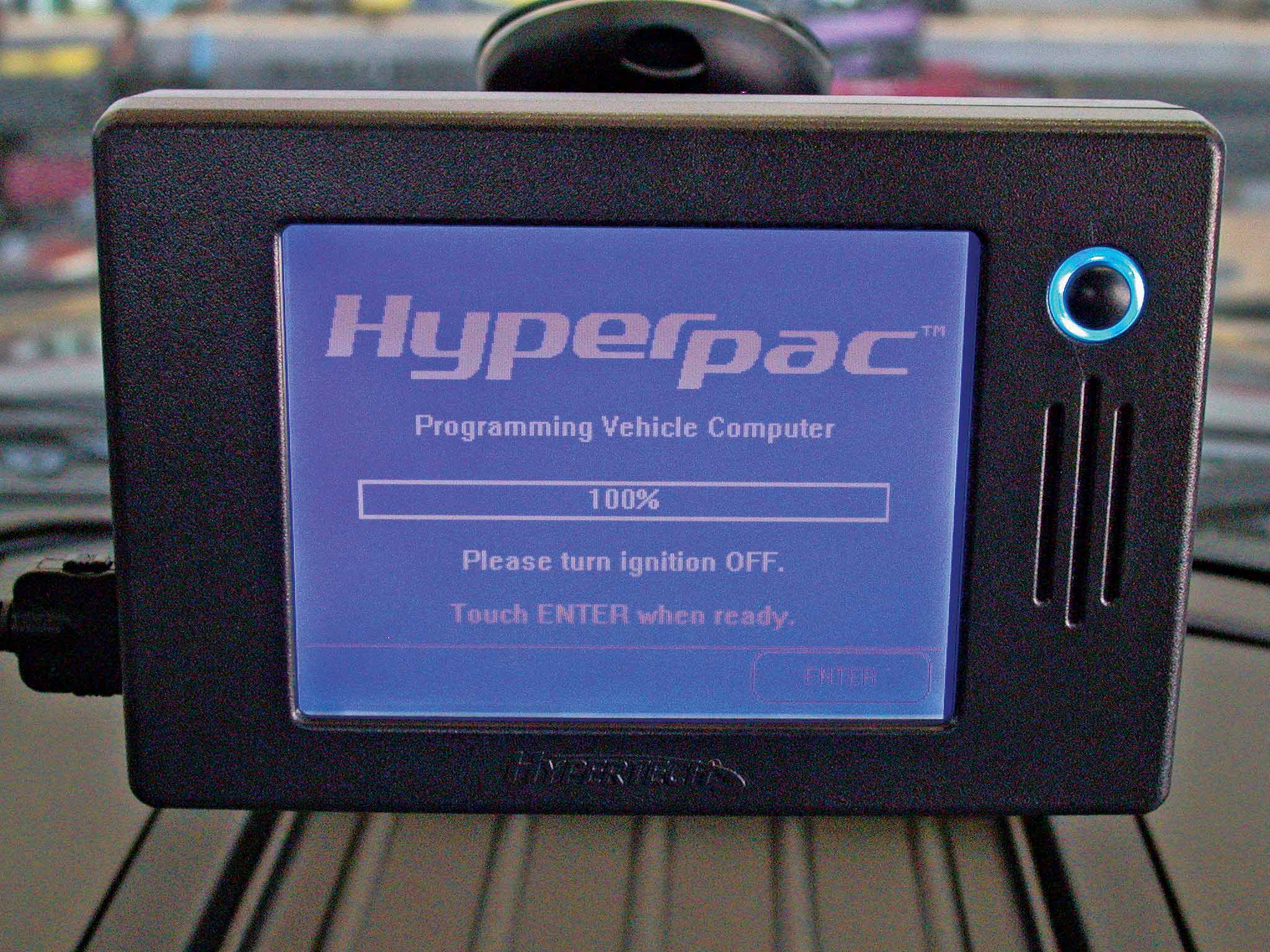
Again, the prompt says to turn the key “off” and to push the Enter button when ready. The install is really only this hard: push a few buttons and twist the key a couple of times.
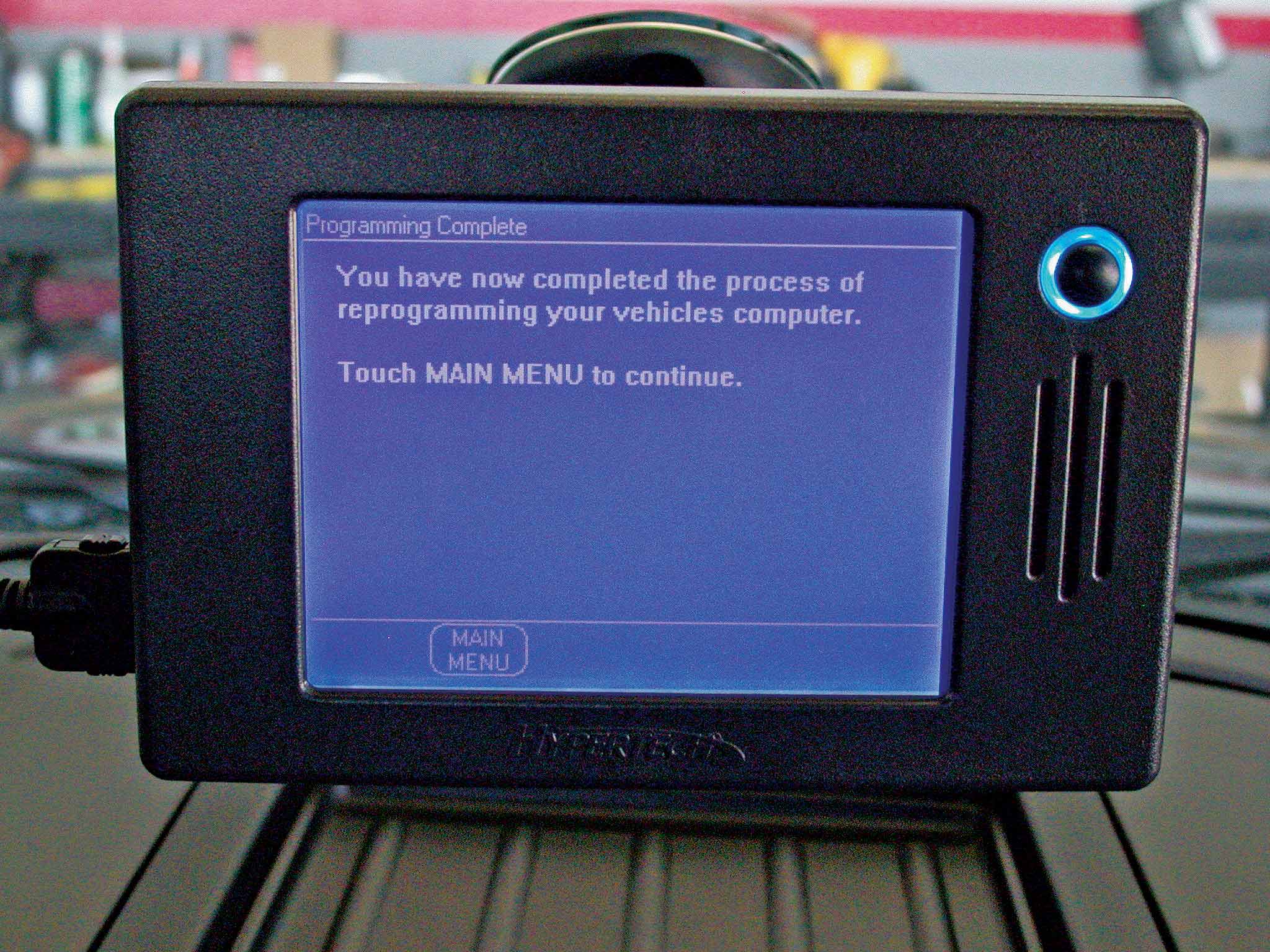
The HyperPAC unit has completed the programming of the truck’s computer, and the fun will begin.
In addition to the HyperPAC unit being able to reprogram the computer, there are a couple of really cool tools that the driver can use. The coolest has to be this dragstrip mode. The tree even counts down! There is also the ability for the unit to record the various parameters of the run.
Another useful item is this engine-monitoring program. It acts as a complete gauge package, so even if you bought the stripper version without all of the upgrades, you will have the ability to know what your truck is up to.
ARTICLE SOURCES
Hypertech
3215 Appling Rd.
Bartlett, TN 38133
901/382-8888
American Offroad
28093 Jefferson Ave.
Murrieta, CA
951/775-9802