TheAutoBuilder.com

BARRY BULL SESSION

Barry Lobeck Shares His Tips and Opinions on Deuces

Author

Picture of Gerry Burger

Gerry Burger

Photos by The Auto Builder Staff

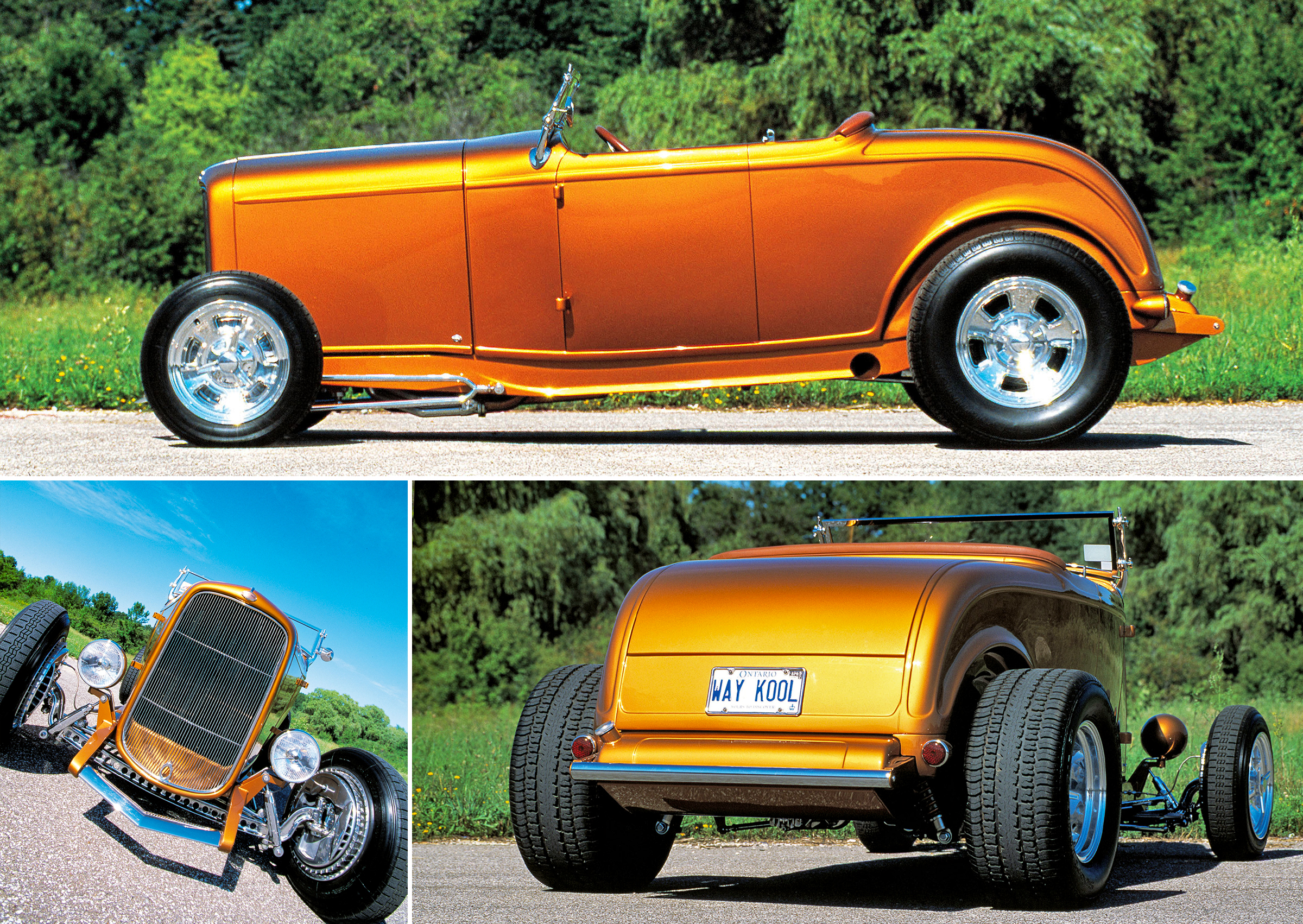
“I like the basic hot rod palette: black, red, yellow, orange and maroon. There aren’t too many Deuces that won’t look good in those colors for a long time…”

– Barry Lobeck


The Art of the ’32 Ford Street Rod

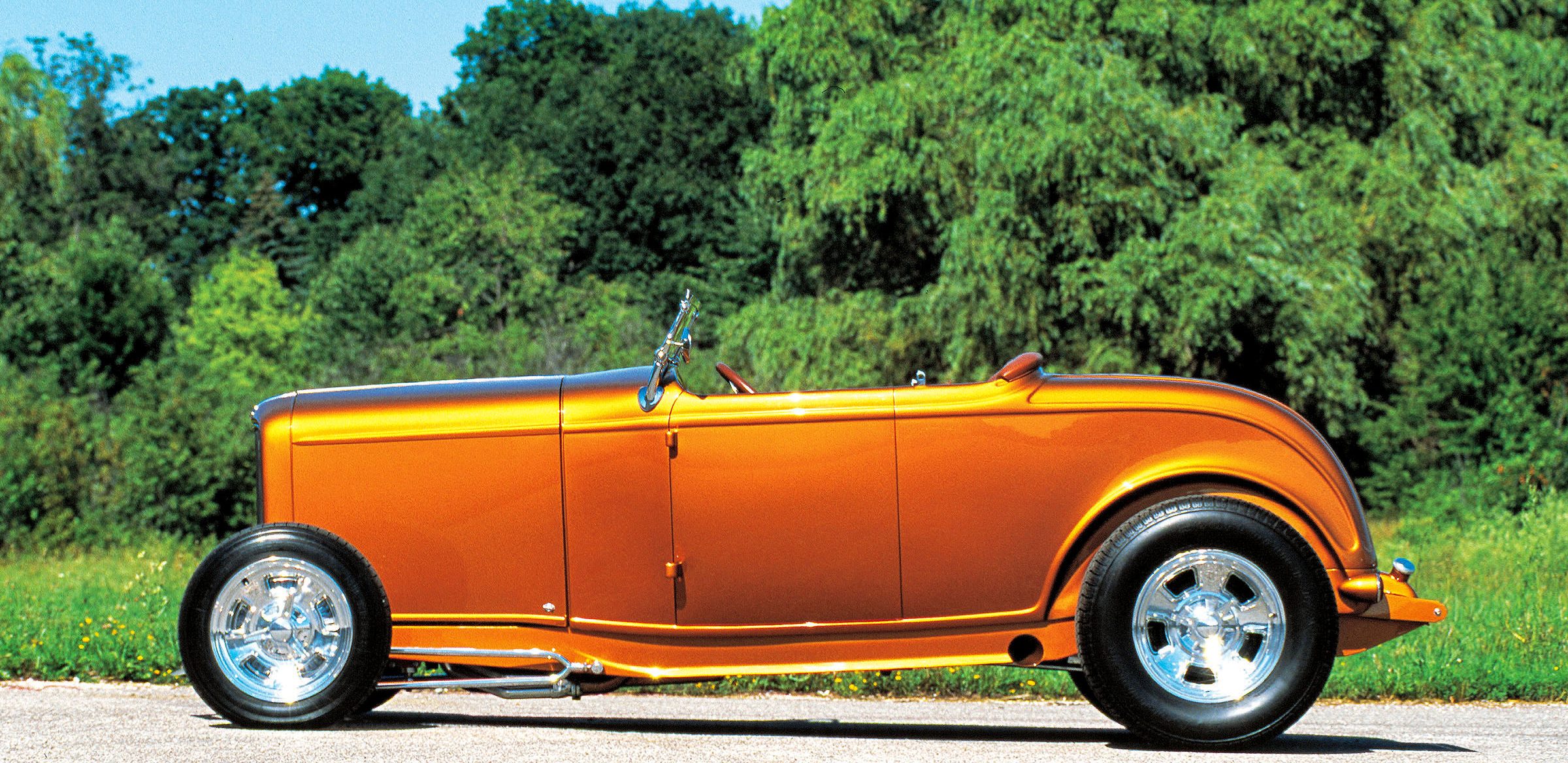
There are so many good-looking ’32 Ford street rods around, one might think that building a really nice one is easy, but it is not that simple. To begin with, the Deuce is an inherently good-looking car, which presents a two-edged sword. First, you have a great-looking piece to start with, and second, you must be extremely careful not to make it look worse.
Granted, with the advent of the reproduction chassis, fiberglass and steel repro bodies, plus all of the available accessories, you can “buy” a proven styling formula from your local rod shop or the national suppliers offering such component combinations. This could provide you with a good-looking Deuce, but there is something about certain cars that make them stand head and shoulders above the cookie-cutter ones. These are the great cars.

Learning From Barry Lobeck

In an effort to distinguish the great from the good, we thought we’d pry some building and parts-selection secrets out of one of the most respected Deuce builders in the business today. You might be able to incorporate these well-used concepts into your next Deuce build. You have to
understand that it’s all about the parts. Assembling them is one thing, but without the correct mix of parts, you can never seem to get it just “right.” Generally, the same parts are accessible to all of us, so with this thought in mind, we interviewed one of the best Deuce builders in the world, Barry Lobeck.
Now, Lobeck can put a great look on any hot rod (and Deuces in particular), and, for the most part, he does it using the same types of over-the-counter parts you and I can order directly from your favorite rod hardware supplier or from Lobeck’s
V-8 Shop. We chose Lobeck for the source of this information not only because he builds cars that look great, but also because the cars he builds are, for the most part, driven, and often driven a lot. Frankly, we think that’s important, and it also seems to be important to those who enjoy Deuces with the right look.

There Are No Absolute Rules

Bear in mind that these are not rules. There are no rules. These are but suggestions, mere starting points, and none of the ideas mentioned here works every time on every Deuce. It just seems that Lobeck produces cars that consistently draw a crowd, because they look good and they look “right.” If you disagree with anything presented here, or, for that matter, everything presented here, remember that these are opinions for a certain look, a certain perspective, a balance of parts and one man’s thoughts on how he builds Deuces.
So join us as we tally up the answers to some of the inquiries we posed to Lobeck about building great Deuces. There just might be a nugget or two in here applicable to your own rod, regardless of what you’re building, Deuce or not.

What Not To Do To a Deuce

TAB: “What are a few things that you would never do to a Deuce?” In his usual candid manner, Lobeck shared some of his opinions.
LOBECK: “Well, some of the common things are: I’ve never seen a roof cut off a coupe successfully to form a roadster, I don’t like square headlights on anything and I’m not real fond of channeling the body (even in the front only) on any Deuce with full fenders.”
He added, “I don’t like rear fenders on a highboy, and I really think that if fenderless cars are illegal in your state, you’re better off building a great-looking full-fendered Deuce rather than a ‘fendered, fenderless’ car.”
Once again, these are opinions, but he continued, “I have never painted the body reveal on a Deuce a different color. This is reserved for Model A resto-rods, and, oh yeah, no four-wheel-drive Deuces!”

Must-Have Deuce Components

We asked Lobeck to name some parts he just couldn’t build a Deuce without. Beyond the obvious, such as “Deuce body and chassis,” he came up with some of his favorite pieces. Here are his views on this subject:

  1. A Deuce gas tank. “I don’t know why, but I just like the way a tank and frame horns look in the back of a Deuce. I’ve built ’em both ways for customers (with and without the stock tank), but when building a Deuce for myself, it will have a stock-style gas tank.”

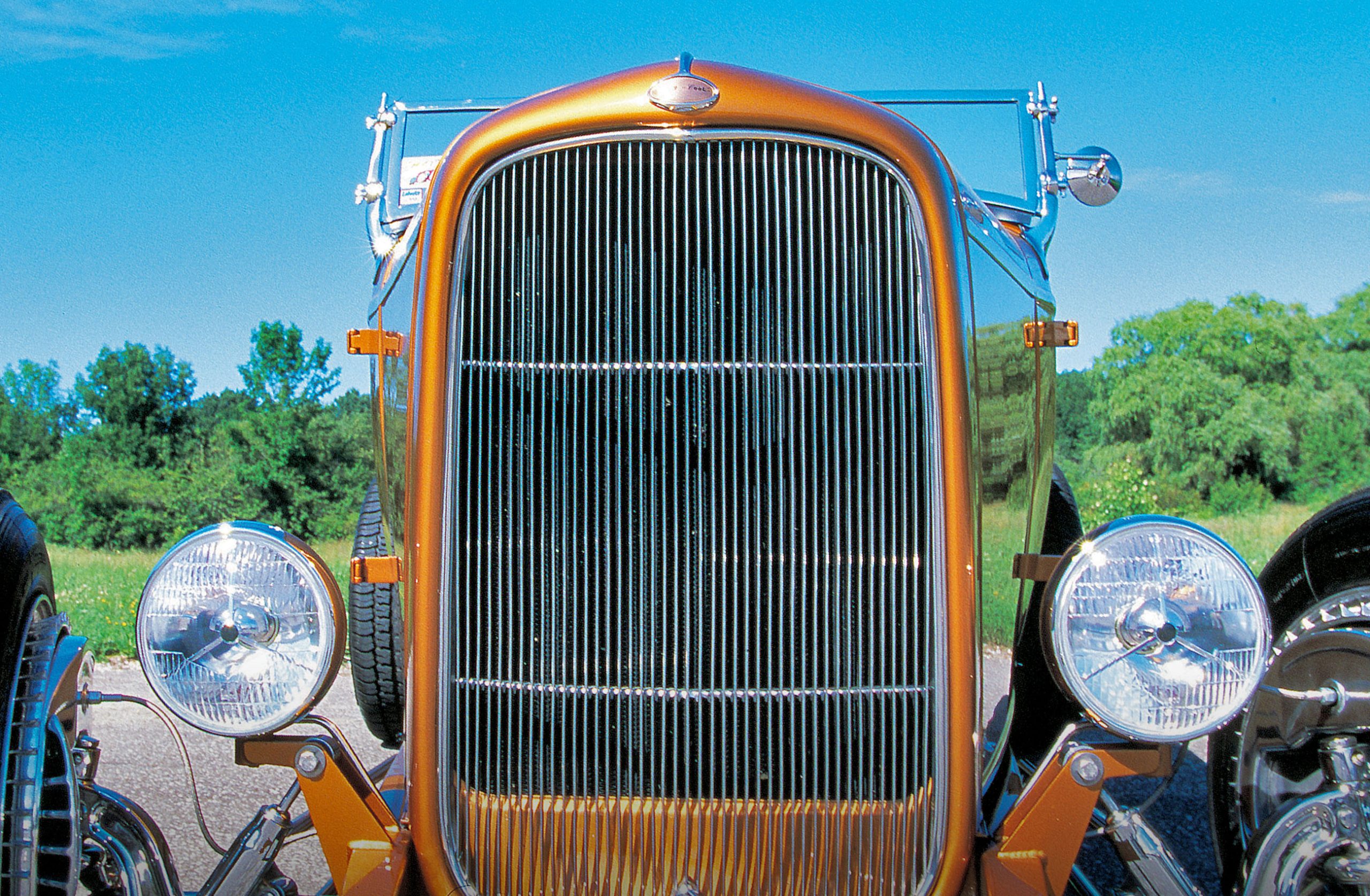
  2. A Deuce grille shell. “This is even more important than the gas tank. Definitely no commercial ’32 shells on anything, and not even the ’33-’34 grille looks as good as a stock Deuce unit.”

  3. A ’32 Ford windshield frame. “High-tech or traditional, I like to use a ’32 Ford windshield frame. I think it looks better than a flush-mount windshield. I prefer the frame chromeplated most of the time, although, on some high-tech cars, the painted version works better.”

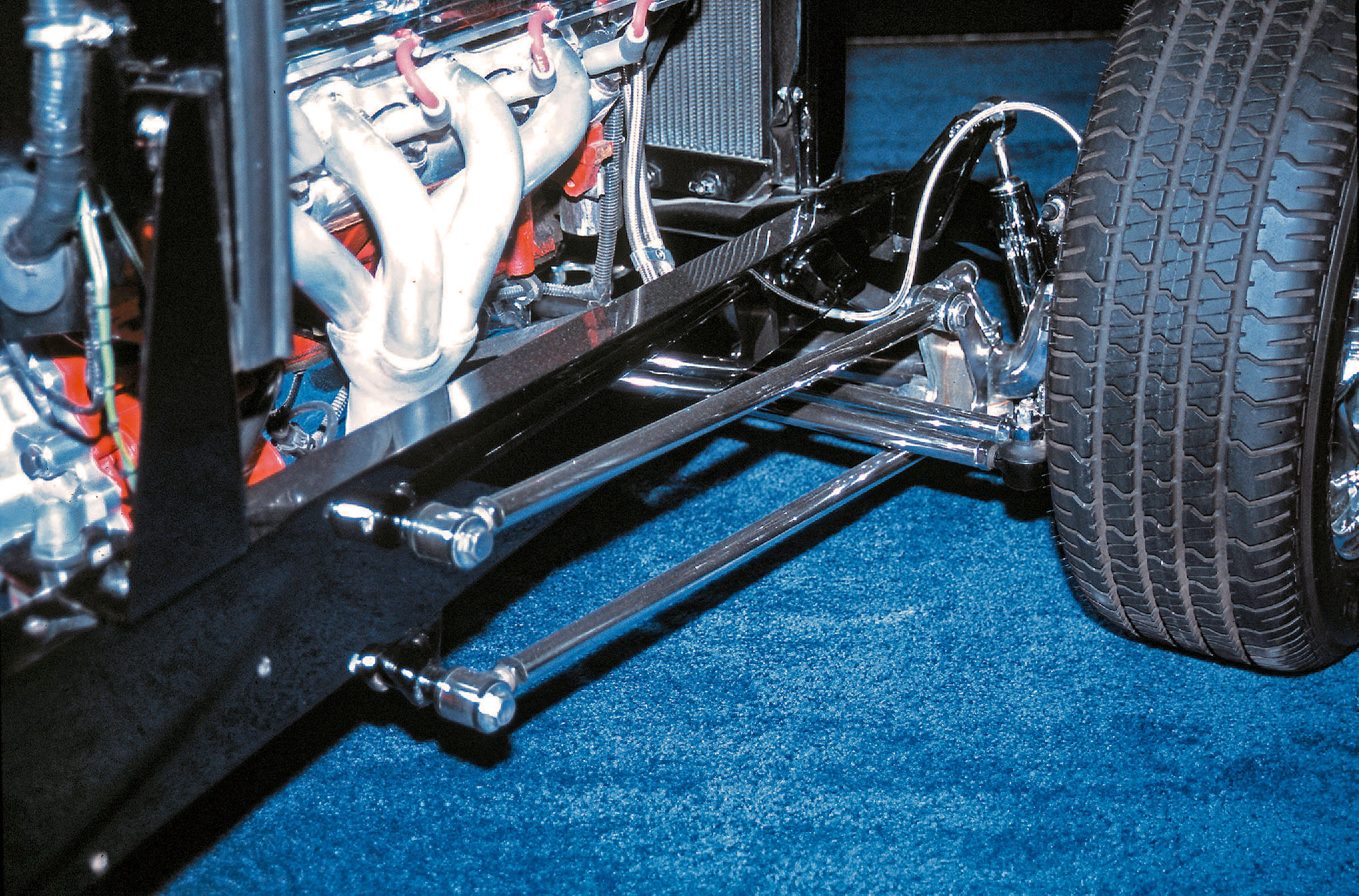
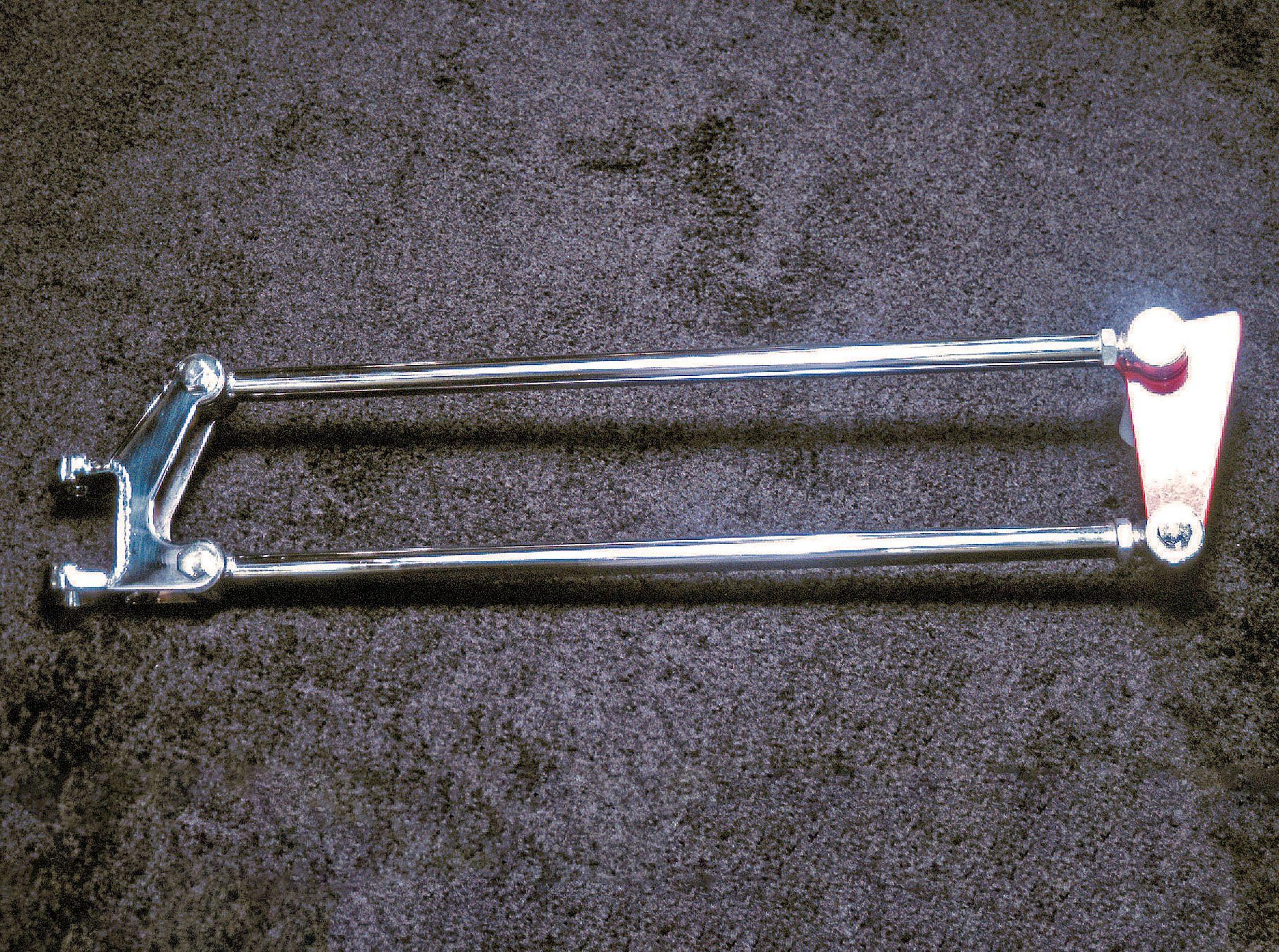
Four-bar setup on a Ford Motorsports chassis.
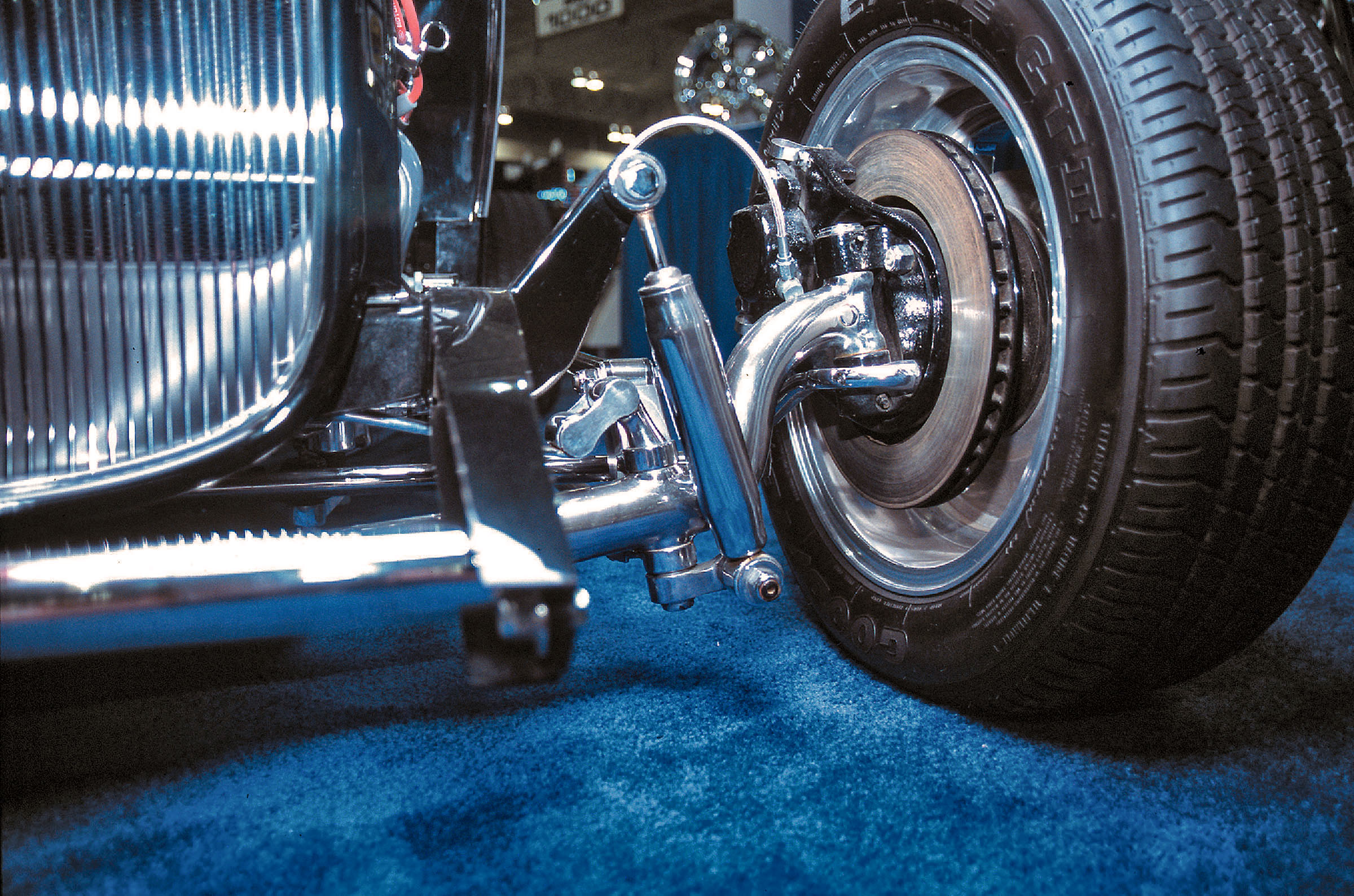
Front view of the same four-bar setup on a Ford Motorsports chassis.
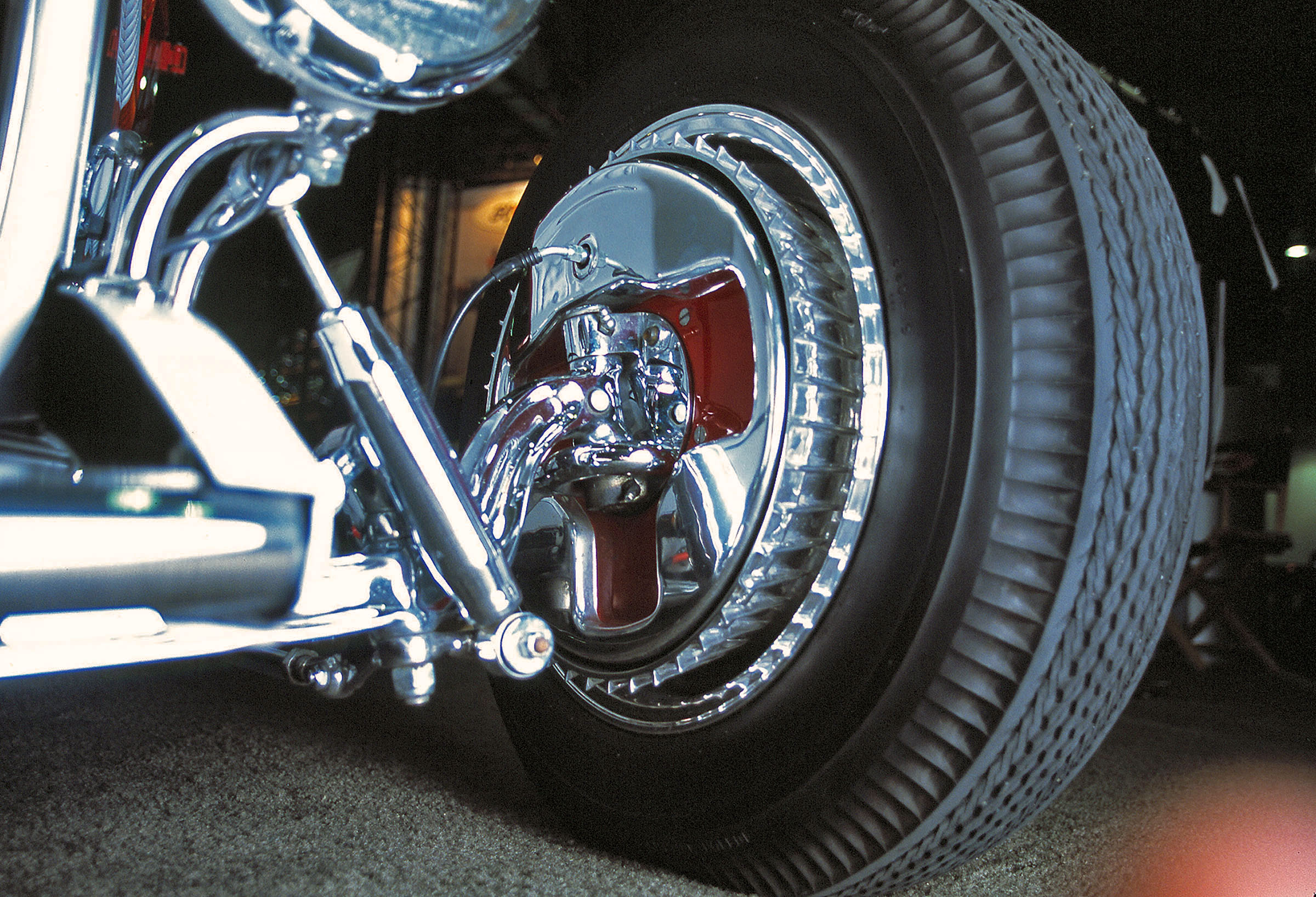
SoCal’s finned rotor cover.
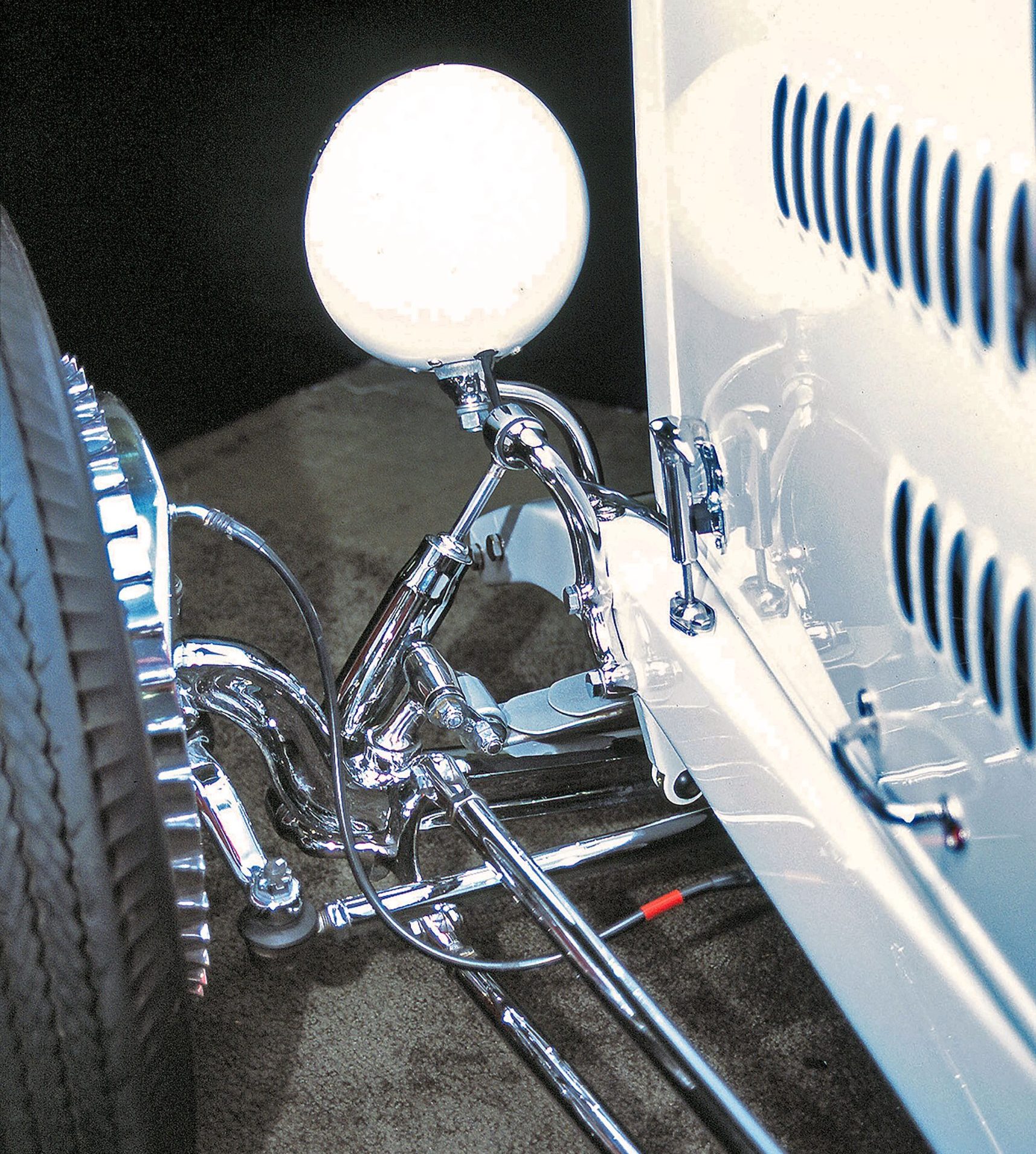
SoCal’s hairpin and batwing.
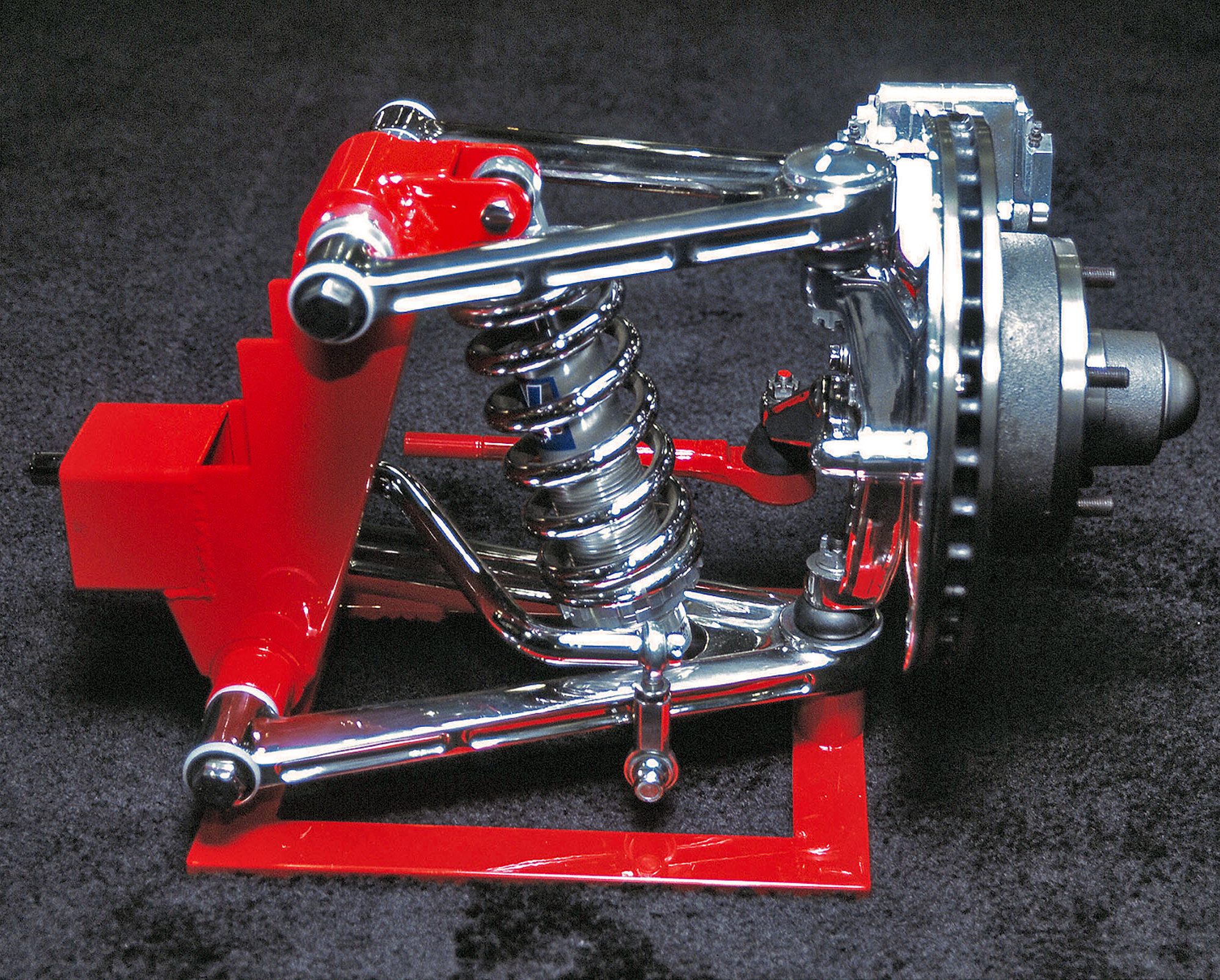
Kugel’s IFS front suspension.
Pete & Jakes four-bars and batwings.

Chassis Setup Secrets

We then asked Lobeck for a few tips on building a great Deuce chassis. It took a while, but we finally pried some good ideas out of him. Here are his thoughts on the Deuce frame:

  1. Pinch almost an inch. “I like to pinch the frame 3/4 inch at the front crossmember on a highboy. This helps to make the grille shell cover the front crossmember better, so you can’t see the radiator mounting holes and stuff like that.”

  2. Move the wheels if you want. “On some highboy cars, we move the wheels forward 1 inch. It just gives the car a cool look. We move the front crossmember forward 1 inch and then slot the radiator mounting holes 1 inch to the rear. That way, a stock hood still works, but we have visually stretched the car. It’s amazing what 1 inch will do.” He added that on some high-tech, fenderless cars, he’ll run the wheelbase out 2 inches, bringing the wheelbase to 108 inches. This seems to work only with high-tech cars and custom-built hoods. Remember, this wheel-forward thing is for fenderless cars only!

  3. Use a Model A front crossmember. “I know this is pretty standard practice now, but some guys still don’t realize you can gain an inch of lowering with this crossmember.”

  4. C the frame front and rear. “You might not think you’ll need the travel now, but I guarantee you’ll be glad you have it later, especially if you drive on eastern roads.”

  5. Pull in those horns. “When running a V’d front spreader bar, we always shorten and taper the frame horns to the spreader bar. If you don’t shorten the frame horn, the V’d bar tends to extend the front of the chassis too much. Likewise, by slightly tapering the front frame horns, we provide a smooth, aerodynamic look to the whole front of the frame.”

  6. Lower the crossmember. “Remember, if you’re welding in a Model A front crossmember, it does not mount flush with the top of the Deuce frame. If you do this, the grille shell will be up too high, effectively ruining the hood-to-grille-shell angle. Lower the front crossmember in the frame a little to achieve the proper hood angle. Remember, you can always shim the radiator mount up, but to date there is no known way to shim a grille shell down!”

  7. Trim the crossmember. “For some reason, we’ve seen chassis where the Model A front crossmember is hanging below the bottom of the Deuce frame. Remember to trim this crossmember flush with the bottom of the Deuce frame for a clean look.”

Suspension and Stance Strategy

So there are a few things Lobeck looks for when putting one of his Just-A-Hobby framerails together. Next, we asked him for some hints on righteous hot rod suspension, and he gave us answers for both the traditional and high-tech approaches.

  1. “For a traditional highboy, I like to run a 4-inch dropped axle; tube or I-beam is the builder’s choice. You can run a 5-inch dropped axle for a super-low ride, but bear in mind that you are awfully close to having a scrub-line problem (suspension components hitting the ground in the event of a deflated tire.) Also, a 5-inch axle makes it more difficult to drive, as you really have to be careful with driveways and such. One last thing on the 5-inch: Never use the bottom-style shock mount. Rather, have the shock bung mounted through the web of the axle. That lower mount is just too close to the ground; you will hook it on something. All the way around, the 4-inch axle makes the most sense.”

  2. Four-bar attachments. “On a highboy, we like to have the rear attachment points for the four-bars lined up with the hood line of the car. This is cosmetically pleasing and ensures that you have nice, long bars for a smooth-working, smooth-looking front suspension. The same goes for hairpin radius rods: mount them at the rear hood line, too (where the hood meets the cowl), and remember that hairpins are for I-beams only; no tube axles.”

  3. “On high-tech highboy cars, I like to use an independent front suspension, but I use the ones designed for open-wheel cars. I think they look best in polished stainless steel or chrome, and I don’t think stamped-steel A-arms have a place on open-wheel cars. When I build a high-tech, open-wheel car, I think polished tubing, polished everything, for kind of an Indy-race-car-looking suspension.”

  4. Rear Suspension. “You know, independent or solid axle, the most important thing is how the rear wheels are tucked close to the body on a highboy, or fill the fenders on a full-fendered car. Since most modern wheels are available with virtually any offset, we use a rear-axle measurement for all our Deuces that is 56 inches from flange to flange. We then adjust the fit of the tires with wheel offset.”

  5. Actual Suspension. “You know, it’s still hard to beat the overall simplicity of a buggy spring up front and coilovers out back. I can make a car ride good and sit perfectly with this combination.”

Favorite Colors for a Deuce

On a simpler note, asked Lobeck what his favorite Deuce colors were. Here are his thoughts on the subject:

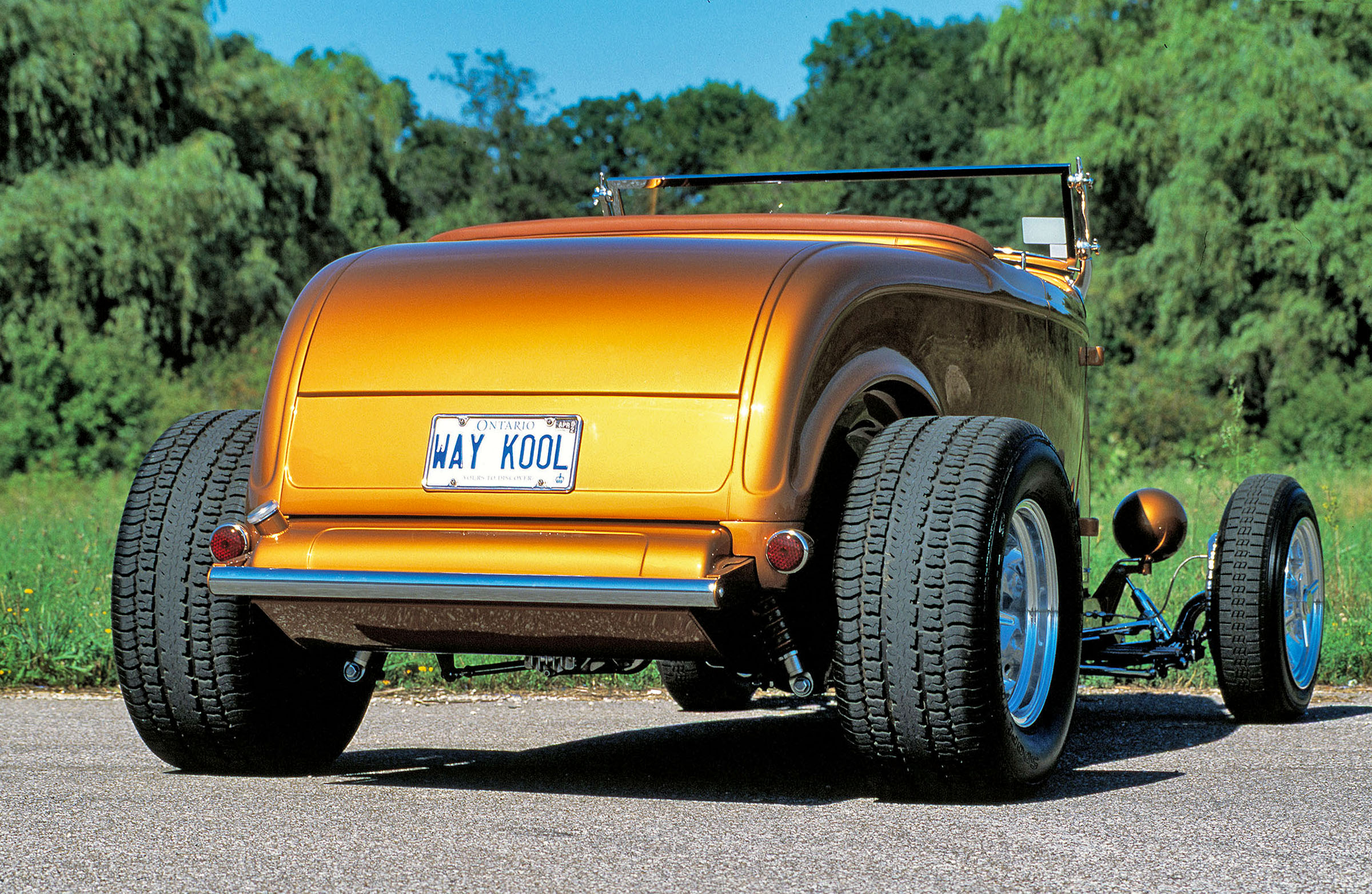
  1. Primary colors. “I like the basic hot rod color palette: black, red, yellow, orange and maroon. There aren’t too many Deuces that won’t look good in those colors for a long time. Of course, right now, the coppers, golds and some deep greens are very popular and look great on a hot rod. Also look for fleet colors. They are often built from primary colors, non-metallic, and you don’t see them all the time.”

  2. Specific Favorites. Orange: hugger orange. Red: Viper Red. Green: Bavarian Green. Maroon: 1979 Ford truck dark red. Yellow: Freuhauf truck Chrome Yellow.

Grille Insert Strategy

As long as we’re on colors, we wondered what Lobeck’s thoughts were on the all-important Deuce grille insert. Here are some tips on this important cosmetic feature:

  1. Make a match. “First, I always try to match the grille insert to another element on the car, either the steel wheels, the interior or the engine color. This carries the color from the front of the car (grille insert) throughout the rest of the car. You might even consider using some of this color in small amounts on the chassis and suspension parts. I would never paint steelies one color and the insert another color. No, not even then.”

  2. Ordering the combo. “I also like contrast, and I never paint a black Deuce with a black grille insert. Actually, I think you lose a lot of the beauty of the insert if it is black on any car. Some of the combinations I like and use often are: orange insert with a burgundy or maroon body, unpolished stainless steel or machine-gray paint with any dark color, red insert with either a white, black or lighter purple car. I know some early cars run white grille inserts, but, personally, that is my least favorite. The good news is that if the insert color isn’t working for you, it’s very easy to change, but take the time to find the right contrast, even if it means repainting the insert.”

Body Mods and Top Chop Advice

We then asked Lobeck about body mods, and his response surprised us a little when he generally recommended leaving the cars pretty much alone. Of course, a top chop is in order, so we took some measurements on effective top chops for Deuces. Here’s Lobeck’s take:
“First, the Deuce is pretty good-looking stock, so be careful not to change things for the sake of changing things. I believe that suicide doors are for three-window coupes only and that external door hinges are fine on traditional cars, but should be hidden on a high-tech car. I guess the main thing is to keep the theme on the car.”

Top-chop suggestions:

  1. The three-window coupe: “Never chop this coupe straight! Always cut 1/2 inch less out of the rear of the car, or the roof will have a strange angle to it. I like to cut a three-window 2 inches for a nice look, and 3 inches only if the customer wants a wild, cartoon-like look to the car.”

  2. The Tudor sedan. “Once again, I like moderate chops. The Deuce Tudor looks great with a 1-1/2-inch top chop. This brings the windows down to approximately the size of a stock Victoria window. By keeping the chop under 2 inches, you don’t have to cut the driprail, an added bonus.”

  3. The five-window coupe. “Once again, 1-1/2 inches is my favorite, unless we’re talking the Bonneville look, then a healthy 4-inch whack is in order, but I insist that anyone who is going to chop a car more than 2 inches should sit in a car with that small of a windshield; it makes vision and seat installation interesting.”

  4. The Victoria. “I prefer to leave these cars alone. After all, they were chopped at the factory.”

  5. The cabriolet and roadster. “A 2-inch chop seems to work fine here. Also, bear in mind this is not a T-bucket, so when designing the top, be certain the most rearward top bow is lower than the one in front of it. The second top bow from the rear should be the same height as the top of the windshield.”

  6. Lift-off tops. “There is nothing wrong with a good lift-off top, but think weight when building the top. I’ve helped to lift off some tops that weigh more than the average engine!”

Hood Selection Tips

Of course, most Deuces run a hood, or at least part of one, so Lobeck shared some insights on picking a hood.

  1. “For a traditional car, I prefer the four-piece hood with almost any mix of louvers, hot rod louvers or stock side louvers. I use only a 25-louver side panel on full-fendered cars. You can also run a three-piece hood, and I have done some using ’37 Ford side trim cut down to look like a center hood strip with the new SoCal bull-nose piece. It works pretty trick, and the ’37 side trim is the same width as the bull-nose piece.”

  2. “For high-tech cars, I always use a smooth three-piece hood. If I want to exit hot air, some sort of a grille (something like ’38 Ford side panels welded in) seems to work better than louvers for me. After all, this is supposed to be an exercise in smooth.”

  3. “If you remove the cowl reveal line where it meets the hood, remember to remove it from the grille shell, too, and vice versa.”

  4. Keep it closed. “On traditional cars, either the stock hardware or Dzus fasteners are my choice of keeping the hood closed. On high-tech cars, the interior pull-style latch is the way to go.”

  5. “Okay, now all of this is my personal opinion, but I just say no to hood scoops.” In Lobeck’s world, scoops are for Raisin Bran—then you can have two!

Interior Philosophy

Next, we turned to the interior. Lobeck was one of the first to drop the seats in a roadster for a cool profile when cruising. More important, it keeps you out of the wind. Here’s what Lobeck likes inside a Deuce interior:

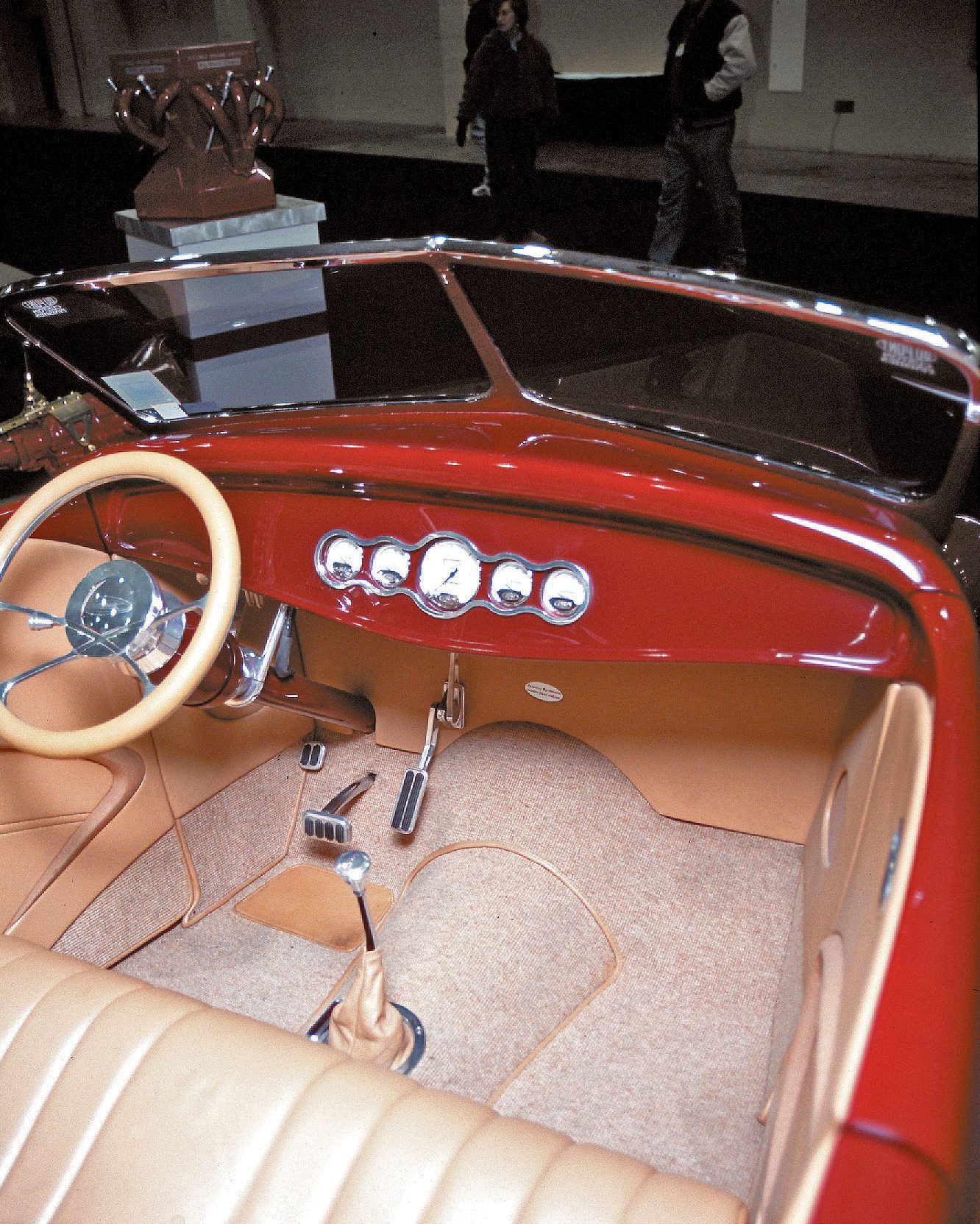
  1. Buckets are for washing cars. “I’m not in love with bucket seats and prefer stock-appearing seating in Deuces. I have on occasion seen small buckets work in a Tudor or a Victoria, but, in a roadster, a bench seat is a must.”

  2. Save the billet inserts and digital gauges for high-tech applications.

  3. “I like carpet on the floor and leather on the seats. The idea of putting leather on the floor makes no sense to me. I learned this in my den, when Ginny put carpet on the floor and leather on the couch. I thought, ‘This works.’”

  4. A place for tweed. “I really like tweed, if it’s on a coat.”

  5. A work of art. “Sculptured leather interiors look great in the right car, but remember, it’s a high-tech thing.”


Lokar’s roadster interior with Duvall windshield

Dash and Gauge Choices

Now, you can’t have an interior without a dashboard and gauges, so we have some helpful tips for you in that area, too.

  1. Suitable substitutions. “I think the ’40 Ford dash works great in a Deuce, as does the ’33-’34 dash. I stay away from wood most of the time.”

  2. “I like the old-style Stewart-Warner five-gauge panel a lot, and, of course, we sell them at the shop.”

  3. “The ’32 Lincoln dash is very cool. SoCal has a reproduction that works great.”

  4. No insert works. “You know, the important thing is to mount ’em where you can see ’em. Even in a smoothie dash, a good set of quality gauges is all you need.”

  5. Gimme four. “I really like the new quad gauges from Classic Instruments and other manufacturers. The gauges combine two functions in one gauge. It kind of reminds me of a modern rendition of the old duo-gauge.”

Wheel and Tire Selection

We all know that few things are as important to the overall look of a hot rod as the wheels and tires. We asked Lobeck what his favorite wheels were, and here’s what he came up with, in no particular order:

  1. Steelies. “I love painted wheels, and now Vintique is making the wheels in 14-, 15-, 16-, 17-, 18- and 20-inch diameters. It kind of redefines the term ‘big ’n’ littles.’ I like running 17 fronts and 18 rears.”

  2. Five-spokes. “Come on, you know the ones, but there are others. As a matter of fact, any attractive five-spoke wheel works for me. I like the billet five-spokers on high-tech cars.”

  3. Gimme windows. No, we’re not talking Microsoft here, we’re talking Halibrand, Billet Legacy, ET-III. Wheels with windows rock.

Wheels are useless without tires, so we asked Lobeck to lay some hot rod tire sizes on us, and here’s what he came up with:

  1. It’s all about diameter. “I like a 30-inch-tall tire in the rear of a highboy and a 24- to 25-inch-tall tire in the front. You can do this with any size rim. Just make the final diameter around there and it will look cool.”

  2. “On the back of a highboy, I like 315/55-16 for a tire size; you can pick the brand. Up front on a 15×6 rim, I run 165/75-15, and on a 15×5 rim, I drop it down to a 155 or even a 145 tire. I don’t go under a 145 on the front, as it could hurt the braking and handling of the car.”

Final Thoughts From Barry Lobeck

And so there you have it, Deuce fans, sage information from the fertile mind of Barry Lobeck. We continued bench-racing Deuces for a while and discussed Deuces we wouldn’t have missed if Henry had never built them. The list was short. It included the sport coupe, which we would love more if the door tops didn’t exist, and even the B-400 seems weird, although Lobeck built a really nice one several years ago. If Lobeck had been designing Deuces in 1932, he also would have put shorter doors and longer side panels on the sedan delivery.
Conversely, Lobeck lamented that Henry never built a Tudor touring car or a better-looking roadster pickup. It seems Lobeck’s personal favorite remains the cheapest Ford built in 1932—the roadster, and who could blame him?
And that brings our Barry Bull Session to a close. We hope you will find in these ramblings just the tidbit of information you need to help make your project a little more pleasing to the eye.

Scroll to Top