
THE AUTO BUILDER
Featured

PRODUCT SPOTLIGHT: Delphi 600 Series Power Steering Upgrade by Borgeson
This upgrade is a perfect match for a range of Ford, Lincoln, and Mercury vehicles, including the 1971-1973 Mustangs and other full-size models from 1965 to 1977. To accommodate the new steering box input shaft, the factory steering coupler must be replaced. This ensures a perfect fit and optimal performance. Borgeson offers hose kits designed for both stock Ford pumps and their Saginaw P/S pump upgrade kits, guaranteeing seamless integration with existing power steering components.

THE ENGINE ROOM
Whether you’re in the driver’s seat or looking underneath the hood, it’s the first place enthusiasts come to find out what a car is all about. After all, without the right engine package, everything we long for in our cars would be nothing more than static displays of creative artistry.

Engineering Meets Art
If you’re into the kind of machinery that makes your heart beat faster and your palms sweat, then Dan Webb’s reimagining of the 1926 Panhard Razor is something you need to see. The original was a marvel of interwar-era aerodynamics—a sleek, teardrop-shaped racing car designed for top-speed competition by Panhard et Levassor. Now, Webb, the man who blends old-school craftsmanship with modern engineering, is breathing new life into this legendary machine with a chassis that’s as much a work of art as it is a feat of engineering.
Spotlighter
POPULAR READS
-
Product Spotlight: Bill Mitchell Products Aluminum LS Engine Block
-
PRODUCT SPOTLIGHT: 60-66 Chevy C10 Fresh Air Vent Block Off Plate
-
Product Spotlight: Pyramid Optimized Design Sequential Aurora Taillight for 1964½–1966 Mustang
-
PRODUCT SPOTLIGHT: Cam Covers for GEN/3 Coyote from Pyramid Optimized Design
PRODUCT SPOTLIGHT: ARP’s Head Stud Kit for 1927–31 Ford Model A 4-Cylinder Engines
ARP Brings Modern Engineering to Vintage Ford Engines
Author
The Auto Builder Staff
Photos Courtesy of ARP
In a world obsessed with the latest engines and newest technology, ARP (Automotive Racing Products) just proved something important—progress doesn’t only move forward. It also means going back and applying everything we’ve learned since.
This time, that focus lands on one of the most iconic engines ever built: the 1927–31 Ford Model A four-cylinder.
100 Years of Progress Later
The Ford Model A engine was engineered in a time when simplicity and durability mattered above all else. It wasn’t overbuilt, and it didn’t need to be. It was designed to work—and nearly a century later, the fact that these engines are still running says everything about how right Ford got it.
What’s changed isn’t the engine—it’s everything around it.
A hundred years of advancements in metallurgy, machining, and engine engineering have redefined what’s possible in strength, consistency, and long-term durability. Today, we understand how materials behave under heat, load, and time in ways that simply didn’t exist when the Model A engine first rolled off the line.
That doesn’t change what made the design great—it just means we can now back it up with better materials and smarter engineering.
Modern Engineering Steps In
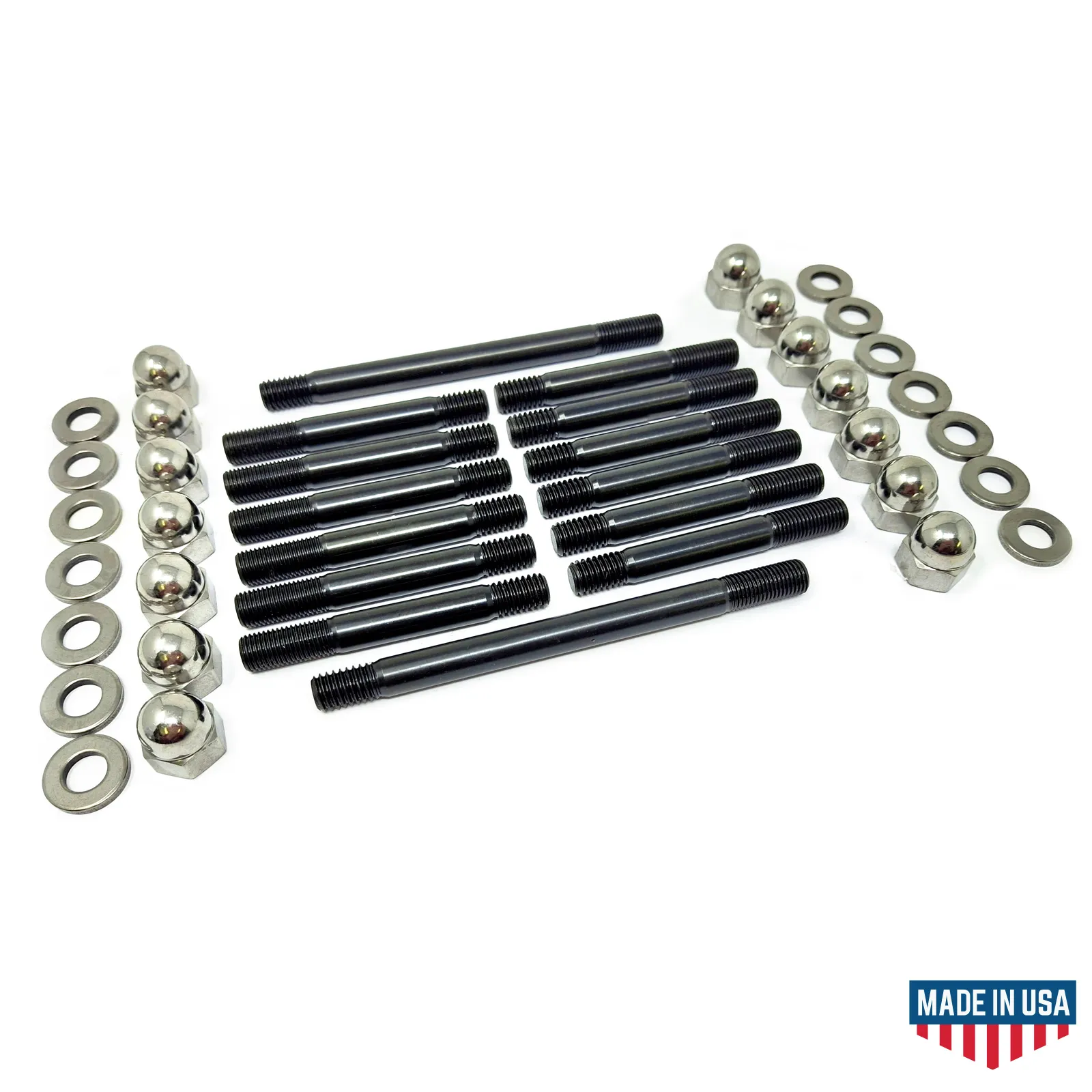
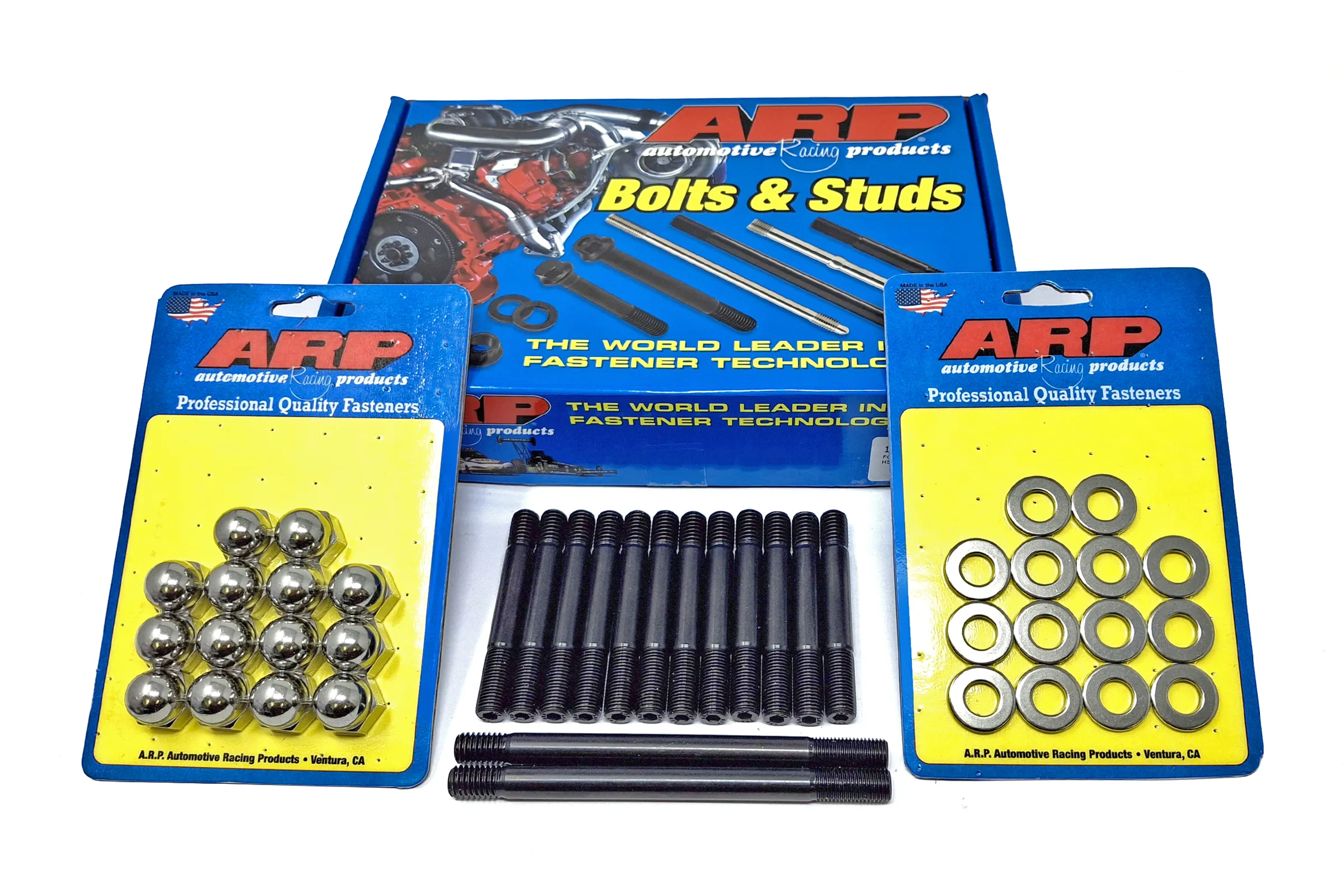
The ARP head stud kit for the Model A is a direct reflection of that progress. Manufactured entirely in-house at ARP’s California facilities, each stud is produced from premium-grade 8740 chrome moly steel with a nominal tensile strength around 190,000 psi—making it significantly stronger than the original Model A hardware these engines relied on.
These aren’t just material upgrades—they’re process-driven improvements. Threads are rolled after heat treatment, a critical step that increases fatigue strength up to 20 times compared to conventional methods. It’s the same level of engineering ARP applies in professional motorsports and high-performance engine builds, now brought back to a vintage Ford platform.
Every component—from the studs themselves to the hardened washers and polished stainless acorn nuts—is designed to deliver consistent clamping force and repeatable installation. It’s not about changing what makes the Model A great—it’s about making proven, reliable technology even better with everything we’ve learned since.
ARP’s Model A Head Stud Kit
For 1927–31 Ford Model A 4-cylinder
Part Number: #151-4002
MATERIAL & CONSTRUCTION
• 8740 chrome moly steel
• Manufactured in-house
• Threads rolled after heat treatment
KIT INCLUDES
• Complete stud set
• Hardened washers
• Polished Stainless steel acorn nuts
KEY BENEFITS
• Increased strength over OEM hardware
• Improved head gasket sealing
• Maintains torque through heat cycles
• Enhanced long-term durability
ADDITIONAL APPLICATIONS AVAILABLE
• Ford flathead V-8 (1936–53)
• Ford inline 6-cylinder (1965–96), 240 & 300 c.i.d.
Why Builders Will Notice the Difference
Anyone who has worked on a Model A engine knows the value of doing things right the first time. Clean surfaces, proper torque, and careful assembly all matter—but the consistency of the hardware plays a bigger role than most realize.
What ARP fasteners bring to the table is control.
More consistent torque retention. Improved head gasket sealing. Hardware that holds through heat cycles instead of slowly relaxing over time. It’s the kind of upgrade that doesn’t change how the engine looks—but absolutely changes how it performs and survives.
Built for the Way Cars Are Driven Today
Model A engines aren’t just sitting in collections—they’re being driven, modified, and pushed in ways their original engineers never had to consider. Longer trips, higher sustained speeds, and modern traffic all demand more from the platform.
Upgrading to ARP head studs isn’t about chasing performance numbers—it’s about ensuring the engine stays together and performs consistently, mile after mile, without compromise.
The Bottom Line
The Ford Model A helped lay the foundation for everything hot rodding would become. That hasn’t changed.
What has changed is what we’re capable of doing with it.
The ARP Model A head stud kit doesn’t rewrite history—it builds on it—using a century of progress to make a great engine even better.
Ready To Upgrade?
Don’t settle for stock hardware. Give your Model A the ARP advantage—stronger, tighter, built to last.