It seems as if only yesterday that the 2003 Ridler award was presented at the Detroit Autorama. Each year’s event is progressively a tougher call to make, because the cars continue to get better and better, and more expensive in their construction and detail. Some of the most beautiful vehicles you can imagine were on hand, and we will be bringing you more of those cars in the year to come. Meanwhile, we are still entranced with some of the cars that make the Great Eight grouping.
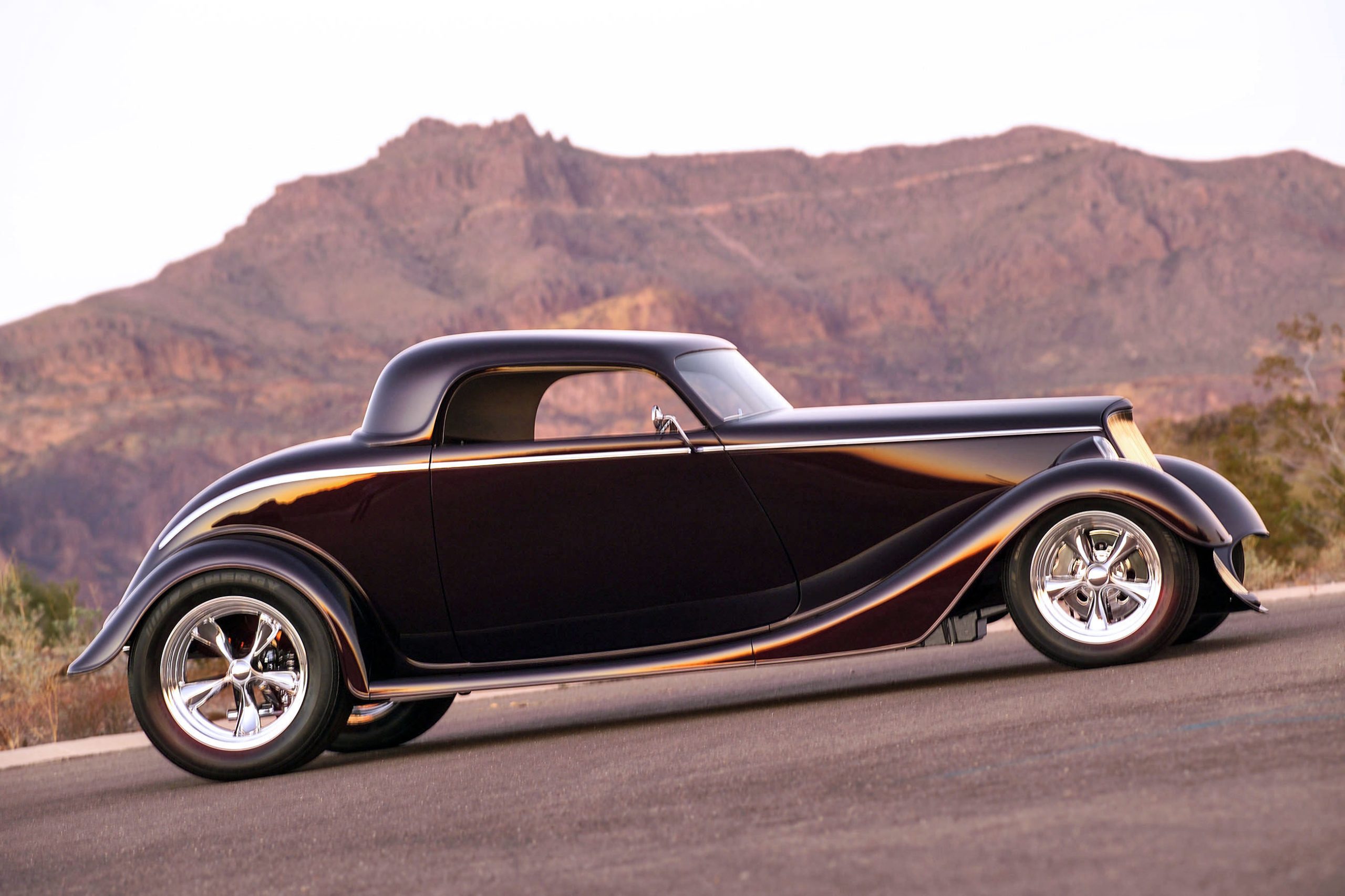
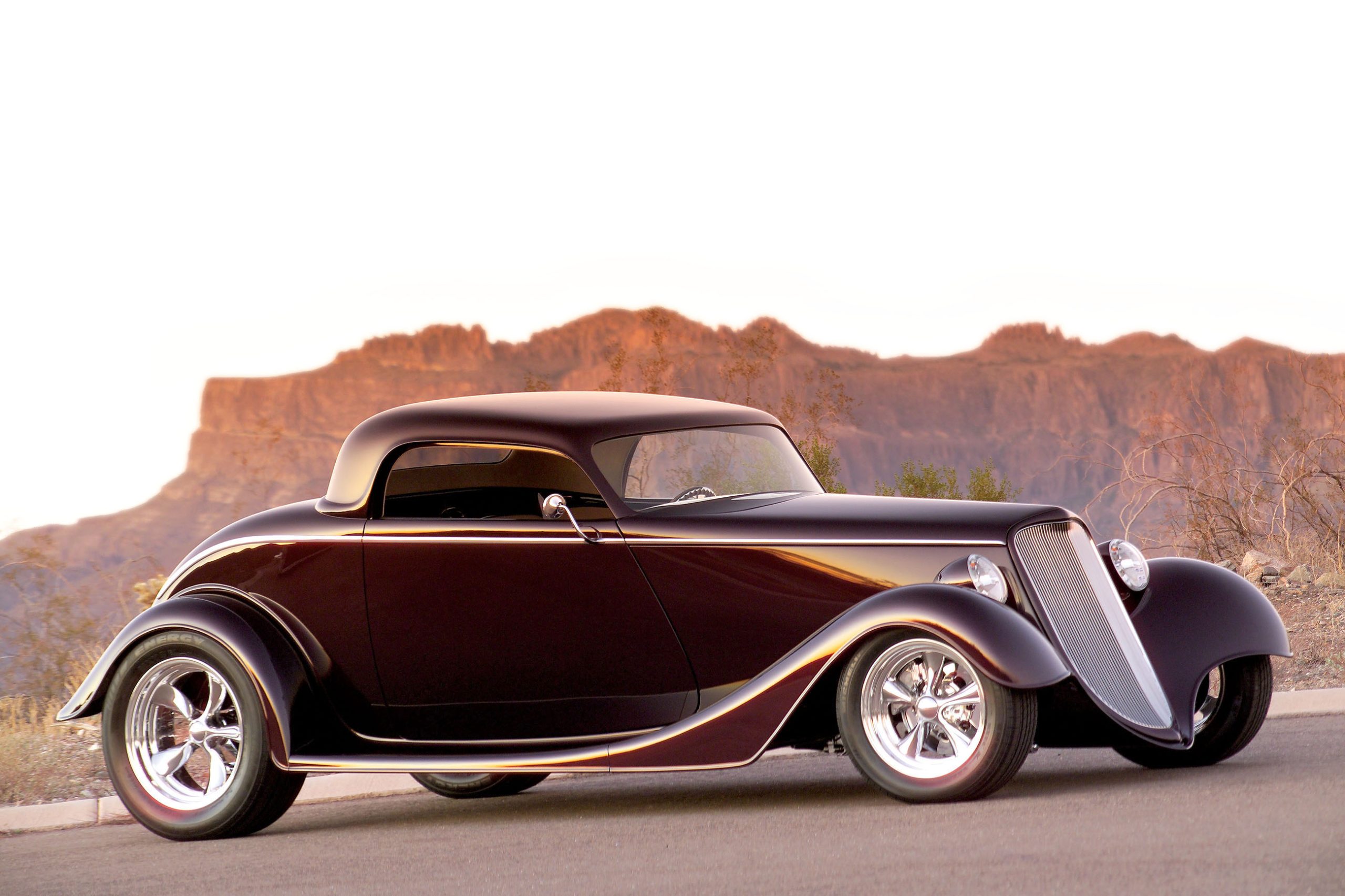
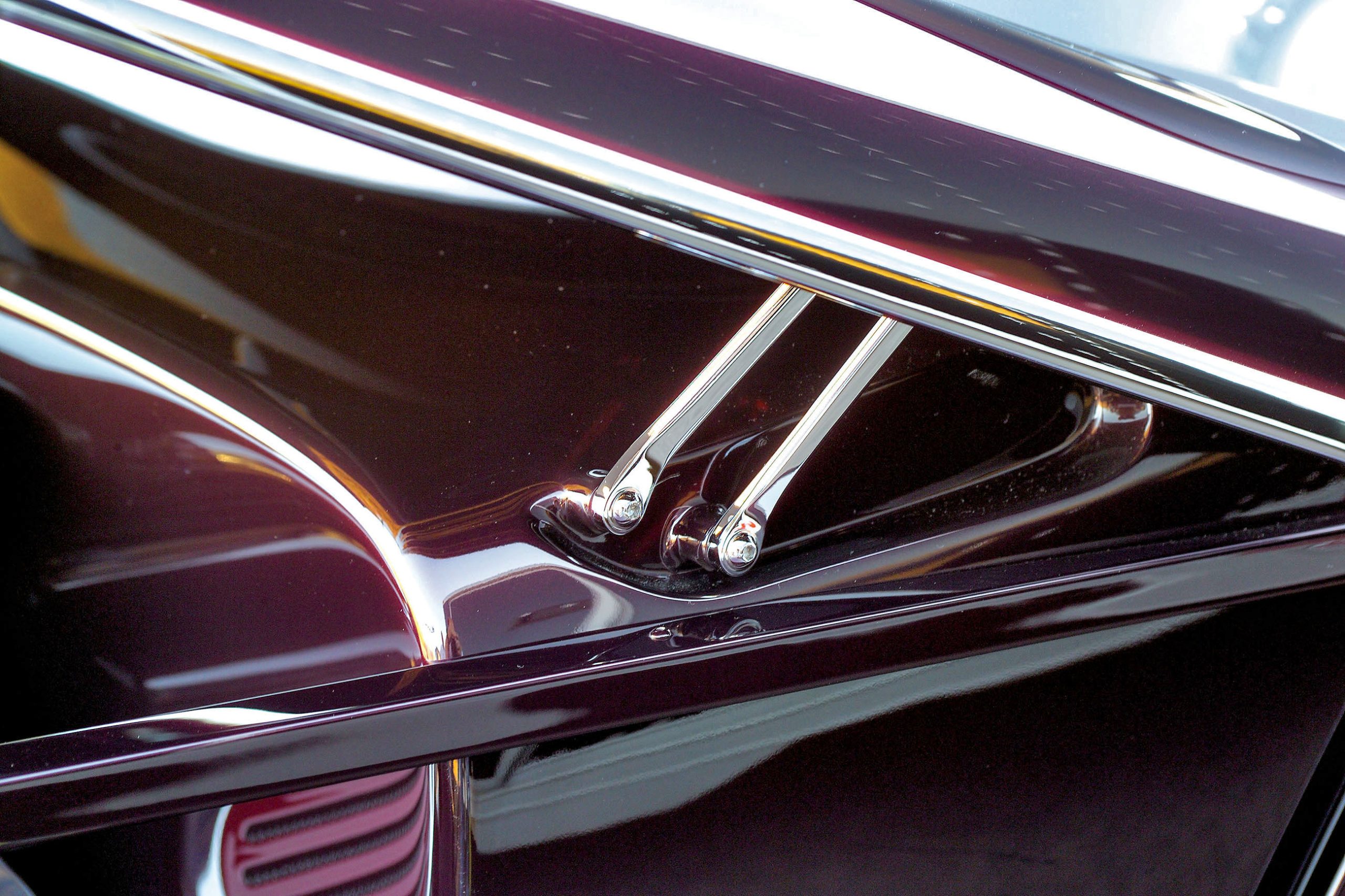
One in particular is Fran Speer’s ’33 Ford coupe Storm, a car aptly named “Storm.” The car hails from Thunder Bay, Ontario, Canada, and was built by the skillful team consisting of Billy’s Rod Shop in Oak Bluff, Manitoba, Canada, and Cahill Auto Body & Rod Shop in St. Pierre, Manitoba, Canada. While Billy’s team did a good portion of the mechanical work, Morris Cahill’s team did all of the sheetmetal fabrication, and the combined effort has been taking crowds by storm ever since. On any given year, it is perfectly capable of Ridler Award status. As you’ll see, no bolt was left unturned, and we mean that literally. In looking over this creation, you can’t help but appreciate the beautiful combination of special touches that are unique to it alone, each conveying the level of quality that is required to travel in a rarefied realm of style and craftsmanship. Yet, until you know what it actually took to realize this dream, it’s hard to fully understand the effort that has gone into its construction.
Scratch-Built Chassis Engineering
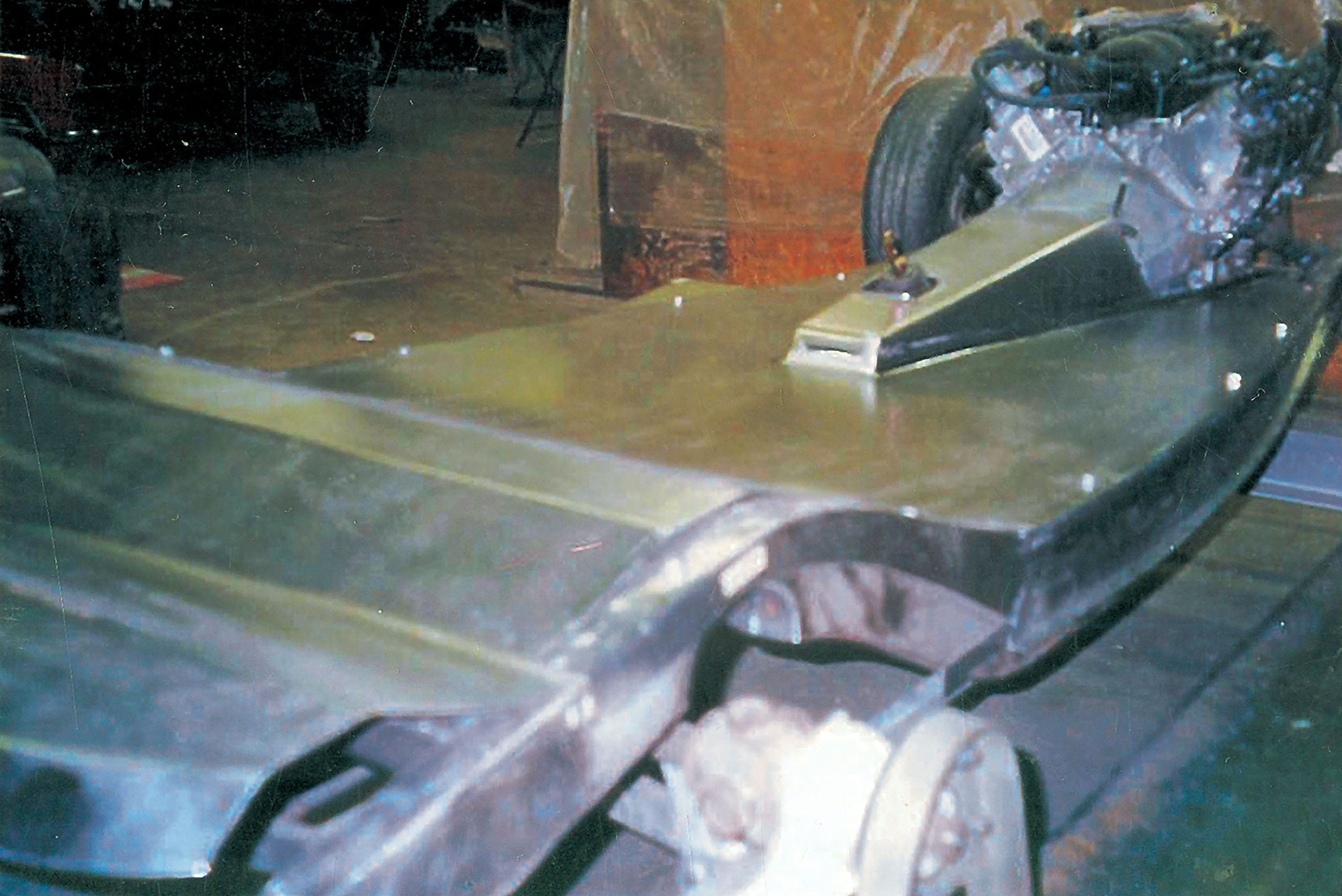
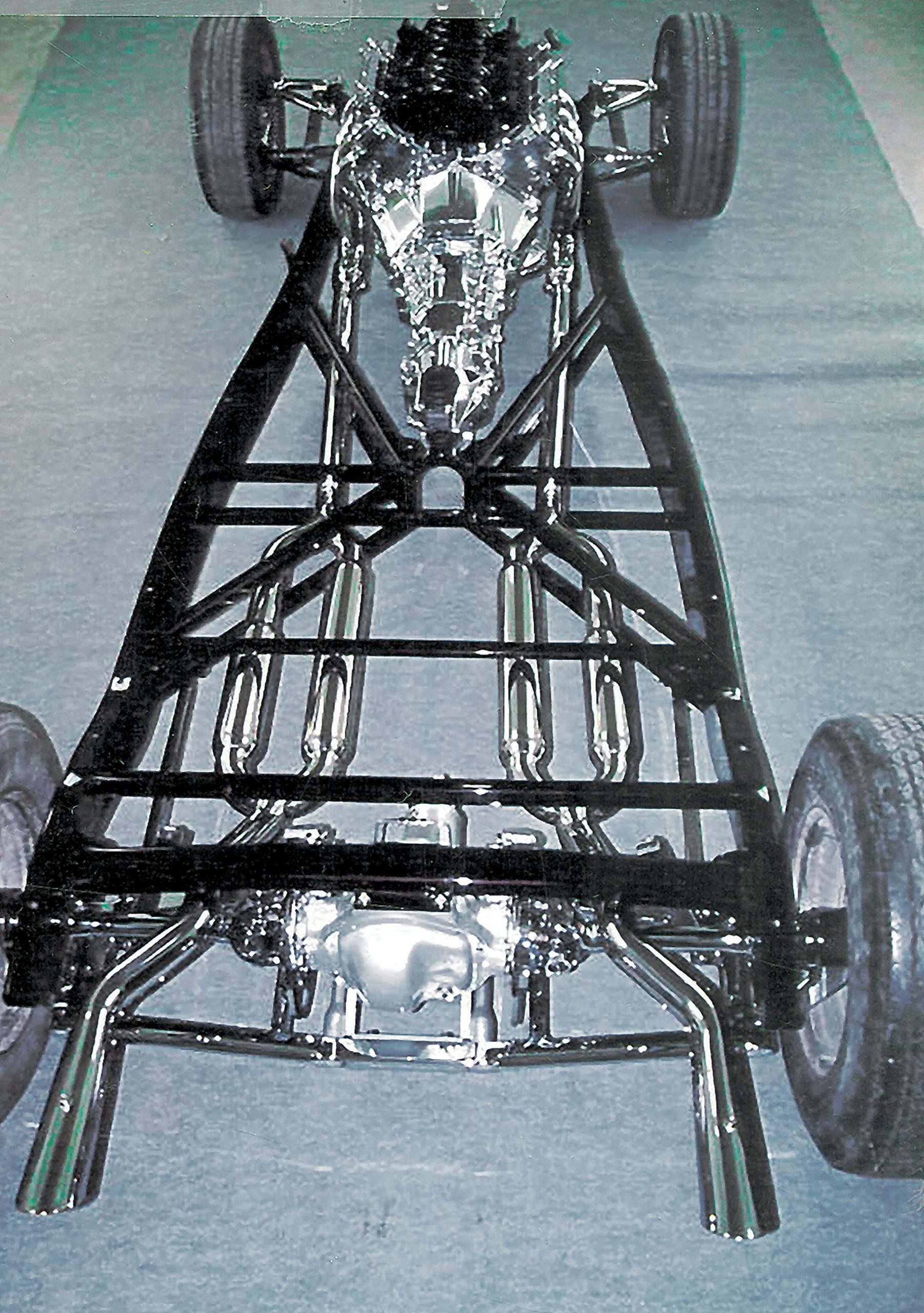
To bring it all into perspective, you have to realize that 95 percent of this car was scratch-built, which is a testament to the commitment it takes to reach this level of quality. To start, the chassis is amazing, incorporating many special approaches that begin with its overall taper from front to back. Heavily pinched from the midsection, the boxed ’33 Ford rails are joined with tubular crossmembers, forming a ladder X-member centering on the driveshaft hoop. This creates an extremely stiff foundation, ensuring that torsional flex is held to a minimum to maintain optimum suspension geometry, while greatly lowering the stresses applied to the body and fenders over uneven surfaces.
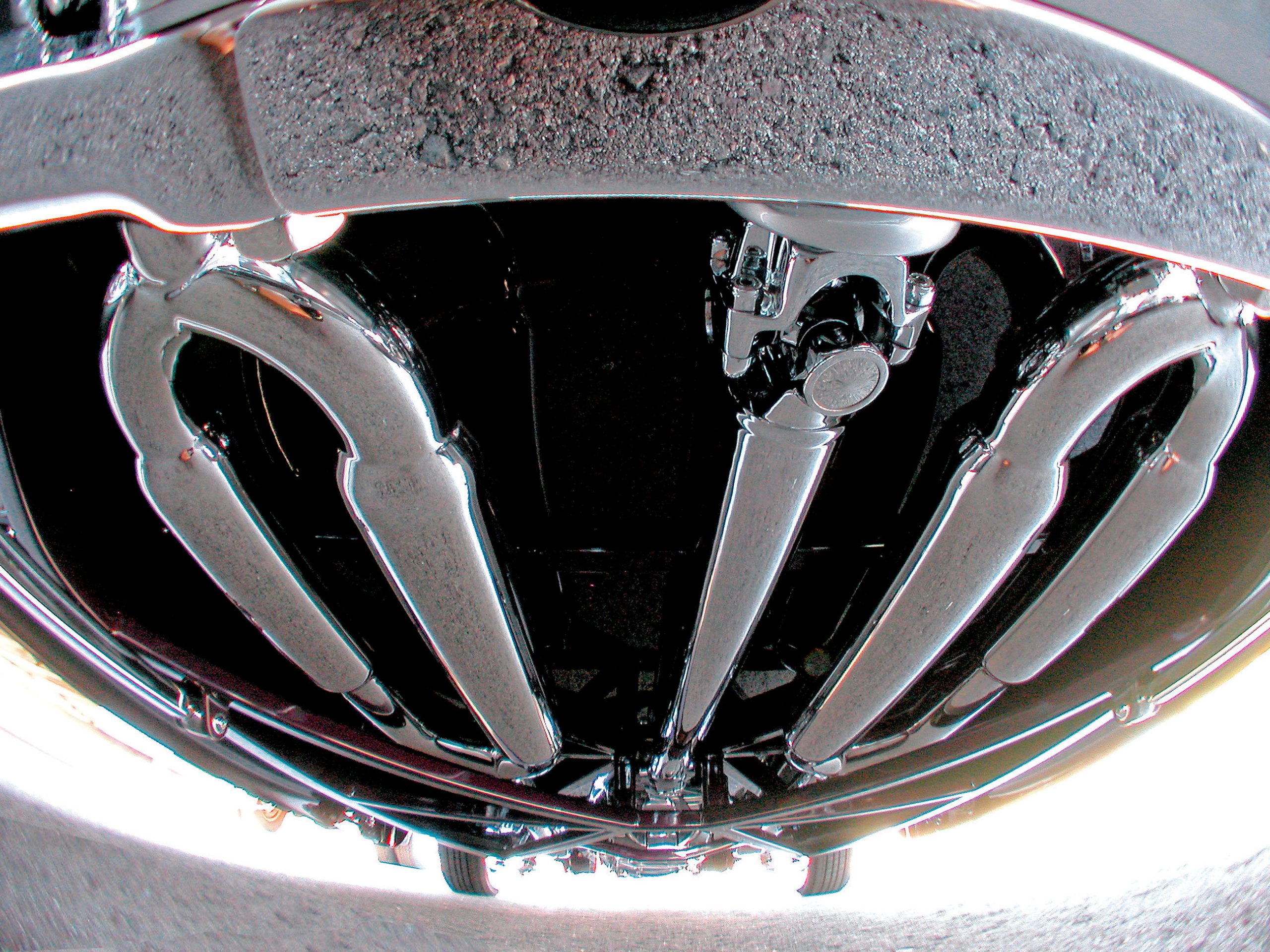
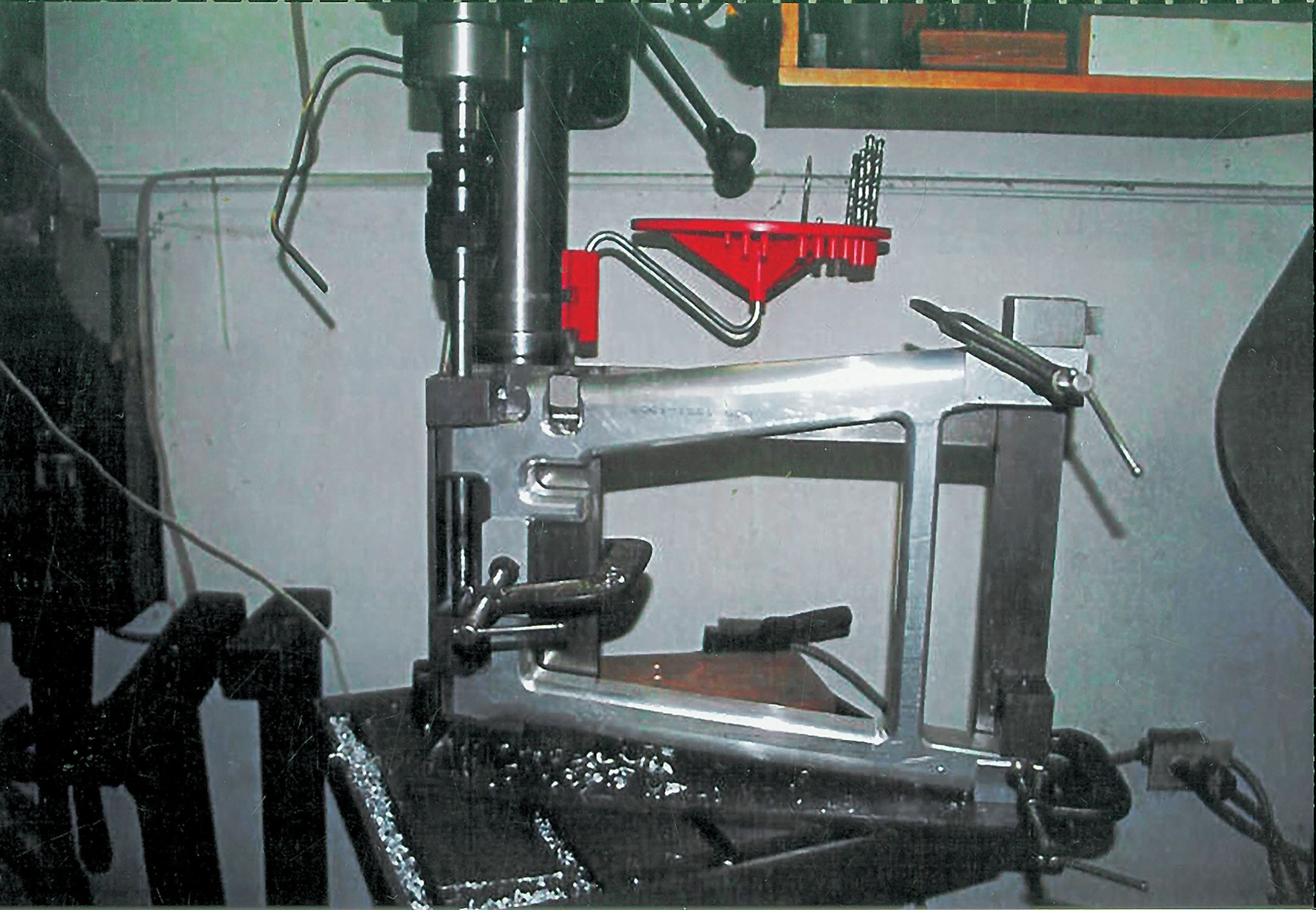
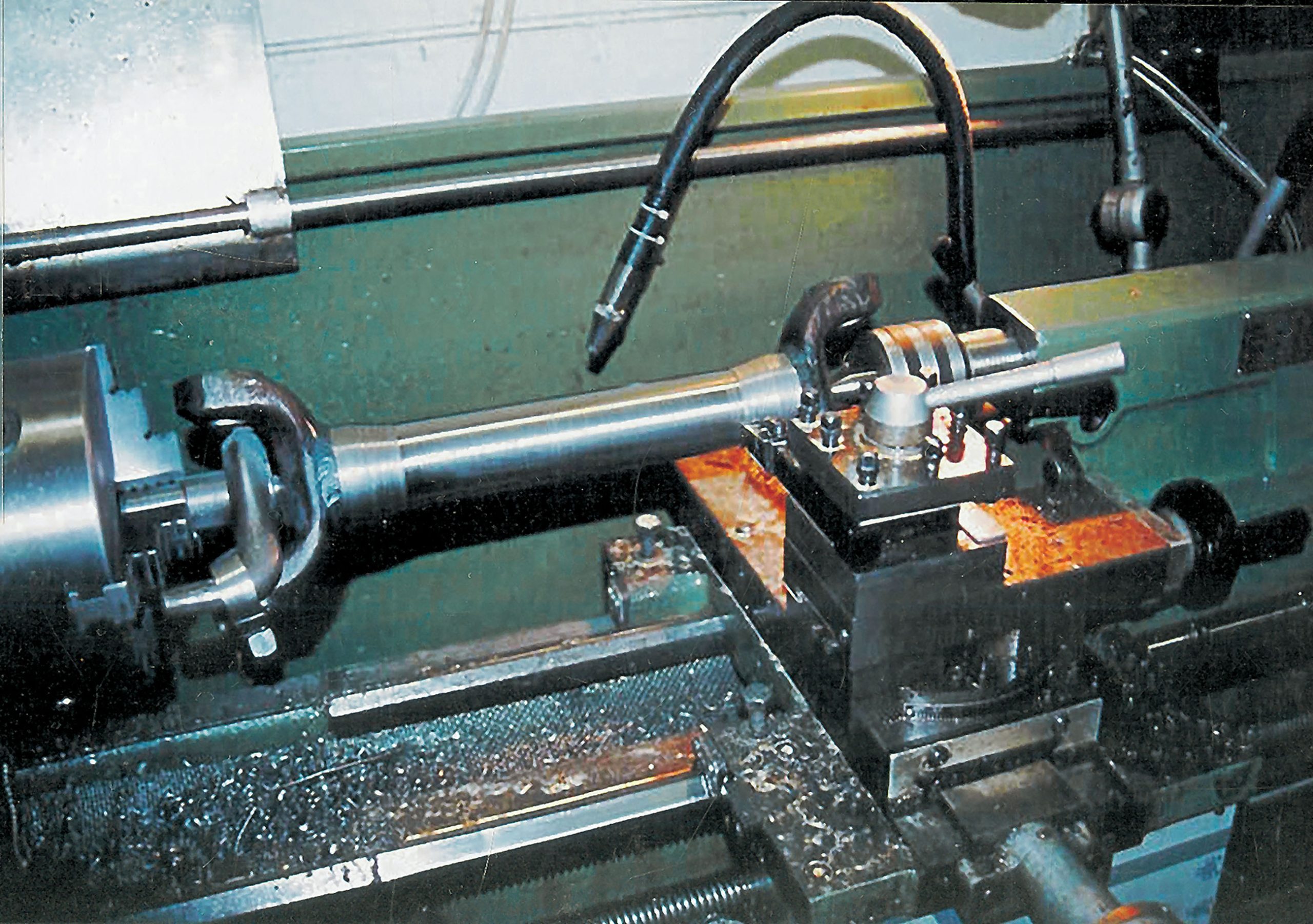
At the front, the frame horns have been removed ahead of the crossmember, which acts as the mount for the independent front suspension. It’s here that specially shaped aero-tube control arms have been fitted with chromed billet-aluminum spindles and hubs. These feature scalloped edges to match the brake rotor and wheel openings. Other details remain unseen, including the chromed and recessed hub seals and the lower shock mounts that are blind-tapped into the control arms, doing away with mounting nuts that are usually visible through the top of the control arms. The lower shock pivot bolt has also been blind-tapped into the back of the bracket using a flush-mounted Allen-head bolt. The upper shock mount sleeve is tapped with a button-head at each end, doing away with the typical fasteners. Furthermore, the ball joints and tie-rod studs have been trimmed to fit flush with the nuts attaching them, and the ball-joint caps were specially machined without the center bolts normally used to keep them in place.
The chromed rack-and-pinion unit features a tapered cone from the sector to the U-joint, a custom billet sector cap and a billet side support on the passenger side. Even the boots on either end have been machined from plastics to do away with clips and unsightly hose clamps. All welds in these areas have been ground smooth, too.
Rear Suspension and Chassis Details
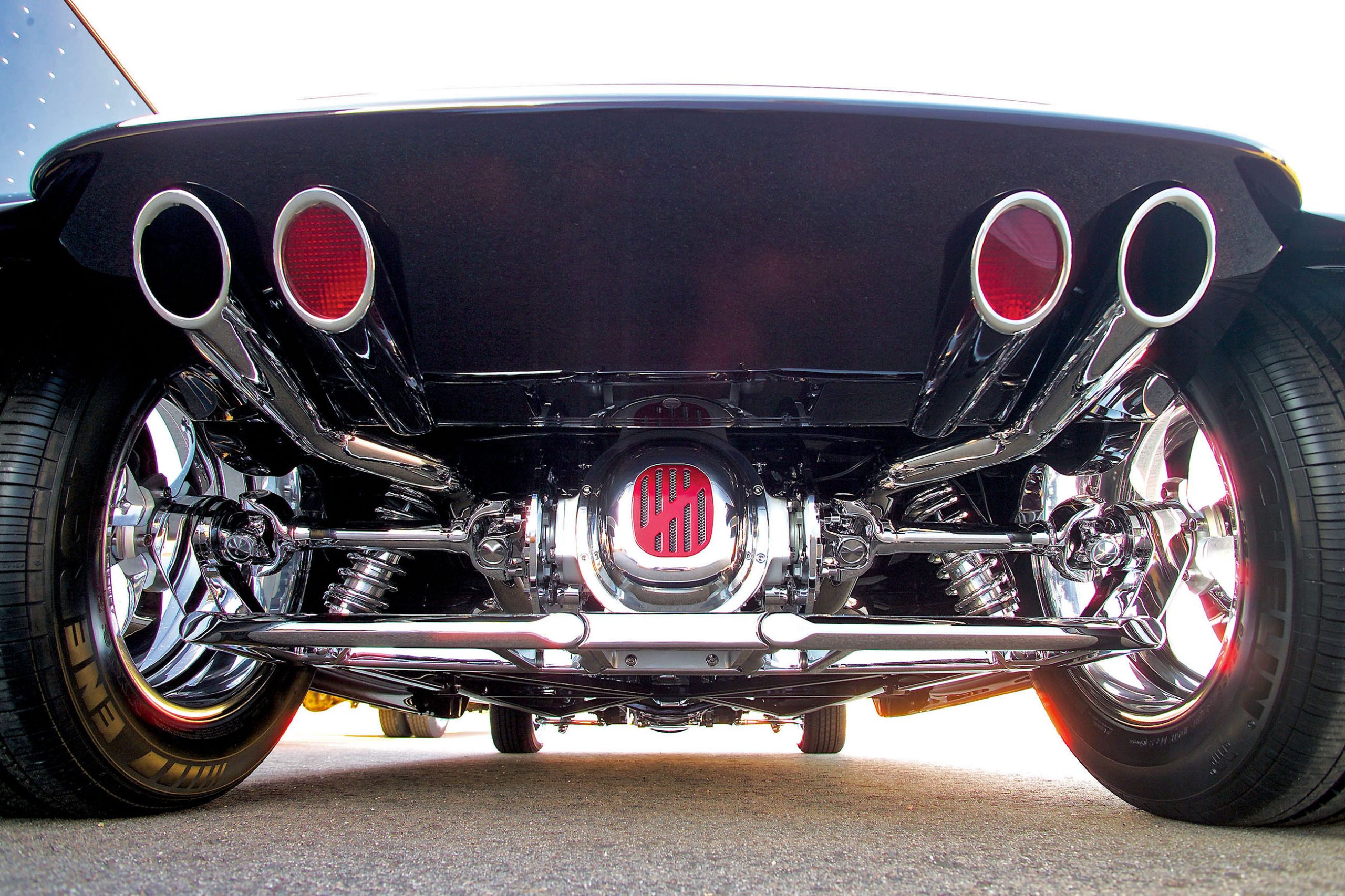
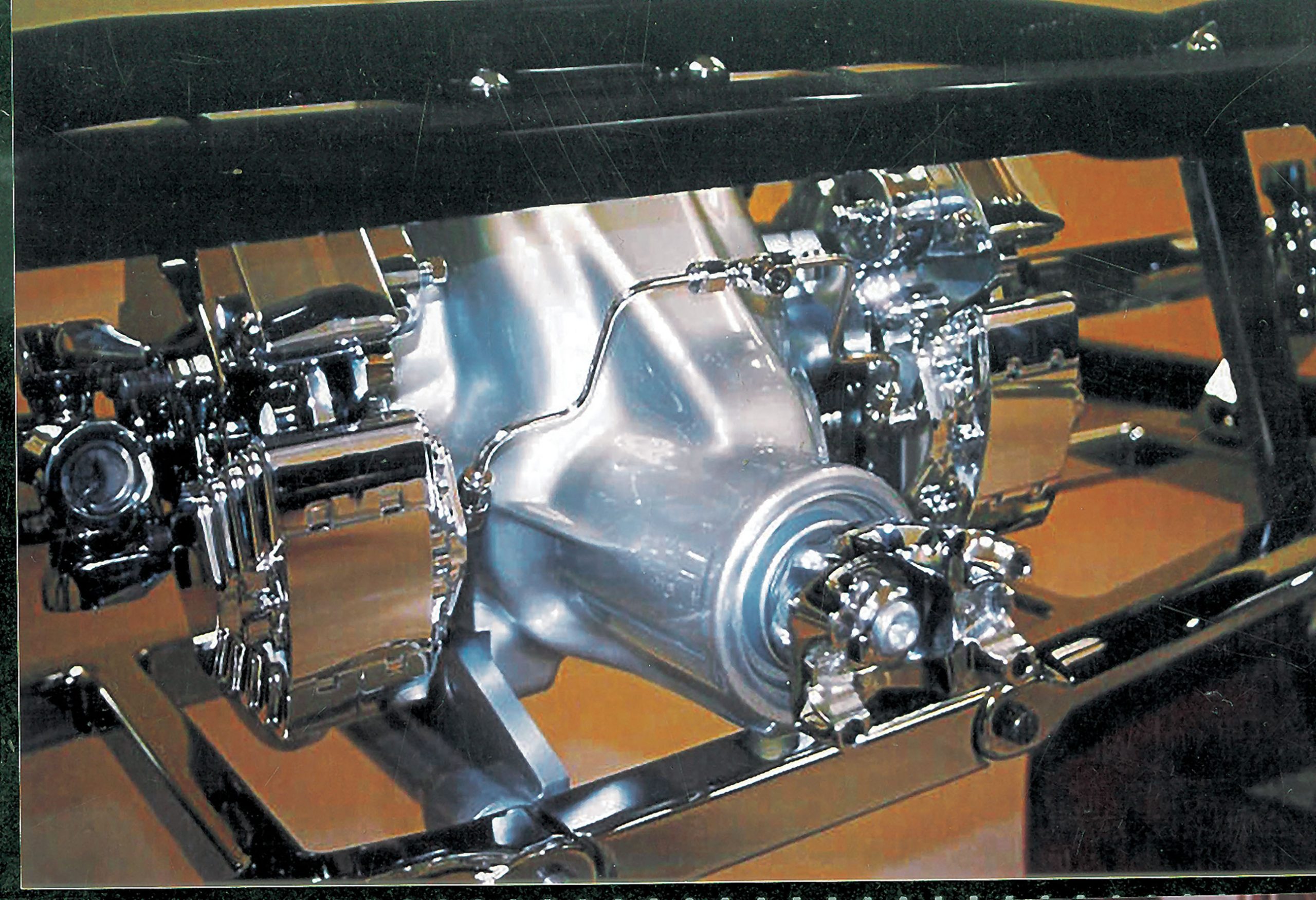
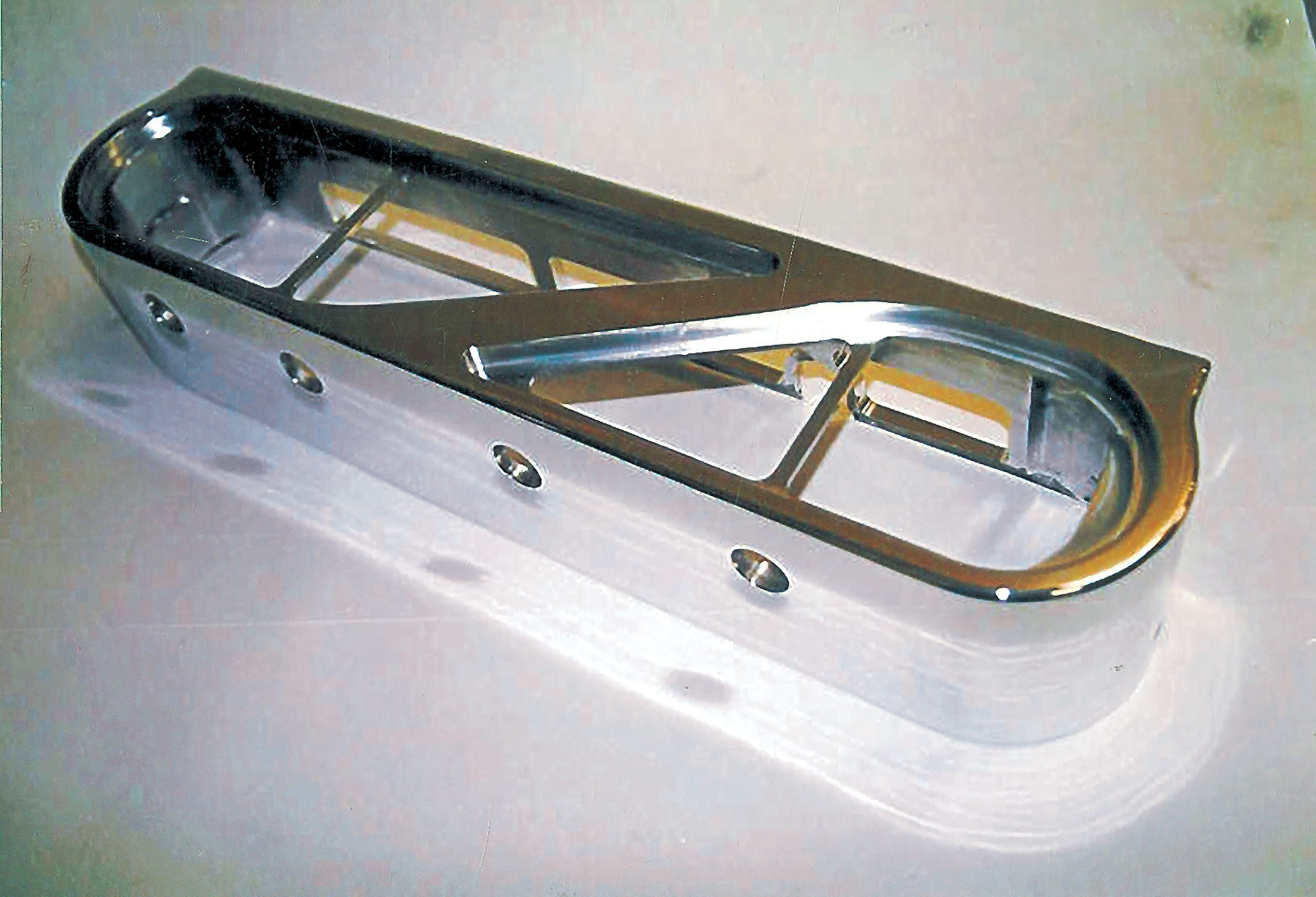
The same detailing was applied to the rear suspension, where winged control arms ride on blind-tapped pivot shafts that make for an extremely clean look. Here, too, you’ll find chromed seals and billet-aluminum hub carriers, tapered half-shafts, chromed U-joints with polished-stainless caps, tapered rod ends threaded to an exact fit, and numerous button-heads replacing typical fasteners. The rear cover for the differential is another special item, machined from a solid chunk of aluminum and hollowed out in the center for a cool insert that matches the ones on the coil and valve covers. The wheel flanges were scalloped to match the openings on the specially made wheels, as were the rotor hats, while the brake calipers themselves were enhanced with chromed bleed screws and custom pad covers. These match the caliper profile and are tapered around the Allen bolts replacing the cotter pins. Add in the reworked Wilwood emergency brakes that are almost completely concealed, and you have an extremely beautiful chassis, but that’s just the beginning.
LS6 Power and Drivetrain Detailing
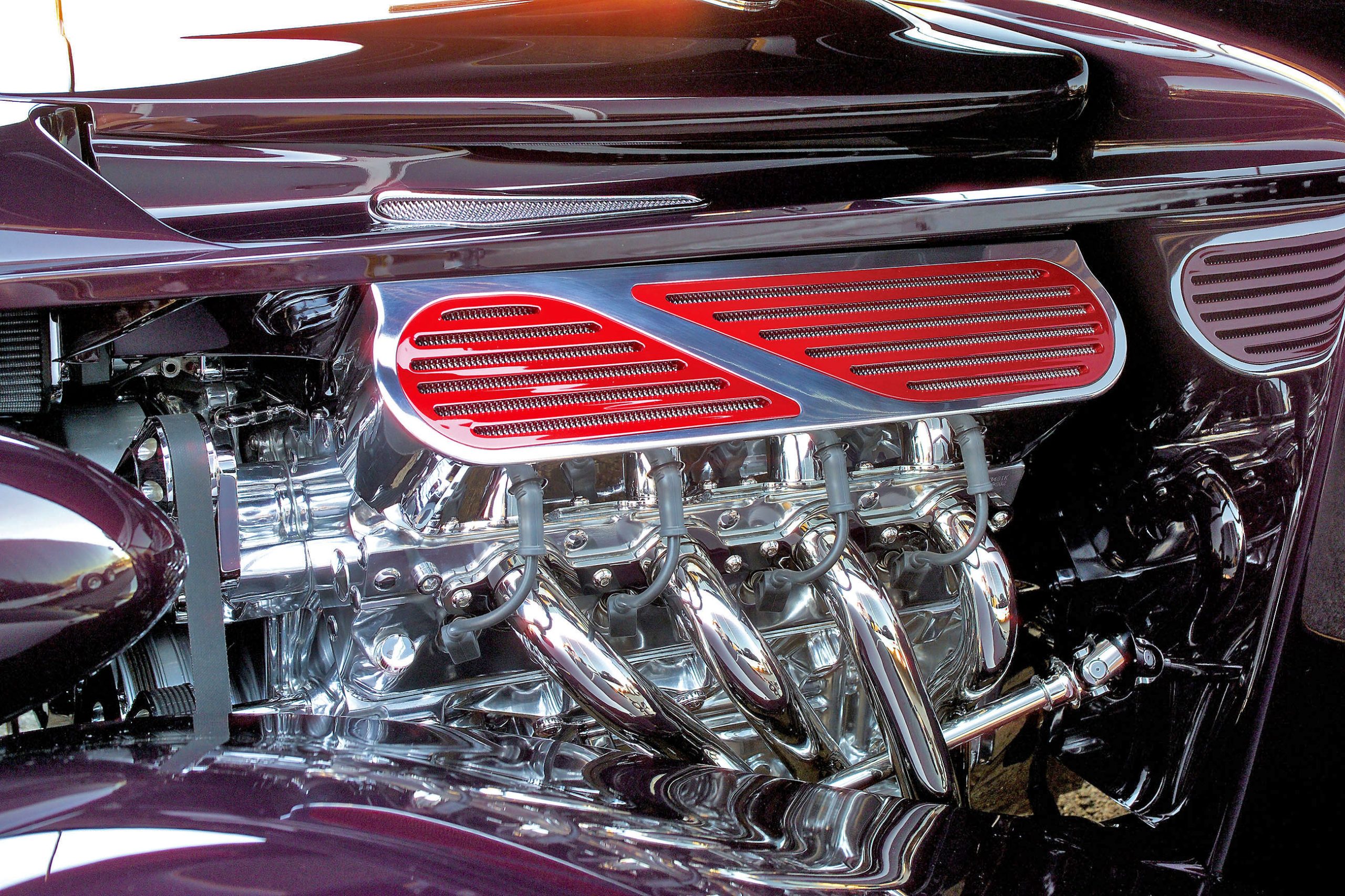
The drivetrain is just as thoughtfully finished, with an incredible variety of special hardware designed to alter its appearance. Starting with an LS6 Chevy from the Z06 Corvette, every conceivable effort was made to improve upon its presentation. First, the block was de-burred and polished and the winged pan was replaced with a chromed LS1 unit. This was handled by Street & Performance, which did most of the polishing and chrome work on this car. Even the flywheel covers at the bell housing are specially made and highly polished. Other custom-built components from Symmons Custom Machine include the intake manifold and fuel-rail cover, the crossover tube around the water pump, as well as water and air-conditioning lines, freeze plugs, engine mounts, starter details, idler pulley brackets and plugs to covers the open bolt holes. Another cool touch is the modified pulley setup that hides the tensioner, and the covers that clean up the back of the pulleys. A new Heat Shrink radiator from Brassworks maintains temperatures.
Custom Valve Covers and Exhaust Fabrication
As we mentioned earlier, special valve covers were made to cover the individual coil packs, lending a unique appearance similar to that of a big-block Chevy. As you might imagine, this took considerable time, because the valve covers themselves had to be patterned from wood and then machined from solid-aluminum blocks once their precise shapes were determined. While the top was relieved for the red grilled panels, the inner surfaces facing the intake manifold were vented to release heat generated by the coils. Similar modifications were made to the transmission, as well, including many hours of polishing to match the engine. All the electronic switches were rerouted or replaced with special plugs and covers, and button-head Allen bolts were used wherever possible. The trans mount was specially built from aluminum; hydraulic clutch fittings were remade to AN sizing; and a stainless vent tube and adjoining fittings were added to complete the detailing.
After the engine and transmission were mounted in the chassis, the intricate headers and exhaust system were shaped by hand using stainless tubing. This involved some special routing of the headers around the steering, and some clever thinking where the exhaust winds its way through the chassis, splitting between four Stainless Works mufflers toward the back and rejoining just ahead of the rear cones. The exhaust pipes utilize O-rings inserted within the pipes to secure them between the various segments, leaving only a minimum of attachment points over their entire lengths. However, the best aspect of this exhaust system is found at the very tip, where both pipes exit side by side with the taillights. Because they share nearly identical bezels, the combined look is stunning, with the exhaust just outside the taillights.
Hand-Formed ’33 Ford Bodywork
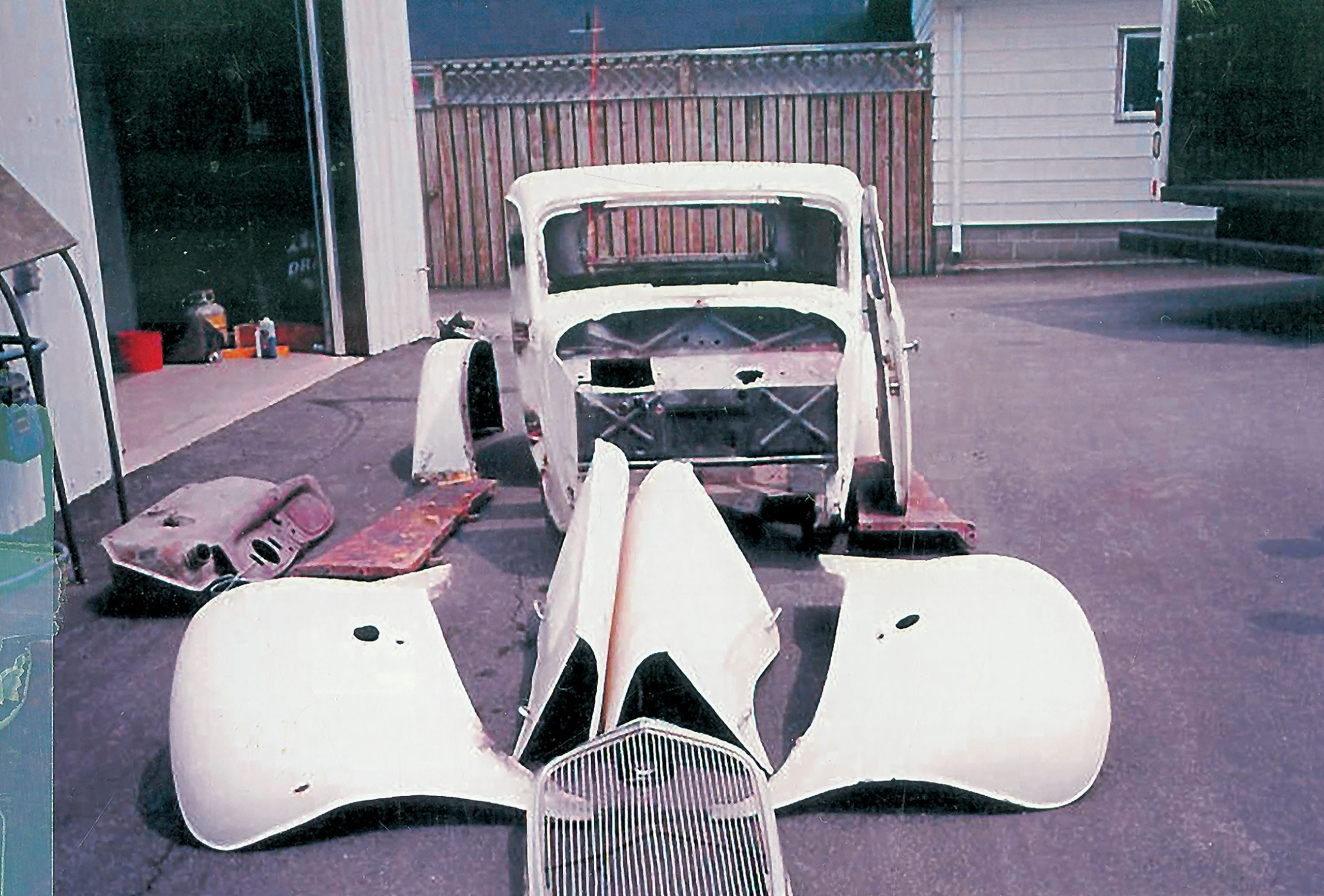
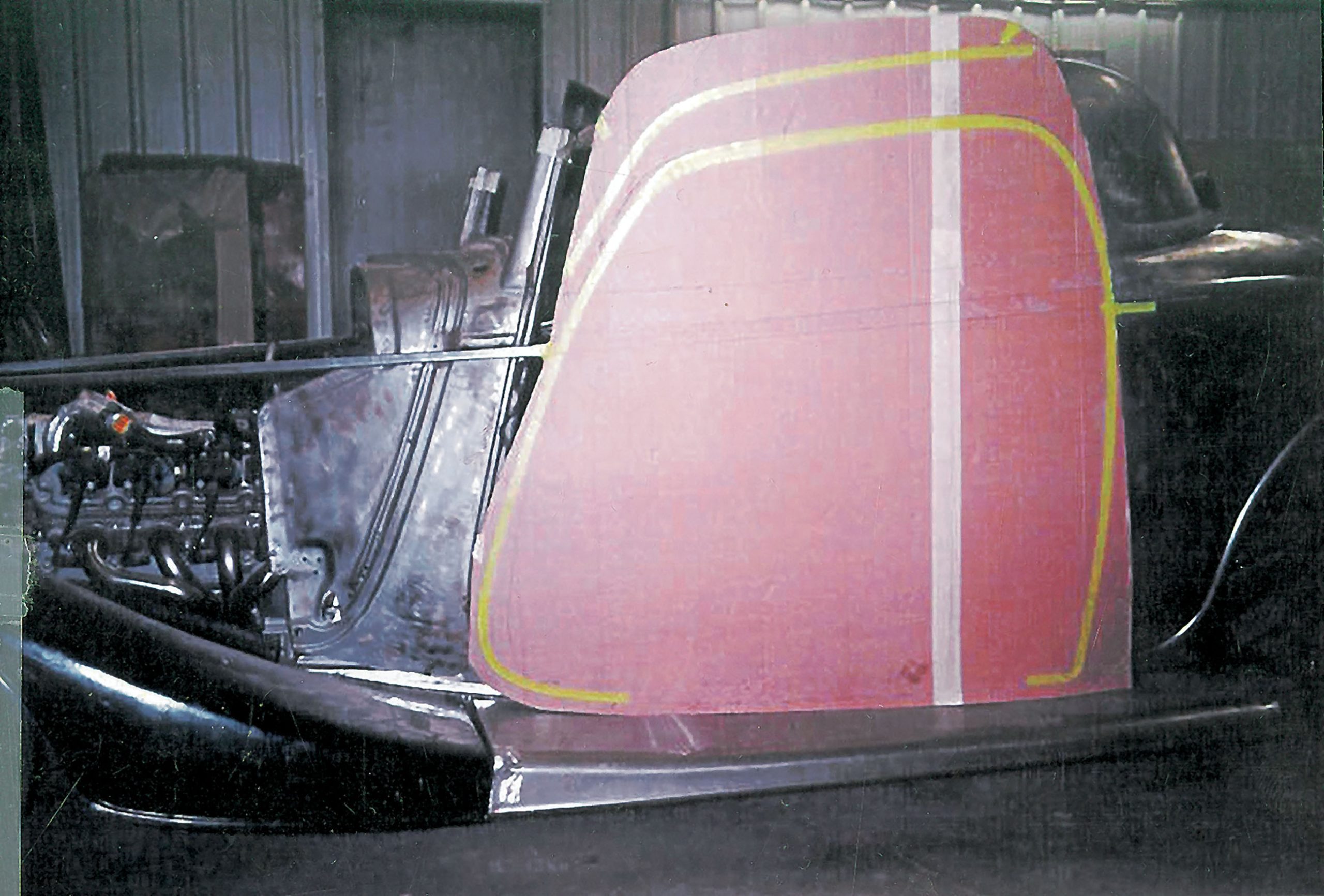
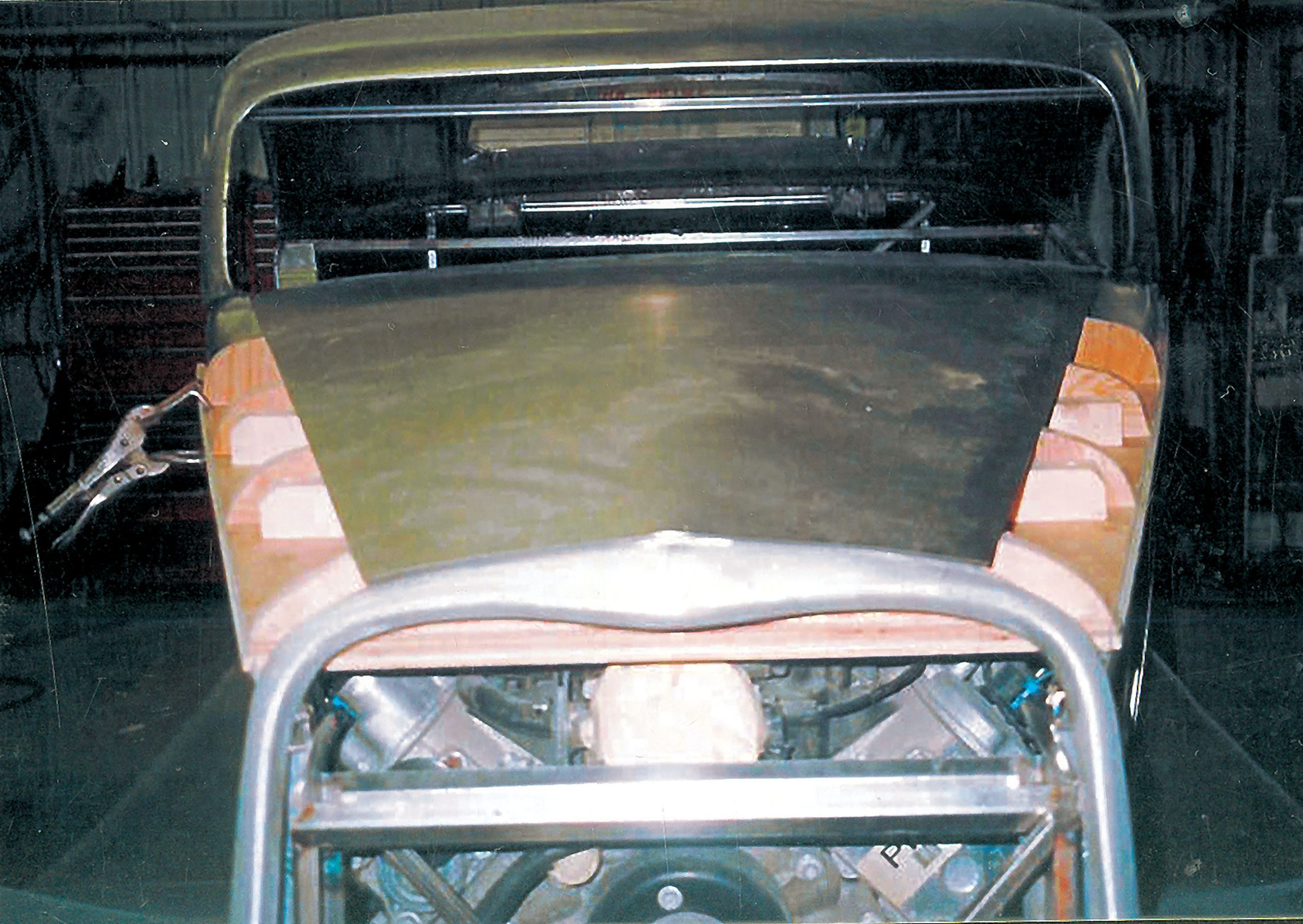
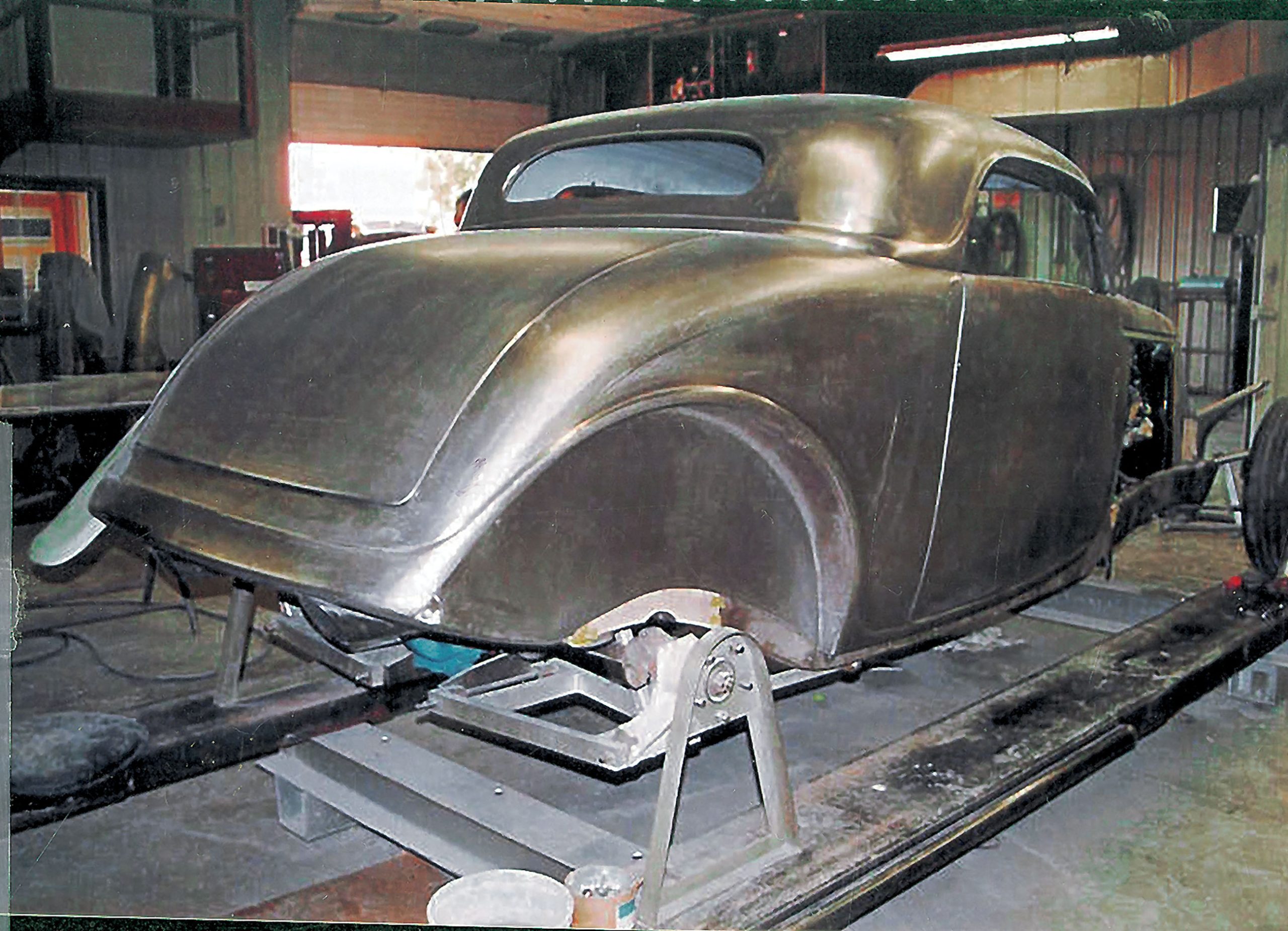
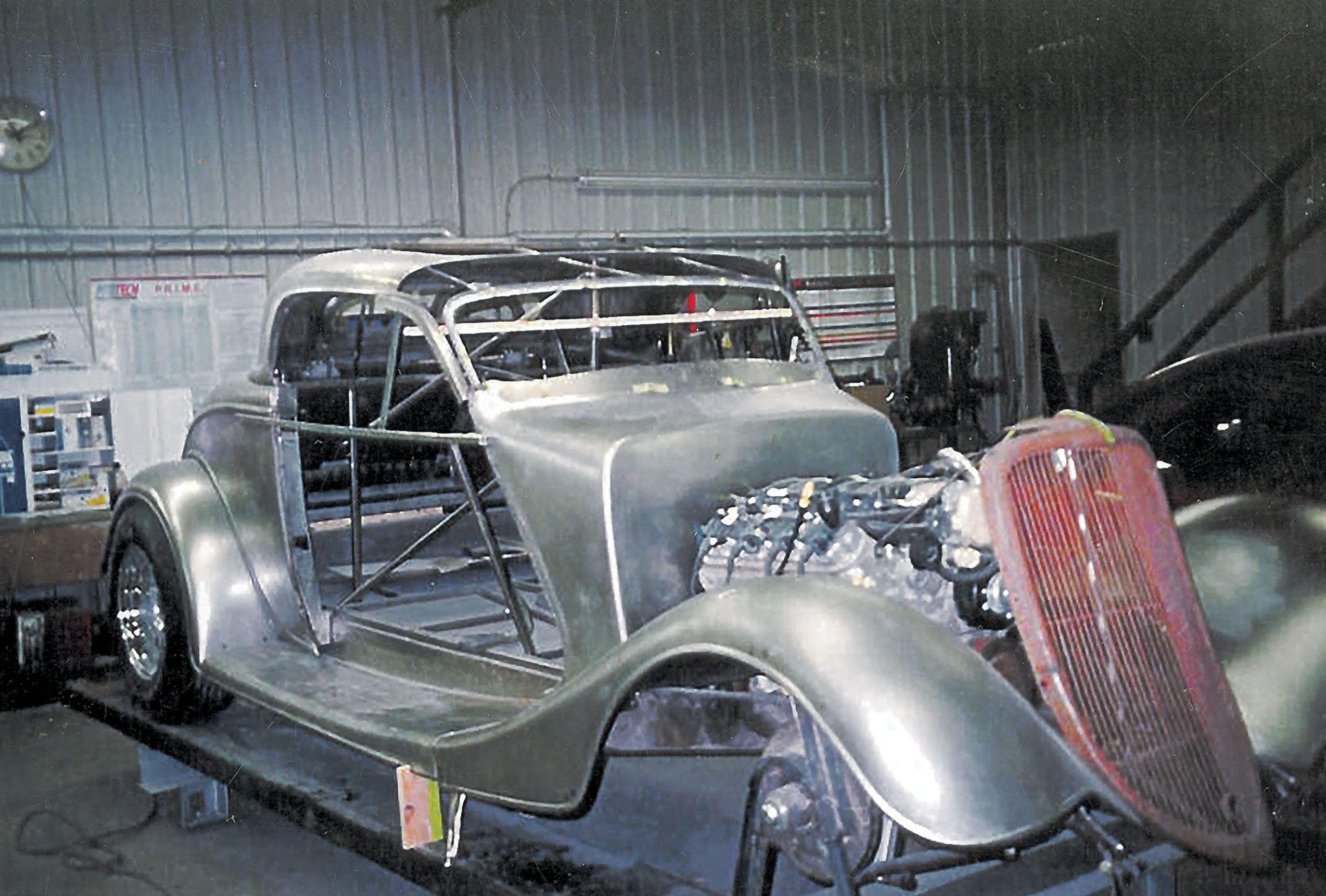
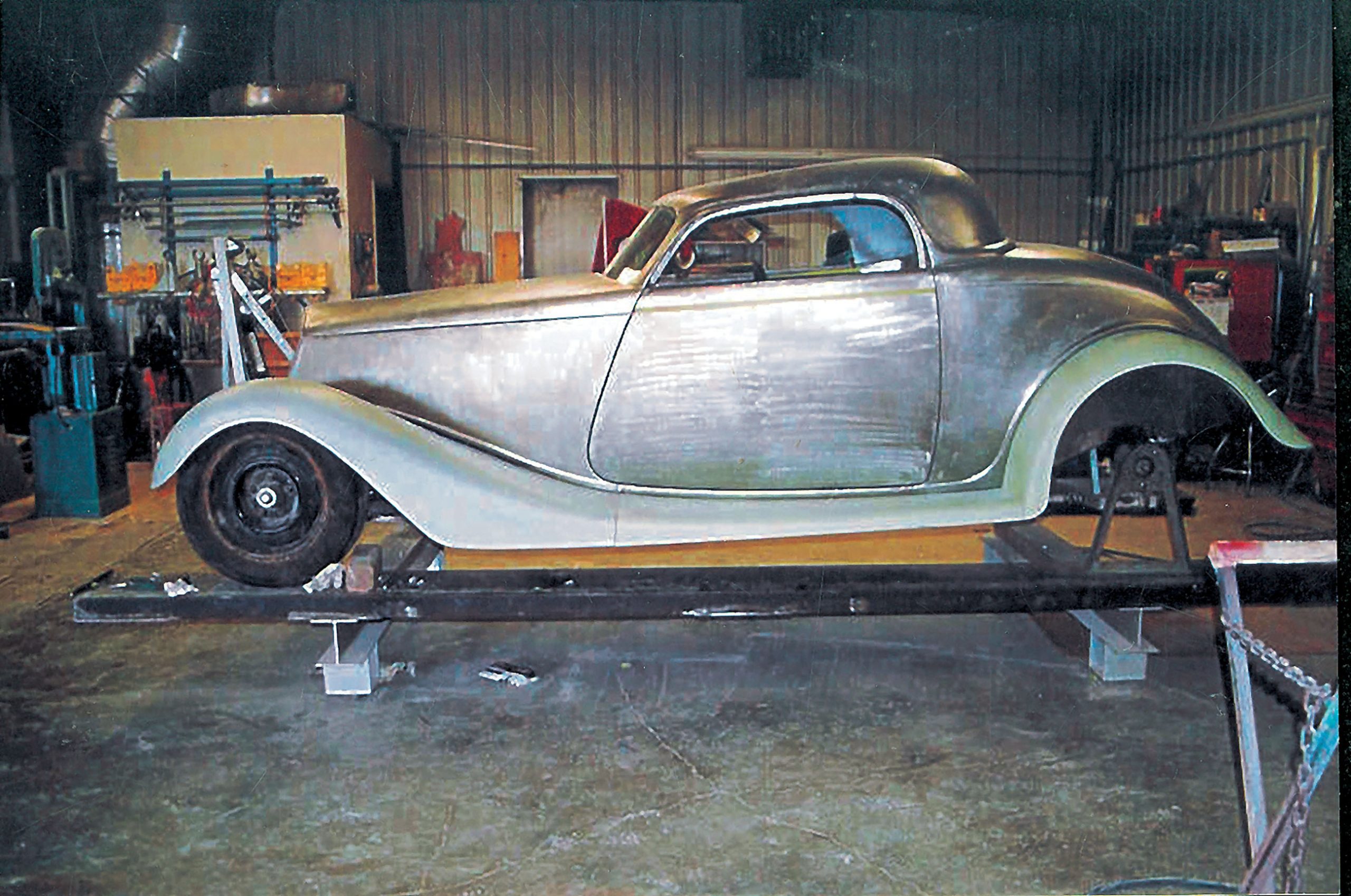
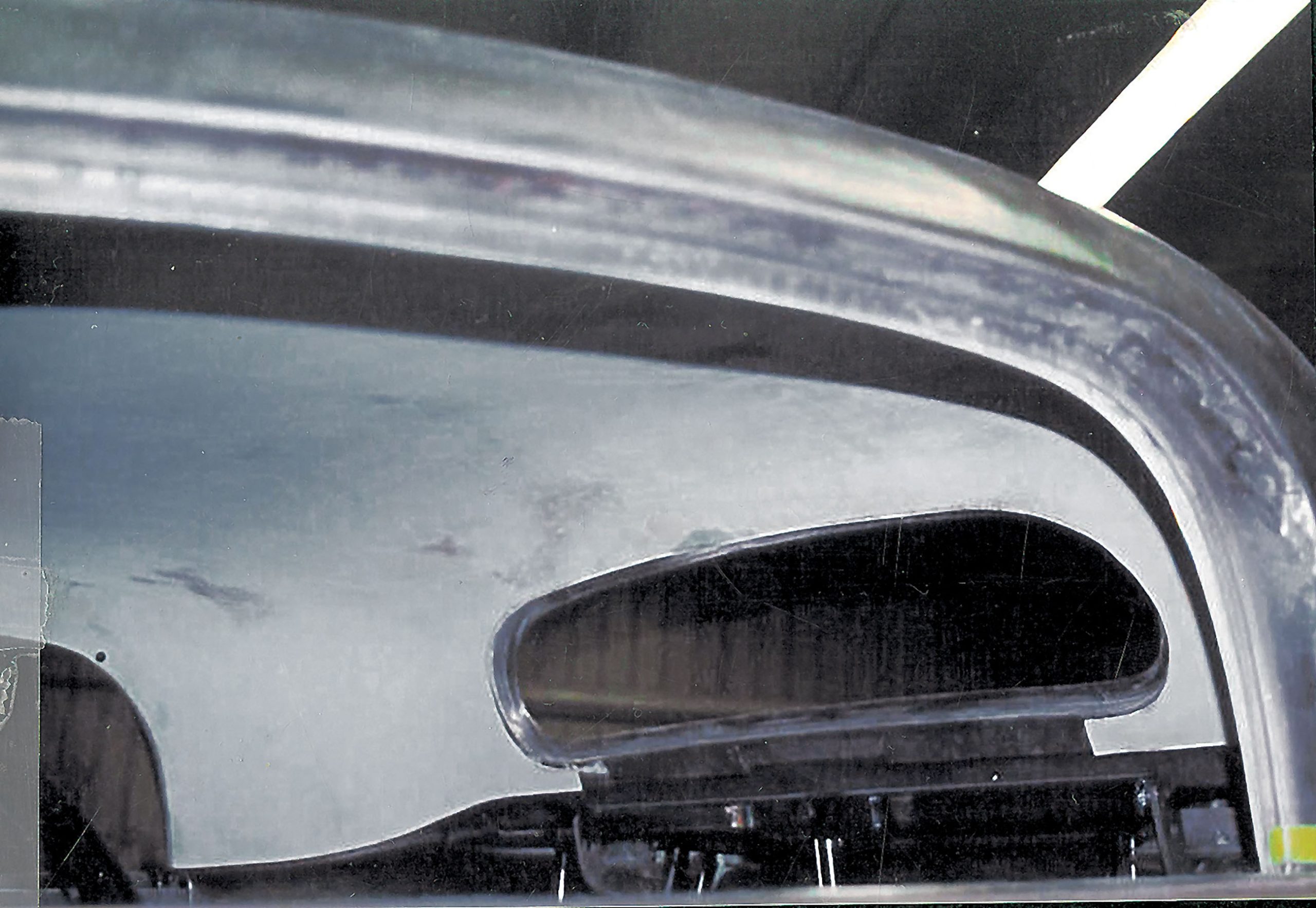
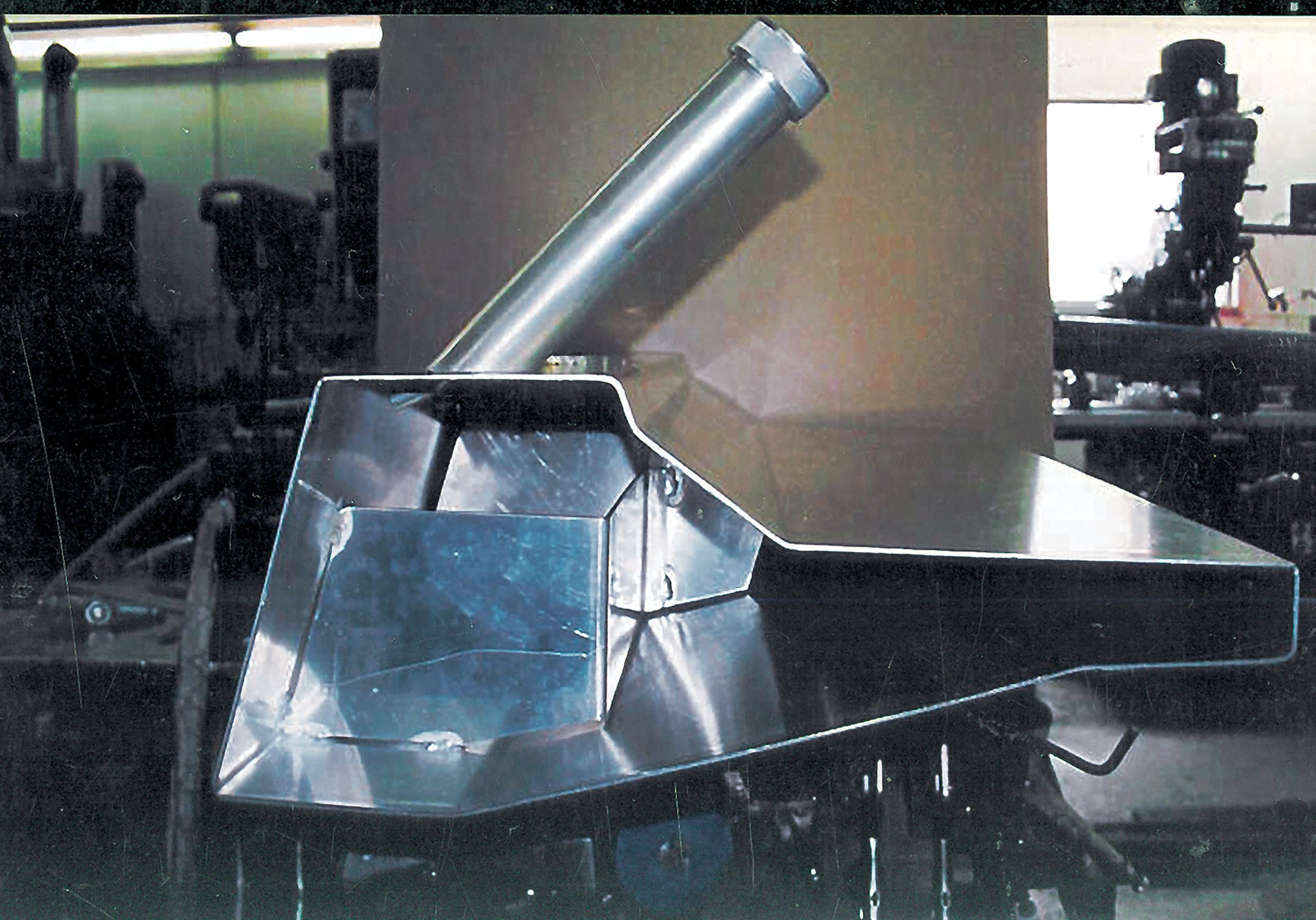
With the foundation for this car in place, it was time to shape the body, which began with the creation of the full-length floor pan. With this completed, a stock ’33 Ford body was cut apart and for the most part re-created using flat 18-gauge sheetmetal formed into the specific shapes needed to refine the overall contour. First, the firewall was formed, along with the front portions of the body and the lower windshield support. The cowl was done away with in favor of a full-length hood that extends from the complex grille shell to the base of the curved windshield frame and doors. The roof was lowered 5 inches and the rear portion of the door opening was moved back 2 inches, while the rear window was moved up and fitted with flush-mounted curved glass to replace the original reveals for a more modern look.
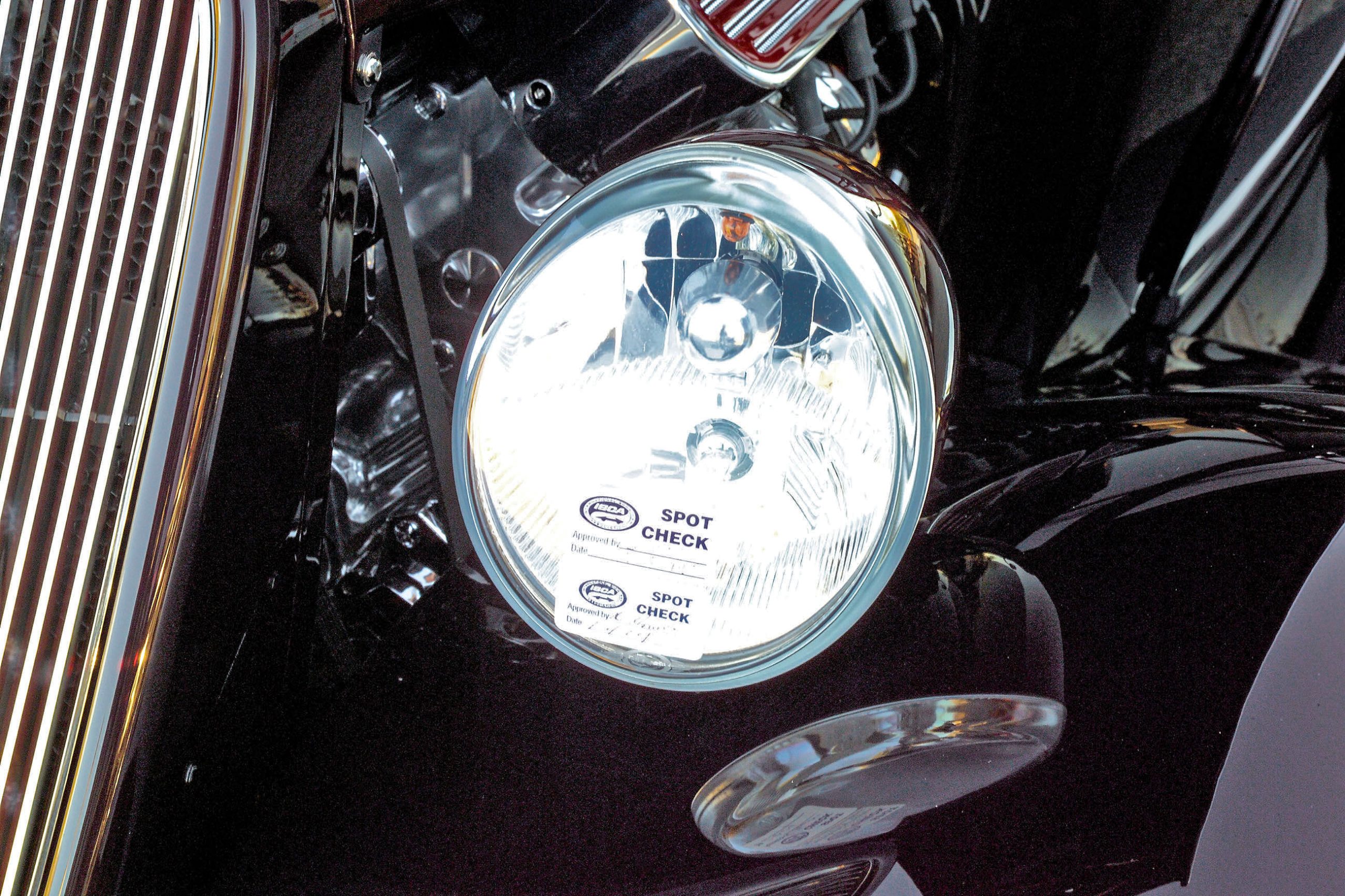
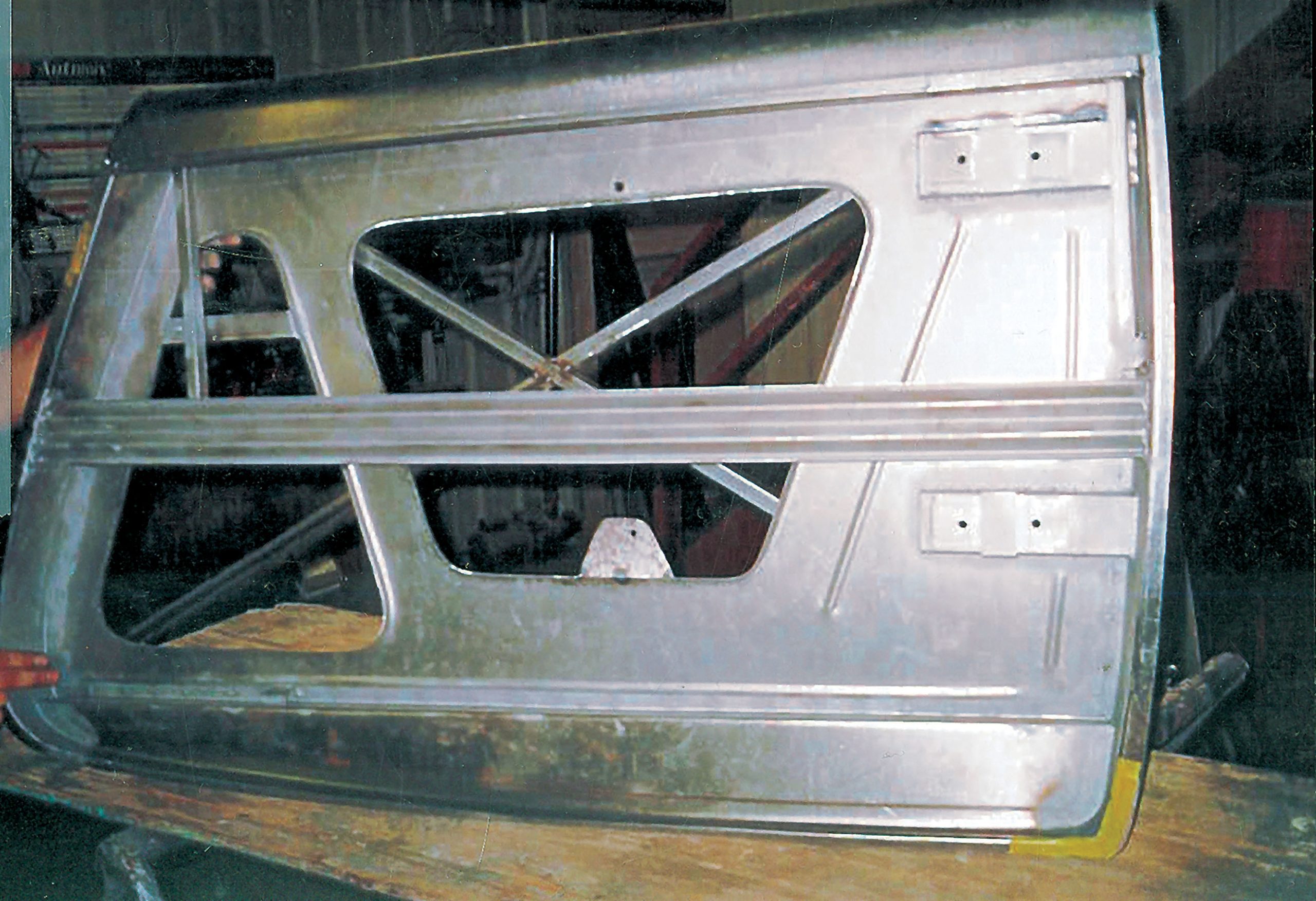
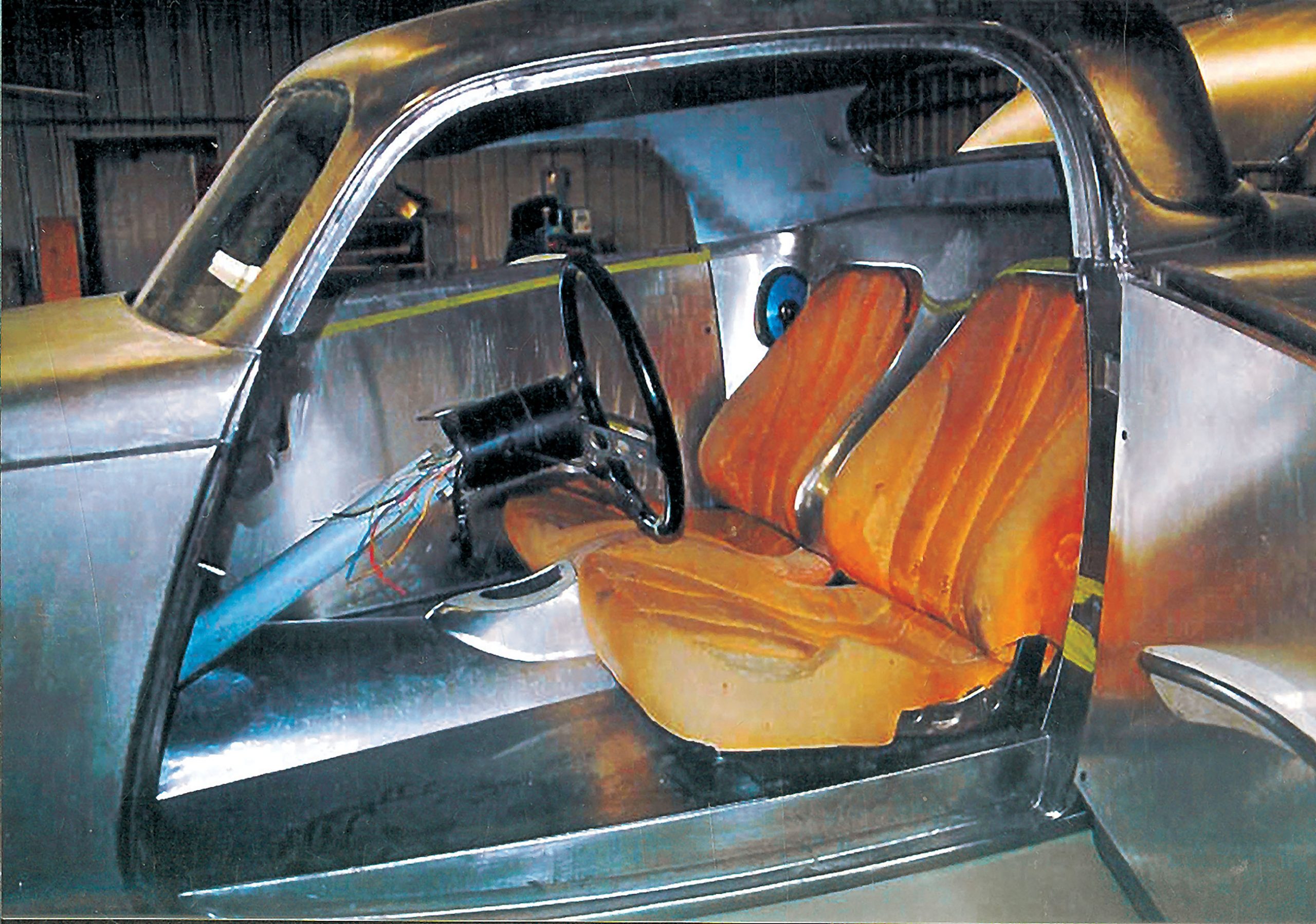
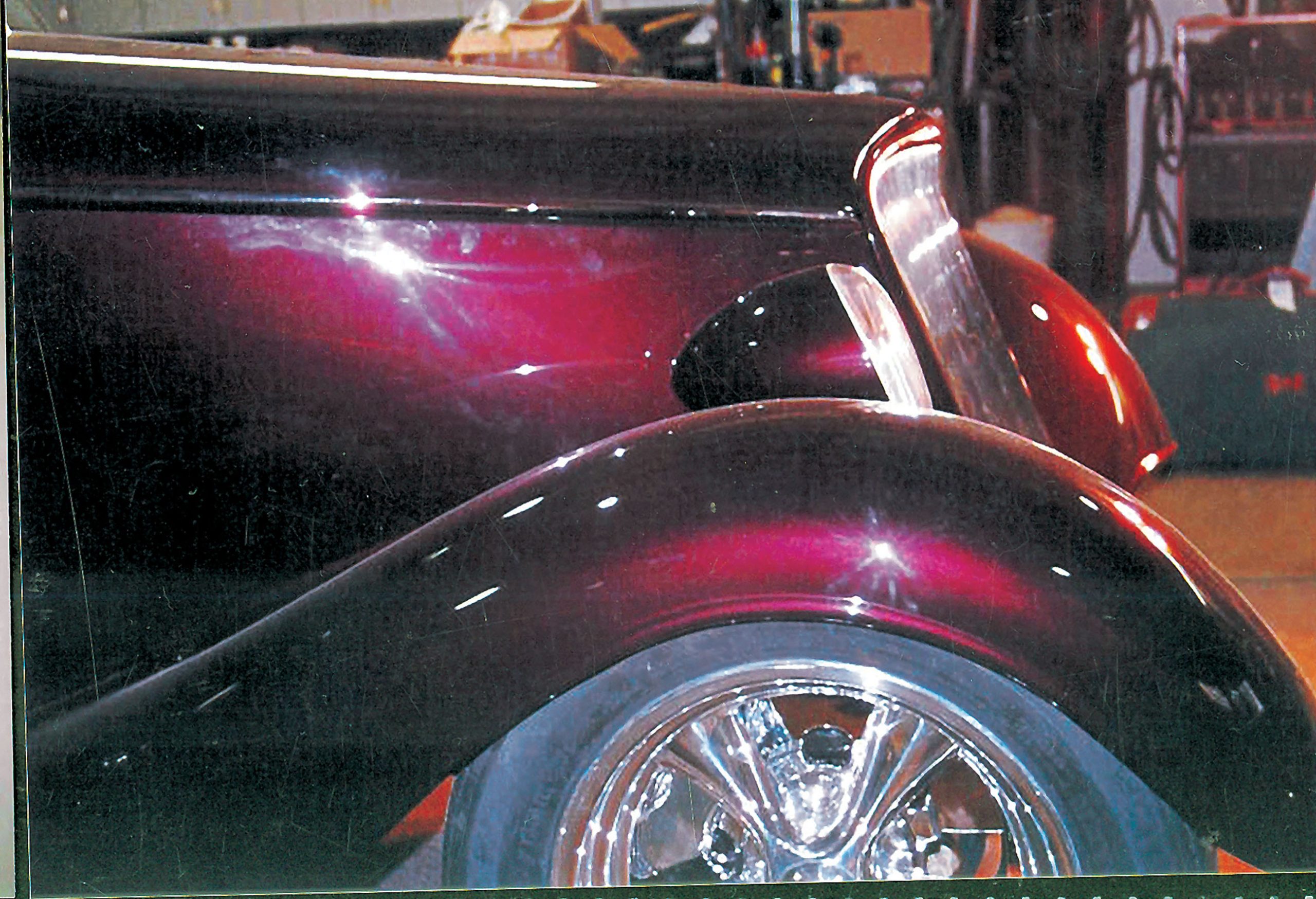
In shaping the doors, inner panels were created that match the doorjambs around a primary structure housing the power-window mechanism and horizontal intrusion beams. Once this was completed, the outer skins were rolled out and formed to match these contours. You’ll also notice that the window frames are now incorporated in the roof, and that more curved glass from Art Glass Studio in Edmonton, Alberta, was used here as well. To bring these changes together, the front quarter panels were moved back 2 inches and sectioned to suit the modified contours of the body. The reproduction front fenders were re-radiused around the wheel opening and lengthened for a smooth transition with the shortened running boards. The fenders were also widened 2 inches to meet the hood and butted together at the nose, replacing the original filler plate. The vented inner fender aprons covering the framerails are concealed, while the front edge of the fender has been raised 1-1/2 inches. A pair of Harley-Davidson V-Rod headlights was fitted within modified housings from Steve’s Auto Restorations in Portland, Oregon.
Rear Body and Interior Craftsmanship
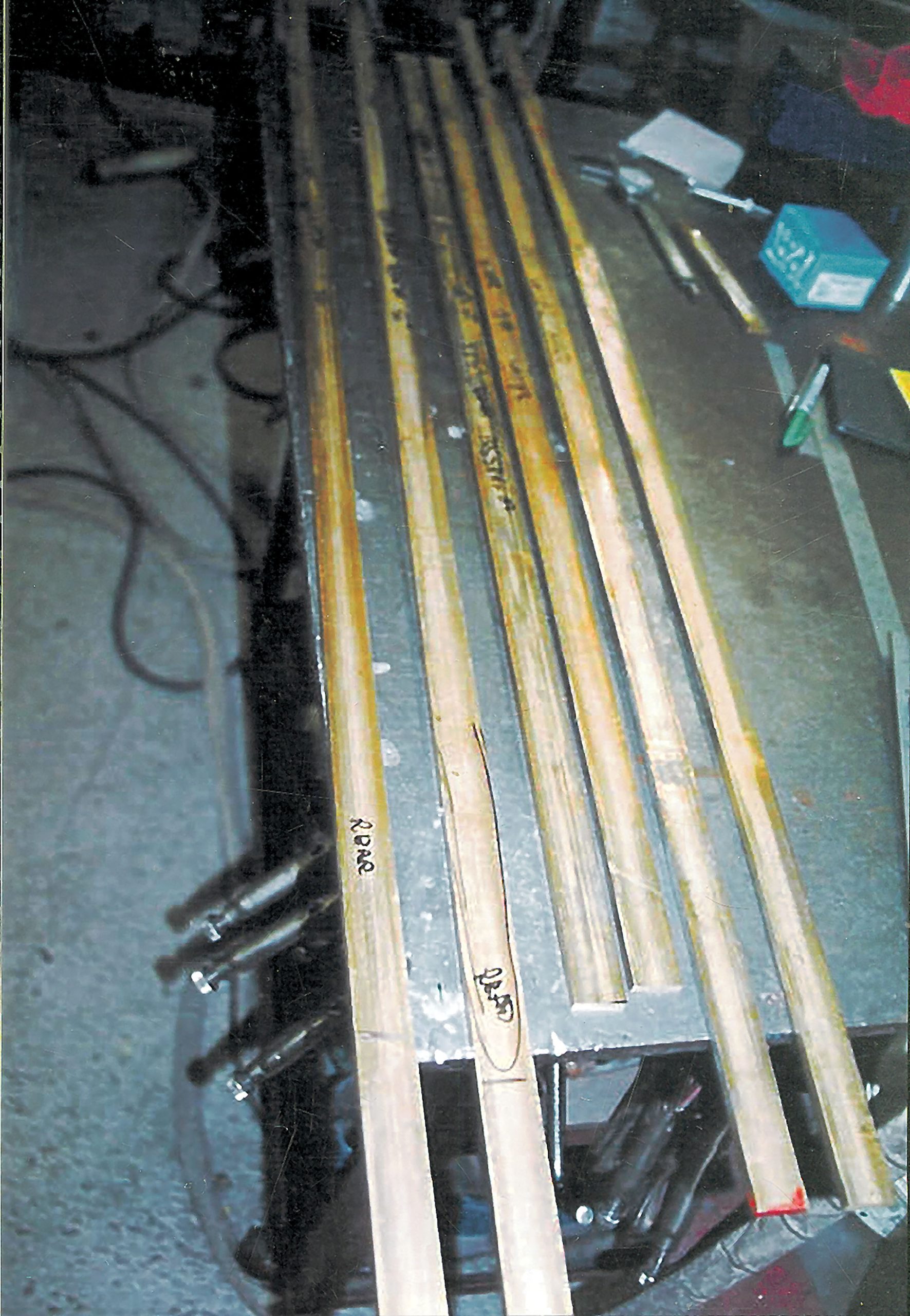
The rear fenders have also been reworked to better fit their surroundings, and smooth inner wheel tubs were created. In back, a hand-formed rolled rear apron and trunk lid add to this shapely area, especially in the way the contours come together. Like many of the body panels, these were made around a wooden buck to produce the desired shape, allowing all the panels to fit as intended. One final detail can be seen in the body molding carved from 1-inch-wide, 0.25-inch-thick brass bar stock. This adds yet another level of detail that speaks of the quality applied throughout this special coupe. When fitted over the rich wine paint, applied by Cedric Cahill and Rob Banman, it takes on a special appeal that helped the car earn a place in the Great Eight.
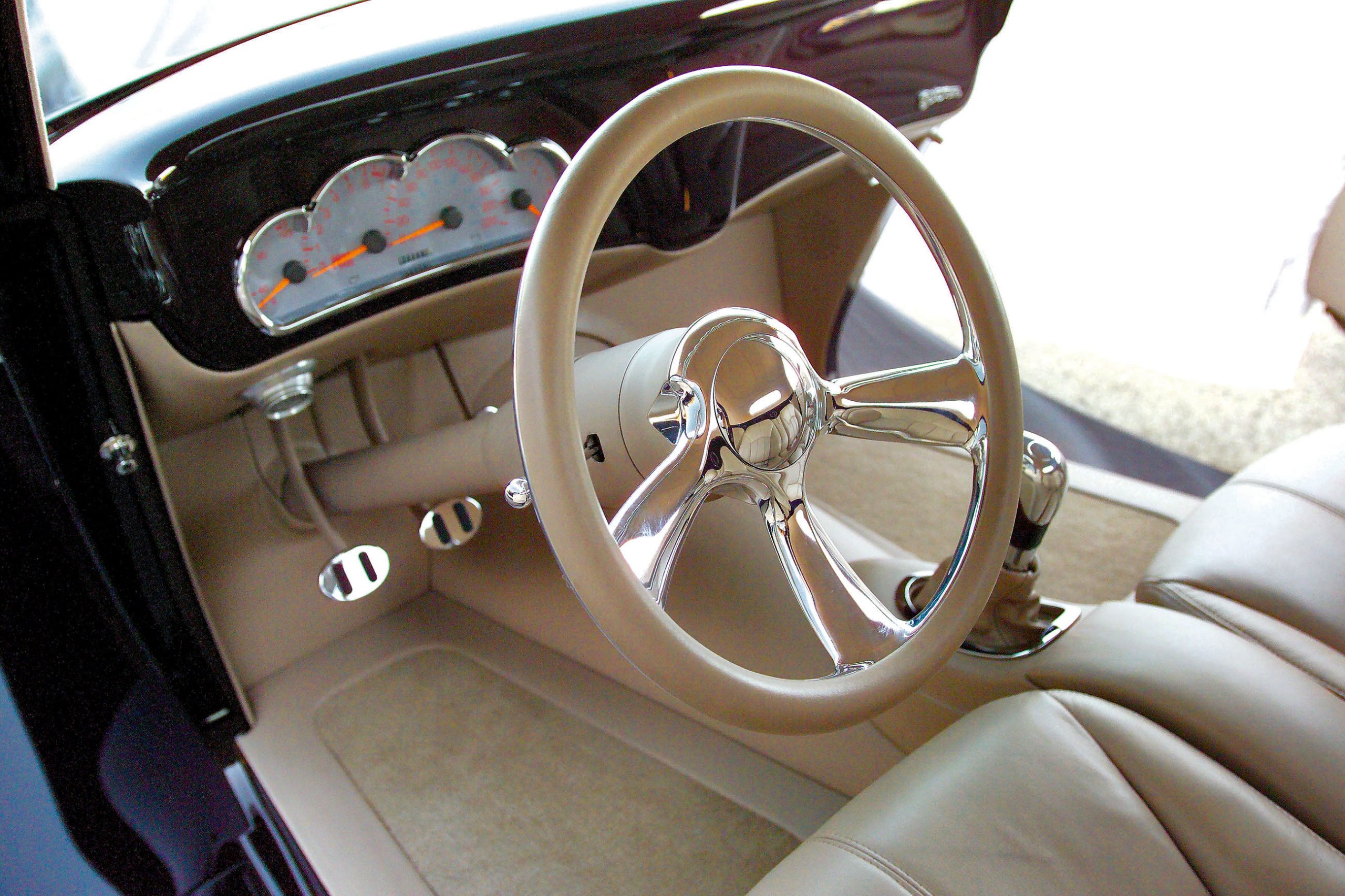
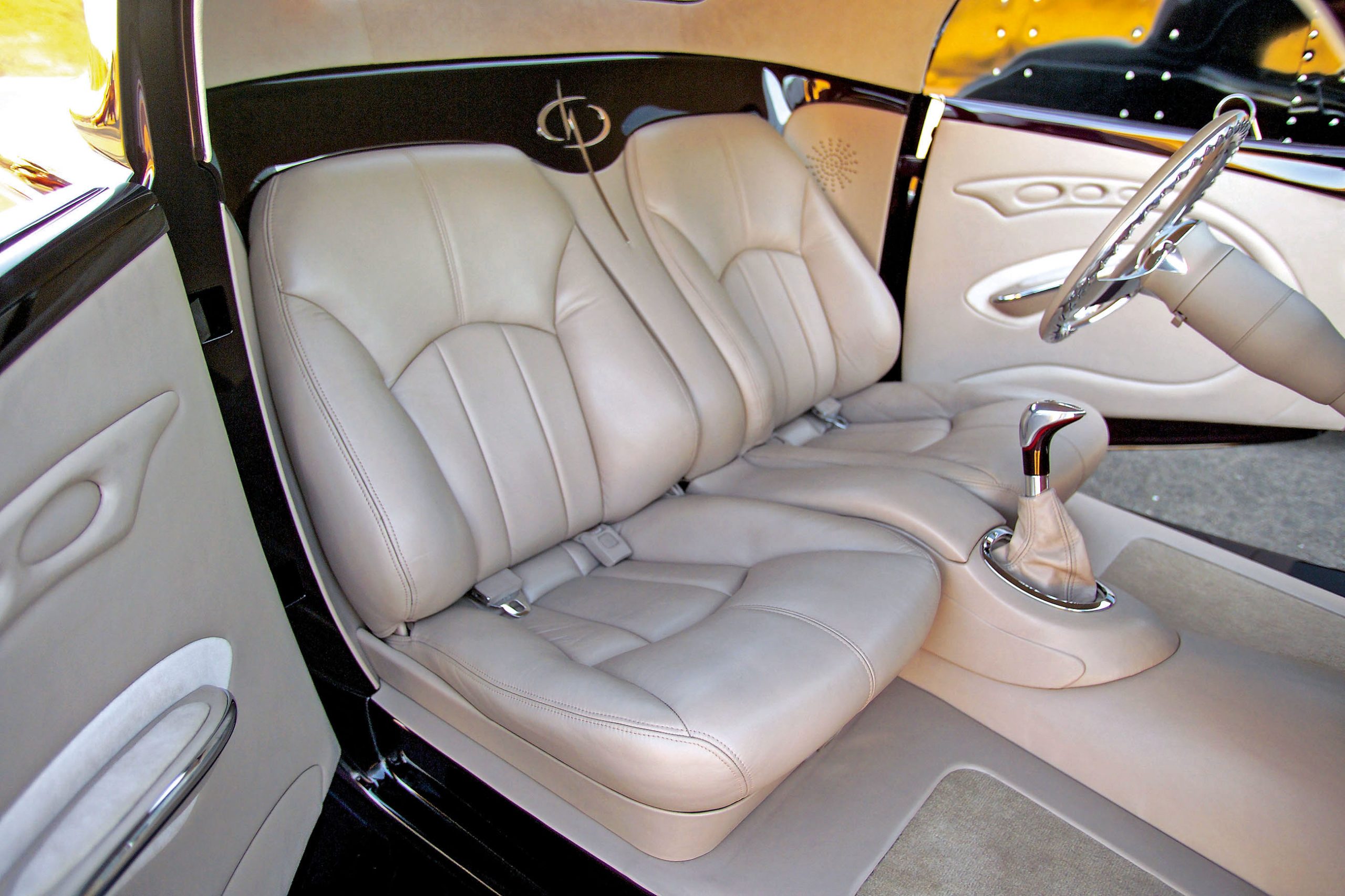
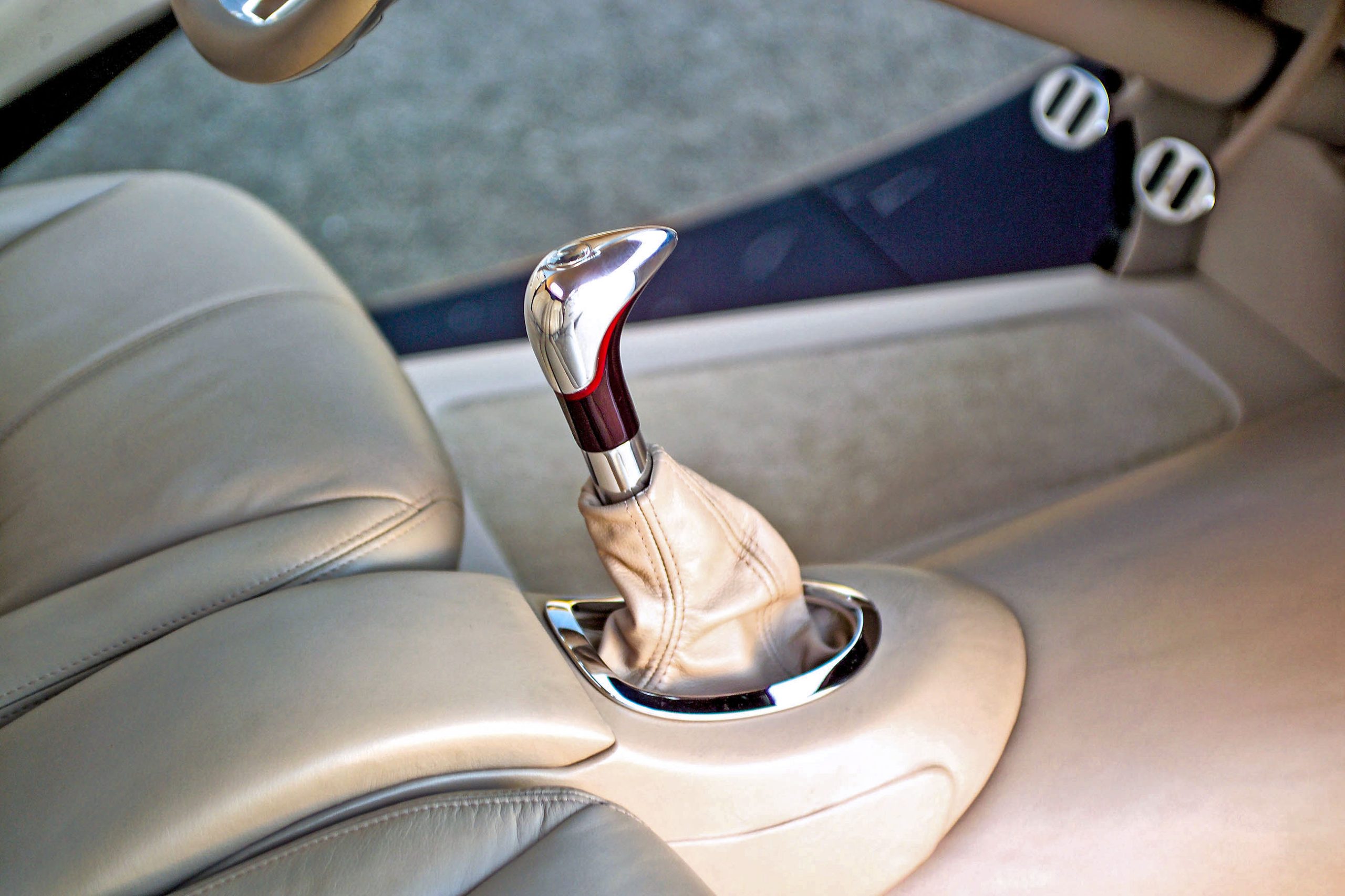
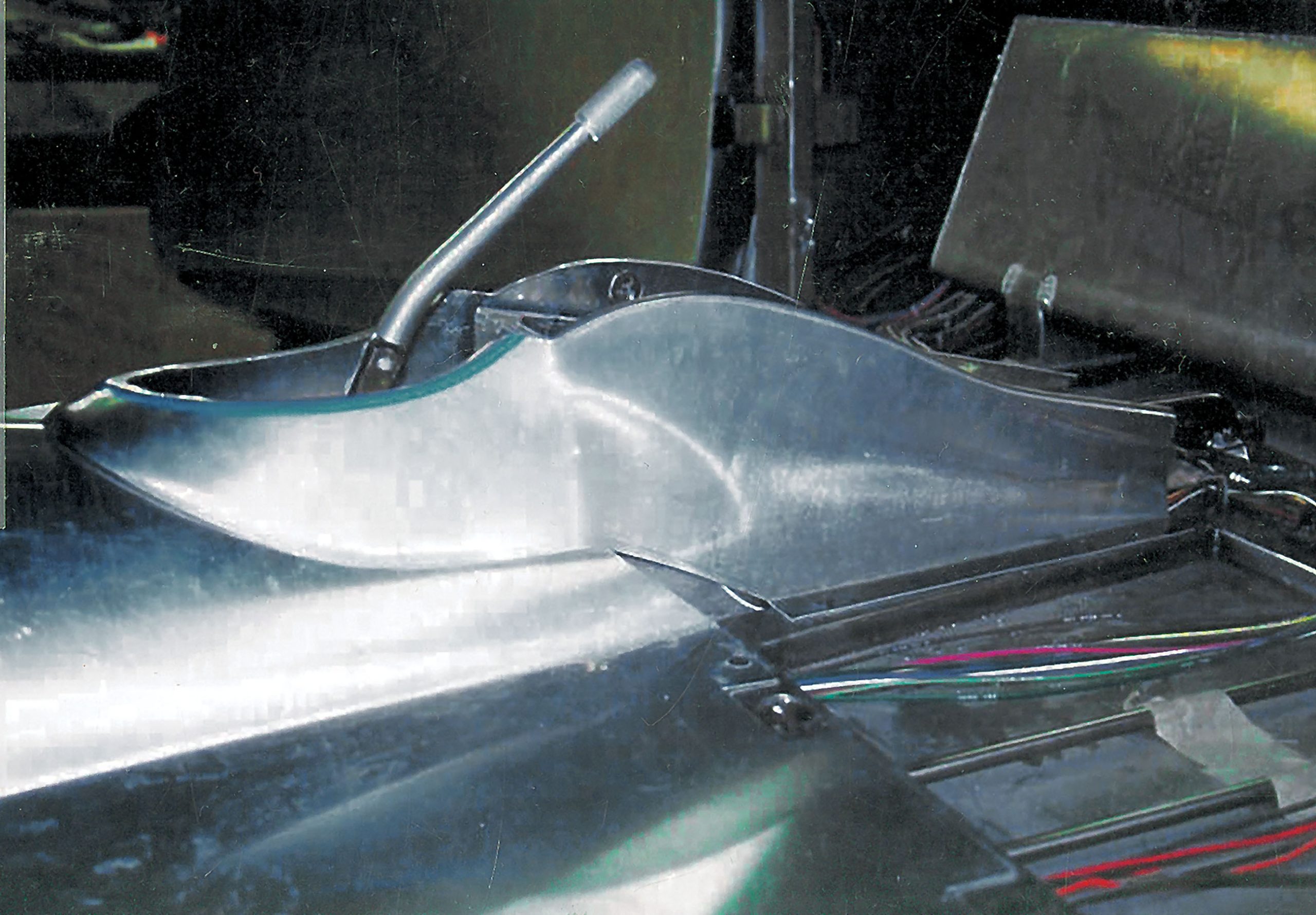
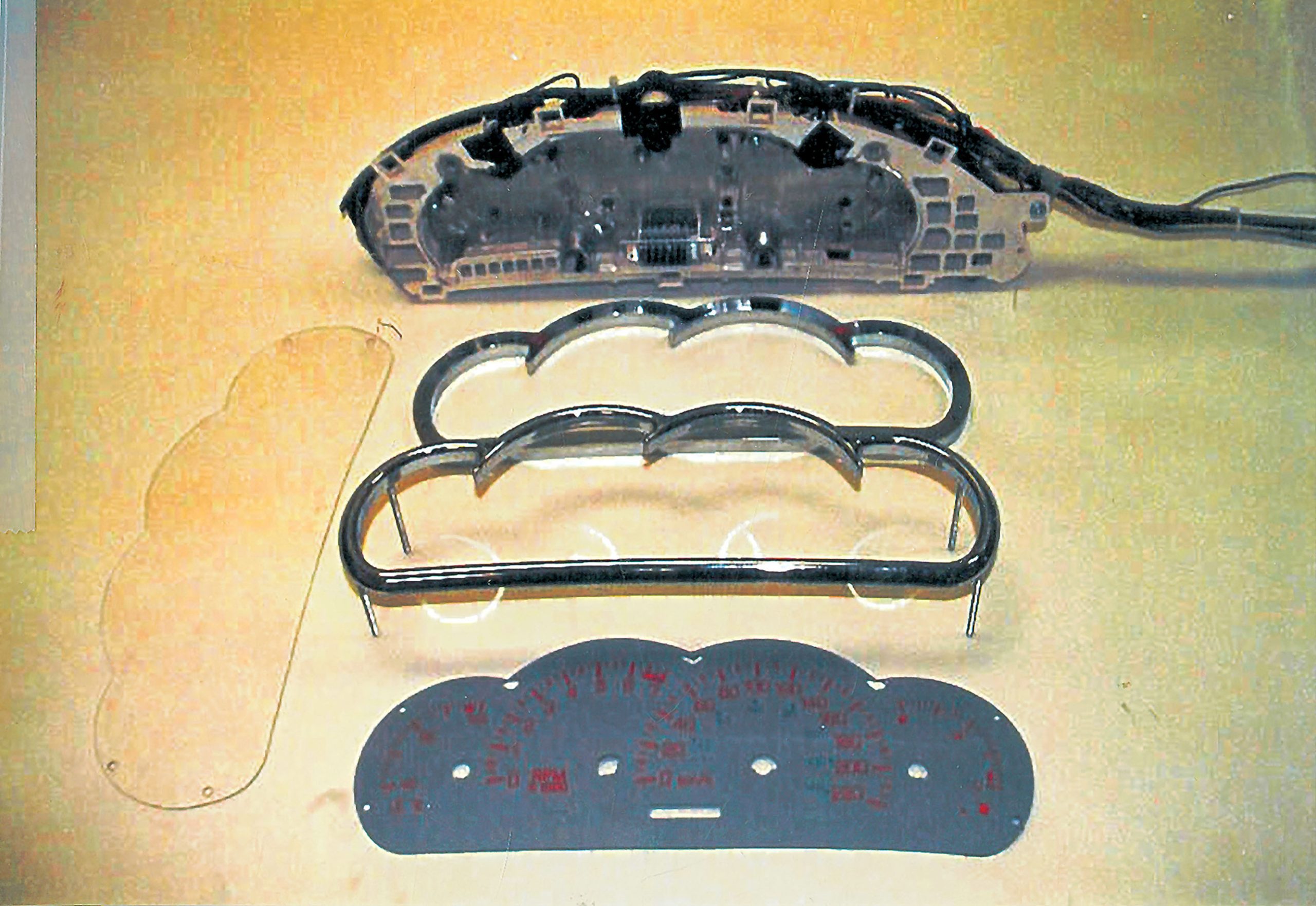
The same can be said of the interior, which was outfitted by Iowa City, Iowa’s McFall’s Auto Trim in beautifully contoured, burgundy-tinted beige leather that conceals still more of the same amazing metalwork. The aluminum details include the ’33-style dash with its specially designed gauge panel, the smoothed panels below, and the molding that leads into special door panels. Between the seats, a shapely console houses all the accessories and the cleverly designed billet shifter. Surrounding efforts make up the kick panels, trim pieces surrounding the seats, the door and windshield trim, and the laser-cut stainless steel Storm logos on the dash and between the seats. The unique, freestanding steering column has been fitted with a steering wheel designed to match the beautiful road wheels, and the turn signals and tilt mechanism have been combined into one control. Other controls for the windows, power trunk lift and rear license plate retractor are hidden away. Above, there’s a fiberglass panel that forms the headliner, and like every detail on this car, its suede-covered surface conforms precisely to its surroundings.
While we could continue for pages describing the finer points that make up this coupe, we instead leave the accompanying buildup photos to tell the rest of our story. As it’s been said, one picture can tell a thousand words, and it’s here that you will discover volumes about a car that’s taken the show circuit by Storm.