


THE AUTO BUILDER
Featured

For-ward Thinking
Those who know Ottawa, Kansas Roger Ward are almost certainly aware of his dry wit, his candid demeanor and his unique ability to create understated cars, one after the other. His talent in applying the most understated details to relatively unsung vehicles provides a lesson for us all that the best way to make a strong statement is to say as little as possible and do it your own way.
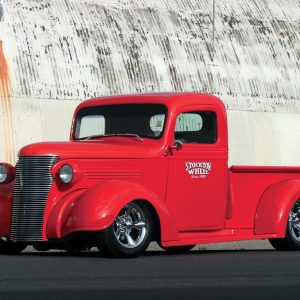
While his daily duties revolved around reworked body panels and refining those efforts with a paint gun, his lifelong hobby has focused those skills on a series of cars that exudes the same laid-back character which can be enjoyed in this extremely subtle, yet equally eye-?catching, 64 short-wheelbase Chevy pickup. As with so many trucks of this era, previous owners didn’t worry too much about retaining its pristine originality. Dented and rusty, this truck had been through the proverbial ringer, which made this conversion that much more difficult to achieve. Then again, Ward’s particular talents have made a great deal out of lesser vehicles, so this would simply be another test of his talents and another example of the skills he wields.
Jumping for Joy
The scene was electric at LS Fest West, where off-road enthusiasts converged for a wild display of adrenaline-pumping action! From far and wide they came, eager to conquer the freshly minted short course. This track was no joke, boasting treacherous whoops, technical challenges, and heart-stopping jumps that launched machines skyward, holding spectators in rapt attention.
TAKING IT TO HEART
Sometimes building a street rod can be downright exasperating. The amount of money involved and the stress of chasing down parts and coordinating the efforts of multiple shops can lead to a fair bit of tension in any owner. How many times have you heard someone say something along the lines of: “That damn car’s going to give me a heart attack!”? Odds are you’ve heard it or even said it at least once or twice if you’ve been involved in rodding for any length of time.
Spotlighter
POPULAR READS
-
Product Spotlight: Bill Mitchell Products Aluminum LS Engine Block
-
PRODUCT SPOTLIGHT: 60-66 Chevy C10 Fresh Air Vent Block Off Plate
-
Product Spotlight: Pyramid Optimized Design Sequential Aurora Taillight for 1964½–1966 Mustang
-
PRODUCT SPOTLIGHT: Cam Covers for GEN/3 Coyote from Pyramid Optimized Design
Right Rod
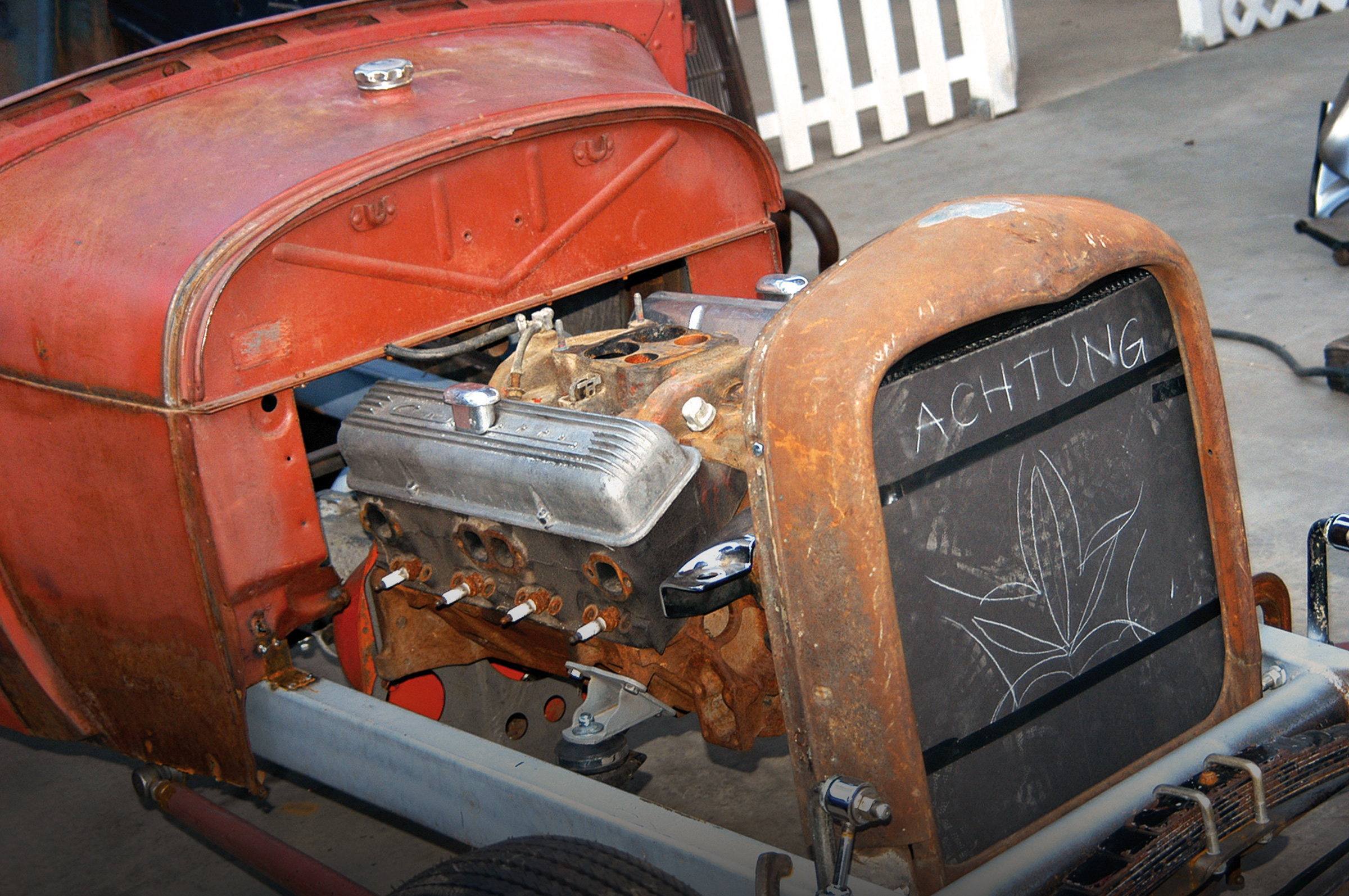
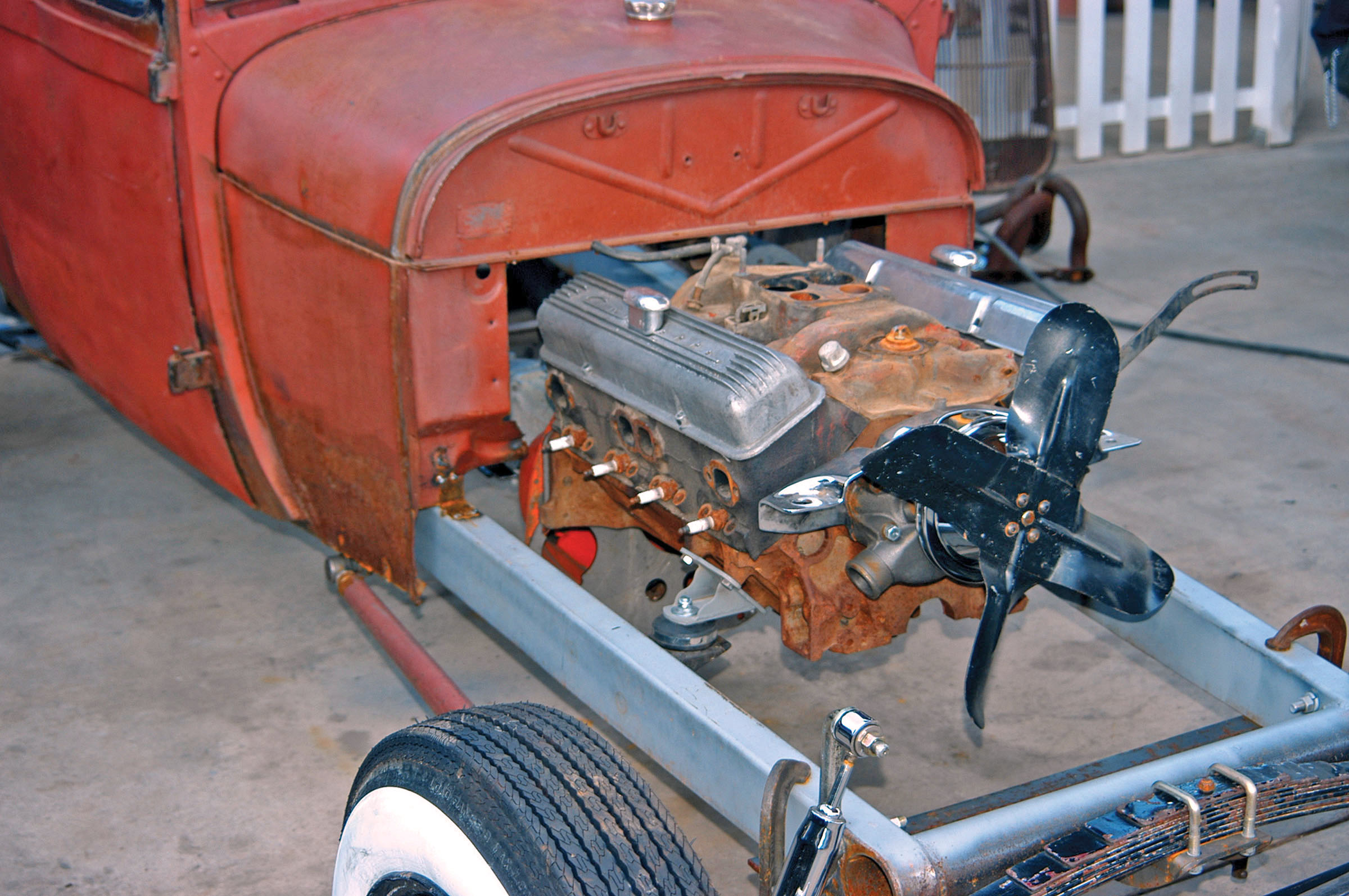
Installing a Chevy Engine and a Four-Speed Transmission in a Rat Rod Chassis
Author
Jeff Tann
Words & Photography
Building a Safe and Reliable ’28 Sedan Rat Rod
When Amadeus Ramirez-Reynolds started building this ’28 sedan rat rod, he wanted it to look cool, but he also wanted it to be safe and dependable. Amadeus has seen other rat rods broken down on the side of the road, and that’s certainly not the kind he wanted. Amadeus decided to use old parts where he could get away with them, such as on the front suspension. All of the parts he used were in good condition and rebuilt so that they would be reliable. The rear suspension was also done in an old style, but he upgraded the differential to a Ford 9-inch that would be reliable and able to handle plenty of horsepower. Before the rearend was installed it was totally rebuilt, and that also adds reliability to his rod.
Choosing a Chassis and Engine for Reliability
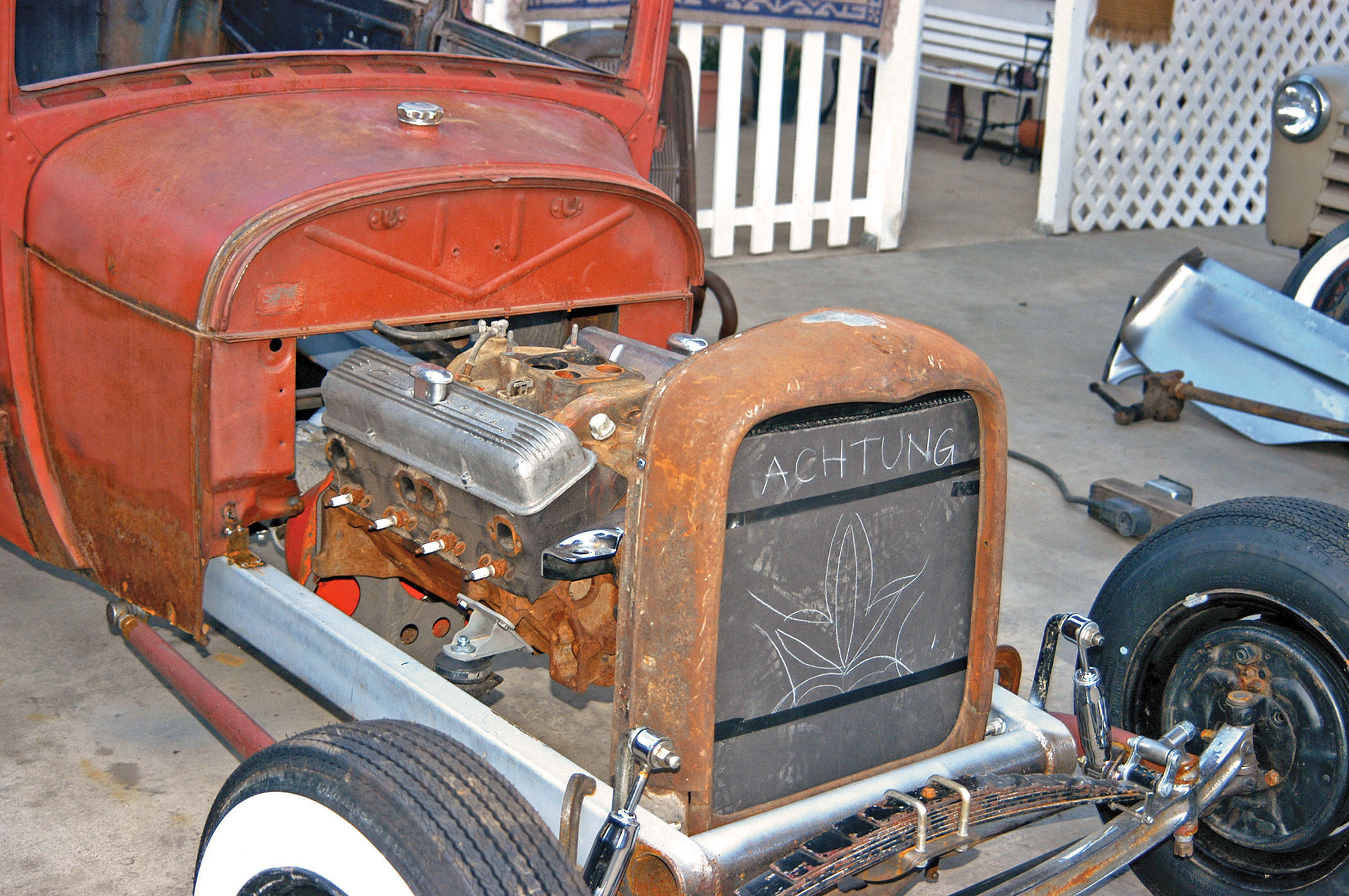
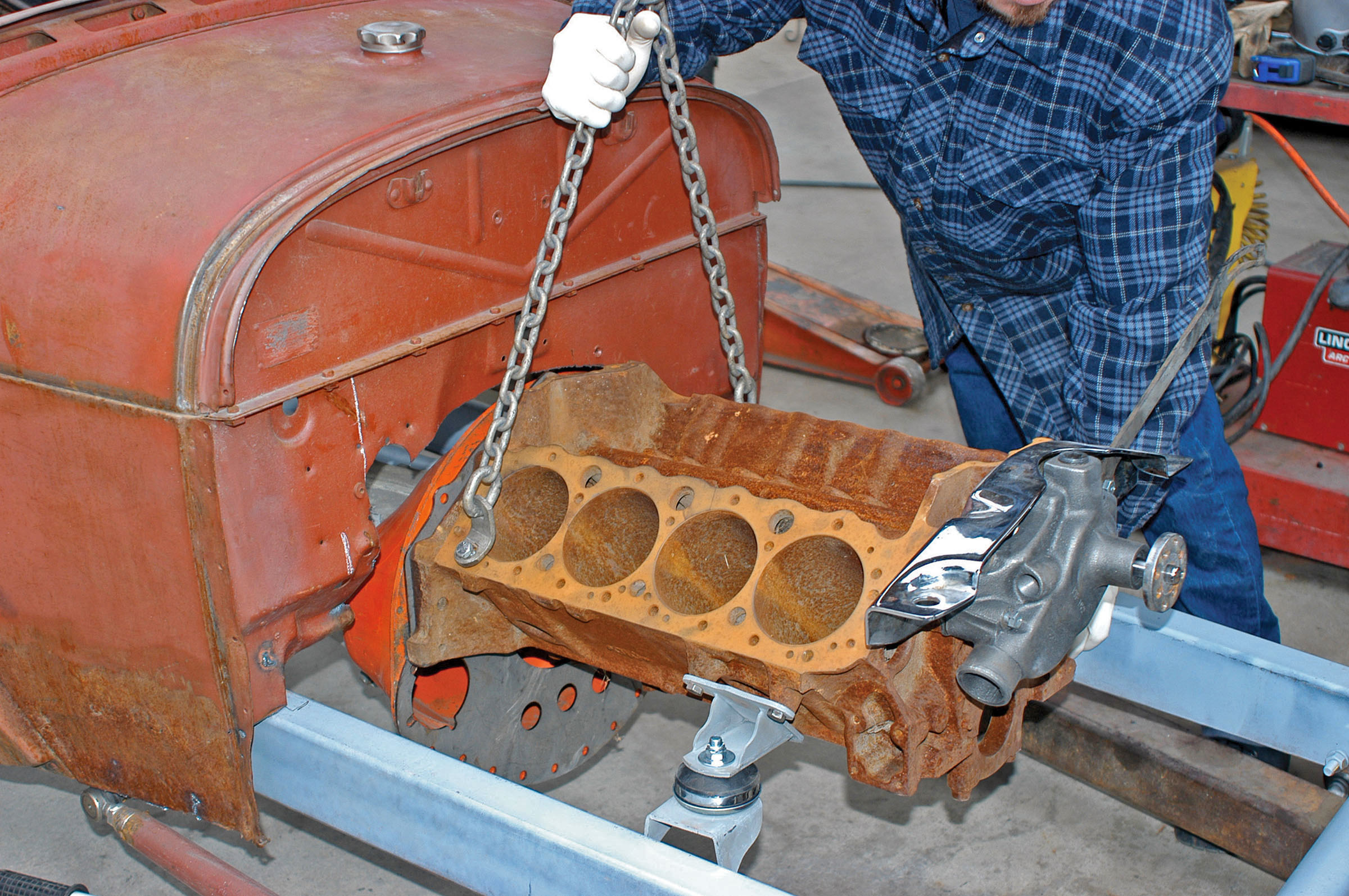
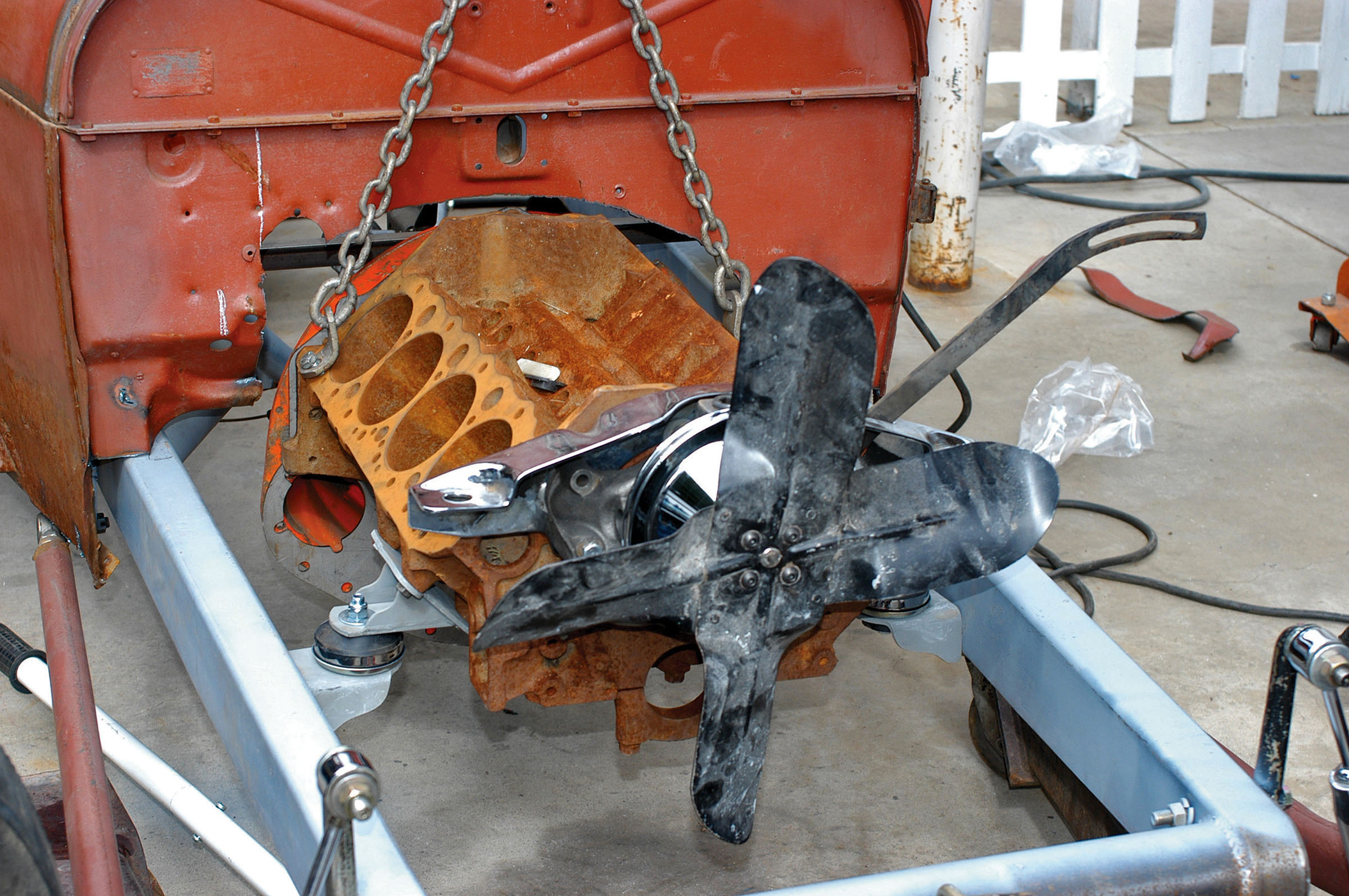
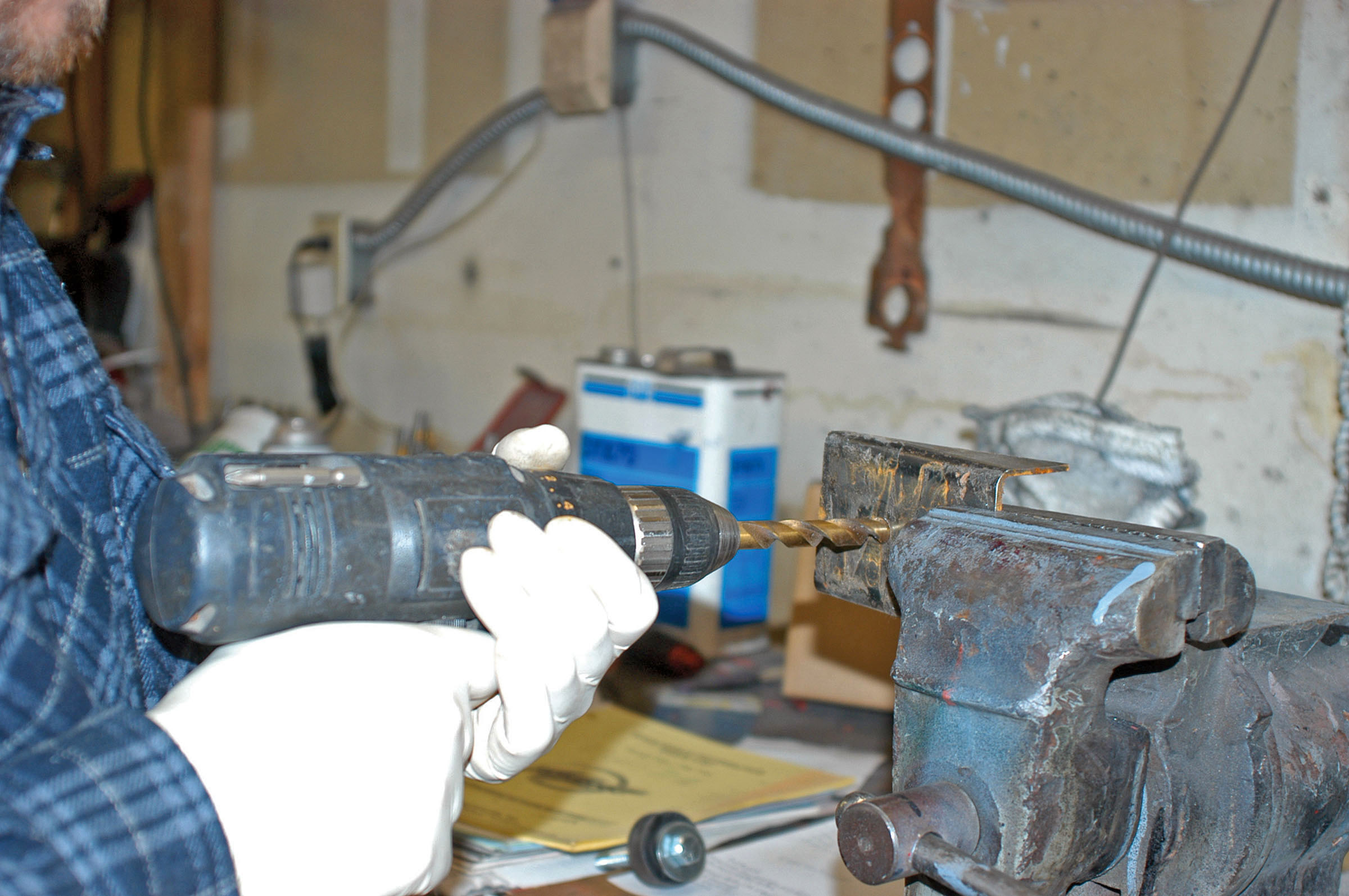
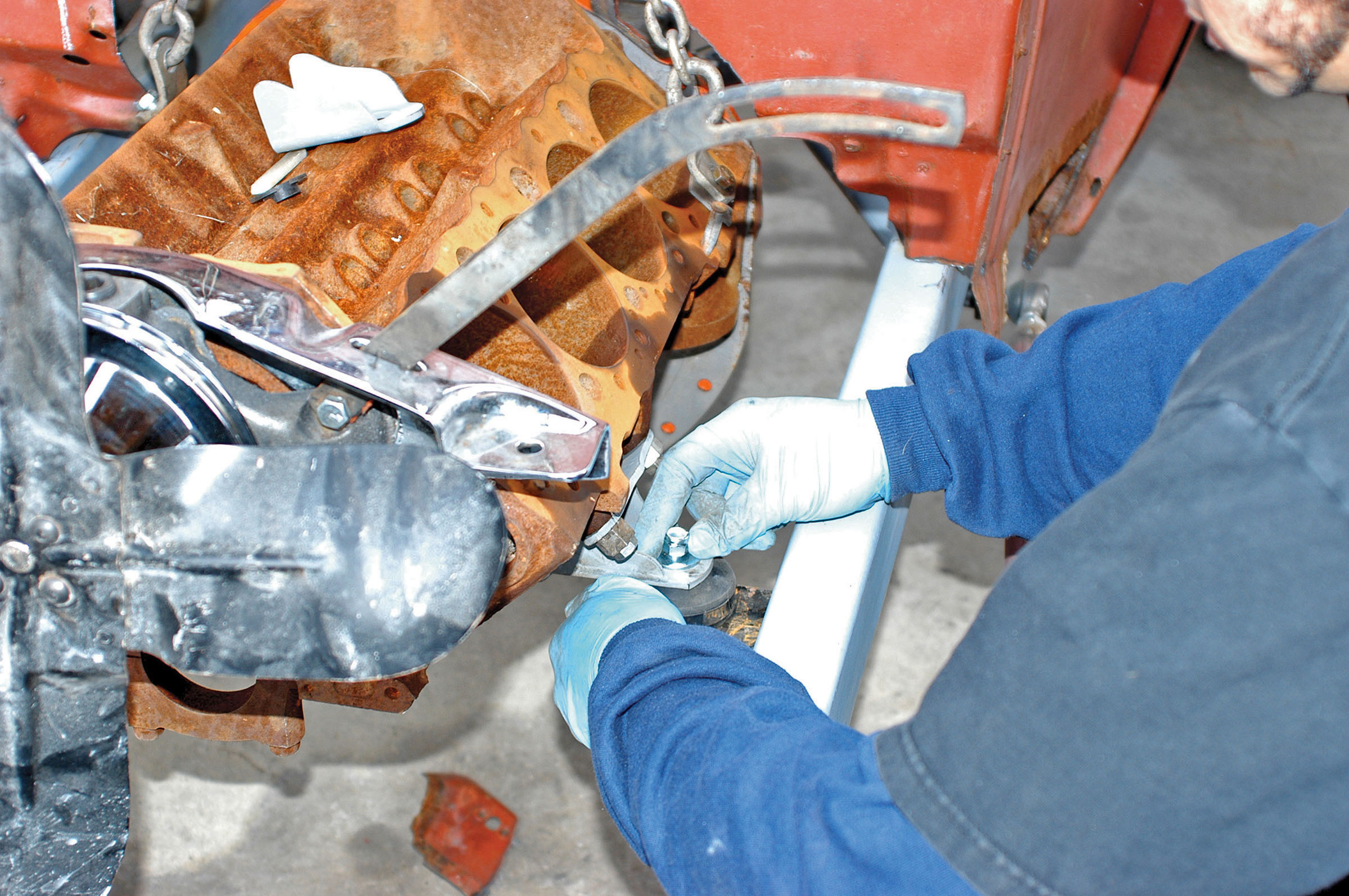
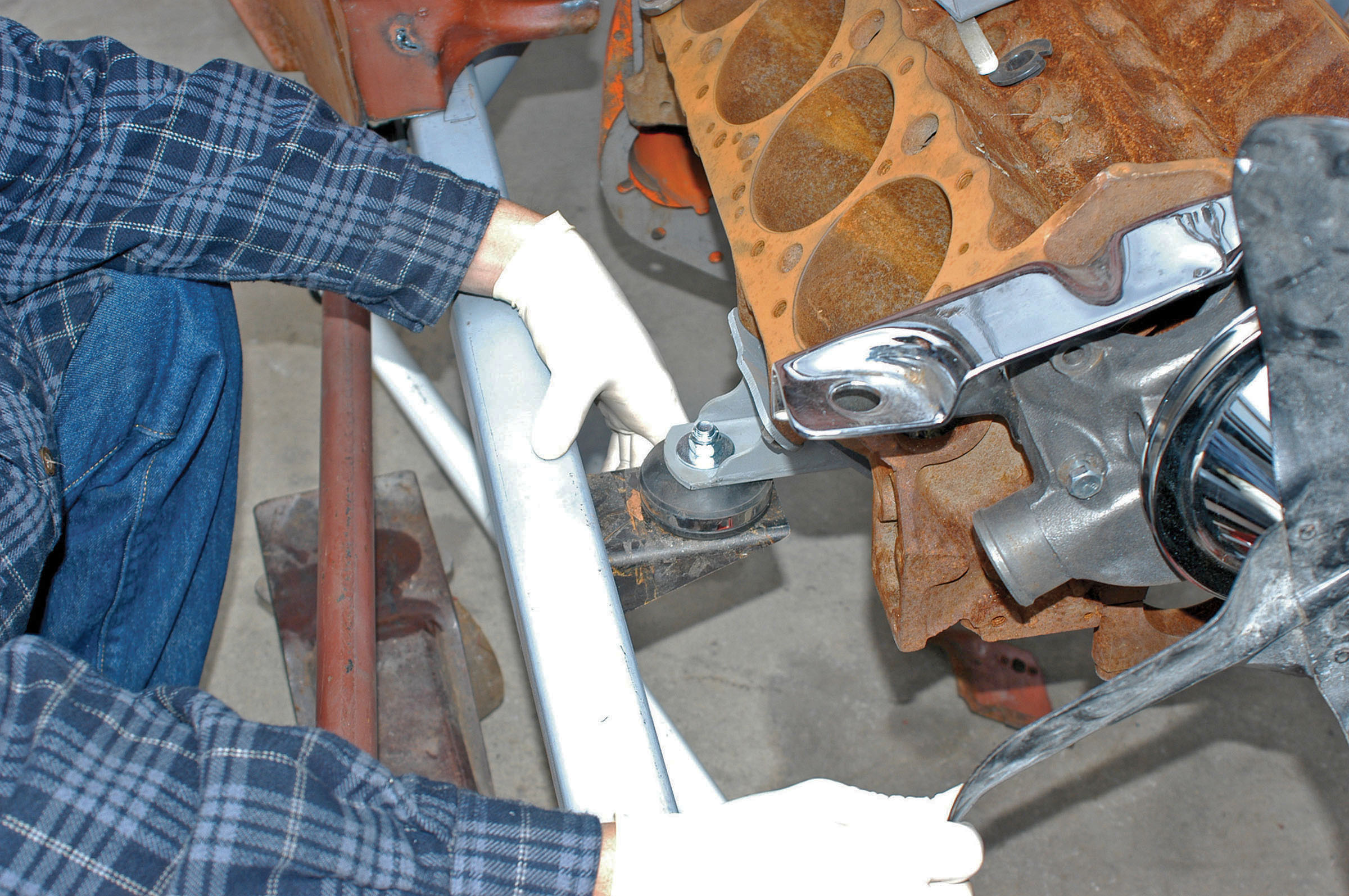
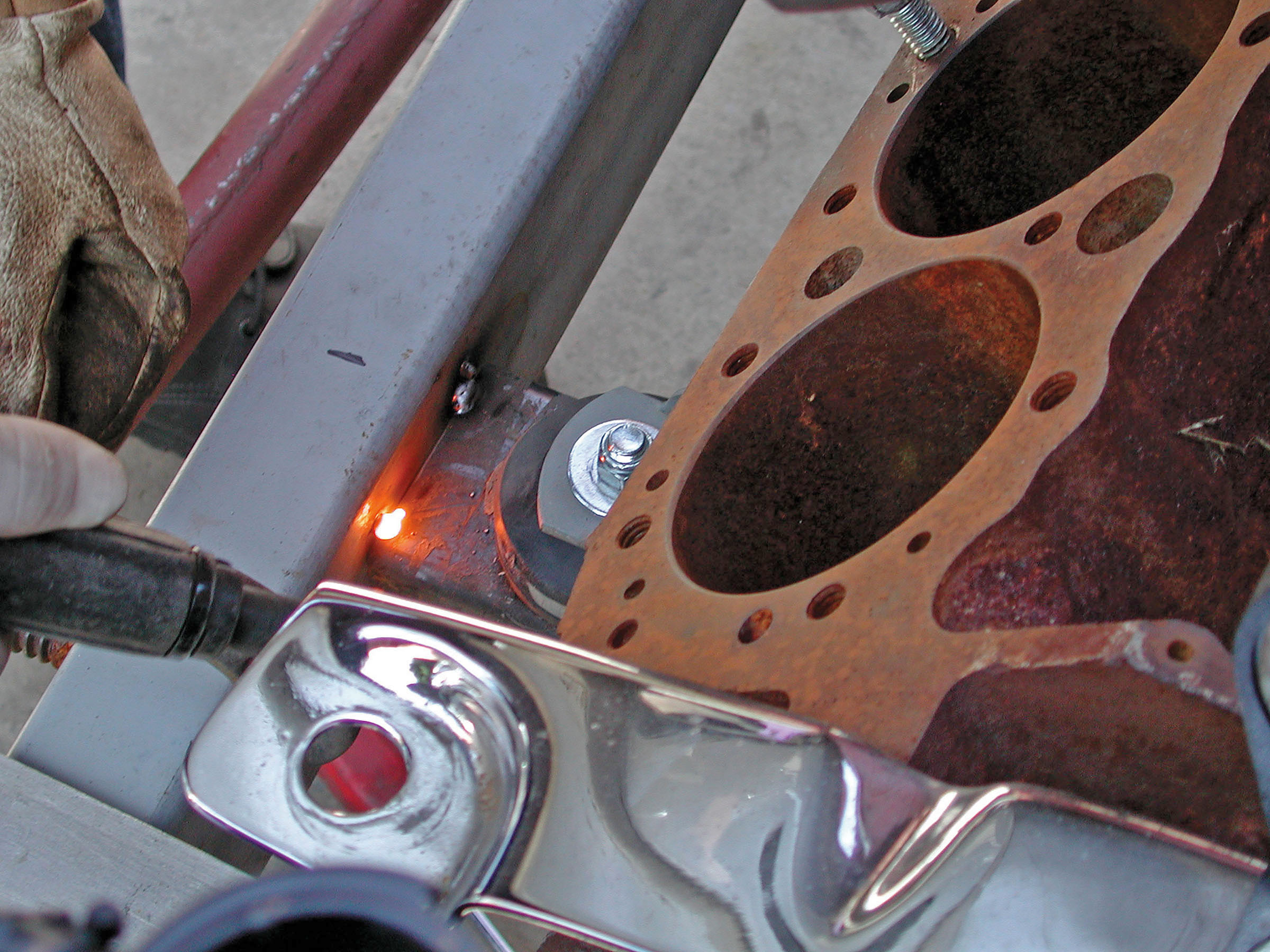
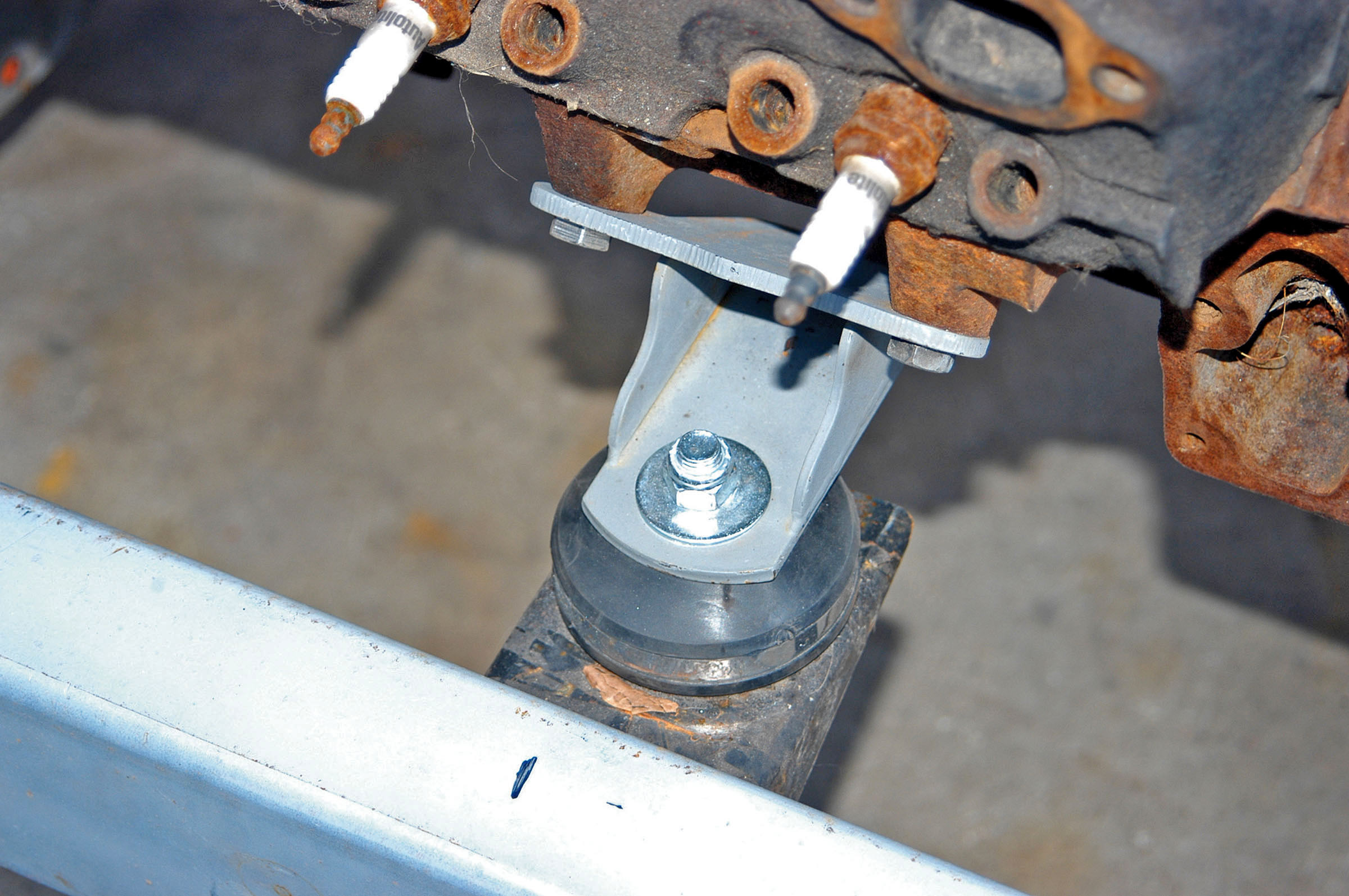
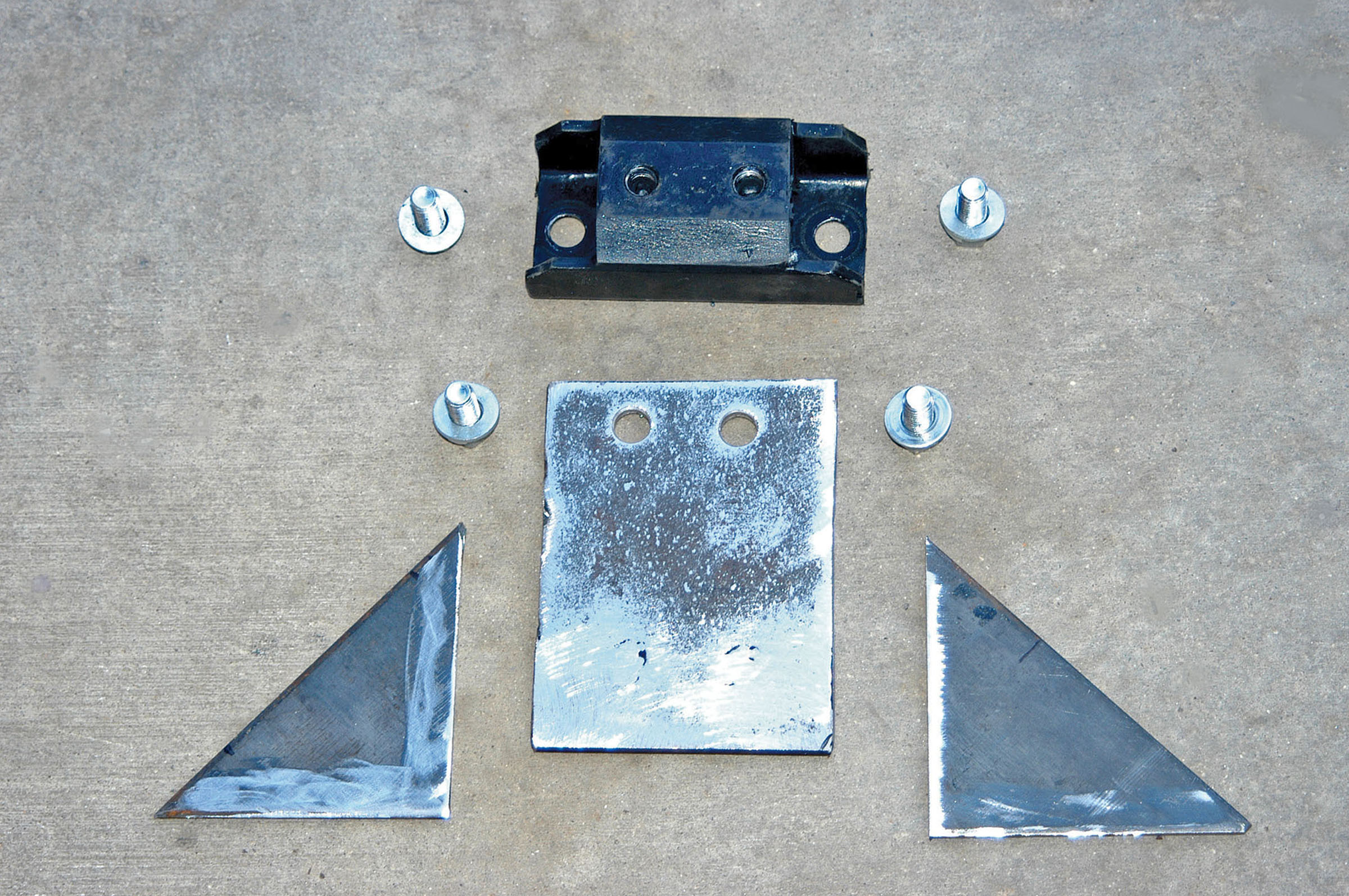
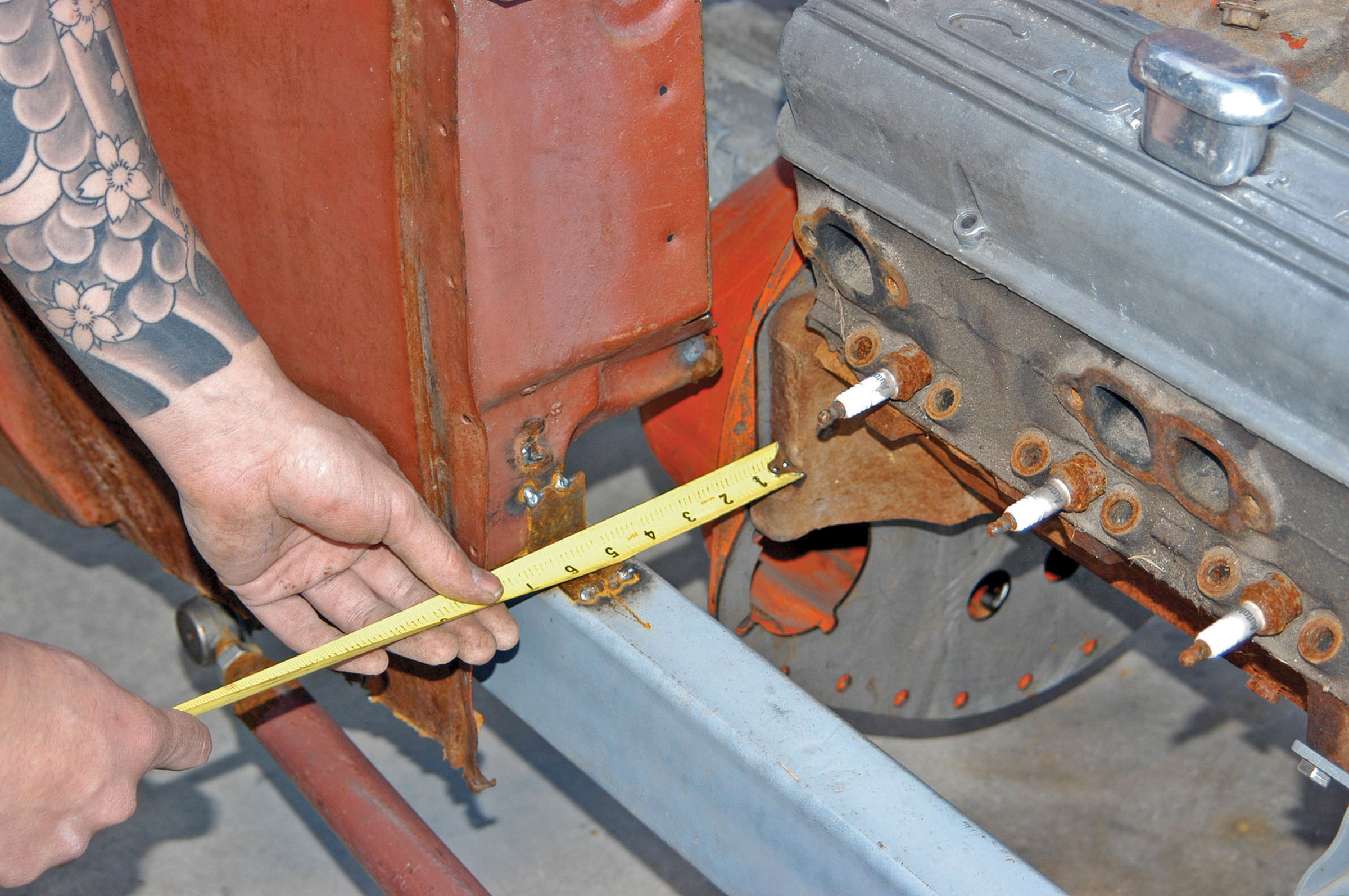
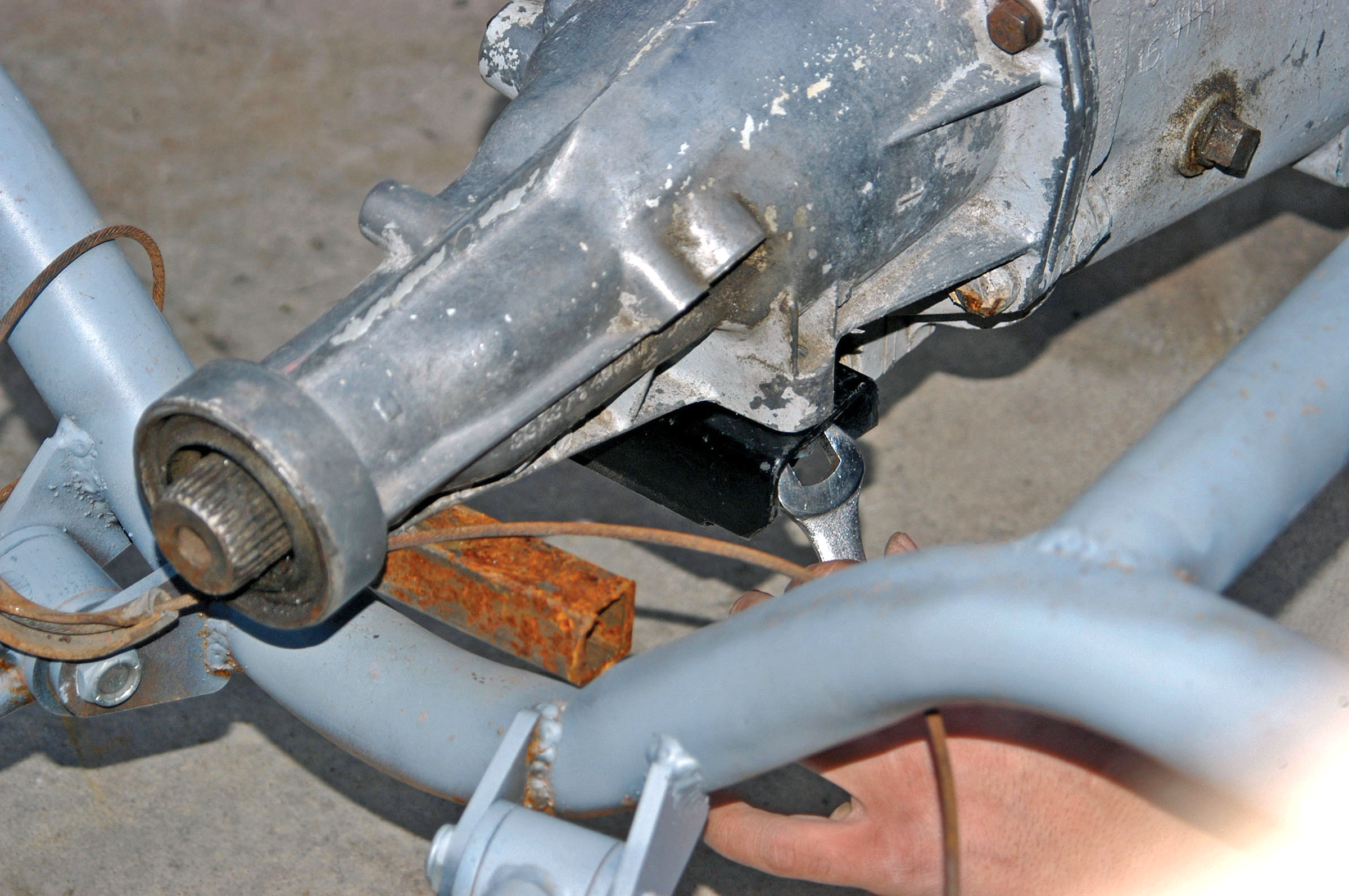
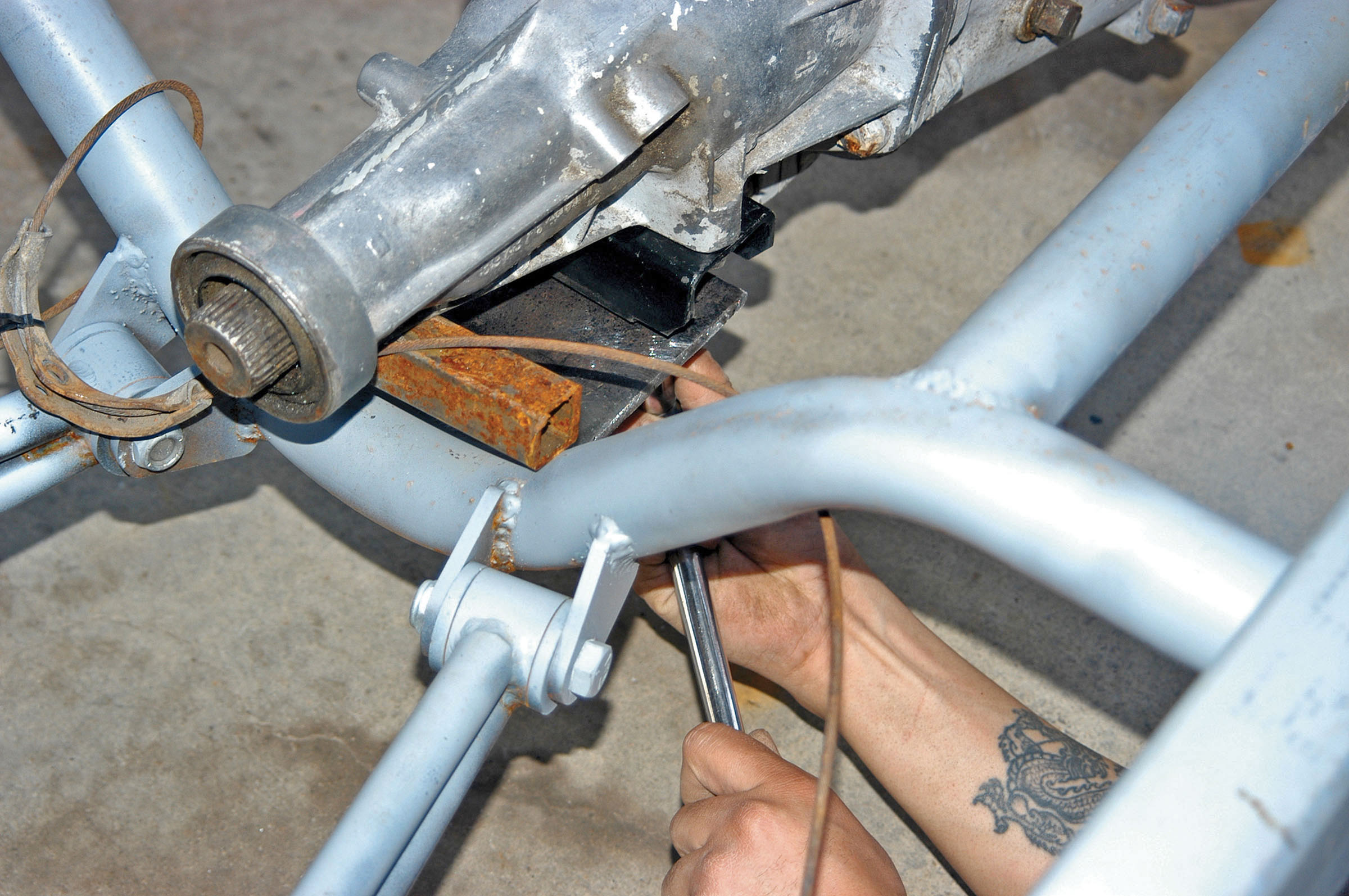
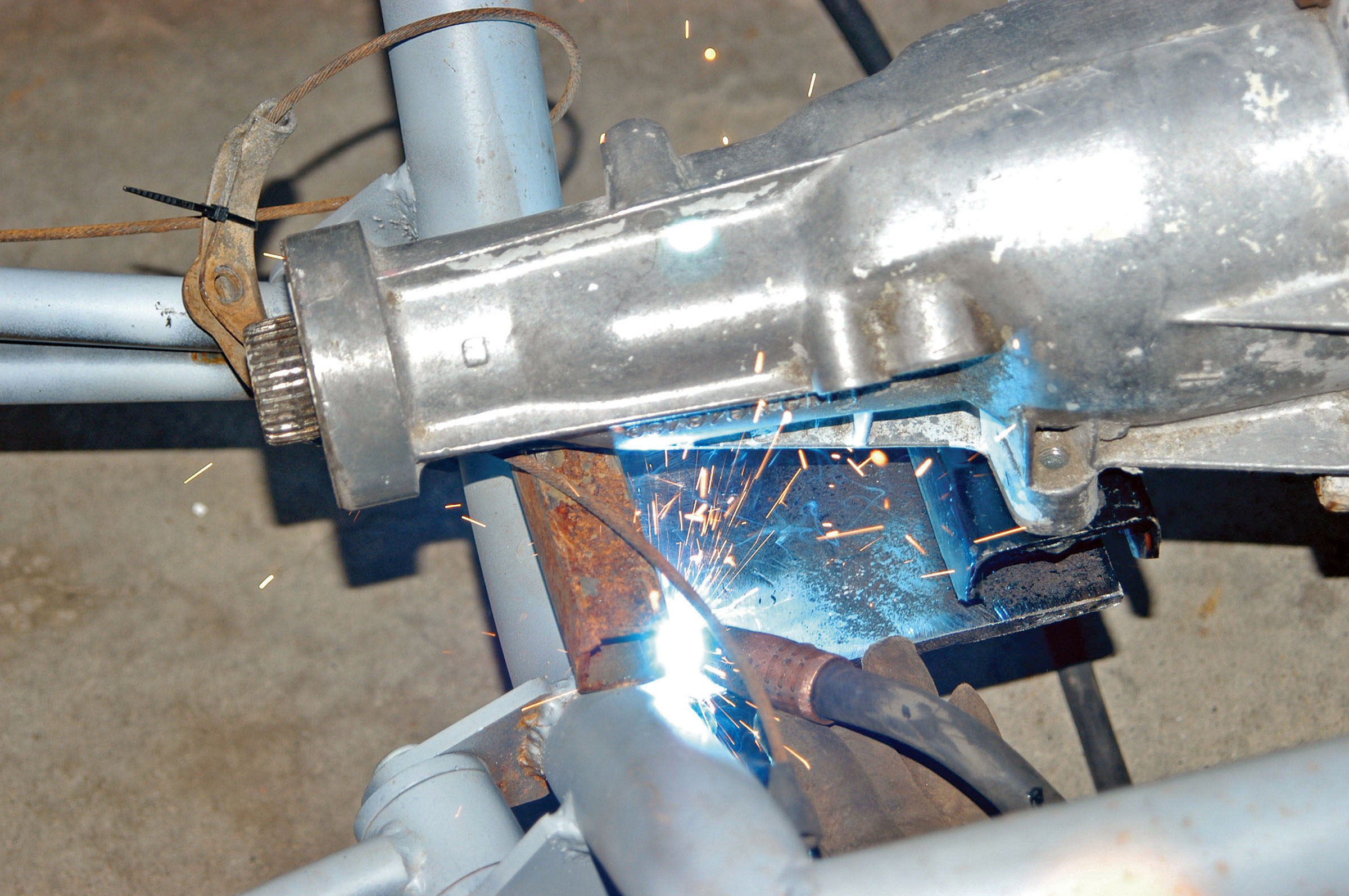
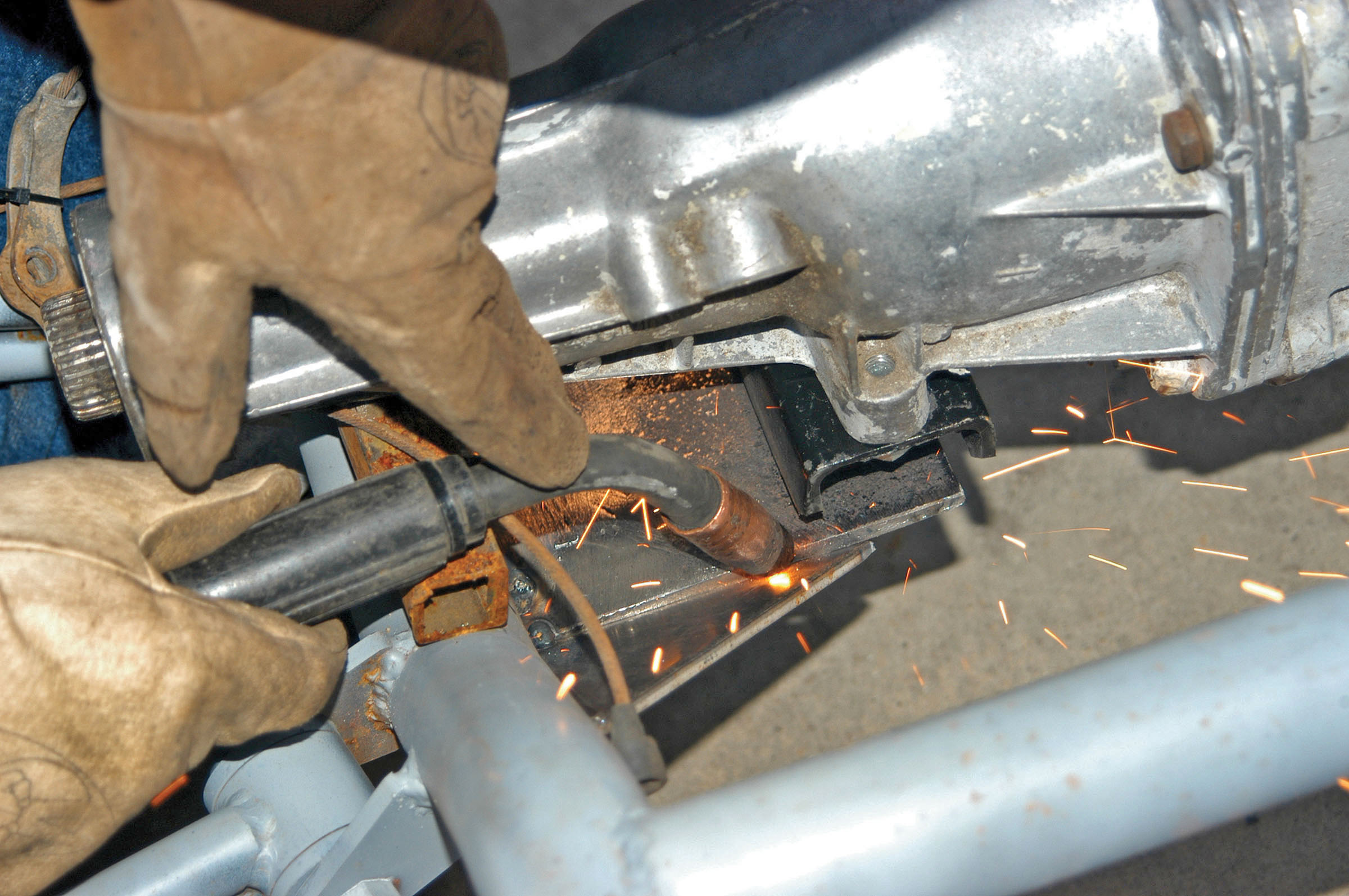
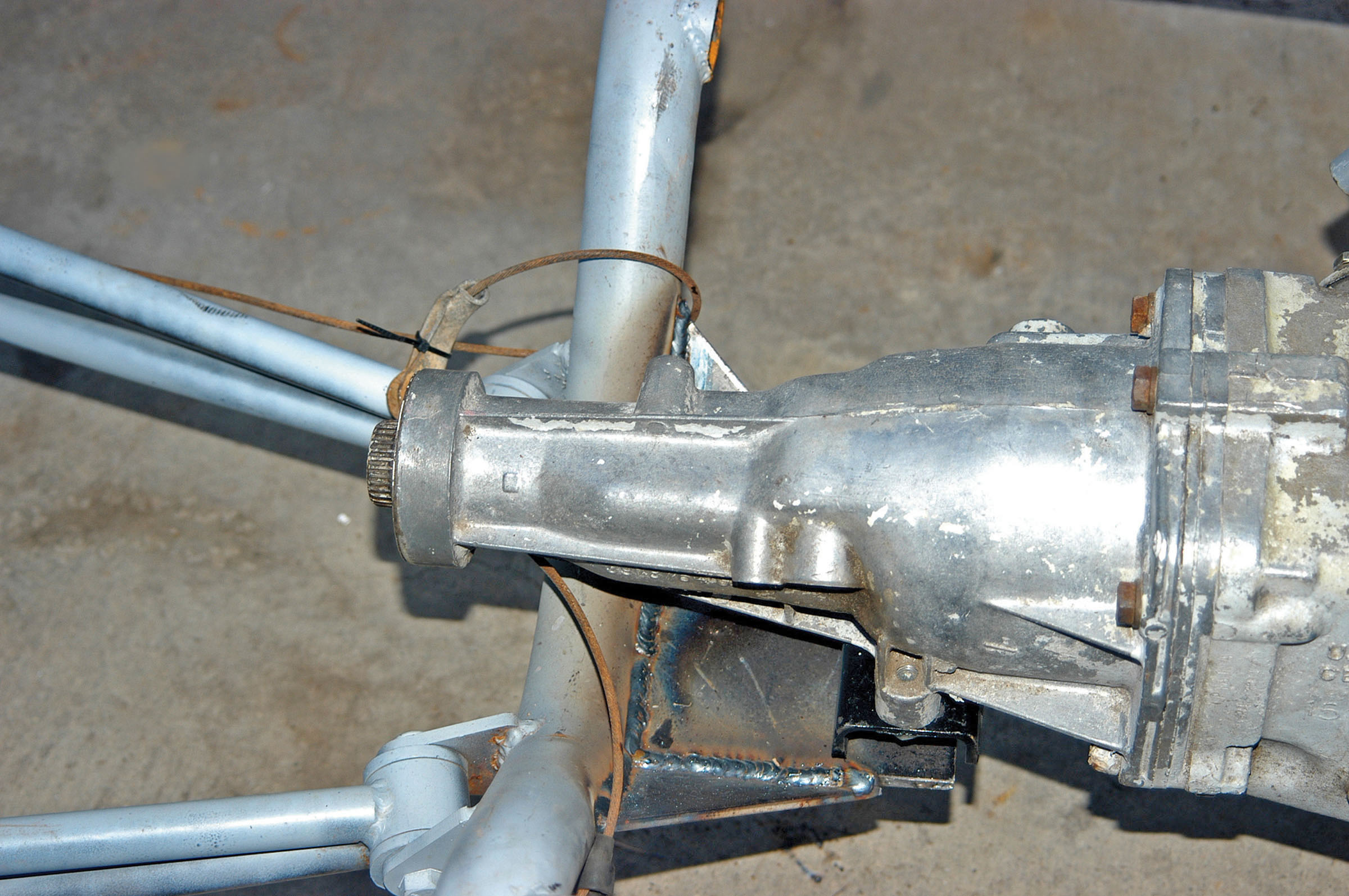
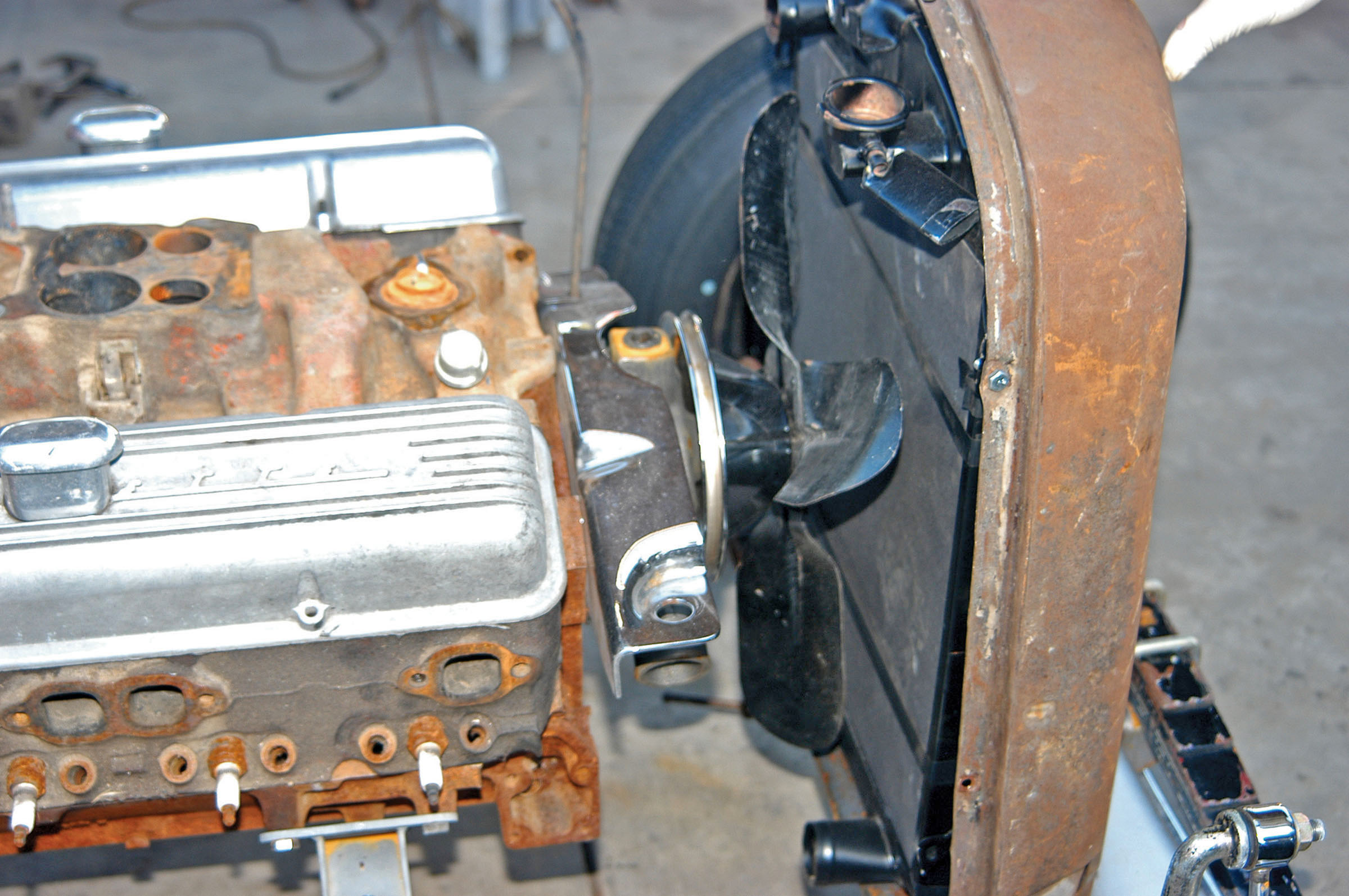
Amadeus decided that it would be cost effective to purchase a new chassis for the rod, because by the time he started with a stock Model A chassis and fixed all of the problems it would cost more money than buying a nice unit from Last Refuge Hot Rods. Amadeus could have used any number of old V-8 engines, but again, for reliability he selected a 350 Chevy engine and totally rebuilt it with a 0.030-inch overbore and a 400 crank, giving the engine 383 cubic inches. The engine also has fuel injection heads and a high-performance cam, and it made more than 400 horsepower on the dyno. The engine is going to be hooked to a Muncie four-speed transmission, and that gives you a good idea of why he selected a strong 9-inch Ford rearend. The Last Refuge Hot Rods chassis didn’t come with engine mounts, so it was up to Amadeus to install them himself. Amadeus contacted Chassis Engineering and ordered a set of engine mounts. The transmission mount will be engineered after the front mounts are installed.
Installing a High-Performance Chevy Engine
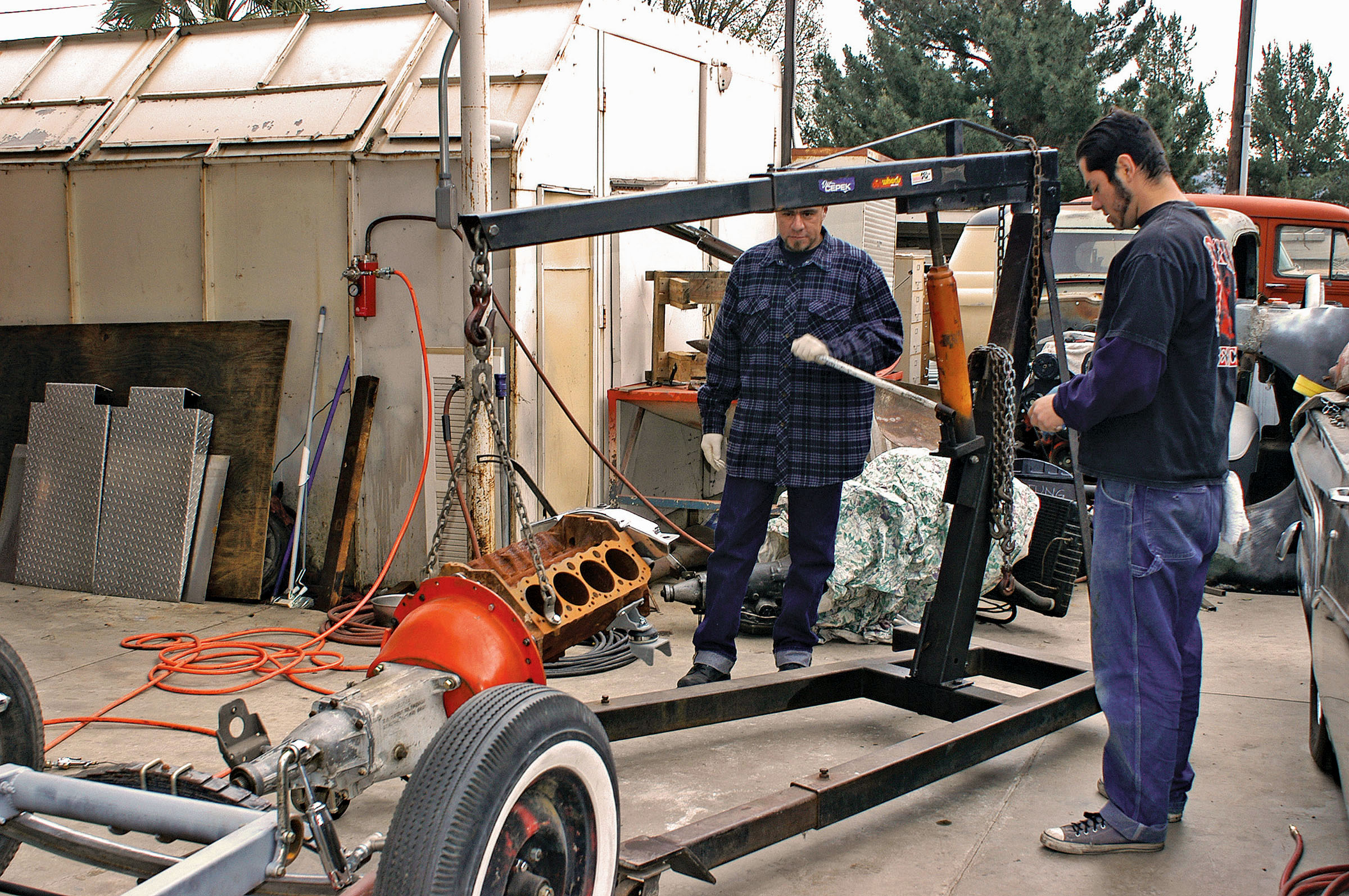
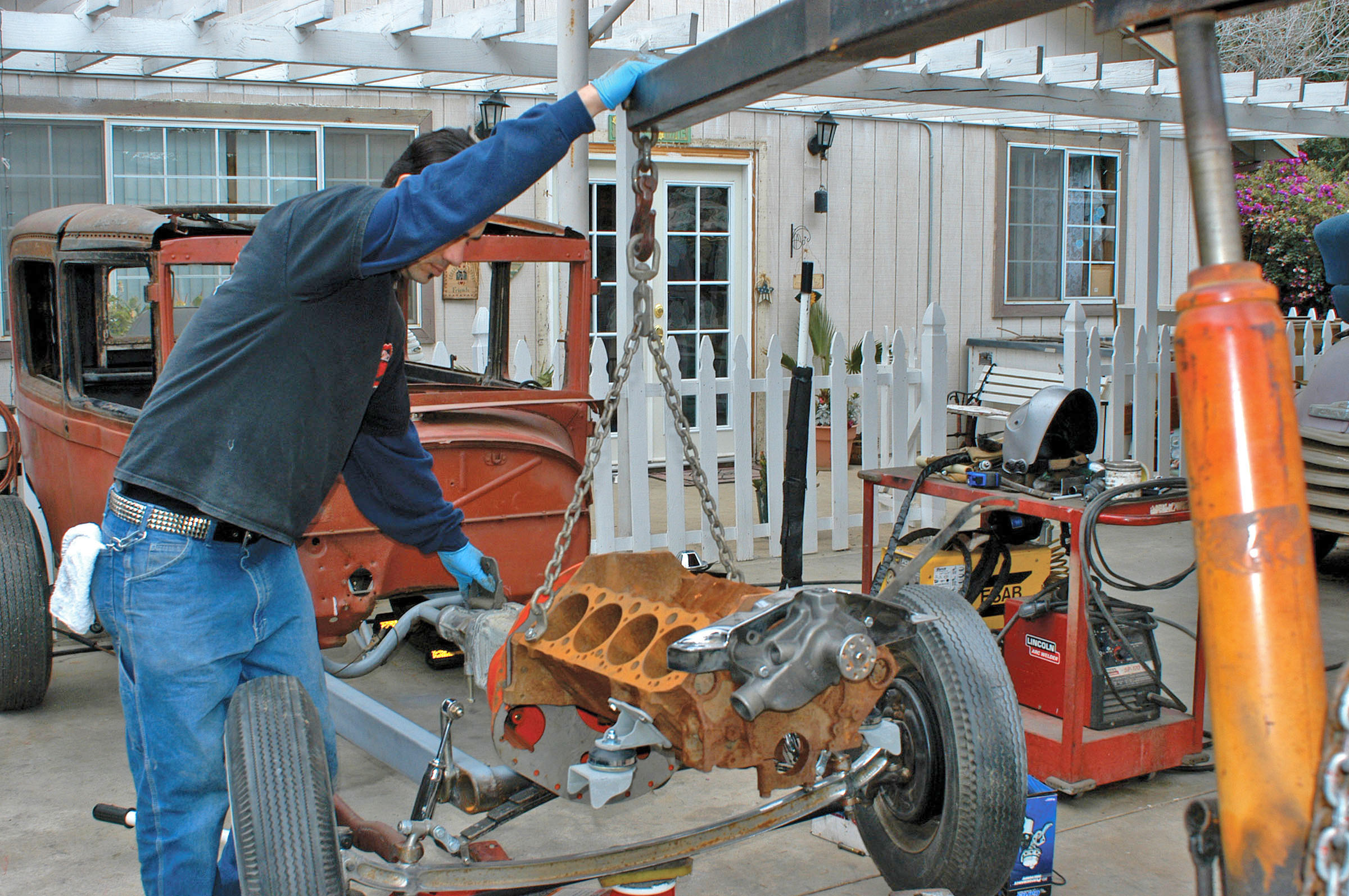
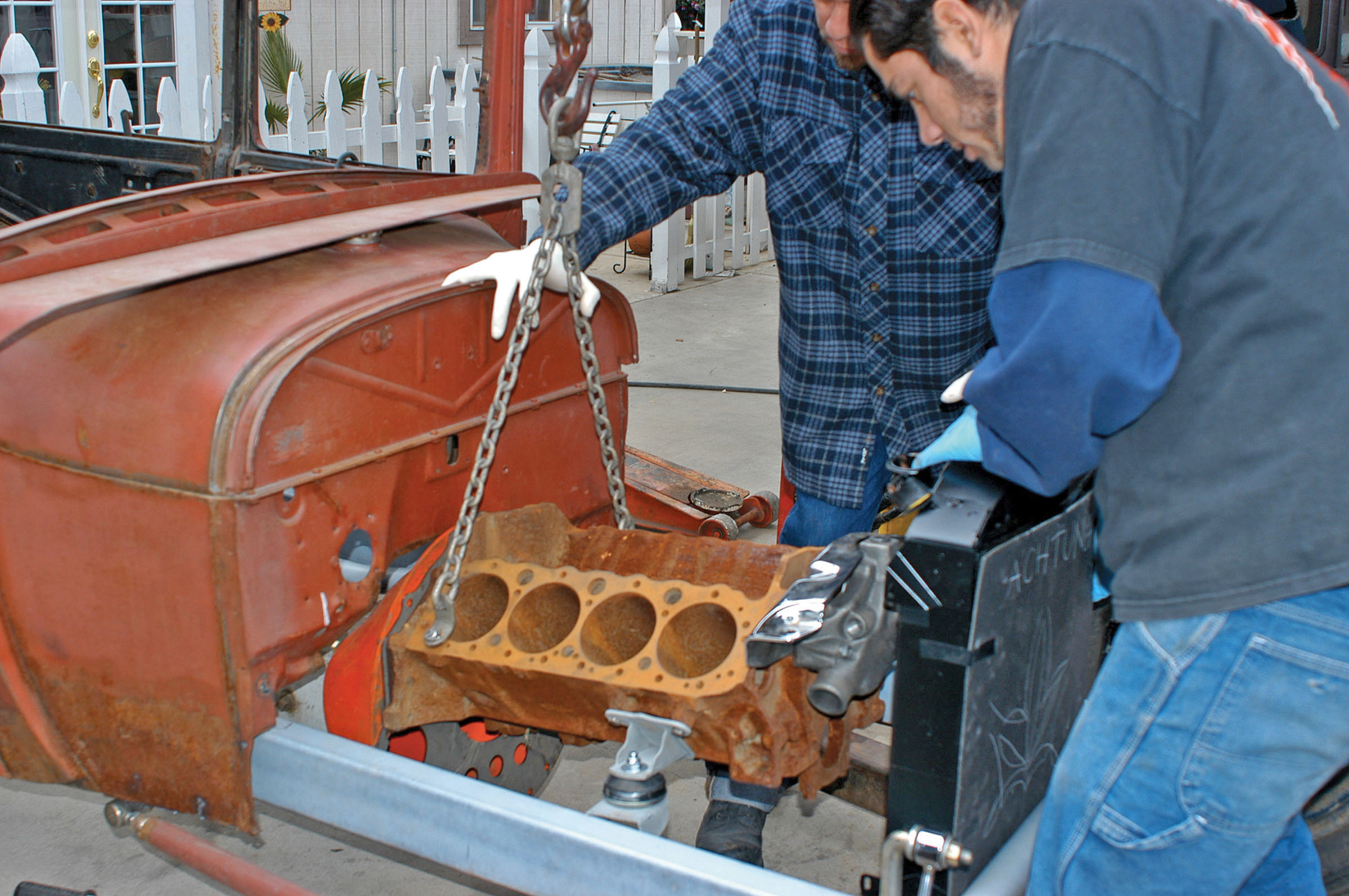
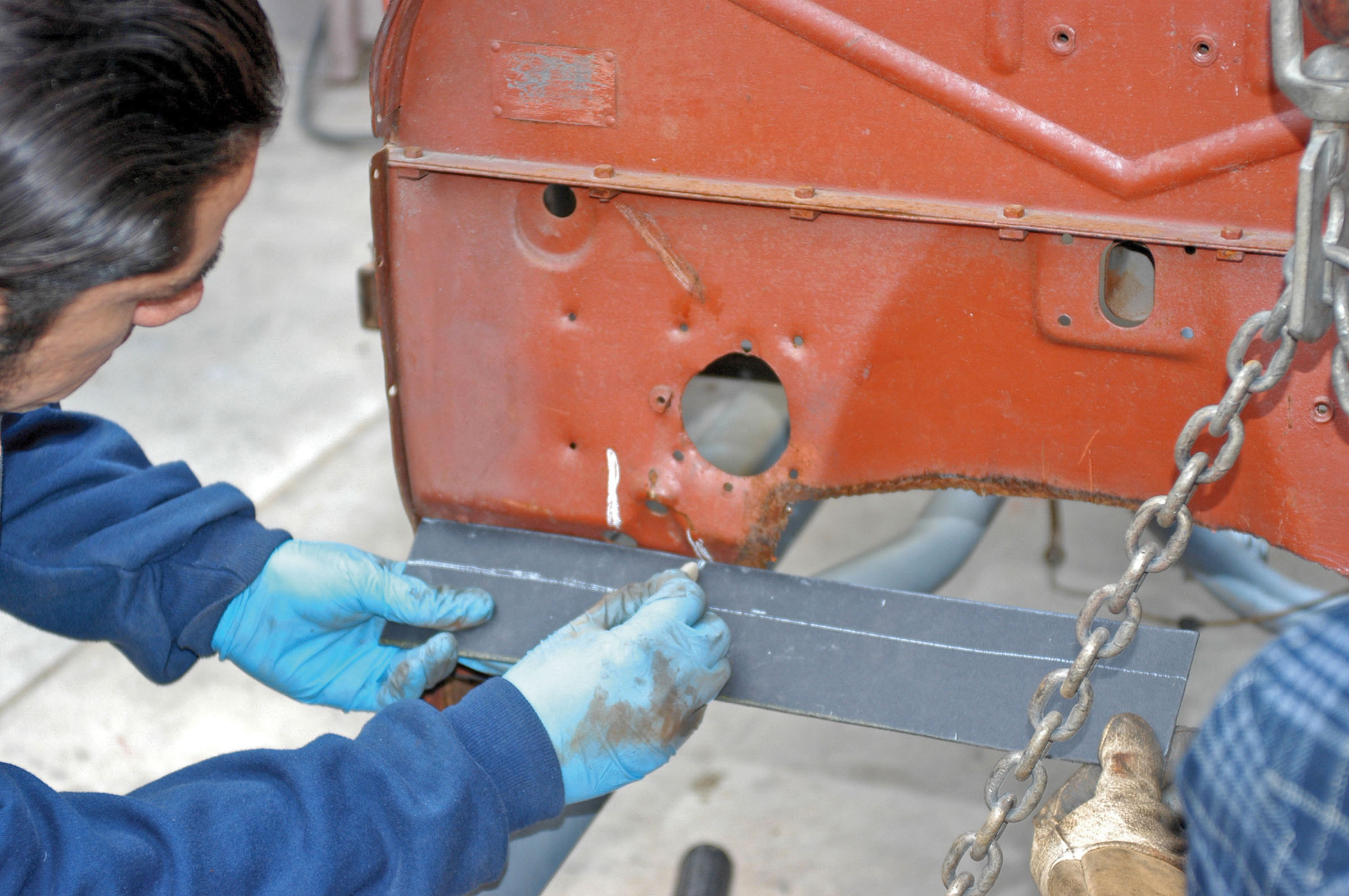
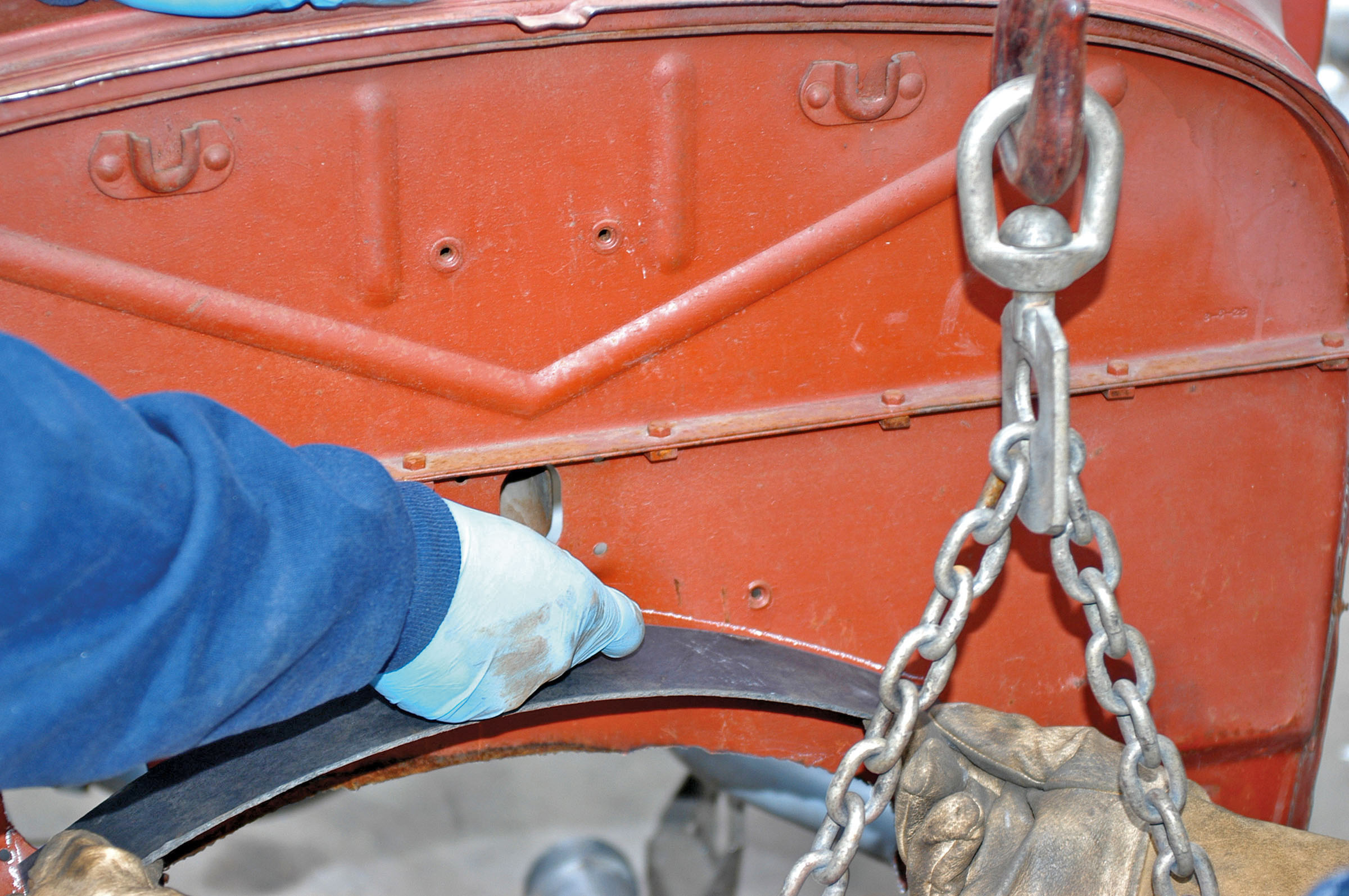
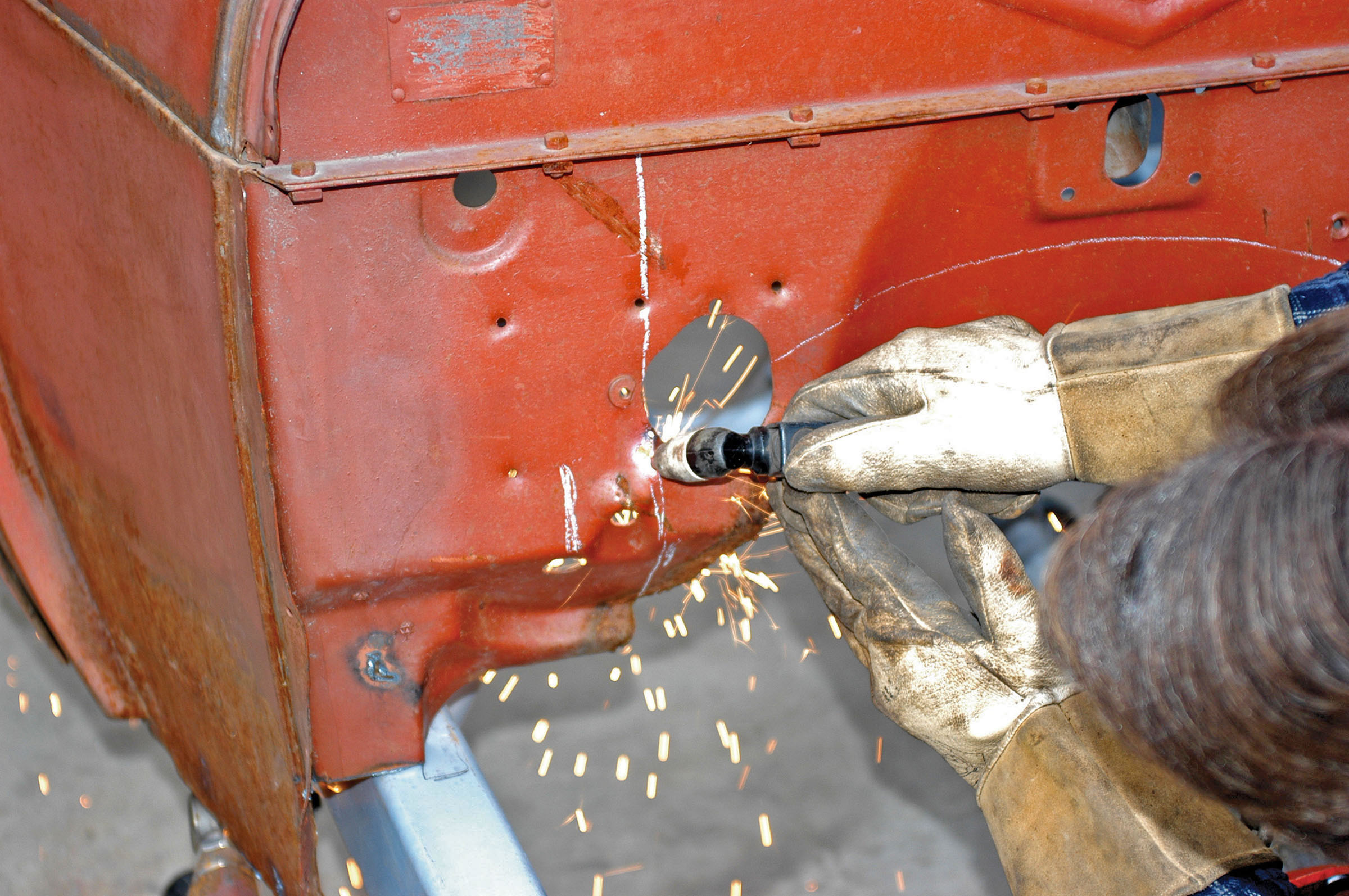
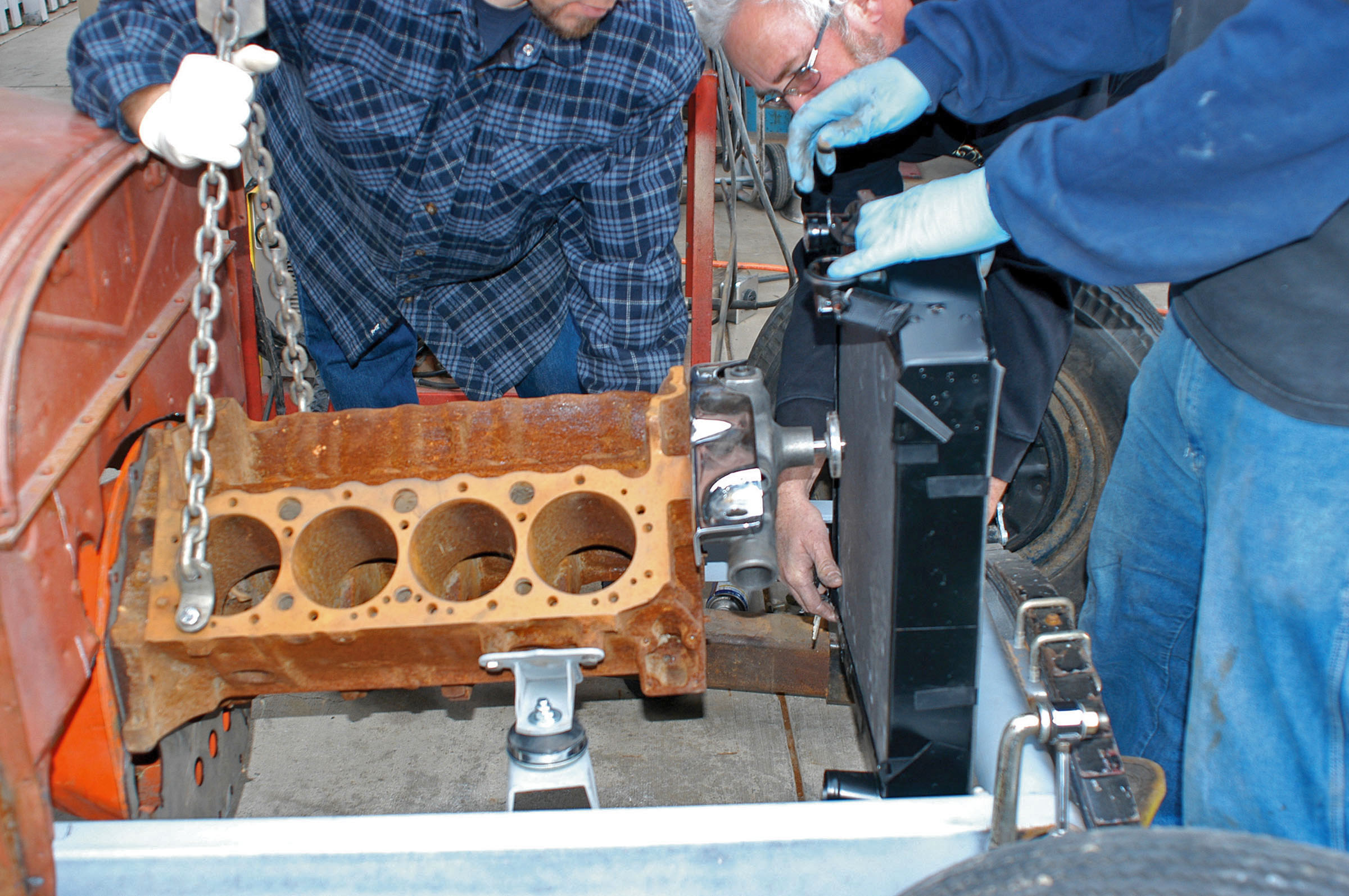
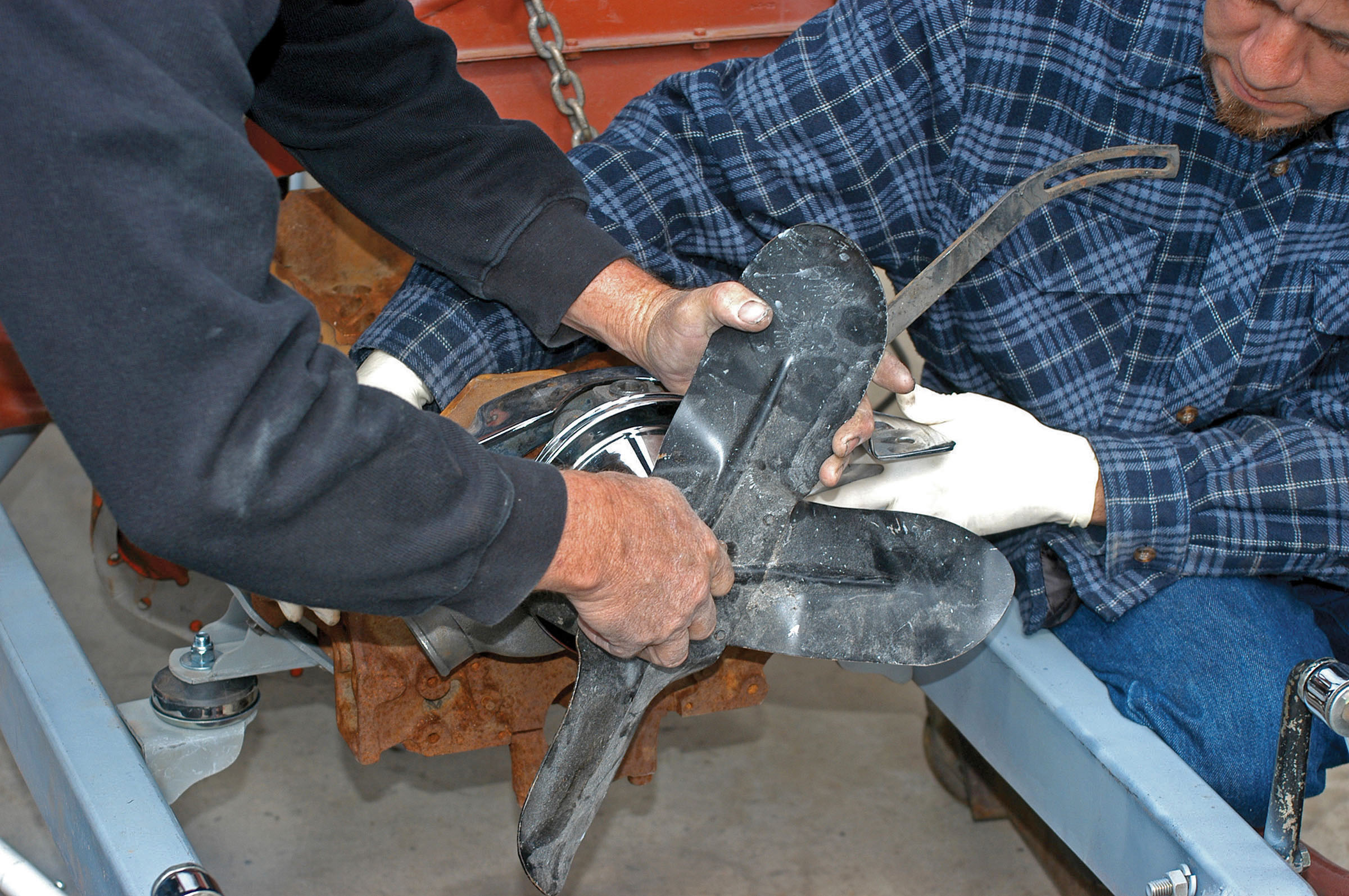
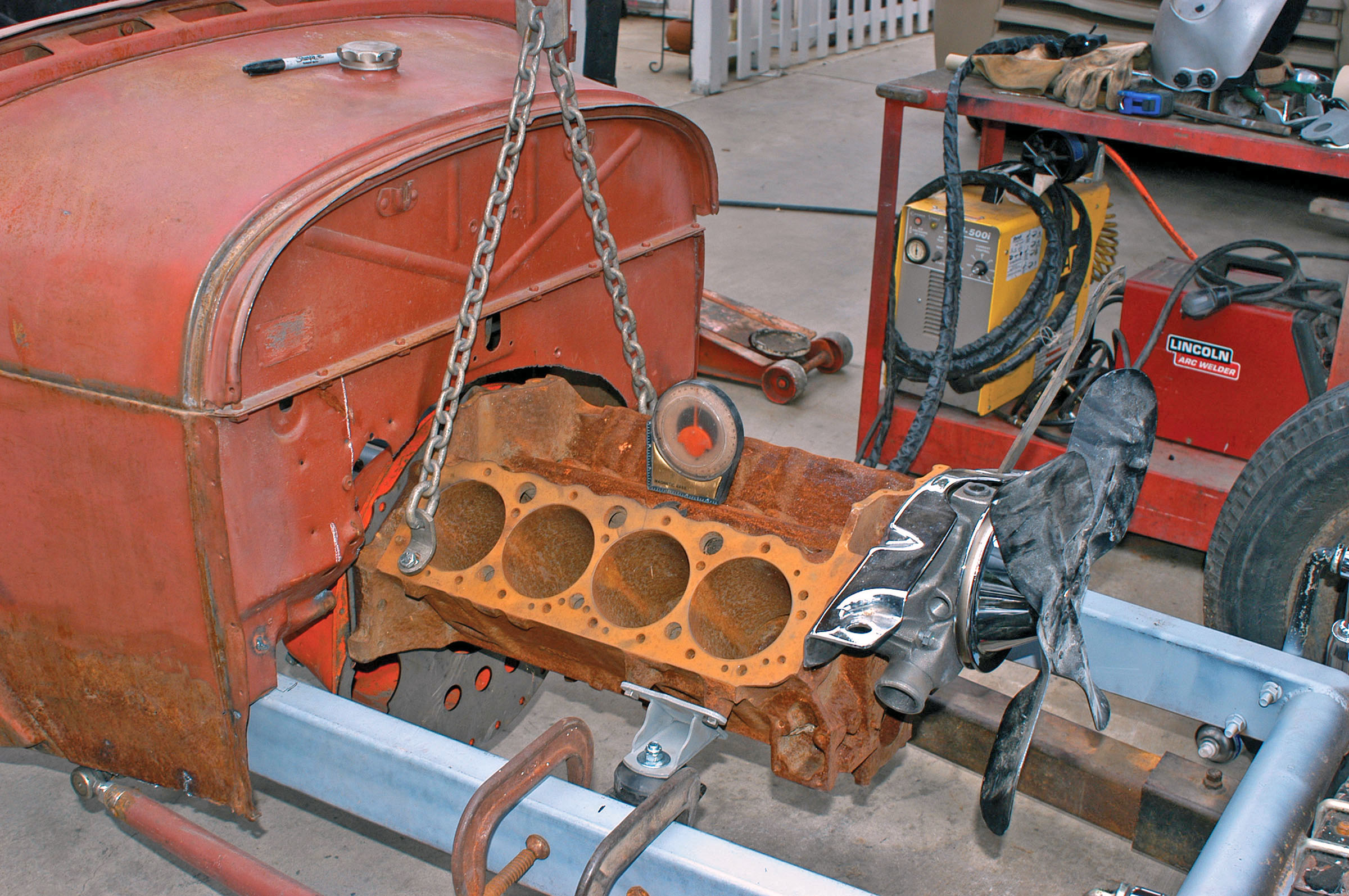
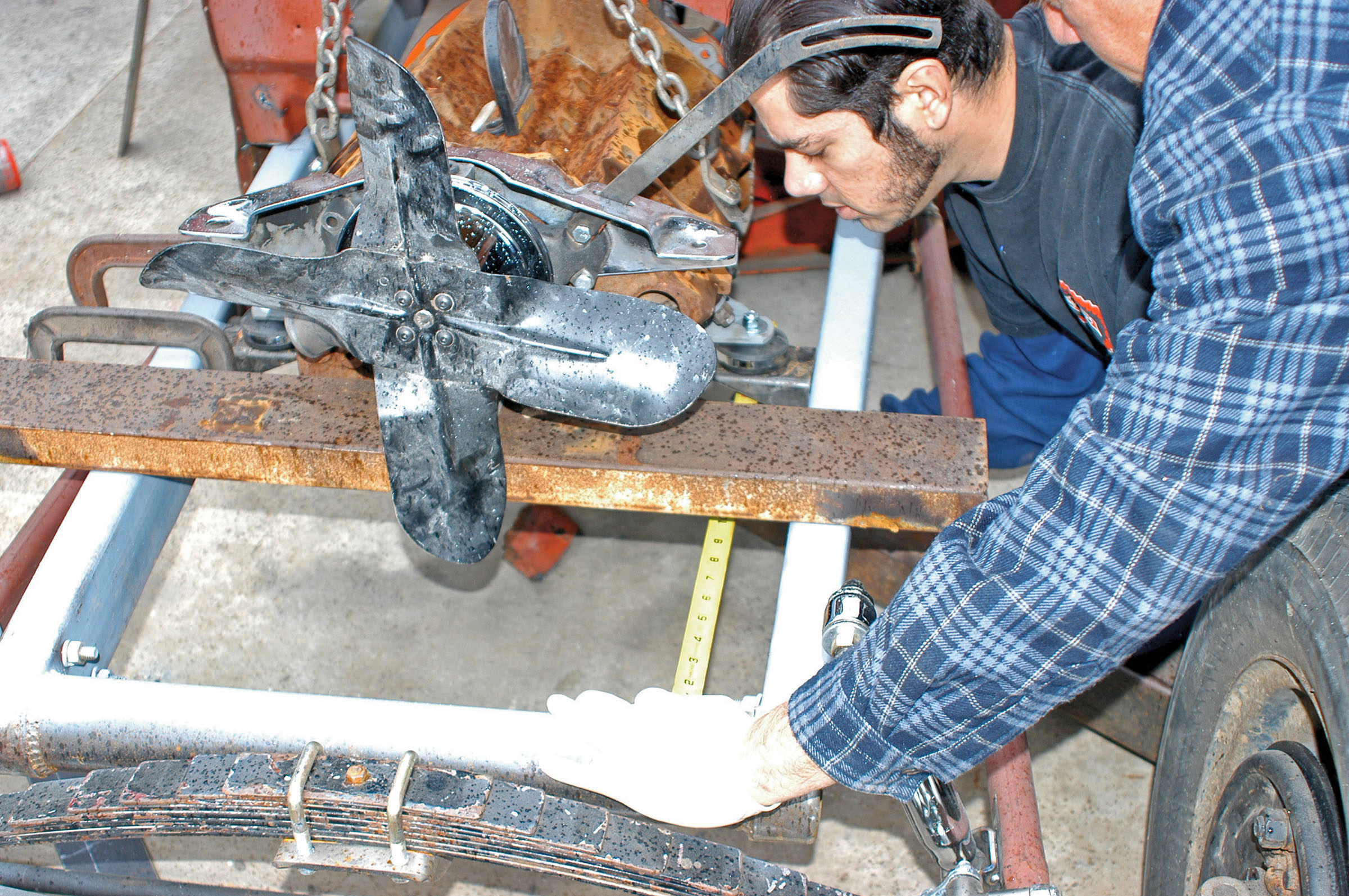
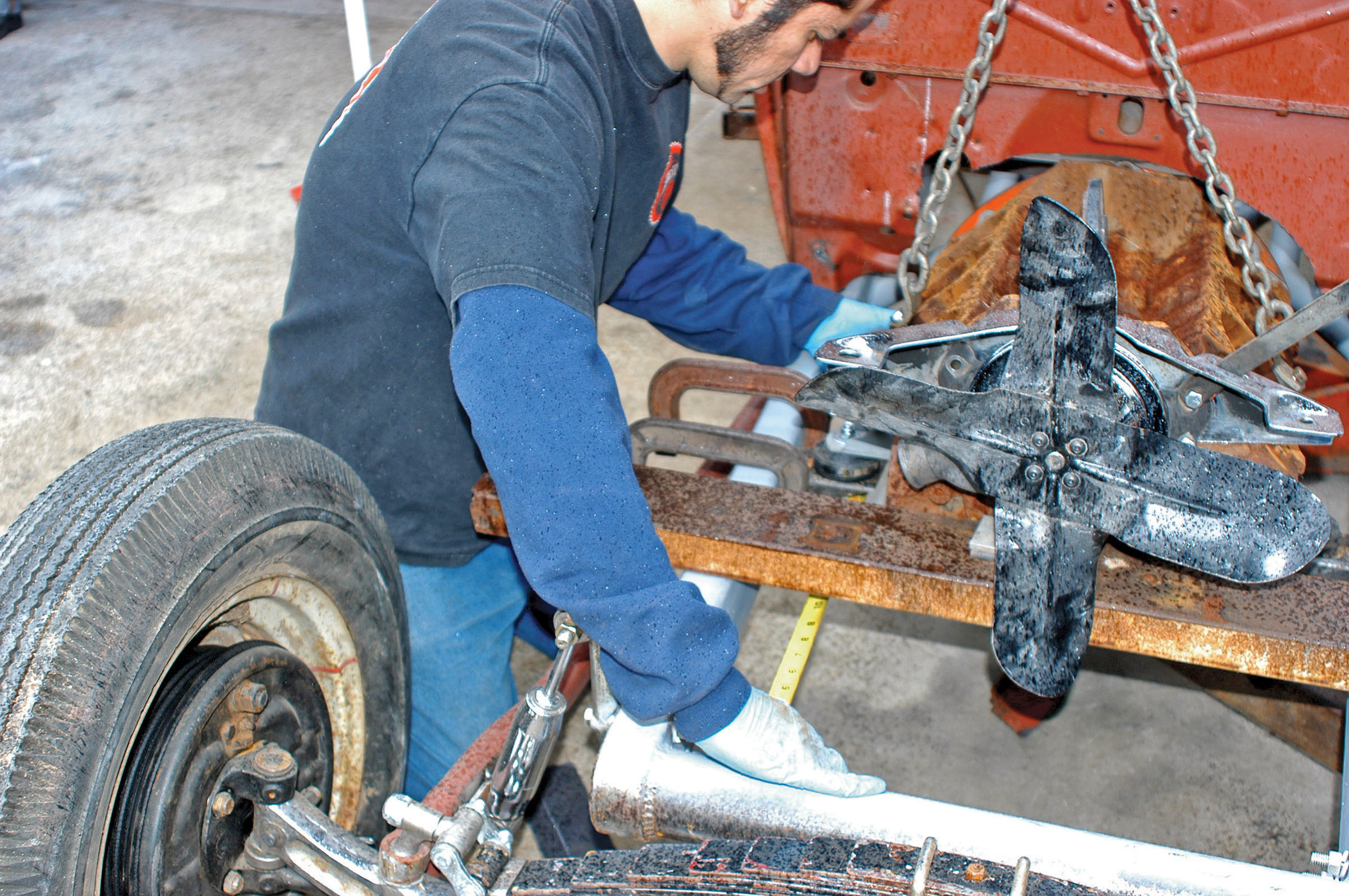
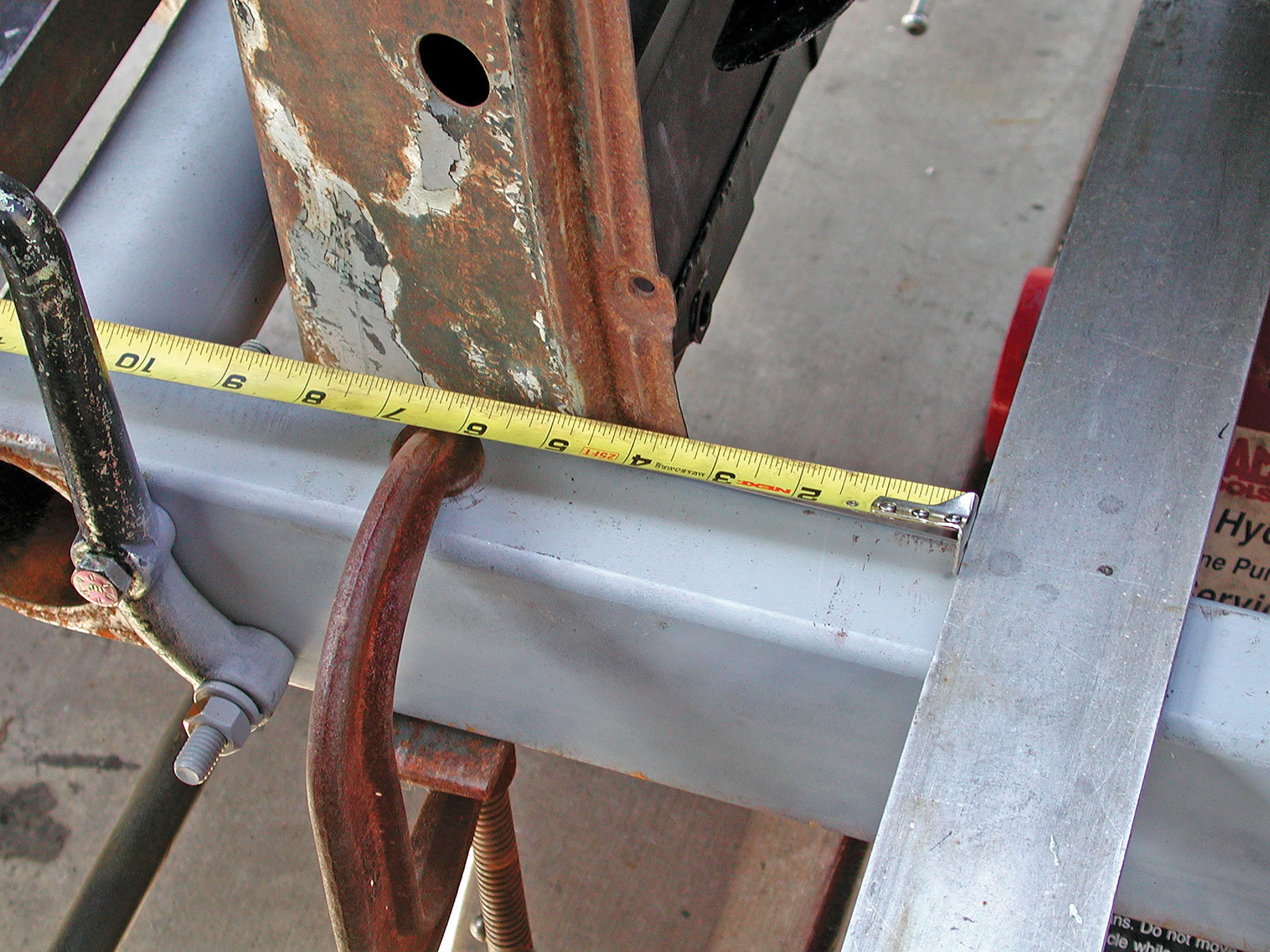
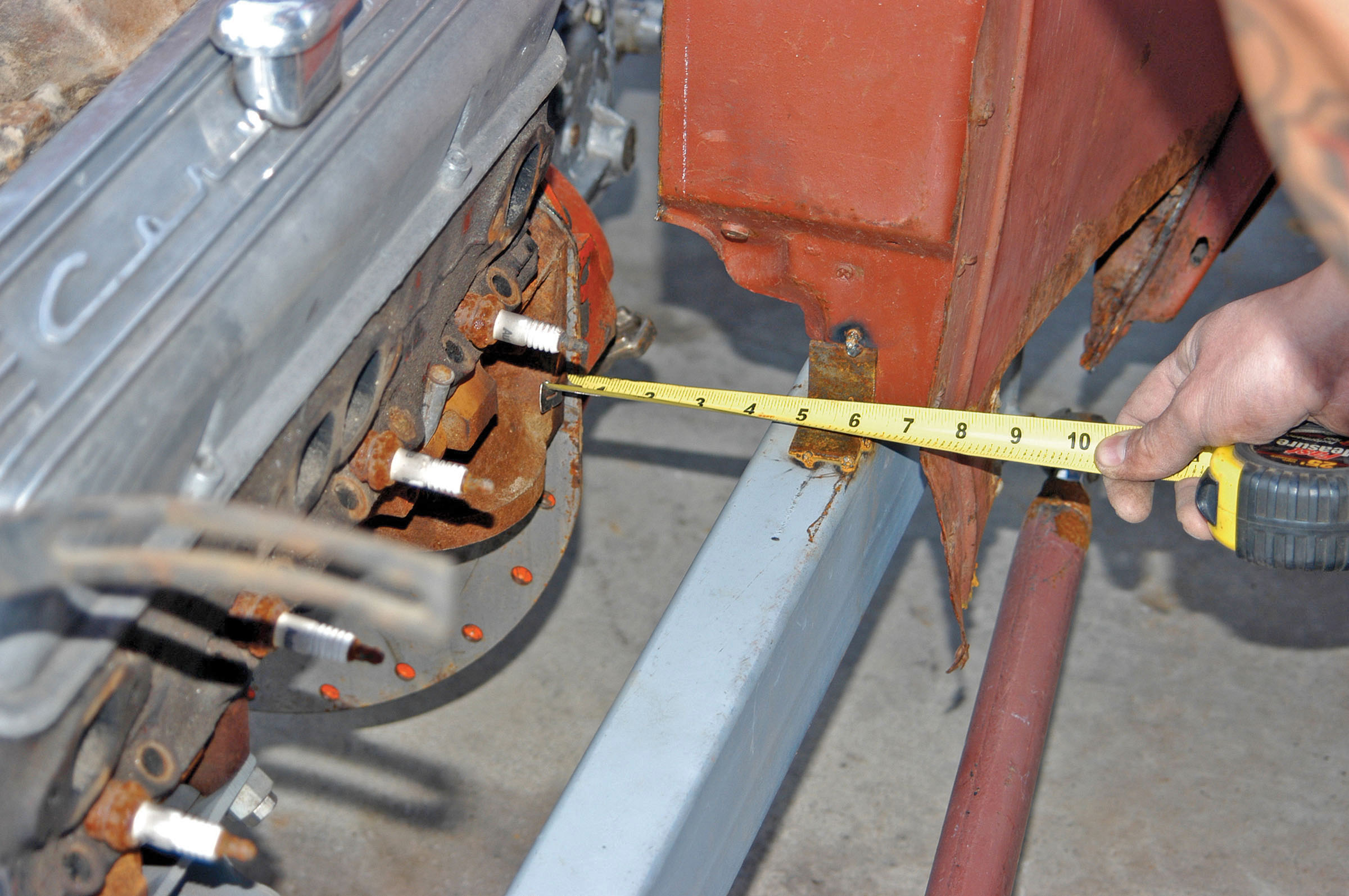
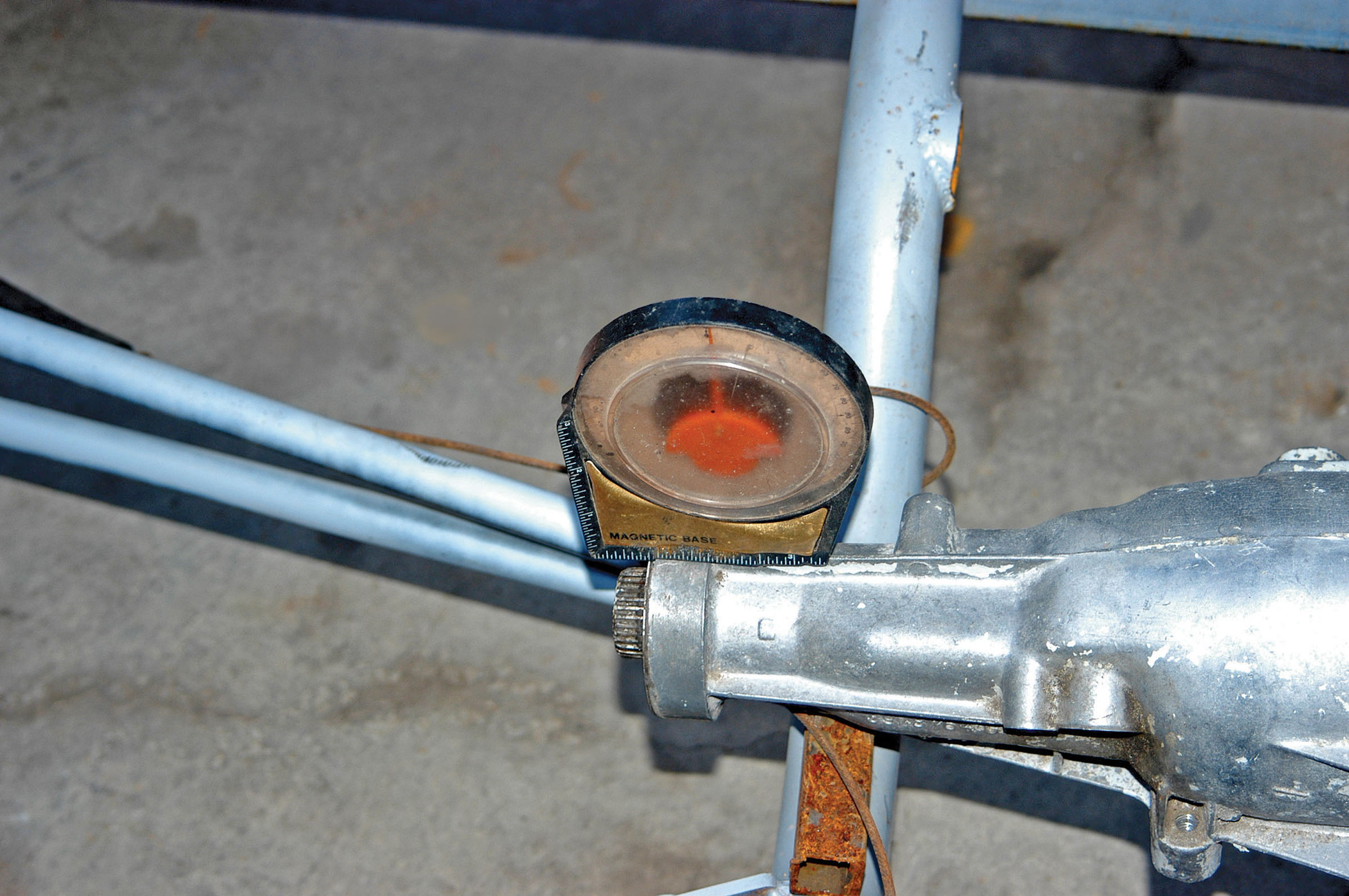
The engine installation wasn’t difficult to accomplish, but it did require some special tools such as a MIG welder, a plasma cutter, a 3-inch angle sander, an engine hoist and a 3-inch cutoff wheel. A variety of regular hand tools was also required. When this engine was installed, it was done so that the standard fan could be used, so we will show you how Amadeus installed this powerful Chevy engine.