Edit Template






THE AUTO BUILDER
Menu
Featured
CLASSIC HOT ROD CRUISER
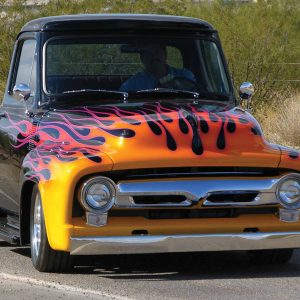
The pictured F-100 is a 1954 model, and it was purchased by Carl and Marianne Lewis from Milwaukie, Oregon, in 1992. The truck had seen better days, as it had been sitting out in the elements under an awning next to a storage shed. In primer, and with a transplanted 289 small block, the truck was partially disassembled as it sat on four flat tires. It had not been moved for some 10 years. Mel Nichols was hired for the much needed makeover, which took 3-1/2 years to complete.
KEEPSAKE CAMARO
Drag racing history buffs are more than familiar with the name Dick Harrell, or “Mr. Chevrolet,” one of early drag racing’s pioneer match race/funny car stars. However, there was also Dick Harrell the innovator, and he should be recognized for his incredible streetcars.
HPX and Street Car Takeover Are Turning Charlotte Into Horsepower Central
Charlotte becomes the epicenter of the aftermarket world as HPX and Street Car Takeover merge business, racing, and car culture into one nonstop performance week built on horsepower, innovation, and pure chaos.



Spotlighter
POPULAR READS
-
The Auto Builder’s Hottest Product Picks from The Triple Crown of Rodding 2026
-
Product Spotlight: Bill Mitchell Products Aluminum LS Engine Block
-
PRODUCT SPOTLIGHT: 60-66 Chevy C10 Fresh Air Vent Block Off Plate
-
Product Spotlight: Pyramid Optimized Design Sequential Aurora Taillight for 1964½–1966 Mustang
THE CAGED BIRD SINGS
This 500-Plus-HP Pro Street Falcon Sings a Sweet Small-Block Song
The poor Falcon.
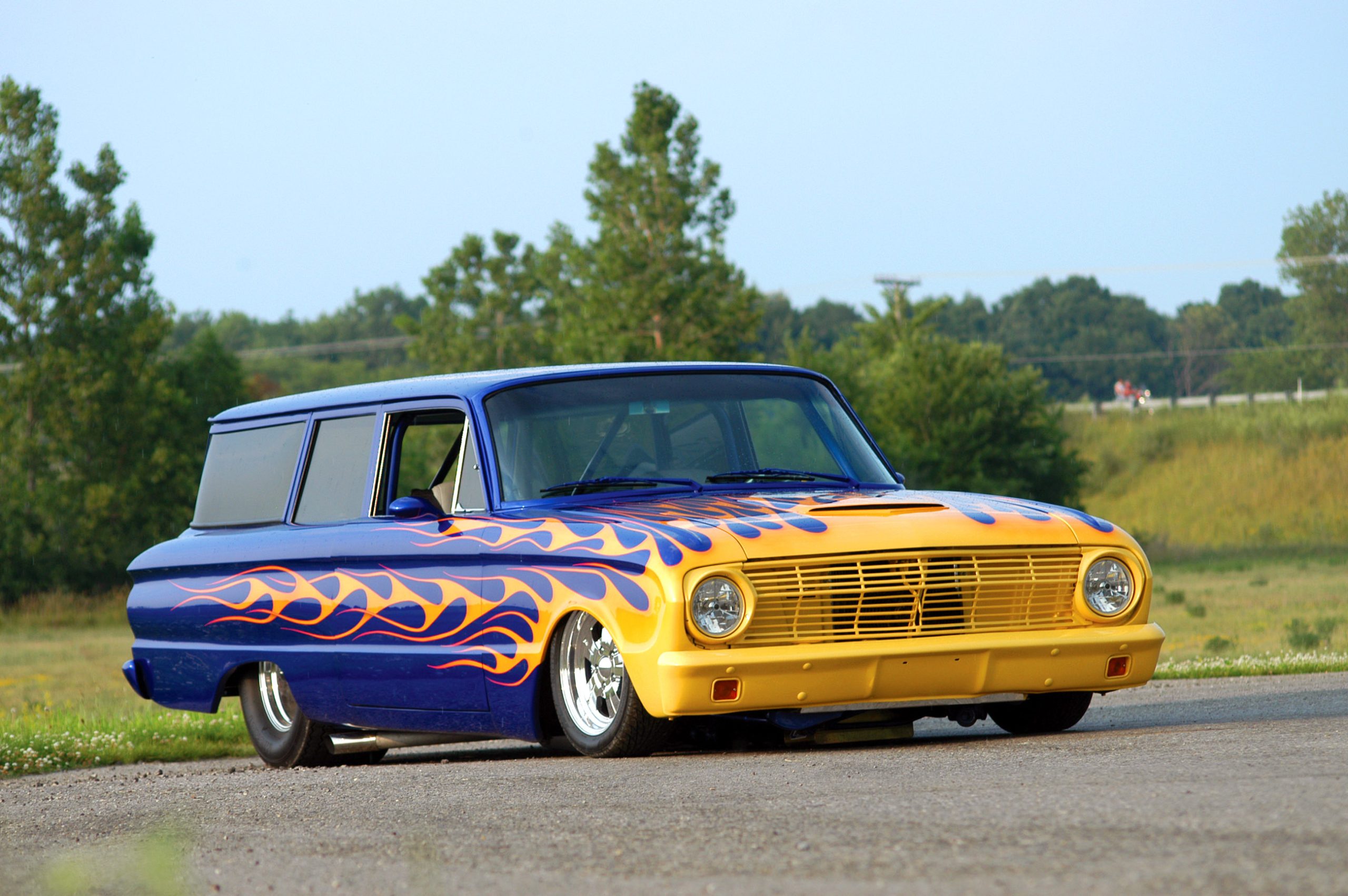
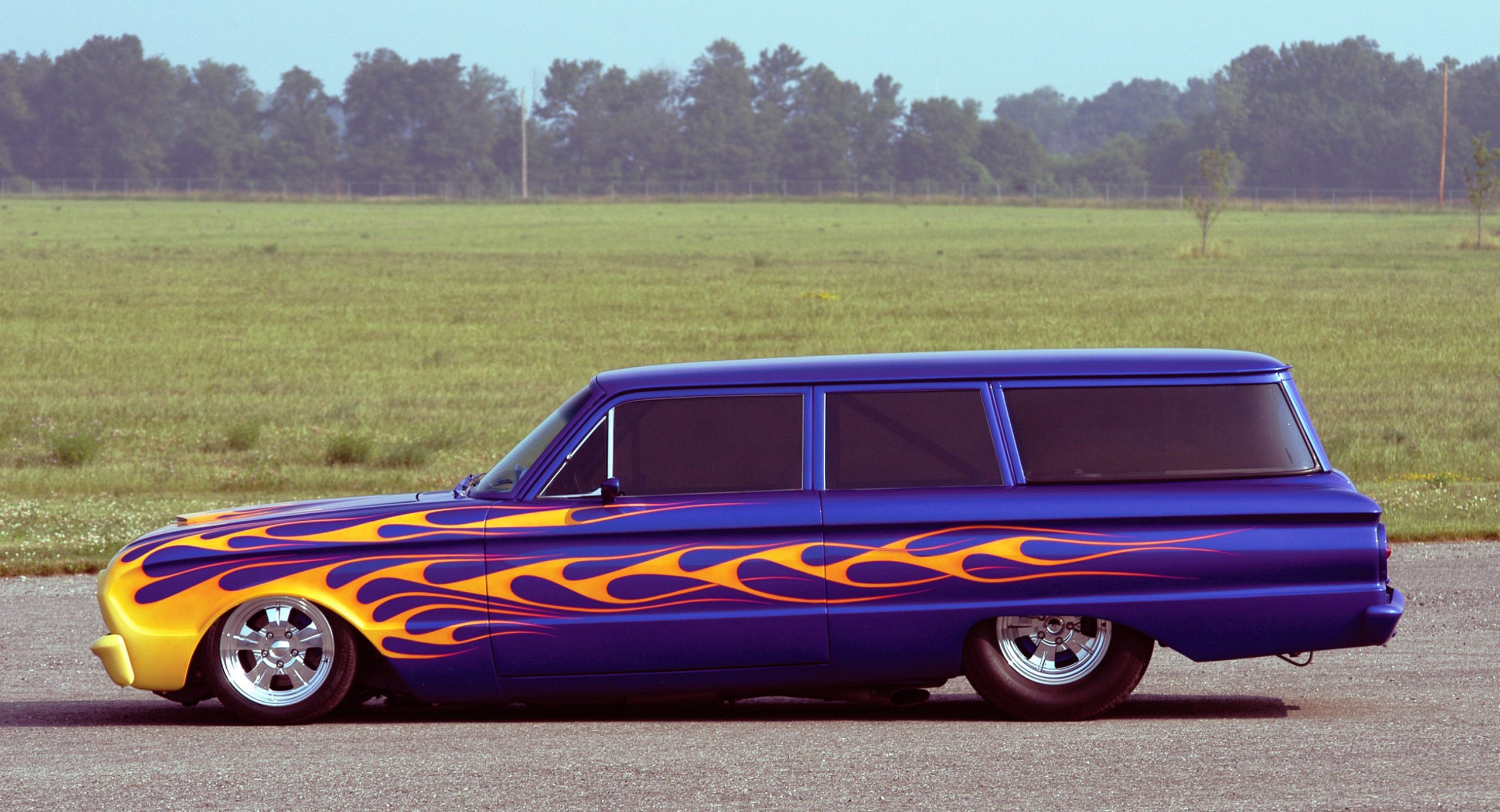
Were it not for Ford’s inglorious first compact car, who knows what the early Mustangs would have been like, built as they were on Falcon architecture? Today, everyone wants a Mustang, yet Falcon fans are few. Fewer still are those who crave Falcon wagons, and initially, Norman Schmitt was not one of them, either. He wasn’t after a Falcon, or a wagon, but when a friend told him about an old wagon for sale, he went to check it out. What he found was a rare ’63 Falcon two-door wagon, and it was in great shape. The price was right, so he bought it, with visions of a wicked Pro Street Falcon in his head, and he set out to transform those dreams into steel.
Author

Will Smith
Photography By Gerry Burger
Rapid Build Time
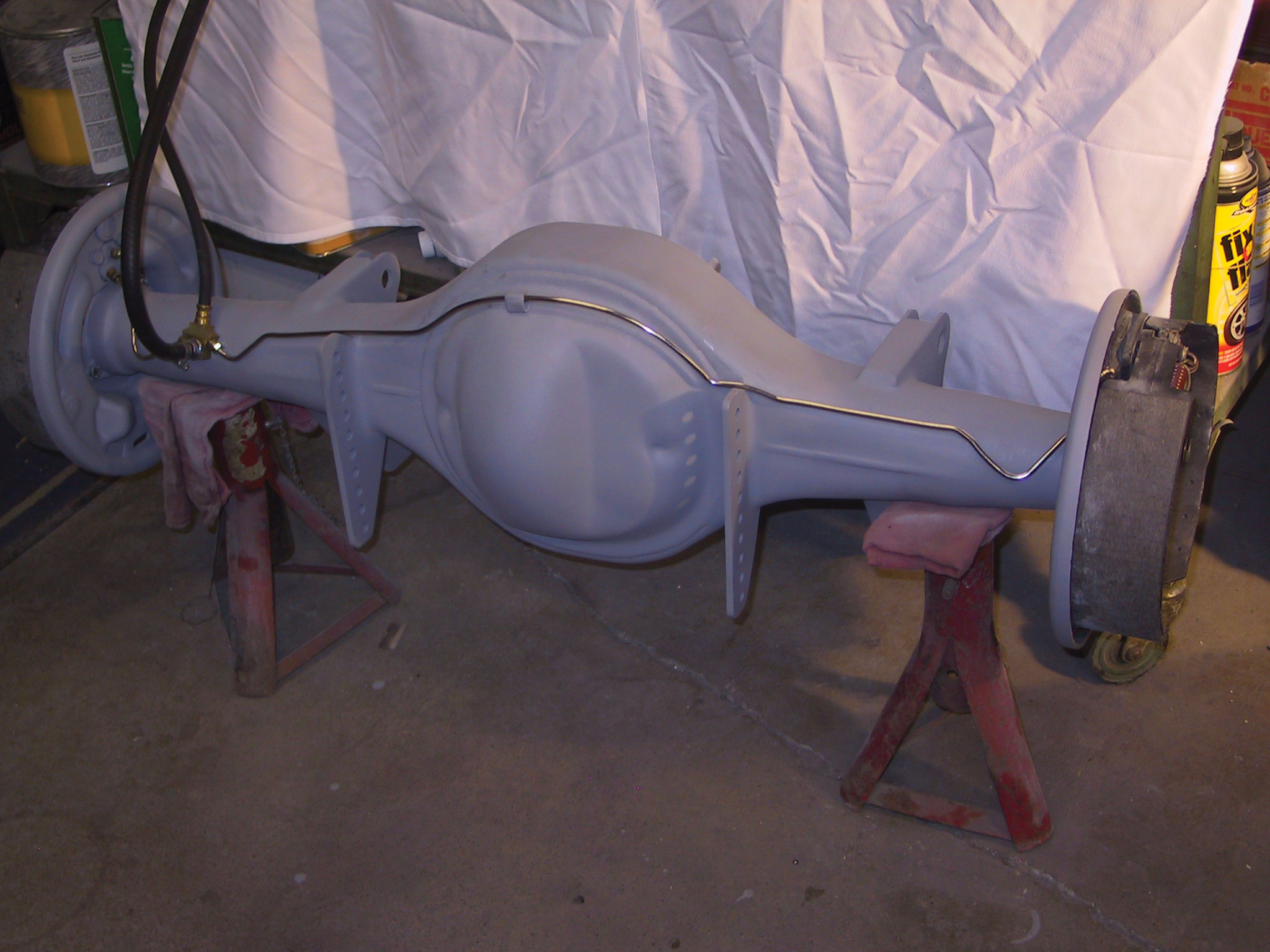
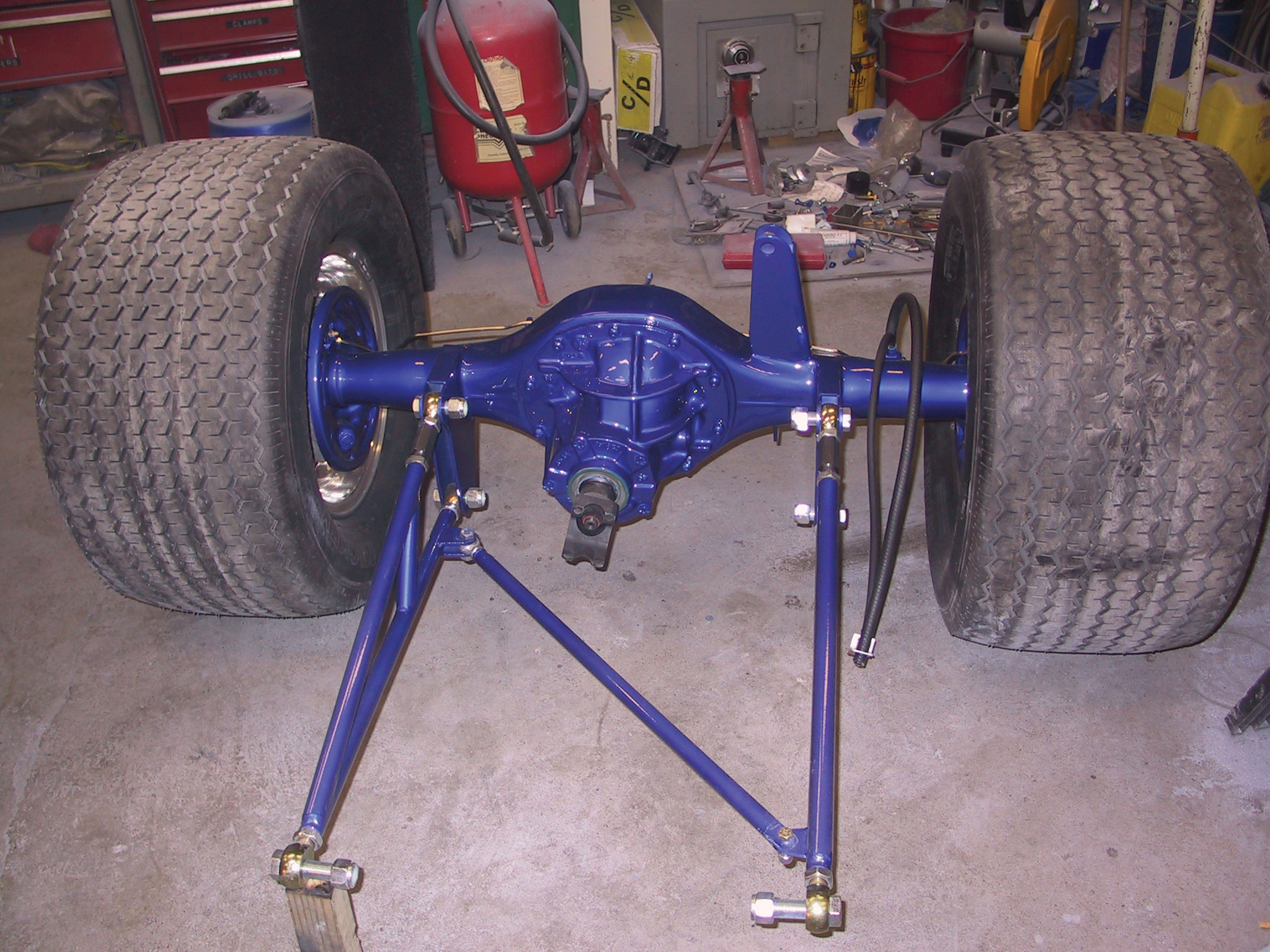
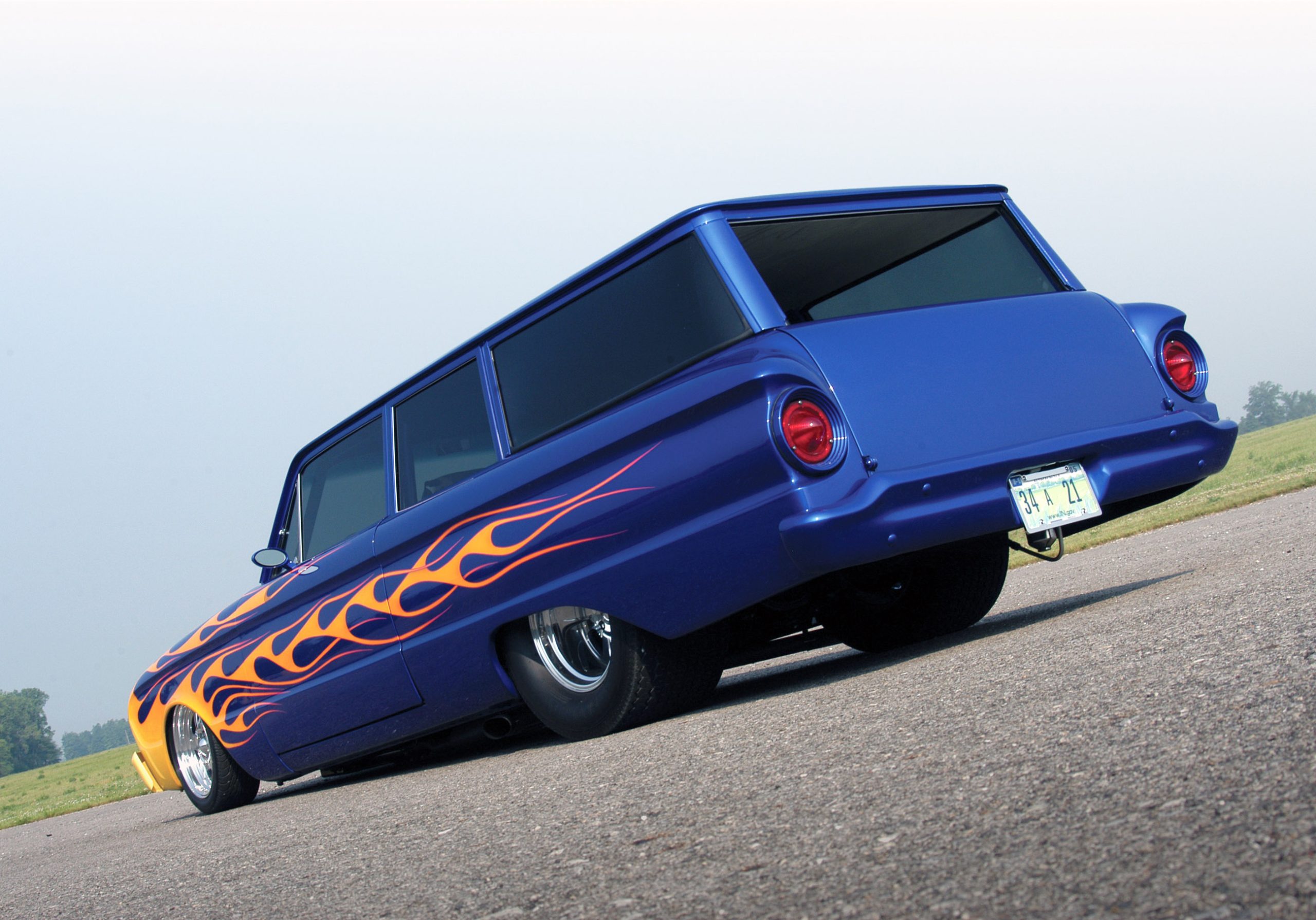
Surprisingly, Schmitt completed his Falcon in a mere 10 months, hardly any time at all for a project this involved. He built it in his own shop, and with help from Tony Thicke he began by back-halving the frame with a new rear clip from Pulley Engineering (870/347-2163). This kit contained a new subframe, subframe connecters, ladder bars, a Panhard bar and even wheel tubs for the big meats that would fill the rear fenders. The rearend is a ’76-issue 9-inch that Schmitt narrowed to 45 inches. He added 3.91 gears, Strange Engineering axles and a limited-slip diff and connected the axle to the new subframe with a set of ShockWaves from Air Ride Technologies. Standard Ford drums cap each end of the axle, and bolted to each drum is a huge 15×12-inch Intro wheel wearing an even huger 29×15.50×15 Mickey Thompson Sportsman tire.
Front Suspension and Handling
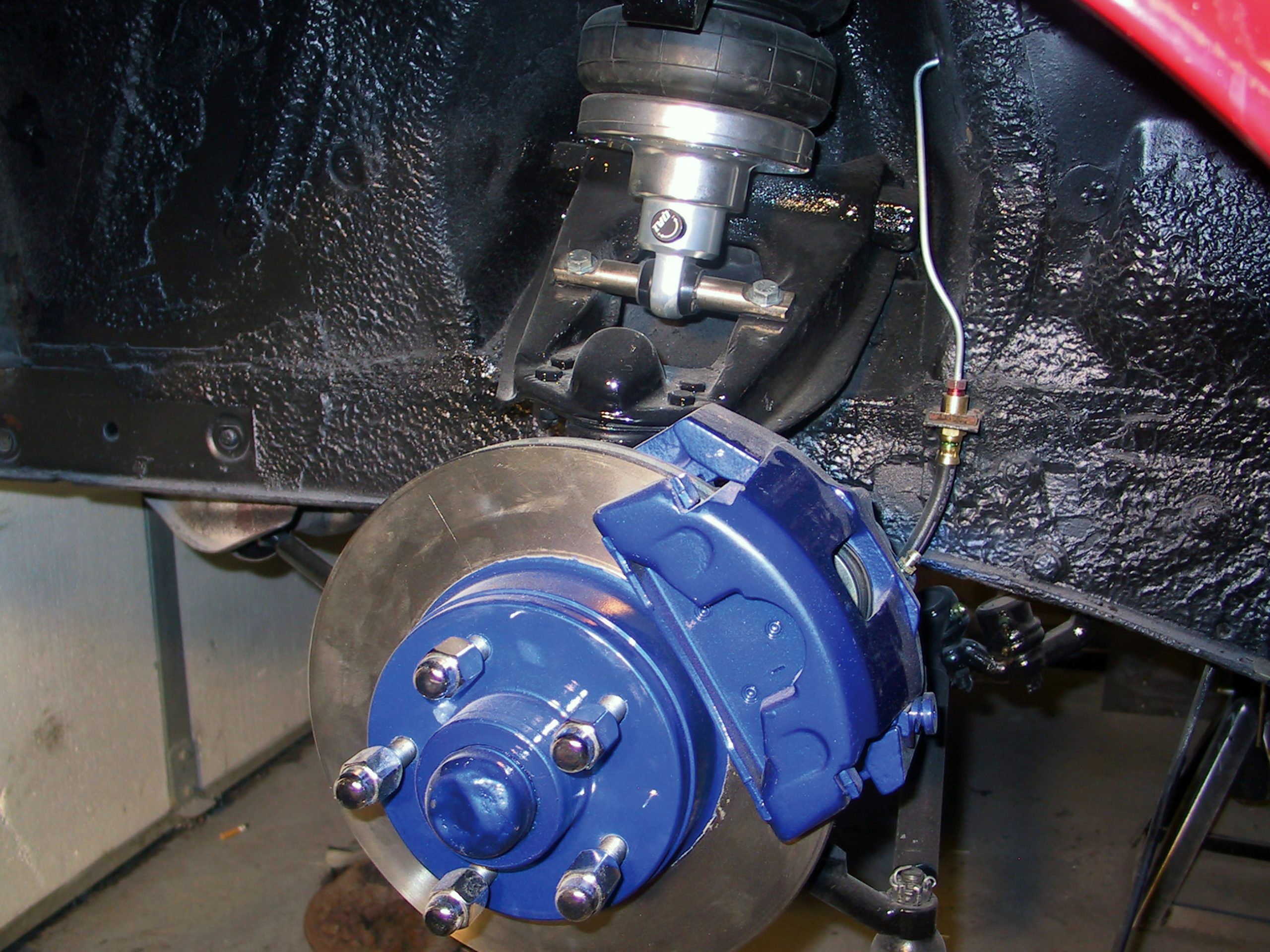
If you’re going to have large amounts of power and the traction to use it, it’s reassuring to have a competent front suspension that can keep the car pointed in a straight line down the strip or hold the road on the street. Schmitt upgraded the front of his Falcon by replacing the stock springs and coils with another set of ShockWaves. Next, he added Fatman Fabrications 2-inch-drop spindles and ’76 Granada front discs. A Chassis Engineering sway bar keeps body roll to a minimum. To get the right look and stance, the owner chose narrower 15×6-inch Intros for the front end, along with 195/50R15 Nitto tires.
Power and Performance
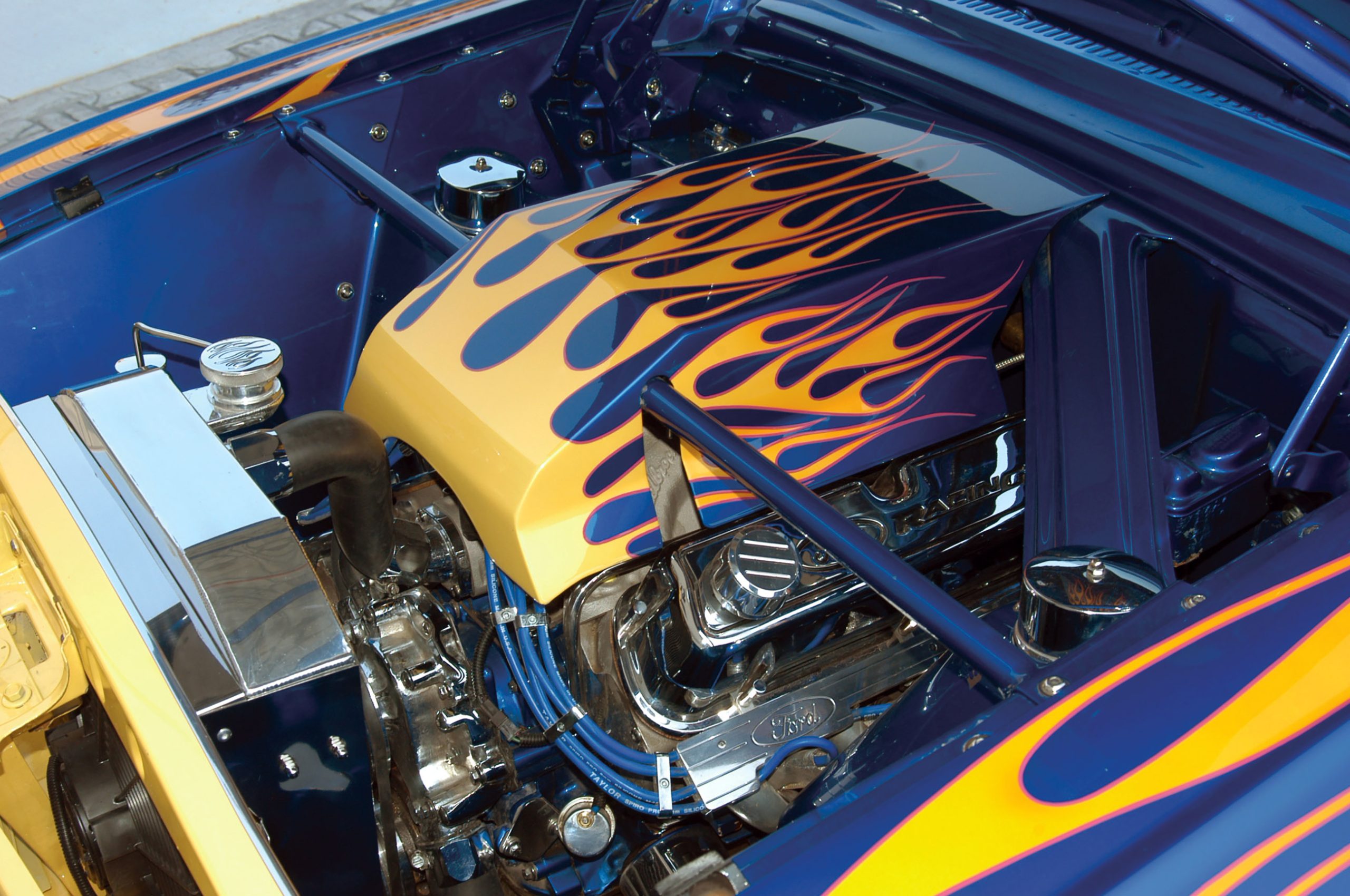
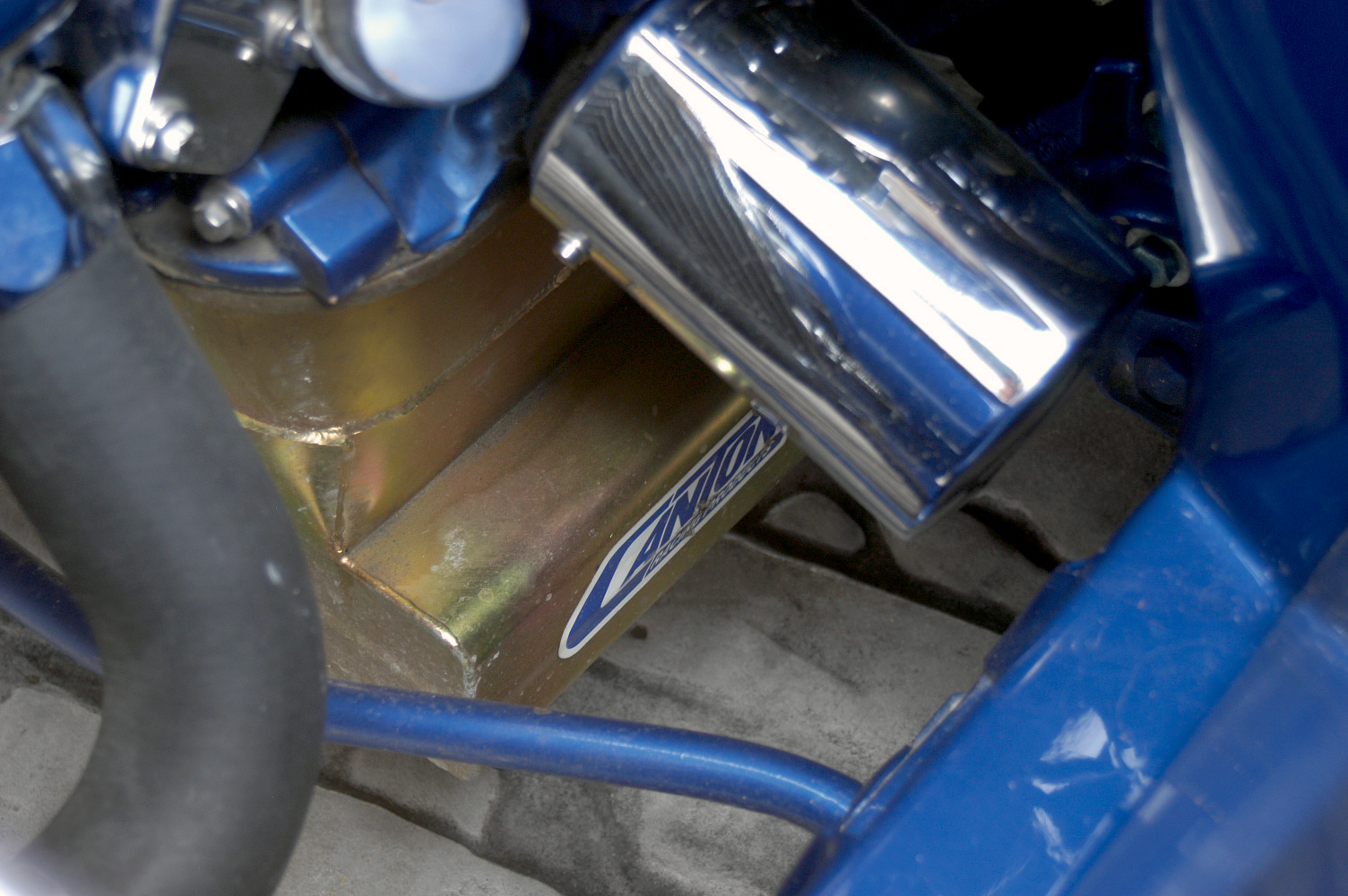
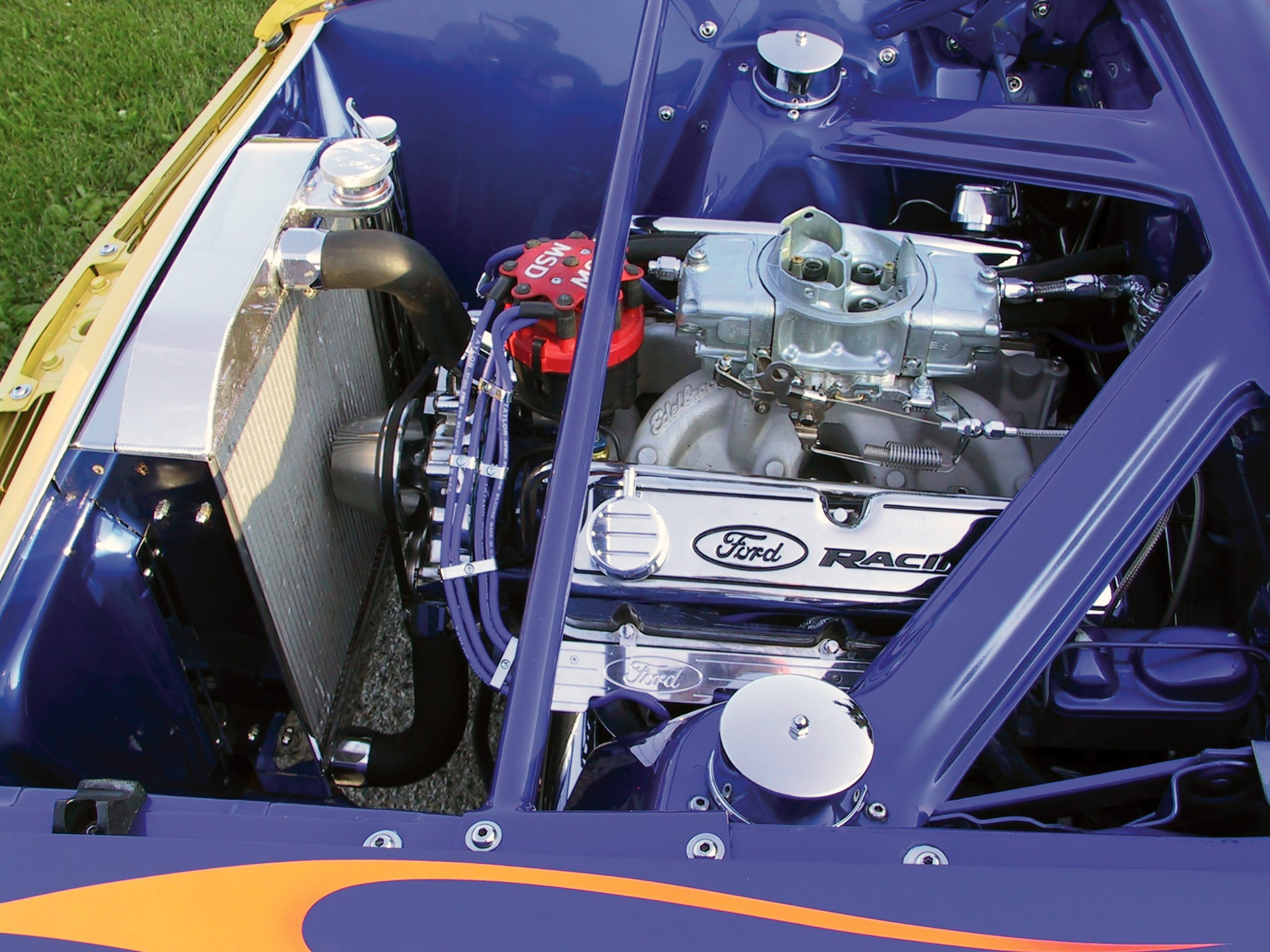
Building the suspension to this extent would have been pretty useless if the owner had not planned on an engine that could push the limits of the car’s newfound traction. Donnie McClain in Marion, Indiana, built the engine, which began life as a mundane ’82-spec 302 block. McClain bored the engine 0.030-inch over and added a 3.40-inch SCAT steel crankshaft, bringing the 302 to its displacement limit of 347 ci. Blue Cat 3D Super Racing rods and 10:1-compression pistons make up the rest of the rotating assembly, and the Comp camshaft provides 0.622-inch lift and 254 degrees of duration. Up on the engine’s top end, a Barry Grant Demon 650 carb pumps the air and gas through an Edelbrock Victor Jr. intake manifold and a set of Ford Pro Action aluminum cylinder heads. Comp Cams rockers replace the stock stamped rocker arms. Other engine components include MSD ignition, Doug’s stainless headers and a Canton oil pan. Thanks to all these modifications, this small block out-thunders many big blocks, developing 524 hp at its peak. Chromed and polished components are everywhere to help dress up the engine and include Ford Racing valve covers, plug wire looms and accessory bracketry. A custom air cleaner assembly helps set the Falcon apart, too.
Transmission and Drivetrain
Many would expect to find a C4 or some other automatic behind this hot 347, but in that case, many would be wrong. The owner chose to grab his own gears courtesy of a Ford four-speed Top Loader trans. A Ram Performance clutch provides just the right feel when leaving the line, providing enough feel and a quick bite.
Exterior Modifications
Wagons, when new, are the kind of car that most enthusiasts hate to be seen in. However, part of this dislike has to be due to the fact that wagons were typically your parents’ cars, and that doesn’t quite fit the image. But today wagons are cool, even more than they used to be. As far as we’re concerned, this Falcon wagon is cooler than most modern coupes, and the owner didn’t need to make any huge modifications to improve on the car’s looks. Changes included removing all the chrome trim and shaving the doors and tailgate of their locks and handles. These changes completely smooth the sides of the car, and that’s about the only alteration this two-door hauler needed.
Bodywork and Paint
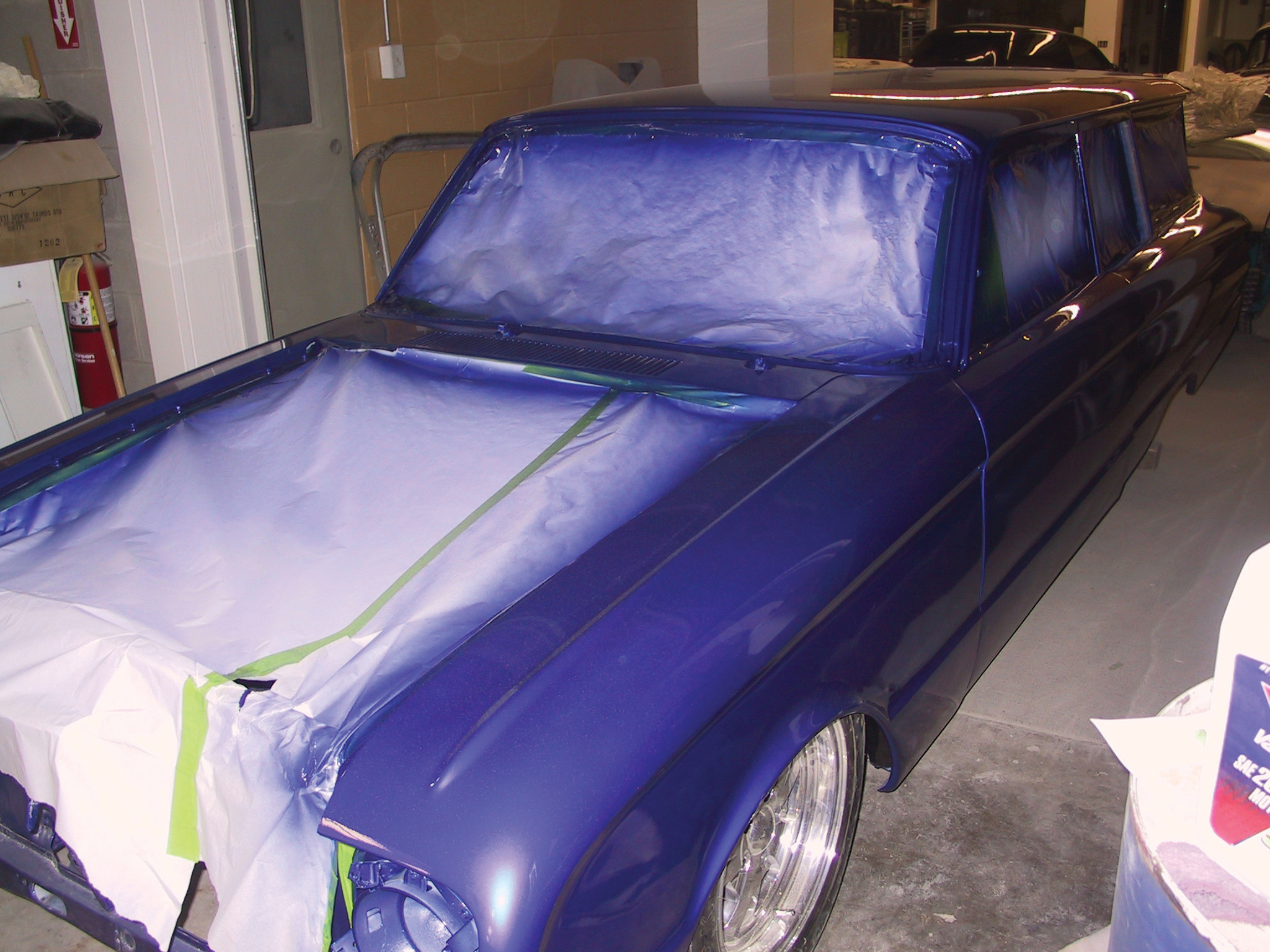
It did, however, need new floors and steel wheel tubs to accommodate the new rear subframe. Under the hood, the inner fenders are completely smooth, and those holes, no longer in use, have been filled. Schmitt molded the shock tower V-brace to each tower and the firewall, which also now appears smoother than before. After he had completed all the bodywork, the owner took the car to Rick’s Kustom Auto Body and Refinishing in Kokomo, Indiana. There, the crew painted the body in DuPont Dark Cloisonné, a metallic blue with just a hint of purple in the metallic. The painters next added long Butterscotch and Champagne Gold flames, with highlighting and shading in red and black. The front and rear bumpers are painted to match the car, leaving the Falcon with no chrome on the body whatsoever.
Interior Design
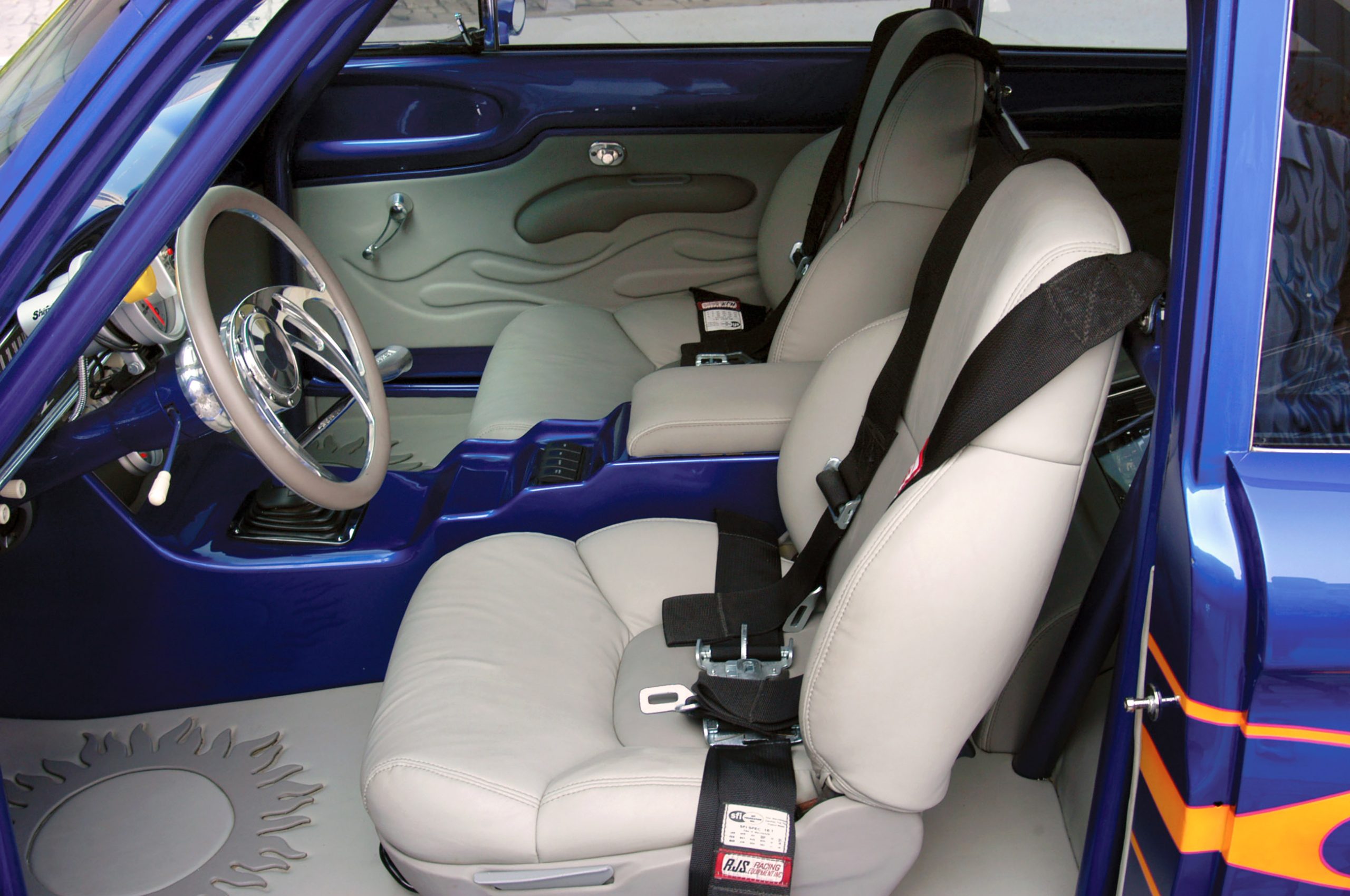
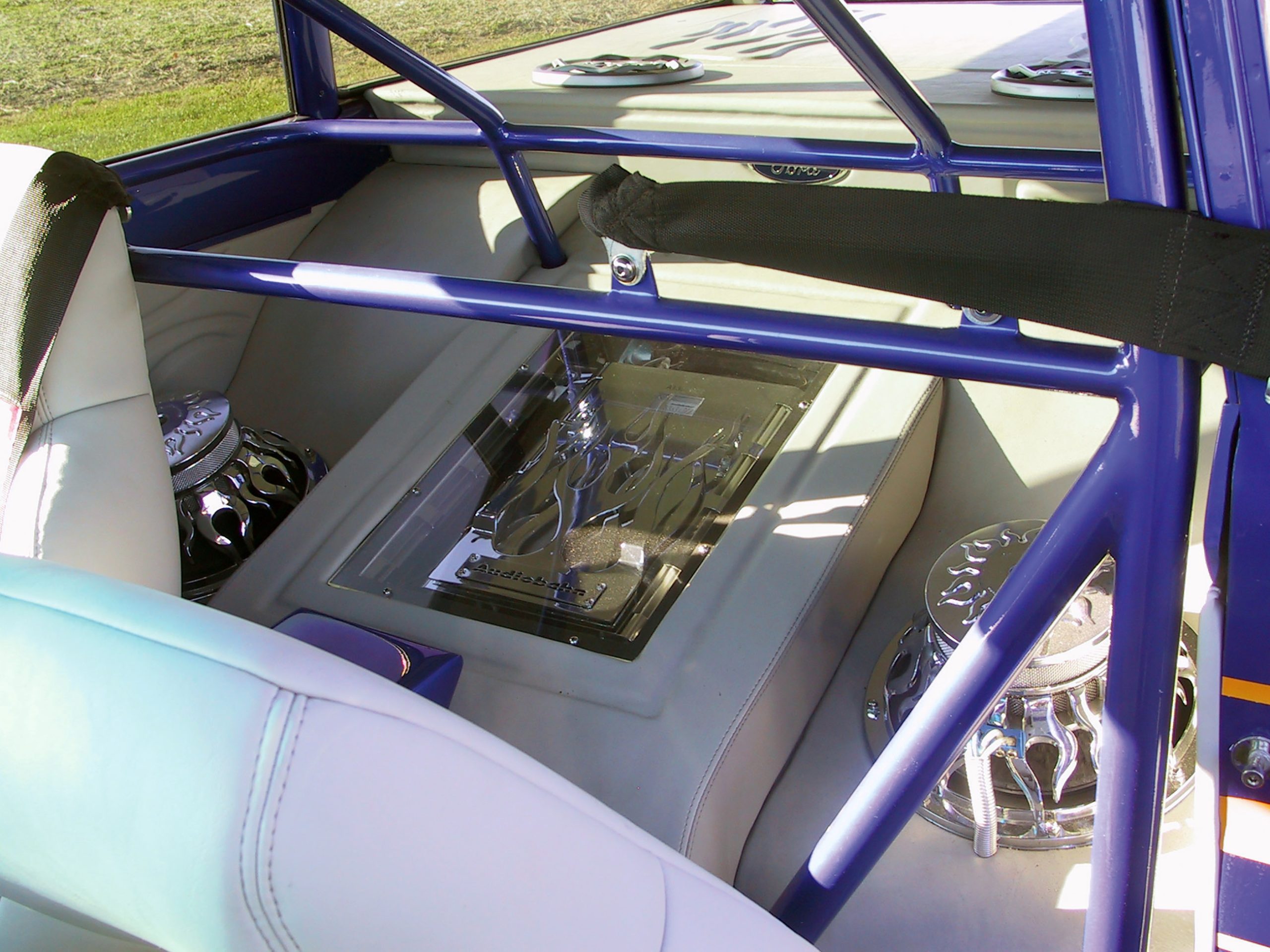
Many Pro Street-style cars feature a stripped interior dominated by raw-metal panels and rollcage tubing, but not this Falcon. Although it does have a rollcage and its share of sheetmetal detailing, it’s the two-tone gray Ultraleather that dominates this interior. Collins Trim and Auto in Marion, Indiana, applied this material over a pair of late-model Grand Am bucket seats. Don’t bother looking for rear seats either—this wagon is now strictly a two-seat affair. Four-point safety harnesses keep the occupants safe, and the shoulder harnesses bolt to the rollcage.
Audio and Electronics
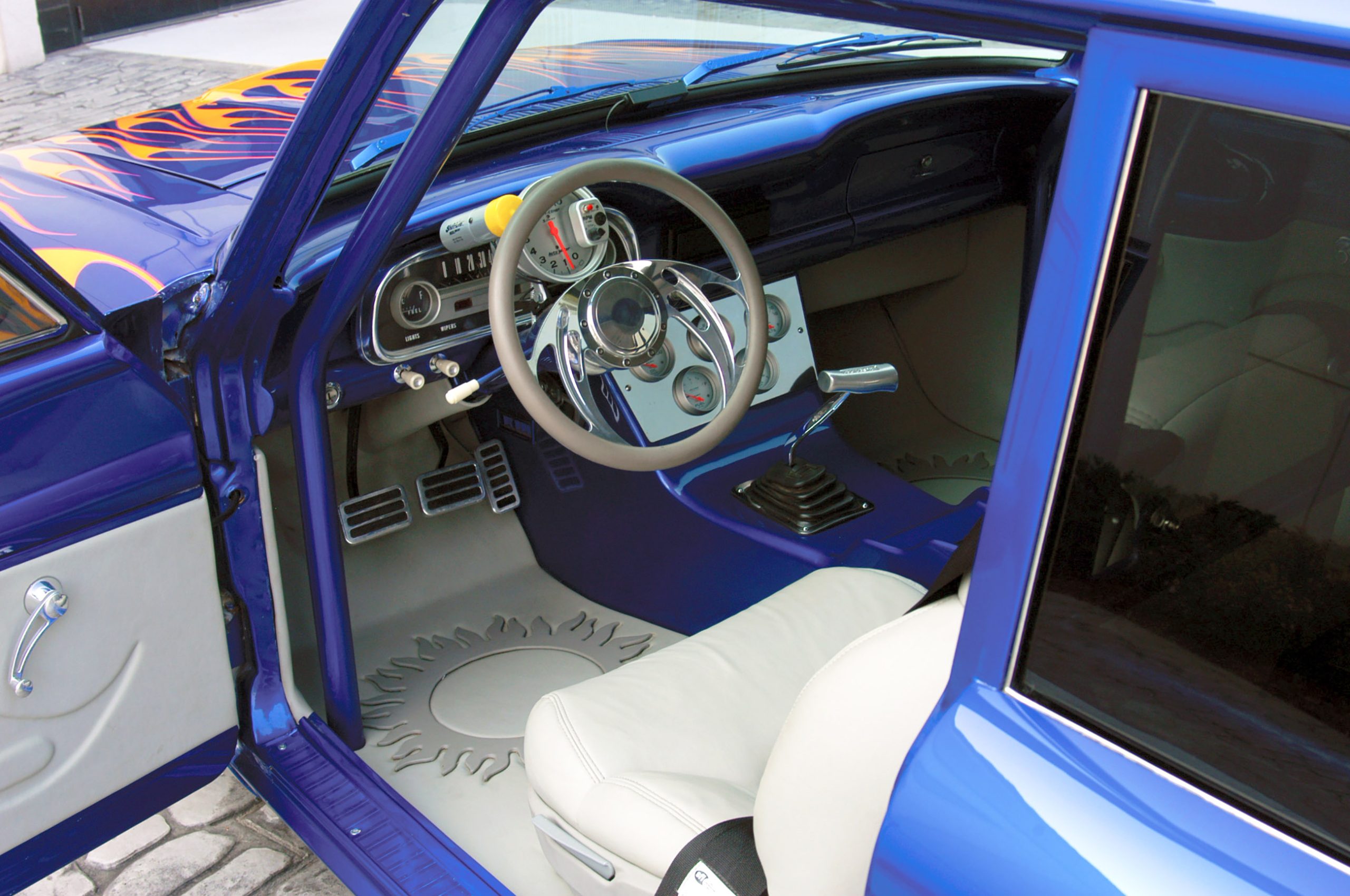
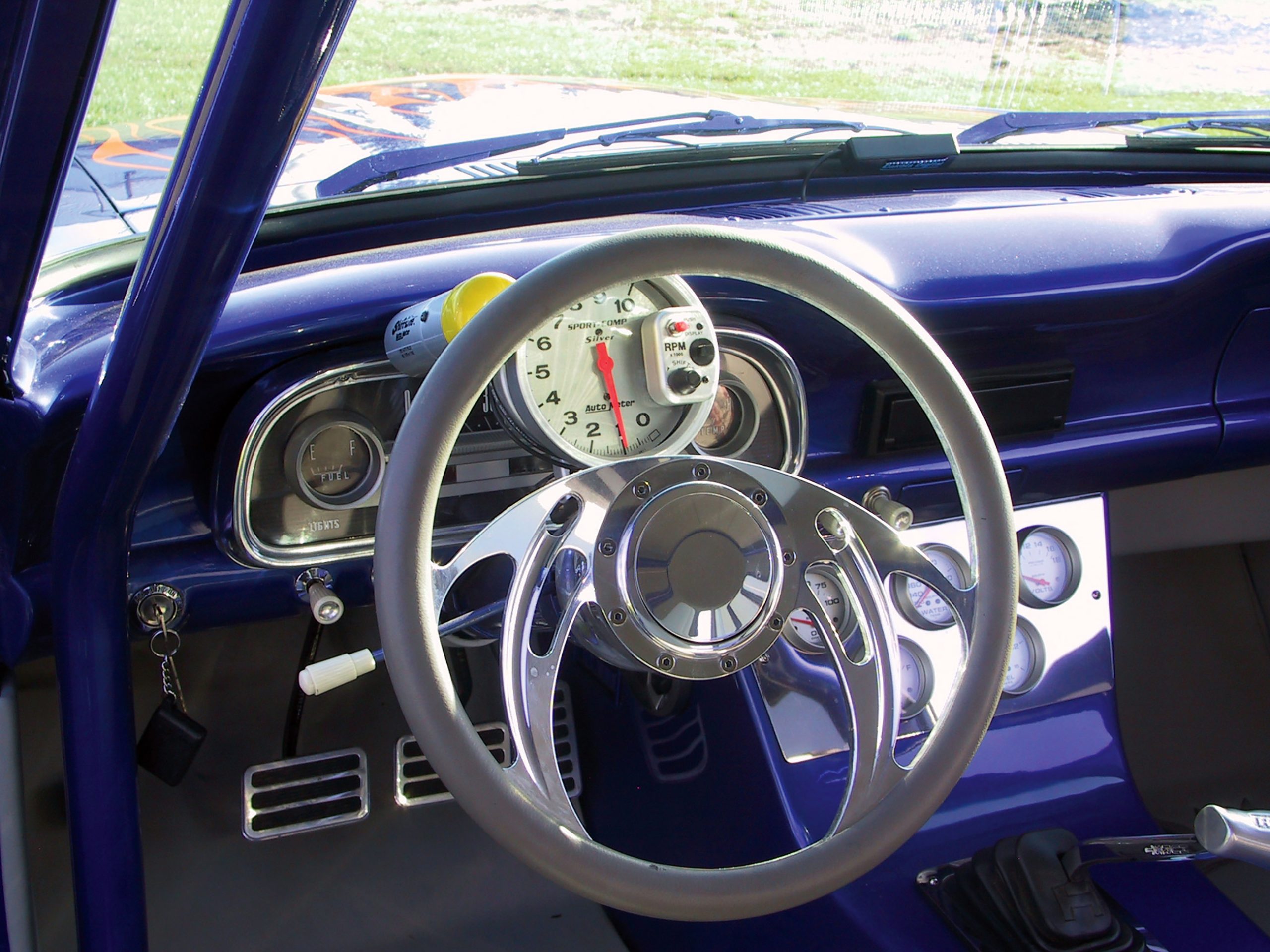
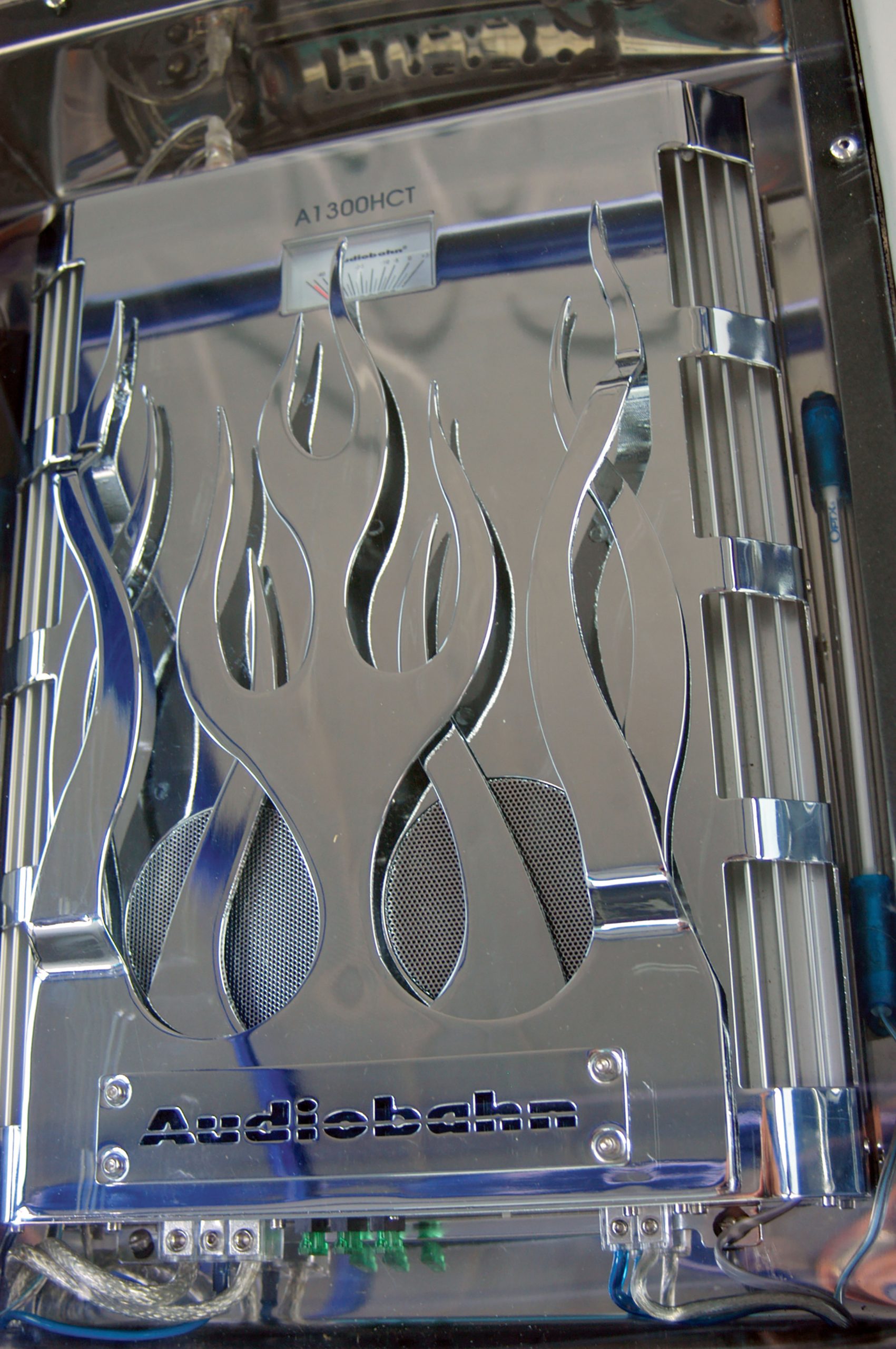
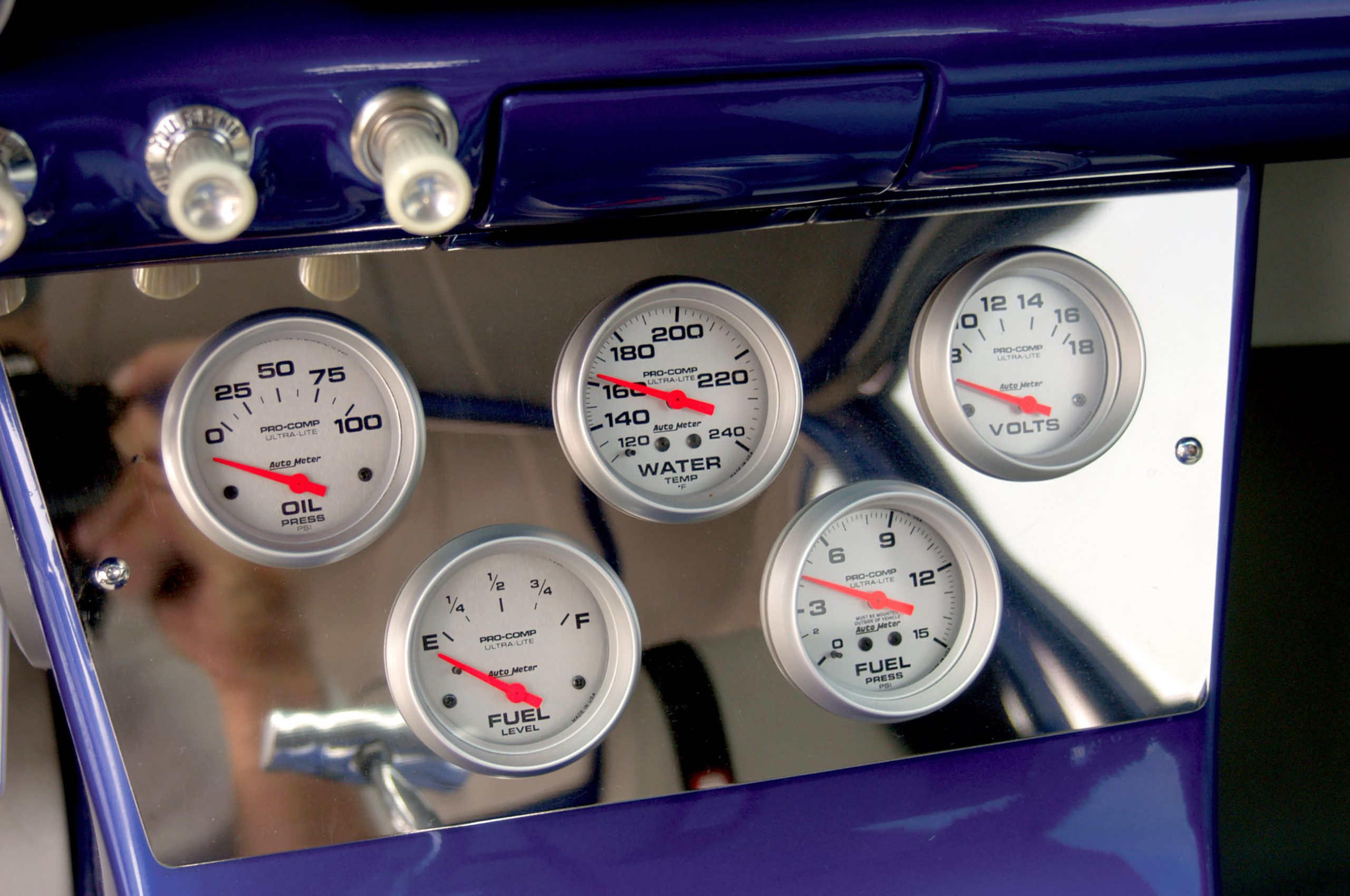
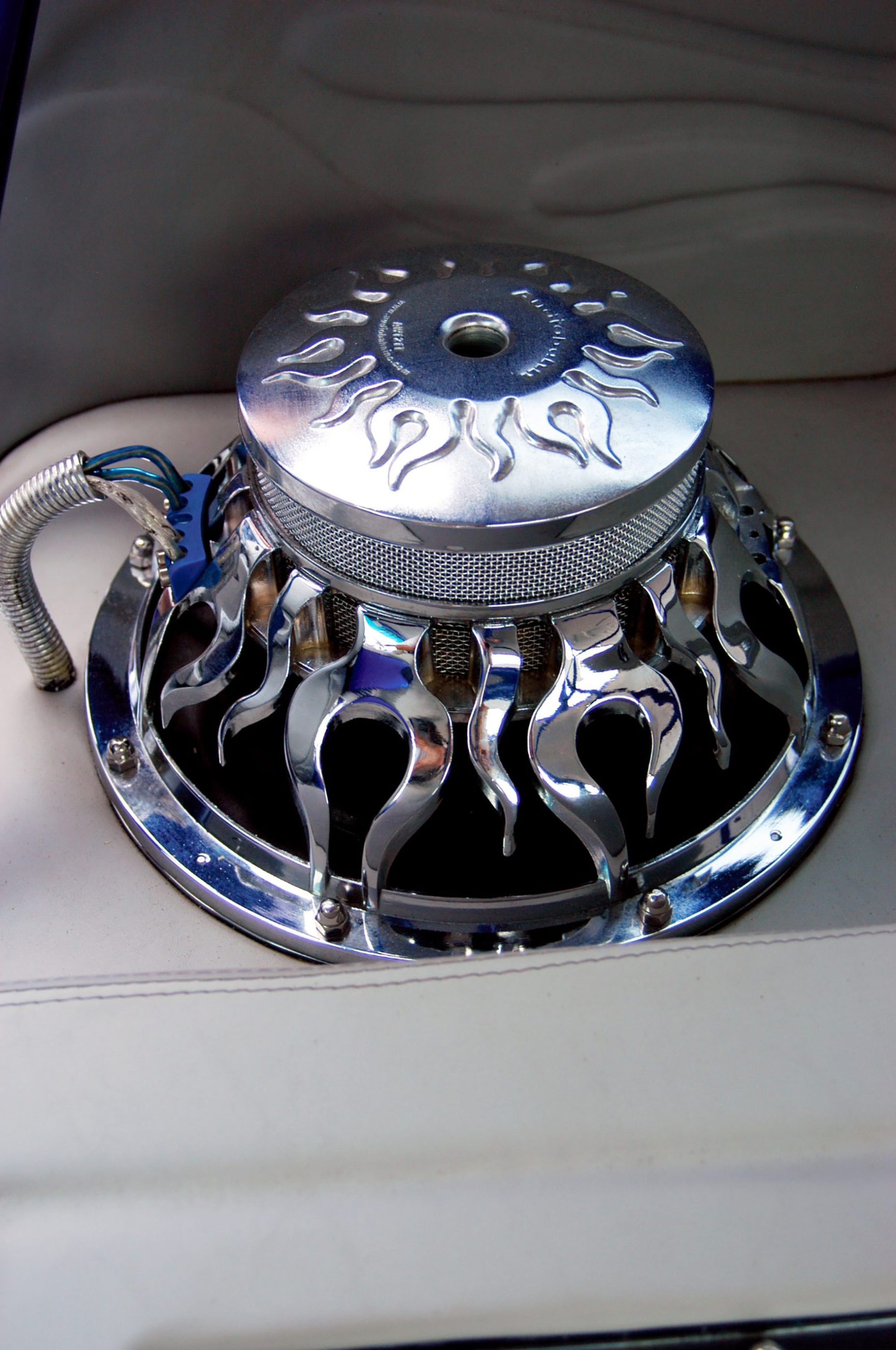
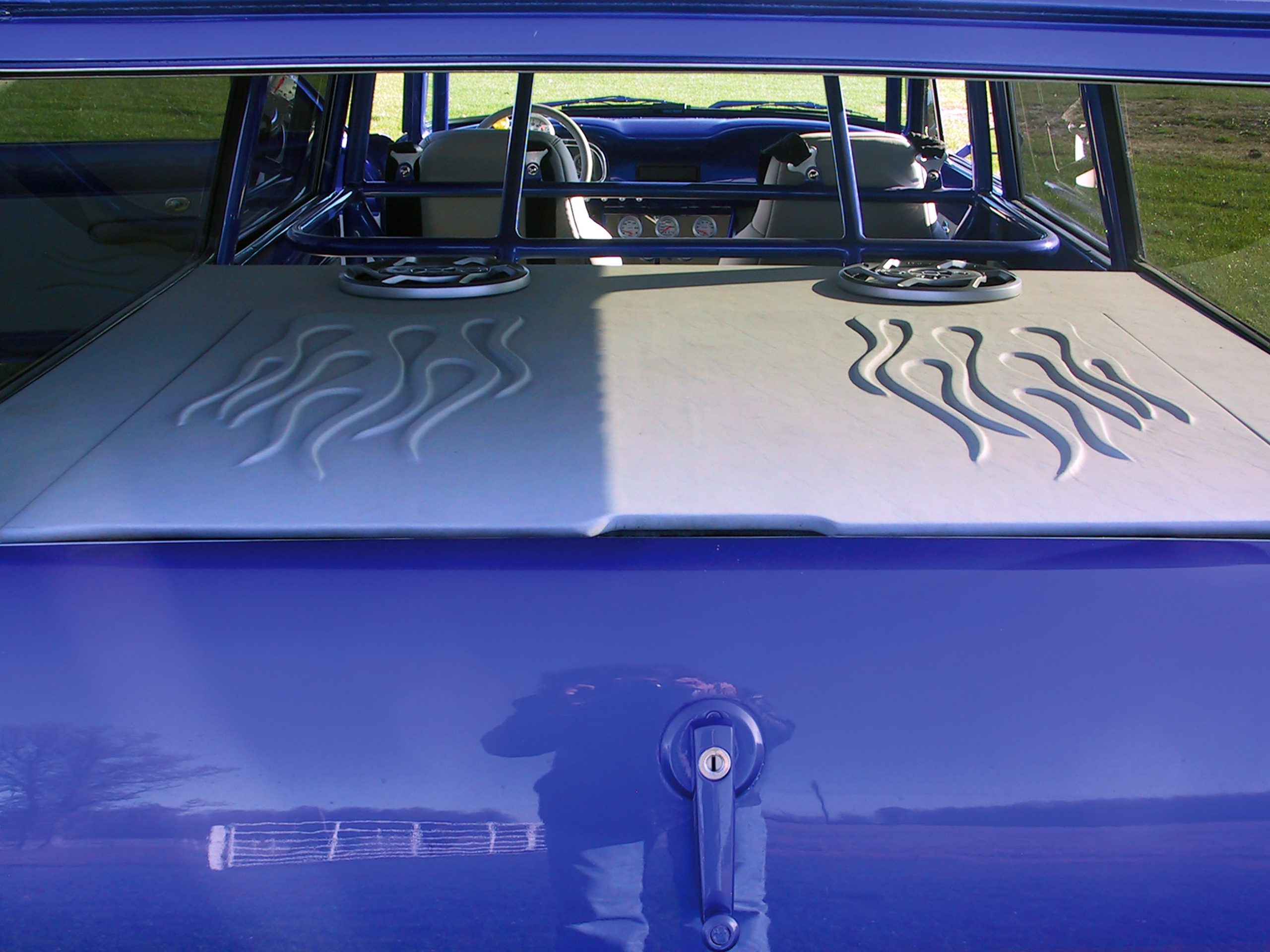
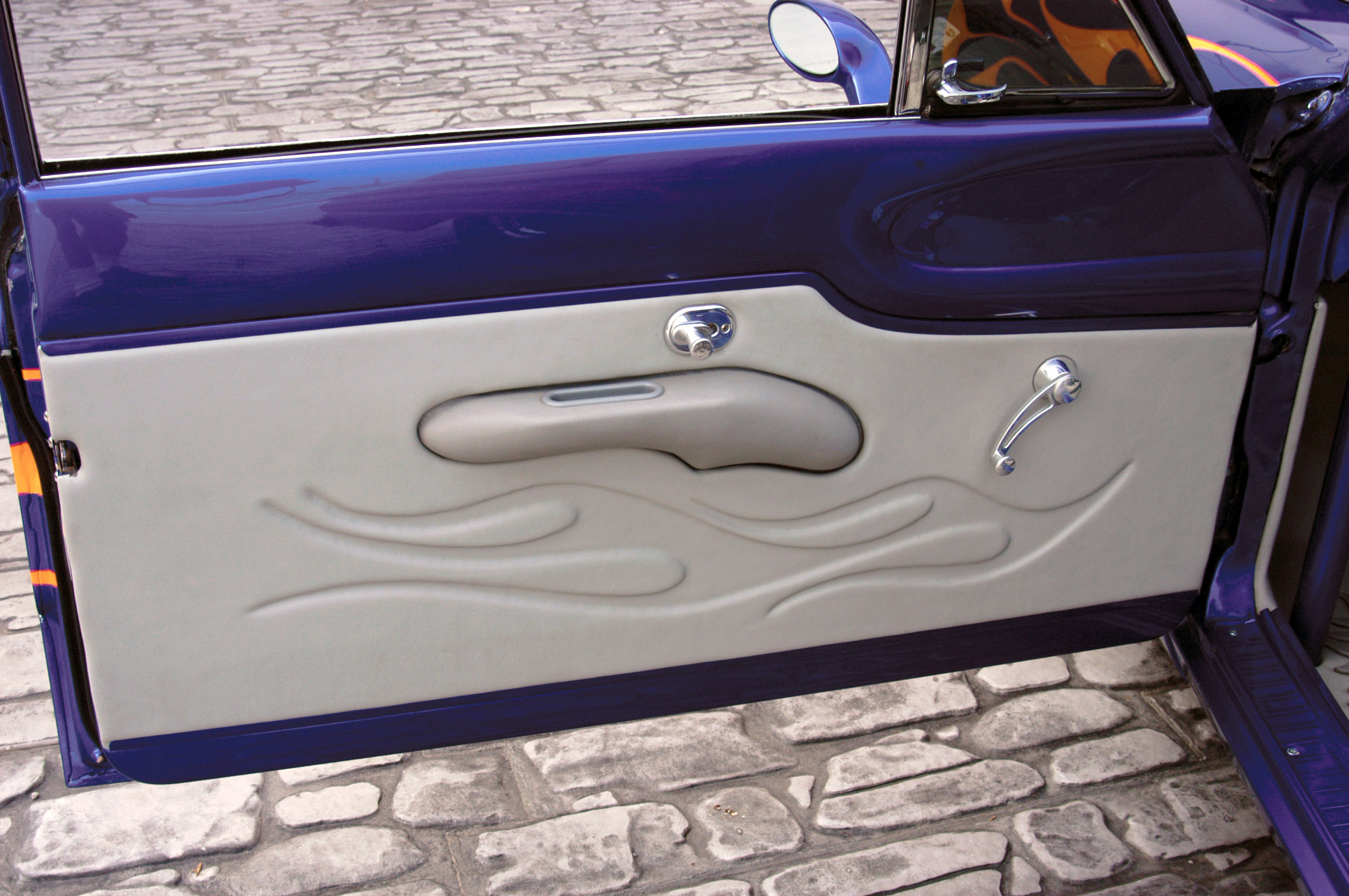
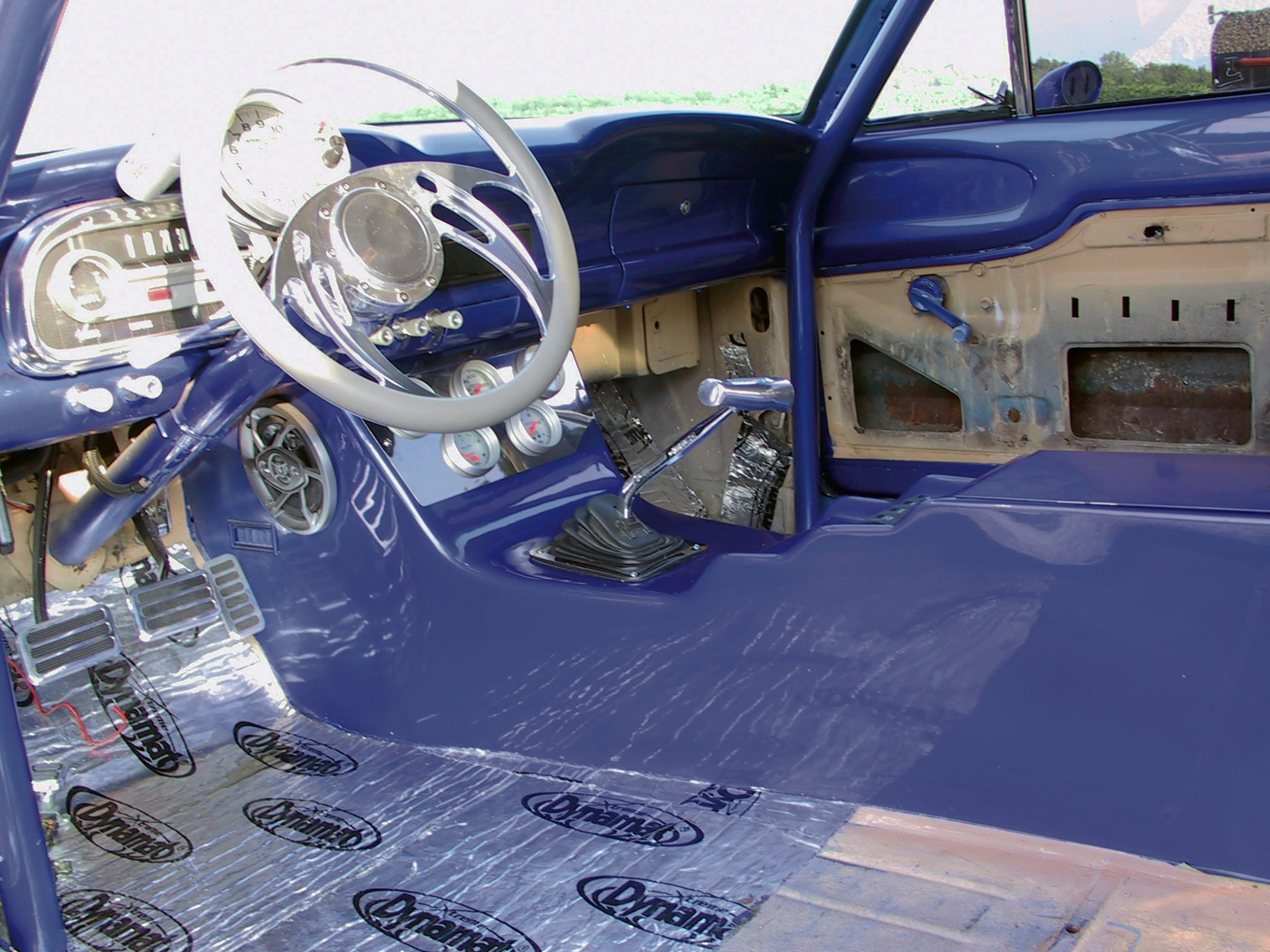
The upper portions of the door panels are painted this same color, while Collins trim covered the lower door panels in more Ultraleather, this time with a 3D flame motif. Between the two seats is a large, hand-fabricated sheetmetal console that cascades up from the dash to house the Air Ride pressure controls, Hurst shifter and Auto Meter Pro Comp instruments. These gauges, along with a matching tach on the steering column, complement the Spartan factory cracker-box-style instrumentation. Like the console, the dash is painted blue to match the body. The wagon’s large body leaves a lot of room for audio equipment, so Schmitt chose to go big on the stereo. He installed a Kenwood head unit inside the glove compartment and then joined it to an Audiobahn amp, two 12-inch Audiobahn subs and an assortment of Pioneer tweeters and midrange speakers.
Dedication to the Build
We asked the owner how he managed to complete the Falcon in only 10 months, and he said he worked on it seven nights a week, breaking only for dinner before heading back out to the garage. In only a few shows he’s earned trophies for best interior, best chassis, best paint, Street Machine of the Year, and even a special pick from our sister title, Super Rod.
The Joy of Ownership
The trophies are nice, but what Schmitt enjoys more is owning a creation that he knows he built himself, and seeing other people take an interest in his car. Future plans include more time spent driving the car, and we don’t know of a better way to enjoy 10 months of solid work.

PRO STREET FALCON BUILDUP
We asked the owner how he managed to complete the Falcon in a mere 10 months, and he said he worked on it seven nights a week, breaking only for dinner before heading back out to the garage. In only a few shows he’s earned trophies for best interior, best chassis, best paint, Street Machine of the Year, and even a special pick from our sister title, Super Rod. The trophies are nice, but what Norman Schmitt enjoys more is owning a creation that he knows he built himself, and seeing other people take an interest in his car. Future plans include more time spent driving the car, and we don’t know of a better way to enjoy 10 months of solid work.
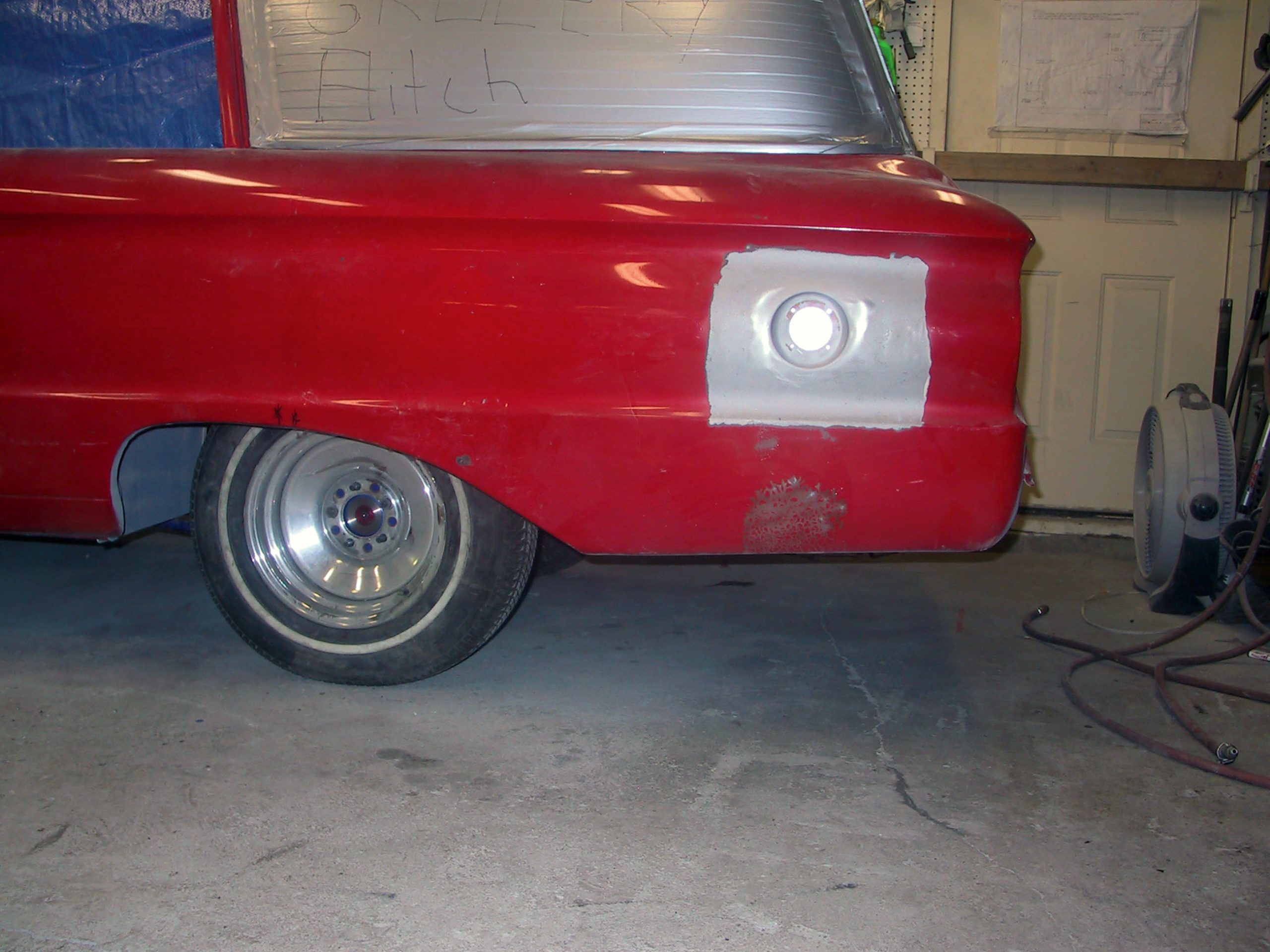
1. Since Schmitt replaced the gas tank with a fuel cell, he was able to eliminate the stock gas-filler door. He’s already ground the area smooth in preparation for welding in a filler panel.
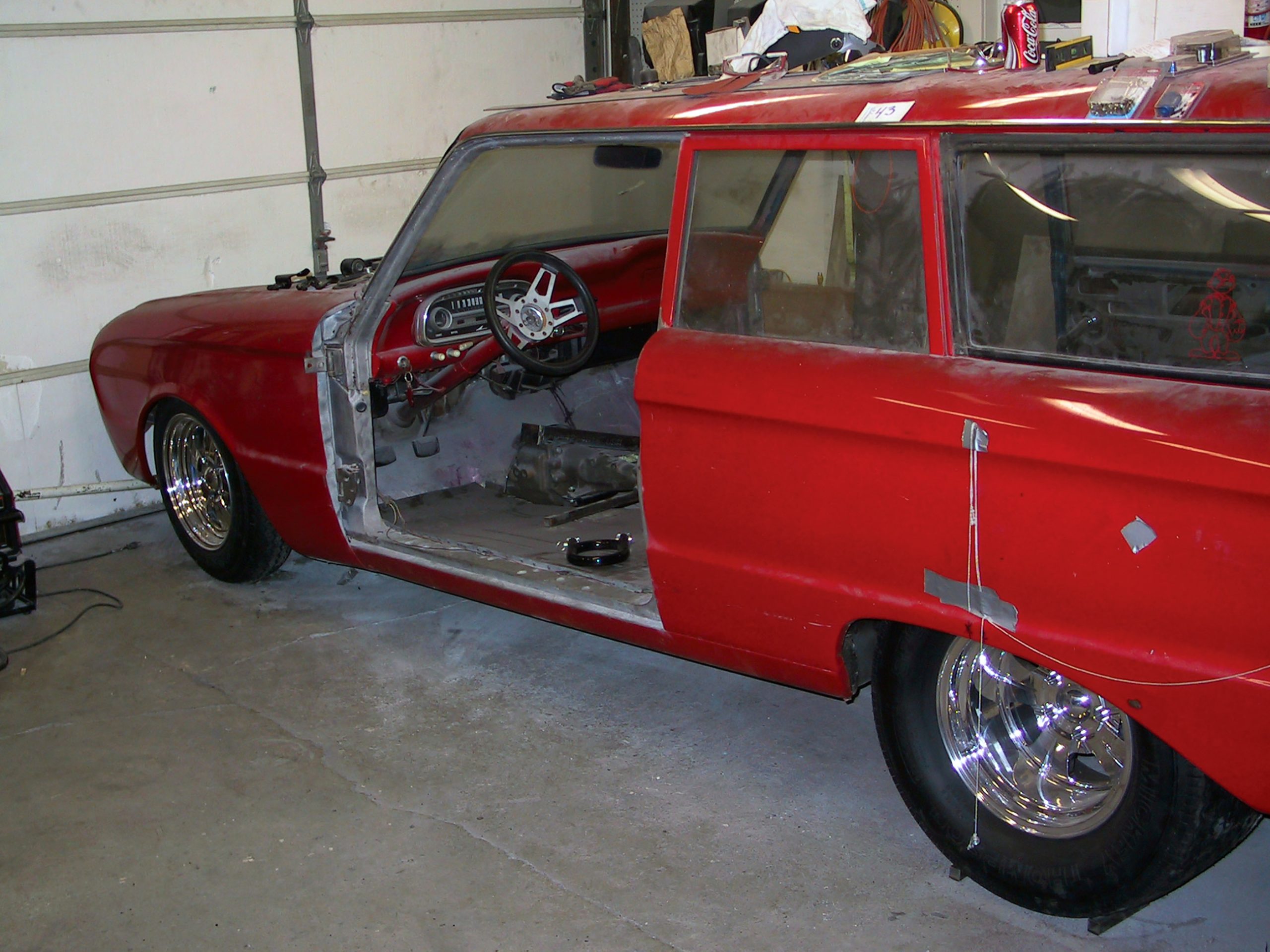
2. This shot demonstrates the good condition of the body at the beginning of the project. You can see that the body is straight, and the owner is centering the new rear wheels and tires in their wells.
3. In front, the ShockWaves bolt to the stock upper control arms. The disc brakes are from a ’76 Granada, and the calipers and hubs are painted to match the rest of the car.
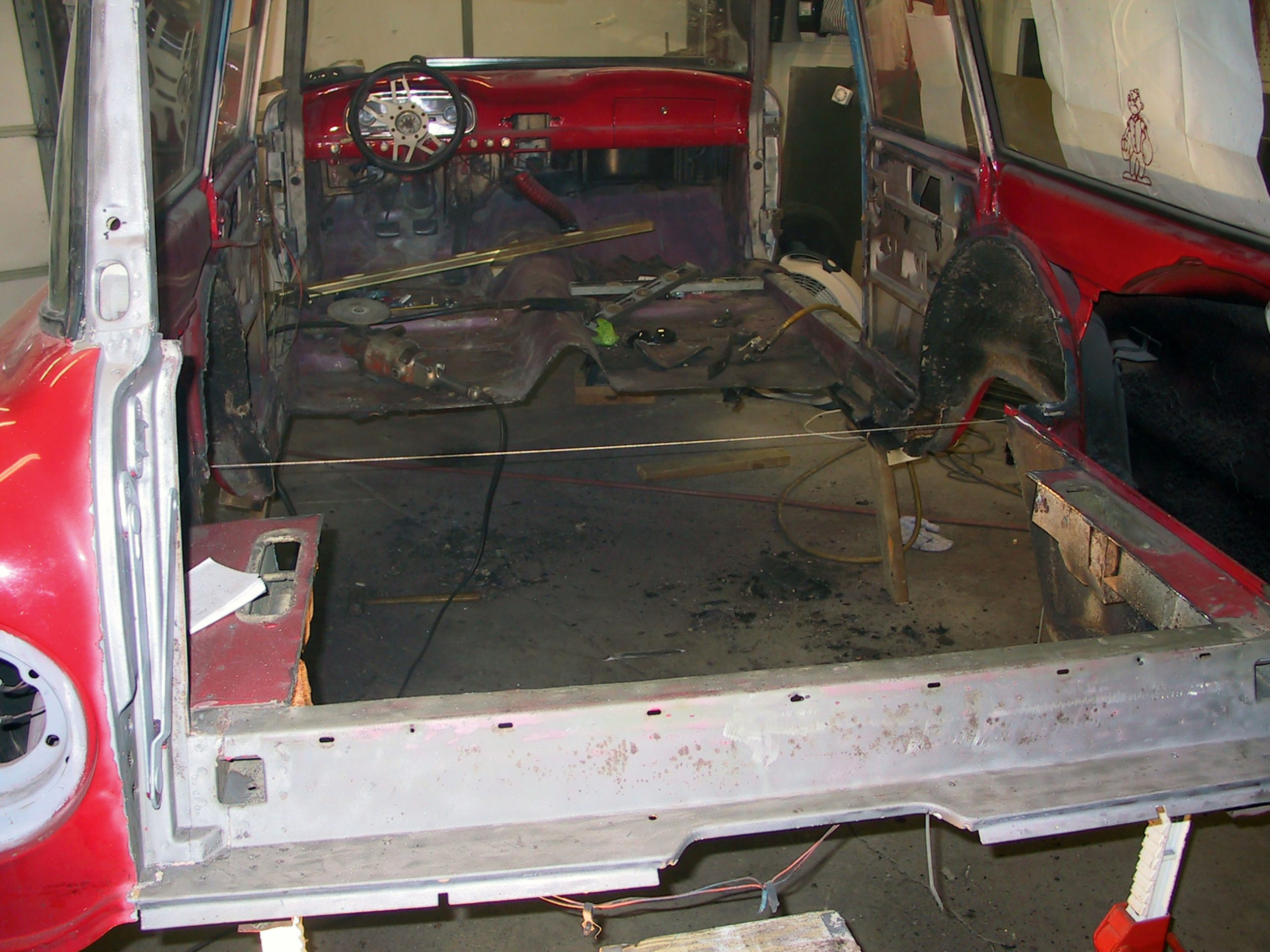
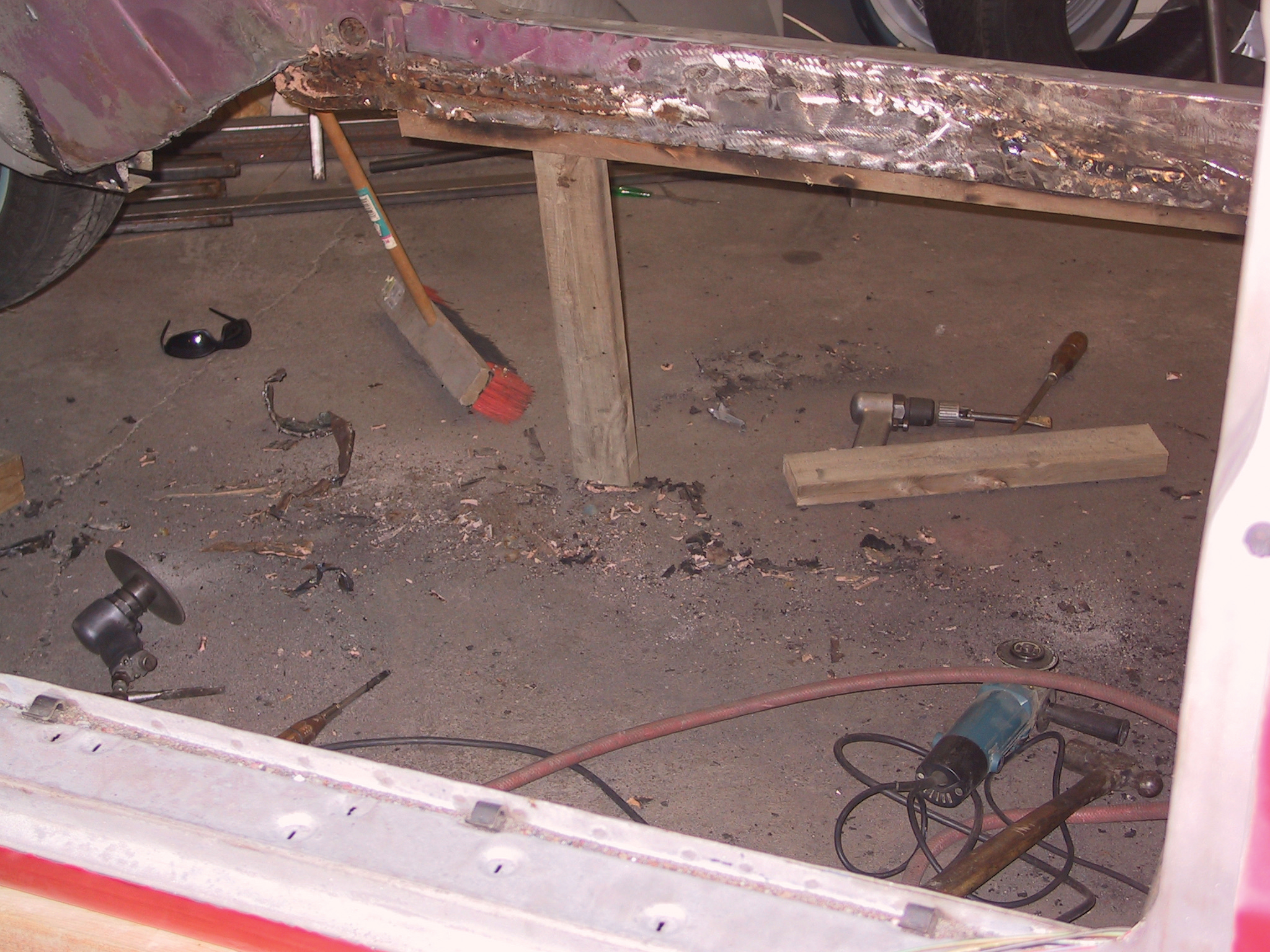
4. After buying the car, Schmitt didn’t waste any time. He completely removed the floors in preparation for a Pro Street-style rearend.
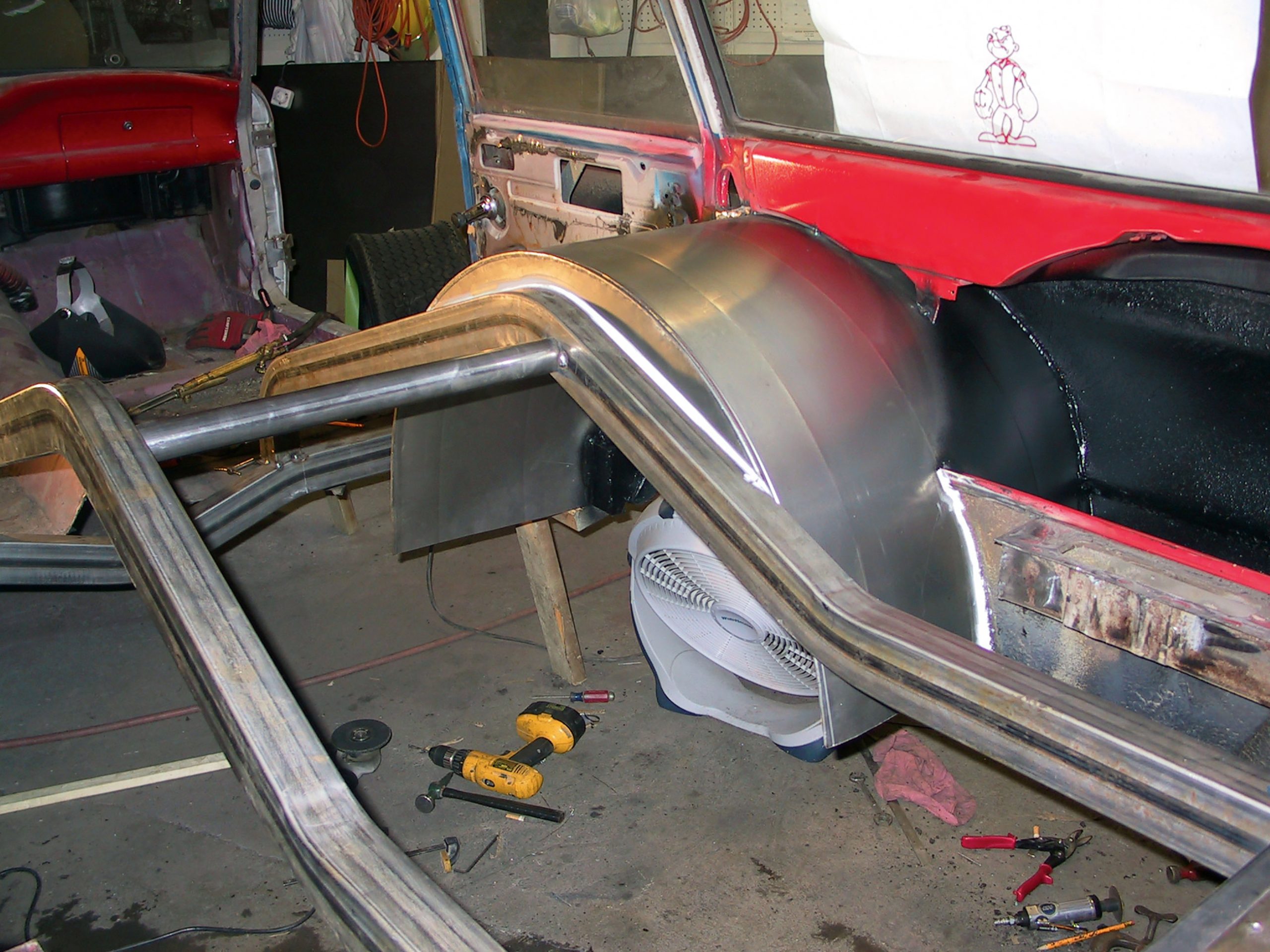
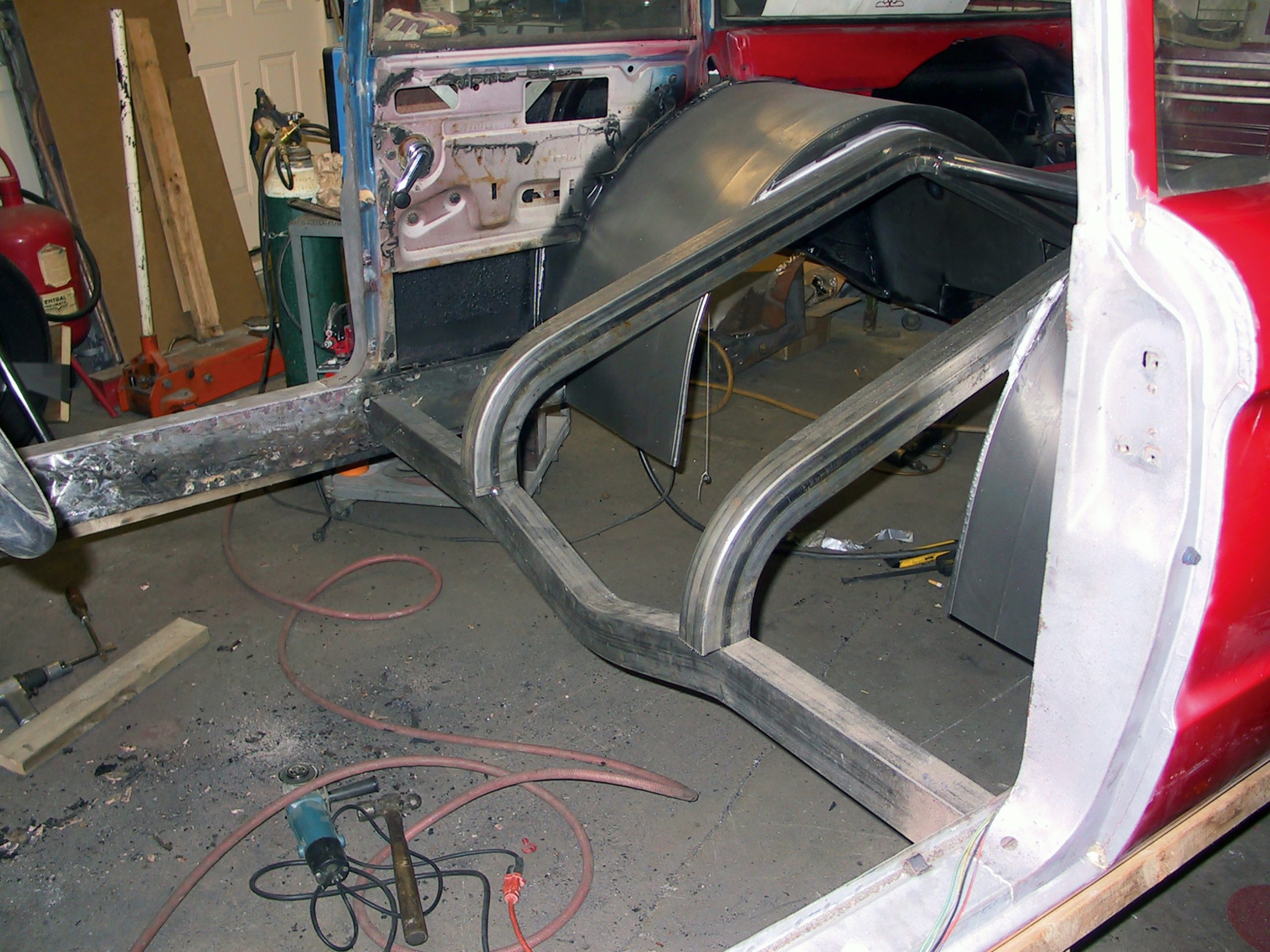
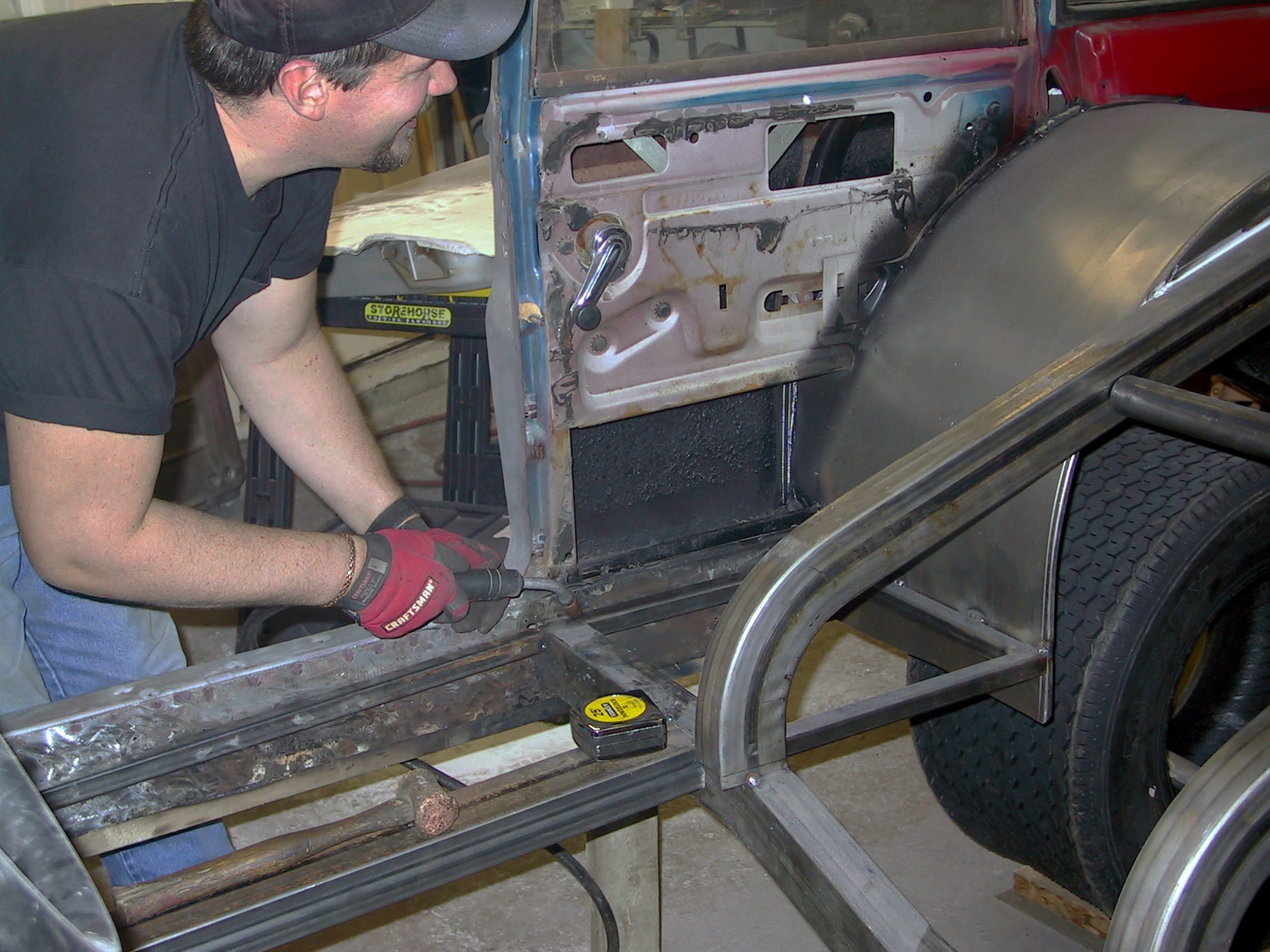
5. The Pulley Engineering rear subframe includes these beefy steel rails and a huge set of wheel tubs. You can see just how much of the inner body structure had to go to make room for these pieces.
6. In this photo you can see how the front of the subframe attaches to the body. You can also see why the owner eliminated the rear seat—the tubs don’t leave much room for one, do they?
7. The new rear subframe required a lot of welding, but the results were worth it. The wagon’s big, open structure needs a strong frame, and now it has it.
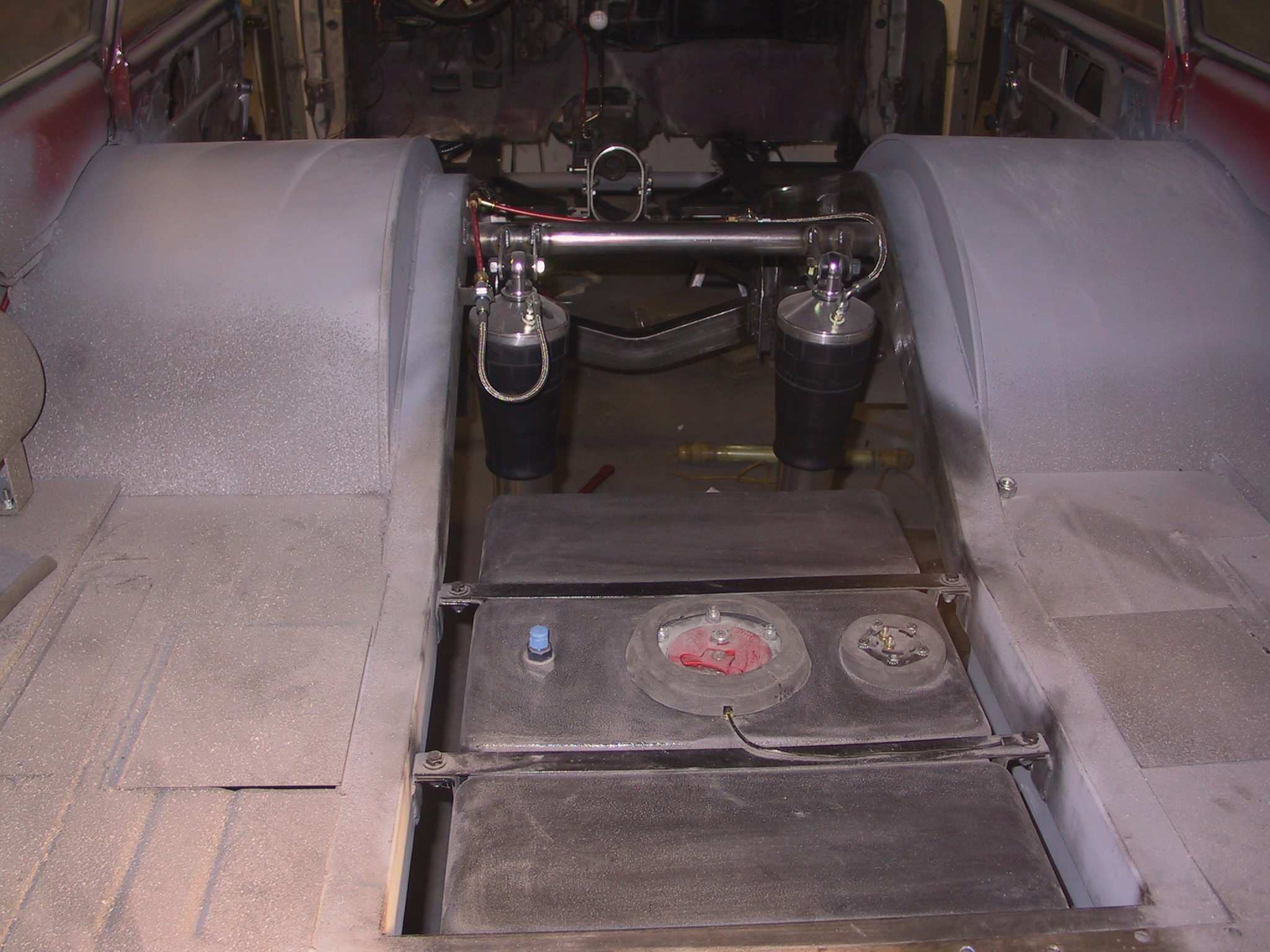
8. The race-style fuel cell sits lengthwise between the rear framerails, and immediately ahead of the tank are the Air Ride Technologies ShockWaves, already plumbed and hung from their upper mount.
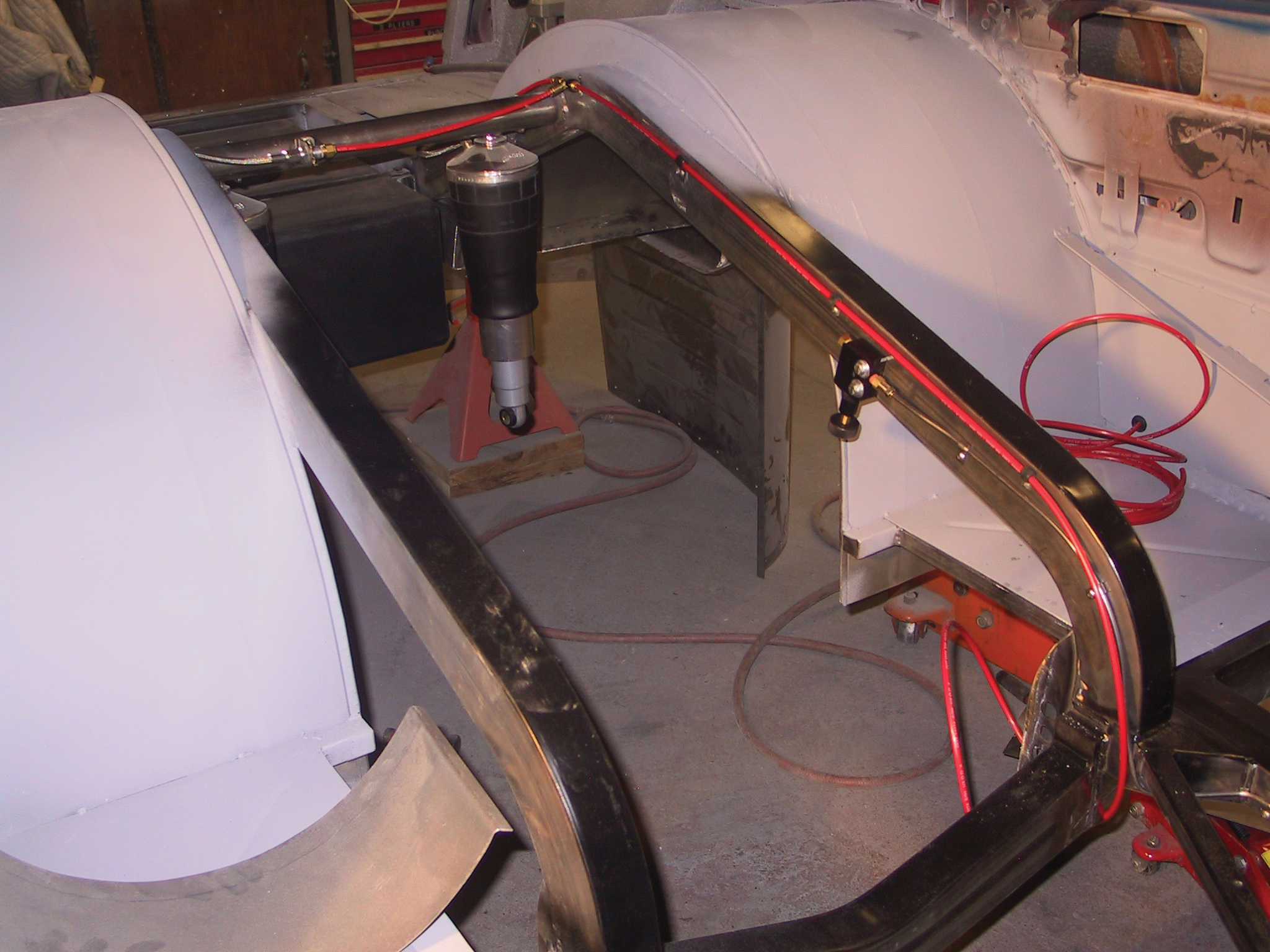
9. From the front, you can see how Schmitt ran the brake line and air hose for the suspension. The wide rails make tidy routing easy.
10. After completing the rear subframe, Schmitt cut out the front portion of the floor to the firewall. The car’s floor is completely new.
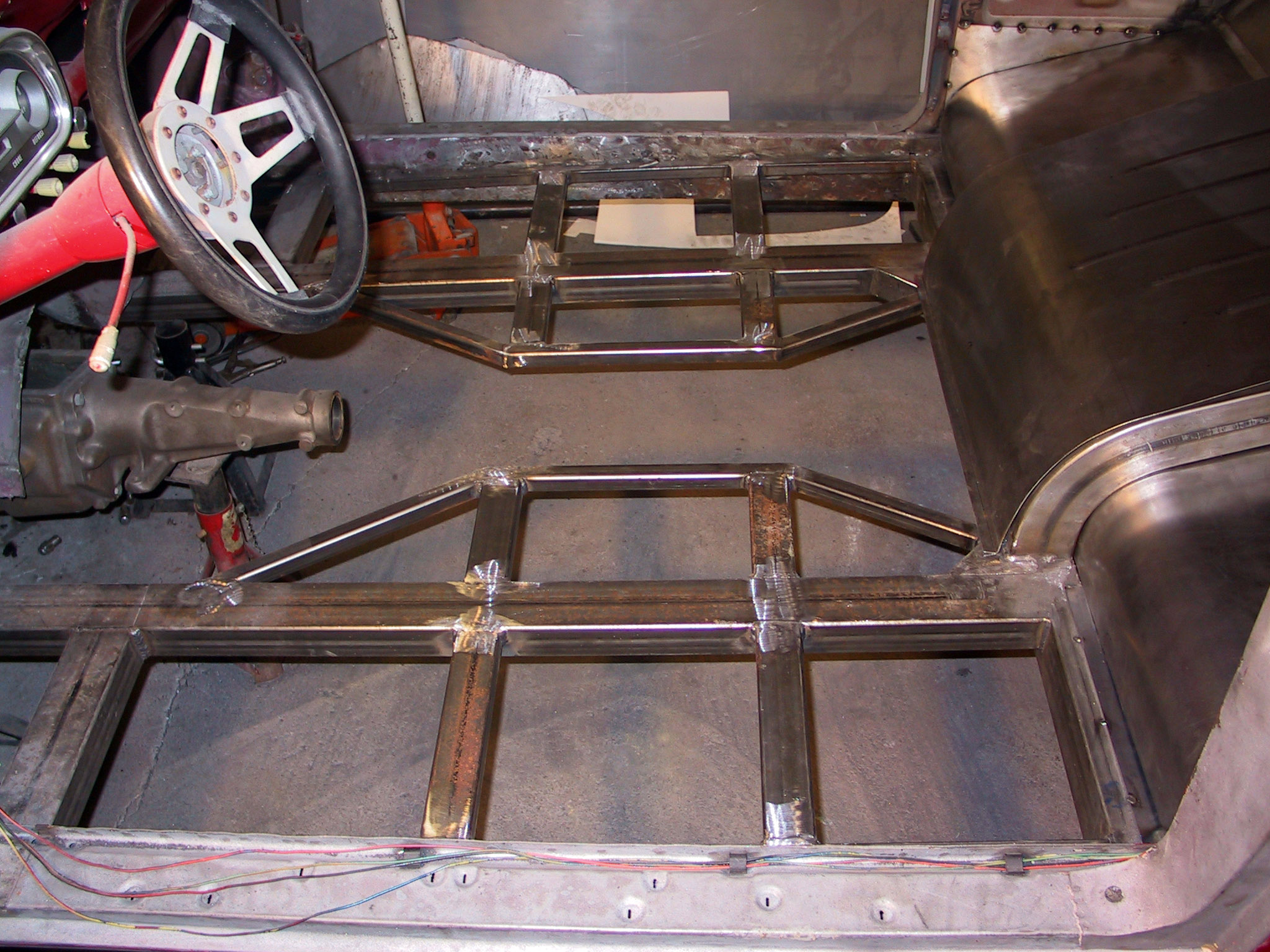
11. The owner built this new framework for the floor. In addition to supporting the floor, it also strengthens the frame considerably against twisting.
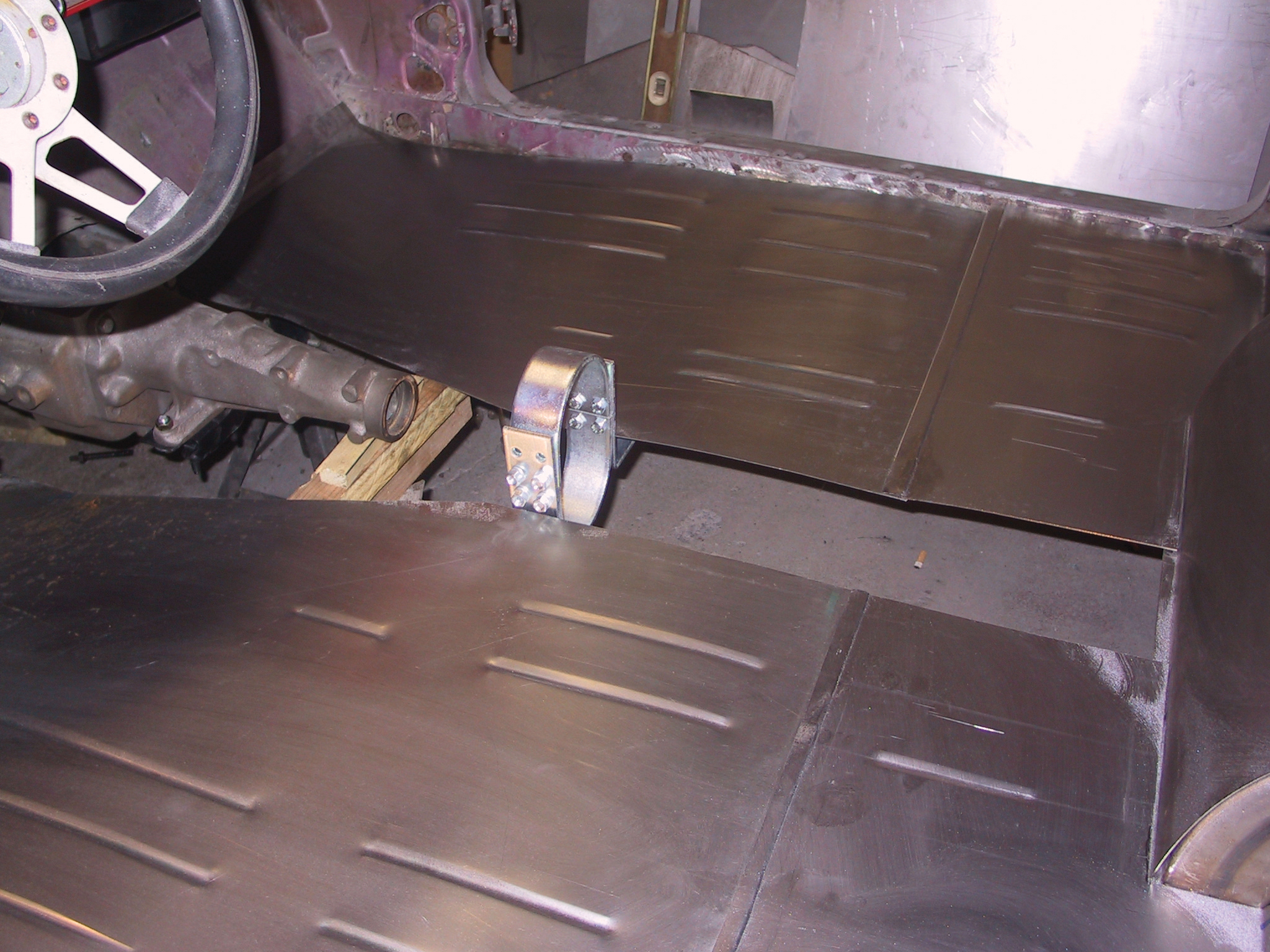
12. Now the front floor is mostly in place, save for the driveshaft tunnel. Wooden blocks are in place to help mock up the transmission, and a driveshaft safety loop is now in place, too.
13. The driveshaft and transmission tunnel is taking shape. Look how closely it hugs the driveshaft loop.
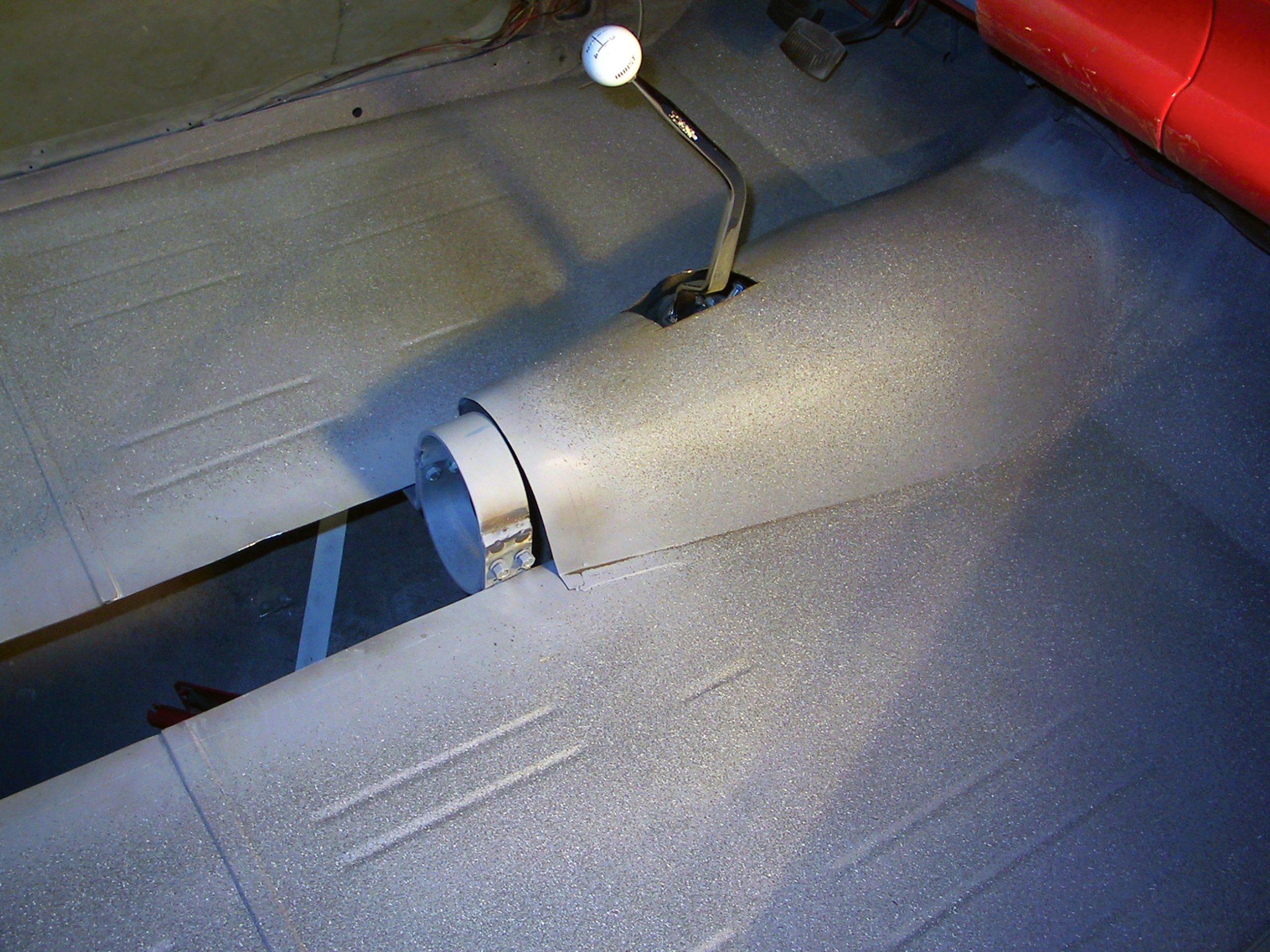
14. Now, with the driveshaft tunnel finished, the floor is finished as well.
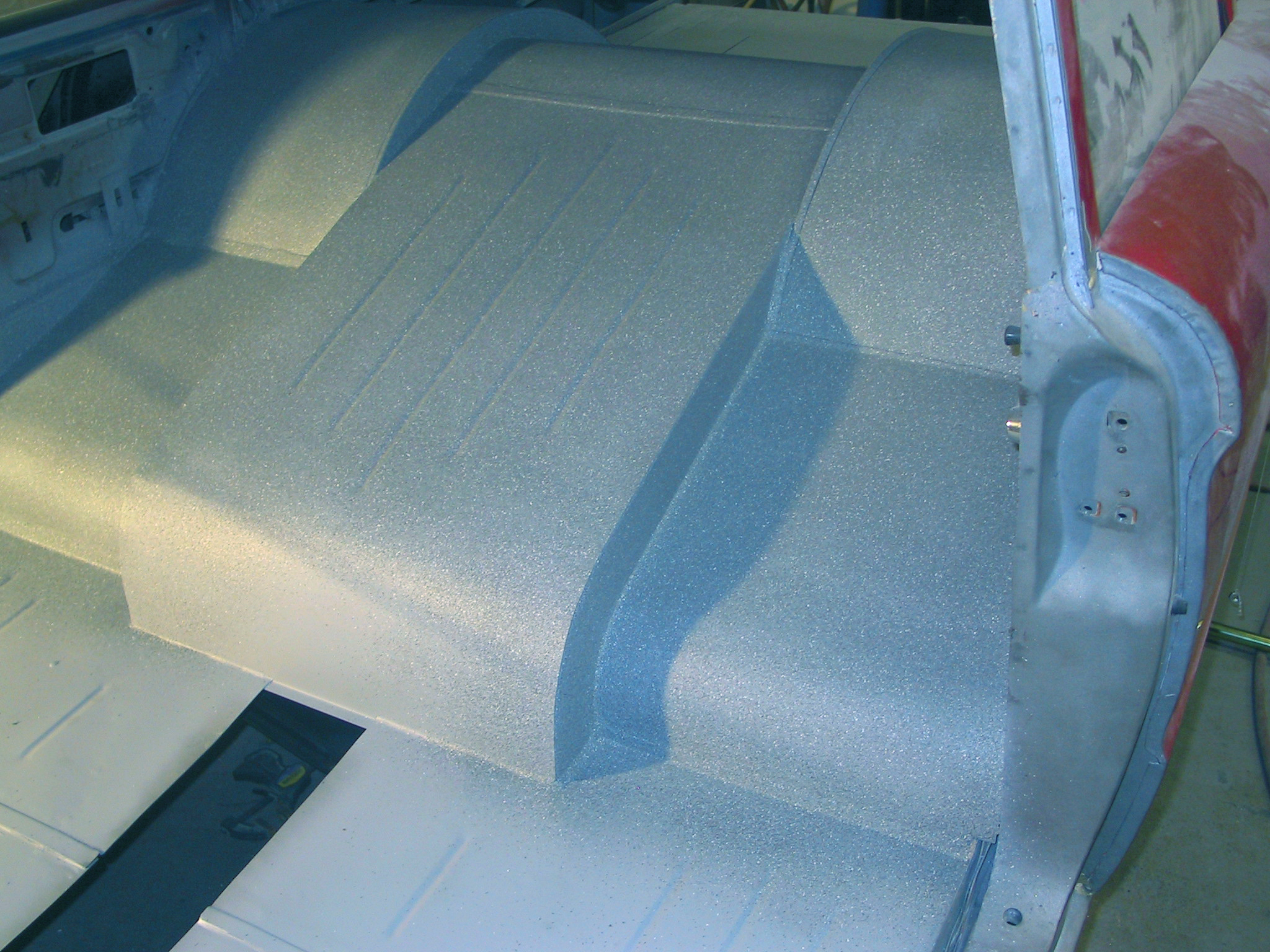
15. The sheetmetal floor is now done and in primer. Note the ribbing built into the center panel to add some looks to the floor.
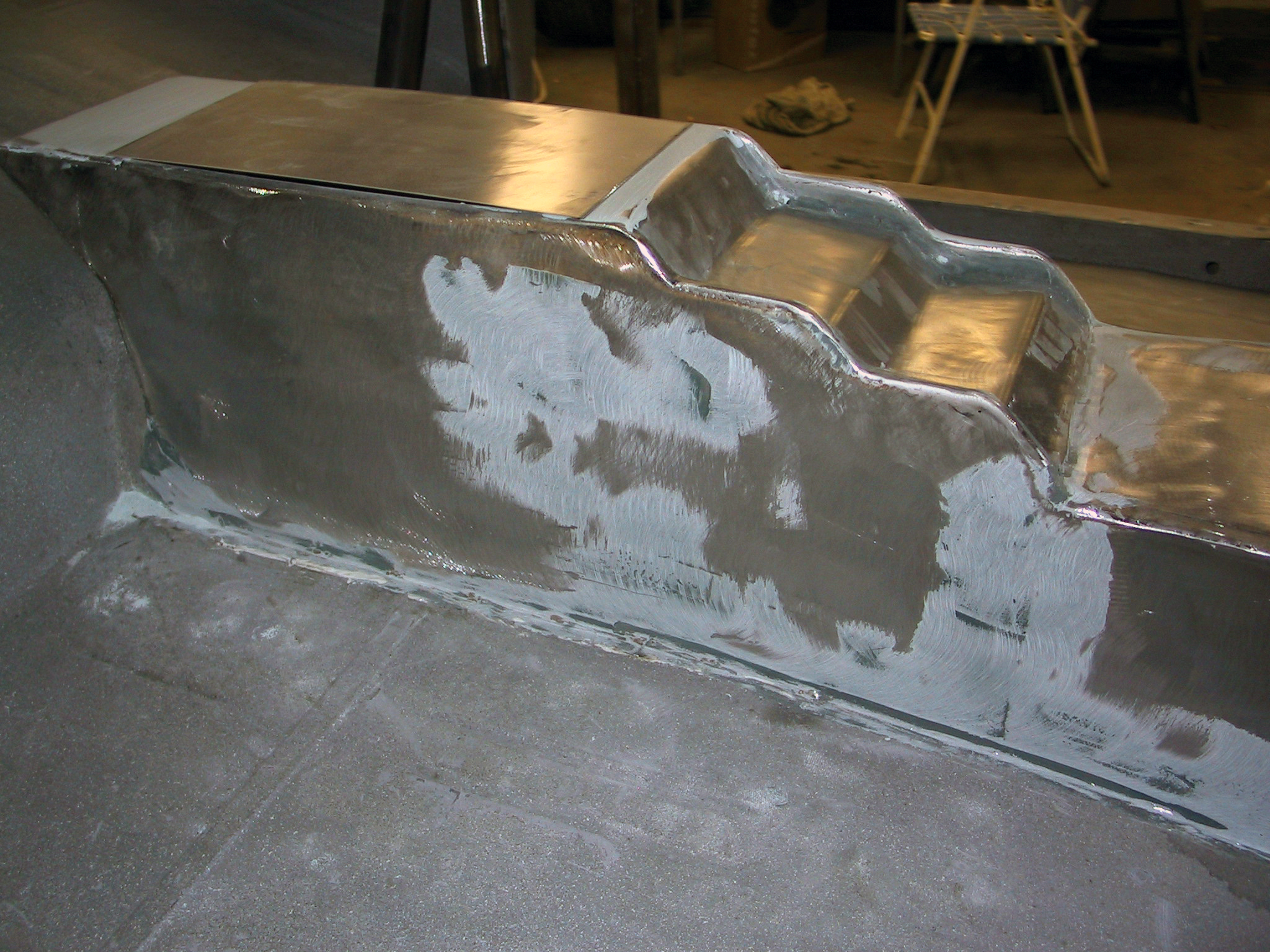
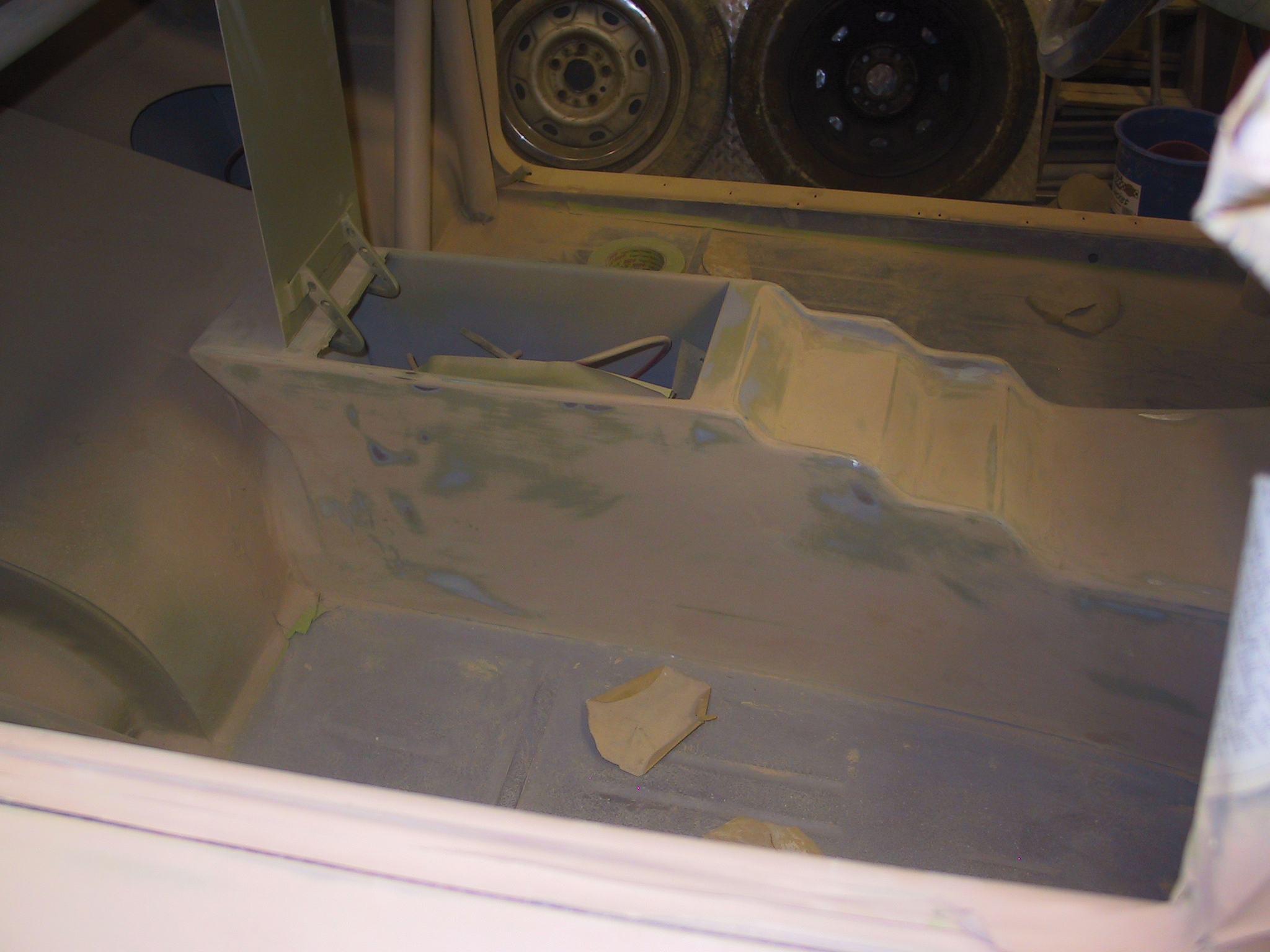
16. Schmitt hand-fabricated the center console from sheet steel, and the cascading multilevel look is pretty cool. The door is yet to be made, and a flat piece of steel covers the top of the console.
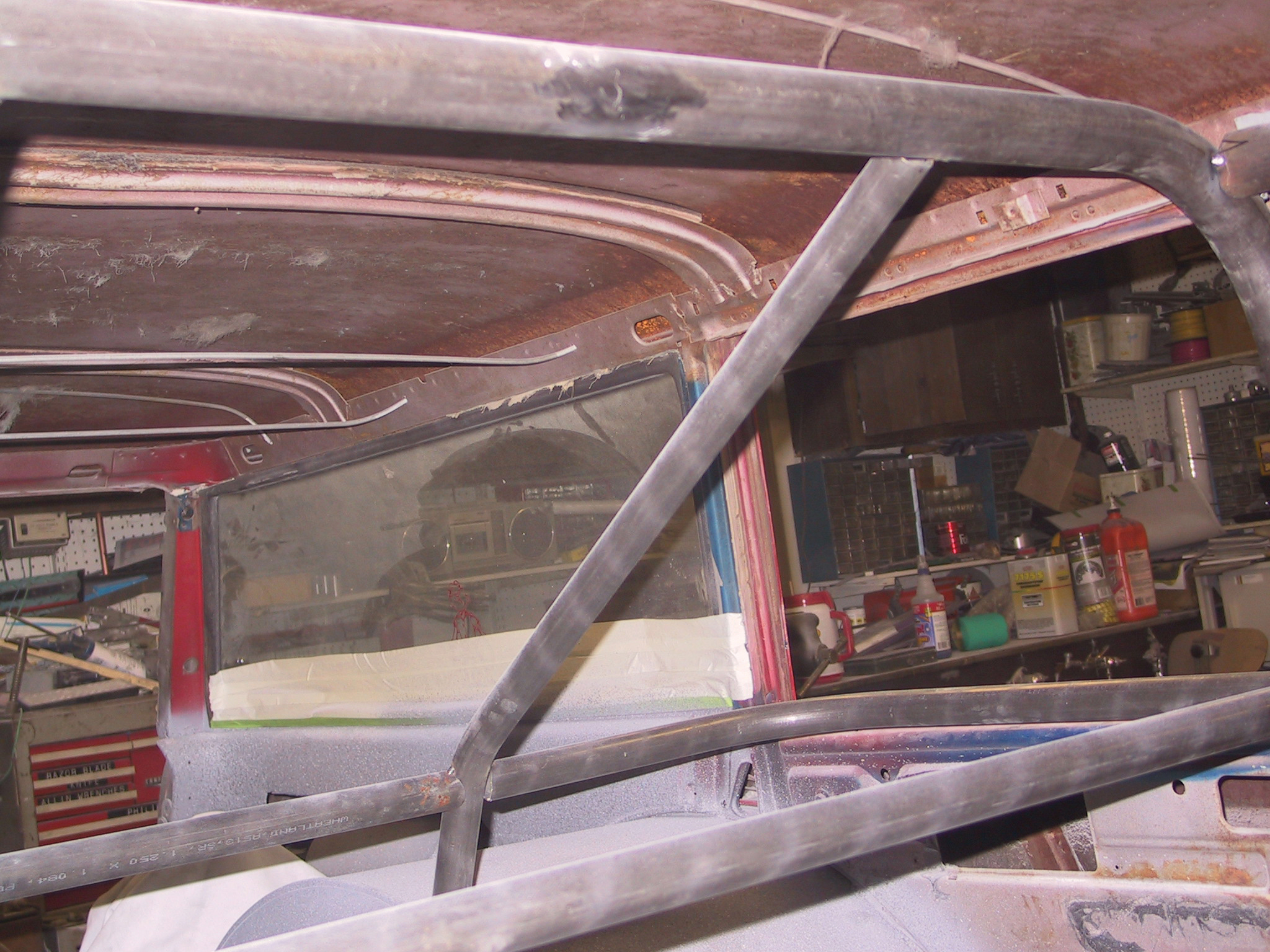
17. At this point, the rollcage is only tacked in place to make sure everything fits prior to finishing the welds. The cage is extensive but out of the way for the driver and passenger.
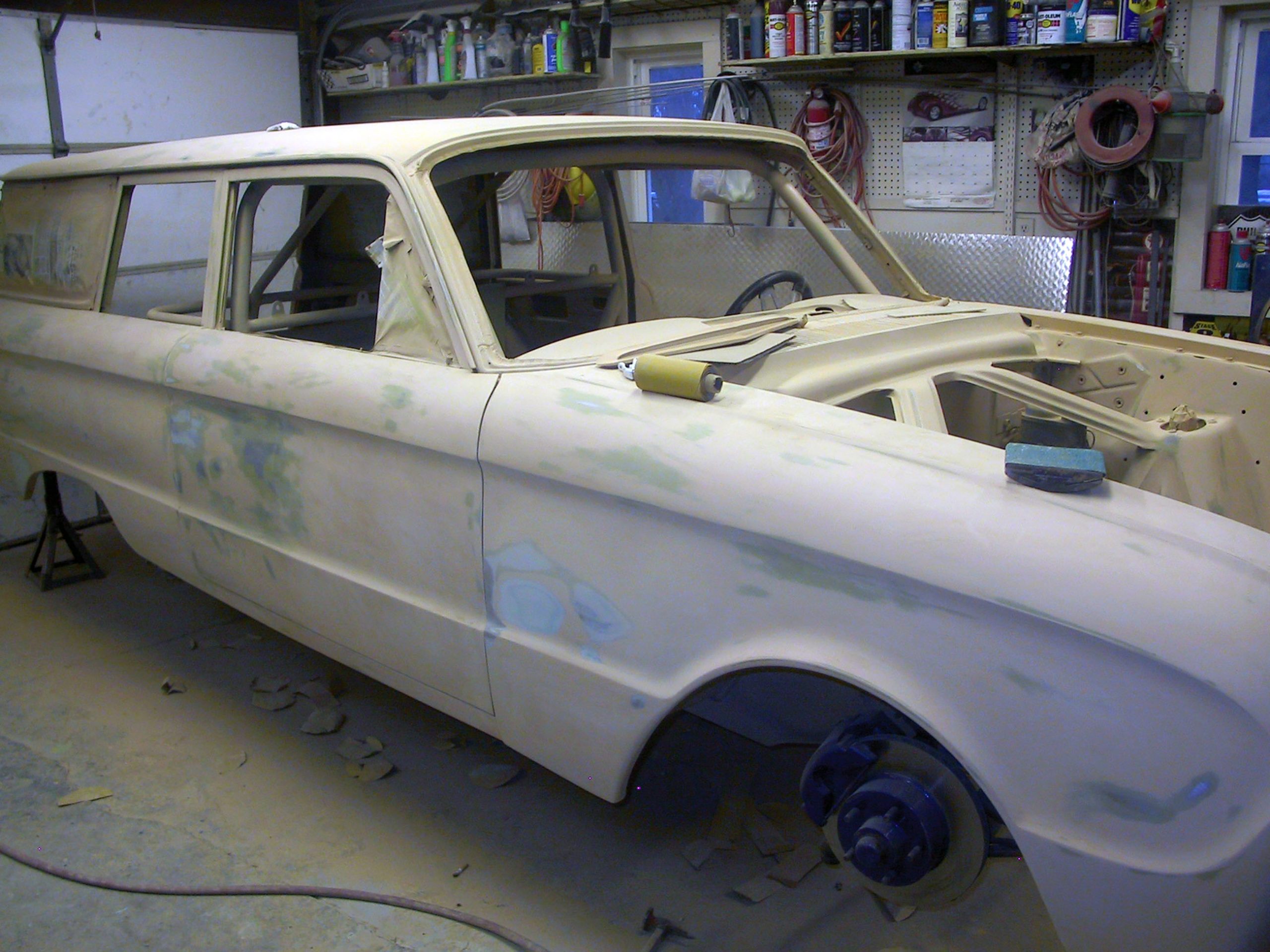
18. Although the body was in good shape to begin with, every old car needs its fair share of bodywork to look its best. All of the trim holes are filled and the door is shaved. This is now one smooth Falcon.
19. All of the interior sheetmetal got the same degree of body prep as the rest of the car. Notice the open door and large storage area.
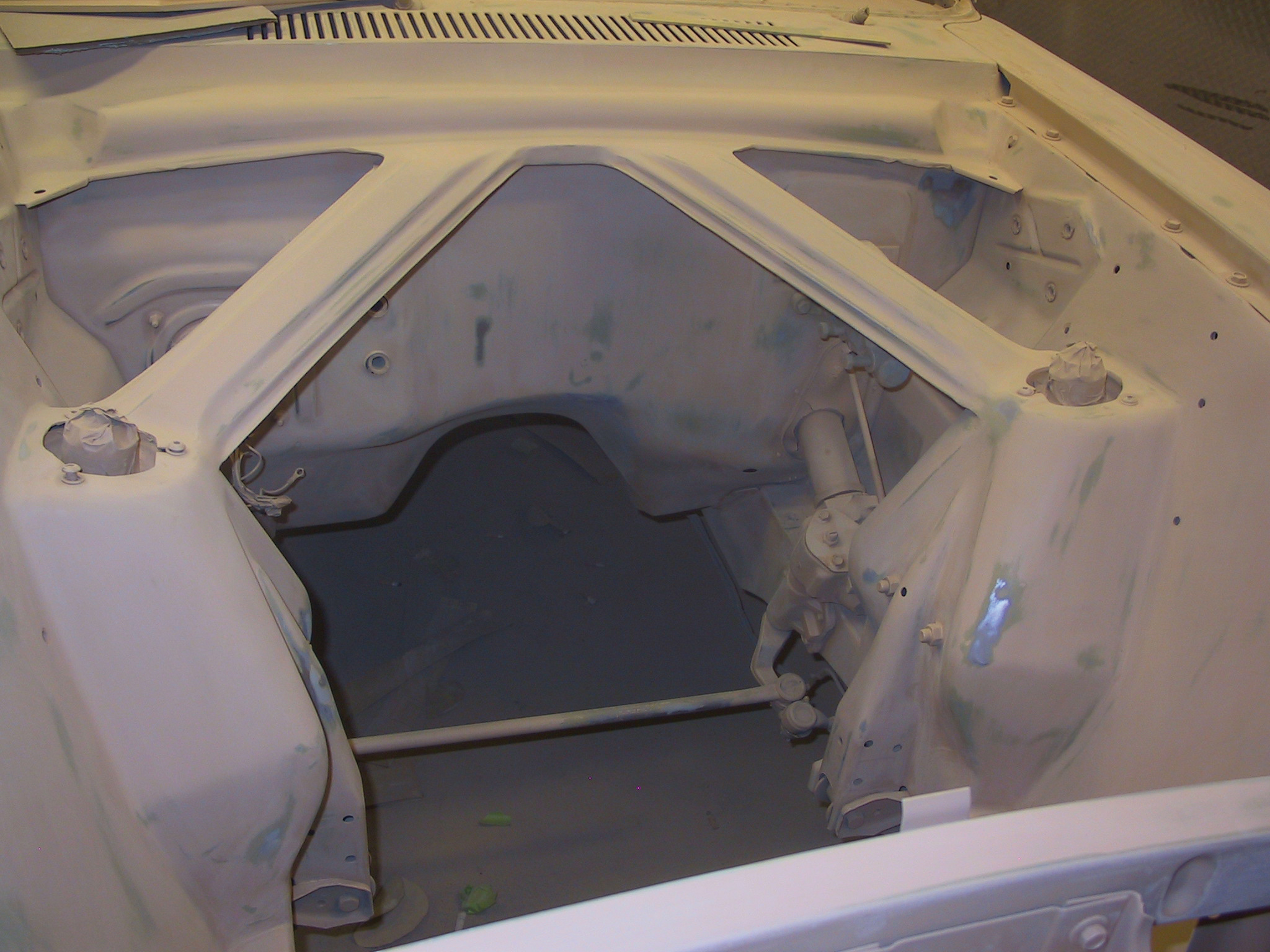
20. The inner fenders look just as good as the outer fenders. The shock tower brace is now molded to the body, and the firewall is now devoid of any unused holes.
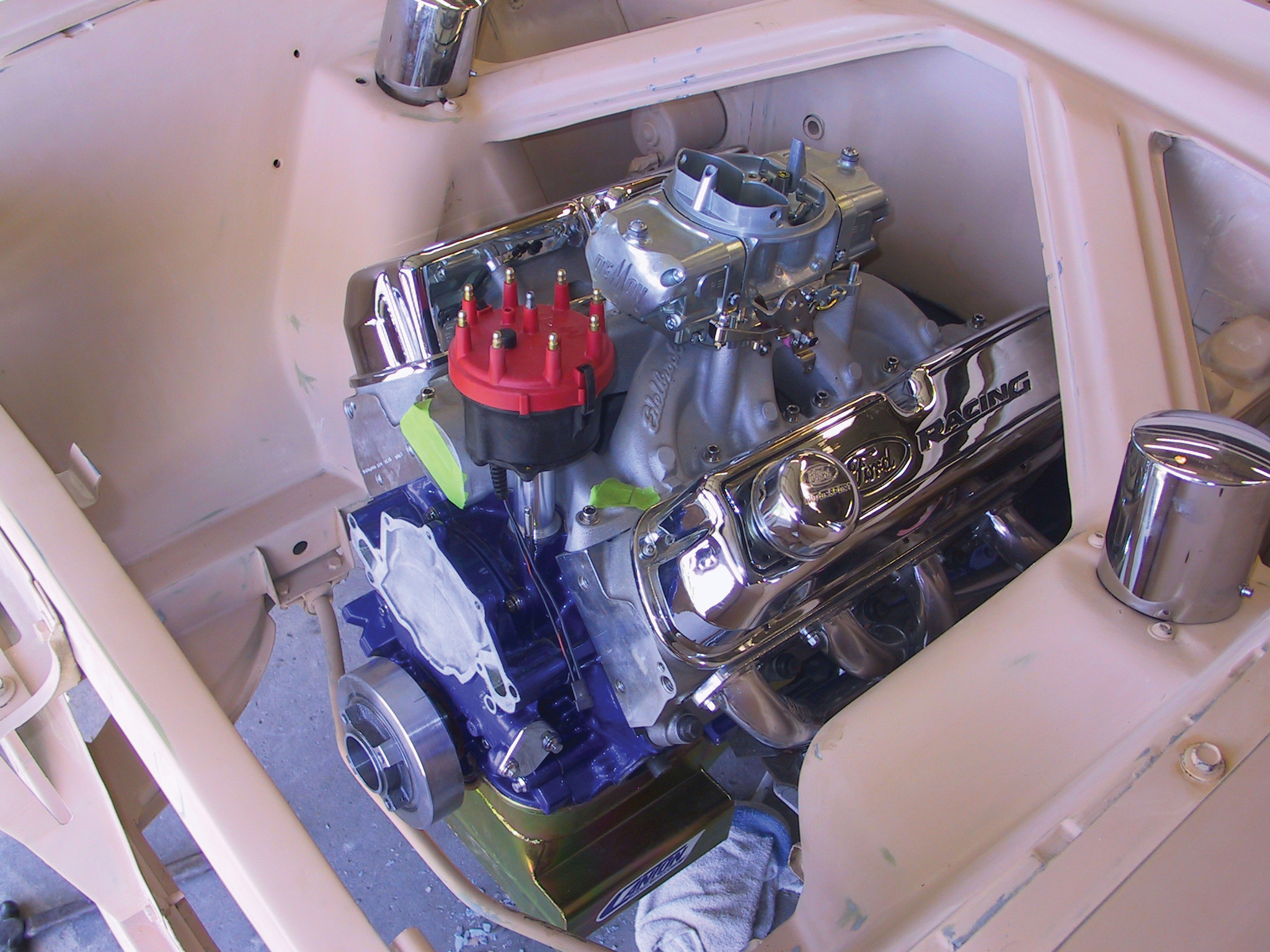
21. The engine was painted before the rest of the car, and here it is getting its final test fit to make sure there are no interference problems. It fits, and it looks great, too.
22. Check out those precise brake-line bends on the narrow 9-inch rearend. This shot also shows off the mounting arrangement for the ladder bars and ShockWaves.
23. The complete rearend assembly is ready to go in the car. Notice that it’s as smooth as the body, with all the welds for the brackets touched up with filler and sanded glassy.
24. The Falcon sits in the paint booth, wearing a coat of blue DuPont paint. Schmitt painted the wagon, and from the looks of things, he’s about ready to apply the flames.
25. Fresh from the paint shop, the wagon looks awesome and sits right, too. The car still has to be reassembled, but at this point all the hardest work is done.
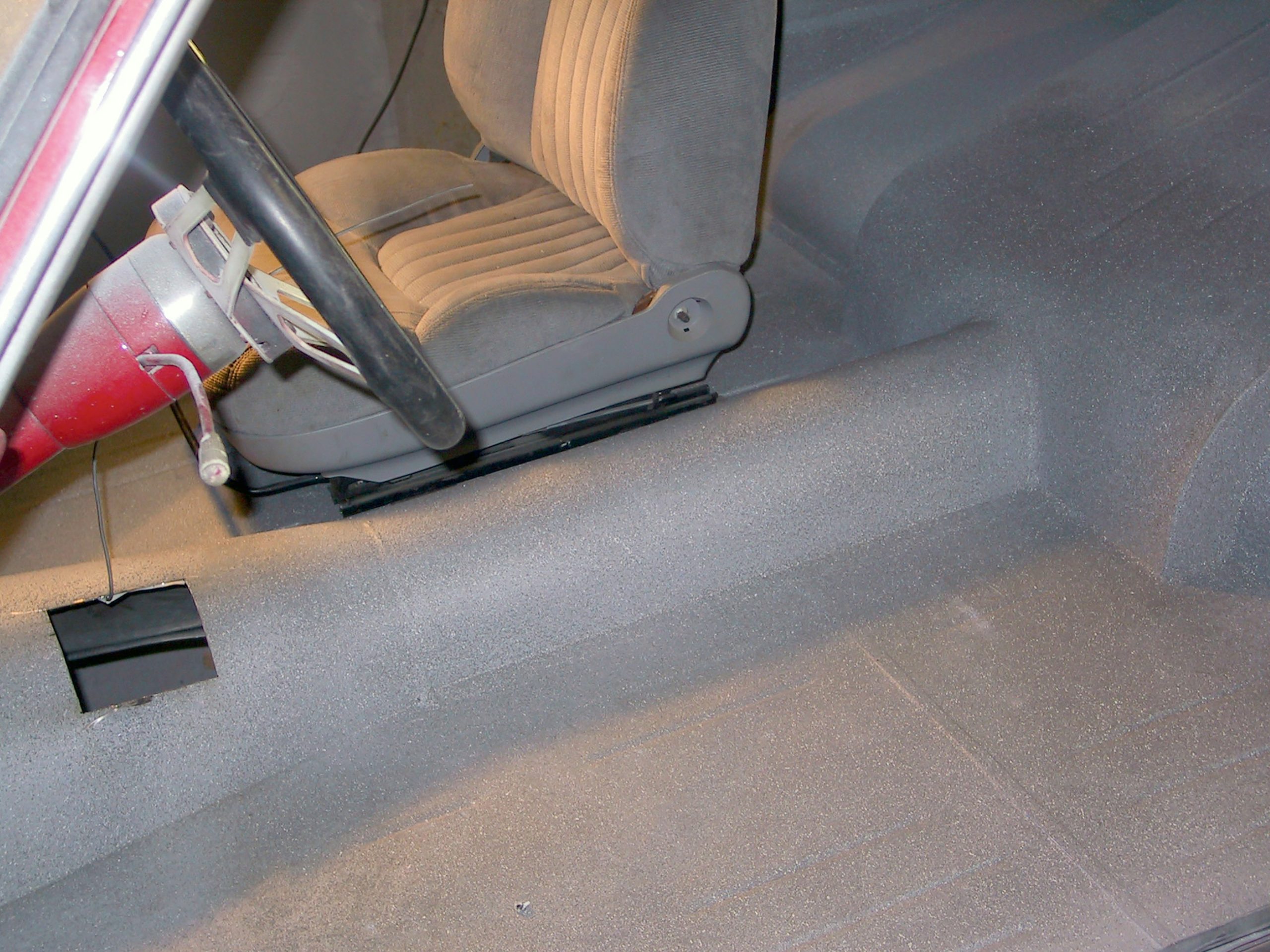
26. Aside from upholstery, the interior seems complete. The instruments seem to be done, the speakers are in place, the painted items are painted, and Dynamat covers the floor.
27. Here’s the engine minus its cover, which typically conceals the engine. Now that it’s painted, this sheetmetal looks better than ever, and incredibly smooth.