Jim Anderson’s Vision
When Jim Anderson builds a car, he really builds it. Other than paint and a few of the more intense aspects of the interior, he takes on the task of reconstructing the entire car into what he thinks it should be. And when asked what he thinks a vintage car should be, he responds that it should be fast and handle well.
The Challenge
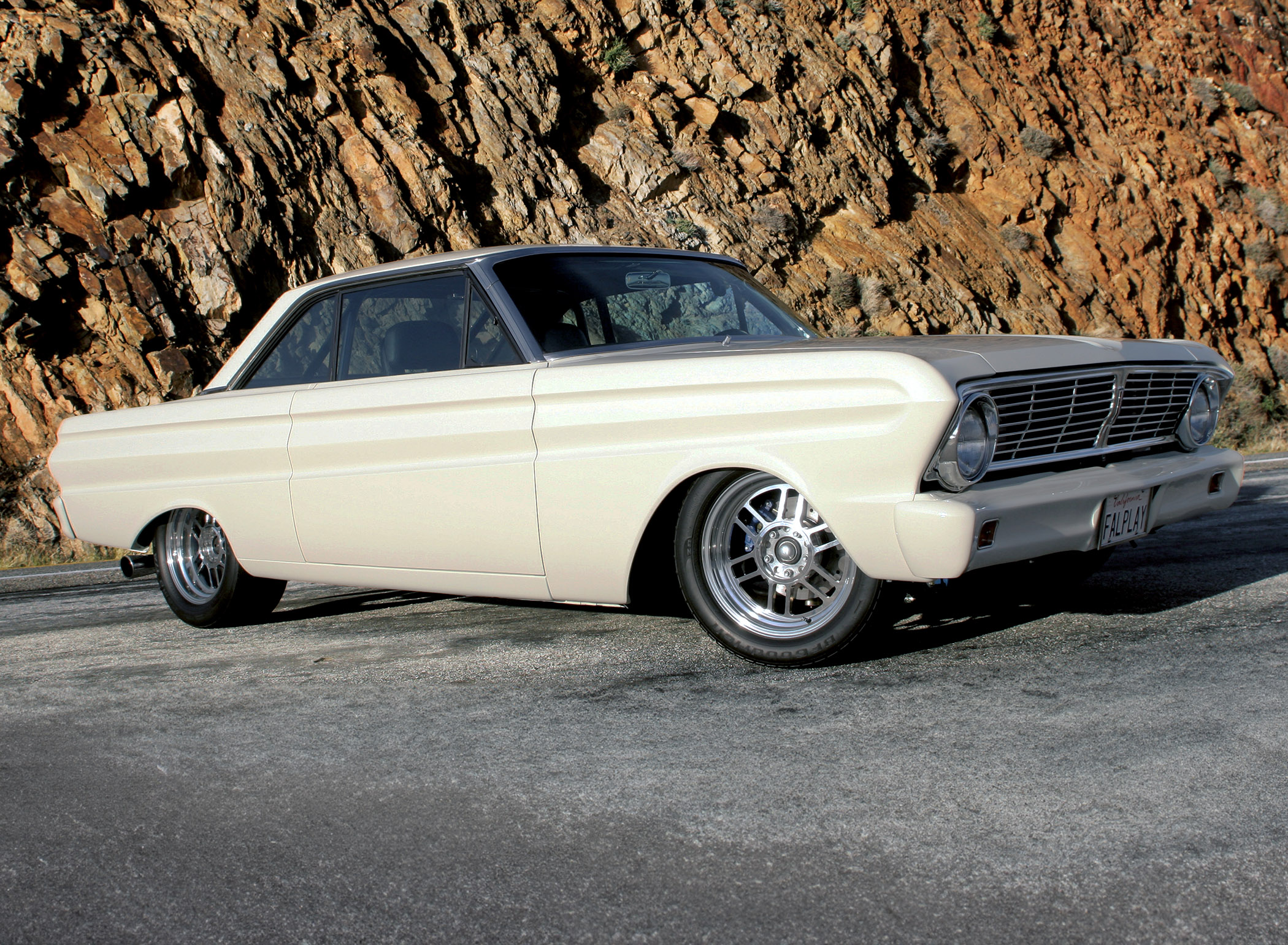
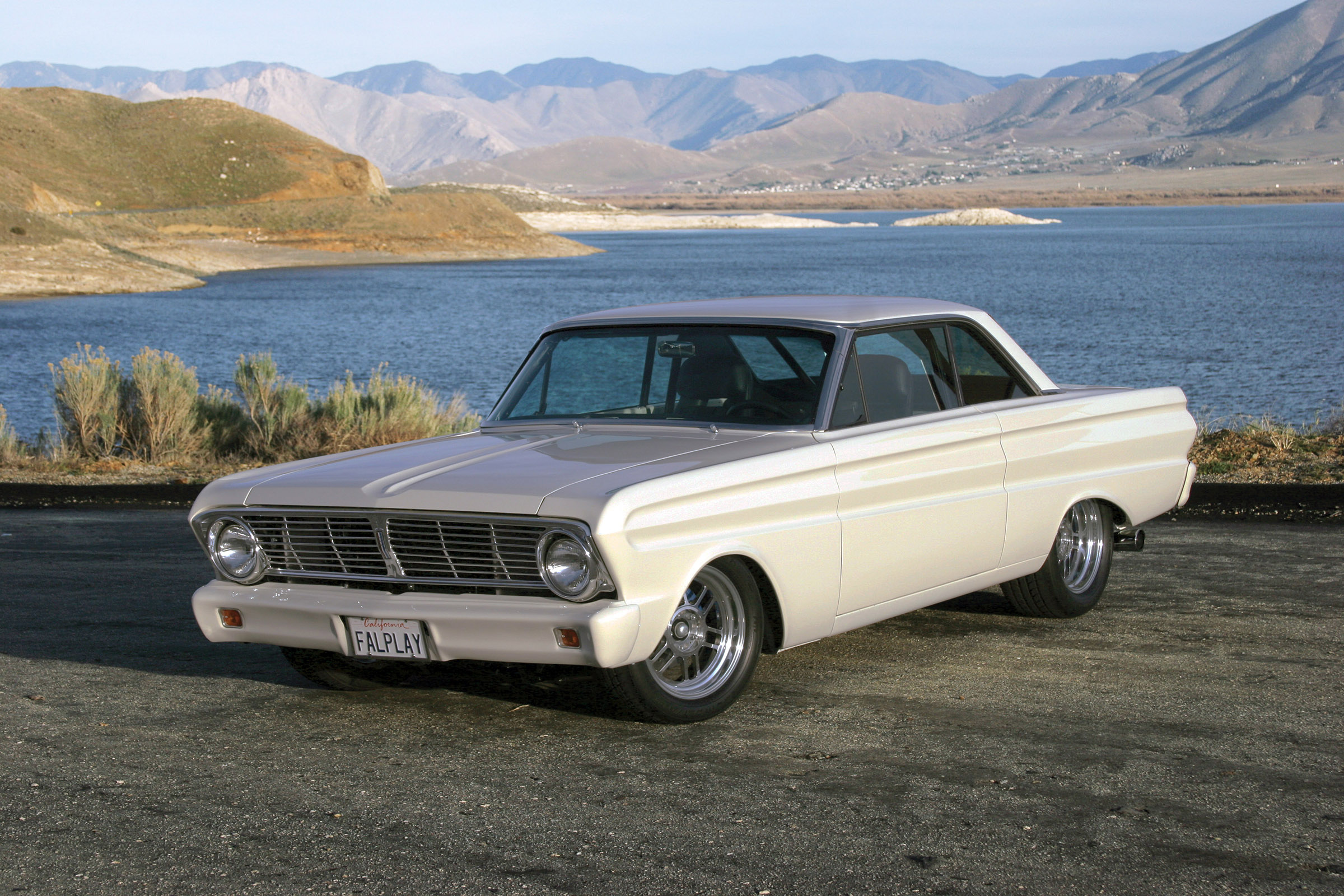
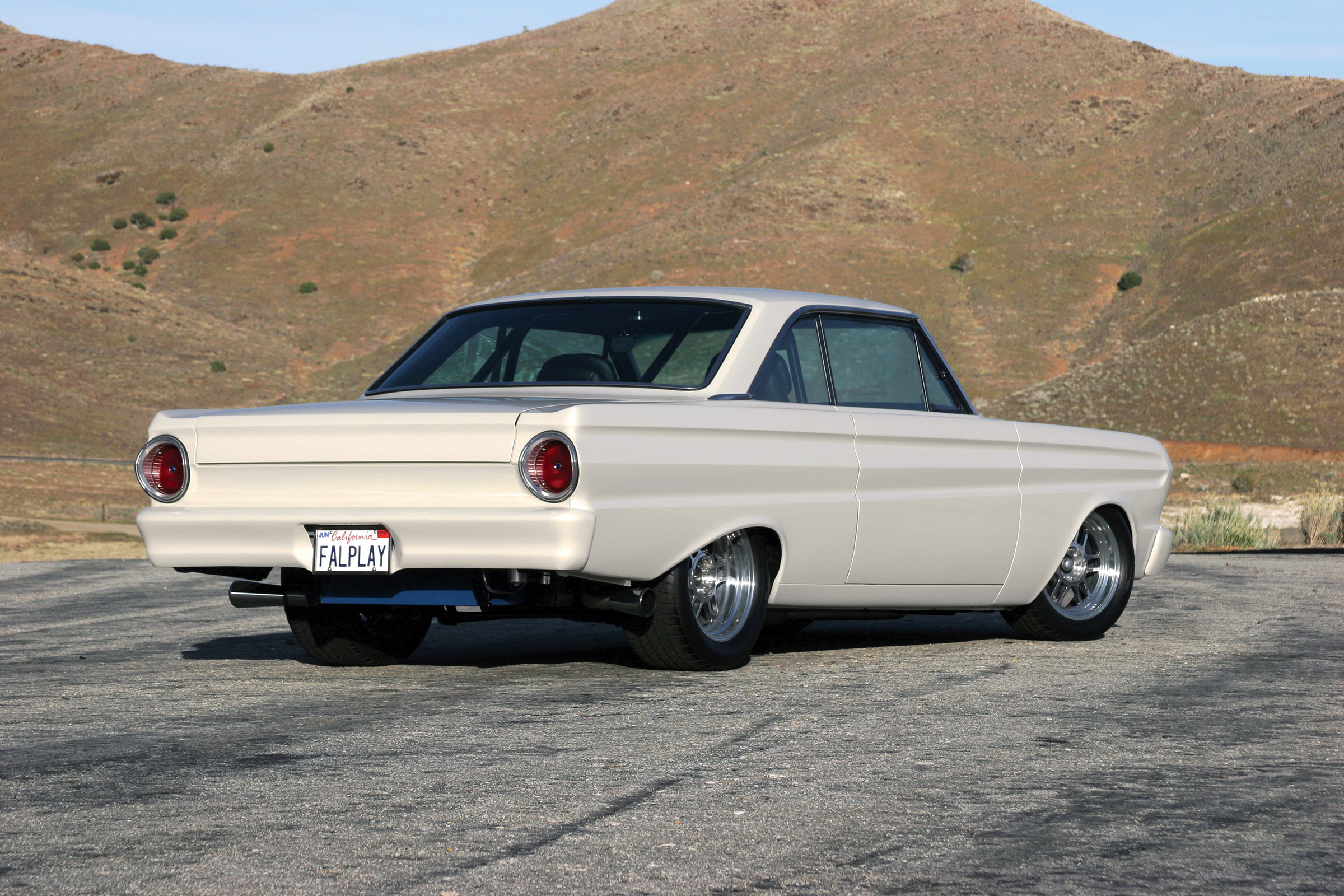
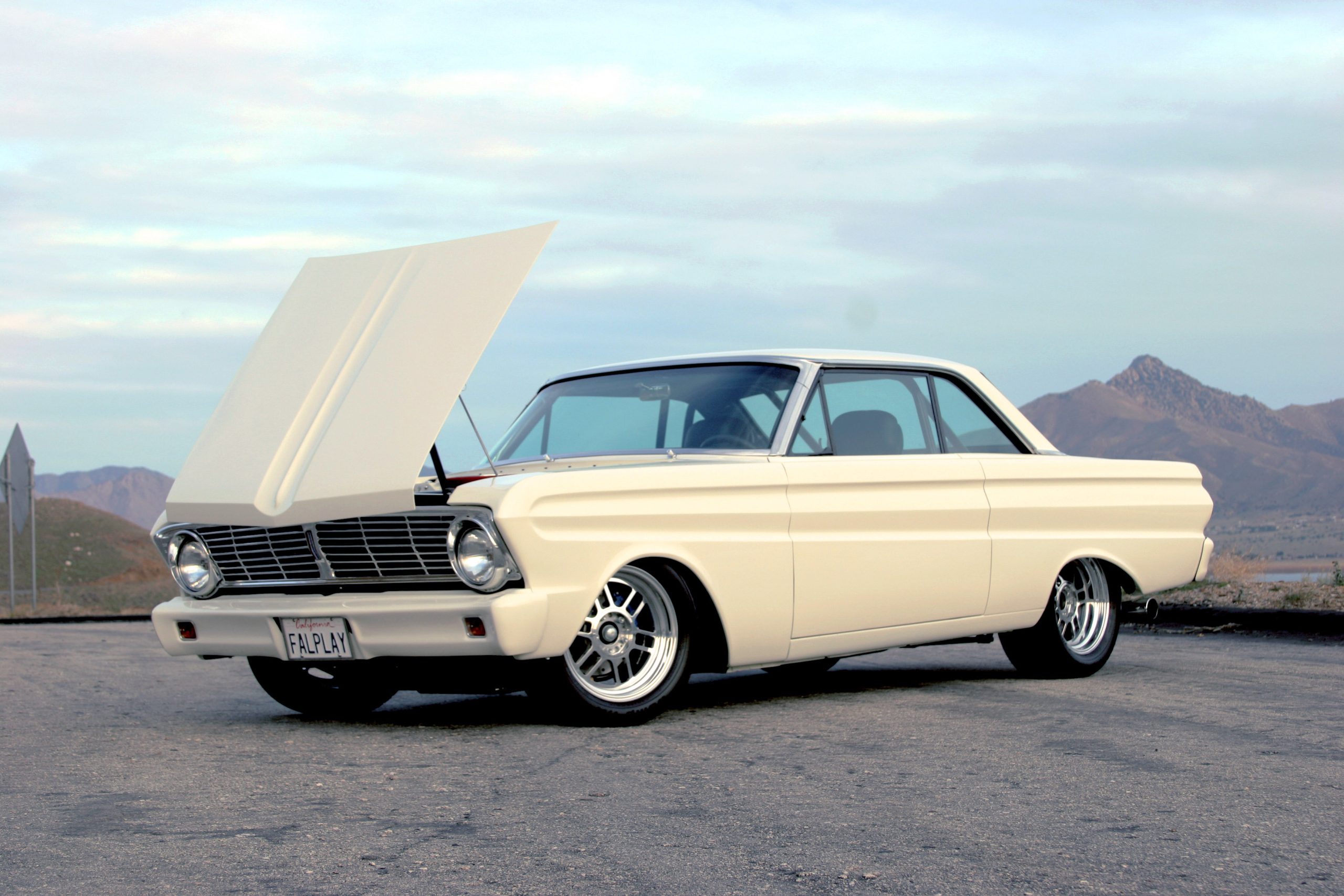
With those parameters in mind, the Kernville, California, resident set about to turn this ’65 Ford Falcon Sprint into a muscle car that could not only go fast in a straight line but could also work well in the corners.
Building the Chassis
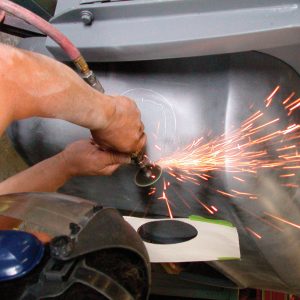
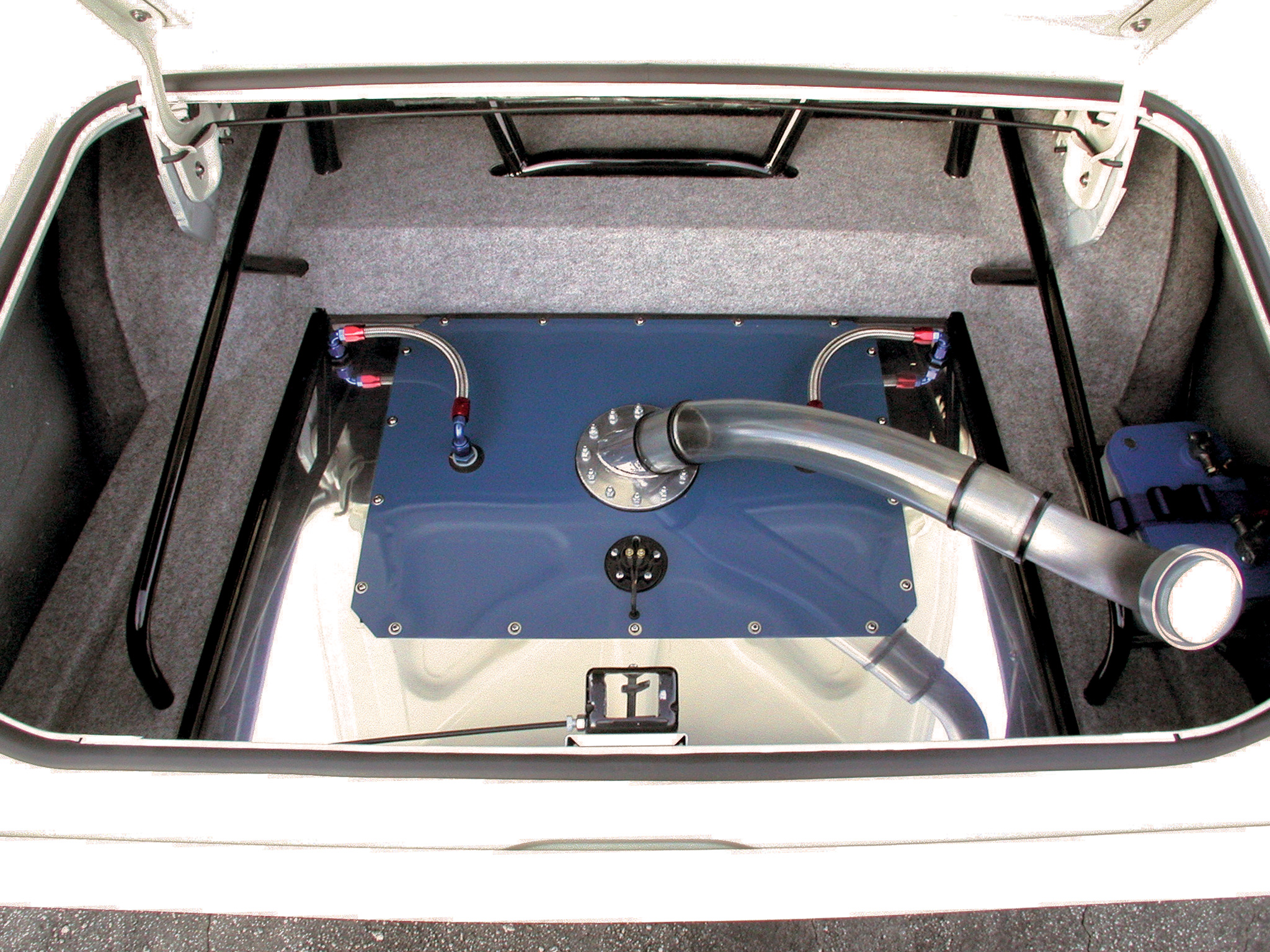
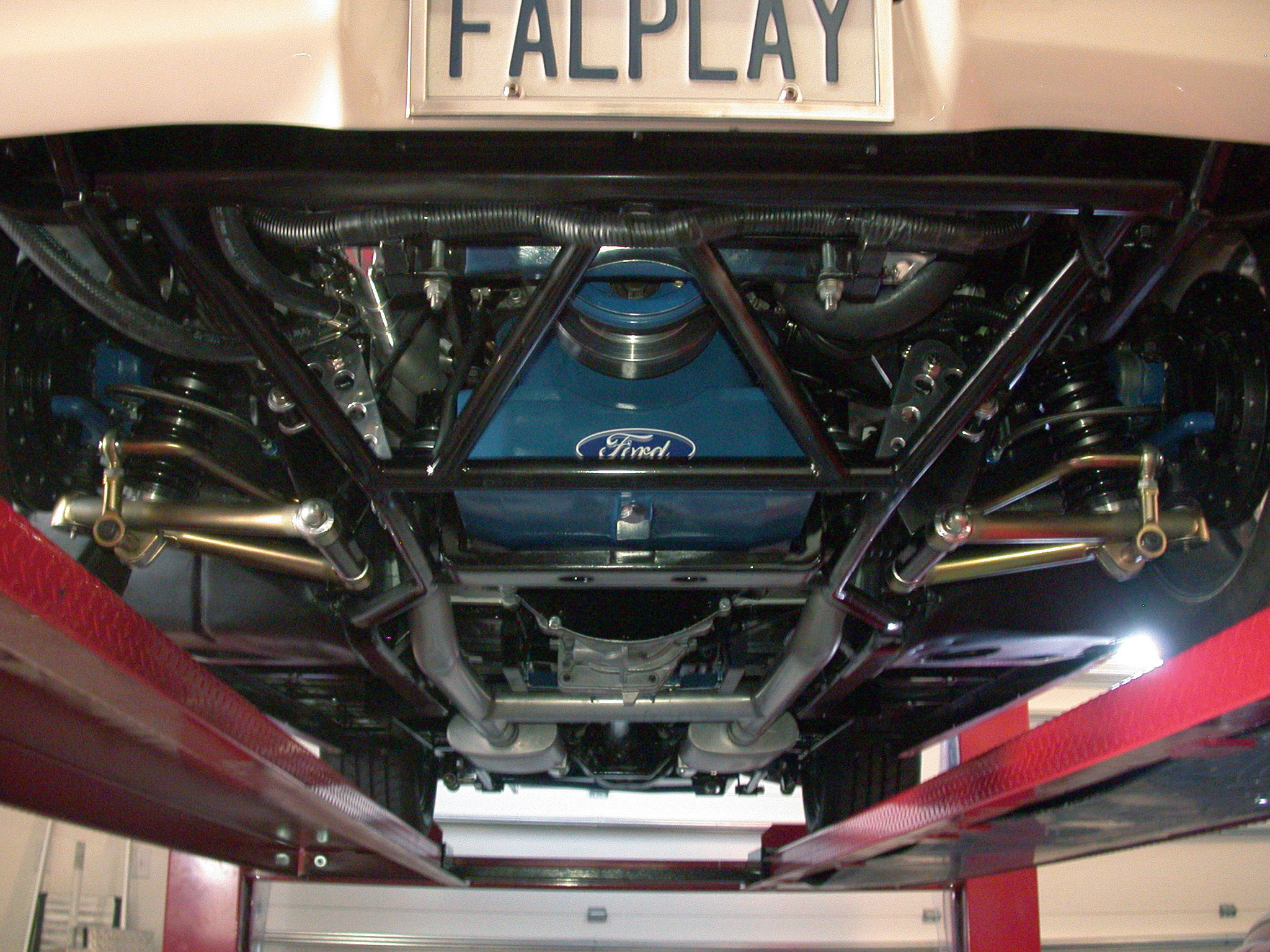
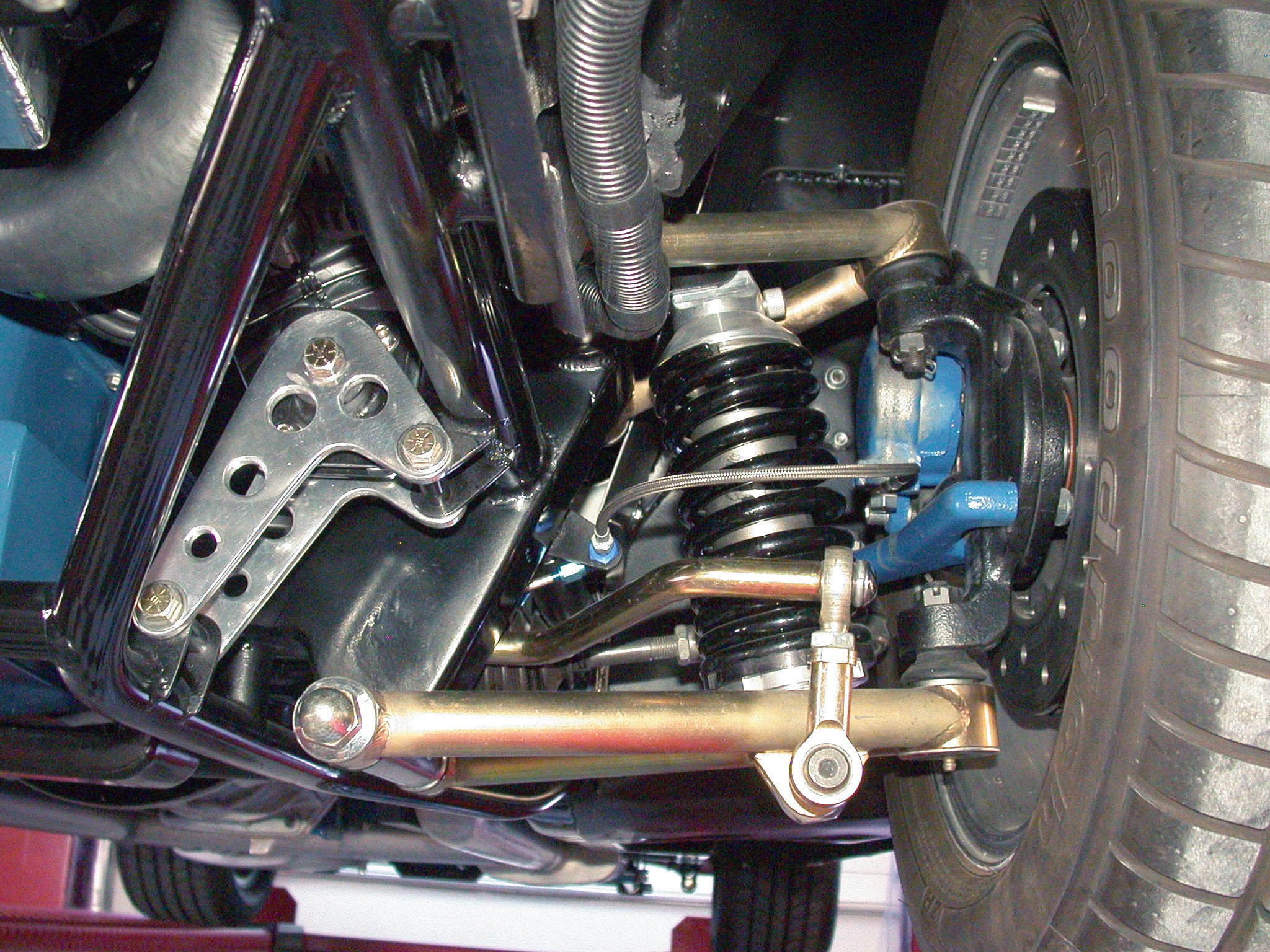
That was a tall order for a car that came from the factory with a unibody and a small-displacement straight-six engine. To remedy the first part, Anderson took a cutting torch to the underneath of the Falcon. When he was done, there wasn’t much left of the pan, but there was much room for improvement. Using 2×3-inch square tubing, as well as many sticks of round chromoly tube, Anderson made his own frame—what he calls “sort of a civilized NASCAR chassis.” Part monocoque, part Pro Street, the chassis uses Total Cost Involved tubular A-arms and cams with a heavily modified Total Cost Involved crossmember attached to the Anderson-built frame. He used Aldan coilover shocks and a Total Cost Involved 7/8-inch anti-sway bar to complete the front suspension setup. Attached to the ends of the arms are surprisingly stock GM discs (he drilled his own venting holes) and calipers. Of course, Anderson added a proportioning valve, and all the lines are stainless steel.
Rear Suspension and Brakes
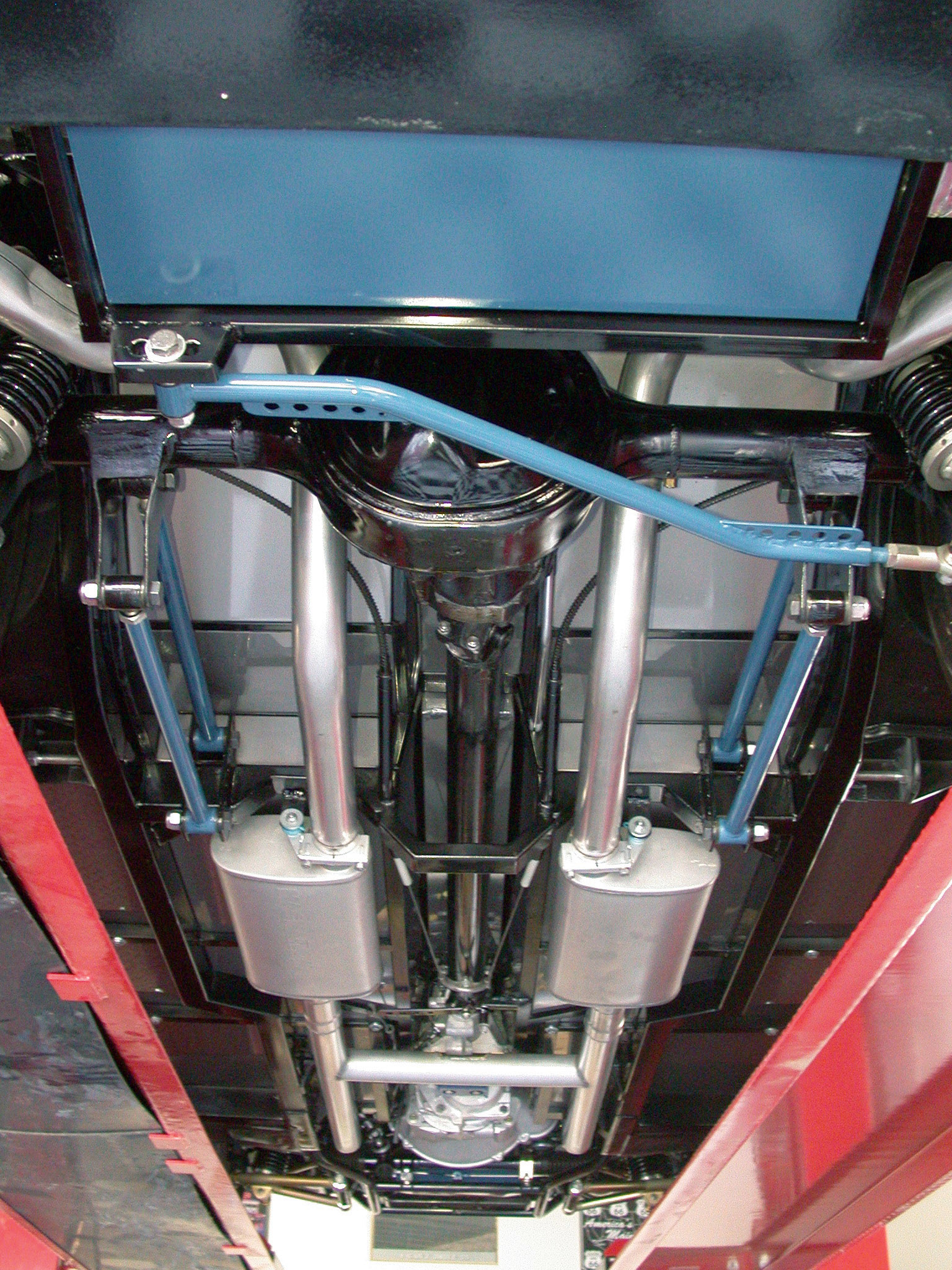
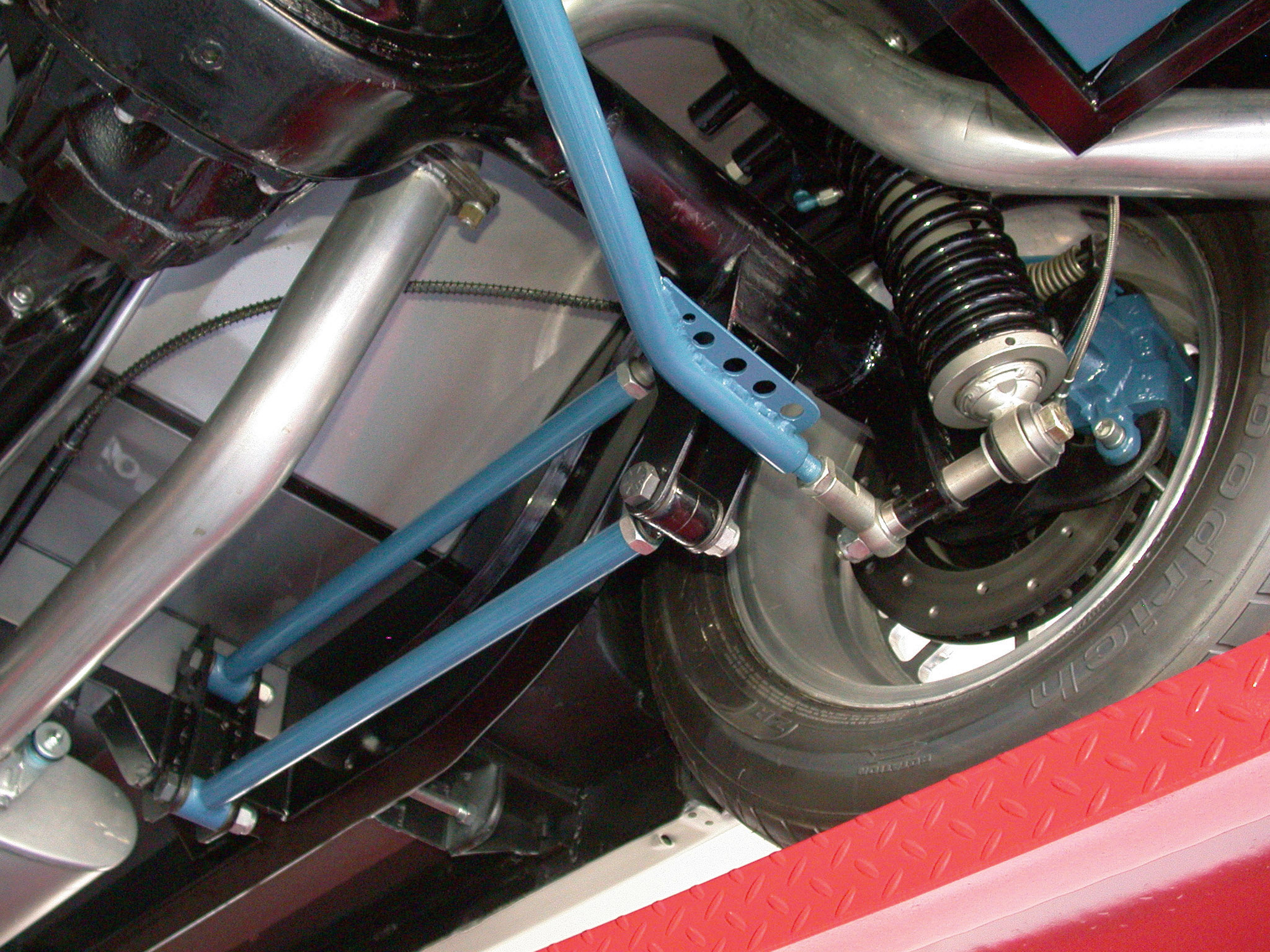
The rear suspension is just as trick, and just as with the front end, it was designed and built by Anderson. Using a four-link setup to hold the 9-inch Ford rearend, Anderson equipped the housing with a Truetrac Positraction and a 3:50 gear ratio. A set of Aldan shocks is in its place, as is the Total Cost Involved anti-sway bar. Anderson made the Chevy disc brakes fit the ends of the Ford housing.
Custom Wheels and Tires
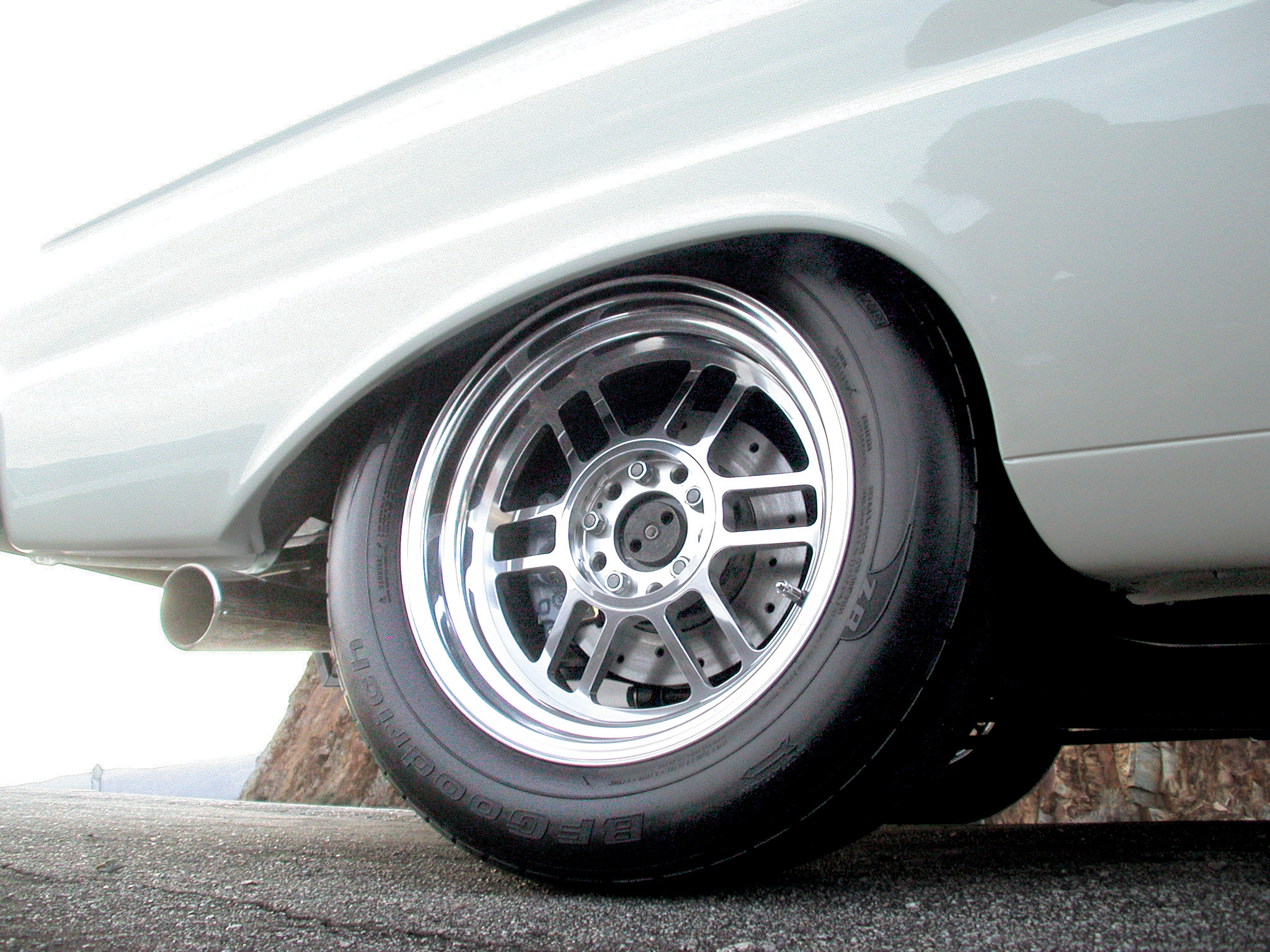
Even the wheels couldn’t escape Anderson’s touch, as he modified the Weld wheels (16×8-inch front and 16×9-inch rear) to look slightly different than the off-the-shelf versions. The tires, a set of BFGoodrich ZR Comp T/As (16/225-50 front and 16/255-55 rear), are off-the-shelf items, although it can be argued that nothing needs to be done to those for them to work well.
Building the Powertrain
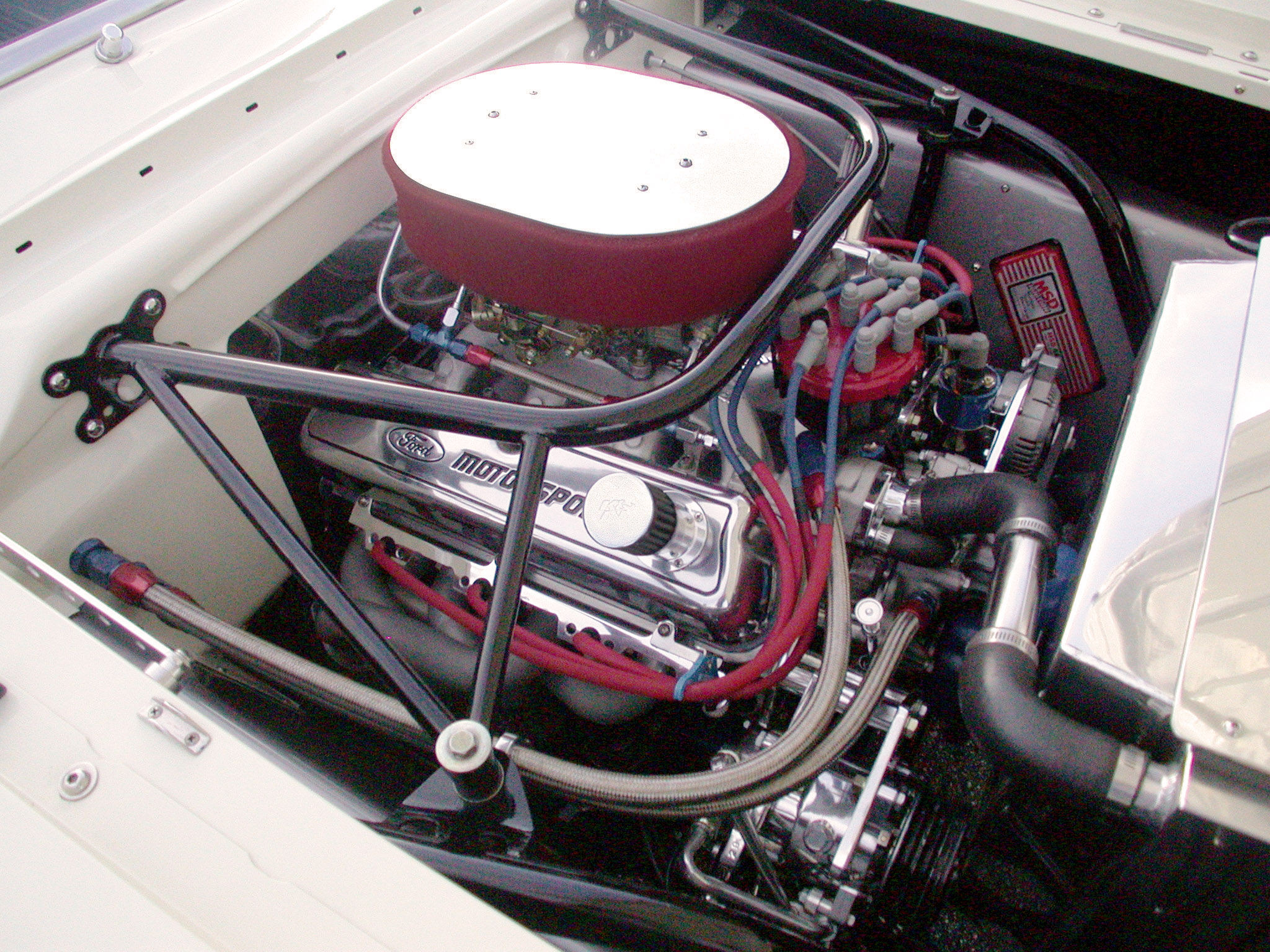
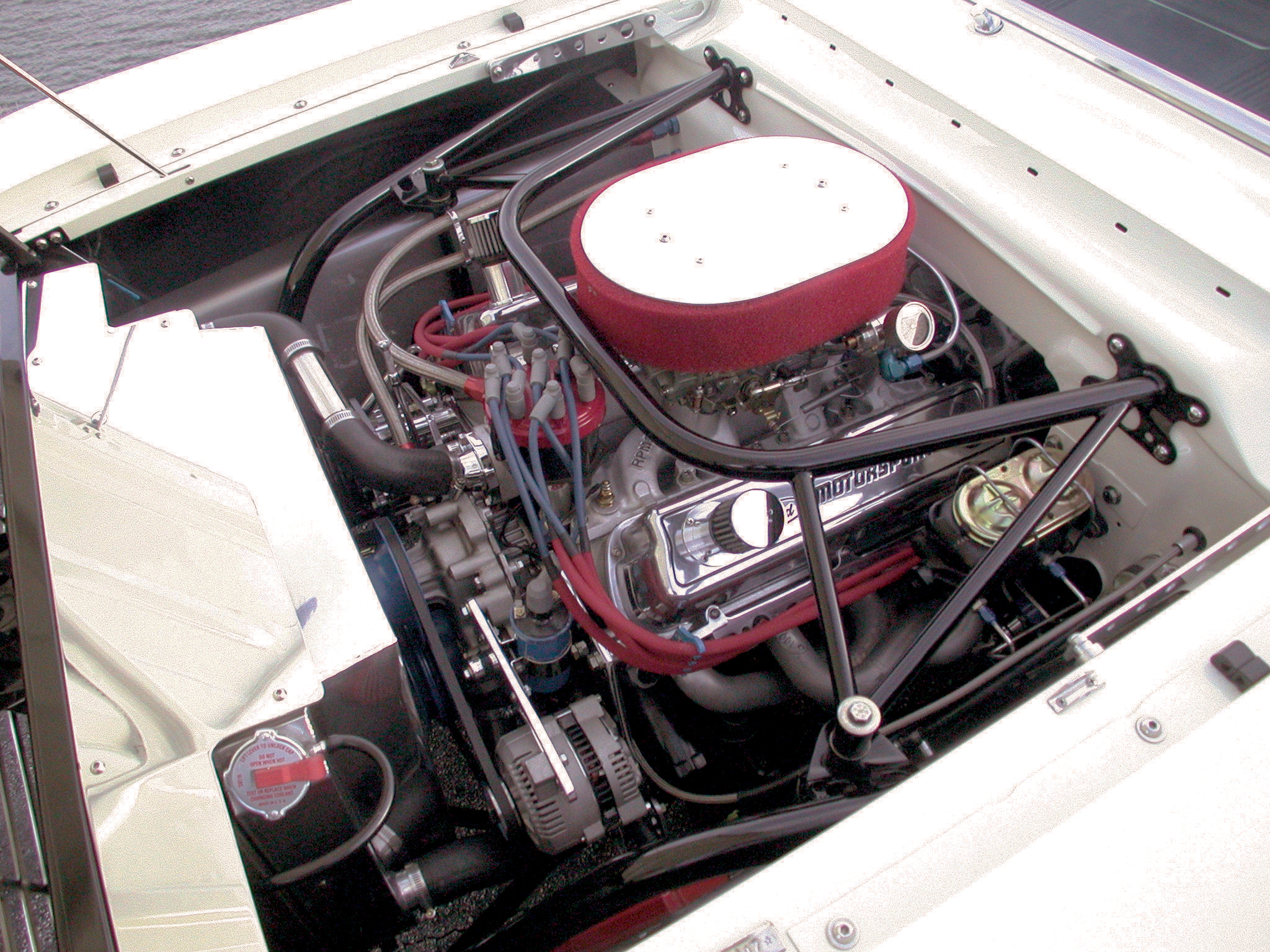
Speaking of working well, the engine and powertrain that Anderson has equipped his Falcon with have both the Ford emblem and a huge laundry list of trick parts. Thanks to Anderson’s bore-and-stroke job, the engine now displaces 308 ci, up from the 302 it originally had. The crank, which has been micropolished and drilled for lightness, connects to the KB hypereutectic pistons with a set of 4340 H-rods. The pistons, by the way, were adorned with Speed Pro rings. With the heads having been port-matched (with a slight amount of bowl work done by Anderson), the compression ratio is raised to a not-out-of-hand 9.5:1. Getting the fuel mixture to those cylinders begins with a 700cfm Holley DP carburetor that feeds that fuel through an extruded and matched Edelbrock Air Gap RPM intake manifold. Once the fuel is past that point, it is up to the Comp Cams XE282 hydraulic-roller camshaft to get the timing right, although the Comp Cams timing chain is also an integral part of that story. Anderson machined the main-cap girdle in his home shop.
Ignition and Exhaust
Once the fuel is there, it is up to the MSD-6A ignition to get the stuff lit off. Then it passes through the Hooker shorty headers, where the now-burnt fuel begins the journey in the 2-1/2-inch tubes, through the twin MagnaFlow mufflers and on to the chrome tips. Speaking of chrome, again thanks to Anderson, the engine has its share of brightwork. He made the air cleaner housing where a K&N element sits, while a set of Ford Motorsport valve covers protects the valves. While Anderson hasn’t been able to get the freshly completed car onto a dyno, he is estimating that the engine that he built should be producing about 380 horses.
Transmission and Drivetrain
Since this was a true sports car, Anderson chose to install a five-speed Tremec 3550 transmission into his ride. He equipped it with a Centerforce 10-1/2-inch billet steel flywheel to ensure that the power the engine produces is passed on to the tranny.
Exterior Modifications
Although the exterior of the Falcon appears to be stock, Anderson did add a few tricks. He began with a pretty clean car, but he decided he had to shave off the most offending items found on a stock-bodied car. Once he had the door handles, hood-vent cowls, gas cap door and other items gone, he had the crew at South Lake Auto in Isabella, California, have a crack at the Falcon. They applied the PPG Cool Vanilla Cream (originally a PT Cruiser color) and the clear that goes along with it. But Anderson had one more trick up his sleeve once he got the Ford back to his shop. Once the color was on, he finished installing the BMW-style forward-tilting hood and the STL fiberglass bumpers.
Reassembling the Car
All that was left for Anderson to do, since he had stripped the car to have it painted, was to put the entire car back together again.
Interior Customization
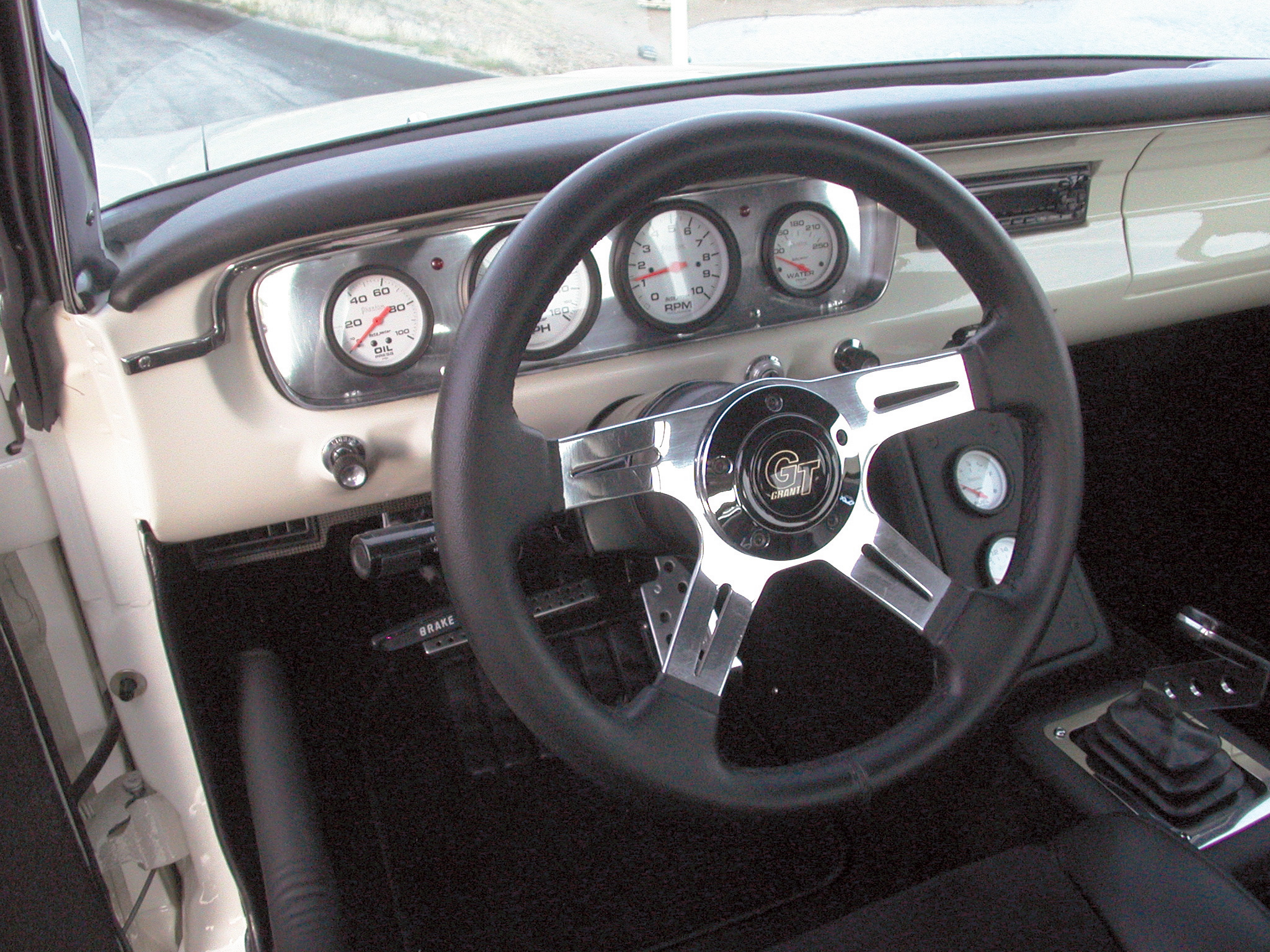
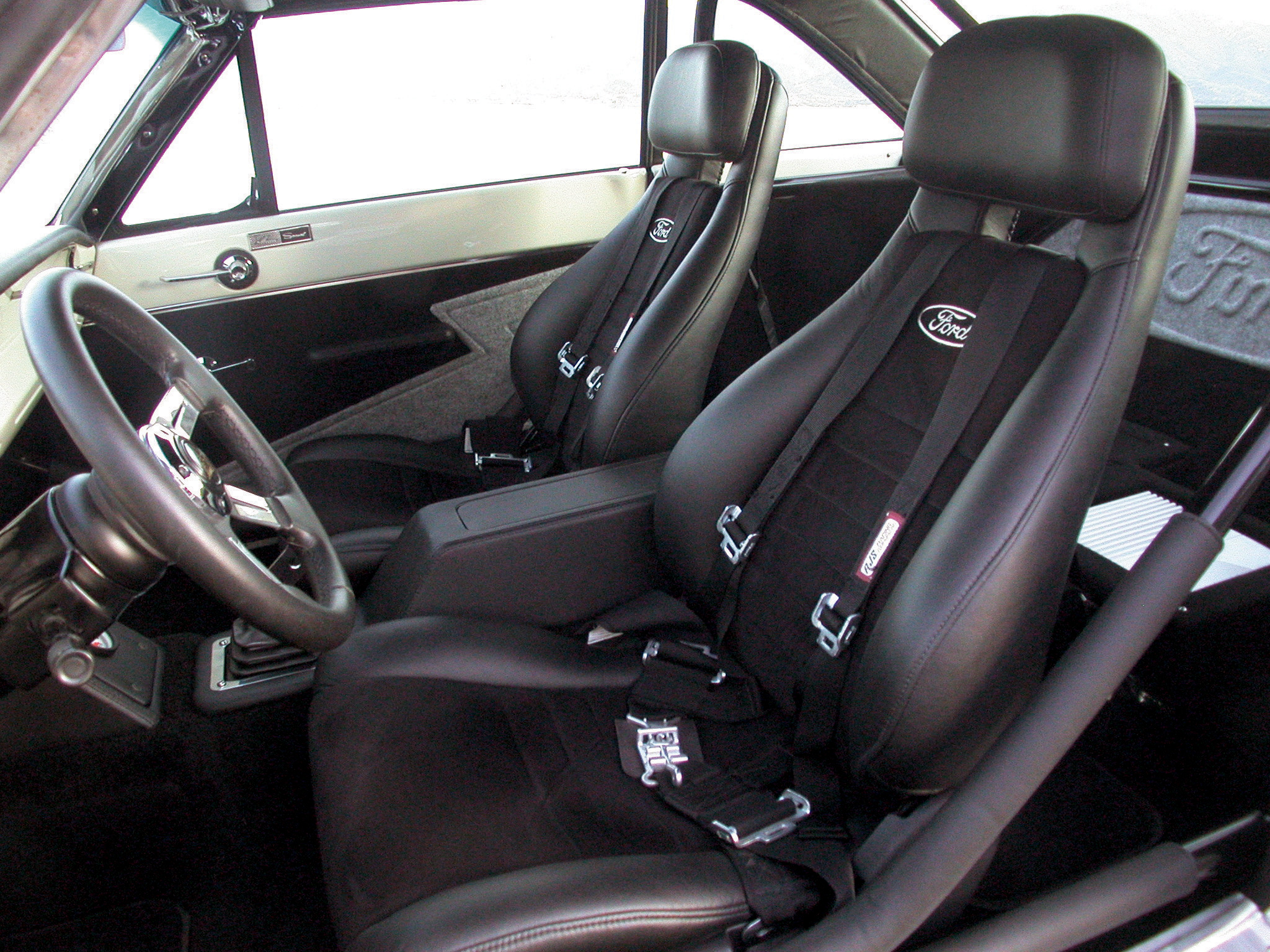
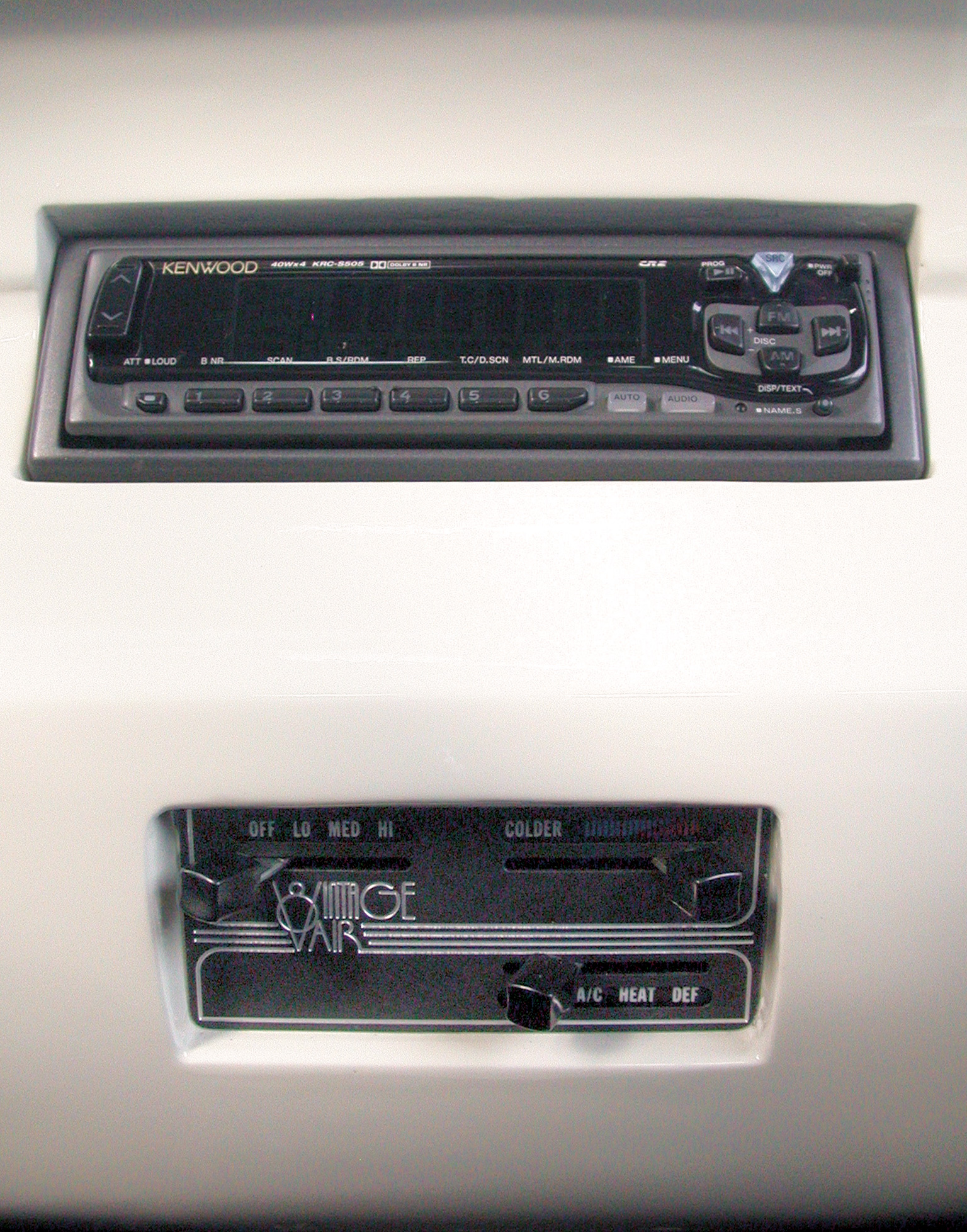
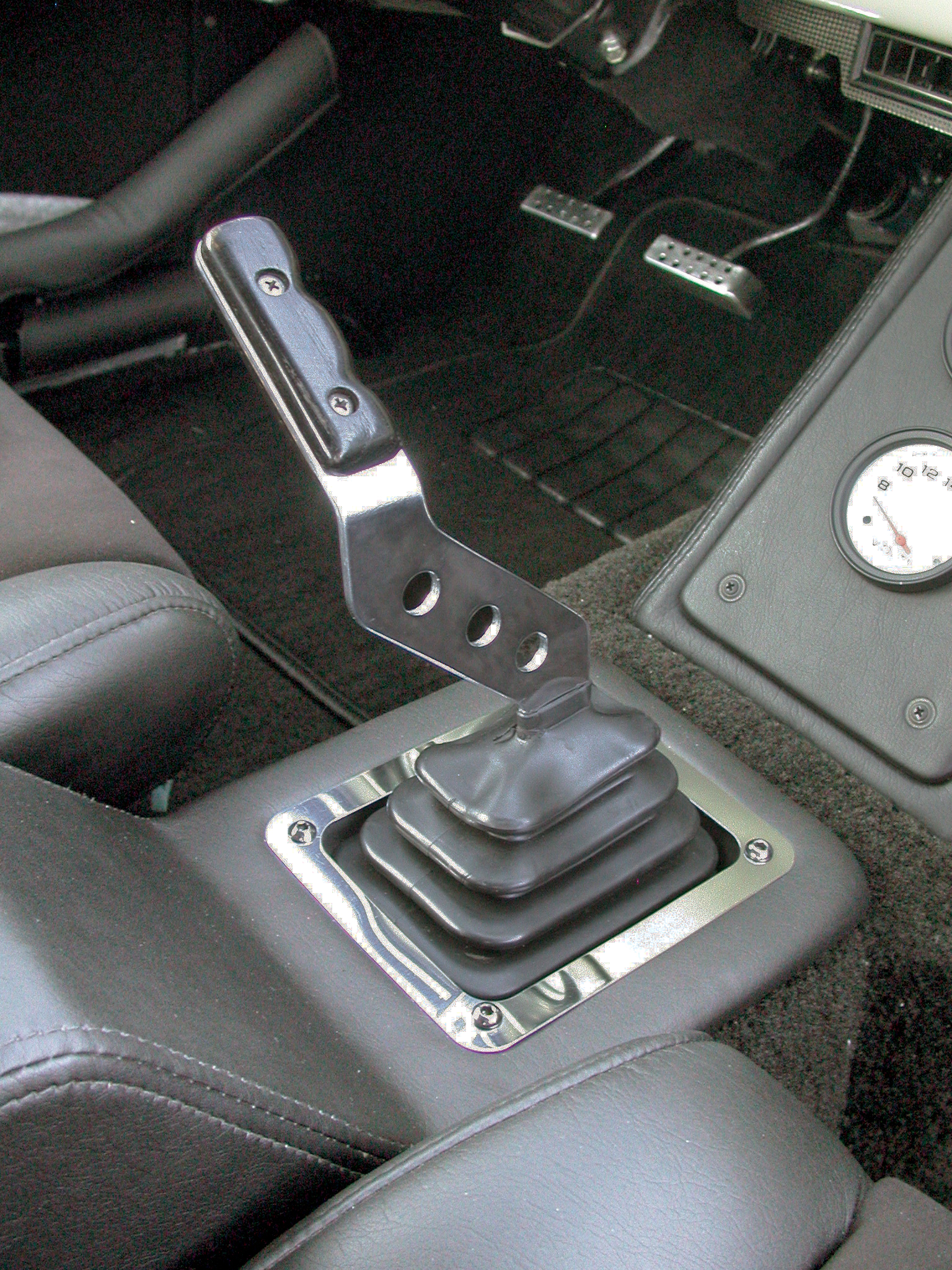
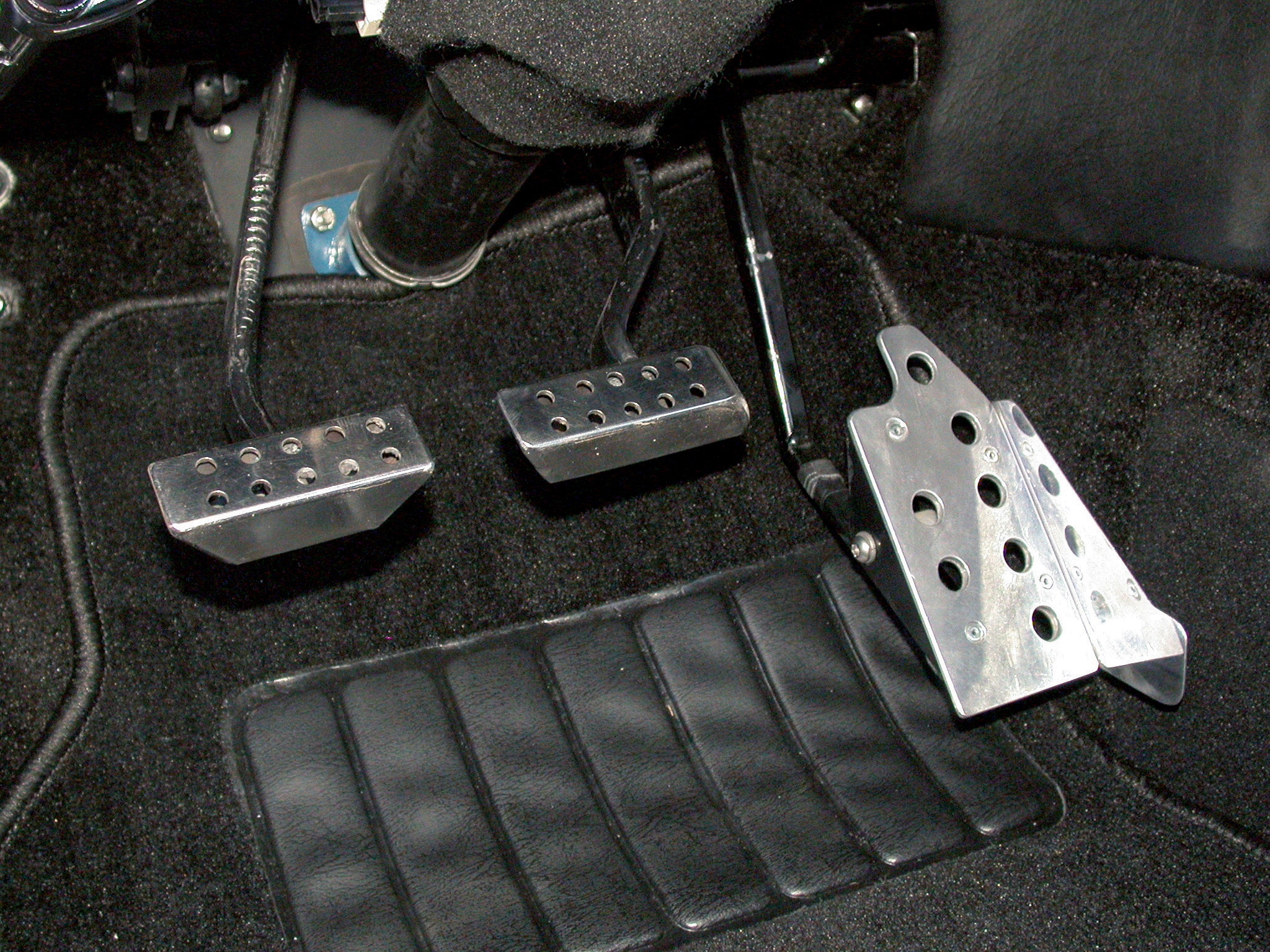
When he did, he was of course working on the interior. During the bodywork stage, Anderson had done a few tricks to the dash. He had shaved a little here and installed a few things there, in addition to frenching in the Kenwood stereo and the control panel for the Vintage Air A/C system. He even formed the carbon-fiber air tunnels through which the cool air travels. Anderson also fabbed the panel that holds the cluster of Auto Meter gauges, as well as the race-style foot pedals. However, one of the coolest things that Anderson did on his own was to fabricate the pistol-grip shifter that sticks out of the tunnel. While he was at it, he also installed a GM tilt steering column, which he topped with a Grant steering wheel. The seats, which Anderson calls “salvage yard specials,” were covered in black upholstery with Ford emblems in the backs. The same black upholstery adorns the center console that Anderson had formed.
Stereo System
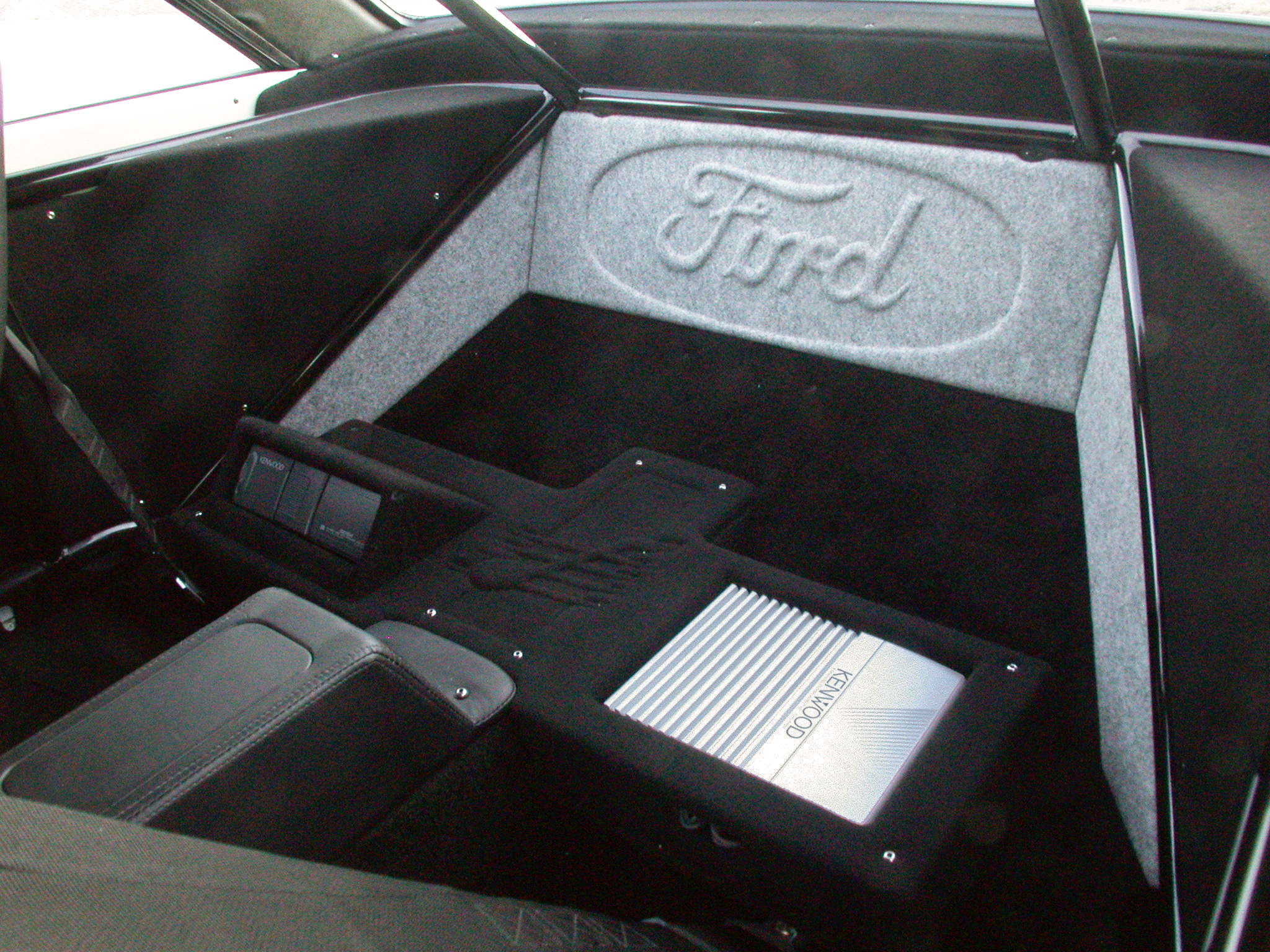
Sharing the space inside the Ford, with the full cage of course, are the rest of the stereo components. There is no rear seat (it is a racecar, after all), but that doesn’t mean there isn’t anything back there. Anderson figured it was the perfect place to stash the Kenwood CD changer and amp. There are also many Kenwood speakers hidden back there, but they are behind the side and rear panels.
The Completed Project
There’s a lot of work in this killer little Falcon. Usually one begins with a “thrasher” for this type of build, but Anderson had purchased the car from a guy (for $2,800) who had restored the car back to stock. It took Anderson a while to convince the owner to sell it to him, and then he didn’t let on what he had planned for the car. Anderson didn’t mention he was going to completely transform the car into the hot rod seen here. Some things are better left unsaid.