





THE AUTO BUILDER
Featured


History of the The Grand National Roadster Show Hall of Fame

SEMA 2024 in Focus

Remembering Angelo Giampetroni: The Bridge Between Detroit Speed Shops and Ford Motorsport
The automotive and motorsports world has lost one of its most influential figures with the passing of Angelo “Junior” Giampetroni. A pioneer, promoter, and passionate builder, Angelo helped shape the hot rodding and drag racing scenes from the postwar boom through the modern era. His impact can be felt not just in Detroit, but across the globe—from gritty speed shops to high-level factory performance programs. Angelo wasn’t just part of the culture—he connected it all together.

CUSTOM STOPPING POWER
If you own a Ford or Chevy, most of the parts you will need to build a street rod are readily available, and from a variety of suppliers. We have written numerous stories about kits for these cars in our family of rodding magazines, and some of them were a direct replacement for the original. By and large, they worked perfectly and bolted right in, as designed. These types of kits are convenient for many street rod builders, as well as street rod shops, and they are part of what has helped grow our hobby into such a broad special-interest group. But in addition to the “normal” and most popular rods, there were many other great cars made in the pre-war era, and some of them can be a real challenge to street rodders because there are no pre-manufactured parts, and no kits that make them easy to build. Sounds like the old days, right? Well, that’s the modern world for you–even our hobbies have become targets of convenience.

S.U.V.
For the last ten years or so, SUVs have been the buzz in the world of new cars, soccer Moms, and the general motoring public. As a matter of fact, this trend is so strong that automakers from Kia to Porsche have offered myriad variations on the theme, to the point where most of us can’t even begin to name them all. With names ranging from half of a state name to words that don’t mean much of anything (Dakota, Cayenne, Rainier and on and on) the onslaught of SUVs seems to show no sign of slowing down.
Spotlighter
POPULAR READS
-
Product Spotlight: Bill Mitchell Products Aluminum LS Engine Block
-
PRODUCT SPOTLIGHT: 60-66 Chevy C10 Fresh Air Vent Block Off Plate
-
Product Spotlight: Pyramid Optimized Design Sequential Aurora Taillight for 1964½–1966 Mustang
-
PRODUCT SPOTLIGHT: Cam Covers for GEN/3 Coyote from Pyramid Optimized Design
BITS FROM THE PITS
Off-road Racing Observations in the Desert Southwest
Author
John Thawley
Words & Photography
Off road racing in the desert Southwest has been around for almost sixty years now and we’ve never gotten tired of looking at vehicles and hardware associated with going off-road. Off-roading–racing or just having fun presents problems. We’re always intrigued by some of the solutions.Here’s what we found on a recent trip to Baja.
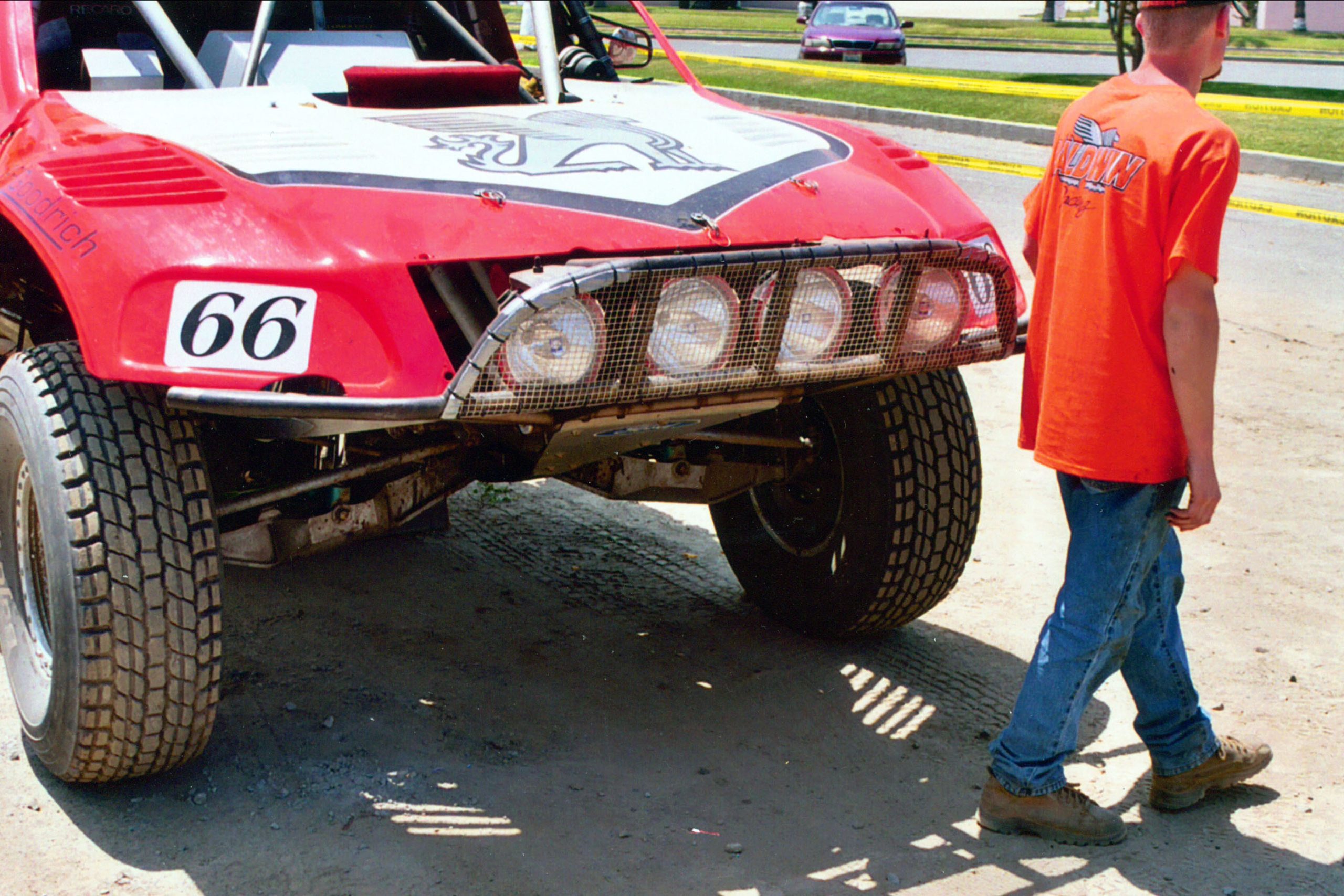
1.One of the things learned quickly when trying to go fast off road is how easily glass breaks.
Sometimes that glass is expensive–like head lights. Hardware cloth is low cost, readily available and easily attached–like on the front of this truck.
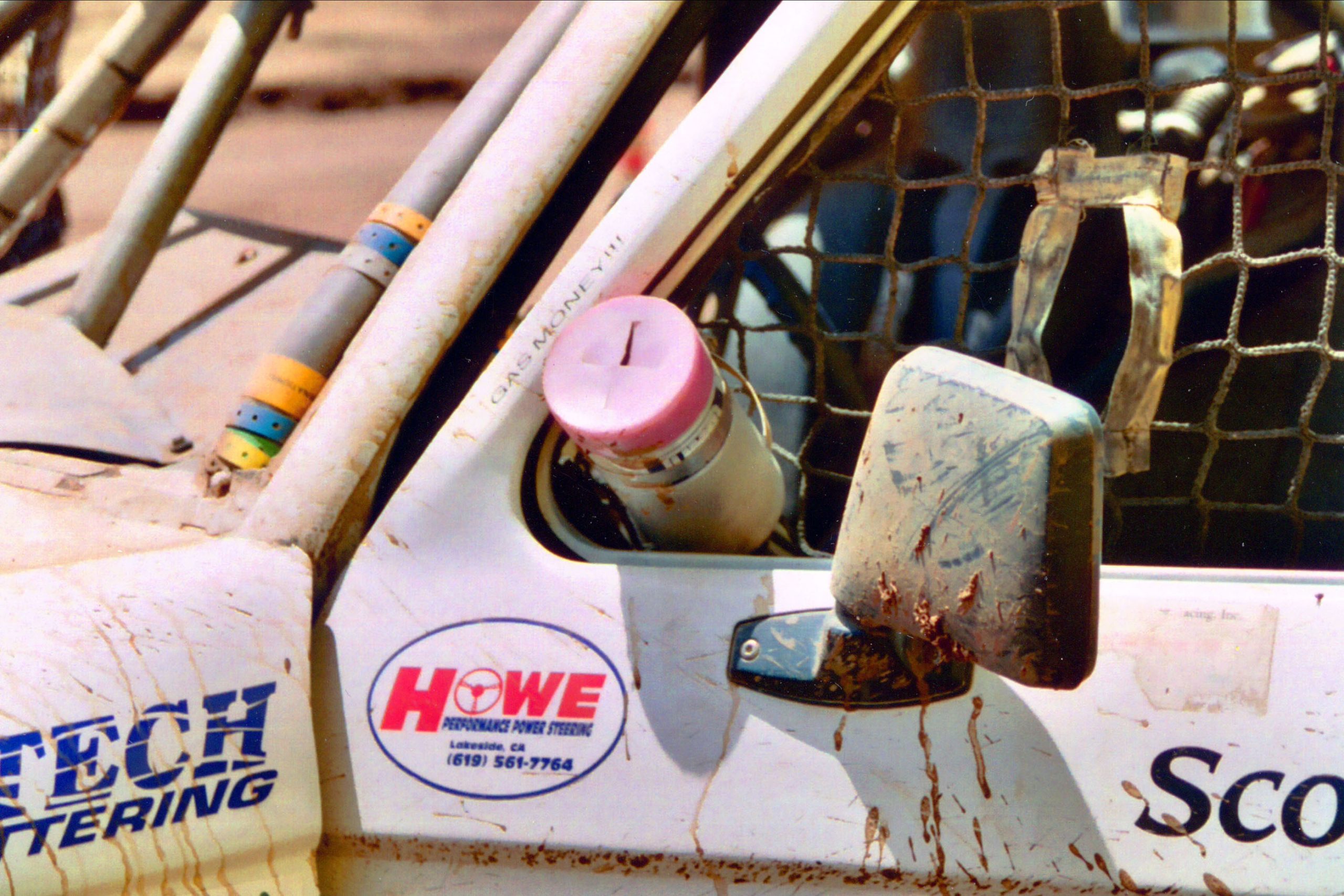
2. Many off-road racing associations use a ticket or chit system to make sure the contestants actually do pull in to each of the designated check points.
A drink can with a snap-on plastic lid is a popular and fast way of getting and keeping the tickets.
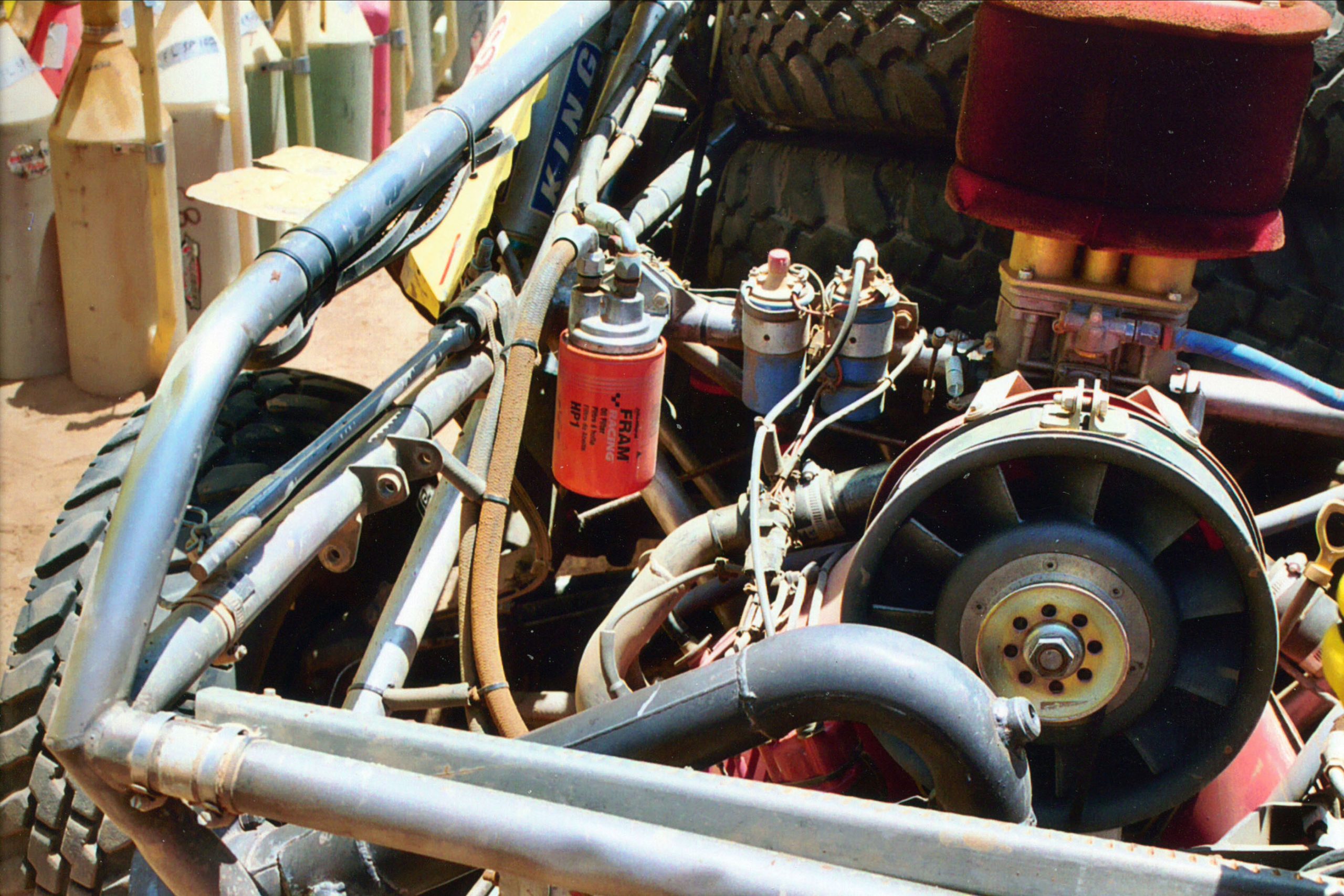
3.There’s a lot to learn here. In the choking, low visibility dust, an approach vehicle can make short work of an engine case, carburetor and exhaust system.
A well designed cage is the right step. Note the skid plate which extends past the rocker covers and then upward.The two coils (a spare) and oil filter are easy to reach and well protected.
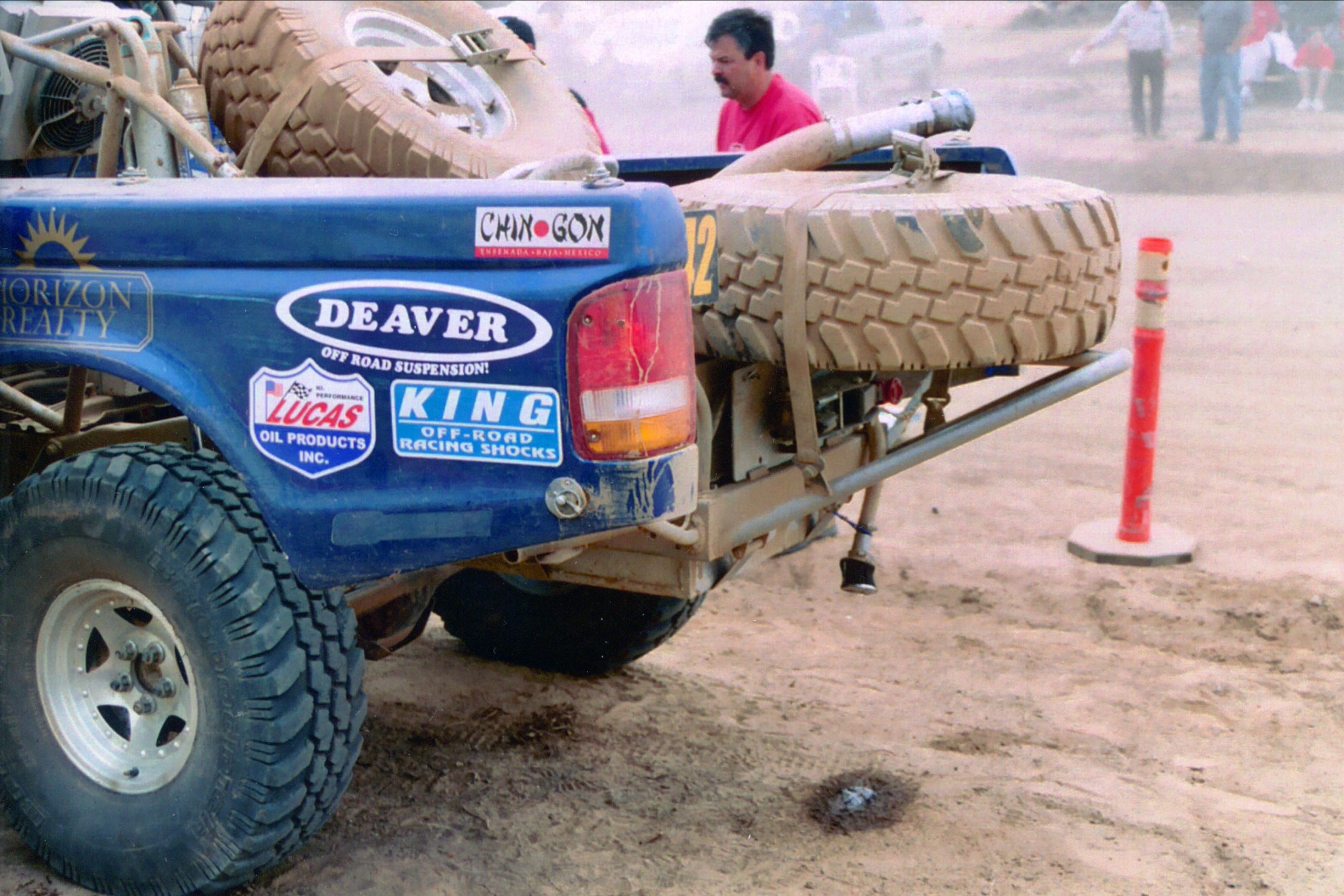
4.Using a spare tire for a bumper is a pretty good idea–and easy to get to.
Note that the vent for the fuel cell has a filter on it. For every gallon of gas consumed, it was be replaced by a gallon of air–it shouldn’t be dirty air.
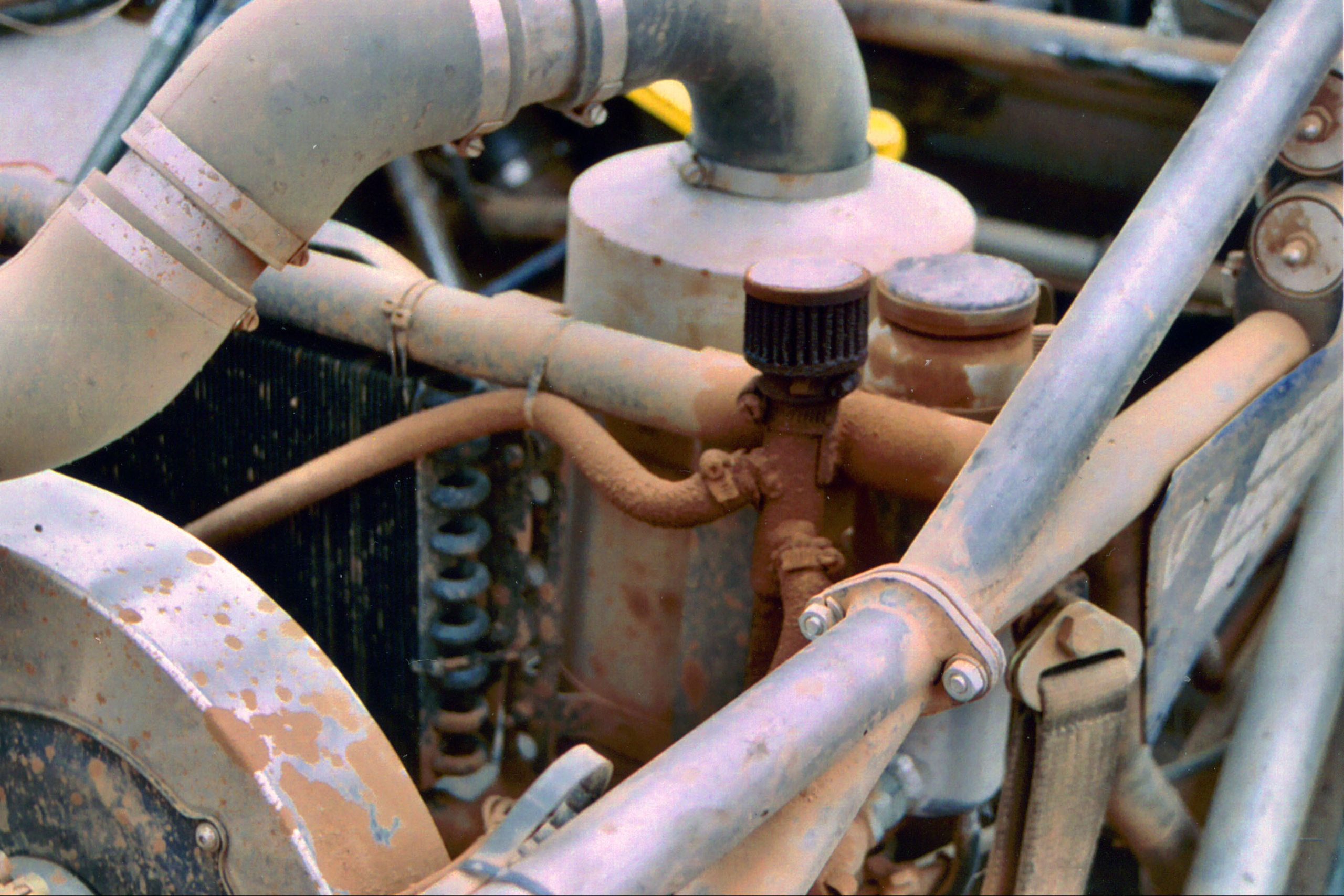
5. Exhaust flanges can make an engine cage easy to build and easy to remove.
Check out the small filter bon the vent for the rocker covers.
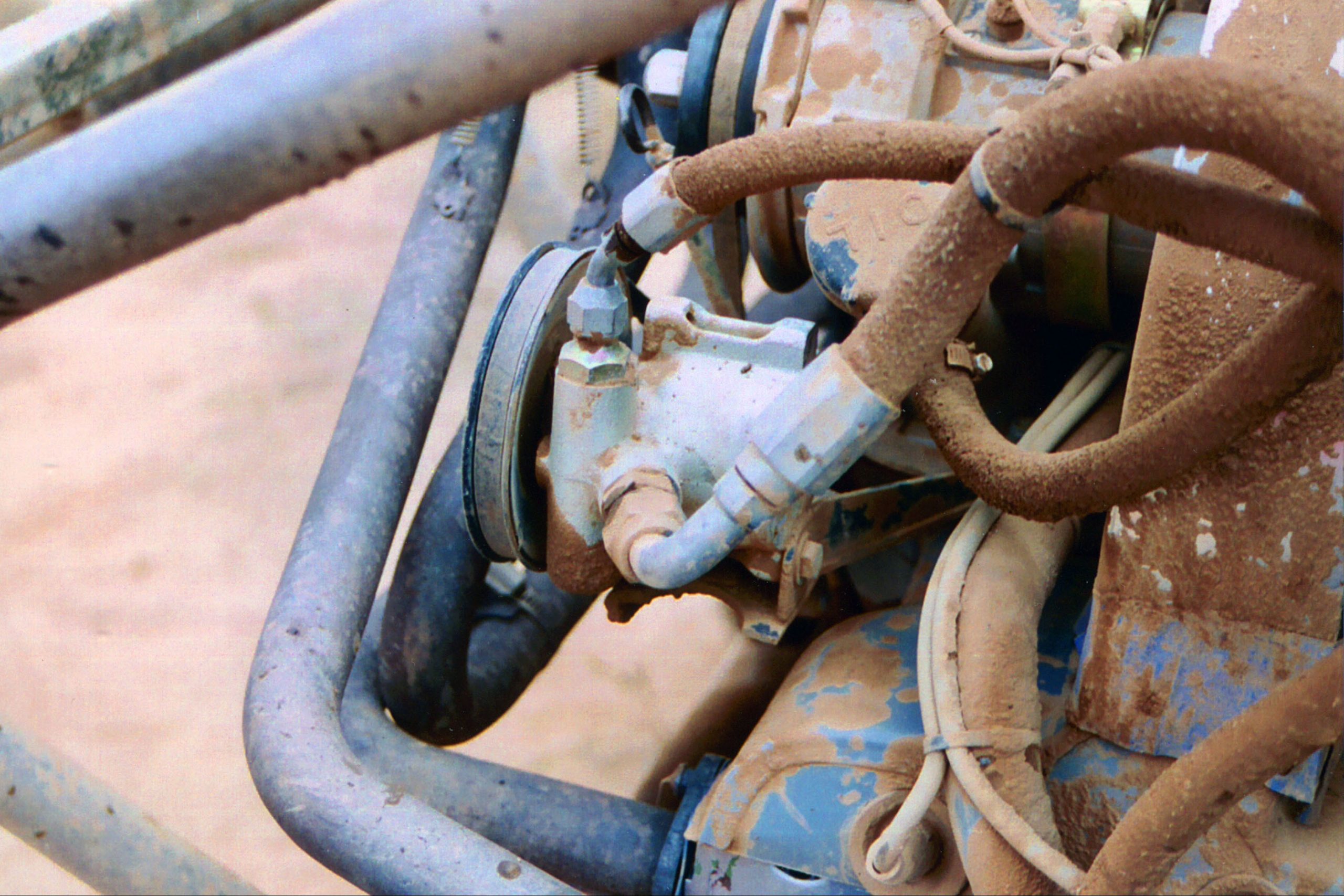
6.Note that the plumbing to this power steering pump is not steel braided line,
which may be trick looking but a bear to clean after some hard running in the dust or mud. Keep in mind you don’t find much steel braided line on tractors.
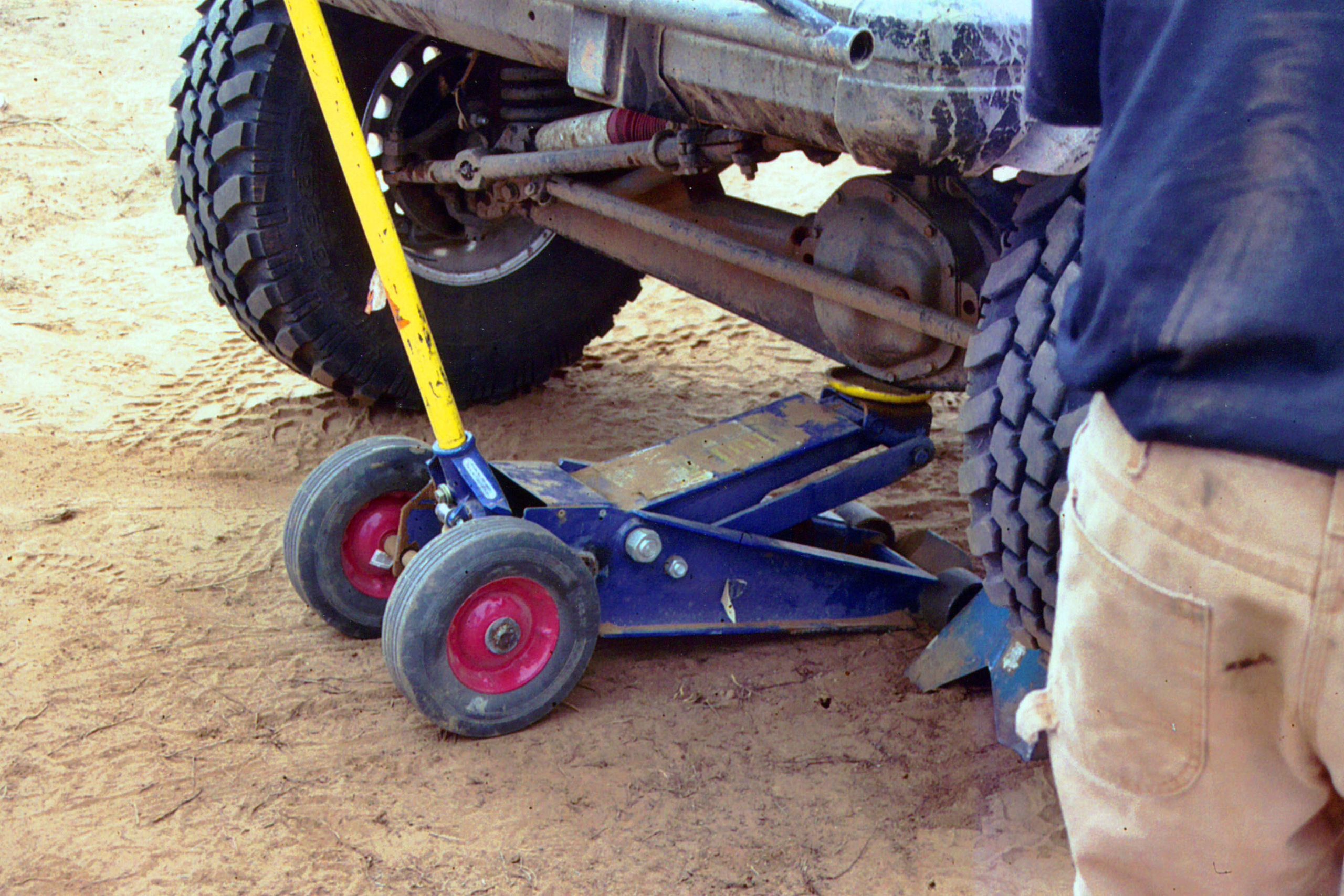
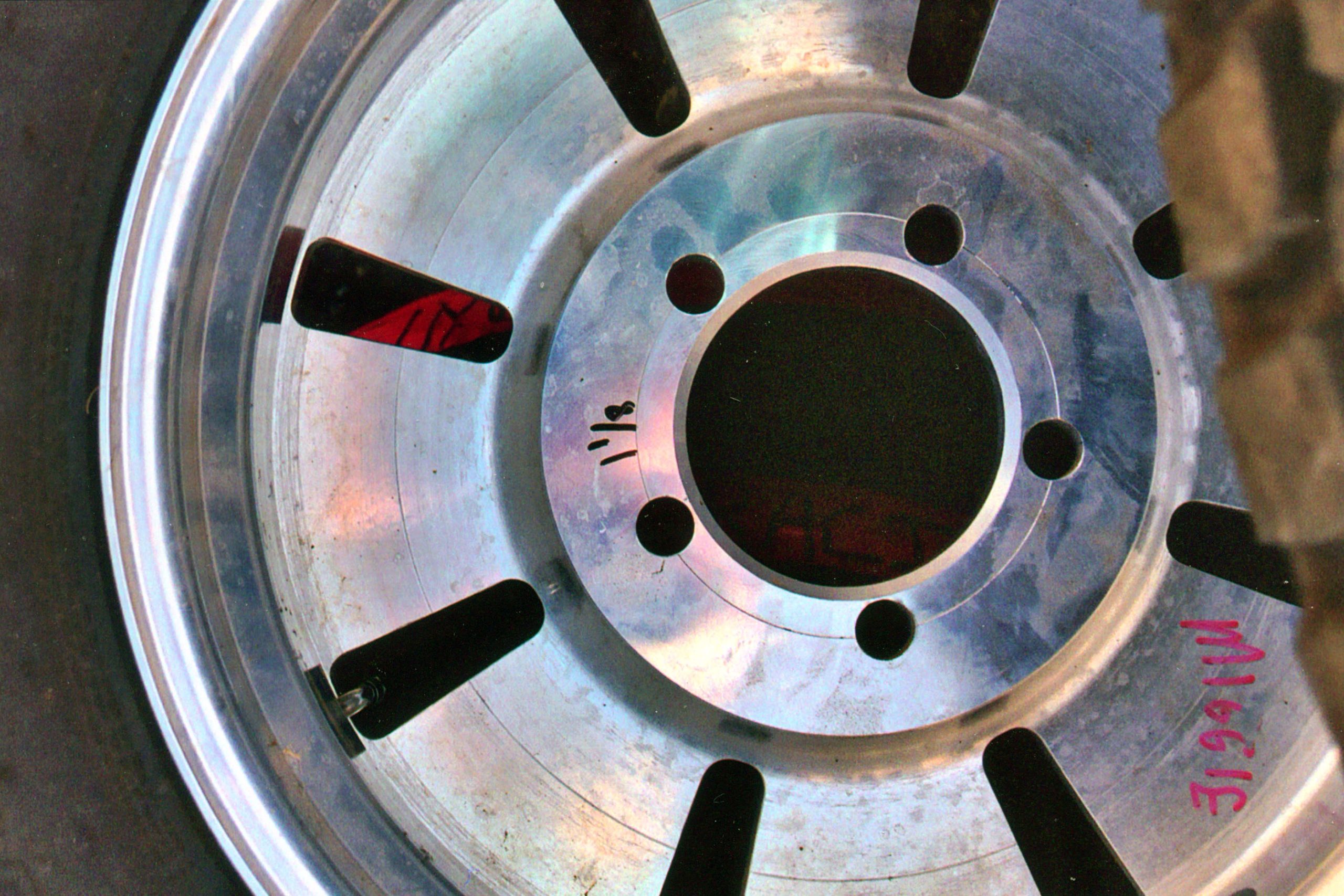
7. The stock steel wheels on a floor jack can be a real frustration in an off-road environment.
Larger wheels are as close as the local hardware store.
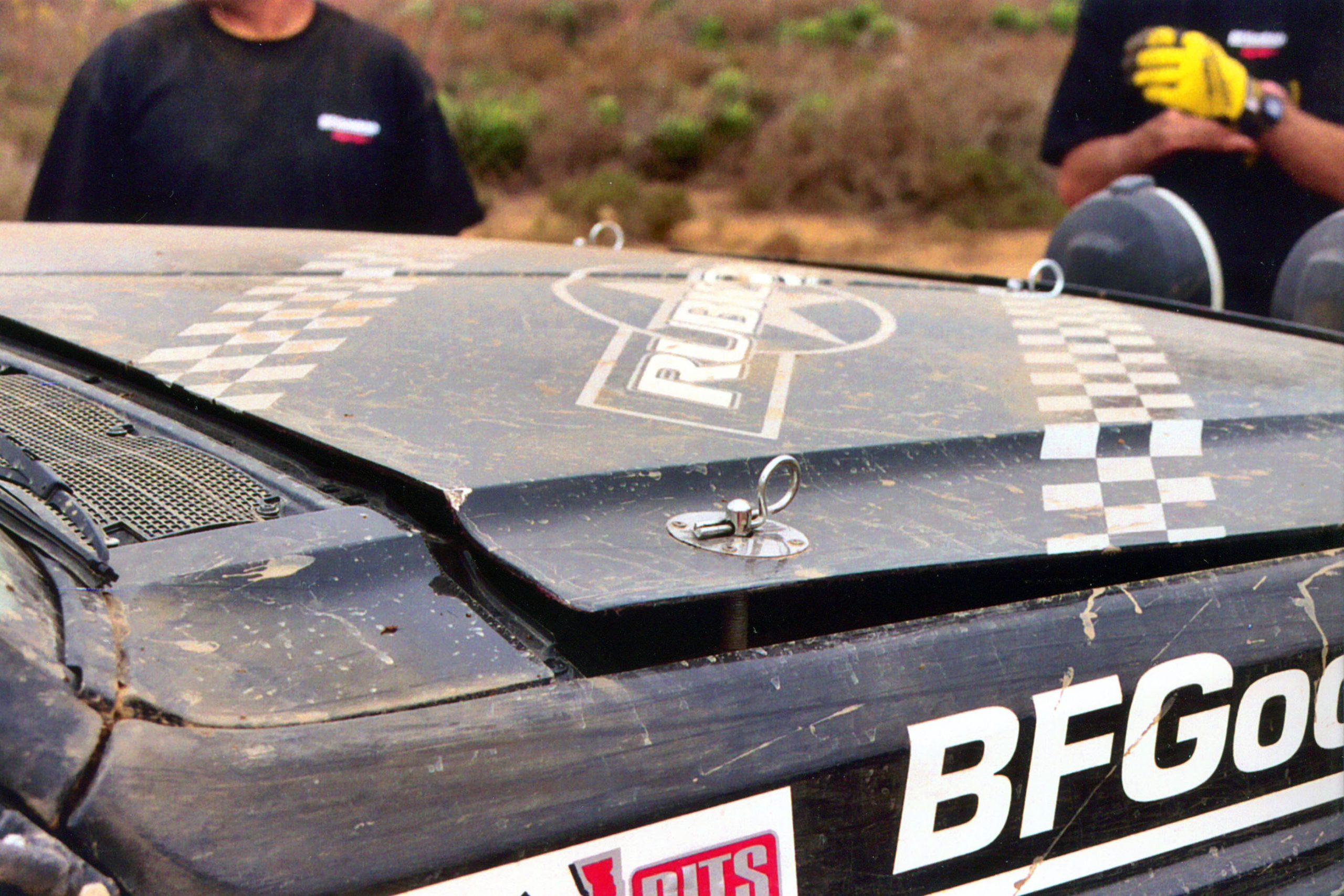
8. Here’s a no-cost trick for venting the engine compartment.
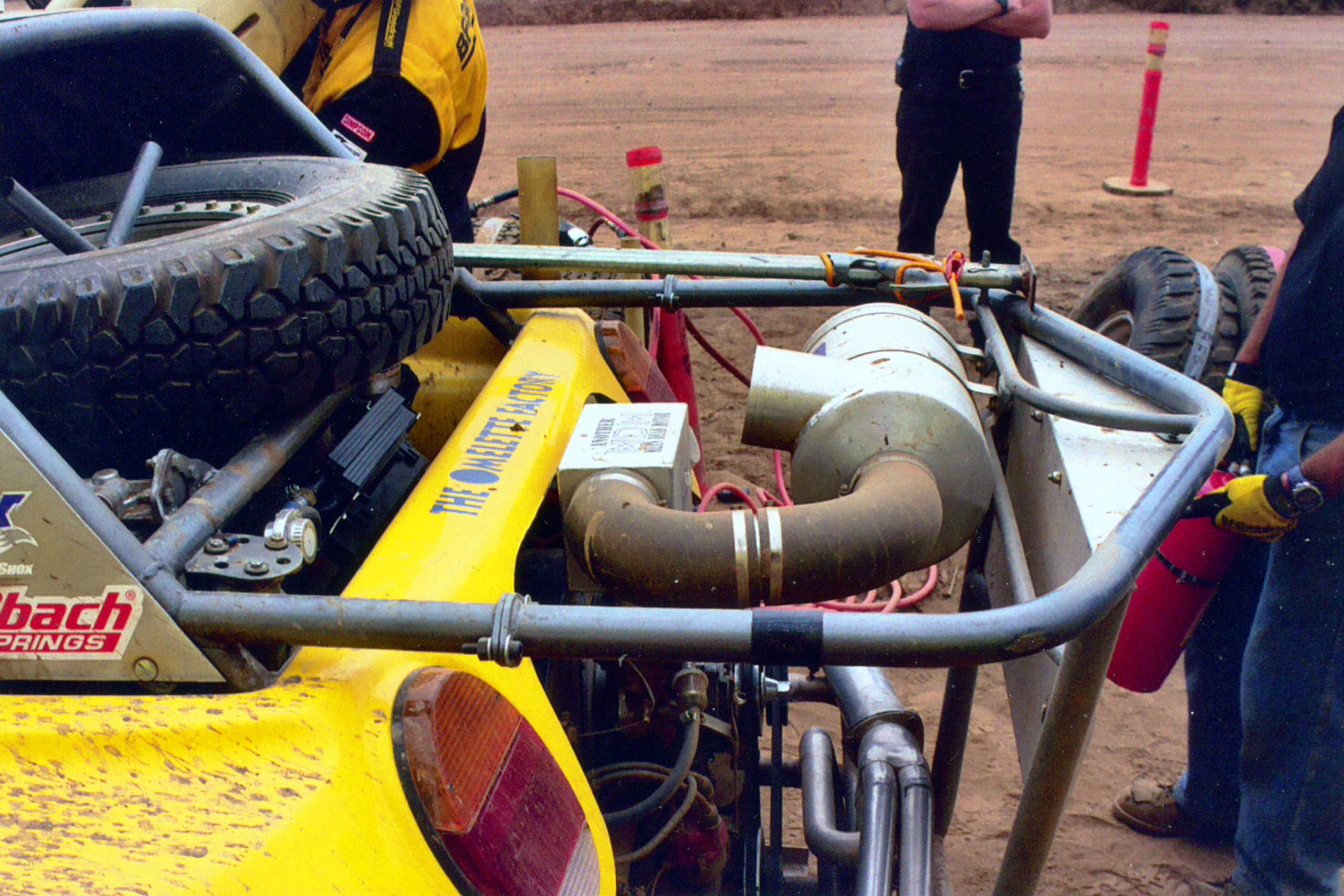
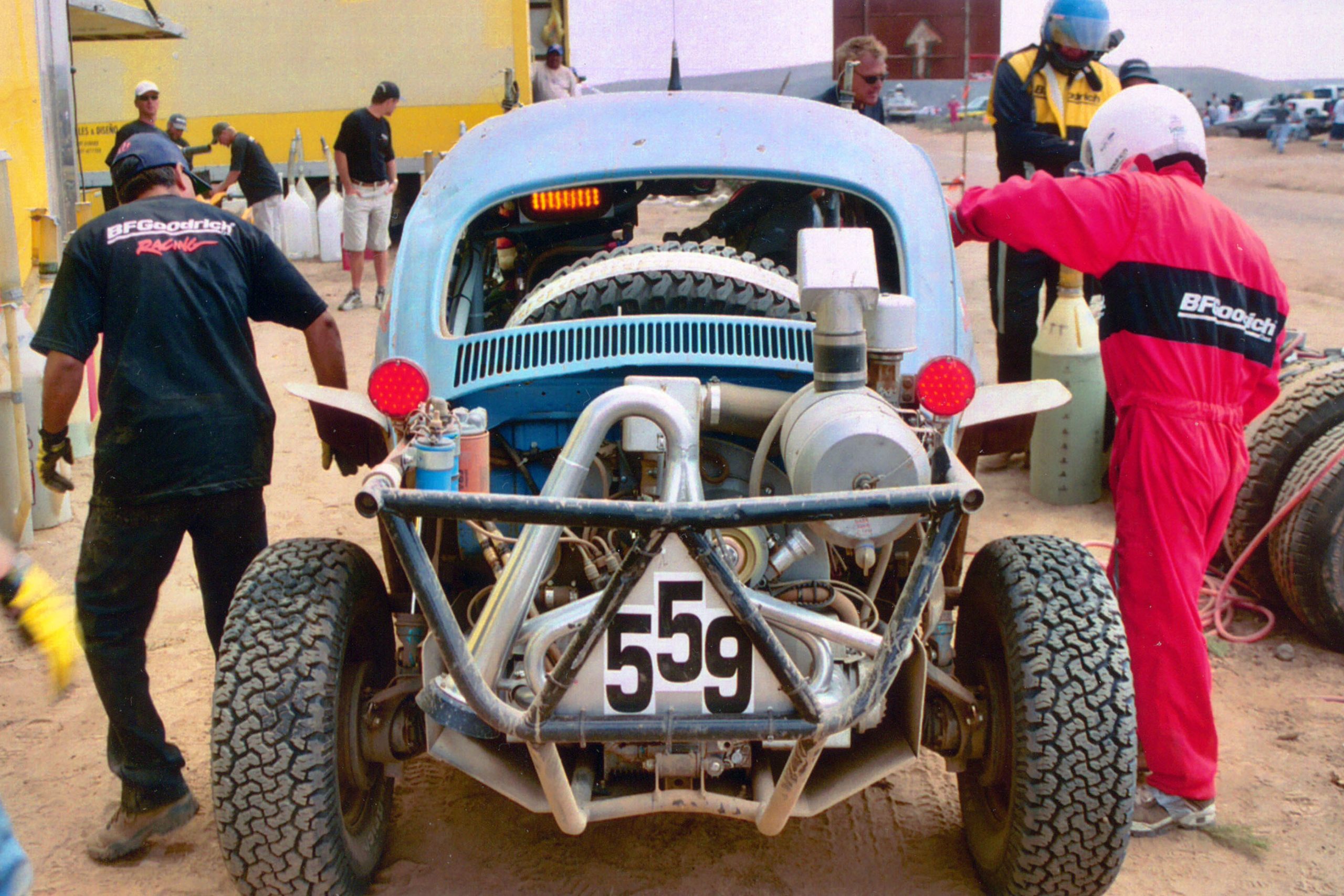
9. This is the hind end of the buggy that Bruce Meyers drove in a recent Mexican race.
The placement off the air cleaner and the construction of the engine cage shows that this old warrior hasn’t lost his touch.
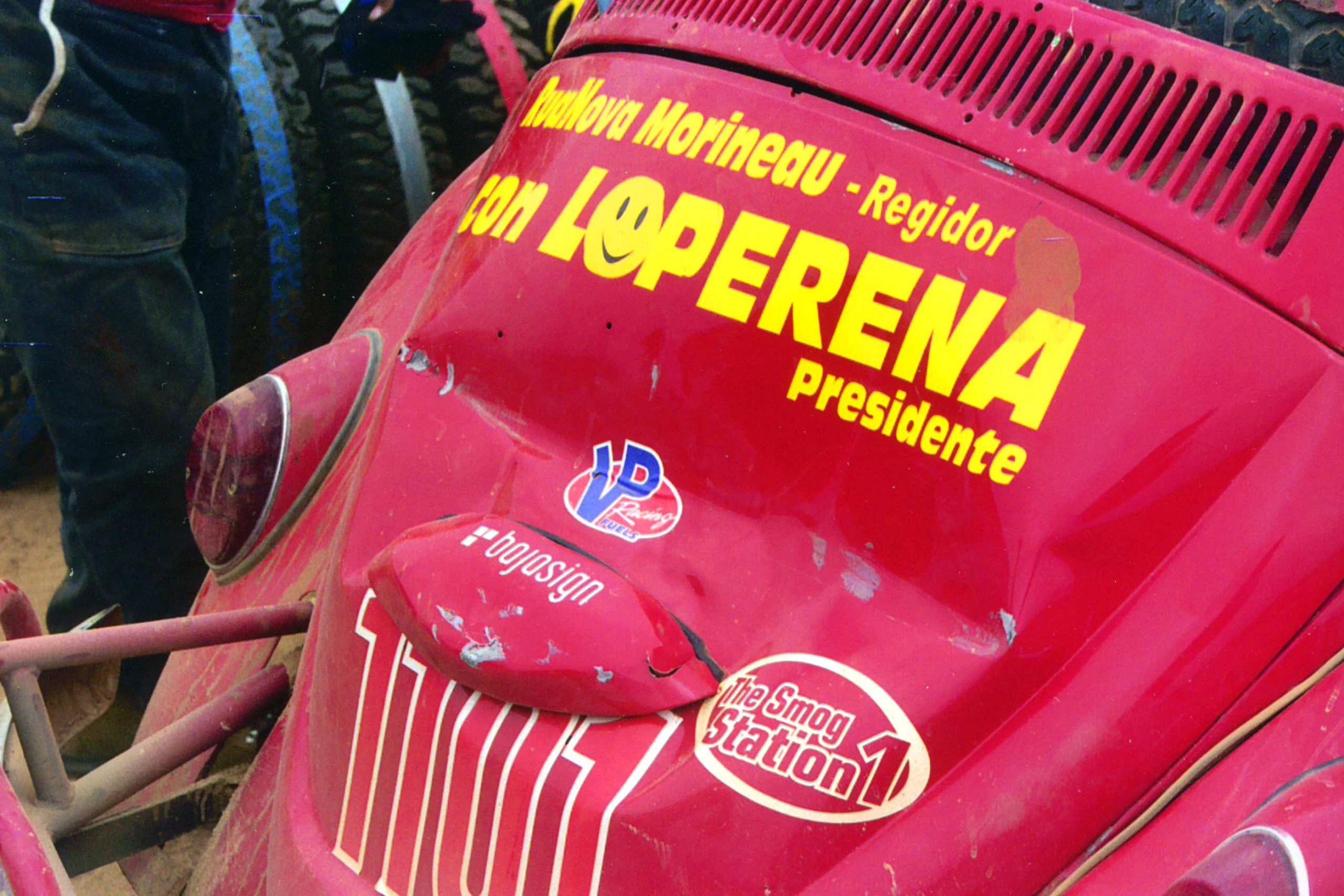
10.There’s something to be said for sheet metal.
In this case it probably kept a truck bumper out of the fan shroud.
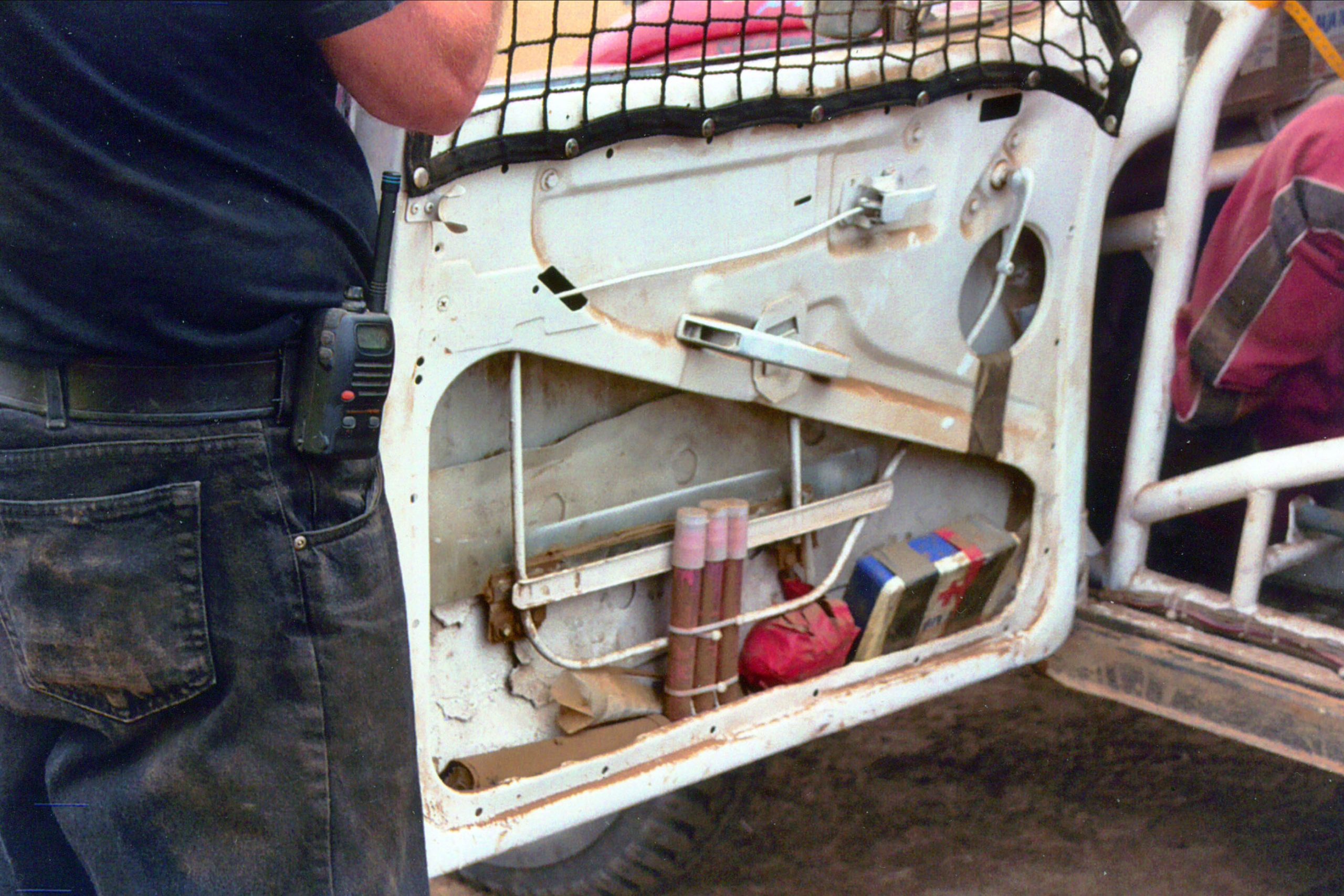
11. A door panel in a Baja Bug is just useless–take it off and get instant storage space for all kinds of goodies.
The owner also retained the window glass. You know it does rain in the desert.
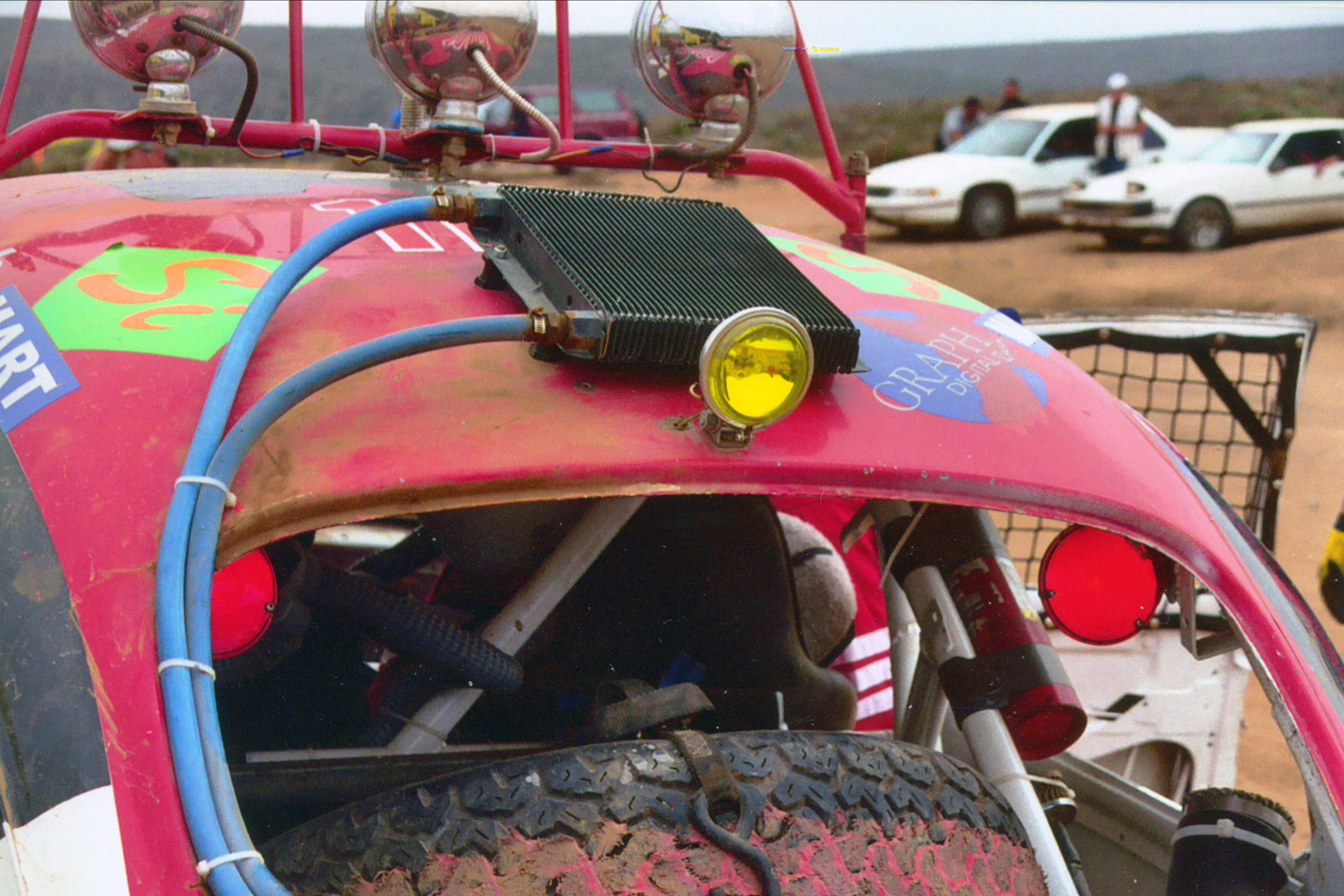
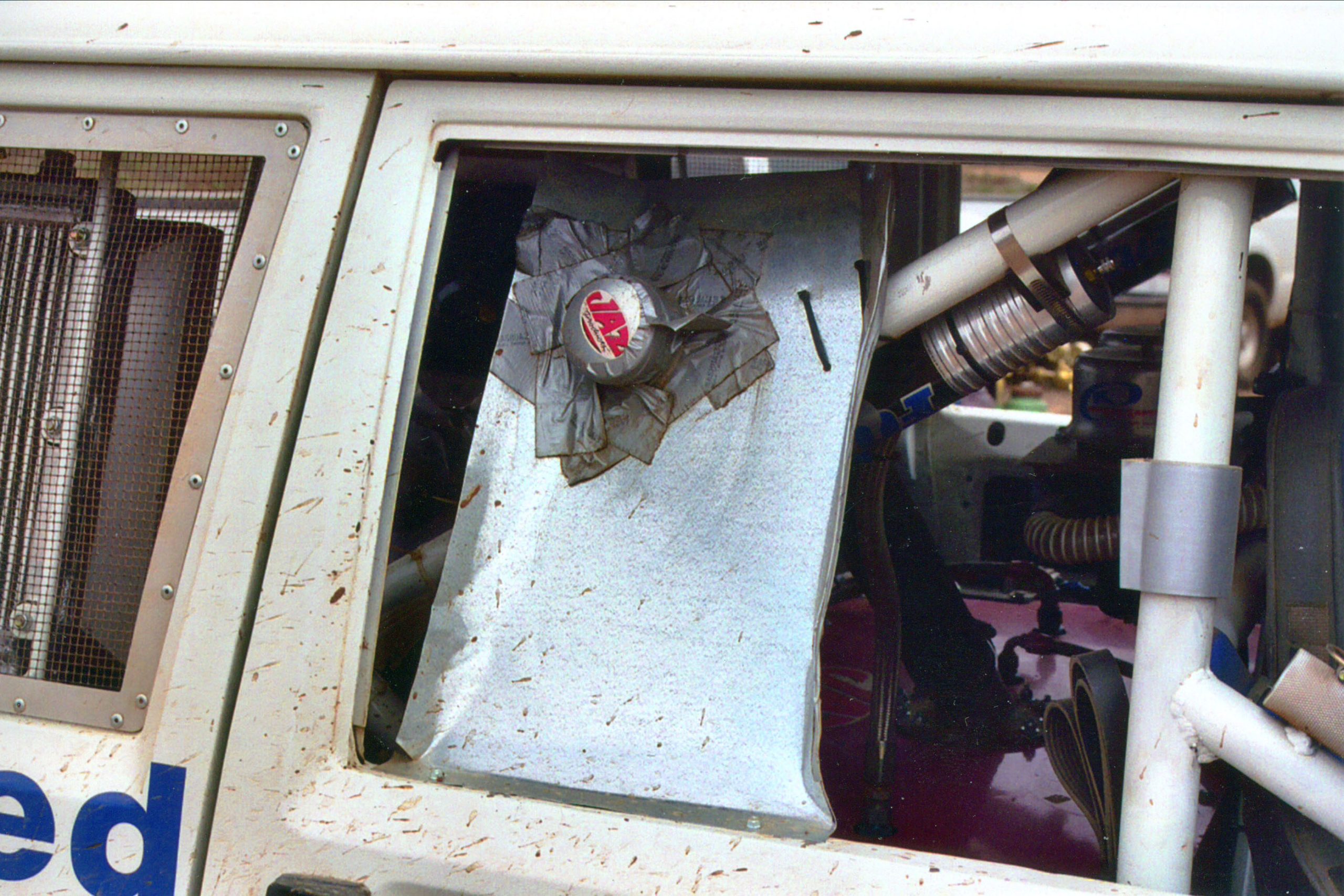
12. Here’s another way to protect brake lights and keep them up high enough to see.
Here’s another example of using industrial line routed to a cooler. Yellow light is much easier on the eyes if you’re trying to solve a problem in the dark.
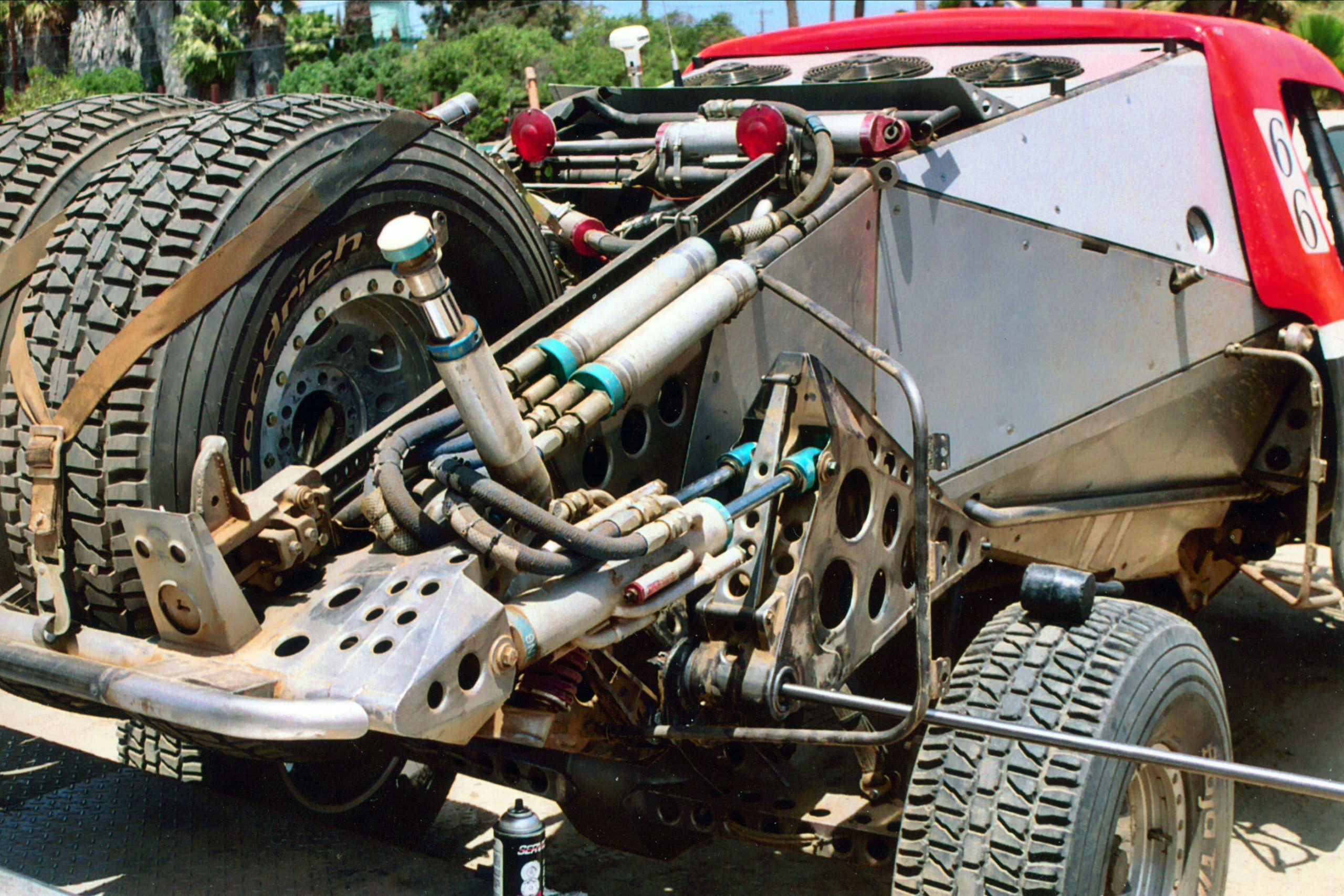
13. Although this looks as complicated as Chinese arithmetic, the suspension layout on this SCORE Trophy Truck is pretty straight forward.
Dimpled sheet metal is strong and light.
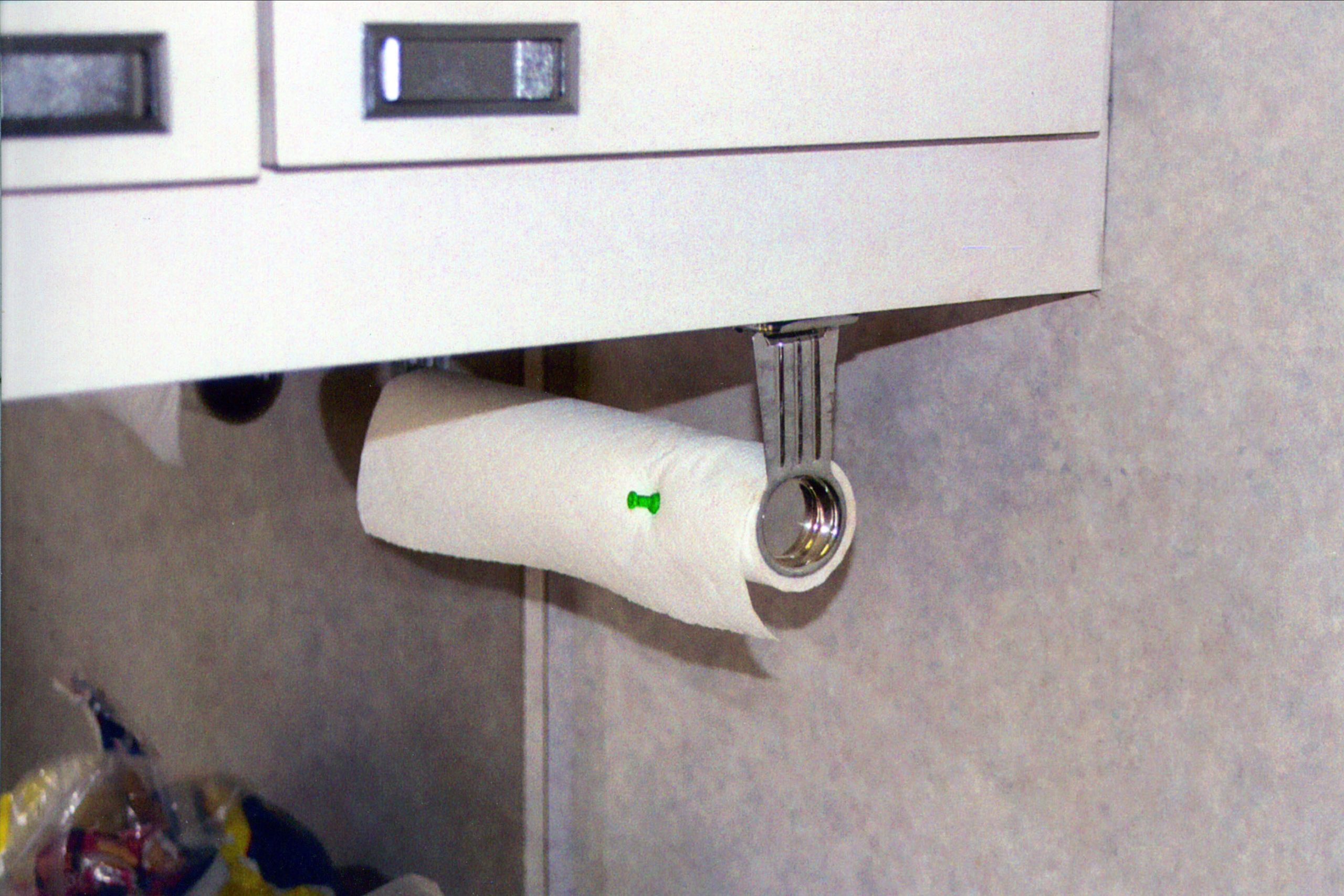
14. Ever open the door of the camper and find several yards of paper towel on the
floor?
A push pin to the rescue.
15. This is not the most attractive splash guard, I’ve ever seen; but it works.
Any fuel in the cockpit is too much fuel in the cockpit.
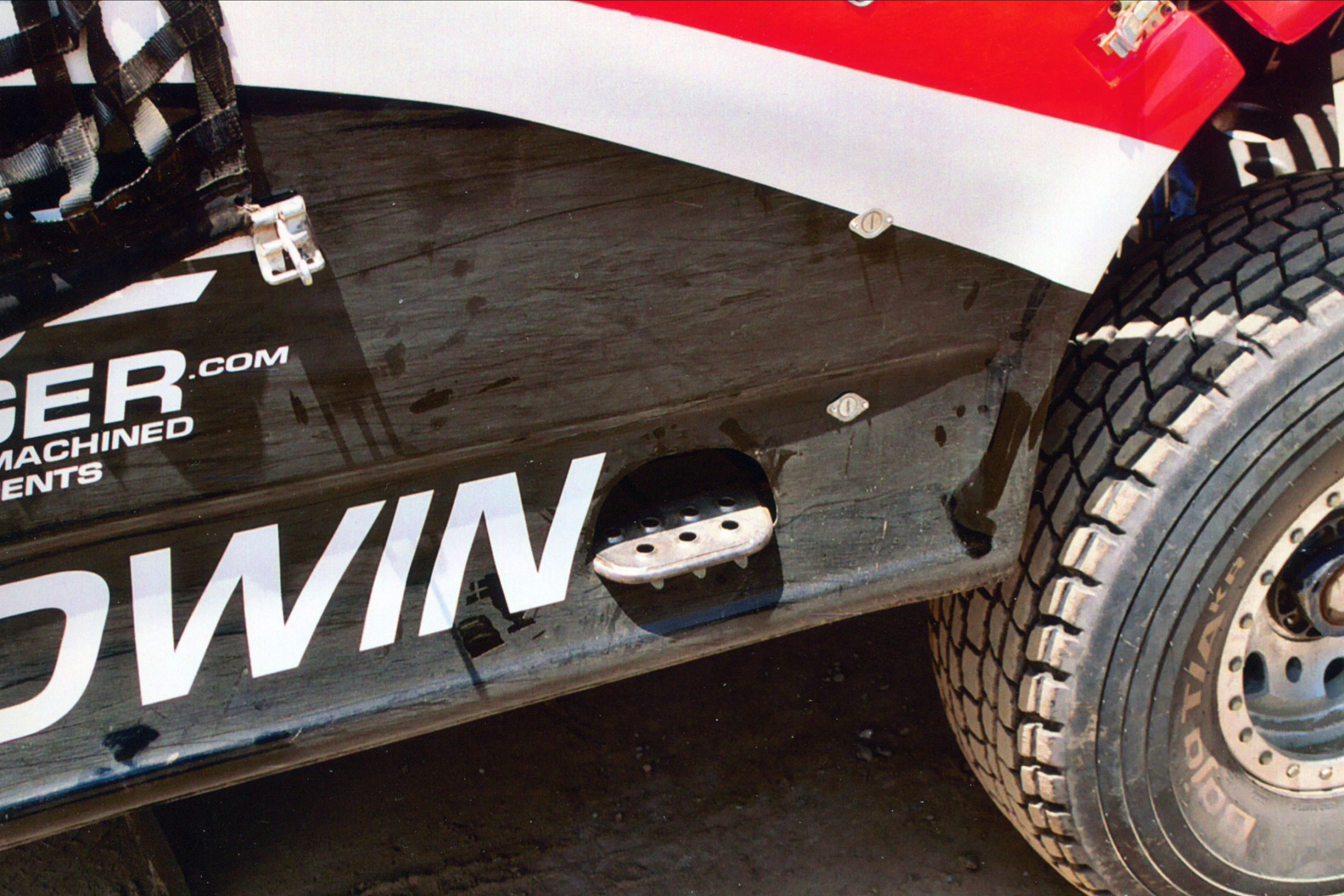
16. As the off-road tires get taller, getting into the vehicles becomes more of a problem.
The builders of this Trophy Truck took a step in the right direction.
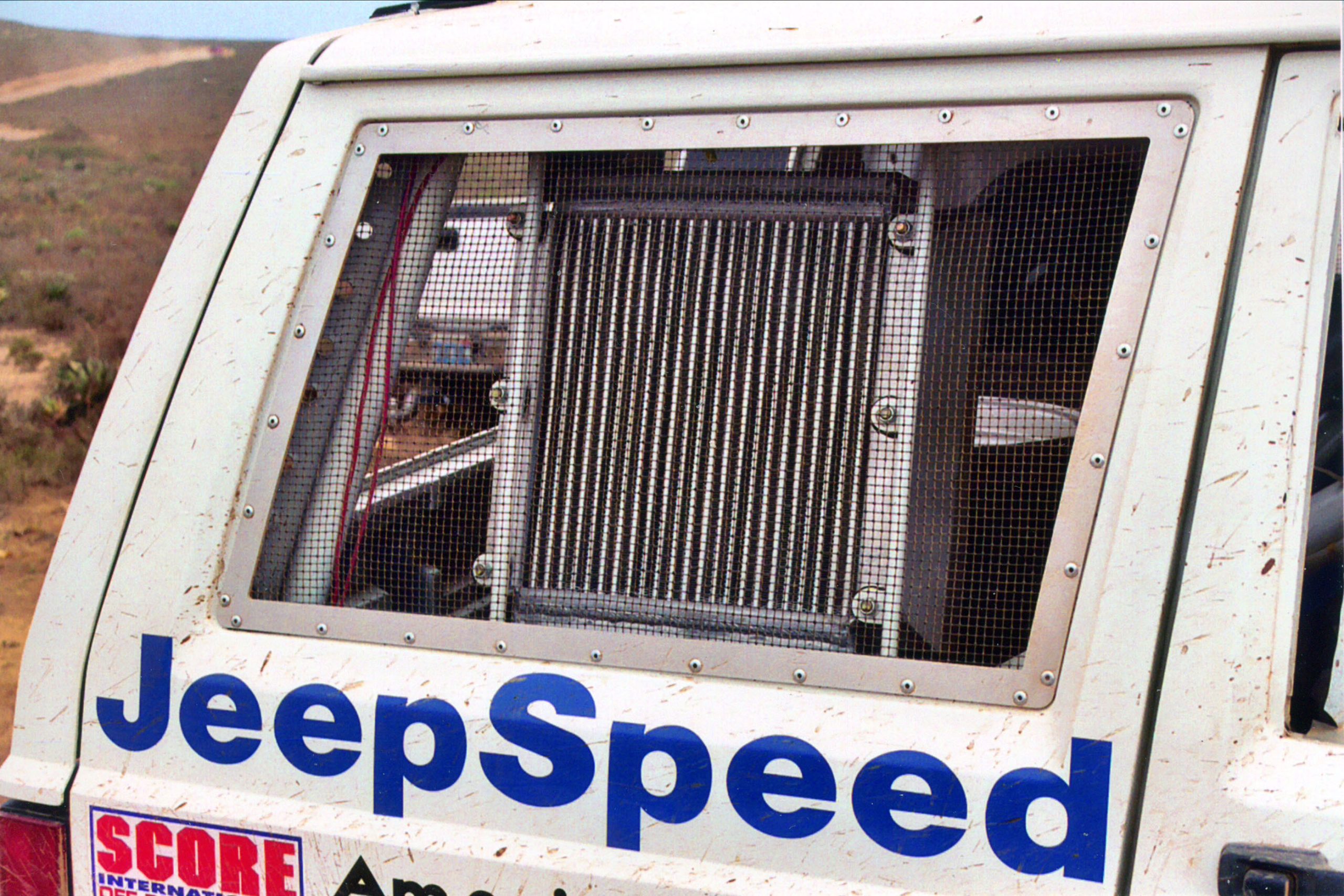
17. Mounting an oil cooler inside of a side window of a large race vehicle makes sense.
So does the hardware cloth anchored with the aluminum frame pop-rivited in place.
18. In your garage or driveway, picking up the wrong wrench is not a big deal. In a race in the middle of nowhere, picking up the wrong wrench can mean losing several places.
Maybe this will help.
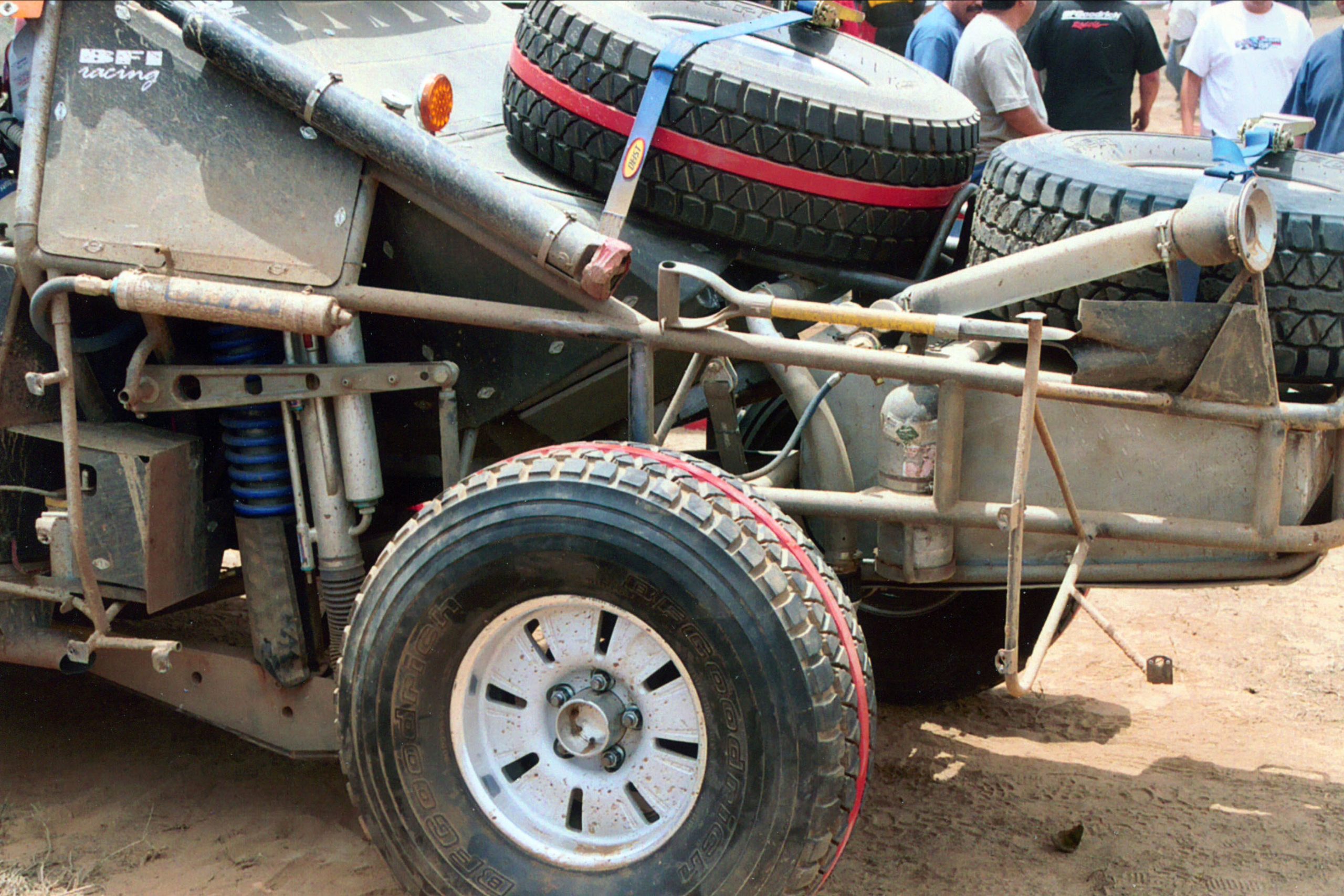
19. No matter how sophisticated the high dollar race vehicles get, there may also be the need for a shovel.
Also note the spare drive shaft.
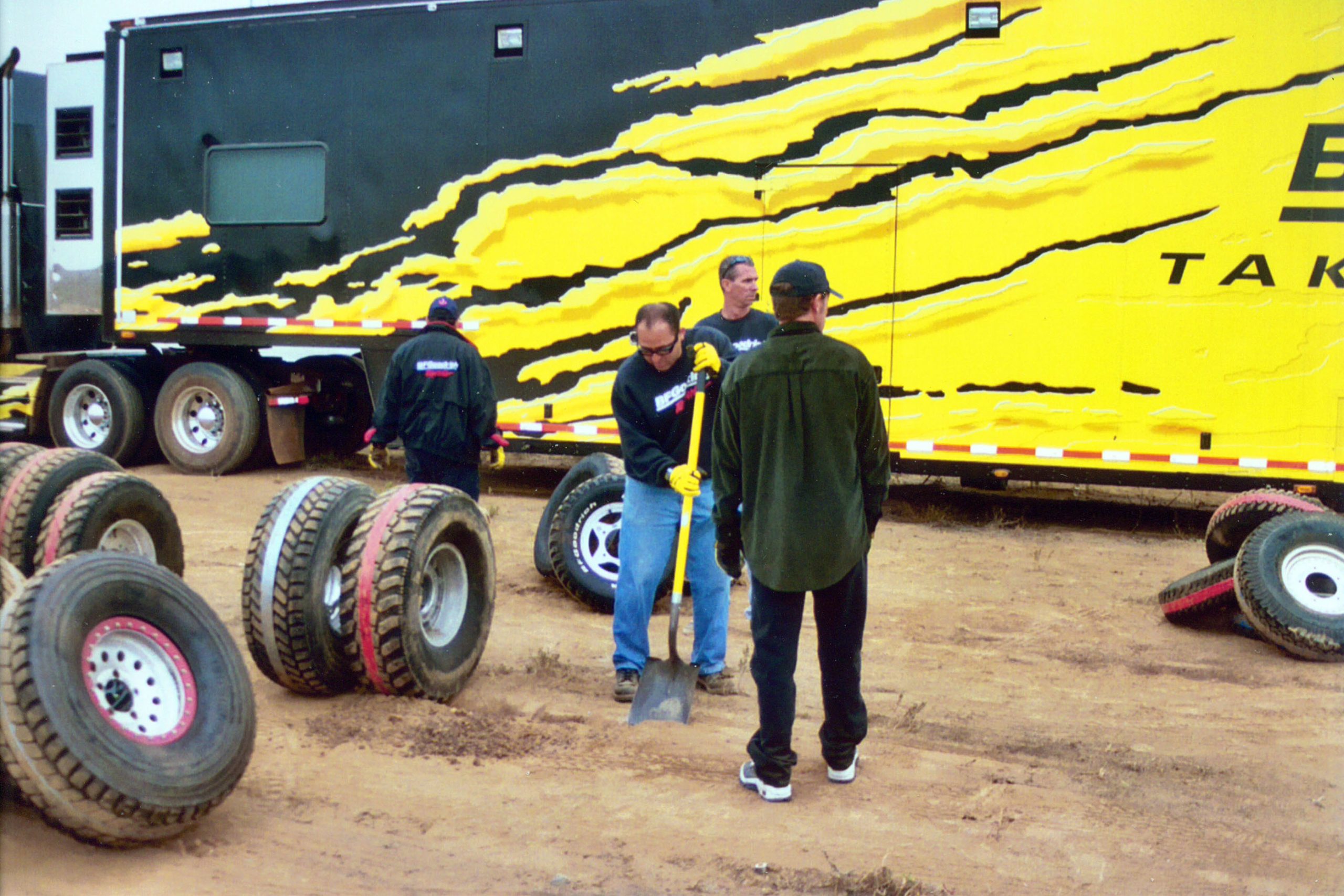
20. Speaking of shovels–when the BFGoodrich pit support guys set up a pit stop, they make a shallow trench so they can stack the tires vertically for easy identification and access.
21. If you suspect coil failure in a race, having a spare in place and basically wired can save a bunch of time.
Check out the breaker bar and socket taped to the frame for a quick tire change.
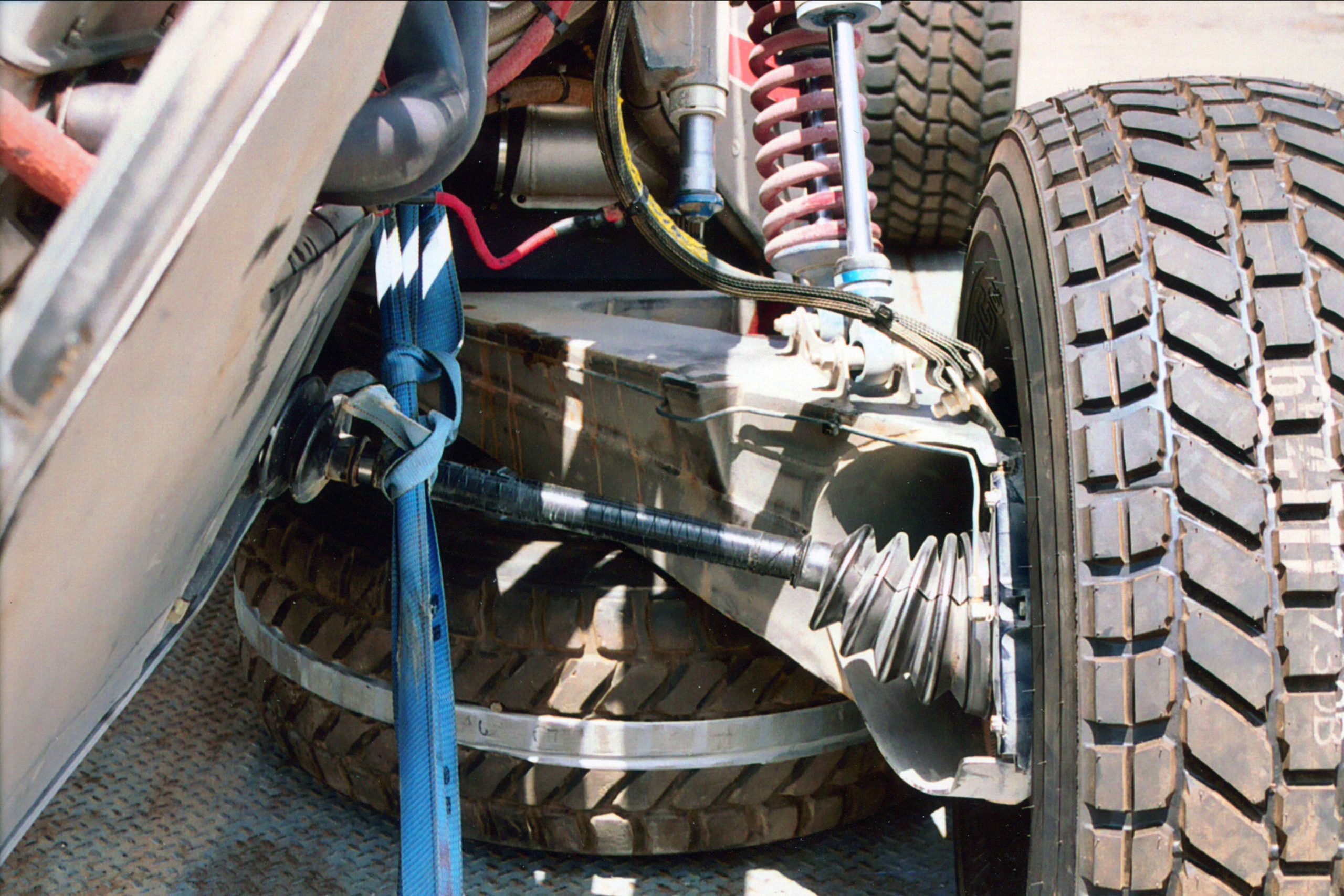
22. The CV joint boots take a terrible beating on off-road cars.
A failure can be disastrous. This is a good example of how a little fabrication can go a long way towards keeping shrapnel away from the boot.
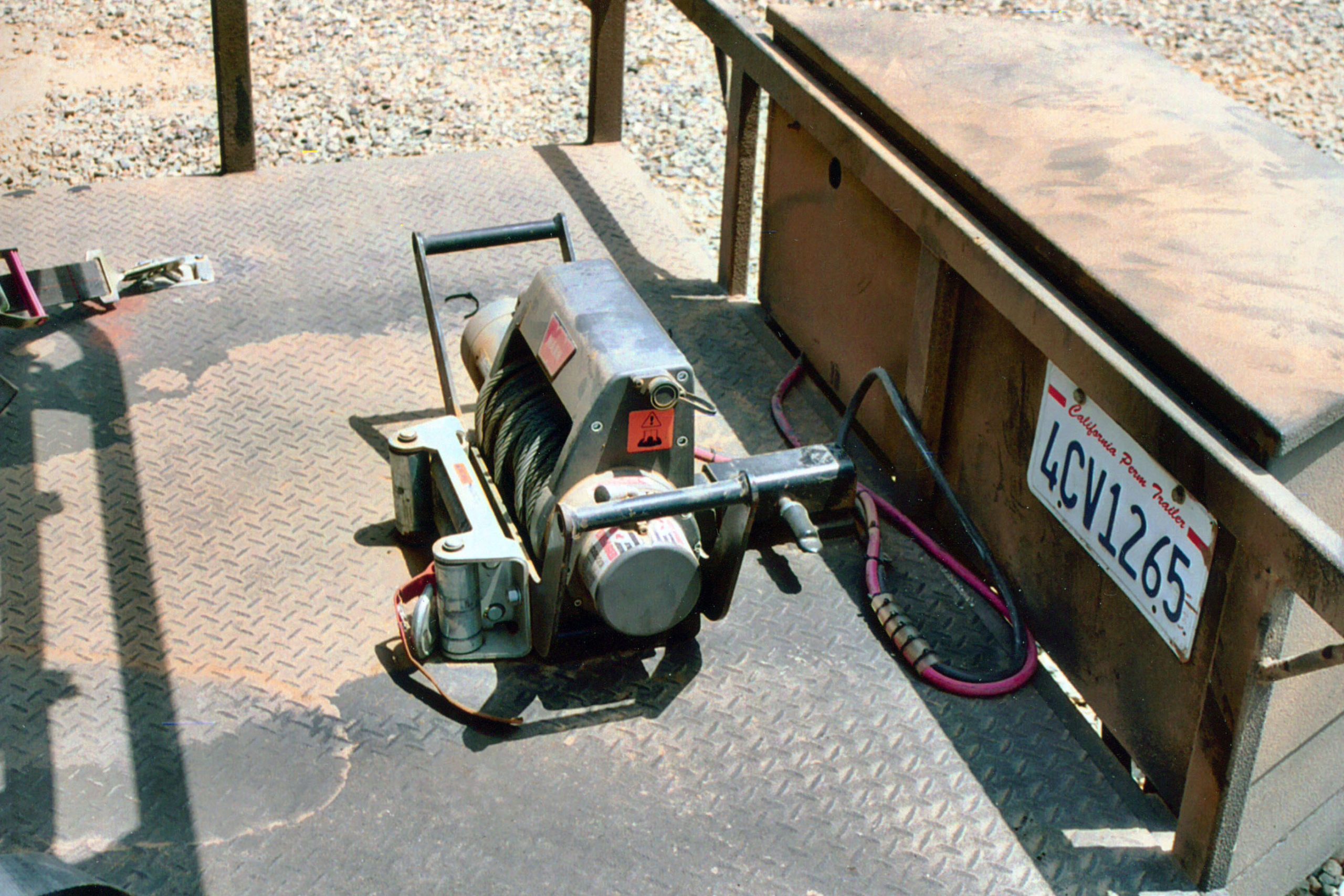
23. Normally shoving a crippled race car onto a trailer is not a big deal–but there are times–especially in the middle of the desert when a winch can come in mighty handy.
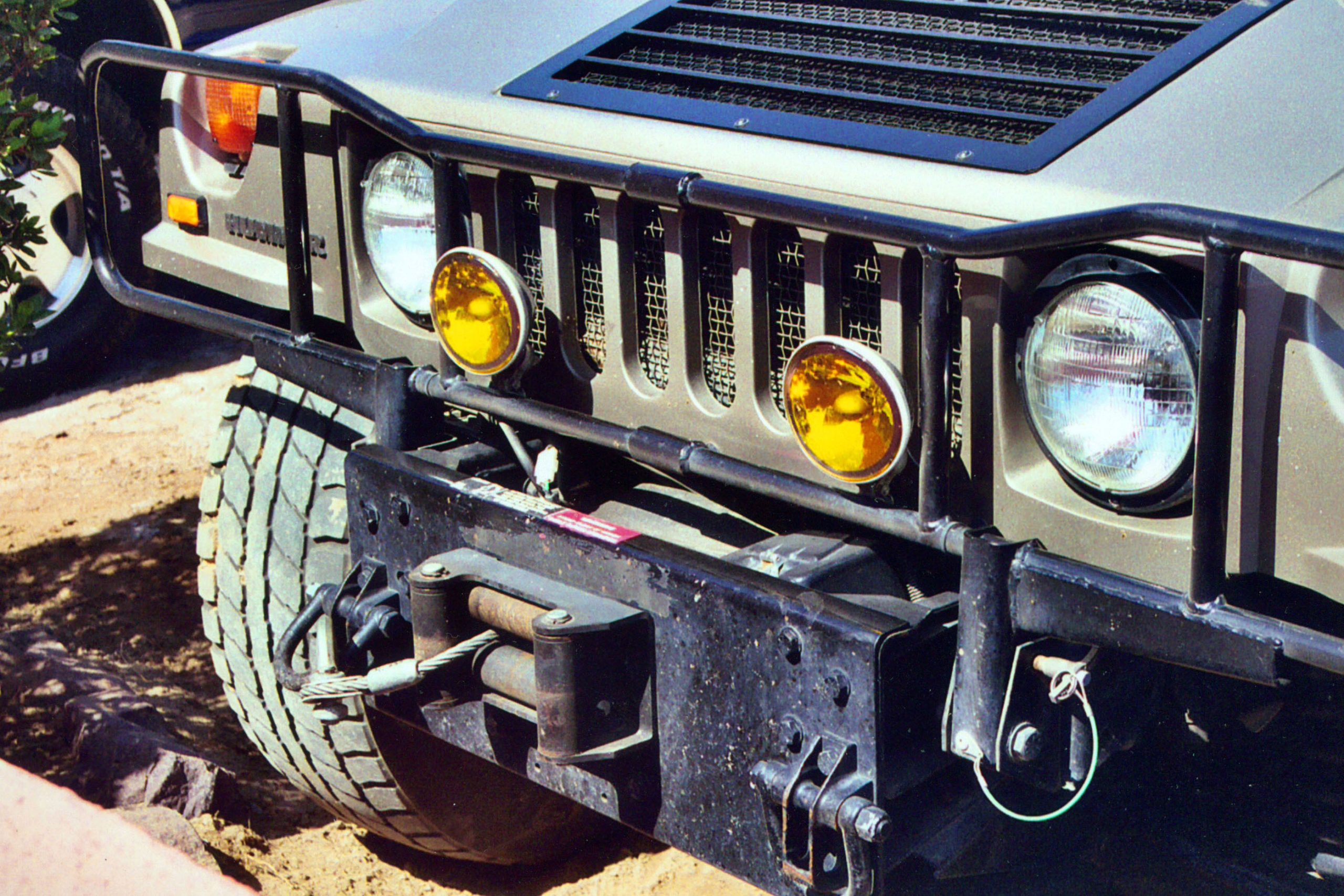
24. There’s more here than meets the eye. Looks like that front guard folds down (note the push pins).
If it will fold to horizontal it could make a handy “package tray” for a deer or firewood, but what really caught our eye was the mounting hardware for the shackles. Good design–hell for stout.