

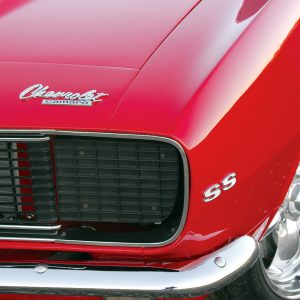
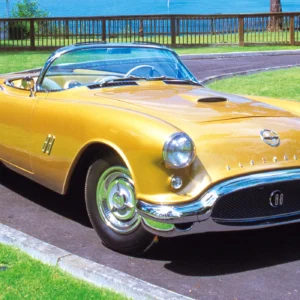
ONE OF ONE
If there was ever a time of automotive wonderment and absolute freedom among designers and enthusiasts alike, it was the early 1950s. This was a special time when automobile manufacturers were exploring new territory previously held by the foremost automakers of Europe, and the Americans were going all out to stake their own claims to greatness.
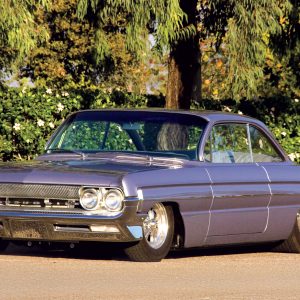
DYNAMIC 88
While most of us equate the term “bubbletop” with early-’60s Chevys, other GM brands had their own versions of these sleek sport coupes, including Oldsmobile. Although these cars shared the same slim roof design, along with its highly celebrated rear window, other unique changes left no doubt about the special nature of these individualistic and stylish machines.
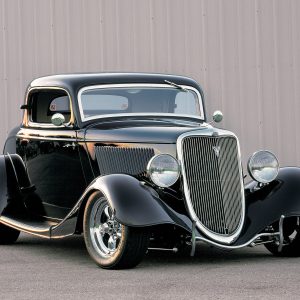
TAKING IT TO HEART
Sometimes building a street rod can be downright exasperating. The amount of money involved and the stress of chasing down parts and coordinating the efforts of multiple shops can lead to a fair bit of tension in any owner. How many times have you heard someone say something along the lines of: “That damn car’s going to give me a heart attack!”? Odds are you’ve heard it or even said it at least once or twice if you’ve been involved in rodding for any length of time.









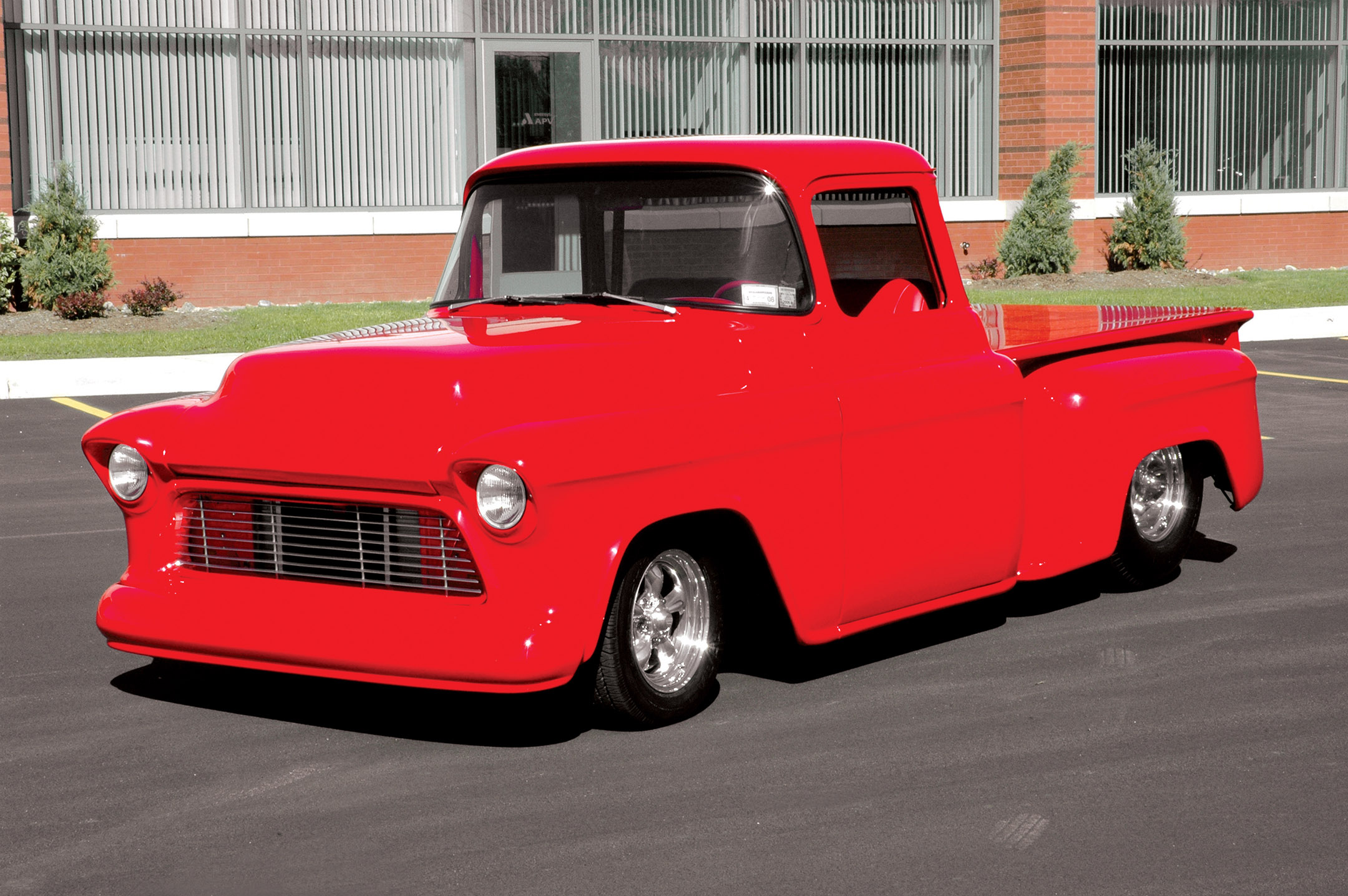
It often takes a serious challenge to test a person’s capabilities. After years of driving a string of performance cars, Terry Short wanted something different sitting in his North Tonawanda, New York, garage. So, he set out and found this ’55 Chevy big-window pickup in an apple orchard. He just knew he had met his challenge.
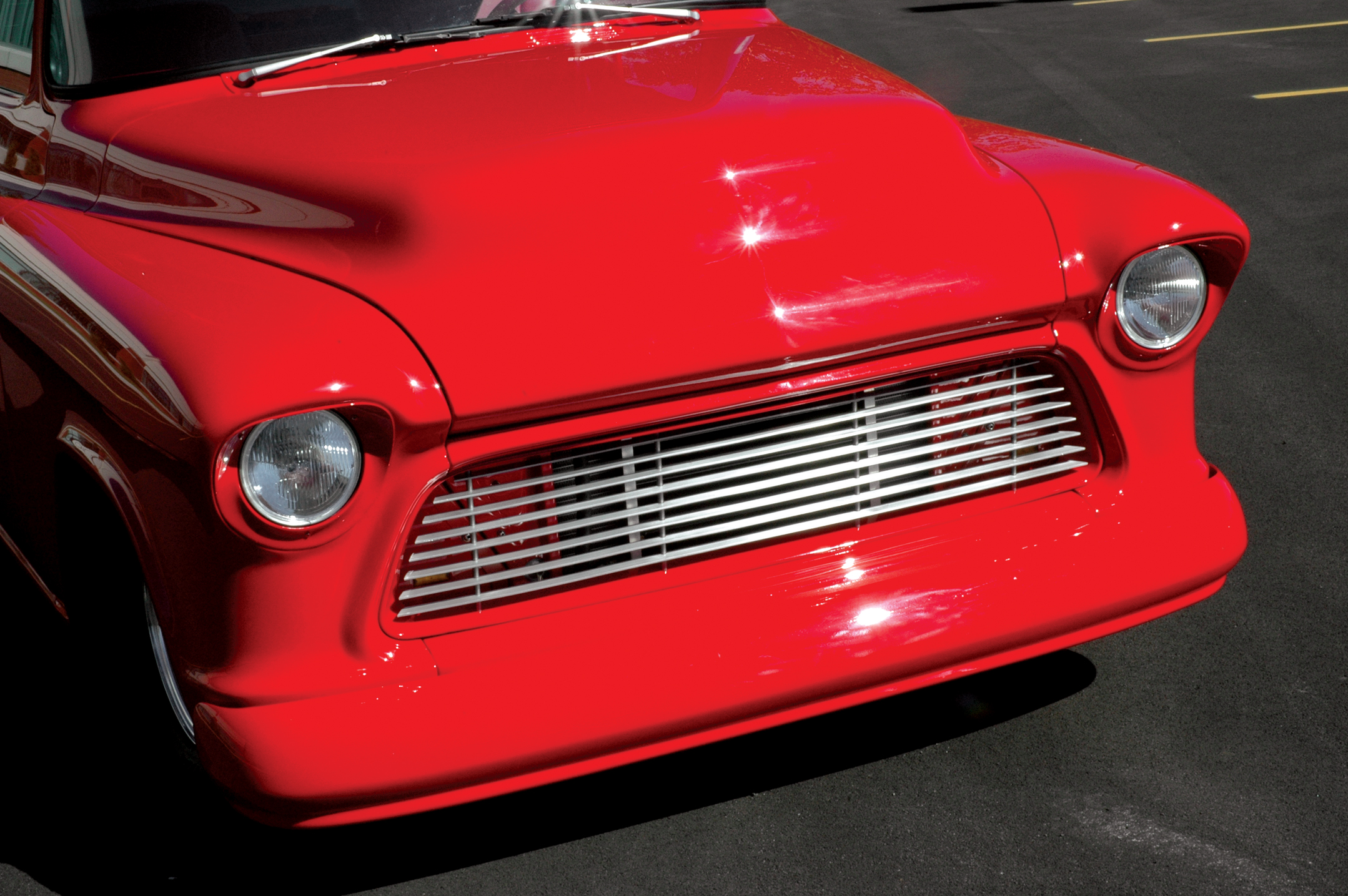
Short set some goals: Make it smooth, give it “the stance,” build a healthy engine and paint it Hot Rod Red. If people don’t see it coming down the road, he’d make sure they heard it.
Grateful to his family for allowing him to “get lost” in his garage, he dove into the project, which would consume the next three and a half years of his life. Other than machining and upholstery, he did all of the work on this Second Series pickup.
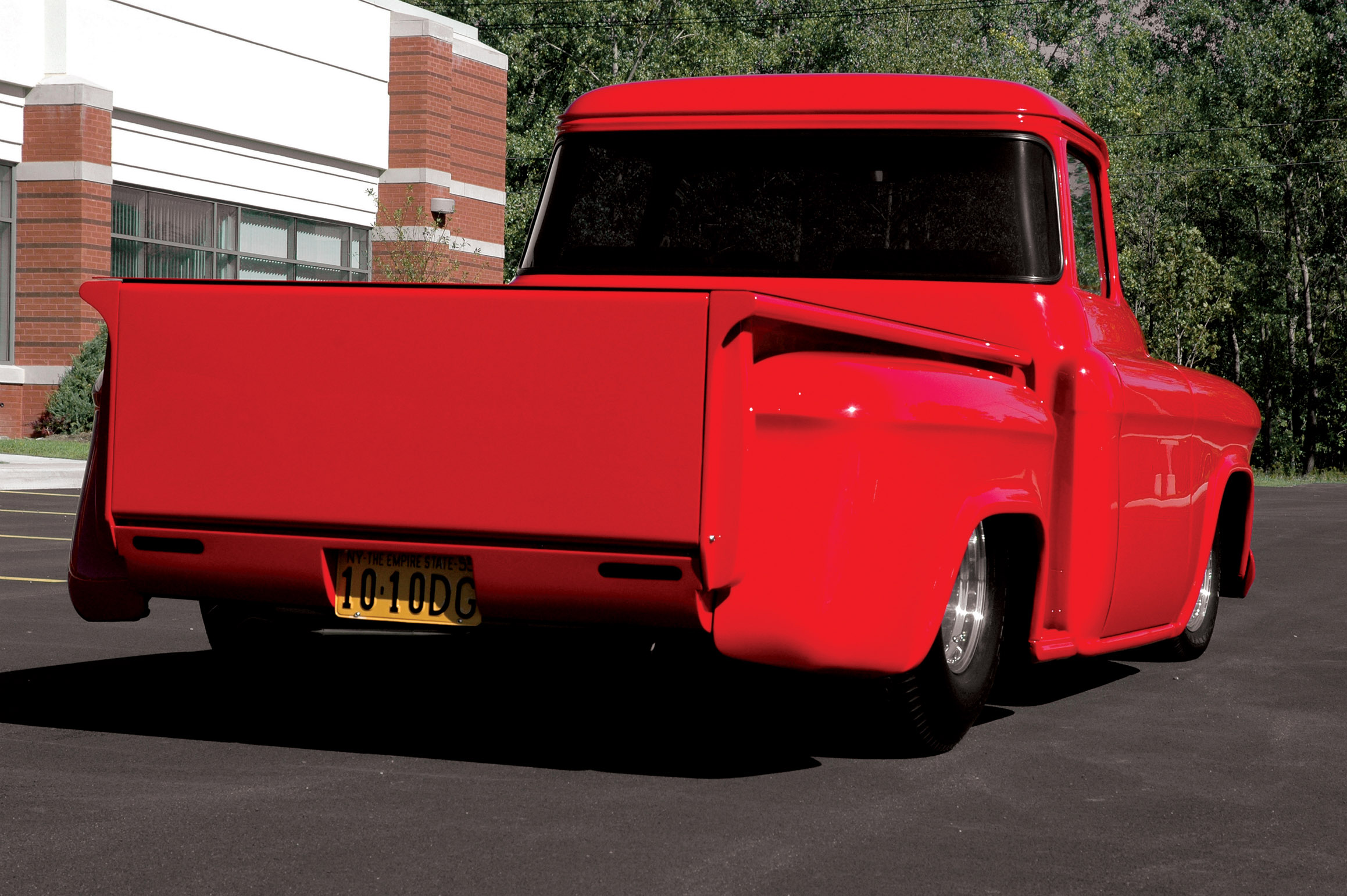
Everywhere you look, the truck is super smooth. Judging by its posture, he nailed “the stance,” so you can see that he met his goals, and you haven’t even heard the engine! The bright, loud truck is now a regular on the cruising scene in western New York.
Short said he believes the truck came from Tennessee, based on a sticker he found on the tailgate. When he acquired the tired hauler, he said its condition was fair. It was evident other owners had worked on the truck, but all that would change, as Short took the entire vehicle apart, saving the body, fenders and hood. The rest went into the trash.
He began by building a complete tube chassis with a rollcage, setting the ride height 4-1/2 inches lower than when the truck rolled off the GM assembly line in 1955. He modified a Mustang II crossmember to fit his new chassis and added a FoMoCo power rack-and-pinion steering assembly. Morrison adjustable shocks were used to soften the ride. Short chose 11-inch Ford rotors for disc-brake stopping power.
In back, the ride consists of a Morrison four-link suspension combined with a narrowed Ford 9-inch rearend with 3.50:1 gears. He also made a torsion sway link for the rearend, and once again, Ford 11-inch disc brakes were utilized. Once the chassis was complete, Short sprayed on several coats of PPG Silver Gray Metallic paint.
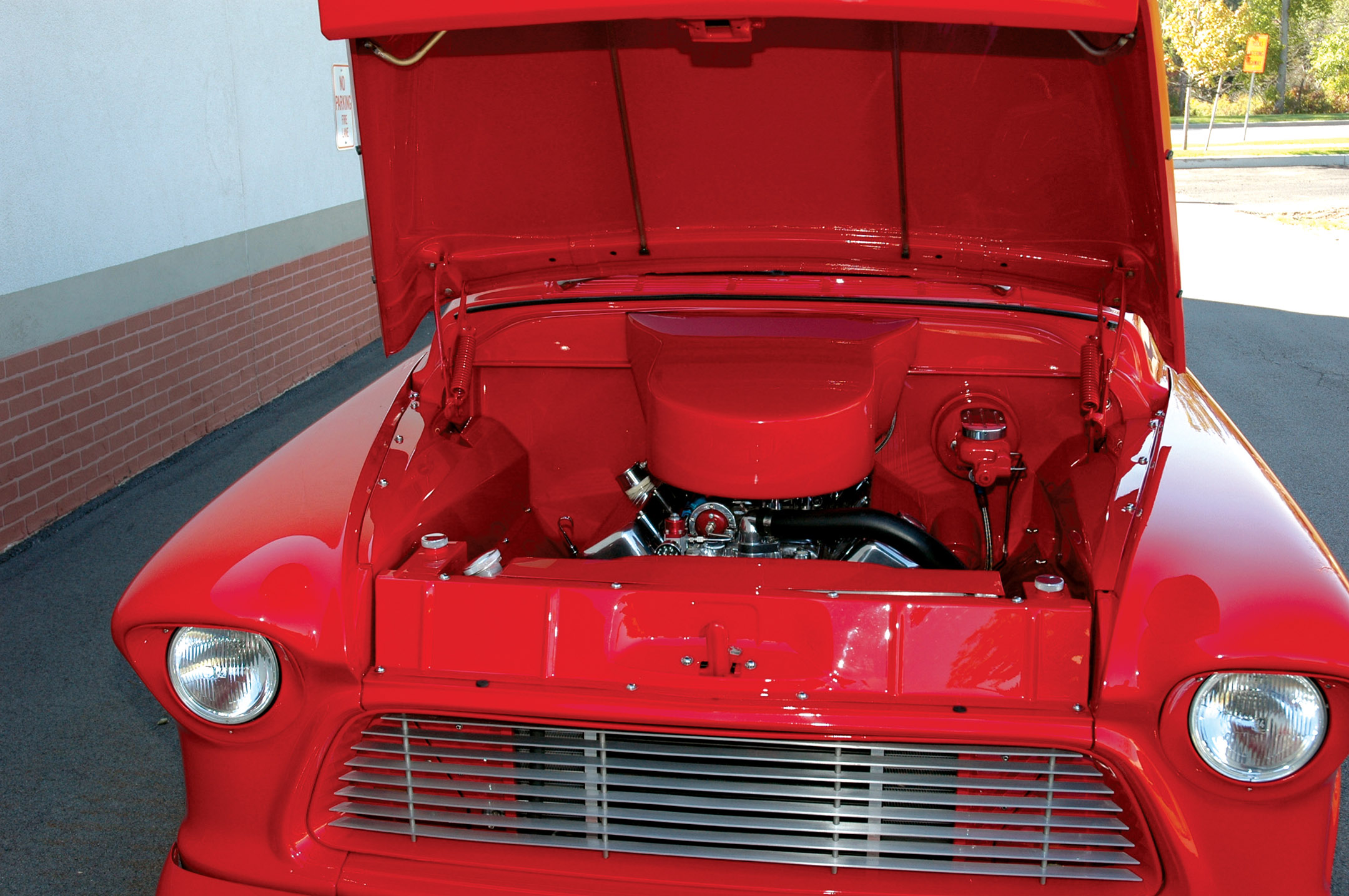
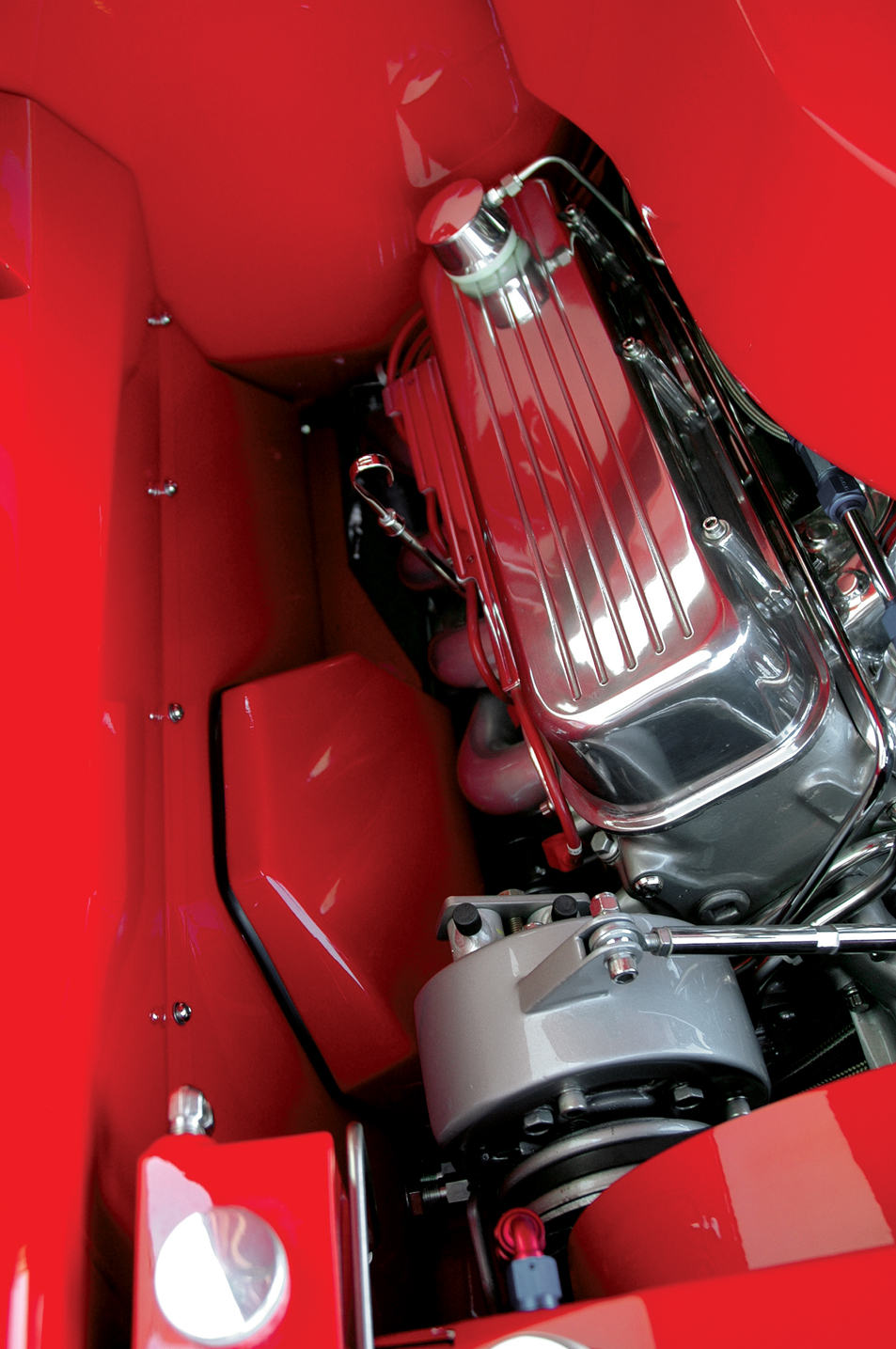
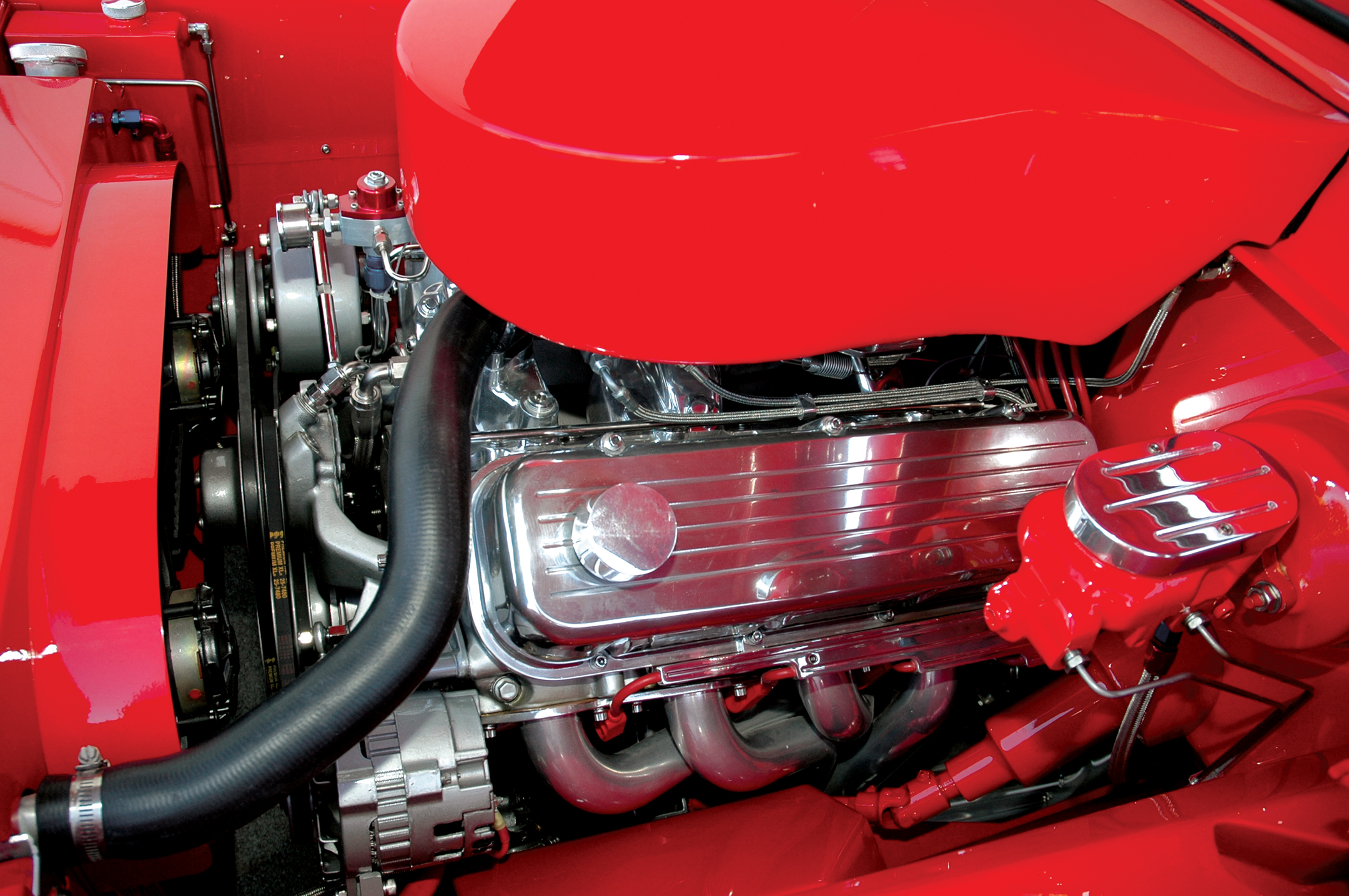
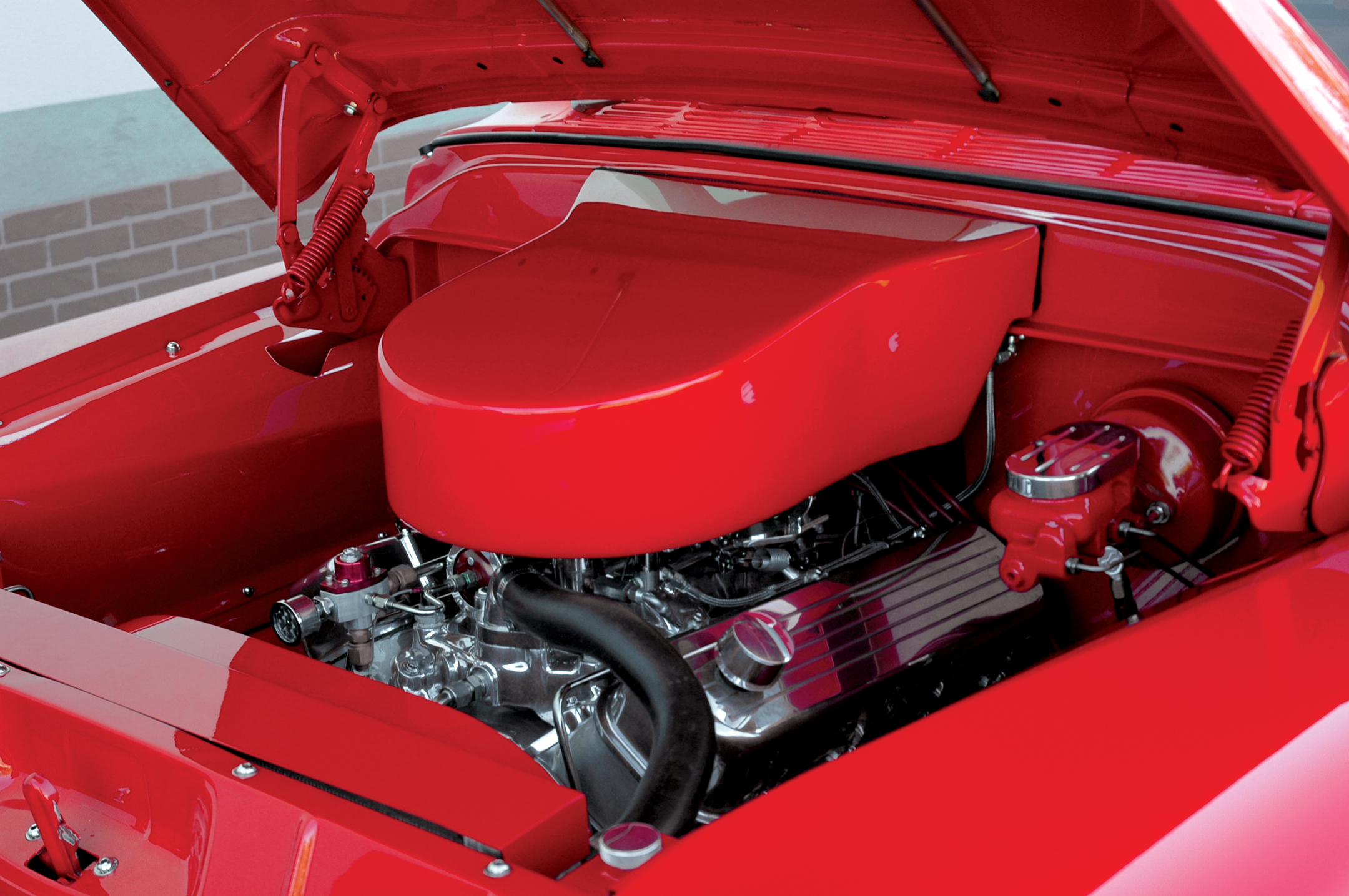
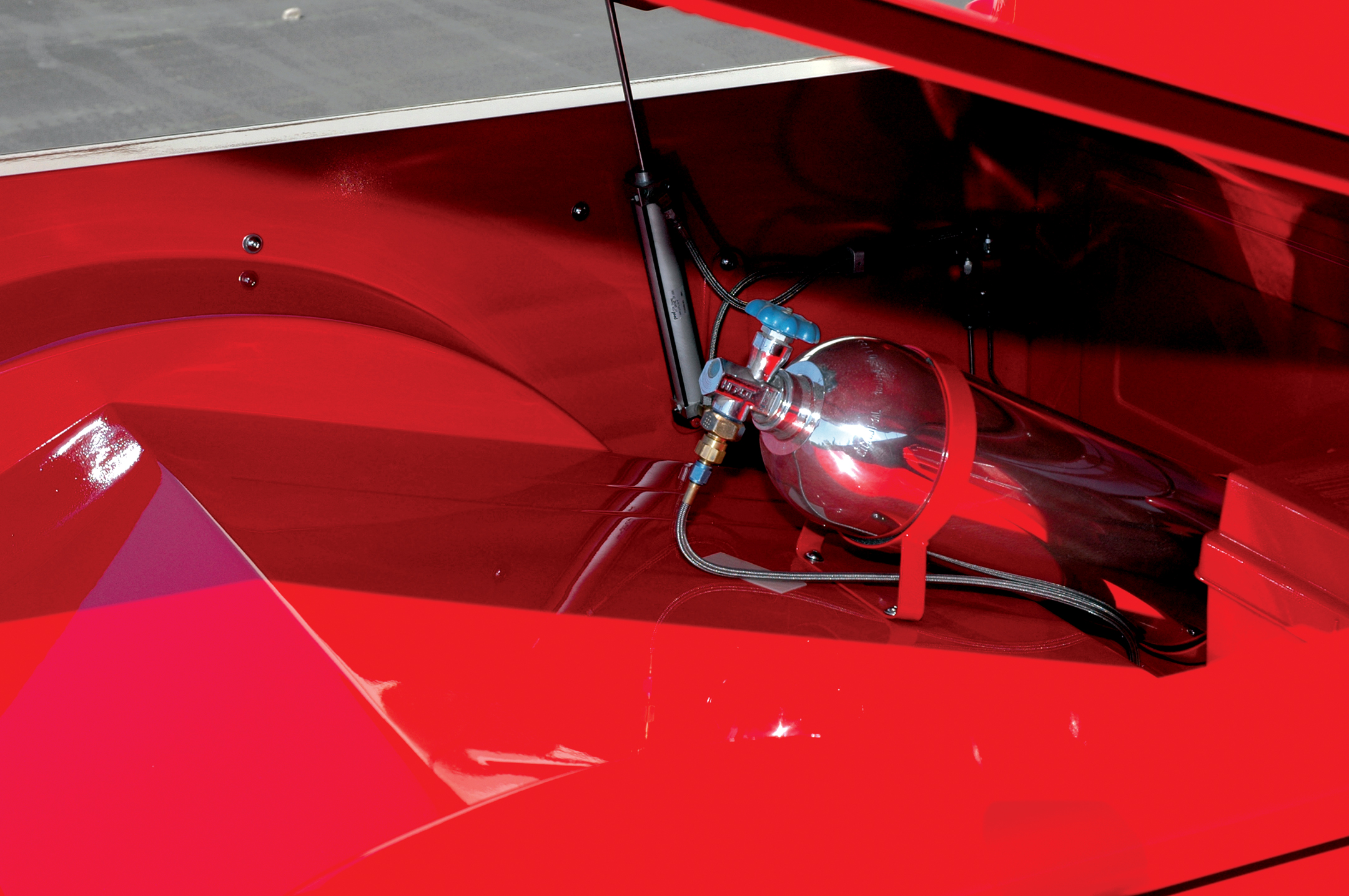
 Short chose a ’70 Chevy big block for power. Now rated at 470 ci, it has an Ultradyne hydraulic roller cam, GM LS6 cylinder heads containing Comp Cam rockers, springs and lifters and 10.5-to-1 pistons. A Demon 850 double-pumper carburetor provides plenty of aspiration for the potent powerhouse, and adding to the punch is an NOS Cheater nitrous system. A GM MSD distributor and Taylor wires combine for reliable spark for the engine.
Short fabricated the entire 3-inch exhaust system, including the headers. He added Flowmaster mufflers to make sure this truck would be heard rumbling down the highway.
A Be Cool aluminum radiator provides the cooling necessary for the hefty hauler. Short made the aluminum air intake that allows sufficient air to flow in from the cowl. A ’70 GM Turbo 400 transmission was rebuilt during the project and a 3,500-rpm stall-speed converter was added. Denny’s Driveshaft in Buffalo, New York, made the driveshaft. All wiring was concealed in stainless steel tubing and mounted along the chassis with custom-made brackets. Stainless plumbing also was routed along the smooth chassis tubing.
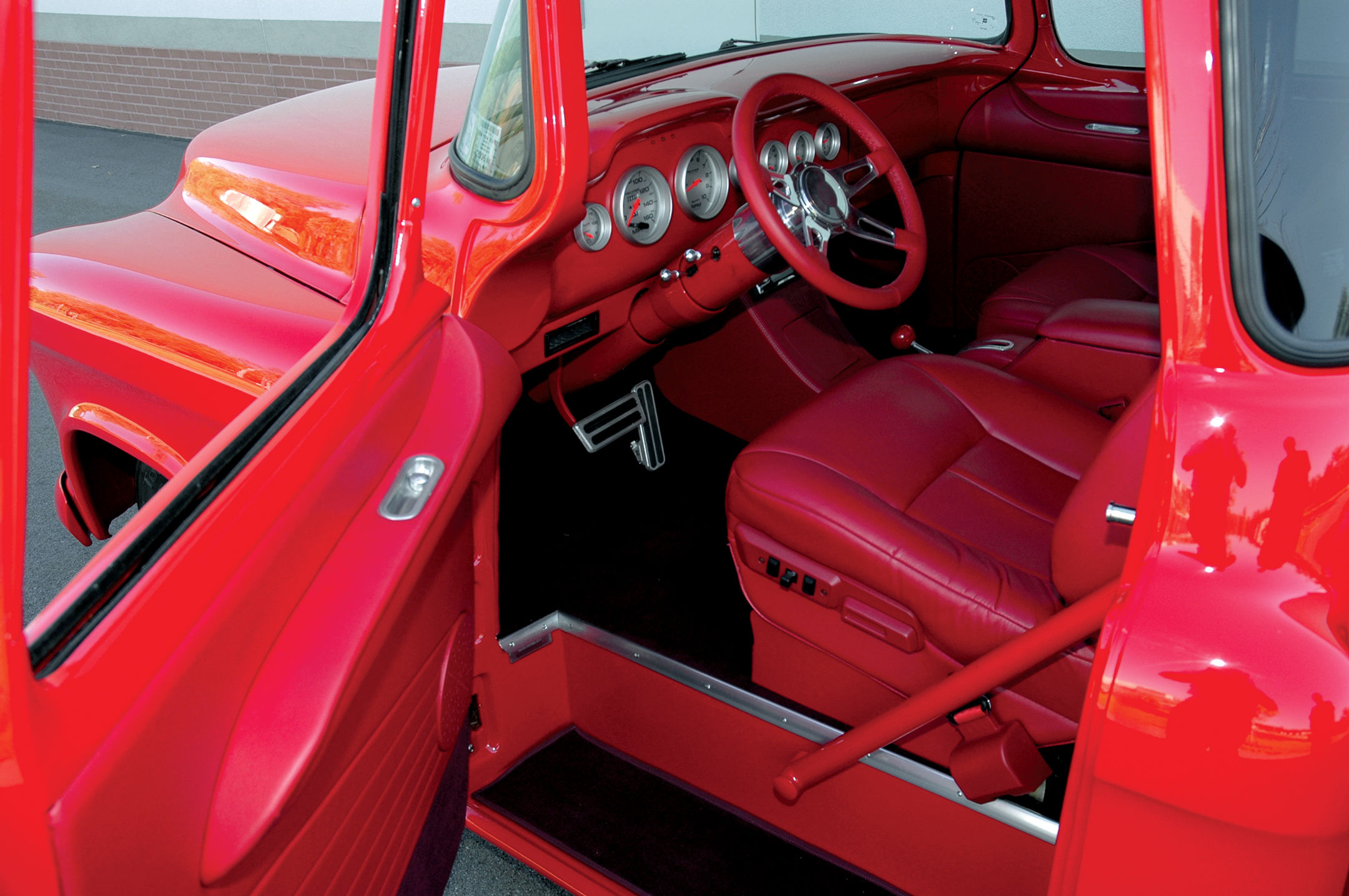
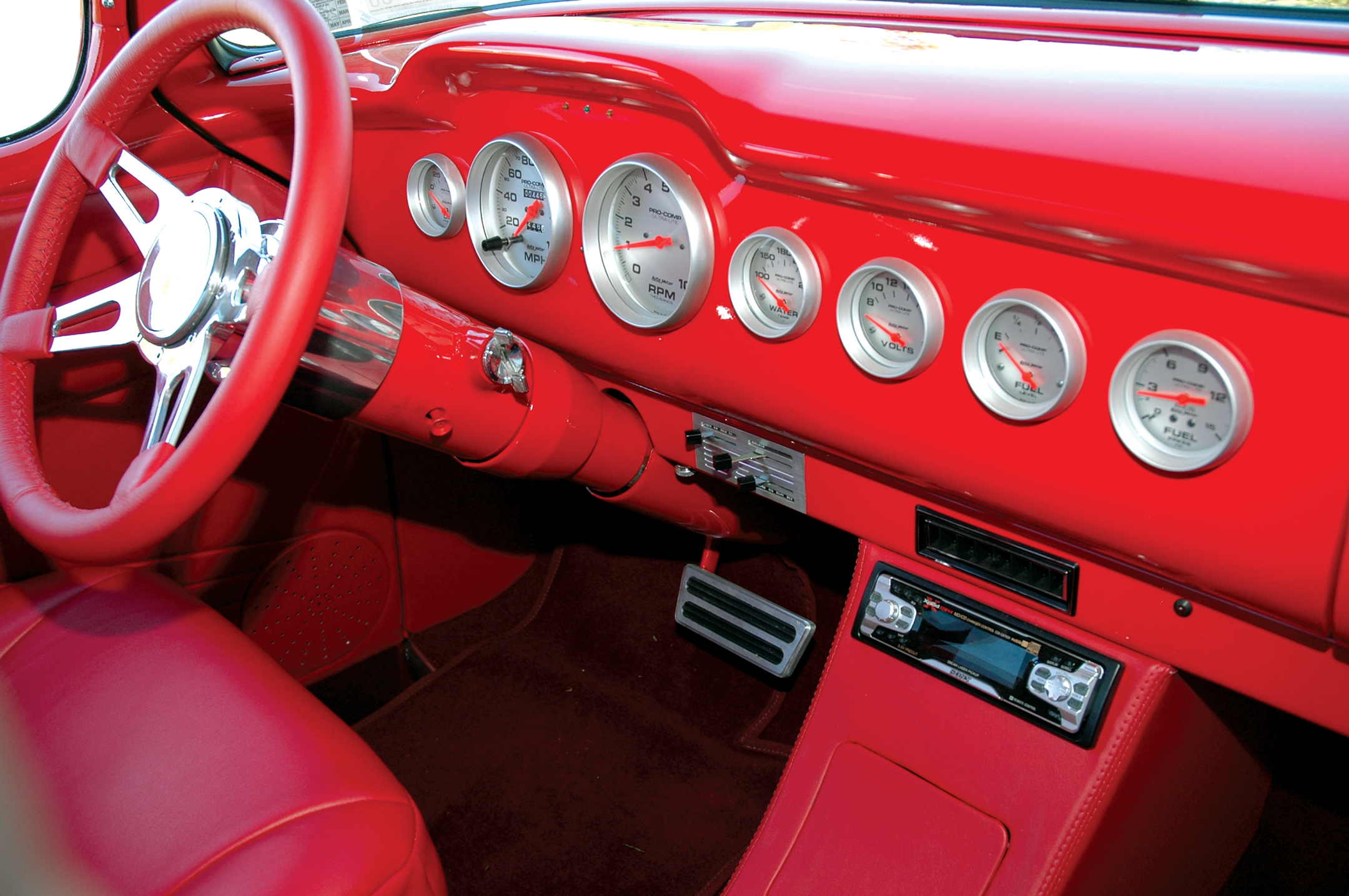
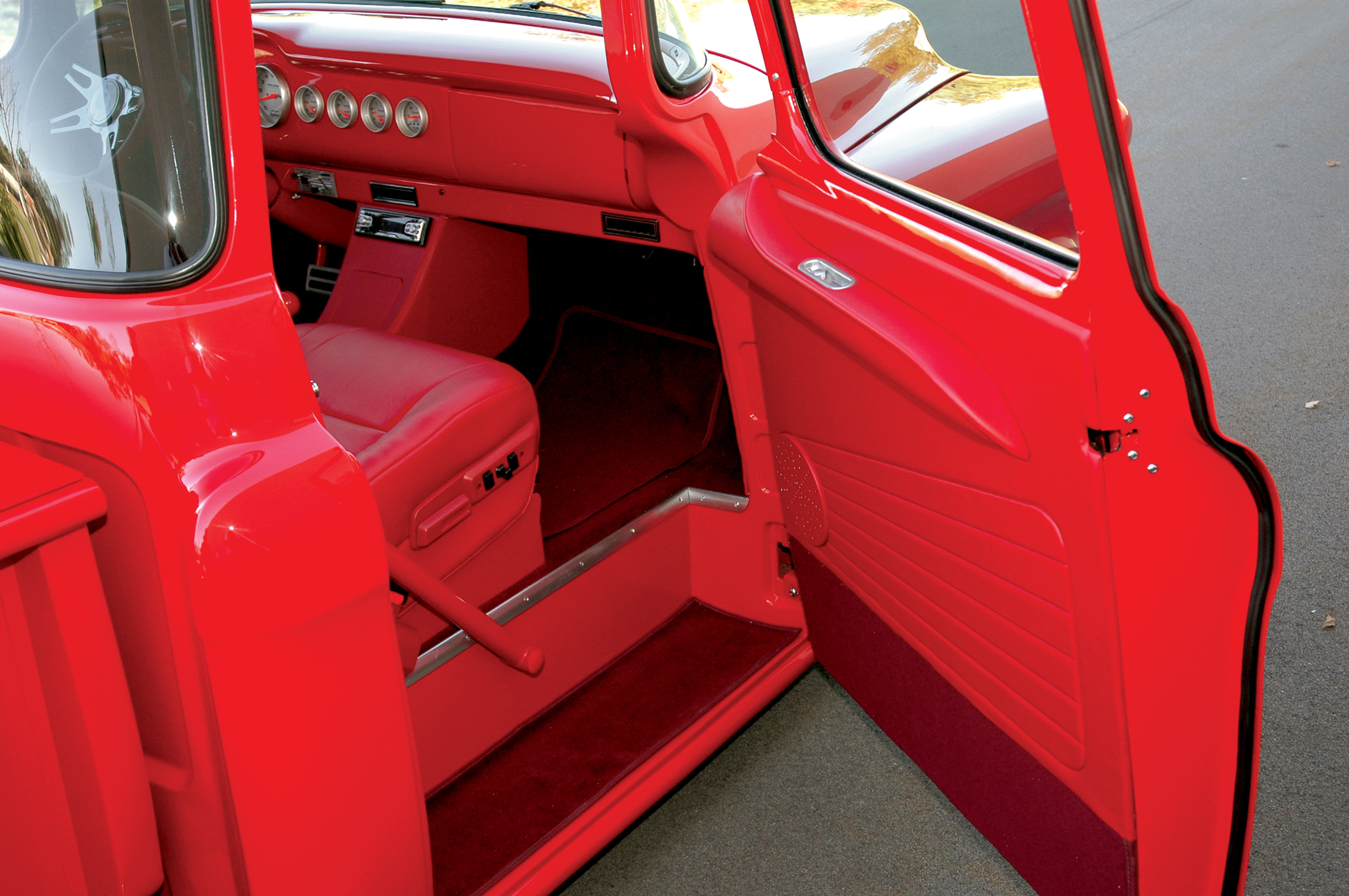
Short then turned his attention to the body, moving the firewall back to make room for the big engine. That necessitated moving the dashboard back, and while he was at it, Short extended the ends of the dashboard 3 inches so they would flow into the door panels and extend downward. He also made the interior console so it would blend nicely with the dash. The console sweeps downward in a graceful curve.
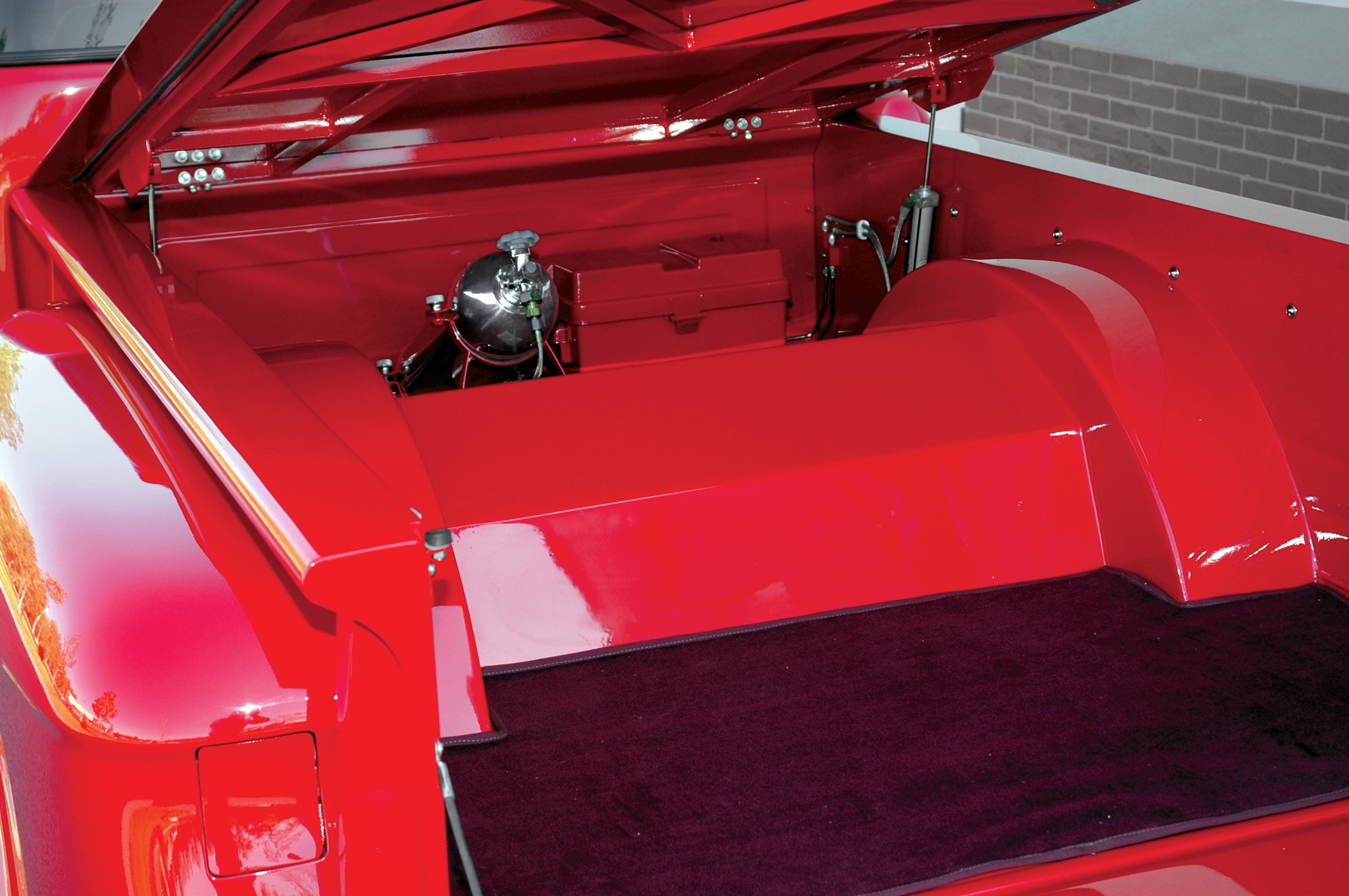
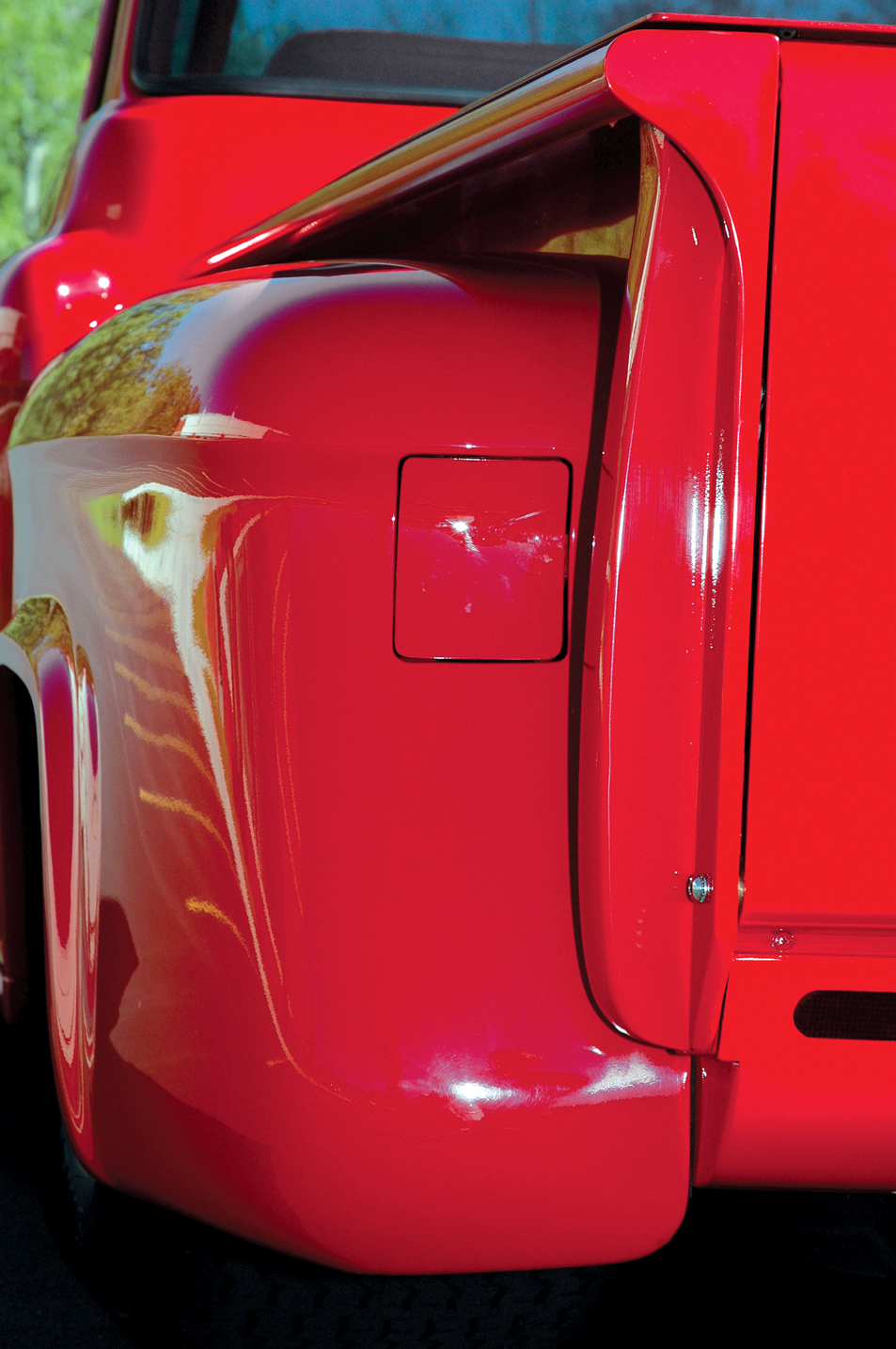
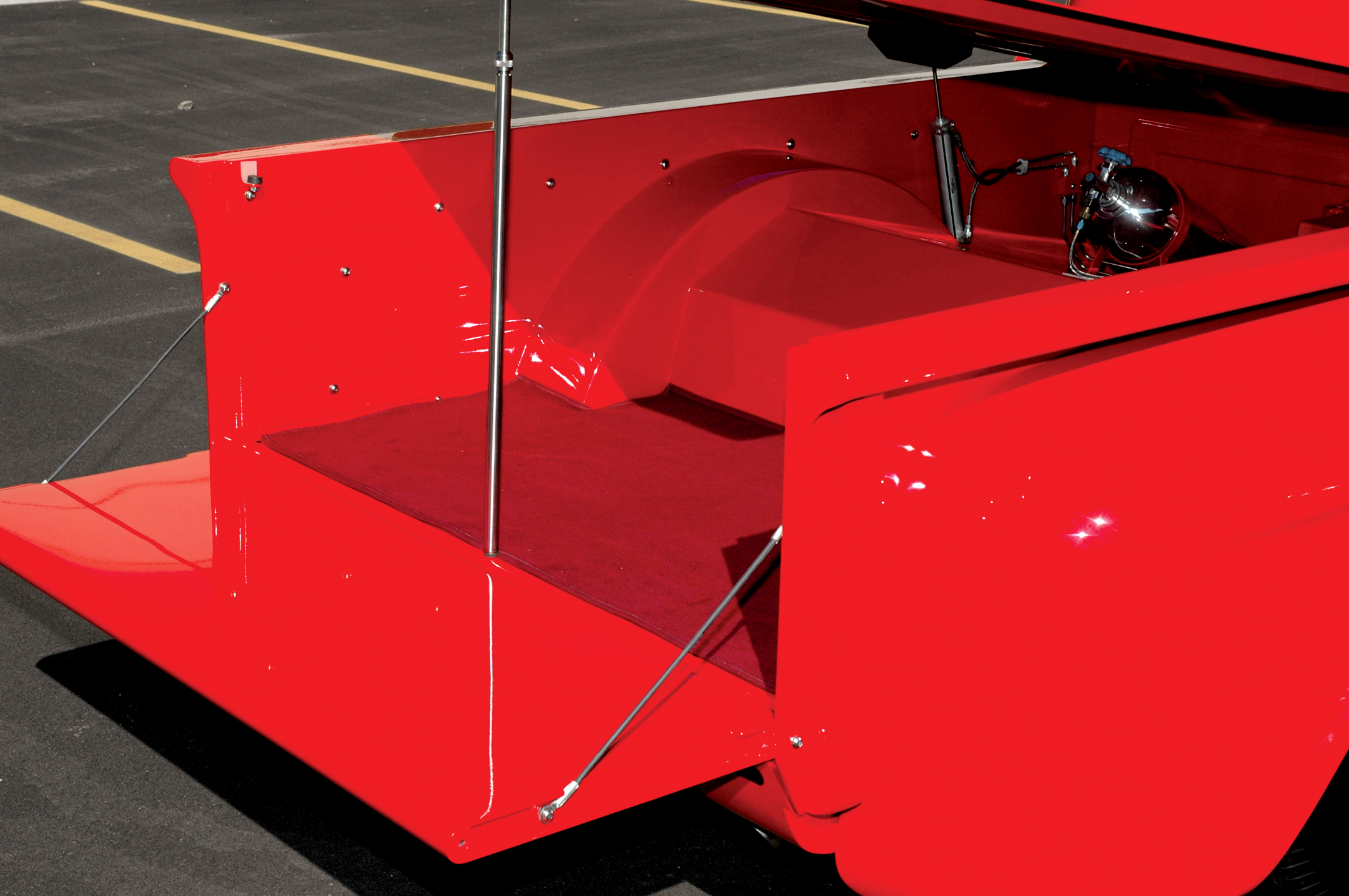
All handles and trim pieces were removed. The gas filler door was moved to a rear fender and the vent windows disappeared from the doors. Short also rounded the door corners, fabricated the smooth engine and inner fender panels and built the smooth radiused panels for the pickup bed. He made an aluminum hydraulically operated bed cover to add extra appeal to the back of the truck.
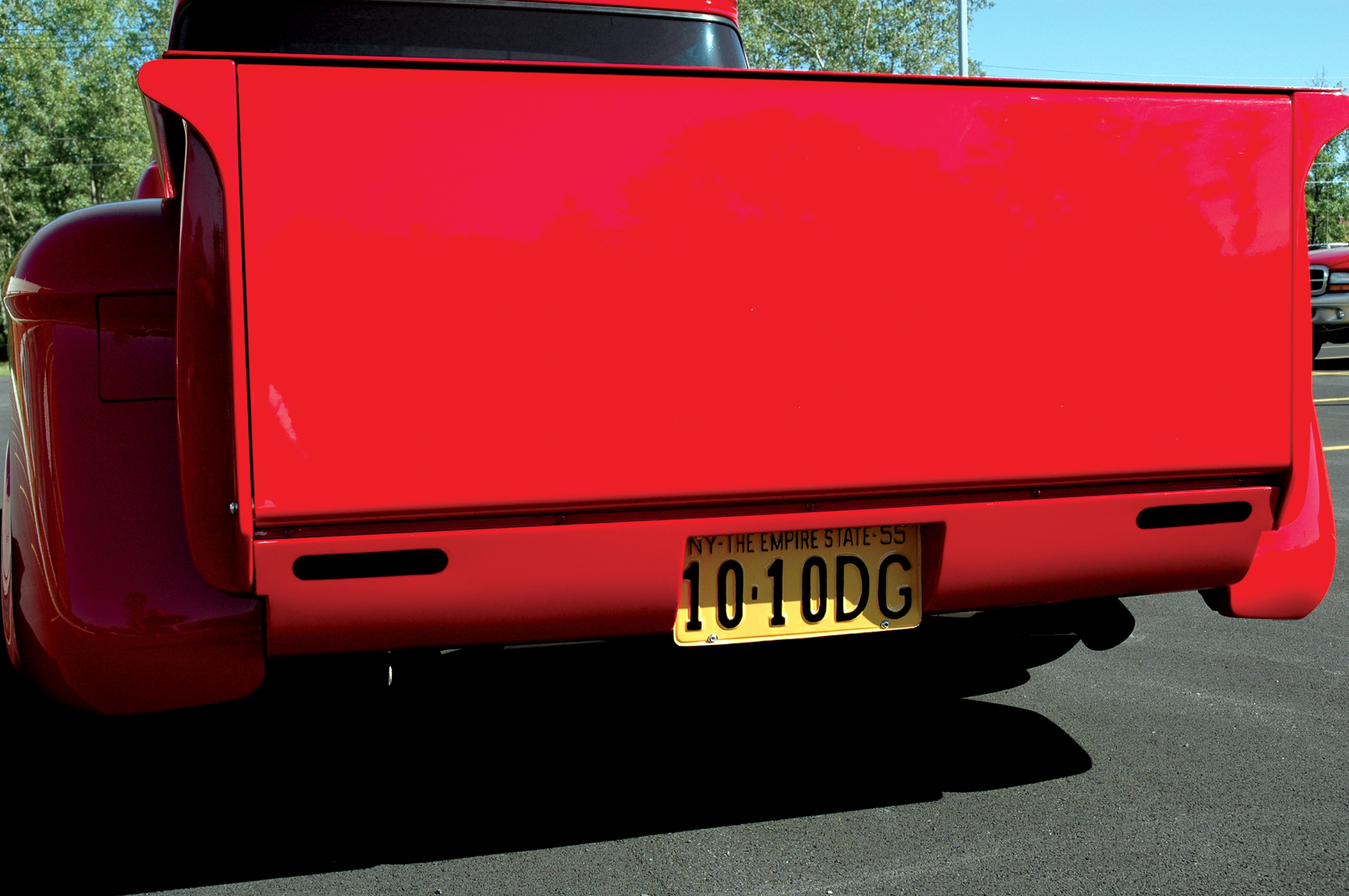
Short custom-built the grille from aluminum, mounted halogen headlights in the fenders and flush-mounted the taillights in a rolled rear pan. The 21-gallon gas tank was made from aluminum and relocated under the chassis. The front bumper was smoothed and brought in closer to the body to appear as if it was molded in.
Short selected a LeCarra steering wheel for the GM tilt-telescopic column and opted for a B&M shifter to change the gears. Auto Meter Ultra-Lite instruments were mounted in the smoothed dash, where air-conditioning outlets were unobtrusively installed. Short made special panels to conceal the switches that operate the air conditioning and Sony sound system.
Short’s friend, Carl Zellnor at Caveman Customs in Buffalo, New York, stitched the plush red leather covering the Eagle bucket seats and the maroon wool carpet. He also made custom armrests with door pulls and openers mounted in them. Door panels were done in red leather to complement the seats. Tinted glass was installed while Short was making the pedals for the truck.
PPG’s single-stage Hot Rod Red, squirted on by Short, makes the truck stand out in a crowd. American Racing Torq-Thrust II aluminum wheels are the only deviation from the smoothie red theme of the truck. Those are 15×6-inch rollers on the front wrapped with BFGoodrich 225/R15 rubber, while the 15×14-inch wheels in back are shod with Tyre International 15×18.5-inch grippers.
When we asked him if he would have done anything differently during the build, Short quickly said no, but then he grinned and said, “Well, maybe more motor.” He added, “People claim a hot rod takes about 2,000 hours to build. I can say it takes all of that and lots more. But, best of all, it’s a lot fun to drive this truck now that it’s finished, as it moves almost as fast as the tach.”