The Beginnings of a Race-Ready Roadster
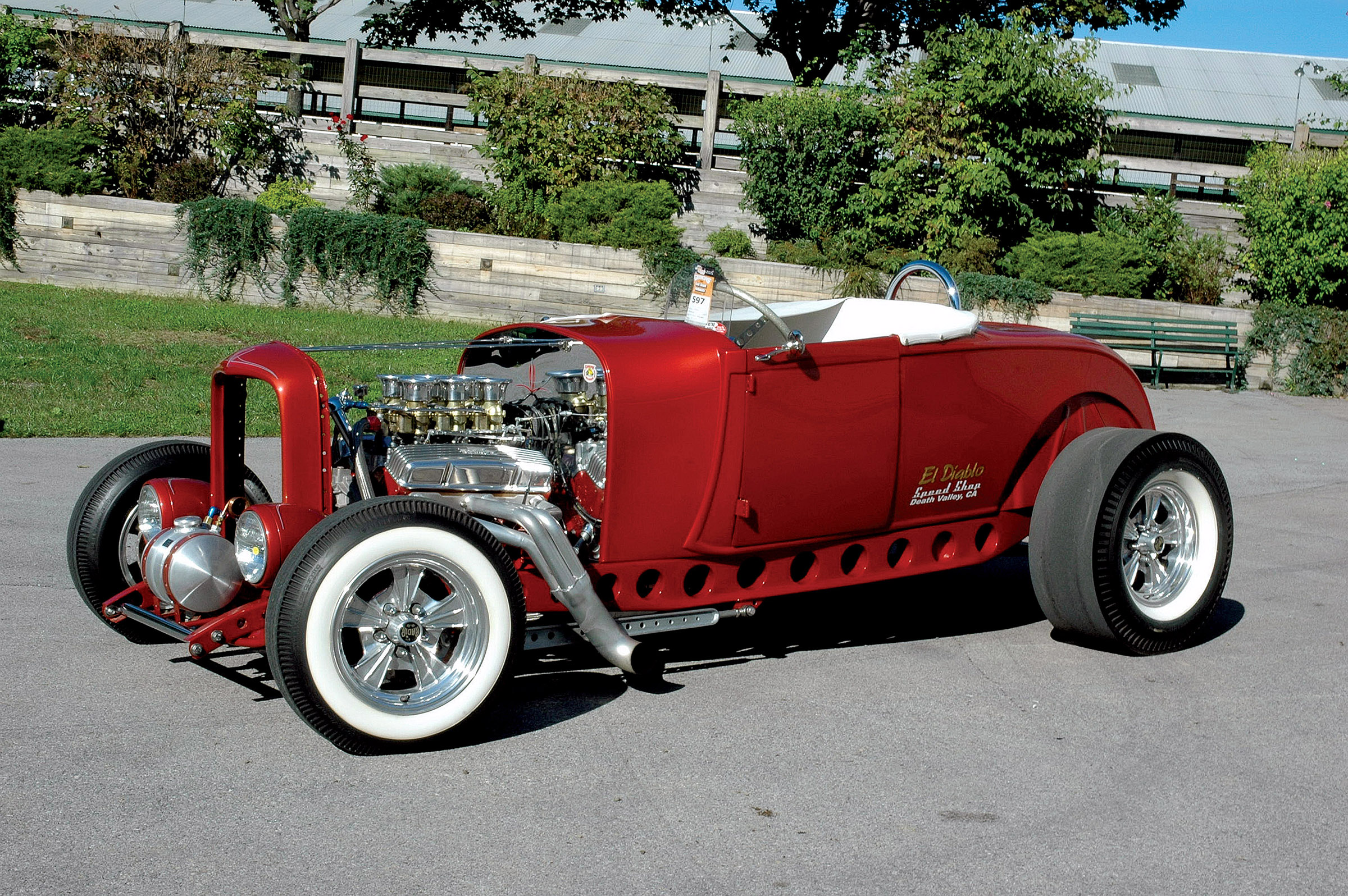
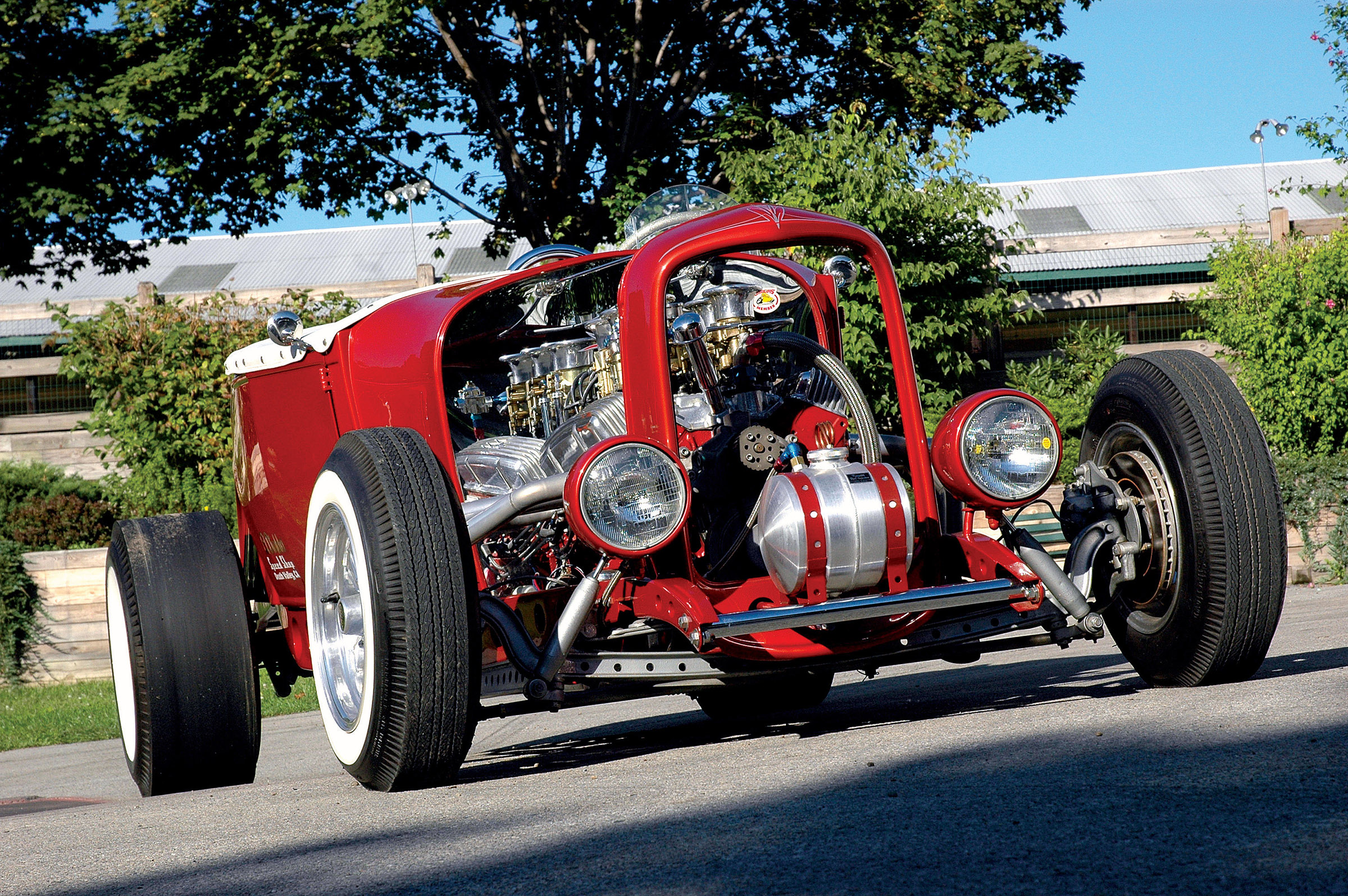
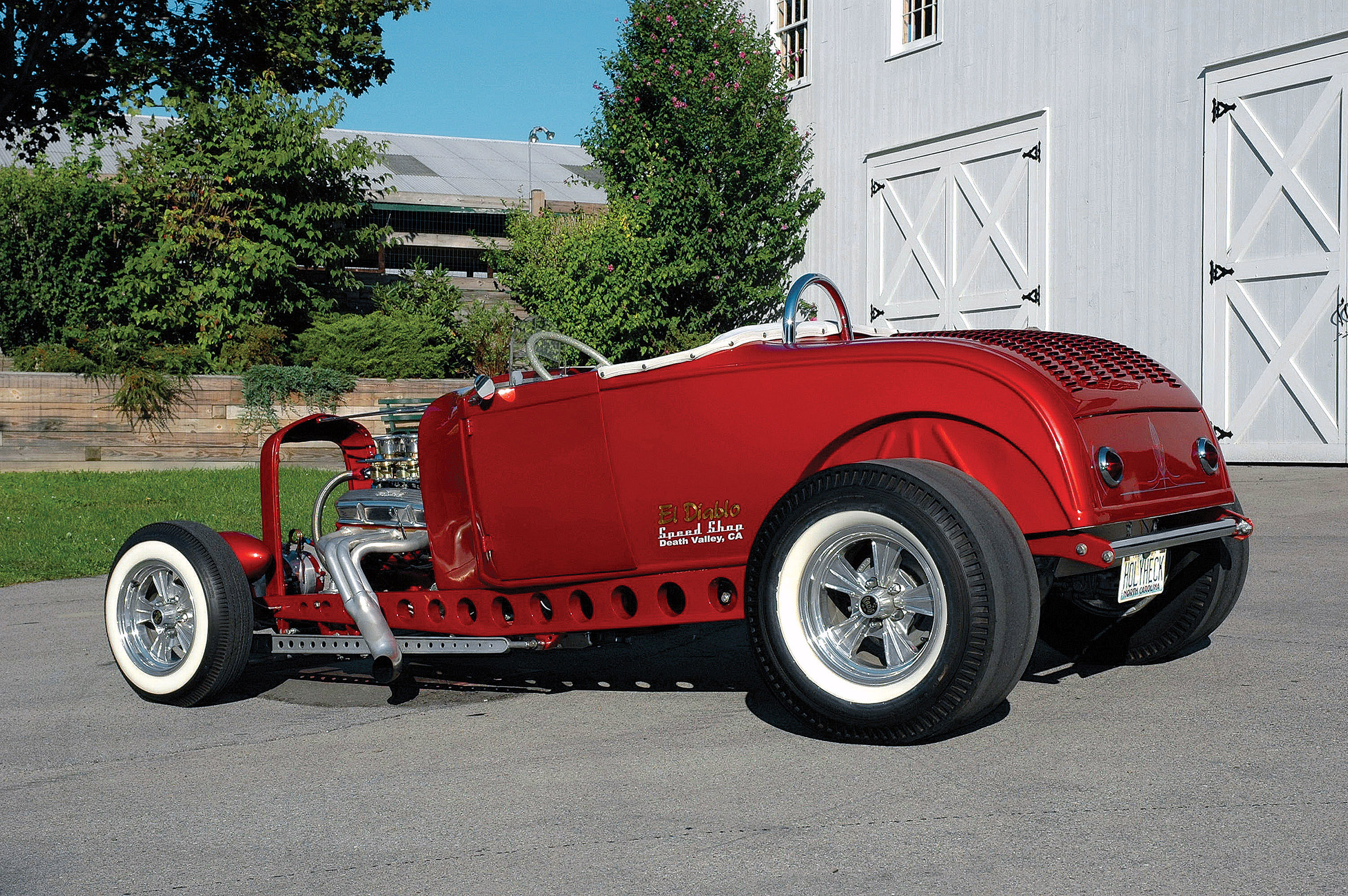
Oakley started the roadster with a set of ’32 Ford rails that were boxed and drilled to produce the race-ready appearance. He installed a Super Bell I-beam axle with a 3-inch drop, also drilled, on a Posies Super Slider spring. GM disc brakes with 11-inch rotors from Speedway Motors were mounted on Ford spindles. Oakley made the radius rods and drilled them to continue the competition theme. Out back, the suspension originated on a ’36 Ford and is now the platform for a Ford 8-inch rearend with 3:73 gears. Oakley made a four-link setup to augment the suspension and installed Monroe shocks on all four corners.
Engine and Performance Upgrades
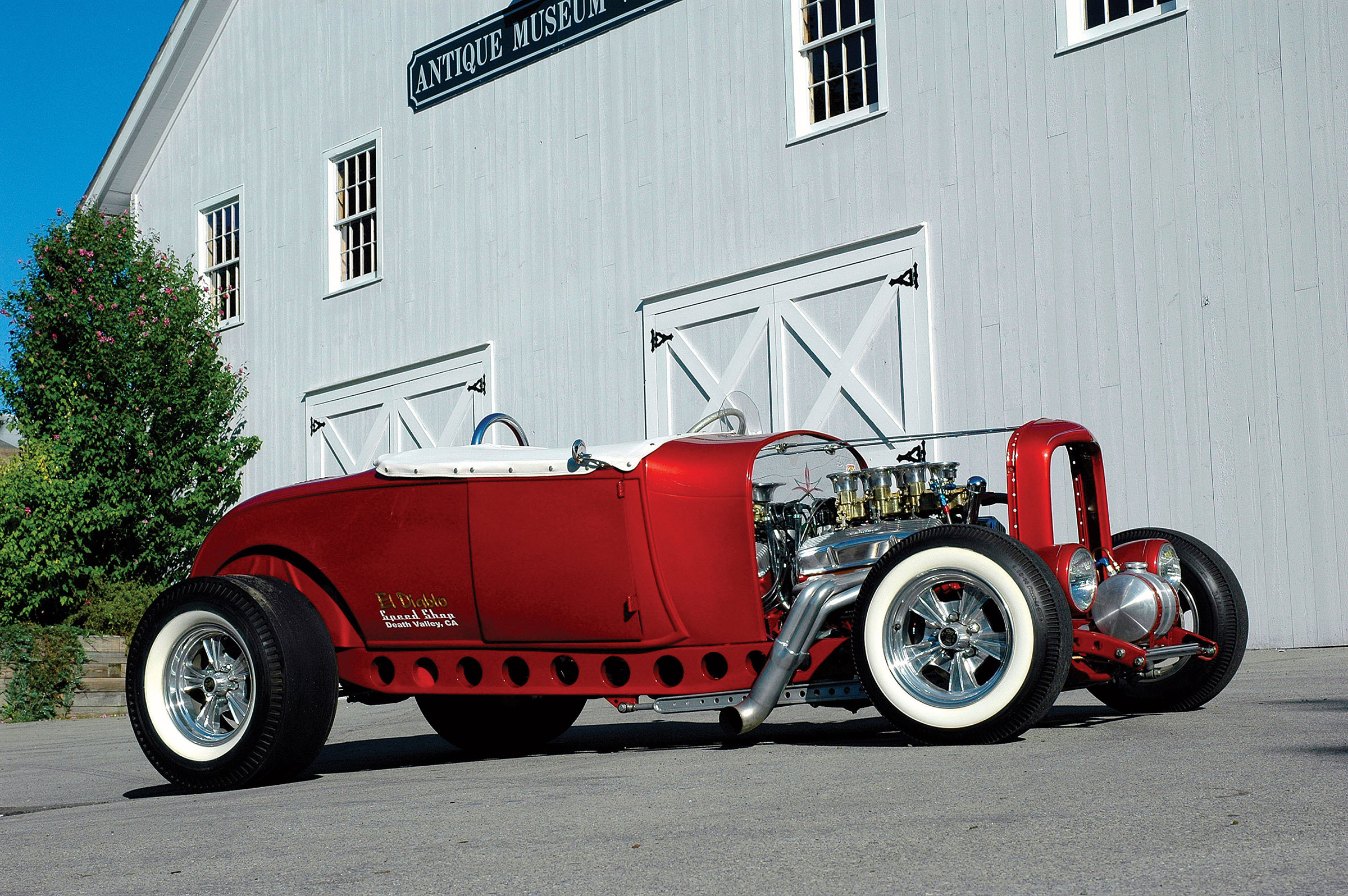
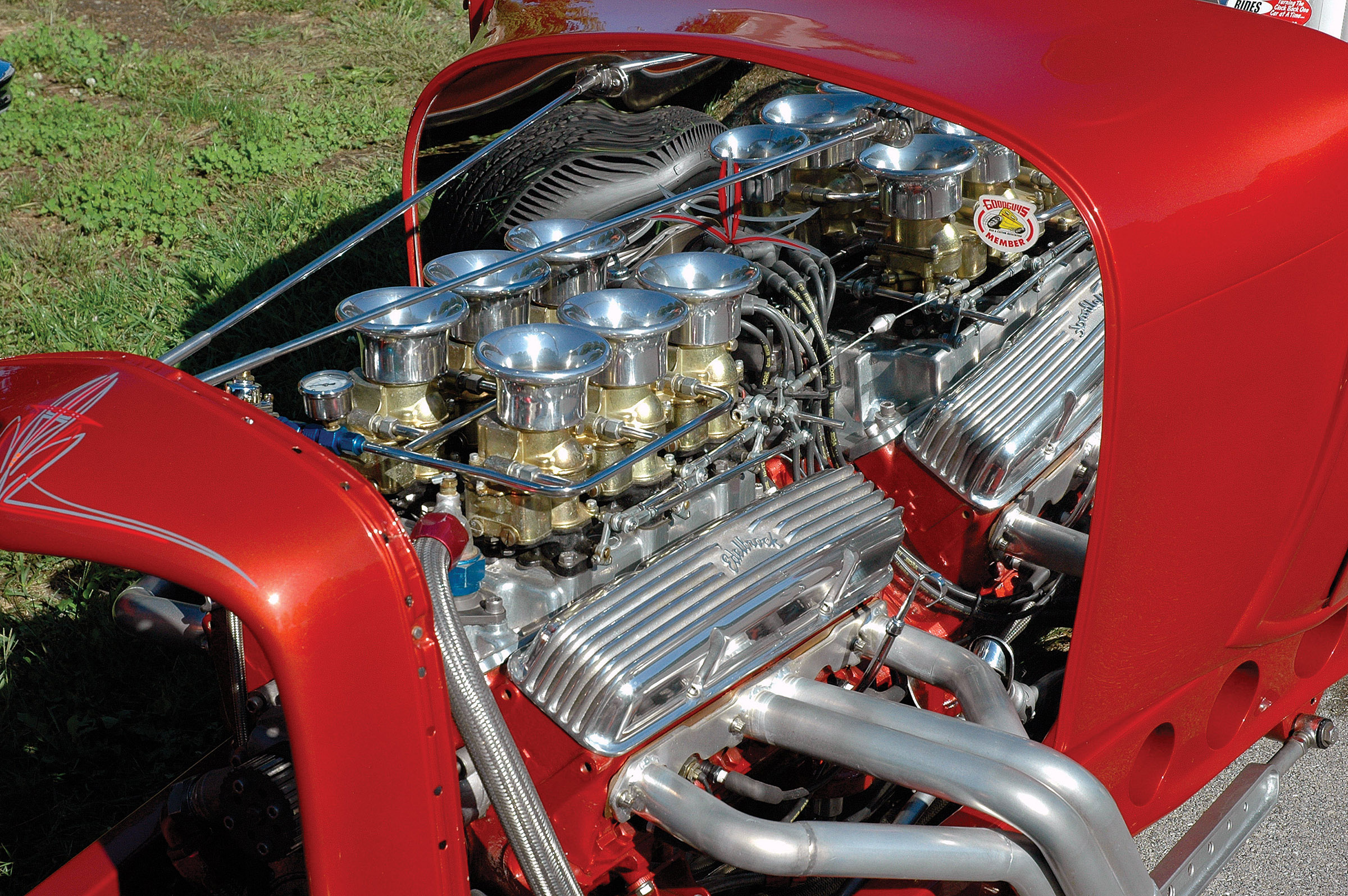
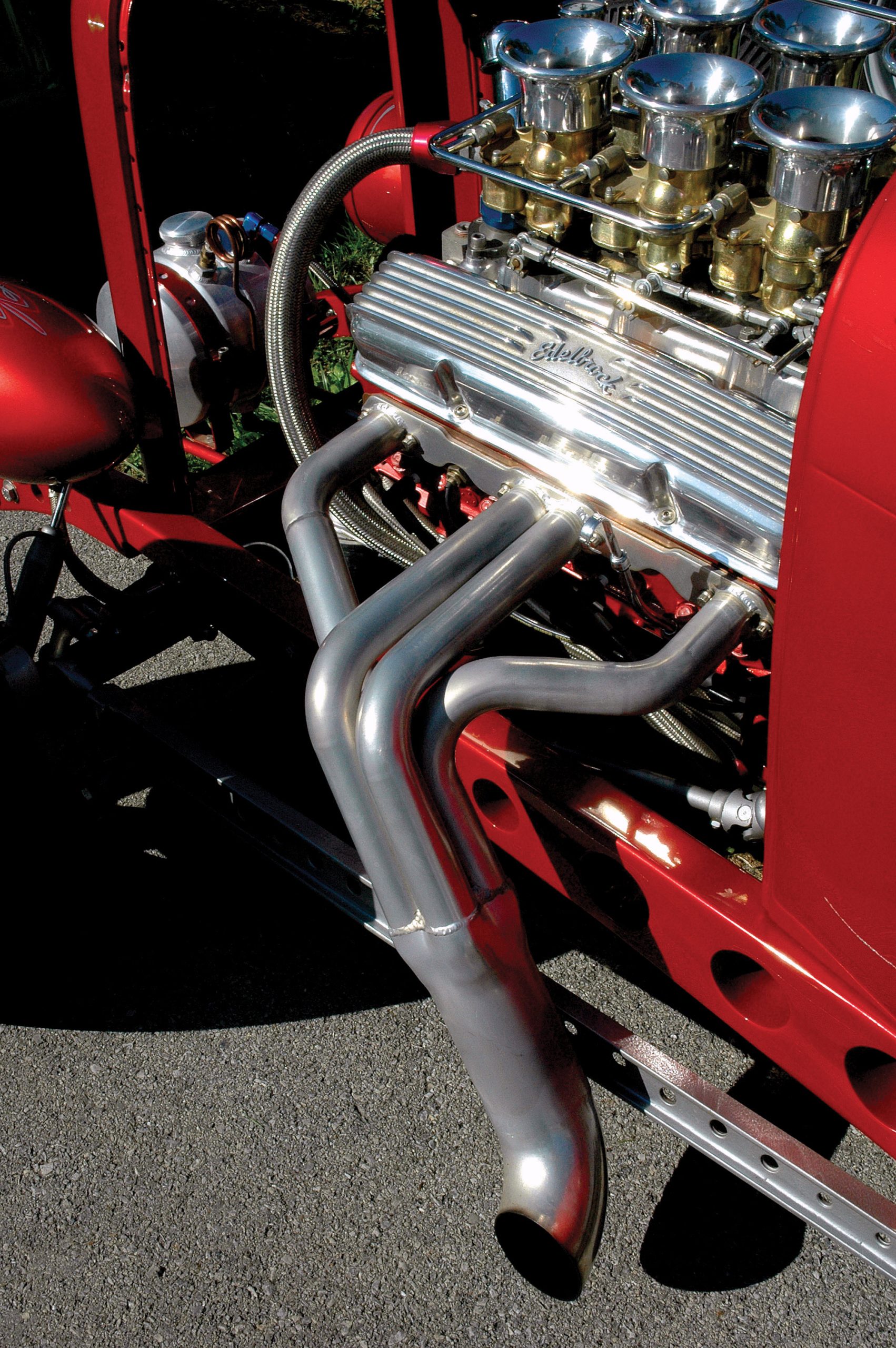
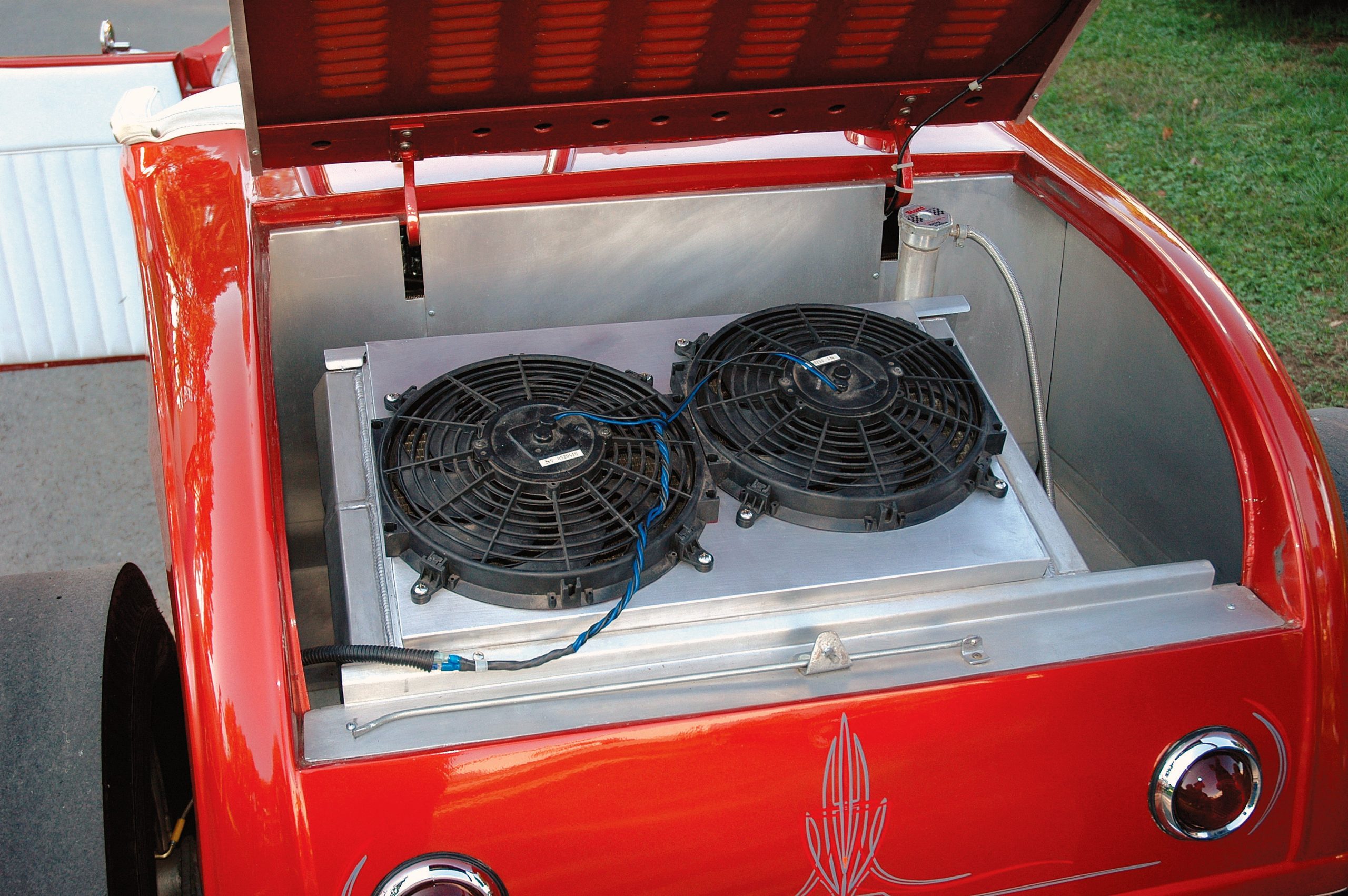
Powering Oakley’s roadster is a 307 Chevy engine with an Iskenderian cam, J.E. pistons, “pink” rods and Rhodes lifters. An Offenhauser intake serves as the support for the half-dozen carburetors, with specially made linkage. Keeping all of the carbs in top form keeps Oakley on his toes. The geardrive and alternator are from Speedway Motors, and a Stewart water pump pushes coolant through the engine. Finned aluminum Edelbrock valve covers, U.S. Stocker velocity tubes and an aluminum oil pan give the engine the requisite sparkle. Headers from a late-model dirt track car were modified to fit and assist in the attitude department. A PerTronix Performance ignition, assisted by Accel wires, provides the necessary spark. The engine is cooled by a cleverly mounted Fluidyne aluminum radiator in the trunk, perhaps the most challenging construction aspect of the project, topped with a pair of fans. Special ducting was made to route the coolant to the engine. Oakley used a GM 350 Turbo transmission with a JEGS 3,500 stall-speed converter to handle shifting duties, and he custom-built the driveshaft.
Body and Exterior Details
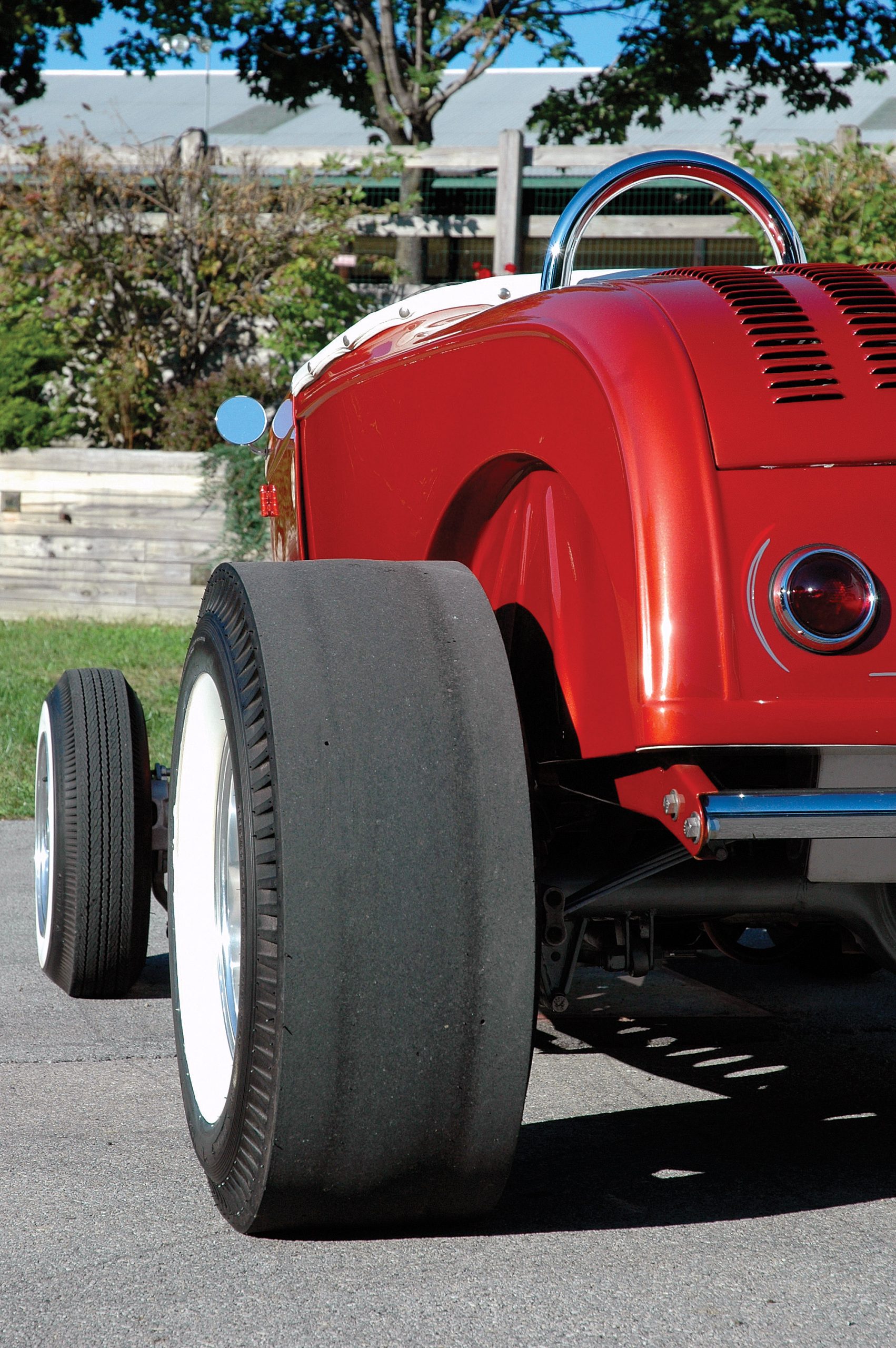
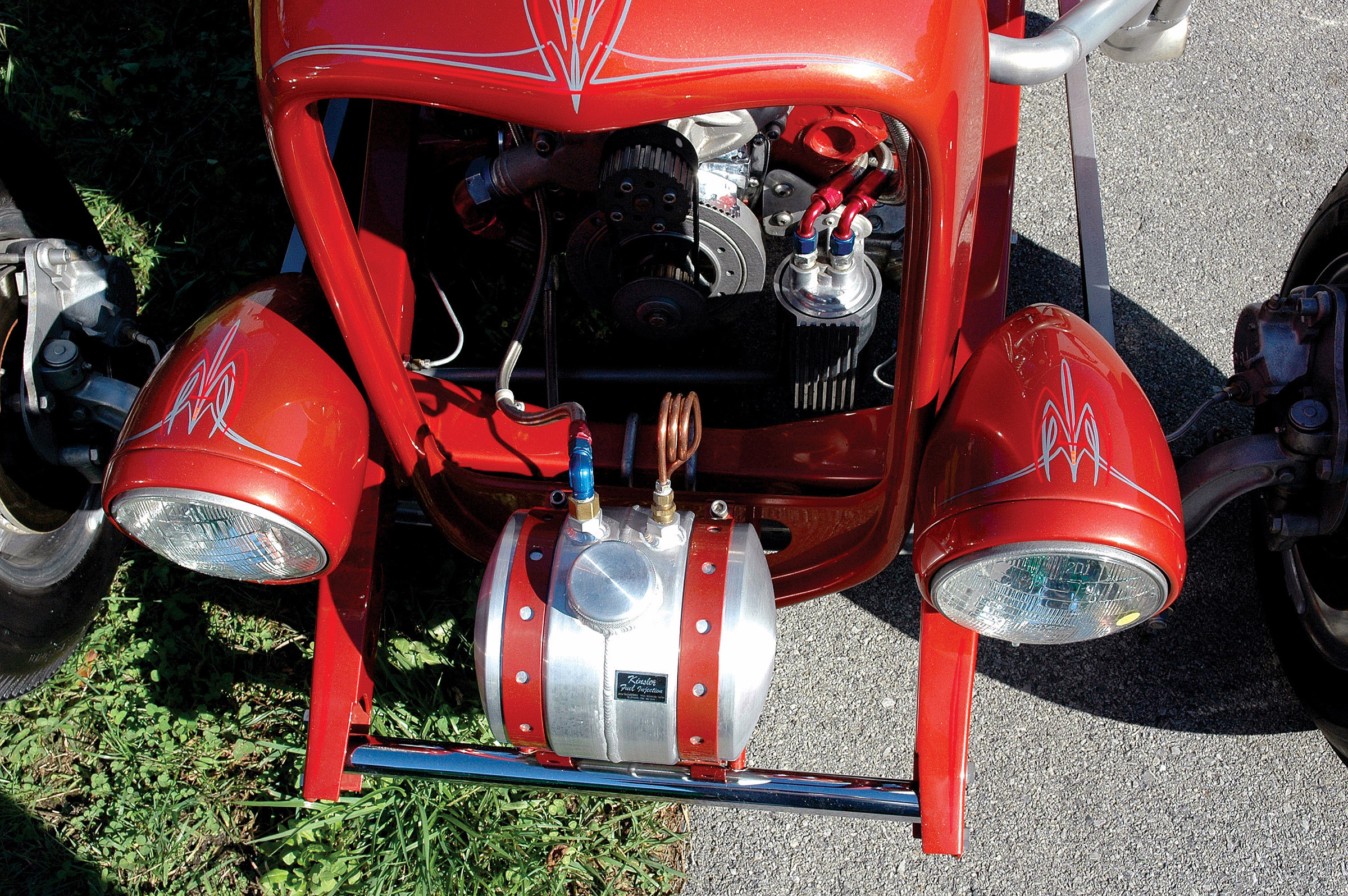
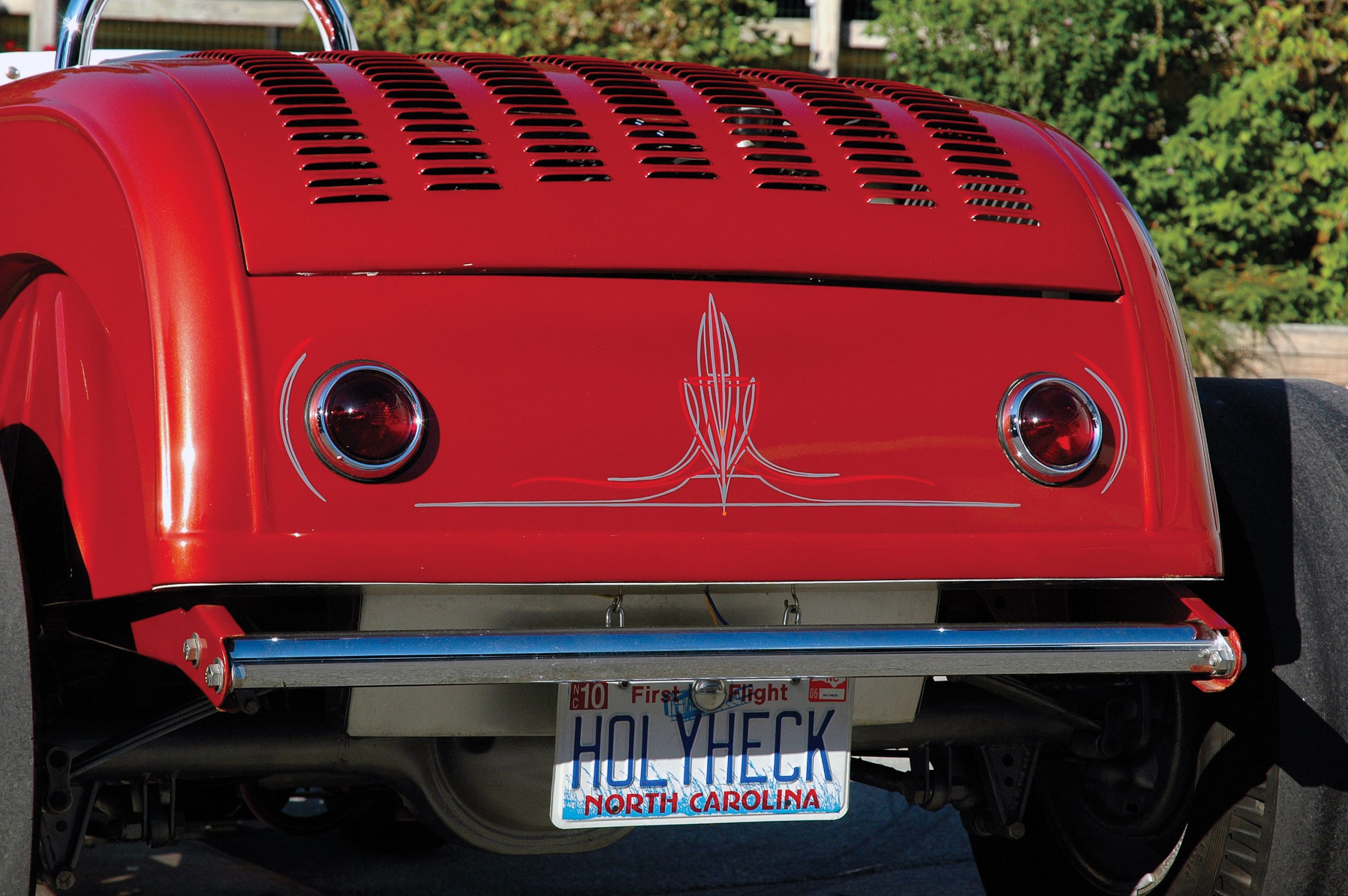
The ’29 Model A fiberglass body was obtained from Race Rods. Oakley and friend Don McNeill found a metal trunk lid and punched it full of louvers so that the unique cooling system could breathe properly. A portion of the underside has a pan made from aluminum. A Deuce grille shell was mounted between a pair of Guide headlights, and a pair of ’50 Pontiac taillights add to the car’s period look, making it street-legal despite the full-on race trim. The lack of a grille insert provides a nearly unobstructed view of the engine and supports the race appearance. The polished firewall mirrors the healthy engine. The chassis and ultra-straight body were covered with multiple coats of DuPont Prowler Orange in Oakley’s shop, and Harold Page of Winston-Salem, North Carolina, was called upon to do the striping. The Moon-style tank and lines are for appearance only, and a 15-gallon tank between the framerails supplies plenty of fuel required for cruising. Oakley made the door handles and mirrors. Graves Plating in Florence, Alabama, did all of the chromeplating. Radir wheels (14×6 inches in front and 15×8 inches in back) add to the rod’s period-perfect race image. BFG 560/14 tires are used up front while 10-inch Radir slicks are used out back for traction. The wide whitewalls really add to the nostalgic appearance.
Interior and Cockpit Design
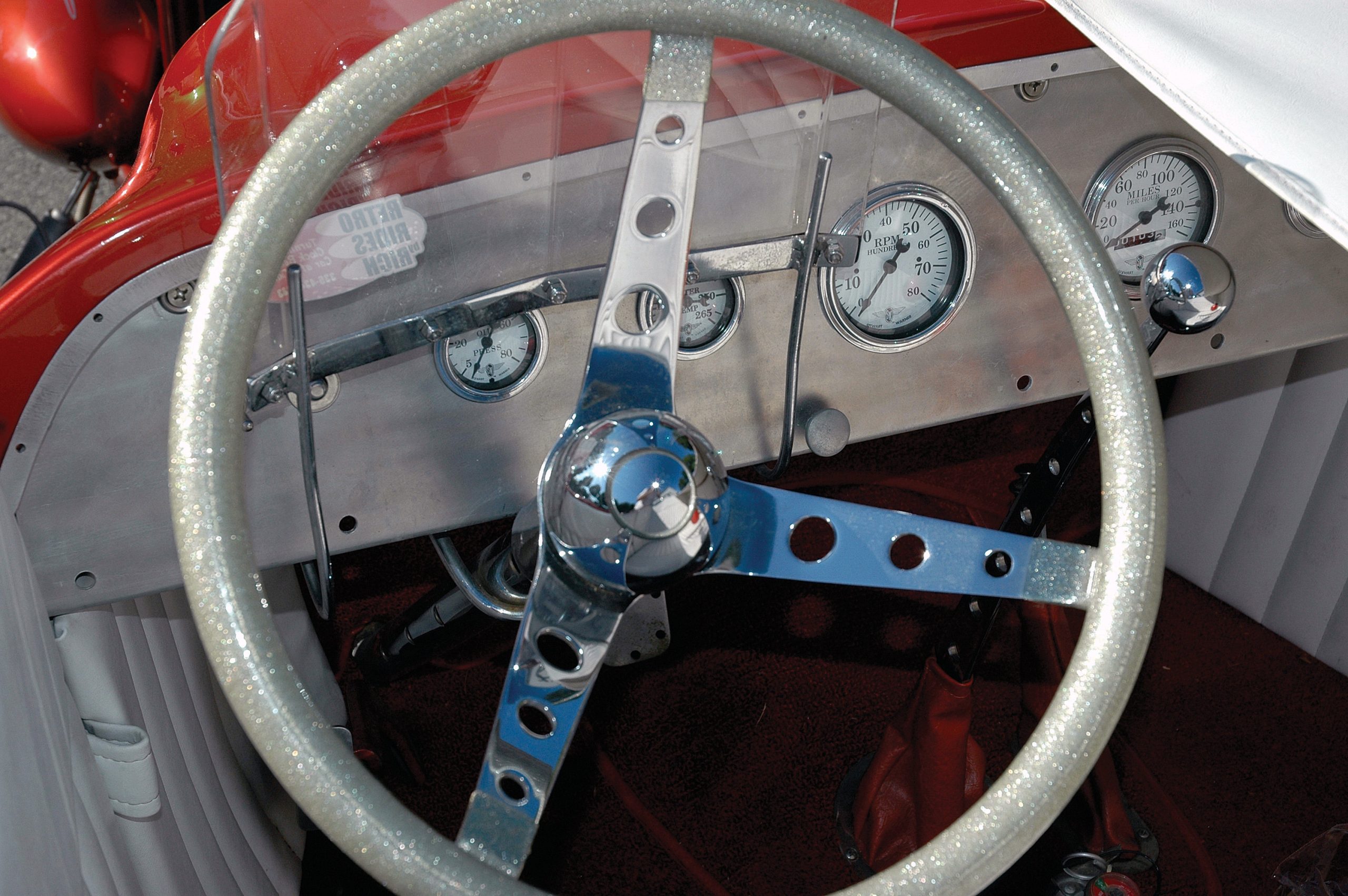
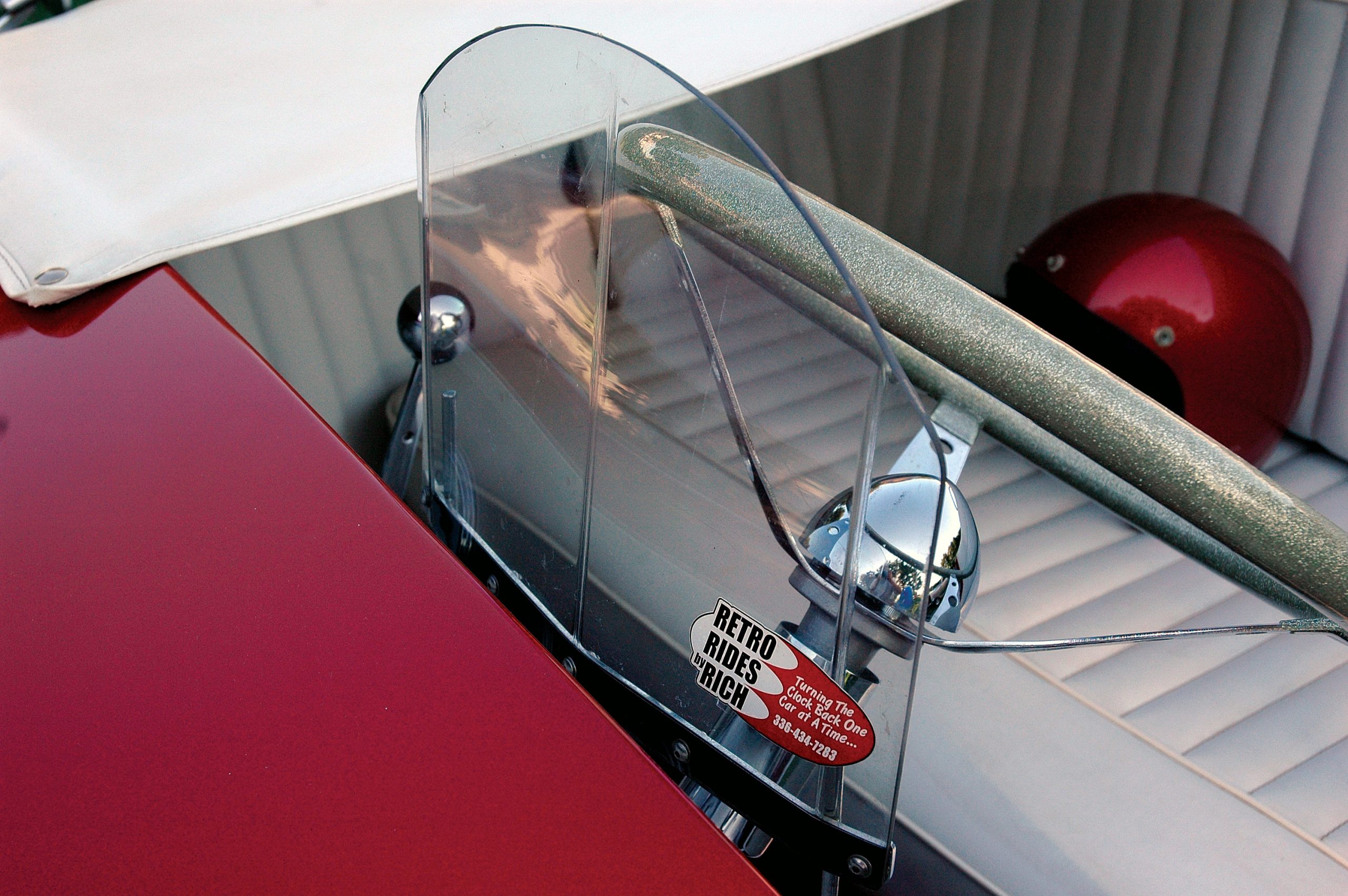
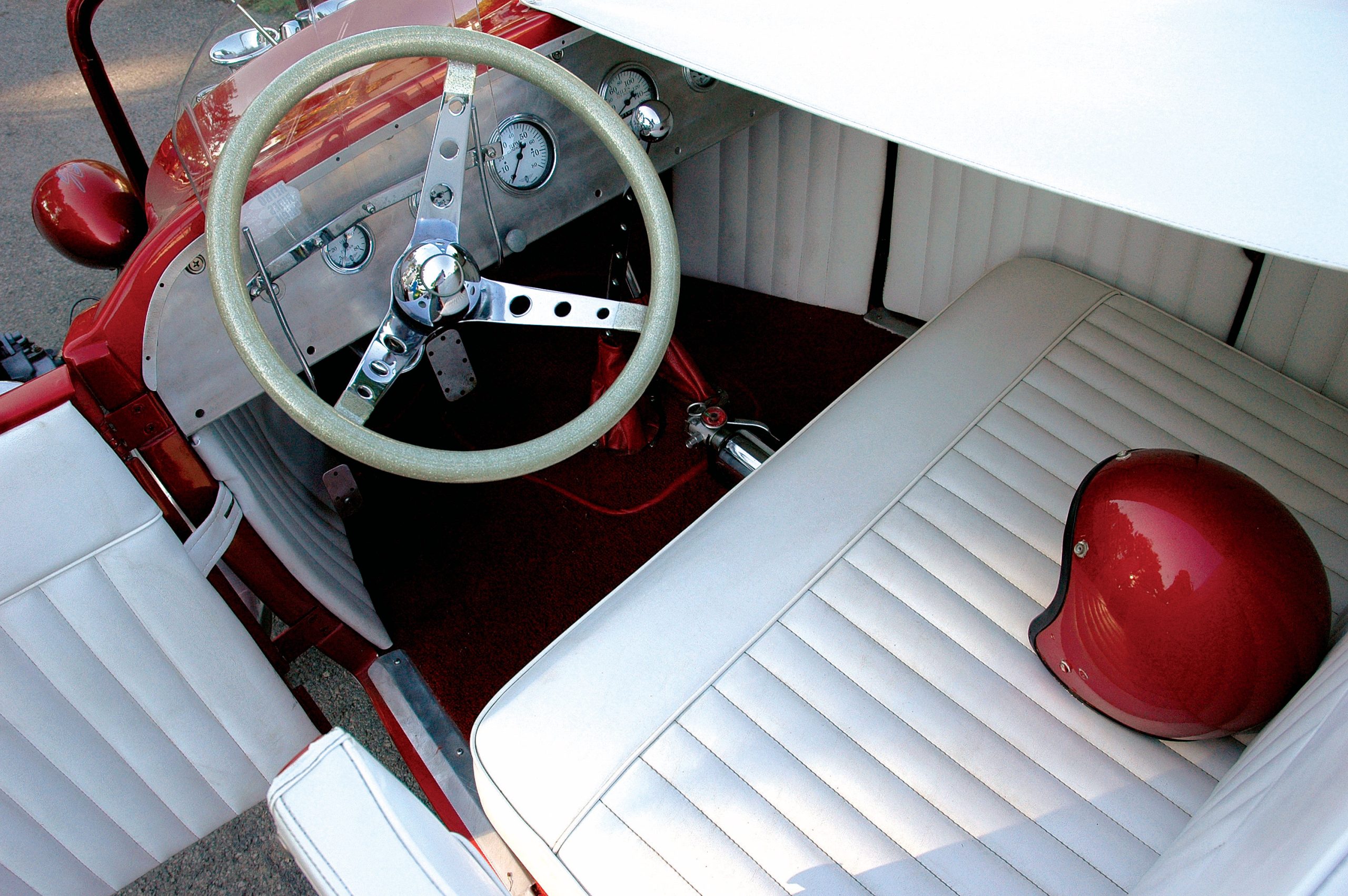
In the driving compartment, the theme is all business, as it is on the exterior. Stewart-Warner instruments are mounted in a custom-built aluminum dashboard. Oakley made the rollbar, pedals and shifter, and he even made the seat from spare pieces that he had in his shop. Sumner Upholstery in Thomasville, North Carolina, covered the seat and door panels with pleated white vinyl and finished the flooring with orange loop carpeting. Oakley fitted the tonneau cover to the body to cap off the drag car theme, and he built the small curved Lexan windshield, which provides a minimal amount of protection while driving.
Making a Statement on the Road
Oakley’s application to North Carolina for a “HOLY HELL” license plate was not approved, so he settled for the next best way to make his point. Actually, the car started out as a project that Oakley wanted to build for his wife, Susan, but it “got out of control,” he says. He resolved, though, to build her a tamer chopped sedan. The car turns heads wherever it is parked, particularly when Oakley turns the key to fire it up. That’s what it was built to do, and it certainly gets the attention it deserves.