



THE AUTO BUILDER
Featured

CHEVELLE MEMORIES
“If these four walls could only talk, what great stories they could tell” is an old adage that is certainly apropos from a historical perspective. In the context that we Americans have an ongoing love affair with the automobile, it could also be said that if a classic car could only talk, it could tell some pretty great stories as well!”

Blank Canvas
The longer we are in this business, the more we are certain that the one skill which is most important to know is how to paint. A custom painter can take nearly anything and turn it into a fine ride. Sure, those who can work on suspension or engines are able to take their specialty and turn it to their advantage, but no one modification makes more impact than a cool paint job. That is why guys such as Sam Spinelli, a custom painter for more than 12 years, can cruise around town in this 1990 Chevrolet C1500. Adorned with a killer basecoat and an amazing set of flames, it would be a show truck for the rest of us, but he simply describes the Chevy as his daily driver.

15 Tech Tips
I have been working as a marine tech for about five years now, and one thing I have learned is that you have to be somewhat of a contortionist to deal with some boats. I have learned many things that can make the job a lot less painful. If you find yourself in a situation with your own boat that seems impossible, try calling your local marine shop. Chances are that the experts there will be able to give you some advice to help you through the problem. Meanwhile, here are a few tips to help you out with some common problems you may run into.
Spotlighter
POPULAR READS
-
Product Spotlight: Bill Mitchell Products Aluminum LS Engine Block
-
PRODUCT SPOTLIGHT: 60-66 Chevy C10 Fresh Air Vent Block Off Plate
-
Product Spotlight: Pyramid Optimized Design Sequential Aurora Taillight for 1964½–1966 Mustang
-
PRODUCT SPOTLIGHT: Cam Covers for GEN/3 Coyote from Pyramid Optimized Design
A Bit of History
TheAutoBuilder Reference Chart: RPO L-35 Turbo-Jet 396
Author
Doug Marion
Words & Photography
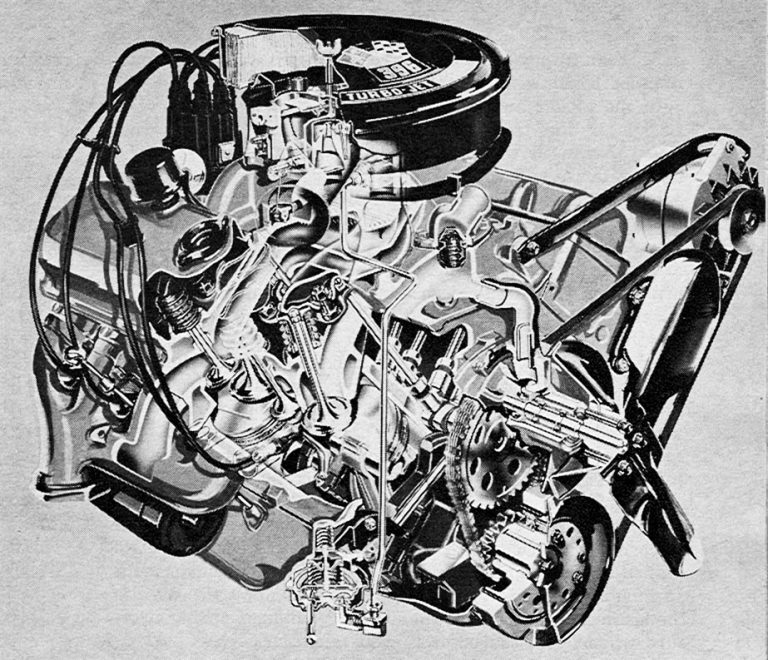
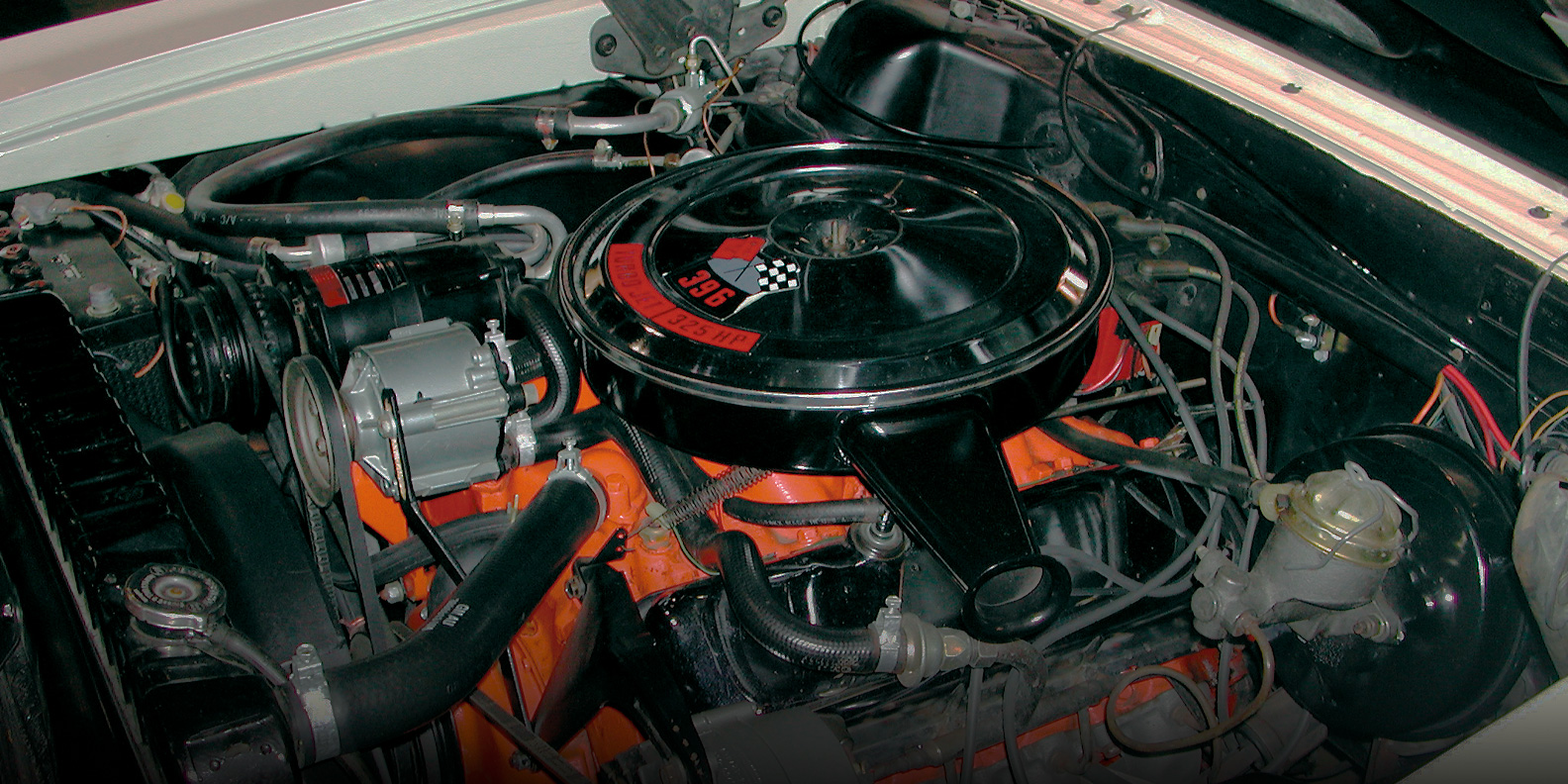
Hundreds of thousands of these “little” big-blocks were sold in the 1960s. In 1965-66 alone, over 150,000 came in the Impala, Biscayne and Bel Air big cars. Few paid attention to them because the hot engine of the day was the L-78 with high-rpm, rectangle-port heads. But when stock eliminator drag racers began flogging the L-35, it responded magnificently.
Its oval-intake ports were superior in the bottom end and mid-range, and made power all the way to 6,400 rpm. We personally know of a stock L-35 that produced 326 hp at 4,800 rpm. A factory L-88 race camshaft was installed, along with an Edelbrock Tarantula open-plenum intake manifold, 800cfm Holley carburetor, CD ignition and Hedman four-tube headers. With 36 degrees of timing, the engine then produced 502 hp at 6,000 rpm. With 40 degrees, it made 505 hp. With a Weiand Tunnel Ram and a pair of 600cfm Holley carbs, it made 535 hp. Powering a 3,200-pound Vega, the combination ran low 11s at 119 mph near sea level on a 75-degree day.
All things considered, the L-88 race cam is too big for the street, and so is the Tarantula. There are better cams today, as well as intake manifolds, that may come close to duplicating the 502 hp, but with much more usable and driveable bottom-end and mid-range power. The recommended rpm range is 2,500 to 6,000, with or without ported heads. Head work to the stock heads should net another 30 hp to 50 hp, depending upon the combination used. The combination that would extract the most power over the widest rpm range would be the optimum goal with this engine. The potential is obviously there.
Specifications
| Bore/Stroke: | 4.094 x 3.76 |
| Compression: | 10.25:1 |
| Max HP: | 325 hp at 4,800 rpm |
| Max Torque: | 410 hp at 3,200 rpm |
| Reciprocals | |
| Connecting Rod Clearance | |
| Bearings: | 0.0008 – 0.0029 |
| End Play: | 0.016 – 0.020 |
| Crankshaft End Play: | 0.0006 – 0.010 |
| Main Bearing Clearance | |
| #1 and #2 | 0.0010 – 0.0022 |
| #3 and #4 | 0.0013 – 0.0025 |
| #5 | 0.0015 – 0.0031 |
| Piston Weight: | 24.80 ounces |
| Wall Clearance: | 0.0305 – 0.0375 |
| Pin Clearance: | 0.00025 – 0.00035 |
| Ring End Gap | |
| Compression Ring: | 0.010 – 0.020 |
| Oil Ring: | 0.010 – 0.030 |
| Valve Lift: | 0.3983 inches |
| Valve Spring Specs/Intake & Exhaust | |
| 94-106 lbs at 1.88 inches (closed) | |
| 303-327 lbs at 1.38 inches (open) | |
| Valve Head Diameter | |
| Intake: | 2.07-inch |
| Exhaust: | 1.725-inch |
| Oil Pressure: 50-75 psi at 2,000 rpm | |
| Delco Distributor: | #1111169 |
| Torque Specifications | |
| Connecting Rods: | 50 lb-ft |
| 2-Bolt Main Bearing Caps: | 95 lb-ft |
| Cylinder Head Bolts: | 80 lb-ft |
| Intake Manifold: | 30 lb-ft |
| Spark Plugs: | 25 lb-ft |
| Carburation | |
| Standard Transmission Q-jet 7028211 | |
| Automatic Transmission Q-jet 7018210 | |
| Primaries: | 1.38 inches diameter |
| Secondaries: | 2.25 inches diameter |
| Spark Plugs: | AC43N or equivalent |