The automotive performance world has lost one of its true giants.
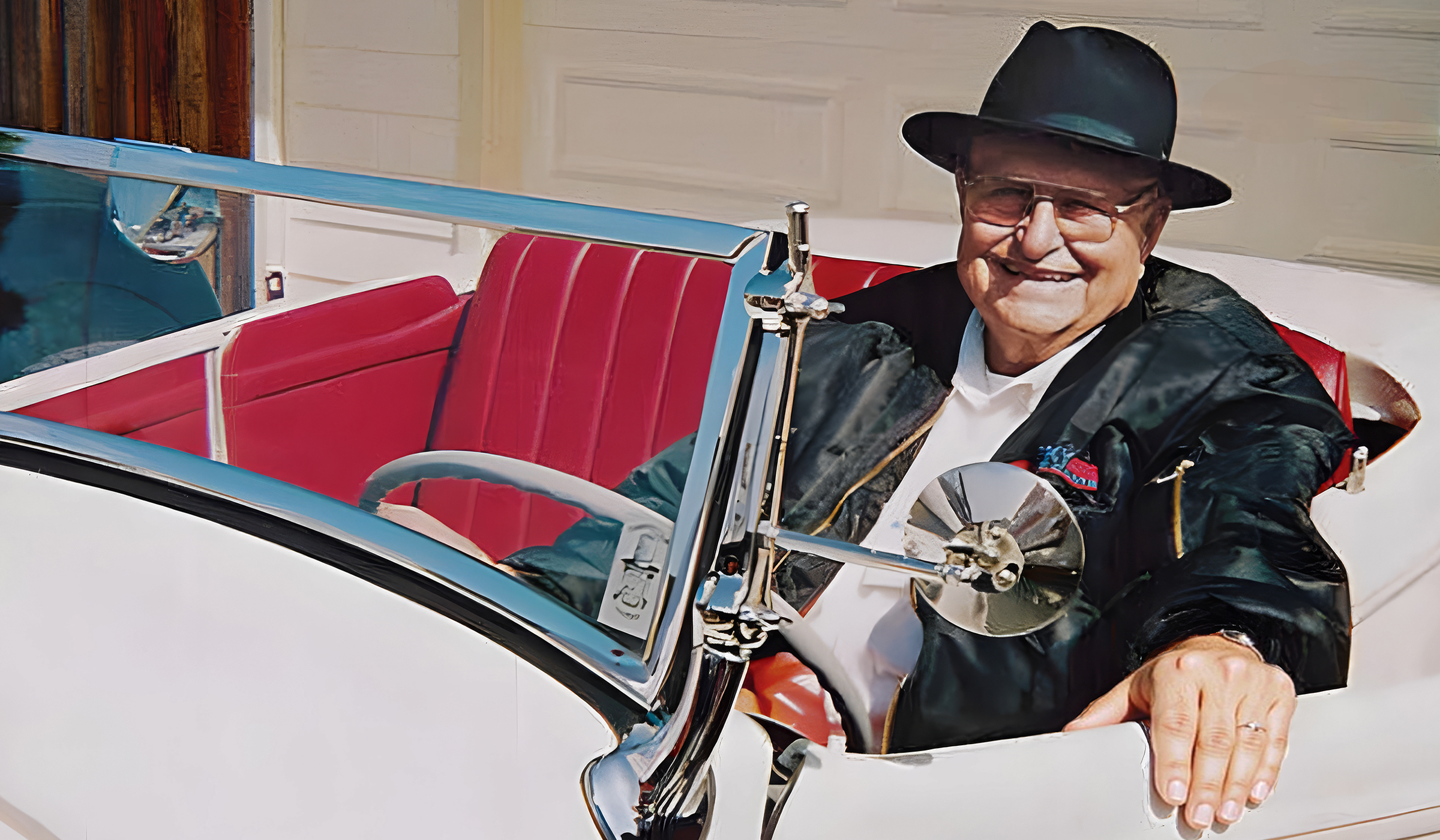
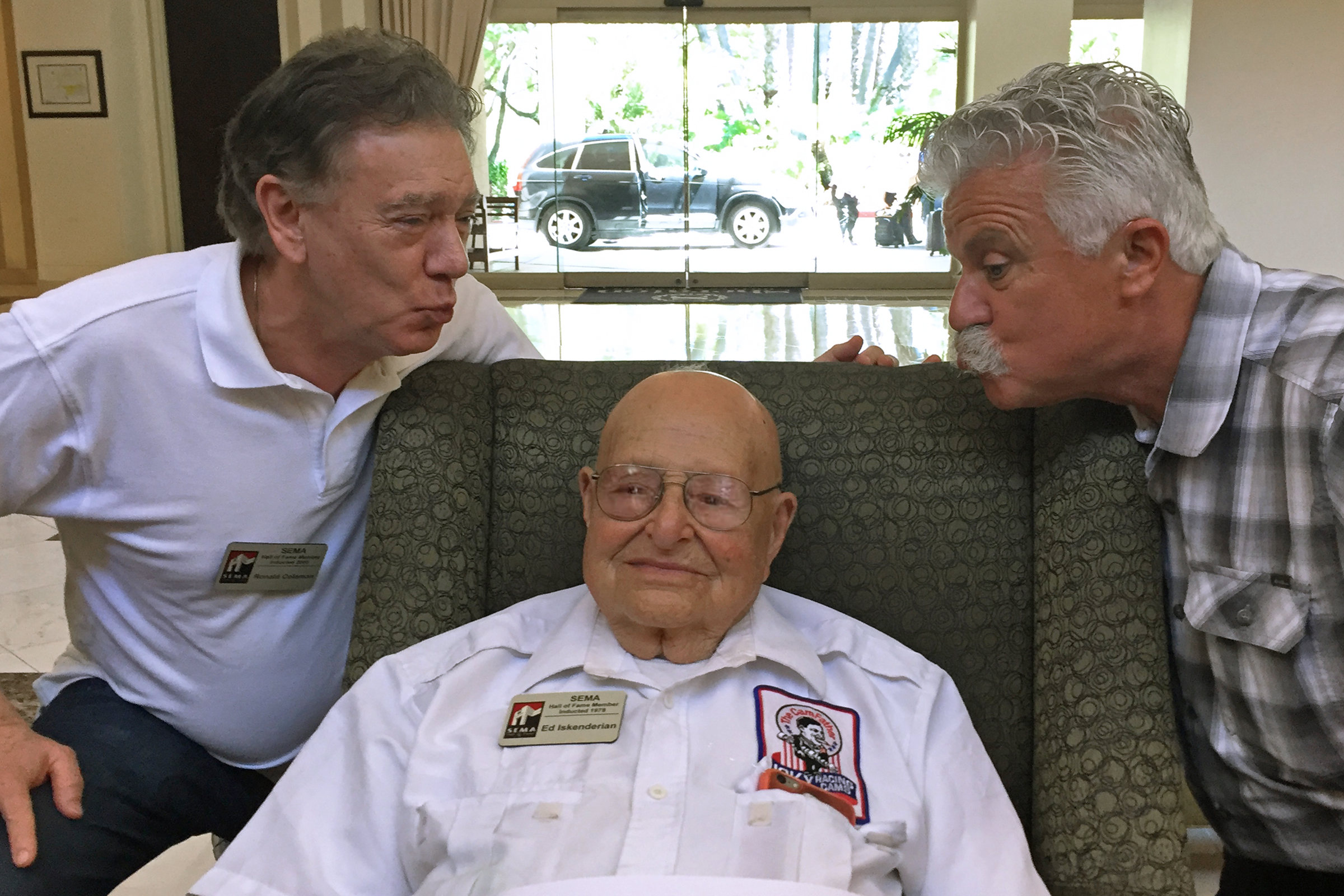
Ed “Isky” Iskenderian—engine builder, innovator, mentor, philanthropist, and founding father of the modern aftermarket—passed away on February 4, 2026, at the age of 104. Known around the globe as The Camfather, Isky leaves behind a legacy so deeply woven into hot rodding and motorsports that it is impossible to imagine the industry without his fingerprints on it.
He wasn’t just part of automotive history.
He was automotive history.
From Immigrant Roots to American Icon
Born on July 10, 1921, in Los Angeles to Armenian immigrants who had survived displacement and hardship, Ed grew up with a deep respect for craftsmanship, perseverance, and honest work. During the Great Depression, resourcefulness wasn’t a virtue—it was survival. Young Ed learned early how to fix, modify, and build using whatever materials were available, driven by an instinctive curiosity about how machines worked.
That curiosity became his compass for life.
Southern California in the 1930s and ’40s was fertile ground for experimentation, and Ed found his calling on the dry lakes, where speed wasn’t regulated by rulebooks but by courage, ingenuity, and mechanical truth. Long before data logging and computer modeling, Ed relied on feel, observation, and a rare mechanical intuition that allowed him to see possibilities others missed.
The Camshaft That Changed Everything
After serving in World War II with the U.S. Army Air Forces, Ed returned home to a rapidly growing hot rodding scene—and a glaring problem. Performance camshafts were inconsistent, unreliable, and limiting the potential of engines that were begging to go faster.
So Ed did what he always did.
He built his own solution.
Using war-surplus equipment, he converted a cylindrical grinder into a cam-grinding machine and began experimenting relentlessly. In 1946, Isky Racing Cams was born. Soon followed innovations that reshaped motorsports: the legendary 5-Cycle cam, hard-facing techniques, matched valvetrain systems, roller lifters, anti-pump-up hydraulics, and high-rev valve springs that allowed engines to live where others failed.
Engines equipped with Isky cams didn’t just make power—they lasted. Racers noticed. Records fell. Word spread.
A small-block Chevy running one of Ed’s cams became the first to exceed one horsepower per cubic inch. It was a line in the sand—and the industry followed.
More Than Horsepower
Ed’s influence extended far beyond the camshaft.
He understood something fundamental about racing culture: innovation needed community to survive. He pioneered contingency programs, wearable advertising through T-shirts, and bold, humorous marketing like the famous ISKYtoons, created with cartoonist Pete Millar. These weren’t gimmicks—they were culture-shaping ideas that are now standard practice across motorsports.
Racers like Don Garlits, Don Prudhomme, Mickey Thompson, and countless others relied on Isky components at critical moments in their careers. Garlits himself recalled receiving a personal call from Ed informing him he’d just set a new world speed record—one of many examples of Isky’s hands-on, personal connection to the racers he supported.
Yet for all the records and recognition, Ed remained humble. He was never boastful, never larger than the work itself. Those who spent time with him remember a man more interested in listening than lecturing, more curious than commanding.
The Birth of SEMA and a Unified Performance Industry
In 1963, as performance manufacturers faced rapid growth and increasing regulatory pressure, Ed helped unite a fragmented hobby into a professional voice. Alongside fellow pioneers, he co-founded the Speed Equipment Manufacturers Association, serving as its first president—the role equivalent to today’s Chairman.
SEMA was born as an all-volunteer organization, and Ed’s leadership helped transform hot rodding into a legitimate, organized, global industry—one that today represents more than $52 billion worldwide.
Mike Spagnola, President and CEO of SEMA and PRI, captured it perfectly:
“Ed Iskenderian was not just a founder of SEMA; he was the soul of it. He turned a hobby into an industry and a community into a movement… We are all driving in the tracks he laid down.”
Ed was inducted into the SEMA Hall of Fame in 1978 and the inaugural PRI Hall of Fame class in 2024, yet accolades were never his motivation. His satisfaction came from seeing others succeed.
A Teacher, a Friend, a Gentleman
Those closest to Ed speak not just of his brilliance, but his generosity.
He mentored young builders. He raised hundreds of thousands of dollars for children’s charities. He adopted and supported an impoverished village in Baja California simply because he could. He helped competitors, shared knowledge freely, and believed deeply that progress came from lifting others up—not holding secrets close.
Even into his centenarian years, Ed still attended events, seminars, and shop days, often stealing the show with stories that bridged decades of racing history. His memory was legendary. His curiosity never faded.
When asked how he stayed sharp at 100, Ed shrugged and smiled.
“It kind of snuck up on me.”
The End of an Era, Not the End of a Legacy
Ed Iskenderian passed away as the last surviving founding member of SEMA, closing a chapter in automotive history that will never be repeated. But his legacy is alive every time an engine fires with an Isky cam at its core. It lives in the builders who chase precision, the racers who chase speed, and the industry professionals who believe collaboration matters.
Isky Racing Cams continues under the guidance of the next generation, carrying forward the standards Ed set—innovation, integrity, and an unrelenting pursuit of improvement.
Godspeed, Camfather
Ed didn’t just help hot rodding grow.
He gave it structure, legitimacy, and soul.
He showed us that greatness is built with patience, curiosity, and the courage to try something unproven. That craftsmanship matters. That helping others succeed is the highest form of success.
As we say goodbye, we don’t just mourn a legend—we thank him.
Thank you for the engines made faster.
Thank you for the industry made stronger.
Thank you for the path you laid for all of us to follow.
Godspeed, Ed “Isky” Iskenderian.
Your legacy will always run at full throttle. 🏁