





THE AUTO BUILDER
Menu
Featured

15 Tech Tips
I have been working as a marine tech for about five years now, and one thing I have learned is that you have to be somewhat of a contortionist to deal with some boats. I have learned many things that can make the job a lot less painful. If you find yourself in a situation with your own boat that seems impossible, try calling your local marine shop. Chances are that the experts there will be able to give you some advice to help you through the problem. Meanwhile, here are a few tips to help you out with some common problems you may run into.
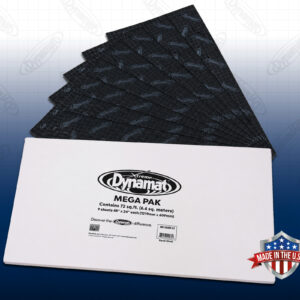
PRODUCT SPOTLIGHT: Dynamat Xtreme Mega Pak
You can spend serious money on the engine, paint, upholstery and audio system—but if the finished vehicle still rattles, buzzes and sounds like an empty drum, it isn’t really finished. The Dynamat Xtreme Mega Pak is the company’s largest pack of Dynamat Xtreme, the industry-leading sound-deadening material it introduced in 1989. Perfect for one complete build or multiple smaller projects, the Mega Pak includes nine oversized 24-by-48-inch sheets for a total of 72 square feet of coverage.
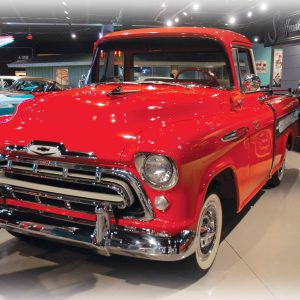
The Trucks Of ’57 Heaven
We heard of the Glenn Patch Collection a couple of years ago from a friend who had visited Patch’s warehouse in Scottsdale, Arizona. We were told of the quality of the restorations, as well as the variety of different cars, but the thing that intrigued us most was the fact that the entire collection consisted of cars and trucks manufactured in 1957.



Spotlighter
POPULAR READS
-
The Auto Builder’s Hottest Product Picks from The Triple Crown of Rodding 2026
-
Product Spotlight: Bill Mitchell Products Aluminum LS Engine Block
-
PRODUCT SPOTLIGHT: 60-66 Chevy C10 Fresh Air Vent Block Off Plate
-
Product Spotlight: Pyramid Optimized Design Sequential Aurora Taillight for 1964½–1966 Mustang
SPRING TRAINING
Installing Posies’ ’33-’34 Ford Super Slide Spring Kit
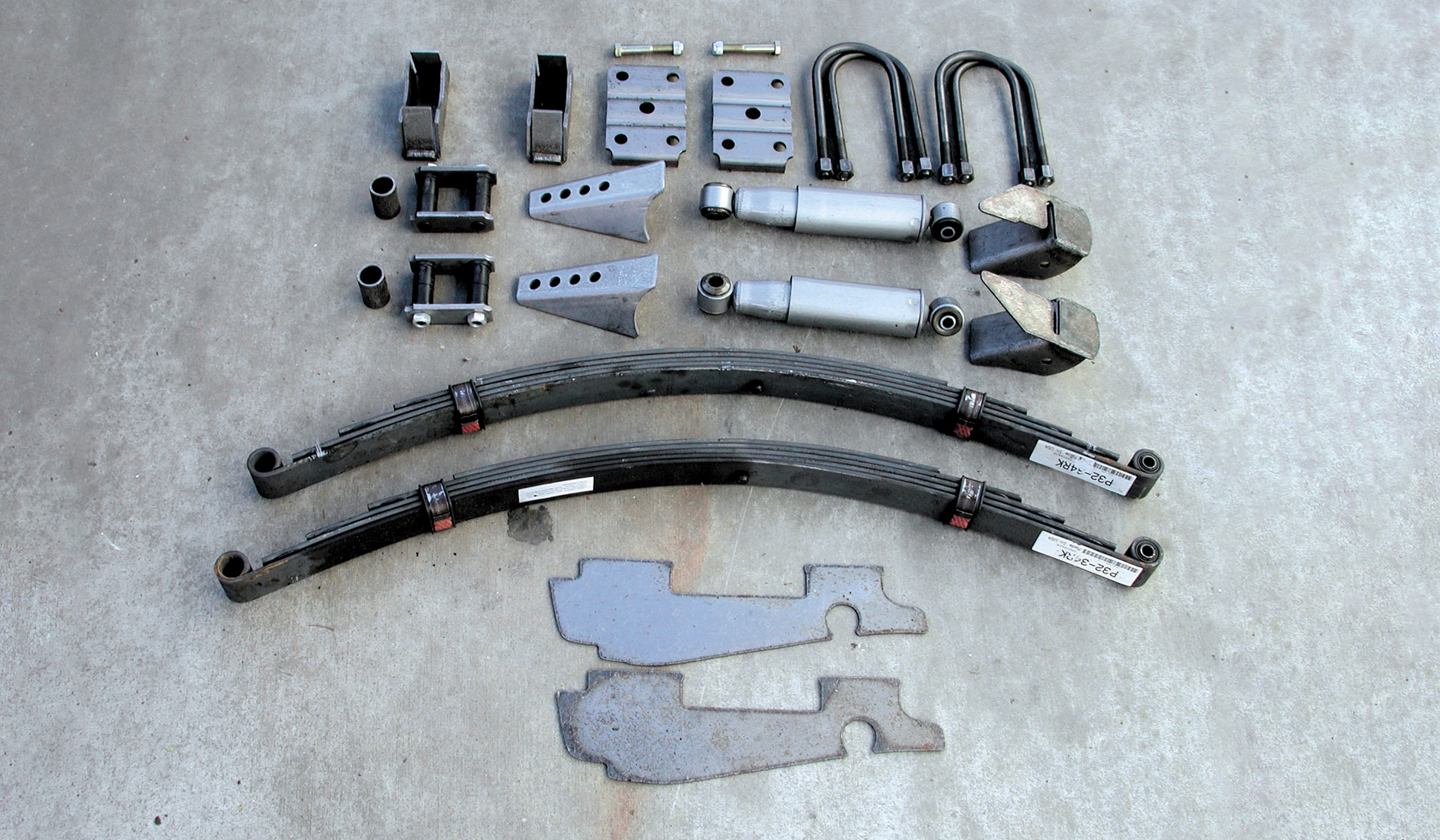
The Posies Super Slide spring kit comes with all the parts you need. The supplied lower shock mounts have several holes drilled into them so the ride height can be adjusted accordingly. You provide the top shock mount. All the parts are top quality and fit perfectly.
Author

Jeff Tann
Words & Photography
Parallel Leaf Spring Suspension for a ’33–’34 Ford Chassis
A variety of suspension systems can be installed under a ’33-’34 Ford chassis. One of the easiest to install, and one that has excellent ride characteristics, is a parallel leaf spring suspension system. This is a proven suspension design that has been used on millions of cars over the years. The only drawback to stock parallel leaf springs is that the ride height of the vehicle can be somewhat high. The easy way to fix this problem is to mount the existing springs higher into the chassis, have a spring with a moderate arch or install lowering blocks. When you combine all three, you have a vehicle with a much lower ride height.
Addressing Ride Height and Stance Issues
When this ’34 Ford came into Dream Cars for some improvements, one of the problems was that the car’s rear leaned to one side. One of the springs had lost its arch. The cabriolet also was sitting high in the rear, and its owner wanted it lower. Dream Cars owner Don Shirer suggested removing the existing setup and installing a Posies Super Slide spring kit. The assembly would provide an even stance and would lower the car by at least a few inches. Dream Cars had installed several of Posies’ kits in assorted street rods, so it knew that the kits were easy to install and were of high quality. The springs also are known for providing a smooth ride. The kit is designed to mount the springs higher in the chassis in an effort to keep the ride height low. The complete kit comes with spring mounts, springs, shocks, rear boxing plates, U-bolts and assorted installation hardware. The only part that was missing was the upper shock mount, which can be ordered separately depending upon the rear crossmember used. You can fabricate your own mount, too, which is what was done in this installation.
Updating a Classic Street Rod Without Re-Engineering
The ’34 Ford used in this installation was built in the late 1970s or early 1980s, and at that time was a state-of-the-art street rod. Here, we’ll show you how to remove the old parallel leaf spring suspension and install the newer one. This proves that an older rod can be updated without taking it completely apart and totally re-engineering the whole suspension. We will show you the installation from start to finish. This is a weld-in kit, so you will need a 220-volt MIG welder, a plasma cutter and an assortment of ordinary hand tools.
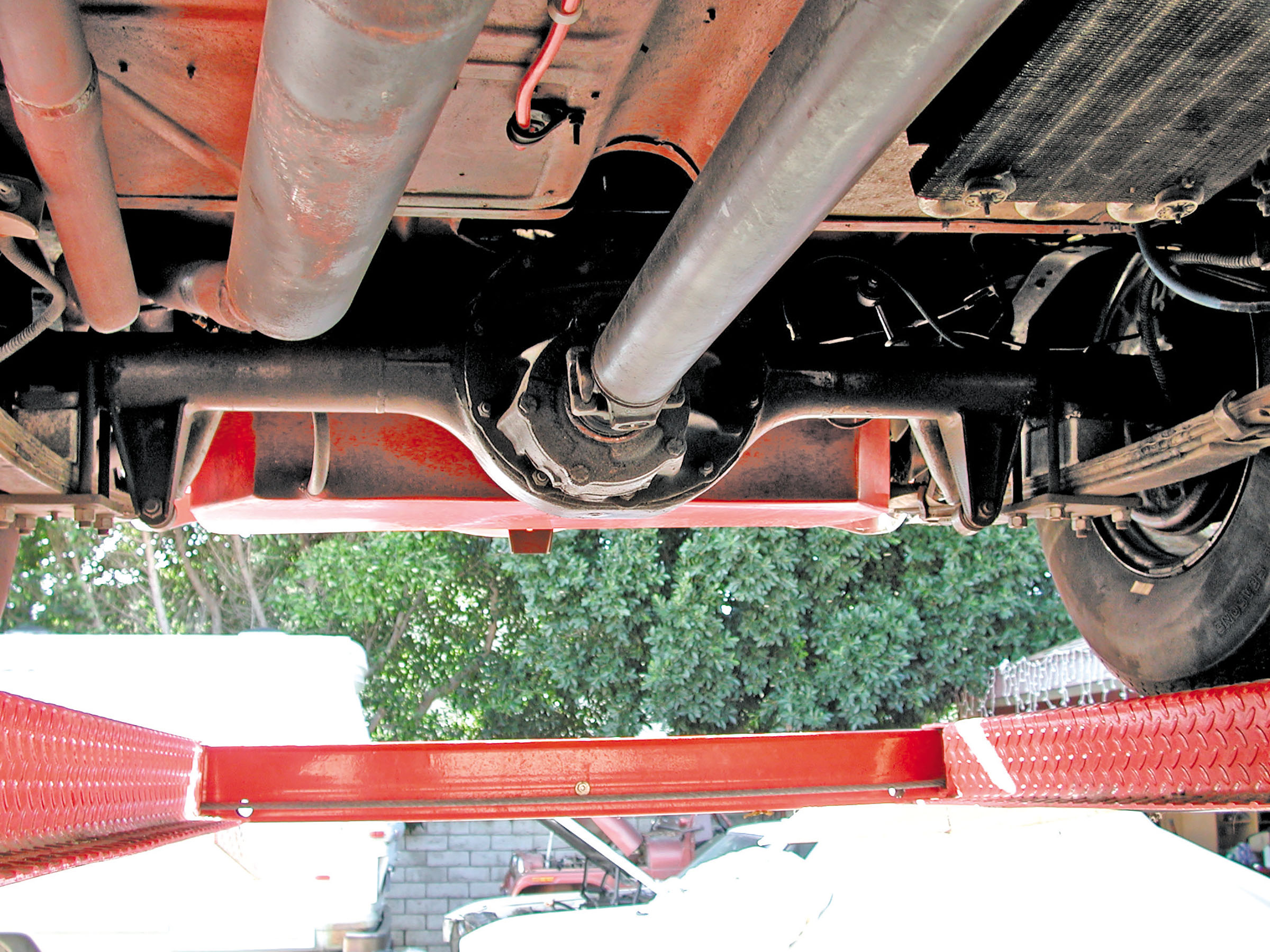
1) The stock buggy-style spring was replaced by dual parallel leaf springs in the late 1970s or early 1980s. This spring setup was a nice installation for the time, but the car’s current owner, Don Wilson, thought the ride height was too high. Then, to top it off, one of the springs was losing its arch, so the car was leaning to one side.
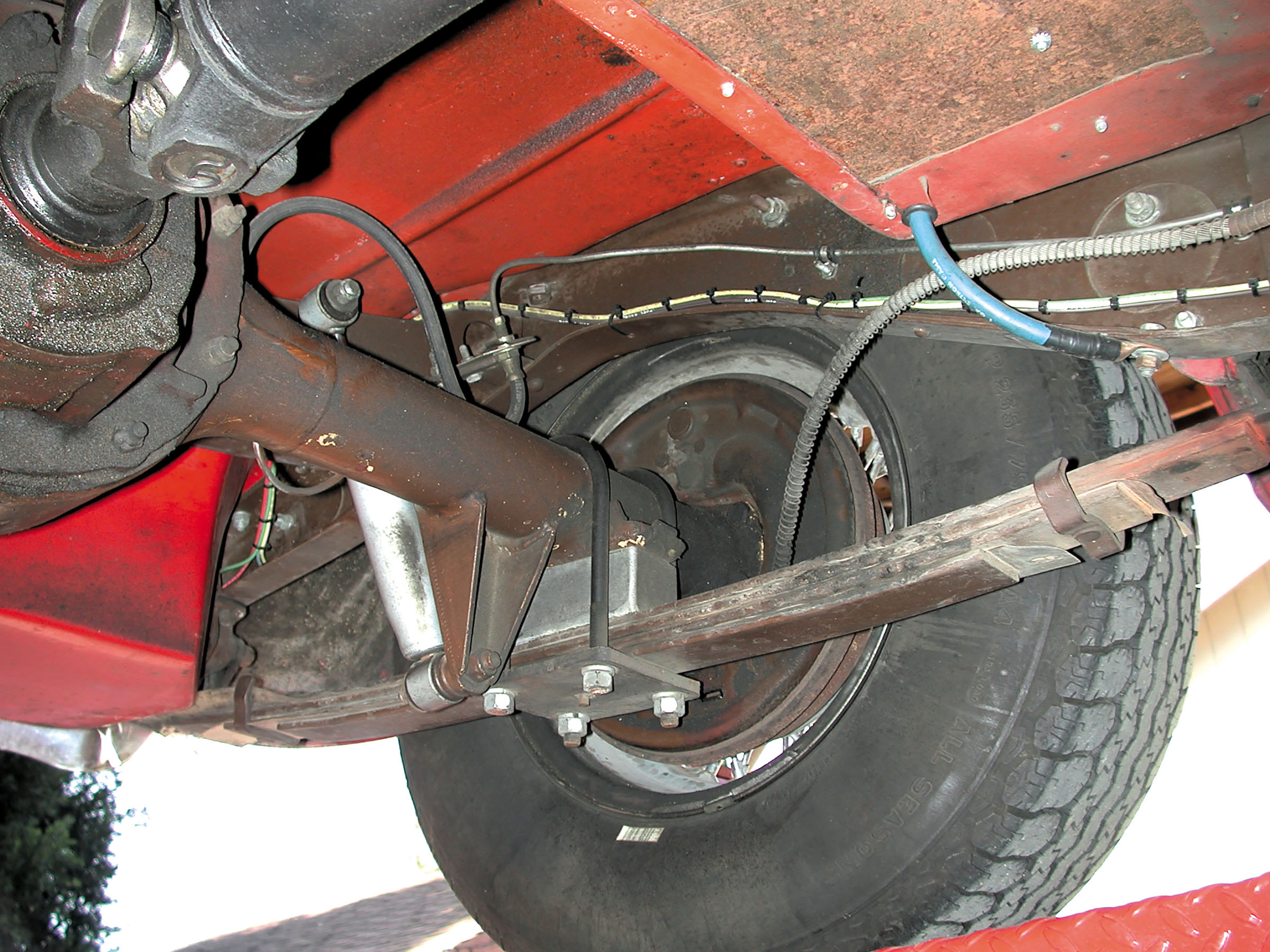
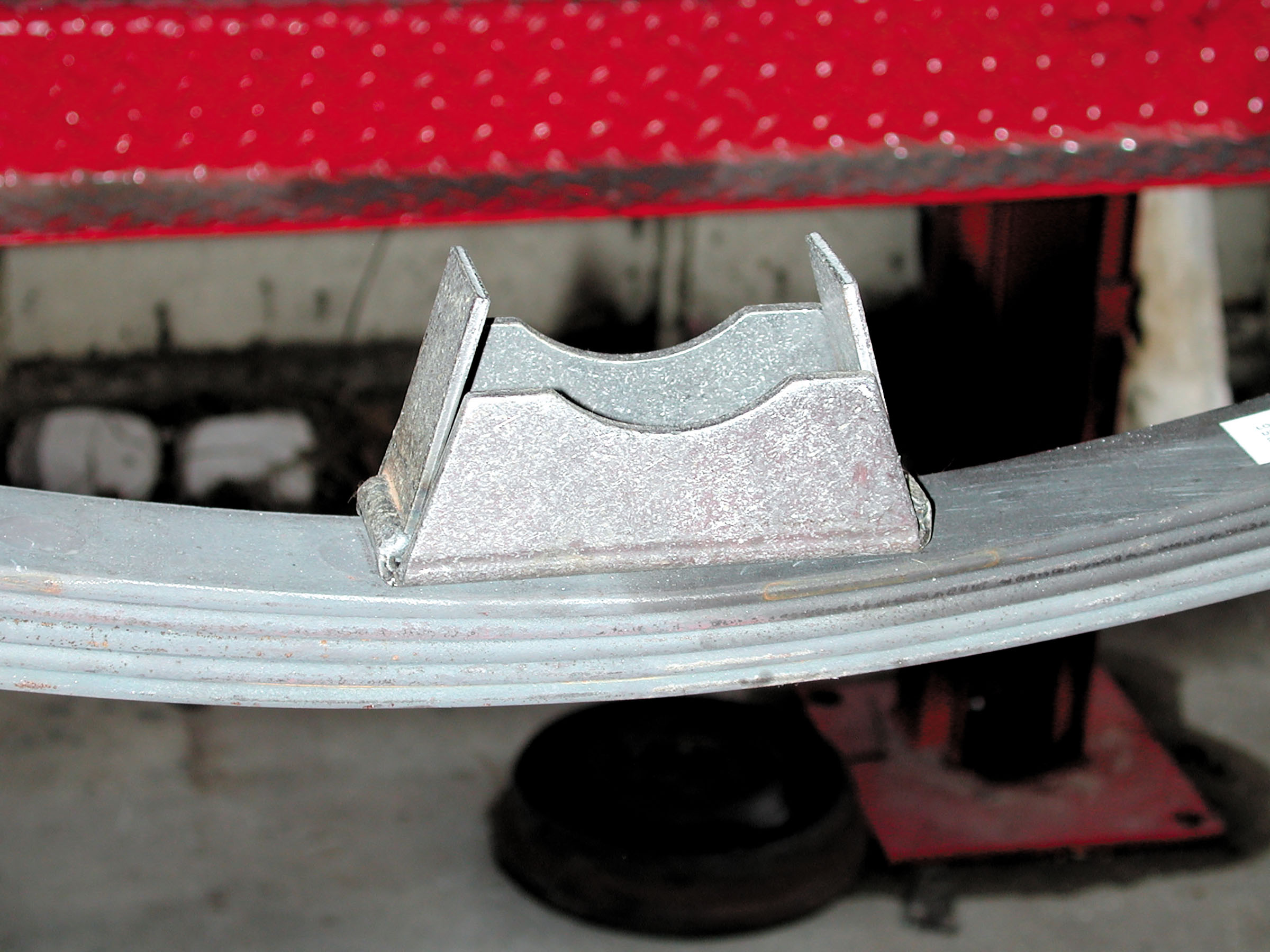
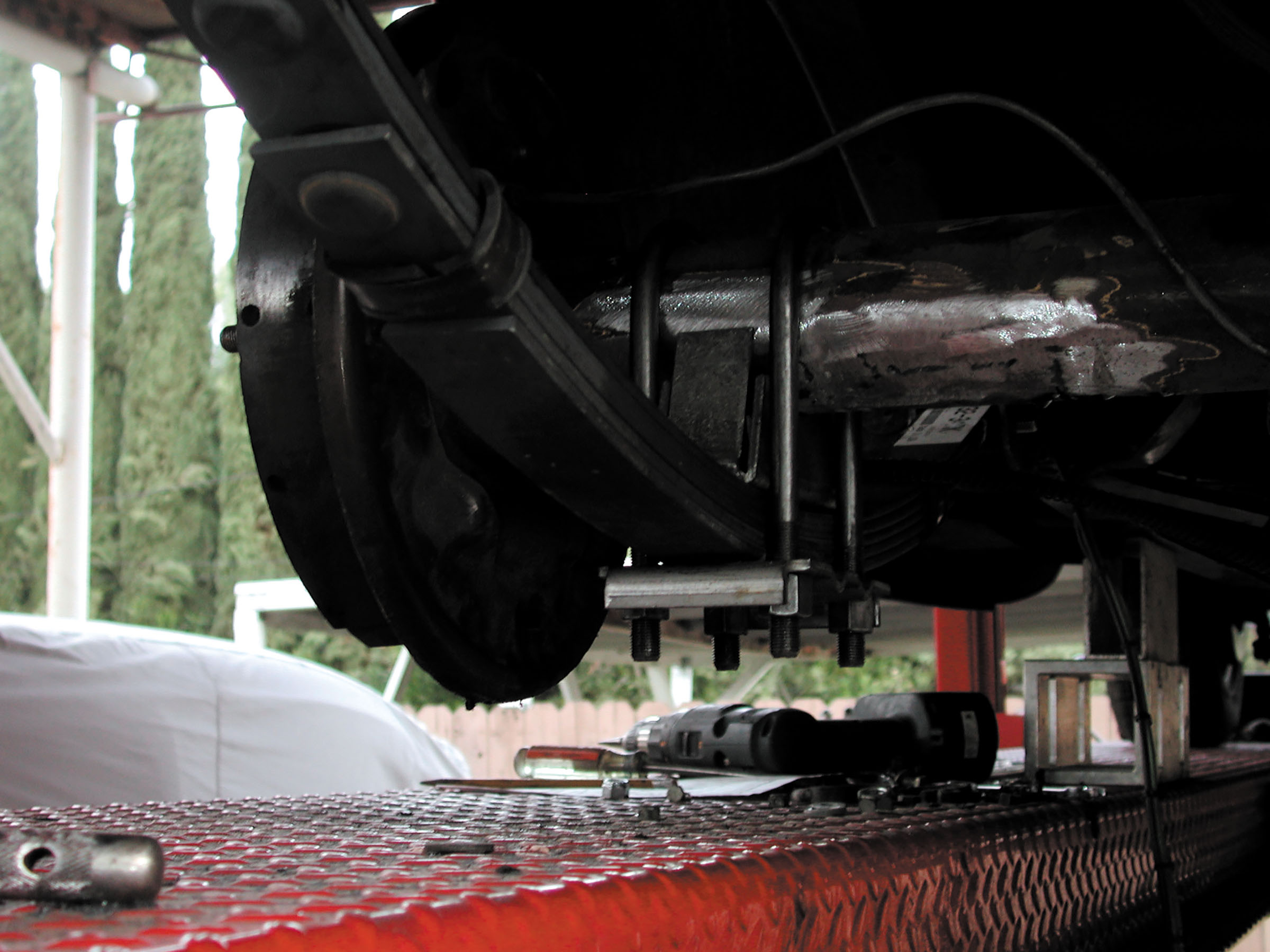
2) A close inspection of one side of the old spring setup shows the 2-inch lowering blocks that were being used. Even with the lowering blocks installed, the ’34 ride height was too tall. The owner wanted the car to sit several inches lower.
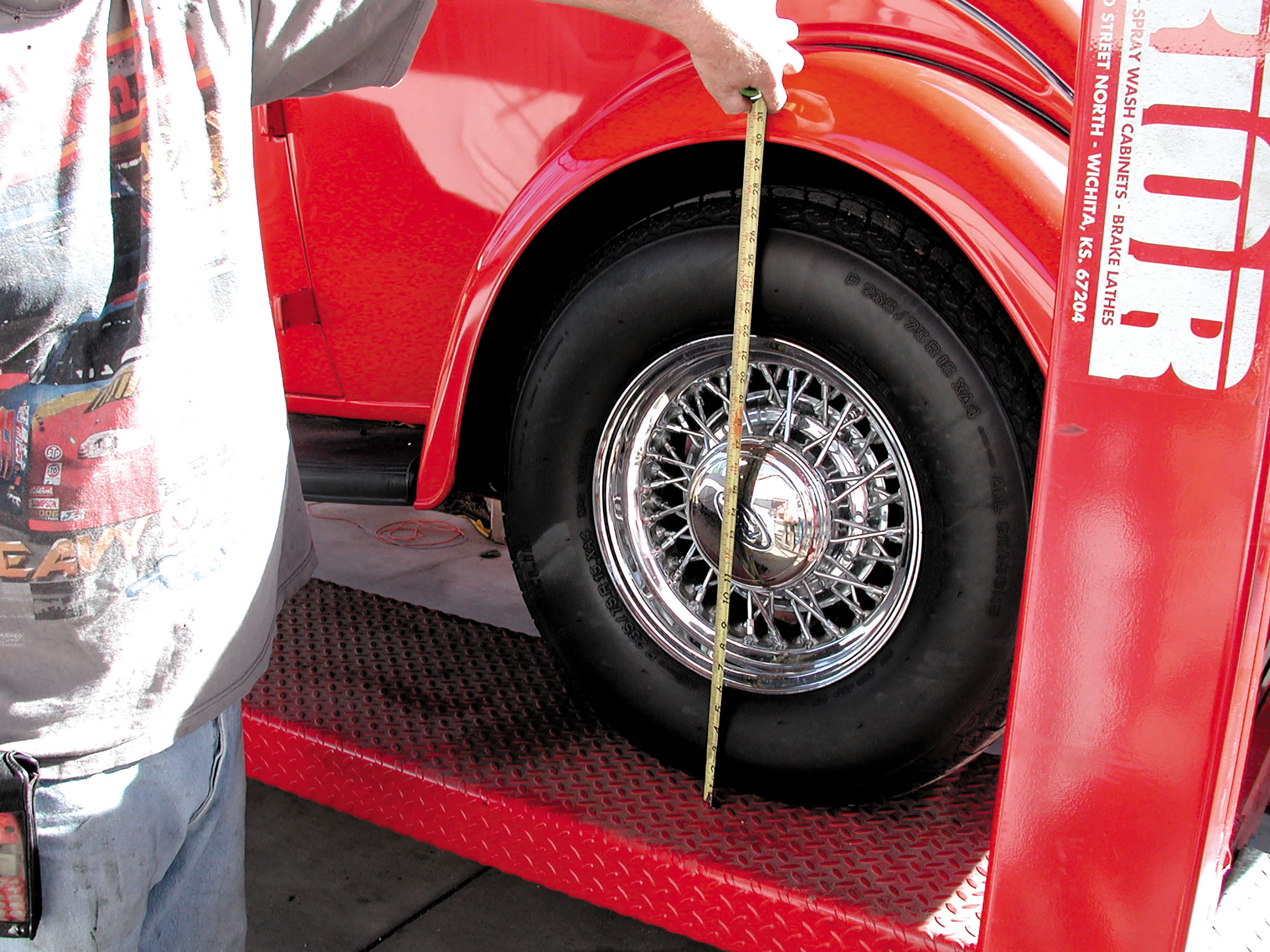
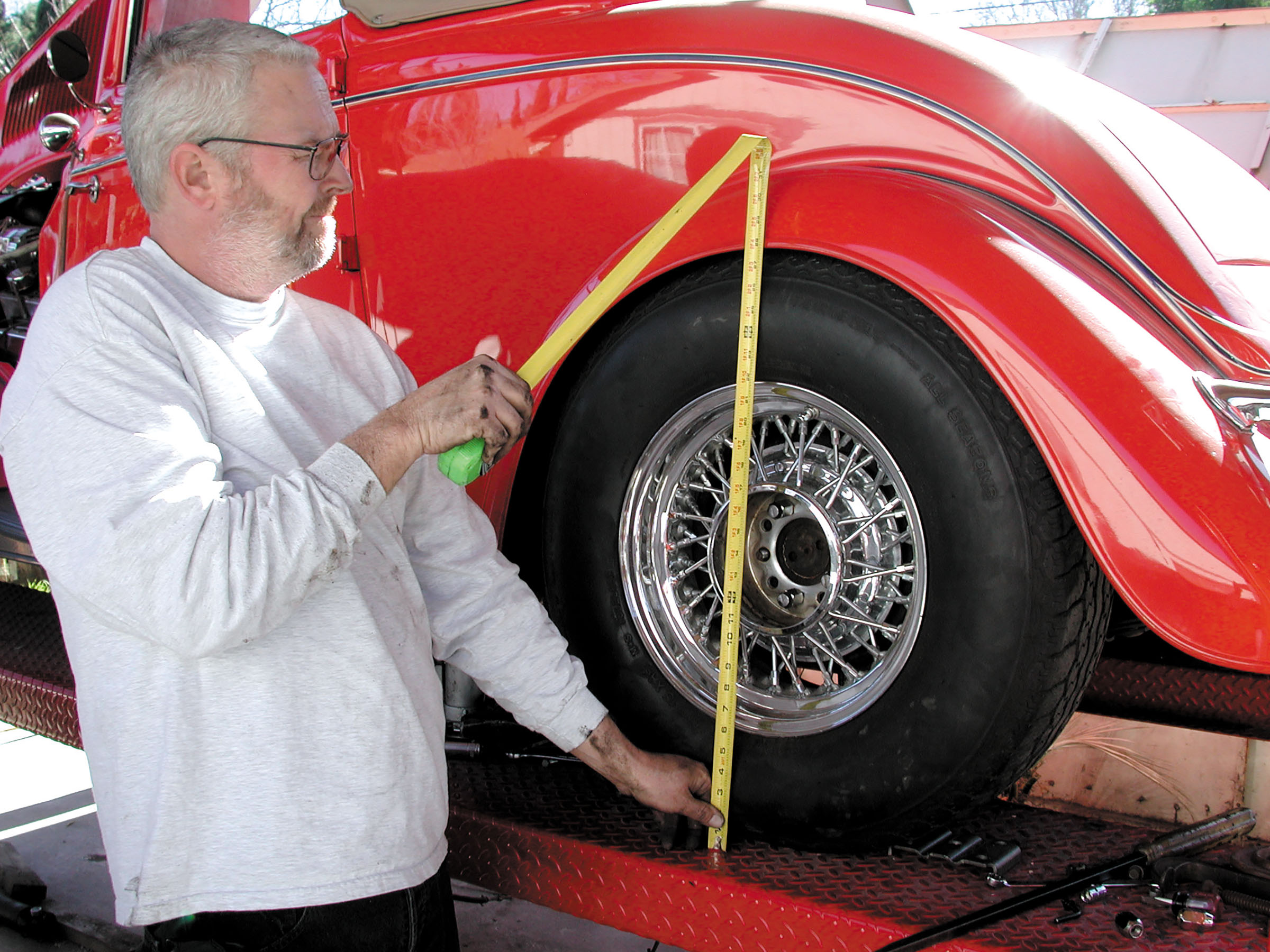
3) Before the old suspension was removed, the ride height was measured from the ground to the fender. It measured almost 30 inches to the fender edge. The goal was to get the tire to sit at the edge of the fender.
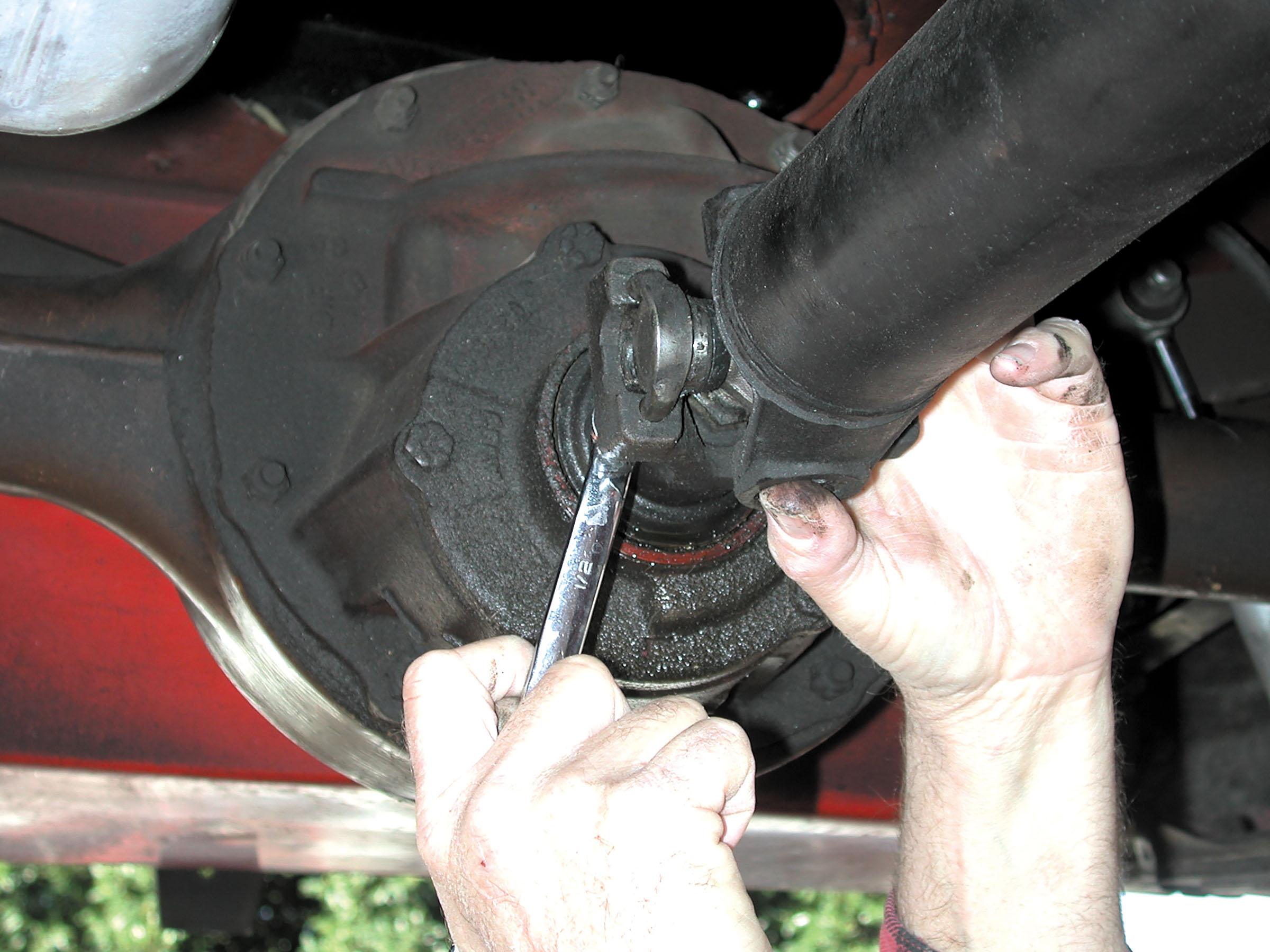
4) The job began by removing the four 1/2-inch-head driveshaft U-joint bolts.
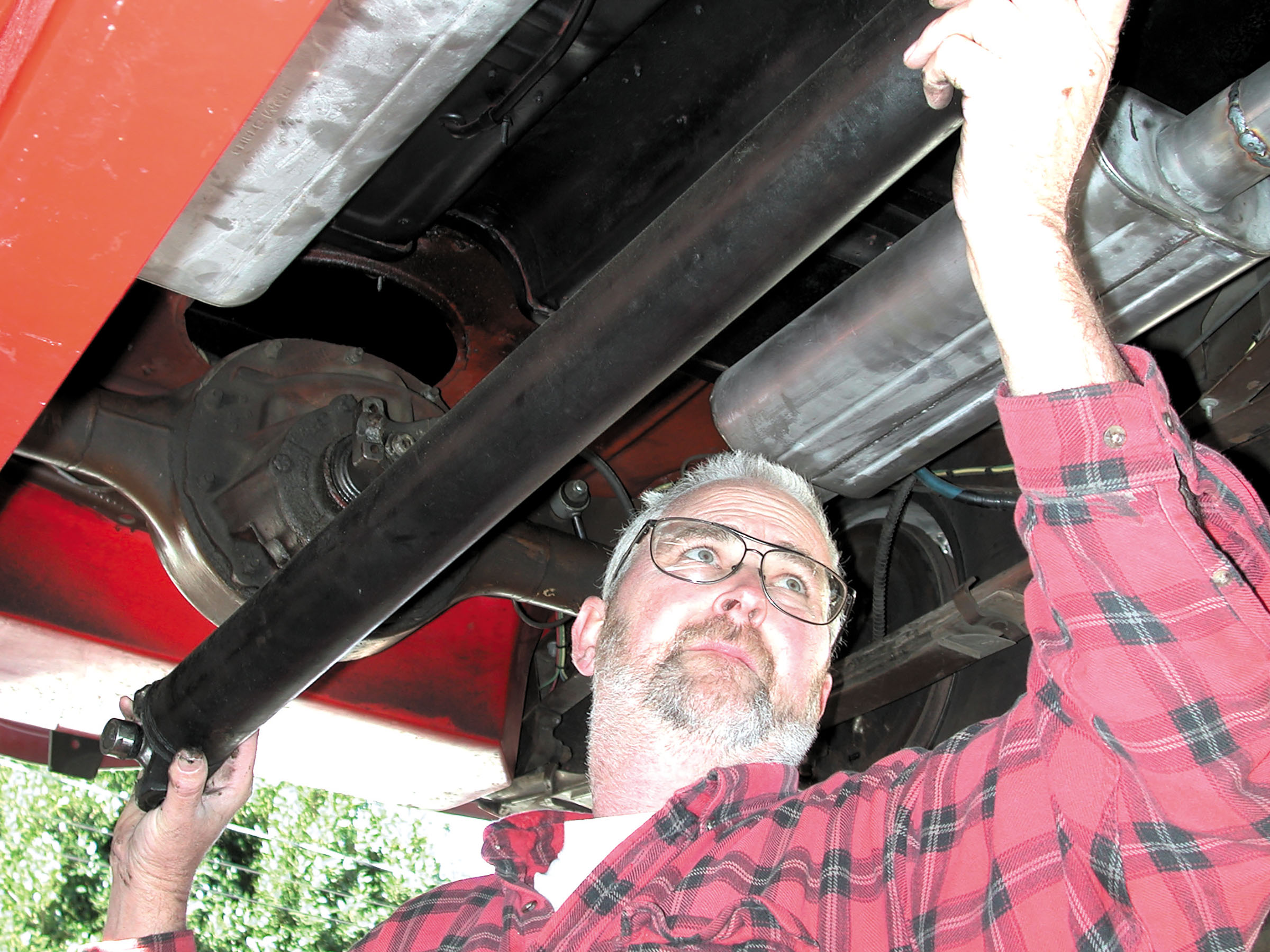
5) After the bolts were disconnected, the driveshaft was removed.
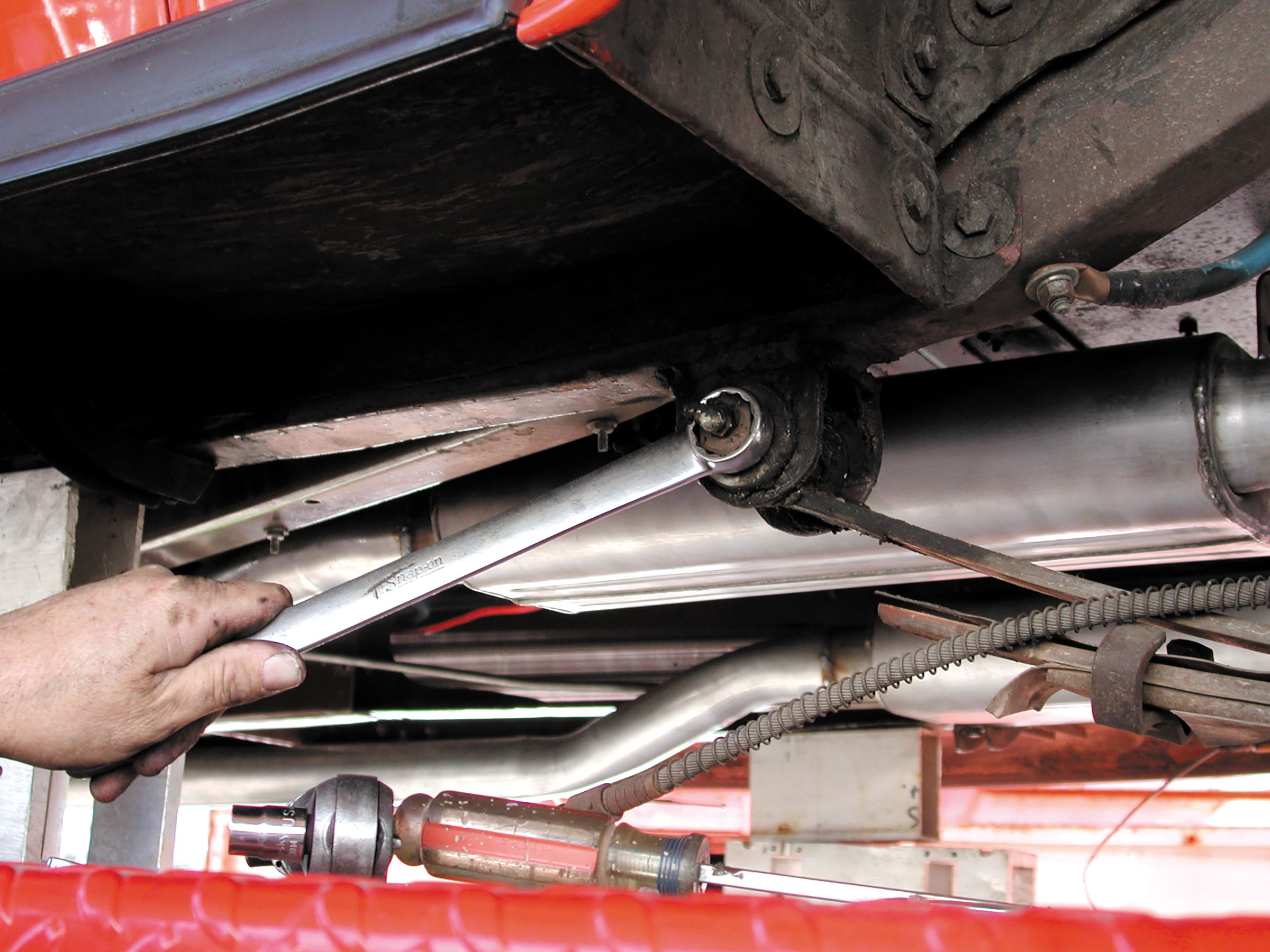
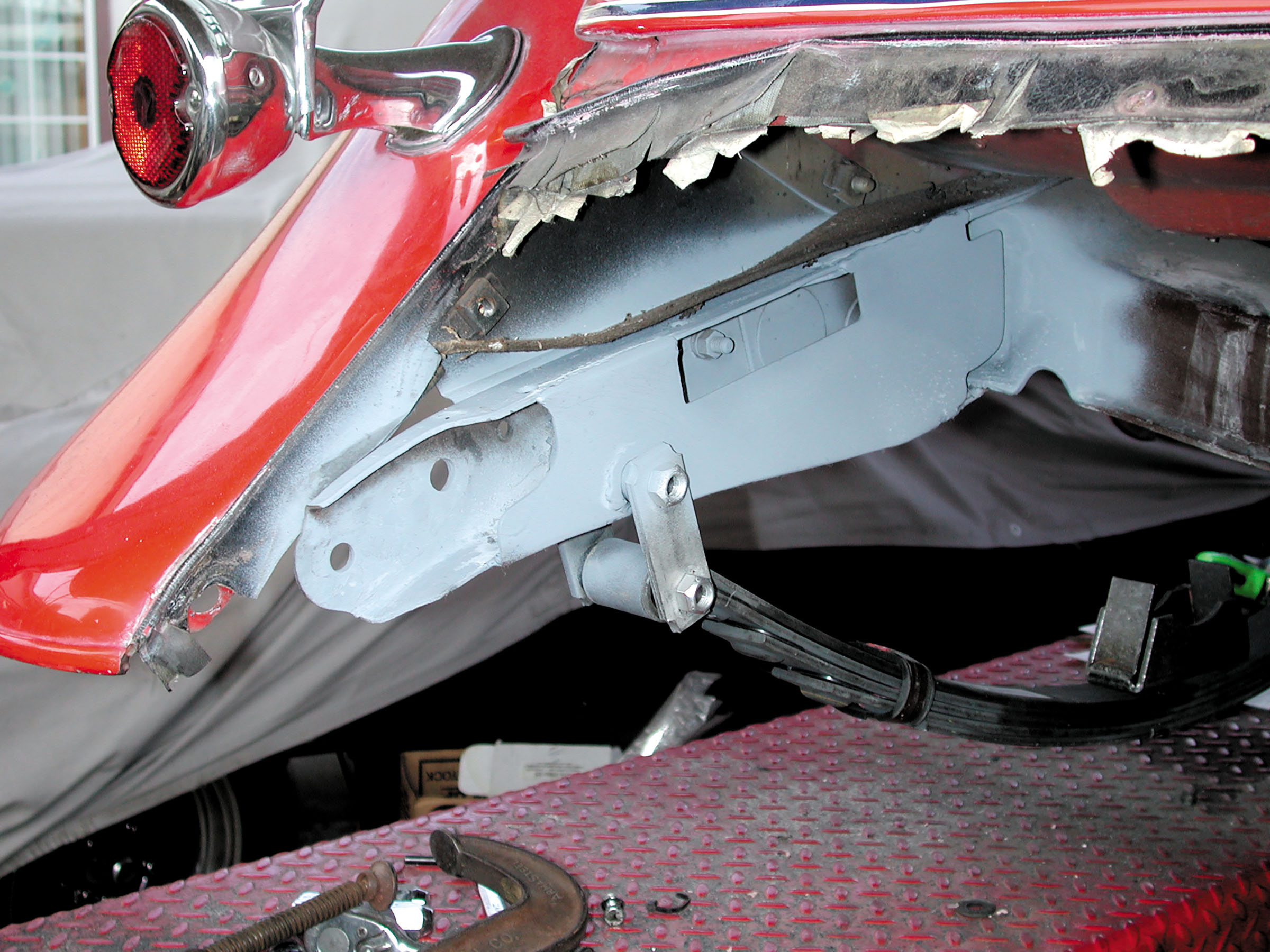
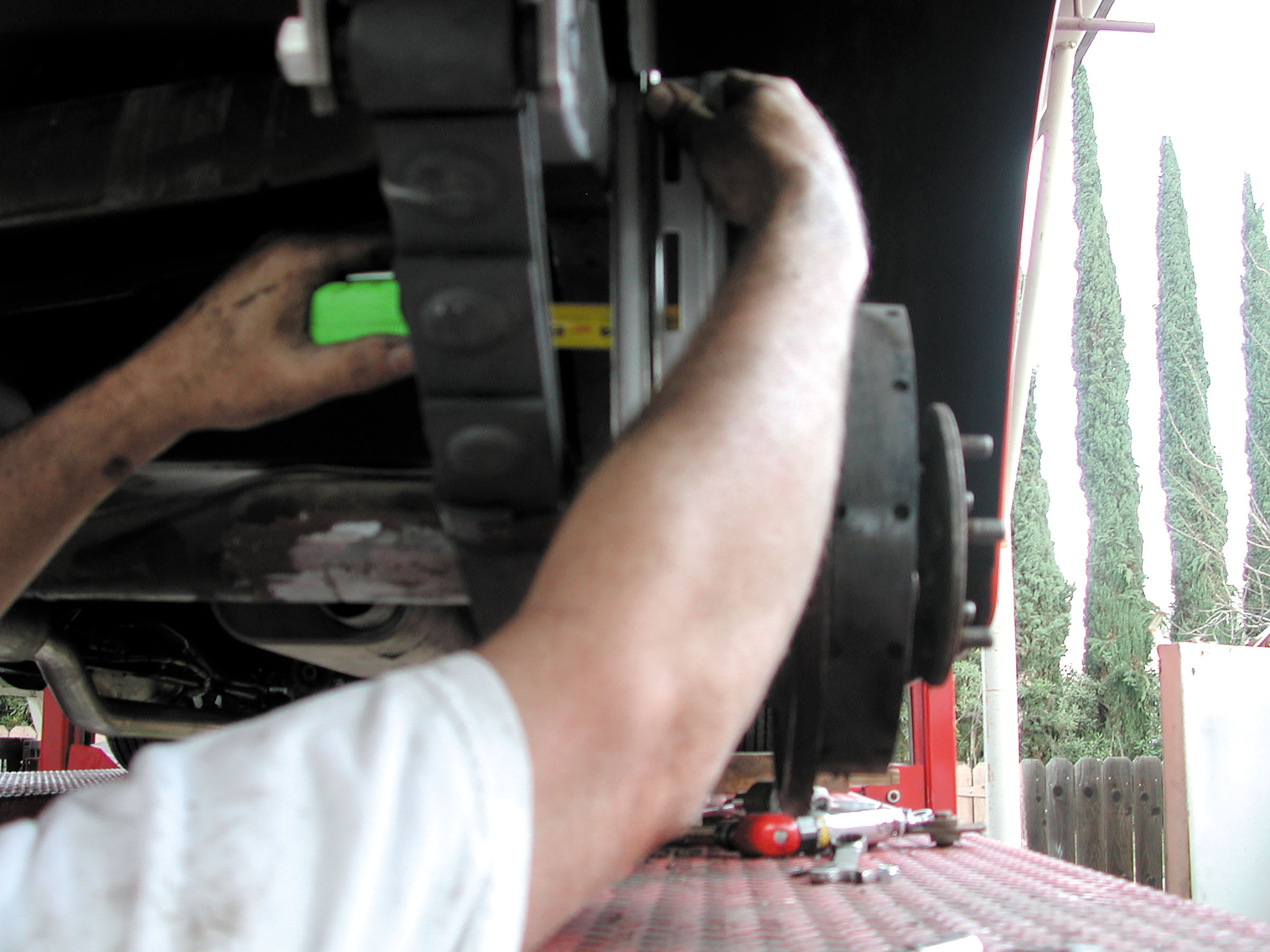
6) The shock absorber bolts, top and bottom, were removed, and then the shocks.
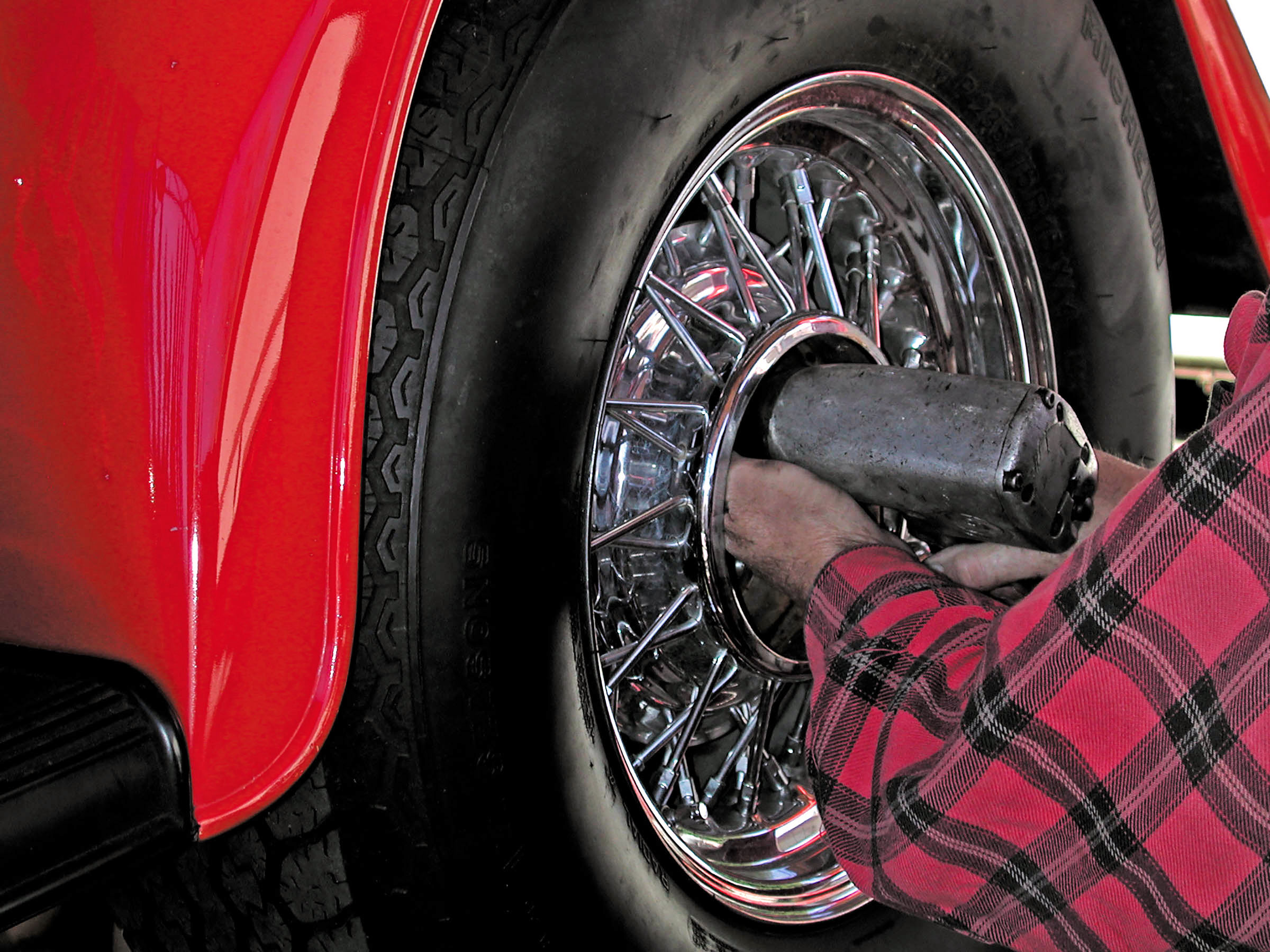
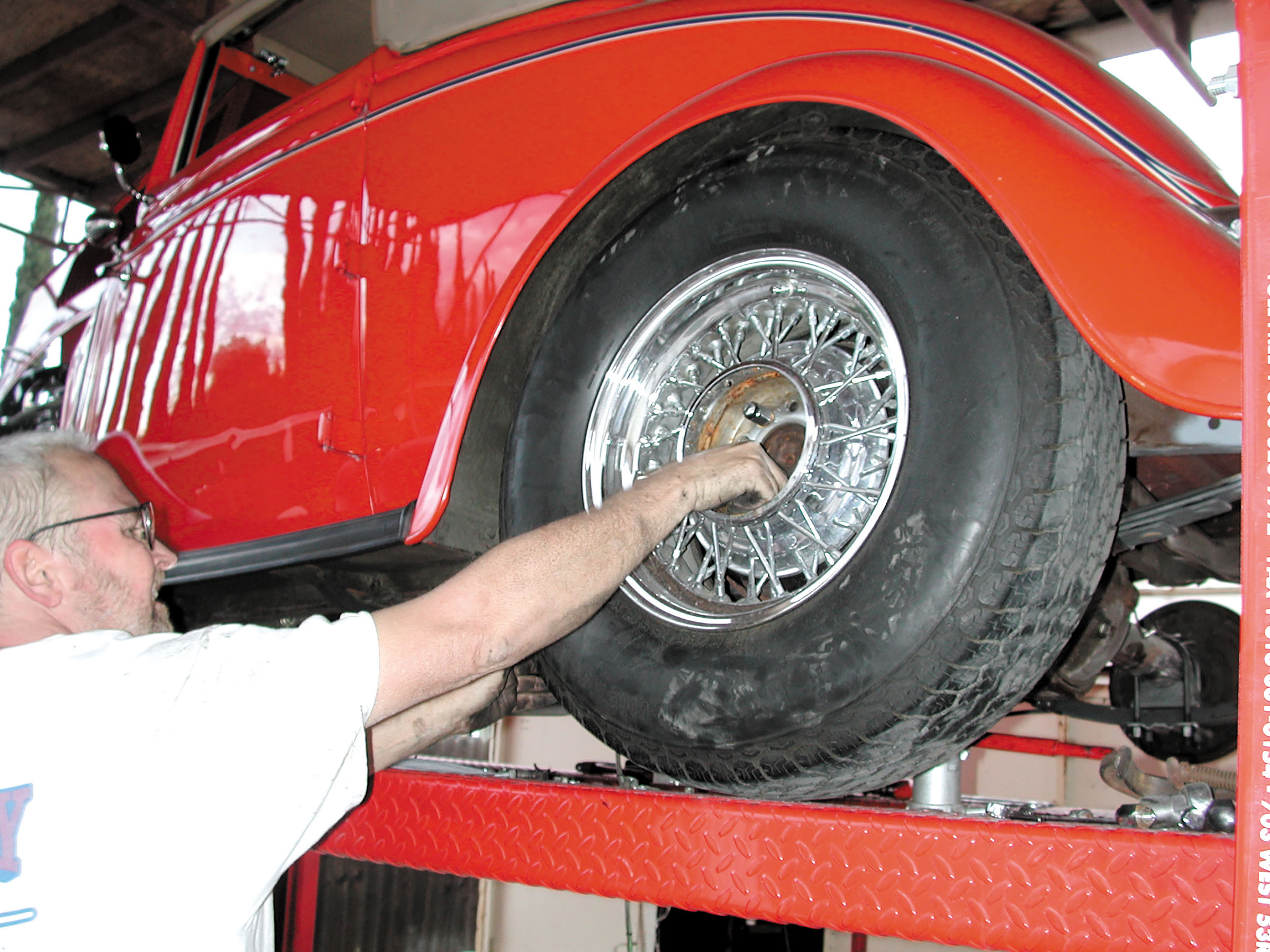
7) At this point, the car was jacked up on the rack and the tires and wheels were removed.
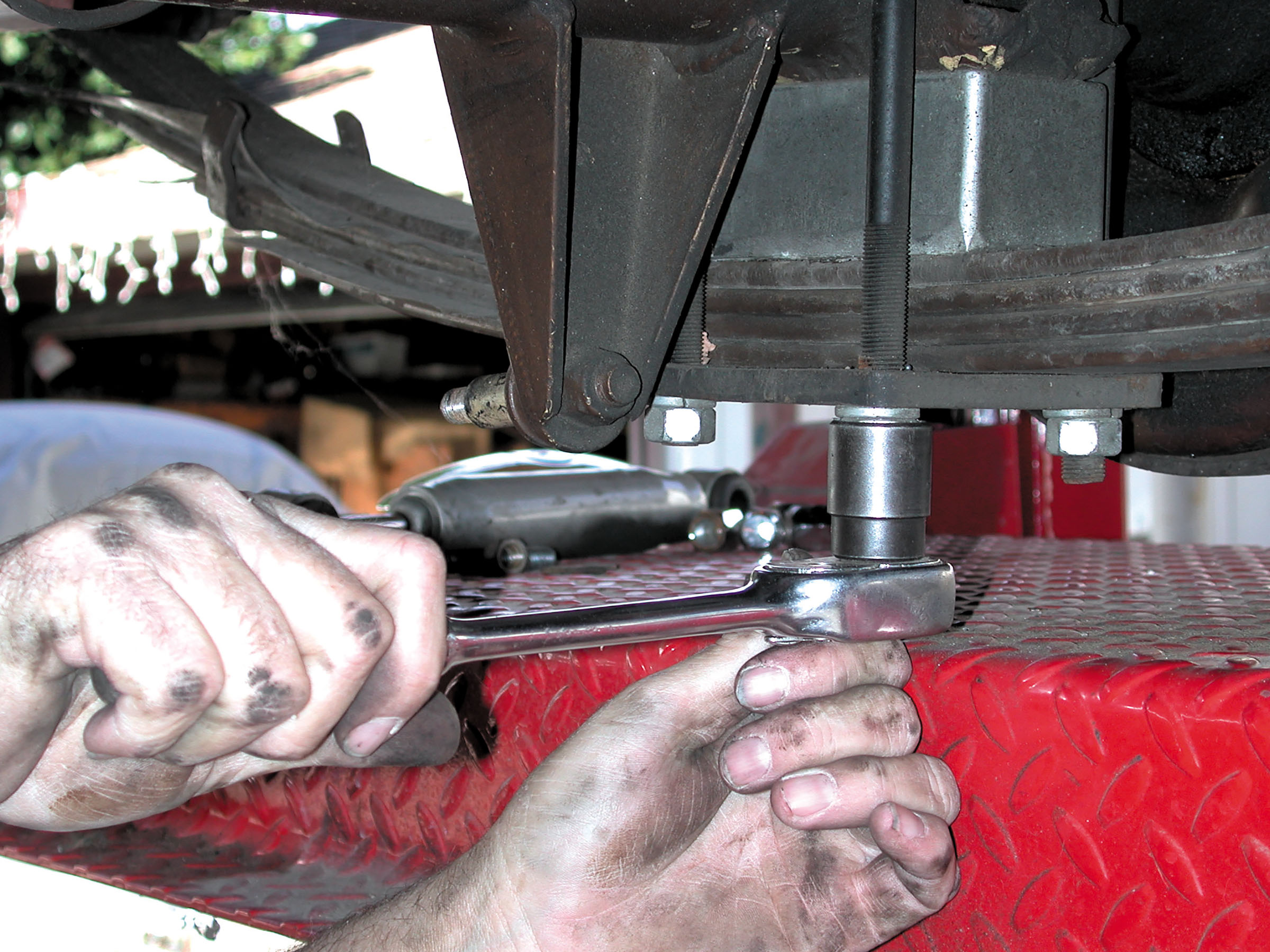
8) To remove the axle housing, the axle-housing U-bolt nuts and spring pads were removed.
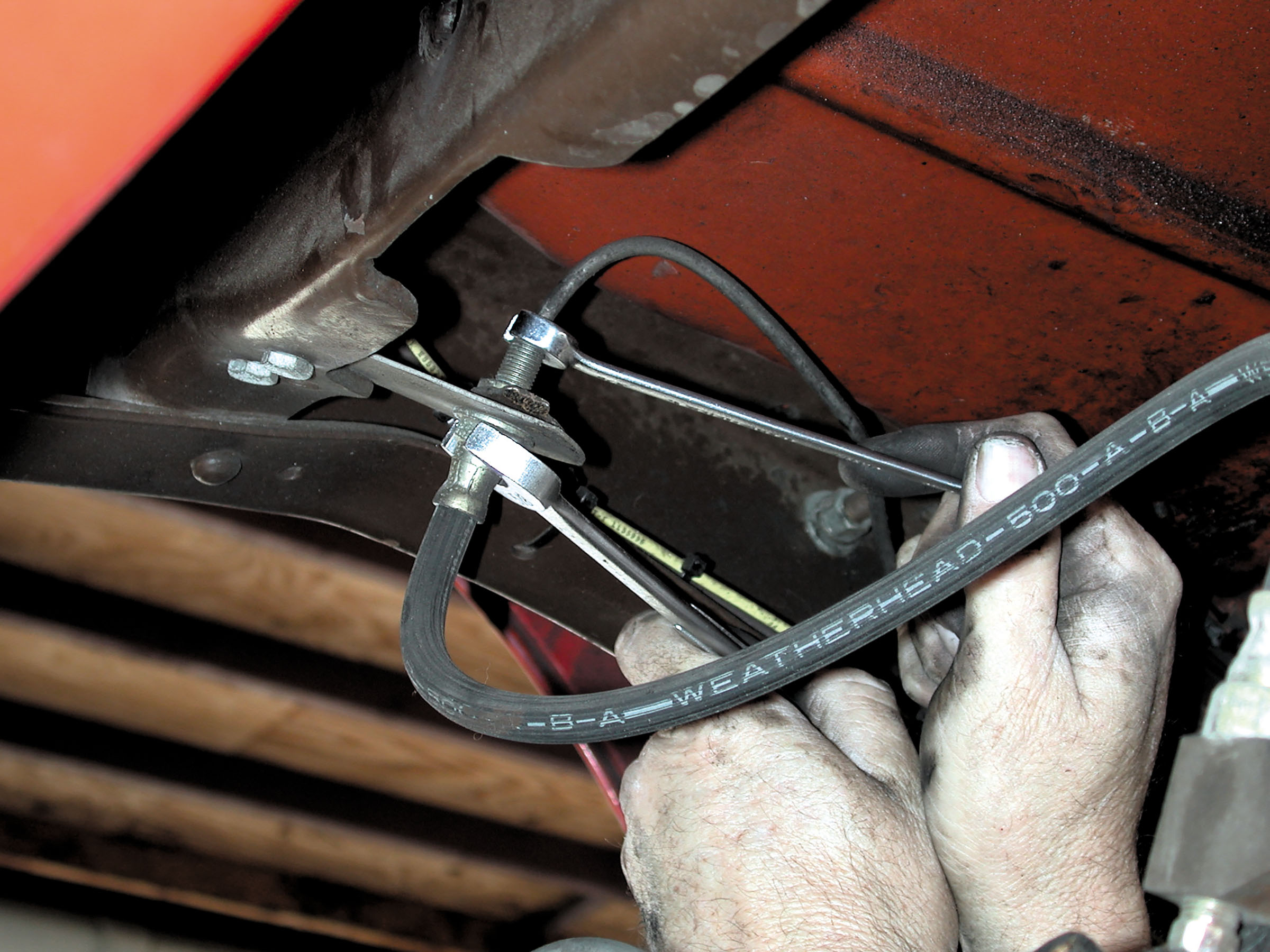
9) You’ll also need to remove the brake line connection and the brake clip. As it turned out, the clip wouldn’t come out, so the two bolts that attached the bracket to the frame were removed.
10) The emergency-brake cable clips were removed. This view also shows the spring bracket that will have to be removed later.
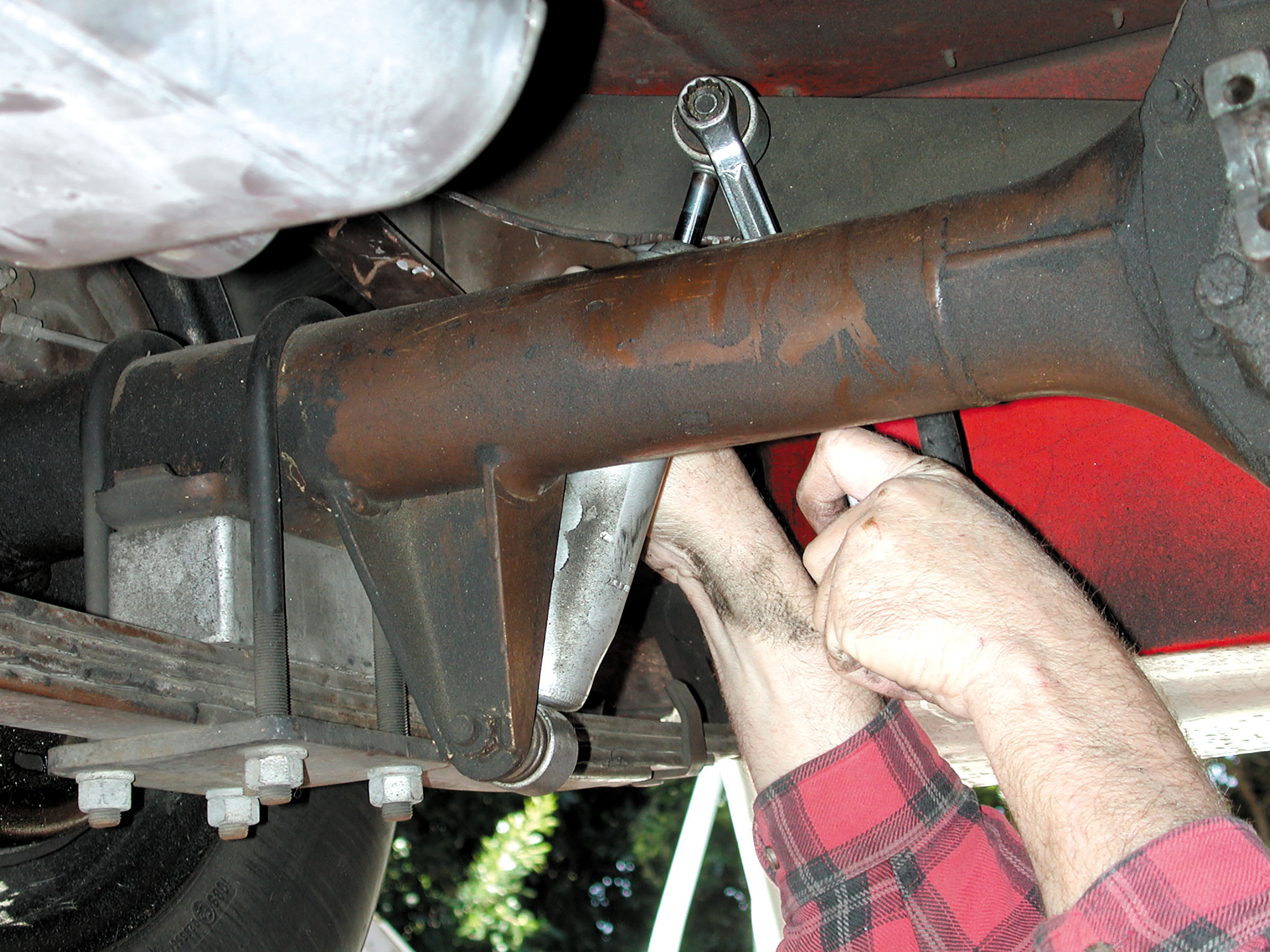
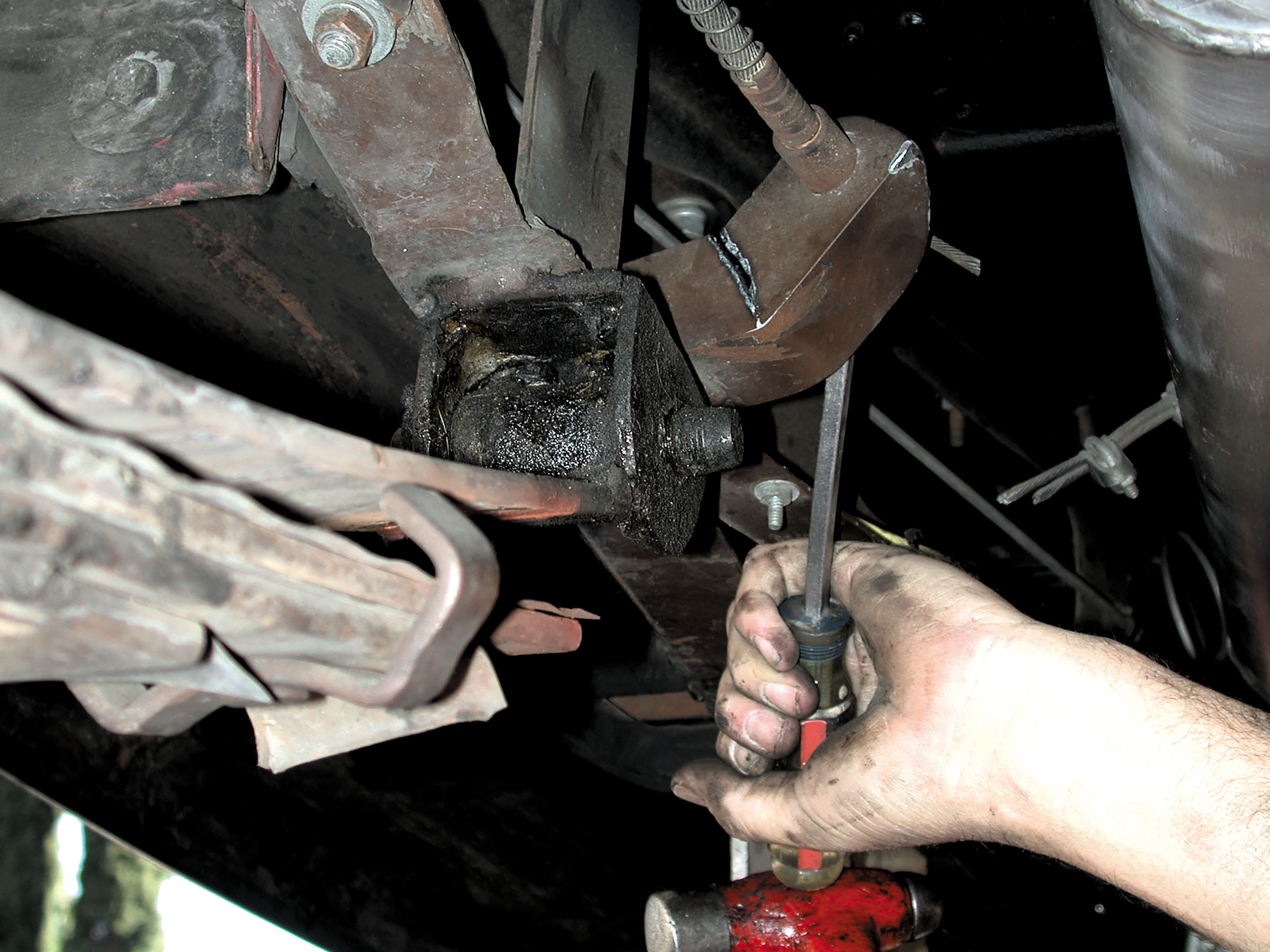
11) We removed the bolt that was attaching the spring to the bracket. This was done on the other side of the car, too, so both springs could be removed.
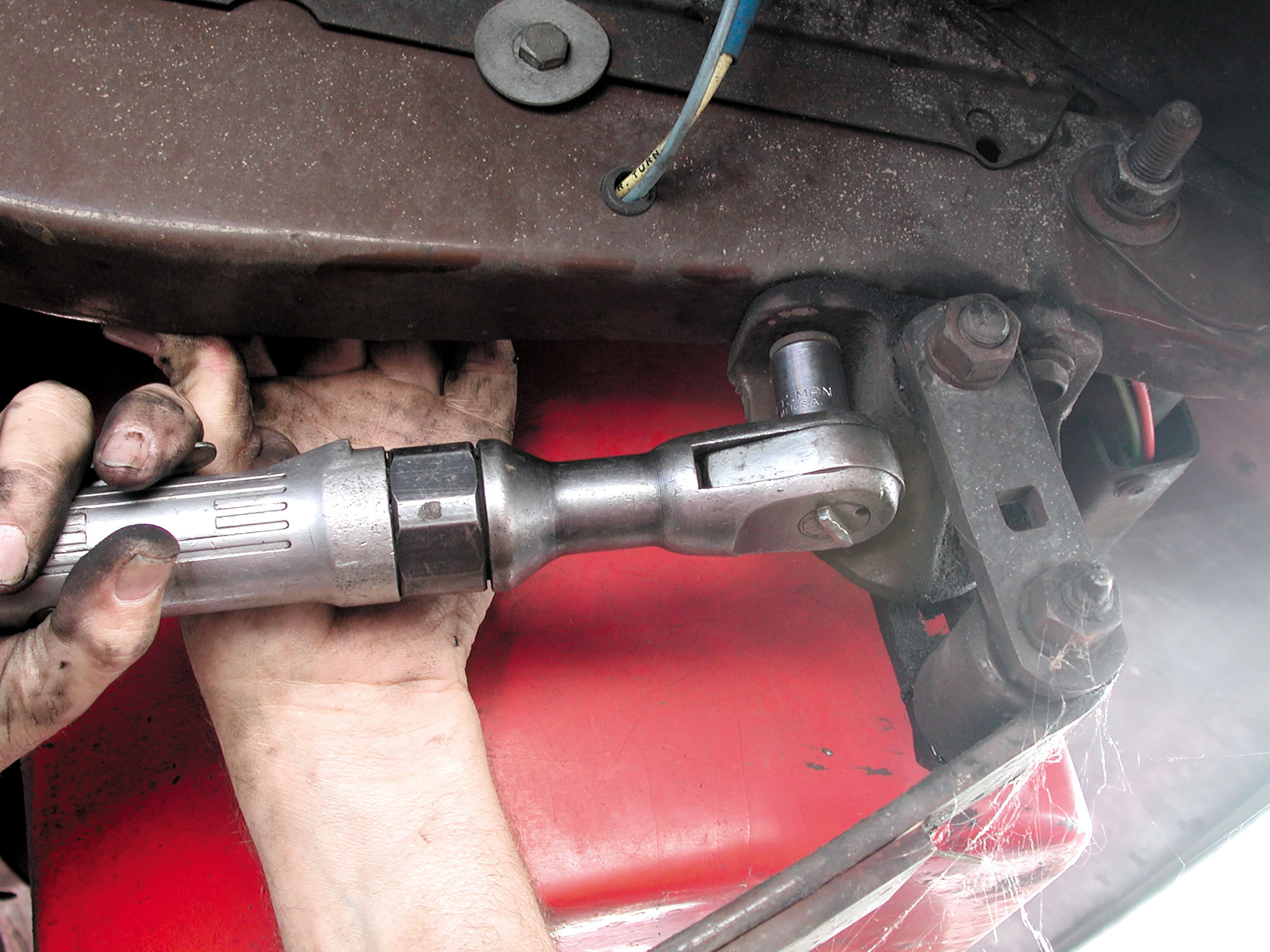
12) The rear spring brackets were bolted in place with two 9/16-inch nuts and bolts. The two brackets from the rear framerails were removed.
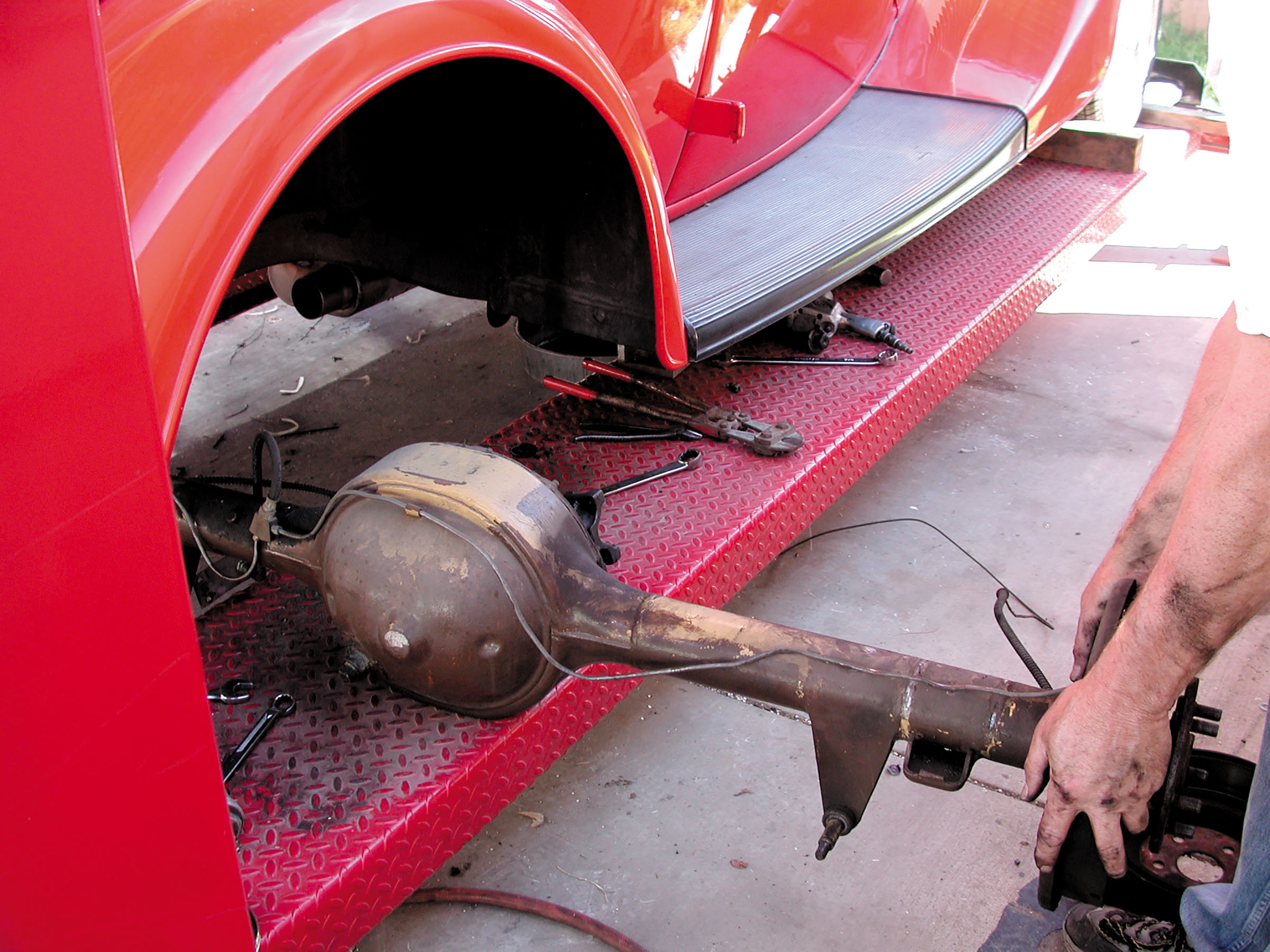
13) With the springs disconnected, the Ford differential could be removed. If you look closely, there’s another bracket welded to the frame that may have been used for a Panhard bar. At this point, nothing was attached to the bracket, and nothing will be when we’re finished, so this bracket will have to be removed.
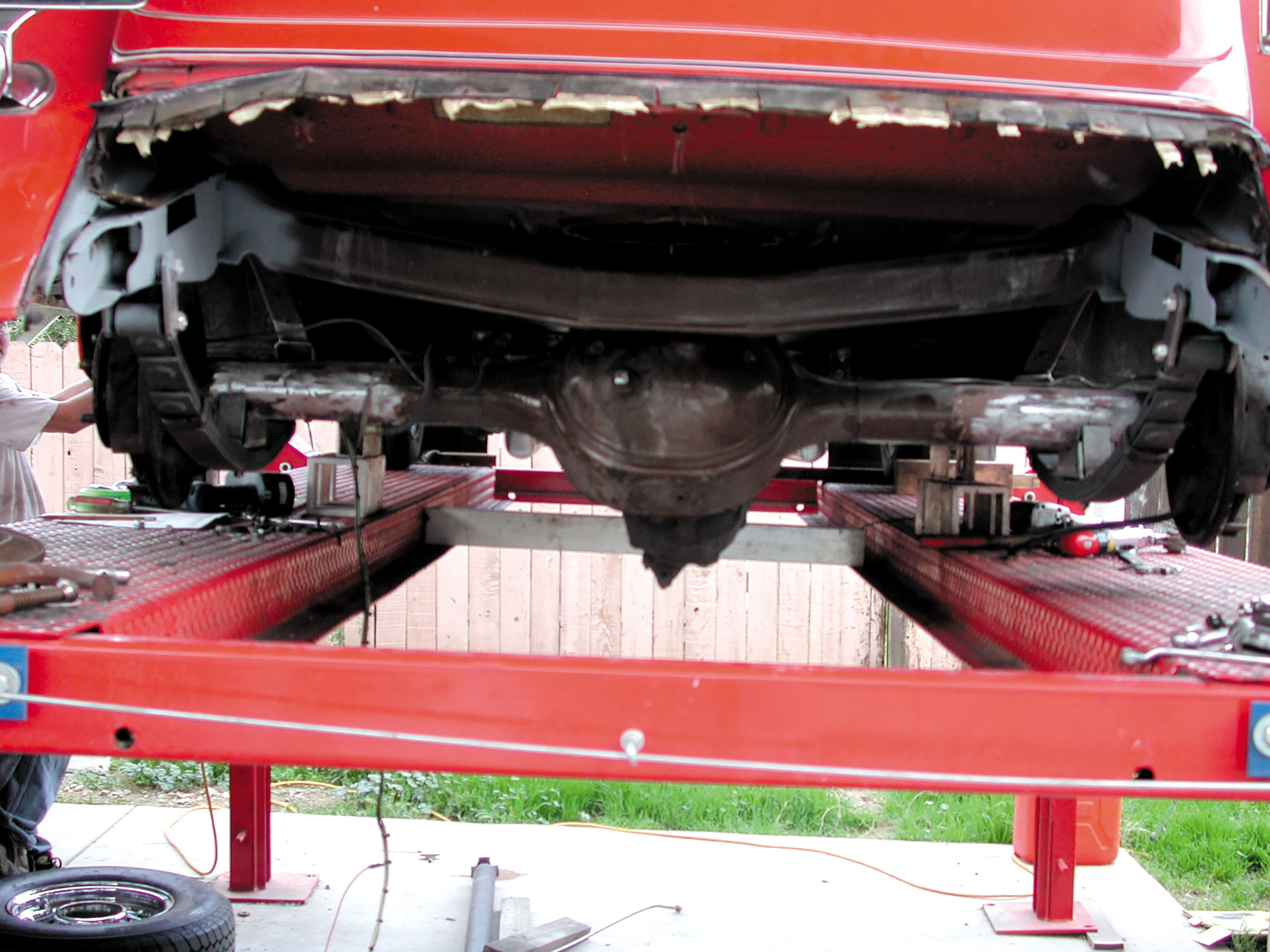
14) We removed the Ford differential, and it’s easy to see that it will need some cleanup work later. All the existing brackets will have to be removed.
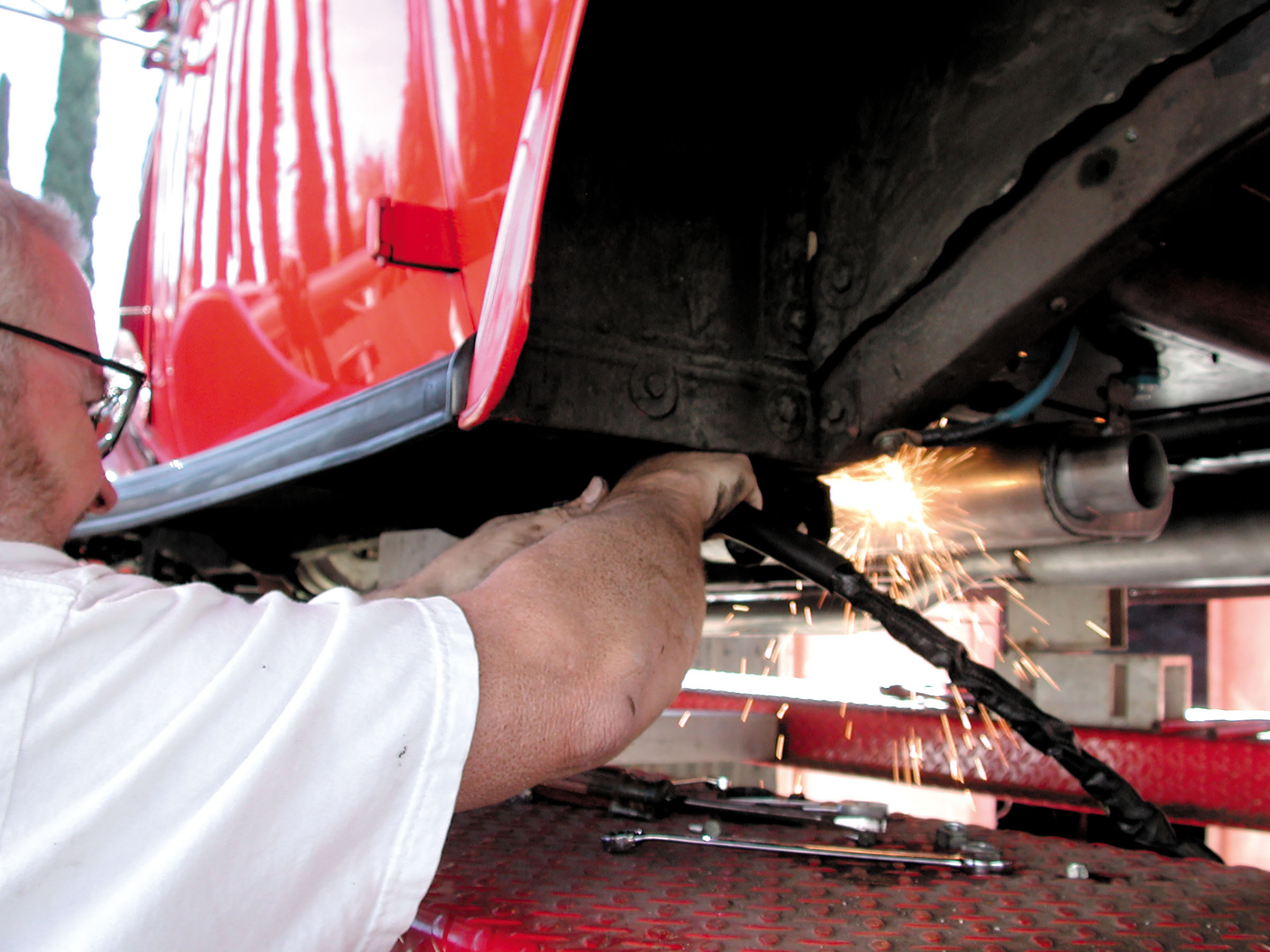
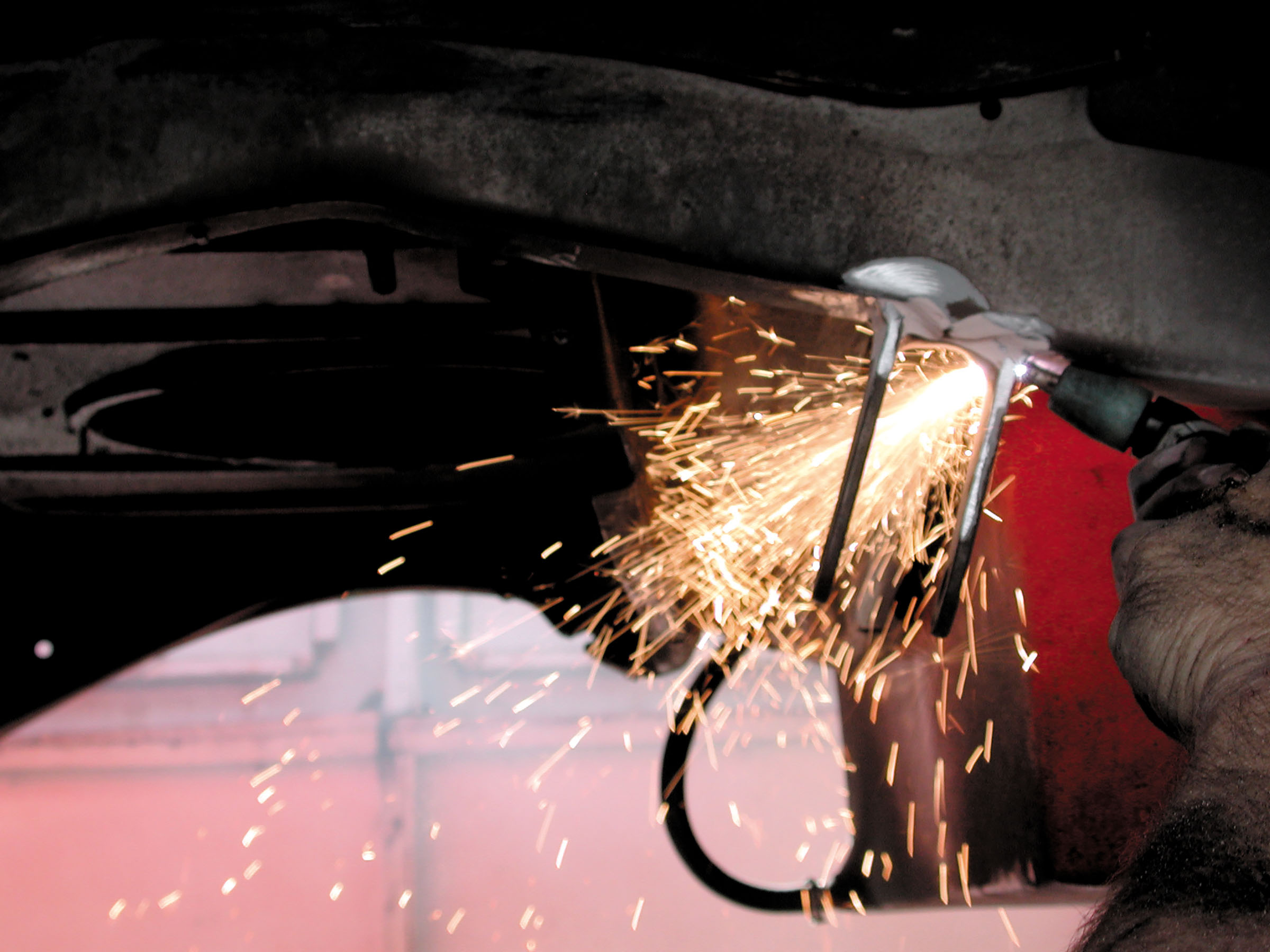
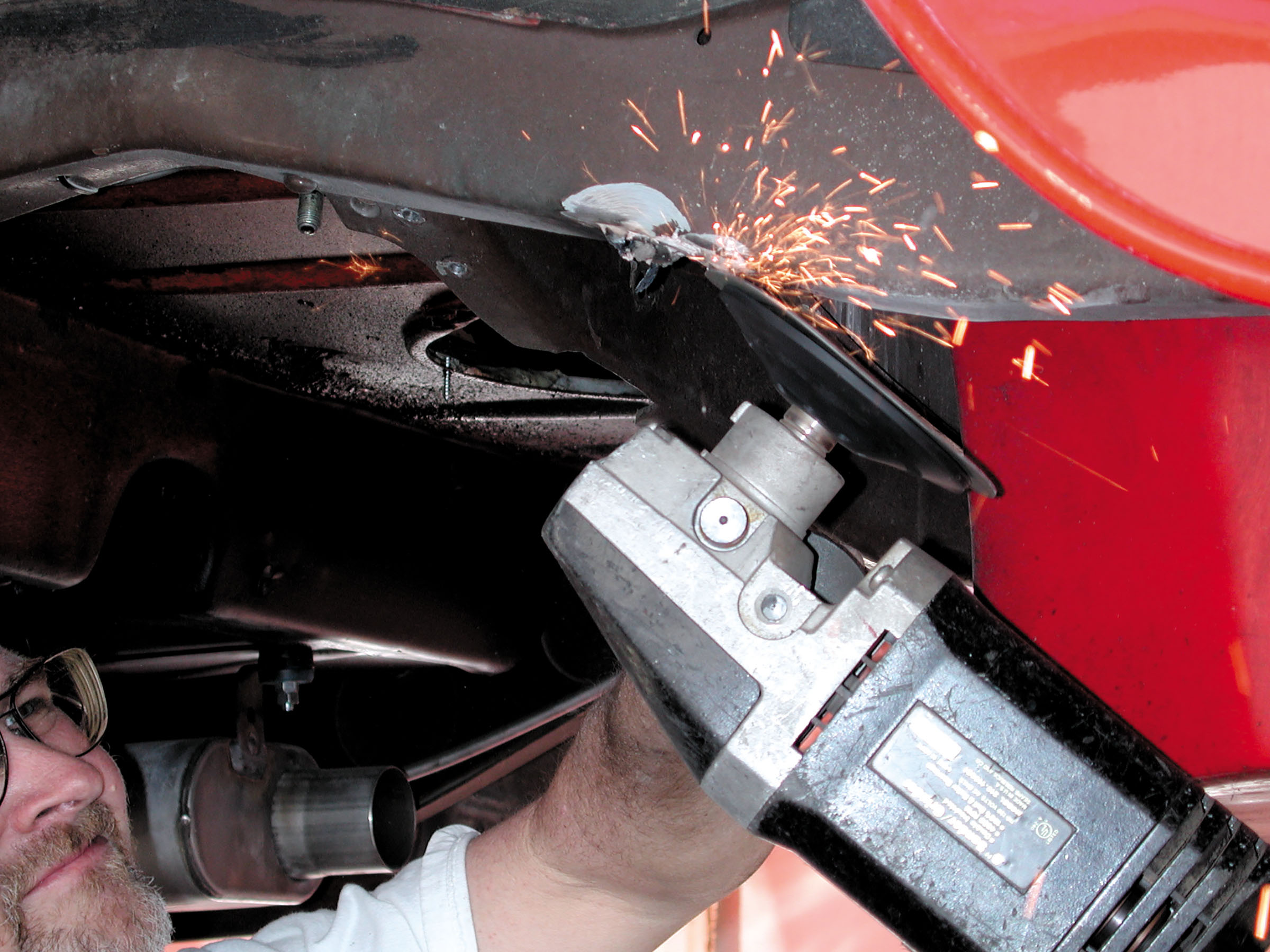
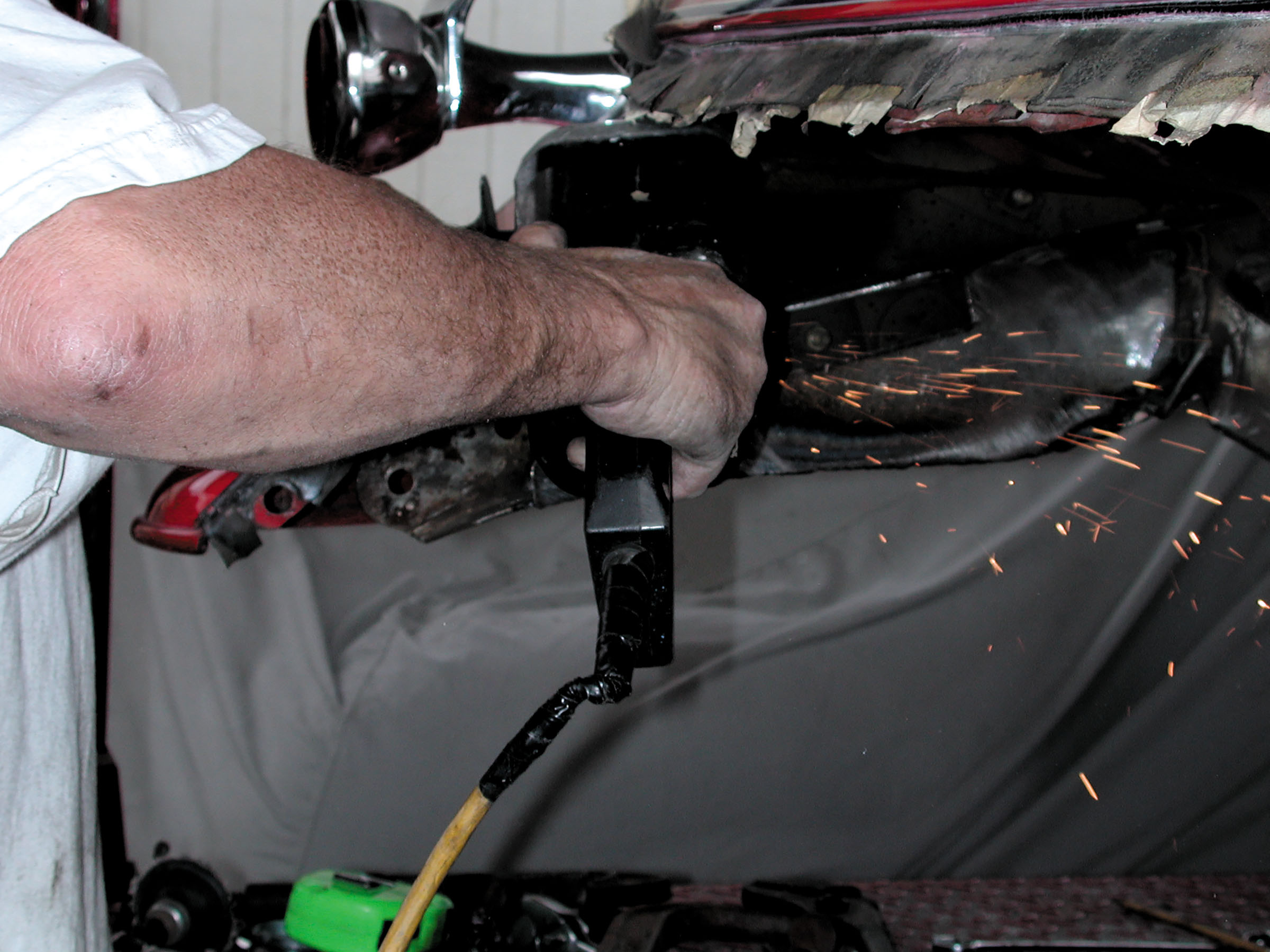
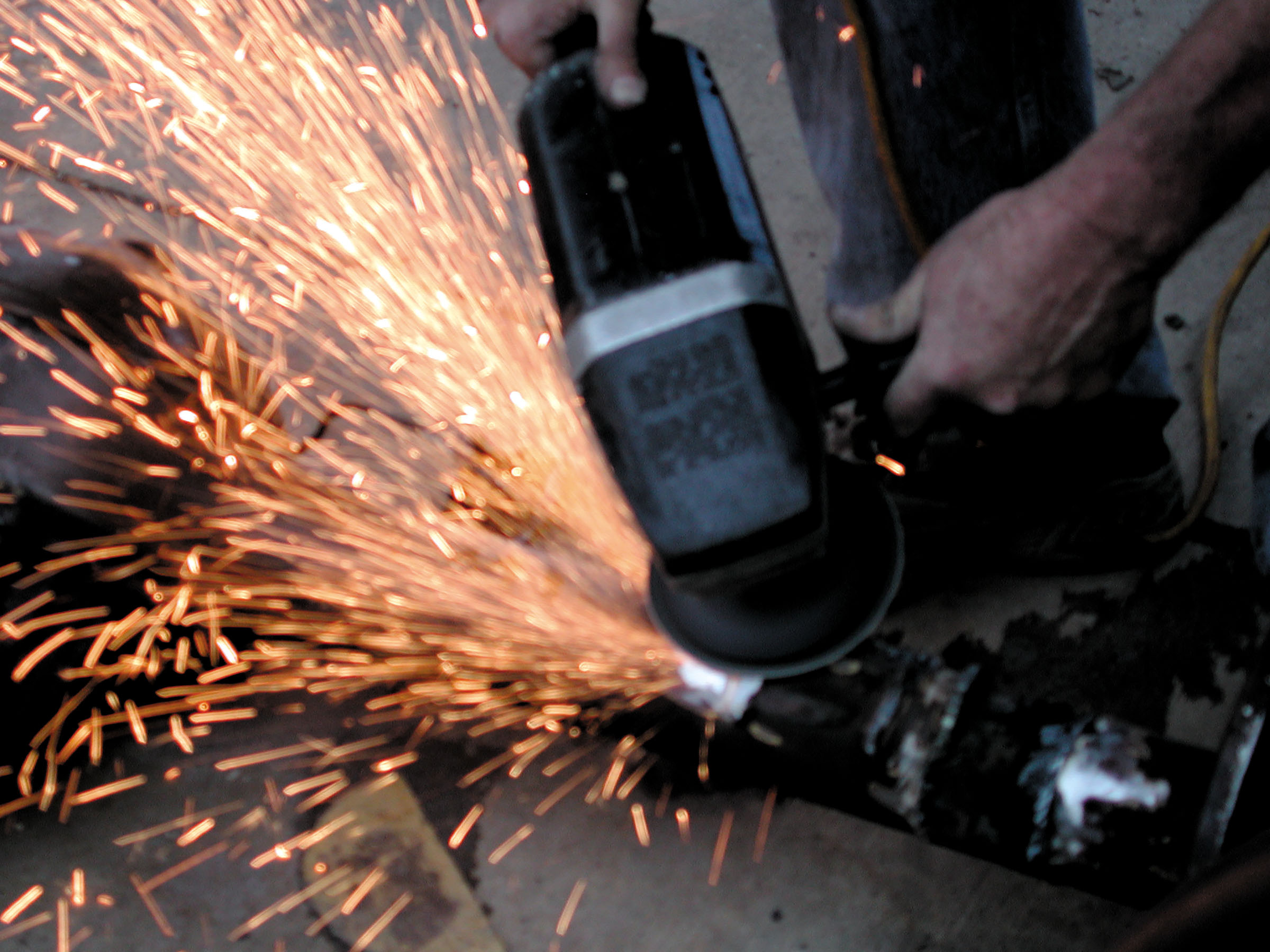
15) The front-mounted spring brackets were removed with a plasma cutter and the frame was ground smooth.
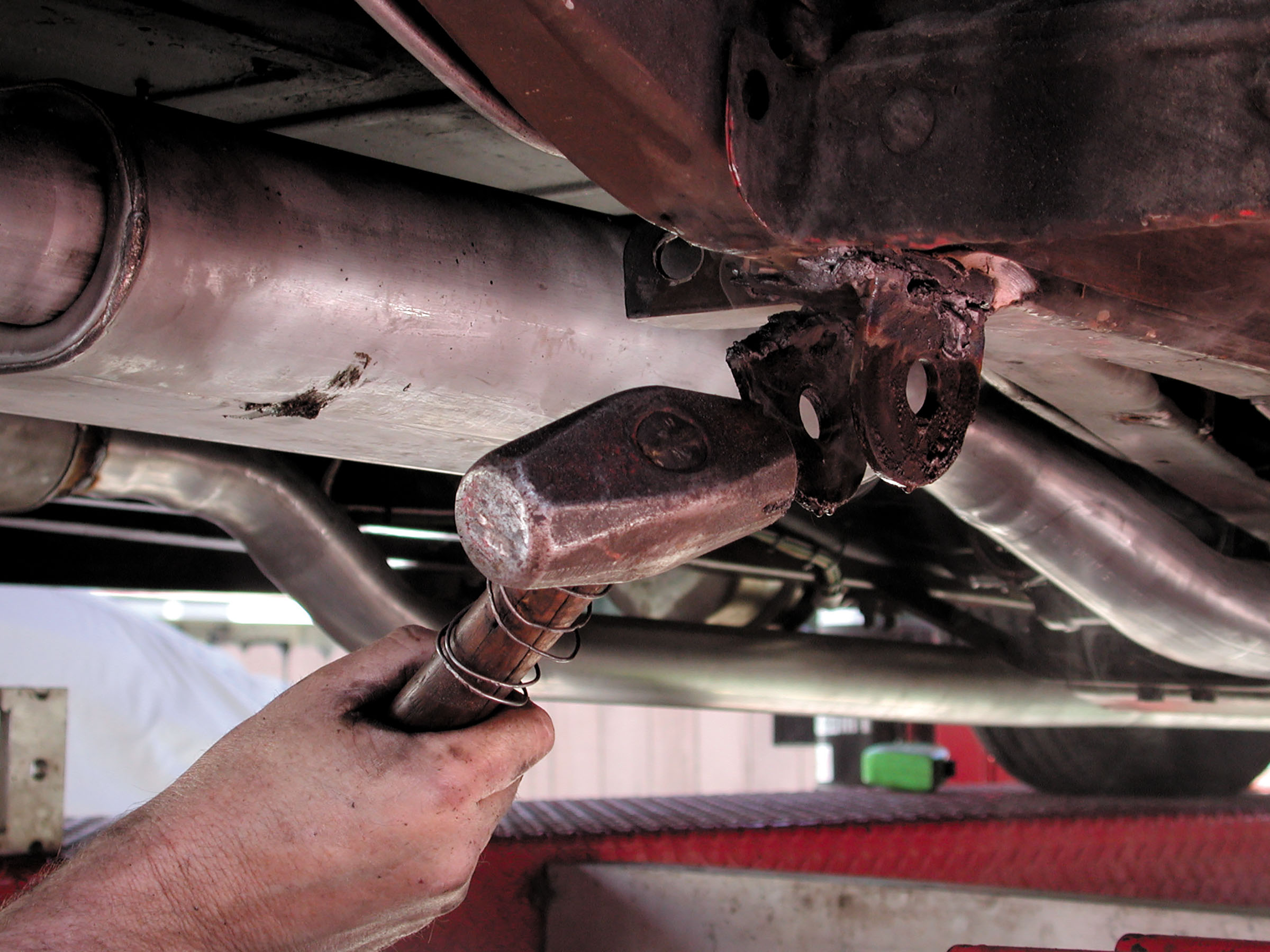
16) Some persuasion was required to remove the brackets, even when they were cut through with a plasma cutter.
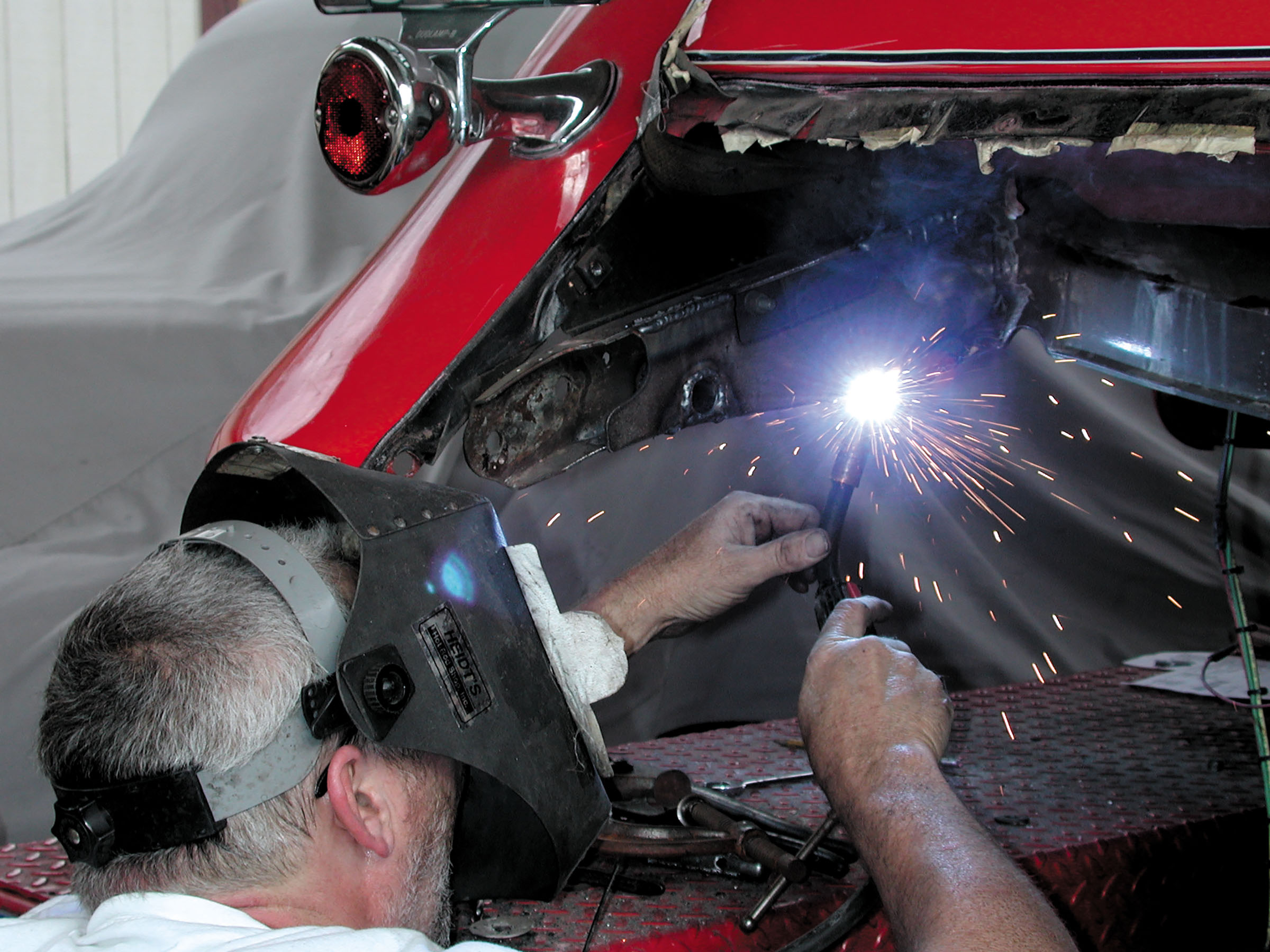
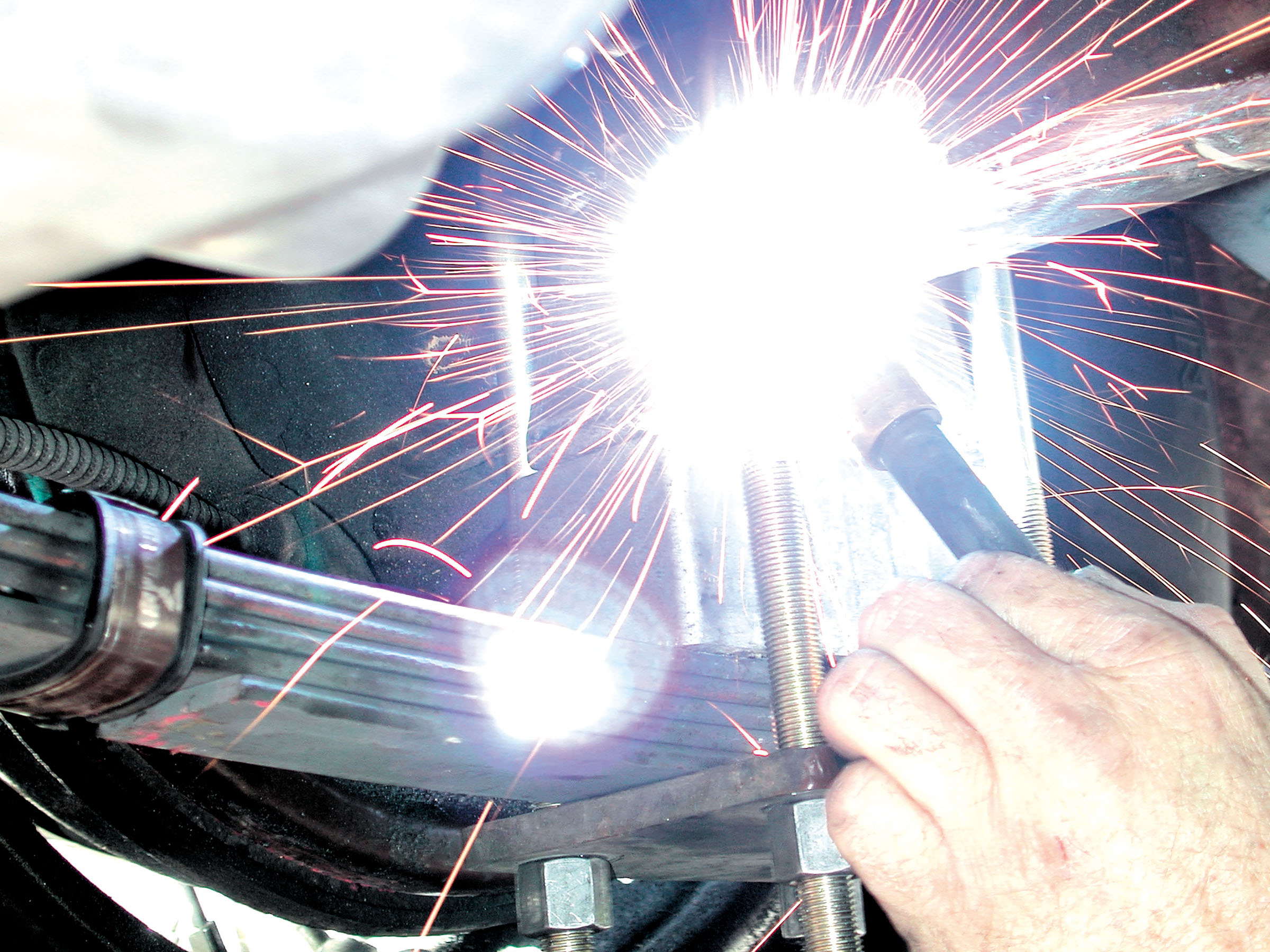
17) The brackets on the side of the frame also were removed with a plasma cutter.
18) All the slag was ground off from where the brackets were removed.
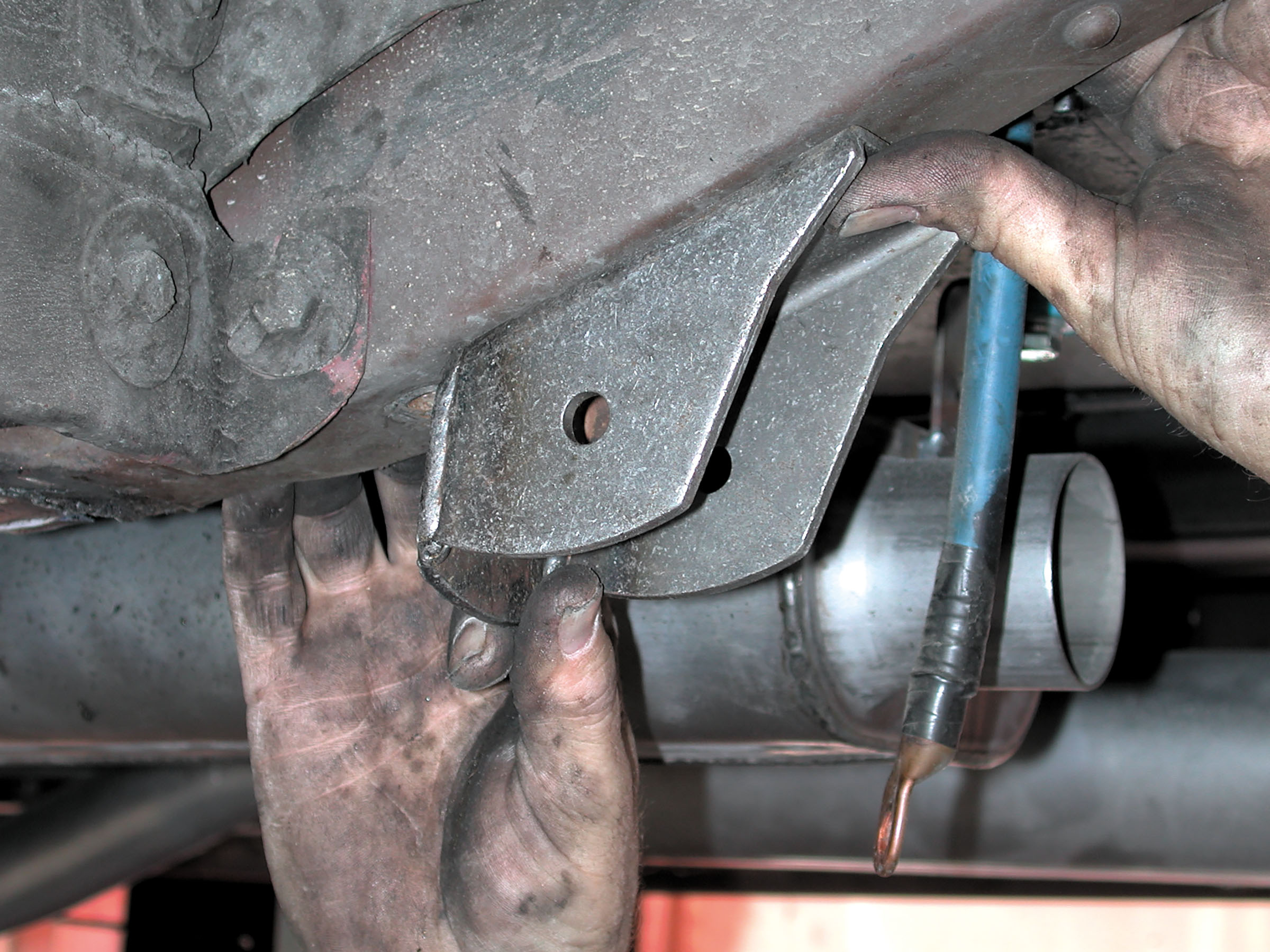
19) Trial-fit the spring bracket to the frame. It connects to the bottom and to the inside of the frame, where it is used as a gusset for strength.
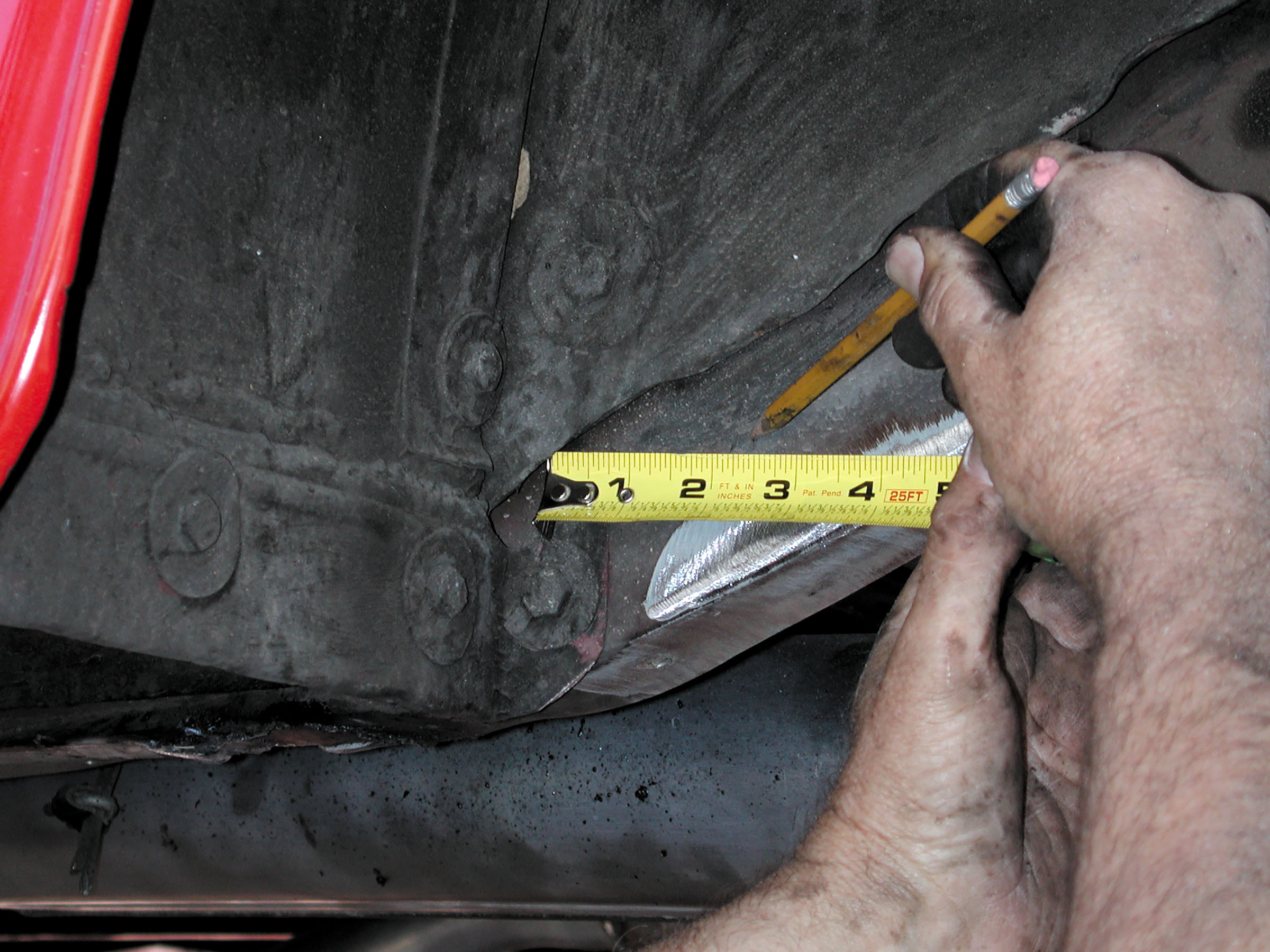
20) Using the bolt as a measuring point, mark the 2-1/2-inch distance described in the instructions for bracket installation.
21) The brackets were installed in the frame and then tack-welded in place. Tack-weld the bracket only, just in case some movement is required later. Before any welding was done, we wanted to make sure the bracket was at the correct angle—parallel to the ground.
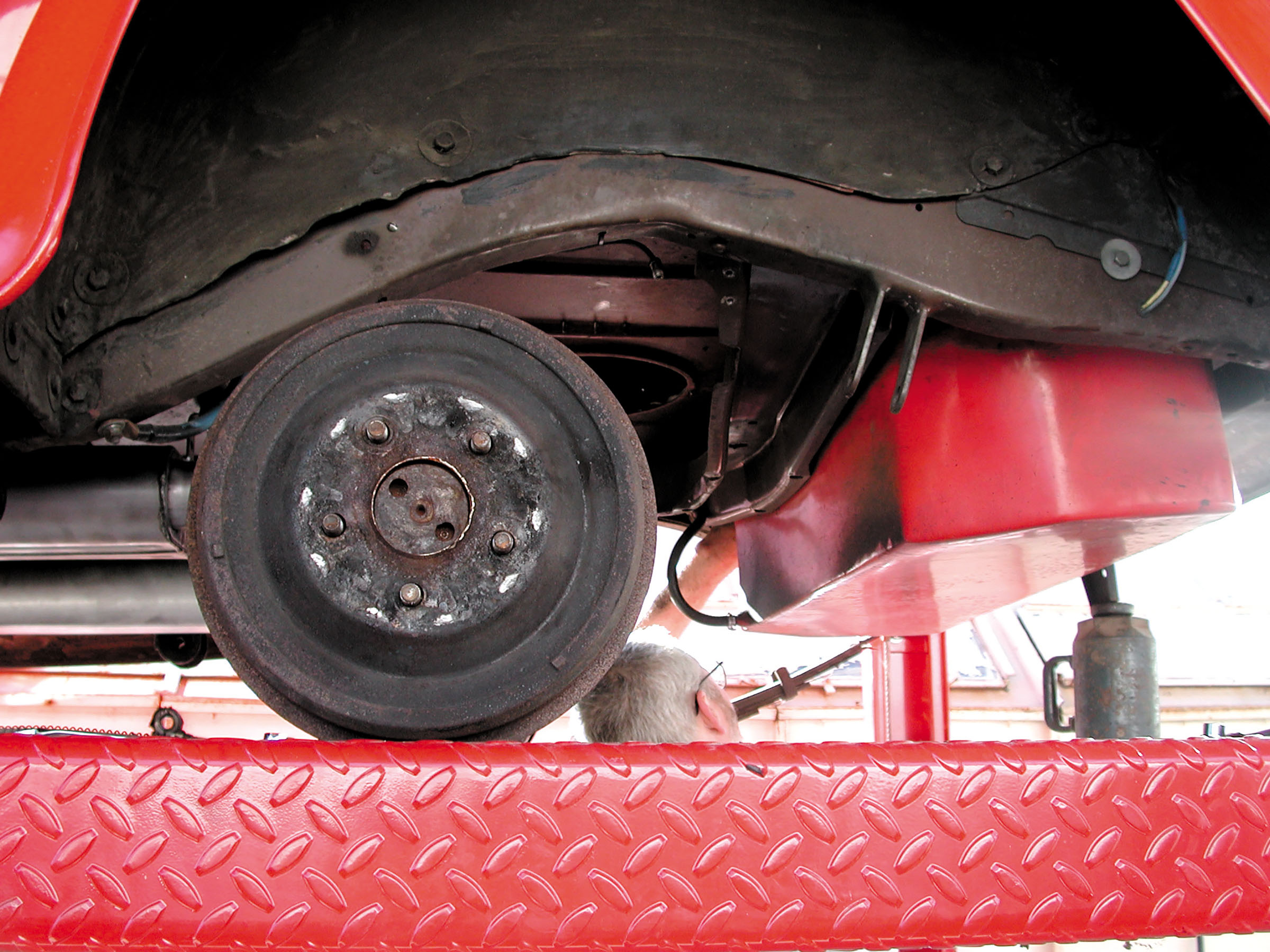
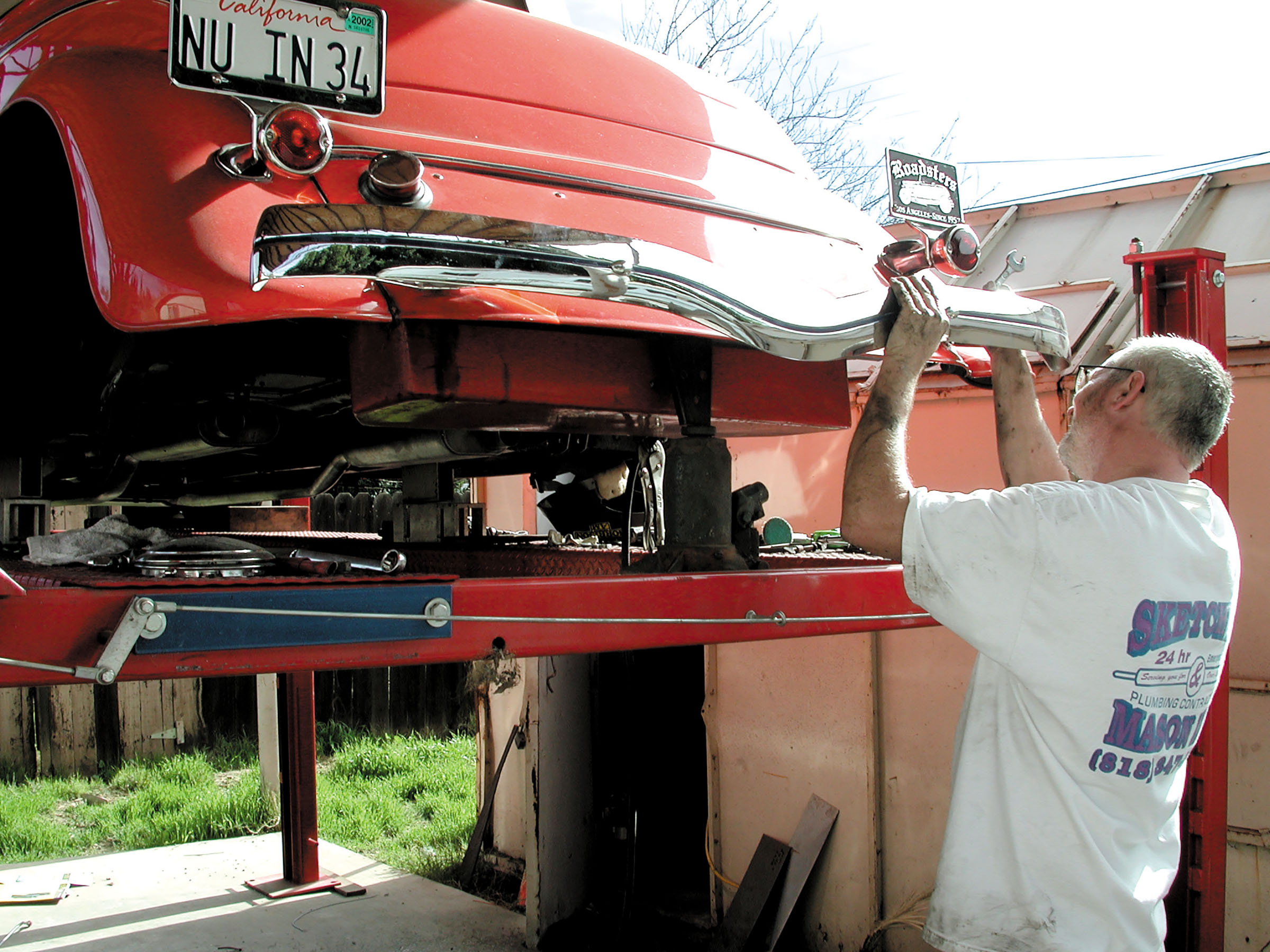
22) The rear bracket was a little more difficult to install, and impossible with the gas tank in place. To weld in the new brackets, the gas tank also has to be removed. We started the gas tank removal by disconnecting the rear bumper.
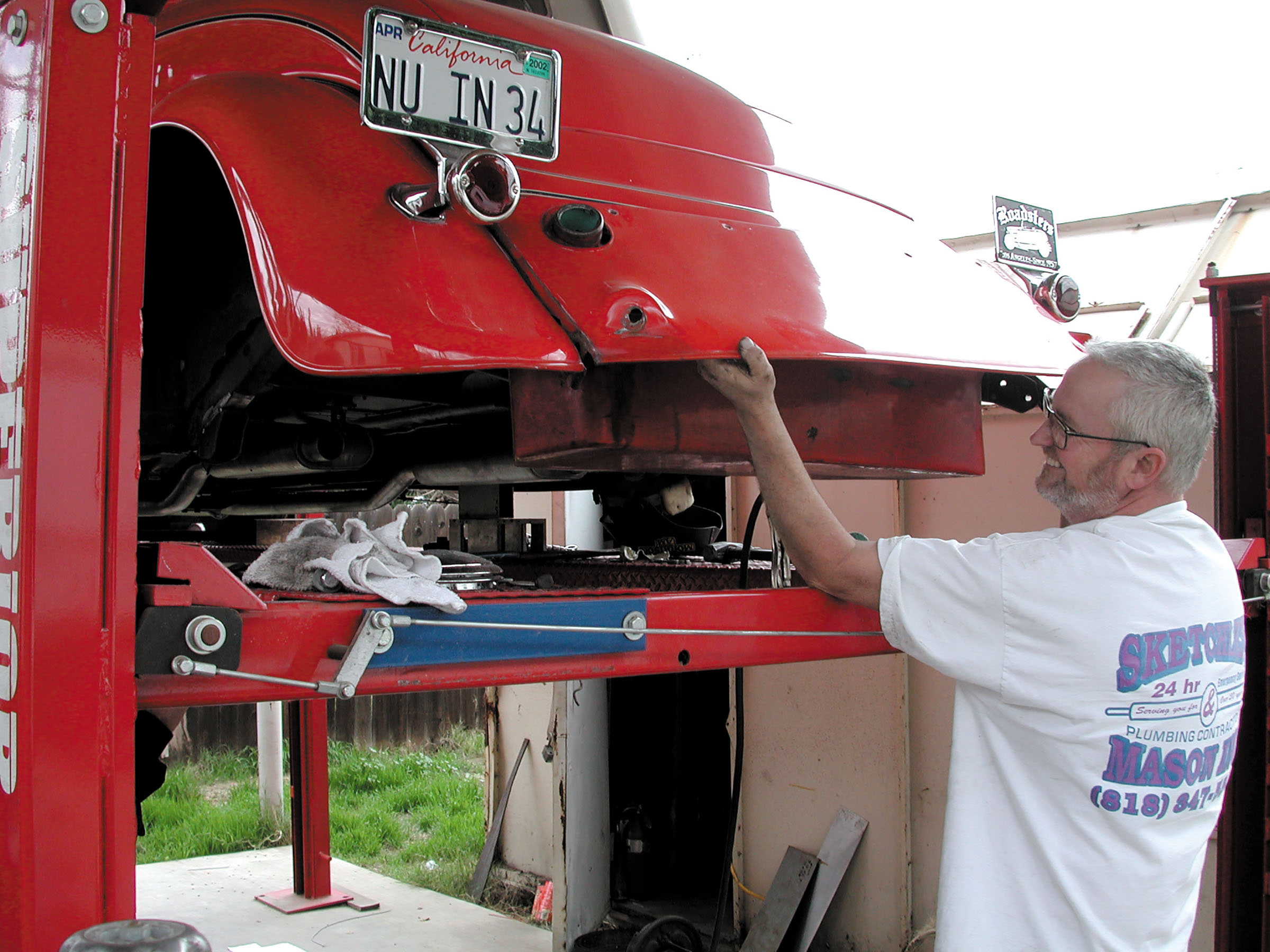
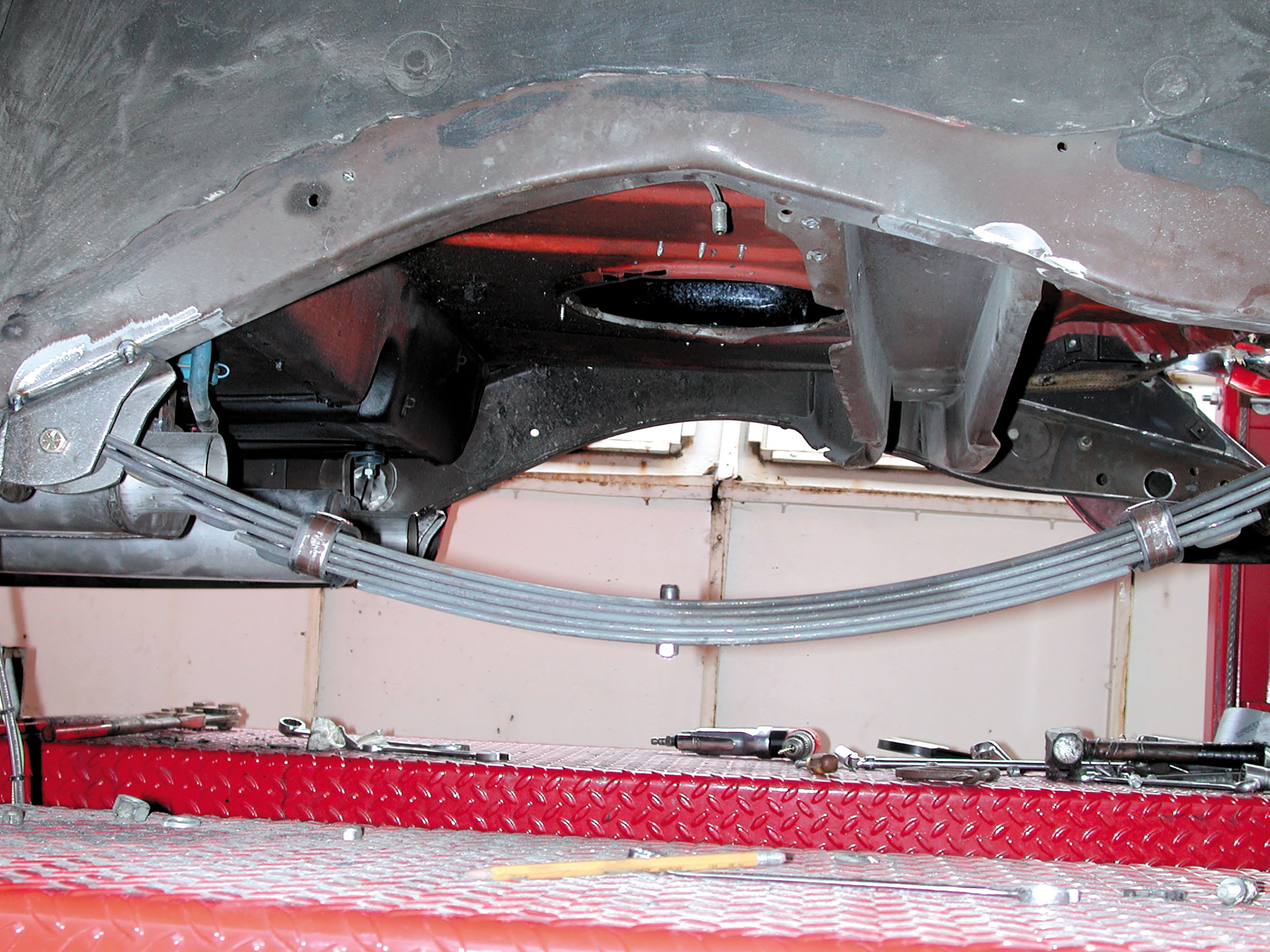
23) The gas tank cover also had to be taken off to remove the gas tank.
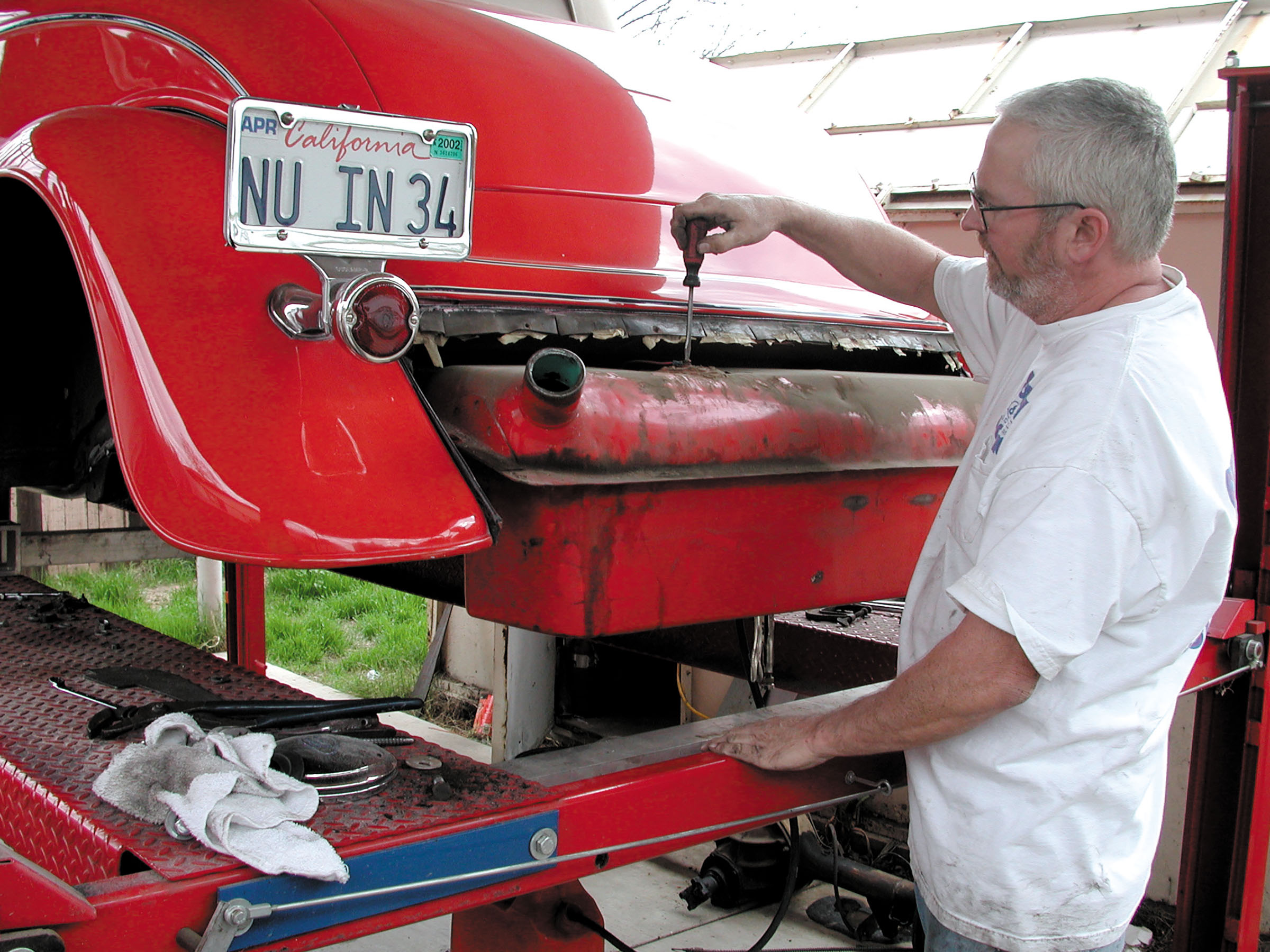
24) After draining the tank of fuel, plug the line with any type of plug of the correct OD and disconnect the wire from the sending unit. We also disconnected the bolts holding the tank on the side and removed the tank. This is an aftermarket deep-sump gas tank, so yours will most likely be different.
25) With the gas tank removed, you can see a small boxing plate at the rear of the frame. This gusset will be in the way of the new boxing plate that will be installed.
26) The small boxing plate at the rear of the frame had to be removed. It was cut off with a plasma cutter and the frame was ground.
27) Using the supplied measurements, which may vary from kit to kit, mark the mounting point of the round tubular bung that’s part of the rear bracket assembly.
28) We marked the location of the rear bracket bung and drilled a small pilot hole.
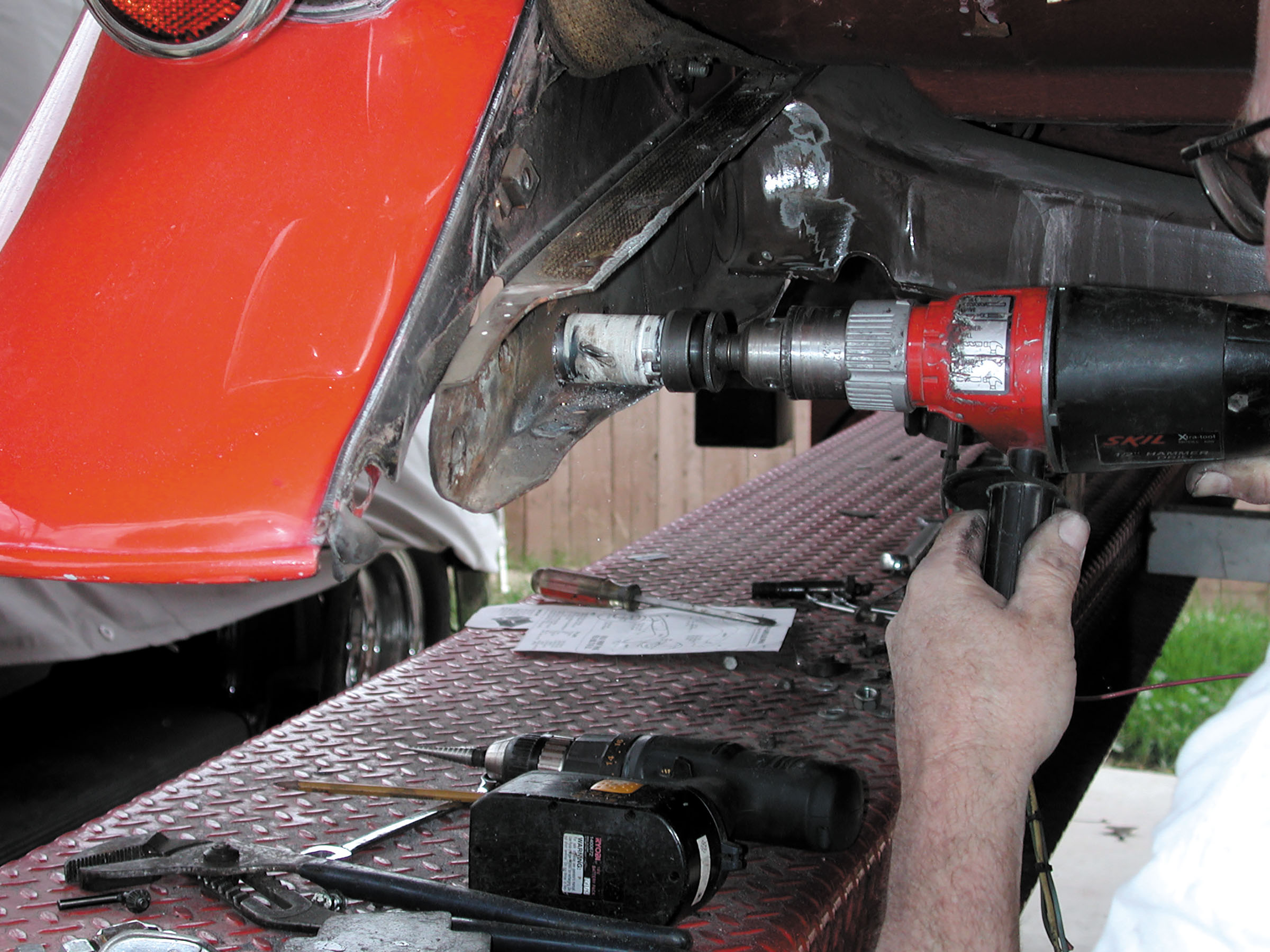
29) Using a pilot hole, we enlarged the hole with a hole saw. By mounting the rear spring bracket up inside the frame, we are effectively lowering the car.
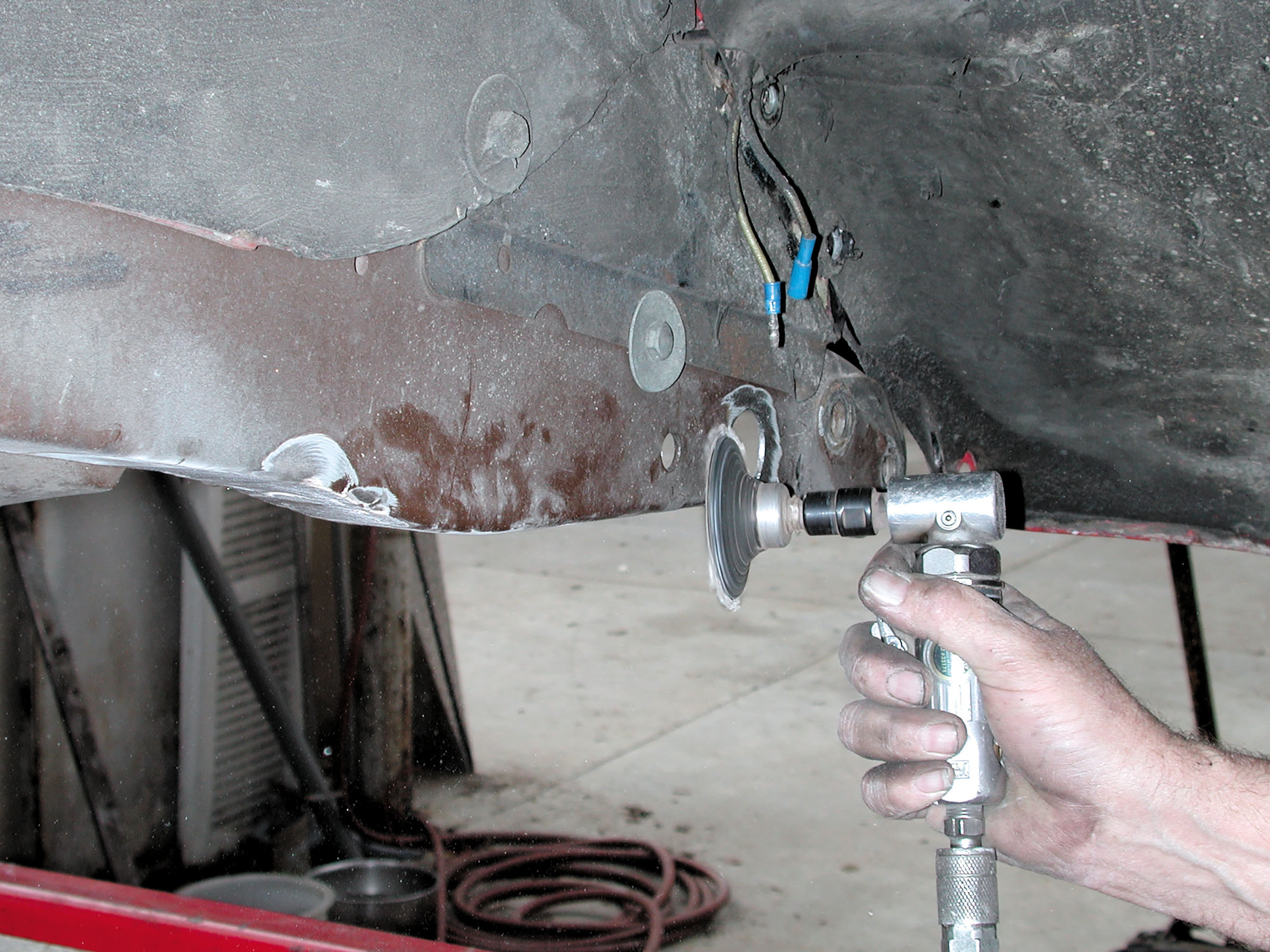
30) The hole saw left some rough metal around the edges that had to be removed. Grind the edge for a smooth finish. The bare metal will be useful when you weld the bung to the frame.
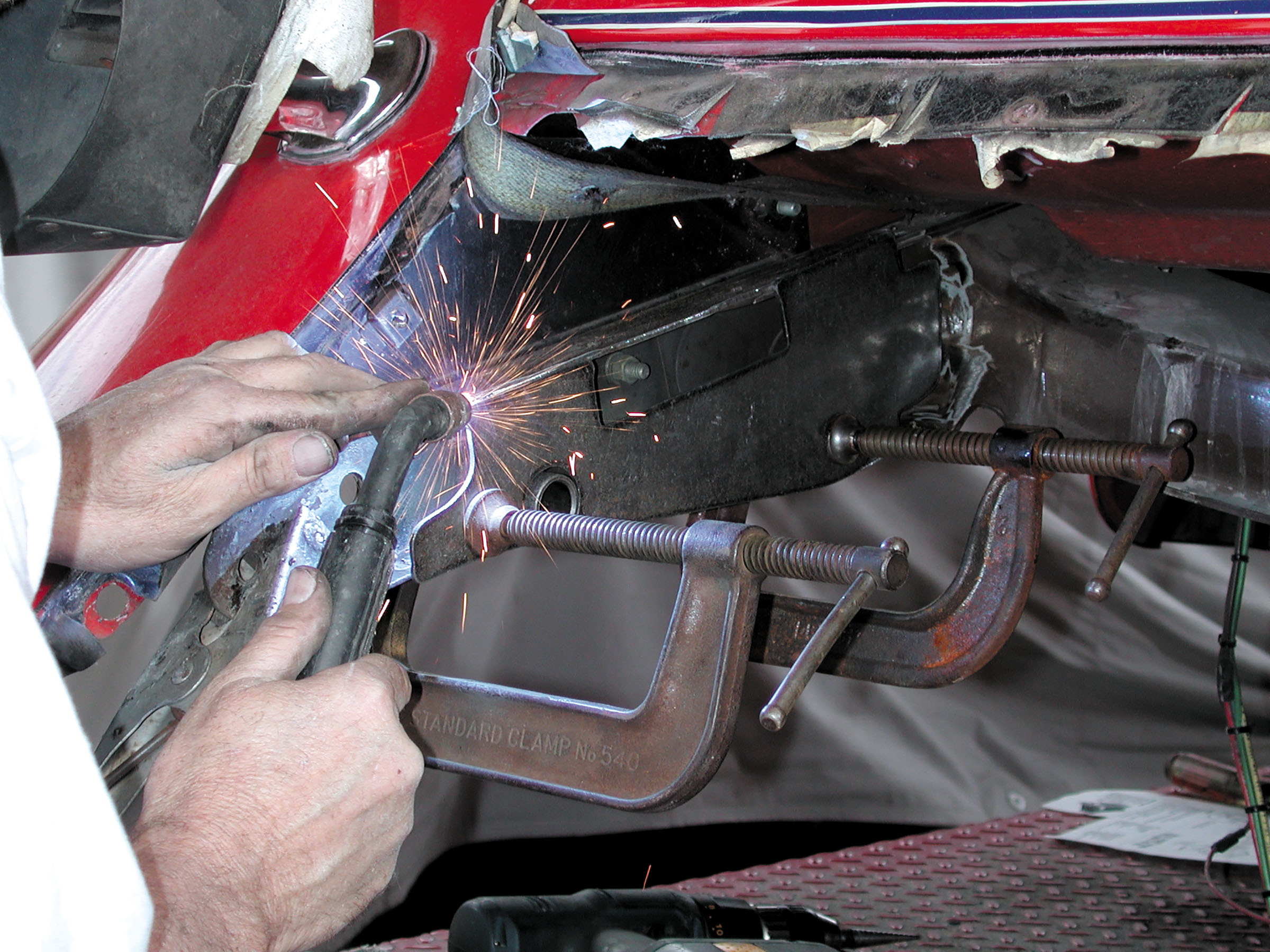
31) The kit comes with a rear boxing bracket that also helps support the round bung that is being installed in the frame. Tack-weld the boxing plate to the frame.
32) We tack-welded the bung to the rear boxing plate, checked the fit and then welded the bung to the boxing plate and to the framerail on the other side.
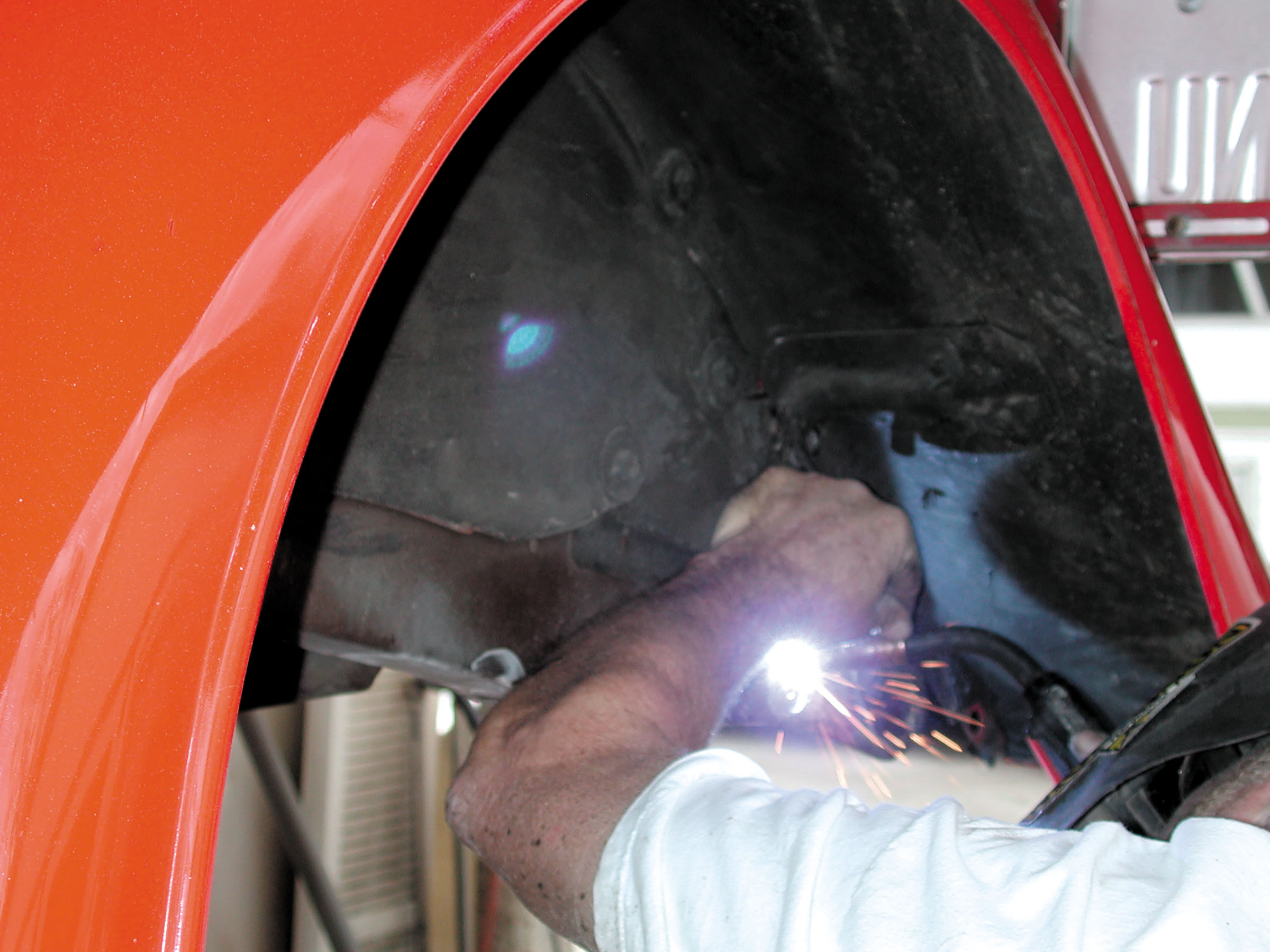
33) After making sure the rear brackets are lined up perfectly, weld the boxing plate to the frame.
34) The welds were ground smooth for a nice appearance. Also grind the area where the bung was welded to the frame.
35) Install the spring temporarily to see how it lines up. The front spring brackets are only tack-welded to the frame, in case minor positioning adjustments are required. Check the positioning of the differential by measuring from a fixed position on the frame. When you measure the wheelbase, from the front wheel to the rear wheel, you may run into problems because the front suspension may not be square. This is common on old cars and can be corrected by properly positioning the rear spring hangers.
36) In finished form, you can see how the rear spring bracket sits high in the frame, effectively lowering the car (approximately 1 inch). The spring eyes have also been reversed, further lowering the chassis.
37) Here’s a close look at the new spring pad that will have to be welded to the rear-axle housing. It is designed so that it, too, will mount the axle higher on the spring, again lowering the ride height. This suspension will lower the ’34 about 2 inches from where it sat previously.
38) The old brackets on the rear-axle housing were removed and the housing was ground smooth so that the new mounts could be installed.
39) The rear-axle housing was reinstalled into the car and hung on the springs. It is resting on the spring mounting pads supplied in the kit.
40) We measured the side-to-side movement of the axle to center the axle on the spring mounting pads.
41) After the axle is centered, install the U-bolts and tighten them to hold the axle housing in place. The U-bolts were tight enough to prevent side-to-side movement, but the pinion could still be raised or lowered.
42) We reinstalled the tires and wheels to get the weight of the car on the springs. This will position the axle at the correct ride height so the pinion angle can be set.
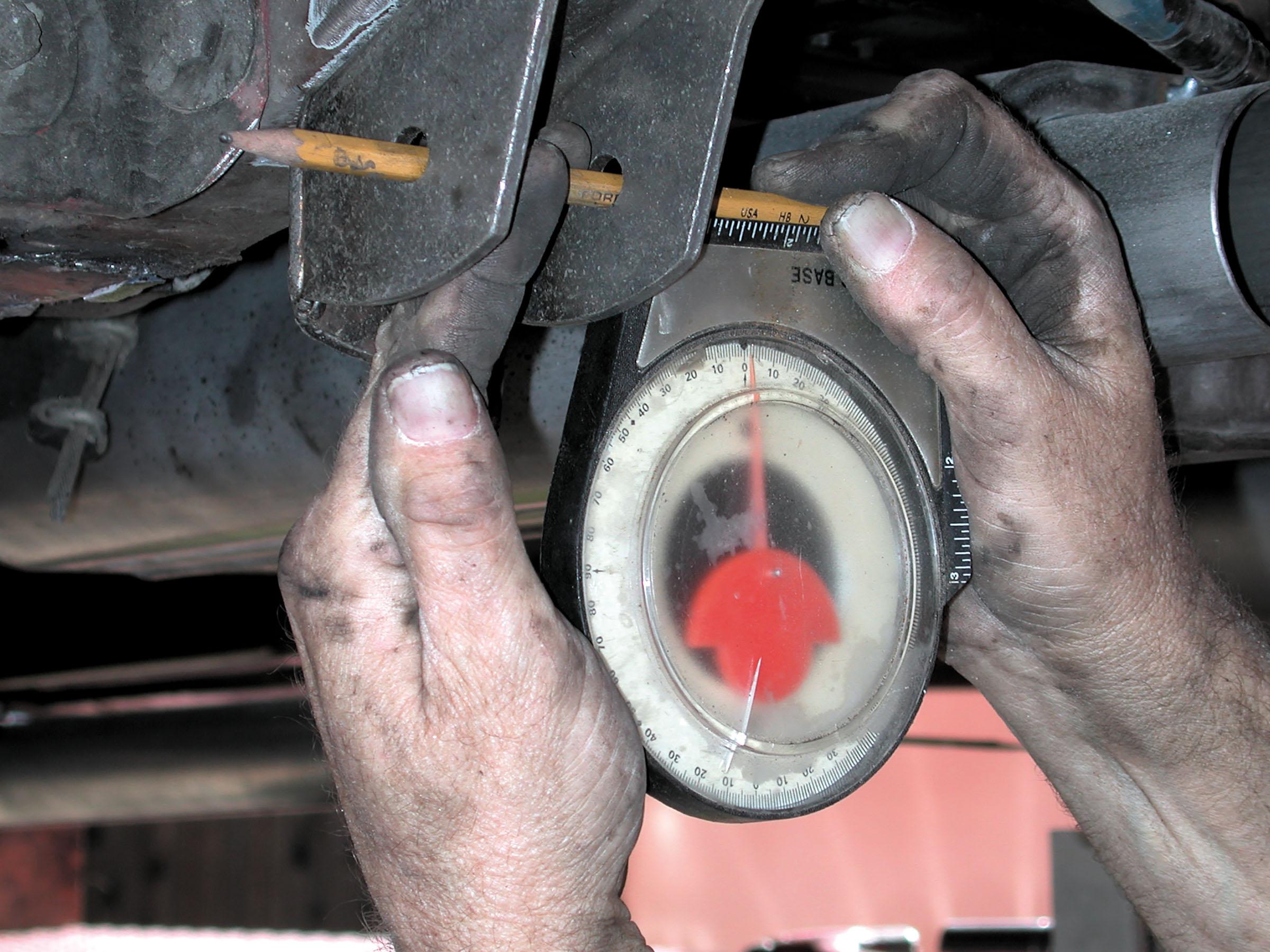
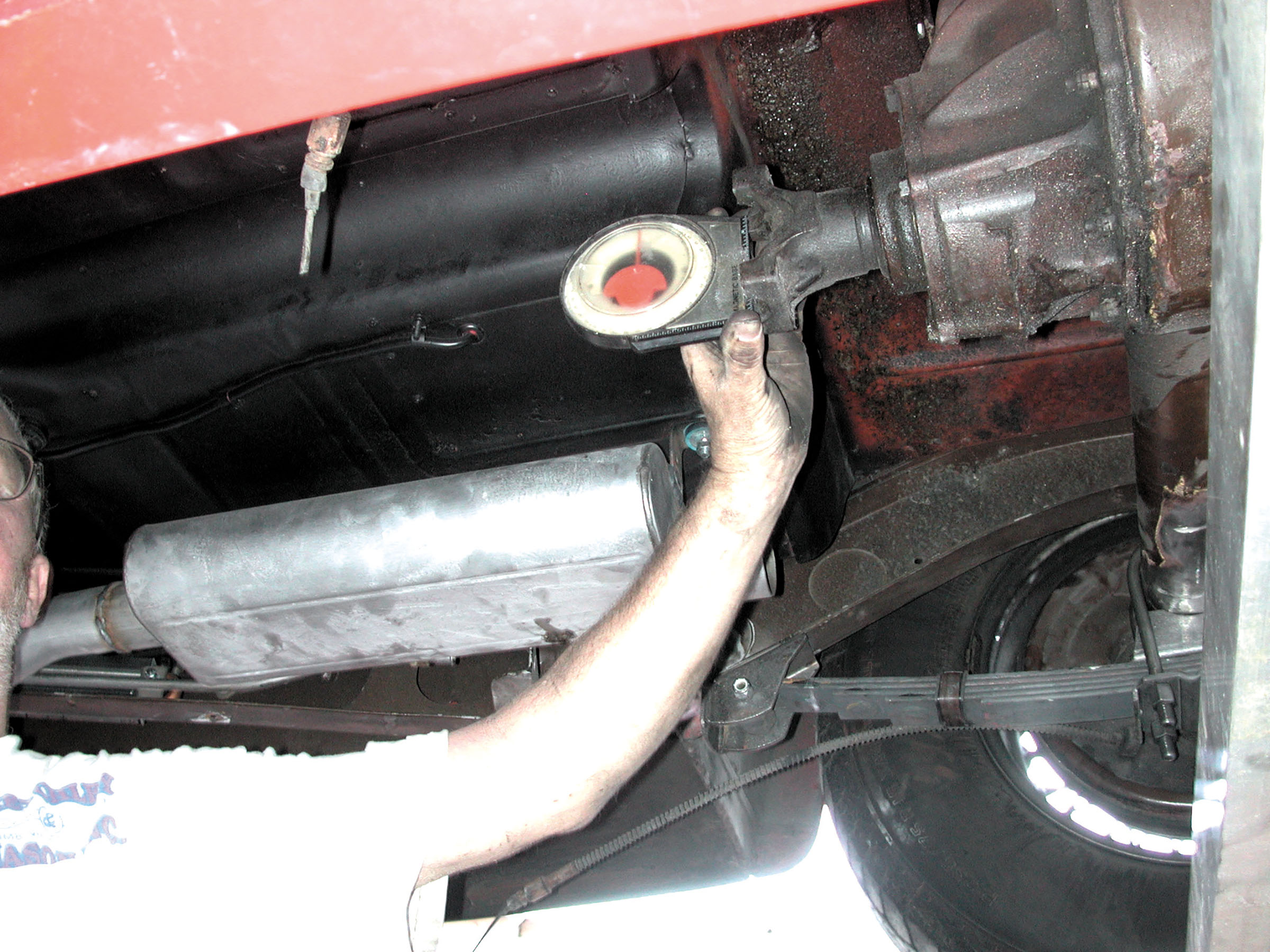
43) Using a level gauge, we checked the pinion angle to make sure it was within tolerances. The driveshaft should be at a slight angle (4 or 5 degrees) from the pinion centerline. Some OE installations do this by offsetting the pinion-to-driveshaft centerline. When the pinion is at the correct angle, the mounting pads can be tack-welded to the axle housing.
44) After adjusting the pinion angle, tack-weld the axle housing to the mounting pads.
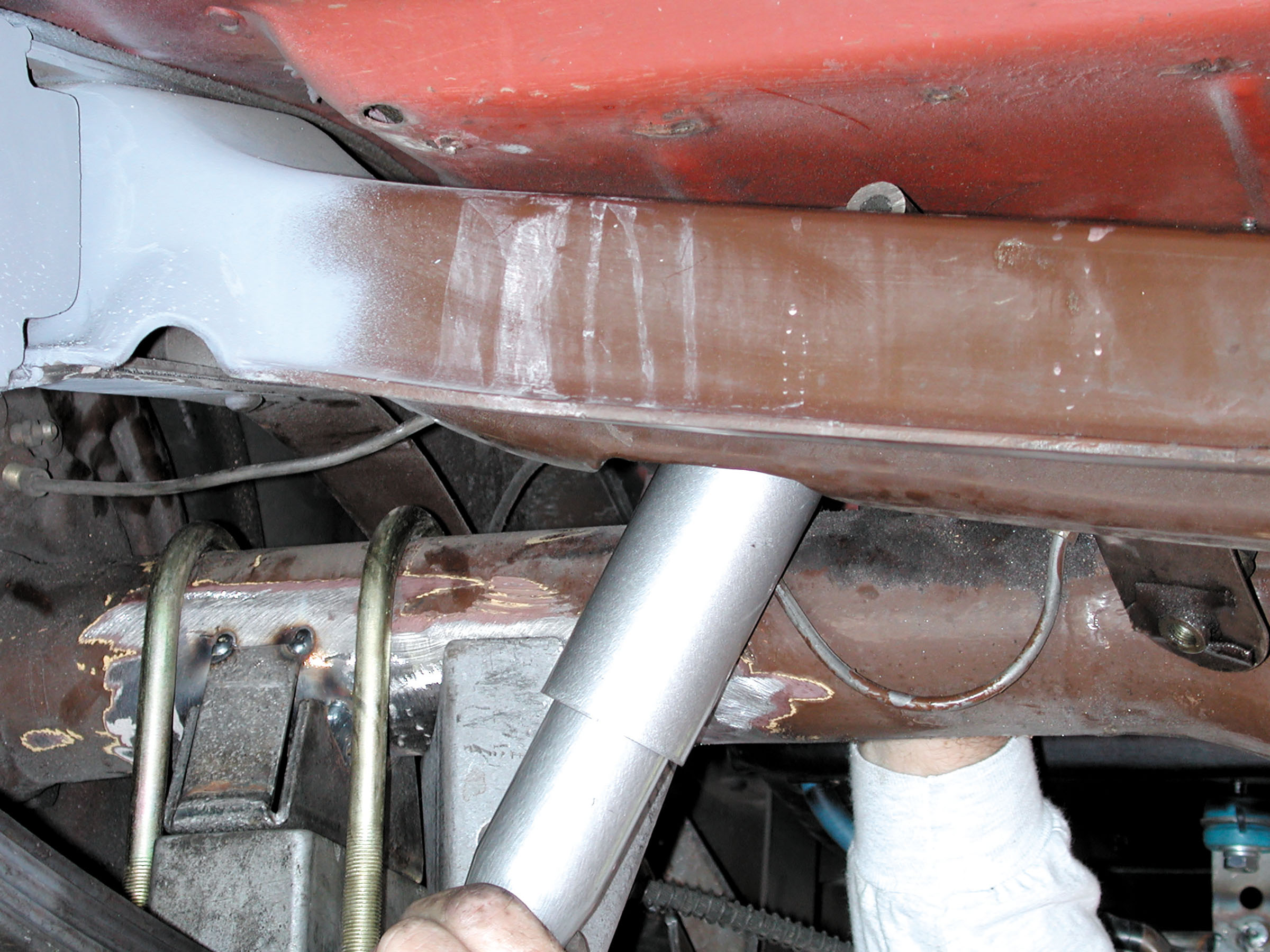
45) To mount the shock in the correct position, measure the fully open and closed positions and find the center. The center is where the shock should be at normal ride height. We made all our measurements with the car at normal ride height and the shock in the center position.
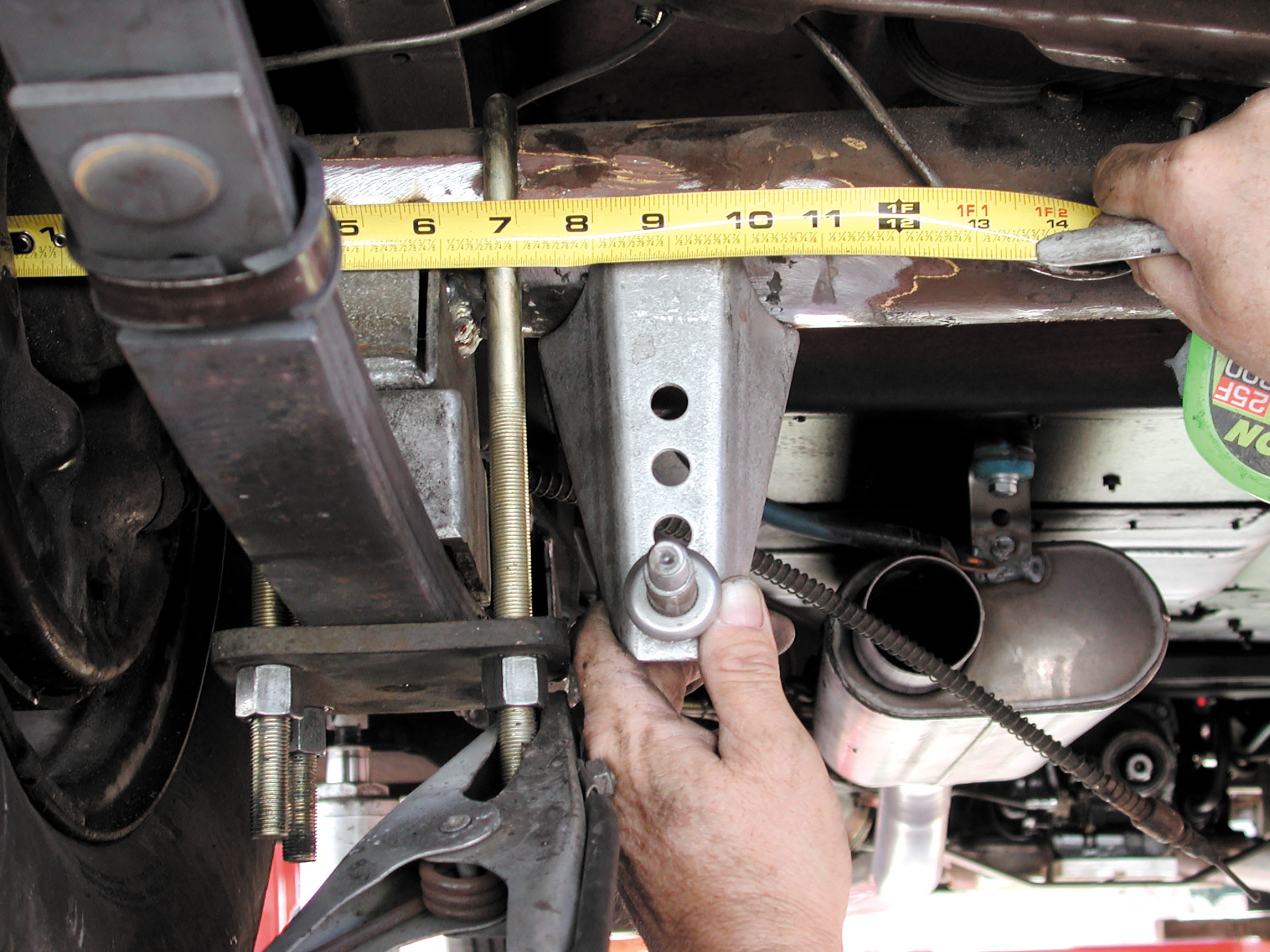
46) The lower mounting bracket should be positioned 9 inches away from the backing plate. Notice that the bracket has several holes so that some shock adjustments can be made.
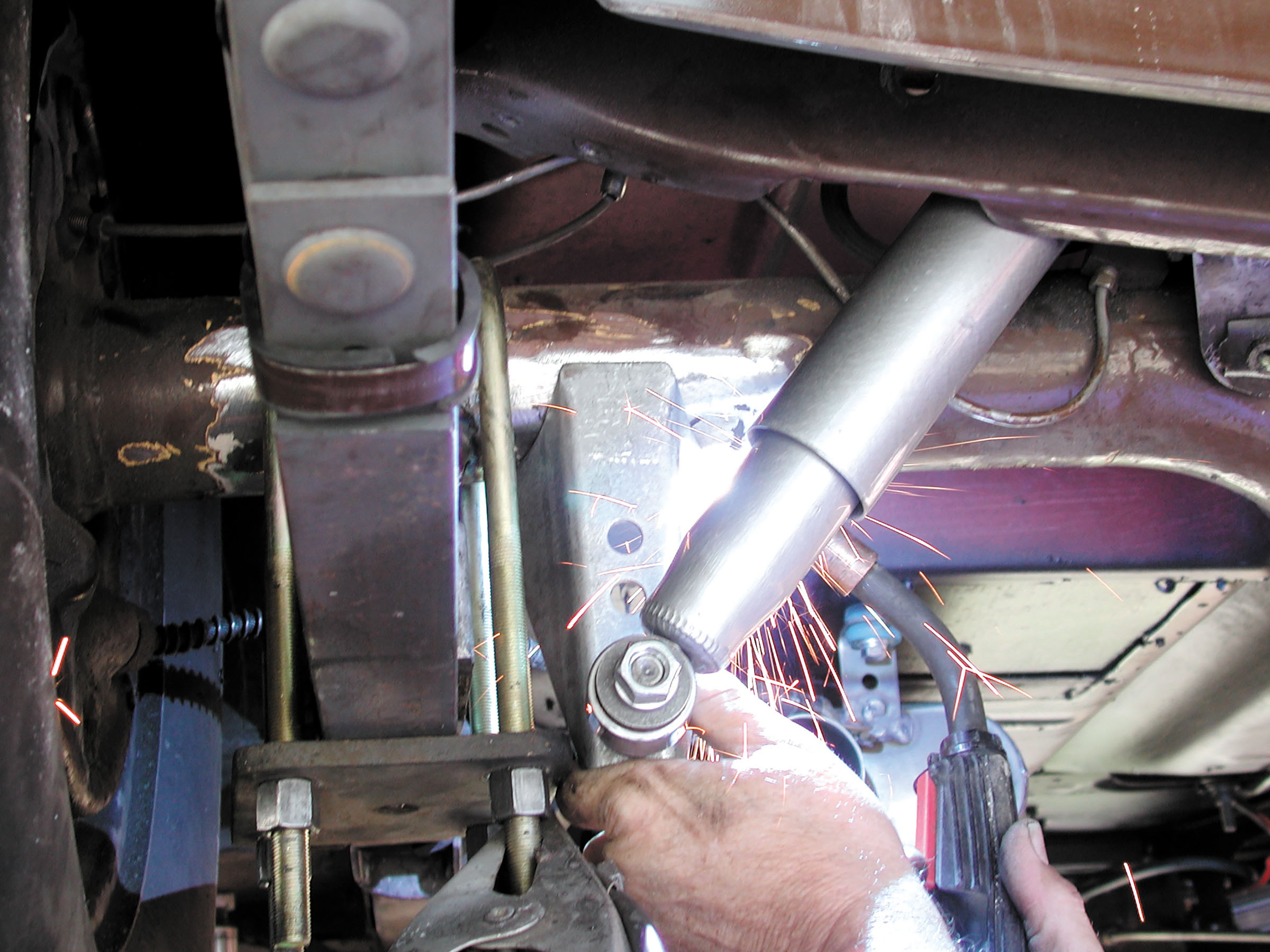
47) With the shock in place, tack-weld the bracket on the axle housing. We will remove the differential for cleaning and painting after the brackets are tack-welded in place. That’s also when you can finish-weld all the brackets.
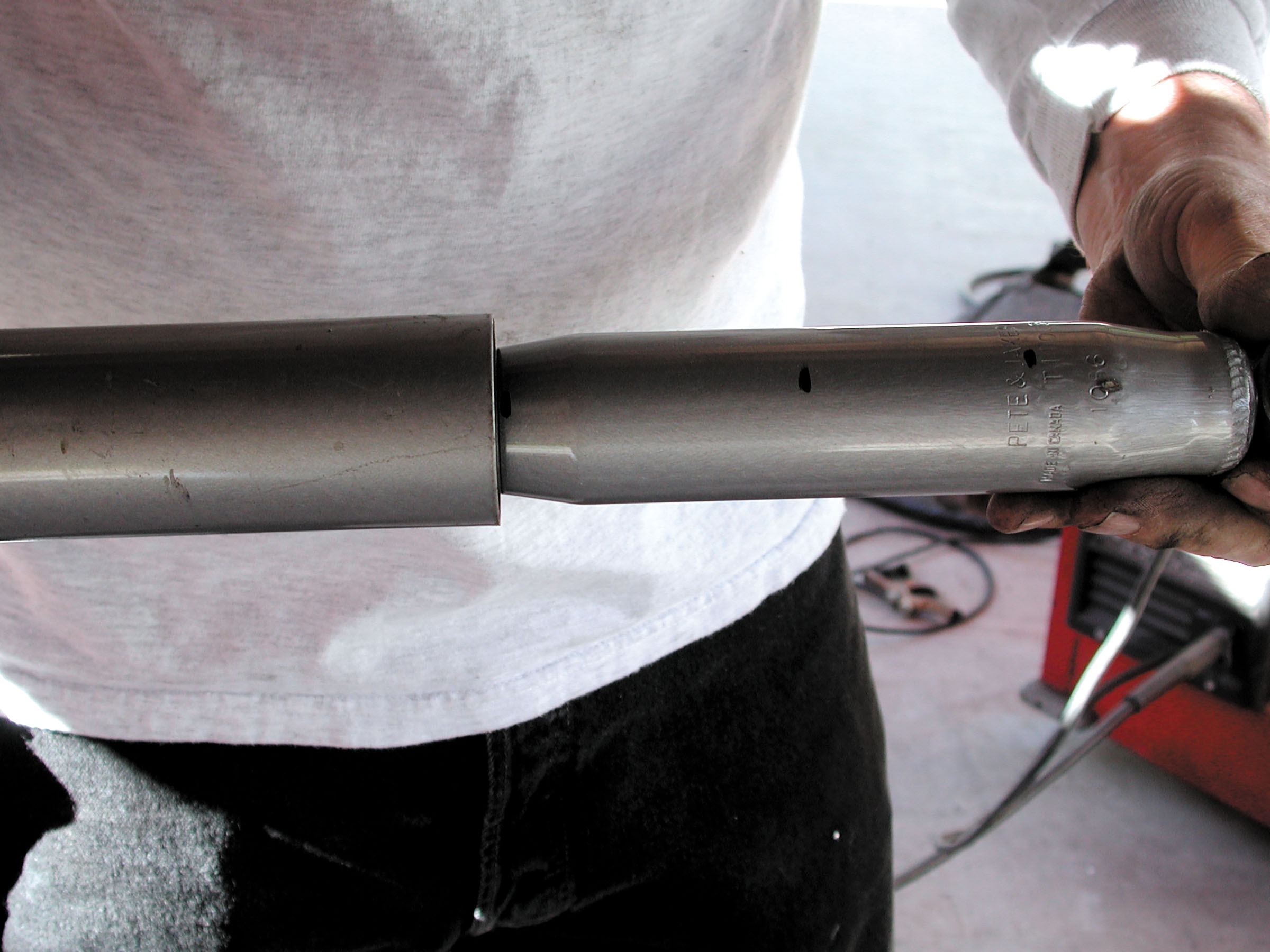
48) The Posies kit didn’t come with a top shock bracket, so we made one. The shock will mount to the top of the rear crossmember. We’re going to make a bracket with a round piece of threaded tubing.
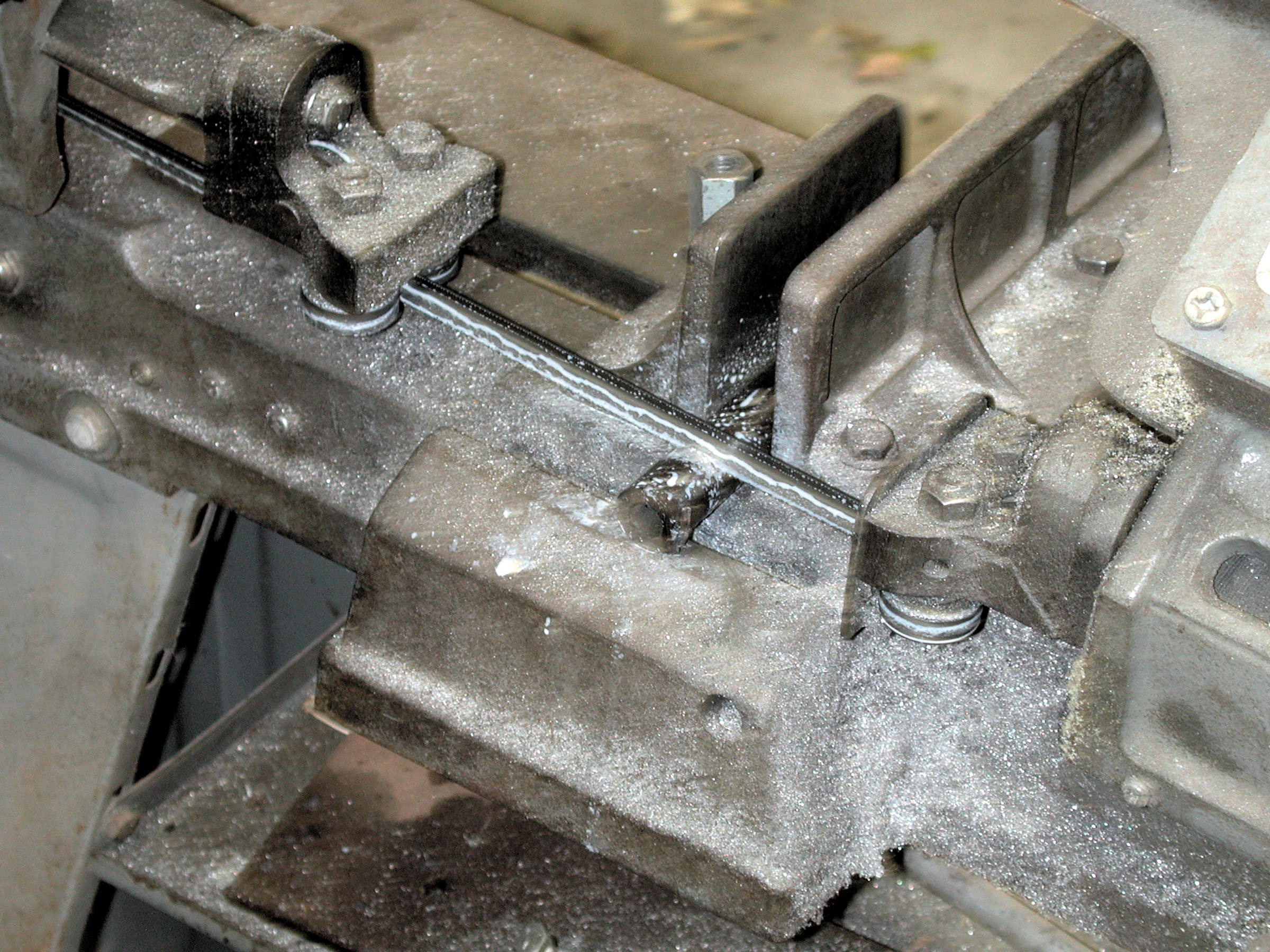
49) We cut the tubing to size on a band saw. It was cut 1-1/2 inches long.
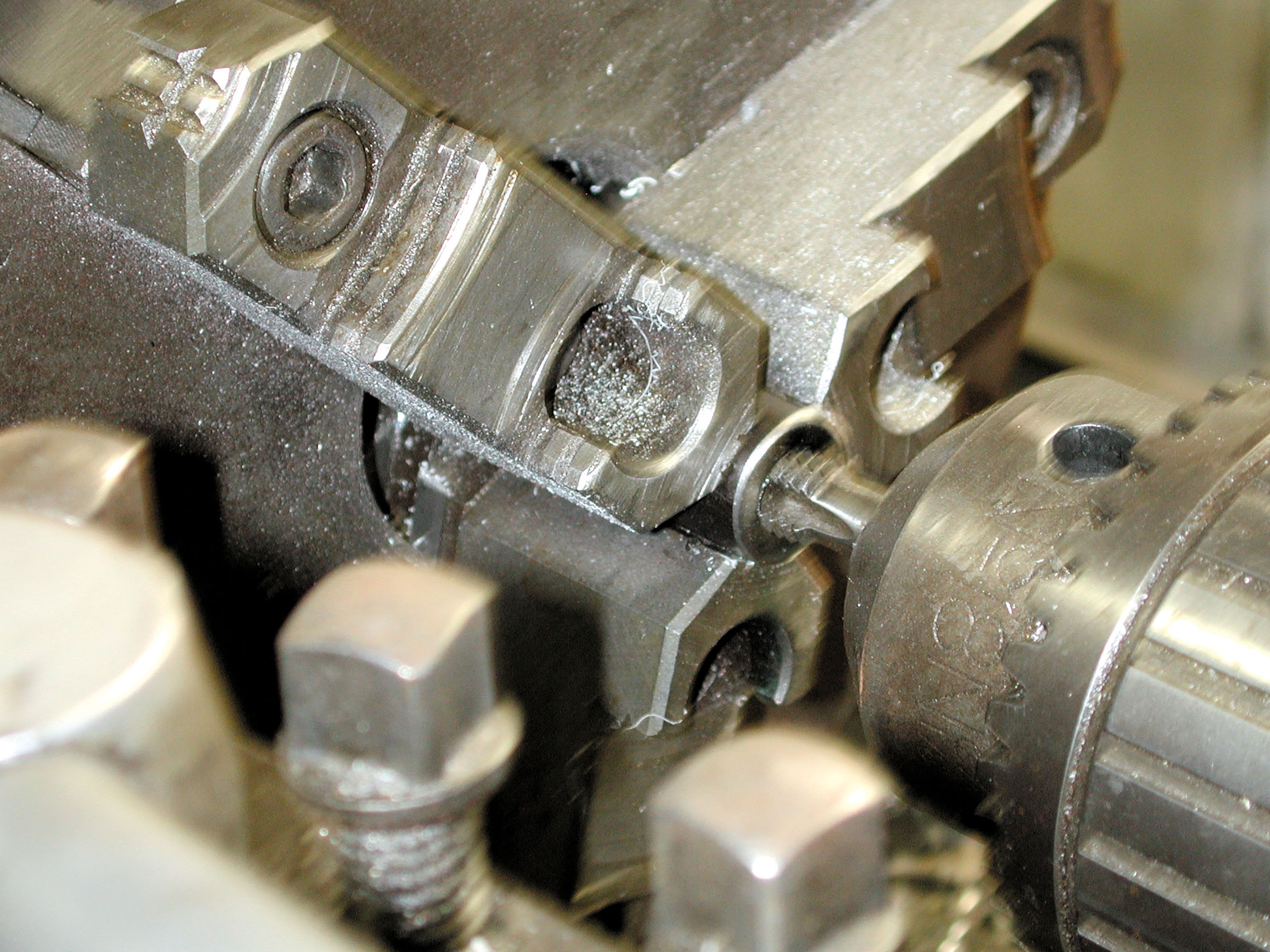
50) The tube was threaded for the top shock bolt connection.
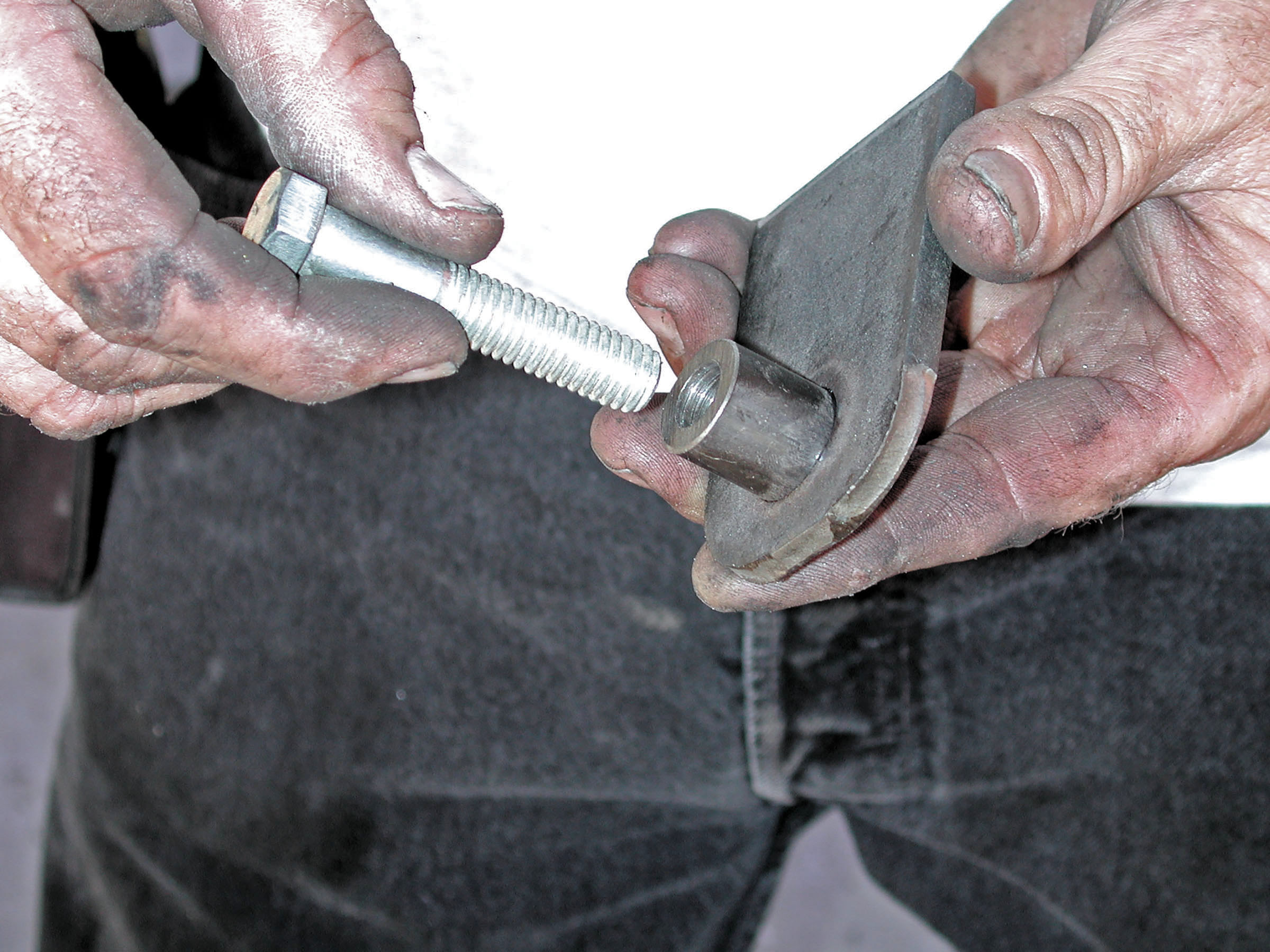
51) Here’s what the finished bracket looked like when it was ready for installation.
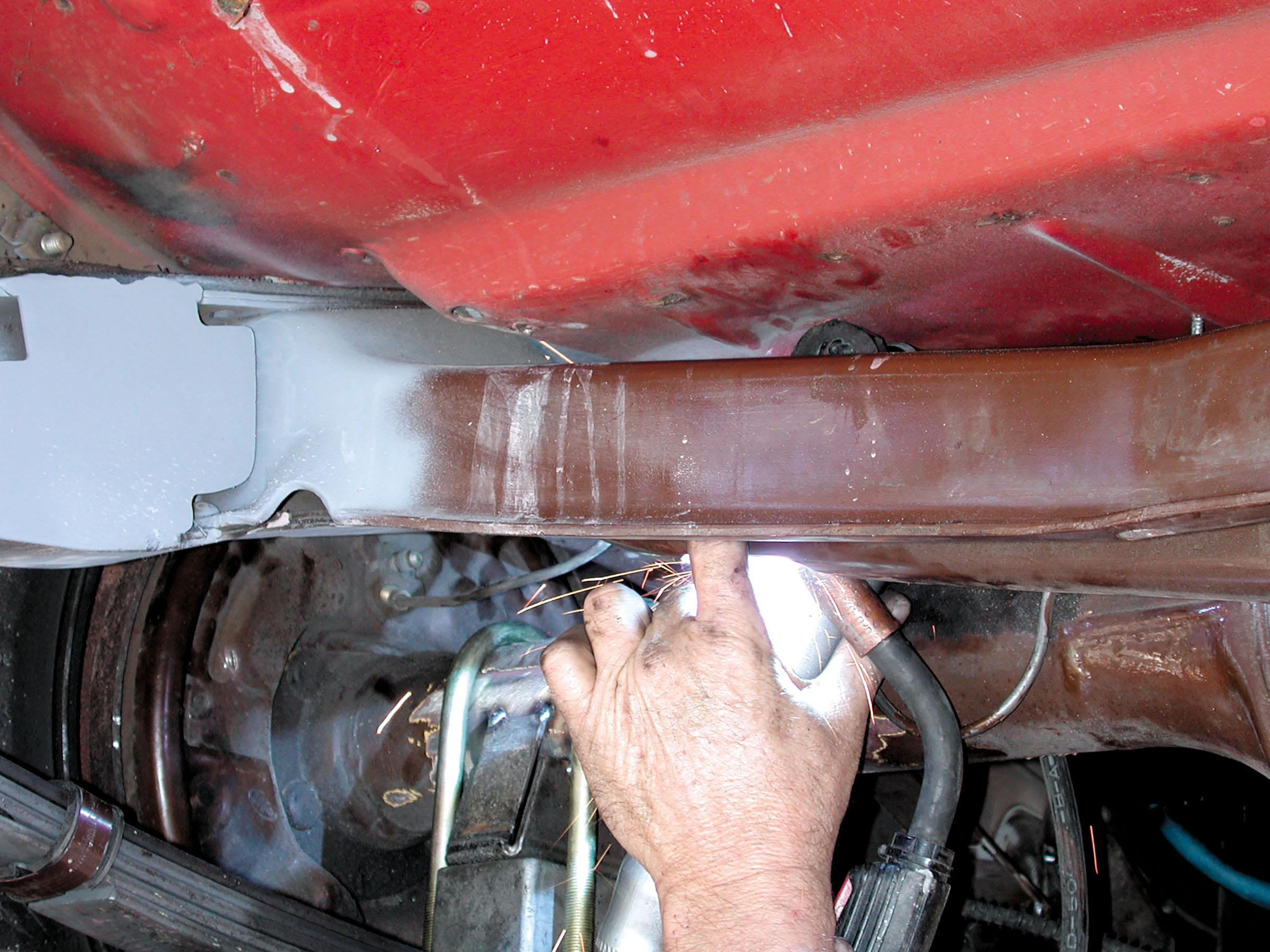
52) The shock was connected to the bracket to make sure everything was in perfect alignment. Then the bracket was tack-welded to the original rear crossmember.
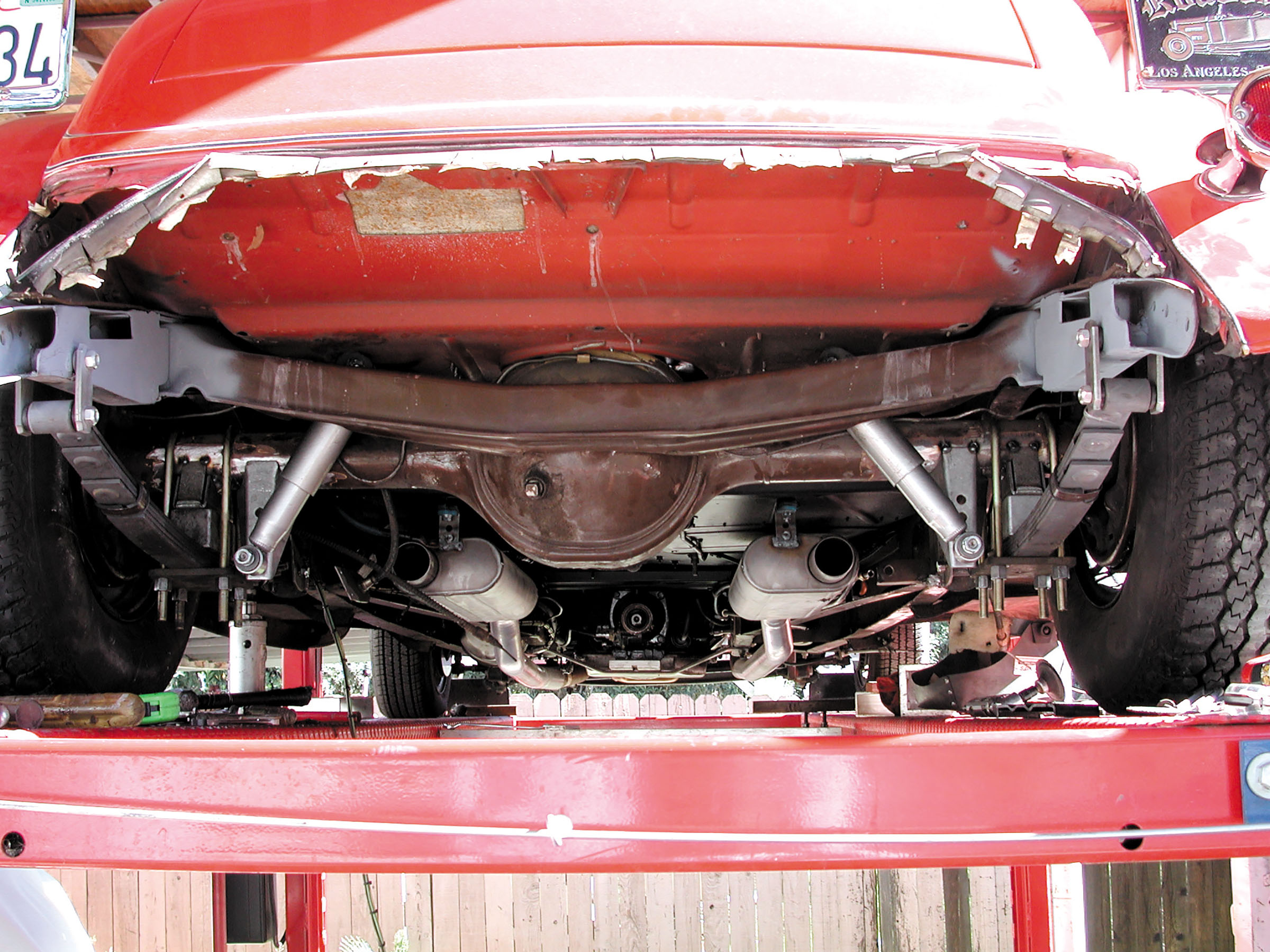
53) Even though the new spring kit dropped the car, the owner wanted it to sit even lower, so 2-inch lowering blocks were used. Here’s how the completed suspension system looks after the installation. A few more modifications to the frame and rear floor pan will be required for clearance. This may differ from car to car. We also will paint the rearend assembly and reinstall the gas tank.
54) Looking at the first measurement, it’s easy to see that the ’34 sits considerably lower. The fender is now 27 inches off the ground. We were able to lower the rear a full 3 inches.