
THE AUTO BUILDER
Featured

Interior Design
When Jorge Torres was young he would help his father around his shop. Named after the senior Torres, Armando’s Custom Upholstery in San Jacinto, California, opened in 1989 when Jorge was still in high school. In 1992, he began working full time with his father and brother, Armando Jr. He stared doing old cars and went to a few shows to promote their work. During this time he mentioned to his dad that he wanted to build a 1969 Chevy pickup. It turned out that his dad had a friend who owned one, but he was told that the truck was in pretty rough shape. All Jorge heard was that the price, at $1,500, was in his range.

FOUR-IN-ONE
In the case of a new Honda Civic Si (EP3), this owner wanted to enhance high-rpm power. The K20 engine with the new i-VTEC 2-liter powerplant has considerably more torque available in the lower part of the power band in comparison to the older B- and H-series VTEC engines. While the EP3 used here is primarily a street-driven machine, the owner plans on taking the car to the weekend dragstrip on occasion.

Too Cool
When Billy Durant approached Louis Chevrolet about designing a new automobile, Chevrolet was a famous race car driver whose exploits in the Indianapolis 500 were legendary. The year was 1911 and Durant, who could see the writing on the wall for his horse-drawn buggy business, figured who better to design an all-new, high-performance vehicle than a successful driver. Chevrolet, a company that was founded by racers and has produced some of the best high-performance vehicles ever to hit the pavement, has once again gone where no other manufacturer has dared to venture. With truck sales making up nearly 50 percent of their sales volume each year, Chevy wanted to create a Flagship vehicle for their pickup line. It had to be a totally new idea in pickups. But what was to be the angle? Luckily, someone at Chevy figured that since the Corvette holds that title for the autos, maybe the new truck should be equally as high performance. With that, the new Chevrolet Silverado Coolside II was born.
Spotlighter
POPULAR READS
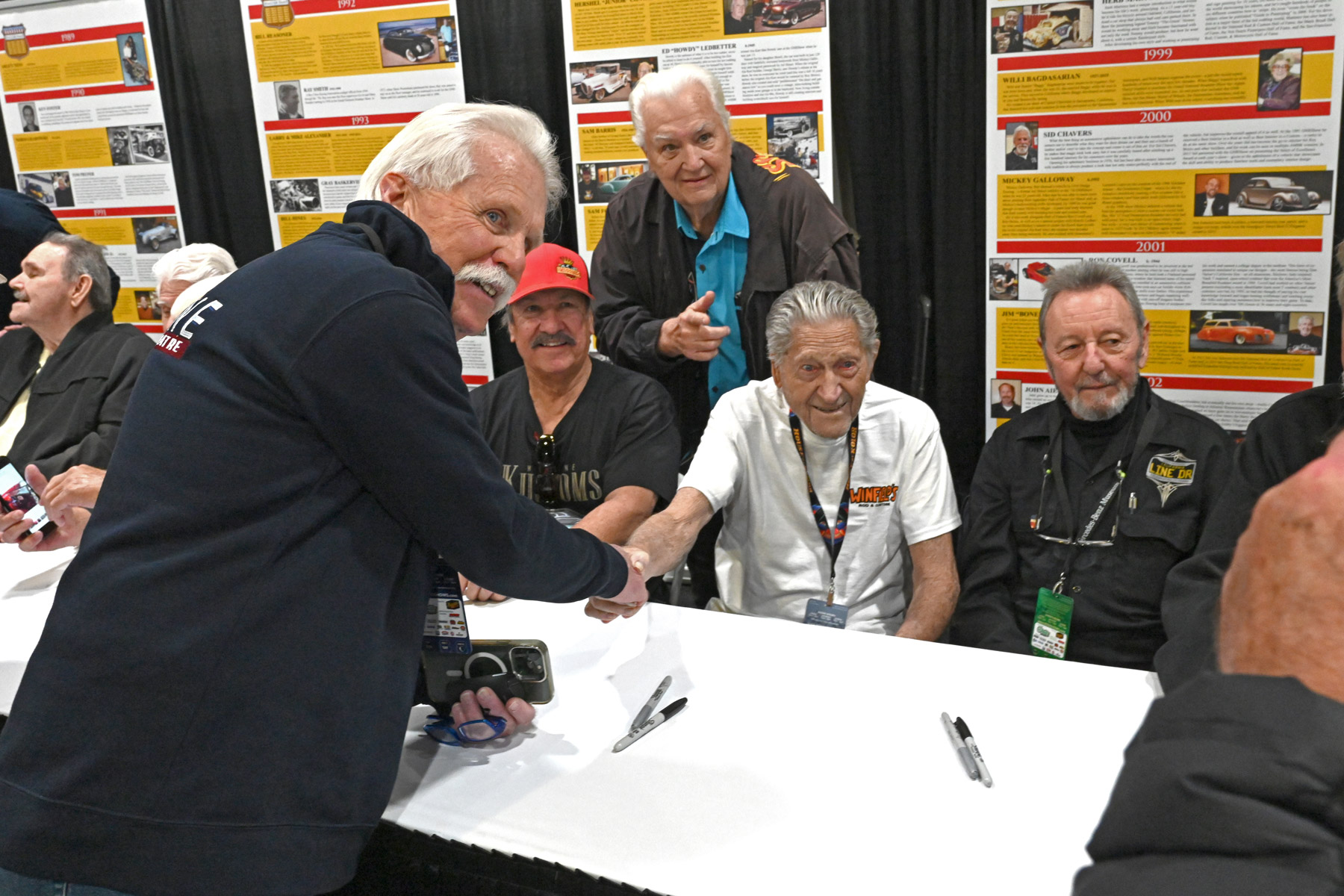
Remembering Gene Winfield
The Custom King Who Never Stopped
Author
The Auto Builder Staff
Photography by Scott Killeen
From Modesto Streets to Custom Shop Royalty
Born and raised in Modesto, California, Gene built his first roadster in high school—while the world was still tangled up in World War II. By ’46, he had Windy’s Custom Shop up and running, launching a career that would take him from street racing to dry lakes, from local hot rod shows to the national stage.
Military Duty and a New Era of Custom Cars
Even when Uncle Sam called him up, Gene kept at it, building a ’41 Ford while stationed in Japan. When he got back stateside in ’51, he opened Winfield’s Custom Shop and started crafting metal into rolling artwork. The hot rod crowd caught on quick—especially when his radical Rod & Custom Dream Truck hit the scene. By the time the Jade Idol debuted in 1960 with his signature fade paint job, Gene had cemented himself as the guy who could push boundaries and make customs look like they were built in the future.
From AMBR Wins to Detroit
Gene didn’t just shape customs—he shaped the entire industry. Three of his cars snagged the “America’s Most Beautiful Roadster” title, and his talent caught the eye of Detroit. Ford brought him in for their Custom Car Caravan, and AMT tapped him to run their Speed and Custom Division in Phoenix. That’s where he cooked up full-scale show cars, wild accessories, and even the plastic-bodied Piranha, proving that his creativity had no limits.
Hollywood Called, and Gene Delivered
If you’ve watched TV or hit the movies in the last 60 years, you’ve seen Gene’s work—even if you didn’t know it. He built the Galileo shuttlecraft for Star Trek, rigged up gadget cars for Get Smart and The Man from U.N.C.L.E., and turned out 25 future-forward machines for Blade Runner. Oh, and if you remember Back to the Future II, yeah—Winfield had his fingerprints on that one, too.
Never Slowing Down
By the ‘80s, customs were back in full force, and Gene was right there in the thick of it. He started churning out steel and fiberglass parts for classic Fords and Mercurys, even creating full 1949-51 Mercury bodies in glass. And the best part? He didn’t just sit back and watch—he was out there, hands-on, working metal, teaching workshops, and proving that legends don’t retire.
The Man, The Myth, The Legacy
Gene’s list of awards and honors is as long as a Bonneville straightaway. Hall of Fame inductions, lifetime achievement awards, TV appearances—you name it, he earned it. But beyond the trophies and accolades, it was his relentless passion, his twinkling eye, and that signature Winfield fade that made him unforgettable.
This world will never see another Gene Winfield. But every time a young builder picks up a torch, every time a painter lays down a mind-blowing fade job, and every time a custom rolls onto the show floor looking like it’s straight out of the future, his influence lives on.
Rest easy, Gene. You’ll always be the king of cool.