
THE AUTO BUILDER
Featured

JOHNSON & JOHNSON ’CUDA
Say what you will, but function is back! We find more high-profile cars built to be driven, and driven hard. Everywhere you look, car owners and builders are searching out new ways to put the fun back into driving the wheels off the rides they build, and they’re looking to the past for their inspiration as they recreate older brands to kick the snot out of new, overpriced super cars. It’s an old technique, as aged as the hobby itself.

1958-1961 Factory Carb Listing
Okay, okay! After listening to oh so many of you, we are providing information you have been requesting, and perhaps searching for, for some time. That information is carburetor data, information that we used to take for granted but that has become more and more difficult to find of late. It seems that much of this data for numerous models and years has somehow slipped through the cracks. This could be mostly due to the age of the information, plus the fact that many of those applications are more rare today. We suppose there are numerous other reasons as to why this information has virtually dried up, so we present a basic listing here for the correct carburetor number for the respective engine application.

FROM ONE TO TWENTY-FOUR
While several different rod builders have created limited-production vehicles, few handled every aspect of the construction in-house, mainly because they thought it best to team up with other craftsmen to create certain aspects of their cars. While this takes nothing away from the quality or beauty of the cars they created, it does say a good deal about SAR. By keeping every aspect of the construction process in-house, SAR has been able to maintain personally set tolerances and control the design theme at every juncture, yet still build each car as if it were the only one. And because each of the Double Dozens is offered simply as a “roller,” the final results of each still depend heavily on the imagination, talent and individuality of their owners. In the end, each of these cars will be special in its own right, and we’ll be showing them to you in the months and years to come.
Spotlighter
POPULAR READS
-
Product Spotlight: Bill Mitchell Products Aluminum LS Engine Block
-
PRODUCT SPOTLIGHT: 60-66 Chevy C10 Fresh Air Vent Block Off Plate
-
Product Spotlight: Pyramid Optimized Design Sequential Aurora Taillight for 1964½–1966 Mustang
-
PRODUCT SPOTLIGHT: Cam Covers for GEN/3 Coyote from Pyramid Optimized Design
Hot Rodding at Its Purest
Building a street rod is about making the car you want, the one that’s ideally suited to your own sense of style.
Author
Will Smith
Words and Photography
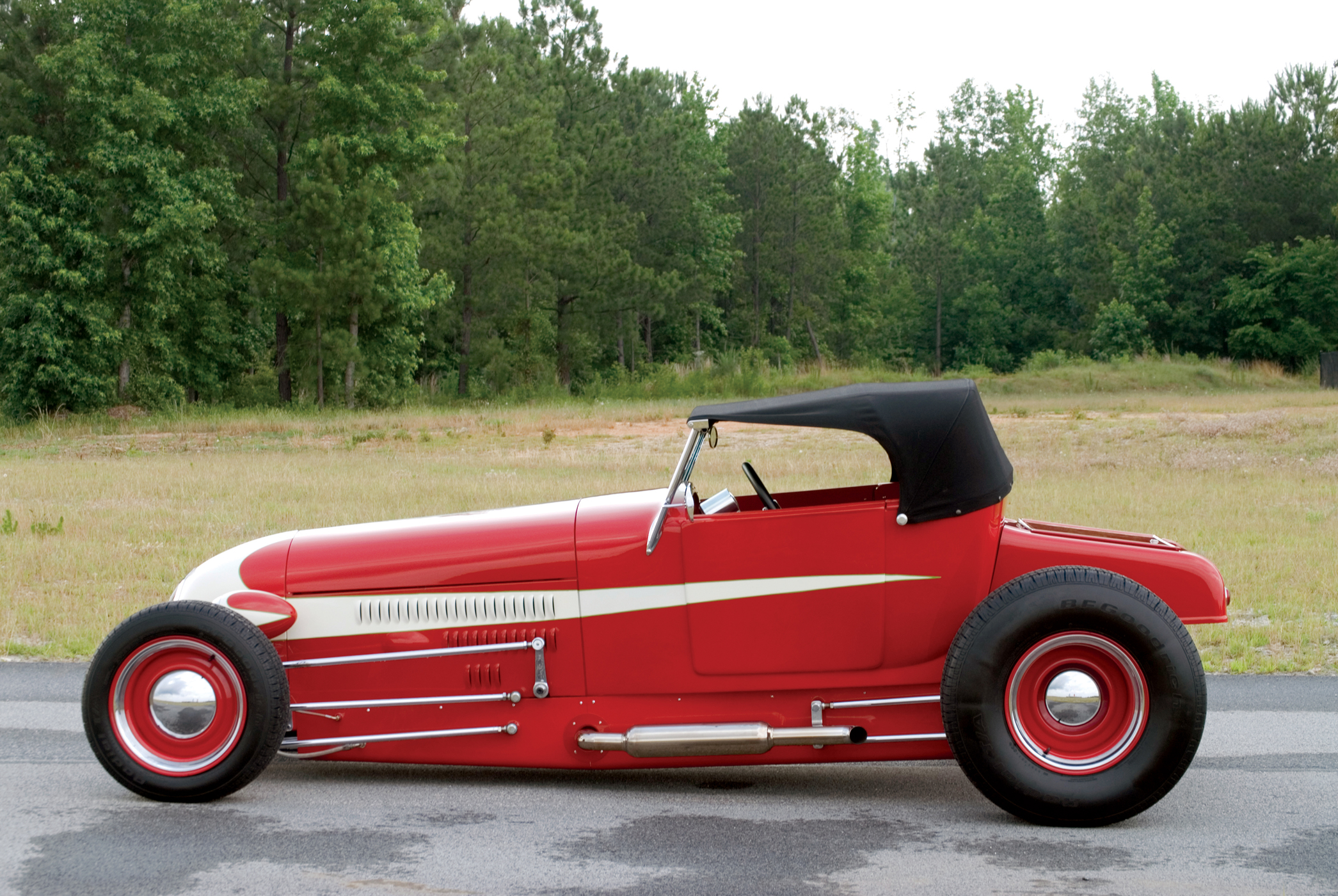
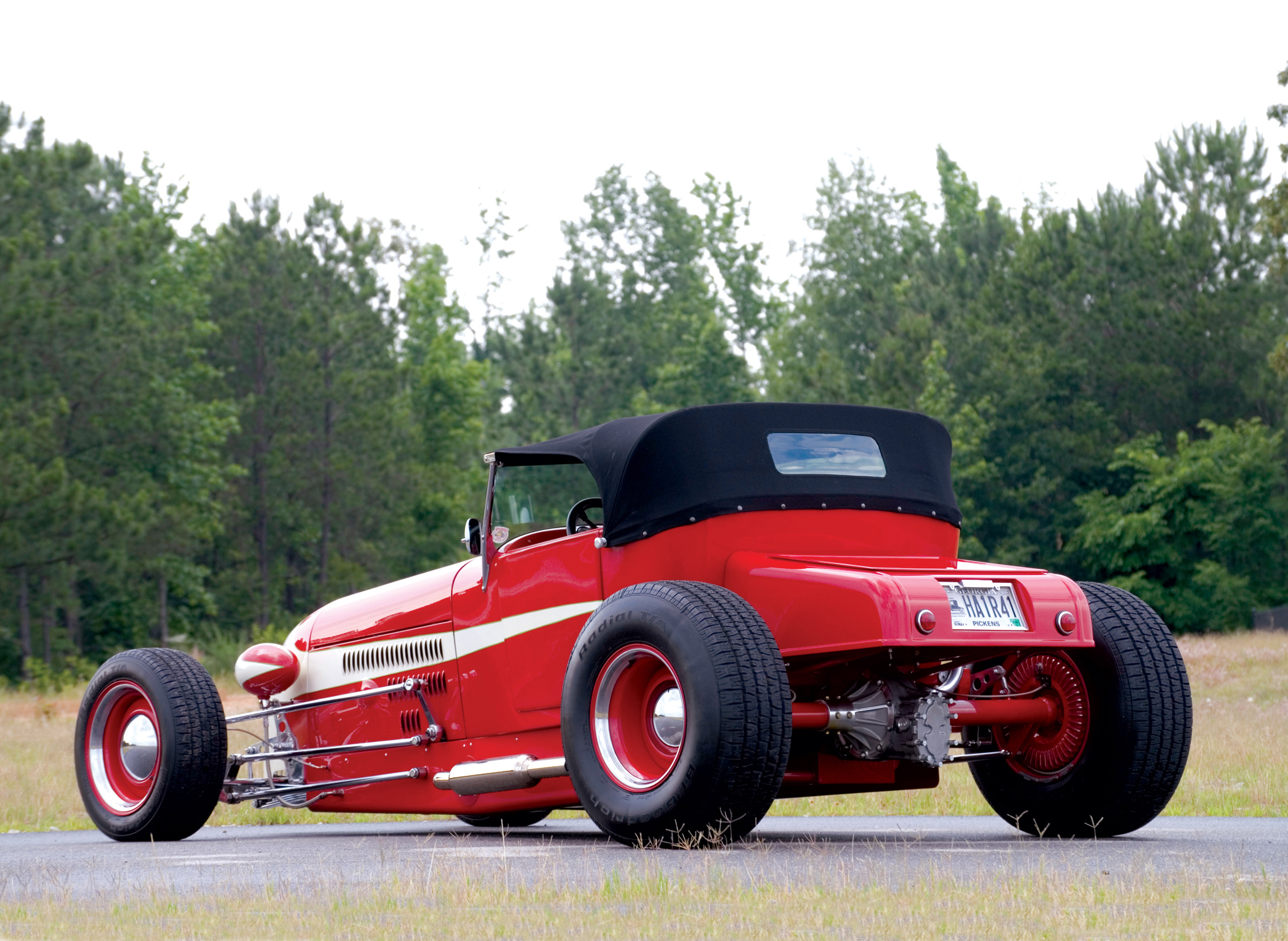
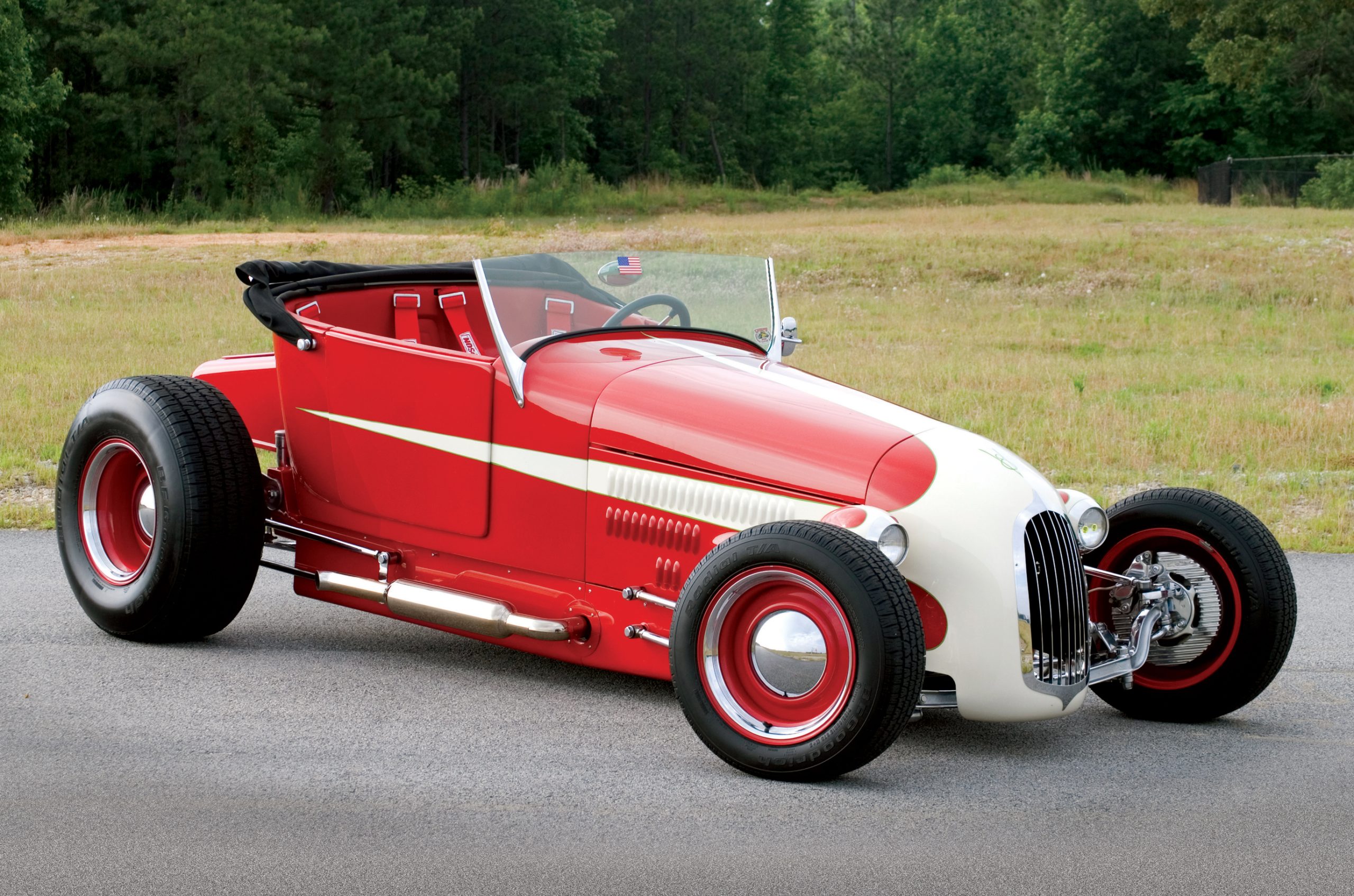
Building a street rod is about making the car you want, the one that’s ideally suited to your own sense of style. Theoretically, then, one might think you are the only person capable of building a street rod that’s your ideal. For the most part, evidence bears out this theory: you see a nice car and you say, “It’s cool, but here’s what I’d change…” Every so often, though, each one of us comes across that rare car that someone else has built exactly as we would have. In such cases, why build when you can buy? That’s just what Jasper, Georgia’s Bob Wigington did when he came across this ’26 Track T roadster. It was just what he wanted, so rather than build one just like it, he bought it, saving him a long build and providing some instant gratification.
The T rides on a home-built frame that’s a mixture of round and rectangular boxed tubing. Front suspension parts consist of a polished I-beam axle hanging from a four-bar arrangement and suspended by quarter-elliptic springs and friction shocks. These parts provide the appearance of a genuine vintage track car, and the end of each axle features a Wilwood polished caliper bolted to a ’40 Ford spindle. Steering consists of a Vega box with linkage outside the hood for additional style. Unseen, though, are the twin 8-gallon gas tanks hidden within the frame. The wheels, of course, are painted steel, measuring 15×6 inches and wearing plain hubcaps and beauty rings. Wrapped around each wheel is a 215/75R15 BFGoodrich radial T/A tire.
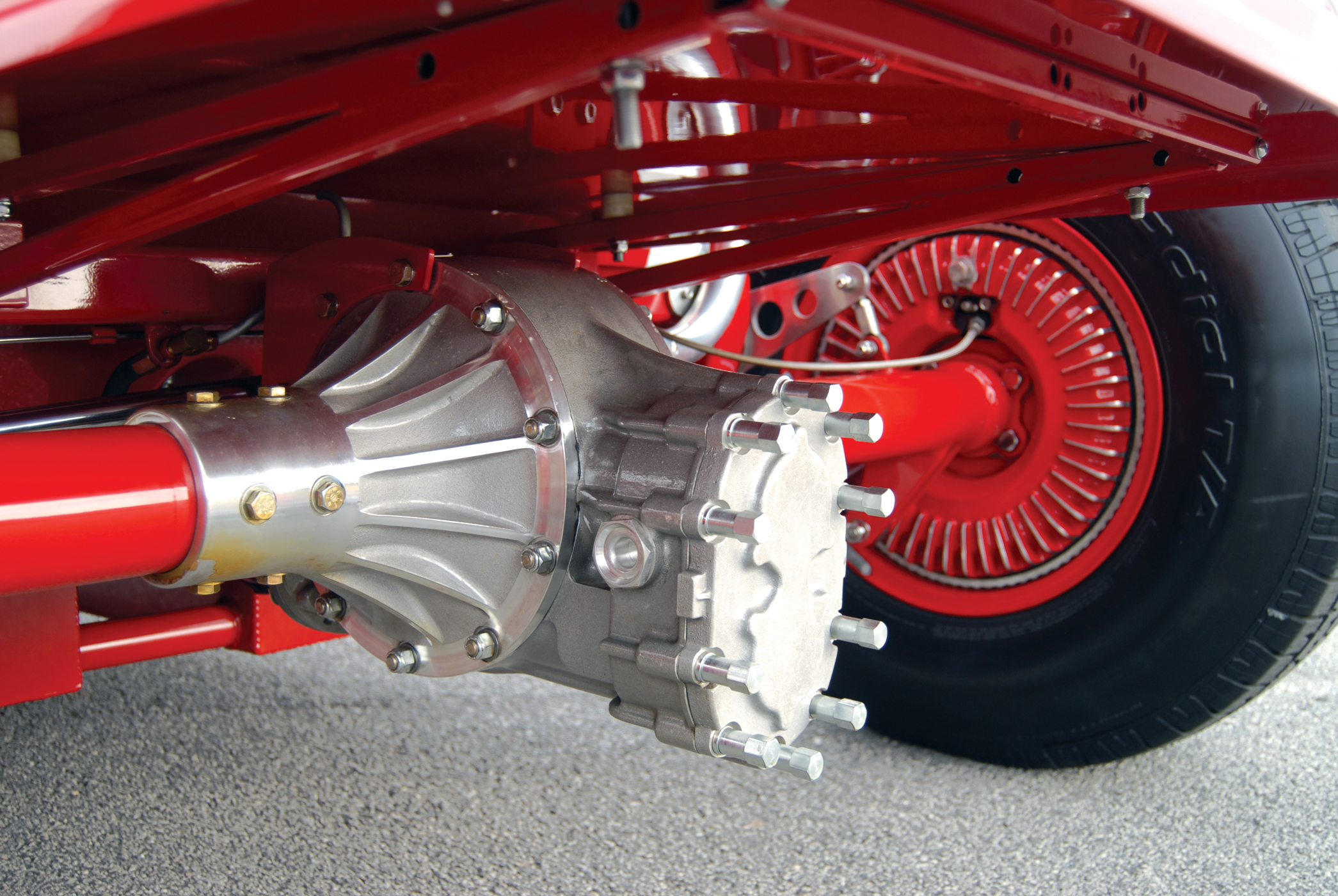
Easily visible under the rear deck is a Halibrand quick-change rearend with painted axle tubes and a polished centersection. It, too, hangs from a four-link, with damping from another set of quarter-elliptic springs and friction shocks. Ford drums with painted, finned backing plates are appropriate for both looks and performance. Naturally, the rear wheels and tires are a good bit bigger than those in front: the steel wheels are sized 15×10 and the BFG tires are 285/60R15s.
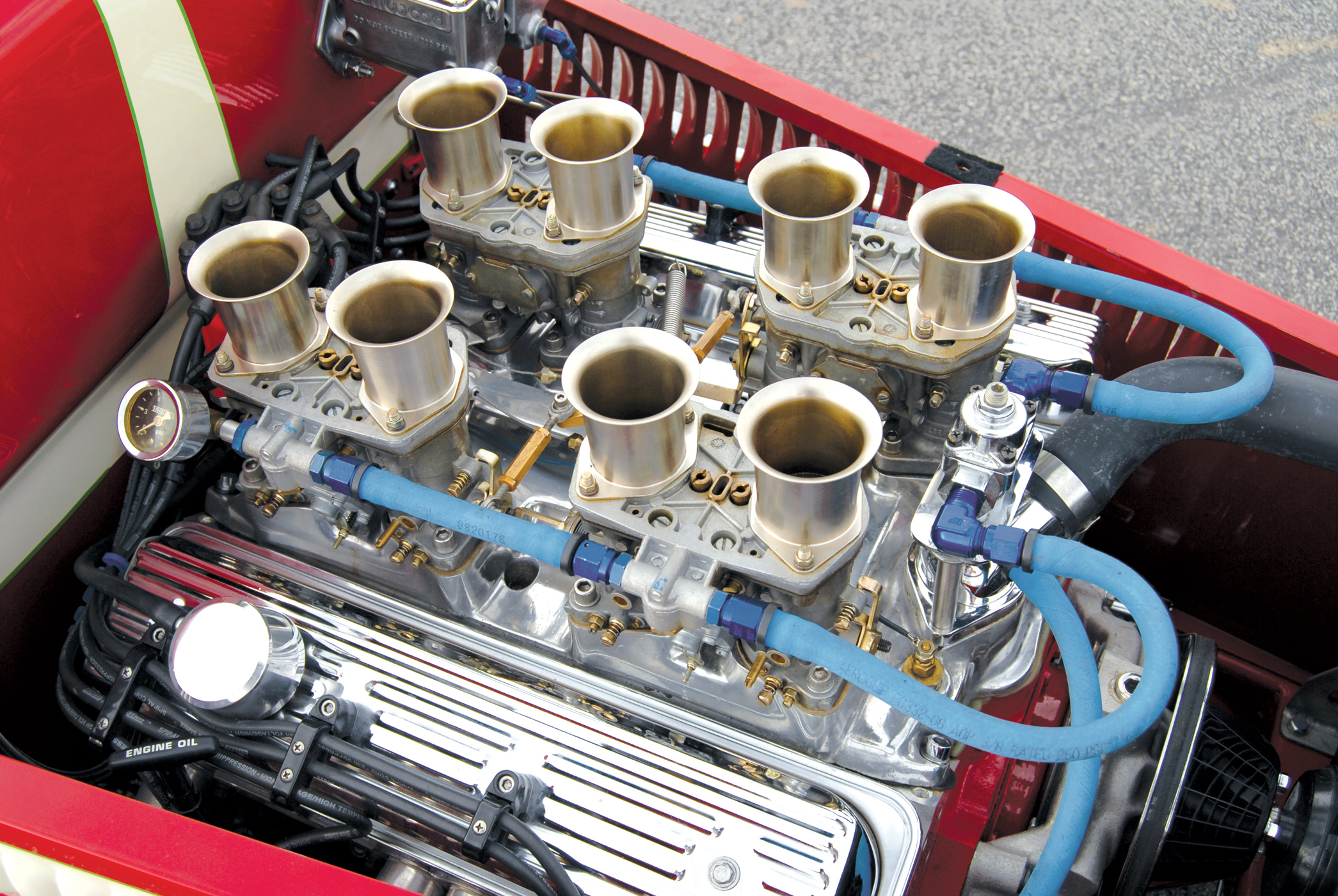
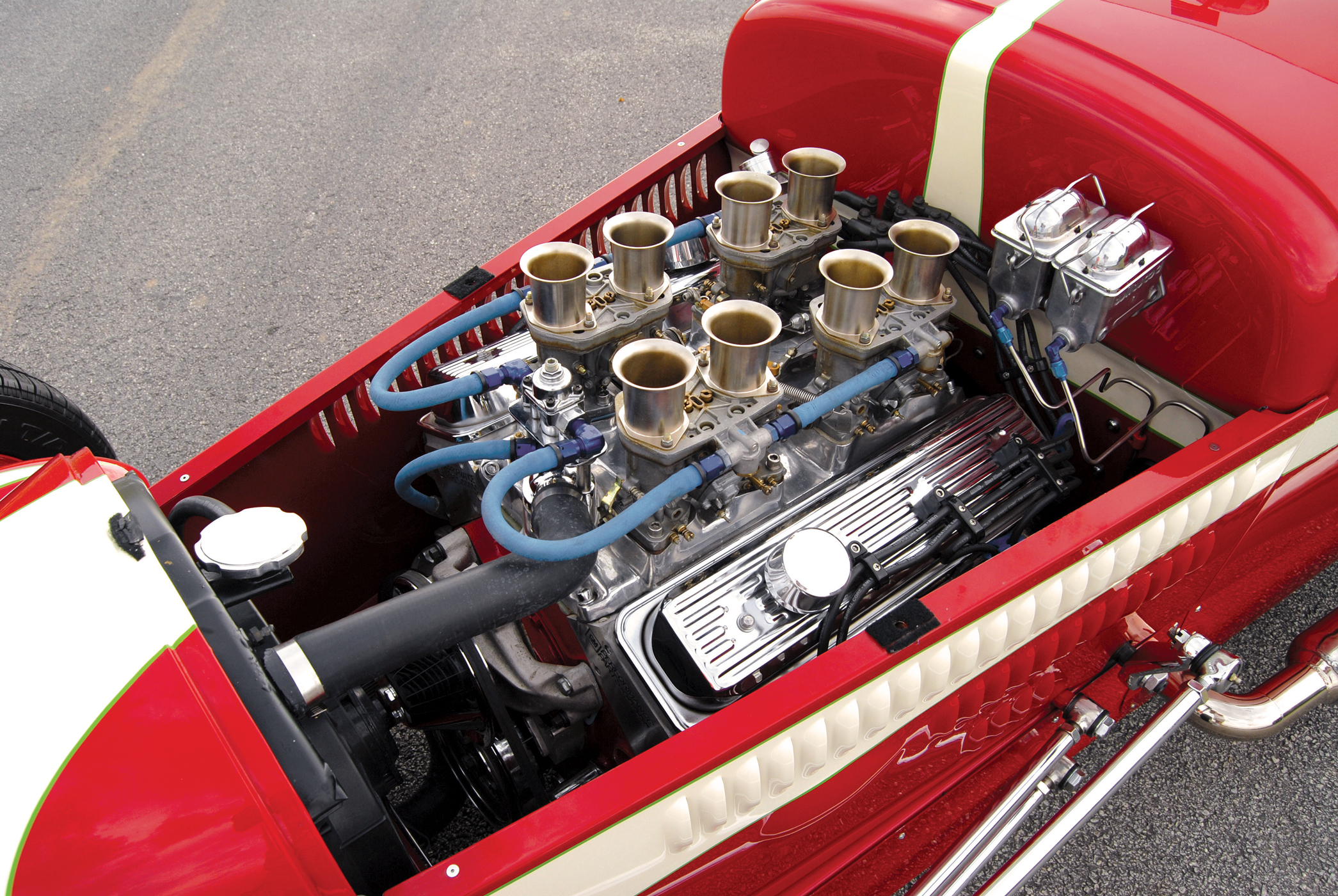
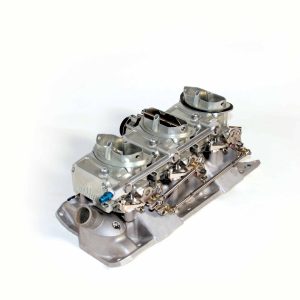
A tiny Track T doesn’t need a big engine; for a car such as this one, a small-block Chevy is more than adequate. Wigington’s roadster gets all the power it needs from a 355 Chevy crate engine fitted with aluminum Fast Burn heads and 10.5:1-compression pistons. But without a doubt the coolest part of the engine is the eight-stack Weber downdraft carburetion atop a Weiand aluminum intake manifold. Sanderson headers vent the exhaust into polished side pipes. MSD ignition rounds out the engine components, and a 350 automatic transmission is all the light the T needs to get it down the road.
The T’s body is a fiberglass design from Zephyr. The three-piece hood is steel, with the sides punched full of louvers and accentuated with a blister near the front of each cylinder head. Attractive sheetmetal panels also cover the framerails, making the car look lower and sleeker. A typical round, track-style nose sits between the long, egg-like headlights. The scalloped paint is entirely appropriate and consists of PPG Cream flowing back over Guards Red, with a lime-green pinstripe to separate the two colors. The trunk is modest in size but big enough to have some utility, and this rear panel also provides a spot to mount the Pontiac taillights. The black convertible top makes the T a little easier to live with in the rain, and sure enough, it rained during our photo shoot—good thing Wigington didn’t leave the top at home.
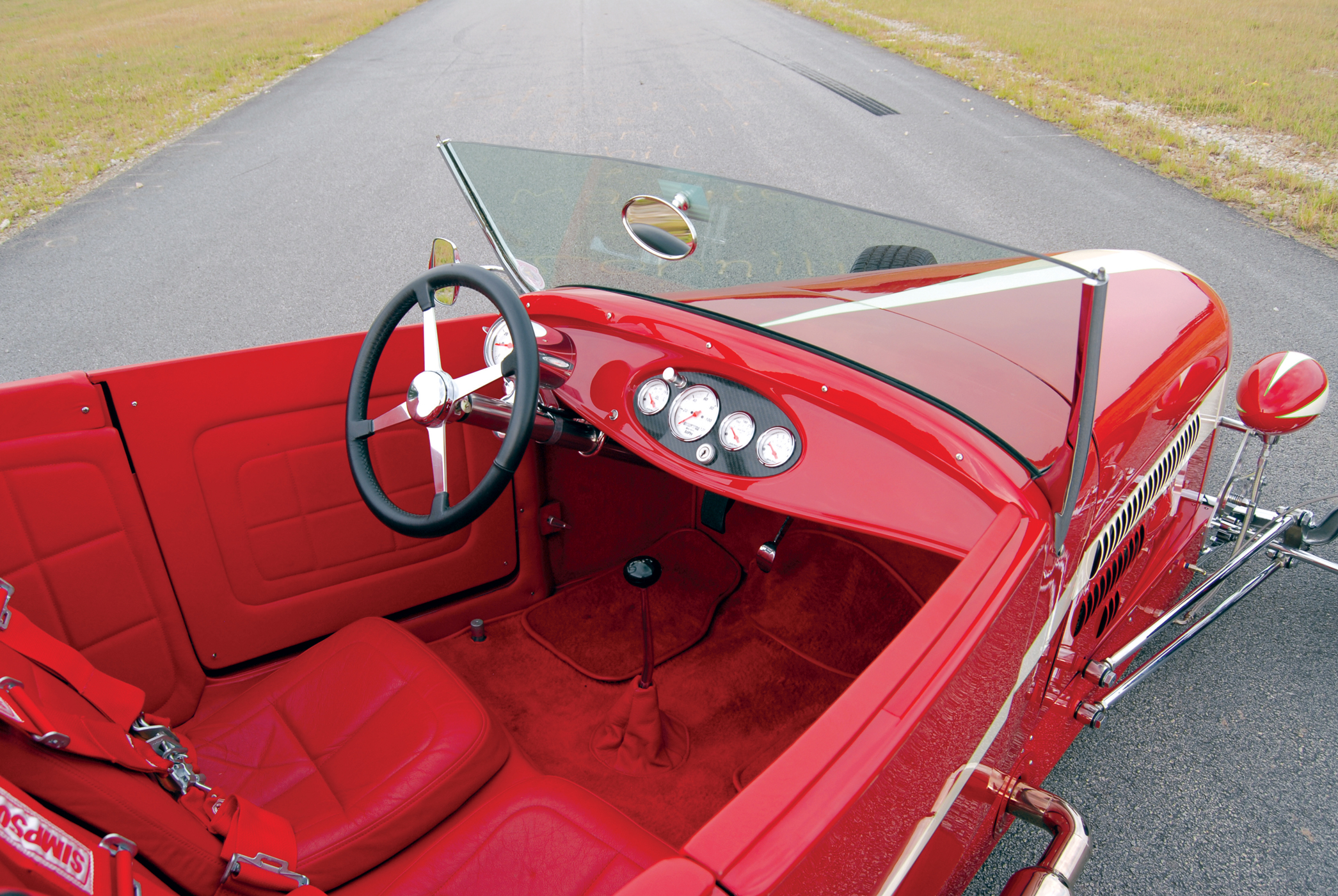
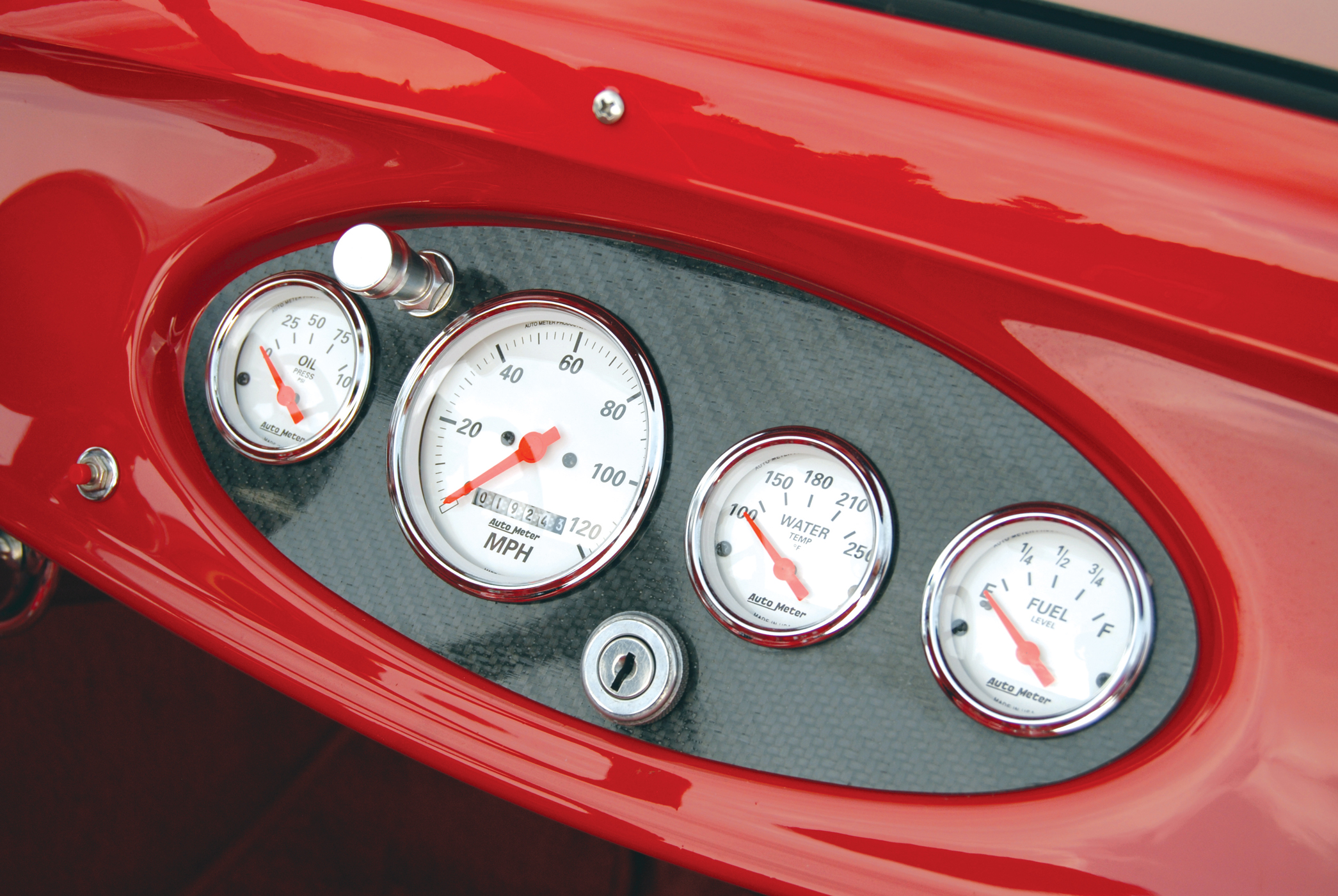
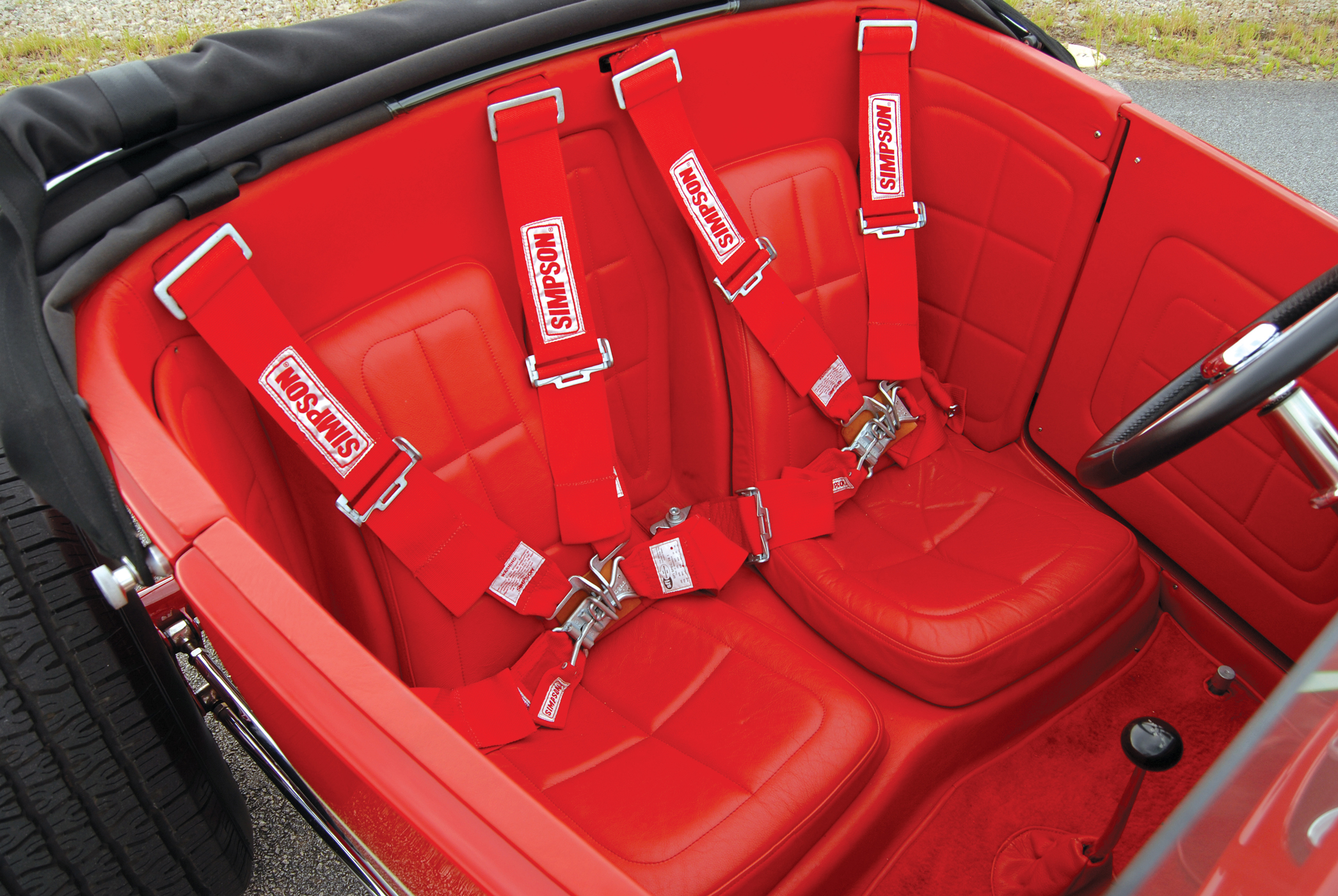
With four-point race harnesses atop the custom bucket seats, the interior of this ’26 definitely has a racy style. But there’s no doubt this car is also more luxurious than any Model T racer ever was. Fountain’s Auto Upholstery and Trim in Ellijay, Georgia, upholstered the tiny Ford in red leather in a sort of square tile pattern. Virtually everything in the cockpit is red—the leather, the carpet and the paint on the dash. A carbon-fiber instrument cluster filled with white-faced Auto Meter gauges provides some contrast, as does the black leather-wrapped, sprint-car-style removable steering wheel. An Auto Meter tach is clamped atop the polished steering column. Aside from the Lokar shifter and spoon-style pedals, there’s really not much else to this interior—no radio, no air conditioning. Racecars don’t need such things.
The ’26 is one of just many hot rods in Bob Wigington’s garage. Modestly, he claims they’re just “15 old Fords,” but they’re all just as nice as this car. At Goodguys Atlanta, where we caught up with Wigington and shot the T, it earned a Pro’s Pick from Alan Johnson and the Terrific T award, too. We think that’s a pretty respectable feat for another old Ford.