When we were at the NSRA Nationals last year, we came across a nice Pontiac sedan that we just had to photograph. It was different, super clean and it had fantastic detailing that made you come back for a second look. The owner’s name was Orv Elgie, a name that brought back memories of the Early Times rod run at the Compton Rod and Gun Club in the early ’70s. Elgie was known as “Mr. Detail” to many of the participants because his cars were always perfect from top to bottom.
Elgie was born in Grandvalley, Ontario, Canada, where he grew up loving cars. In 1964, he decided to leave the frozen tundra of Canada and move to sunny Southern California. Mechanically astute, Elgie worked as a mechanic at Sears and later as a service manager at Montgomery Ward. The nice climate gave him a chance to work on his own cars and he got hooked on street rods.
Over the years, he has built more street rods than many shops have and all of them were award-winners. A few of them became famous after they appeared in rod magazines. He eventually became the sales
manager—or what he refers to as “the street rodder’s dream job”—at Lakenor Auto Salvage in Santa Fe Springs, California. He worked there, built awesome street rods and eventually retired in 1993 and moved to Bend, Oregon. Elgie may be retired, but that’s only a turn of phrase because he is busy building street rods for himself and helping other street rodders build theirs.
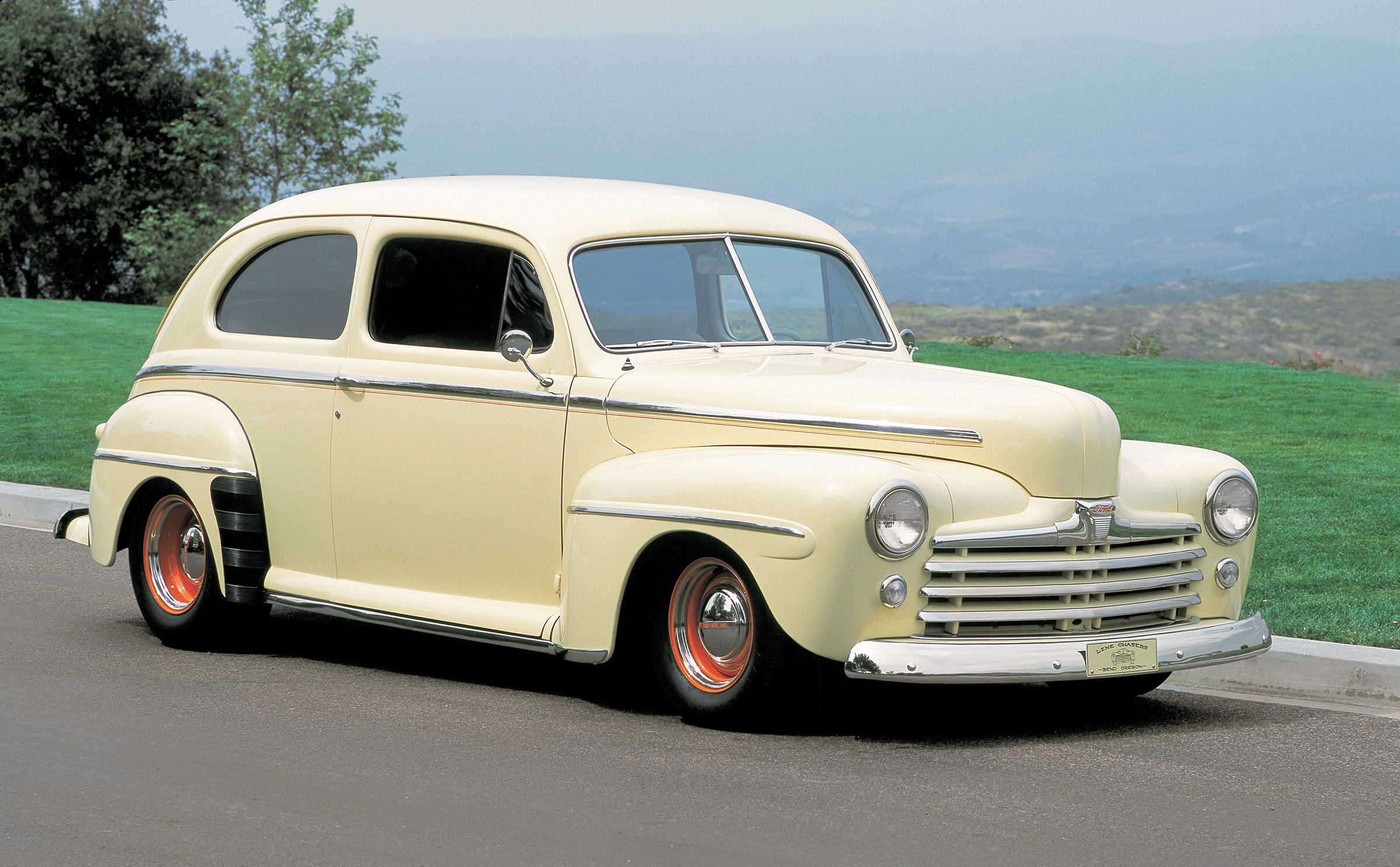
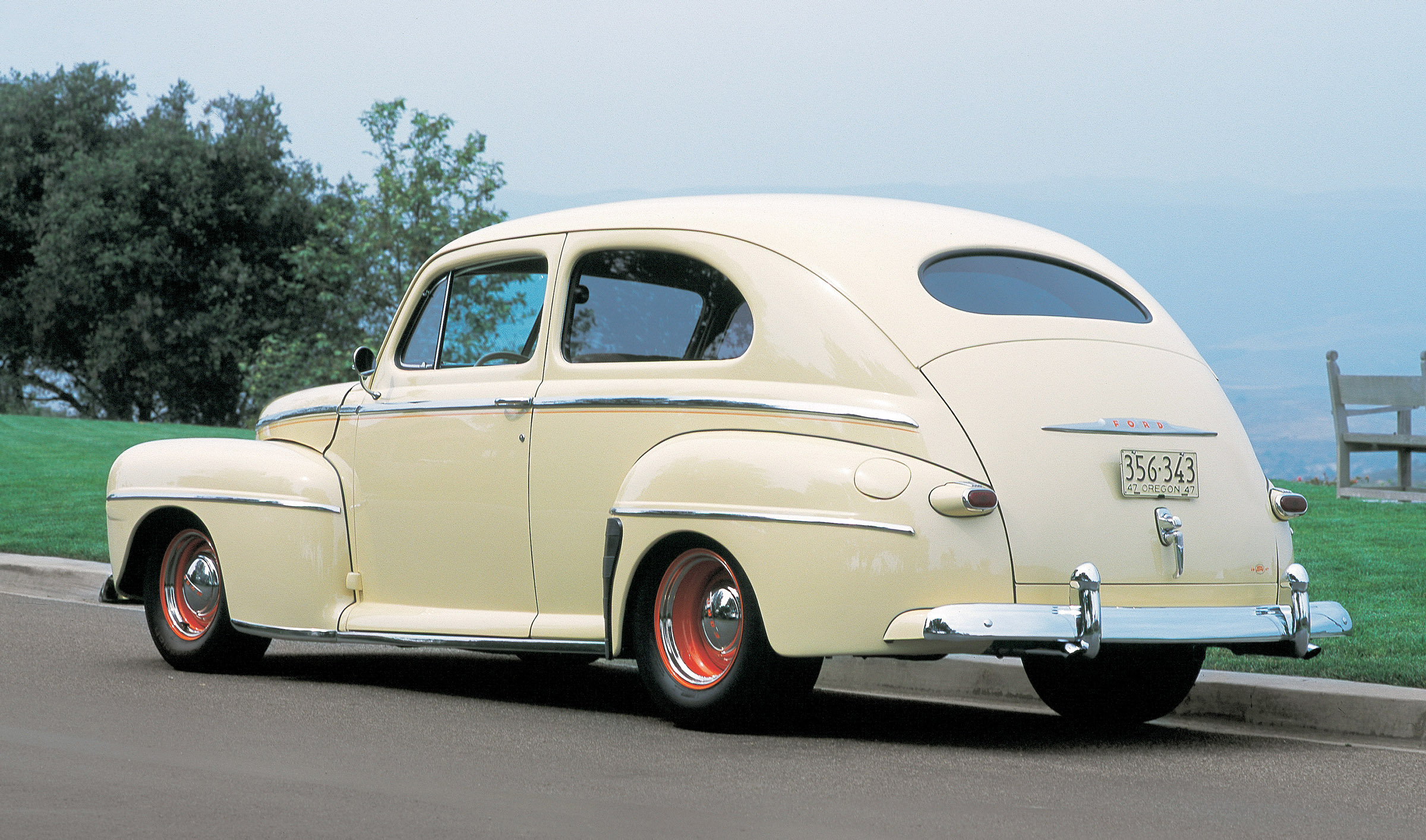
When we were talking to Elgie last year, he said that he was just finishing a ’47 Ford sedan. Knowing the quality of his street rods, we told him to contact us when the Ford was ready for photographs. He did just that when he was making a trip to Southern California to attend the L.A. Roadsters Show and Swap Meet in Pomona. We planned to photograph the ’47 a few days after the show.
When Elgie found the ’47, it was a nice, unmolested original that was owned by a preacher in Aloa, Oregon. It was a car that he just had to purchase because he had one when he met his wife, Shirley, in 1955. He went on his first date with her in that car and it brought back many fond memories. He wanted this rod to be even better than the other one he had, in quality and driveability, so he started by building a nice chassis that would be the foundation for the ’47.
When the sedan was disassembled, the chassis was in great condition, so it would be perfect for a rebuild. He ordered a Weedetr rear spring kit that is designed to mount the ’78 Ford Granada rearend as low as possible. He installed the kit in conjunction with Monroe air shocks connected to a remote electric pump. Elgie wanted an independent front suspension, so he purchased a Roger Hart crossmember for a Mustang II front suspension. The kit is designed to lower the front a full 4 inches without the need for dropped spindles.
In the process of the rebuild, he detailed the parts and had the suspension components powdercoated black. The underside of the fenders and the body were sprayed with bed liner for a clean look. Since this car was going to be a driver, the bed liner eliminates the chance of star chips from rocks hitting the bottom of the fenders.
While the chassis was being built, Elgie ordered the wheels and tires. He wanted a traditional resto look, so the car rolls on Vintique 14×6- and 15×8-inch wheels running BFGoodrich 205/70R14 front tires and 235/70R15 rear tires.
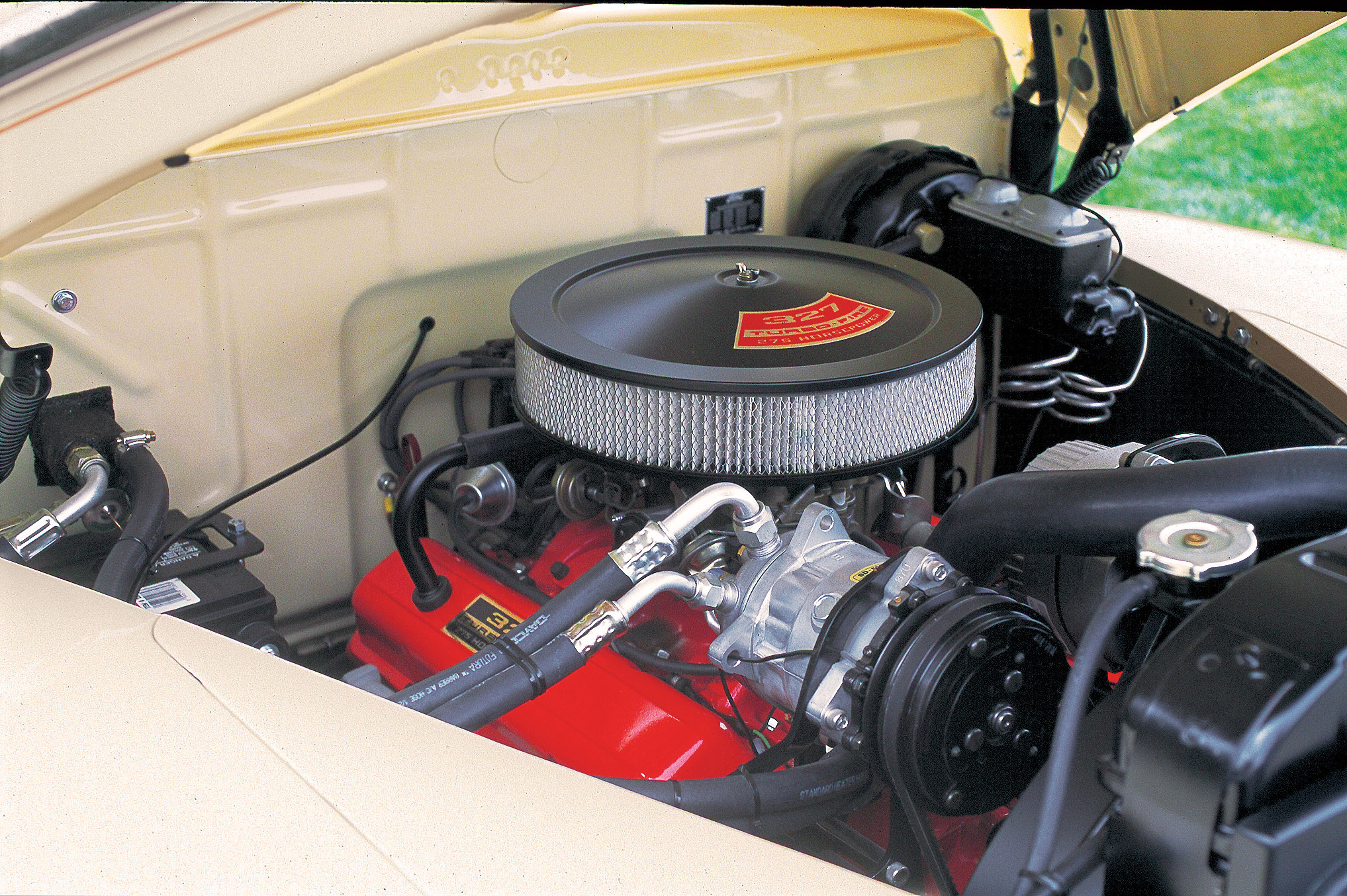
Under the hood, Elgie installed a no-nonsense Chevy crate engine. He wanted the ’86-and-older-style engine without the center valve-cover bolts because he always liked the ’66 327 Chevy valve covers. The engine was detailed in an interesting manner. When you open the hood, it looks as if you are looking at a restored Chevy because the engine was painted orange, has the original Chevy engine designation decals and a black, stock-appearing air cleaner. The famous Elgie engine detailing is in play here, but it’s done in a unique way.
The engine is running a four-barrel Q-Jet carb, a GM HEI ignition and an air-conditioning compressor. Exhaust flows from stock exhaust manifolds into a custom exhaust system that features a pair of 22-inch-long glasspack mufflers. Cooling is handled by a top-quality radiator from U.S. Radiator. The mellow-running small block is hooked to a Turbo 350 transmission with a lock-up torque converter. A Lokar shifter handles gear selection and cooling is accomplished with a Hayden fluid cooler. Bud Swan in Bend, Oregon, rebuilt the transmission.
When Elgie purchased the sedan, the body was in good condition and only needed normal prep work. Since he does his own bodywork, he stripped the car down to bare metal and primered the body for block-sanding. In the process of doing the minor bodywork, he nosed the hood for a clean look. After the body was sanded and prepped to perfection, he applied the DuPont single-stage Vanilla Cream paint. The old, discolored windows were removed and replaced with new windows from Classic Auto Glass in Bend. Elgie also retained the stock bumpers, which were chromeplated to look brand new. He contacted Kirk Sylva for pinstriping to accent the body.
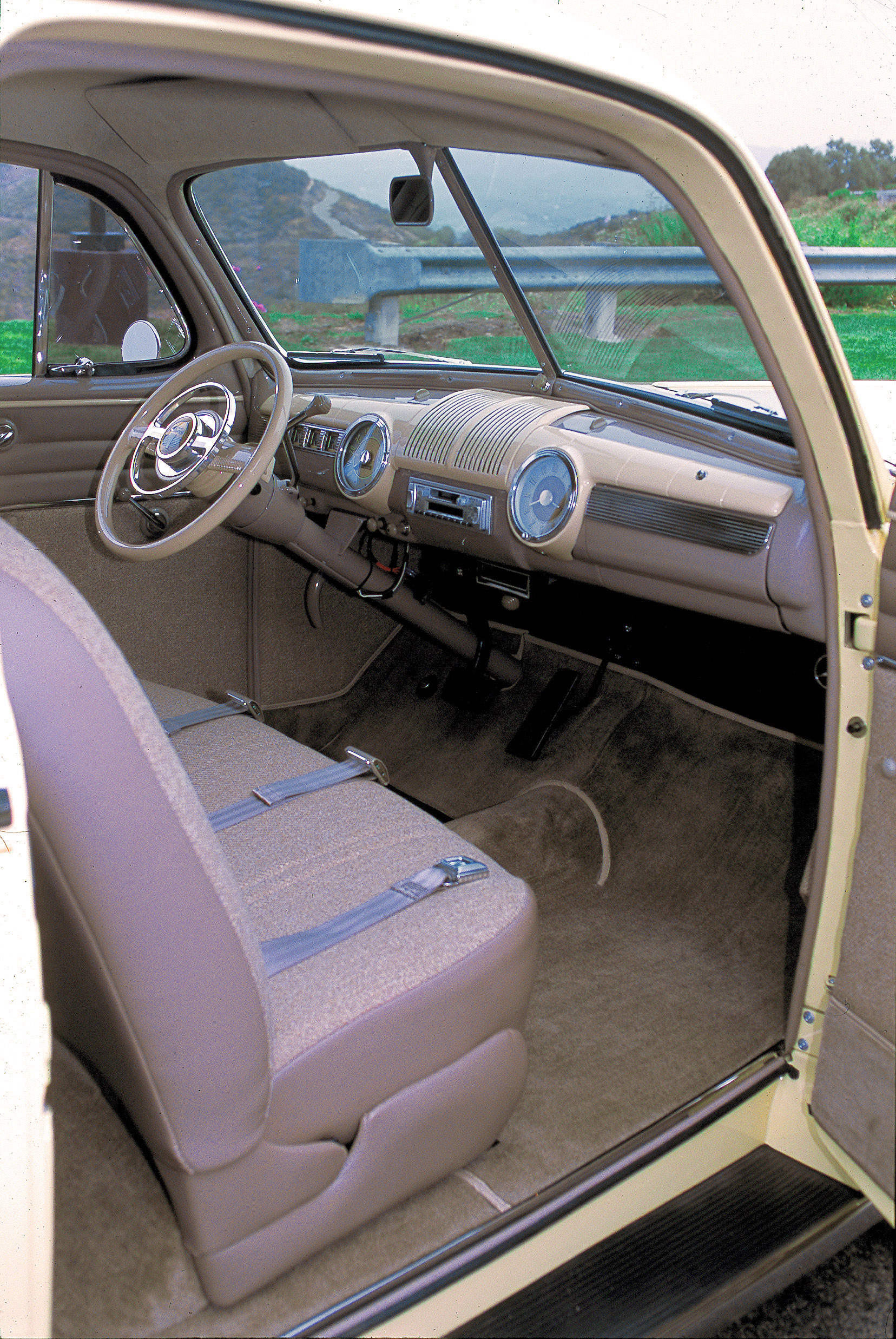
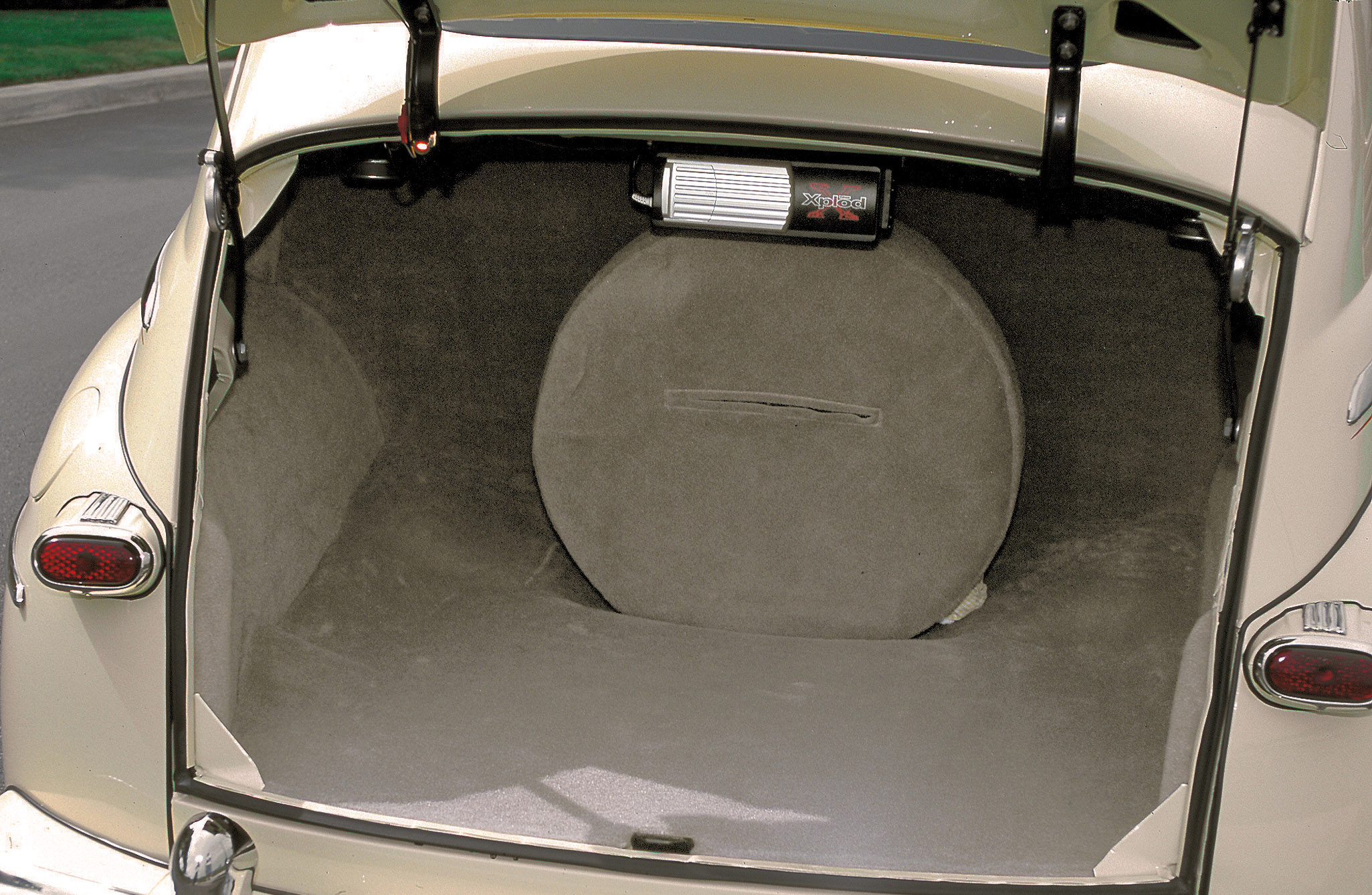
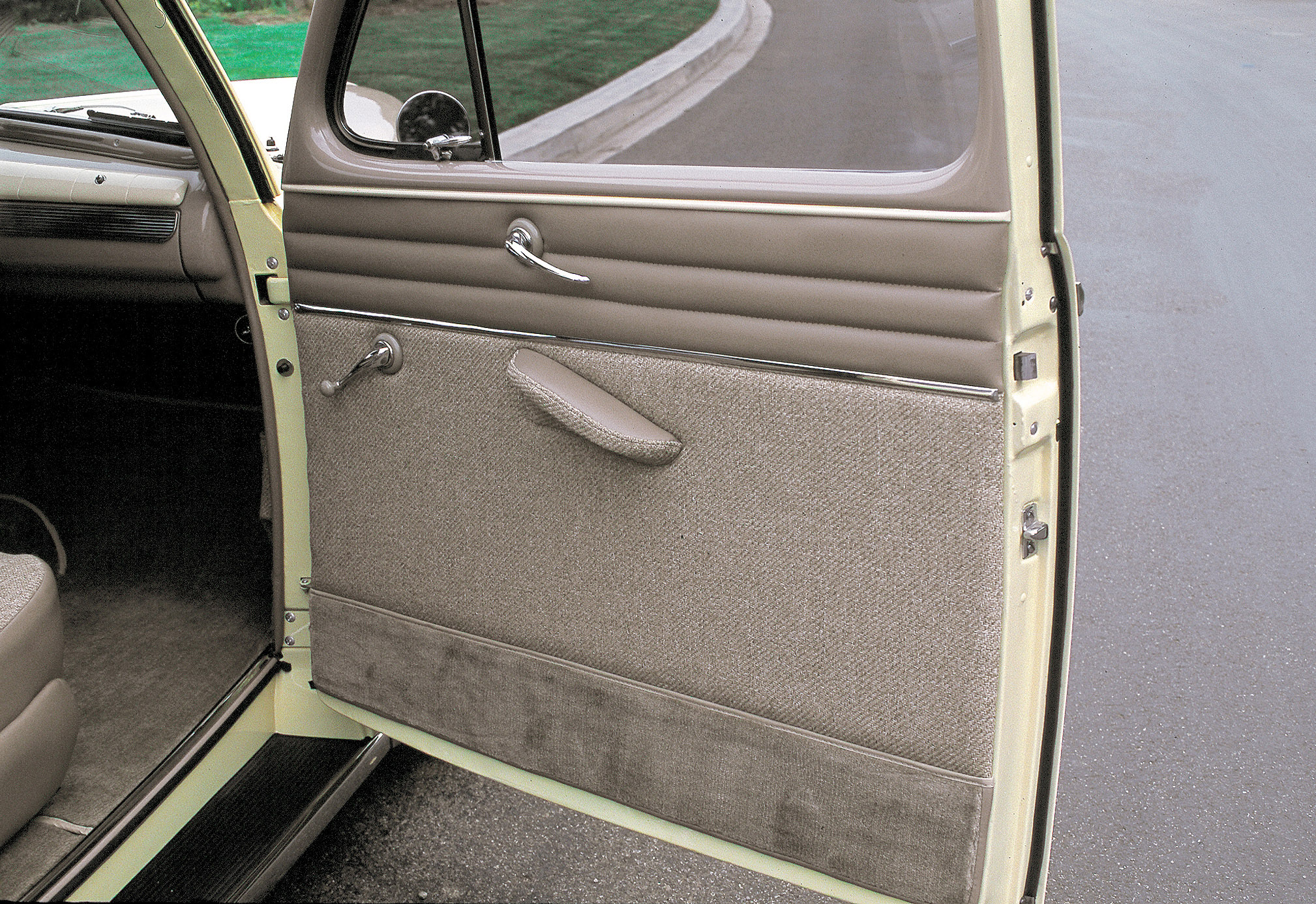
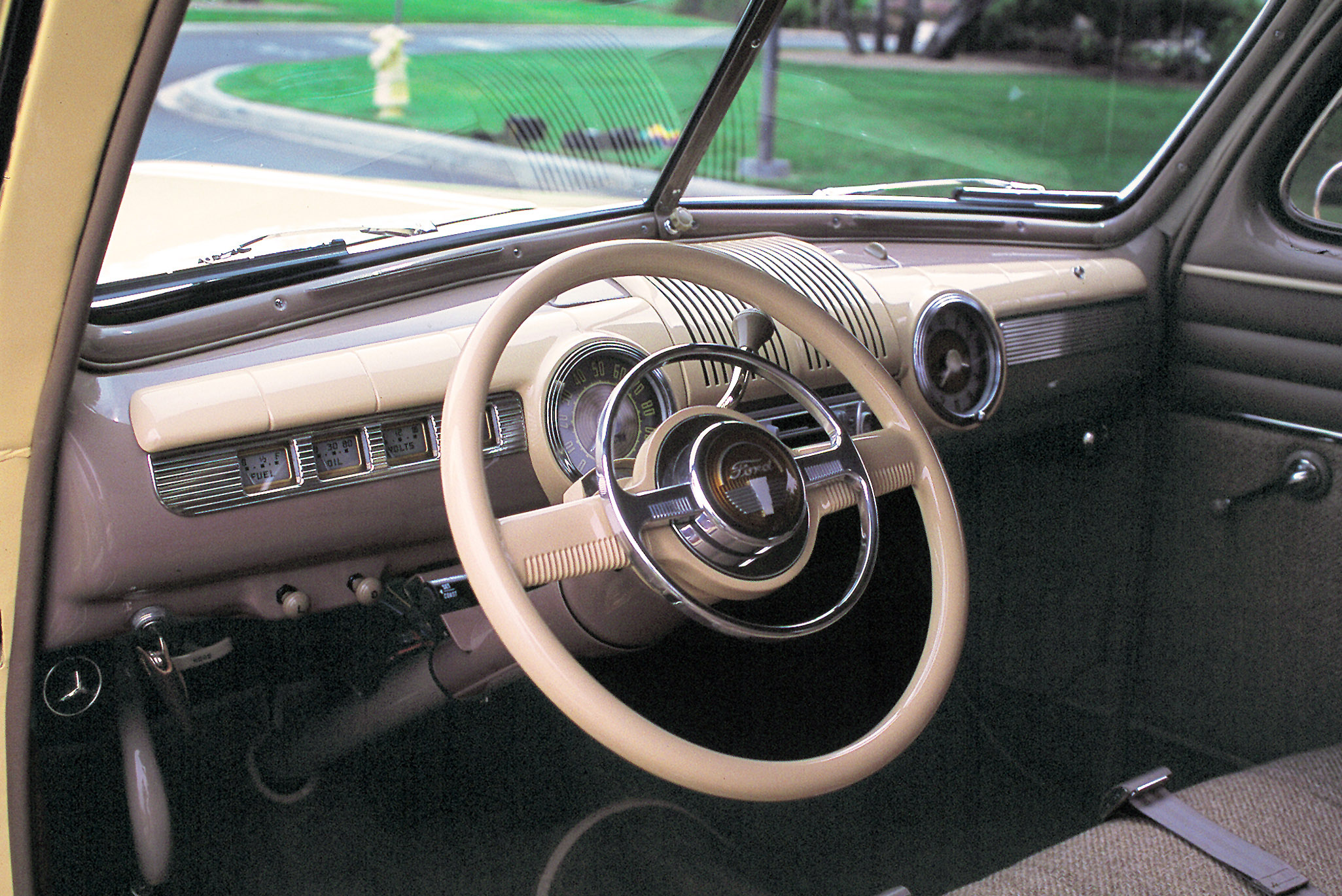
Elgie drives his street rods, so he wanted a comfortable interior. He took the sedan to Red Hot Interiors in Bend, where the original seats were re-covered with taupe and beige tweed and vinyl. The dash was also restored to perfection and features two-tone paint and United Speedometer gauges. Other nice features include a tilt steering column topped by a LeCarra steering wheel, Old Air Products air conditioning and a Sony AM/FM/cassette and 10-disc CD changer. Another nice detail item is the custom horn ring with a ’47 Ford center insert. For long trips, Elgie installed cruise control and a CB radio.
The ’47 turned out great and looks terrific. His first trip was the ride from Oregon to California and it was like driving a brand-new car. Elgie was very happy with how the car came out and he has plans to drive it to many upcoming events. When he is not driving the sedan, he is busy working on a ’48 Ford F-1 pickup truck and a 13-foot Scamp Travel Trailer that he wants to finish by next summer.