
THE AUTO BUILDER
Menu
Featured

HOW TO SHOW YOUR CAR
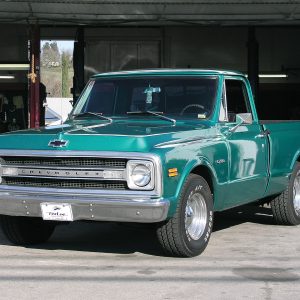
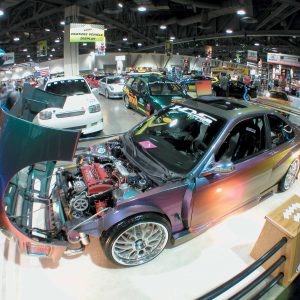
WHAT DO YOU do when you have one of the hottest show cars in the country and need something to take you to the next level? What do you do if you have a very nice modified car, but want something more? How about a true show display setup? We have talked to a number of people in the industry, including some of the most qualified judging sanctioning bodies, and they have given us plenty of insight into what’s hot and what’s not in the world of show car displays.
The Year of the Dragon
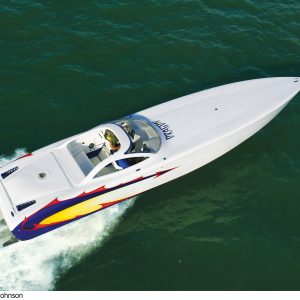
Dragon Powerboats was founded in early 2002, but the first boat didn’t make its public debut until the 2004 Miami International Boat Show. “I realized there was a higher level of quality and luxury to which performance boats can be manufactured,” said Craig Barrie, president of Dragon Powerboats. This is a pretty bold statement coming from the guy who spent 16 years of his life first as a vice president and then as president and CEO of the famed Cigarette Racing Team. In fact, Barrie was instrumental in the design of some of today’s most popular Cigarettes, including the 35-foot Café Racer, 38-foot Top Gun, 42-foot Tiger and 46-foot Top Gun. That is a pretty impressive resumé for a guy who now plans to build boats of his own.

ELECTRIFYING PONY
Mustang enthusiasts Tony and Tammy Seader of La Salle, Colorado, have always wanted a classic Mustang fastback, and about three years ago Tony found this ’66 Mustang 2+2 sitting on a used car lot.

Spotlighter
POPULAR READS
-
The Auto Builder’s Hottest Product Picks from The Triple Crown of Rodding 2026
-
Product Spotlight: Bill Mitchell Products Aluminum LS Engine Block
-
PRODUCT SPOTLIGHT: 60-66 Chevy C10 Fresh Air Vent Block Off Plate
-
Product Spotlight: Pyramid Optimized Design Sequential Aurora Taillight for 1964½–1966 Mustang
L.A. ROADSTERS HISTORY
The Origin of the World-Famous Roadster Club
Have you ever been driving down the freeway or working on your car when that brilliant idea hit you? The more you thought about it, the more brilliant the idea became. When you called your friends for reinforcement, to see if the idea was actually as brilliant as you thought, there was always the chance they might pop your bubble. There are times you find the idea might only be brilliant to you, but other times it could be a life-altering idea, and the start of something that will endure over time. Dick “Scritch” Scritchfield had one of those brilliant ideas back in 1957, when he was working for the National Hot Rod Association’s Safety Safari. It turned out to be a great idea that received plenty of support from his peers. He wanted to start a car club for roadster owners that would reinforce the hot rod hobby.
Author
Jeff Tann
Photography Courtesy of L.A. Roadsters Archives and Jeff Tann

The Changing Automotive Landscape
In 1957, Scritchfield was noticing that hot rod roadsters were starting to disappear and were being replaced by some of the good-looking and hot cars that were coming out of Detroit. Car enthusiasts could go to their local Chevy dealership, hand the salesman a down payment and drive away in a fuel-injected or dual-quad Chevy hardtop. Others would go to their local Ford dealership and buy a big-window pickup with a 312 V-8 engine. If you had a little more money, you could go to your Oldsmobile dealer and purchase a J-2 tri-power hardtop or convertible, or if you were a Mopar lover, a Hemi-powered Chrysler 300. This was the time that many hot rod icons were being built and sold off showroom floors, and car enthusiasts loved them. Scritchfield took stock in this and thought that there must be some hard-core roadster enthusiasts who would like to organize before all the early iron disappeared.
Finding Support and Organizing the Club
Scritchfield, being involved with NHRA, was good friends with Wally Parks, the editor of Hot Rod magazine at the time. This “in” with the magazine enabled him meet LeRoi “Tex” Smith, one of the magazine’s editors. Smith helped him locate other roadster owners and offered many ideas and suggestions on how to organize a club. This help also benefited Smith, because through his efforts, he could find more rods to feature in the magazine. Scritchfield was also aware that the movie studios were looking for hot rods to be used in various movies, and that would be a side benefit of having a roadster club. It would be a way for the club members to make a little side money.
The First Meeting
Scritchfield also was friends with Phil Weiand of Weiand Equipment, who told him he could hold the first club meeting in his parking lot. Scritchfield made a flyer that let other rodders know that a club was being formed. It provided roadster owners the time and place of the first meeting. When Scritchfield saw a roadster, he would follow the rod and give the owner a flyer. Most of the people he contacted were, naturally, quite interested.
The first meeting was held Sunday, June 15, 1957, in the Weiand parking lot, and several rodders showed up. In attendance were Smith, Tony LaMesa and about five others. At this meeting, a variety of issues were discussed, such as membership eligibility, dress codes, logo, jackets and colors. It was essential for the club to have a constitution and bylaws, and it was also important to have a meeting location and club officers. Because the club was Scritchfield’s idea, he was elected the first club president.
Membership and Club Identity
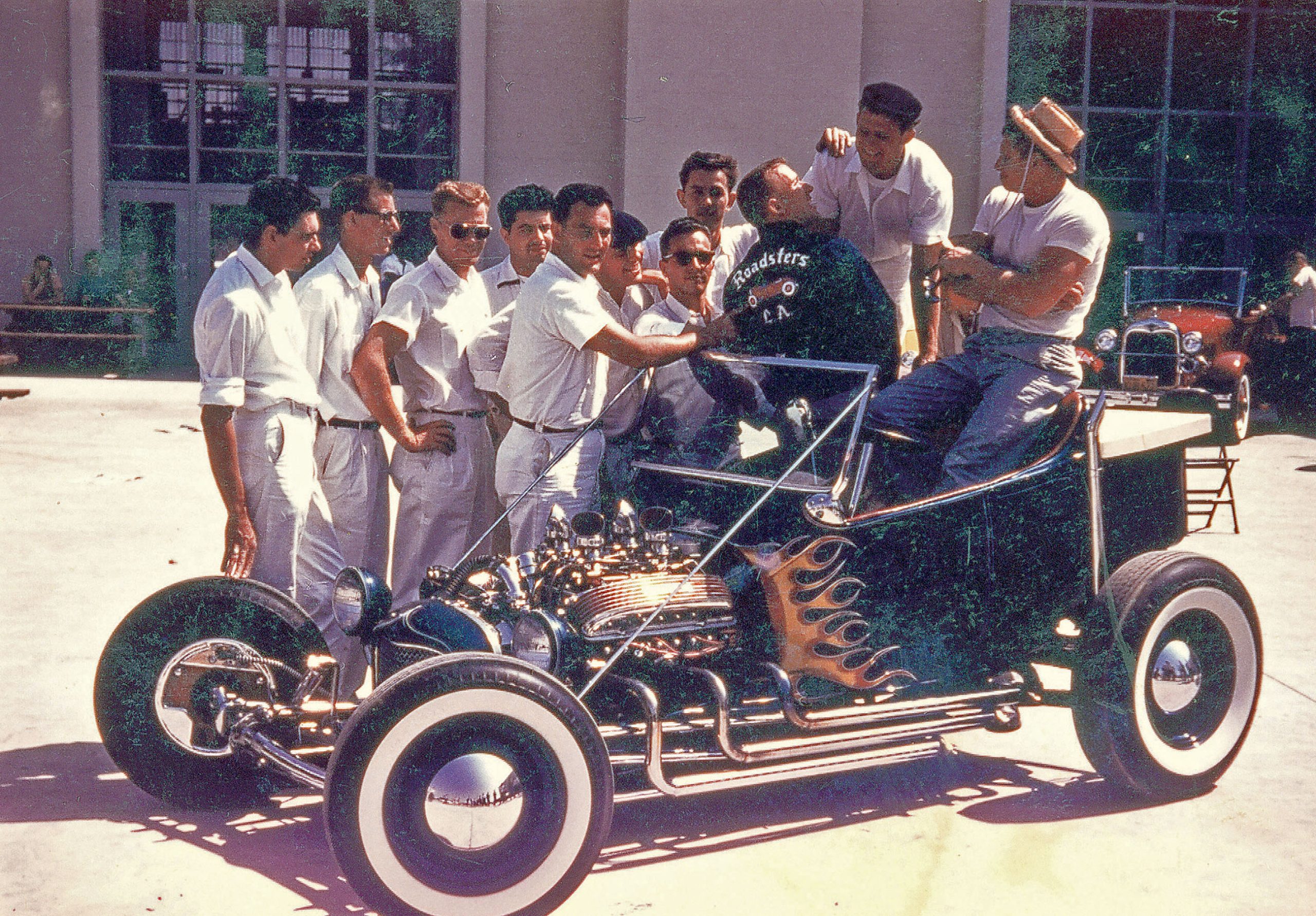
Eligibility was a critical consideration for membership in the early years and even more so in later years. The original qualification was straightforward. A rodder who wanted to join had to own a topless car built before 1934. In the opinion of the founders, most true hot rods were Model A’s and ’32 Fords with V-8 engines, but later the date was opened up to ’36 and older. When the club was founded, paint and upholstery were not required, but that was also quickly changed to finished vehicles. It was at this time that the first club logo was conceived. It was decided that a profile of a ’32 roadster would be used with the word “Roadsters” arched over the top with L.A. beneath. The type style would be Old English. The first logo would be used on the car plaques and on a blue windbreaker jacket.
Growth and New Meeting Locations
Before long, the club began to grow and the Weiand parking lot became too small for the meetings. The group relocated its biweekly meetings to a larger parking lot, adjacent to the Theme Hosiery Building. Since Hollywood was a popular name, the Sunday get-togethers were moved to Barnsdale Park. Soon after, a Post Office box was established using the Hollywood location as an address.
The Club Logo and Exposure
Although the club had an idea, a perfect logo was sought by the club, and Lynn Wineland was asked to originate a design. He was working at Petersen Publishing Company at the time and was regarded as an expert in design. He came up with the logo that is still being used. Many people think the ’32 that was used in the logo was Scritchfield’s, but it was actually a generic ’32 roadster.
The Club’s First Car Show
In December 1957, the club participated as a group for the first time in a car show. The show was called the International Motorsports Show and was held in the Hollywood Legion Stadium. The show was successful, attended by 50,000 people, and was the start of a trend that would continue for many years. After this show, the L.A. Roadsters was highly sought after to participate in many other shows over the years.
The Birth of the Father’s Day Roadster Show & Swap Meet
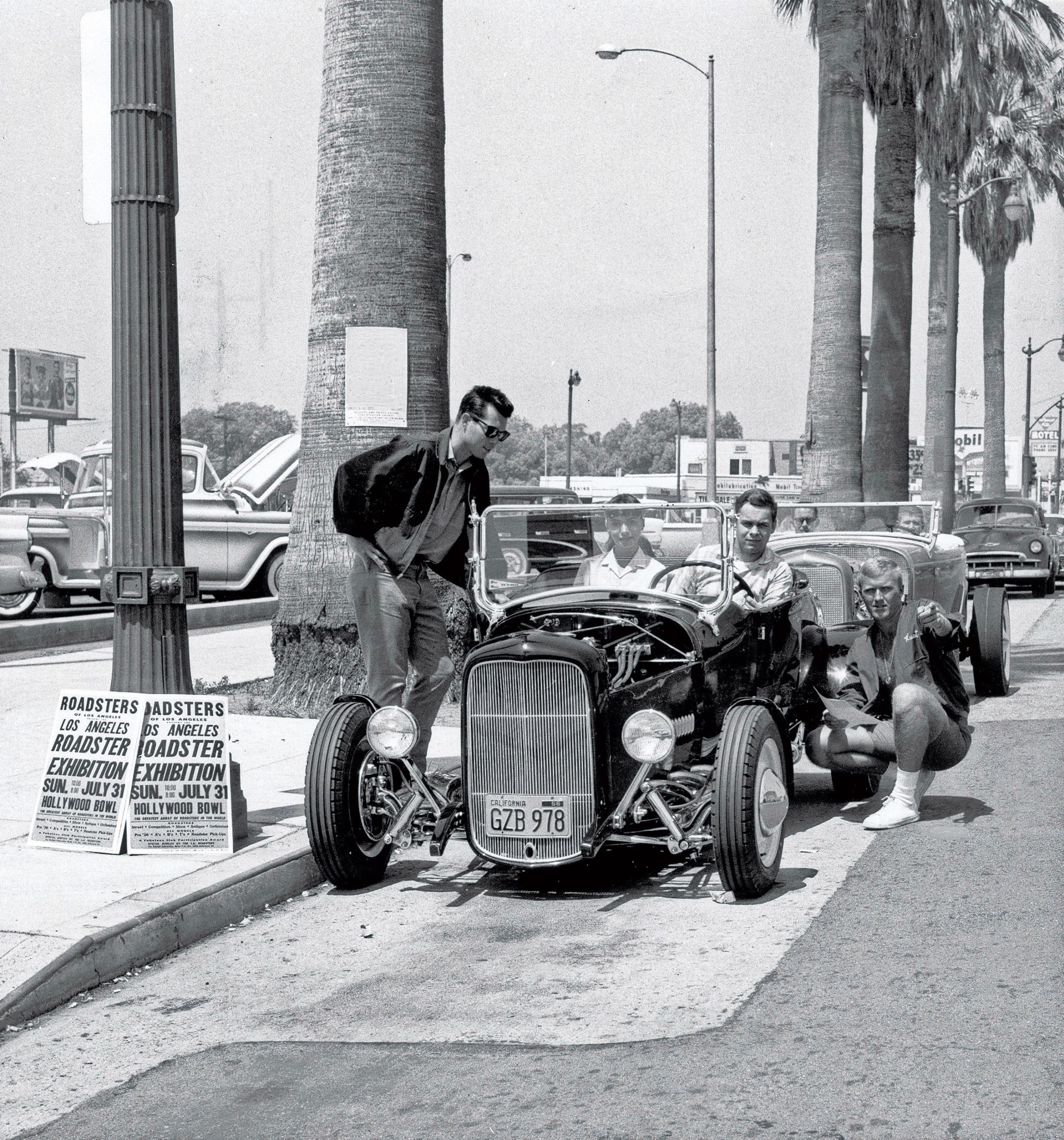
The L.A. Roadsters is well known for its members’ nice cars, but it is even more famous for its Father’s Day Roadster Show & Swap Meet. The idea for the first show came from club member Alan Johnson, who suggested the club should produce a car show to display the members’ cars. It would be a way for the club to generate some income. A title was agreed upon and it would be called the L.A. Roadster Exhibition. The first date was not Father’s Day—it was July 31, 1960, and it was a one-day affair.
Moving to the Los Angeles County Fairgrounds
The new location for the L.A. Roadster Exhibition & Swap Meet was the Los Angeles County Fairgrounds in Pomona, California, where it is still being held every Father’s Day. The show was changed to a two-day event and is held on Saturday and Sunday. It is the only show in the country that draws in a huge volume of roadsters, with approximately 800 in attendance.
The Club’s Legacy and Future
As of March 2025, the L.A. Roadsters club continues its legacy of celebrating pre-1936 roadsters. The annual L.A. Roadster Show & Swap Meet, traditionally held on Father’s Day weekend at the Los Angeles County Fairgrounds in Pomona, California, remains a hallmark event. In recent years, the show has showcased approximately 800 roadsters, attracting enthusiasts from across the globe. The event also features a vast swap meet area, with close to 1,000 sellers offering a wide array of hot rod parts and memorabilia.
The L.A. Roadsters club continues its tradition of philanthropy, donating proceeds from the event to various charitable organizations, including the City of Hope in Downey, California.If you are interested in attending, there is no pre-registration—just show up and enjoy.
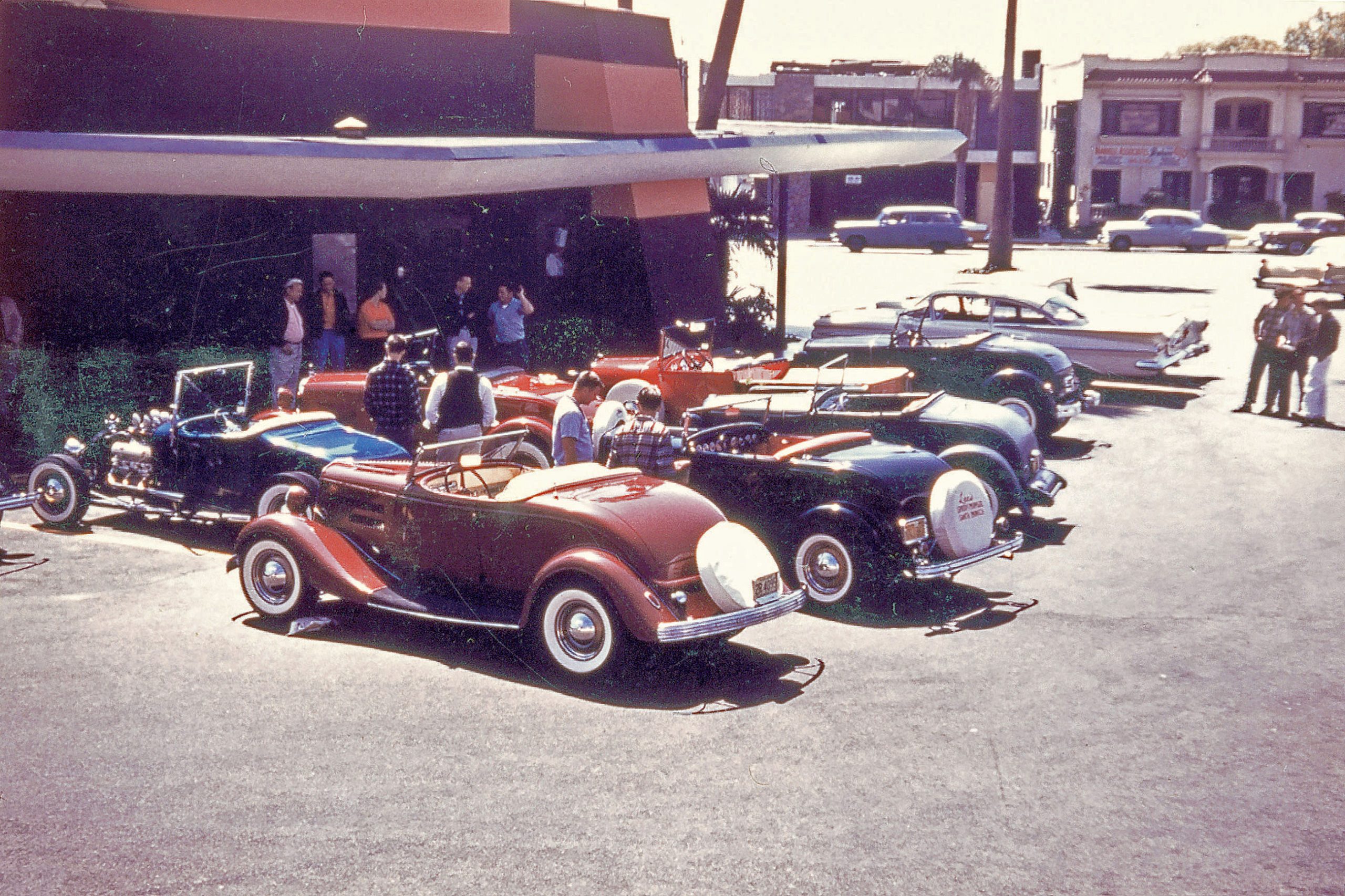
1. Tiny Naylors was a famous restaurant situated on the Sunset Strip in Hollywood, California, and was one of the favorite cruise spots for the L.A. Roadsters. Shown are some of the first members. In the foreground you can see Tony LaMesa talking to an editor from Hot Rod magazine when it actually featured hot rods.
2. Looking from the other side at Tiny Naylors, you can see a beautiful ’34 roadster, a ’27 T roadster, a ’29 roadster and a black ’32 roadster. All of these cars were outstanding in 1957.
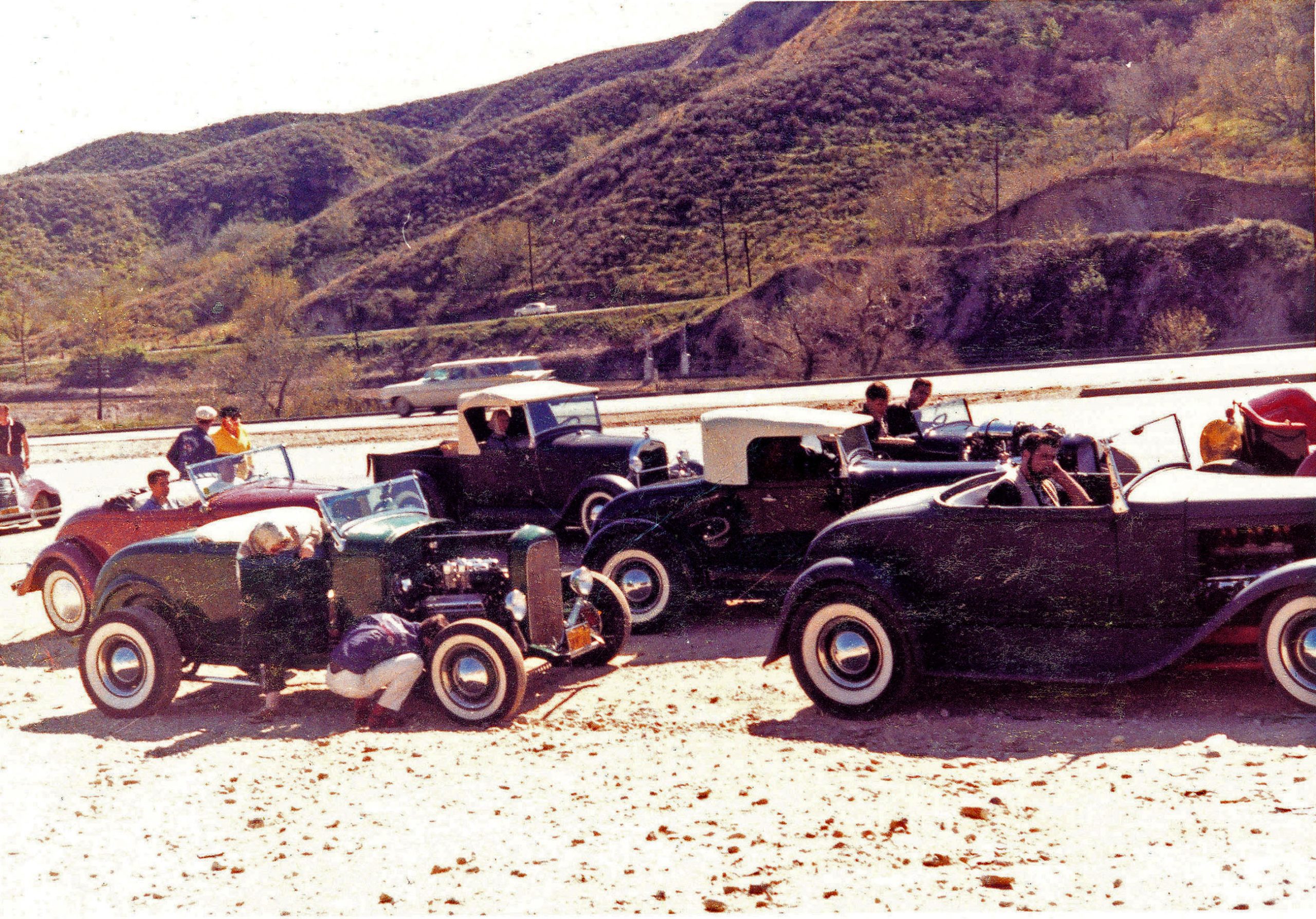
3. Hot Rod magazine put on a “Hot Rod Cruise” in 1957 and the L.A. Roadsters was in attendance and having a ball. Here’s a parking spot the group found; apparently the run was along the coast. It looks as if one of the roadsters is having a little trouble.
4. Here’s another stop along the way on the “Hot Rod Cruise.” Check out the ’29 roadster pickup that had been turned into a T-bucket-styled roadster. The roadster behind it is a nice T that was owned by Marty Holman.
5. The L.A. Roadsters probably didn’t invent the rod run, but it was one of the first clubs whose members drove their cars long distances. Here’s a bunch of nice roadsters on an early rod run.
6. The L.A. Roadsters and Bay Area Roadsters got together and decided to meet at a halfway point between the cities for a picnic and cruise. This was the first Roadster Roundup that was held at Pismo Beach. Although the hotel parking lot becomes a small car show, the main part of the event is a long cruise on Saturday. The roadster clubs drive their hot rods.
7. The nice thing about early rodding is that if someone was having a problem with their rod, everyone would stop and help out. Here is a group of roadsters on the Roadster Roundup cruise. The two cars passing by were just a few years old when this shot was taken.
8. If you have been a rodder for a long time, the name Neal East is probably familiar. He worked for some of the early magazines and now owns a bookstore in Denver. He was also an avid hot rodder and owned one of the nicest ’32 roadsters in the country. The copper roadster was featured on the cover of the August ’61 issue of Rod & Custom magazine. Now it is superbly restored and part of a Midwest hot rod collection.
9. Another Roadster Roundup found the L.A. Roadsters, the Bay Area Roadsters and a few other roadster clubs traveling to Sequoia, California. Here we see the group checking over the cars before traveling up the mountain.
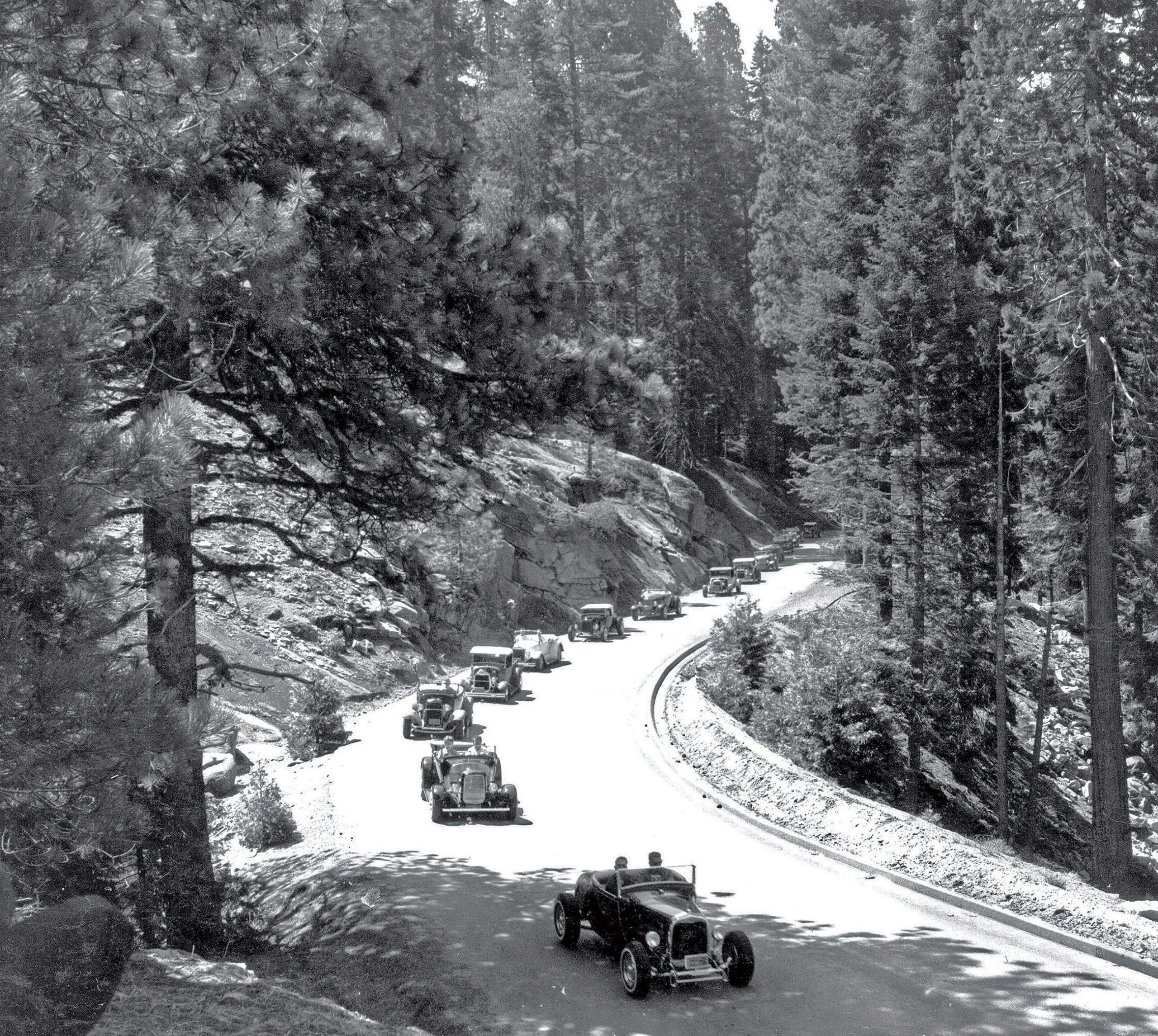
10. The cool thing about the early rod runs was the endless parade of hot rods traveling along the highway. Here’s a long line of roadsters on the way to Sequoia.
11. When the roadsters reached the summit, there were big trees and hot street iron. The roadster pickup in the foreground is definitely a Bay Area-styled street rod. Cool, isn’t it?
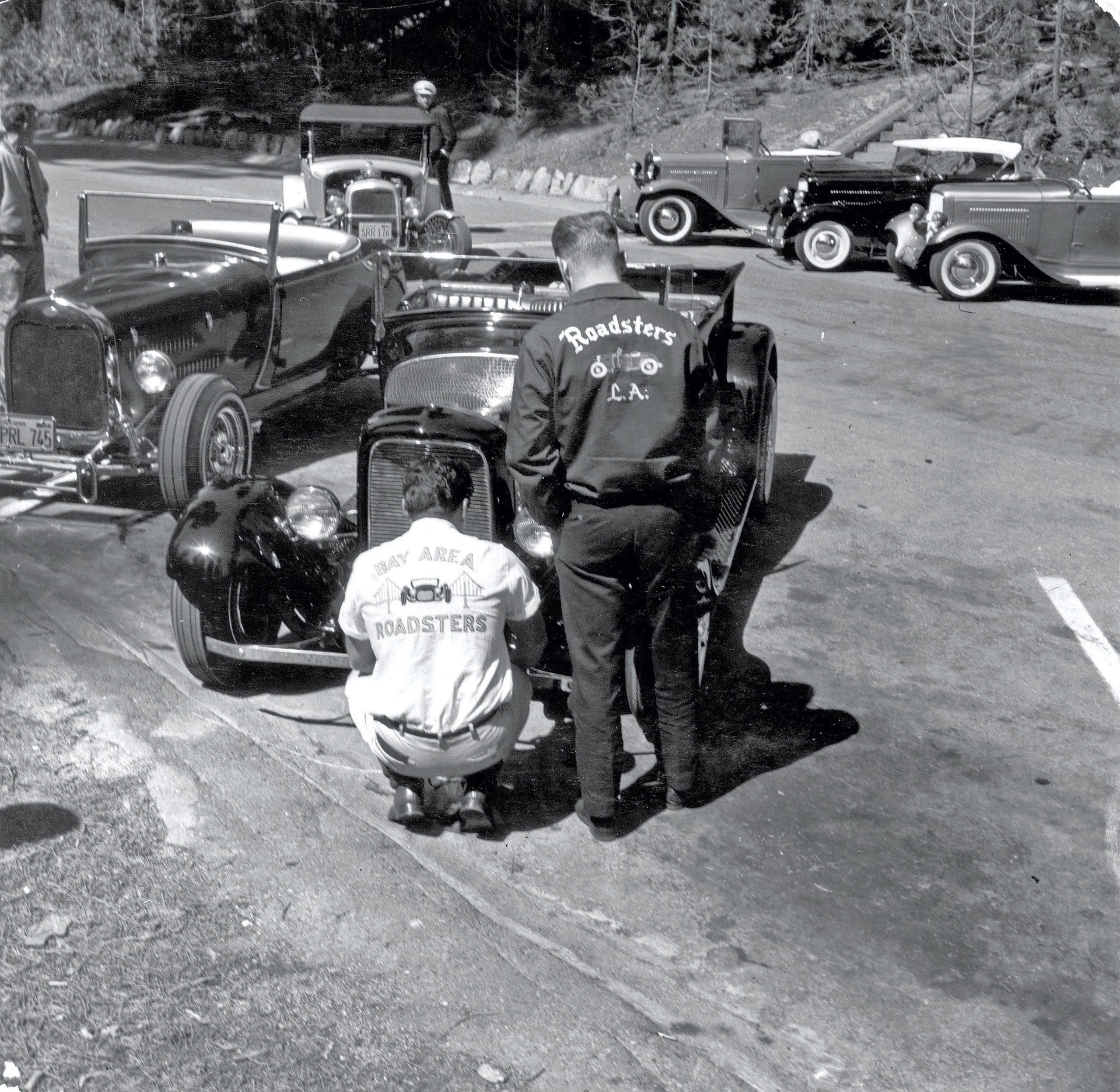
12. Here’s a nice photo of an L.A. Roadsters member talking with a fellow from the Bay Area Roadsters. The friendship between the clubs has lasted a long time. The Roadster Roundup is still going strong, and this year it will be held in Carmel, California.
13. The first L.A. Roadster Exhibition was held in 1960, and here’s the main registration area. The Roadster members were directing the rods into the Hollywood Bowl parking lot.
14. The first Roadster show was filled with about 70 roadsters, which was a good turnout for the time. Some of the roadsters on display belonged to L.A. Roadsters members.
15. Here’s a lineup of cool cars, starting with a nice-looking T-bucket and followed by a fenderless ’27 T roadster. The ’26-’27 T roadsters were popular in the 1960s, but you seldom see them today.
16. Using some ideas from Norm Grabowski’s Kookie car, Tommy Ivo built one of the nicest T-buckets of the time. He eventually sold it to Bill Rowland, who owns it in this photo. The T was running a strong Buick engine topped by a six-deuce manifold. This car is restored and usually shows up at the L.A. Roadster Exhibition & Swap Meet.
17. Grabowski was one of the first members of the L.A. Roadsters when he owned the famous Kookie car. Grabowski and his car were stars in many Disney movies, but the role in “77 Sunset Strip” made the car famous. The original car is still in existence in the Midwest, but it has been drastically changed from the way it looks here.
18. It’s hard to beat the nice appearance of a ’29 roadster with full fenders. This one was nice and looks great with the whitewall tires and baldy hubcaps.
19. Here’s a nice ’32 Ford roadster that features beautiful paint and a chopped top. The interior is filled with nice-looking tuck-’n’-roll upholstery that carries through to the running boards. Painting the undercarriage white was popular at the time.
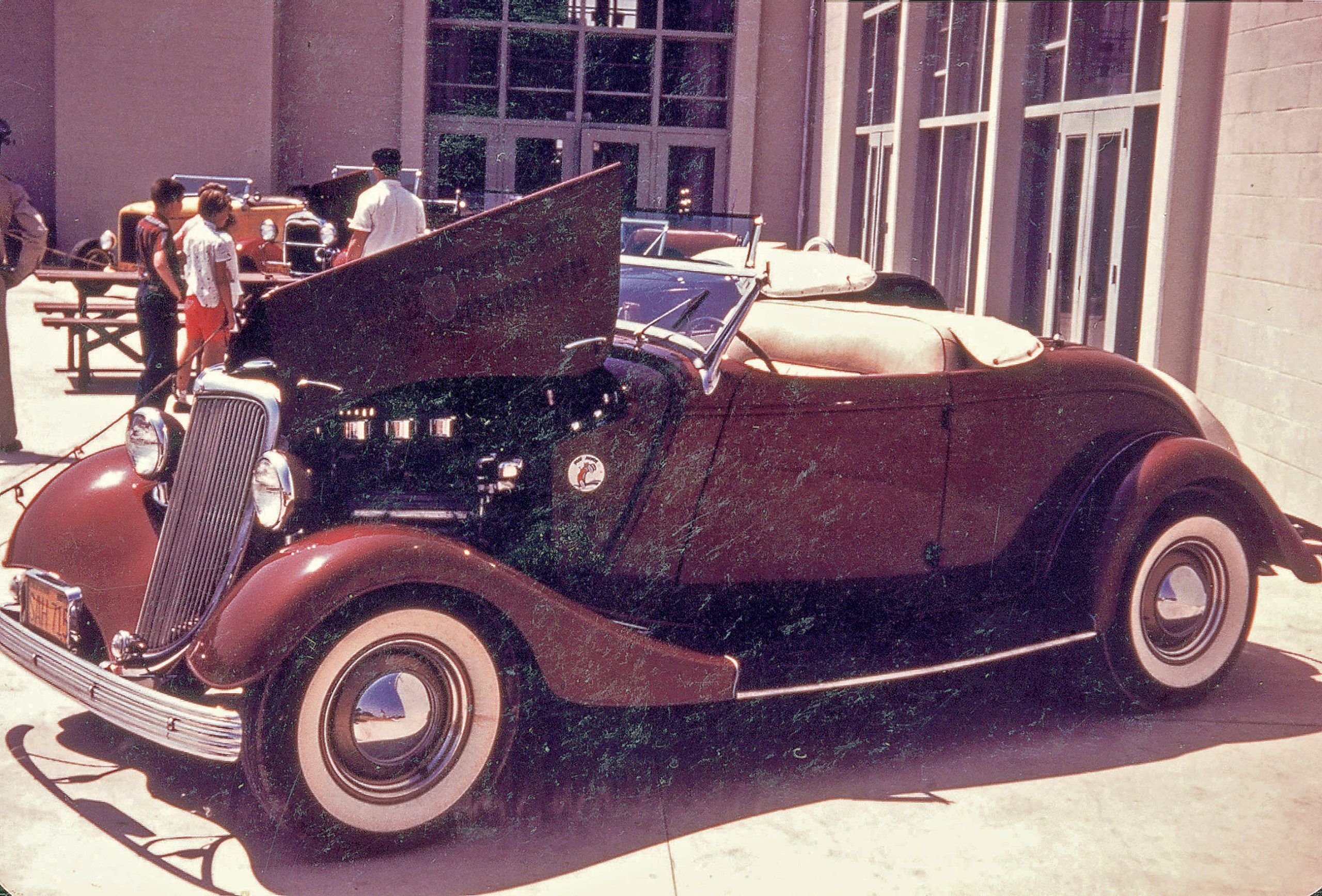
20. Here’s another nice-looking ’34 Ford roadster with a tri-power Chevy engine. This elegant roadster belonged to Dave Babler, a longstanding member.
21. Tony LaMesa was one of the founding members of the L.A. Roadsters and owns this wild, channeled roadster. This picture was taken right after the club was founded.
22. Grabowski sold his famous T-bucket and then built this bright-red touring. This rod was also a trendsetter and in usual Grabowski fashion, the touring became famous in the movie “My Mother The Car.” We wonder what happened to the touring.
23. This blown Chrysler-powered roadster pickup was bad news at the time. This radical roadster still exists and we saw it for sale recently.
24. This T-bucket was nice and was built right at the beginning of the T-bucket fad. This one was detailed to perfection with a highly chromeplated Olds engine and an interesting tuck-’n’-roll interior with recessed seat inserts.
25. We love some of these early rods. This full-fendered ’24 T roadster has a cool look. This wild rod was owned by Otto Millen.
26. We don’t know where Ed Roth got his wild ideas, but here’s one of his early creations. This handcrafted car was on the cutting edge of street rods in 1960.
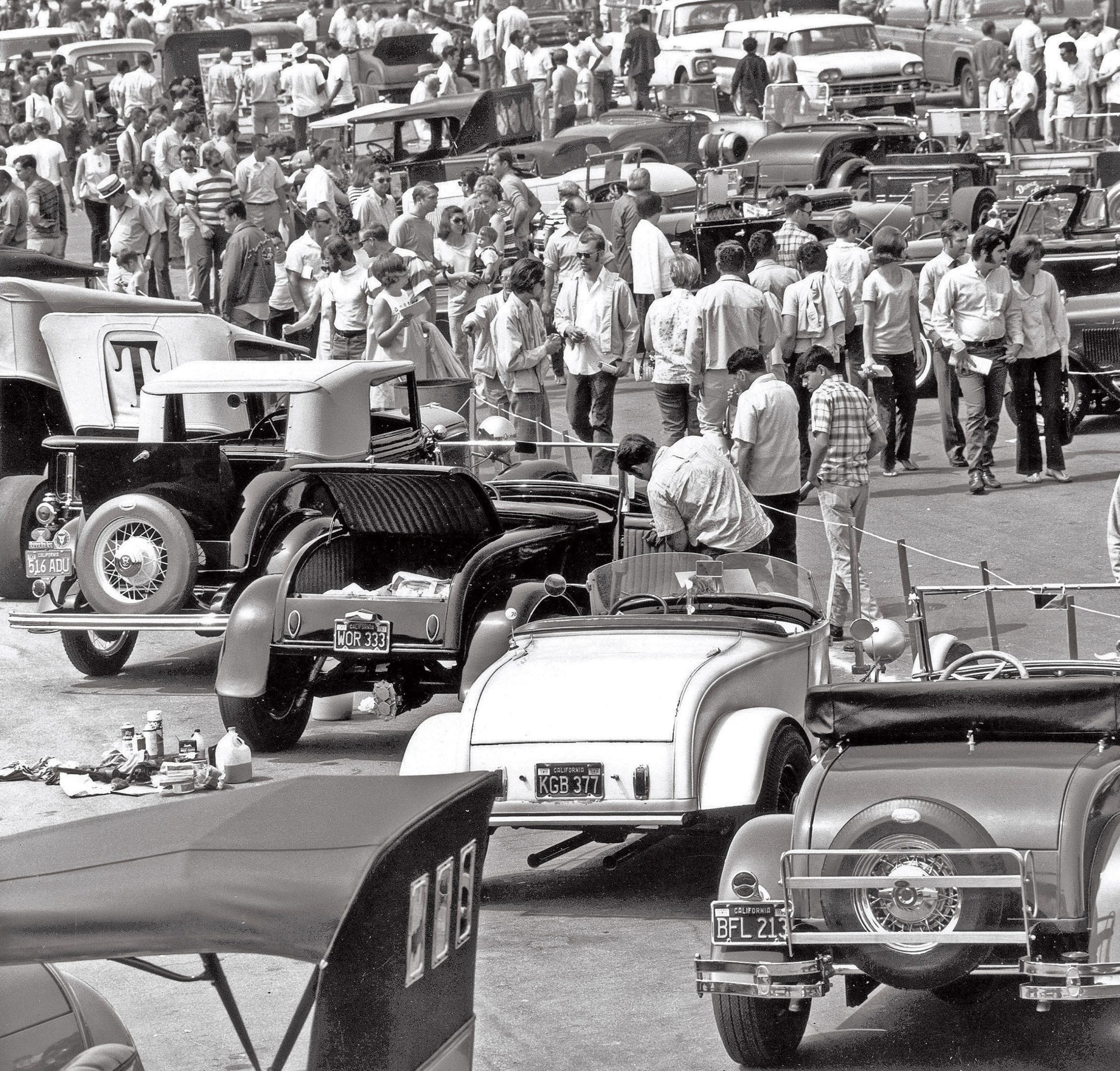
27. In this photo we jump forward from the Roadster Exhibition in 1960 at the Hollywood Bowl to the L.A. Roadster Exhibition & Swap meet in 1970 at the Great Western Exhibit Center. This is the large area that was used for the Roadster exhibit, and you can see many of the nice cars.
28. If you owned a T-touring like this one in 1970, you had the ultimate street rod. It was a time when T’s, A’s and Deuces were the cars to have. Today you seldom see a T street rod, especially a touring. Maybe they will make a comeback.
29. If you were at the 1970 Roadster Exhibition, as we were, look closely—you may see yourself in this photo when you were thinner and didn’t have gray hair. Even in the 1970s, this show brought in a large crowd.
30. If you were looking for that rare piece of sheetmetal that you needed to finish your street rod, or a complete project car, it was at the swap meet. If you saw the prices on some of these parts, you would buy them all. See the touring in the background? The selling price at the time was probably around $800. No, we didn’t drop a zero!
31. Many of the early L.A. Roadsters cars were in movies and television shows. Here’s a T roadster featured in an episode of the “Dobbie Gillis Show.” Here we see Dobbie and Maynard T. Krebbs.
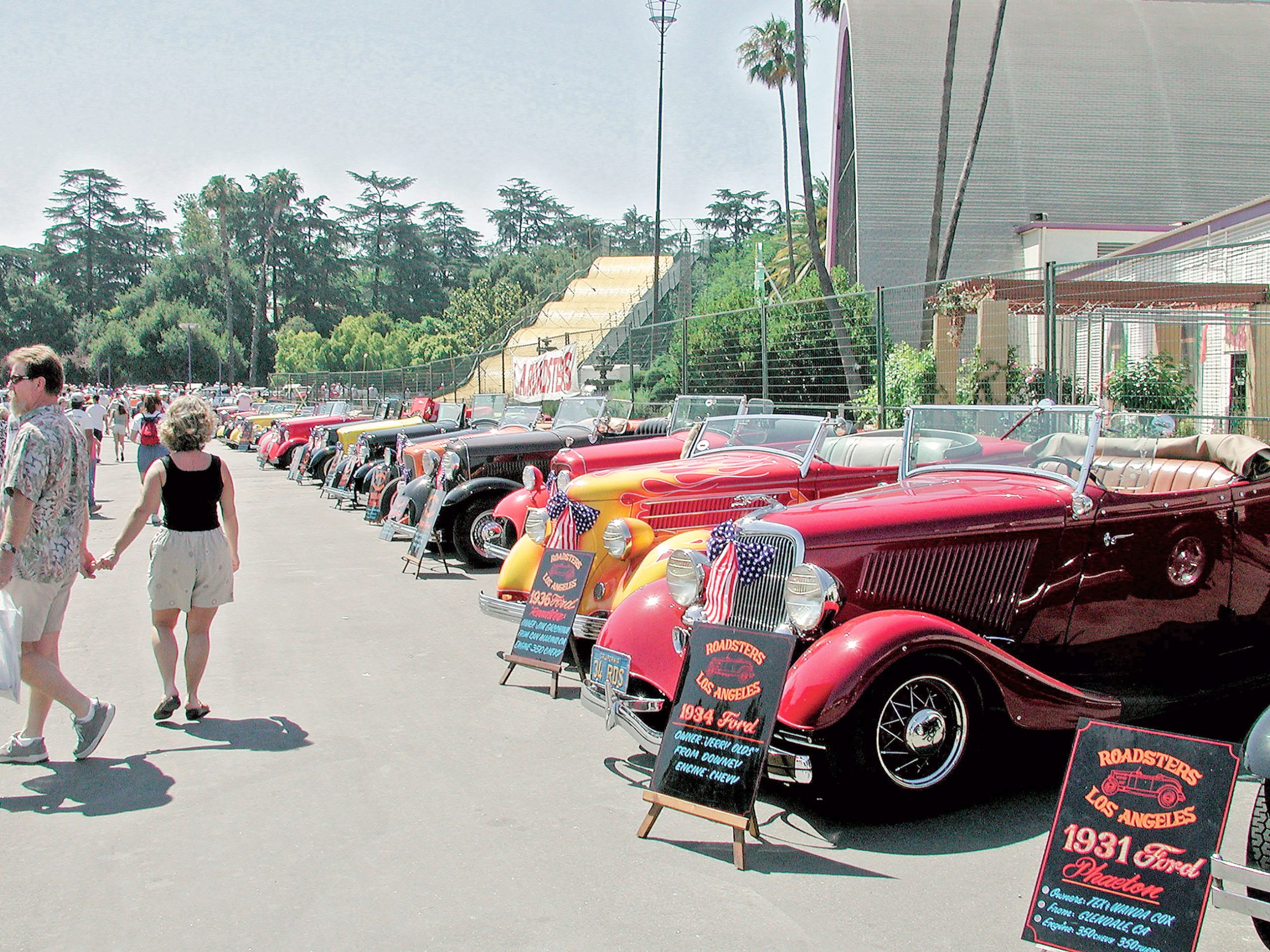
32. Here’s a lineup of the L.A. Roadsters vehicles at the last Roadster Exhibition. Every member has a matching sign for display at the show. The flags were a tribute to the victims of the 9/11 attack.
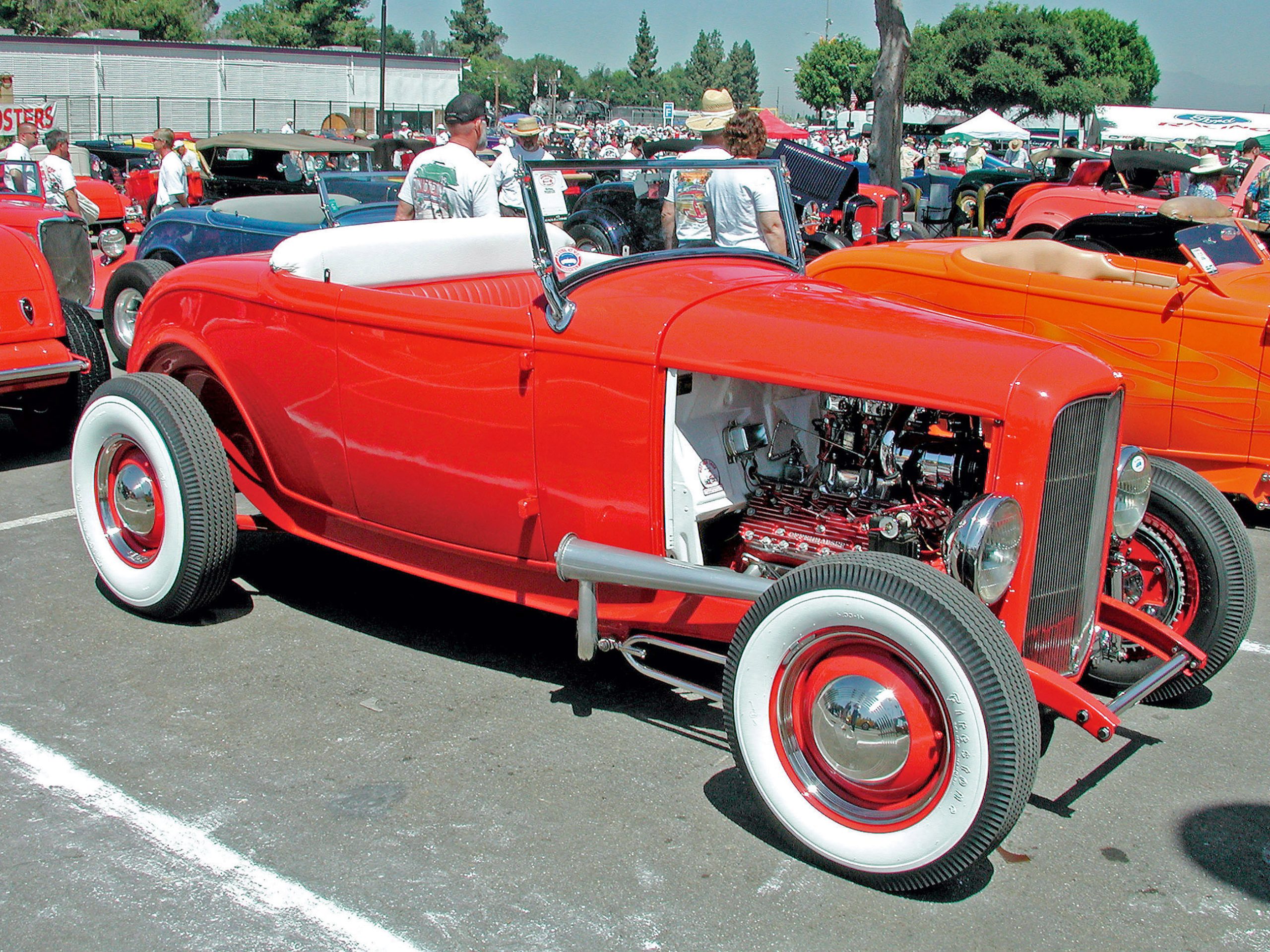
33. This roadster would look right in place at the 1960 Roadster Exhibition with the wheels and tires and Flathead engine. We don’t know if it is a recently built rod or a survivor.
34. We showed you a photo of a ’29 roadster in 1960 and now a current roadster. This bright-orange roadster sits a little lower than the older one and features a much better hood arrangement. The Halibrand wheels look good, too.
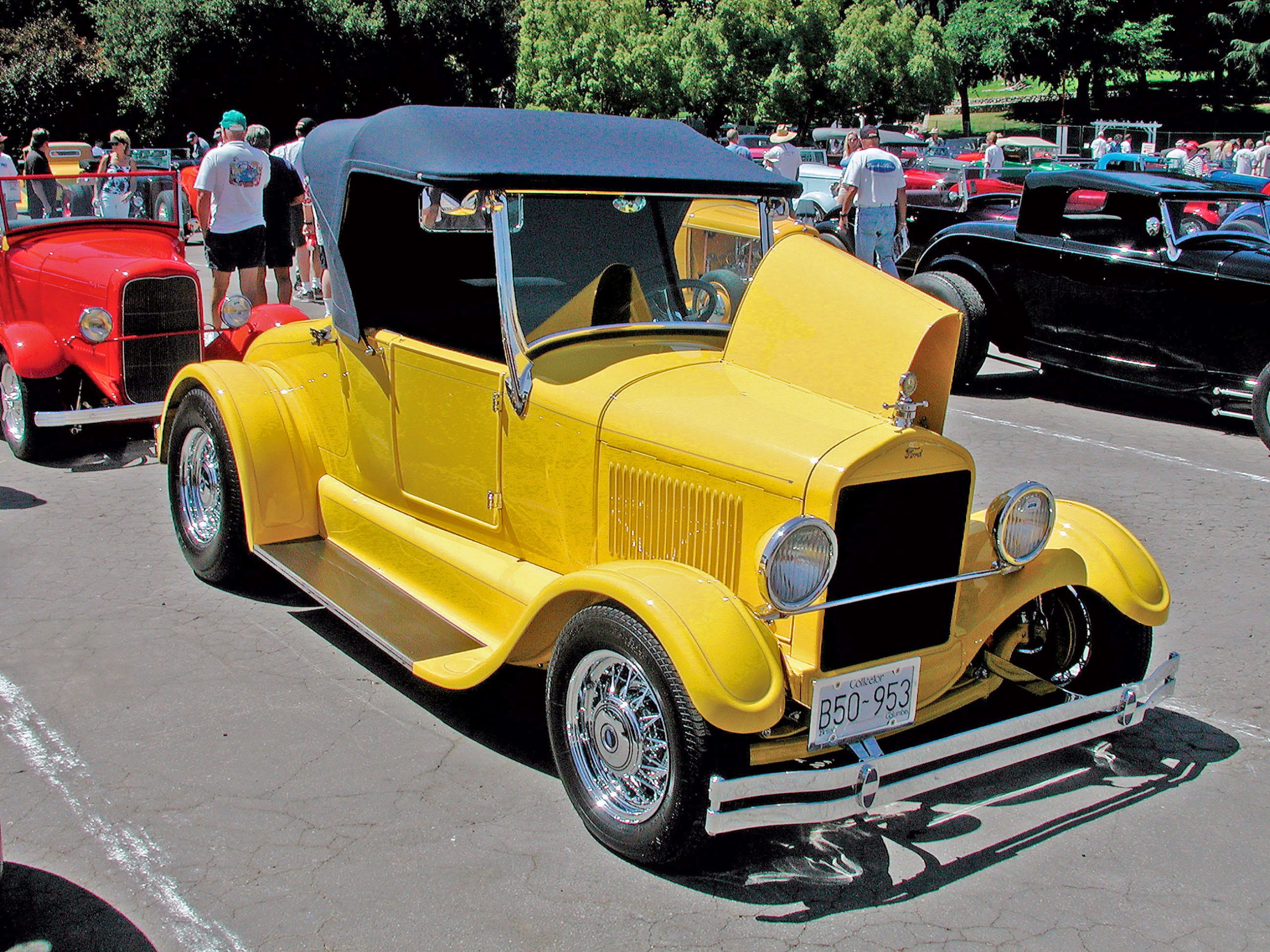
35. We asked, where did all the T roadsters and phaetons go? Well, most have disappeared from other rod runs, but some do show up for the L.A. Roadster Exhibition & Swap Meet. This beautiful yellow roadster is there every year.
36. Roy Brizio grew up in street rodding and remembers all the cool cars he saw as a kid. When someone asks him to build a nostalgic roadster, he knows how to do it. This Indian Fire Copper roadster looks great with the cream-colored wheels, firewall and grille insert. Again, it could be a car from the 1960 car show.
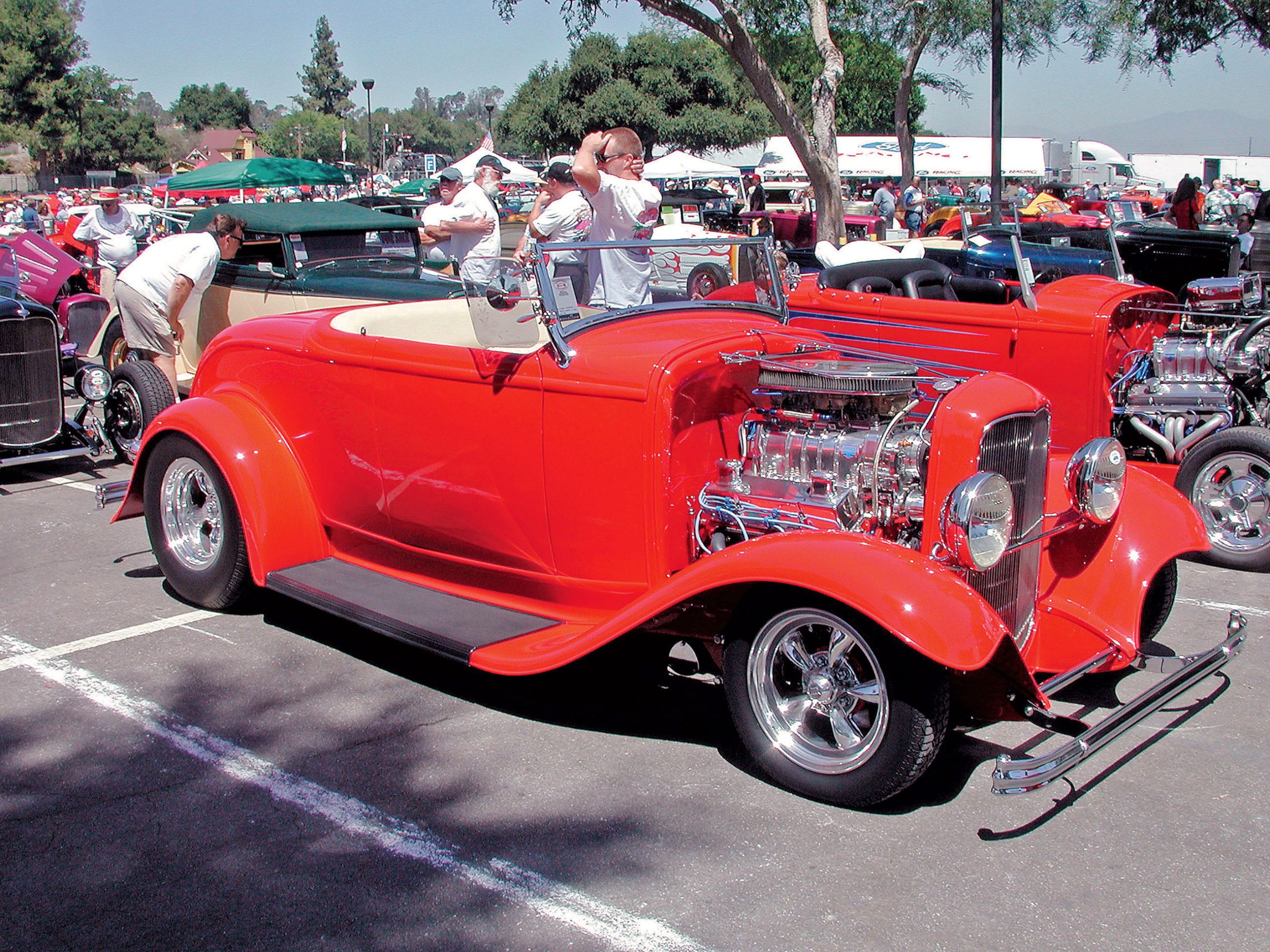
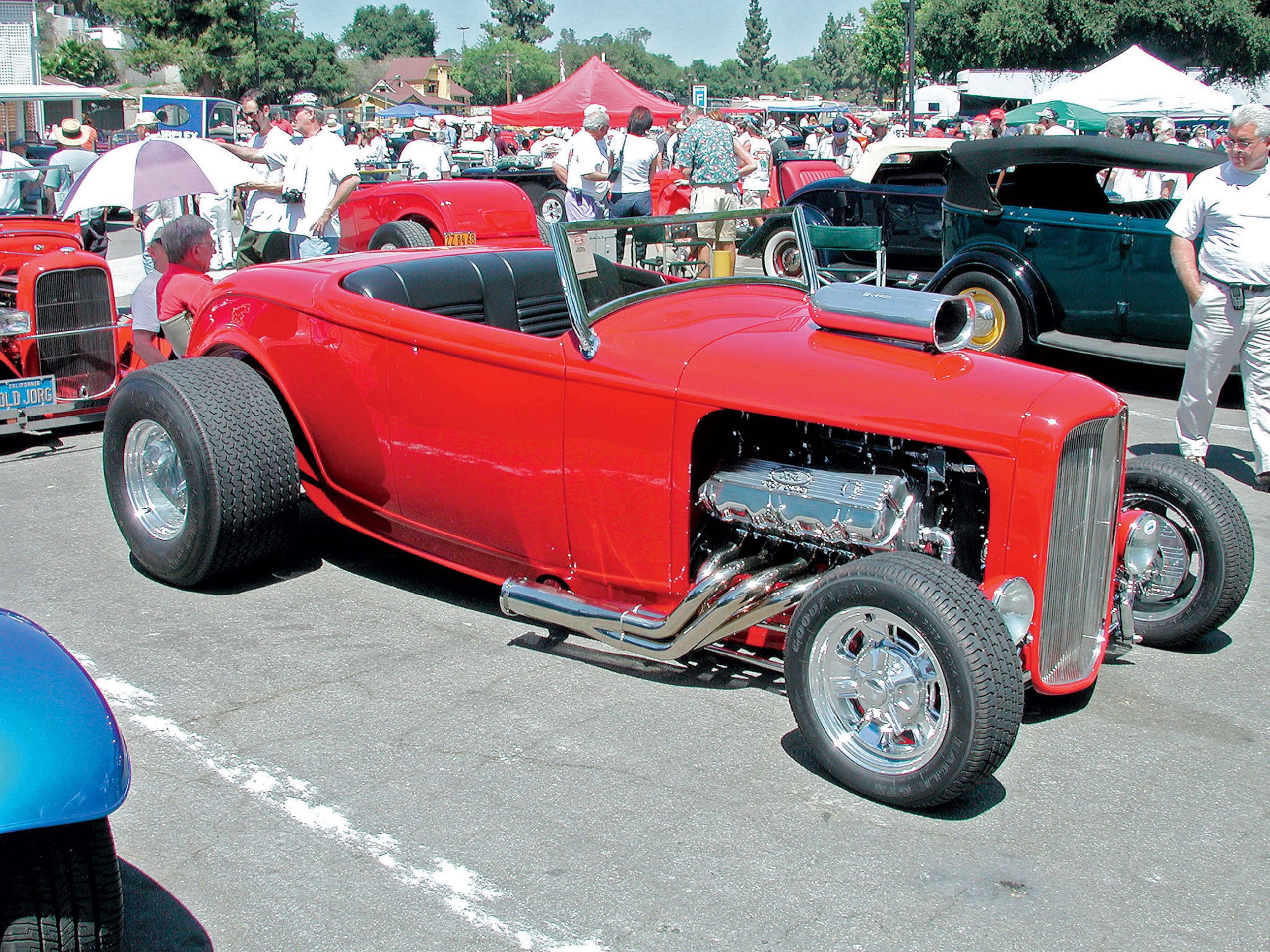
37. Traditional street rods combine the old with the new. This car has all the correct parts from the 1970s, such as the full fenders, rubber running boards, original bumpers and headlights, and American five-spoke wheels. The new technology is sitting in the engine bay, because blowers were a black art for the street until more recently.
38. In the old days, highboy roadsters ran Flathead engines; today some lucky roadster owners outfit their cars with SOHC 427 Ford engines.
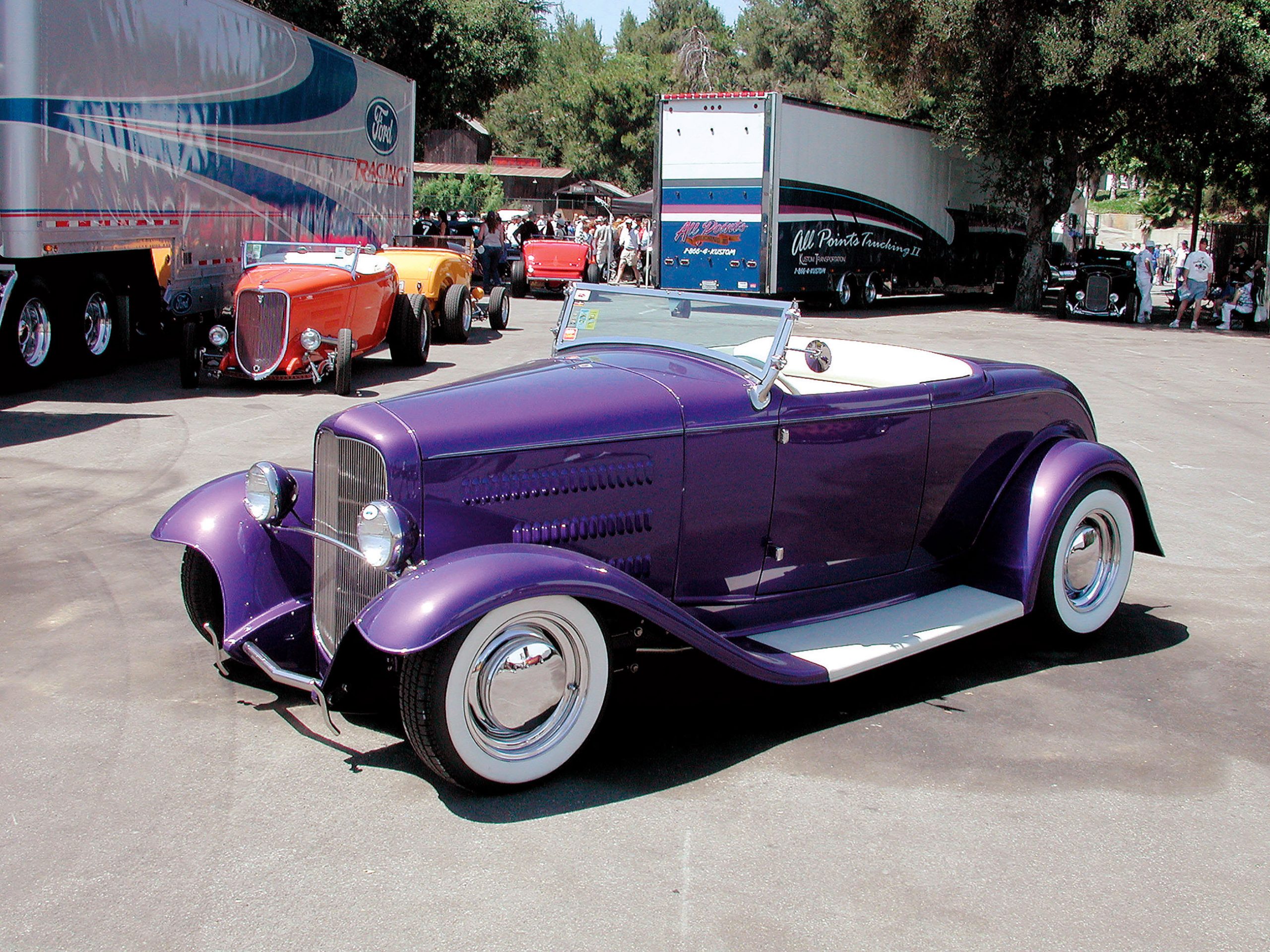
39. When Roy Brizio started building this full-fendered roadster, he was going to copy the Neal East roadster and was going to paint it the copper color. During the construction, he stayed on course with the theme but decided to change the color to Ford Ultra Violet.
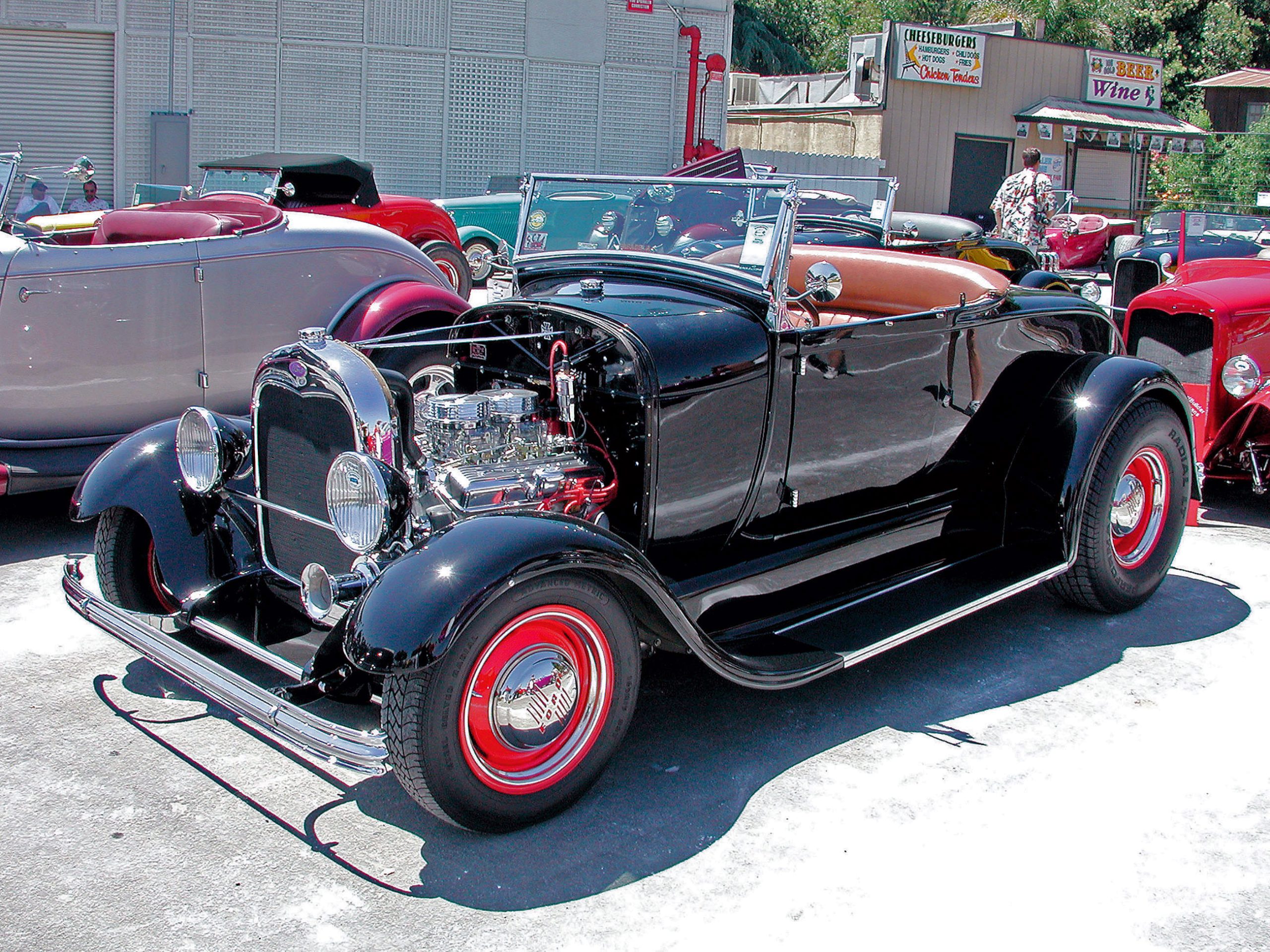
40. Here’s a ’29 roadster that could have been at the first Roadsters show in 1960 and still looks great today. This is what we call a timeless roadster, a quality that comes from the color selected and the detailing used under the hood.
ARTICLE SOURCES

L.A. Roadsters
The club is dedicated to the preservation of American-made cars from 1936 and older that have been modified for appearance and improved performance.

L.A. Roadsters, A Retrospective
Longtime L.A. Roadsters member and club archivist Jack Stewart has preserved the club’s rich history in his book. Packed with memorabilia and rare photos, it offers a comprehensive look at the legendary group.