
THE AUTO BUILDER
Menu
Featured


Ford’s Garage Rolls Into Chattanooga
There’s something about old cars, vintage gas stations, and a good burger that just seems to go together. Now, Chattanooga, Tennessee, has a new destination that brings all three under one roof.
On Tuesday, October 13, 2026, Ford’s Garage officially opened its doors near Hamilton Place Mall, marking the restaurant chain’s first location in the Volunteer State. The Auto Builder was there on opening day to check out this latest addition to Chattanooga’s automotive scene, and it’s safe to say this isn’t your typical burger joint.

PRI 2025 New Product Round-Up
The 2025 PRI Show just tore through Indianapolis, and if you weren’t there, you missed a full-throttle showcase of racing tech that doesn’t mess around. Builders, racers, and gearheads packed the floor, and the energy was absolute chaos—in the best way. The products? They didn’t whisper—they slammed onto the scene, sharp, loud, and ready to make your ride better, safer, faster, meaner.
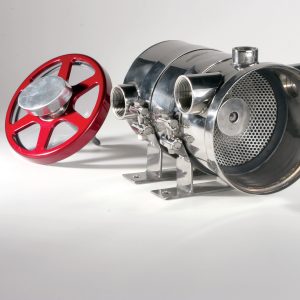
Hardin Marine Dual-Stage Swirl-Away Sea Strainer
Hardin Marine has been very aggressive lately in new product development, even though this is a company with a long history in the marine business and already has many exclusive product designs. One of the company’s newest products builds on Hardin’s widespread acceptance. Its Swirl-Away Sea Strainer line is at the forefront of technology in the area of cooling system protection.





Spotlighter
POPULAR READS
-
The Auto Builder’s Hottest Product Picks from The Triple Crown of Rodding 2026
-
Product Spotlight: Bill Mitchell Products Aluminum LS Engine Block
-
PRODUCT SPOTLIGHT: 60-66 Chevy C10 Fresh Air Vent Block Off Plate
-
Product Spotlight: Pyramid Optimized Design Sequential Aurora Taillight for 1964½–1966 Mustang




F(AST)-150
Installing Magna Charger’s New F-150 Supercharger System
Author

Matt Emery
Story & Photography
Up until now, if you wanted to have a fast F-150 you had to buy a Lightning. Not that this was a bad thing, but there were only so many to go around, and the price tag may have been a little more than some folks wanted or could afford to spend. But a lot of those same folks also wanted to go fast, and by that we mean faster than the stock 5.4-liter, three-valve-per-cylinder Triton engine could deliver in its stock configuration. Not that the Triton, putting out a claimed 300 hp, could be called slow, but there’s always room for some performance improvement when it comes to satisfying enthusiast tastes.
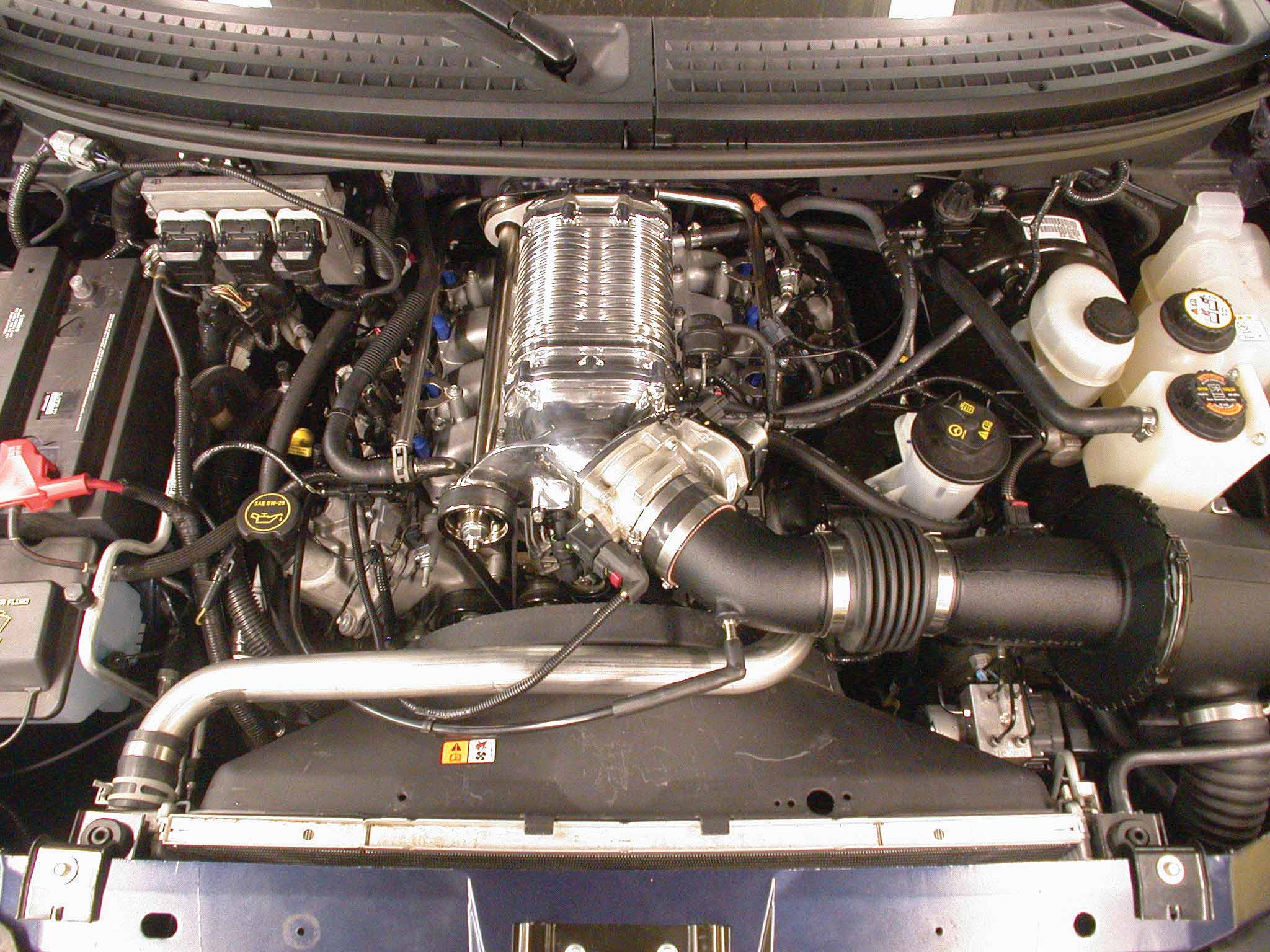
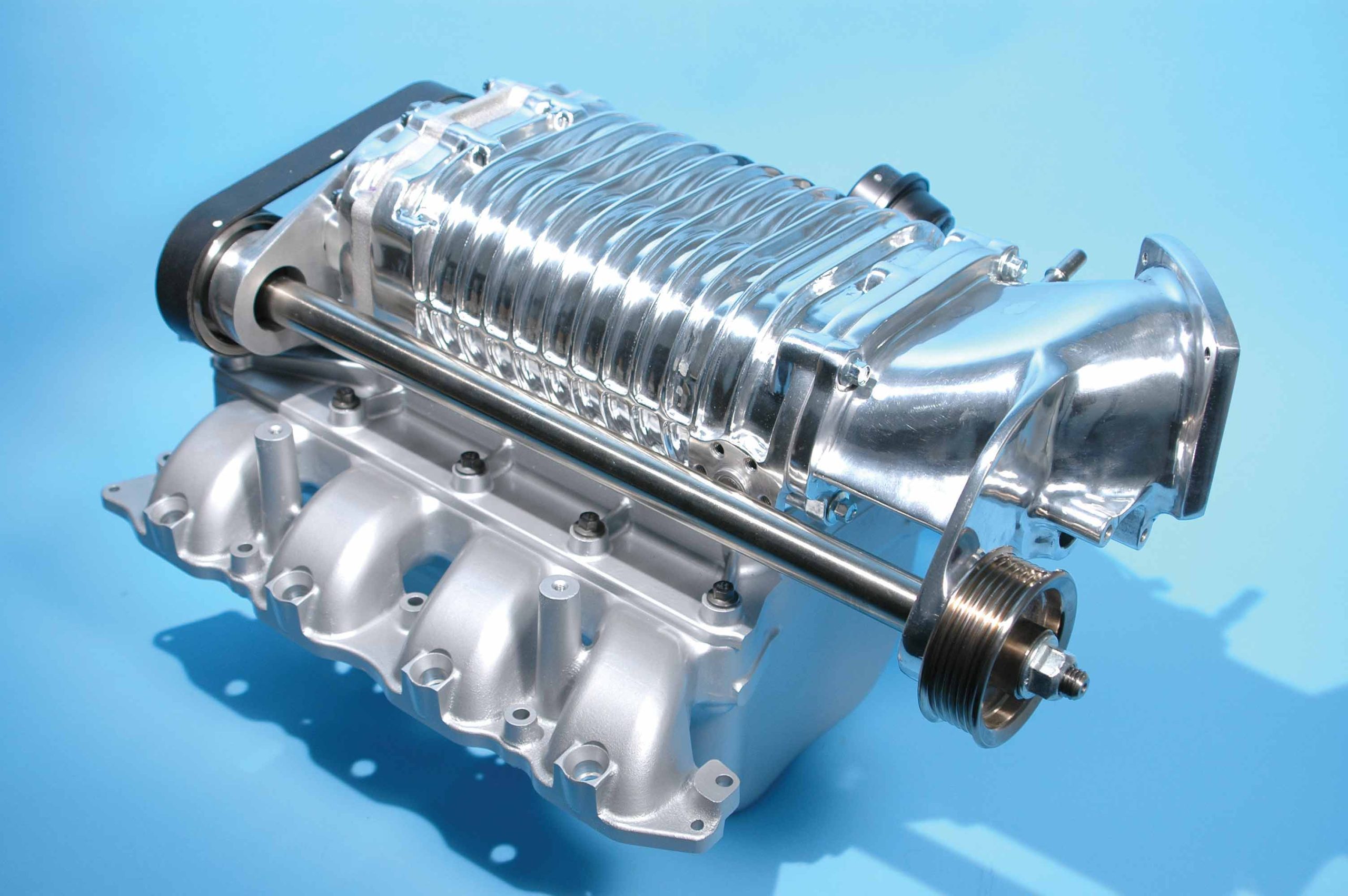
When it comes to improving horsepower, one of the main names is Magna Charger. Long known for its supercharger systems for Chevy pickups and even hot rods, Magna Charger has more recently turned its attention to the Blue Oval. It was in late 2005 that the company introduced a system for the ’04-’06 Ford F-150 pickup truck equipped with the 5.4-liter Triton engine. Aiming to improve horsepower and torque in the 1,200-5,500-rpm range, Magna Charger chose to utilize its fifth-generation MP112 hybrid Roots-style supercharger system in this effort. The Gen 5 is equipped with an internal bypass valve, which the Magna Charger folks say reduces parasitic losses while cruising for increased efficiency and economy. Also, the Magna Charger system is intercooled, and everyone knows that cool air is denser than hot air, and denser air makes more power.
Okay, but what does that mean to the guy who wants to add more power to his truck? Magna Charger claims that its system is good for an increase of 140-plus hp over the factory numbers, and we don’t doubt those claims. This translates into real power, as it means that the F-150 will now put out around 430-450 hp. That’s some serious power.
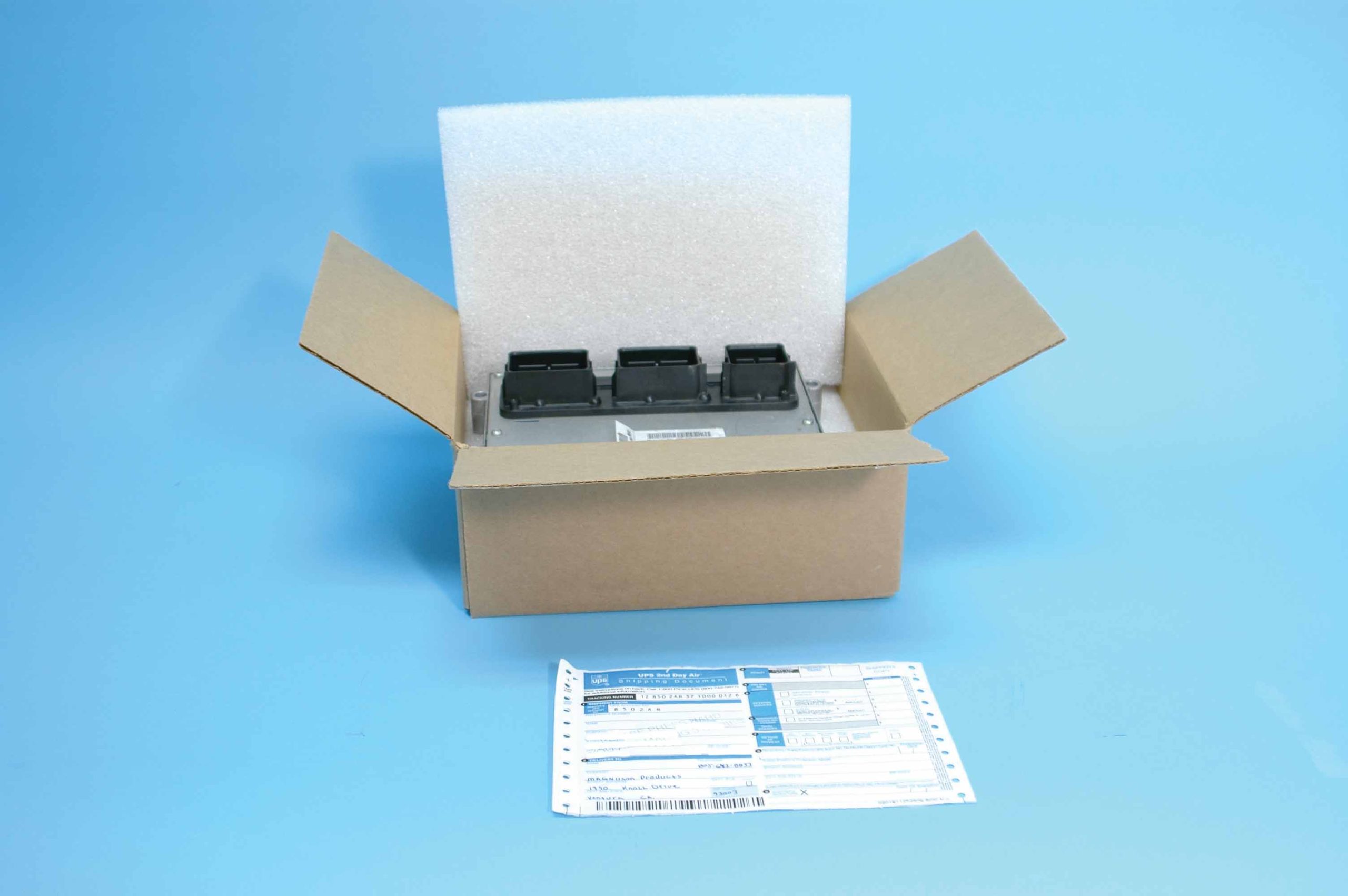
There are differences in every kit, just as there are differences in the various truck manufacturers. Though the Ford system doesn’t need to run an additional fuel pump as the Chevys do, it does have one oddity. Unlike the Chevy, which is reprogrammed using a Superchips programmer, the Ford computer must be pulled out of the truck and sent in to be reprogrammed. Magna Charger supplies a prepaid box and says that this mod will take only a few working days.
It is recommended that a professional mechanic install the system, and that does make sense should a problem occur, but this is an install that is possible for a talented, do-it-at-home type of guy who enjoys not only the work but knowing exactly what everything is, where it goes and what it does. We were on hand as the folks at Magna Charger installed its new kit on this Ford F-150. It took them the better part of a day, and they know what they are doing. So use that timeframe to gauge how long it is going to take you (or your mechanic, who may not have installed one of these kits). Follow along and watch and learn how a Ford is made to go F(ast).

Based on the fabled Eaton supercharger, the Magna Charger fifth-generation MP112 hybrid is a Roots-style supercharger system that comes with everything needed (including a detailed instruction manual) to turn a stock F-150 into a Lightning chaser. One of the cool things about it is that it features an internal bypass valve. The folks at Magna Charger say that the internal bypass valve reduces parasitic losses while cruising for increased efficiency and economy.
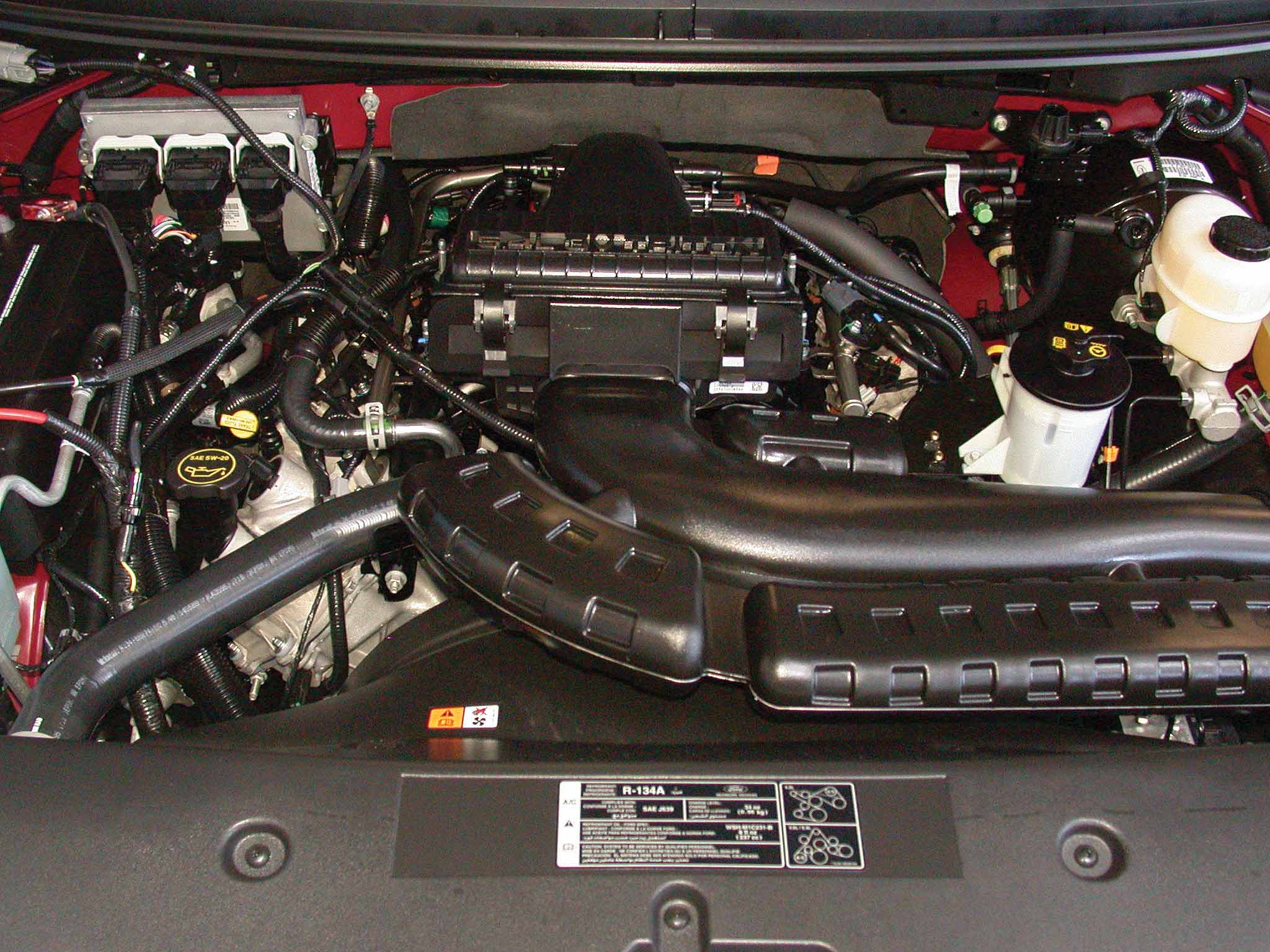
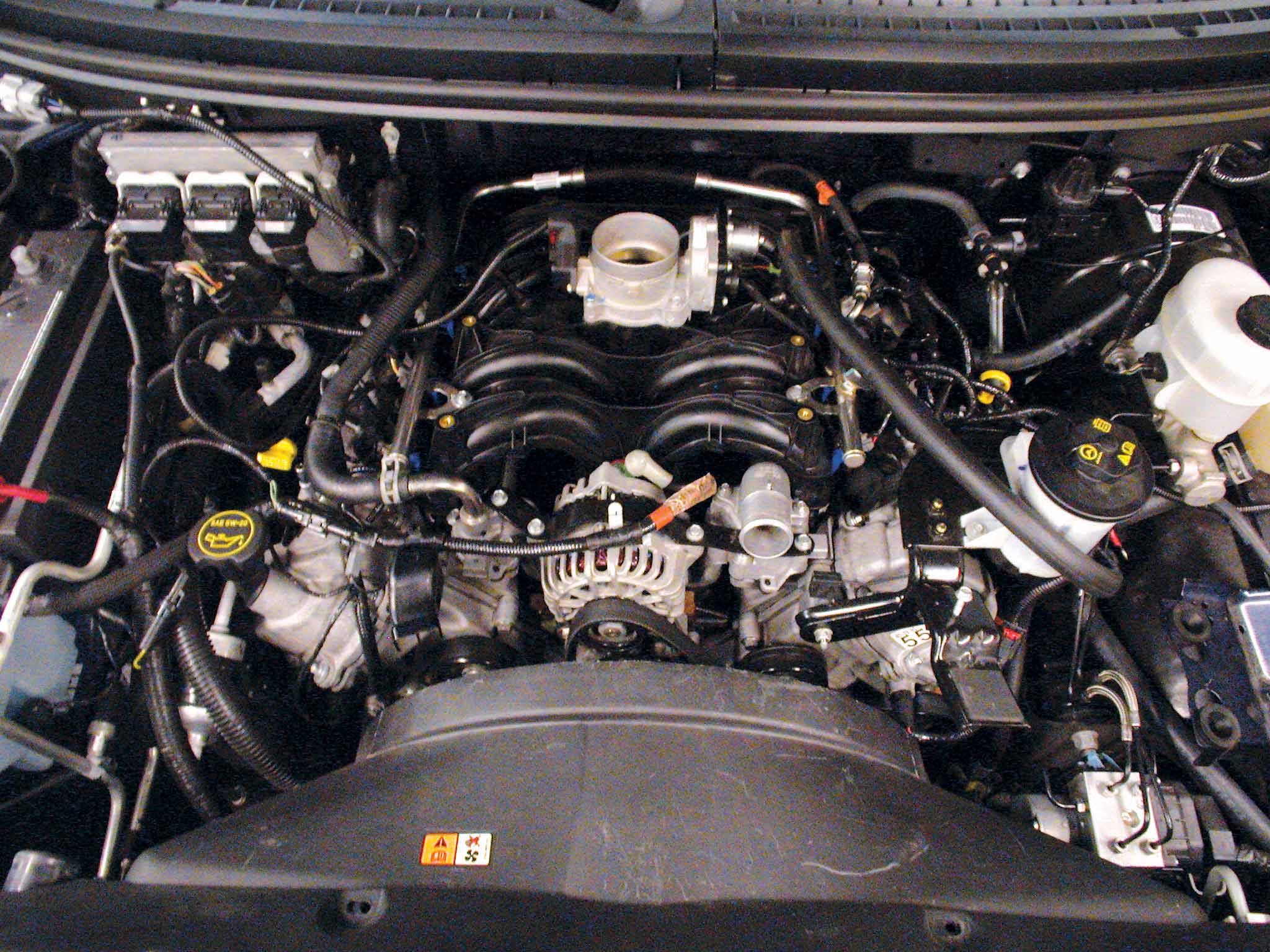
The 5.4-liter, 24-valve (three-per-cylinder) Ford “Triton” is a good engine that puts out around 300 hp. This is enough to get you around town, but not nearly enough for a hot rod pickup. That will all change, and soon.
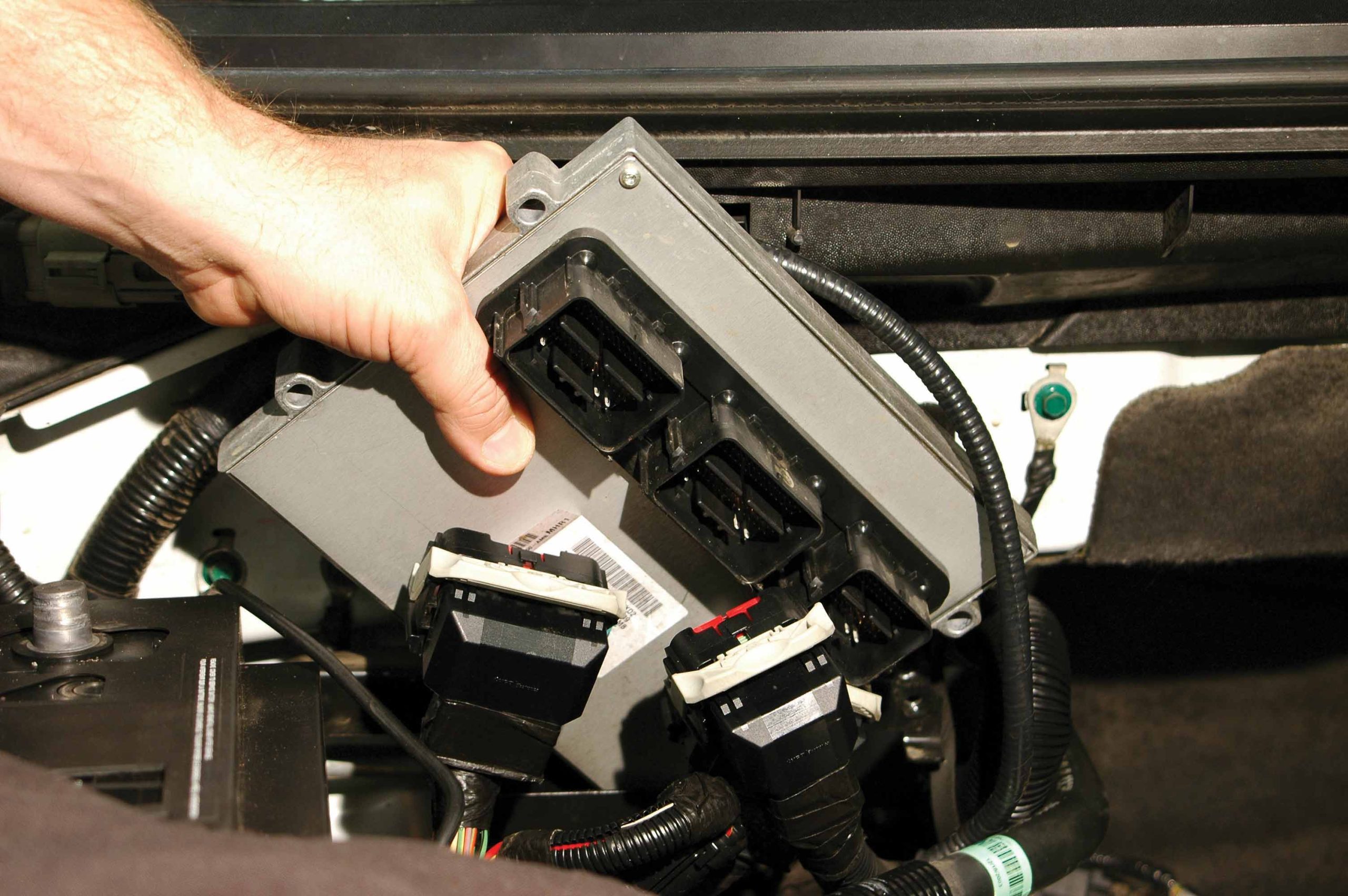
The first step in the install is to remove the computer and send it off to be reprogrammed. Magna Charger supplies a prepaid UPS box and label for this, and the word is that the computer will be done and delivered back to the owner in just a few working days.
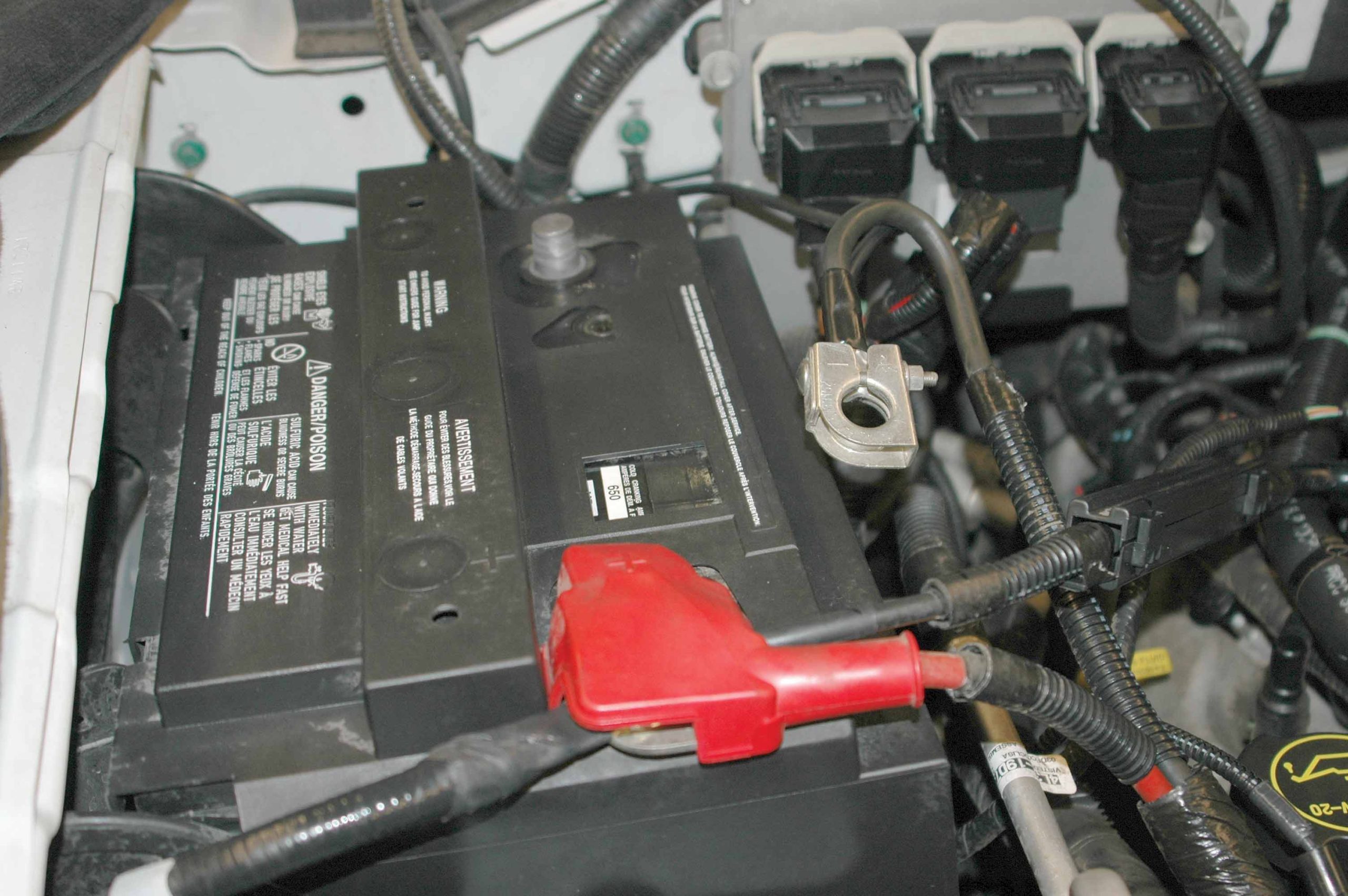
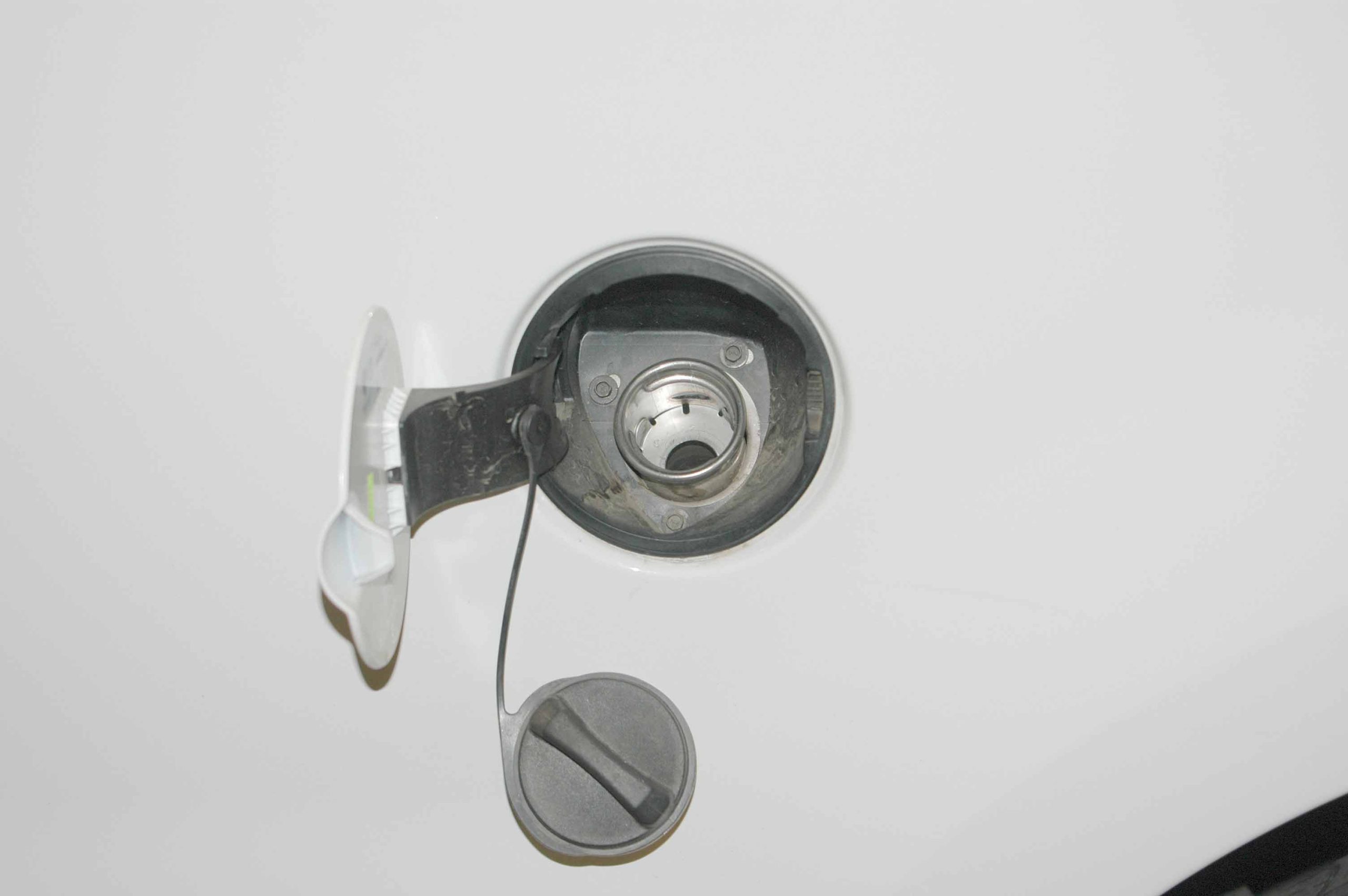
With the computer back, the install can truly begin. The first step is to remove the negative lead from the battery and remove the gas cap. This will release pressure in the system.
With the computer back, the install can truly begin. The first step is to remove the negative lead from the battery and remove the gas cap. This will release pressure in the system.
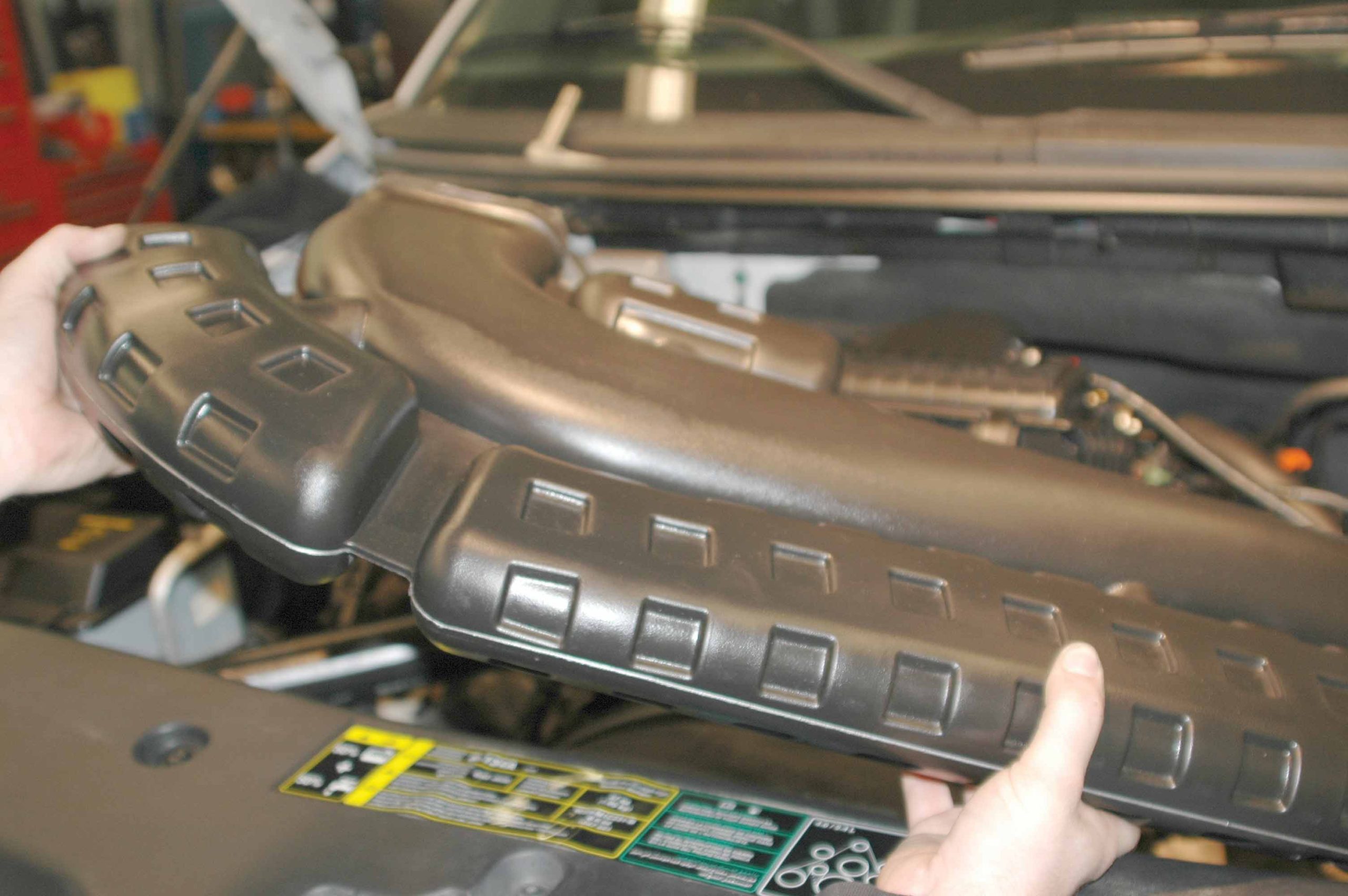
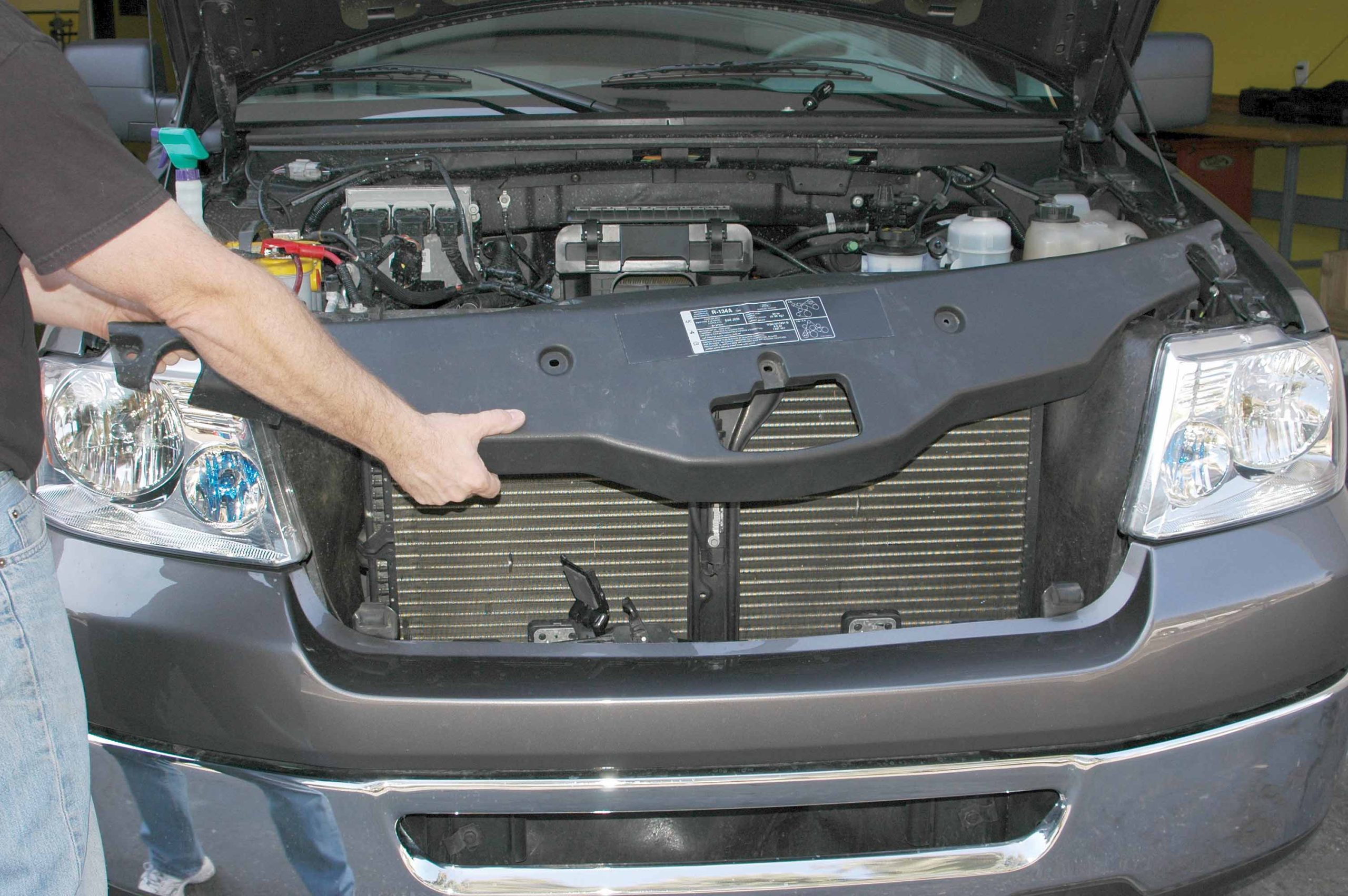
With these pieces out of the way, the engine is exposed.
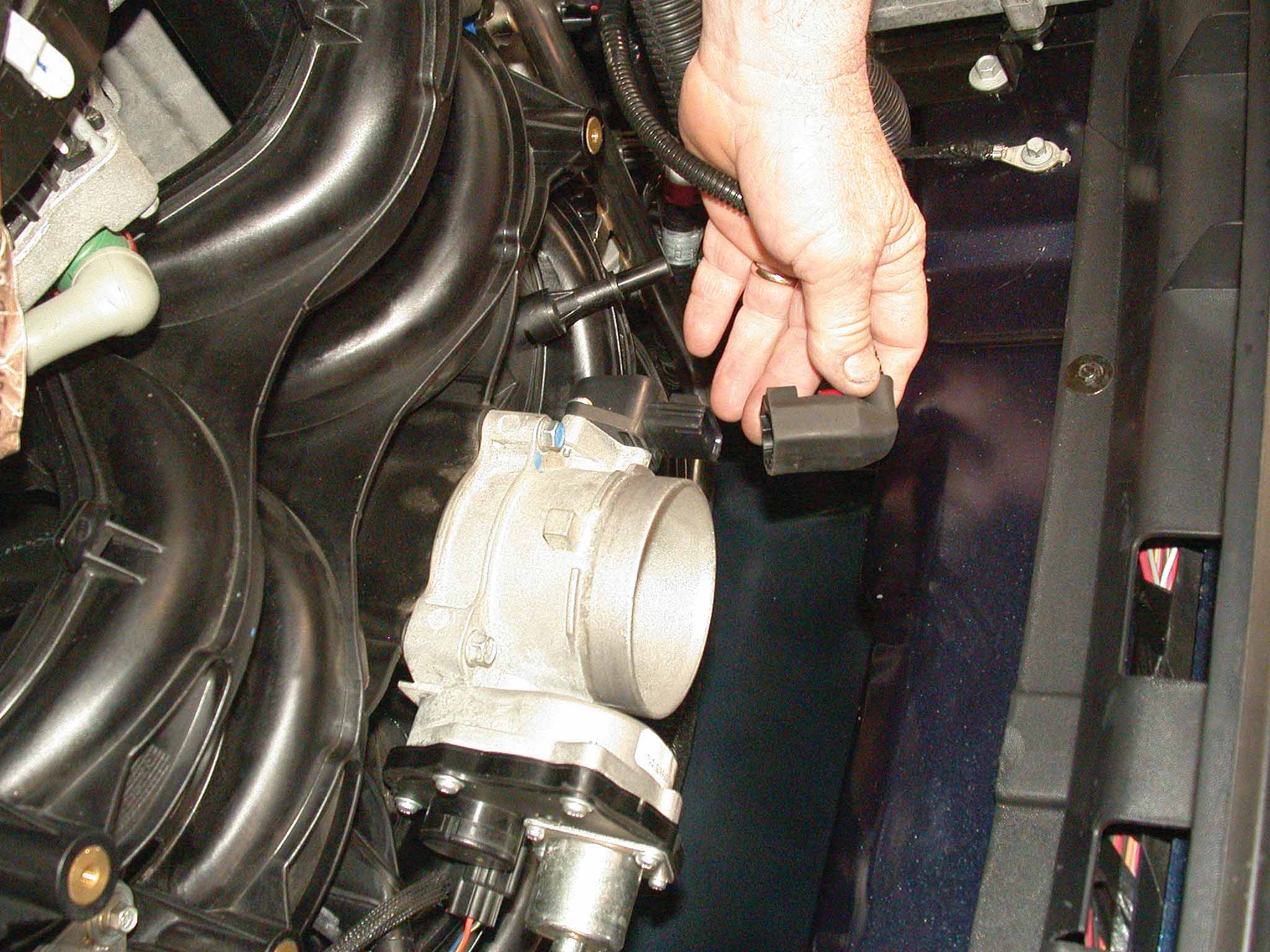
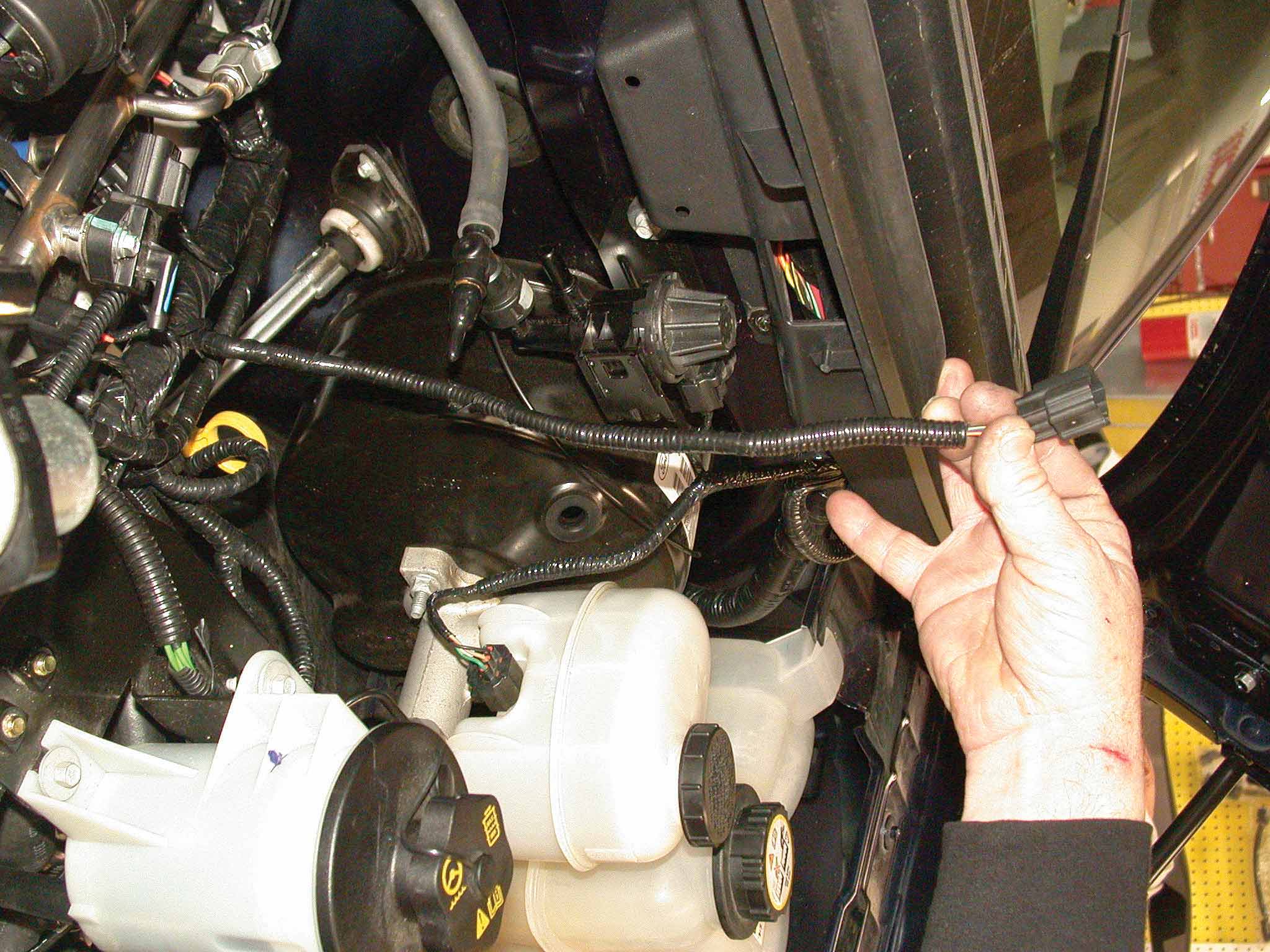
Time to begin breaking the various electrical connections, such as the TPS.
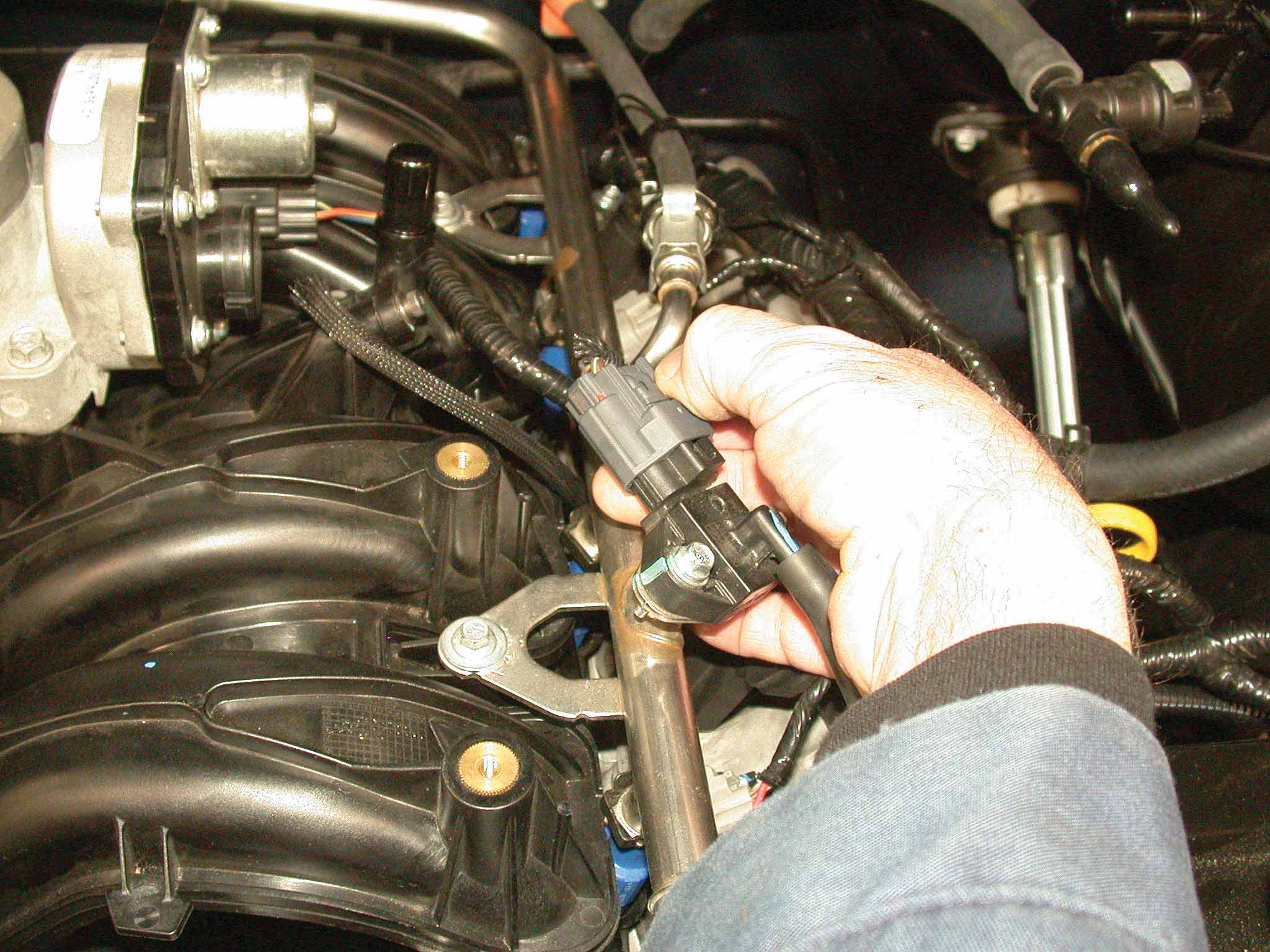
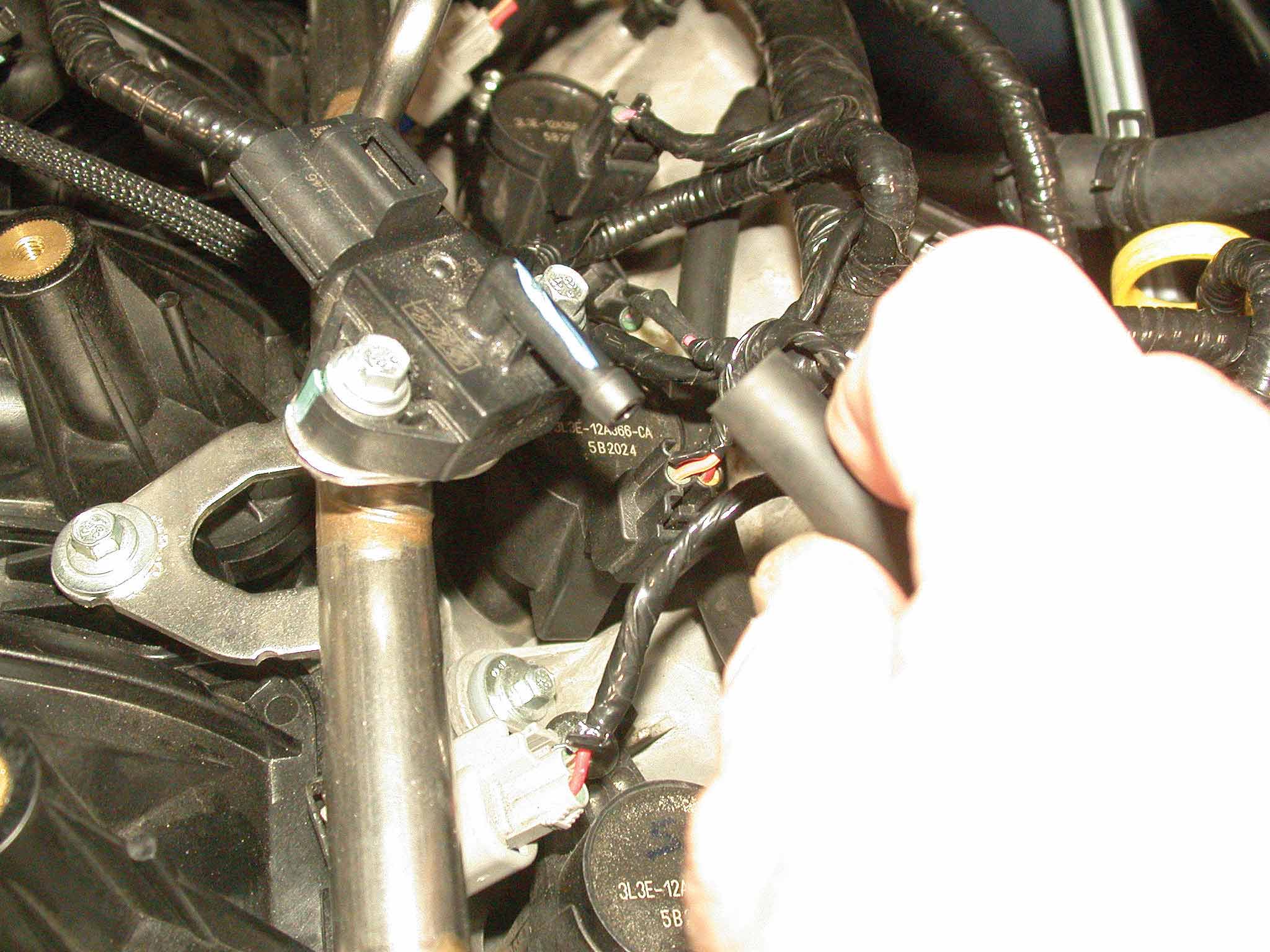
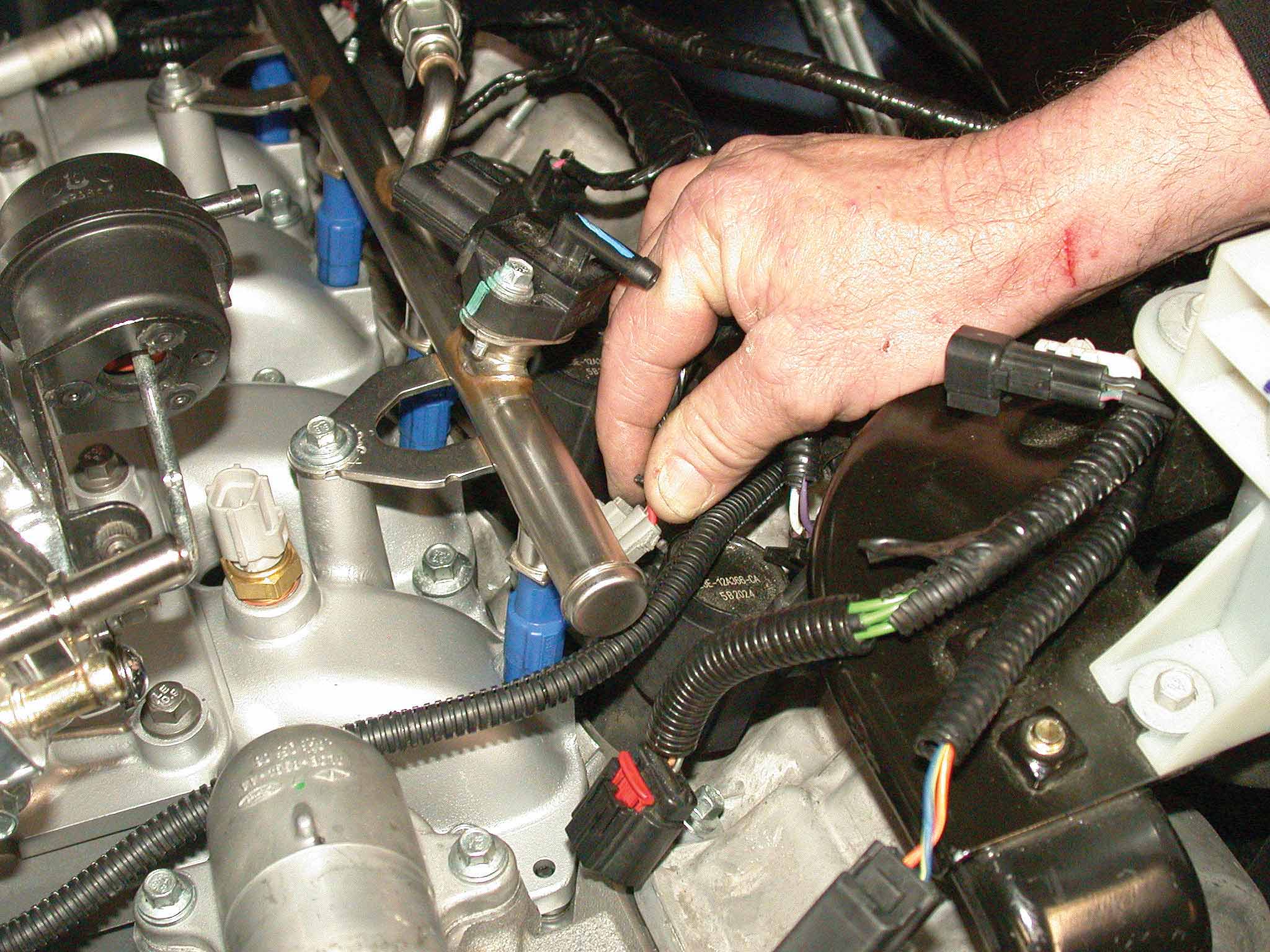
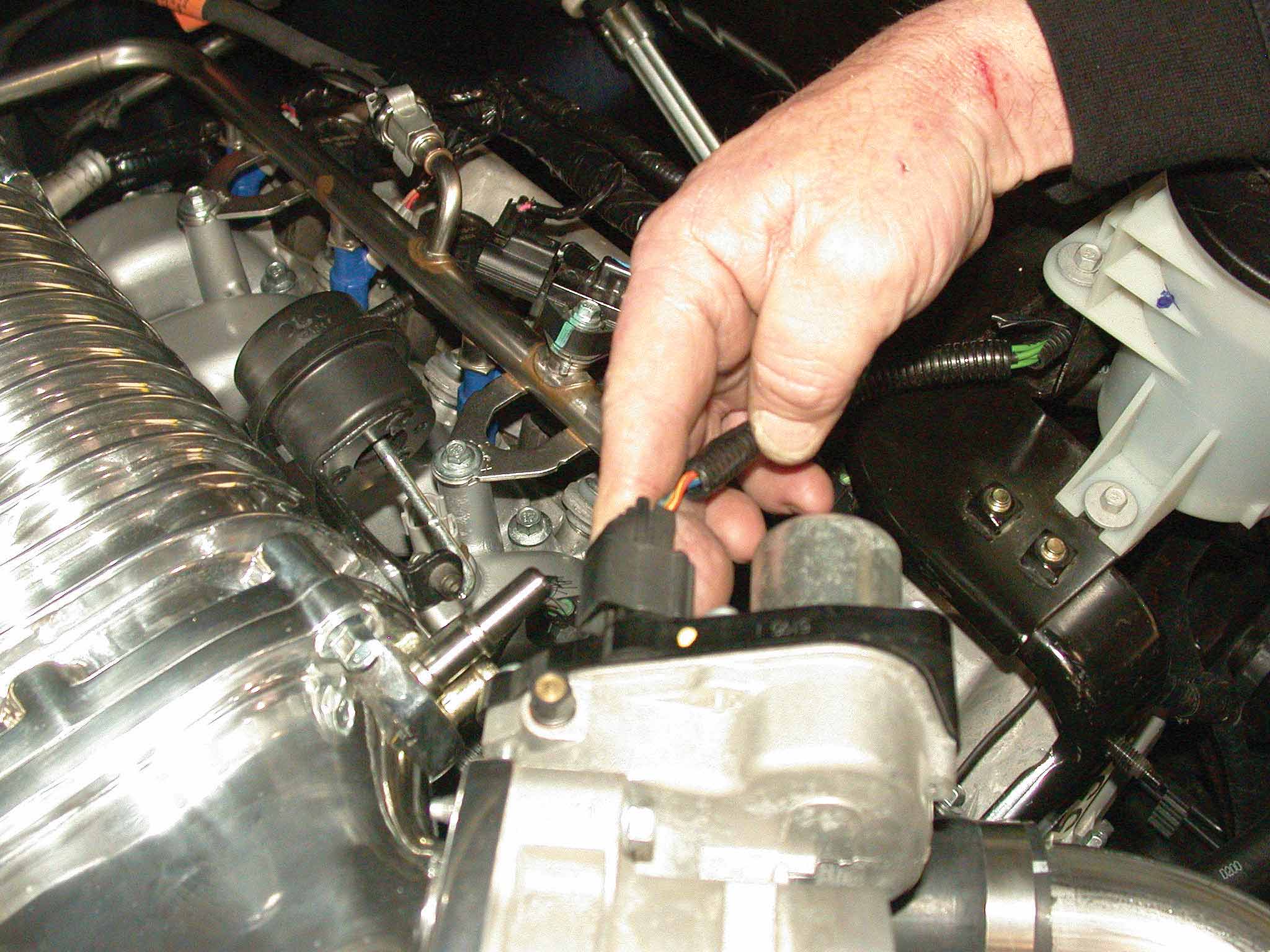
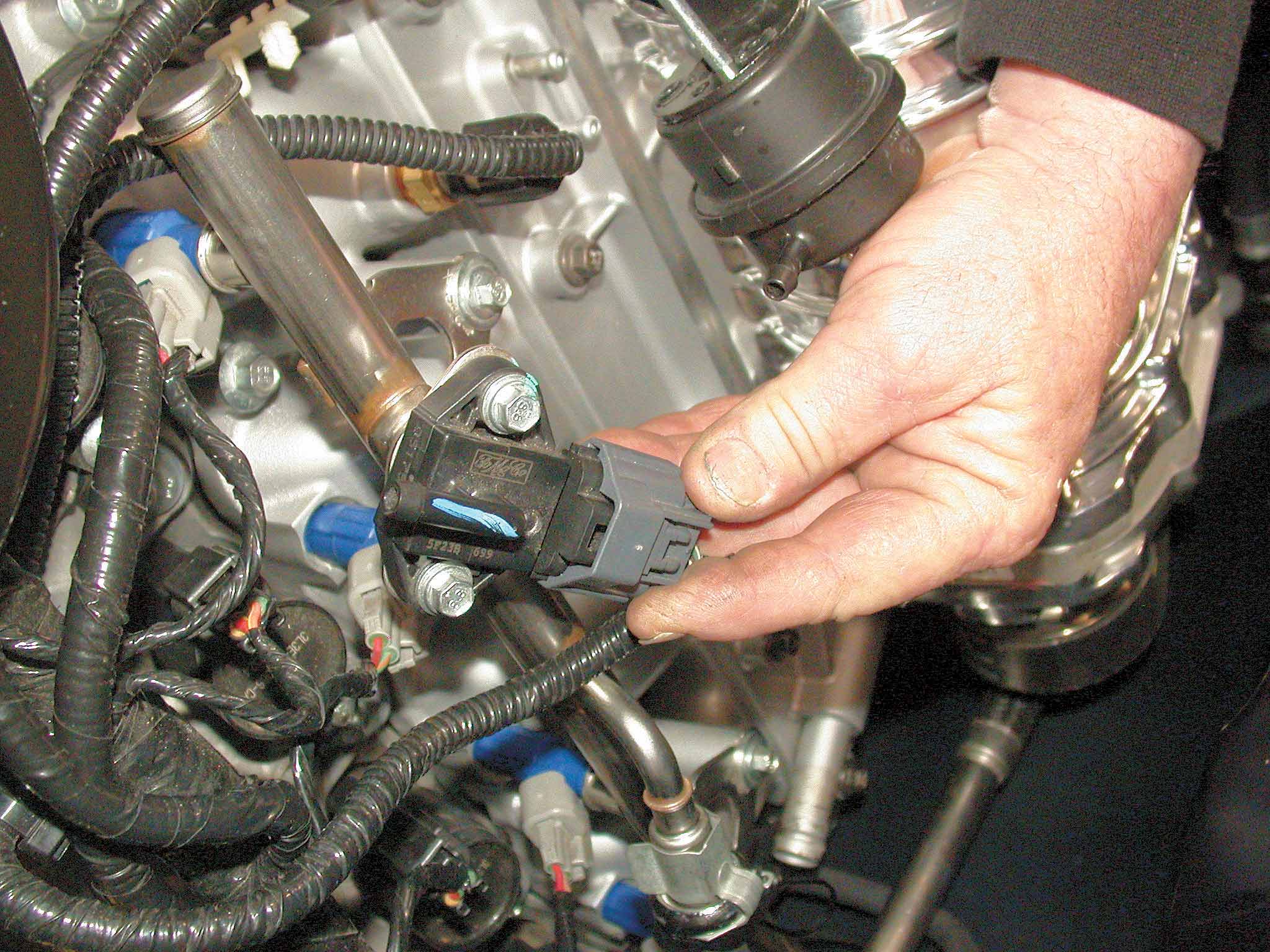
Other connections, such as the electrical and the vacuum hose to the fuel pressure sensor, are pulled.
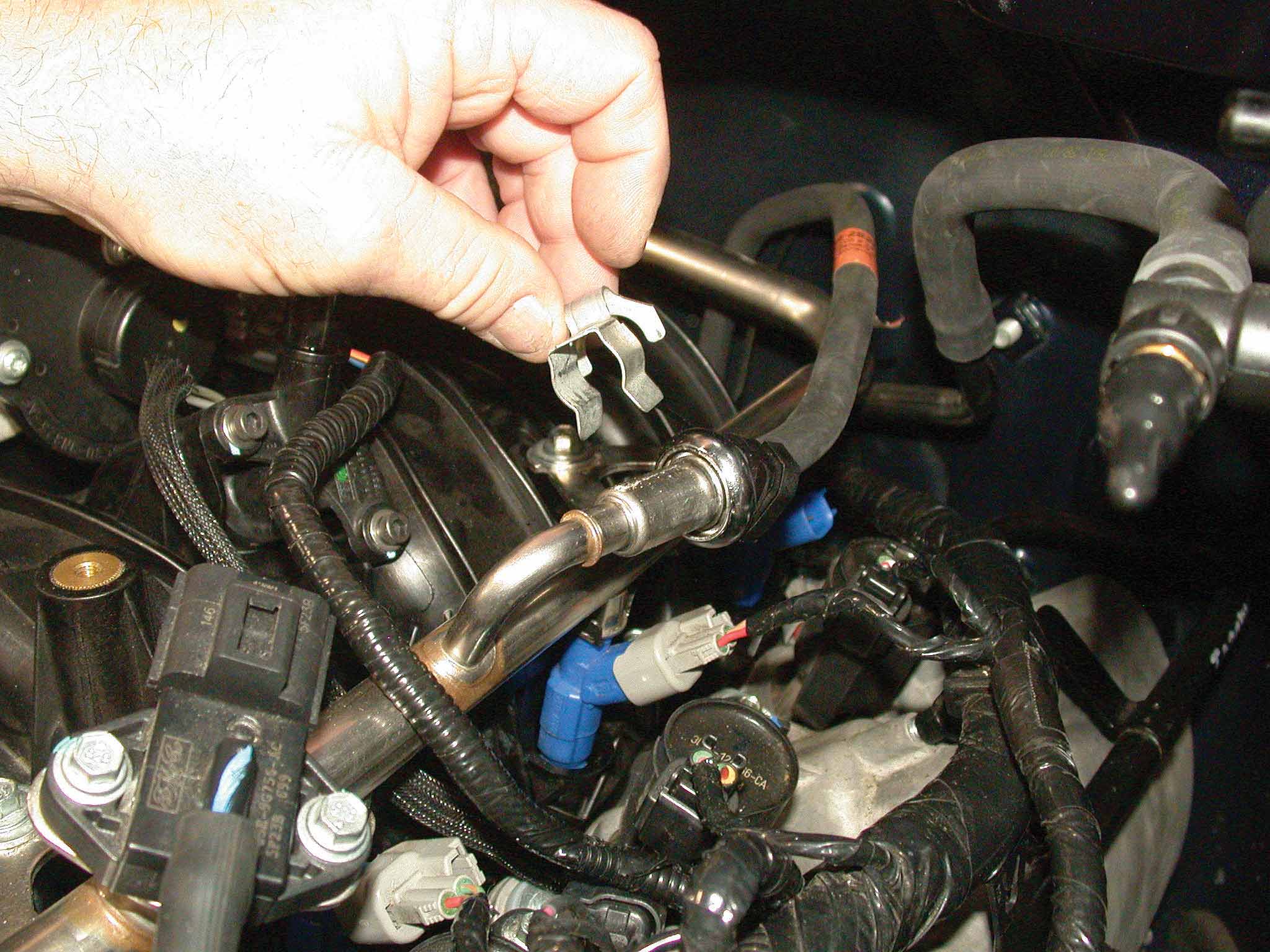
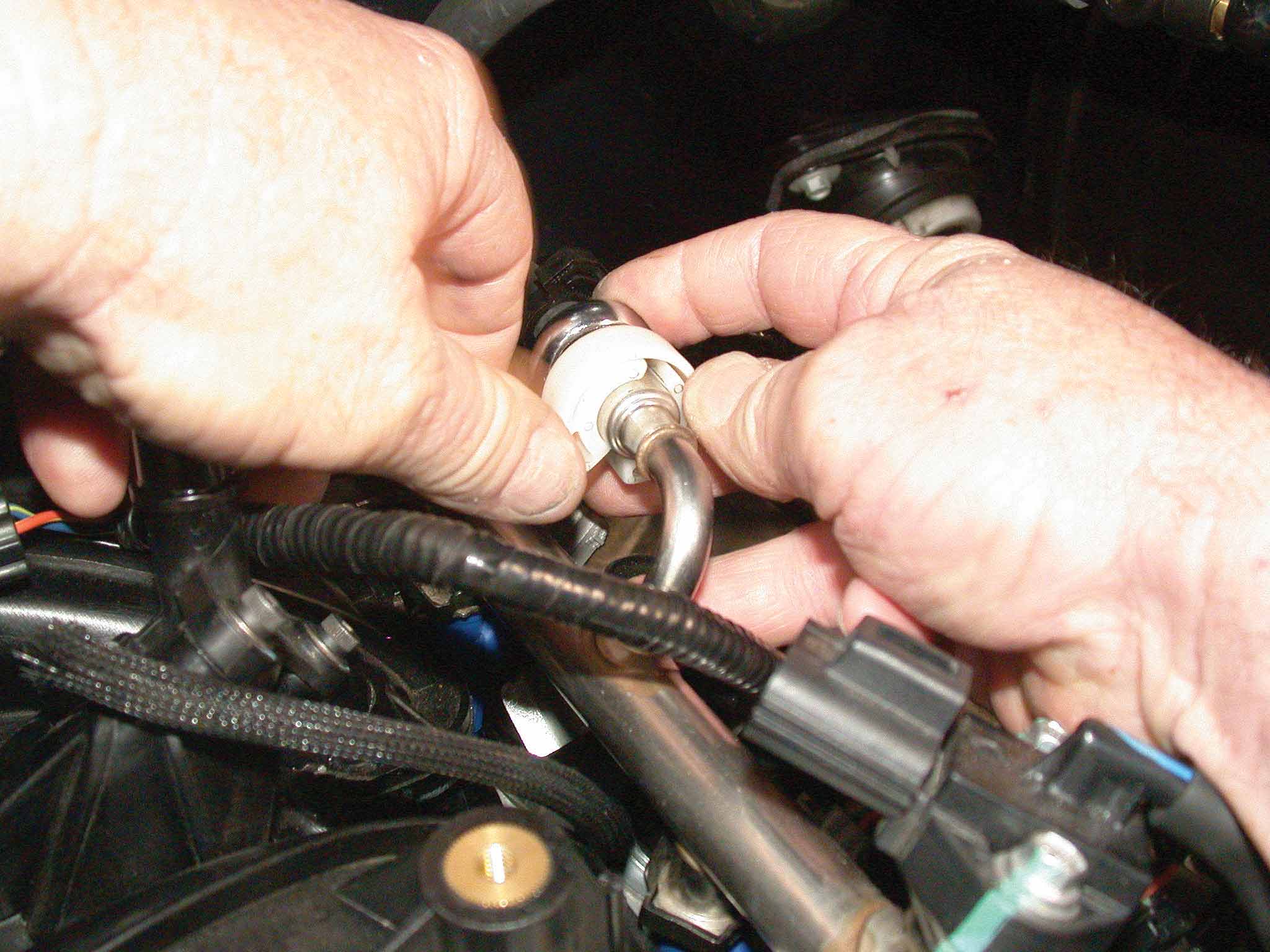
To disengage the fuel line, first the lock clip is removed and then the supplied plastic removal tool is slipped into the connection. This tool is required to break the connection. Even though the gas cap has been removed there is still some pressure in the line, so caution should be observed when doing this step.
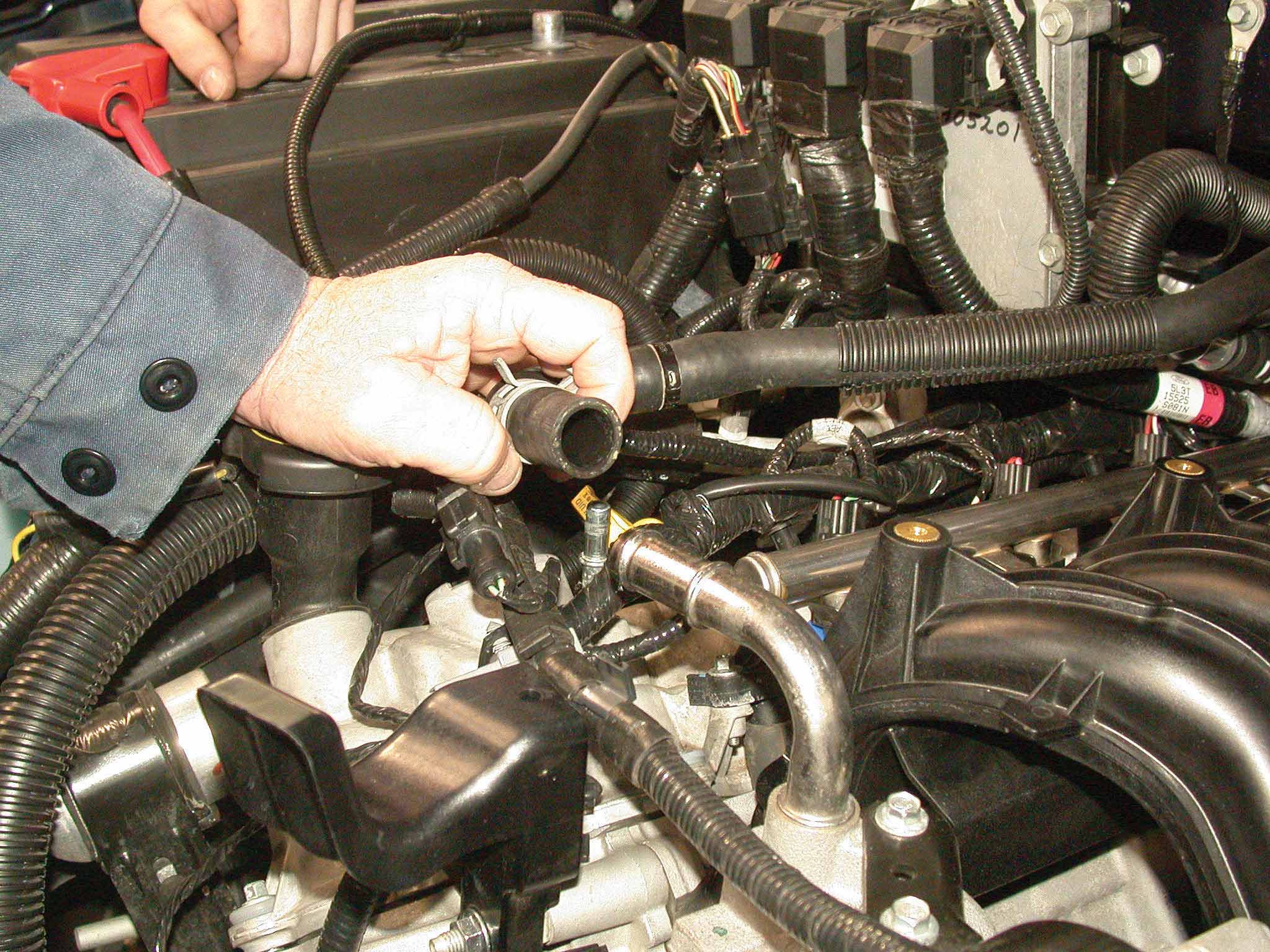
Even with the pressure off (the drain valve is located on the lower right hand corner of the radiator), a bucket to catch the fluid may be a good idea when removing the coolant hose, but a rag is a must.
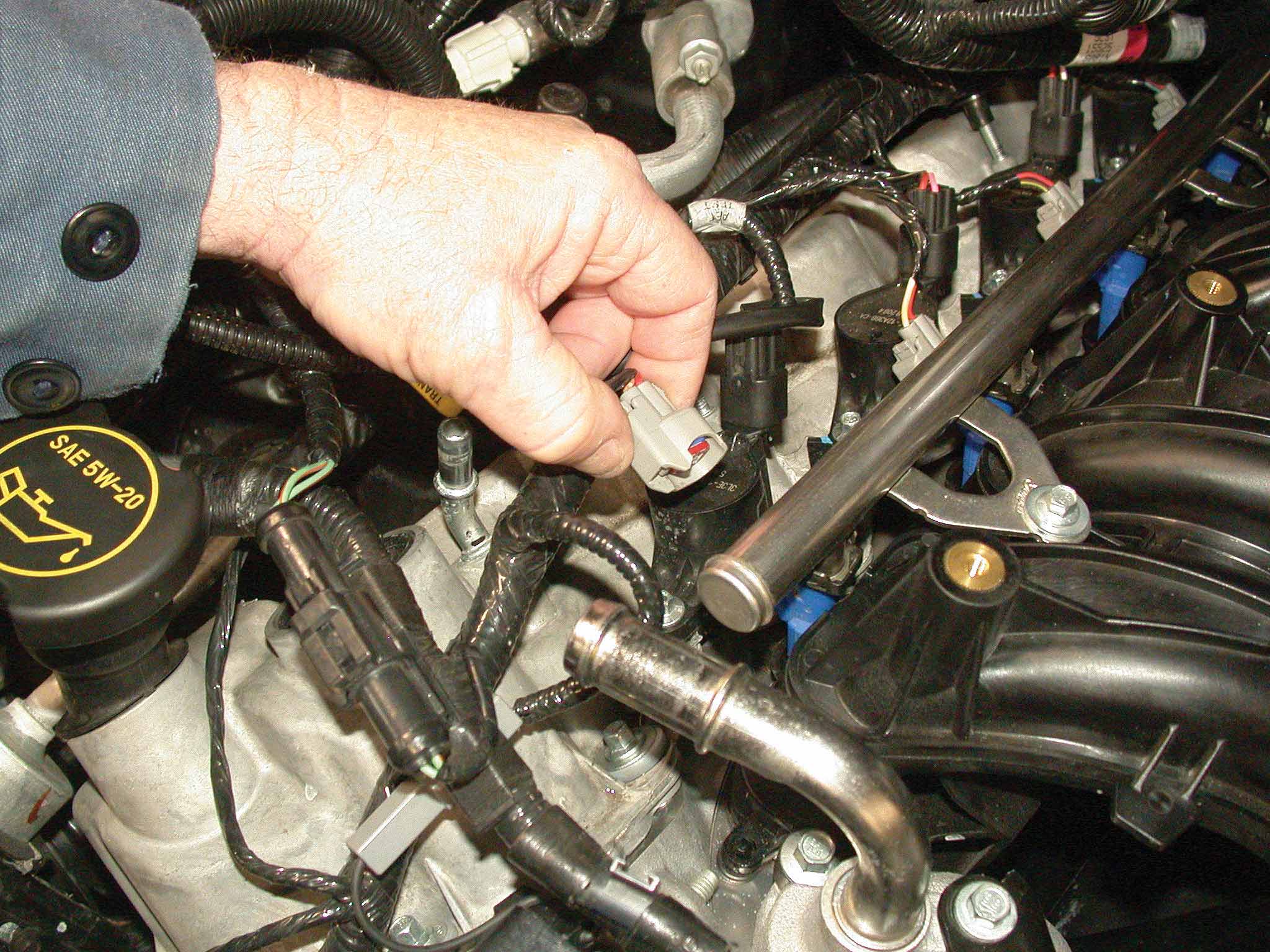
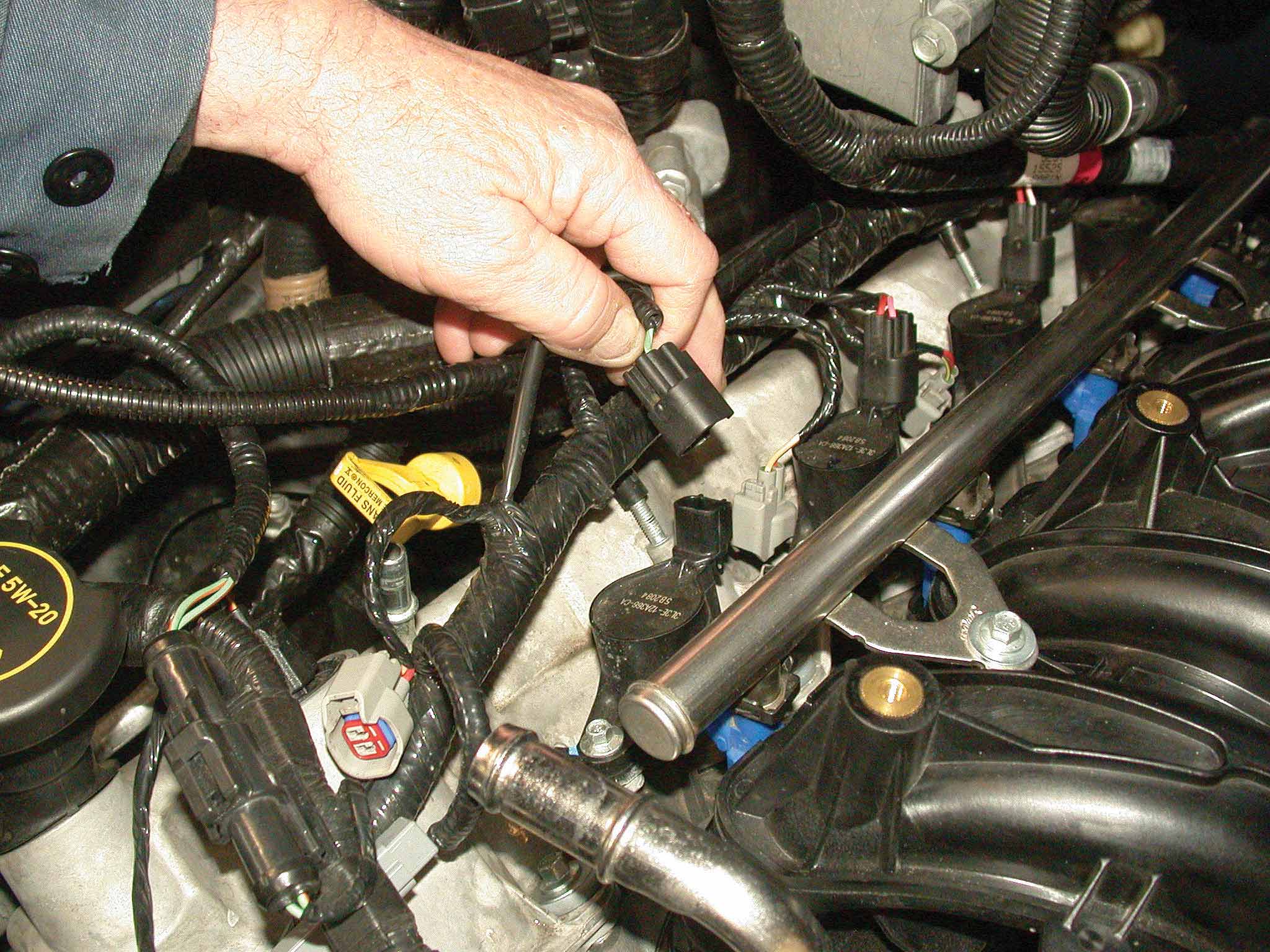
The electrical connections to the injectors are disconnected.
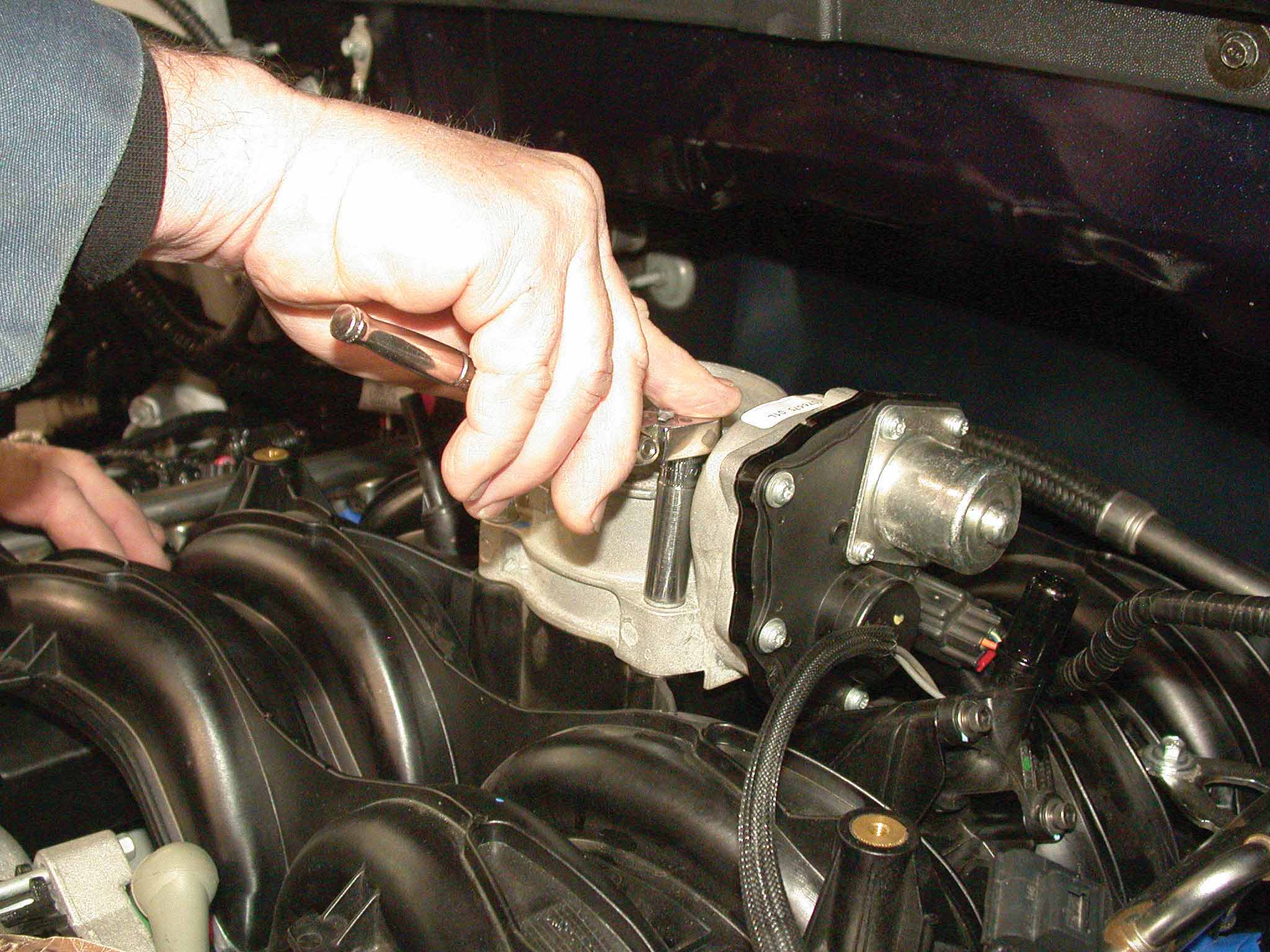
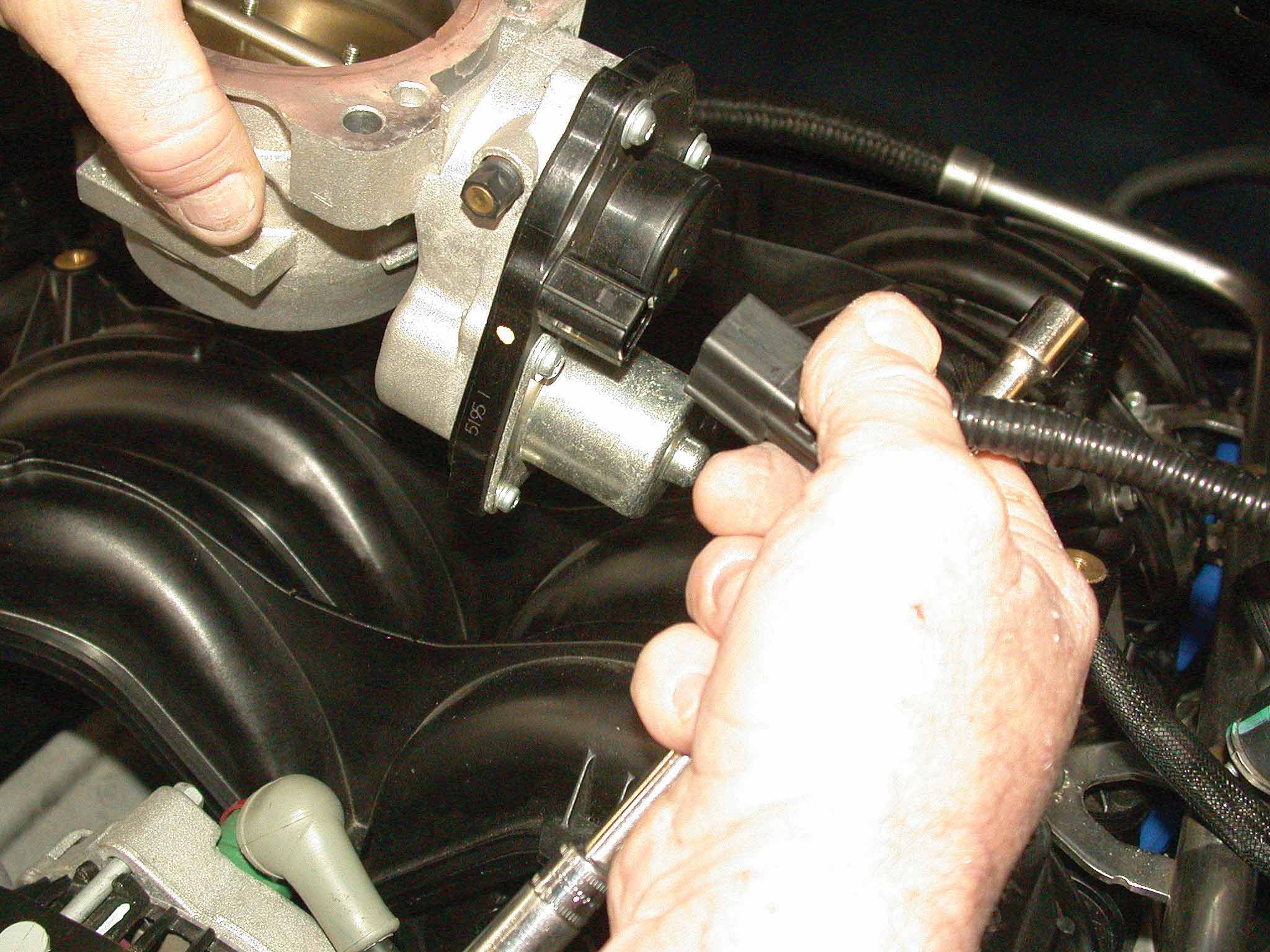
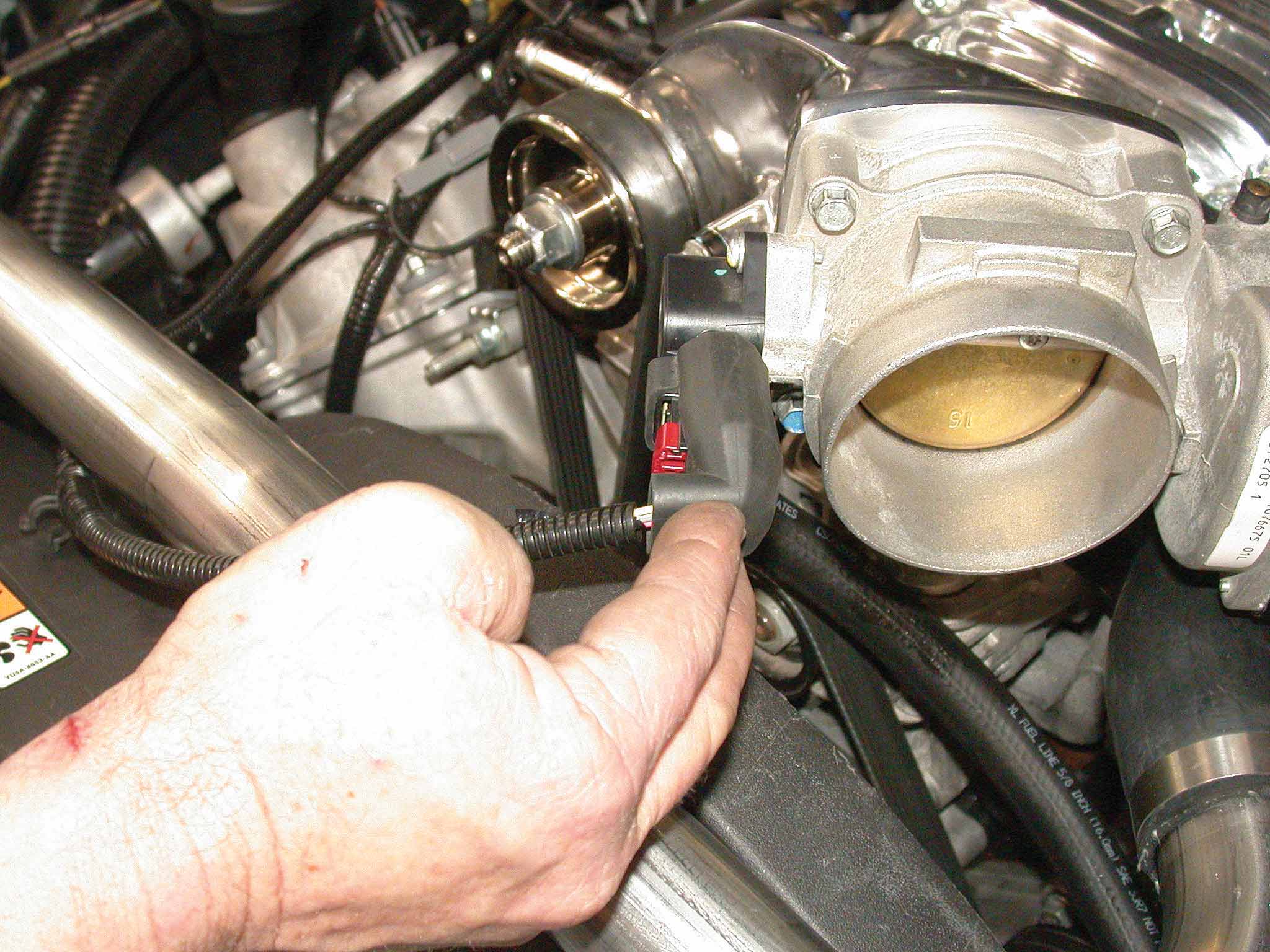
A 10mm socket is used to remove the throttle body, and the electronic throttle control (ETC) connection is pulled.
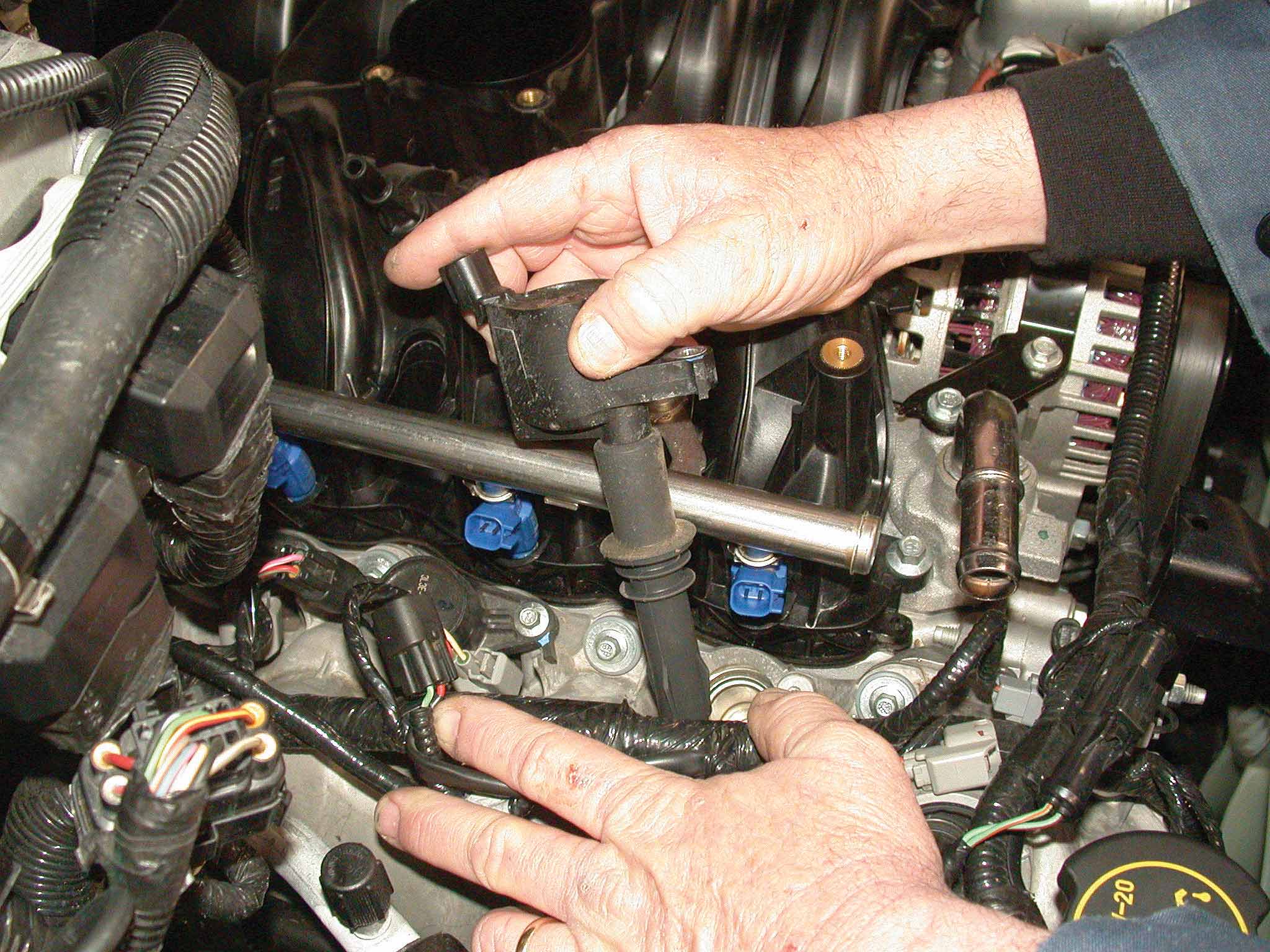
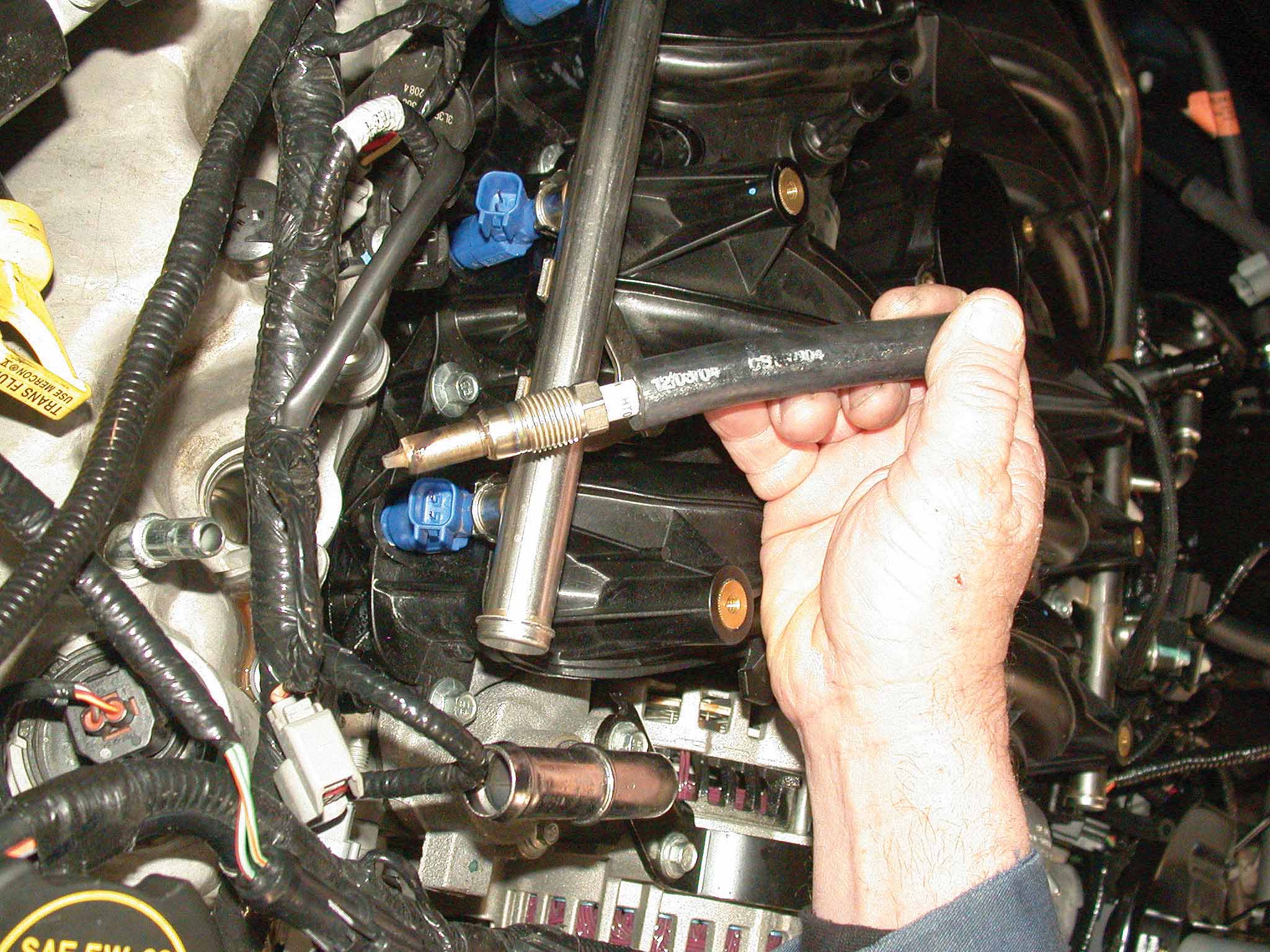
The stock plugs need to be replaced with Autolite HTO plugs, and the coil needs to be removed to get to them.
Due to the fact that the plugs are way down in, the easy way to get them out (once they are loose, of course) is to use a piece of rubber hose.
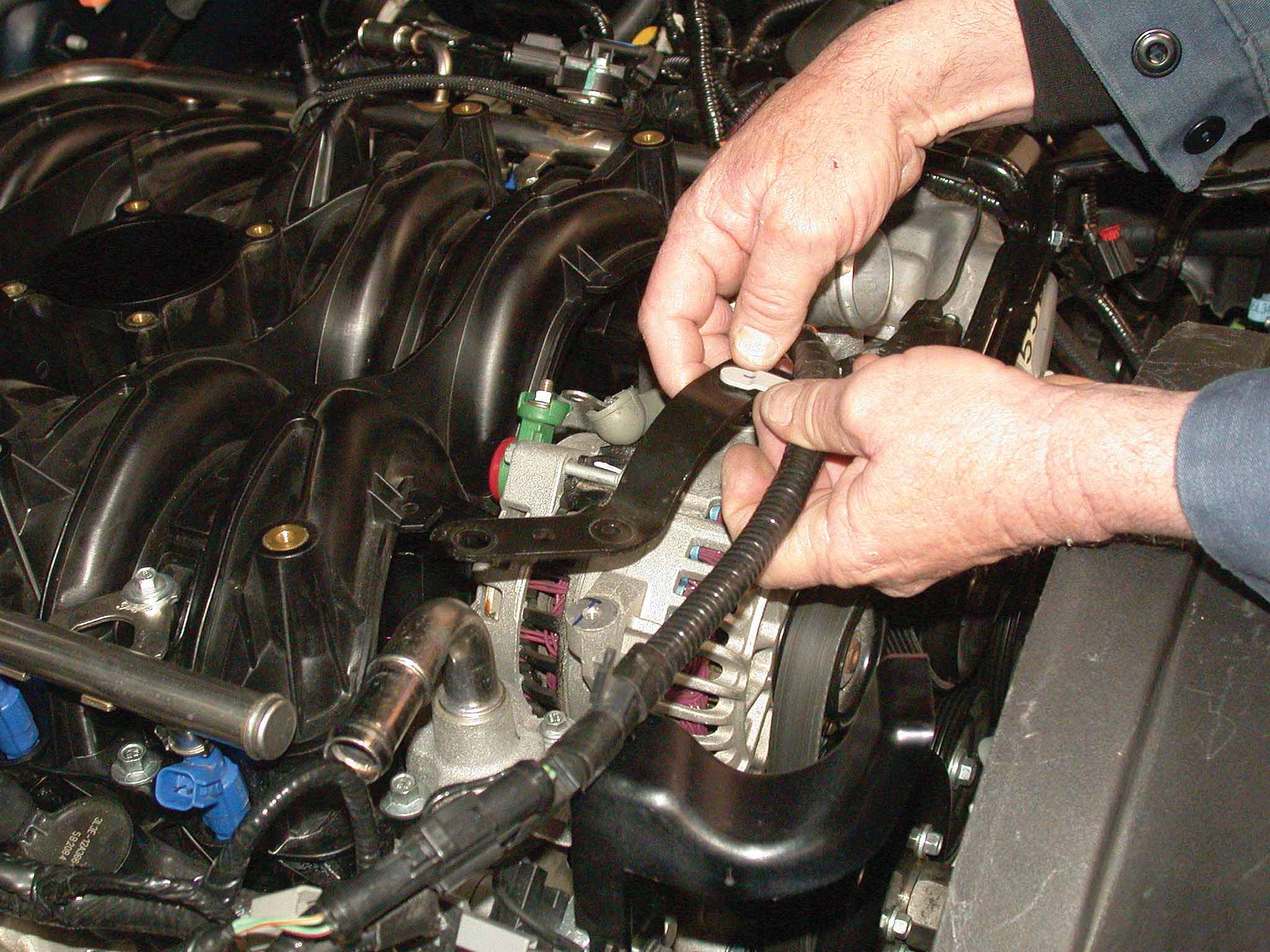
The alternator bracket is removed.
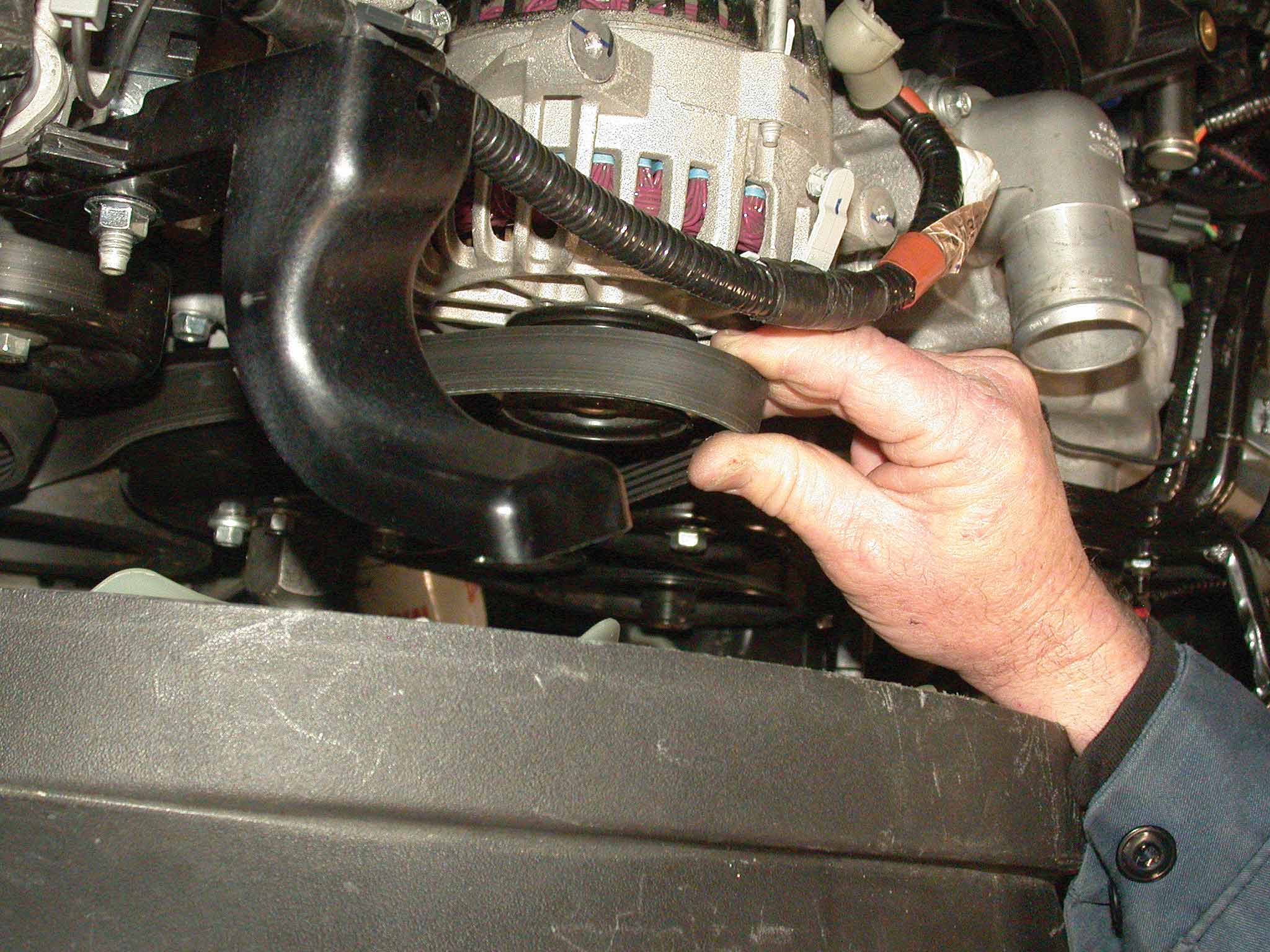
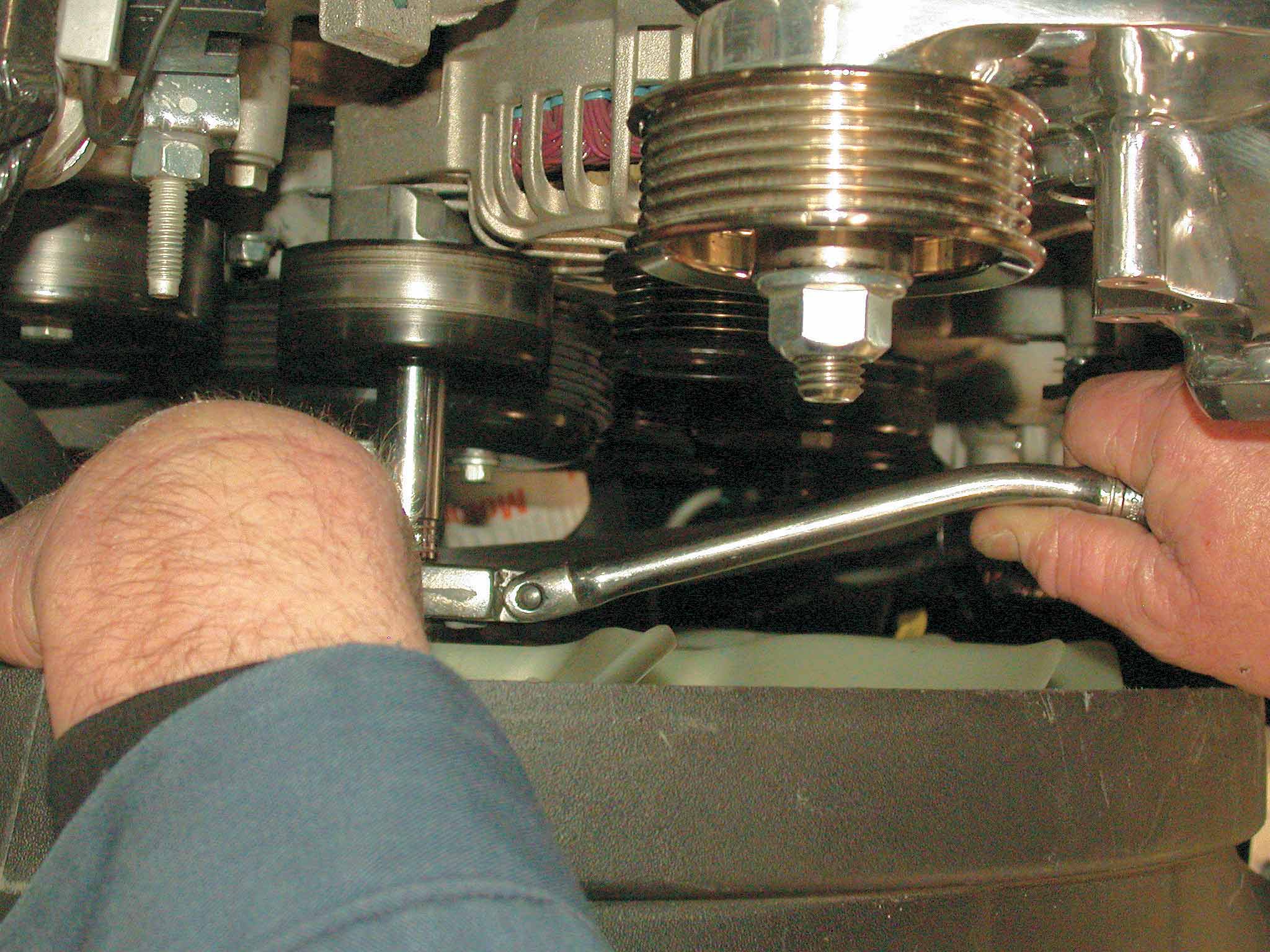
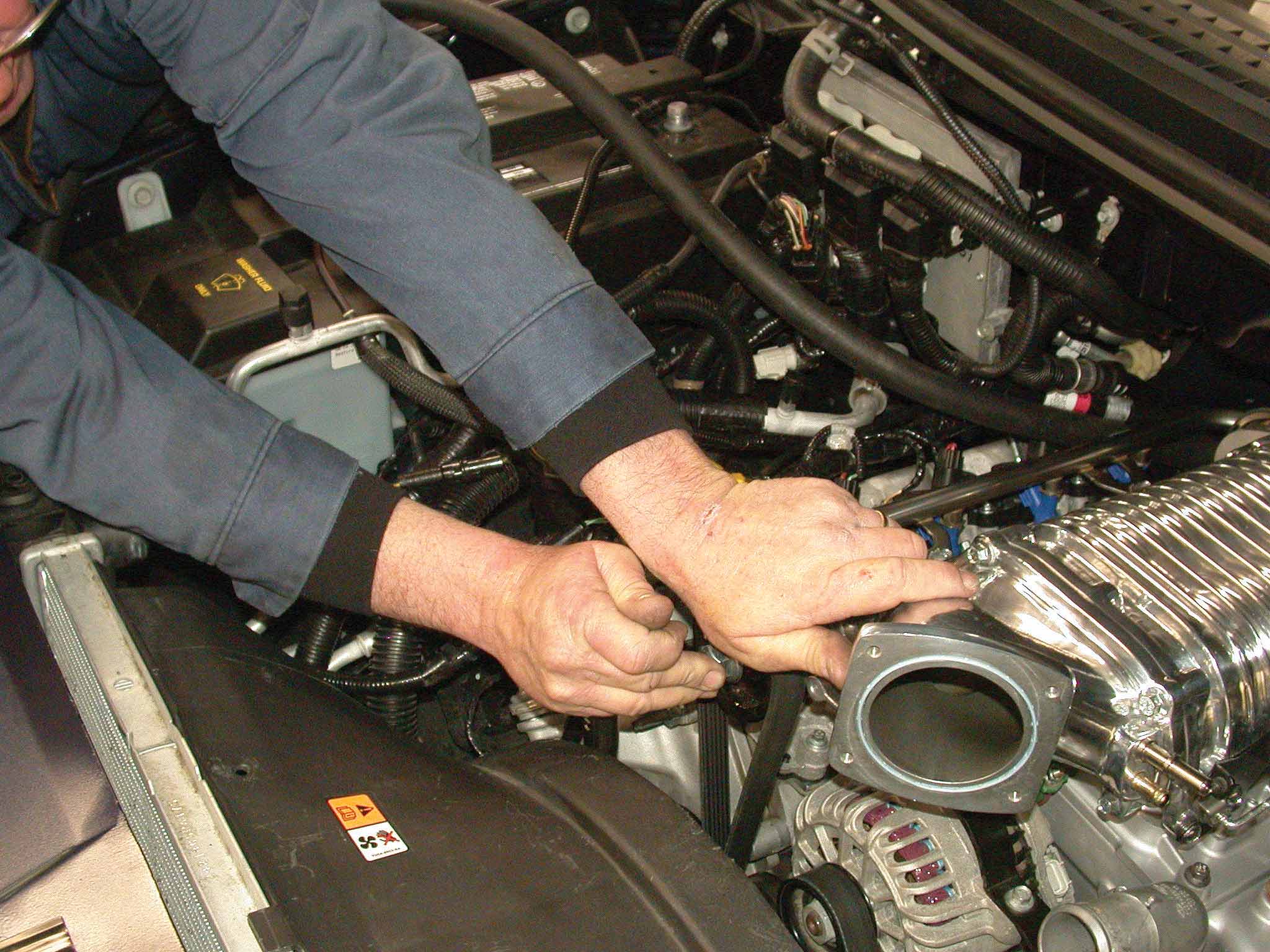
By using a breaker bar in the tensioner and pulling the tensioner against its spring, the drive belt can be removed.
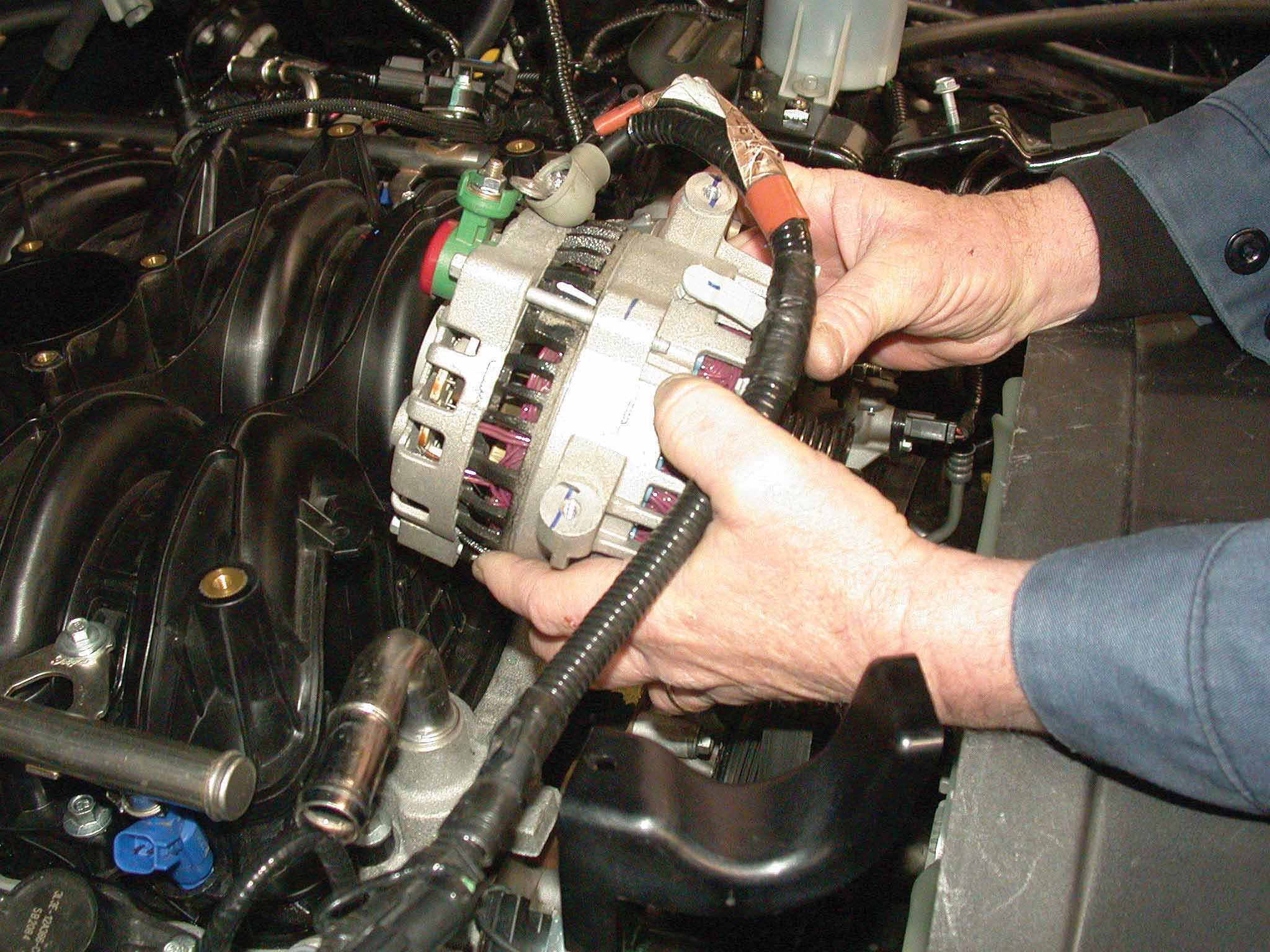
With the removal of a few bolts, the alternator is removed.
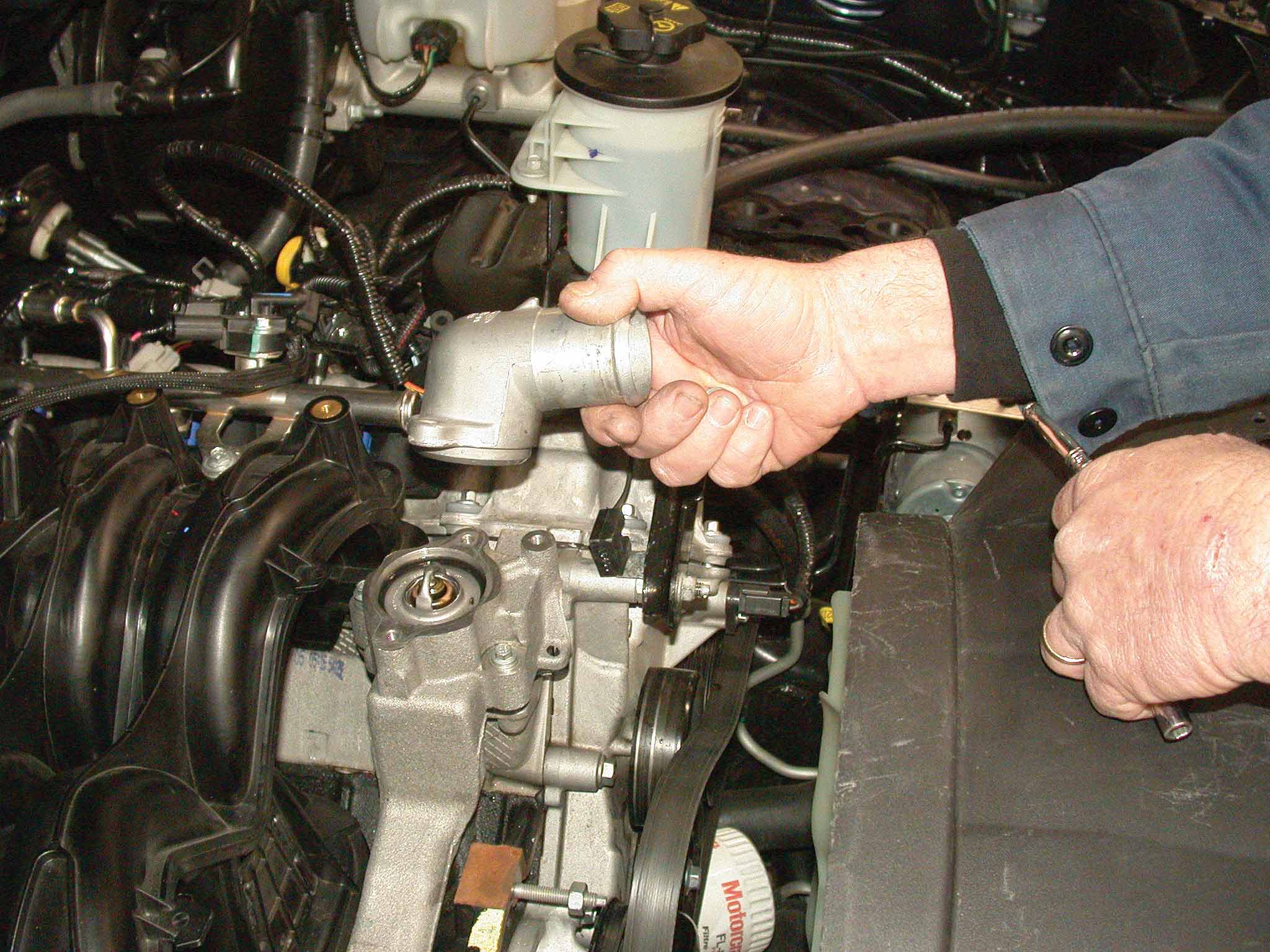
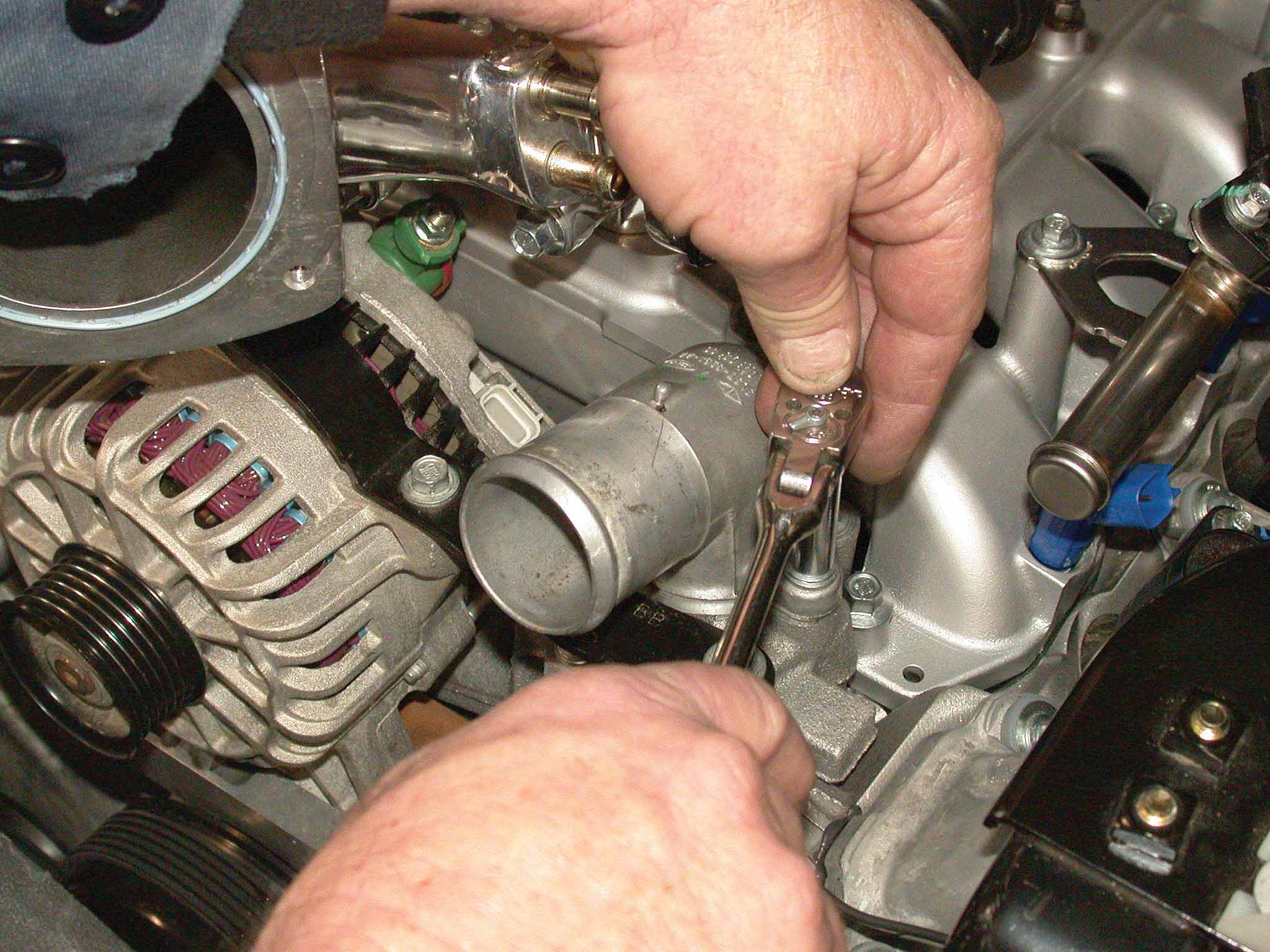
The upper coolant neck is removed.
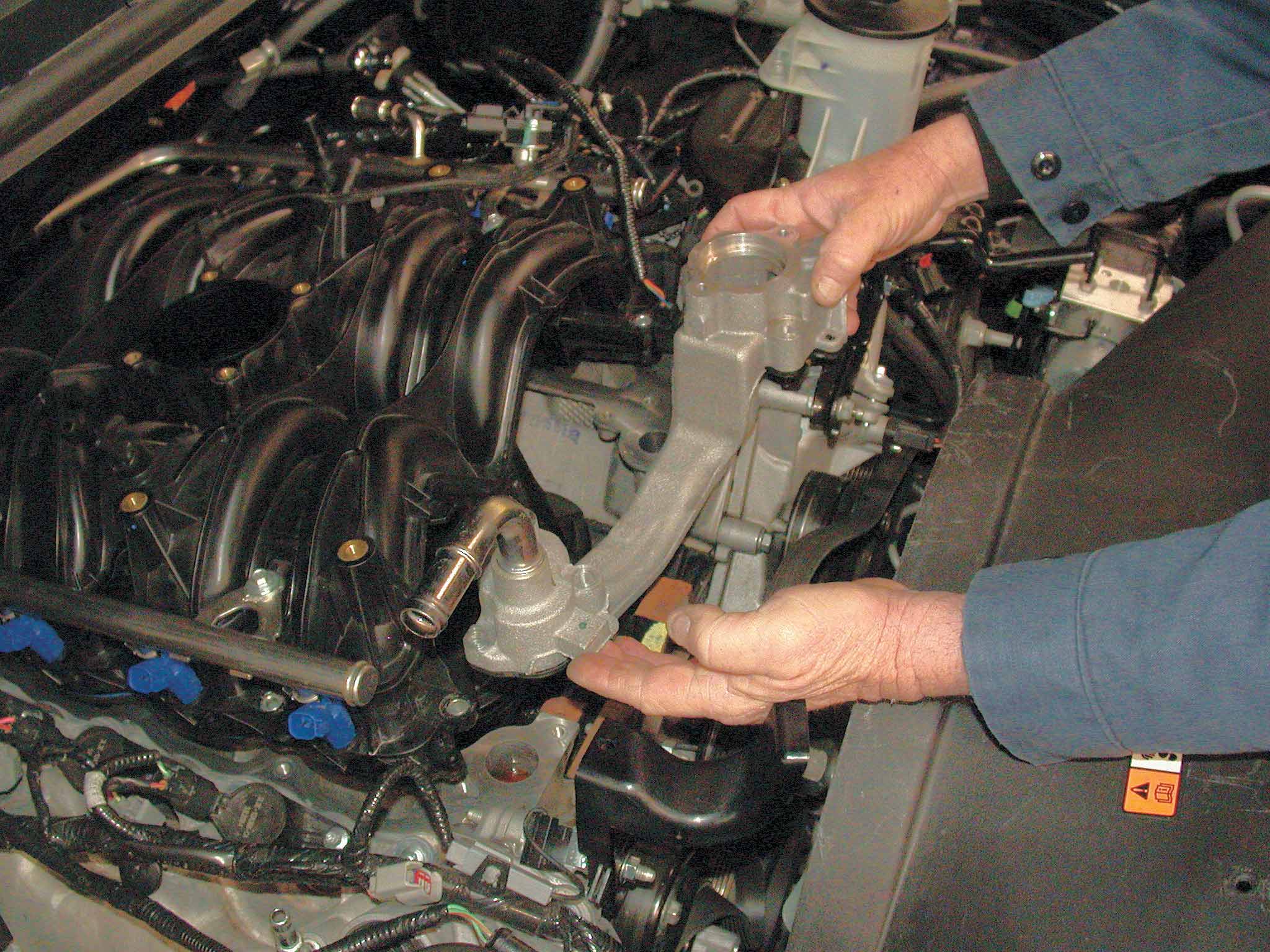
Then the water manifold is removed.
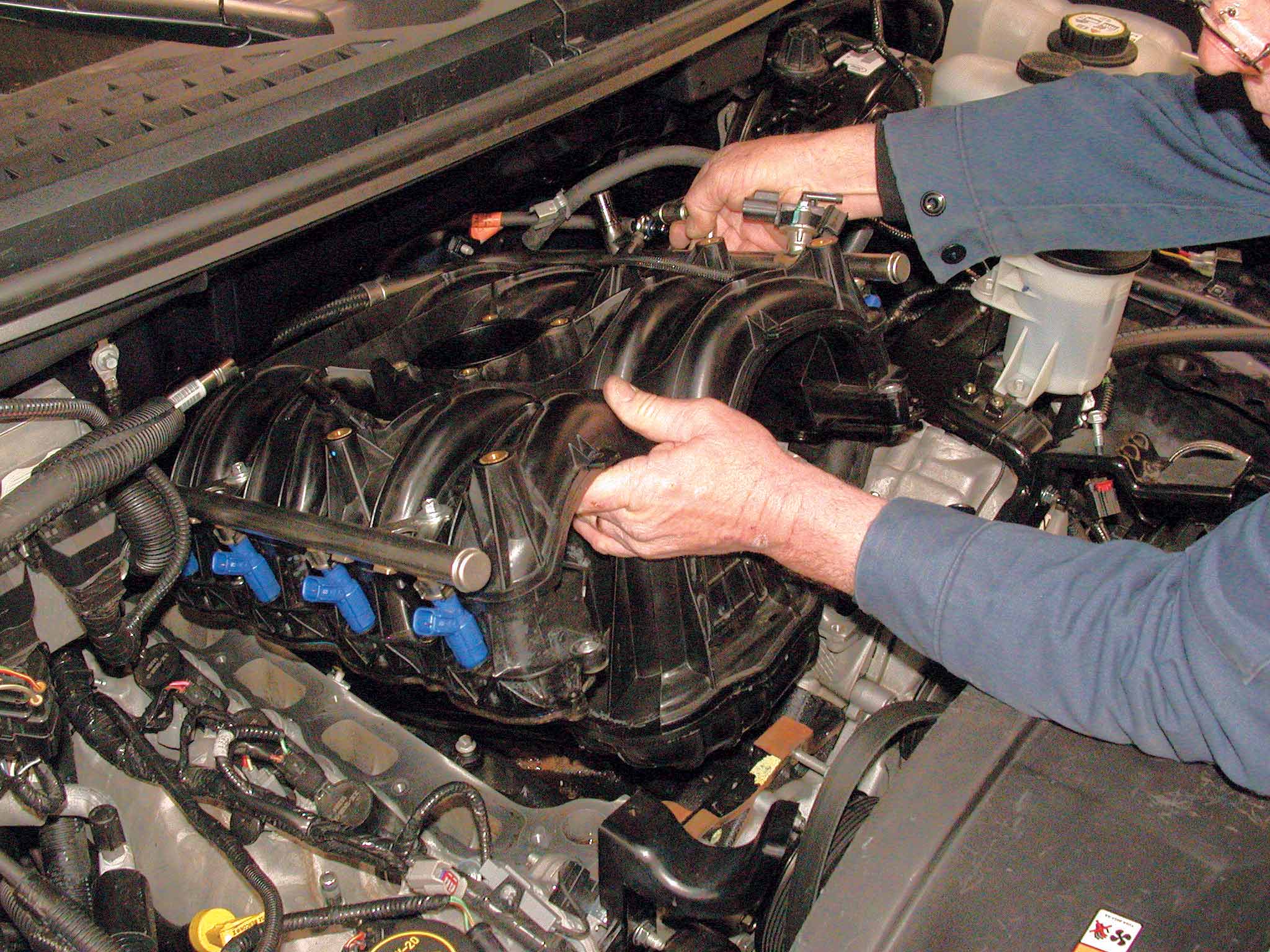
There are 10 10mm bolts that hold the stock manifold in place. With the bolts out the manifold is lifted off, but know that this area must be cleaned beforehand so that no debris falls into the engine.
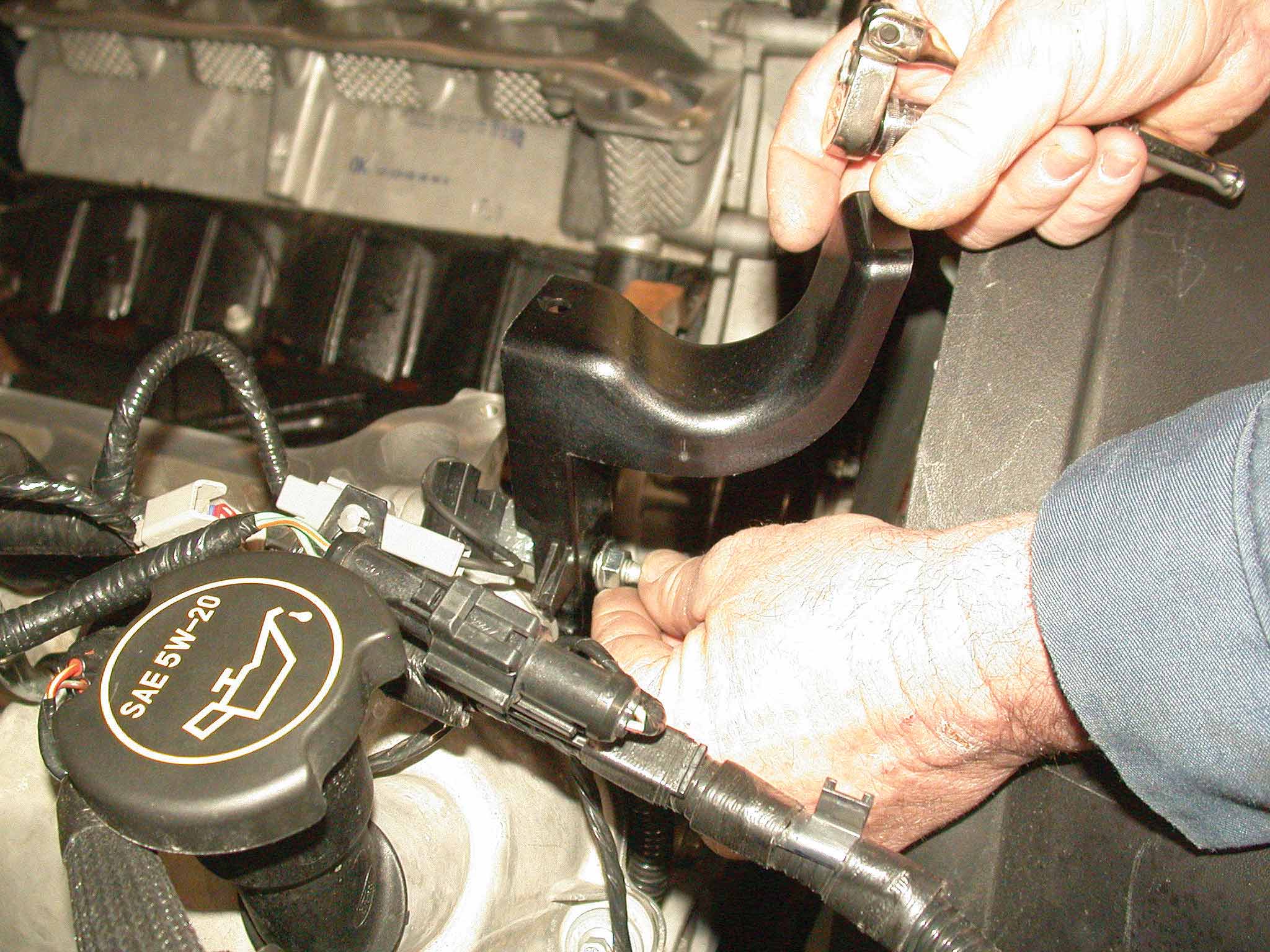
A hose support bracket is the next to go.
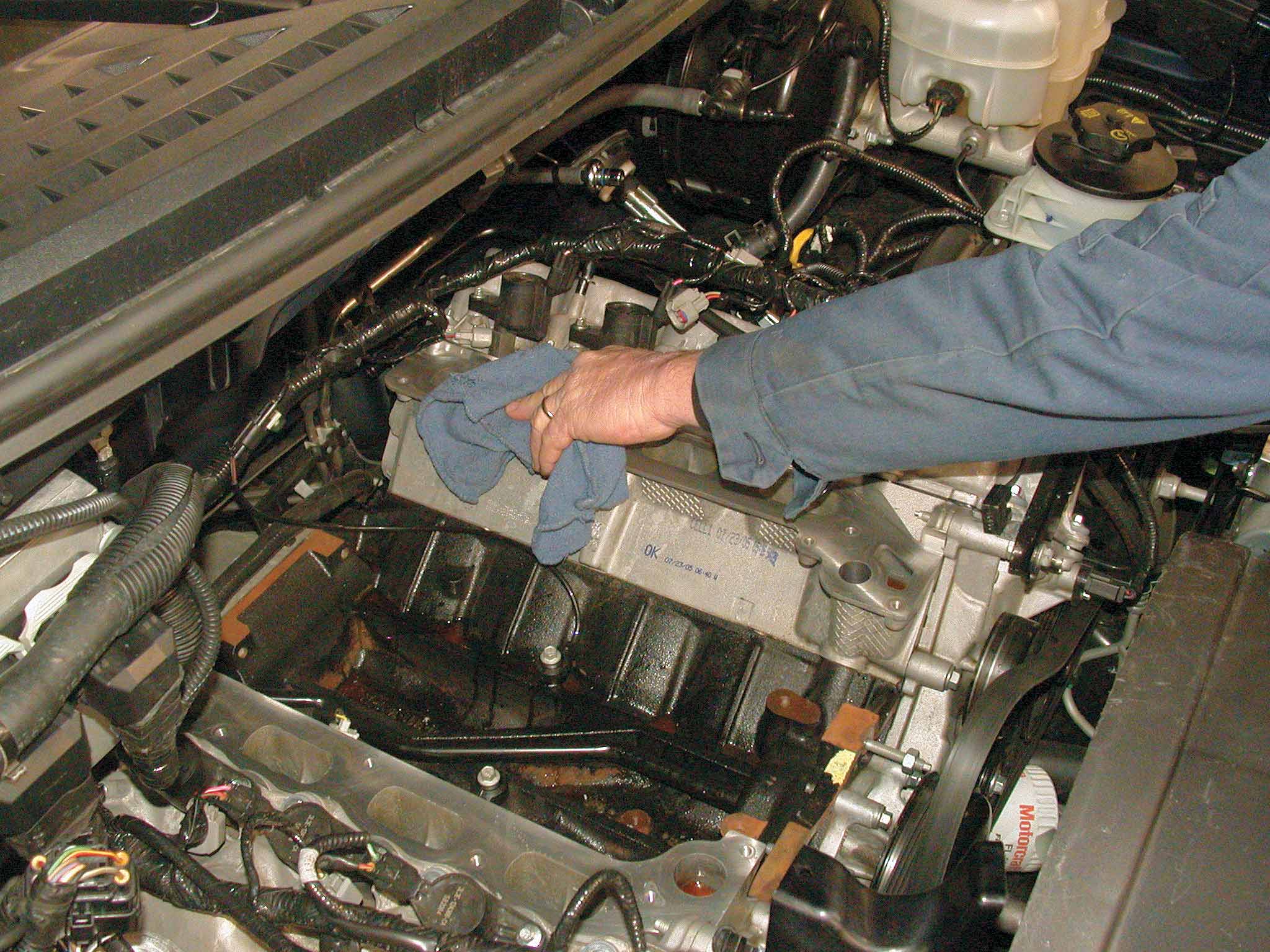
Using a rag and cleaning solvent, the mating surfaces to the heads are cleaned. Once this is done, the area should be tapped over so that nothing gets into the intakes.
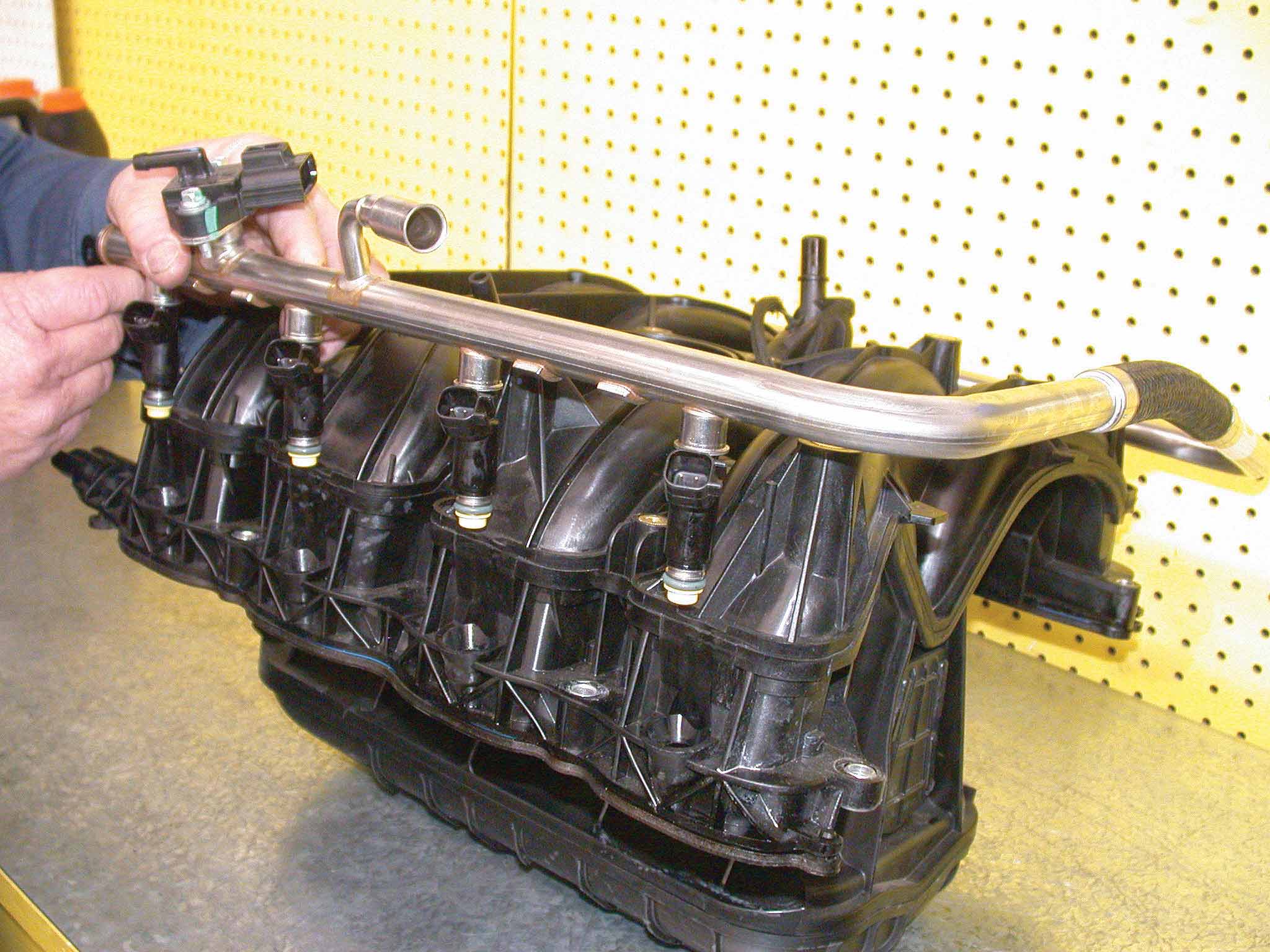
The fuel rail and injectors, as well as the gaskets, are removed from the stock intake manifold. The gaskets “snap” into the manifold and come out easily with a little help from a putty knife, but be careful not to damage them in the process.
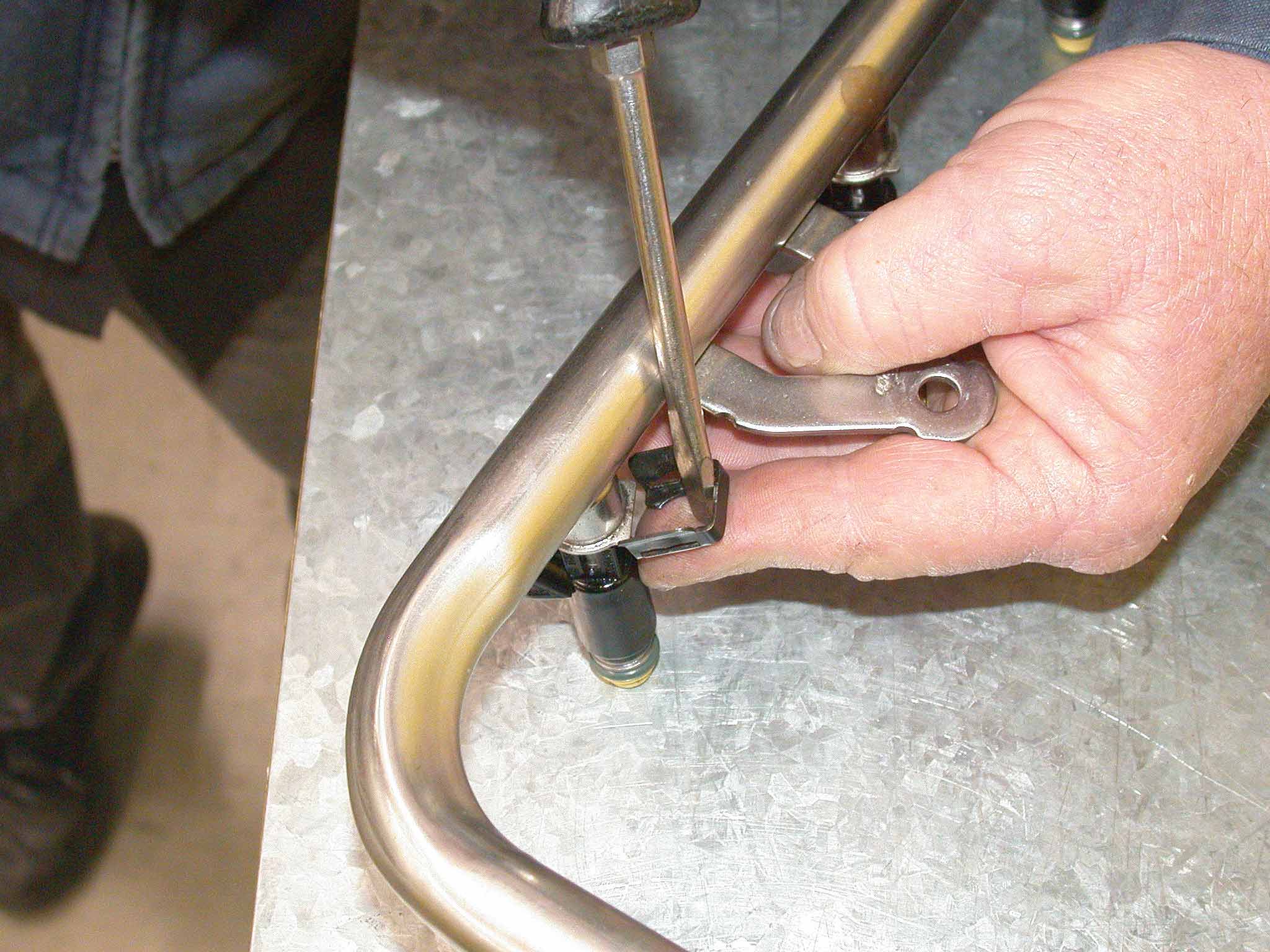
Larger injectors will be used, so the stock ones have to go. To get them out, the clip is pried off and the injector is pulled out.
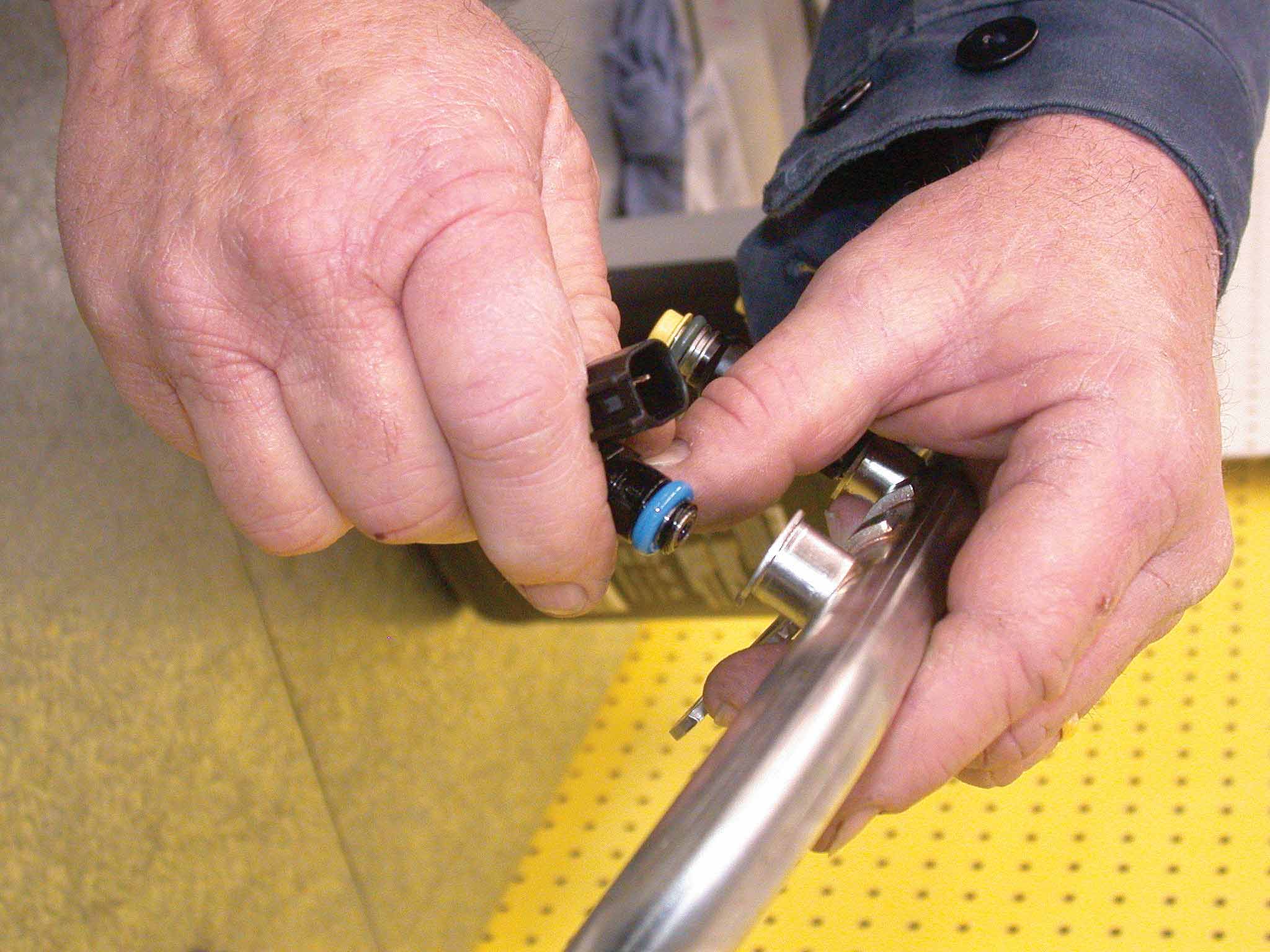
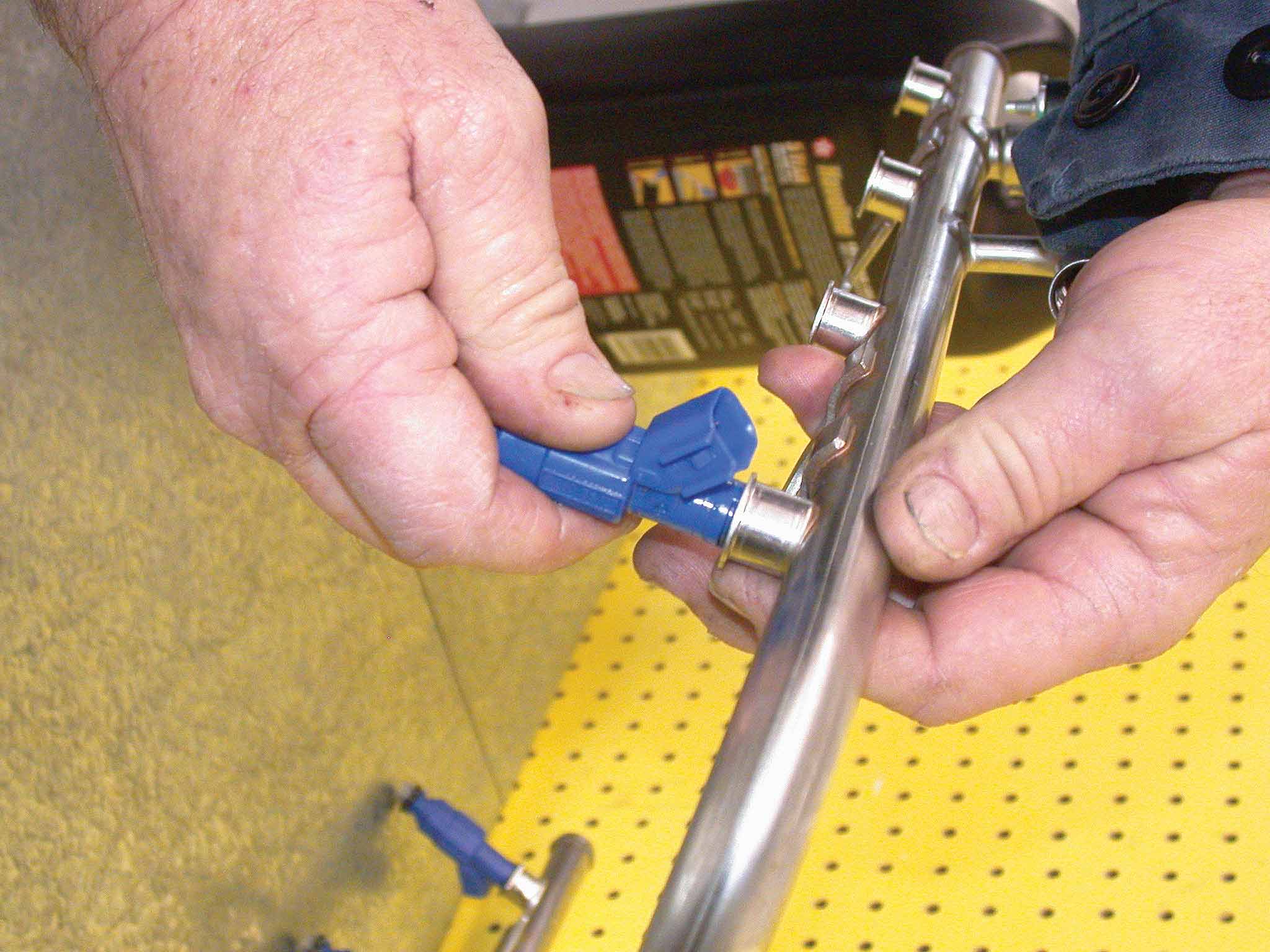
The new injectors supplied with the Magna Charger kit simply push into the rail. A dab of the supplied grease will make things easier. Also, the stock injectors sat at an angle in the rail, but the new ones sit at a 90-percent angle (facing straight out) to the rail.
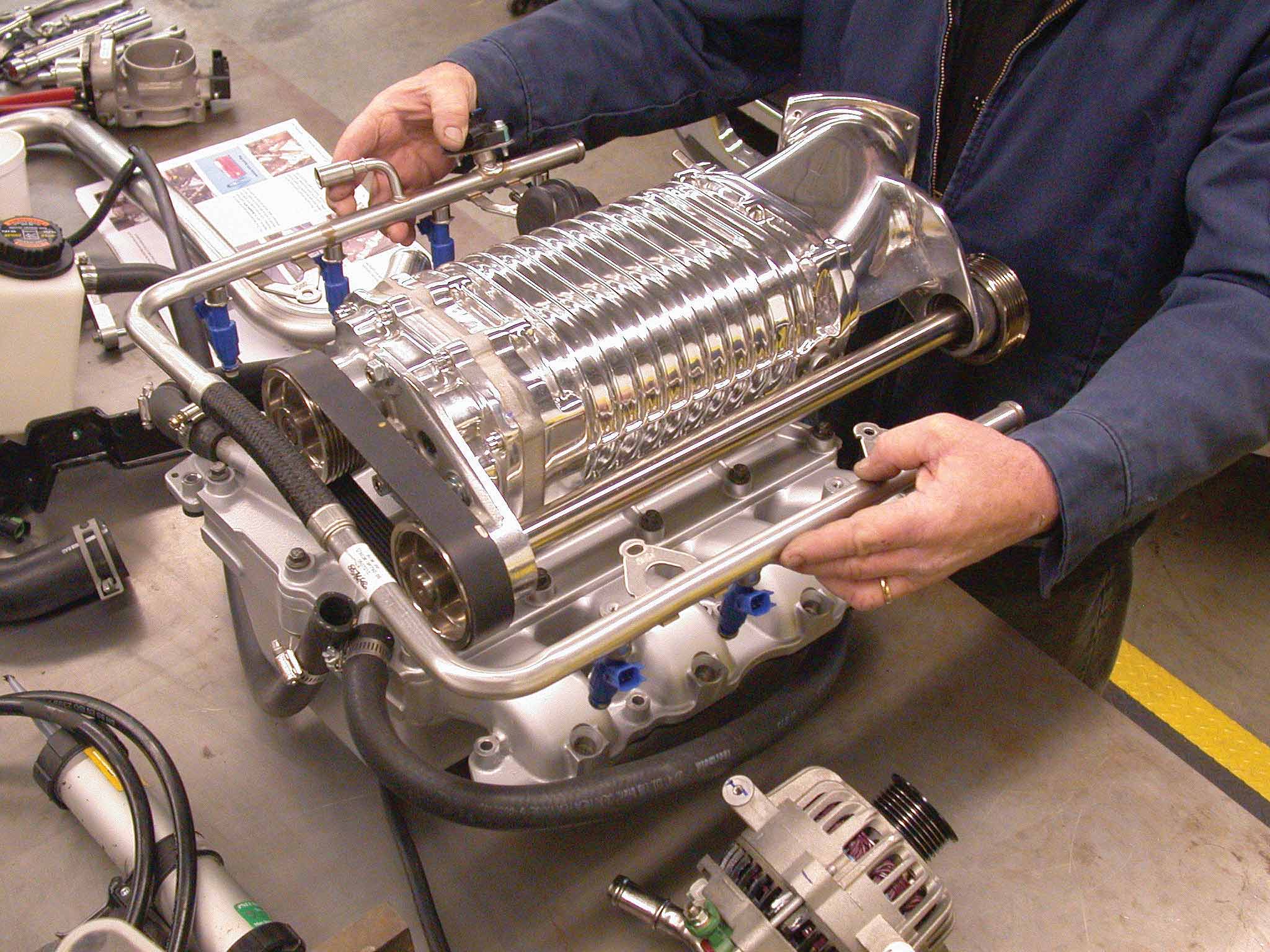
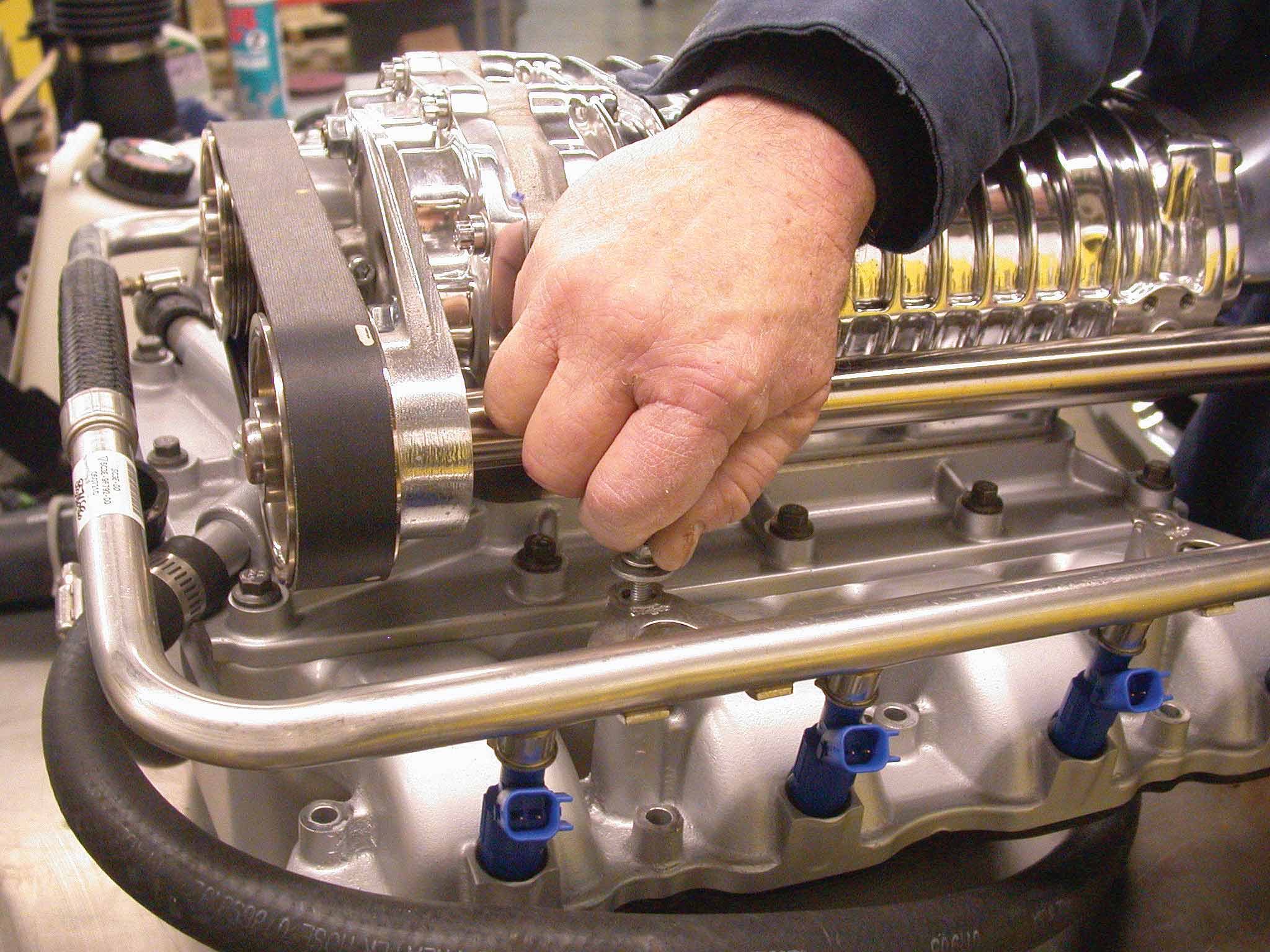
Using the stock bolts, the rails are installed into the new Magna Charger unit. The bolts should be torqued to 89 in-lb (that’s INCH pound, not foot).
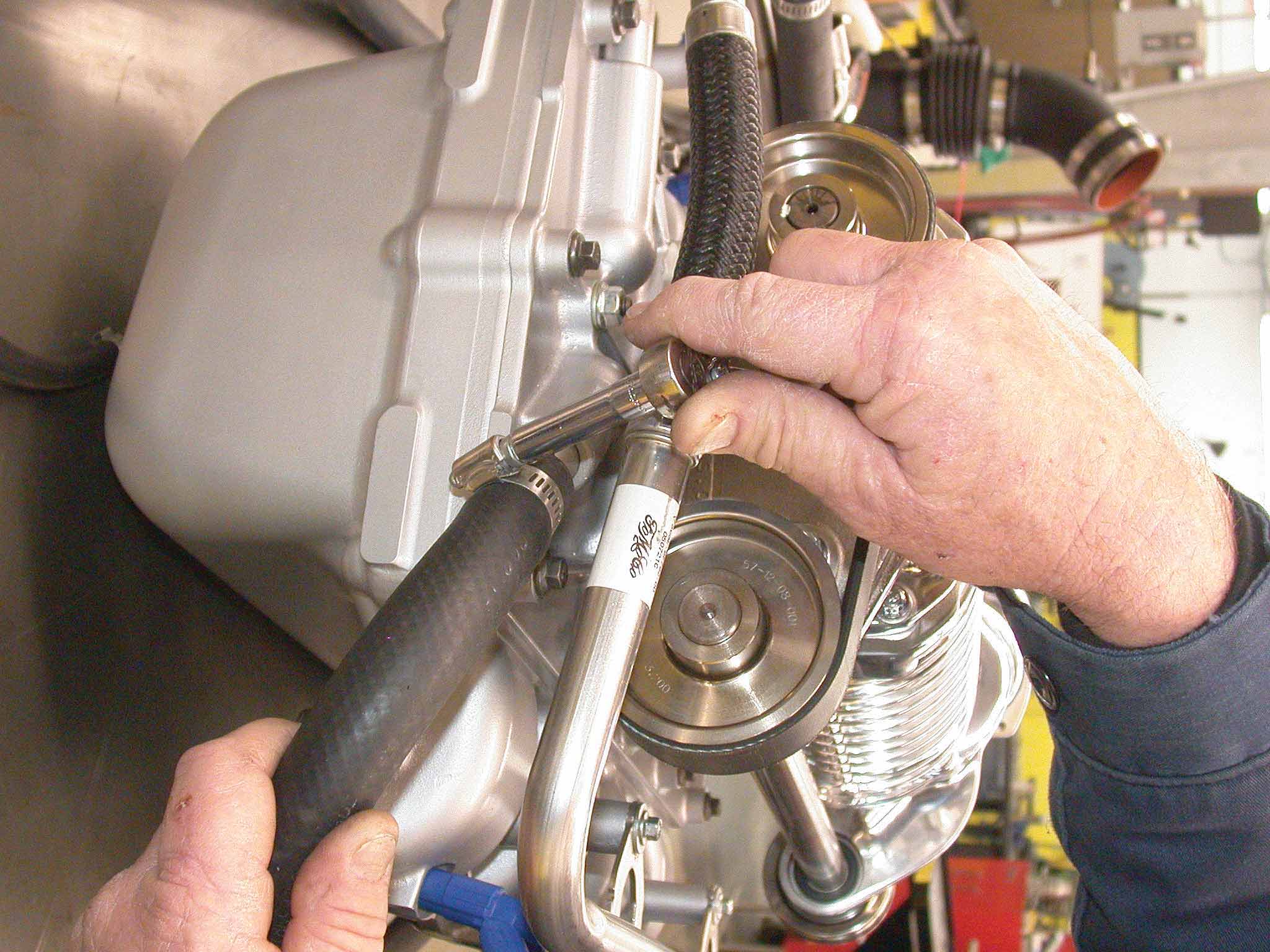
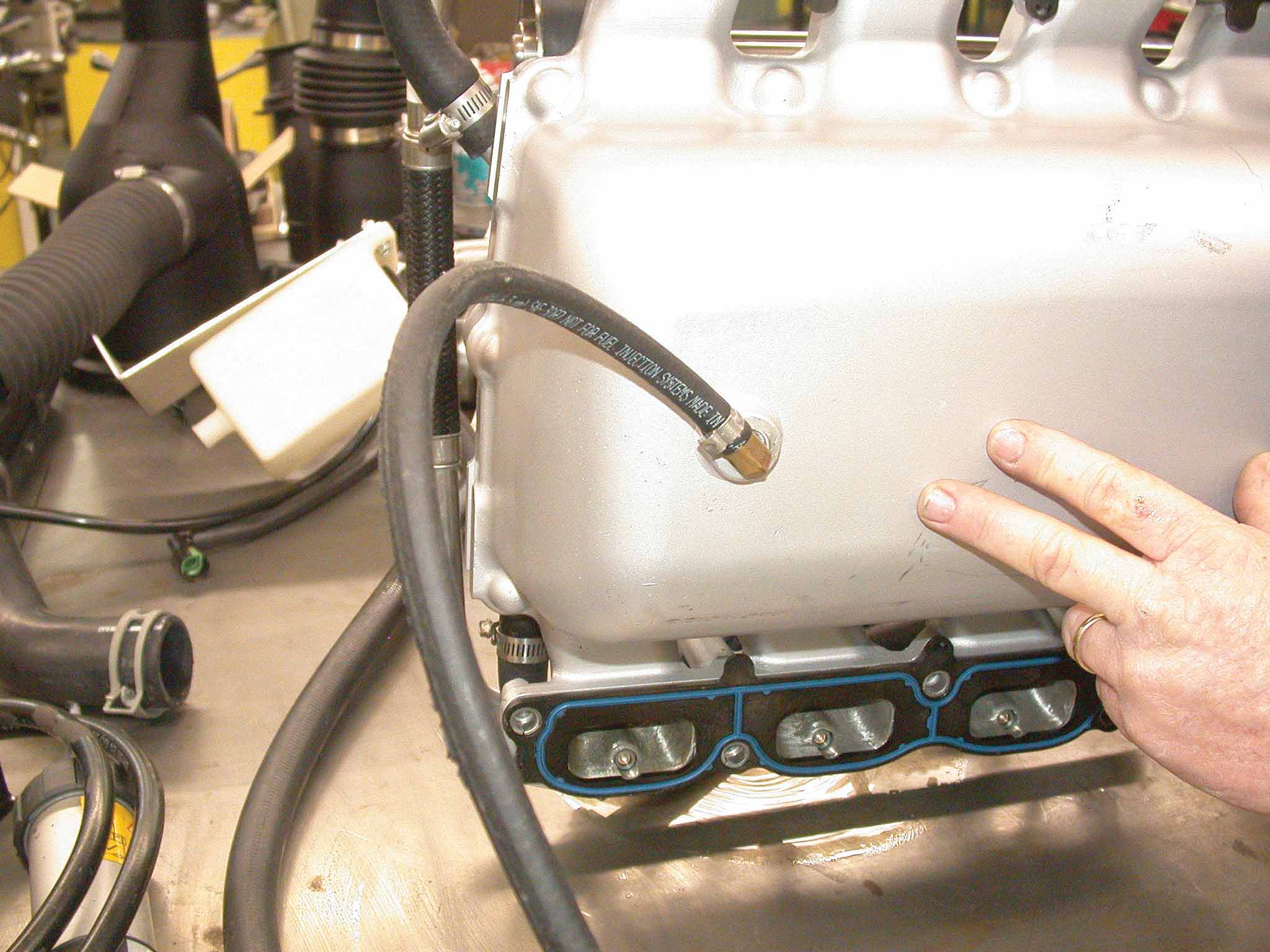
Since it is a bear to get to the hose bibs once the unit is in place, the hoses are installed now, as is the manifold drain hose.
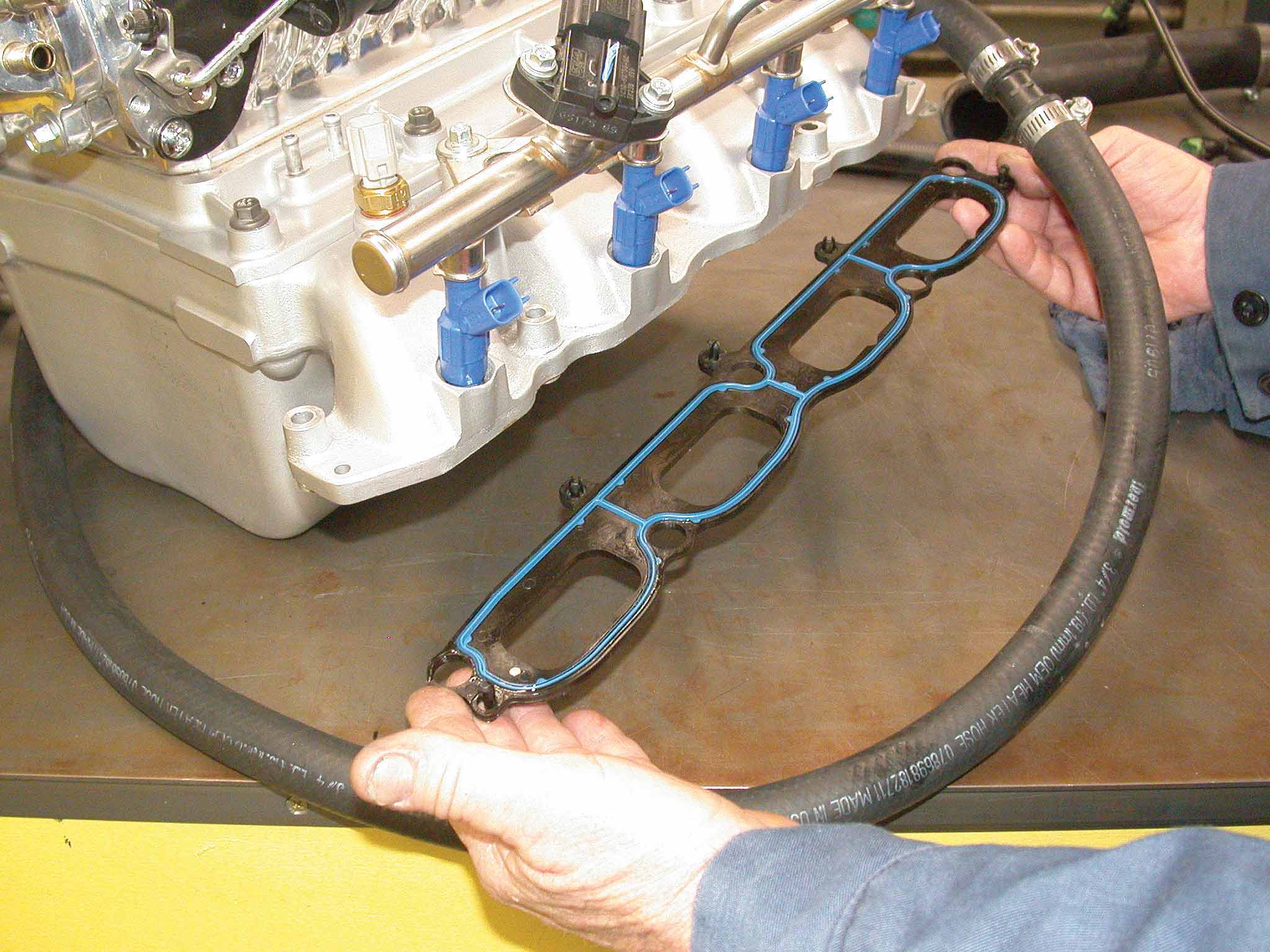
Once the stock gaskets have been cleaned and inspected (if there is any doubt of their condition, use new ones), they are snapped into place.
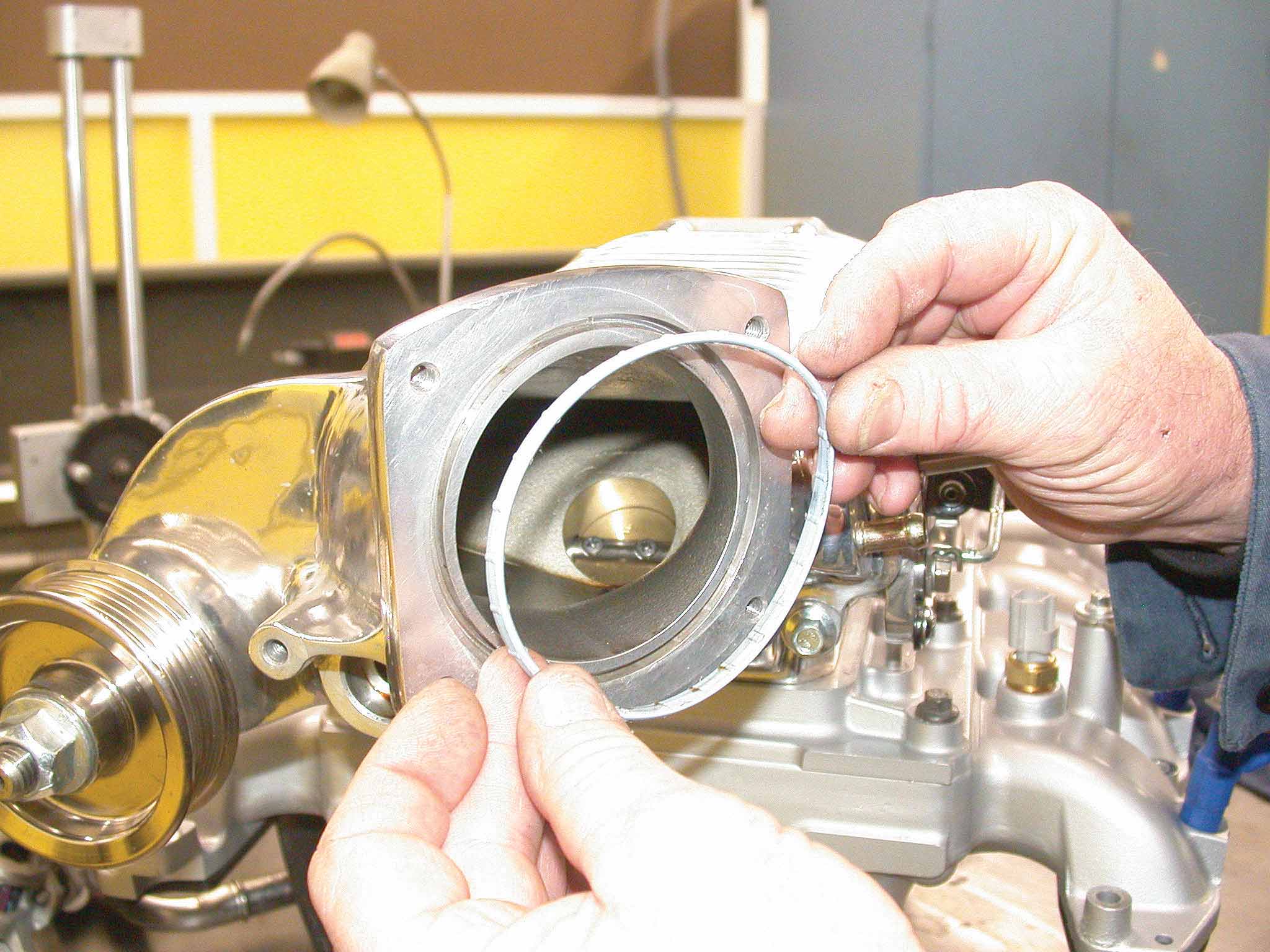
The stock throttle body gasket is installed into the Magna Charger unit. Again, if it appears to be worn or damaged, a new one should be used.
As the manifold servo-motor plug will not be connected again, its plug is pushed out of the way.
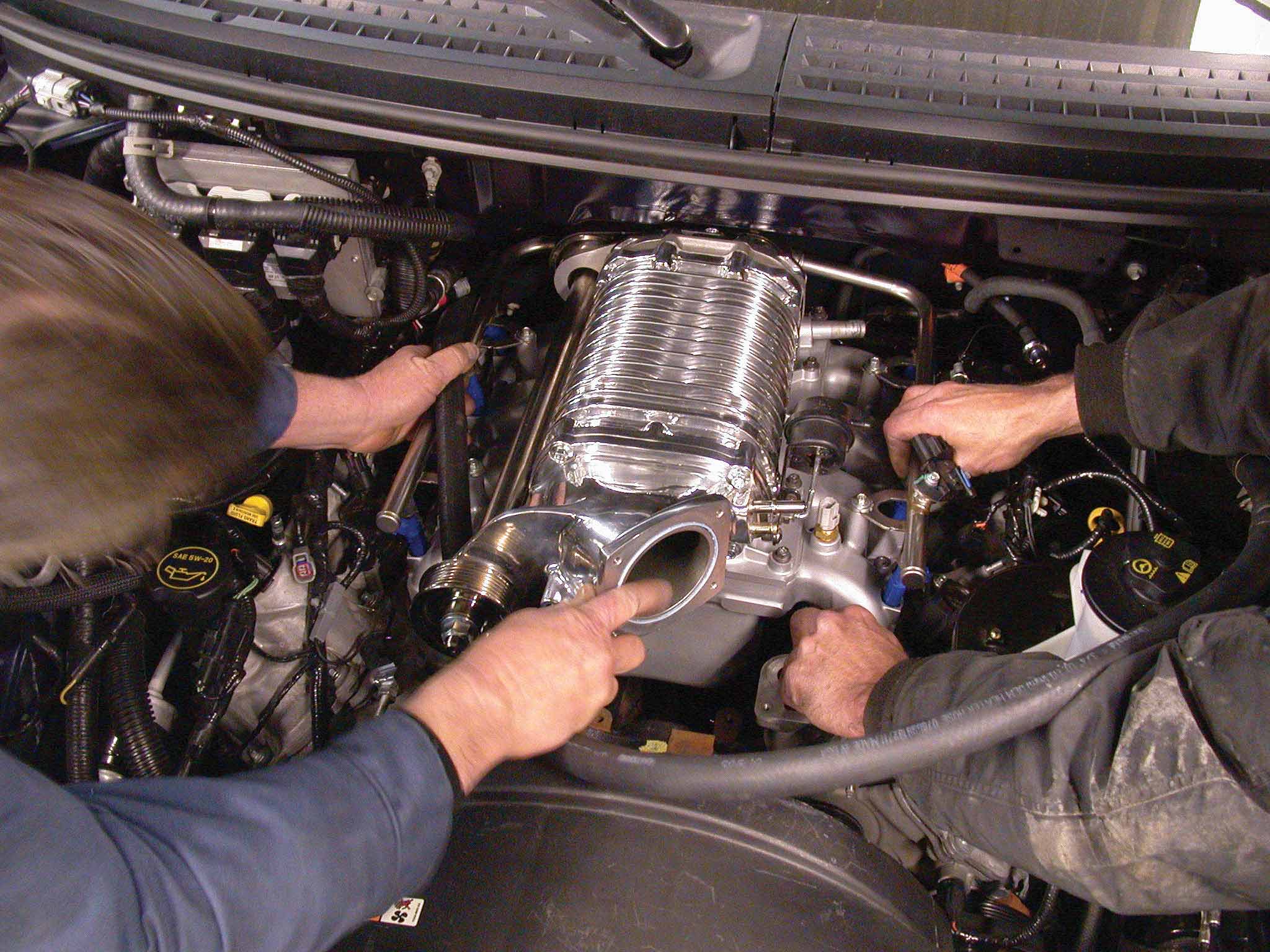
With the tape removed from the intakes, the Magna Charger supercharger is gently set into place. But bring a friend, as the unit is heavy and damage could occur if it’s dropped onto the engine.
The water manifold is installed.
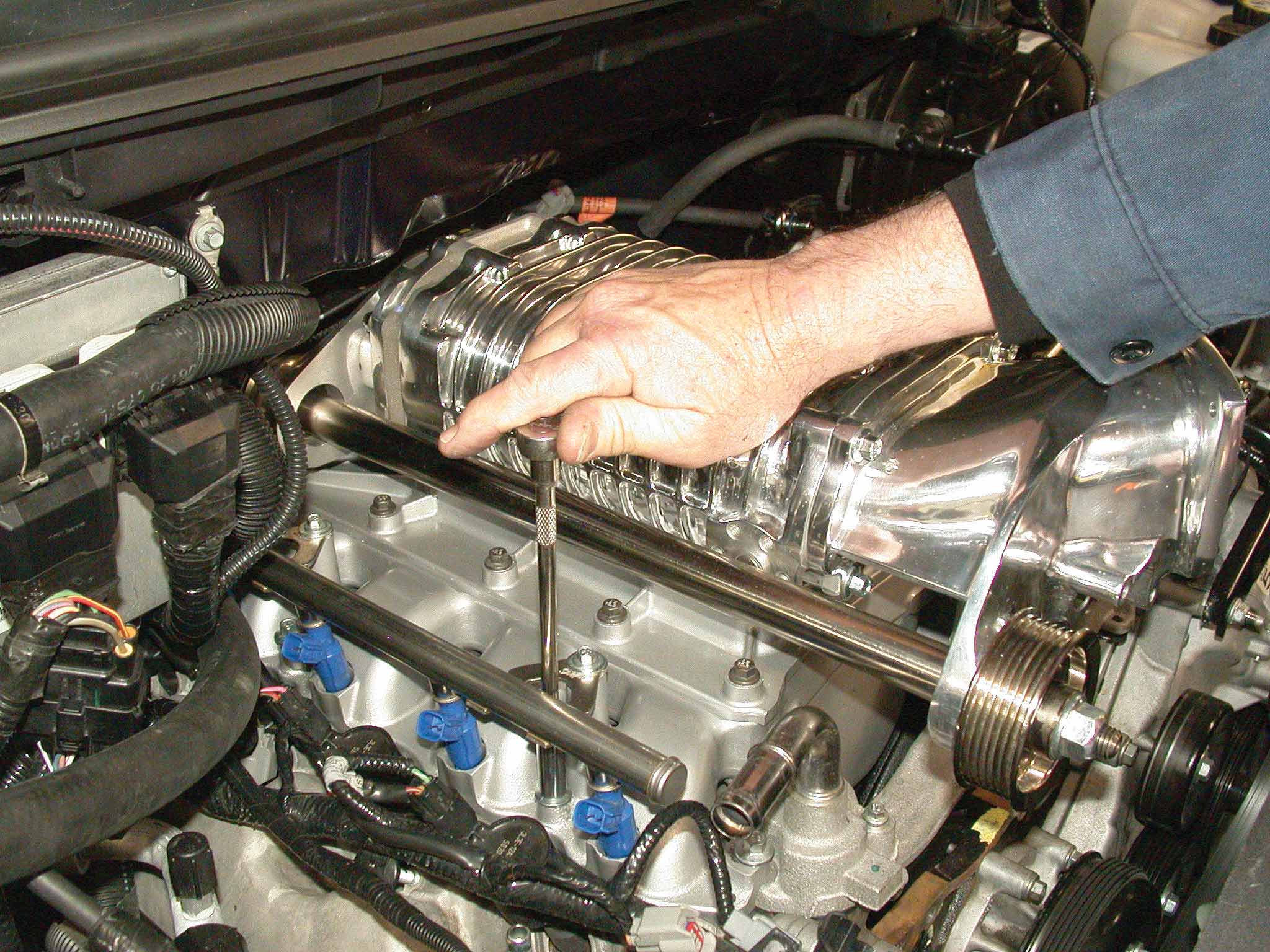
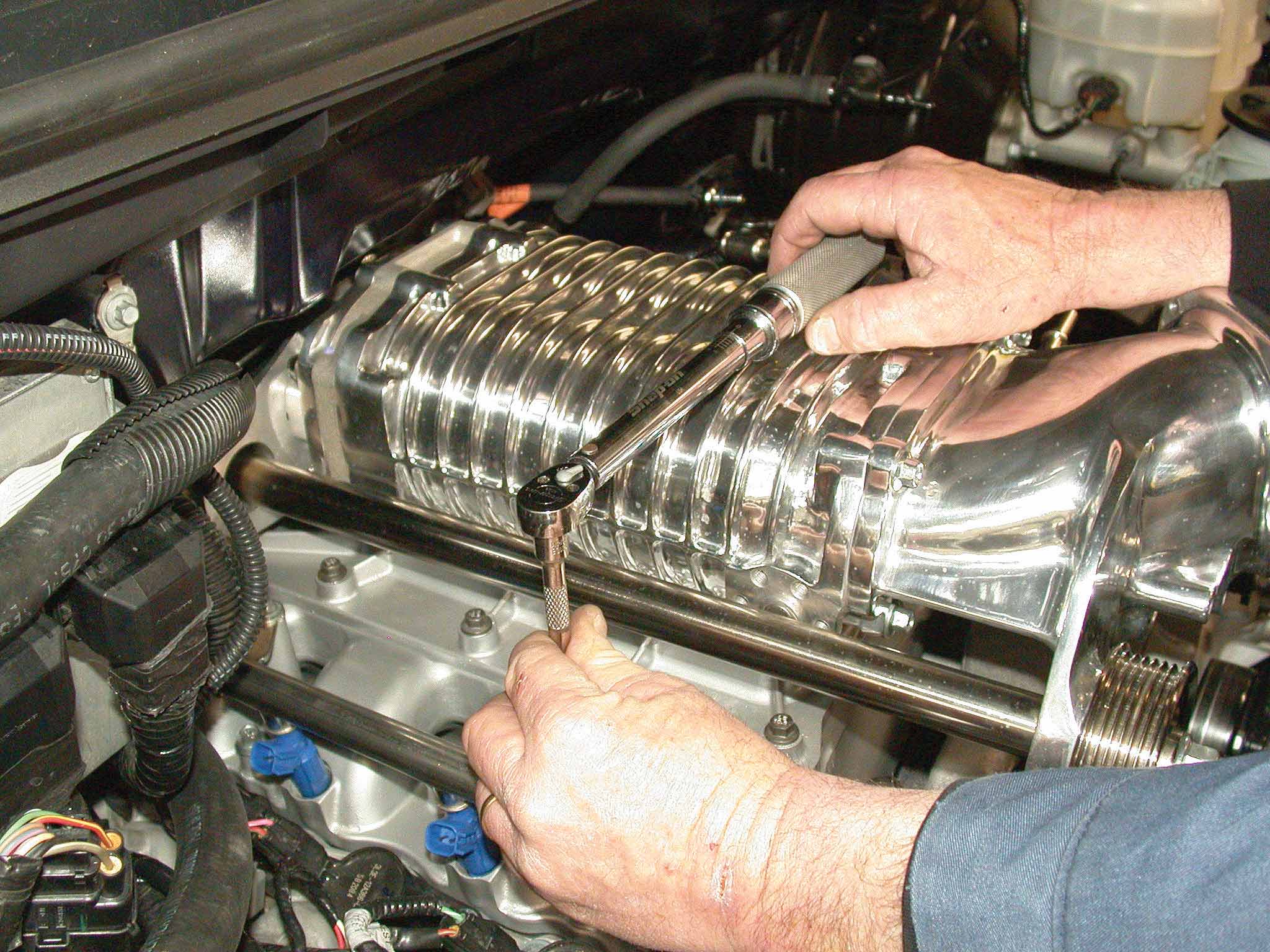
The stock bolts are used to hold the new unit in place. They are tightened from the center out, going back and forth from side to side.
They are then torqued first to 18 in-lb, and then to 89 in-lb, again with the aforementioned rotating pattern.
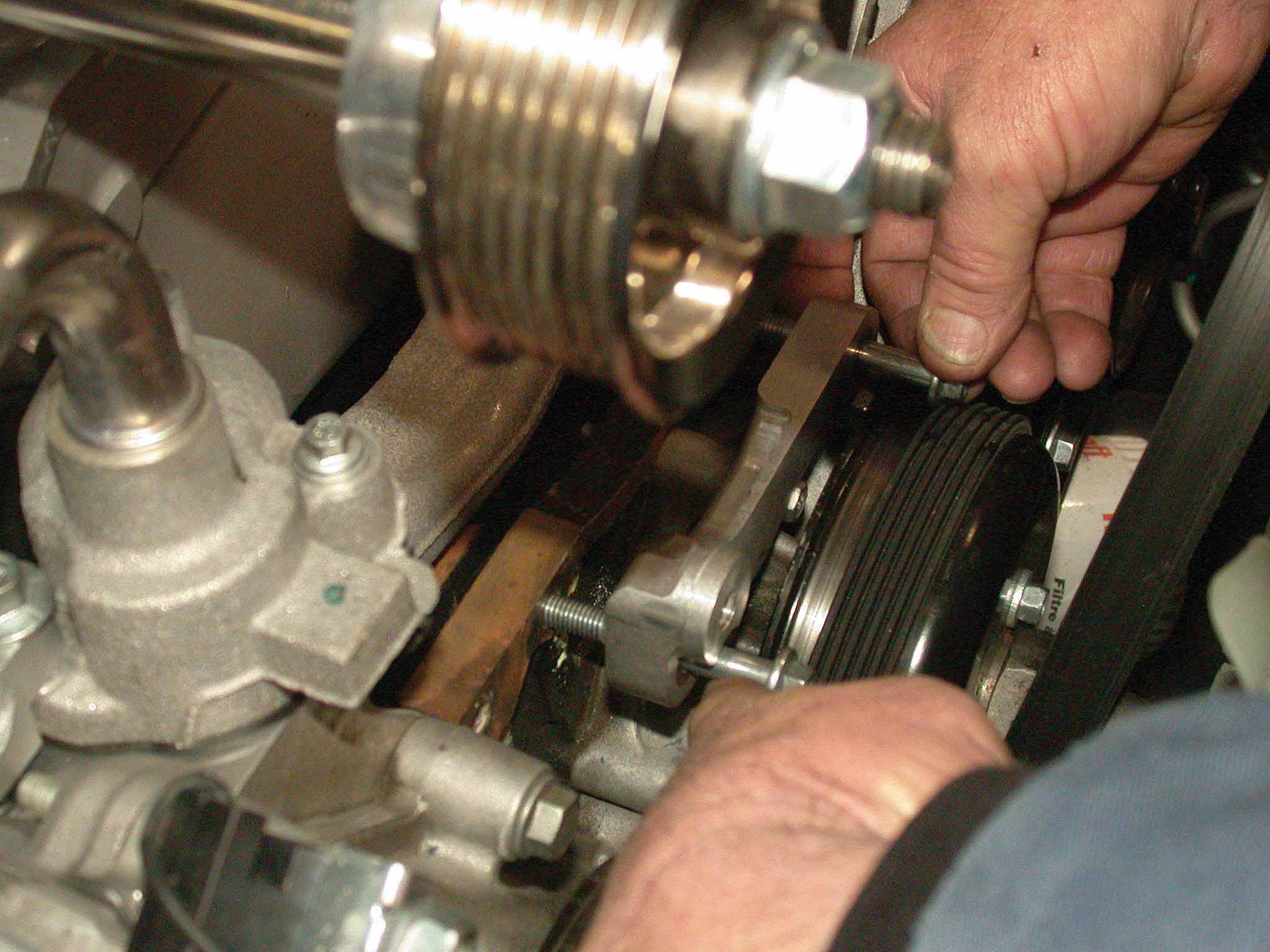
A new idler pulley/alternator bracket is installed.
This is followed by the alternator.
With the alternator in place, the idler pulley is installed.
A longer drive belt is supplied with the kit, and it is installed at this time.
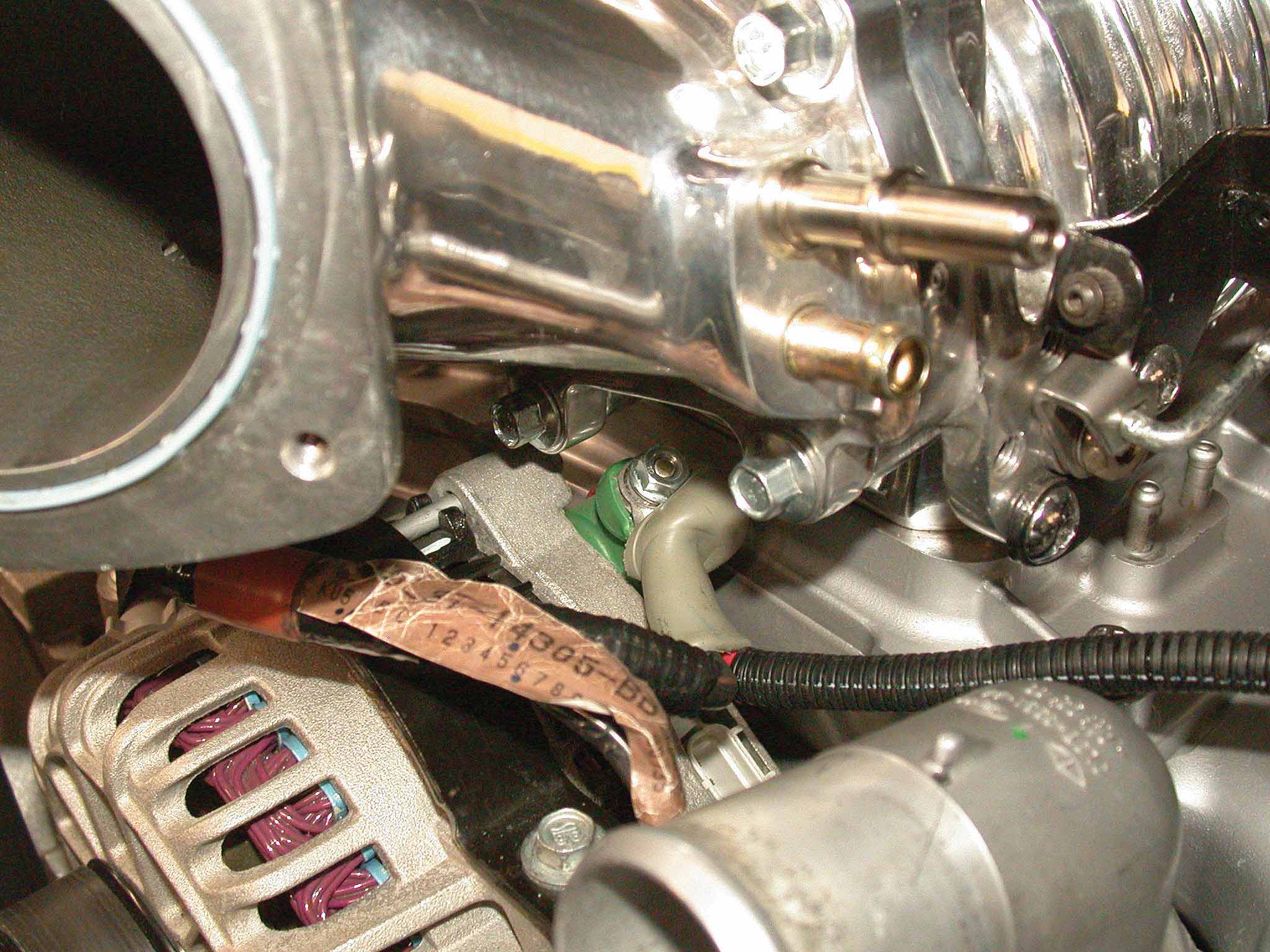
The power lead from the intercooler pump is mated to the alternator control lead and connected to the alternator.
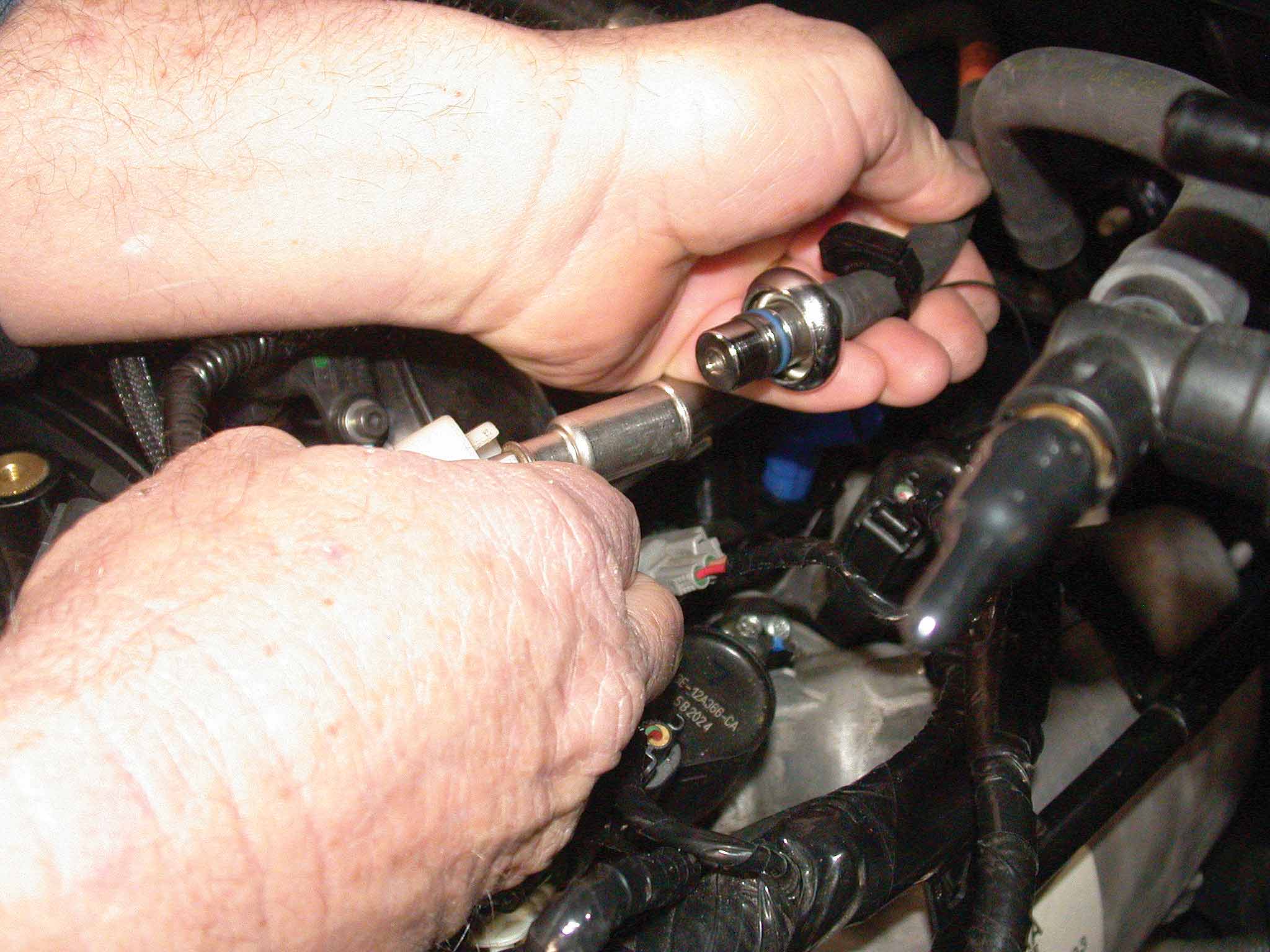
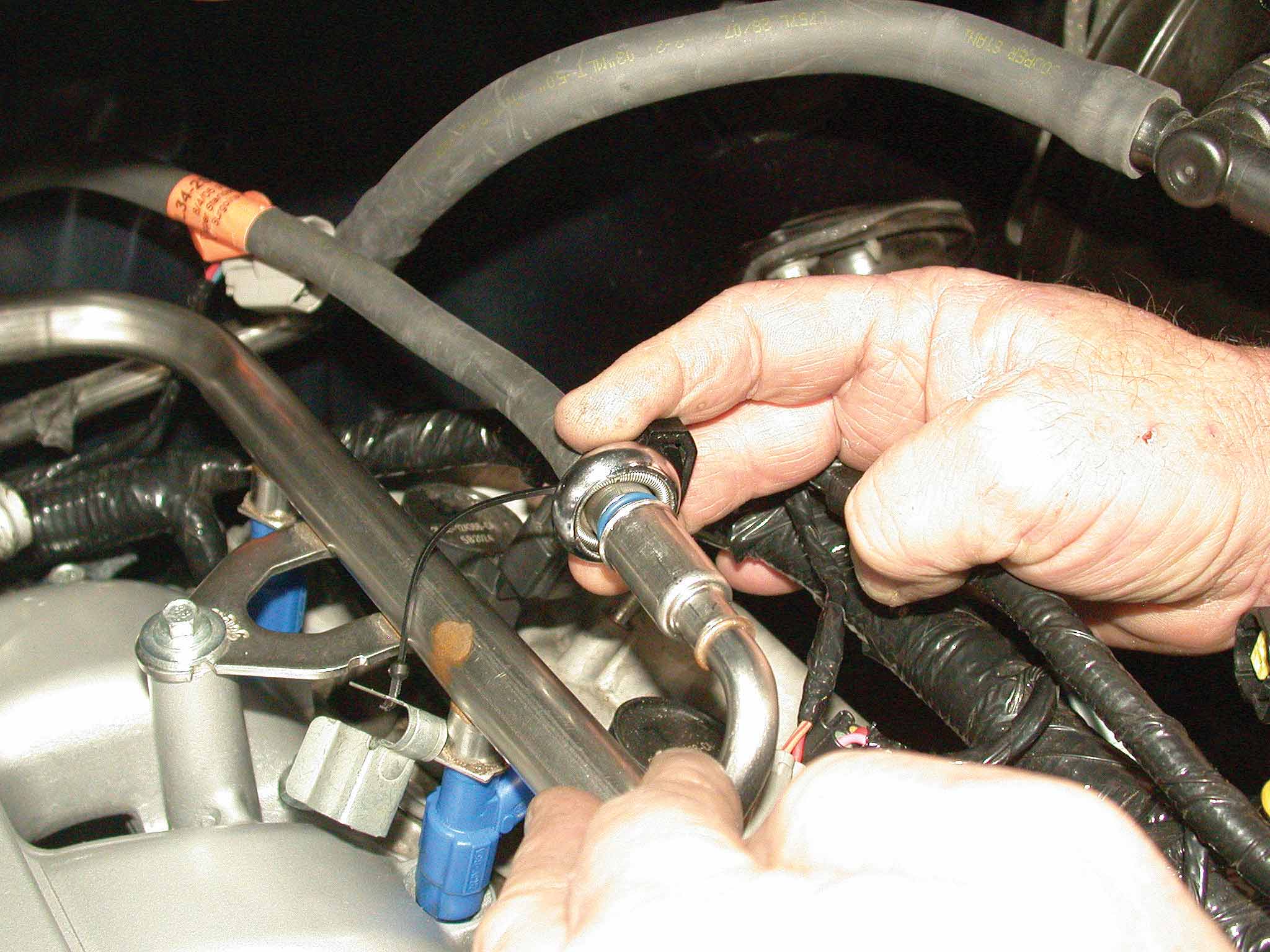
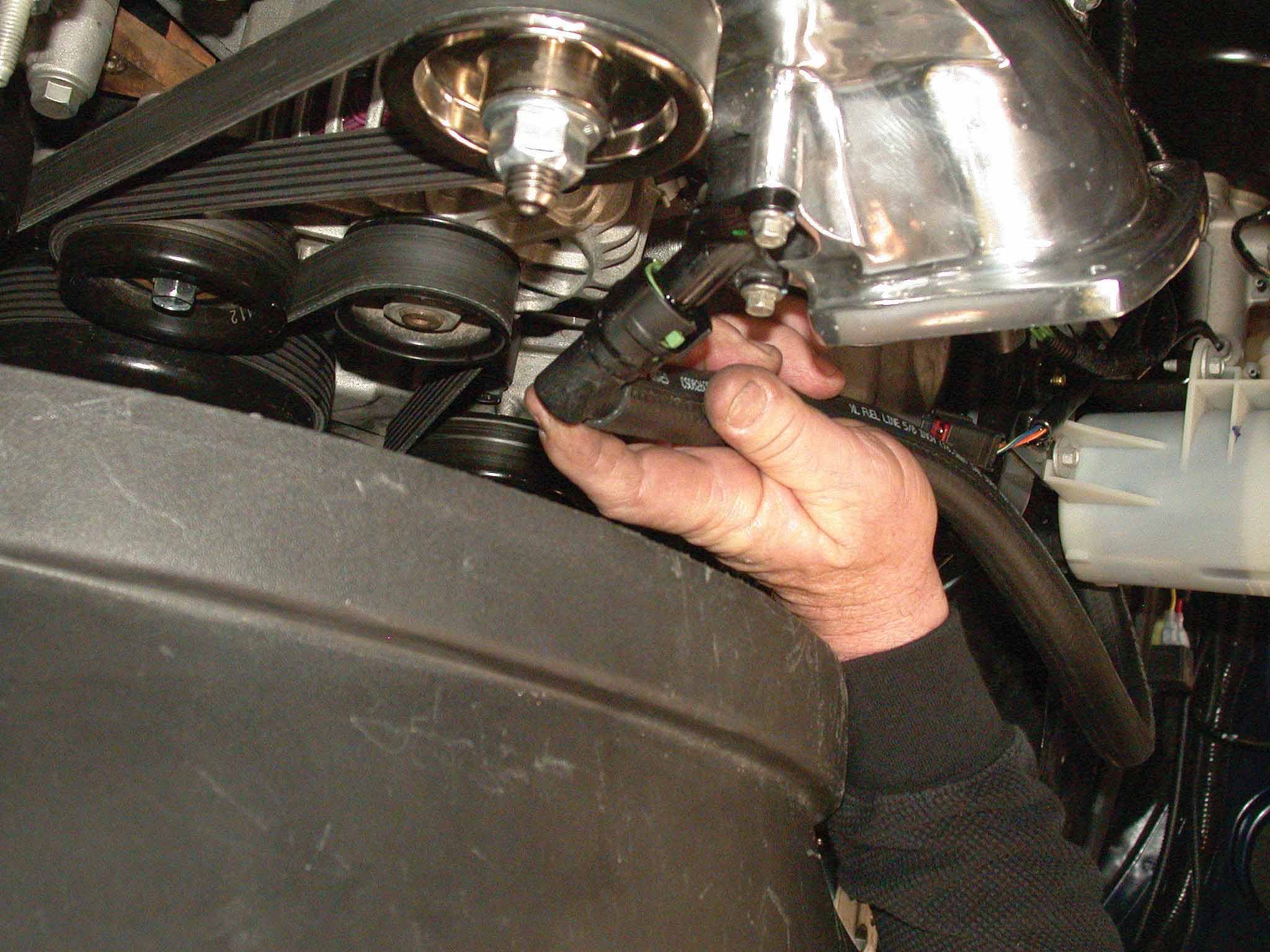
All it takes to connect the fuel line is to “click” the two pieces together and attach the safety clip.
All it takes to attach the injector leads is to push them into place.
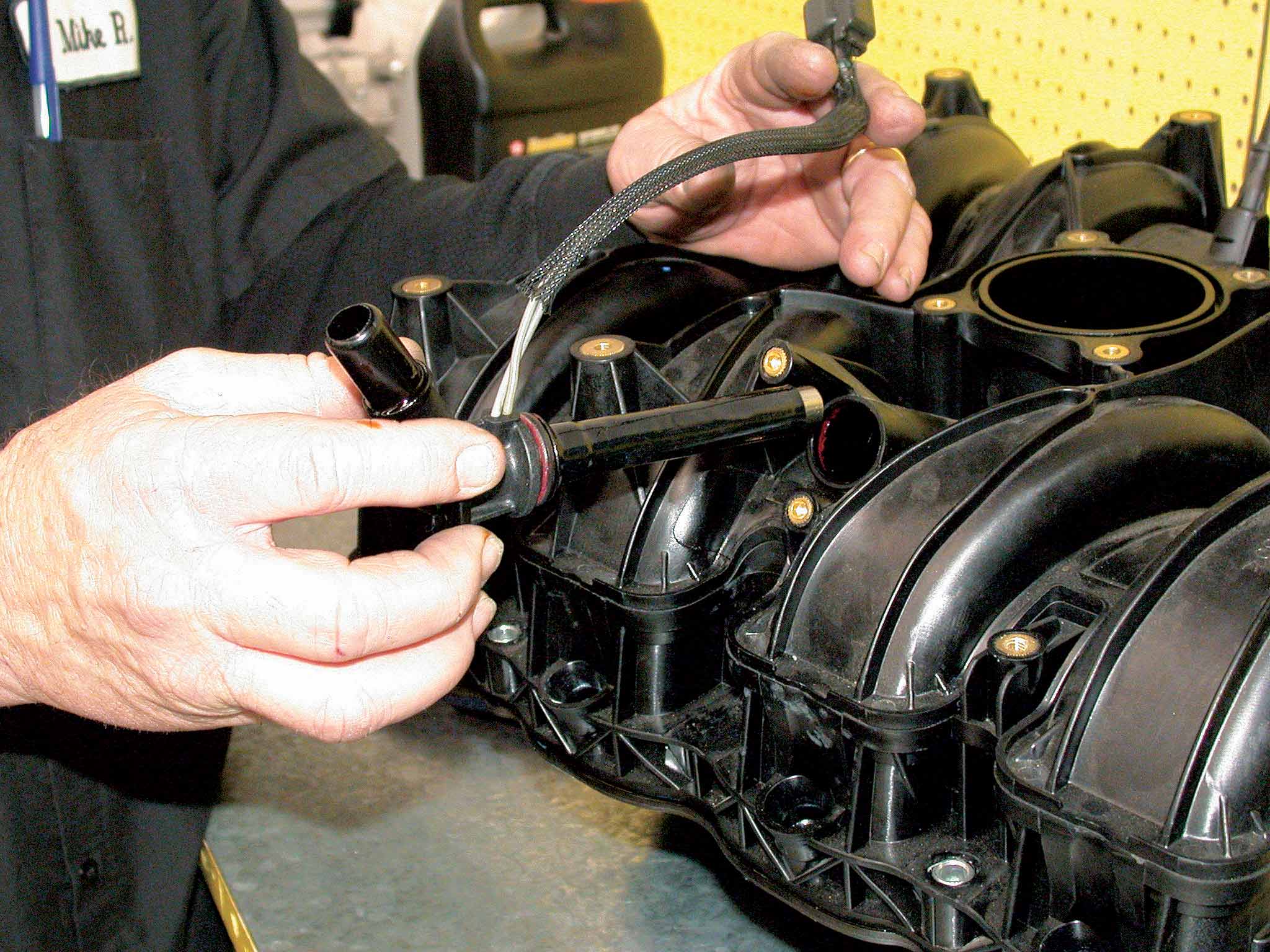
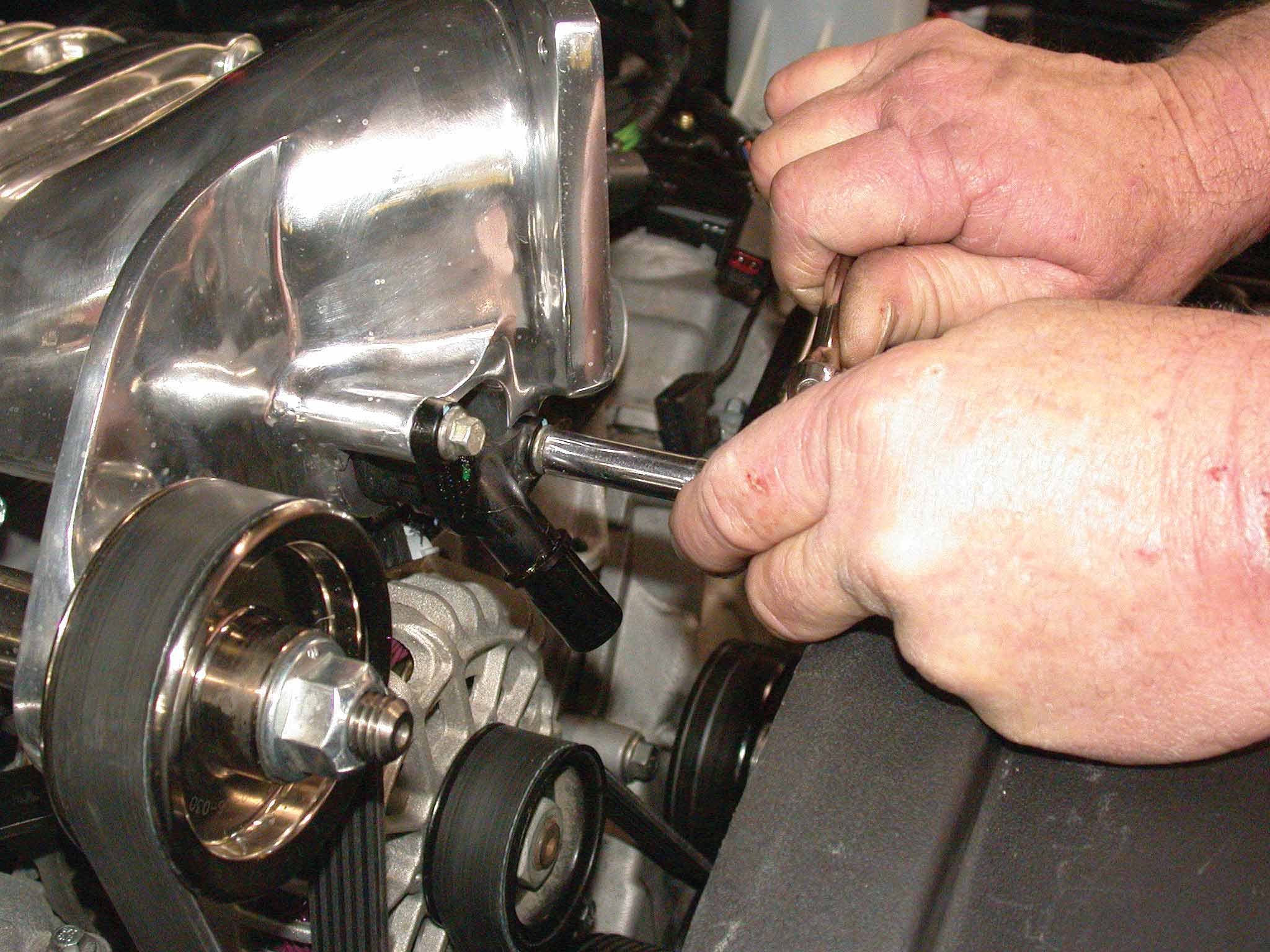
The PCV vent tube is removed from the stock intake manifold and installed into the Magna Charger supercharger, using the stock hardware.
With that, the PCV vent tube is snapped into place. The other end is connected to the barb on the passenger’s-side valve cover.
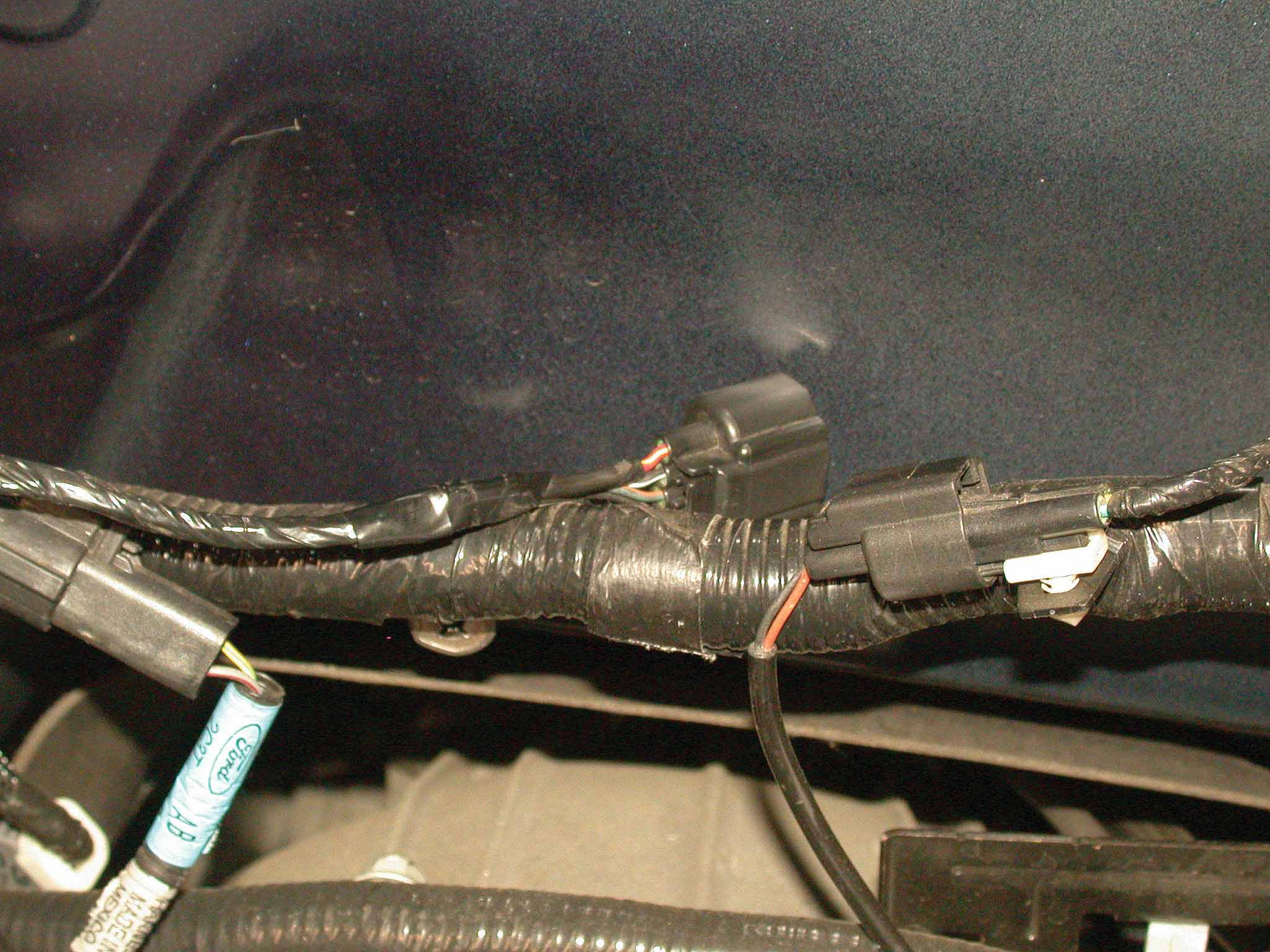
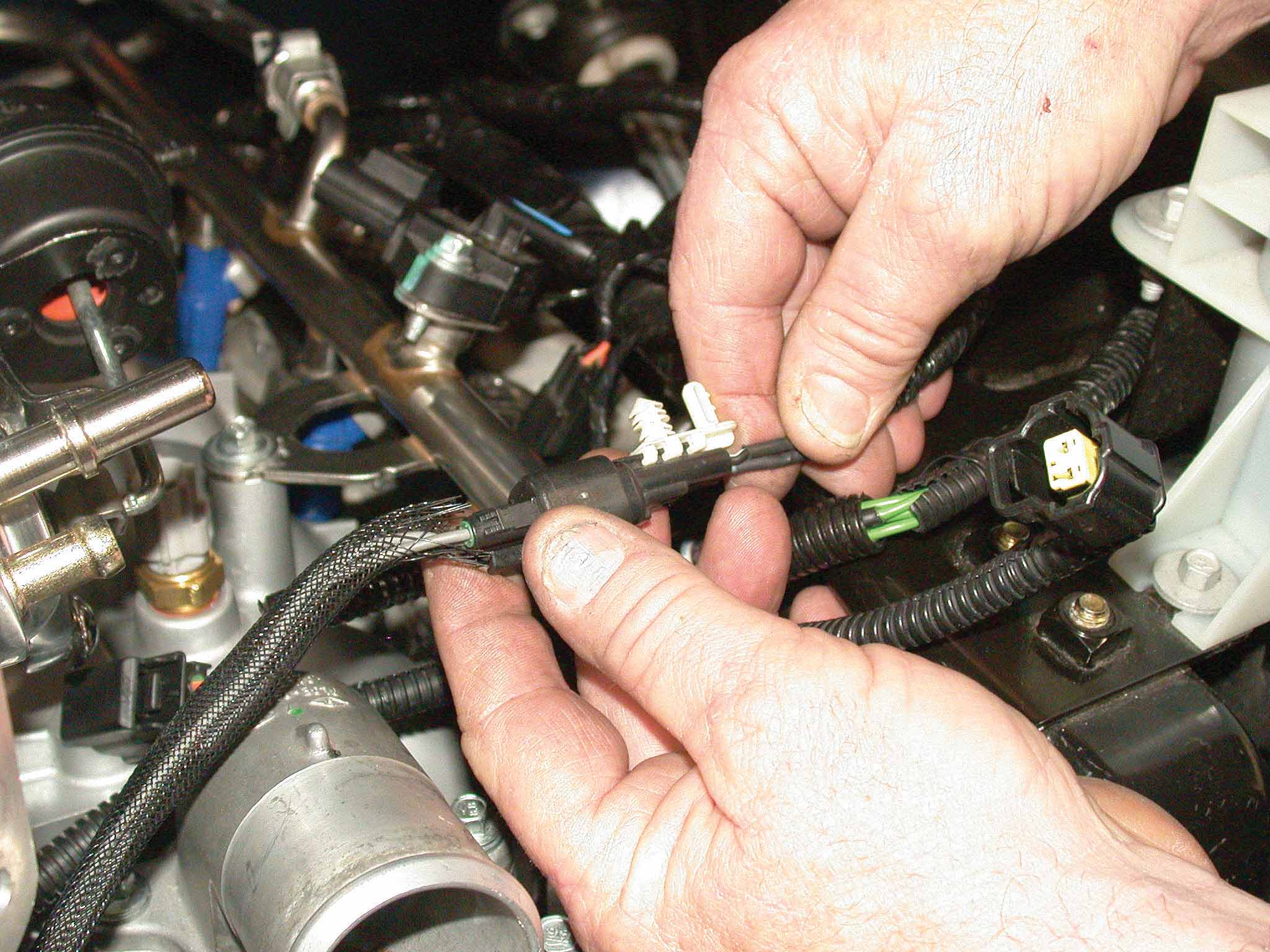
Due to the different location, the PCV vent tube electrical connection needs to be lengthened to make the new reach. Magna Charger supplies the correct color-coded wires to do this.
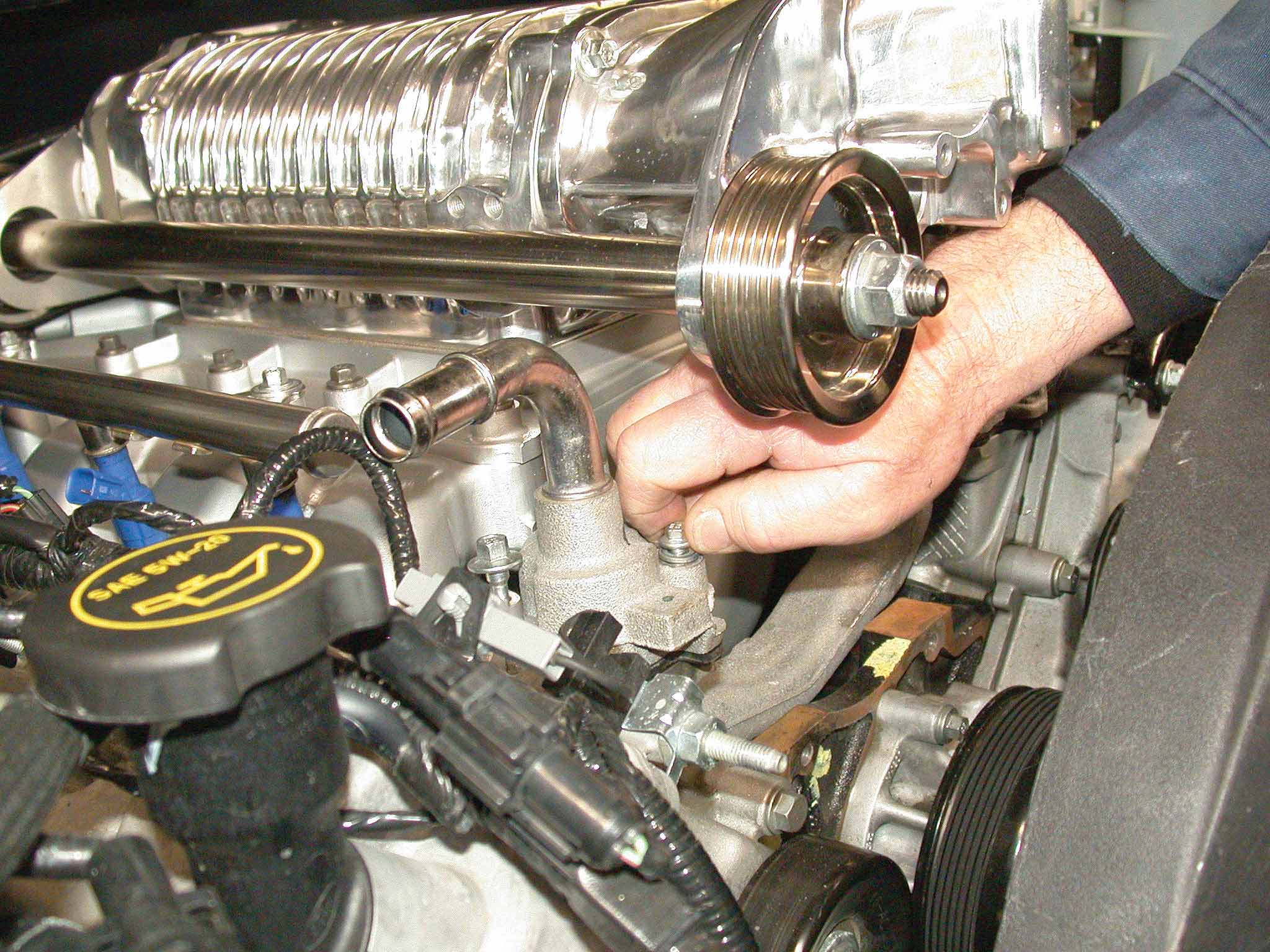
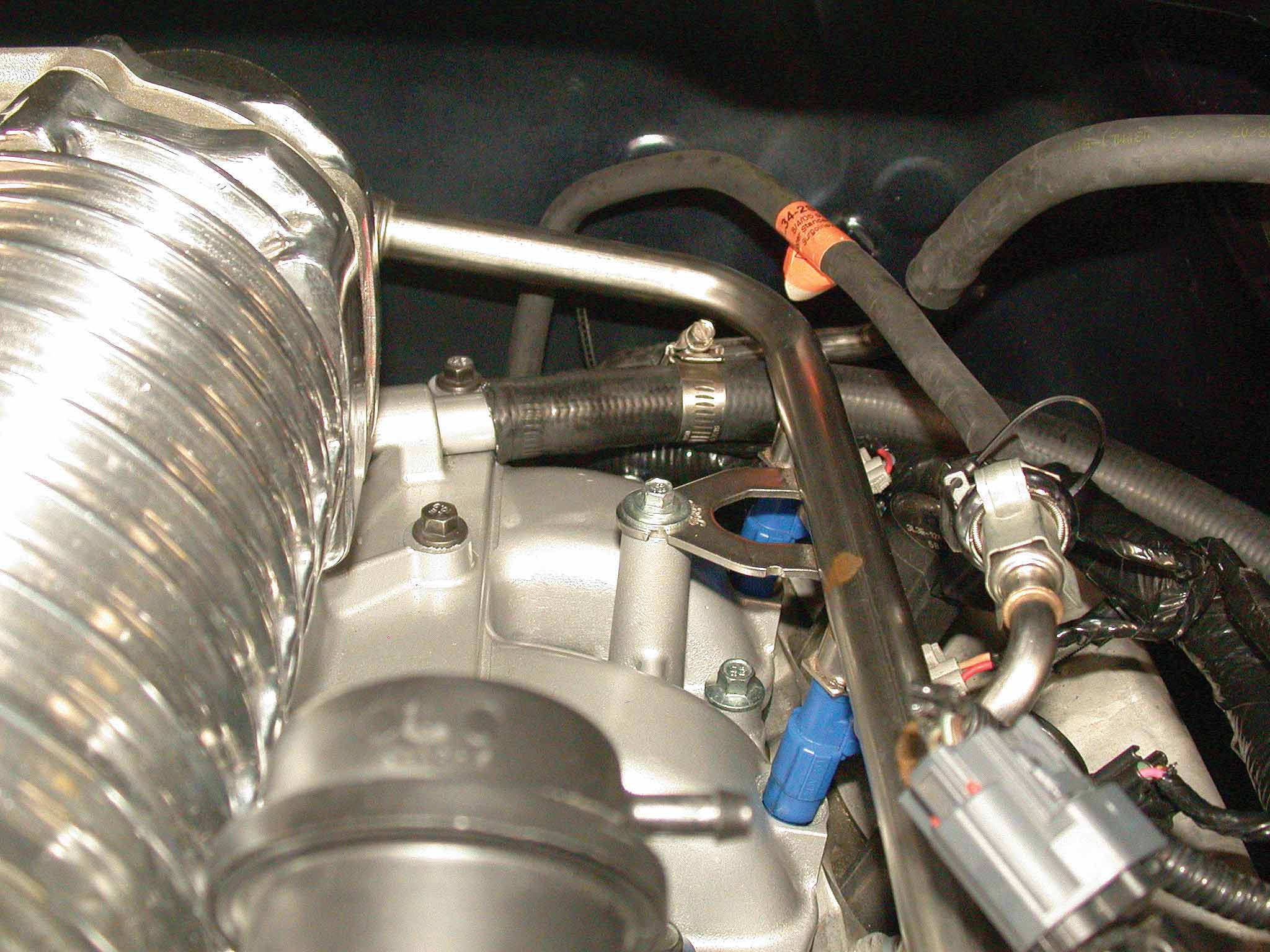
Magna Charger supplies a new upper coolant tube, and it is attached using the supplied sections of hose.
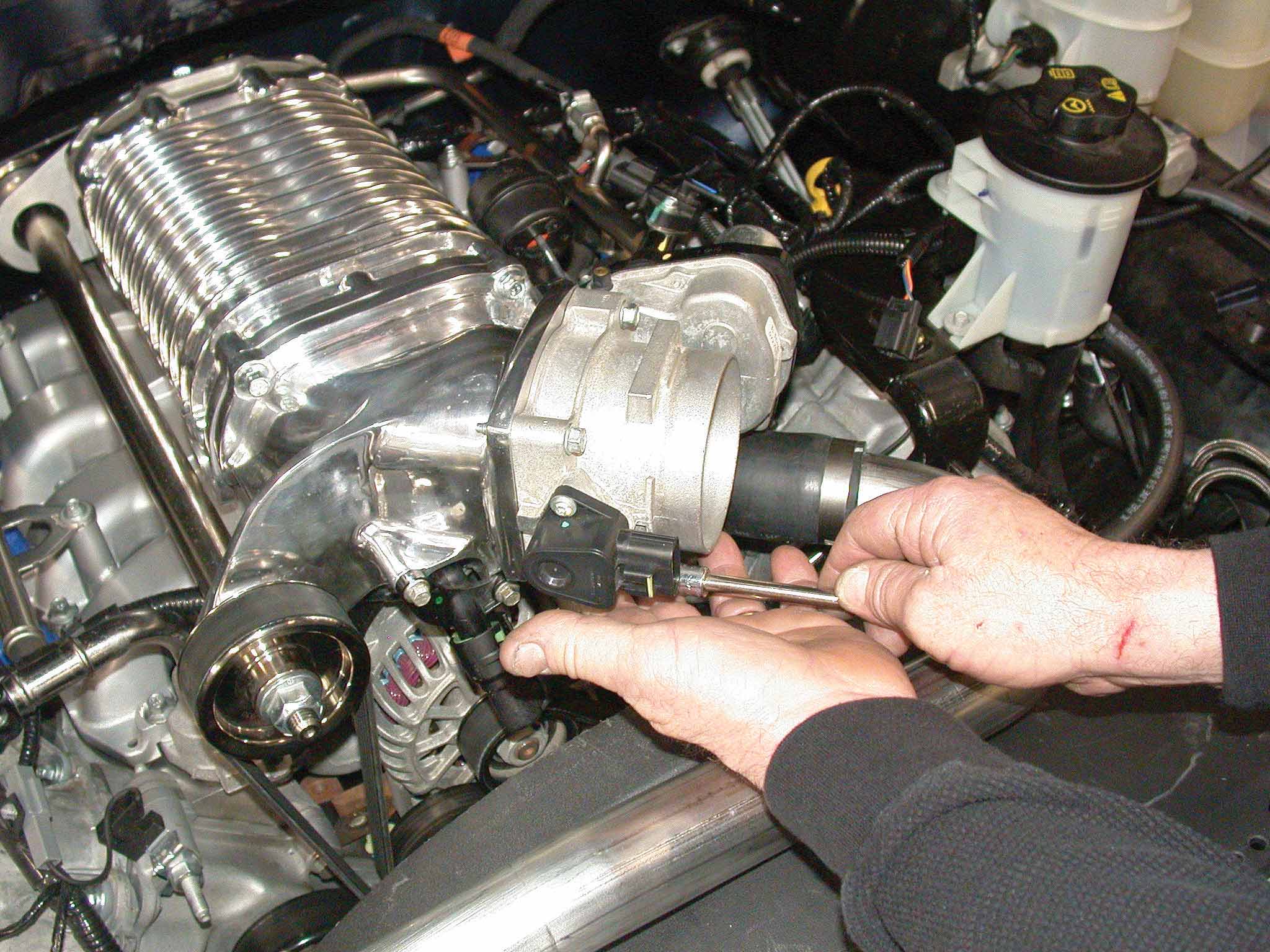
Now it’s time for the throttle body to be installed.
As with the other leads, the ETC lead also needs to be lengthened before it will reach.
After being lengthened, the IAT connection is made.
Lengthened…TPS connection…um, yeah, okay.
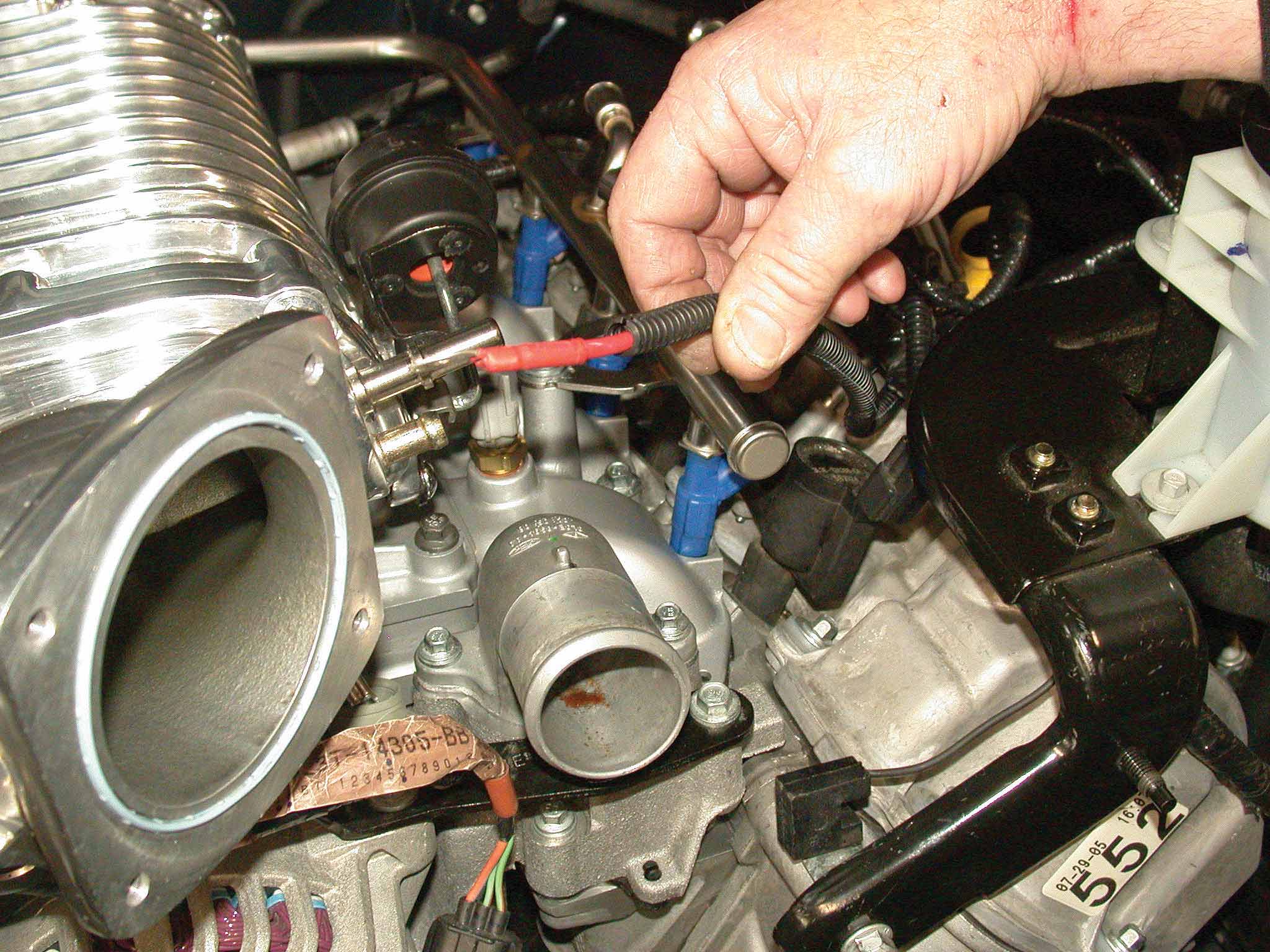
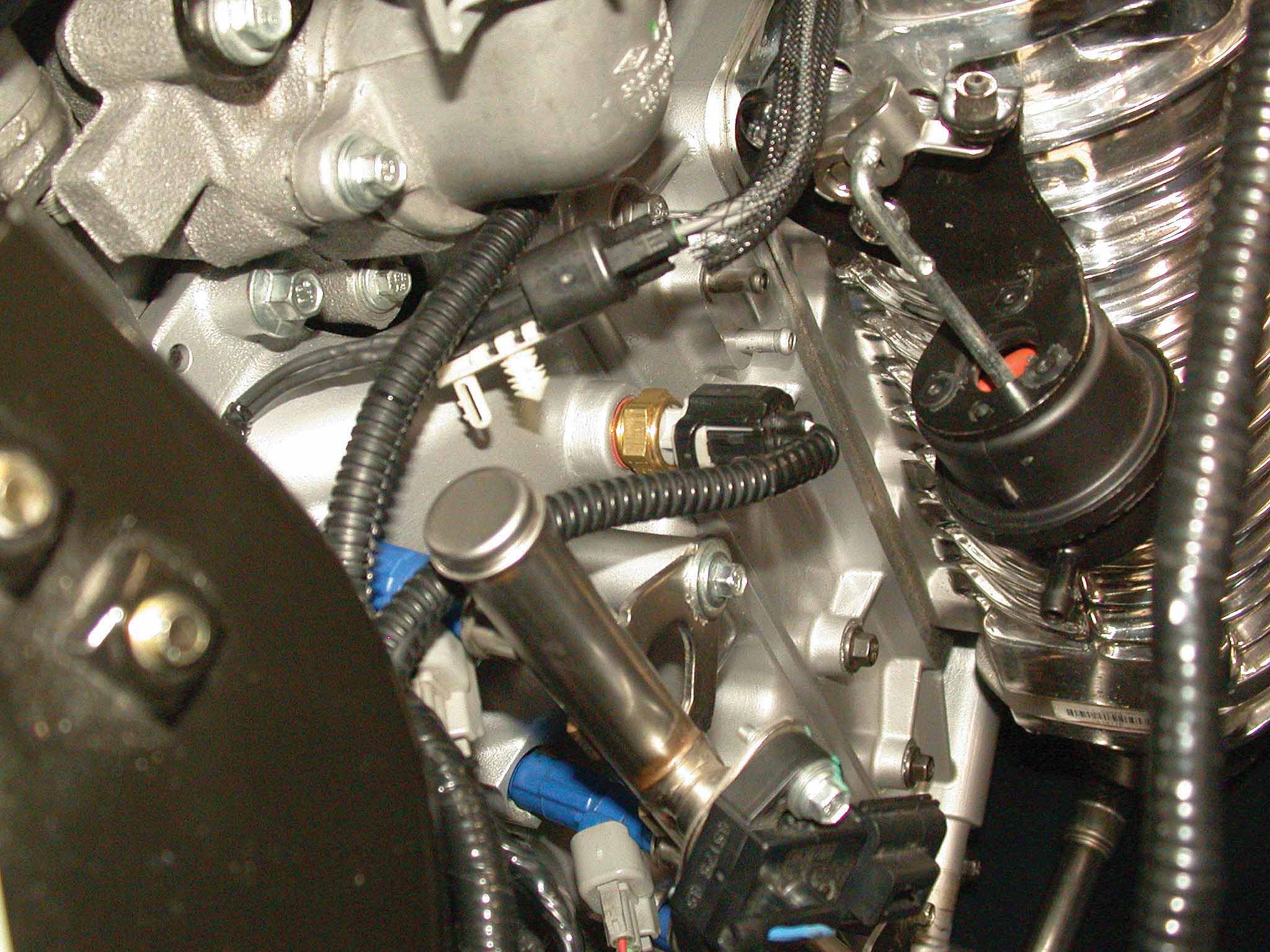
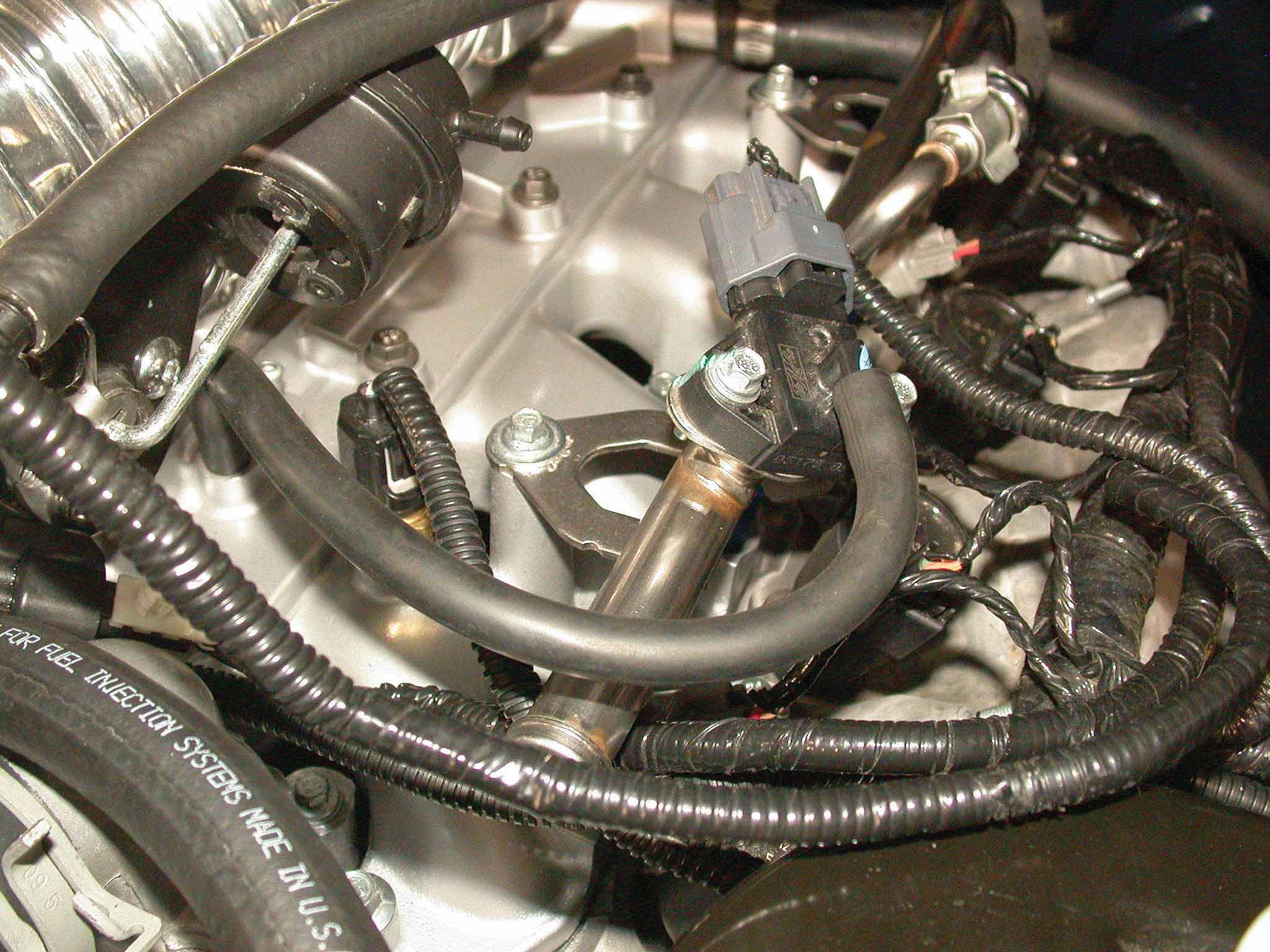
The FPS electric connection and hose are put into place.
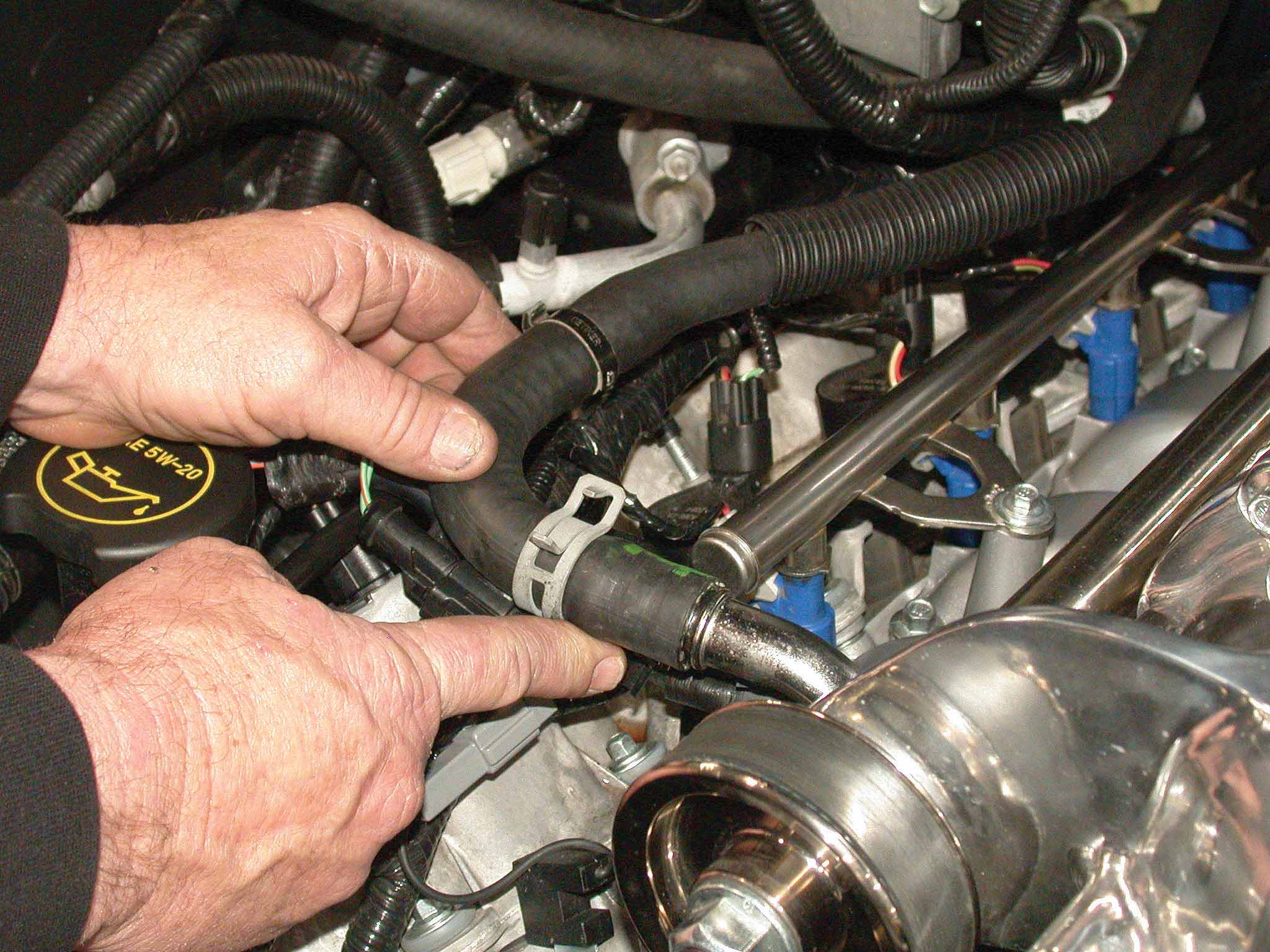
The hose for the water manifold is attached.
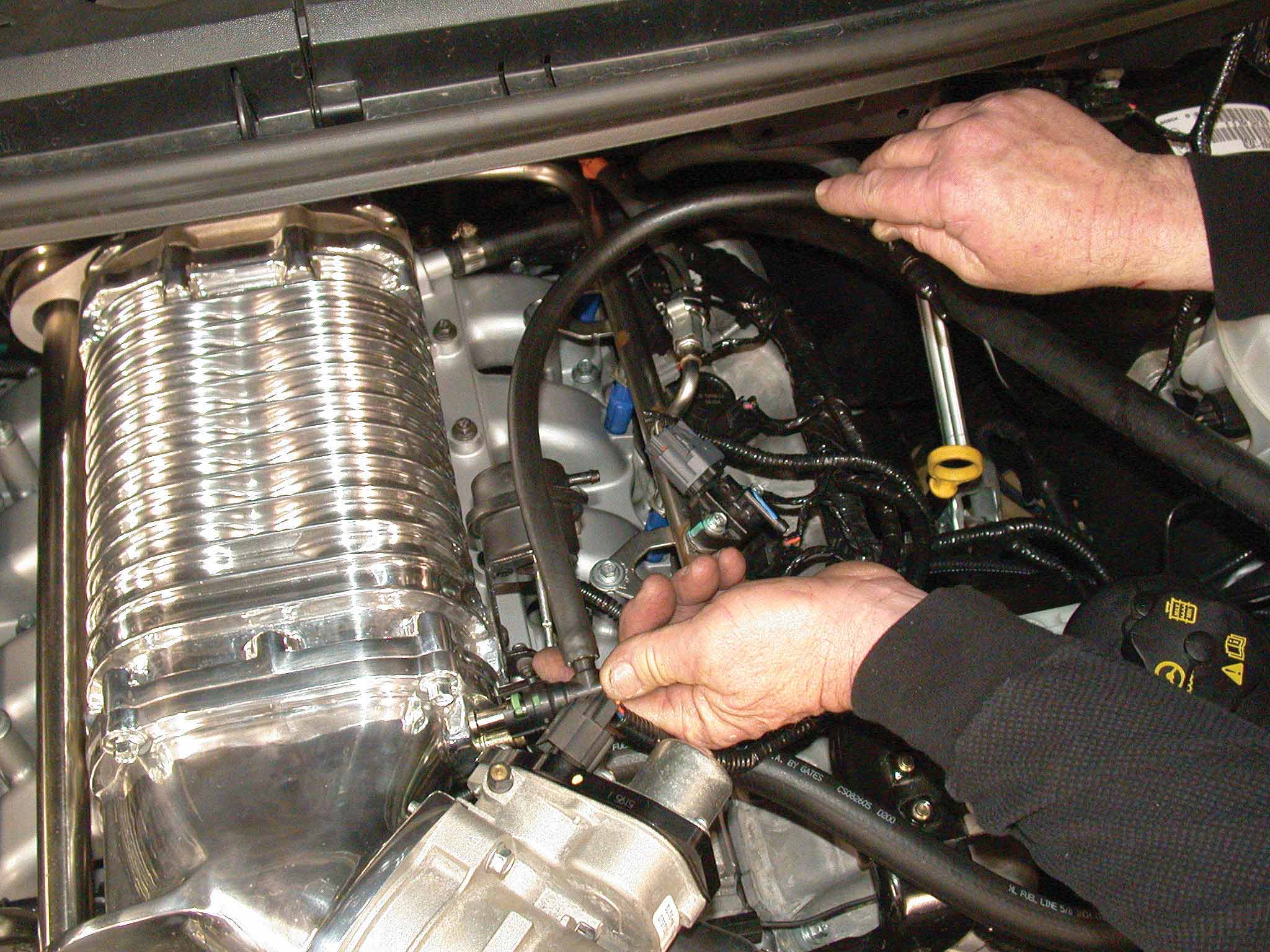
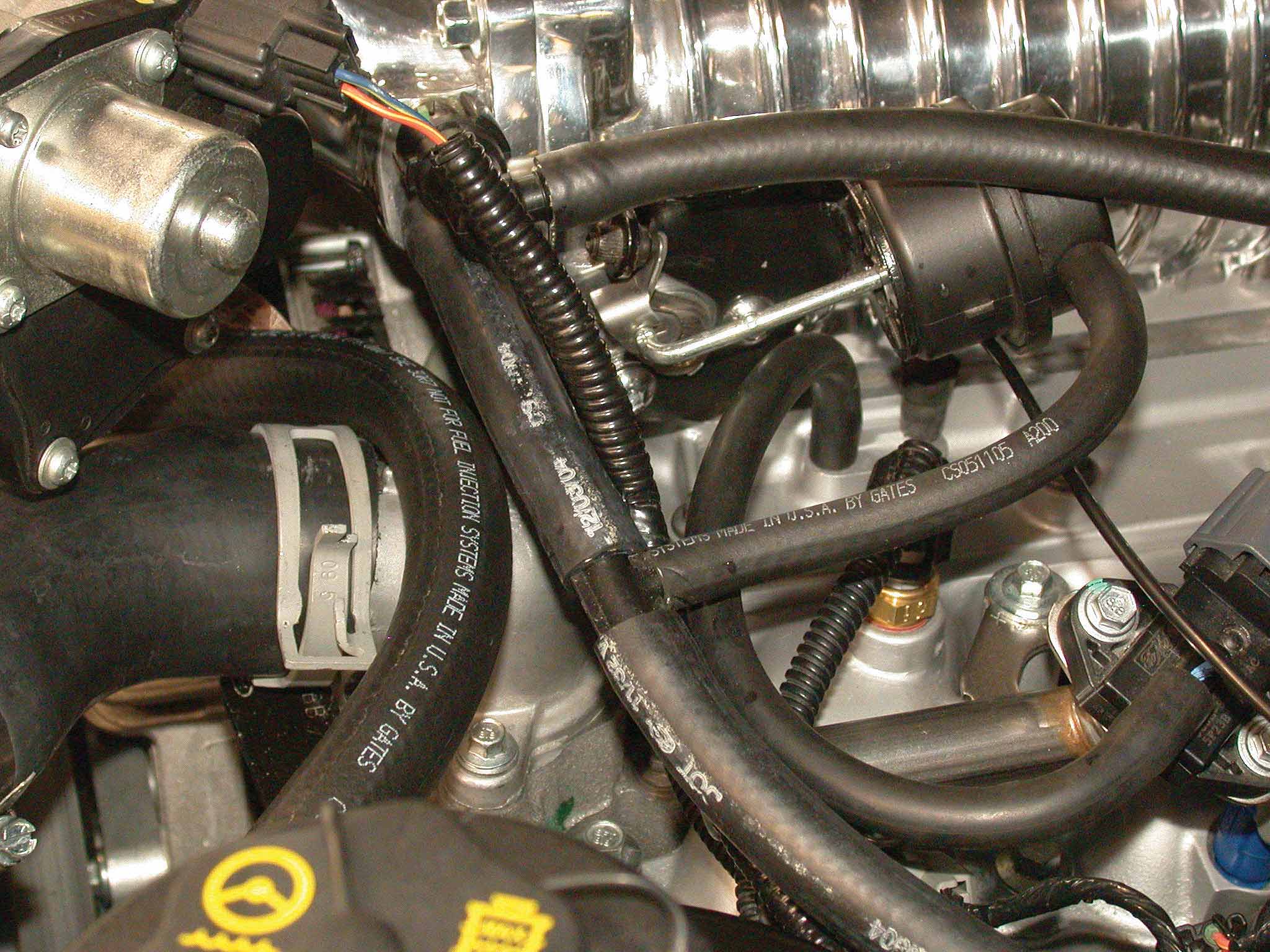
Once the EVAP hose has been shortened to 15 inches, it is installed onto the manifold barb and the purge solenoid.
For use with 4x4 trucks, a “T” fitting is used to split the hose that connects the inlet manifold to the bypass actuator. The remaining barb is used to run the hose to the four-wheel-drive check valve on the passenger’s side of the firewall.
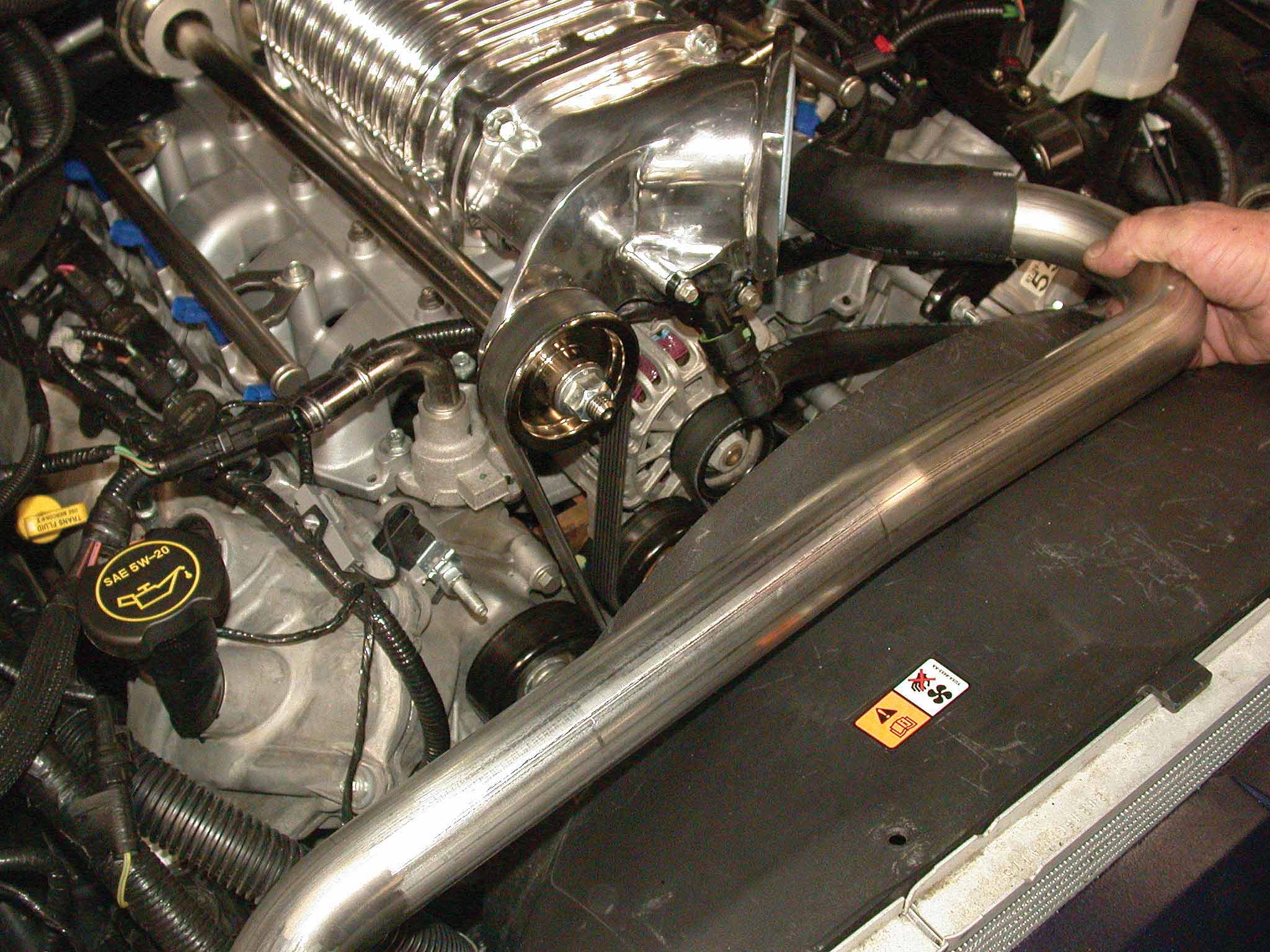
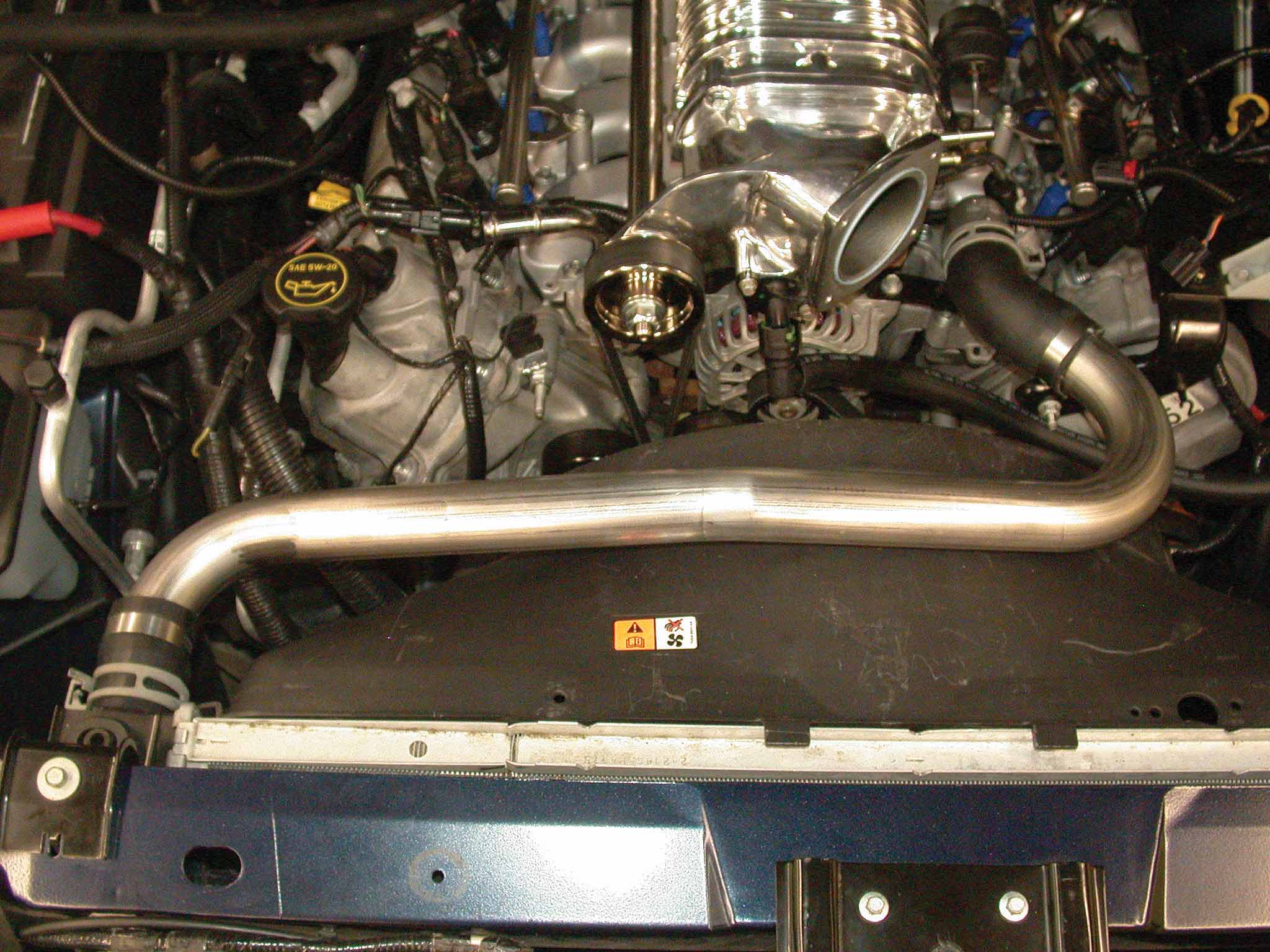
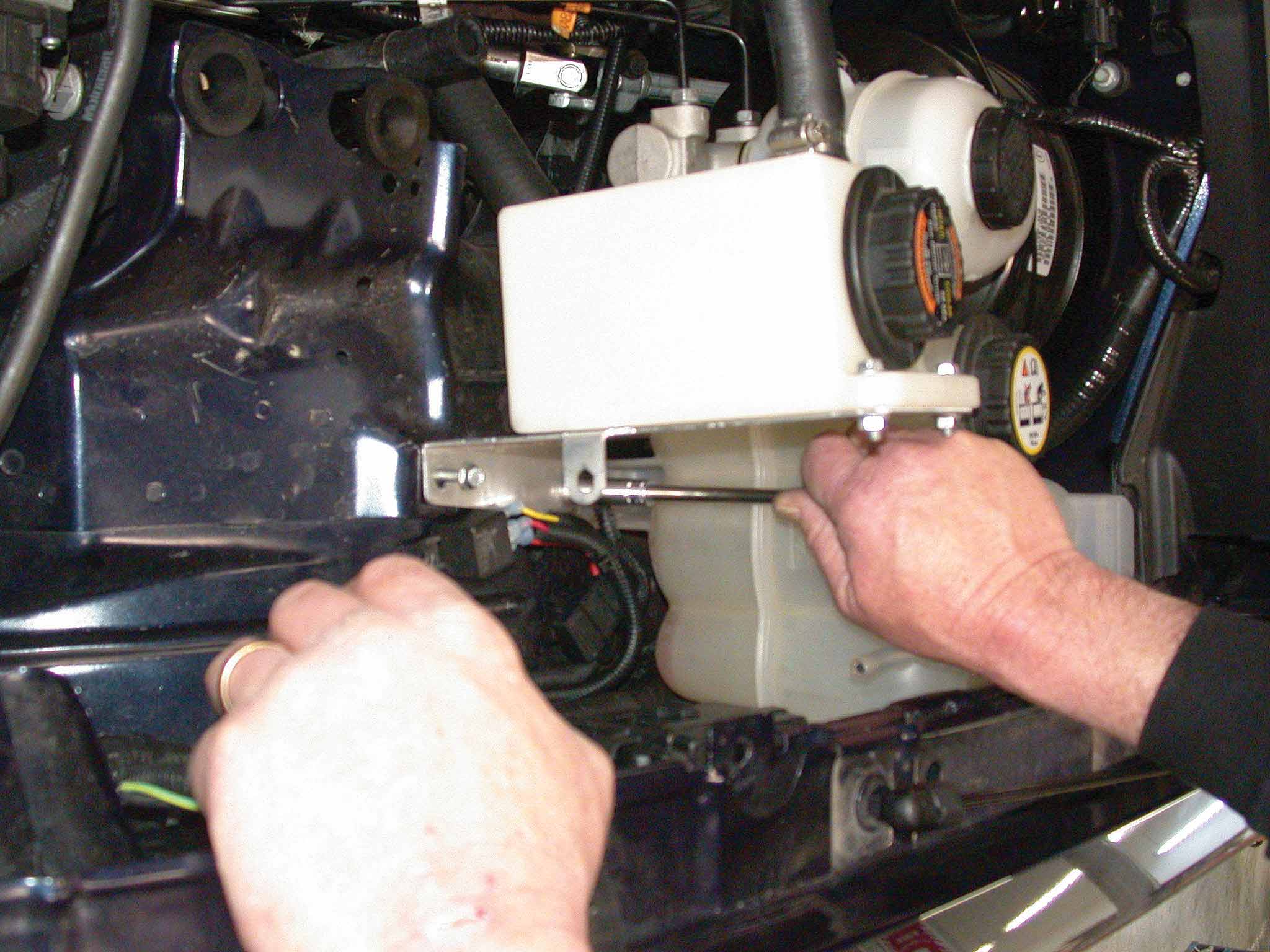
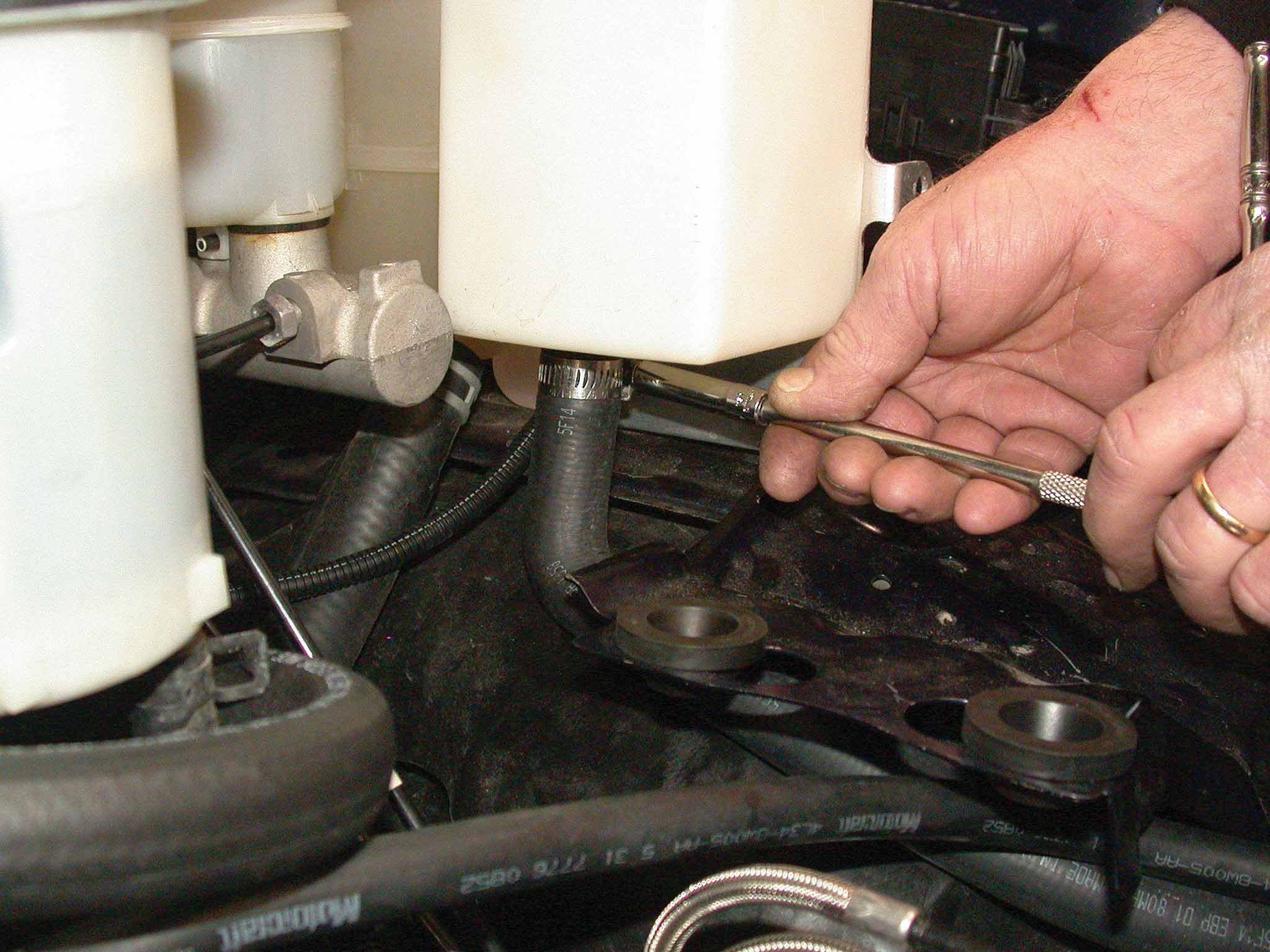
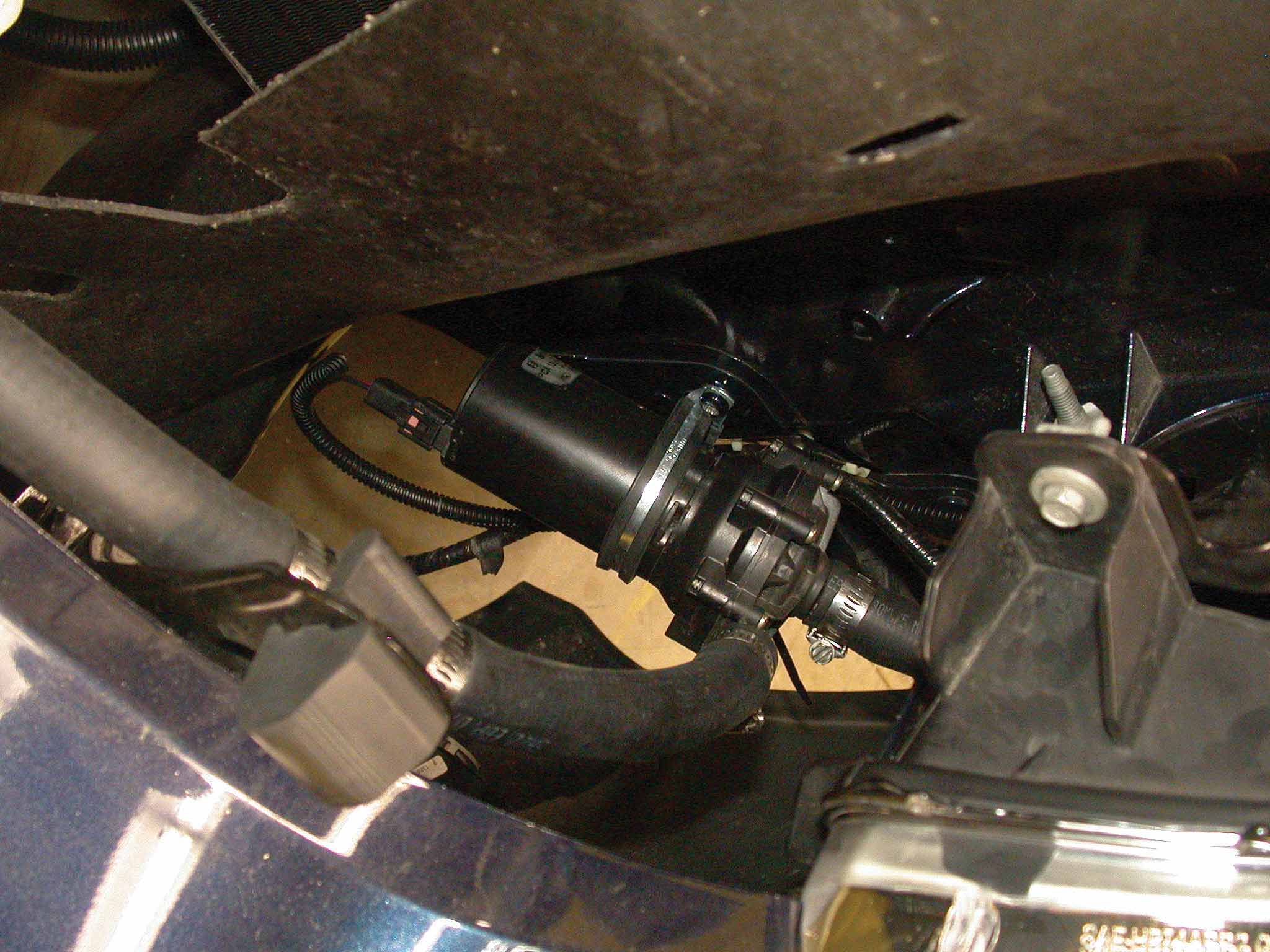
The intercooler system consists of the heat exhange unit, the pump and the tank. The tank is mounted on its own bracket and is connected to the rear of the supercharger housing via the upper hose mount.
The hose mount at the bottom of the tank goes to the pump, which has been mounted to the radiator support.
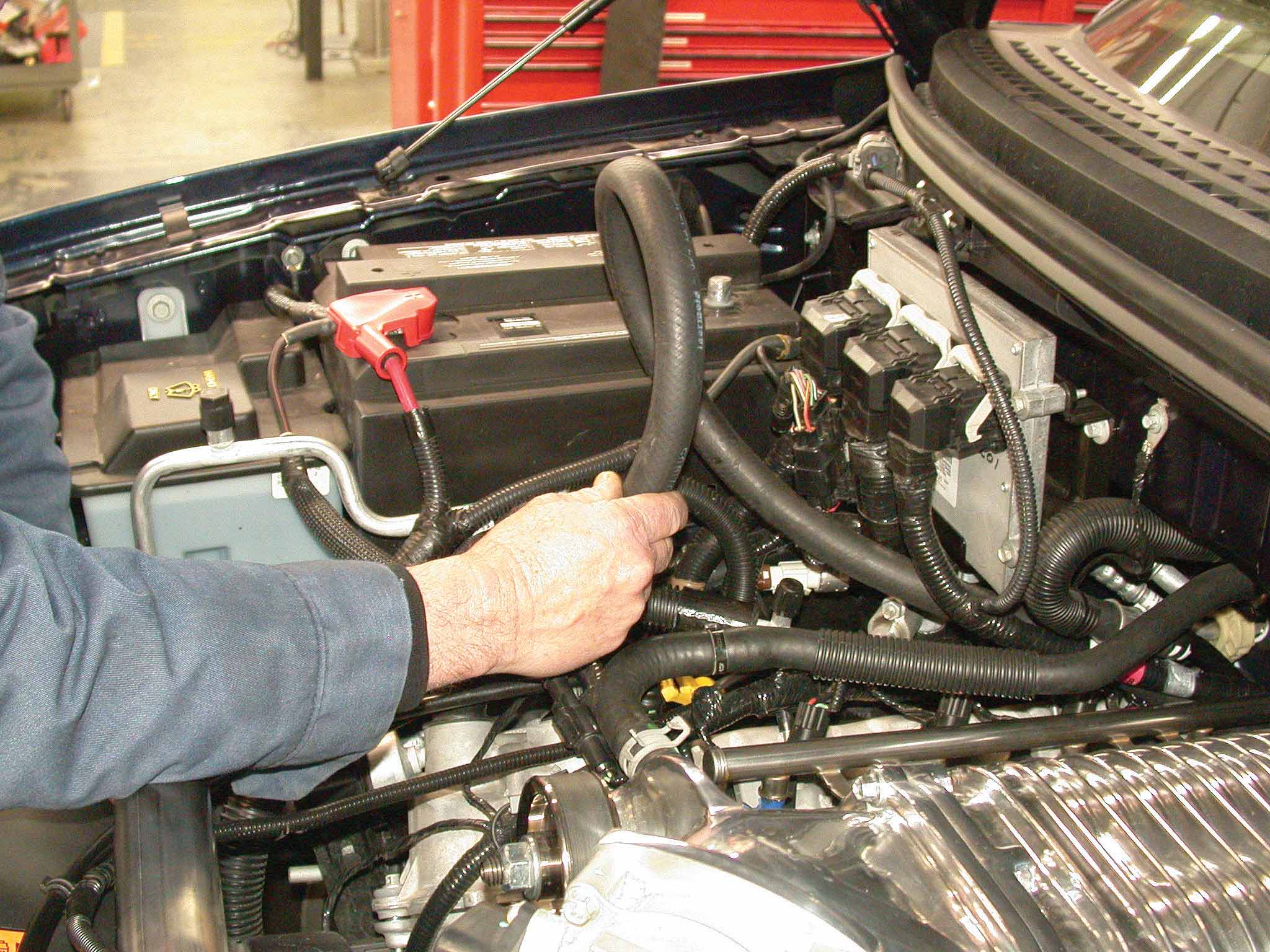
The other hose attaches to the passenger’s side of the manifold.
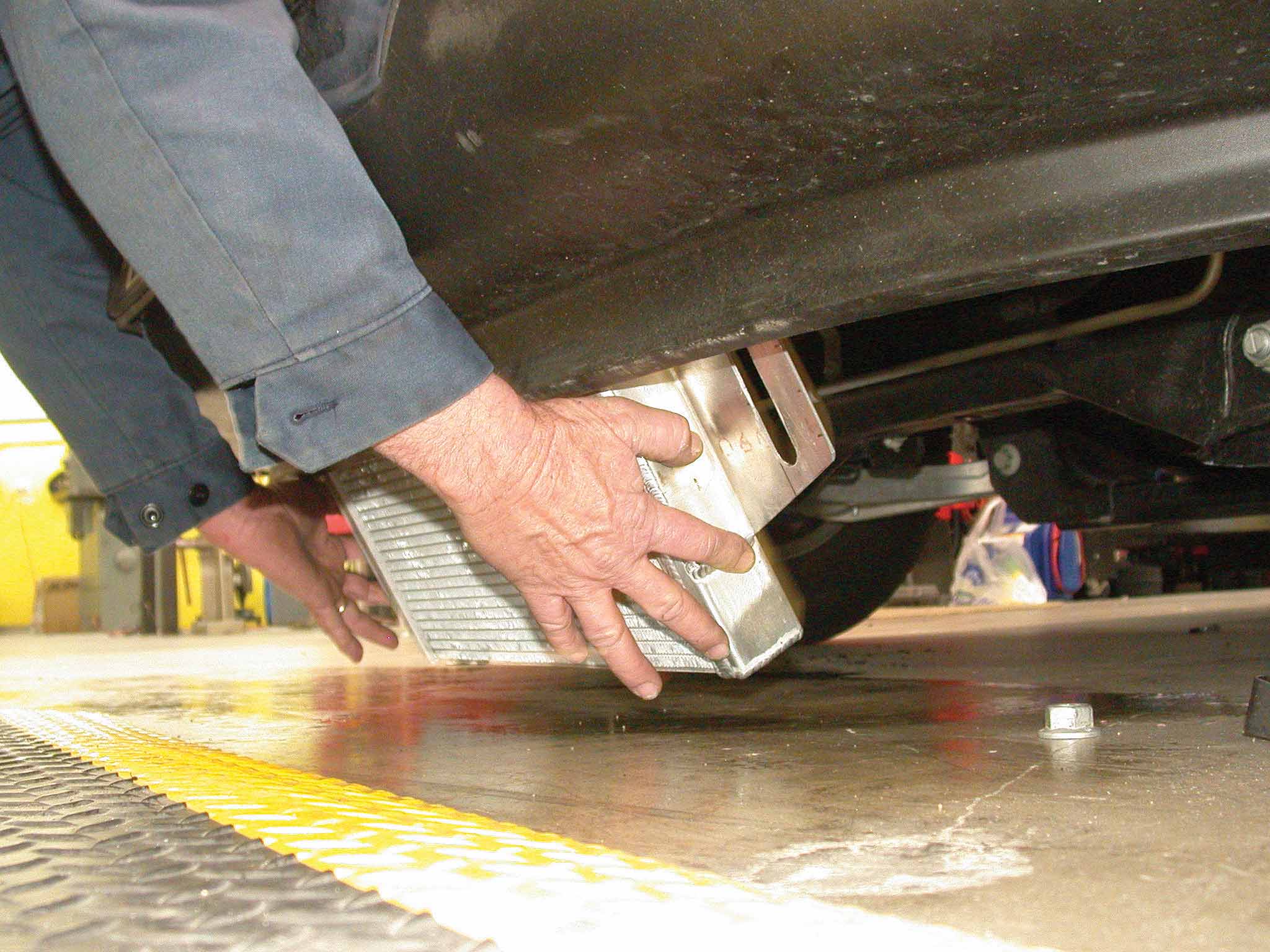
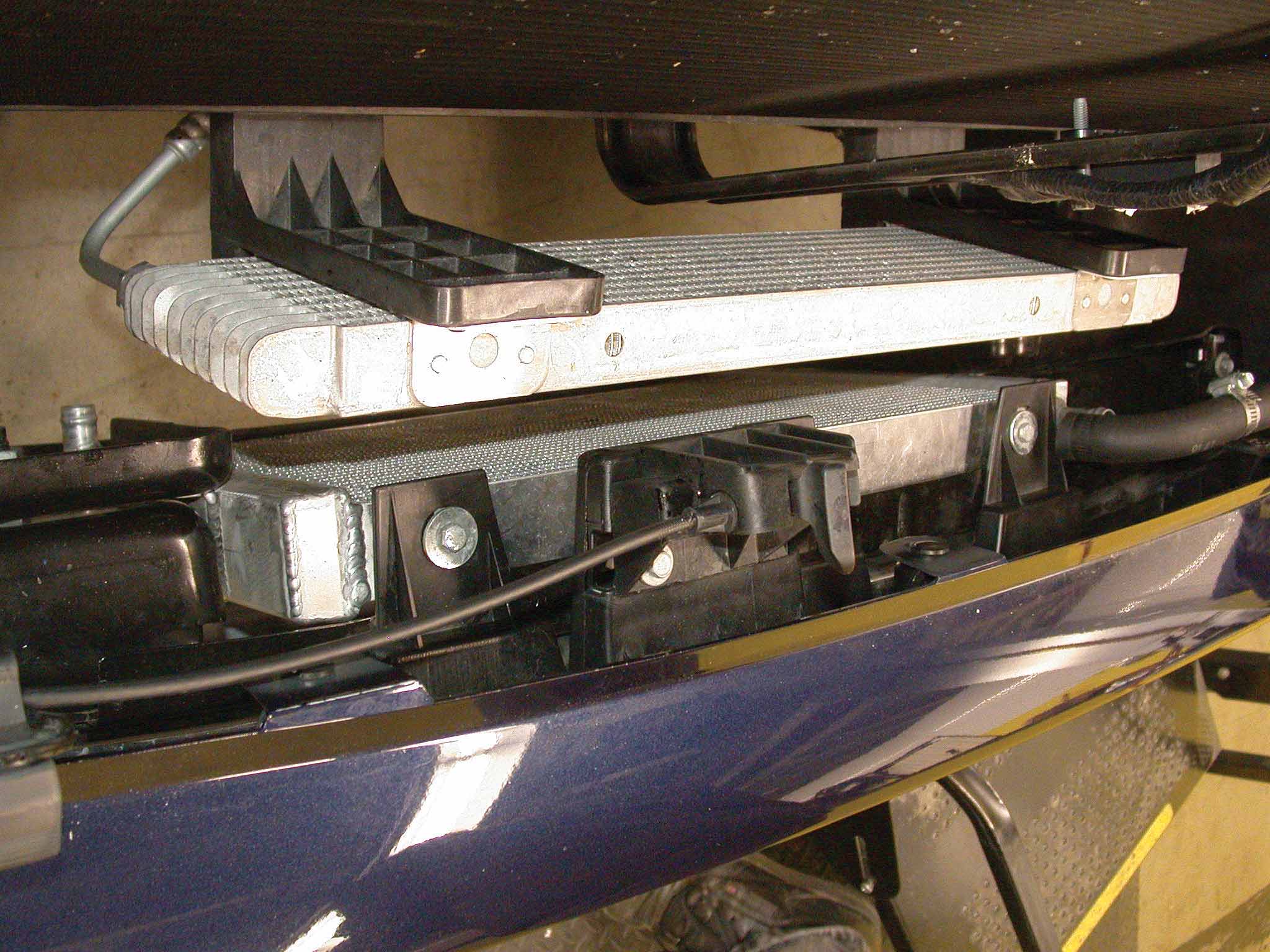
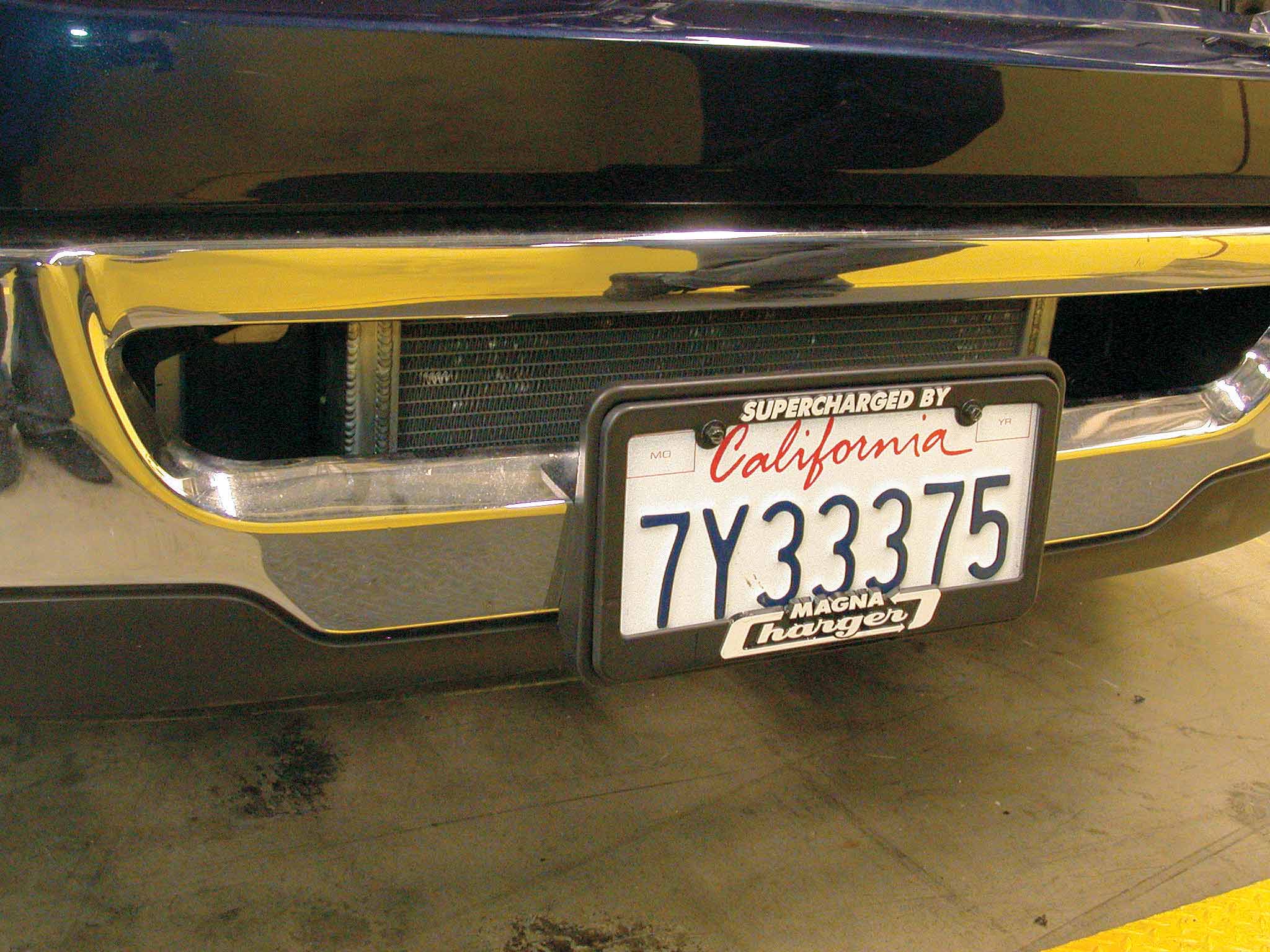
This leaves us with the heat exchanger. It has thin brackets that slip between the bumper and the frame and sits just behind the frontend. The hoses are connected and the system is filled.
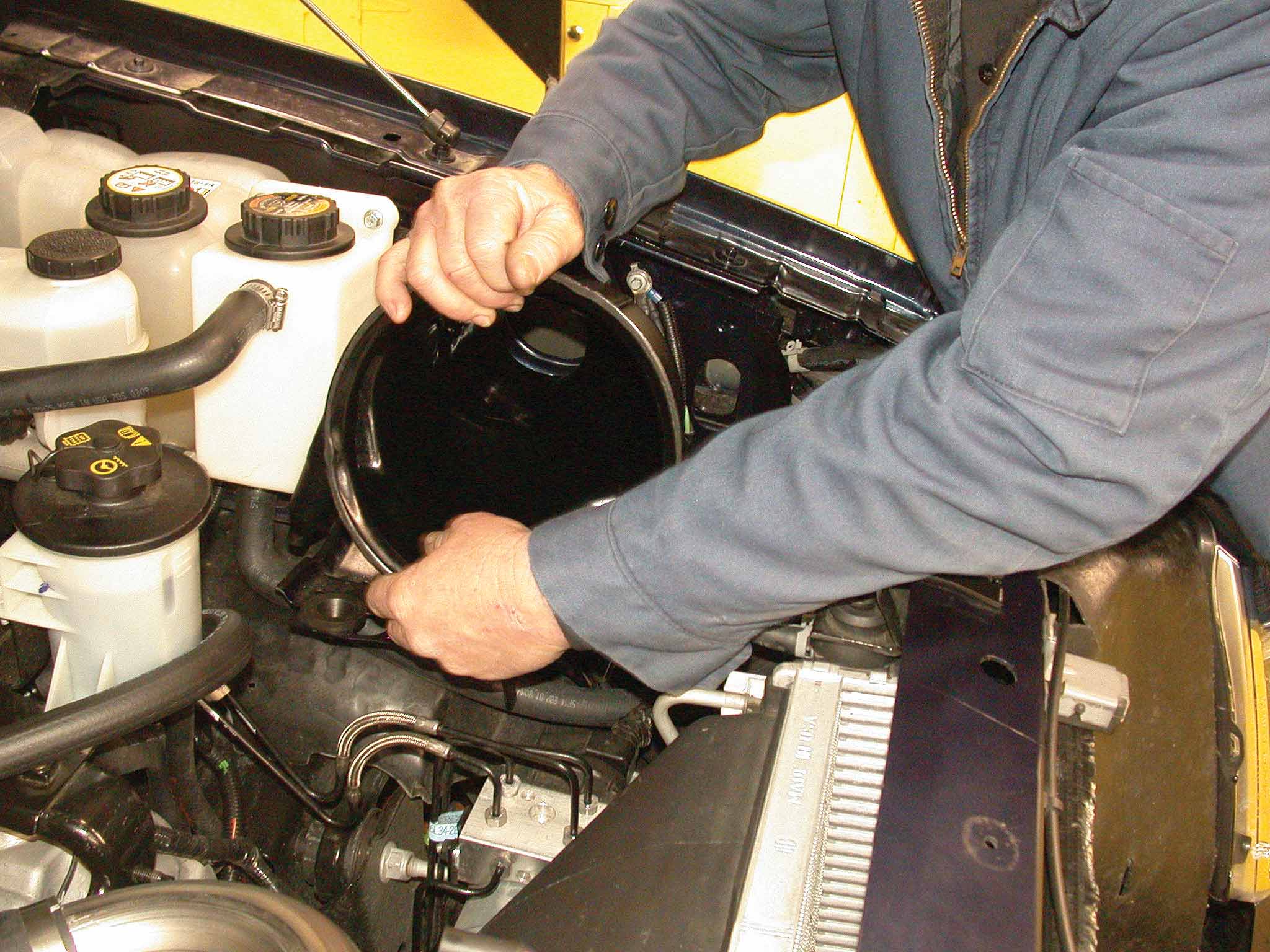
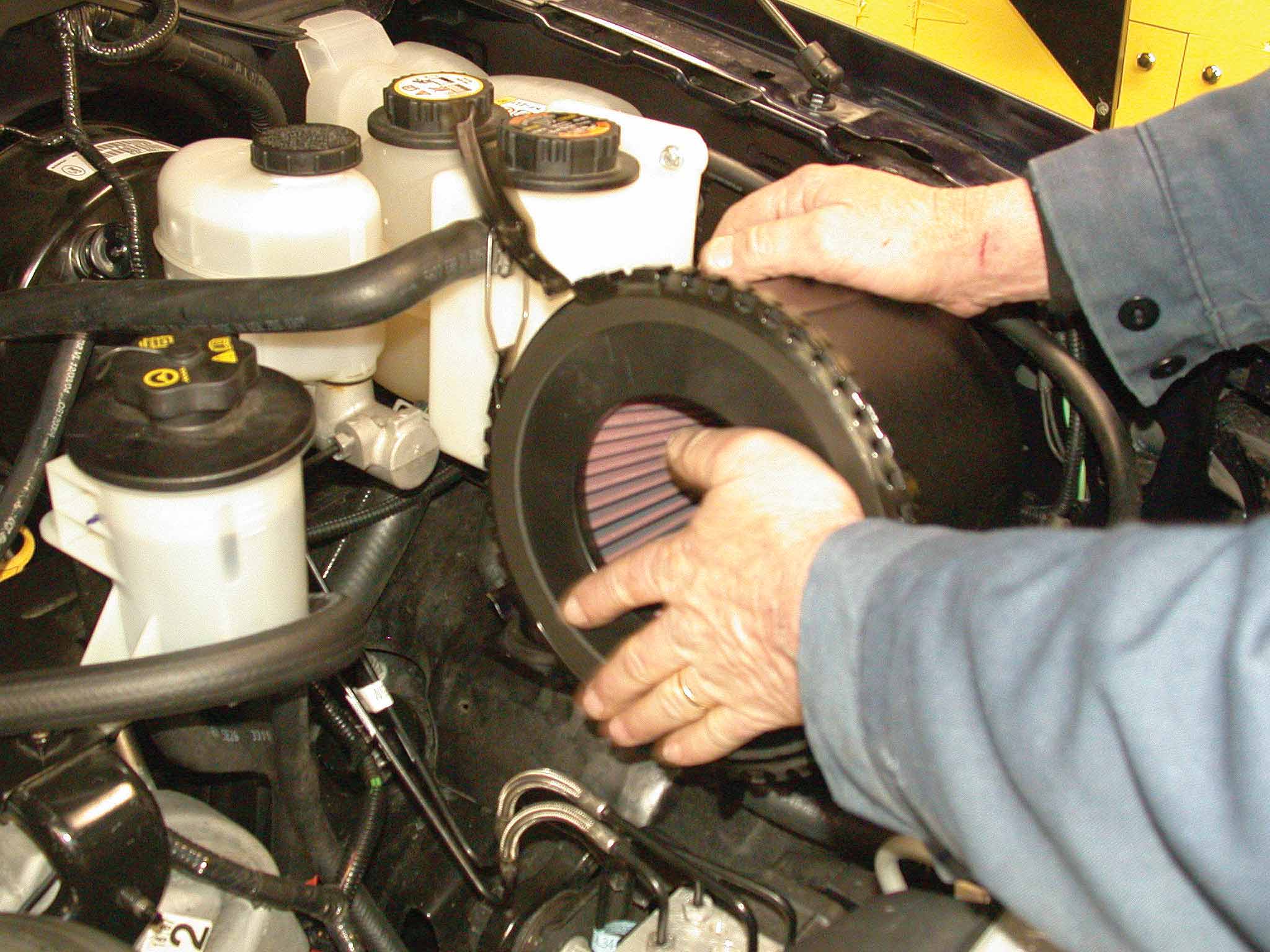
Magna Charger supplies a new air intake/filter system to work with its supercharger. The air box is fitted into the area where the stock unit fit, and the new air cleaning element is installed.
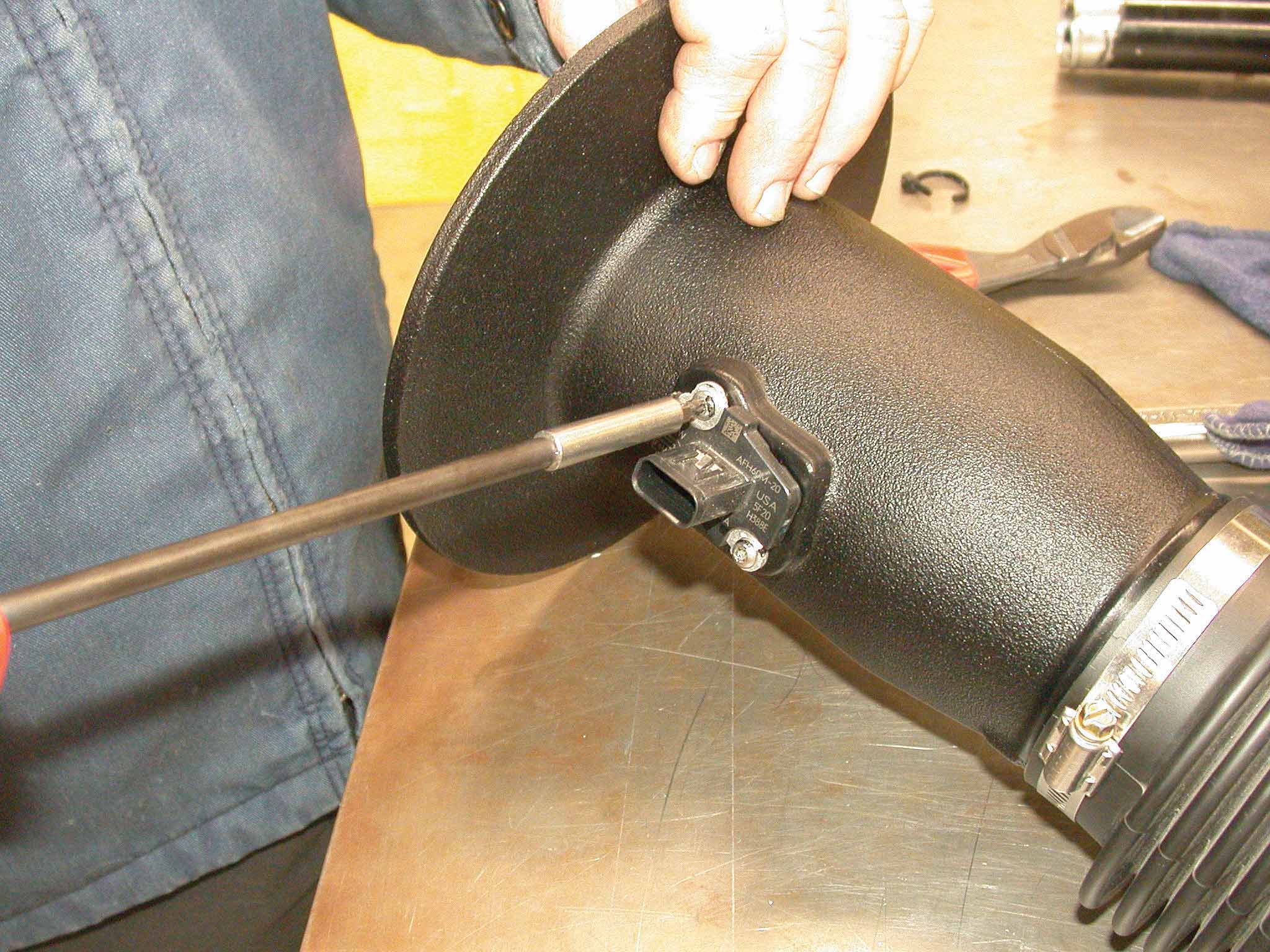
The MAF sensor is fitted into the MAF tube using the stock hardware, but note that the unit is directional, so care is taken to make sure that the sensor is facing the correct way (there is an arrow on the sensor to aid in this).
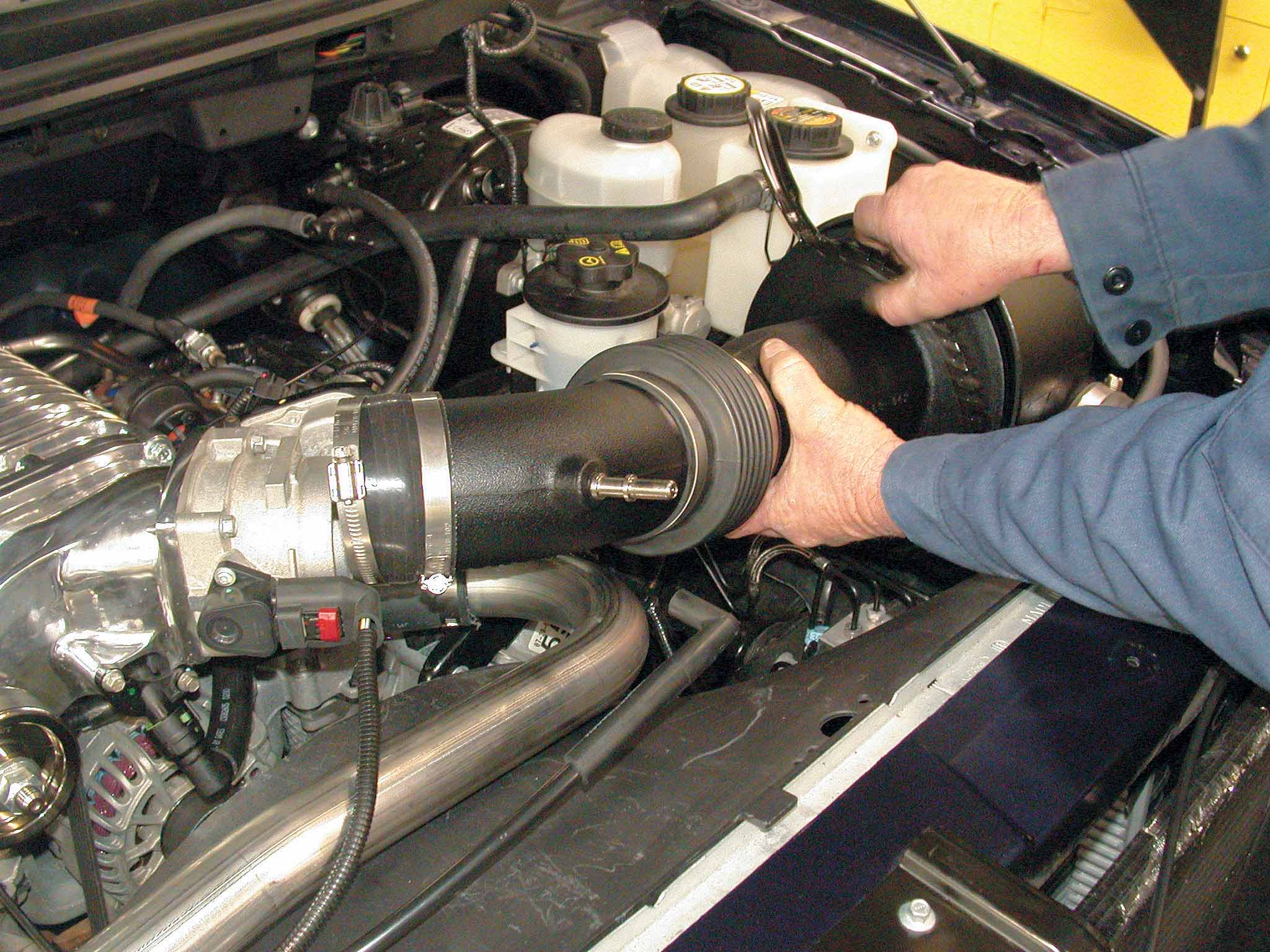
Using the supplied clamp, the MAF tube is fitted to the air box and the tube is connected to the throttle body via the supplied air tube, using the stock bellows.
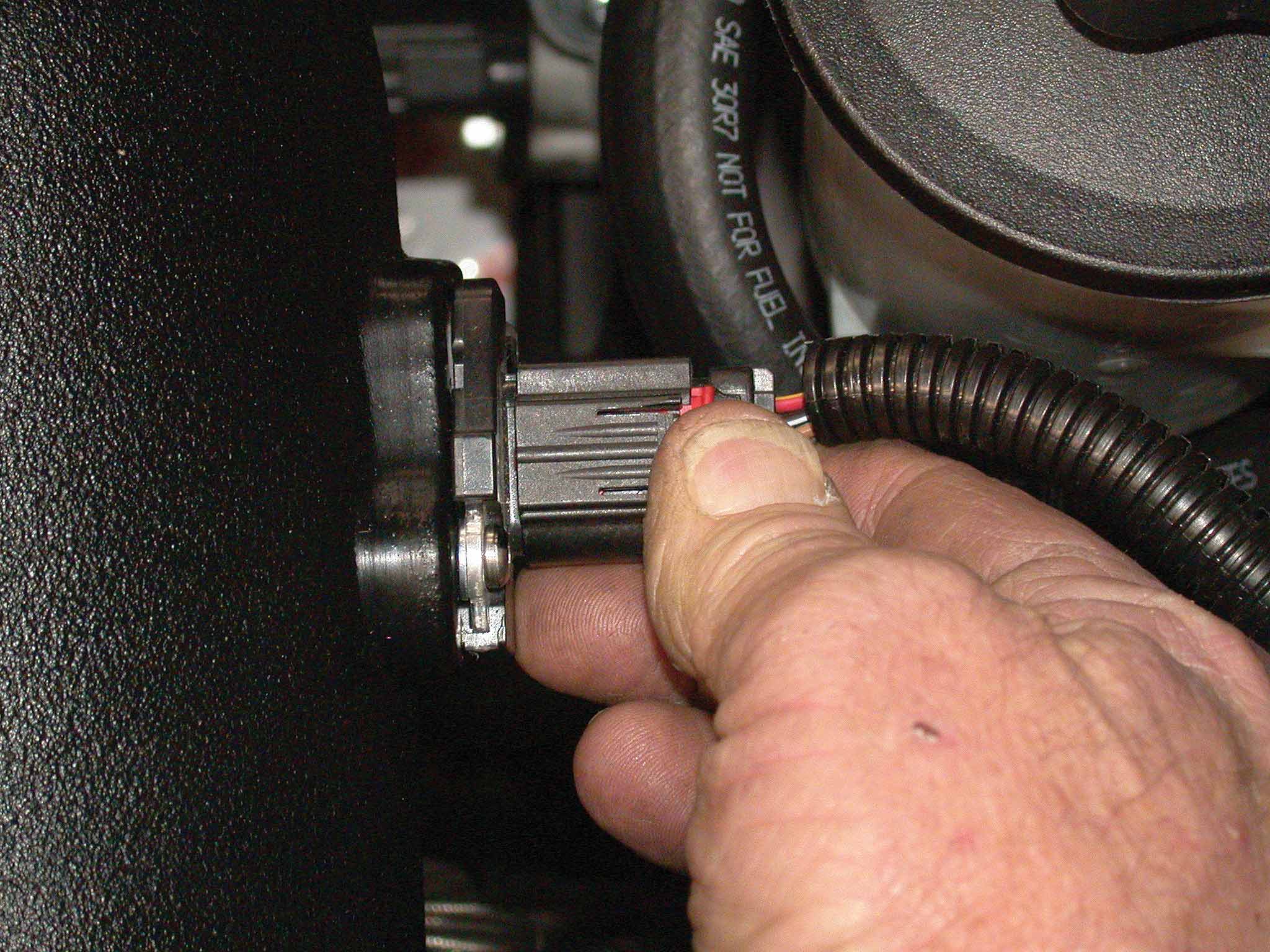
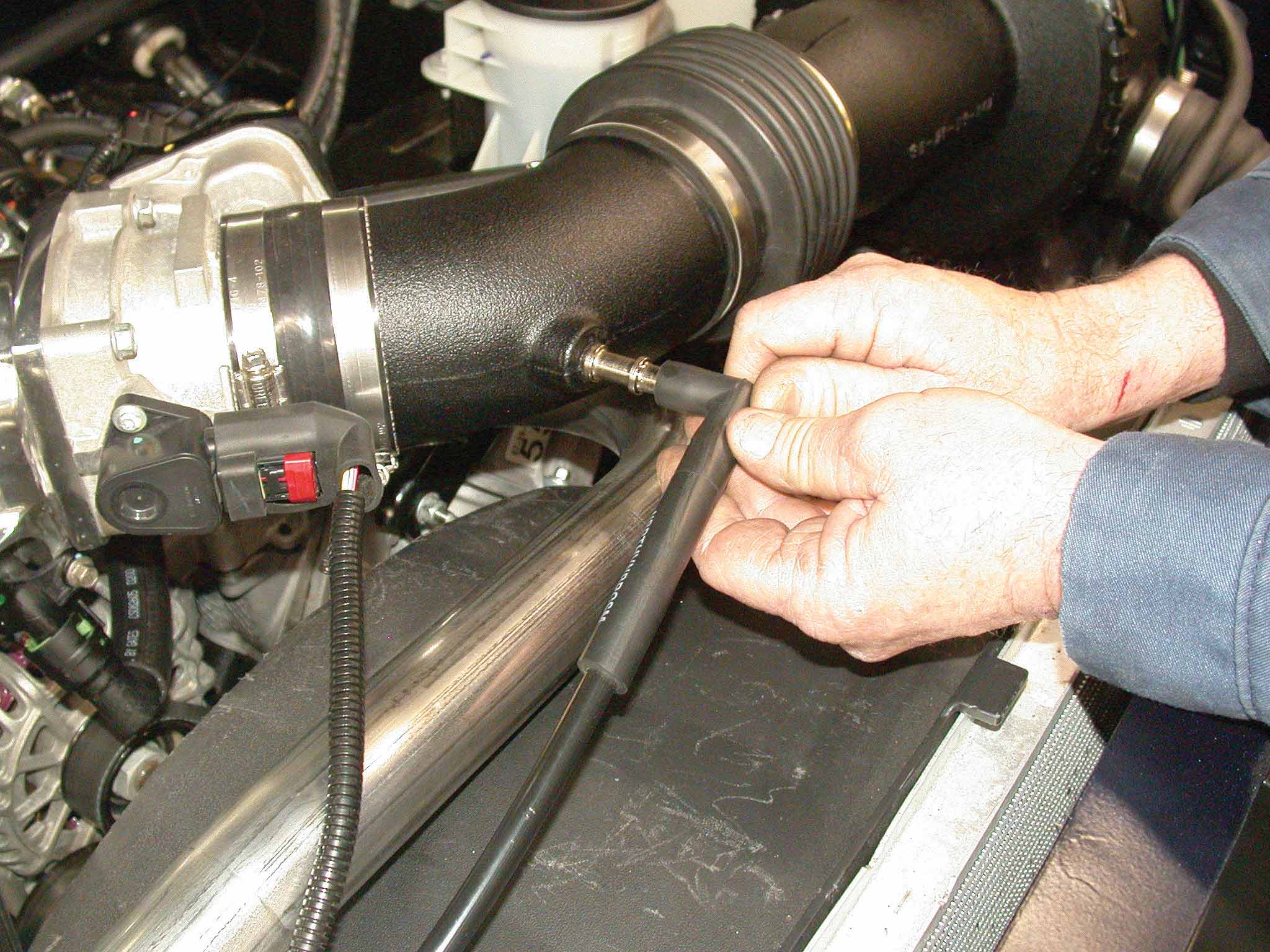
The MAF electrical lead is snapped in and the PC hose running from the valve cover is connected.
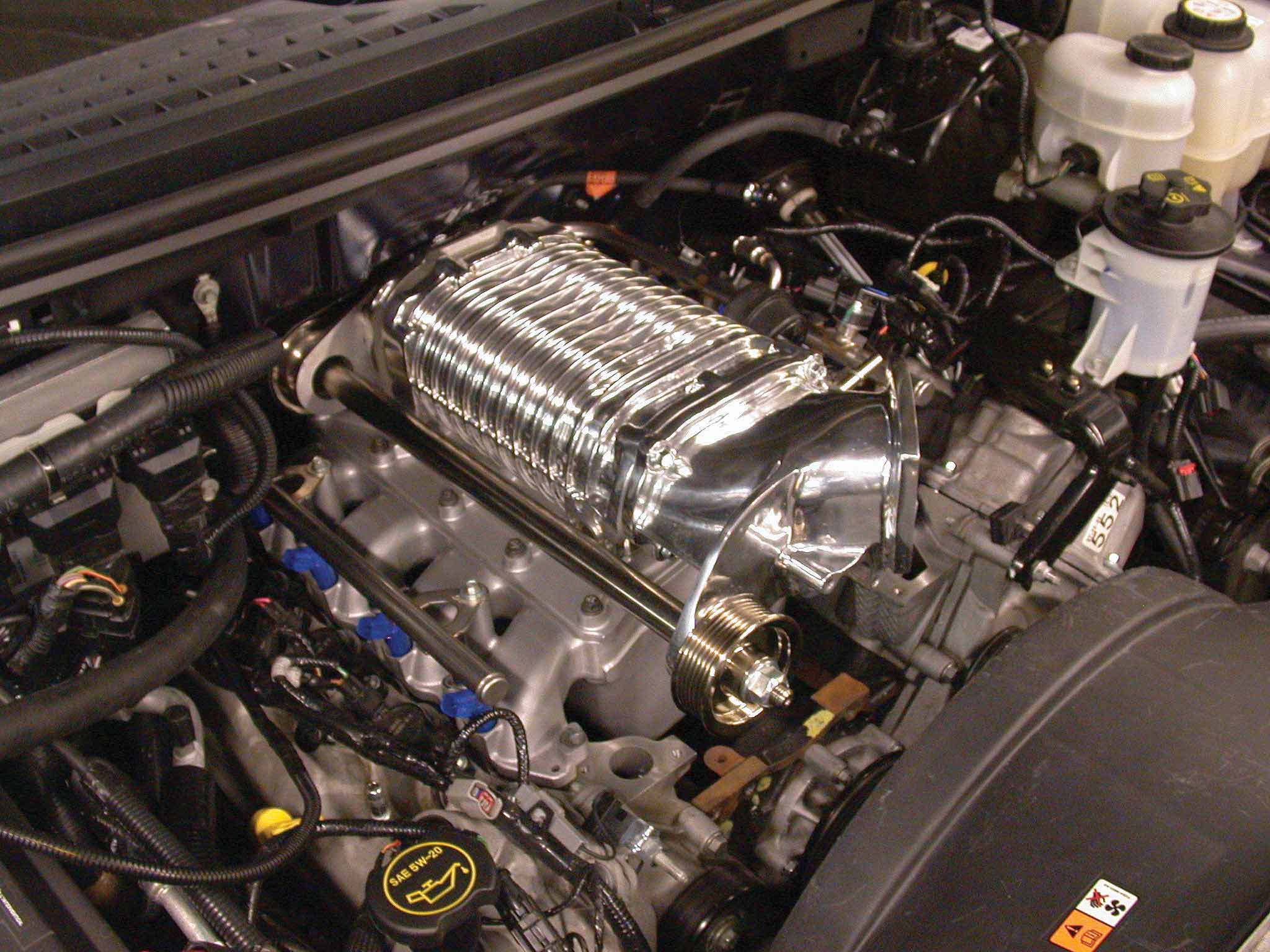
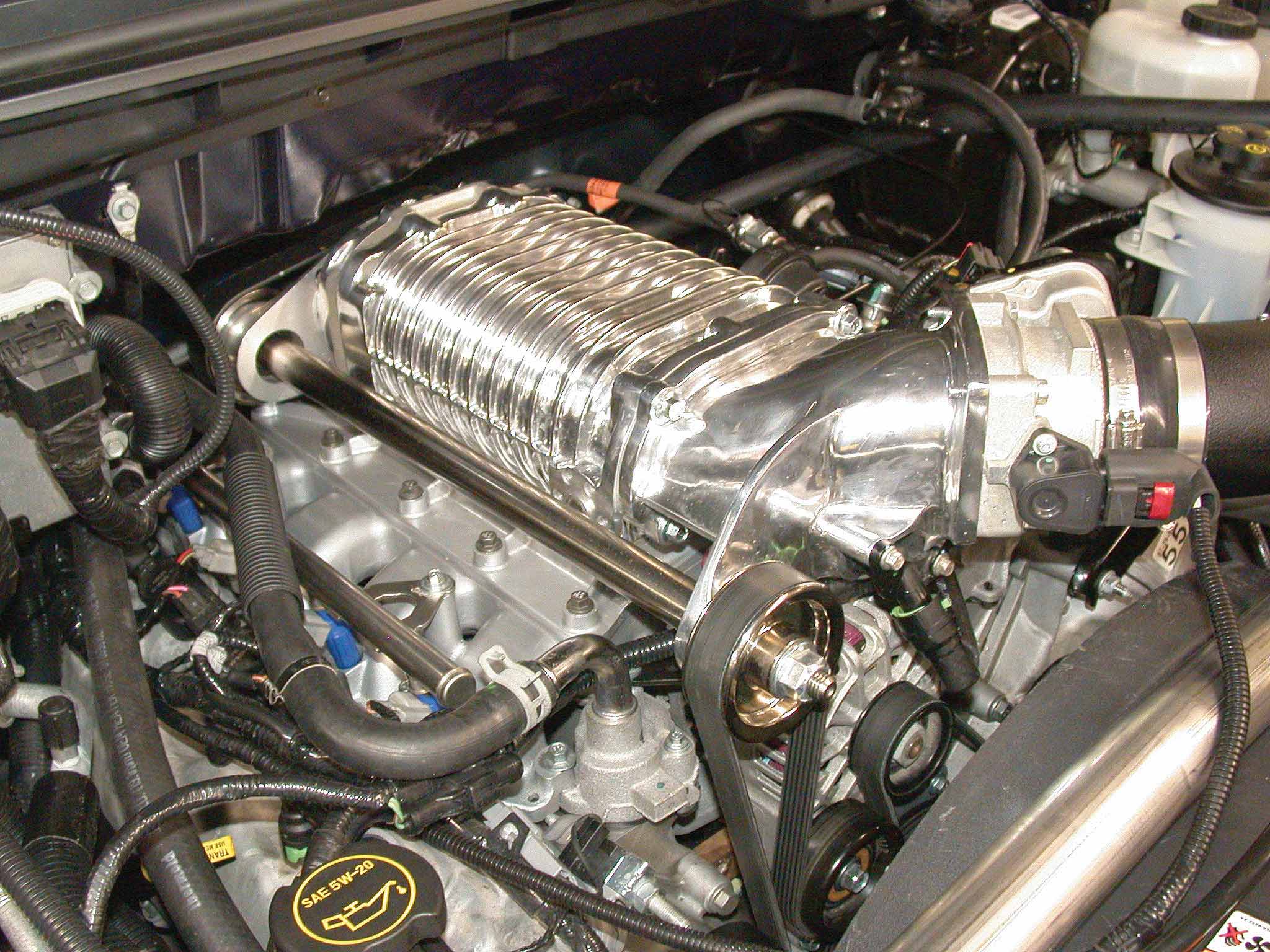
With that the job is done, and the Magna Charger system not only looks great, but will also add plenty of horsepower to the Ford. One thing to know is that the Ford can now be filled only with 92-octane (or better) fuel. Also know that this is a job for an experienced mechanic. For those at home who want to do this install, know that you had better be pretty good with a wrench.
ARTICLE SOURCES

Magnuson Products, LLC
1990 Knoll Dr.
Ventura, CA 93003
+1 (805) 642-8833