Returning to the Hobby
Twenty years passed and Leiphart was finally able to get back into the car hobby; in 1998 he purchased another ’68 Camaro. He drag-raced the car at the local tracks, but as much as he enjoyed drag racing, he also liked car events and shows. After thinking about his options, he began his search for another Camaro, one that could be turned into the ultimate lightweight drag car and that could also be street driven and be show-car quality. He eventually purchased a drag car that he turned into a pro-engineered Camaro that was street driveable. According to Leiphart, “Dreams do come true with hard work.”
Building the Foundation
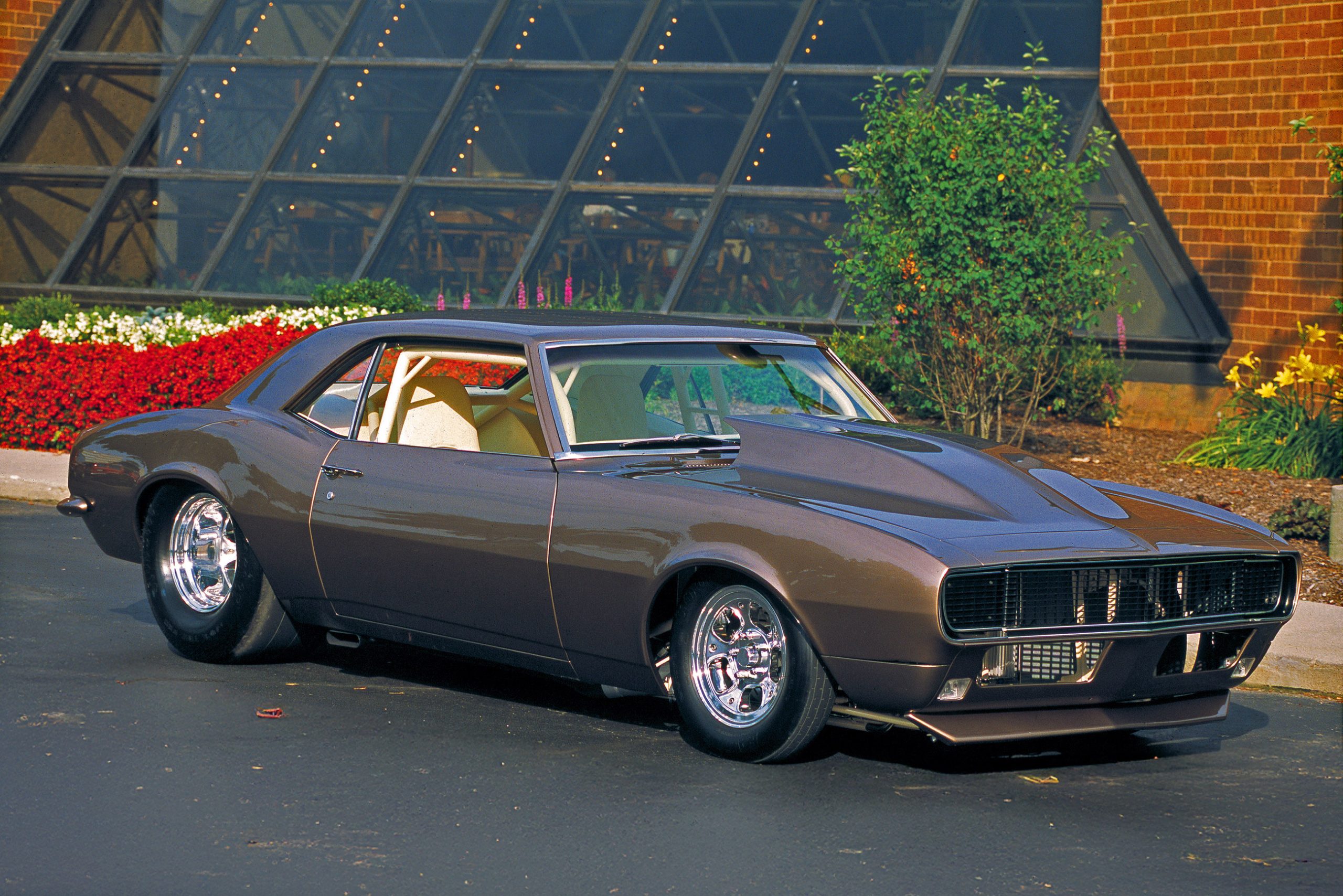
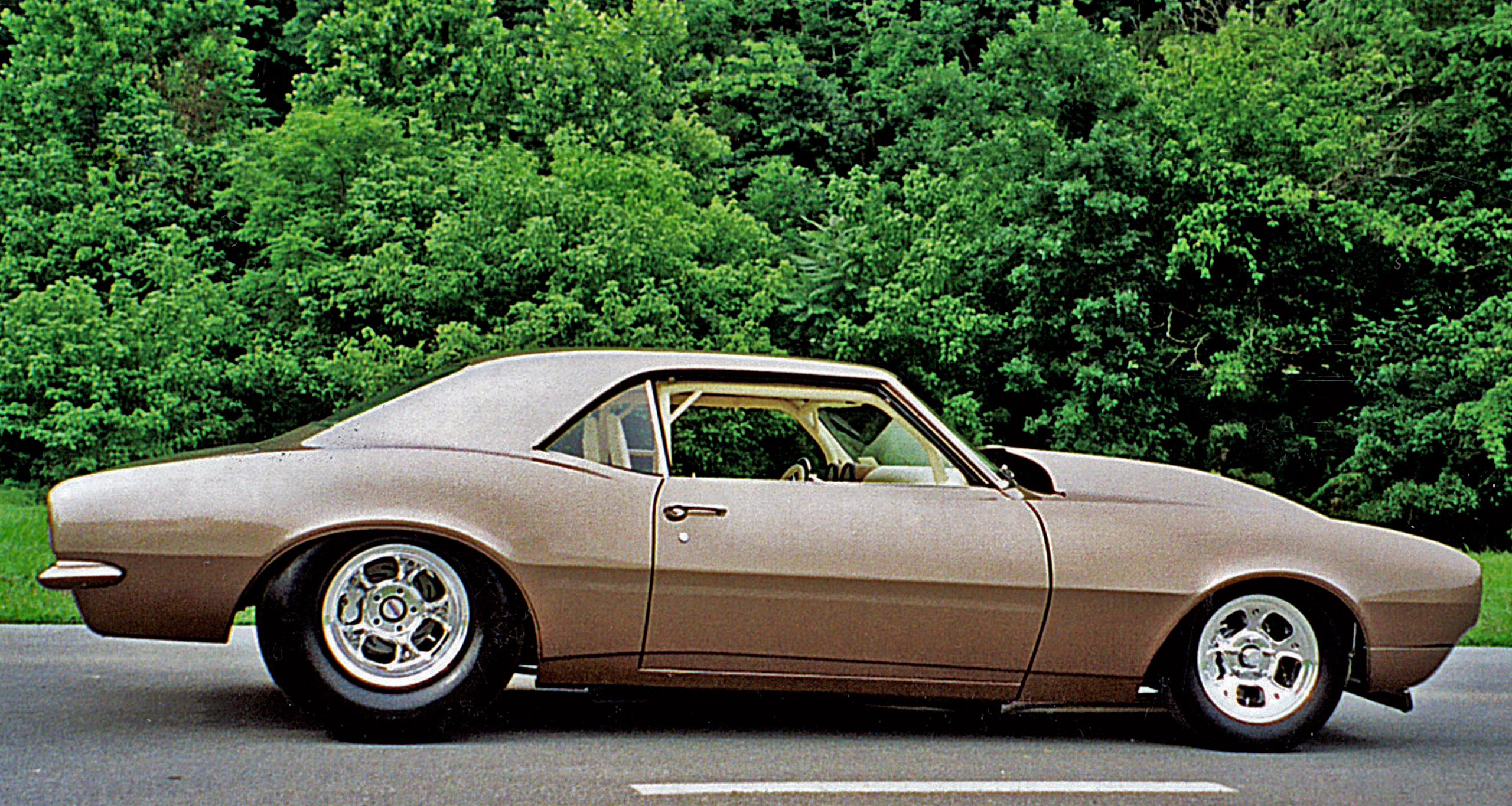
The Camaro was taken to Way Cool Rod Shop in Lancaster, Pennsylvania, where the round-tube frame was built. The Camaro features a Strange strut front suspension with rack-and-pinion steering that was installed by Lonny Gordon, owner of East Coast Muscle Cars in Wrightsville, Pennsylvania. The rear was outfitted with a Dana 60 differential that features a spool with 4.56:1 gears. It was narrowed to 42 inches and rides on coilover Strange shocks. The cage and suspension look race ready, but this car is street driven and certainly attracts plenty of attention when enthusiasts get a close look. The rolling stock consists of ET 15×4-inch wheels running Goodyear 24×15 front tires and ET 15×15-inch wheels running Hoosier 18.50x31x15 rear tires.
The Heart of the Beast
If you build a car that looks race ready, it’s a good idea to back up the style of the car with a strong-running engine. Since Leiphart has been involved in drag racing since he was a kid, he knew what it would take to create the ultimate small-block Chevy. He started with a Motown block with a 4.155-inch bore and an Eagle crank with a 4-inch stroke that provided a 434ci displacement. The block was fit with Ross pistons and Speed Pro rings riding on Lunati rods, which gave the engine 13.25:1 compression. Fuel delivery was important, so the engine features full-race Brodix heads topped by a Brodix intake manifold. A Comp Cams camshaft was chosen, and it features a 0.645-inch lift and 262 degrees duration at 0.050 inch. The bottom end gets oil from a Milodon oil pump and is contained in a custom-built Milodon pan. The engine is topped off with a healthy 825cfm Demon carburetor and the fuel is ignited with an MSD ignition system. Michael Thomas in Dallastown, Pennsylvania, built the engine, and on the dyno it registered 675 hp at 7,000 rpm. The engine sounds and runs awesome. The strong-running Chevy engine is hooked to a built-up Powerglide transmission with a Trans Specialty 5,500-stall-speed torque converter and is operated by a B&M Pro Stick shifter.
Show-Quality Exterior
When Leiphart purchased the Camaro, the body needed plenty of work to get it show-worthy. Lonny Gordon, owner of East Coast Muscle Cars, did the bodywork, and in the process he narrowed the Glass Tech fiberglass rear bumper 3 inches. The body is devoid of trim and the stock hood was replaced with a fiberglass cowl-induction-style hood. After the body was looking nice, it was painted with a PPG custom bronze mix with a cream-colored rollcage.
Interior Fit for a Show Car
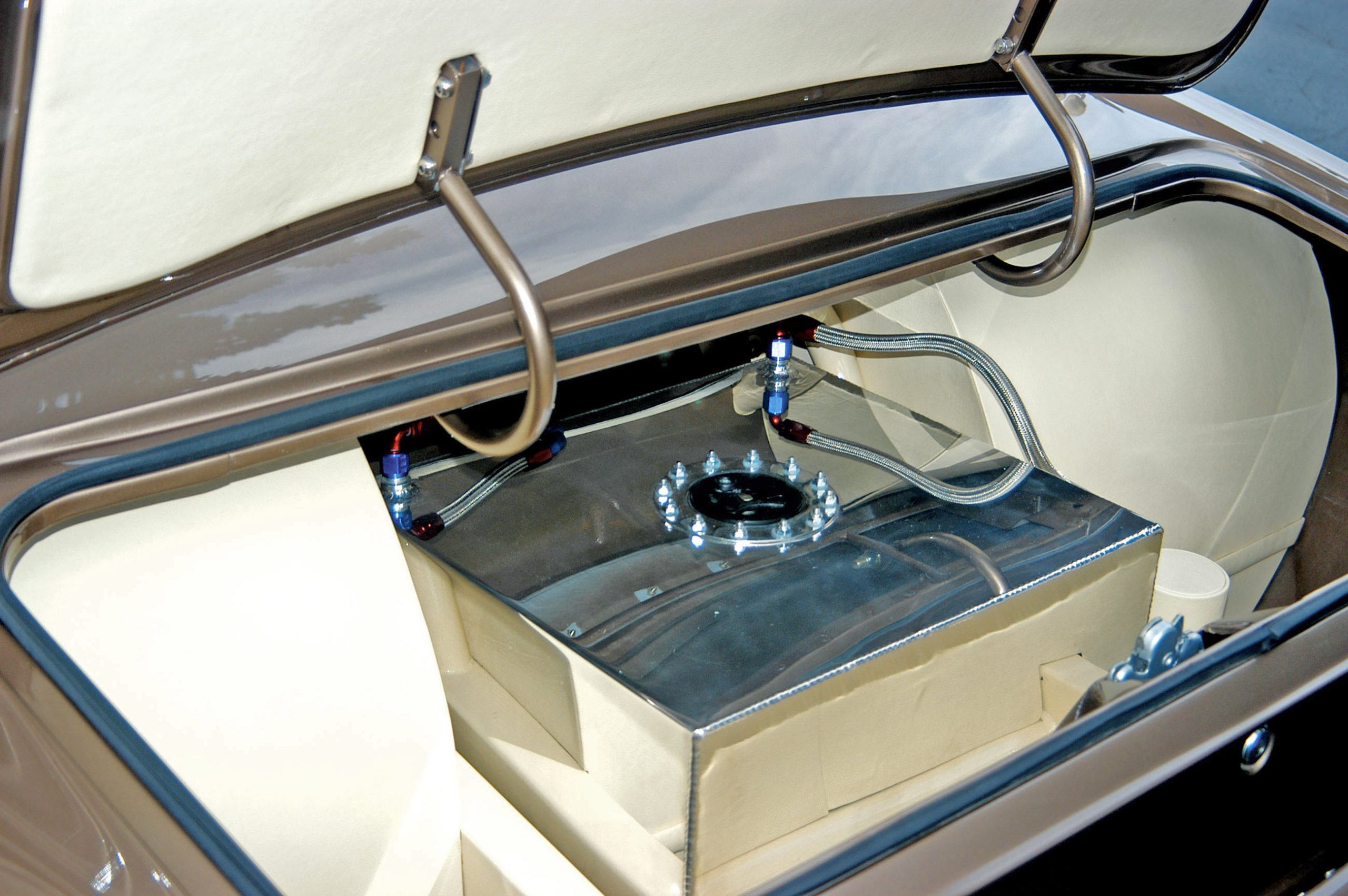
One of the things that differentiate this Camaro from an actual racecar is the quality of the interior. Al’s Upholstery in York, Pennsylvania, combined cream leather, bronze suede and painted aluminum to come up with a show-quality interior. The custom bucket seats feature high bolsters to keep the occupants planted. They are stitched in cream leather with bronze suede inserts, and the door panels were stitched to match. The rollcage and aluminum work were painted to match the interior, and a removable fiberglass dash was installed and outfitted with Auto Meter Phantom gauges. The steering column connects to the rollcage and was topped off with a billet steering wheel. The fuel cell is located in the trunk and is surrounded with cream-painted wheel tubs and an upholstered trunk lid.
Built to Fulfill a Dream
Leiphart wanted the ultimate street/strip Camaro and ended up with one of the nicest around. The car looks great and is fully street driveable, although not too far, because racing gas can get expensive, and this car was not built to obtain the best in fuel mileage. But it does everything else better than planned, and after all, that’s the point of all this.