
TheAutoBuilder.com

Hot Rod/Muscle Car

40 Years Later

Carl Casper’s name has been synonymous with the custom car movement for a long time. As a teenager, Casper created his famous ’51 Chevrolet custom, the Exotic Empress. The car went on to win the 1961 NHRA National Custom Car Championship. (You know it was a long time ago if NHRA was promoting car shows!) Carl Casper is a talented guy who can perform virtually every task required to build a world-class custom car, from metal fabrication to paint and upholstery, and while many of his creations took the form of wild custom cars, they were all driveable.

SUPER BEELIEVER

While it may be somewhat of a surprise that muscle cars have become some of the most highly prized cars on the market today, the prices people are paying for them really have enthusiasts reeling. With some cars easily surpassing the ­million-dollar mark at the Barrett-Jackson auctions and others swelling in value in the wake of it all—well beyond the prices paid for the most treasured of European exotics—muscle cars have been transformed into commodities. That’s a good thing and a bad thing.

HOW TO PAINT SCALLOPS

We all know itʼs what lies beneath the paint that really matters—a good chassis, great metalwork, and great design. Yet, having said that, the paint job still remains the single most important element of any rod or custom. After all, even if the groundwork has been laid, your bodywork is straight and great, your design is fine and your mechanicals are flawless, a poor paint job can spoil it all.

FAST FISH

Xtreme Velocity Motorsports is a muscle car builder whose name is not a put-on. While there are a huge number of shops around the country with a ton of talent for fabrication, much of this fabrication is performed for cars that will hardly see a world beyond the show schedules and their trailers. So XV takes its name seriously, and it builds its cars to drive hard—on the street or on the track. In fact, the company’s reason for being is to make old Mopars drive like new sports cars, but to pull off a trick like that, you need a lot more than dead reckoning.

Back From The Dead

Leon Sneed and Chris de Melo are the men behind Big House Customs, a Mustang restoration and customization shop in Dayton, Tennessee. We met them after moving our company to Dayton, the town we now call home. Like anyone else who runs their own shop, they are constantly on the lookout for project cars to fill in the gaps when customers don’t bring in cars, and that’s exactly what De Melo was doing when he saw a newspaper ad selling miscellaneous Mustang parts.

Street Rod Showdown

The 55th Annual NSRA Street Rod Nationals brought a roaring good time to the Kentucky Exposition Center in Louisville from August 1st to 4th, 2024. The event, a turbocharged celebration of classic cars, drew a massive crowd of enthusiasts. The Auto Builder was on the scene, capturing every thrilling moment. In this exclusive pictorial review, we’re showcasing some of our favorite builds from the show.

FLAMIN’ HELL

It seems to more than the occasional observer that there are about five Fords that make up the heart of the super rodding and custom car culture: the ’27 T pickup; the ’32 roadster; the ’33-’34 Ford coupe; the ’40 coupe; and the ’49-’51 “Shoebox” Ford, in all of its deviations.

A TRIBUTE ROADSTER

It all started with my buddy Dave Collins, a flooring contractor who happened to own a ’55 DeSoto sedan, complete with terminal rust. I told him I would be interested in buying the engine,” says Jim Moore, owner of this roadster. “He replied that if I would buy the entire car, he would sell me new carpet for cost plus five percent; this enabled me to haul the DeSoto hulk home and part it out without any complaints from my wife as she gained new carpet in the deal.” And so it goes in the world of hot rodding!

CORVETTE GRAND SPORT FANS:

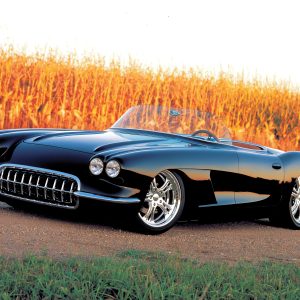
Although few might admit it, Corvette owners owe a deep debt of gratitude to the original Ford Thunderbird. The fledgling Vette, introduced in 1953, was General Motors’ idea of an open-air, wind-in-your-face sports car that was apparently an attempt to recreate Europe’s success with the MG. Unfortunately, the General didn’t get it quite right. The cars were equipped with the underwhelming Blue Flame Six, side curtains for the windows and an experimental body made of that new material called fiberglass, which had more than its share of production difficulties. Only 300 versions of the Polo White cars were completed that first year, and even though 10,000 were scheduled for 1954, only 3,600 actually rolled off the assembly line.

Scroll to Top

Subscribe to our weekly newsletter!

* indicates required
Interests

For information about our privacy practices, please visit our website.

We use Mailchimp as our marketing platform. By clicking below to subscribe, you acknowledge that your information will be transferred to Mailchimp for processing. Learn more about Mailchimp's privacy practices.