THE AUTO BUILDER
Featured

From Four to More: A Modern Manual for Your Vintage Mustang
Decades ago, Ford made the jump from four-speed manual transmissions to five-speeds. Newer Cobras even feature six-speeds, so it’s natural that those who own earlier Mustangs with four-speed manuals now feel a little gear envy. Many people love the feel of having a manual transmission, but if you’re still using a four-speed, you’re missing out on a lot of performance and economy potential. Adding a transmission with additional gears places your gears closer together for better acceleration and gives you more gears to choose from for easier cruising. But which transmission is right for your Mustang? You need one that’s strong, smooth and capable of bolting to your engine, and it’s not easy to find all three attributes in the same gearbox.

The Other American Musclecar
American Motors was an extremely conservative automobile company, happy with building basic transportation cars and small, economical compacts. When Pontiac stunned the world with the sales success of the ’64 GTO, many of the other car manufacturers also wanted to cash in on the new emerging muscle car movement. If strong-running cars could bring additional cash into the coffers, they were all for it. All except conservative American Motors, which denounced the idea of building fast cars because they wouldn’t be safe in the hands of young buyers. AMC continued on, content with building Ramblers. That idea lasted for about two years, but after seeing the sales success of the other auto manufacturers, AMC finally decided to cash in on the youth movement.

WATT UP: Hemi Powered ’55 Chevy
As we’ve come to learn, there’s something special about a ’55 Chevy, particularly when it is fitted with one of the popular Chevy engines that have become so common today. But that’s not the case when the hood is opened on this ’55. It is not the celebrated 265, or one of the more respected LS engines, or even a Chevy big block that captures your attention here. This is something different, and not a Bow Tie at all.
Spotlighter
POPULAR READS
-
Product Spotlight: Bill Mitchell Products Aluminum LS Engine Block
-
PRODUCT SPOTLIGHT: 60-66 Chevy C10 Fresh Air Vent Block Off Plate
-
Product Spotlight: Pyramid Optimized Design Sequential Aurora Taillight for 1964½–1966 Mustang
-
PRODUCT SPOTLIGHT: Cam Covers for GEN/3 Coyote from Pyramid Optimized Design
Author
Will Smith and Stephen K. Anderson
Photography By Stephen K. Anderson
Magna Charger’s Expansion into Ford Superchargers
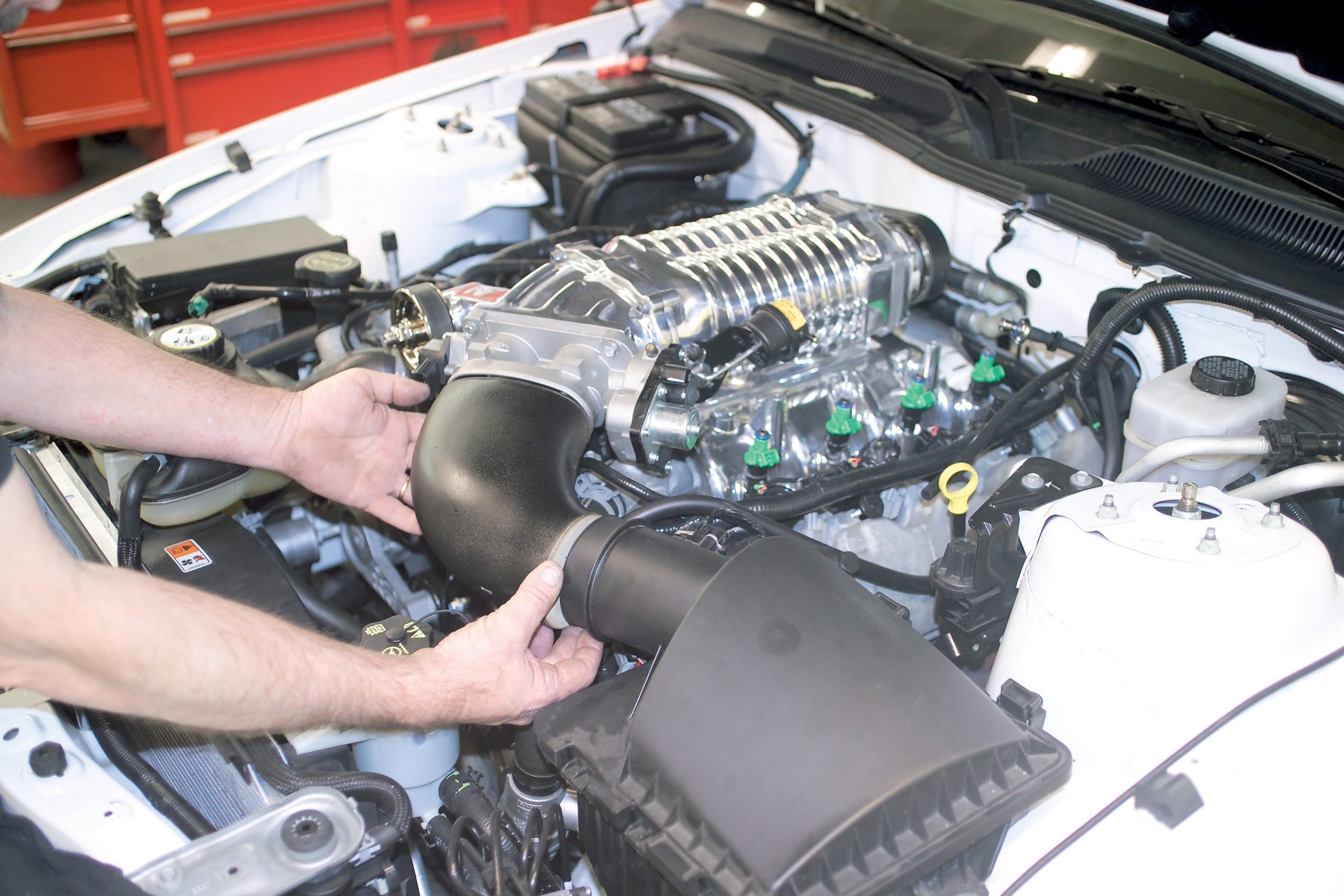
For the last several years, Magna Charger has been building and designing Roots-style superchargers for GM products, primarily late-model Vortec-powered vehicles. We’ve been familiar with its kits thanks to our sister publications like Super Rod and Chevy Rumble, as well as the fact that Magna Charger’s facility was only a few miles away from our own. Last year the company entered the Ford market with a kit for Ford Flathead V-8s, and now it’s expanded its product line to cover the new Mustang and its 3V 4.6-liter V-8.
Roots-Style Superchargers and Eaton Blowers
Magna Charger is a big proponent of Roots-style superchargers, and it’s actually the sole distributor of Eaton blowers in this country. If you have an Eaton-powered kit from another manufacturer, or a Lightning or a Thunderbird Super Coupe, your blower has actually gone through Magna Charger at one point in time. The company is a strong believer in this particular type of supercharger because of its combination of low-rpm power delivery and low cost, and this is the same reason Ford and other automakers choose Eaton superchargers.
Key Features of the Magna Charger Kit for the S197 Mustang
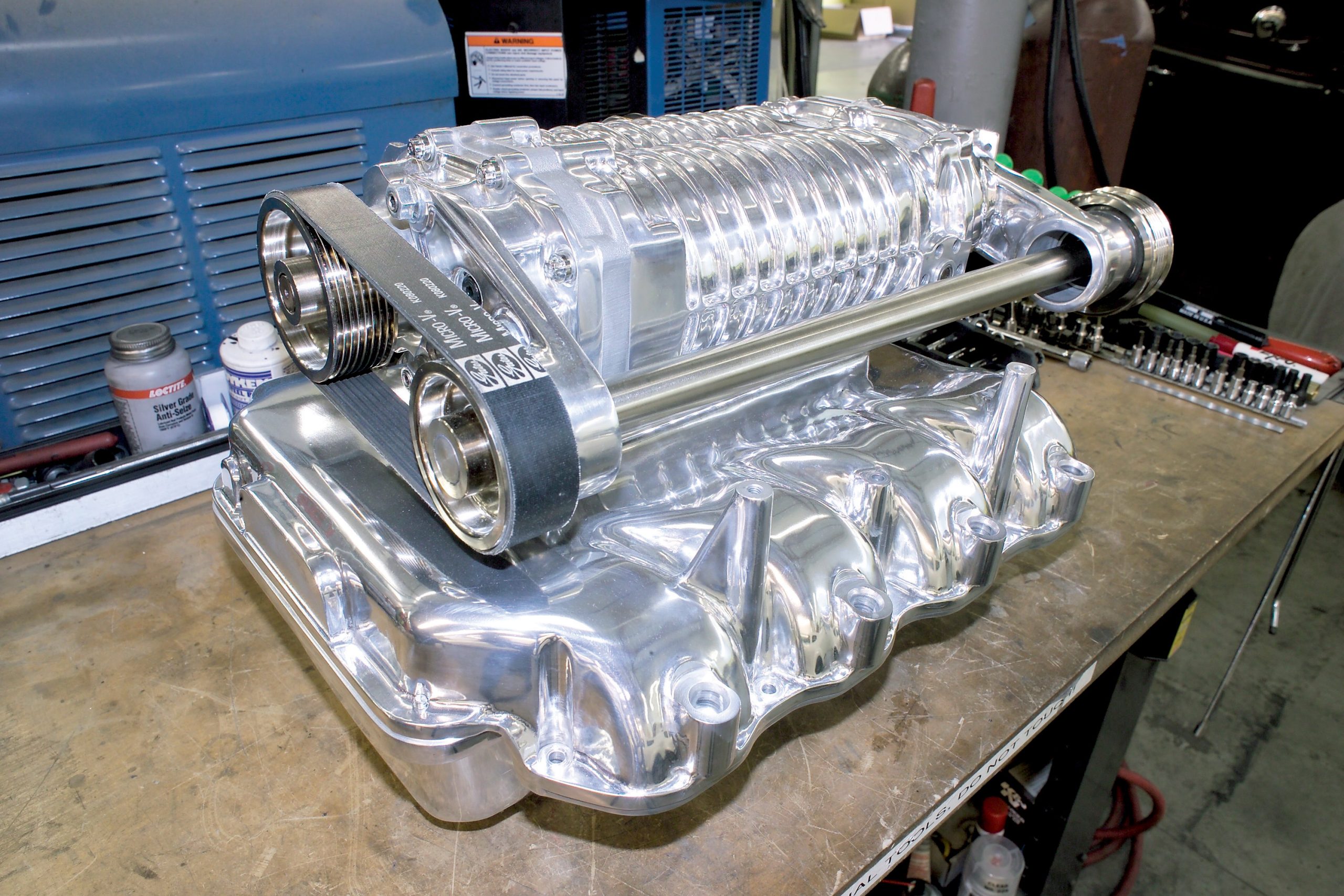
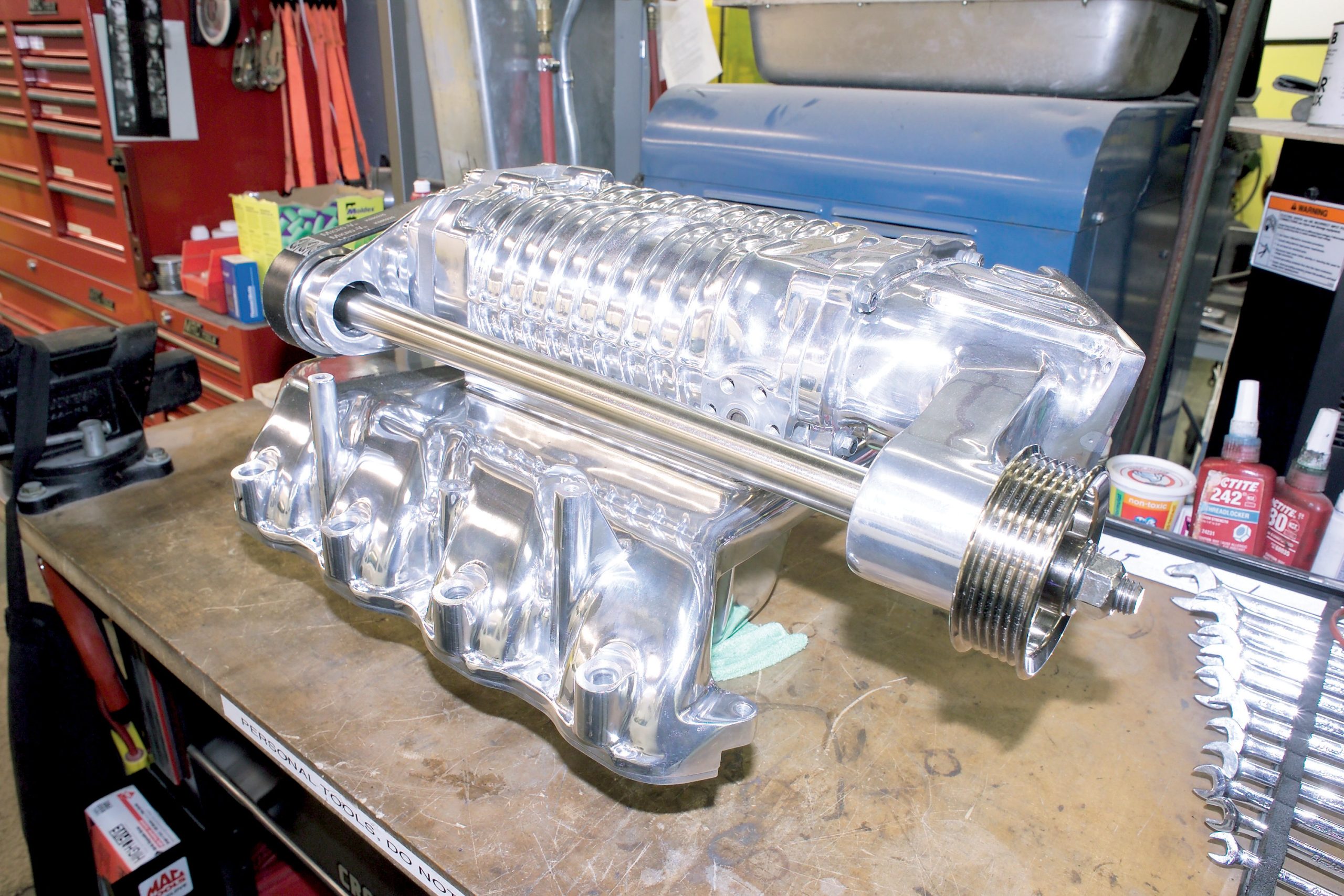
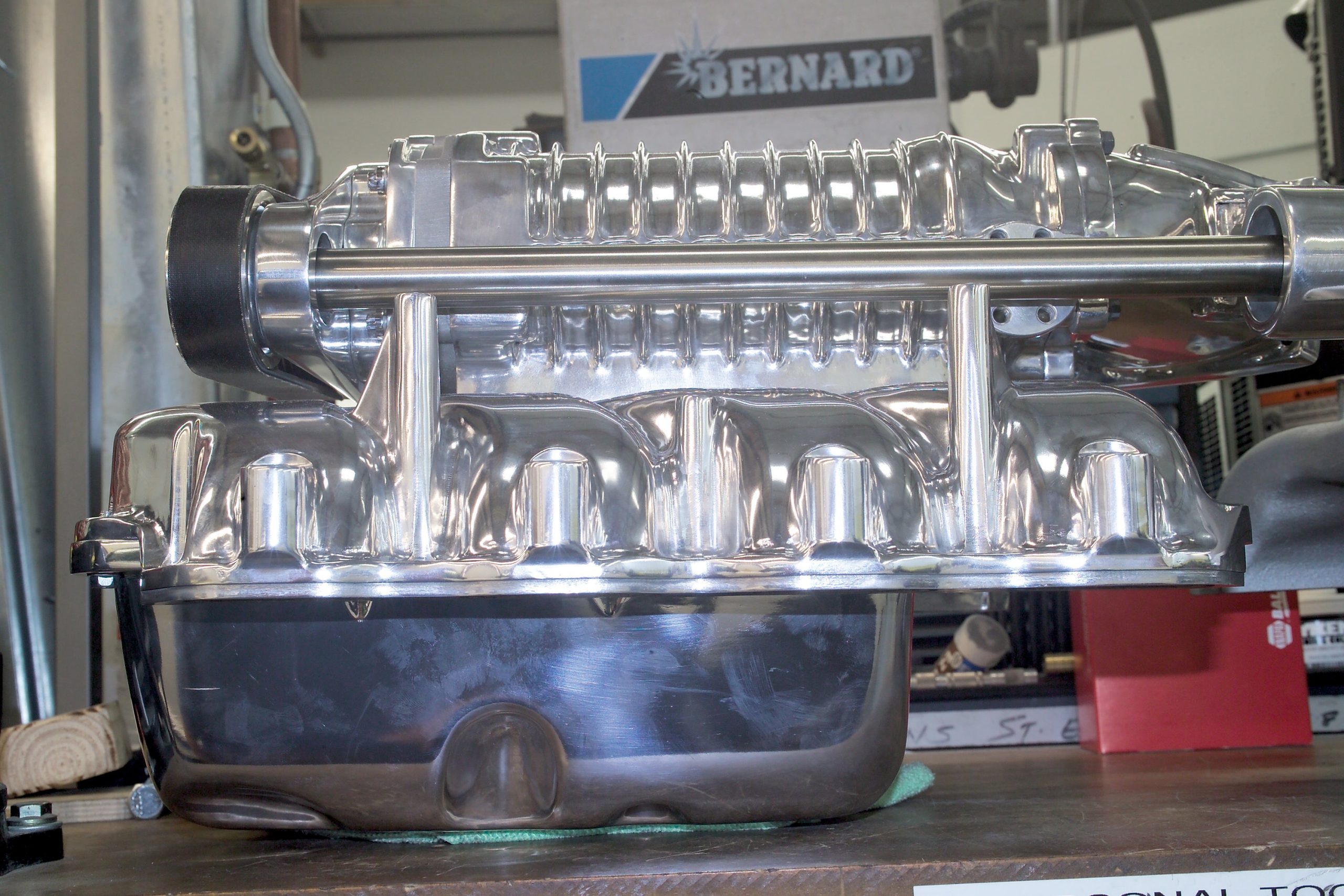
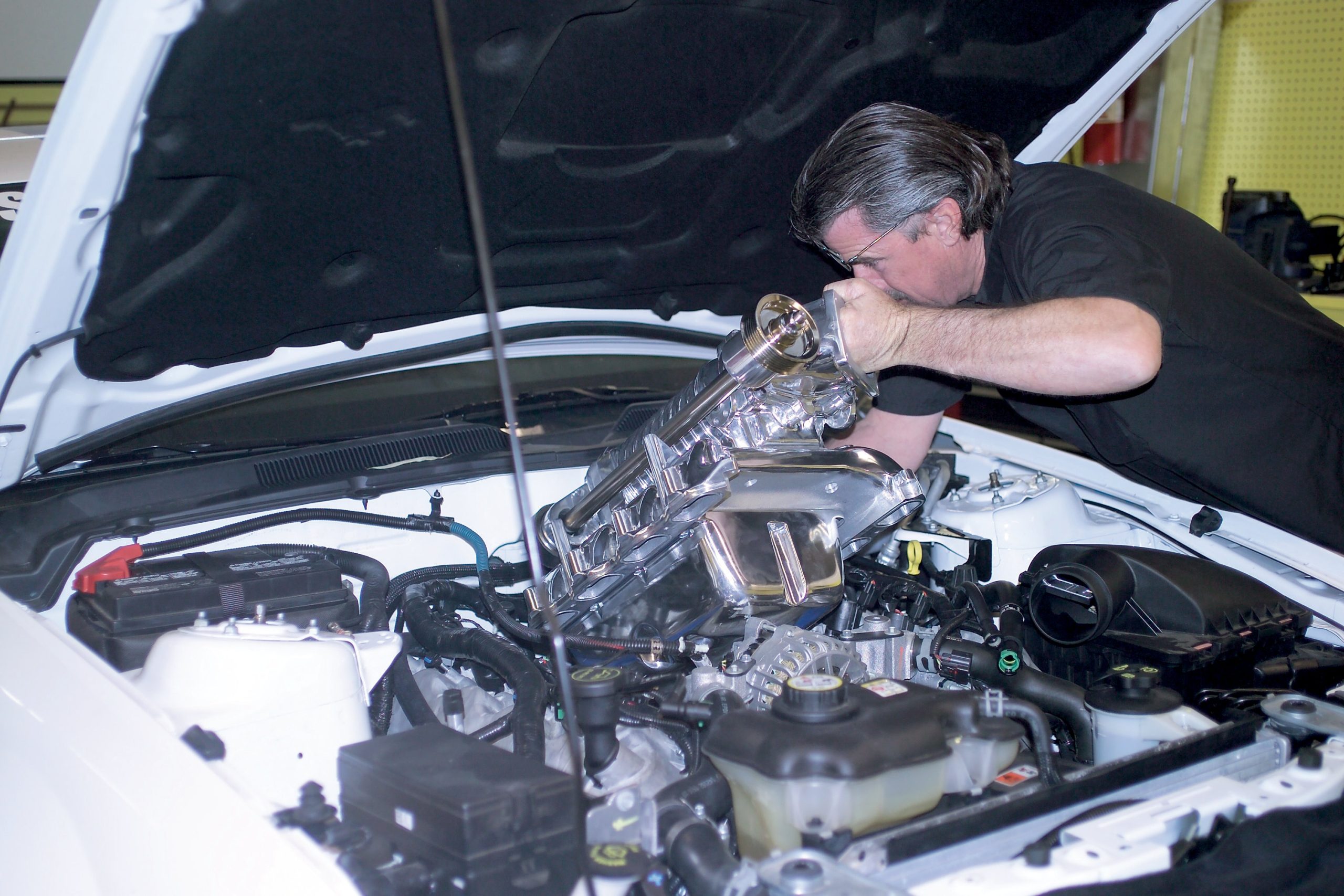
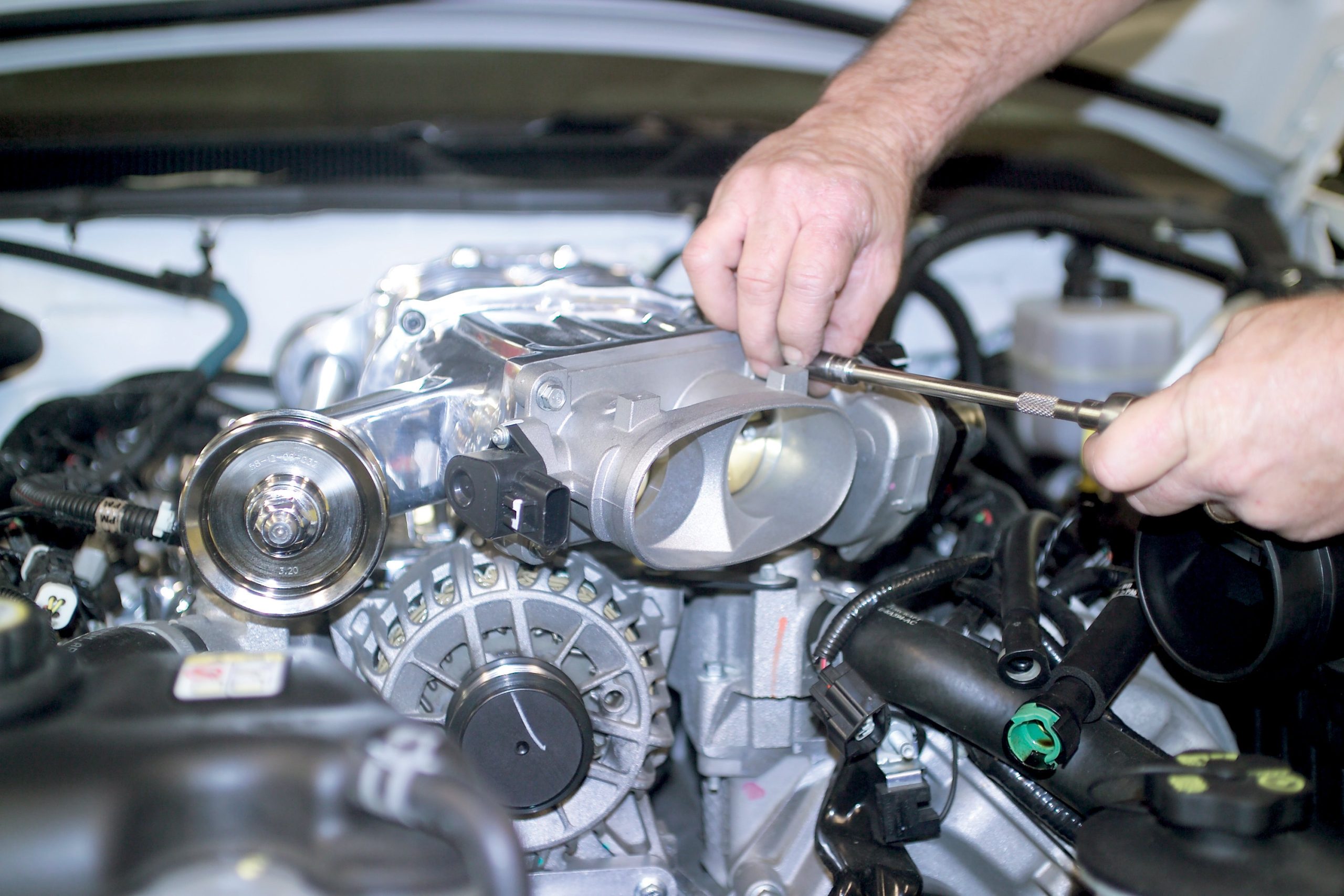
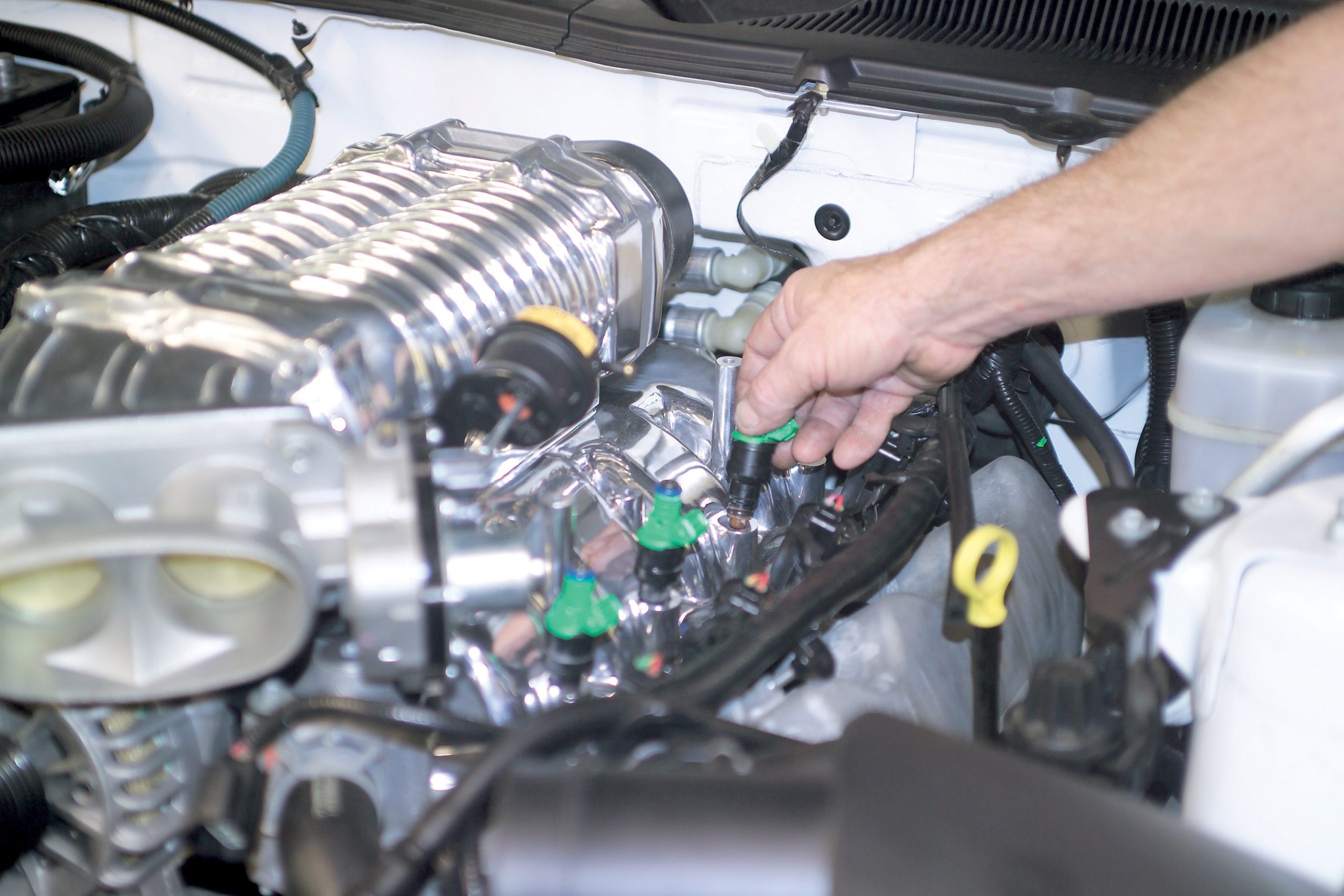
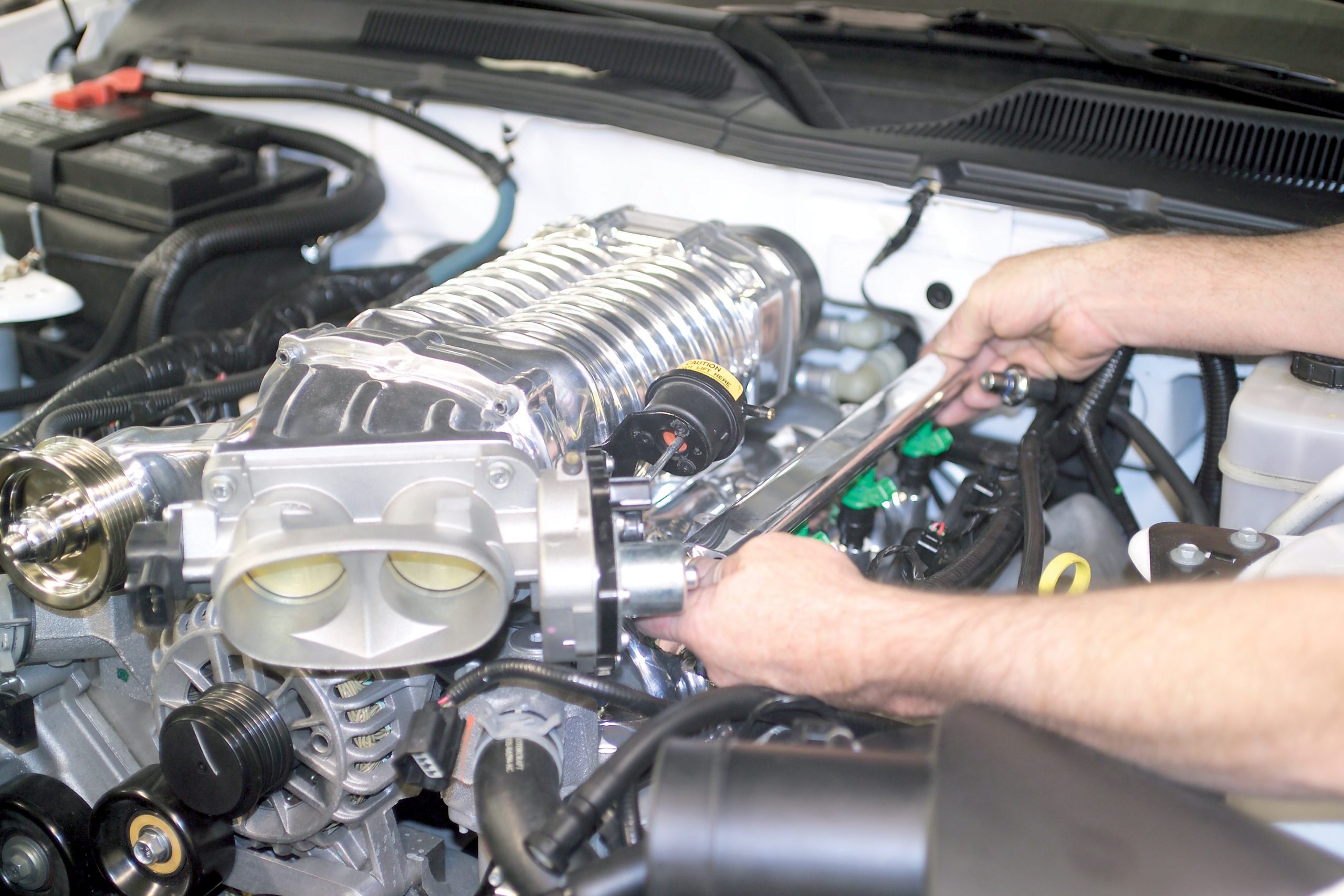
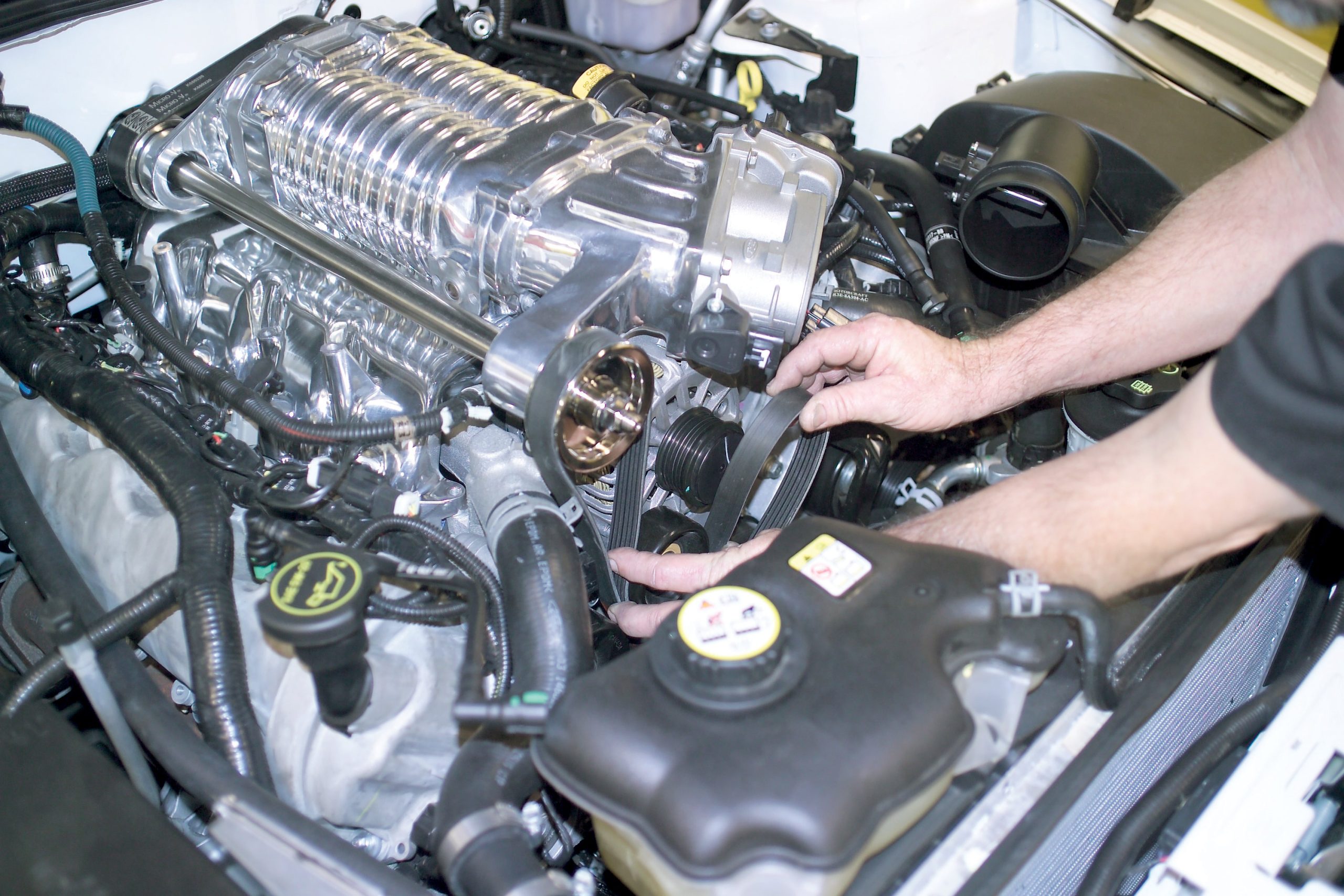
Highlights of the new Magna Charger kit for the S197 have to begin with the Eaton MP112 supercharger, similar to the one Ford included on the ’03-’04 Cobra. Next is the internal bypass valve, which increases supercharger efficiency. A vacuum motor actuates this valve, and when boost is not required, air is re-circulated through the system, essentially meaning that until you get hard on the throttle, your engine operates like a naturally aspirated engine for better fuel economy. At 60 mph, it takes only 1/3 of 1 horsepower to turn the supercharger, and the bypass valve results in 30 to 66 percent more power under the curve, where it’s most important. Another unique feature is the “inlet forward design,” which makes the supercharger appear backward when compared to most other Eaton-style setups. This arrangement allows incoming air a more direct path into the compressor, which the company claims increases the efficiency of the system even more.
Intercooled and Non-Intercooled Versions
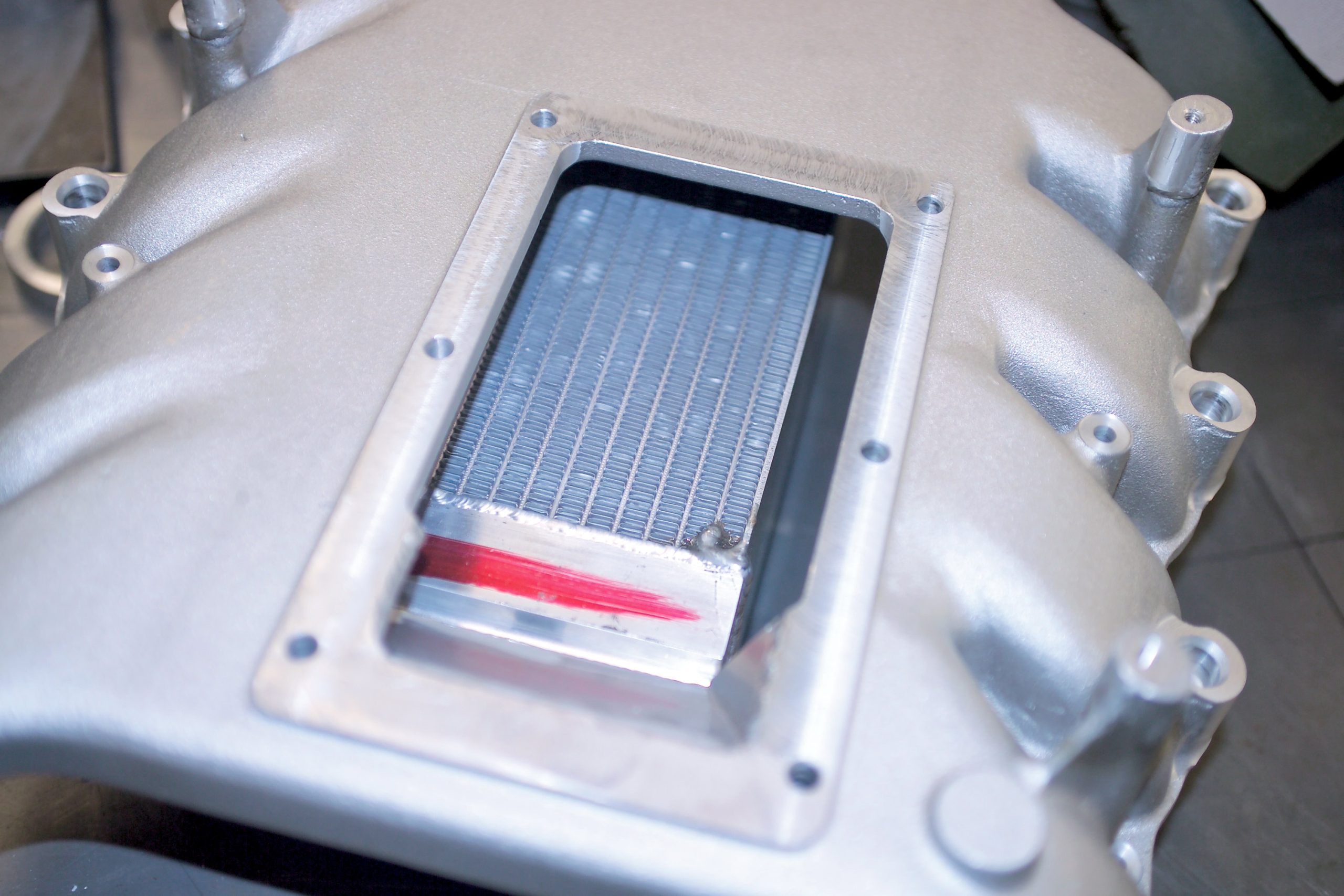
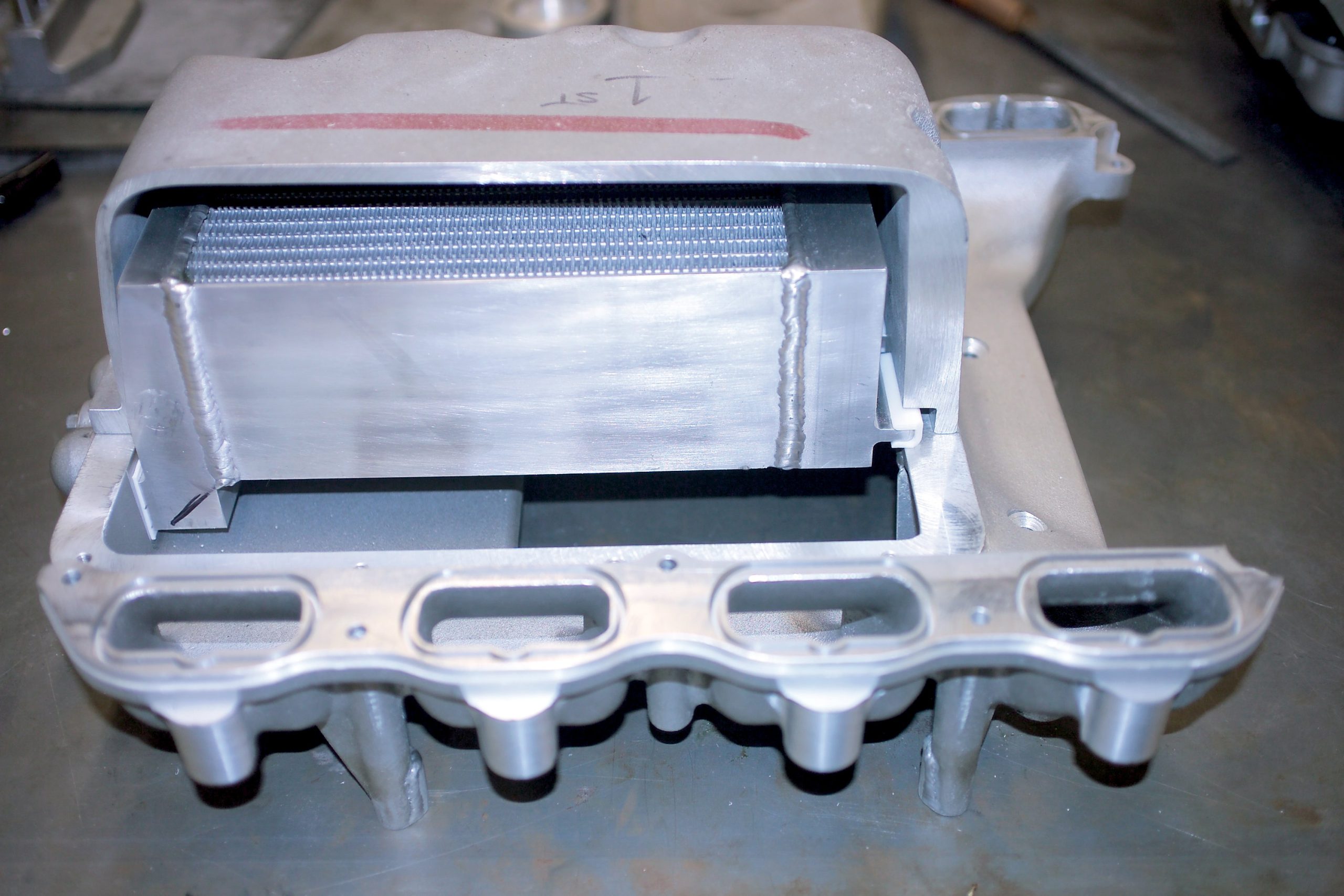
When this kit is introduced, scheduled for March or April, the Magna Charger kit will be available in both intercooled and non-intercooled versions. Obviously, the intercooled design will make more power, and though the current kit is so new that it’s still in the tuning stages, Magna Charger expects a realistic gain of 125 hp above the factory power rating, using 7 pounds of boost. Should you opt for the non-intercooled kit, it is possible to upgrade this version with the intercooler later. Pricing has not yet been finalized, but Magna Charger tells us to expect kits to begin somewhere near $3,300, a figure that would make the kit very competitive with those from other manufacturers.
Installation Process and Future Install Coverage
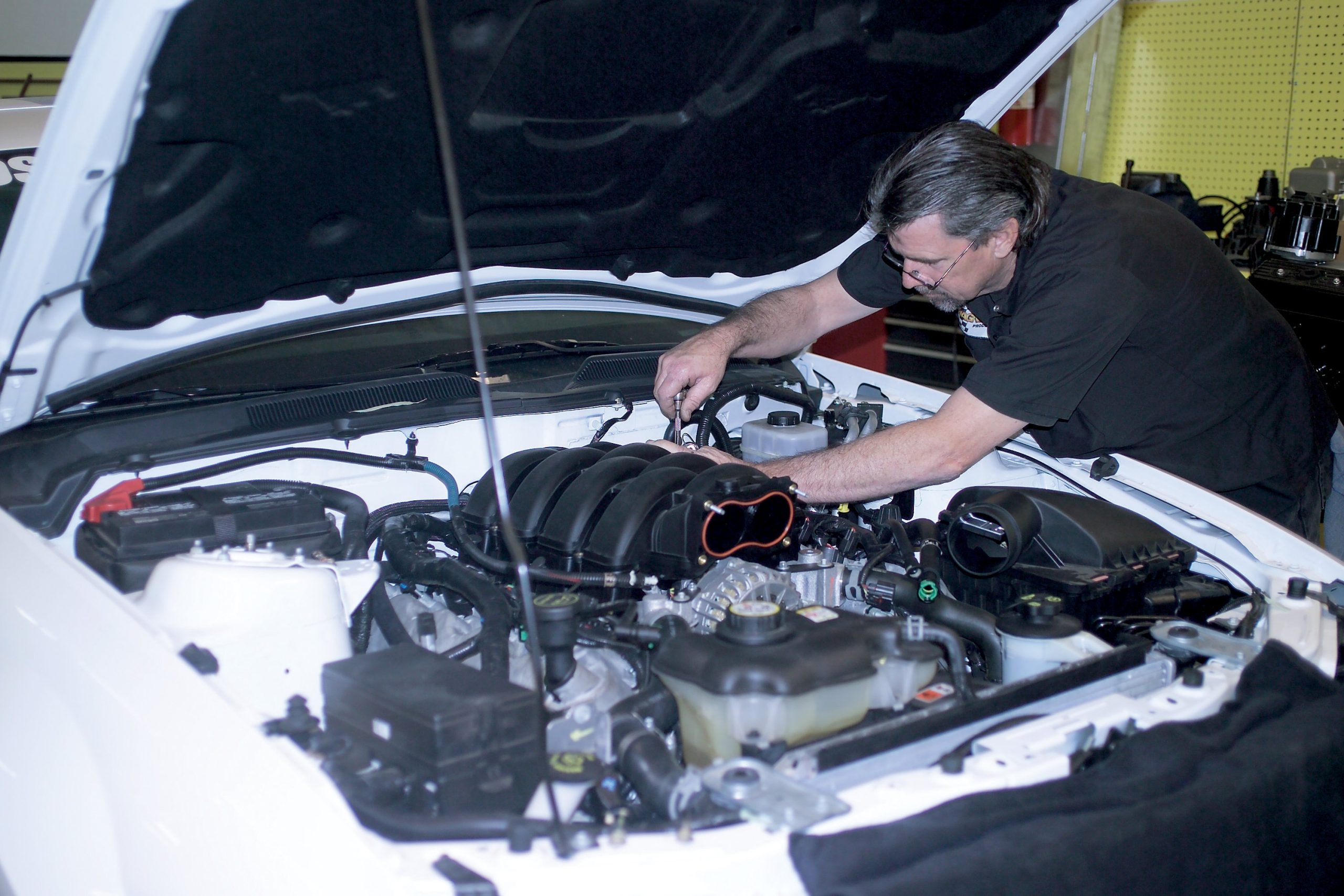
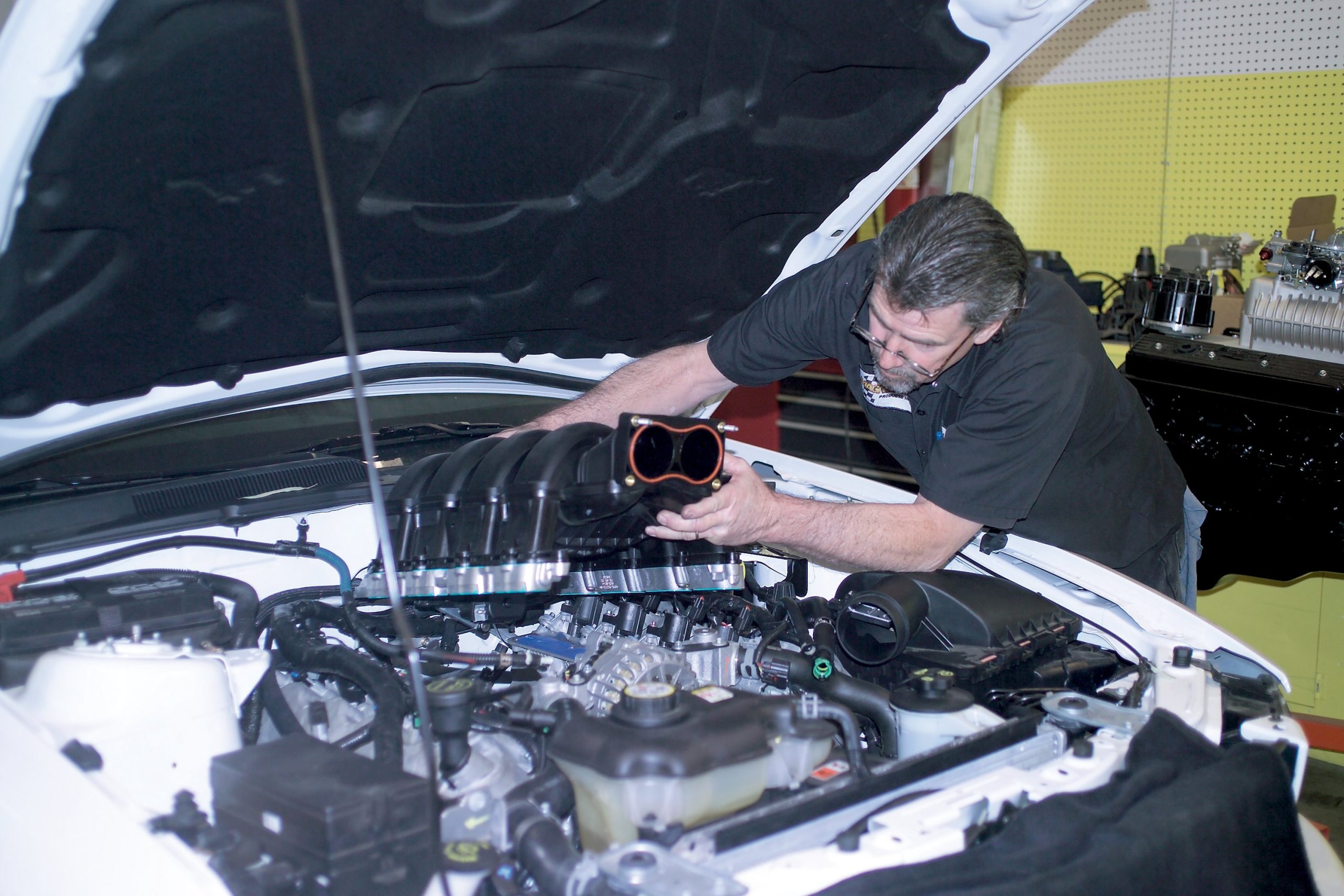
Because the kit was still under final development during our visit, we can’t yet give you a step-by-step install as we typically would. Rather, we’ll hit some of the highlights of the installation process and the features of the new design. Then, shortly after you read this, the unit should be ready for delivery. Once that occurs, we will follow up with a real-world install so that you can see all that is involved and the results you can expect on your Mustang.

Maximum Magnuson
Added Efficiency Puts Magnuson on Top
With the growth that Magnuson Products has enjoyed in recent years, its previous headquarters proved to be ill suited to its needs and, as a result, inefficient. To improve the situation, Magnuson moved just up the street to a new facility that, at 30,000 sq. ft., is similar in size but better suited to housing the Company’s various operational divisions.
As part of the new layout, an 8,500 sq.-ft. mezzanine separates the operations side of the business from the warehousing area, a devoted research and development engineering department and a complete machine shop. The new facility also includes a Mustang chassis dyno and a Superflow 902 engine dyno that is constantly in use for the development of new supercharger systems, as well as emissions testing procedures. The highlight of your tour will be the lobby with Jerry Magnuson’s collection of cars and other cool components chronicling a lifetime of involvement in performance and racing.
To find out more about Magnuson’s new digs, write them at :
Magnuson Products LLC
1990 Knoll Dr, Building A
Ventura, CA, 93003, USA
Email: sales@magnusonsuperchargers.com
Phone: +1 (805) 642-8833
ARTICLE SOURCES
Magnuson Superchargers
1990 Knoll Dr.
Ventura, CA 93003
805/642-8833