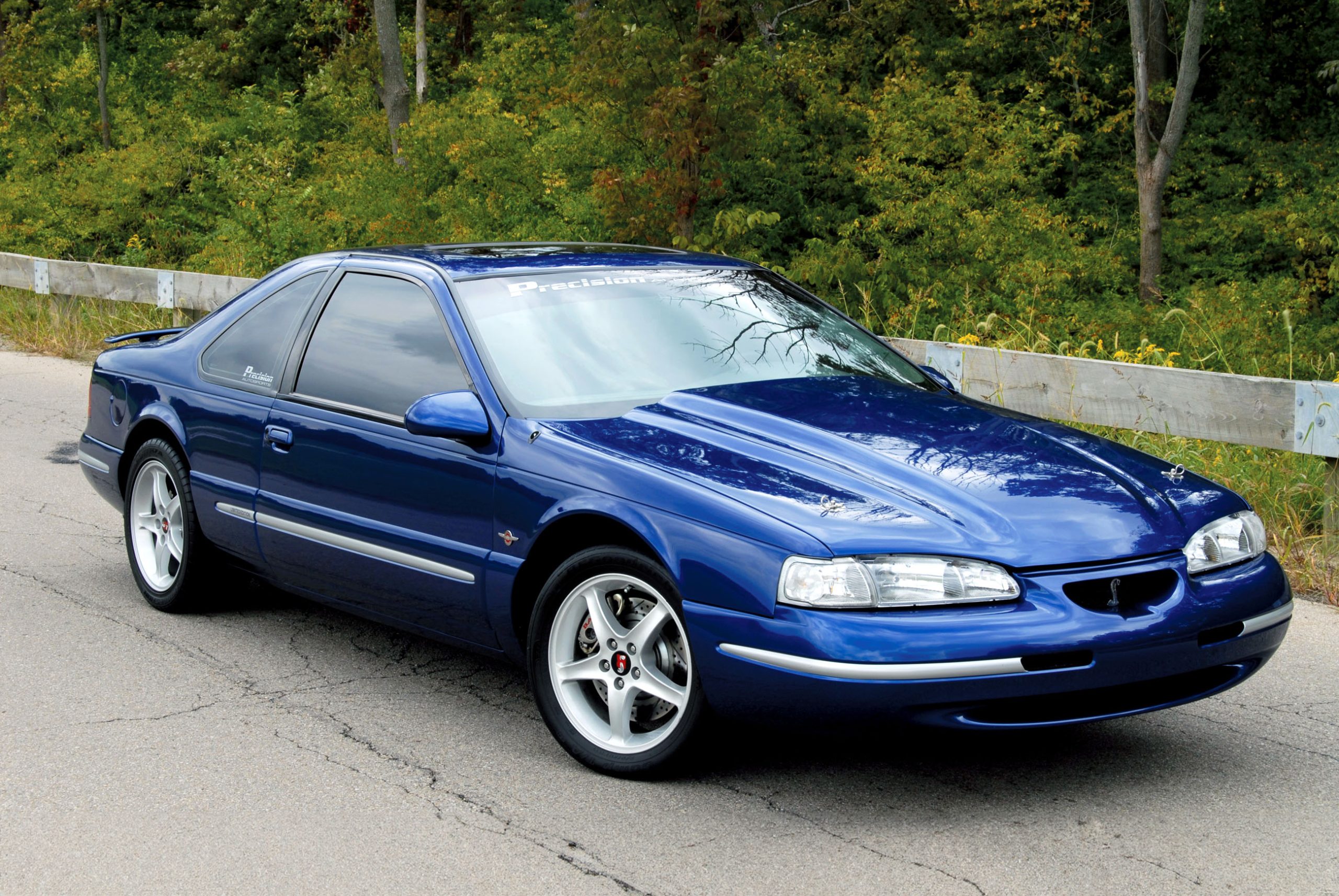
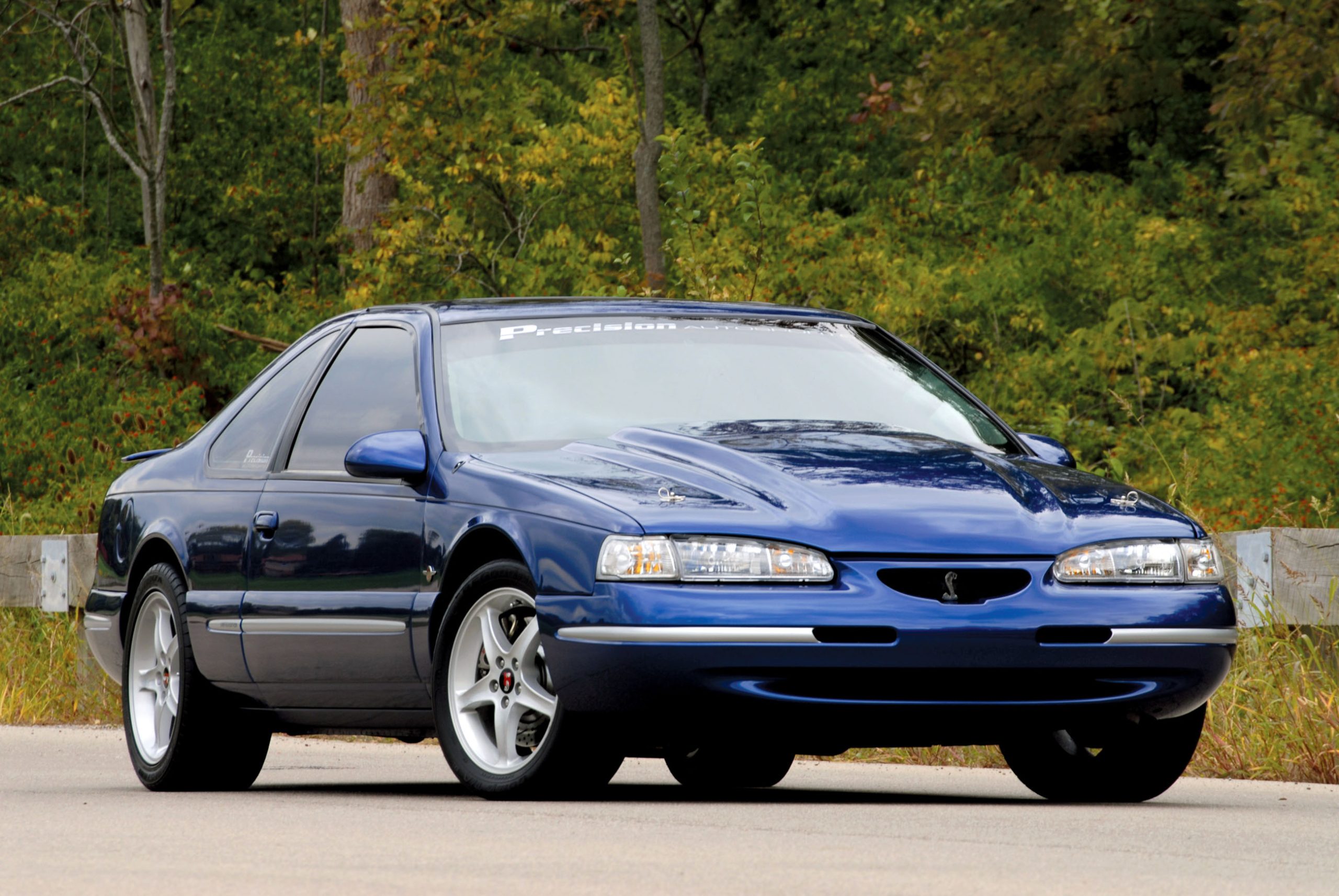
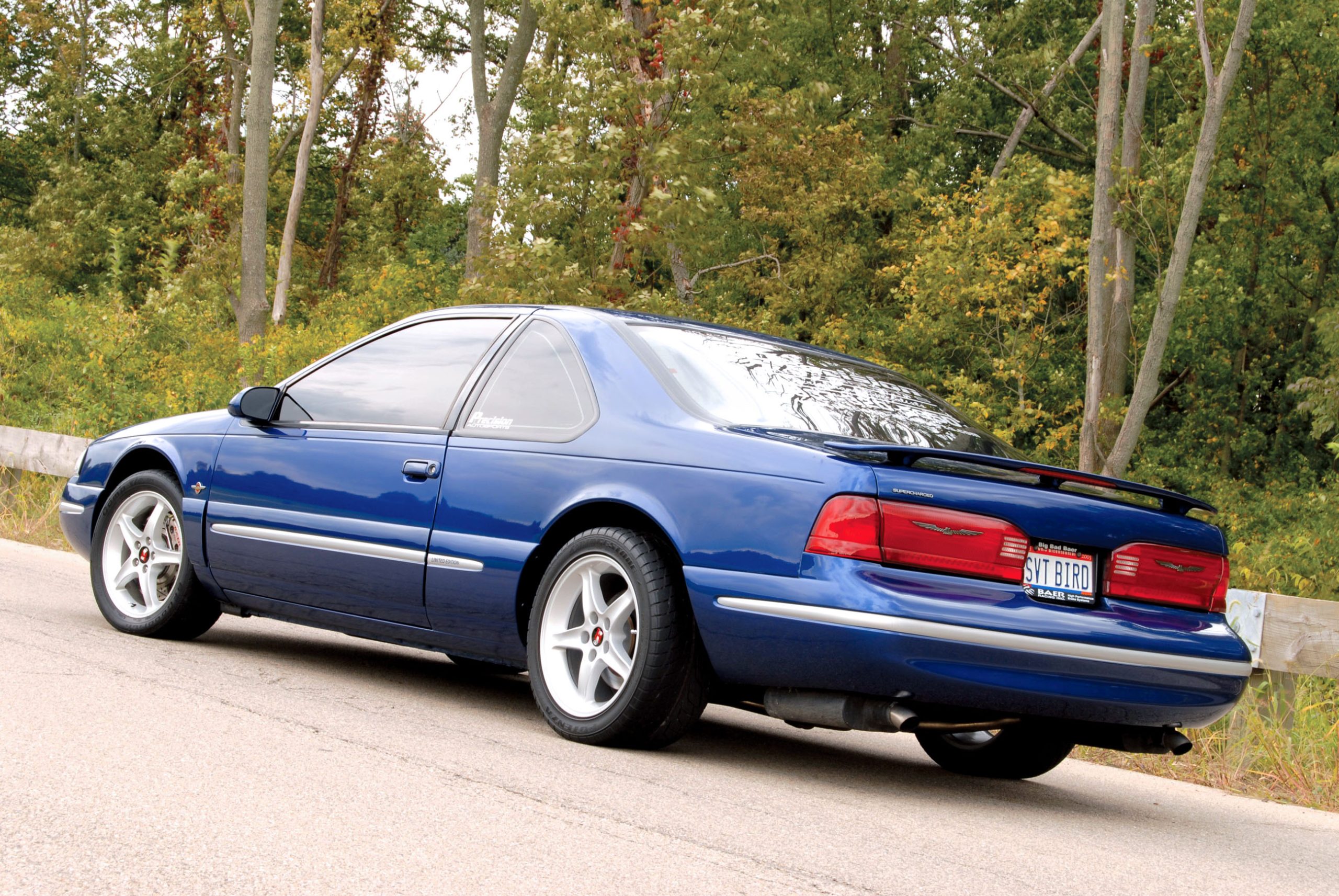
Christopher Keggan has done something that Ford never managed to do: build a supercharged, five-speed, mod-motor Thunderbird. He’s not exactly a stranger to these cars—before he hit on his current combination, he first tried a ’93 T-Bird 3.8-liter, as well as a 4.6-powered ’94 Thunderbird, a ’95 Thunderbird and a ’94 Cougar. In 2001, though, he came across this ’97 Thunderbird Limited Edition and bought it from its original owner. It had 50,000 miles on it, and it was in like-new condition. His idea was to modify it into something that looked like the car Ford should have built, using as many factory components as possible to maintain a clean, OEM look for the ’Bird.
But that condition didn’t stop Keggan from tearing into the car almost immediately, even though he was only 19 at the time and his parents didn’t want him spending any money on it other than necessary repairs. One of those upgrades was to remove the entire IRS assembly and then weld and brace the rear subframe for increased strength. To that revised subframe he added a Ford Racing aluminum rearend centersection, mounted with a custom urethane diff mount and bushings, and containing 4.10 gears and turning Raxles halfshafts. The halfshafts enter a set of Cobra rear hubs, which allowed Keggan to use the Mustang 5×4.5-inch bolt pattern and a set of 11.65-inch Cobra rotors paired with the stock calipers. Urethane bushings in the knuckles provide improved feedback and reduced deflection and wheel hop. The rear wheels are 17×9-inch ’95 Cobra pieces with 3 mm machined off the mounting face to provide the proper offset. These wheels wear 275/40ZR17 Bridgestone Potenza tires. To get the stance just right, the owner added Eibach springs and adjustable Koni shocks. A huge Addco 1-3/8-inch sway bar keeps the big ’Bird level through the corners.
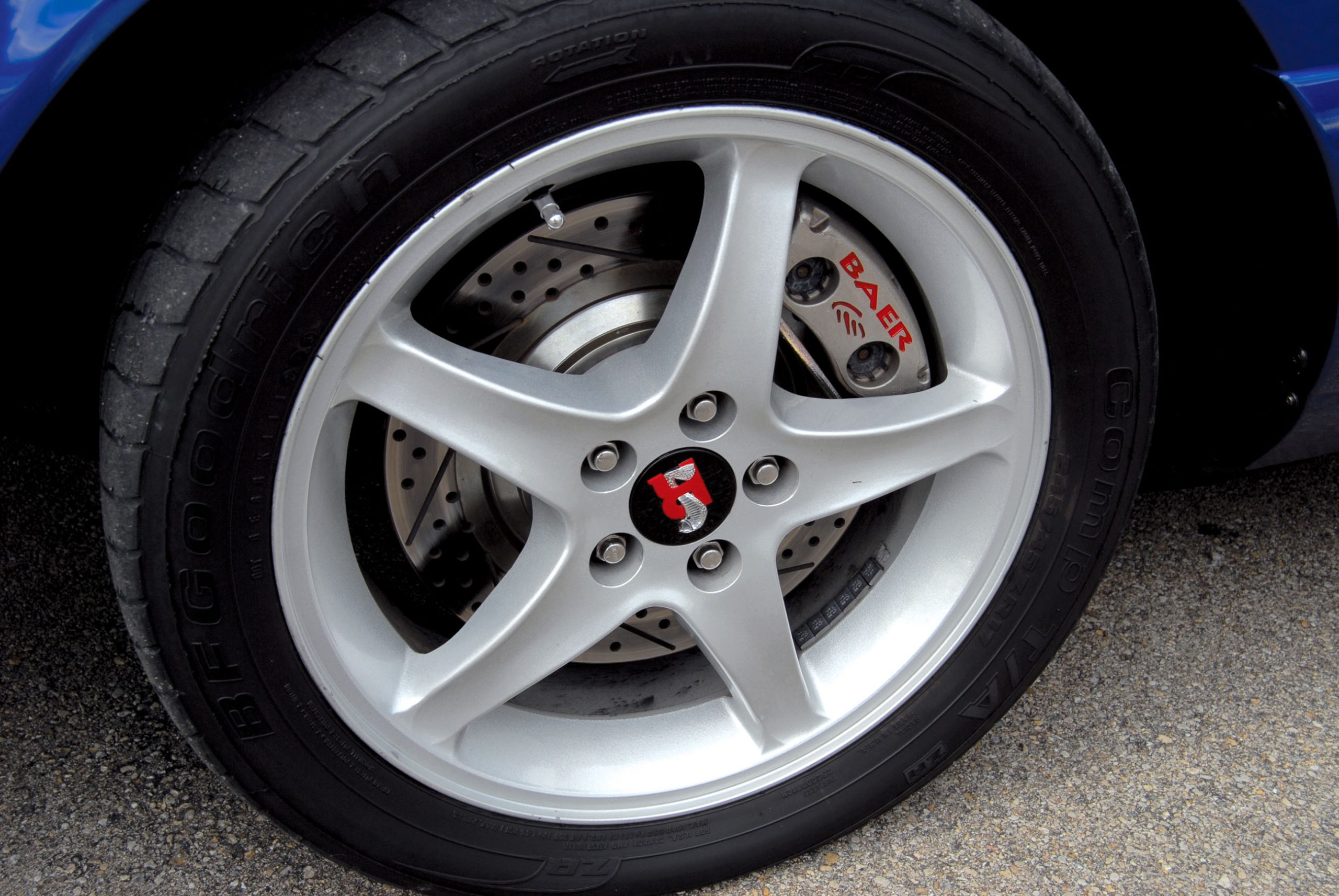
You’ll find similar upgrades on the car’s front end, with another set of Eibach springs and Koni shocks controlling the ride and handling. Baer twin-piston calipers with braided stainless lines and 13-inch drilled and slotted rotors provide the bulk of the stopping power, and these brakes look great behind the 17×7-inch Ford Racing Thunderbird SVT wheels. The front Bridgestones measure 245/45ZR17.
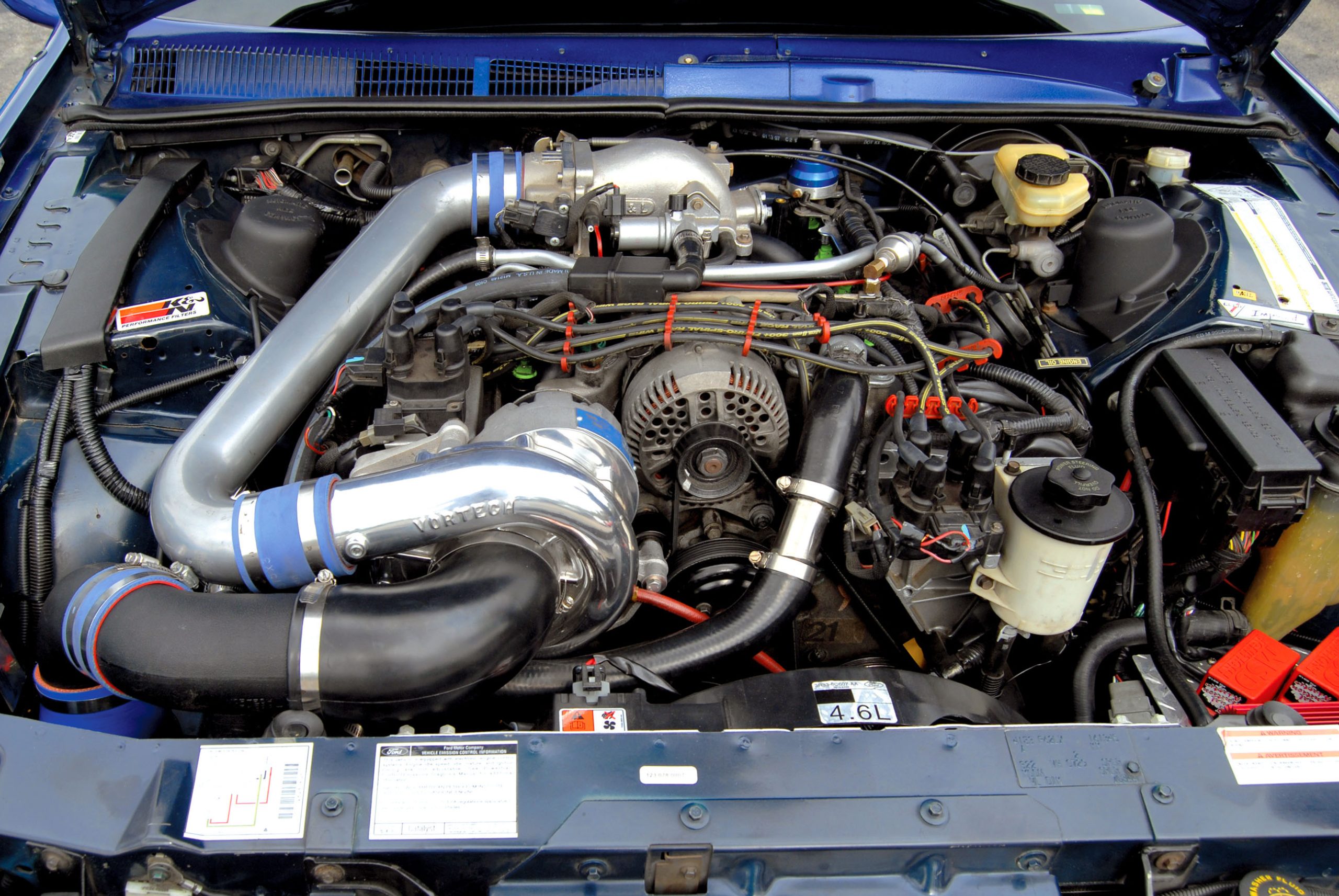
The 205 hp and 280 lb-ft of torque that Ford supplied weren’t nearly enough to move this ’Bird as fast as Keggan wanted to go, so he rebuilt the engine with boost in mind. JE pistons feature stock compression up against stock NPI cylinder heads fitted with Ford PI camshafts. The PI intake manifold is fitted with a C&L upper intake plenum and a BBK 75mm throttle body, while a 90mm Lightning MAF meter monitors incoming air.
Ford 42-lb injectors pump fuel into the engine, and a Vortech V-1 supercharger with a 3.30-inch Reichard pulley does the same for air. A Snow methanol injection kit keeps the air charge cool as an MSD DIS-4 ignition and MSD coils light the fuel/air charge. Having done its duty, the exhaust exits into a pair of coated JBA shorty headers, 2.5-inch true dual exhaust pipes (minus the cats and the EGR system) and finally a pair of 40-series Flowmaster mufflers. An ’03 Cobra radiator and electric fan get the job of keeping the engine cool. Precision Autosports, in Beavercreek, Ohio, tuned the Thunderbird using SCT software. With 8.8 lbs of boost on tap, they coaxed 352 hp and 361 lb-ft of torque through the rear wheels.
Every V-8-powered MN12 Thunderbird that Ford produced left the factory with an AODE or 4R70W four-speed automatic, and that includes this car. Keggan is one of the many people who wished Ford had provided a manual tranny option for these cars, but he’s one of the very few who’s actually done anything about it. Fitting a manual transmission to these cars is no small task, but Keggan installed a T45 from a ’98 Cobra, using a Wilwood slave cylinder, McLeod hydraulics and T-Bird SC pedals to get the job done. A Spec Stage 2 clutch helps engage the transmission and spin the custom Dynotech aluminum driveshaft. Solid rubber engine mounts and urethane transmission and crossmember mounts support the drivetrain.
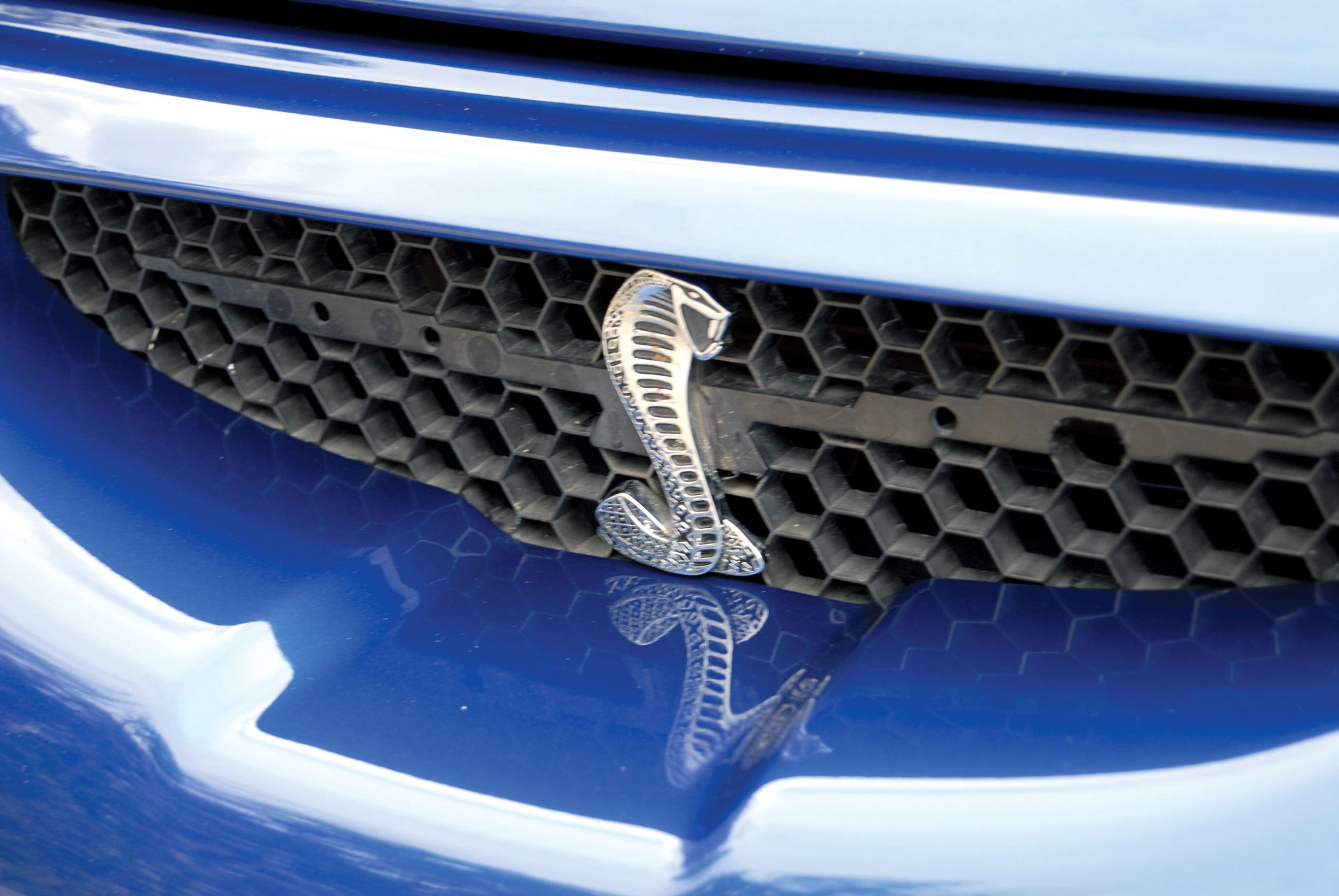
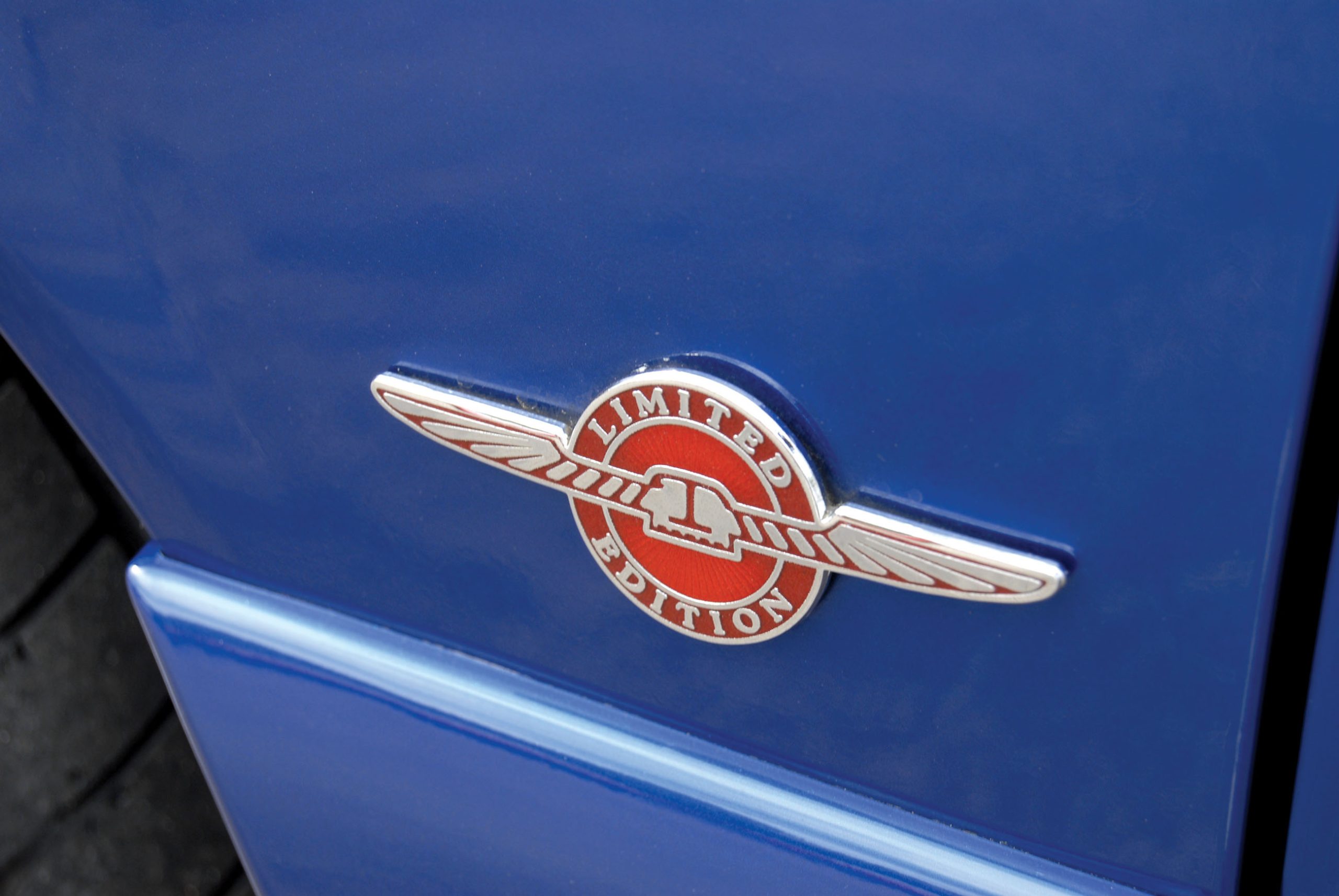
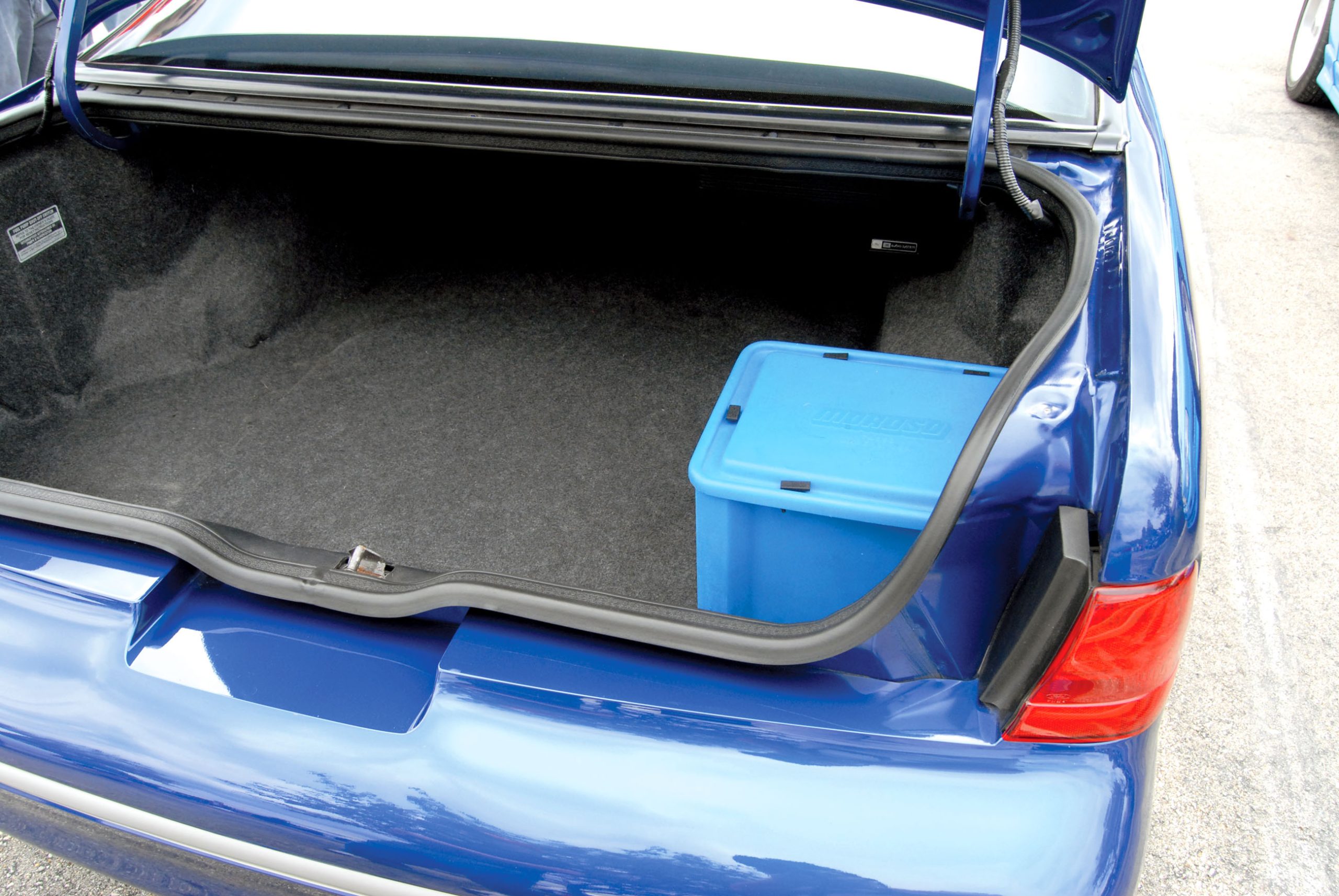
The body is probably the least-changed portion of the car. The ’97 Limited Edition package contained limited upgrades, among them silver stripes in the body moldings. Alterations to the body include the addition of a Legendary fiberglass cowl hood and the removal of the key and emblem holes from the decklid. Loxley Brothers Body Shop, in Beavercreek, Ohio, performed this work before spraying these parts in PPG Royal Blue, the car’s original color. The final change was to remove the Thunderbird emblem from the front grille and replace it with a Cobra emblem—a nice, subtle change.
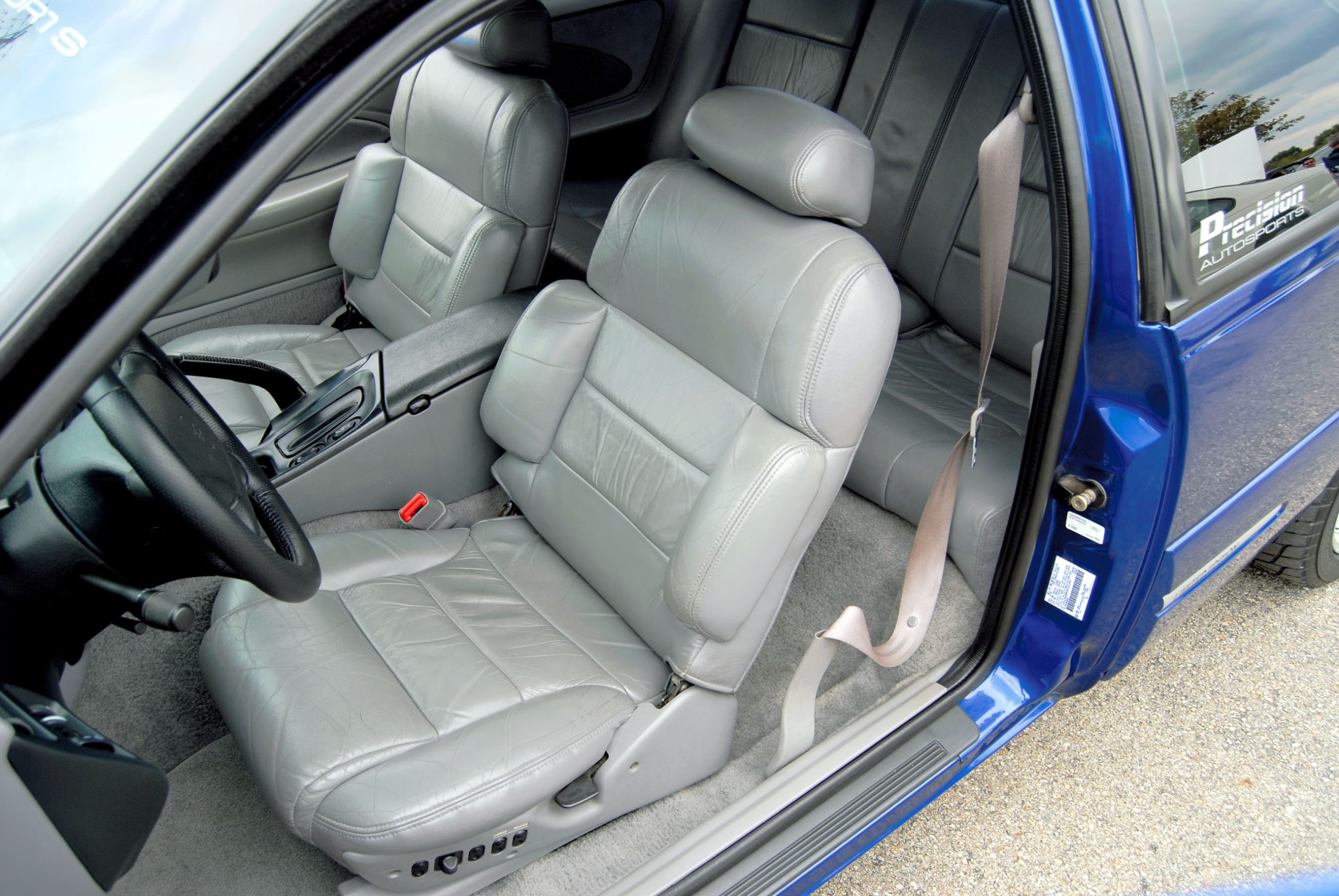
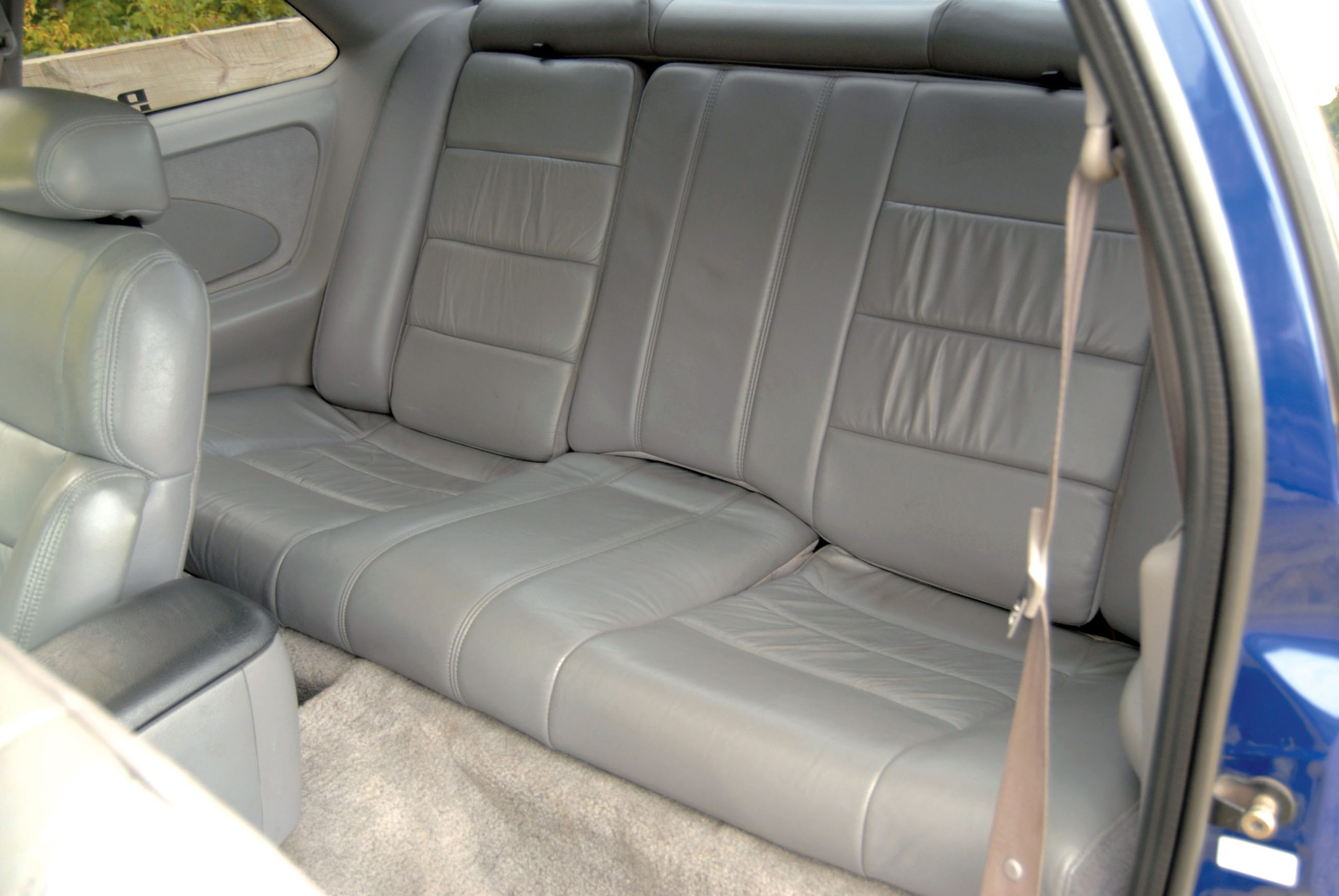
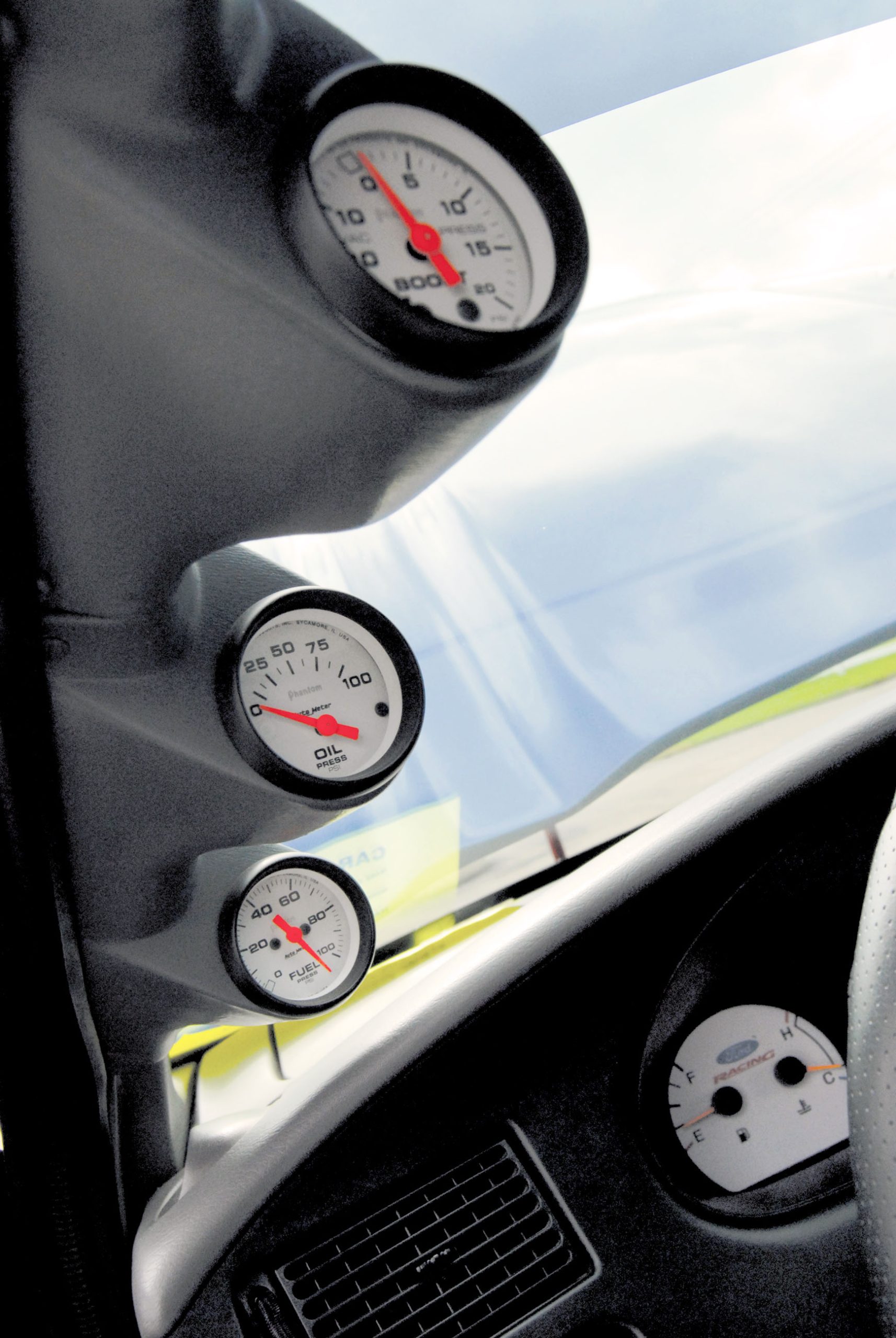
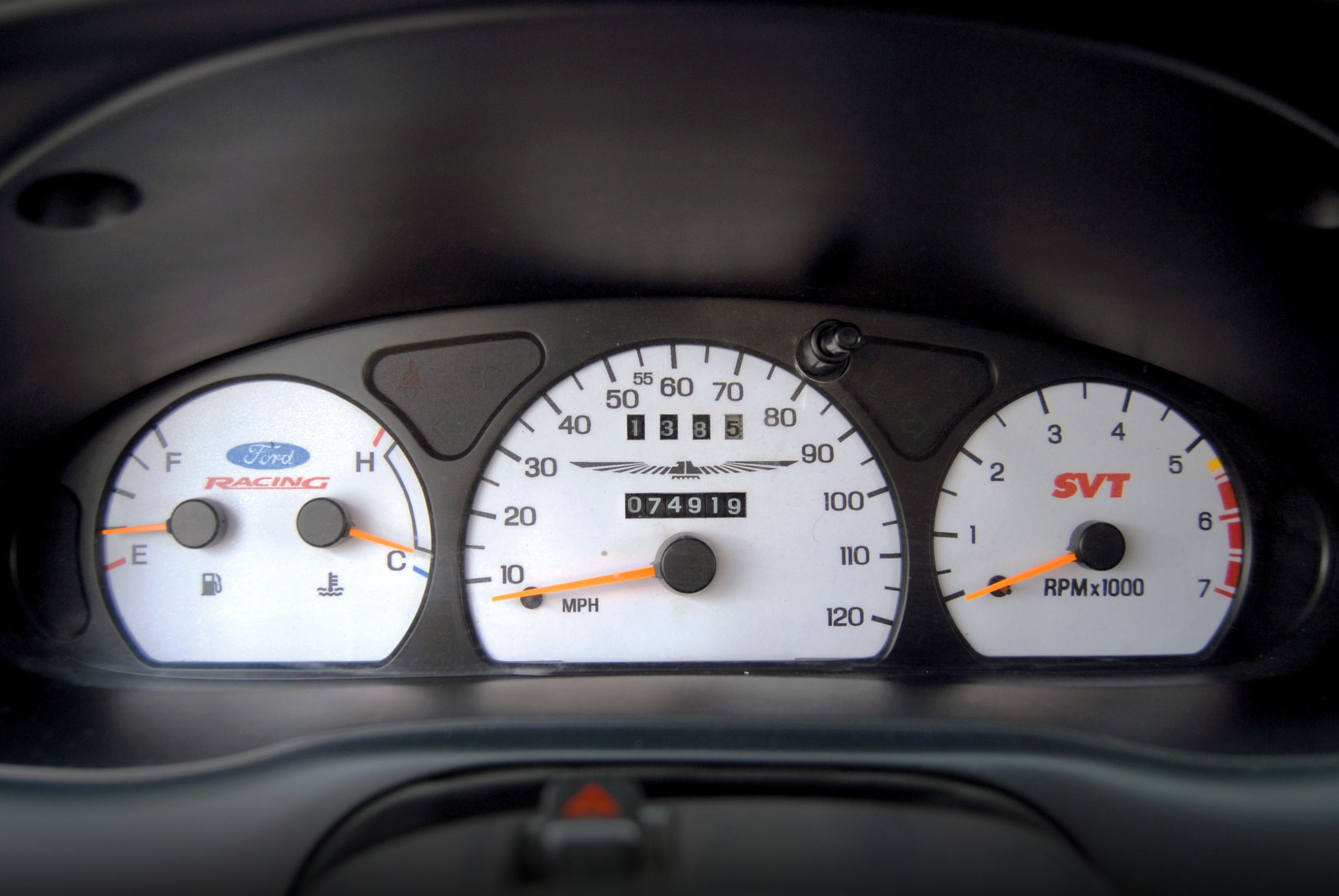
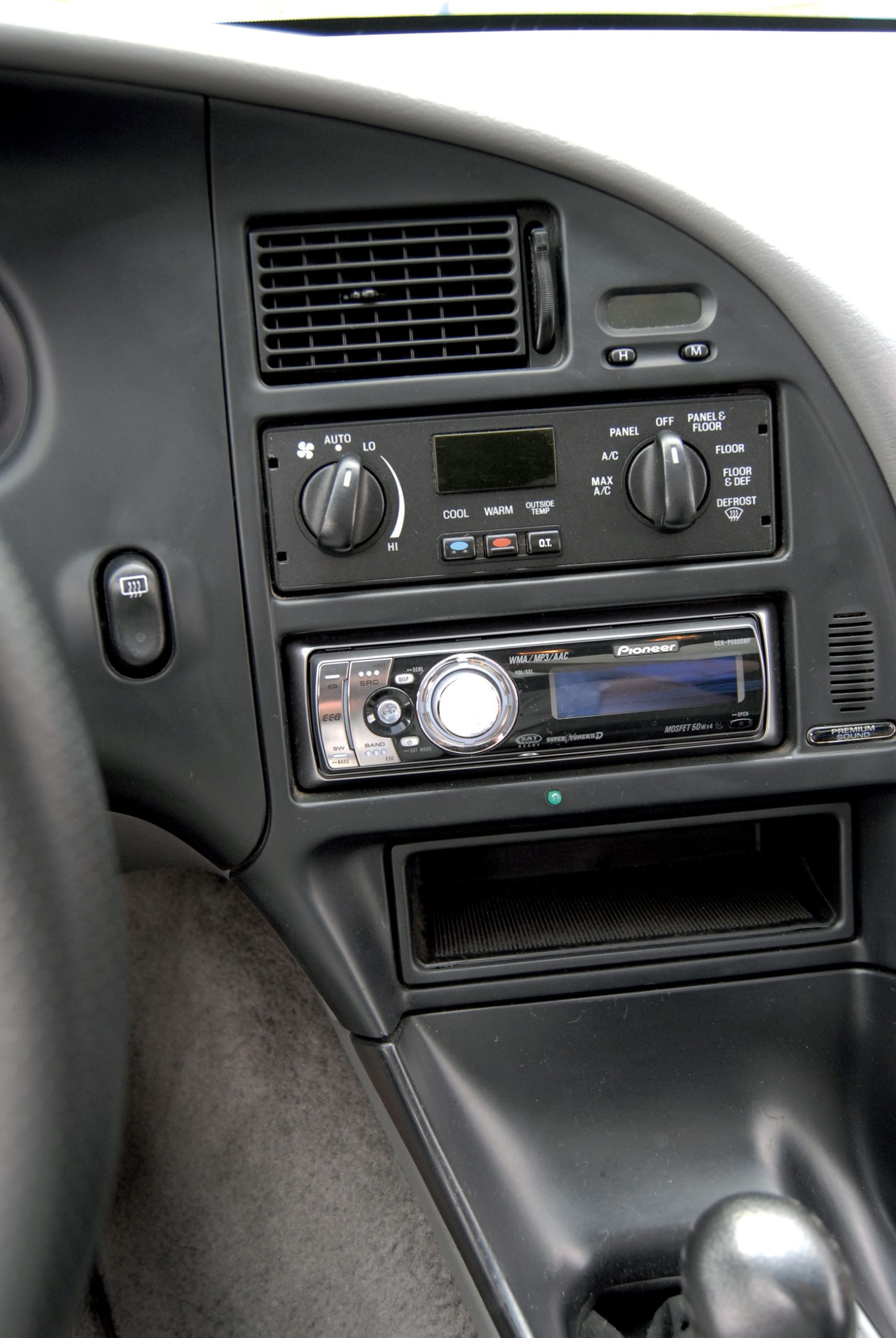
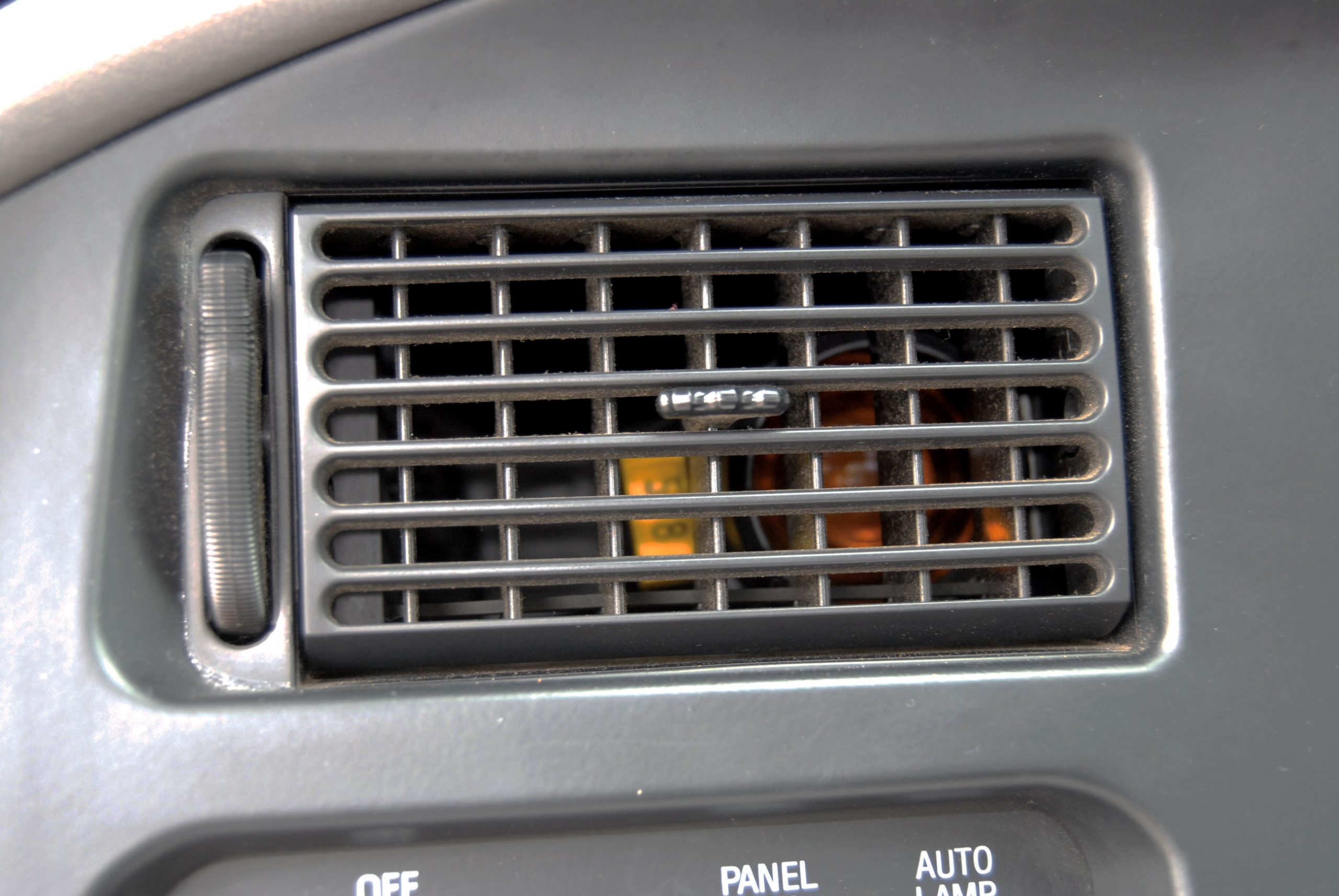
Keggan replaced much of the interior with components from a wrecked ’94 T-Bird Supercoupe. That car gave up its center console, handbrake assembly, dead pedal, driver’s airbag and leather seats to the ’97. The dash contains a custom set of white-face gauges to provide a better match to the Auto Meter Phantom gauges in the A-pillar. These additional gauges keep tabs on boost, fuel pressure and oil pressure—Ford cheaped out on the gauges in 1997, so that last one got the factory axe. One cool trick Keggan used was to fit a shift light behind the leftmost A/C vent. The light is virtually invisible until it’s time to shift, but then it’s impossible to miss, and hiding it keeps the interior clean. Over on the other side of the dash you’ll find Dale Jarrett’s autograph, and in 1997 he was racing and winning in a Thunderbird just about this same color. The steering wheel is a Ford Racing FR500 piece, and the shifter is a B&M Pro Ripper. For his stereo, the owner paired a Pioneer DEH-P680MP head unit with the factory JBL Premium Sound option speakers and amp.
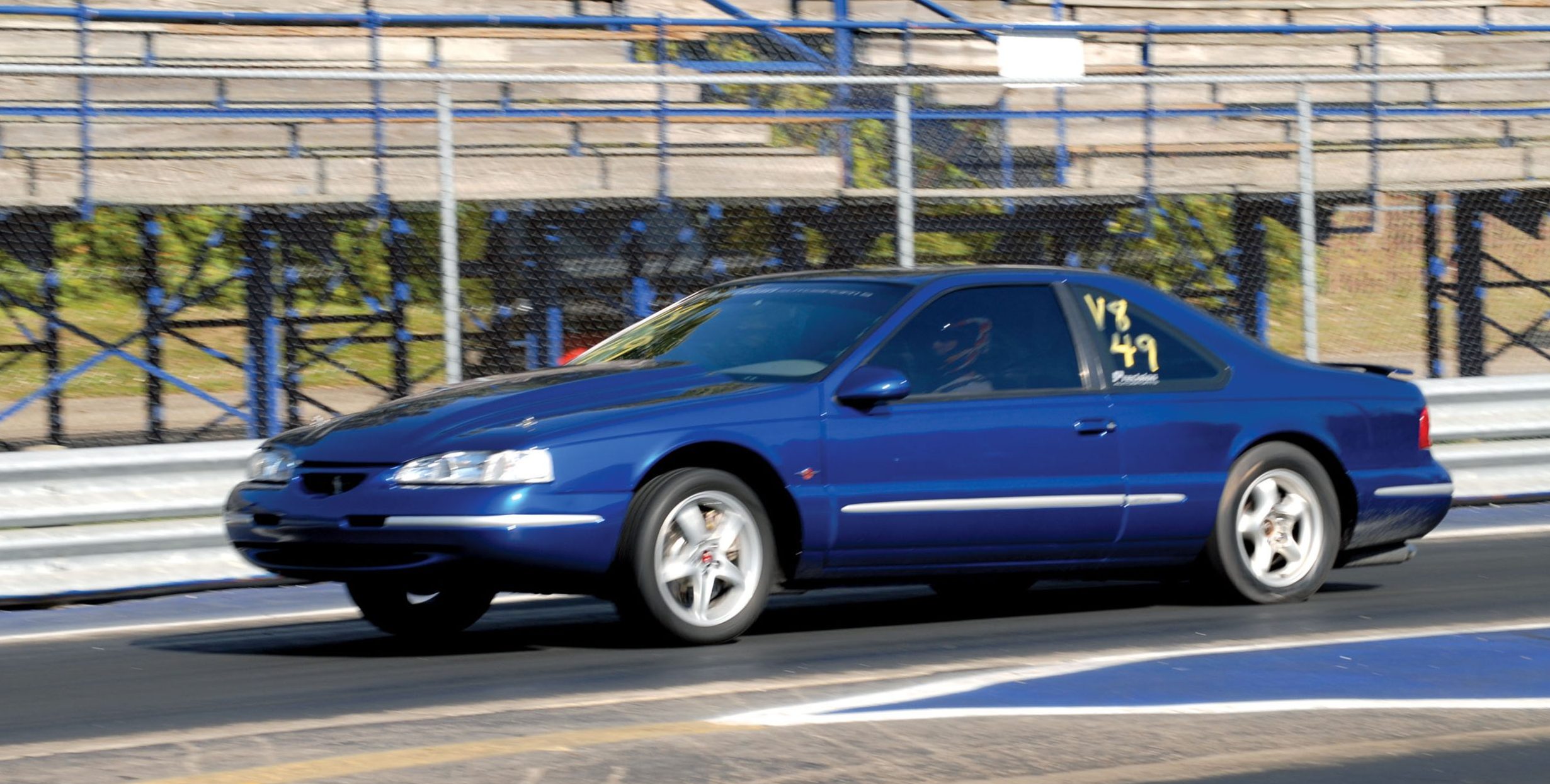
There’s no question that Keggan has been good to his car, and that it’s been good to him. Apart from the day he bought it, he’s never driven it in rain or snow, but that doesn’t mean he’s babied it. He’s run it at the track quite a bit, including a best time of 12.62 at 116 mph. He’s also taken it to numerous club events for the Thunderbird and Cougar Club of America and the Supercoupe Club of America. He’s quick to thank those who have helped him on the project, including his friends and most of all his wife, Amber, and his grandfather, Robert Keggan. Chris and Robert Keggan spent many afternoons wrenching on the car, transforming it from stock to the condition it is now, and their hard work certainly paid off. But is the work done? Not exactly—there’s a new, fully built engine in the works, with ported PI heads, a Teksid aluminum block, VT cams, forged internals and more. Once this proud owner has time to install this new motor, watch out—this ’Bird could really take flight.