


THE AUTO BUILDER
Featured

Easy Out
In this day and age, getting the most power out of your late-model truck or SUV is both difficult and easy. Now that we have covered ourselves technically, we will give you the reasoning behind this convoluted theory. New vehicles are hard to work on but easy to upgrade. See? That was easy.

Grumpy’s Toy
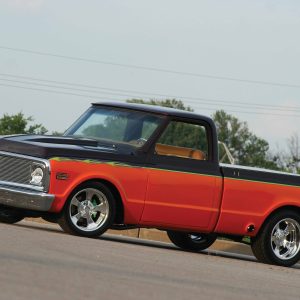
Jim Batson from Deltona, Florida, is a retired Navy man and a veteran’s employment representative for the state of Florida. New to the truck scene at age 57, this is his first custom, and he did most of the work himself, learning as he went. Inspiration for the project came after seeing a friend’s custom truck. He liked the looks and, since friends told him that trucks were easier for the first-time builder, he jumped in with both feet, deciding it would make the perfect retirement project. The undertaking began in April 1999 and wasn’t completed until March 2005. Looking back, Jim confesses to having some second thoughts about that ease-of-construction notion, and he tells us that somehow along the way he picked up the nickname Grumpy!

FLAGGING A DEAD HORSE
Many times you can tell a true enthusiast by exactly how bad of a car they’re willing to start with in their overall quest to build a project car. Those who truly love cars get excited by the car itself, and they’re willing to start with almost nothing, as long as the car represents what they want after the build is complete.
Spotlighter
POPULAR READS
-
Product Spotlight: Bill Mitchell Products Aluminum LS Engine Block
-
PRODUCT SPOTLIGHT: 60-66 Chevy C10 Fresh Air Vent Block Off Plate
-
Product Spotlight: Pyramid Optimized Design Sequential Aurora Taillight for 1964½–1966 Mustang
-
PRODUCT SPOTLIGHT: Cam Covers for GEN/3 Coyote from Pyramid Optimized Design
Ready to Roll
Installing a trail cage in a Jeep YJ
Author
Larry Walton
Words & Photography
Motivation for the Install
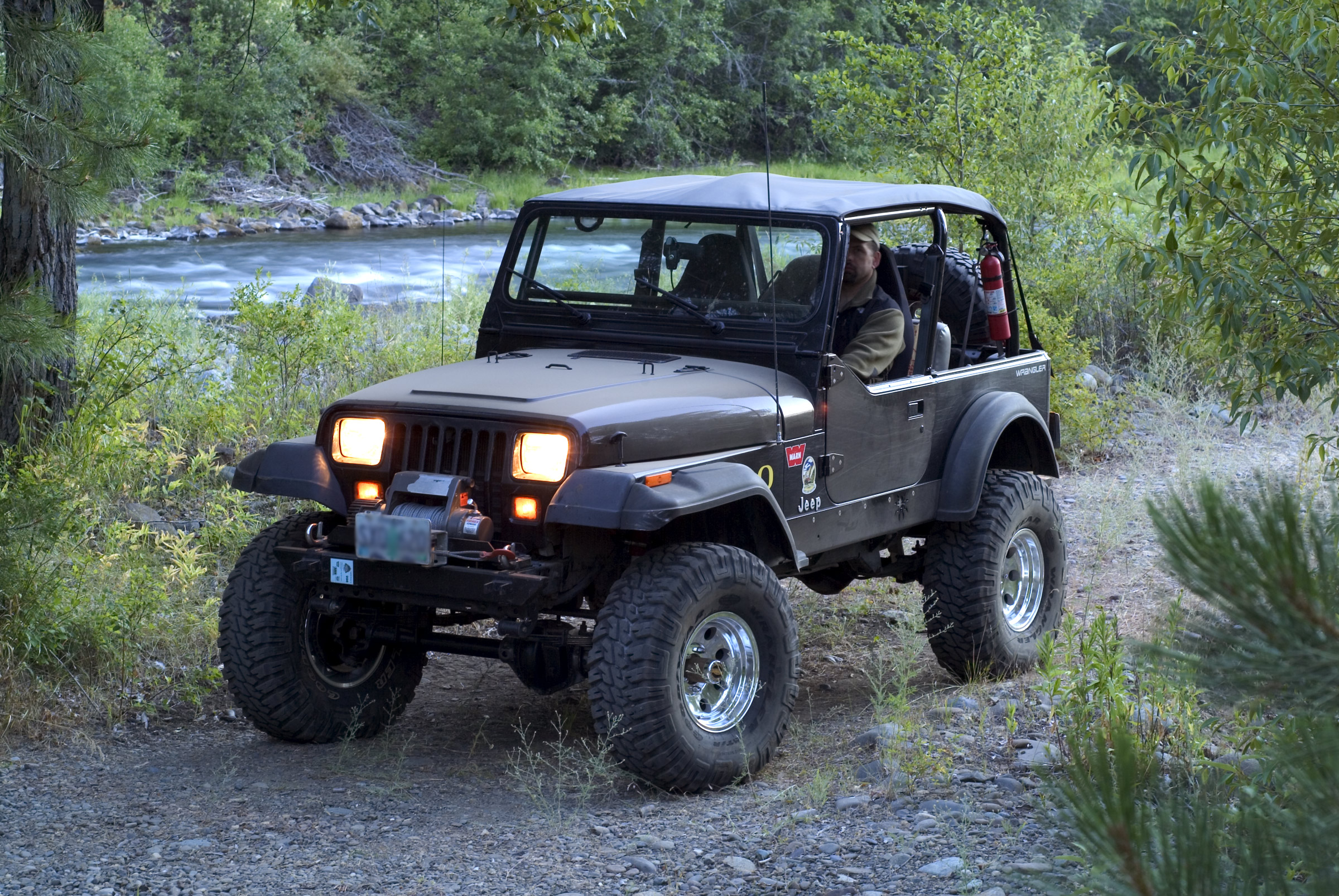
There’s nothing like an impending event inspection to motivate an install. Lorne Pearson was looking forward to the PNW4WDA Trail Jamboree in Naches, Washington where he was planning to run the challenging Rimrock Trail. This often-off-camber route required front & rear lockers, CB and winch along with some wheelbase and tire specifications – all of which Pearson had. What his YJ lacked, however, was the mandatory full roll cage. Pearson recruited some fellow jeep fanatics to help install a YJ Trail Cage by Poison Spyder Customs in his 1993 Jeep Wrangler.
Preparing for the Installation
Here’s how you can make your rig ready to run high rated trails like Rimrock:
- Order the appropriate kit to fit your vehicle.
- Following the instructions provided with the kit, remove the torx head bolts located on the dash around the speakers. Save the bolts, you’ll need them later.
- Locate the front dash supports and the floor brackets. The dash supports are handed (side-specific), but the floor plates can go both ways. You can install the floor brackets at this point, but our crew elected to leave them loose between the dash supports and the tub until the cage was assembled.
- Place the dash supports in position and fasten in place using the torx bolts you took out earlier.
- Tack-weld the triangle gussets in place in the top of the dash supports.
- Dry fit the uprights that go between the dash supports and the factory roll bar front spreader. When you can see where this connection will take place, remove the paint from the factory roll bar using a sander, angle grinder, scraper, pocket knife or rock.
- Put one of the uprights in place and tack-weld it into position.
- The straightest of the remaining bars is the dash bar. Try the dash bar on for size between the two upright bars at a height that just clears the dash and is even on both sides.
- Tack-weld the remaining upright bar in place.
- Reposition and tack-weld the dash bar in place.
- There are three unused bars with bends in them. The shorter ones that match are the spreader bars that run front to back. The longer bar goes between the factory spreaders at a distance determined by the two Spyder spreader bars. If the diagram still shows the cross bar oriented with the convex side toward the spreader bars, ignore the diagram (as confirmed by Poison Spyder Customs). The windshield header cross bar goes with the concave direction facing the spreader bars.
- It’s a good idea to have someone sit in the driver seat to keep the spreader bars away from the head clearance area as they are being placed.
- When the approximate connection areas of the cross bar and spreader bars have been located on the factory roll bar and spreaders, remove the paint with the sander or grinder.
- Put the cross bar and spreaders back in position.
- Tack-weld the cross bar in place.
- Fine-tune the spreader bar locations using a tape measure and square. Tack-weld these bars in position.
- Decide if you want to remove the cage from the vehicle for the final welding or weld it in place. If you choose to remove the cage, first add enough bead over your tack-welds to stabilize the cage assembly.
- If you opt to leave the cage in place, fold the windshield down and cover it. Pay attention to heat build up when welding near the dash and watch for any hot material that may find its way onto the seats or floor mats.
- Paint or powder-coat the roll cage.
- Offer to have the girls ride in your jeep because it’s safer.
Things you’ll need:
- Torx bit set
- Measuring tape
- Square
- Soap stone or grey/white pencil
- Sander or angle grinder
- Welder
- Appropriate safety gear
(welding shield, gloves, safety glasses, ear protection, fire extinguisher) - Trail Cage kit
- Paint
ARTICLE SOURCES
Poison Spyder Customs
2140 W. Dartmouth
Englewood, CO 80110
(303) 777-4820