


THE AUTO BUILDER
Featured


ELECTRIFIED

Pyramid Optimized Design: The Builder’s Secret Weapon

CIMTEX RODS SUPER CAMEO: PART 8
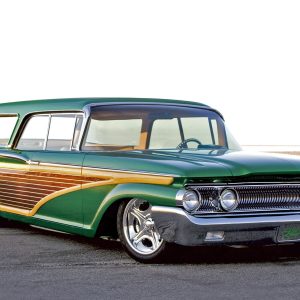
In part seven of our Cimtex Rods Super Cameo Buildup series, we covered the installation of our Stainless Works four-tube ZR1 headers and Cimtex Rods-fabricated 3-inch custom exhaust system, as well as the fabrication and installation of our Cimtex Rods-constructed 22-gallon fuel tank and the accompanying MagnaFuel fuel system. Now we’re going to cover the mockup of our Powerdyne BD-11A SilentDrive twin supercharger system. But first let’s digress and take a look at the big picture. One of the key criterion in our Cimtex Rods Super Cameo buildup was to elicit that all-important “wow” factor throughout the entire series. When it came to the engine, we didn’t want to install just any old run-of-the-mill, multi-carbureted GM small or big block, much less a late-model GM crate engine straight out of the catalog. Going in we figured that the Cimtex Super Cameo powerplant should be something special.

BOSS LADY
Michelle Holstien of Moreno Valley, California, grew up with a passion for cars. She took auto shop in high school for two years, and her dad, Bruce, helped her build a ’72 Ford Econoline van and a ’62 Econoline pickup.
But she really had her heart set on a Boss 302 Mustang. Just listen to her talk about the Boss: “For as long as I can remember, I have always had an interest in Bosses.

LOWERING A 4WD FORD F-150
The suspension of stock four-wheel-drive vehicles is deliberately set very high to provide improved ground clearance. For years the trend in serious off-roading has been to “lift” the vehicle even higher. The OEs suspend their four-bys high enough to clear rocks, traverse gulleys and fallen trees and most anything else that one might encounter in more serious off-roading. Nevertheless, there are four-by owners who would like to lower their vehicles, as they spend more time on-road than off. Recently we met just such an owner, and we couldn’t resist questioning him about his desire to drop this ’04 Ford F-150 four-by-four.
Spotlighter
POPULAR READS
-
Product Spotlight: Bill Mitchell Products Aluminum LS Engine Block
-
PRODUCT SPOTLIGHT: 60-66 Chevy C10 Fresh Air Vent Block Off Plate
-
Product Spotlight: Pyramid Optimized Design Sequential Aurora Taillight for 1964½–1966 Mustang
-
PRODUCT SPOTLIGHT: Cam Covers for GEN/3 Coyote from Pyramid Optimized Design
SUPERBIRD REBIRTH
Replacement Sheetmetal Panels From Year One Recreate a Solid Body for a Complete Restoration
Author
Josh Kaylor
Photography by Bill Woodard
The Introduction of the 1970 Plymouth Superbird
In 1970 Plymouth introduced the Superbird. It was equipped with an aerodynamic nose, a shape that was ahead of its time, and it had a ridiculously high wing that gave it track performance and a unique trademark. Only in 1970 were the Superbirds produced, and a mere 1,920 left the factory. Of those, 23 percent were painted Lemon Twist. The Superbird did very well in NASCAR, as it won its first race at the 1970 Daytona 500, with Pete Hamilton behind the wheel of a Petty Enterprises Plymouth. After it did so well in ’70, NASCAR developed a rule stating that winged cars were limited in engine size, and so Chrysler decided to pull the plug on the program.
The Decline and Resurgence of the Superbird
In 1971, Plymouth introduced the new model year of cars, and the Superbirds just sat on showroom floors, as dealers almost couldn’t give them away due to their high price and unusual styling. With the sudden rage in anything Chrysler and Plymouth from the ’60s and ’70s, people are beginning to pull these spectacular-looking cars out of hiding and spend some serious money to bring them back to life.
Jim Smith’s Lemon Twist Superbird
Jim Smith of Dayton, Tennessee, has owned this Lemon Twist 440 four-barrel car since it was new. Jim was the owner of Smith-Clayton Dodge in the early days and purchased this car for himself. After some years Jim retired but kept the Superbird seen here behind his barn. Eventually, he decided that it was time to bring it back to life.
The Restoration Process Begins
To do so, Jim enlisted the help of Bill Woodard, longtime friend and master bodyman. Bill and Jim determined what they would need for the Superbird and then called Year One, located in Braselton, Georgia, for the beginning of a long list of parts that would be required to bring the car to as-new condition. In about a week, new trunk floors, wheel housings, and rear quarter panels arrived at the shop, and the work began. We plan to follow this car through to completion, so read along as we revive one of America’s most sought-after muscle cars.