




THE AUTO BUILDER
Featured

IMPRESSION
In terms of historic automotive achievements (and there have been many, to be sure), this stylized ’36 Ford roadster will long be remembered for its most human elements. Through them, a vehicle of unparalleled execution—at least to date—regardless of type, style or vintage, has come of age. Only slightly reminiscent of the car it is based upon, the lines expressed through the flowing body and adjoining components, and all of the well-placed details, give one the impression of speed, style and a hint of great classics of the past. And while it may take on a hint of flavor of classics past, the overall concept is entirely its own—a coach-built car done for these modern times.

TOUR DE CENTERFORCE
When it comes to enhancing the performance and reliability of performance cars, it seems as if enough is never enough, regardless of the vehicle, drivetrain or chassis. Then again, when you consider the problems that often cripple our cars despite the inherent strengths or improvements upon them, it’s often the driver that has the most detrimental effect on everything above the pavement.

ROAD-STIR
For the most part, street rodding is viewed as part of our American heritage, every bit as much as the blues and jazz, hot dogs and apple pie. It incorporates many of the traits we Yanks are known for,
combining ingenuity and individuality, plus a large dose of style gleaned from the numerous vehicles of our past. If you have any doubts, just look at the enthusiasts throughout Europe, Australia and other rodding hotbeds around the globe. They love American rodding.
Spotlighter
POPULAR READS
-
Product Spotlight: Bill Mitchell Products Aluminum LS Engine Block
-
PRODUCT SPOTLIGHT: 60-66 Chevy C10 Fresh Air Vent Block Off Plate
-
Product Spotlight: Pyramid Optimized Design Sequential Aurora Taillight for 1964½–1966 Mustang
-
PRODUCT SPOTLIGHT: Cam Covers for GEN/3 Coyote from Pyramid Optimized Design
RIDING LARGE
Who Says Big Means Slow? The 425hp 427 Bel Air Was Anything But
Author
Stephen K. Anderson
Story & Photography
Driving Experience
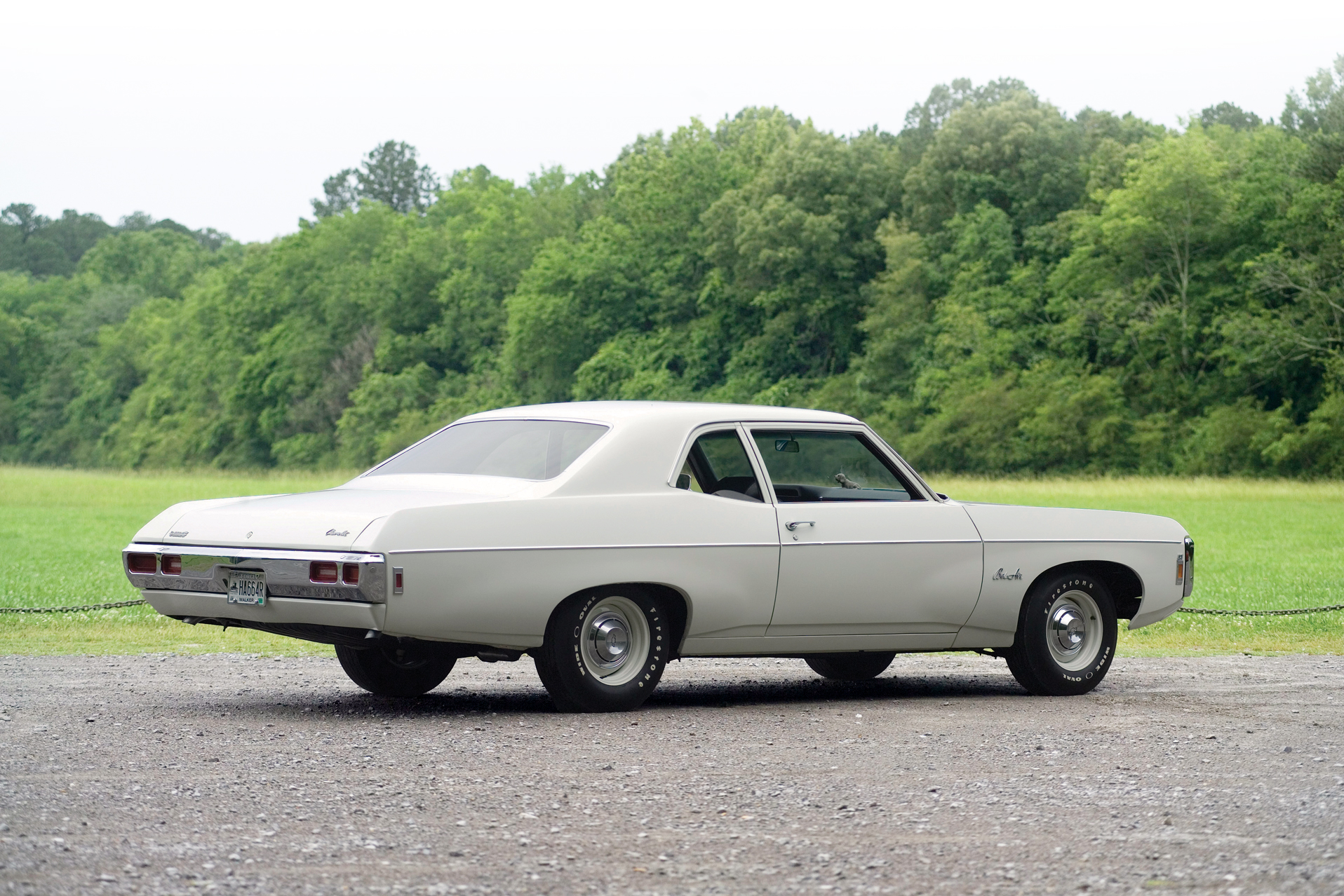
From behind the wheel, Adam Presley’s driving experience is much different from that of onlookers, especially what these youngsters might have perceived, as this relatively light behemoth is only slightly longer in wheelbase than a Chevelle. While weighing well short of 2 tons, the two-door moves right along, too, easily torching the tires through first gear and into second at will. It’s about that time that the cacophony beneath the hood drowns out the exhaust note, and within 13 seconds, a quarter mile has slipped by.
The Rare ’69 Chevrolet Bel Air
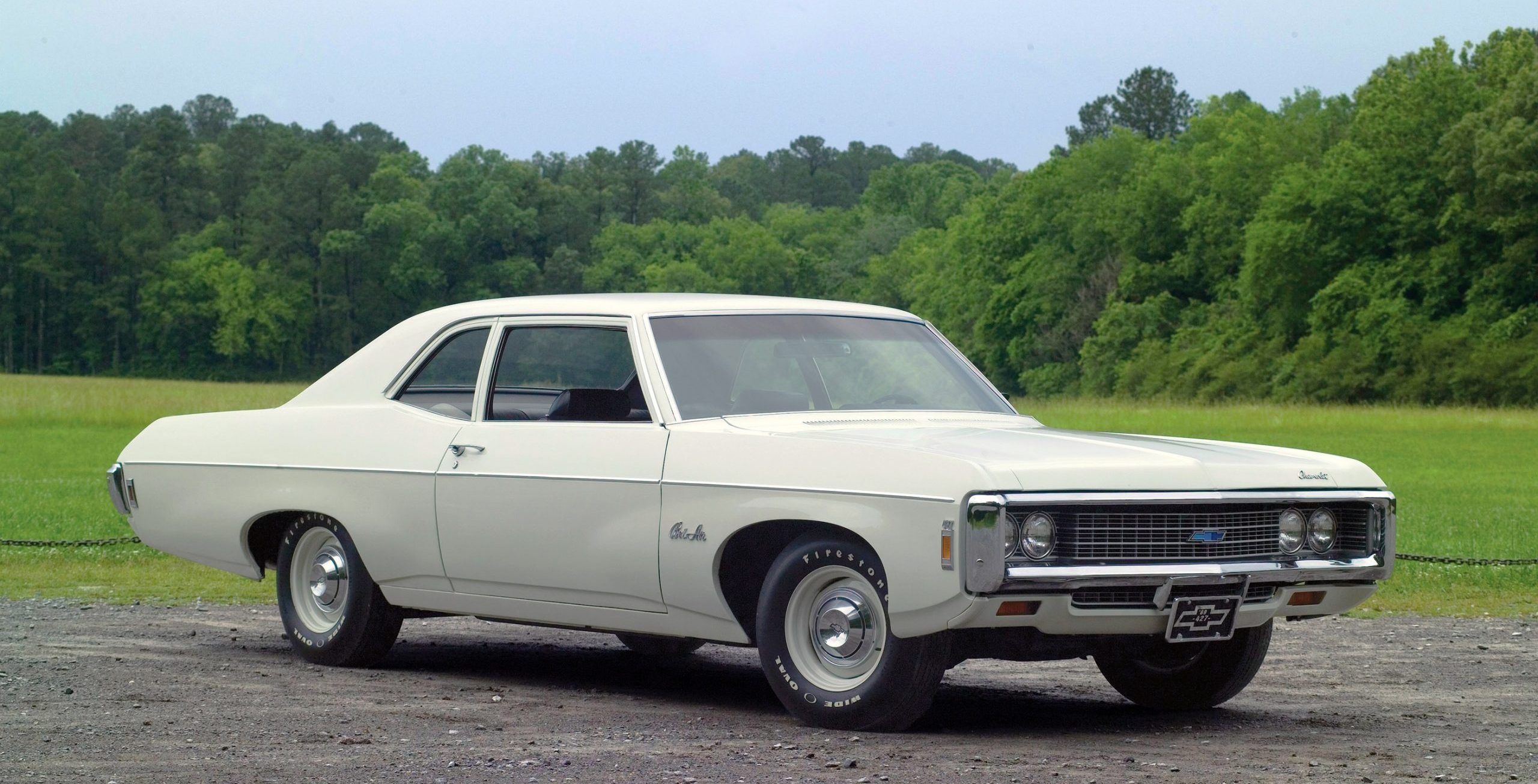
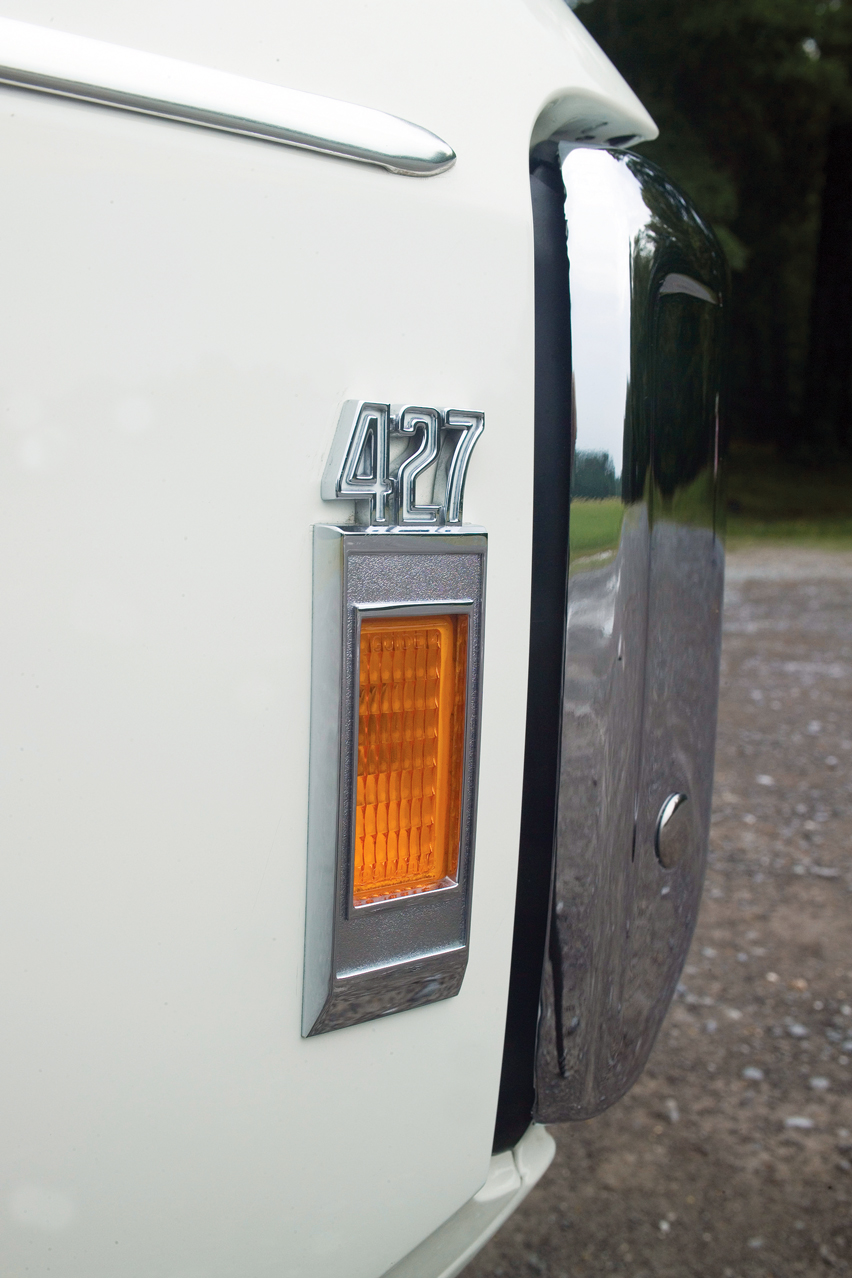
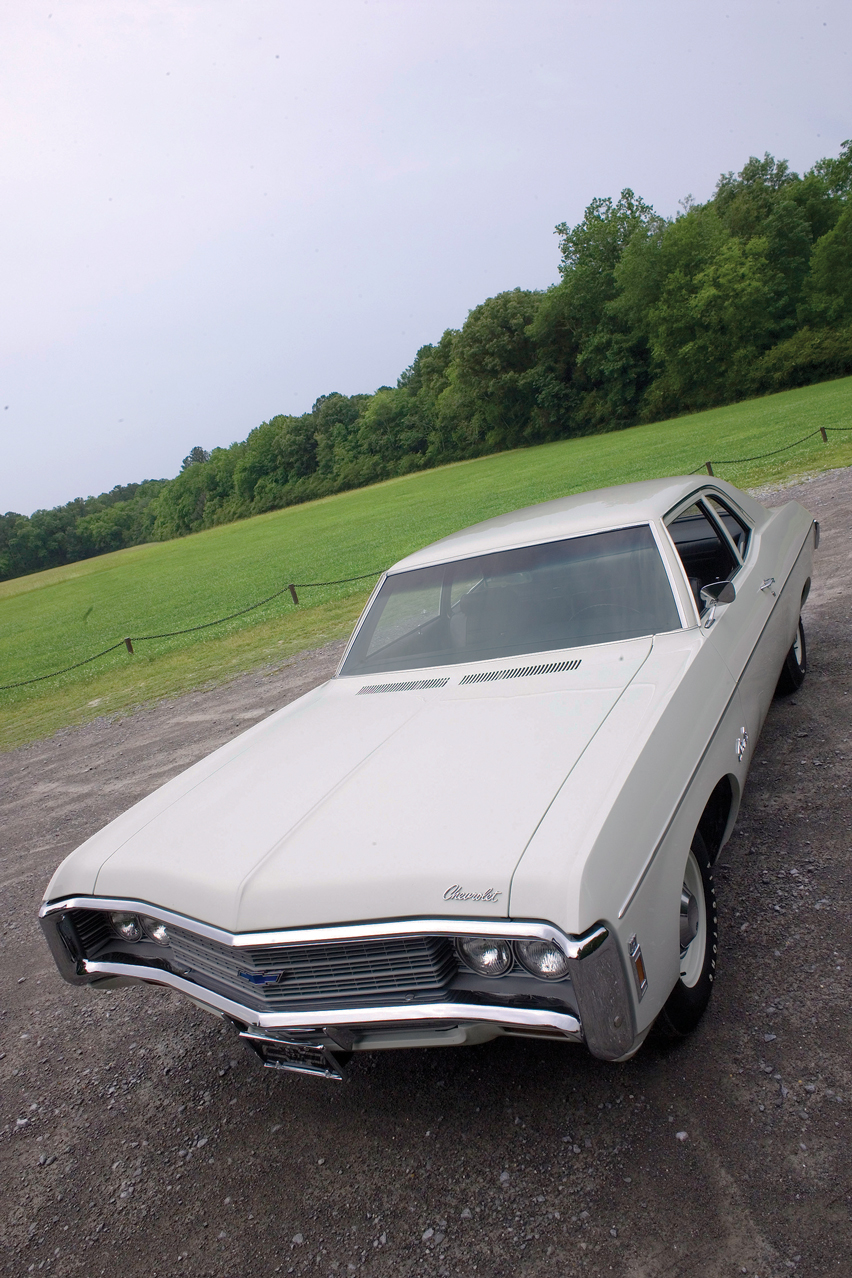
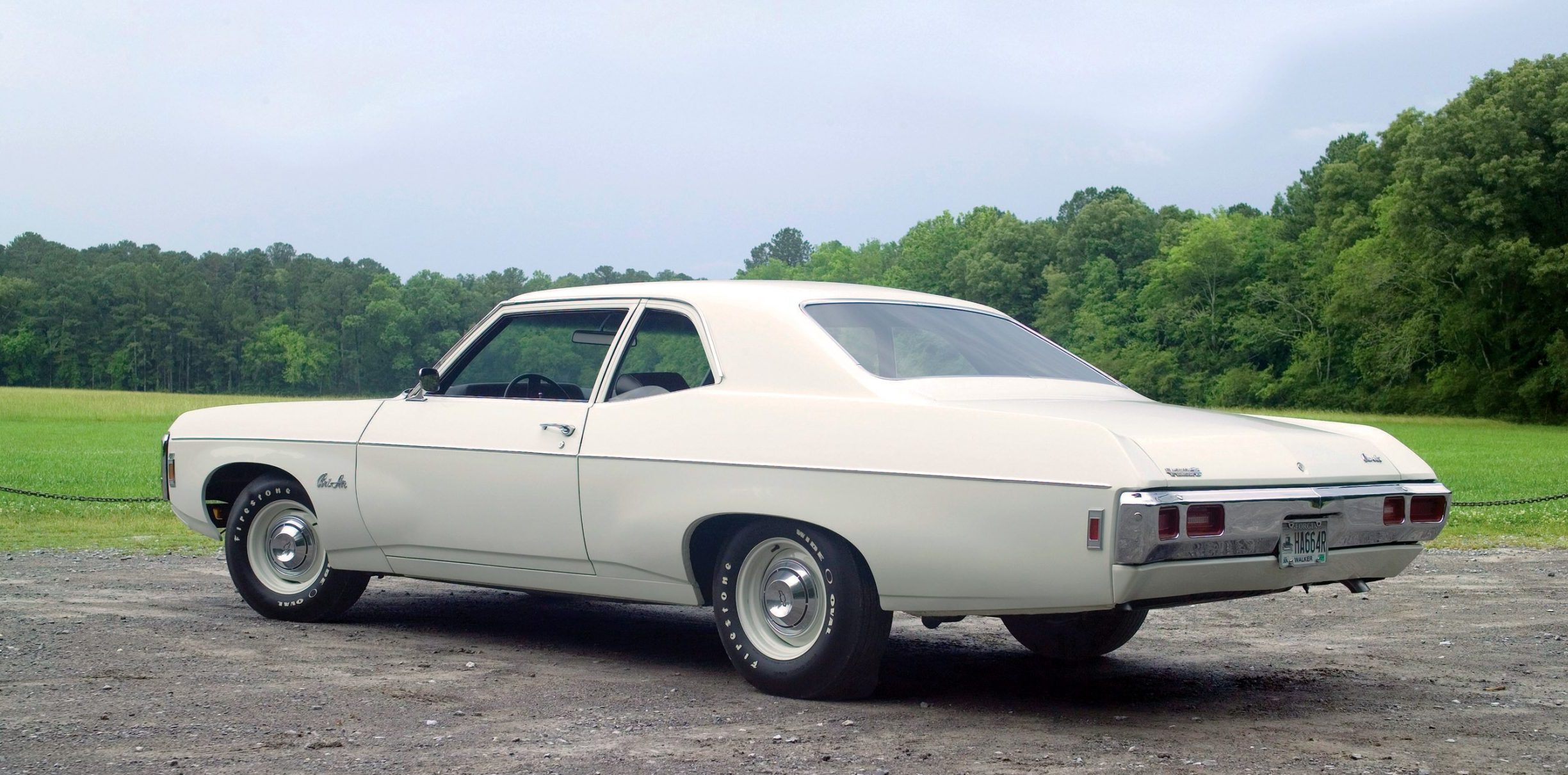
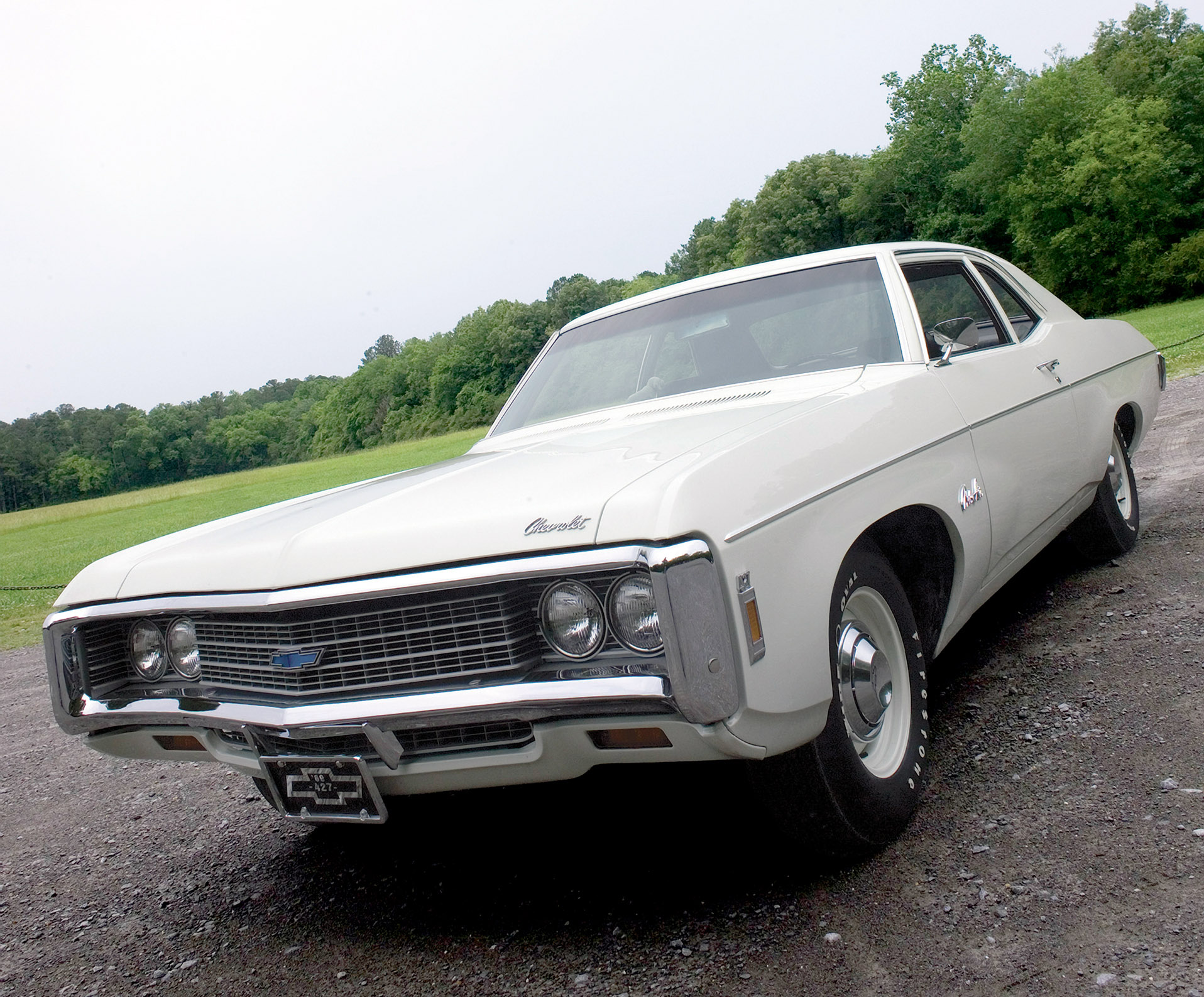
For the kids among us who aren’t sure, this is one of a handful of remaining ’69 Chevrolet Bel Airs fitted with the big-block 427 pumping out 425 hp. While fewer than 550 of these cars were built originally, and even fewer with the Muncie M21 four-speed, it’s lucky any of these cars survived their original purpose—drag racing. But luckily there are still a few around, and fortunately, Presley was able to restore this one for Danny Mullis, a quiet enthusiast who prefers giving credit to the people who brought this car together, rather than to himself for having the interest to build the car and extend this bygone era that helped mold Chevy’s performance heritage.
Appreciation for the Bel Air
Ironically, Mullis initially didn’t even like the car, but as time passed and the patina returned to this mighty Bel Air, he began to better appreciate its rare and unique appeal. Everyone loves hardtops and convertible Impalas, but when it comes to rare, this is a super sleeper if there ever was one. The combination was potent and had them covered on several levels, not the least of which was class-winning performance. Without the burden of air conditioning, a radio and speakers, power steering, and other accessories that added to the car’s total weight, this car is able to apply its power with surprising effectiveness.
The L79 427 Engine
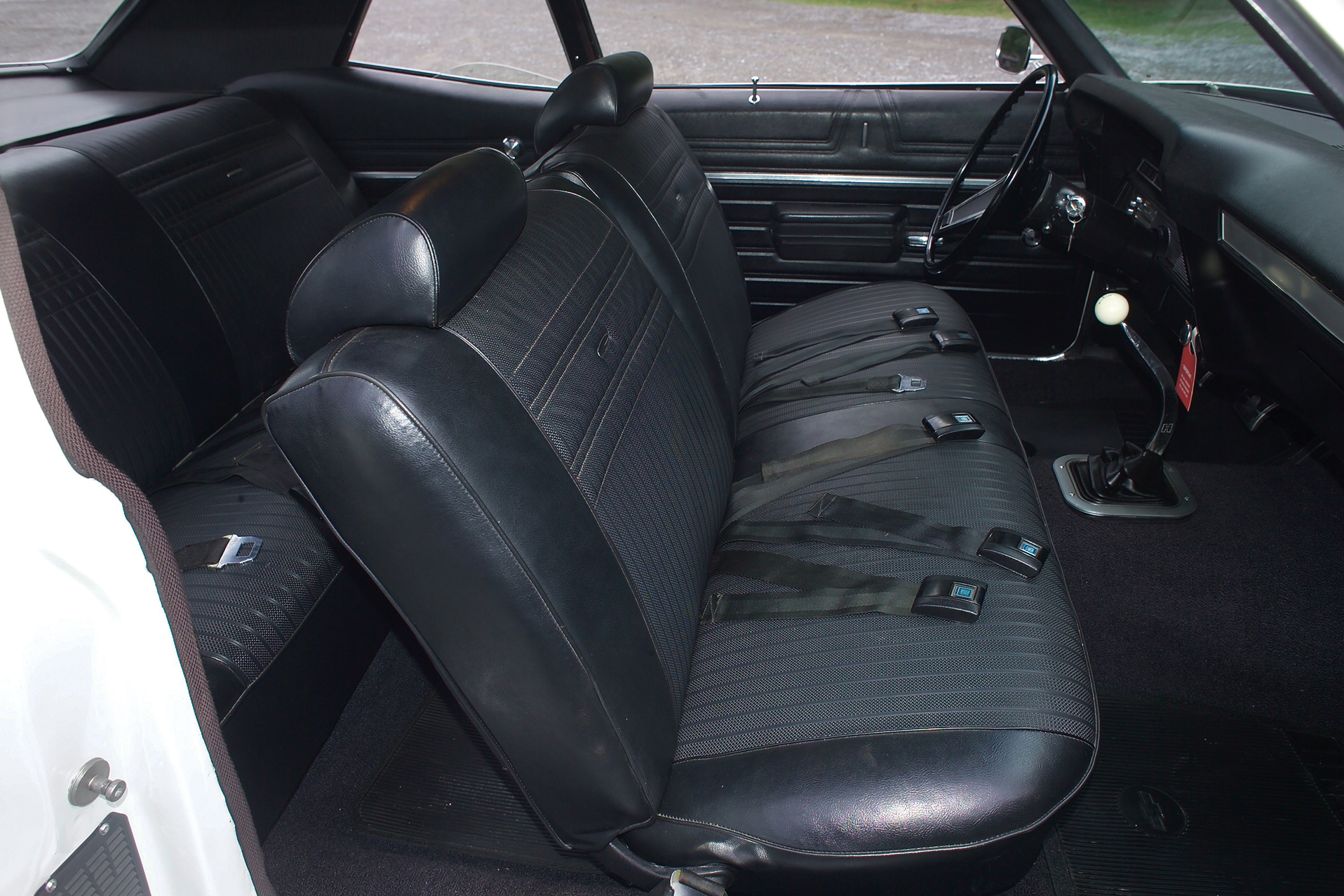
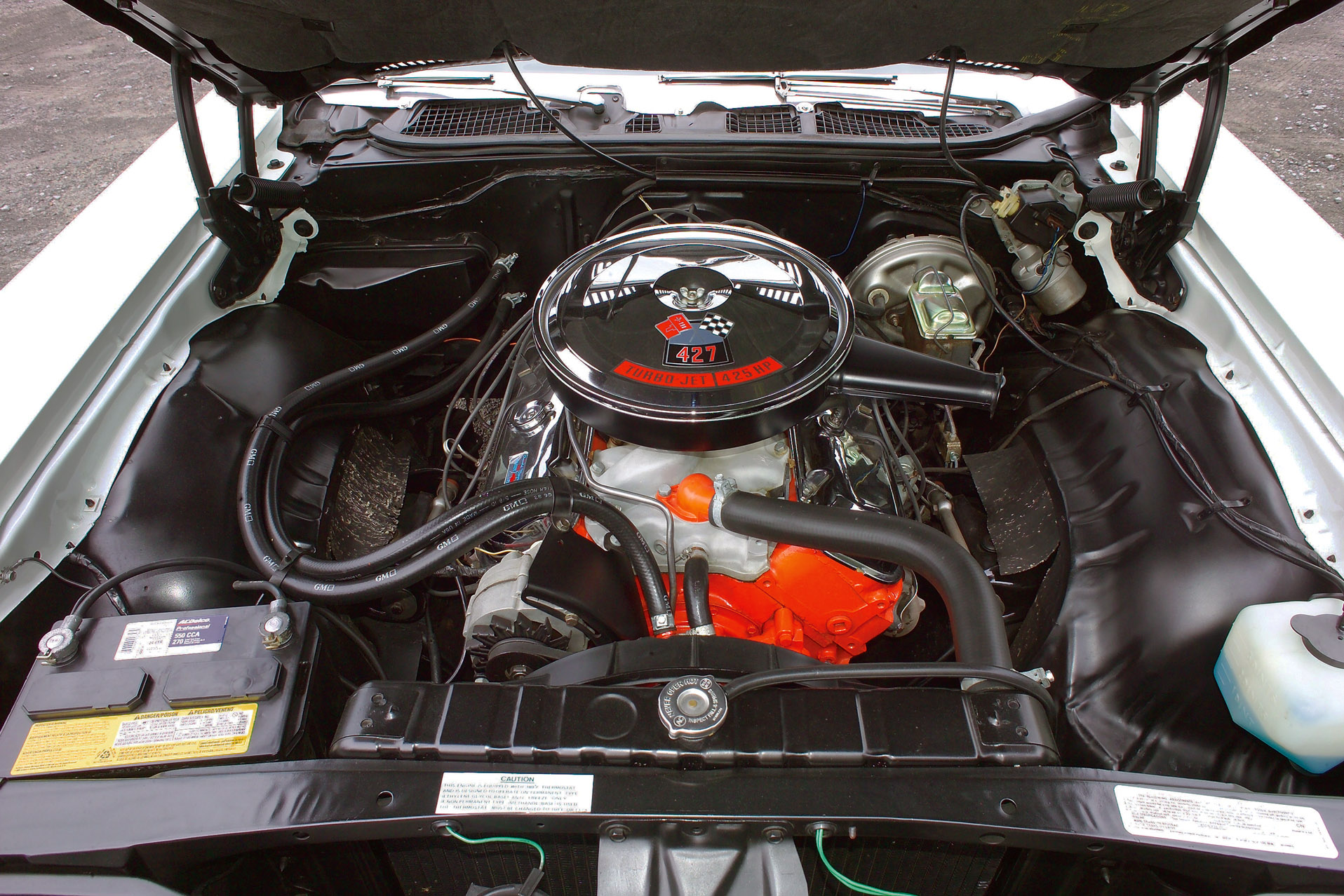
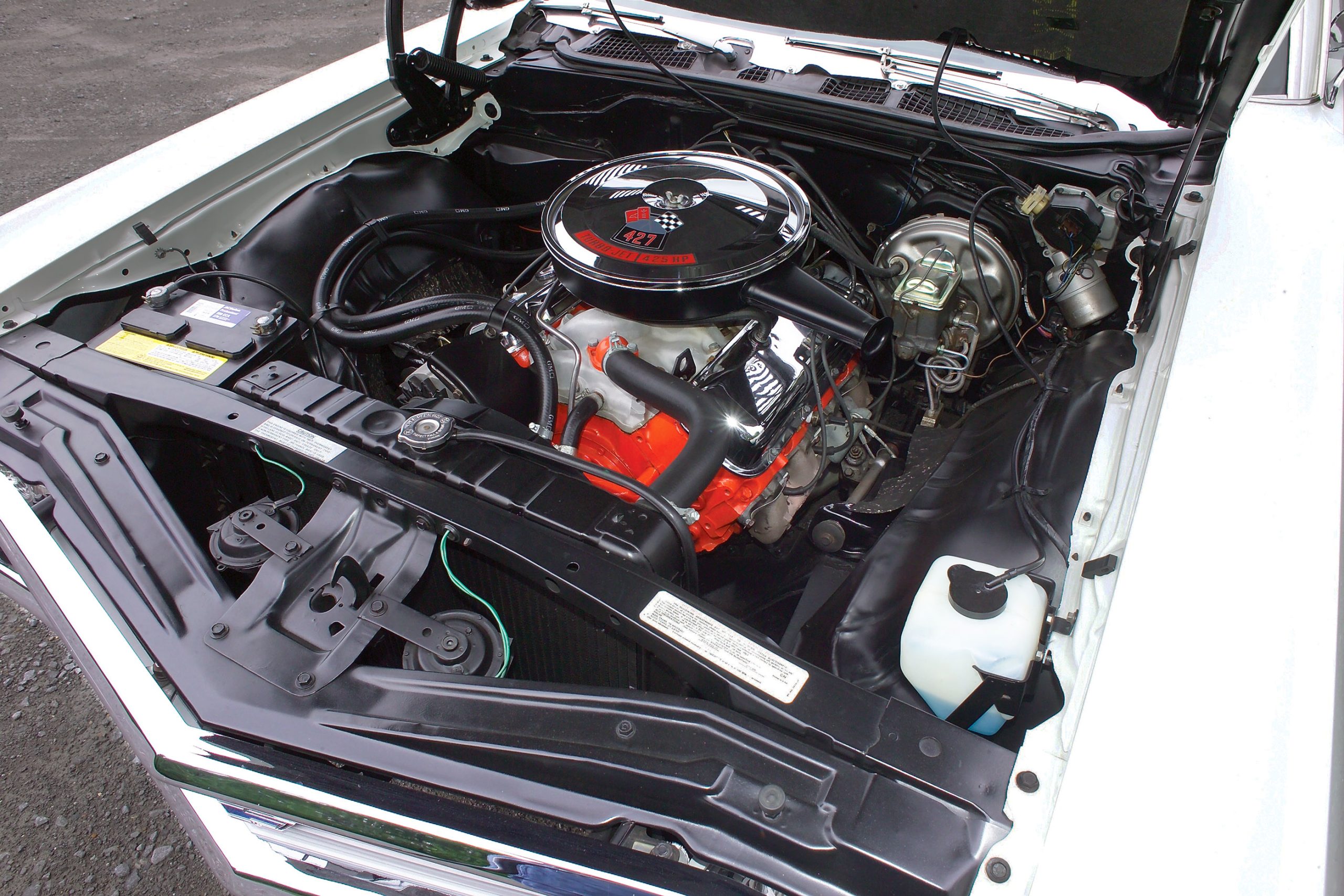
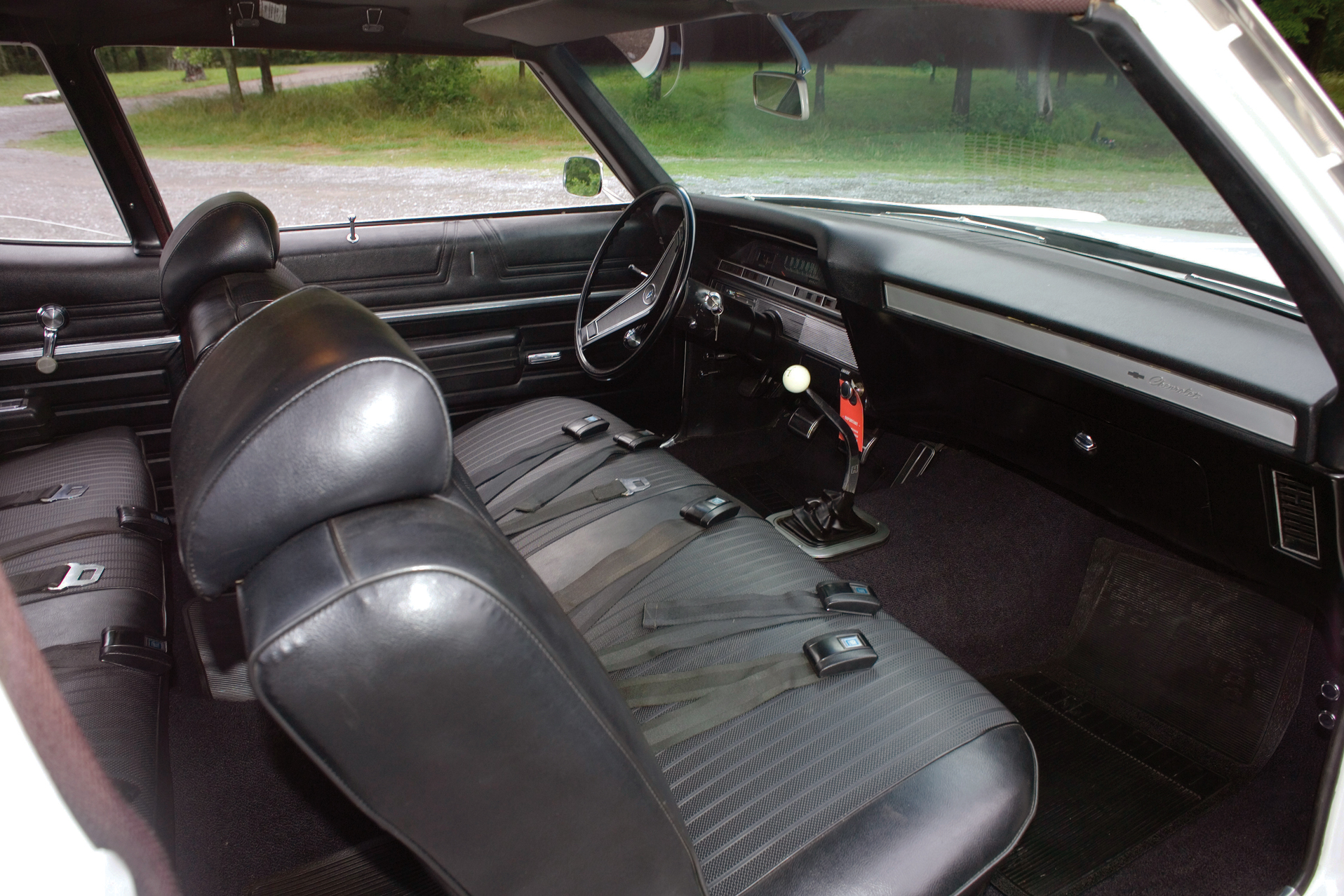
Not just any 427, the L79 was the big dog of its day, fitted with a forged crank, special rods with 7/16-inch bolts, high-compression pistons, and a mechanical lifter camshaft. The bottom side of the cylinder heads feature 2.19-inch intake and 1.88-inch exhaust valves, while on top, an aluminum high-rise intake manifold disperses a mixture supplied by Holley’s 780cfm 3310. Other features, such as the deep-groove pulleys and high-volume oil pump, ensure this monster stays in check, even as the motor nears its scary limits. To get a good handle on the heavy-duty Muncie gearbox, a Saginaw shifter rises from the floor just ahead of another rare aspect of this Bel Air, a bench seat wide enough to fit a school bus. Still, the thought of going through the gears with five other passengers onboard is not what this car was about, however intimidating that might be for the hangers-on, as this Chevy will cover the quarter mile fully loaded almost as rapidly as it will go the distance with a driver only. Again, don’t let the size of this old “post” car fool you—this is rapid transit by any measure.
Chassis and Suspension
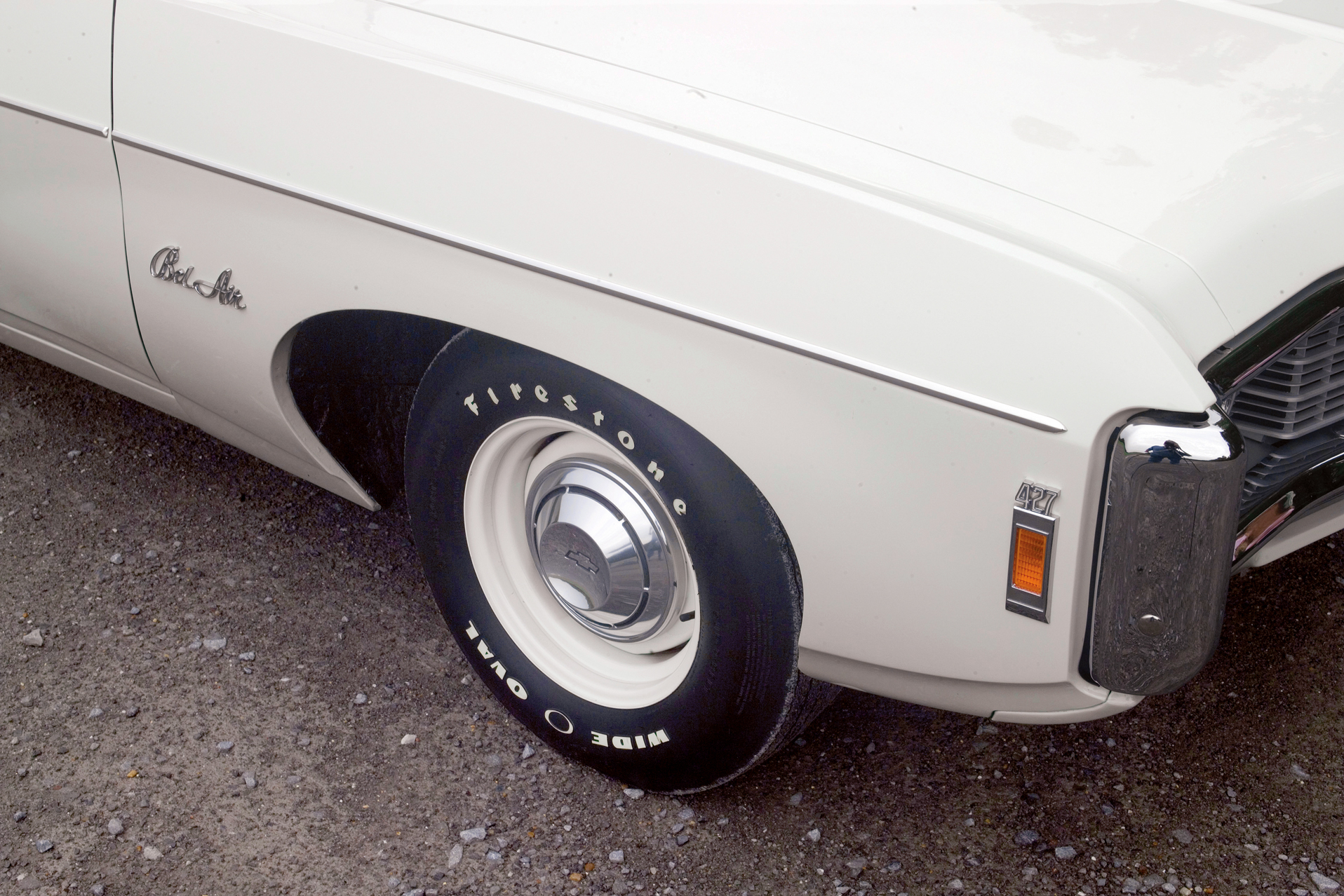
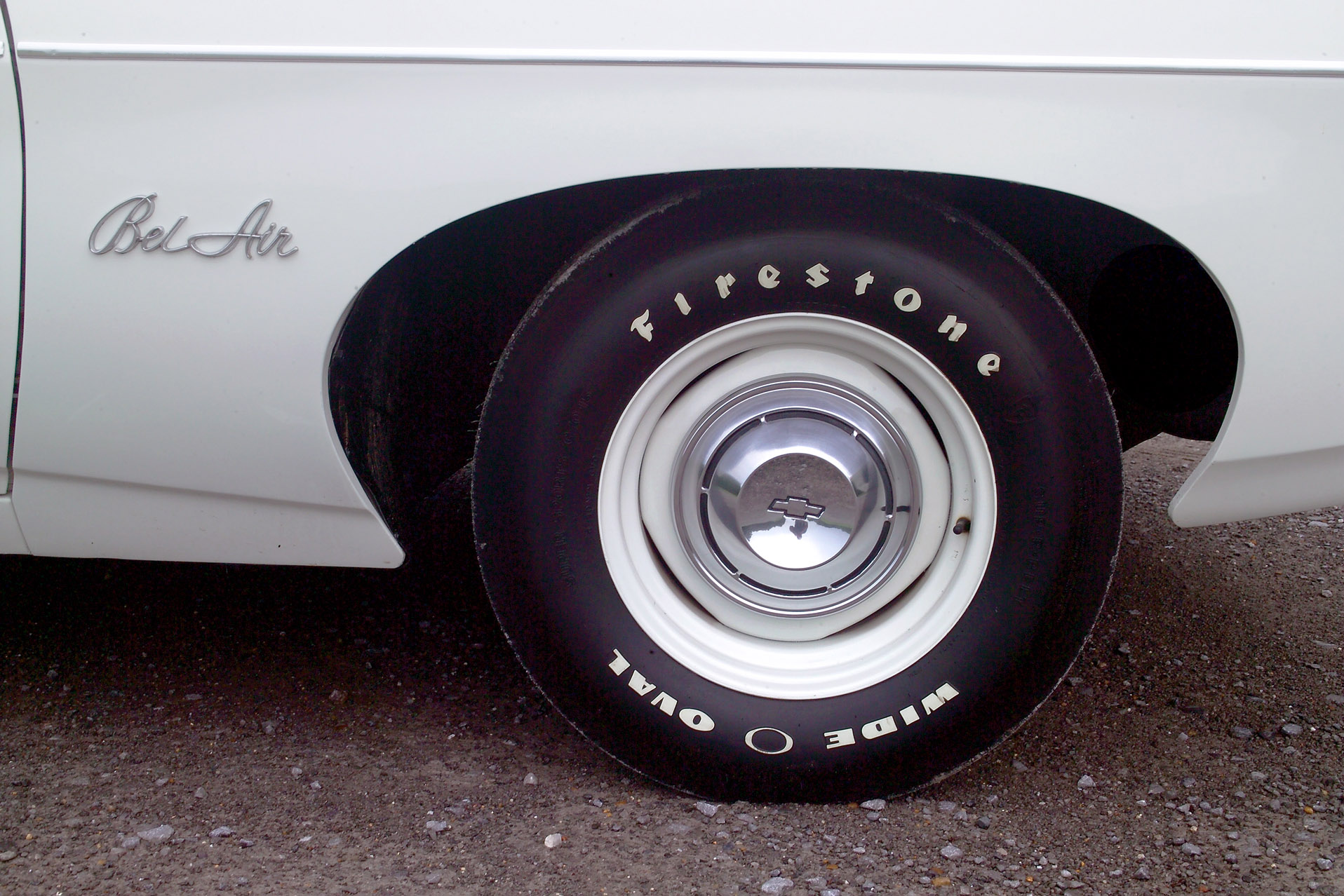
The chassis retains all of its original hardware save for the original rubber bushings, which have been replaced with heavier-duty versions to maintain better suspension geometry and to smooth the ride. Even though drum brakes have been retained all around, these happen to be power-assisted and will actually pull this car down from speed with great ease, as long as it’s not raining. It’s also interesting to note that the same rear sway bar that is used under some ’69 Chevelles is tucked under the back of this Bel Air. The 12-bolt rear axle supports 3.73 gearing with Positraction, which, considering the limits of the relatively narrow F70-15 Firestone Wide Oval tires, begs for more traction.
Interior Features
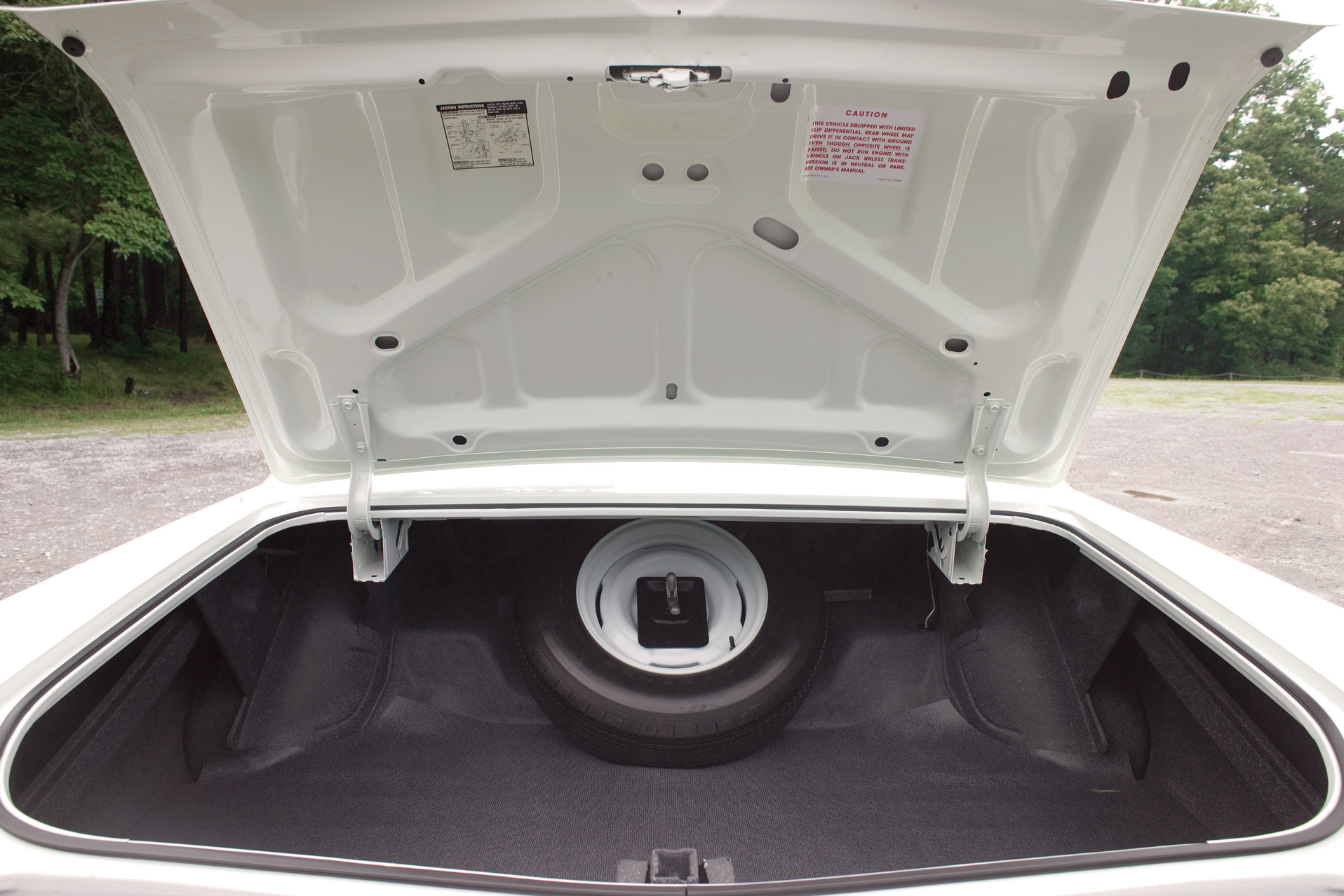
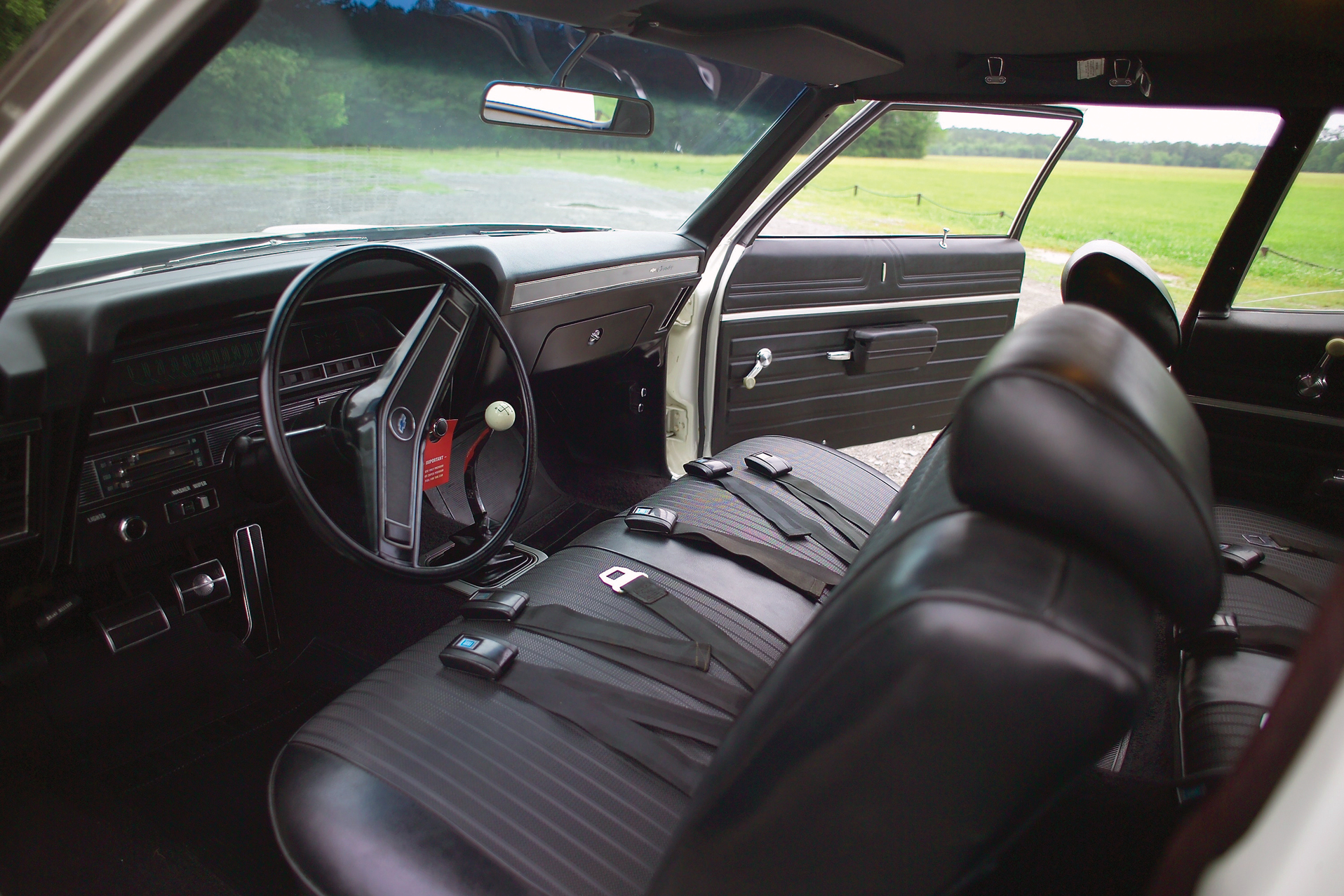
Aside from the sizable seating arrangements and a brace of seat belts, everything about the interior is austere, as it was intended from the start to serve function and reduce cost, even though the optional 427 engine priced this car much higher than other big cars in the Chevy lineup back then. The audio system was reduced to a radio-delete panel, and there’s little in the way of flashy trim or detailing. Of course, there’s a post separating the doors from the rear side windows, and while this was certainly less appealing to most back then, it is just what racing enthusiasts looked for in the day. What’s different today is that cars that were less favored, and therefore limited in production, are far more treasured models today.
Driving Experience and Ownership
Fortunately, this ’69 Bel Air 427 is as good as new, and surprisingly in these times of trailer queens and tow vehicles, it is driven on a regular basis, but not by the owner. Instead, Mullis prefers to get the builder behind the wheel. Needless to say, this is a great opportunity for Presley, as he’s spent a great deal of time returning this car to its original state, and then some. He expressed his thanks for this rare and much-appreciated opportunity by saying, “Even though it belongs to Mullis, I get to drive it and clean it without having to lay out the considerable cash for an amazing ride like this.” Not bad for a car that continues to attract some very impressive bids.
The Enduring Appeal of the ’69 Bel Air
While it’s highly unlikely the kids on that bus knew what they were looking at, this big Bel Air does have a way of bringing out the kid in us, and that goes double for anyone with a love of cars that were different. While it may use up more space with its far larger footprint, and it certainly is made of more steel than two modern hybrids and is capable of burning more fuel than five or six of them over a given distance, this stripped-down, high-performance Chevy reminds us of another time when the government and the gas companies were less interested in manipulating our lives. And, while we’ll never see the likes of this car again, those that remain are part of the wonderment of it all and help drive the love affair we all share for yesterday’s performance Chevy, and with no flash at all—just a big car with brute power.