Edit Template





THE AUTO BUILDER
Menu
Featured


BACK IN BLACK: Jamie Musselman’s ’33 Ford Roadster
Forty-four years have passed since Musselman teamed with Boyd Coddington in creating one of the most amazing rods of its day, an excetpional car that took its place in history as the Oakland Roadster Show’s “America’s Most Beautiful Roadster” in 1982. This was also due, in part, to the efforts of many top fabricators including Lil’ John Buttera, Dan Fink, Steve Davis, Thom Taylor who designed the car.
The Trucks Of ’57 Heaven
We heard of the Glenn Patch Collection a couple of years ago from a friend who had visited Patch’s warehouse in Scottsdale, Arizona. We were told of the quality of the restorations, as well as the variety of different cars, but the thing that intrigued us most was the fact that the entire collection consisted of cars and trucks manufactured in 1957.
LS is MORE
When GM introduced the Gen III small block in the F-body, it rekindled a dying performance flame with its new-generation small block. While the Gen I small block actually kick-started the hobby and got it into gear, it’s the latest family of small-block engines that has grabbed the attention of enthusiasts everywhere—and for good reason.



Spotlighter
POPULAR READS
-
The Auto Builder’s Hottest Product Picks from The Triple Crown of Rodding 2026
-
Product Spotlight: Bill Mitchell Products Aluminum LS Engine Block
-
PRODUCT SPOTLIGHT: 60-66 Chevy C10 Fresh Air Vent Block Off Plate
-
Product Spotlight: Pyramid Optimized Design Sequential Aurora Taillight for 1964½–1966 Mustang
Nostalgia Rod
Installing a Nostalgic ’56 Ford Pickup Steering Box
Old-style rods, nostalgia rods and rat rods are increasing in popularity across America, and we are beginning to see a growing number of them at car shows outside California, where the movement seems to have set strong roots. These styles are generally seen in large numbers at shows such as NHRA’s Hot Rod Reunion (in Bakersfield), the West Coast Kustoms Show (in Paso Robles) and even the L.A. Roadster show (in Pomona). For the last two years there has been a special room for such cars at the Detroit Autorama (held at Cobo Hall), and this year was the biggest display yet.
Author

Jeff Tann
Story & Photography
The Rise of Nostalgia Rods and Old-Style Builds
Old-style rods, nostalgia rods and rat rods are increasing in popularity across America, and we are beginning to see a growing number of them at car shows outside California, where the movement seems to have set strong roots. These styles are generally seen in large numbers at shows such as NHRA’s Hot Rod Reunion (in Bakersfield), the West Coast Kustoms Show (in Paso Robles) and even the L.A. Roadster Show (in Pomona). For the last two years there has been a special room for such cars at the Detroit Autorama (held at Cobo Hall), and this year was the biggest display yet.
Primer Nationals and the Growth of the Movement
There’s even a Primer Nationals show held yearly, and it, too, keeps getting bigger. Last year there were more than 800 cars in attendance. Amadeus Ramirez-Reynolds was fascinated with the old-style rod look and movement, so he decided to build one. He spent some time reading old magazines to determine the components that were used in the old days and started collecting the parts he would need. He wanted a car that had the old flavor, but he also wanted one that would be safe, reliable and a good driver. It doesn’t always seem that these conditions are possible with many of what we call “art” cars, which are conceived to look like rusted-out hot rods of decades past.
Following a Traditional Build With Modern Awareness
We talked to Amadeus when he was just starting his rod and liked what he had to say, so we decided to follow the buildup to show other young guys how it can be done with safety in mind. The front and rear suspension was covered in the June 2006 issue of STREET ROD BUILDER. This is not a project per se; rather, we have focused on the various technical aspects of the build. The engine installation was featured in the July 2006 issue of this magazine.
Once the engine location was determined, it was time to install a steering system in this channeled ’29 Ford sedan nostalgia rod, so once again we bring you a look of the past with consideration for a satisfying, and safe, driving experience.
Traditional Steering Choices and Vintage Components
Although Amadeus did make some modern improvements along the way, he wanted traditional steering, so he selected a ’56 Ford pickup steering unit because that’s the way it was done in the past. He found a good, rebuilt steering box that had to be adapted to the boxed Model A chassis. This entire installation was done with vintage parts, so if you have a garage full of old parts that you replaced on your street rod, they may be valuable to someone else.
Tools Required for a Period-Correct Steering Installation
In this feature we followed Amadeus as he designed and fabricated his steering setup. The tools required to accomplish this task included a T-square, a drill motor with several drills, a hole saw, a 3-inch cutoff wheel, a 5-inch sander, a plasma cutter, an oxy-acetylene welder, a large chop saw, a metal lathe, a TIG welder and a variety of normal hand tools.
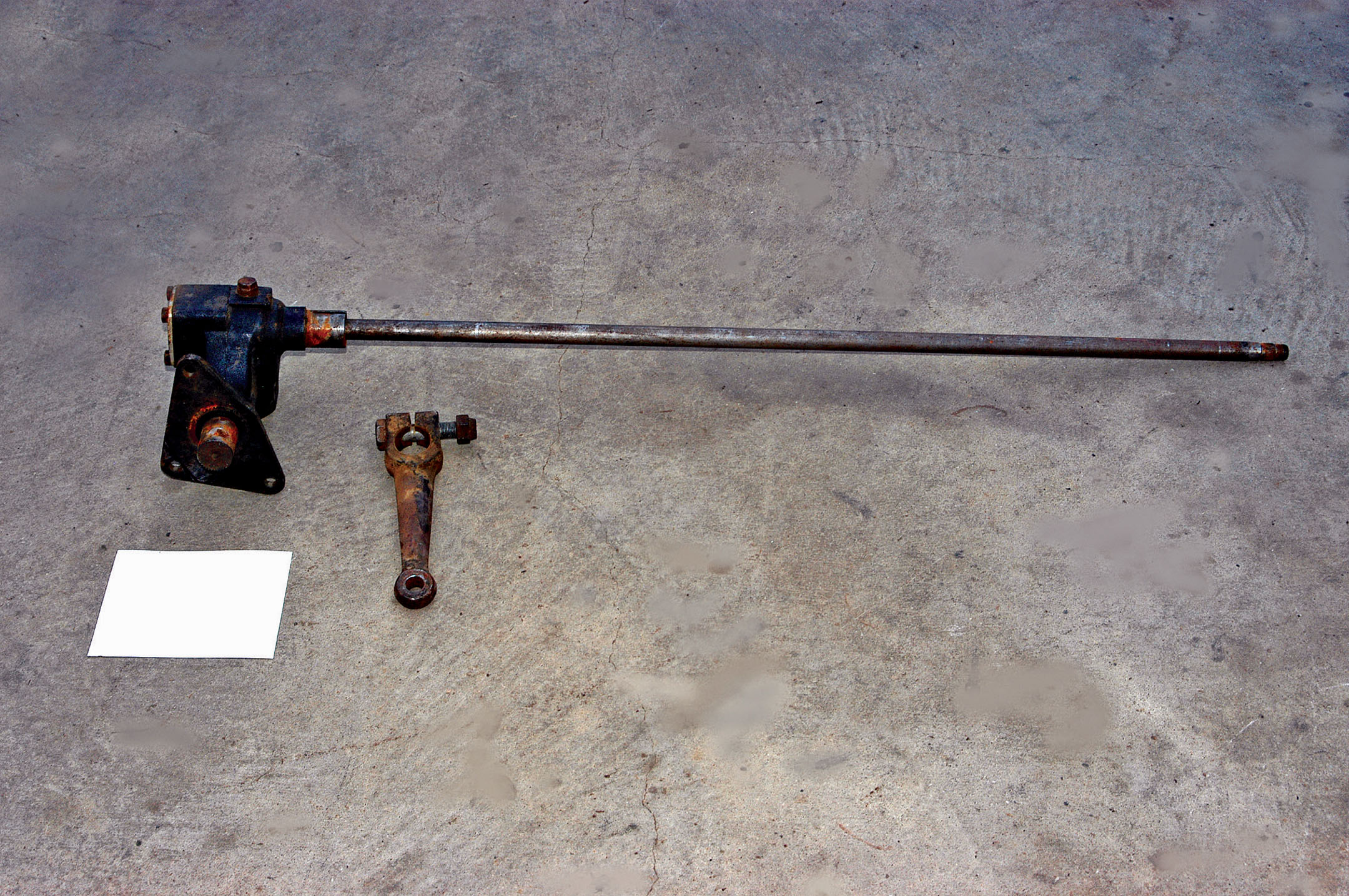
1. The steering selected was a rebuilt ’56 Ford pickup steering box and a stock-style steering arm. In the old days the early Ford truck unit was a big improvement over the stock steering setup and was easy to install in most of the early Ford frames.
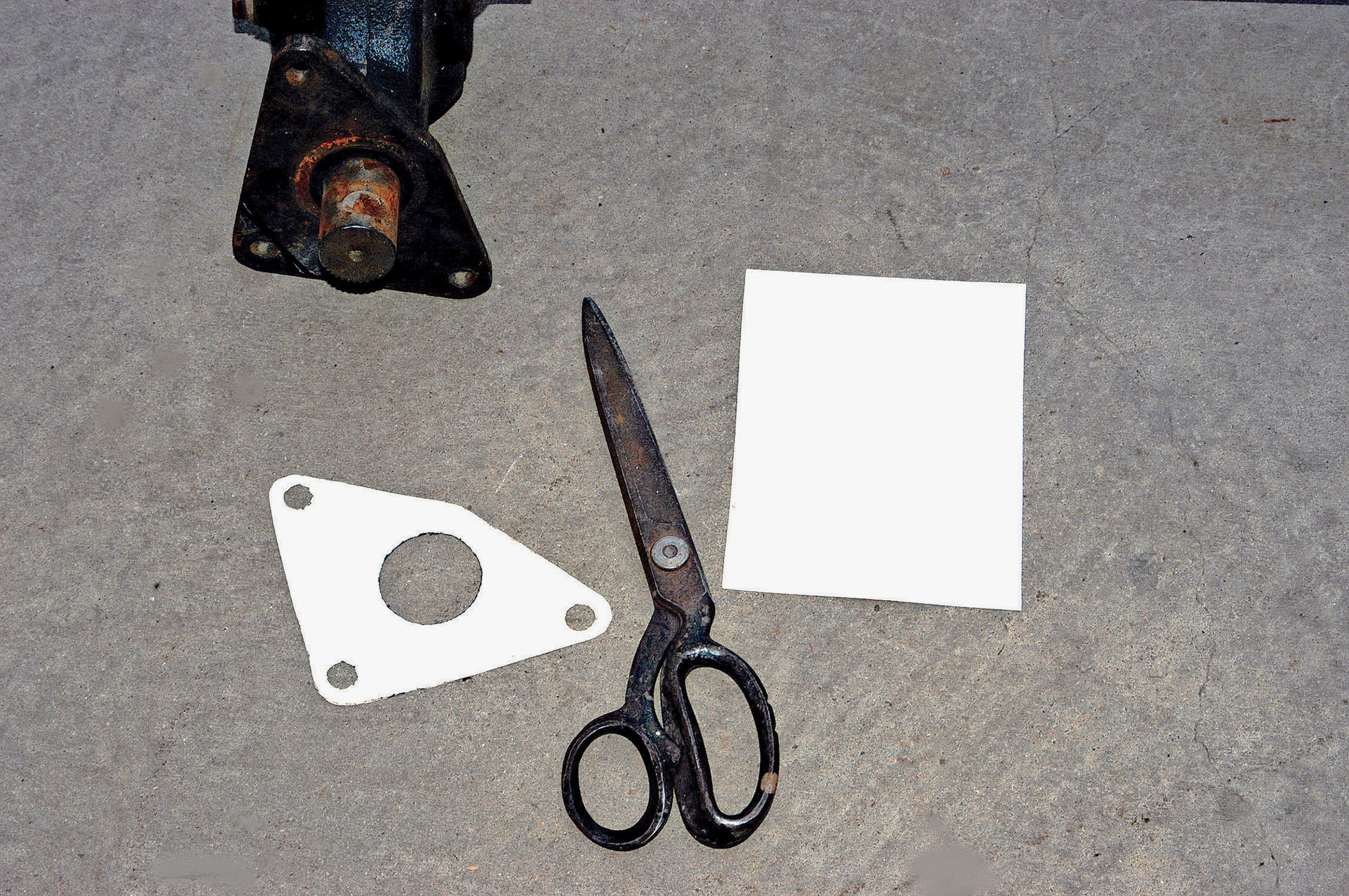
2. The installation began by making a cardboard template of the steering box mounting flange. The frame mounting side was marked with lines.
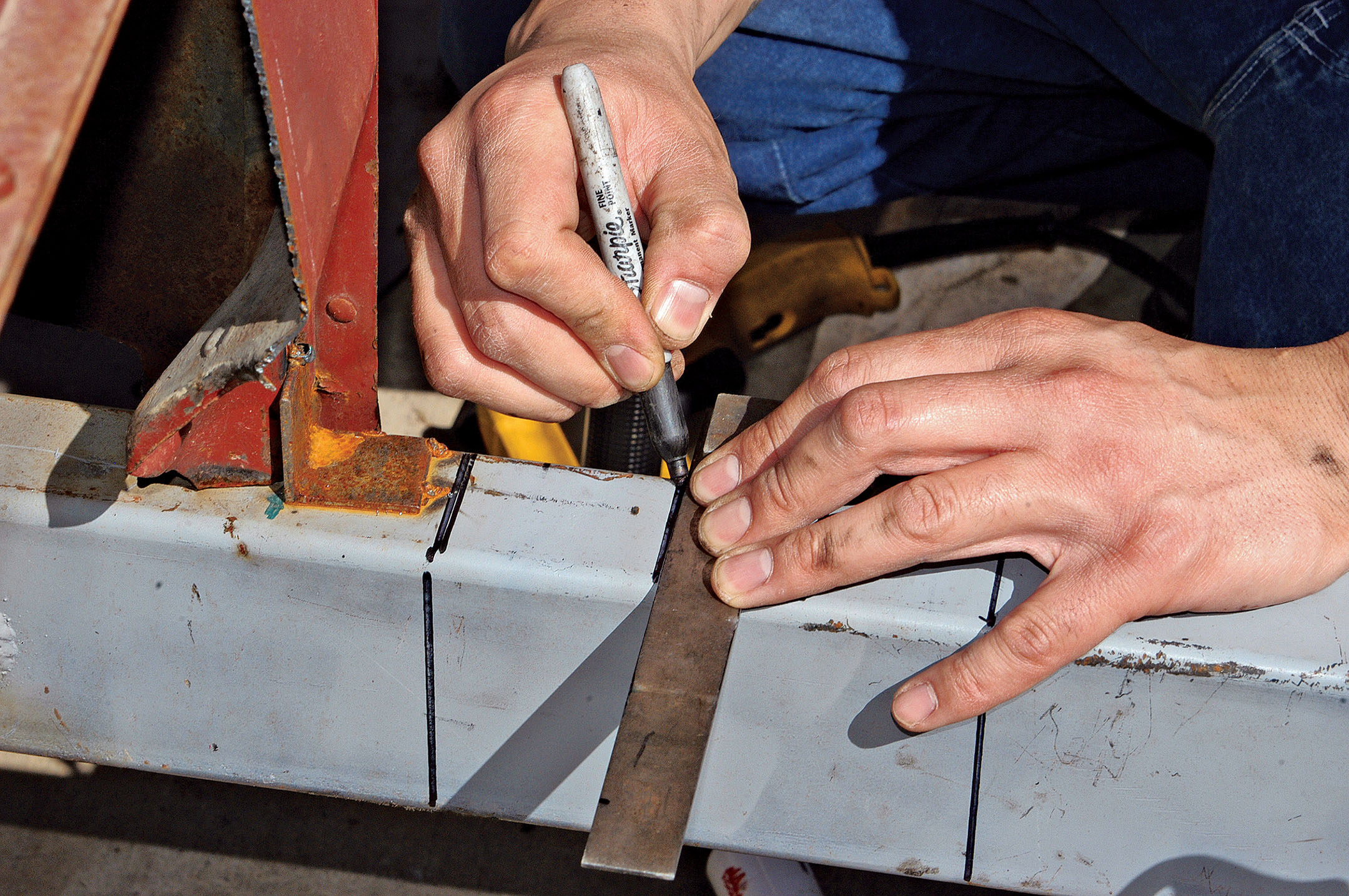
3. The mounting location was determined on the frame and lines were drawn where the steering box will mount. Another set of lines was drawn for the steering shaft location.
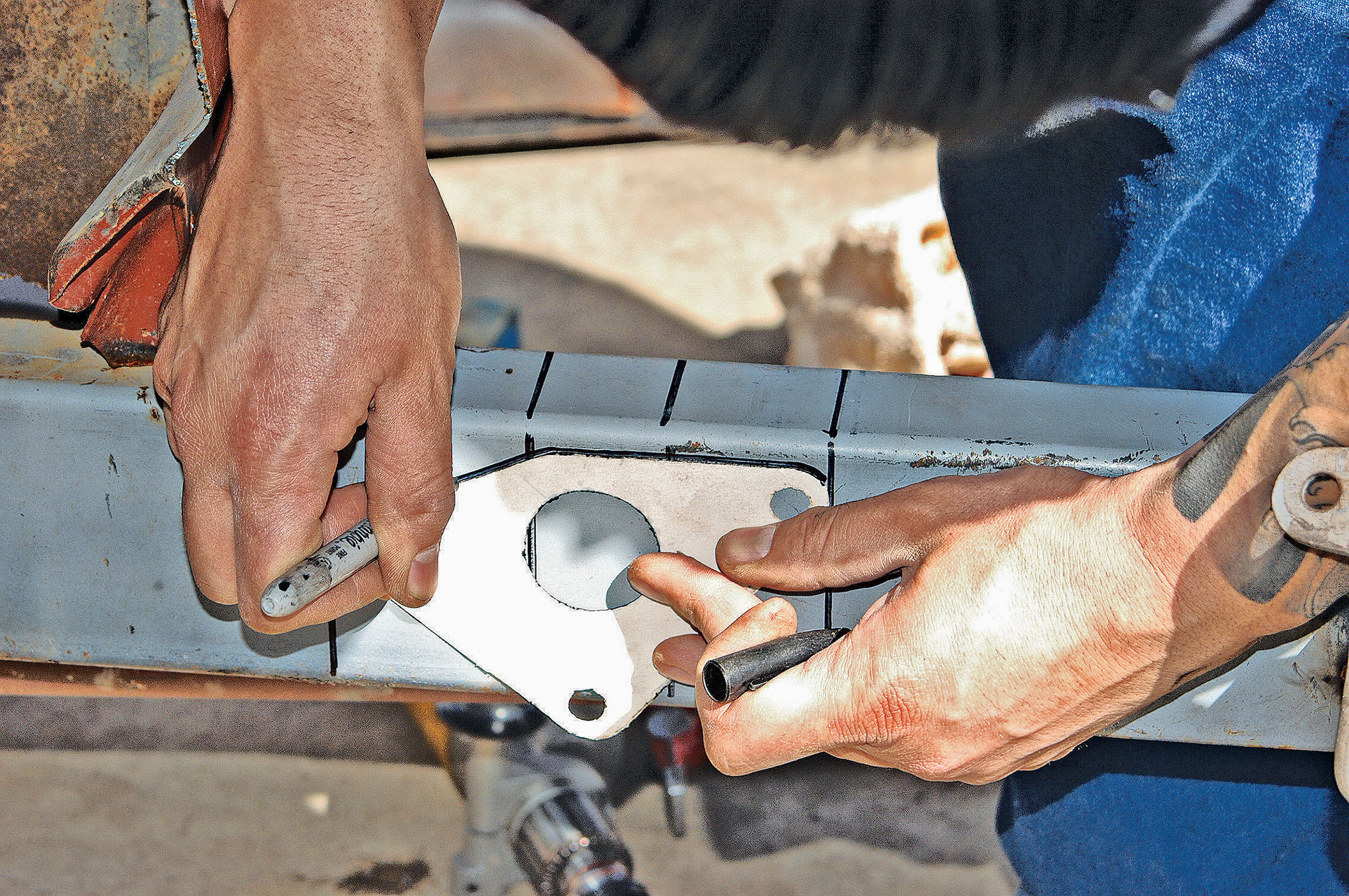
4. The cardboard template was located in the mounting area and the steering shaft location was determined.
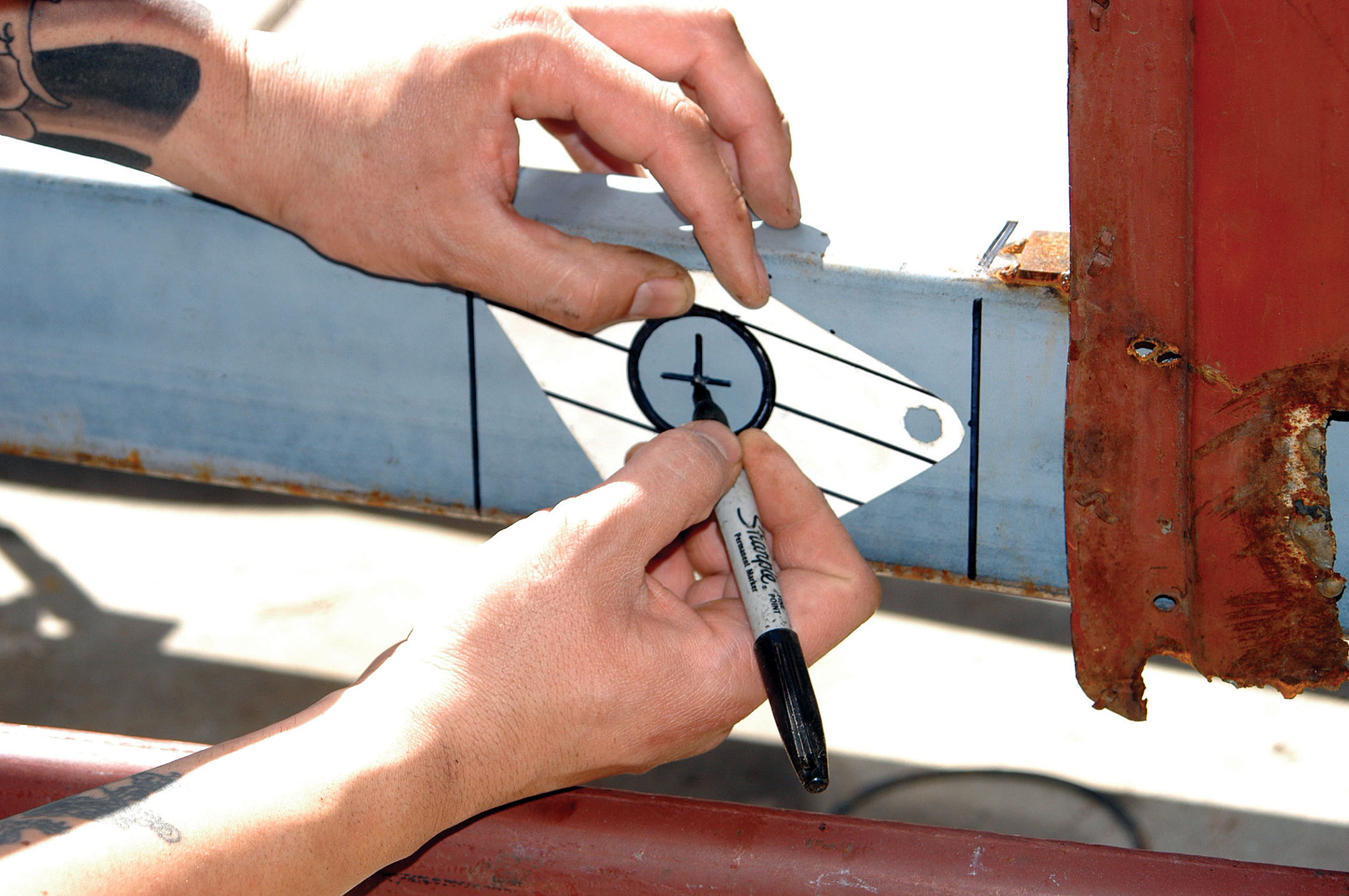
5. After the shaft location was determined the center had to be located. Here the center is being marked with a felt pen.
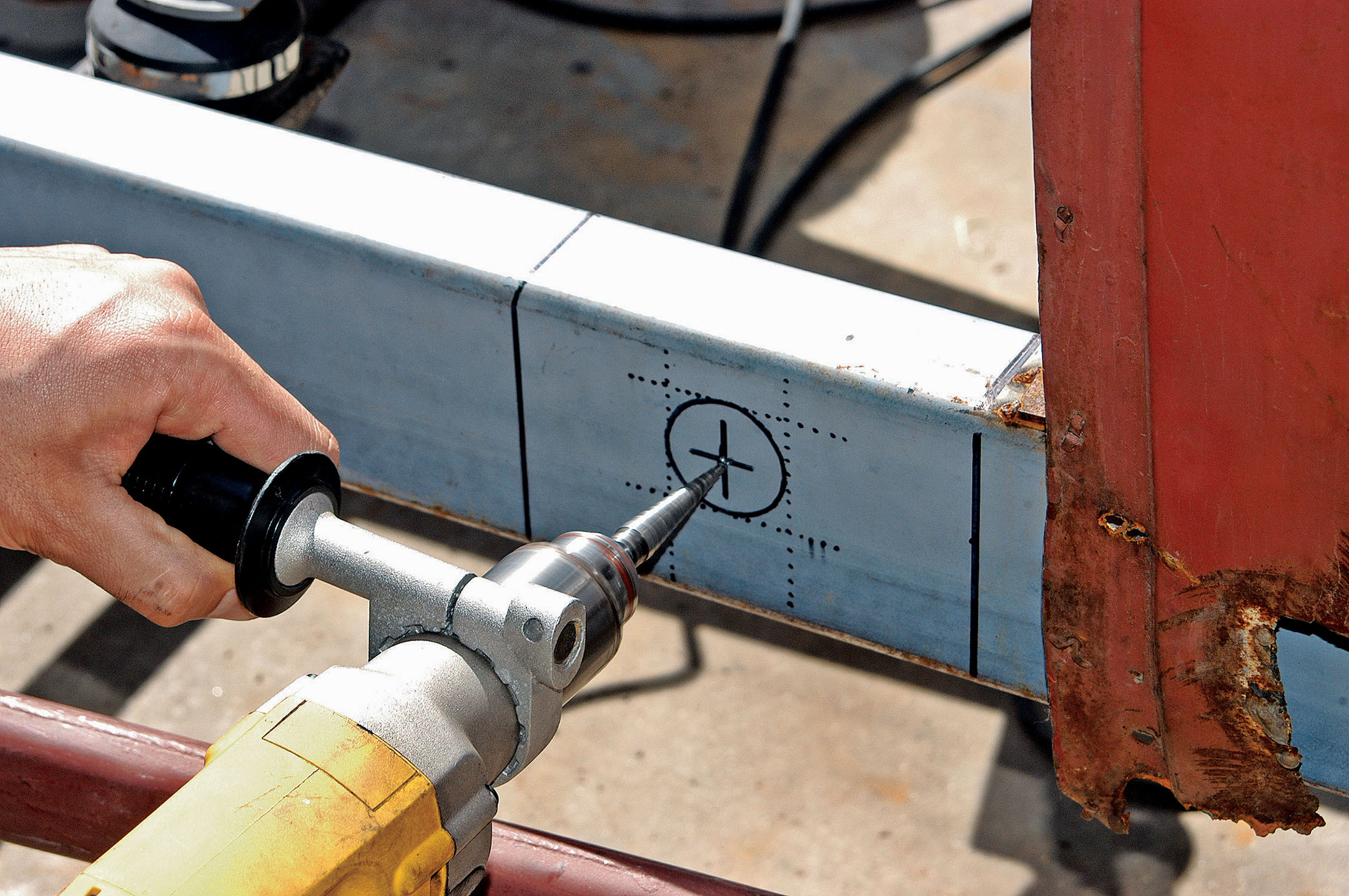
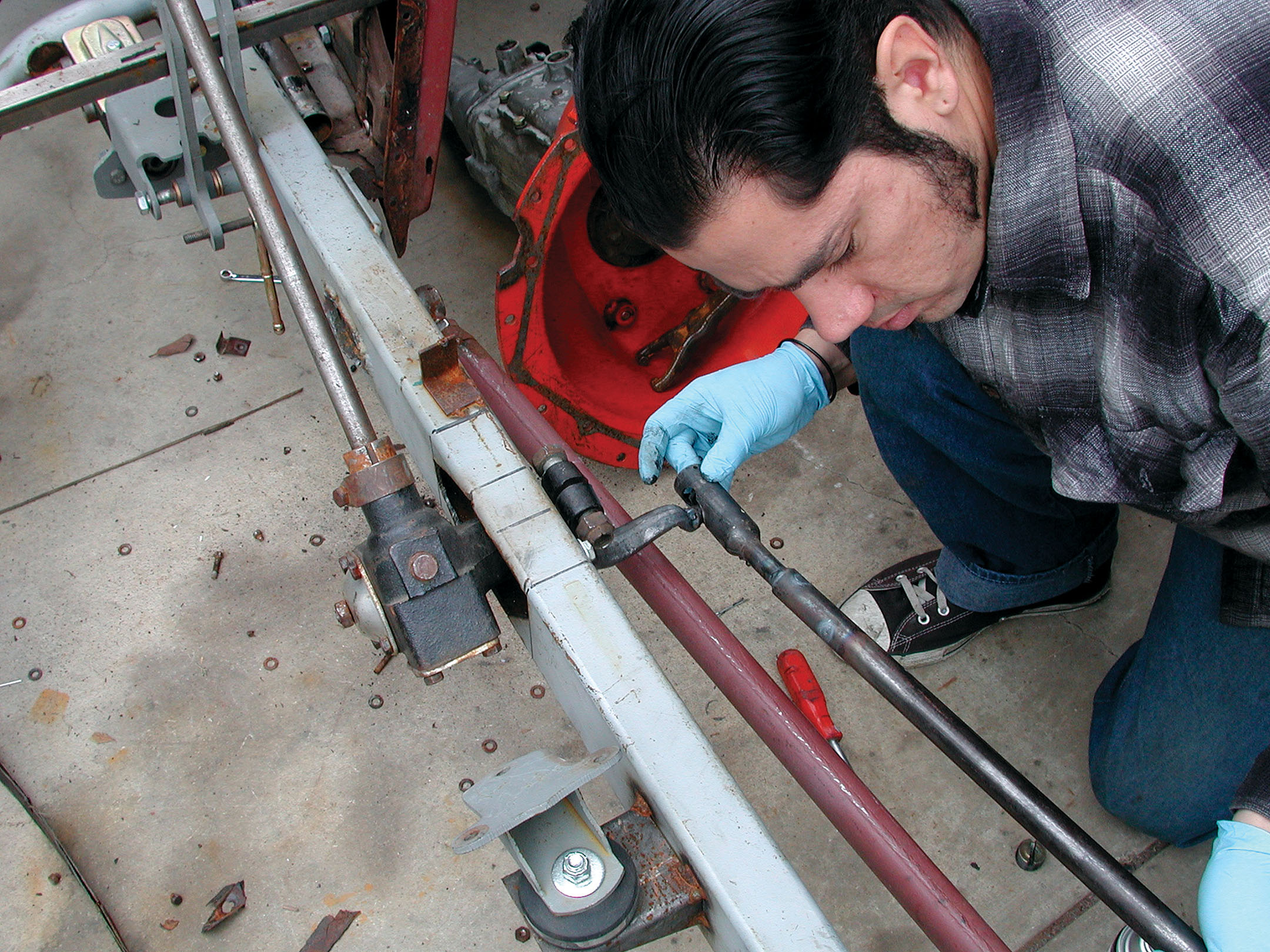
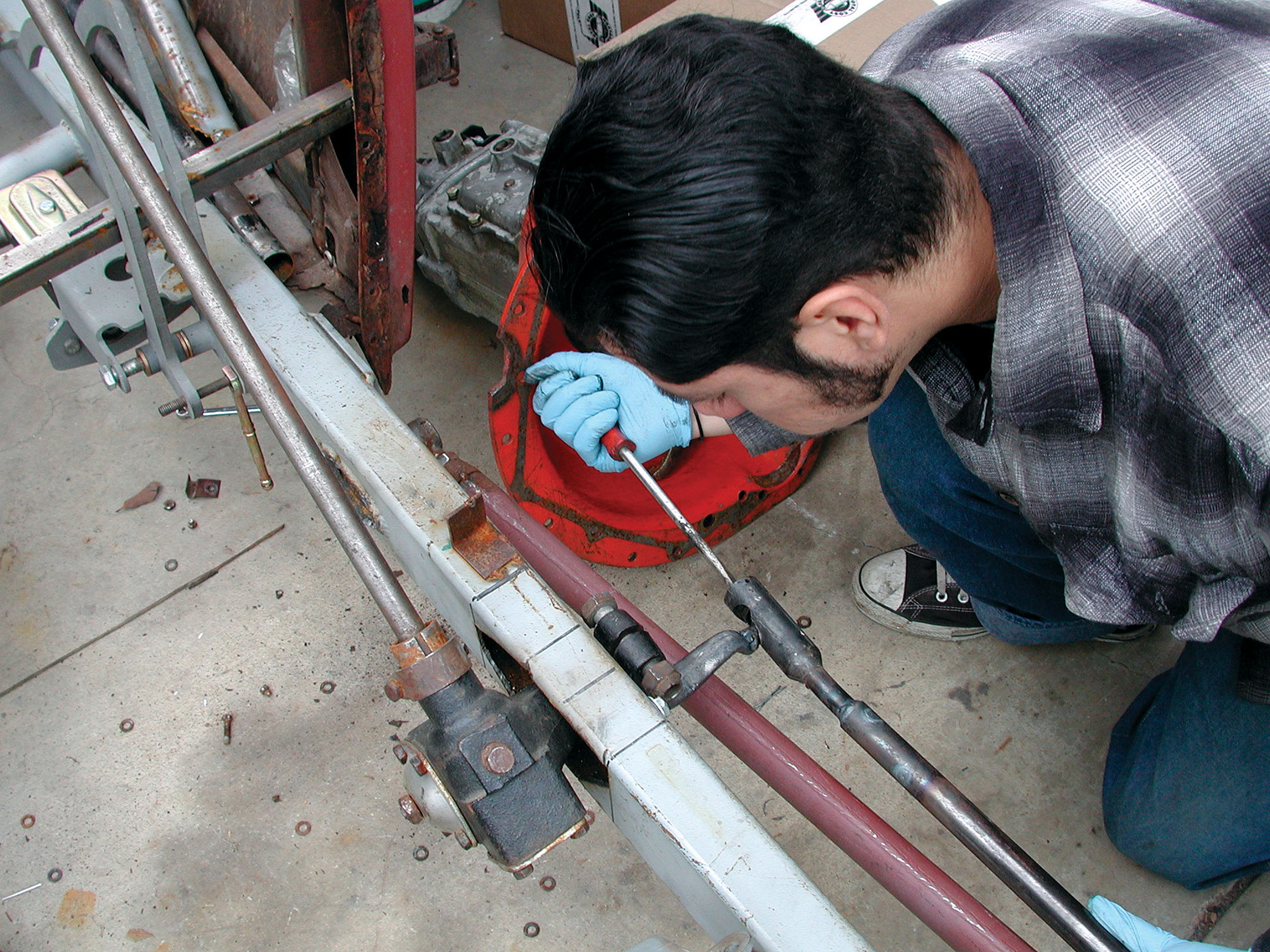
6. The center of the hole was located with a centerpunch and a starter hole was drilled through the frame with a step drill.
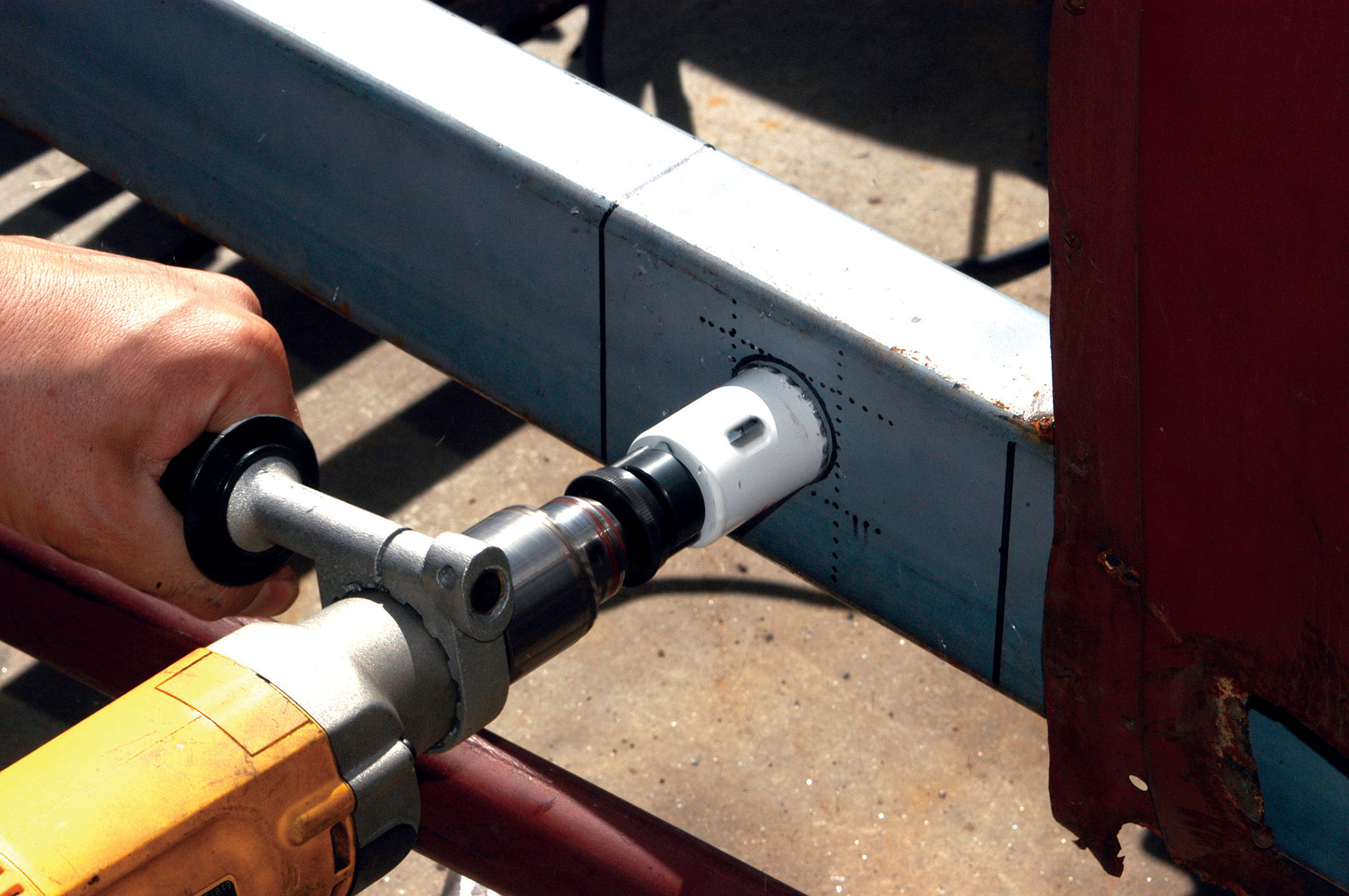
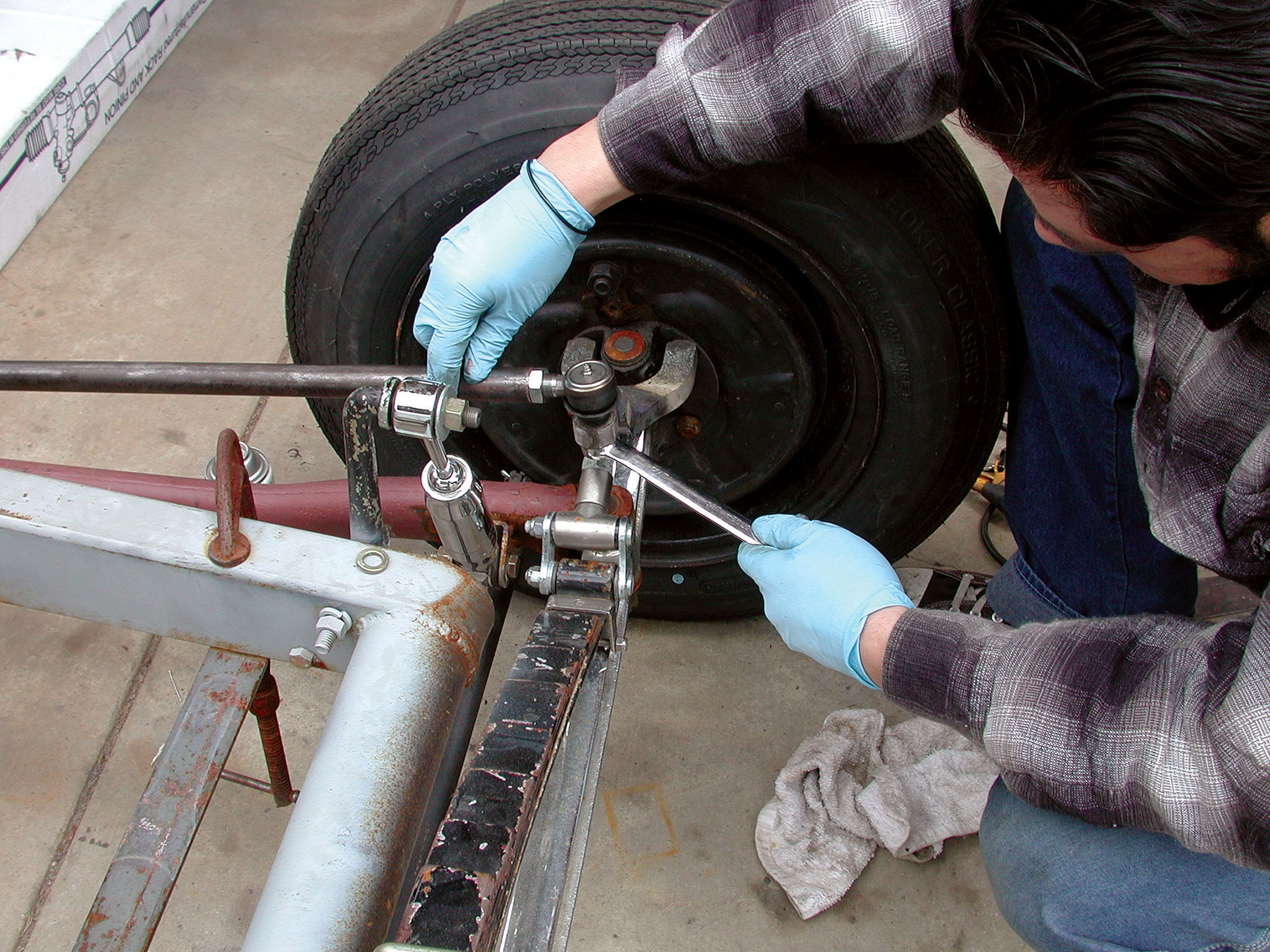
7. After the starter hole was drilled the large hole for the steering shaft was drilled with a hole saw.
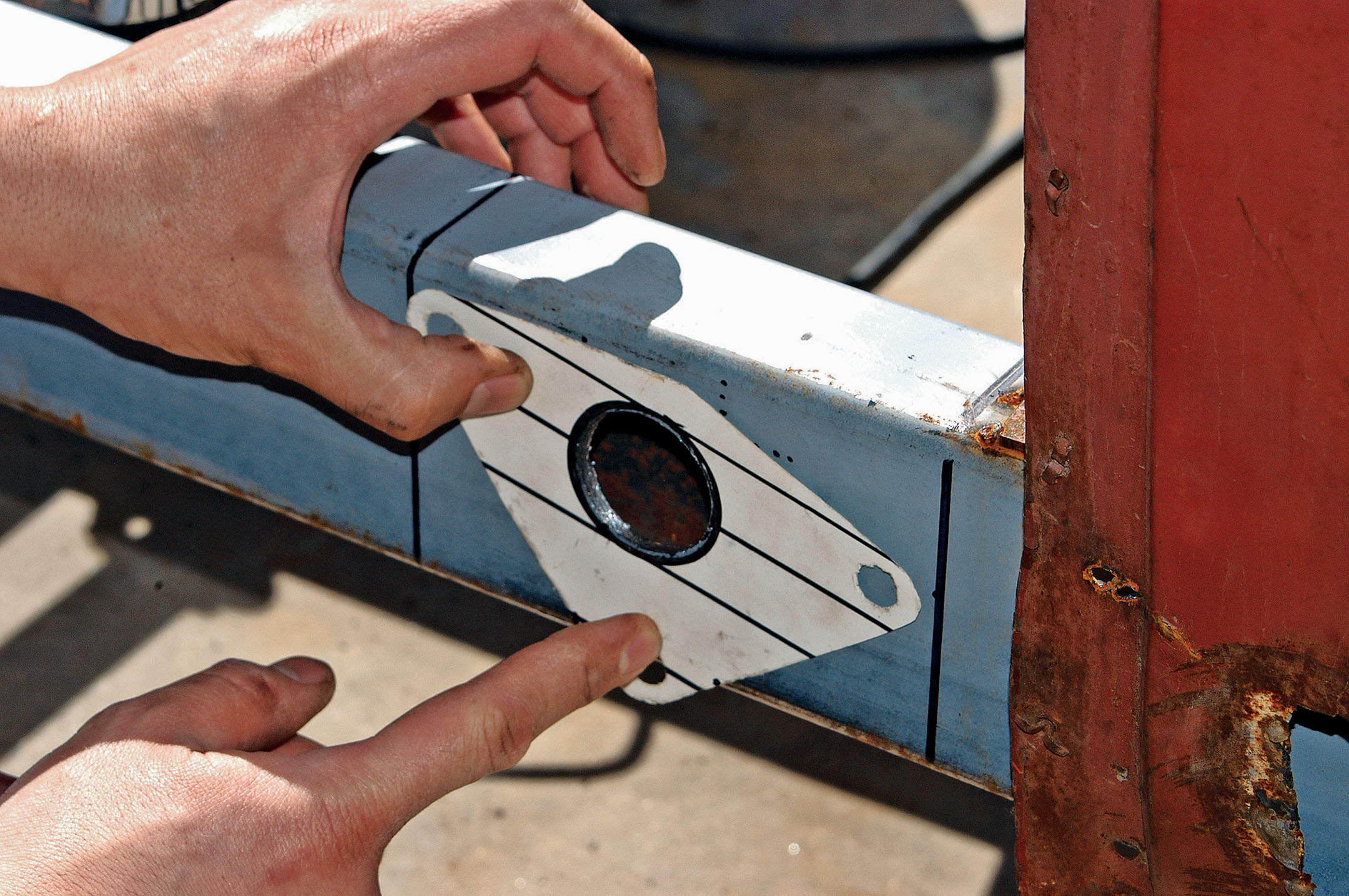
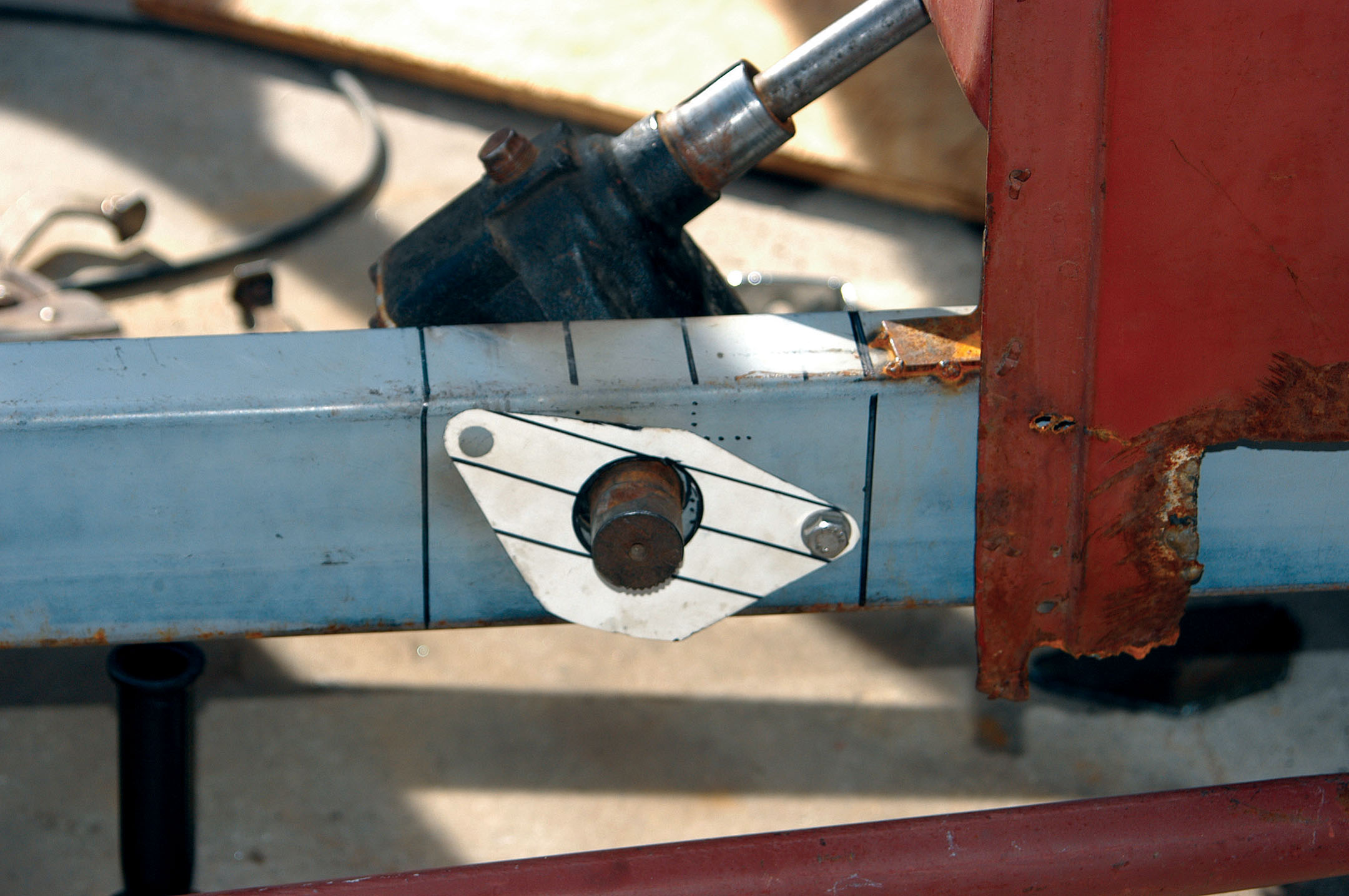
8. After the hole was finished the cardboard template was installed over it to determine where the steering box mounting holes would have to be drilled. As you can see in this photo, one of the holes does not line up with the frame.
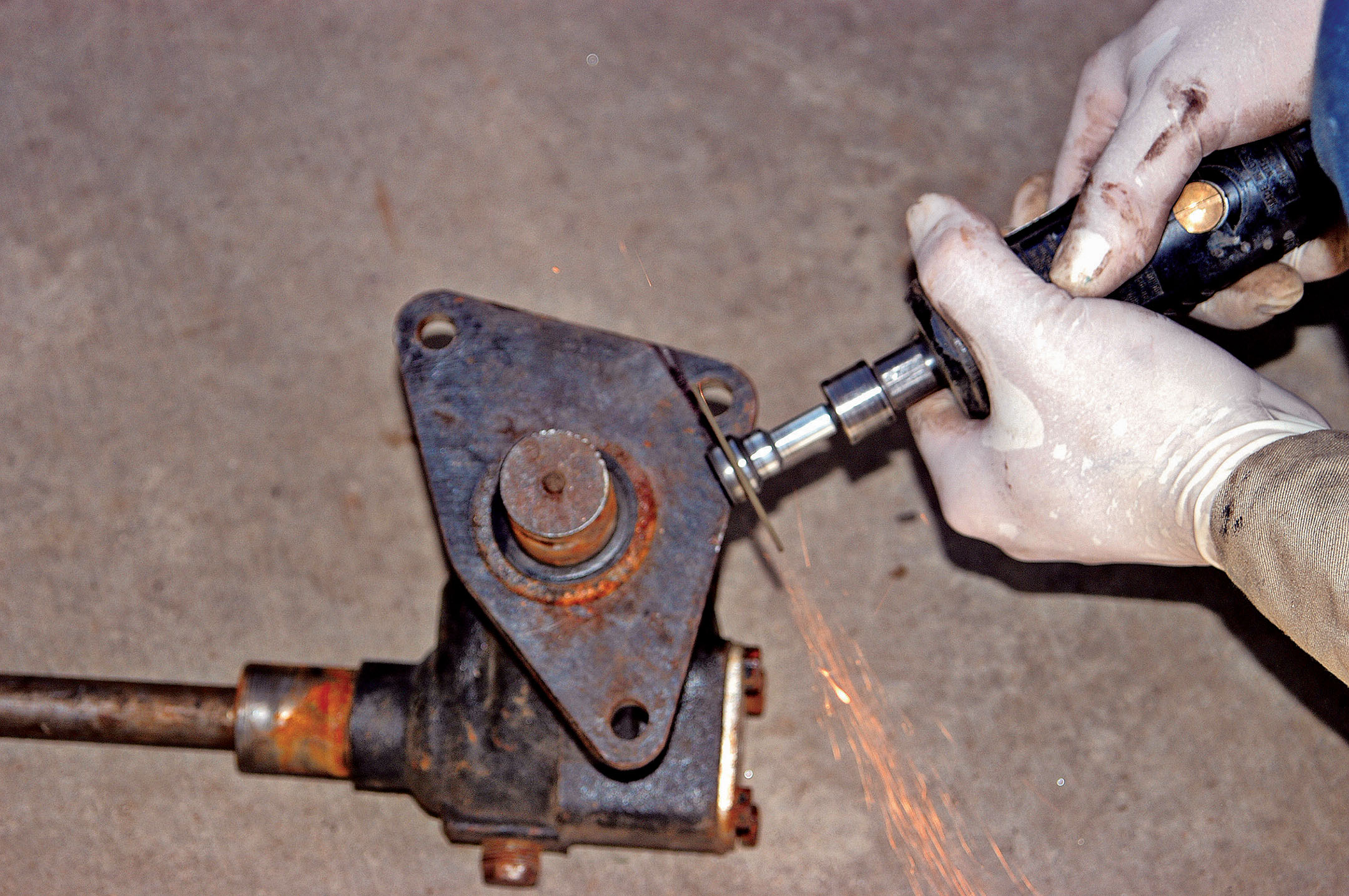
9. The steering box had to be modified to fit inside of the frame, so one of the hole locations on the flange was cut off with a 3-inch cutoff wheel.
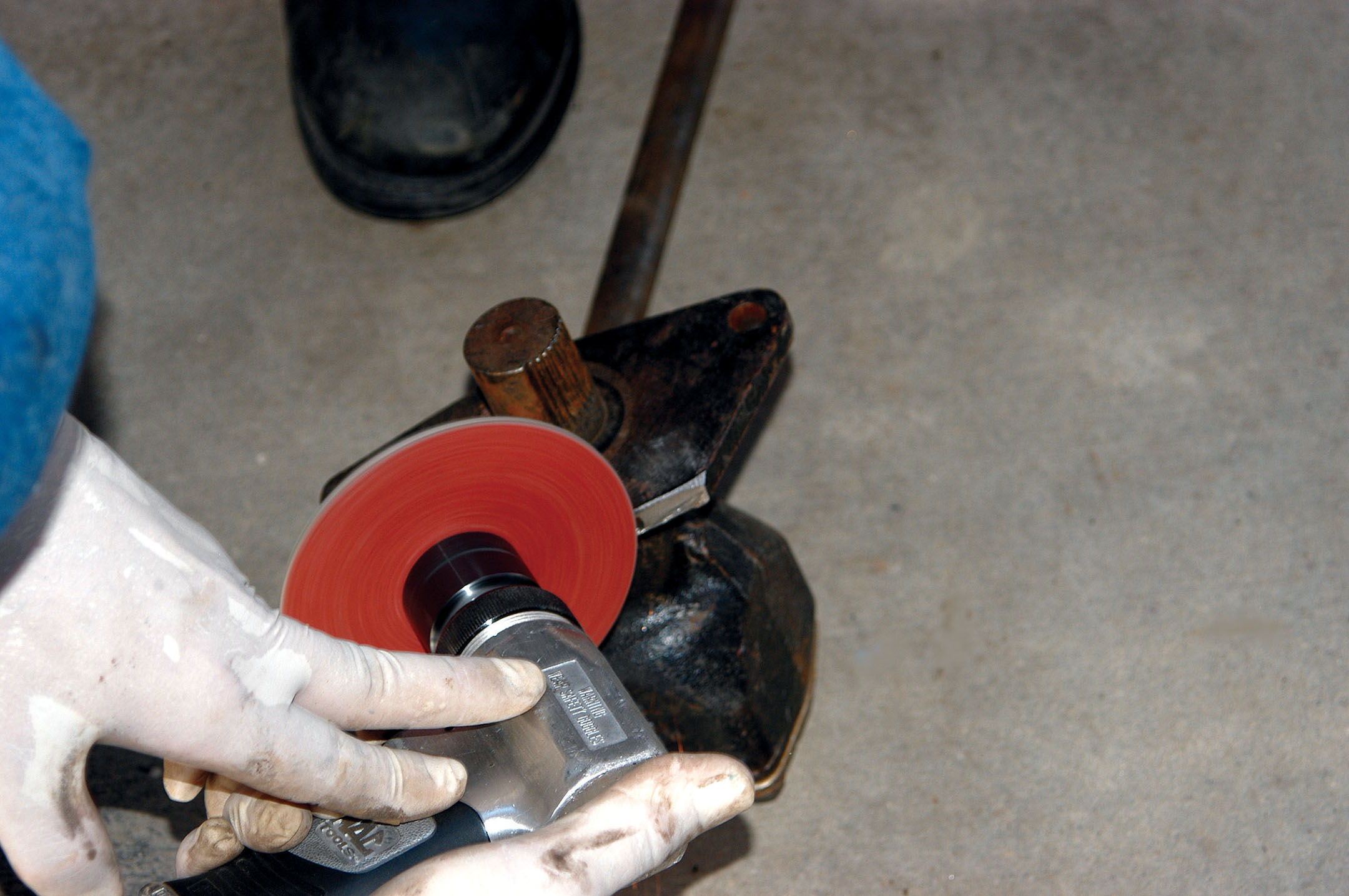
10. After the steering box was modified the area that was removed was sanded smooth with a 5-inch sander.
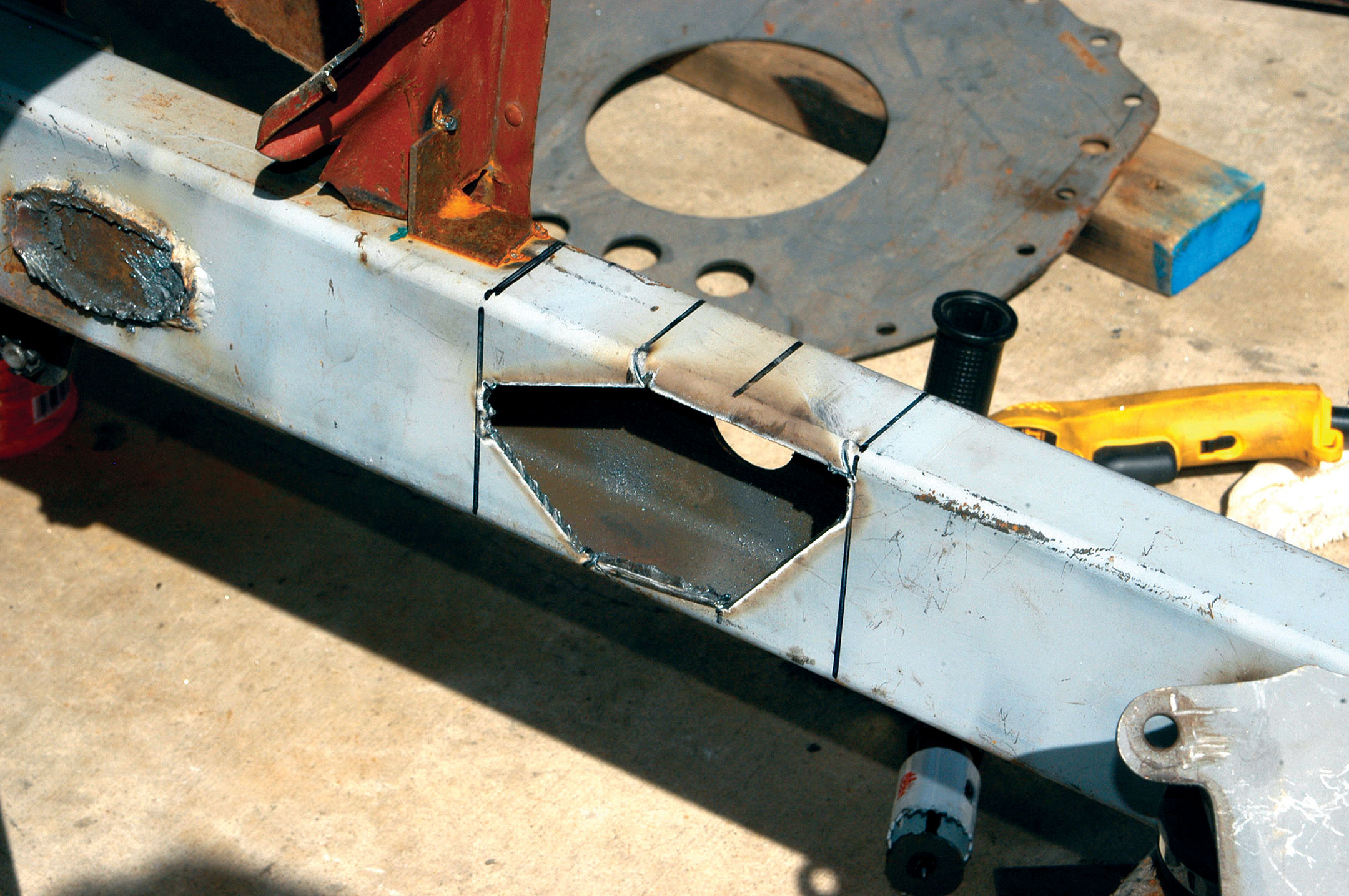
11. Since this is a boxed chassis an opening has to be installed to mount the steering box. This box was designed for use on a frame that was not boxed. Using the template as a guide the shape of the steering box was drawn on the frame.
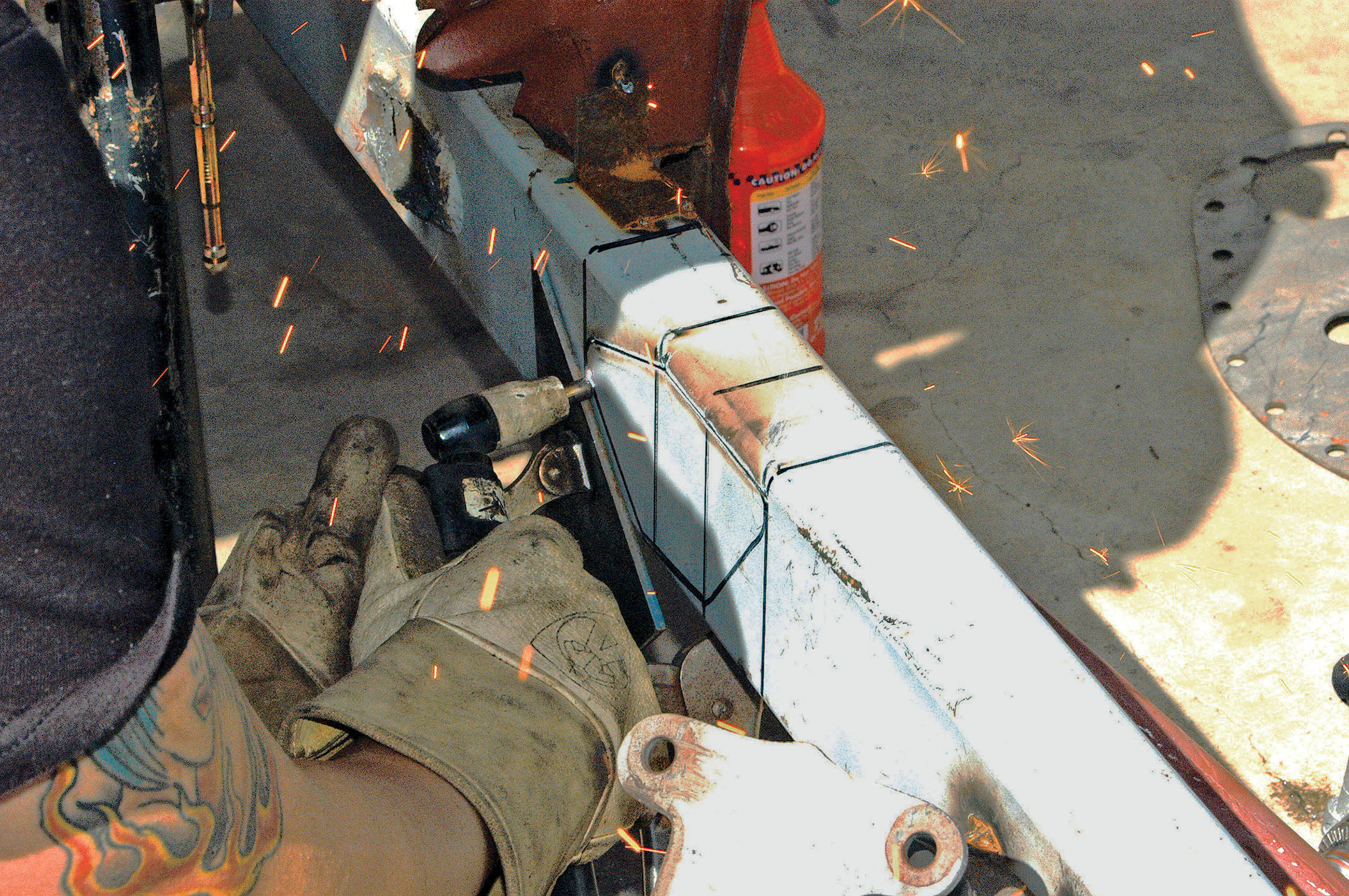
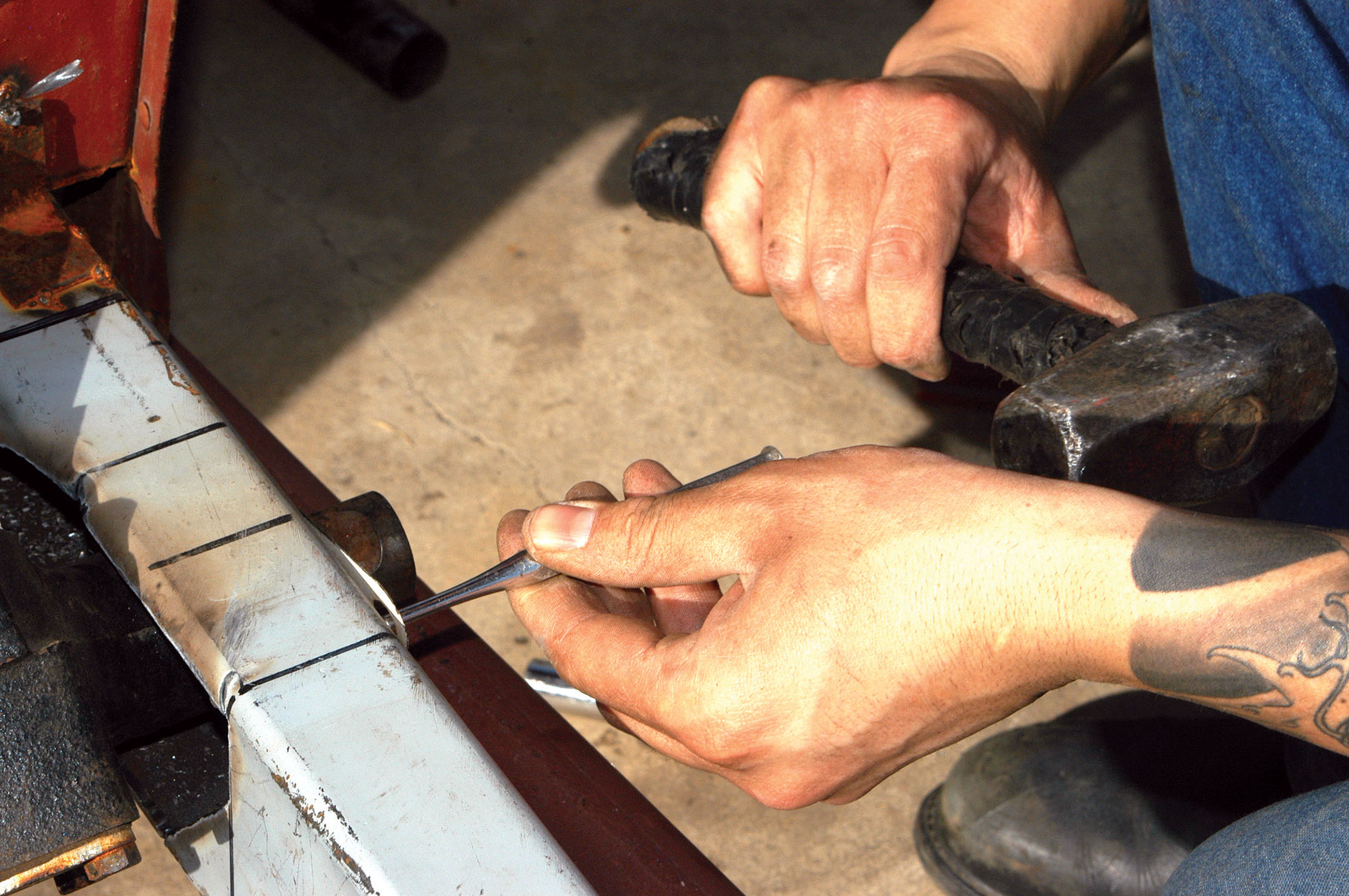
12. The hole for the steering box was cut out with a plasma cutter, leaving a nice, clean opening. Some sanding will be required to finish off the edges.
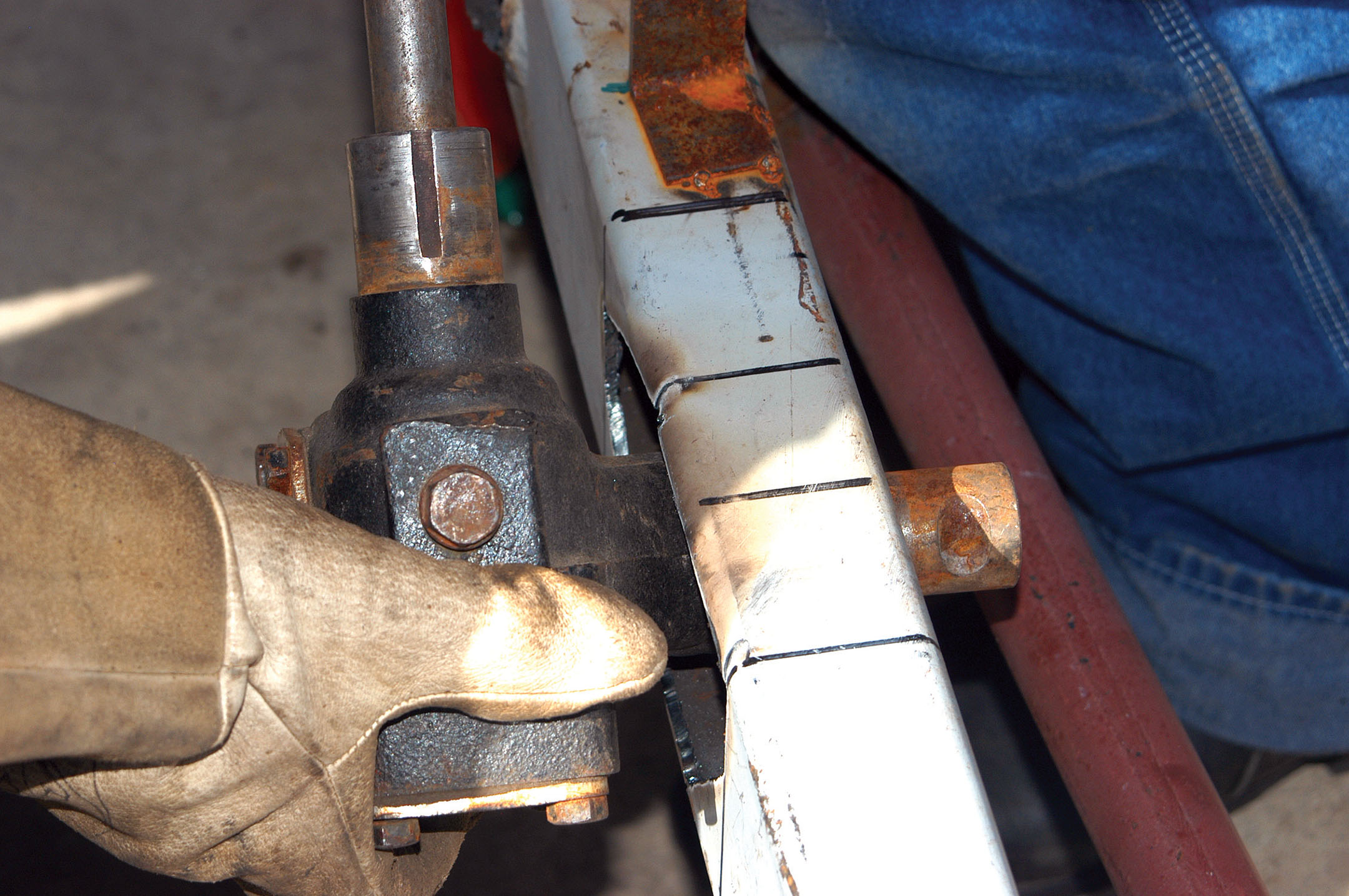
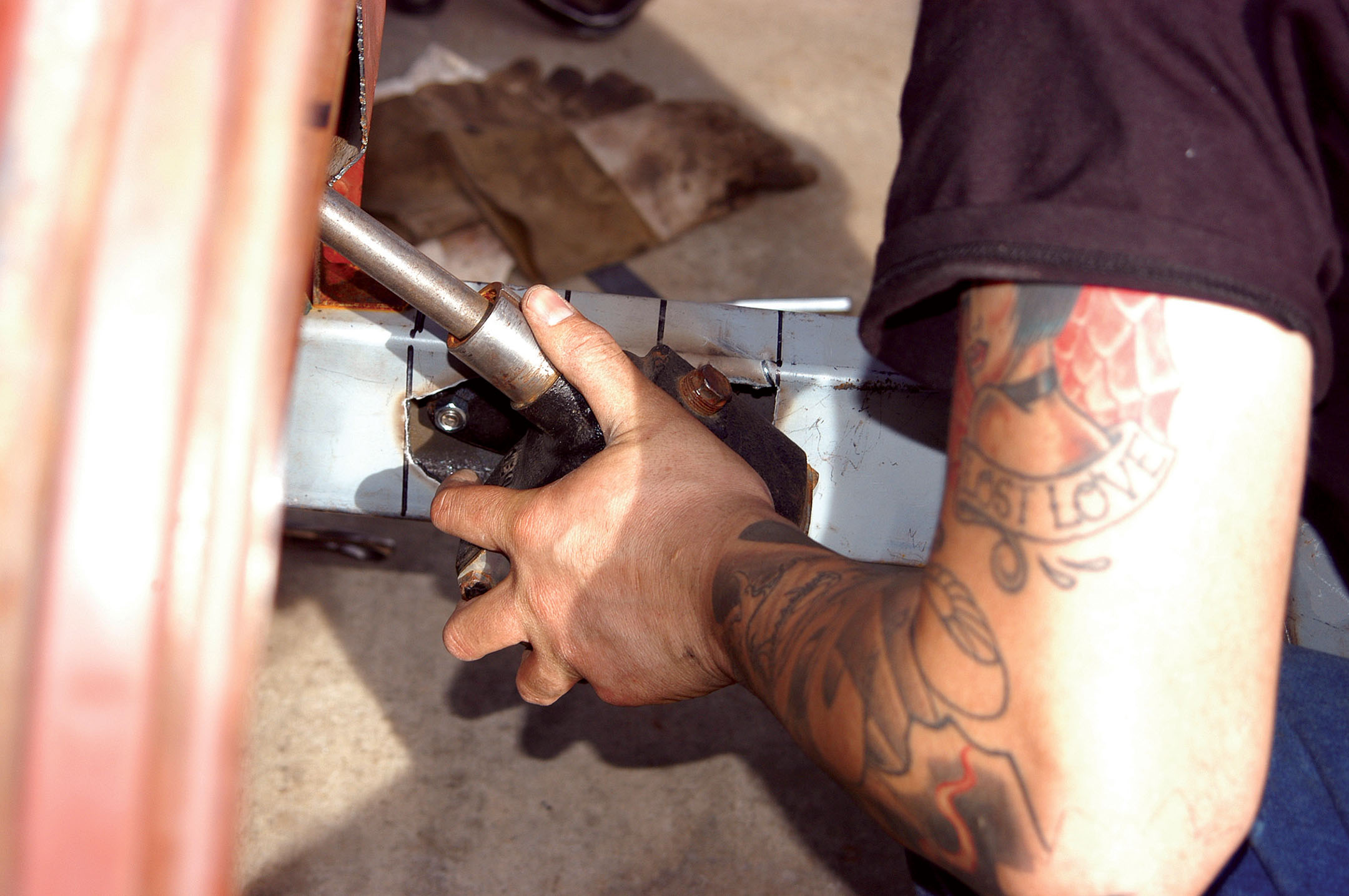
13. The steering box was installed through the hole, and it lined up quite well. Now the position for the mounting holes will have to be determined.
14. Before any mounting holes could be drilled the steering shaft had to be lined up with the column drop in the car. This would provide the correct mounting position for the box.
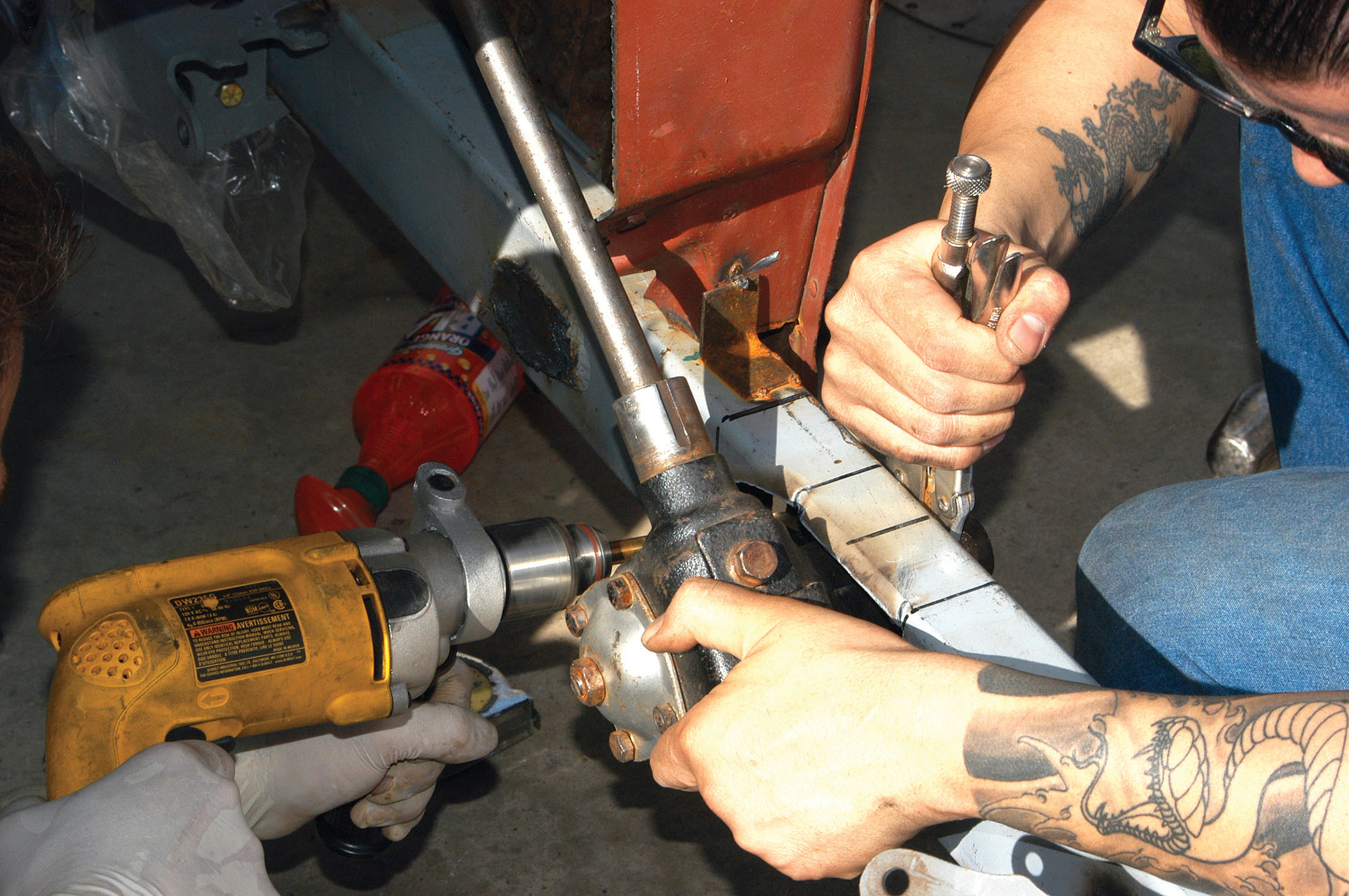
15. After the steering box was in the correct position, a hole starting location was drilled through one of the holes in the box.
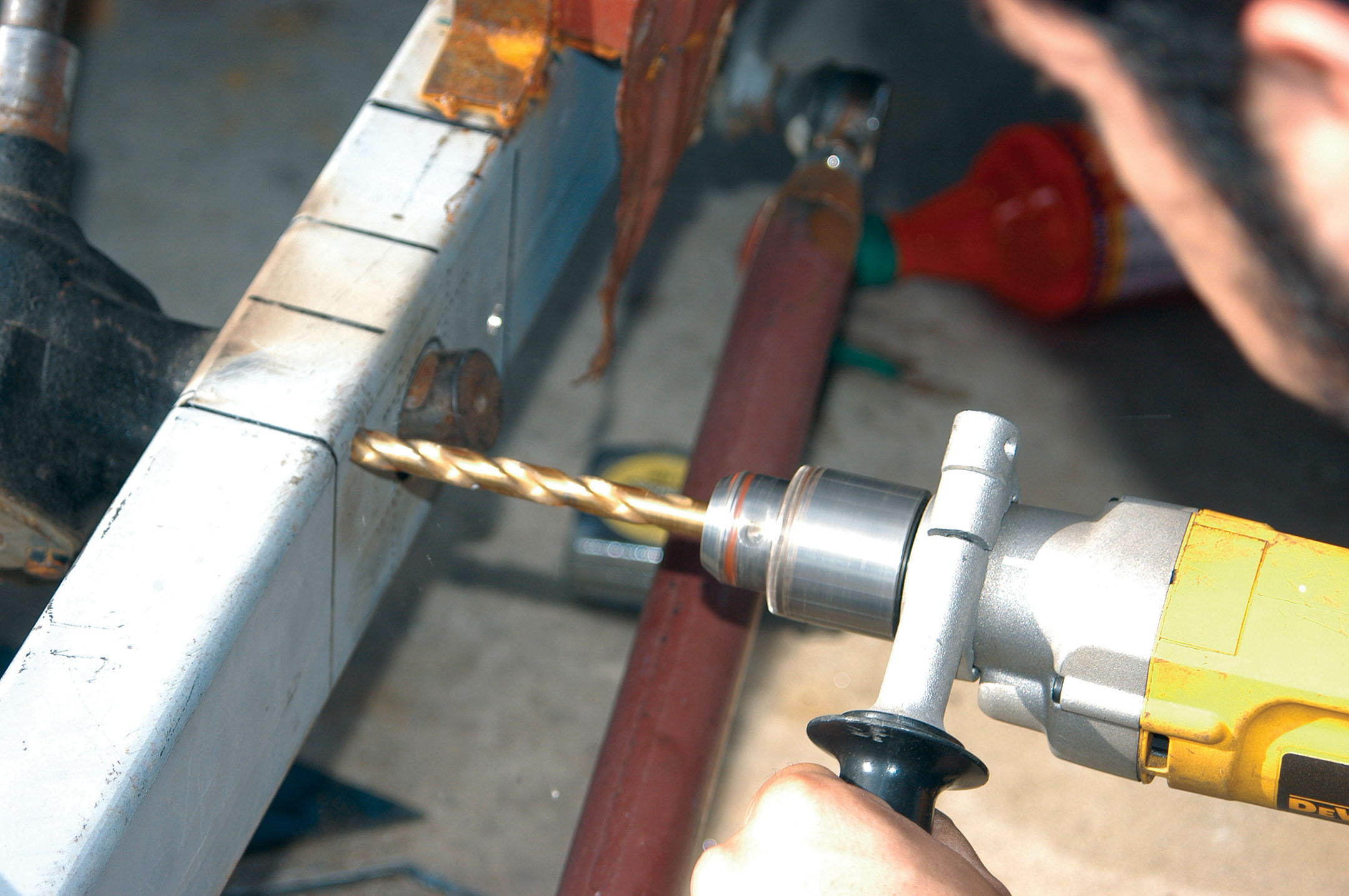
16. After the hole position was drilled with a small locating dimple the box was removed, and the hole was drilled without the box in the way.
17. After the first hole was drilled the steering box was installed, and it was connected to the frame with a mounting bolt.
18. The template was installed on the other side of the frame so the location for the second mounting hole could be found.
19. After the template was in the correct position the hole mounting point was center-punched.
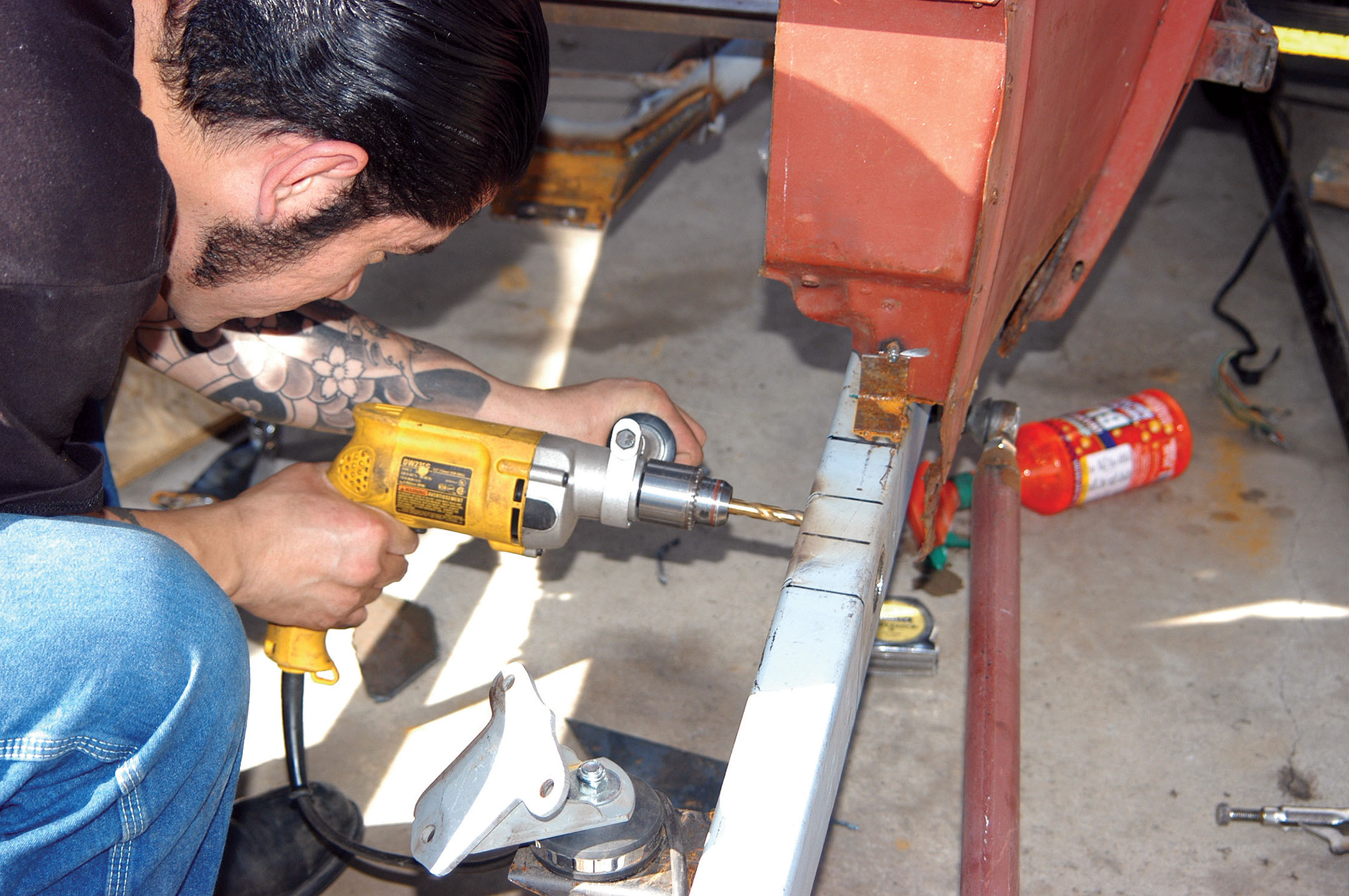
20. Using the center-punched area as a guide the second steering box mounting hole was drilled.
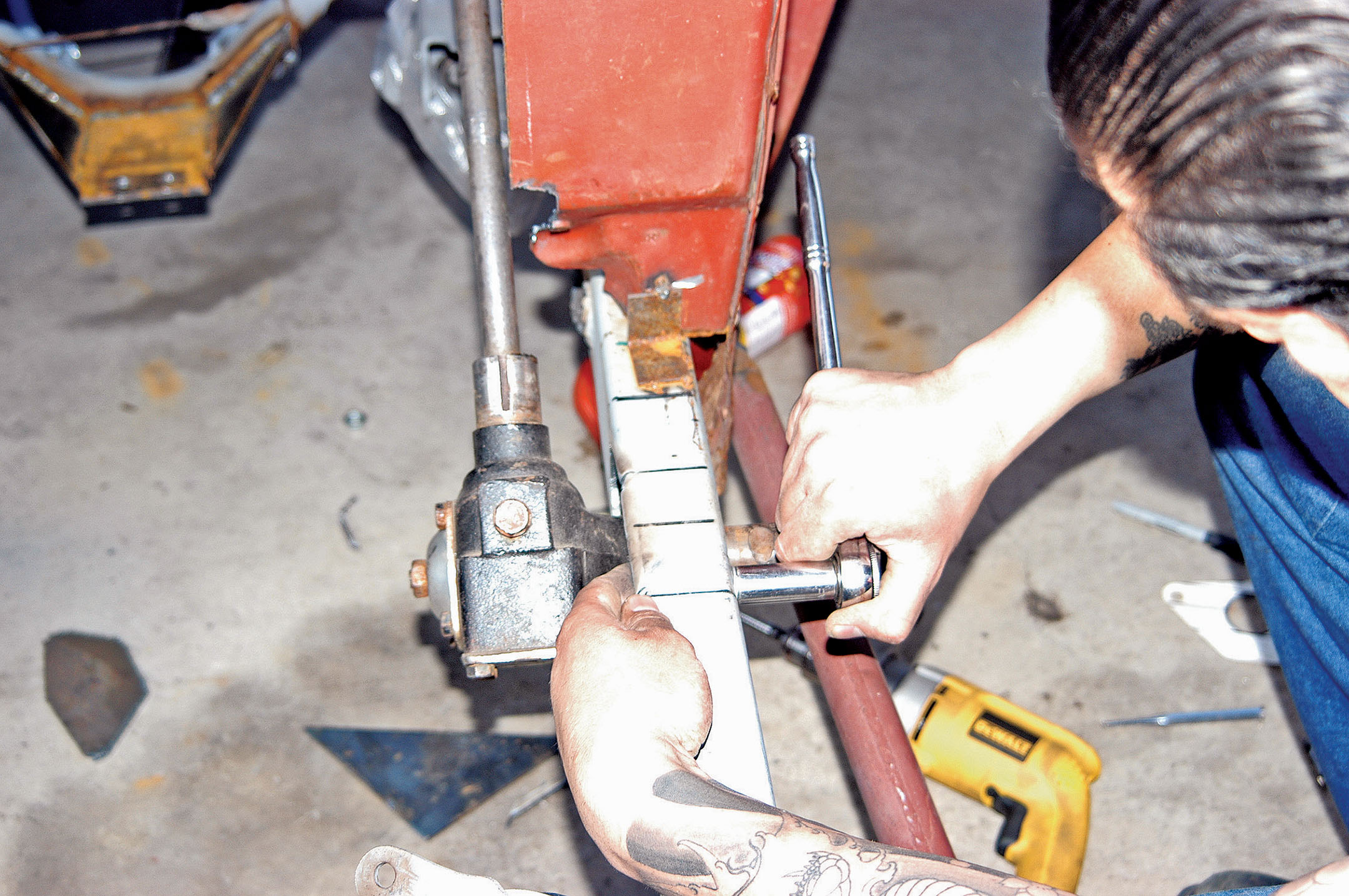
21. After the hole was drilled the steering box was mounted to the frame with both bolts. Here one of the bolts is being secured with a socket wrench.
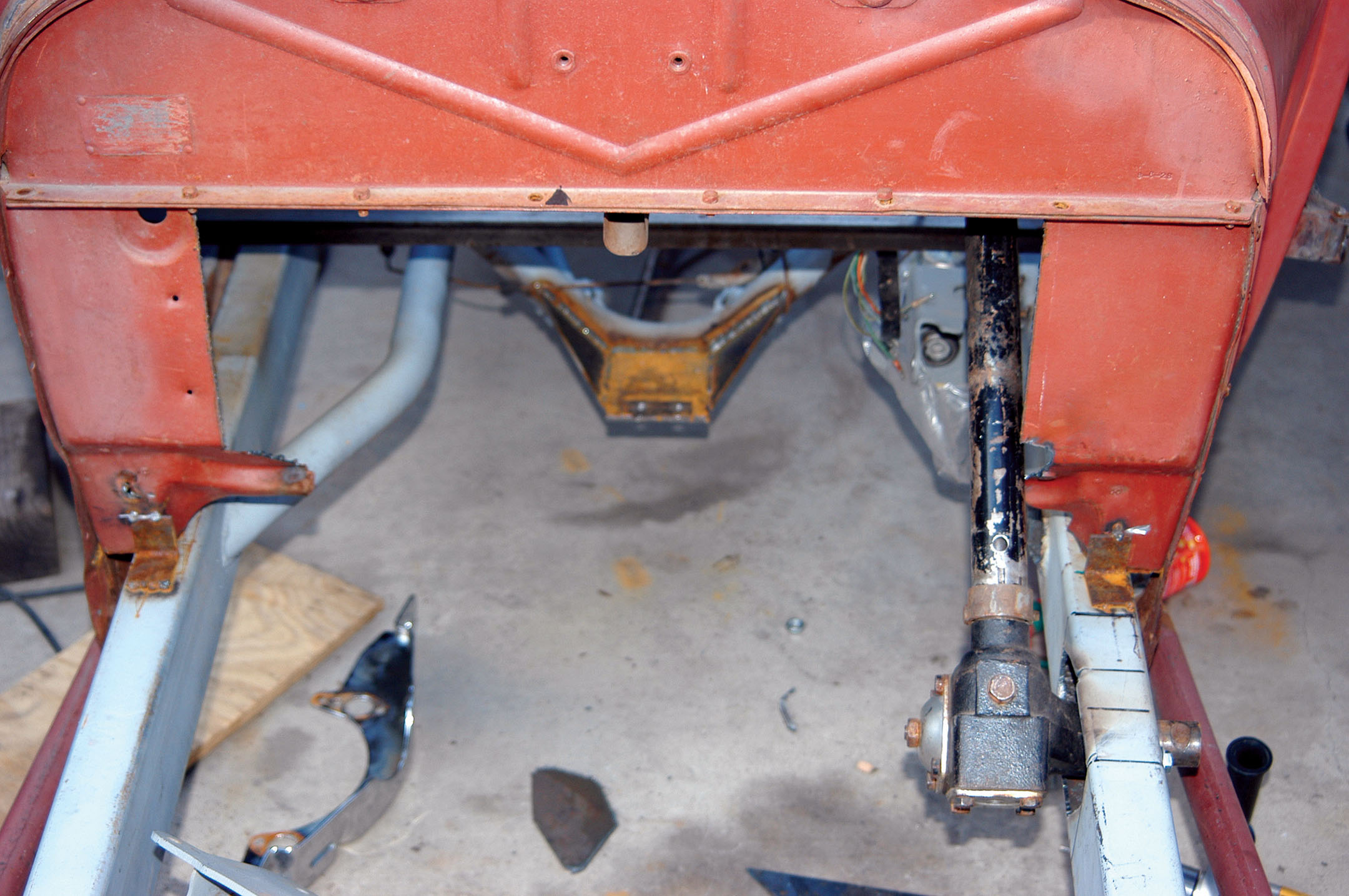
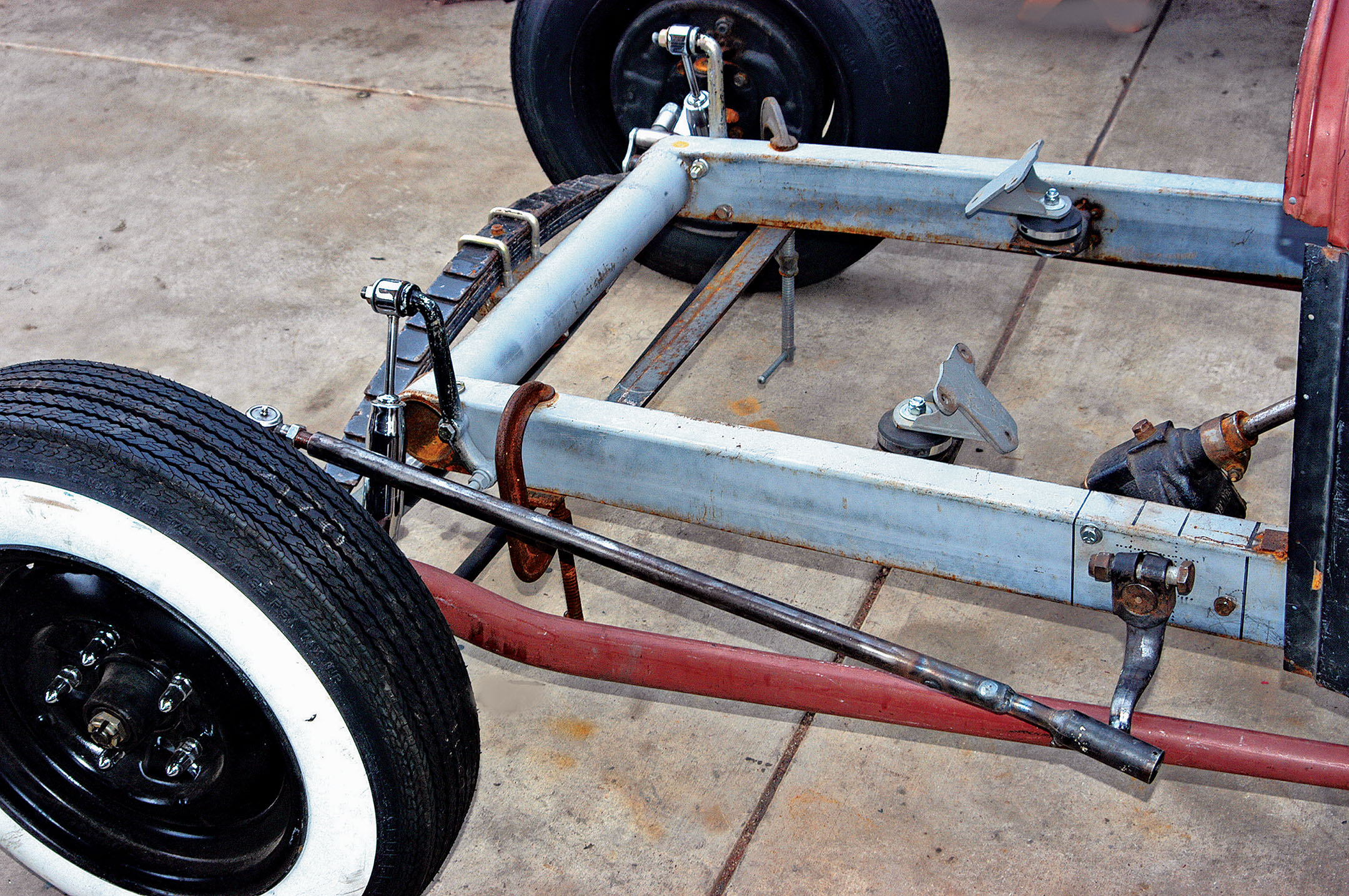
22. After the steering box was installed the column was in the correct location. Note how the steering box is mounted tight to the frame so there is plenty of room for the engine and the exhaust system.
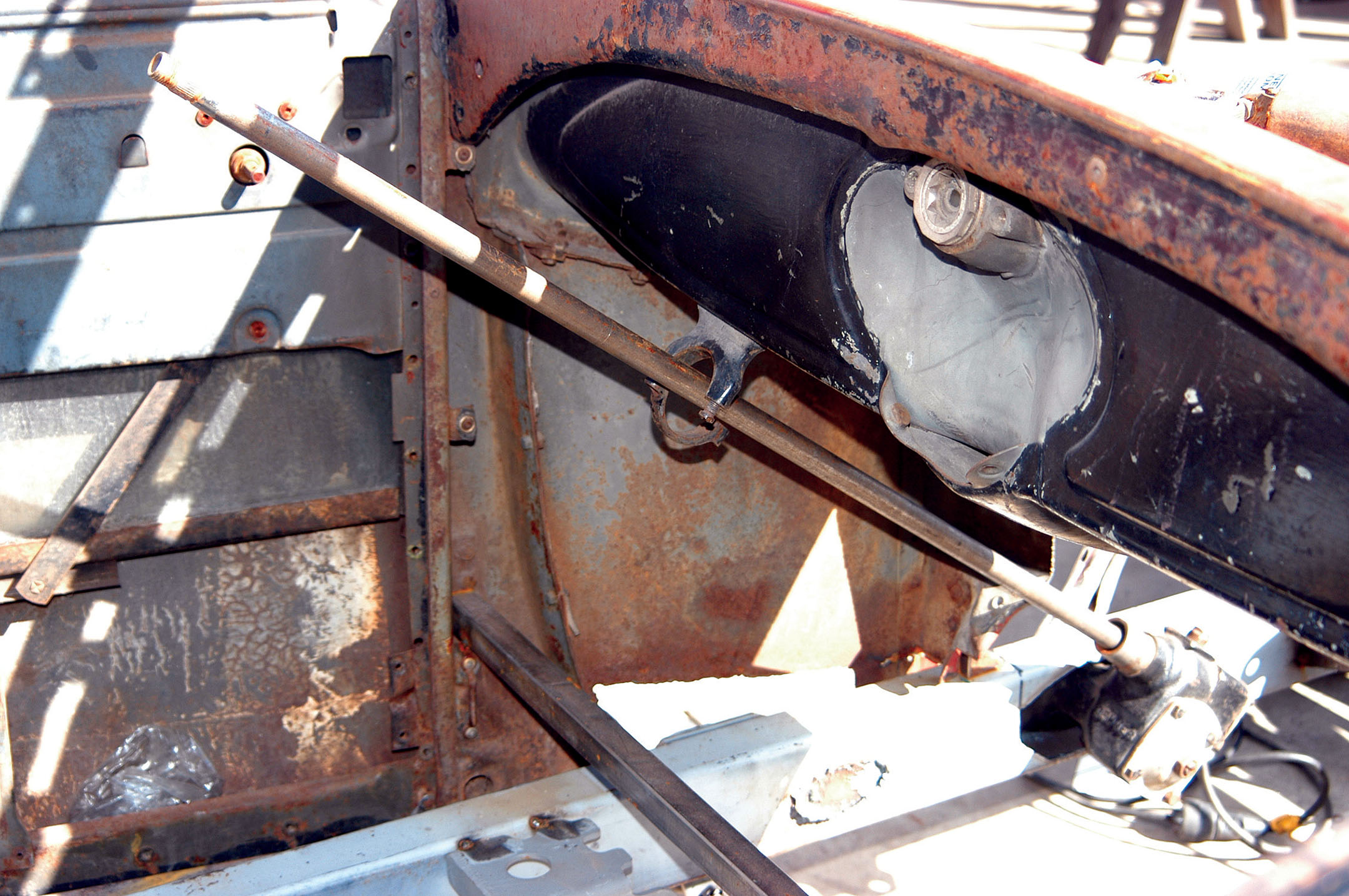
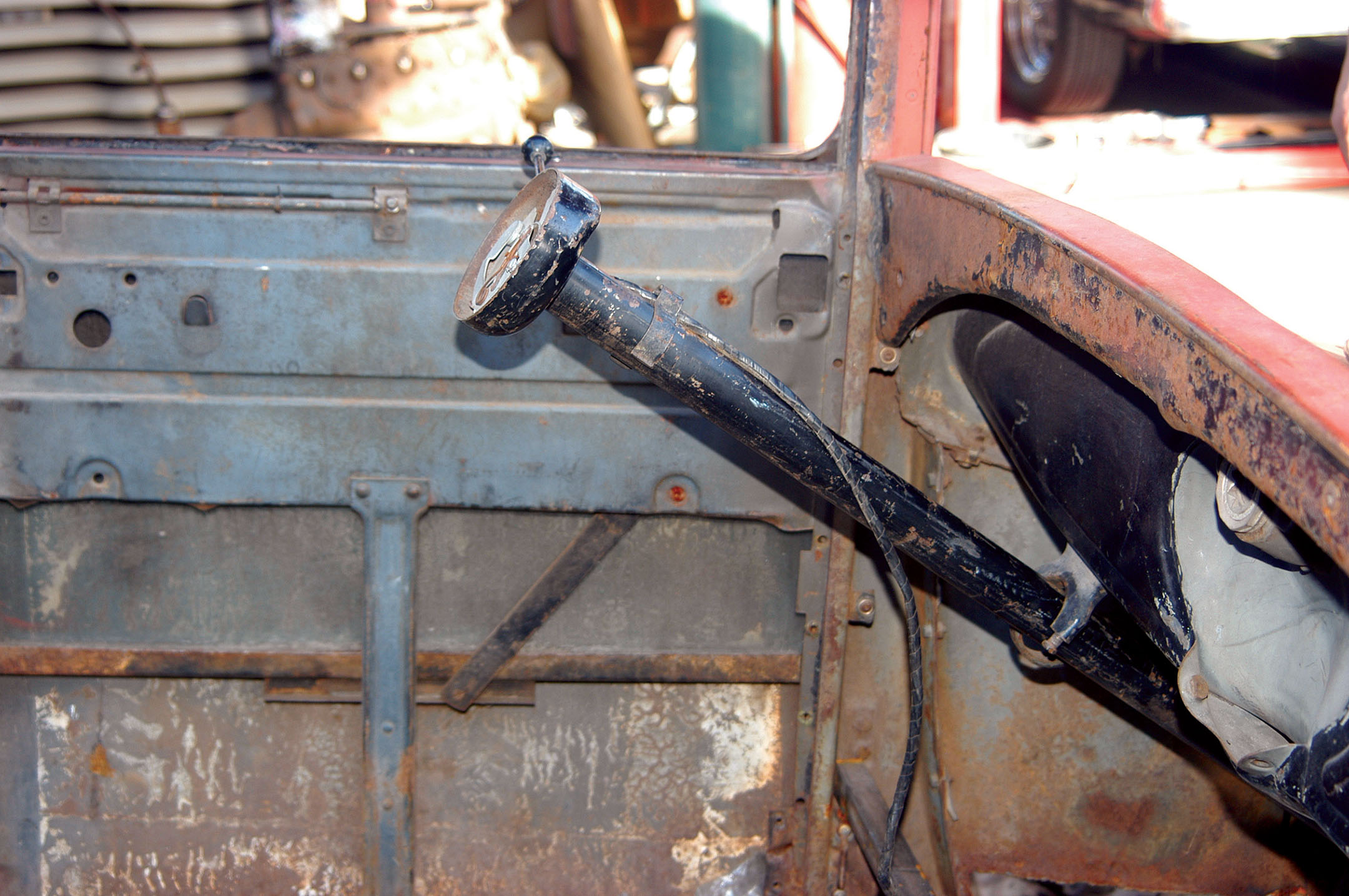
23. Looking from inside the cab, the steering is located perfectly in the original column drop. The column is long so it may have to be shortened just a little.
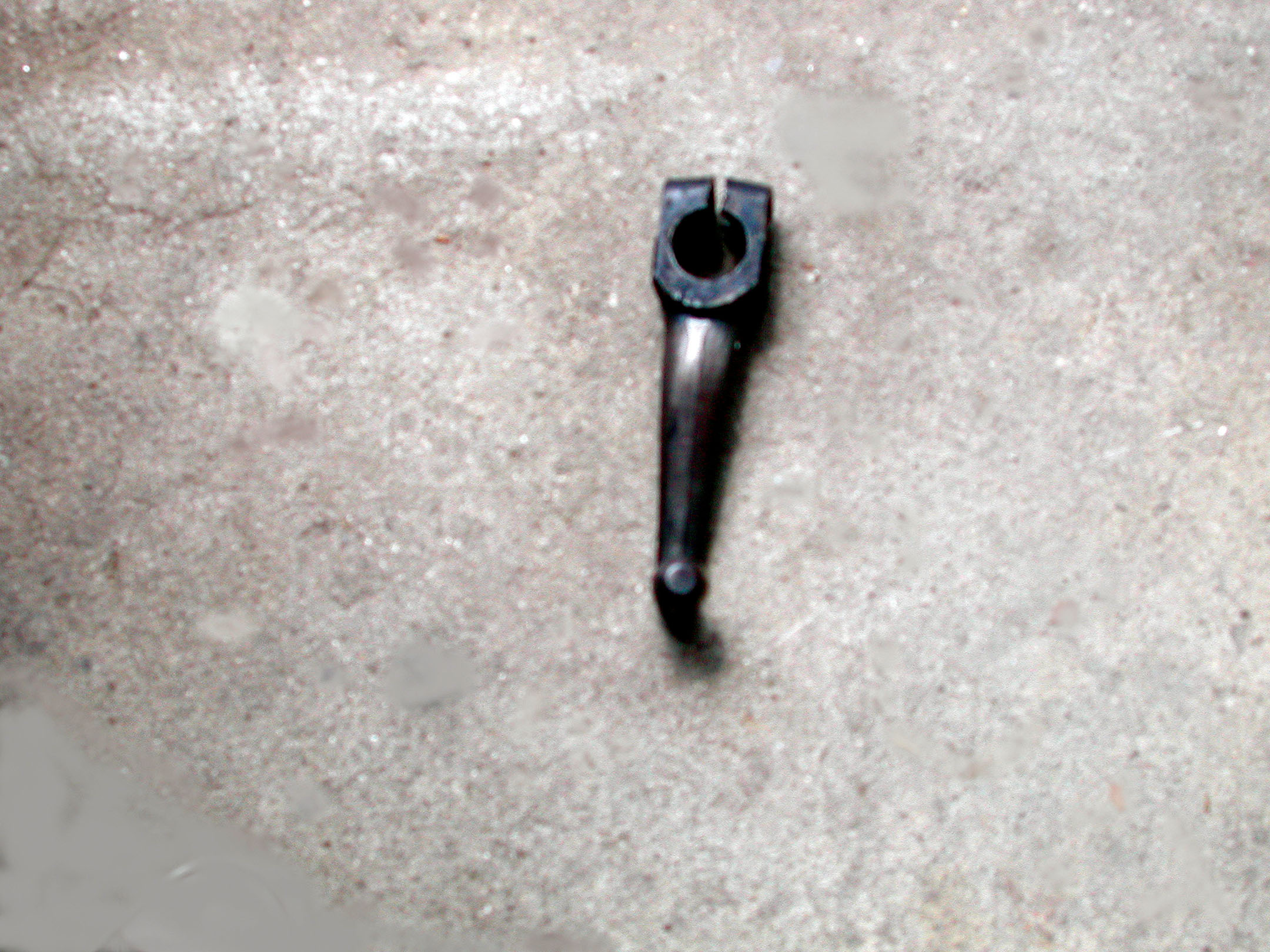
24. An original ’56 Ford ball-style Pitman arm is going to be used with the steering box.
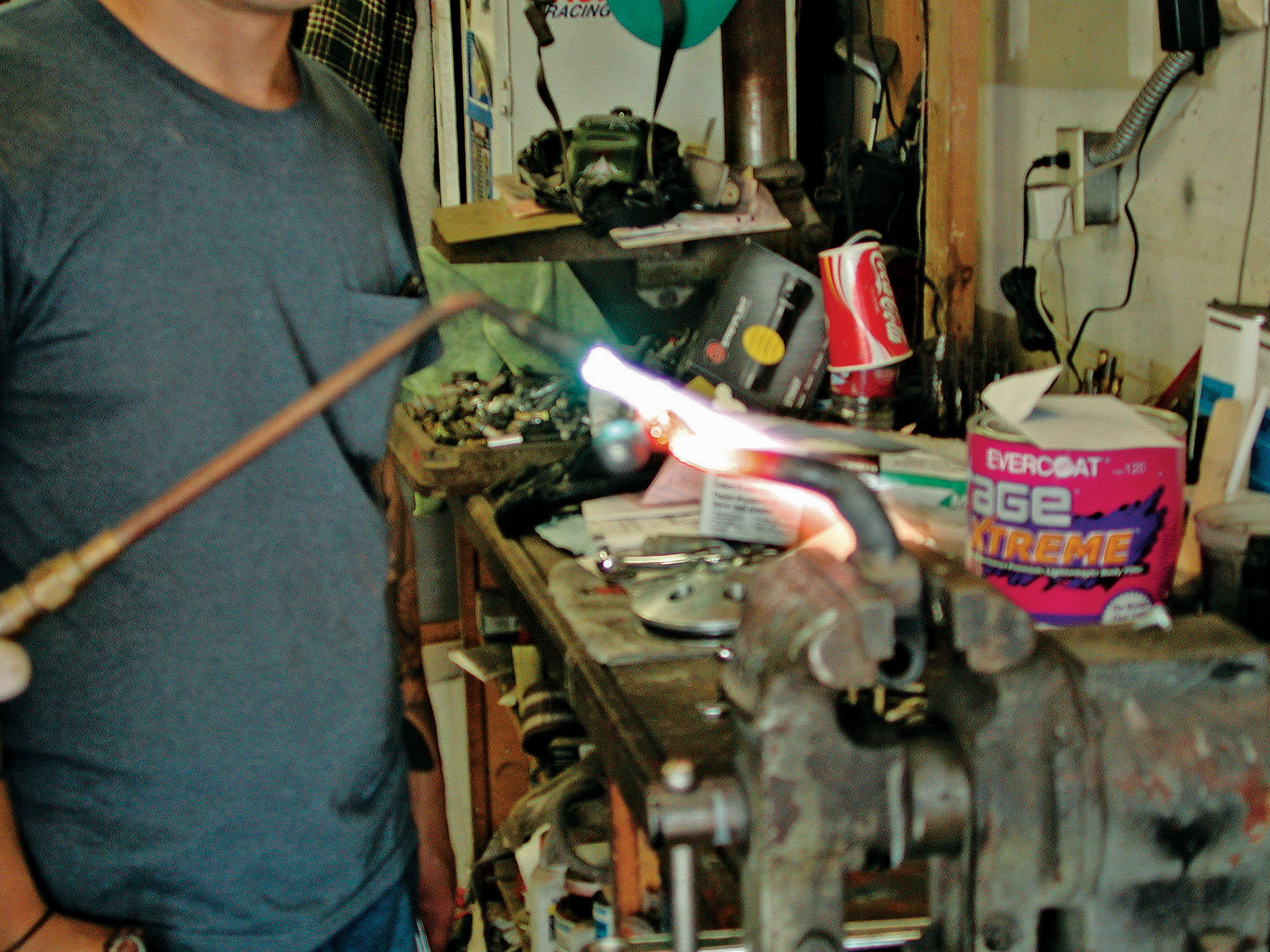
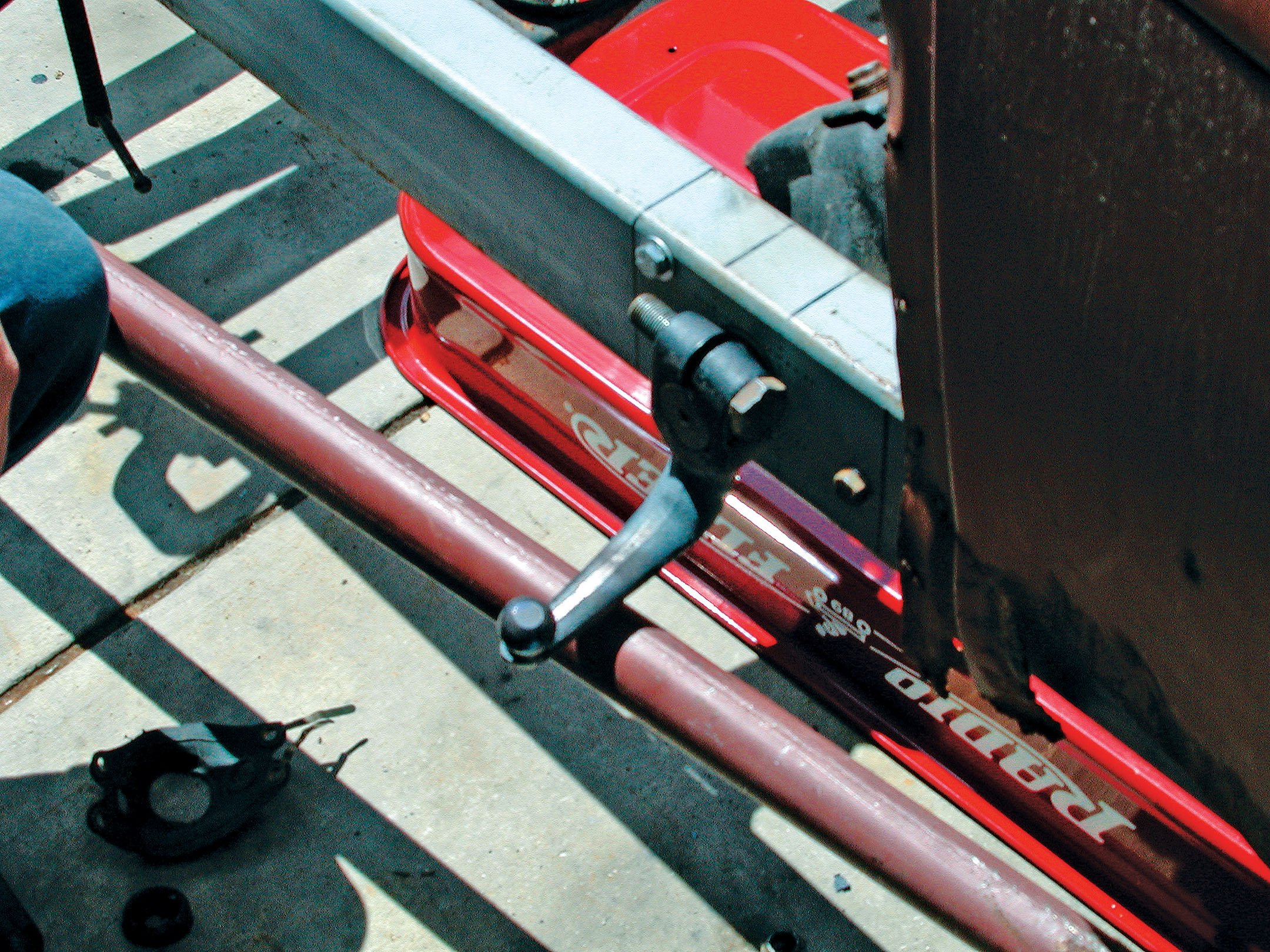
25. When the steering arm was installed on the box there was a clearance problem with the radius rods. Some bending would have to be done to get the necessary clearance. The arm was heated with an oxy-acetylene welder until it was red hot, and then the first bend was made.
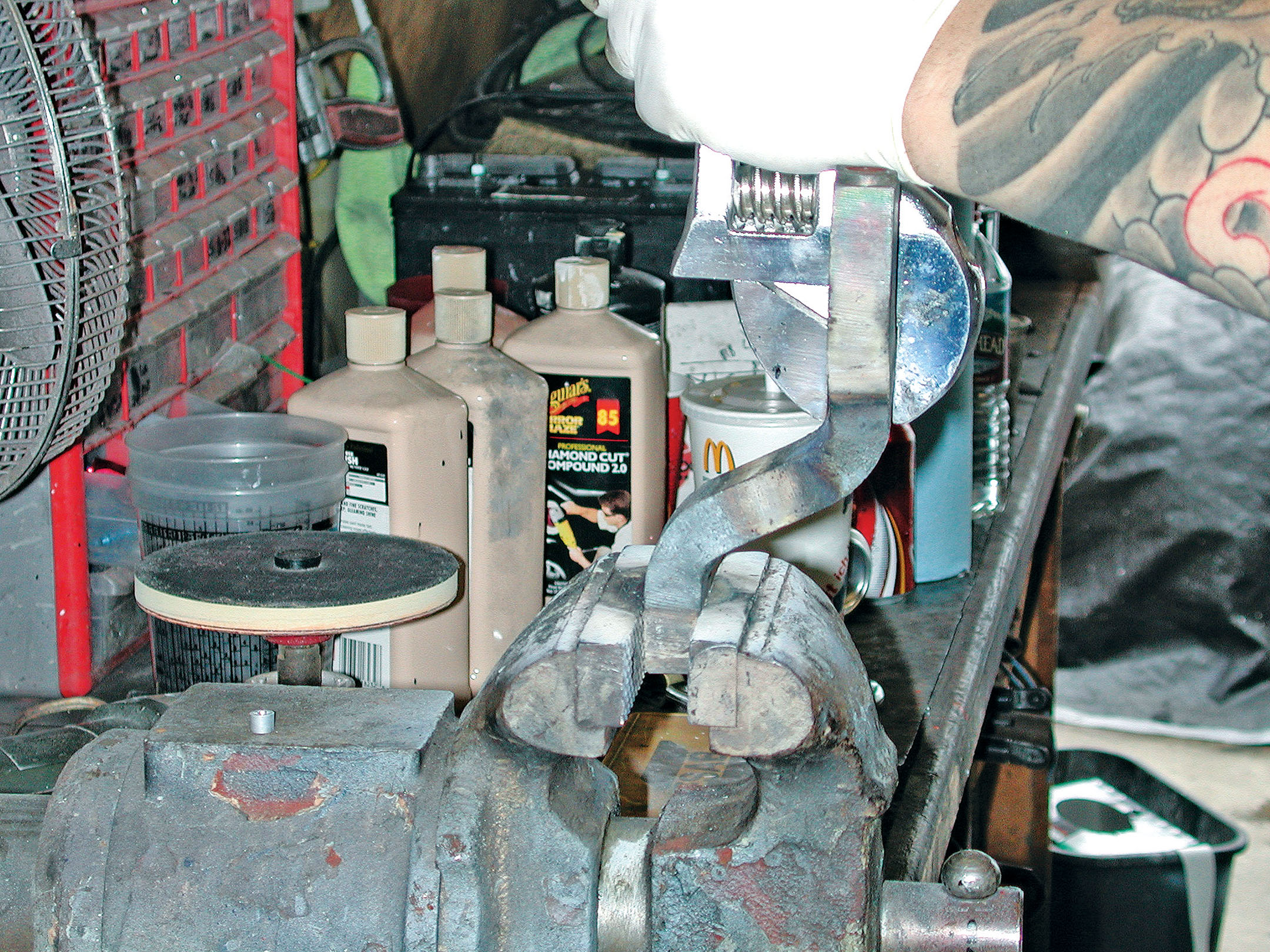
26. Here is the steering arm after the first bend was made. The end will have to be bent down. Bending the arm does change the steering ratio, so you have to make sure it works properly and the steering is easy to turn.
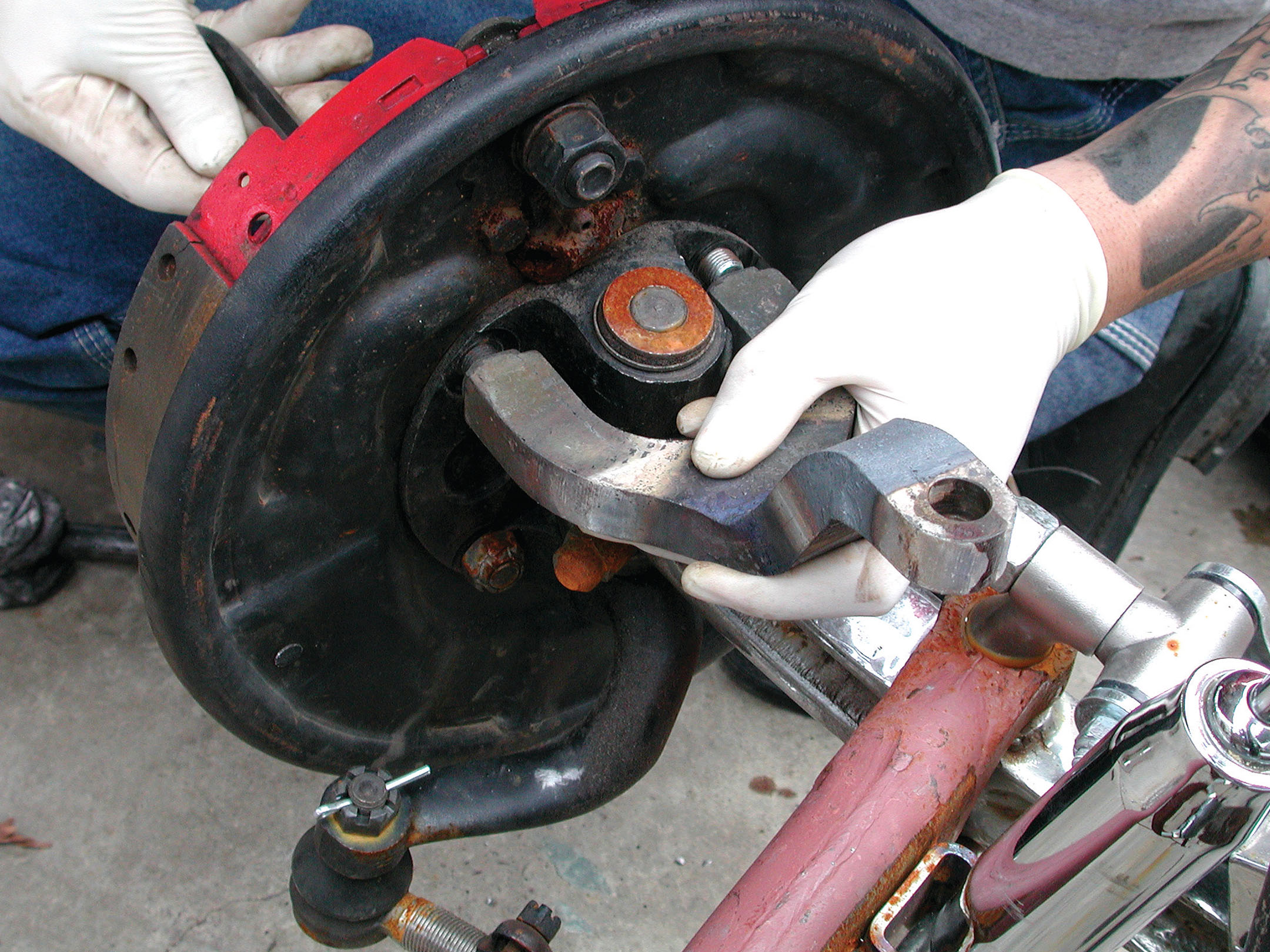
27. The steering arm that bolts to the brake backing plate also required some modifications to work in this configuration. Here is the steering arm after the bends were made. This particular arm is available from Speedway Motors.
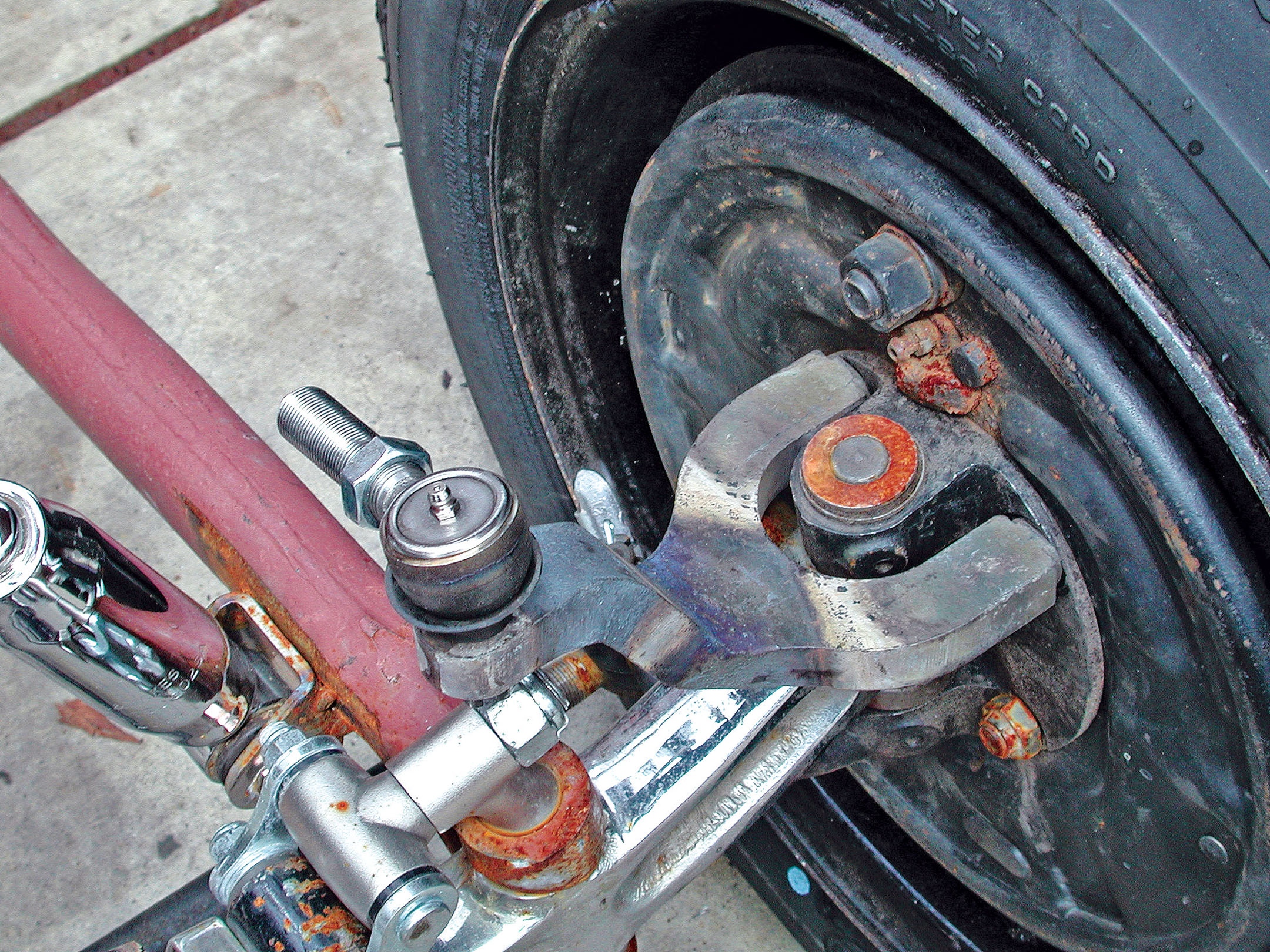
28. After the modifications were performed, the arm was bolted to the backing plate. This unit also had to be bent to clear the radius rods.
29. After the steering arm was secured to the backing plate a Ford end was installed. This is a tapered end, so when the bends were made care was taken to have the large part of the taper on the topside. If you turn the steering arm upside down, the taper could be on the bottom side, and that might work better on some installations.
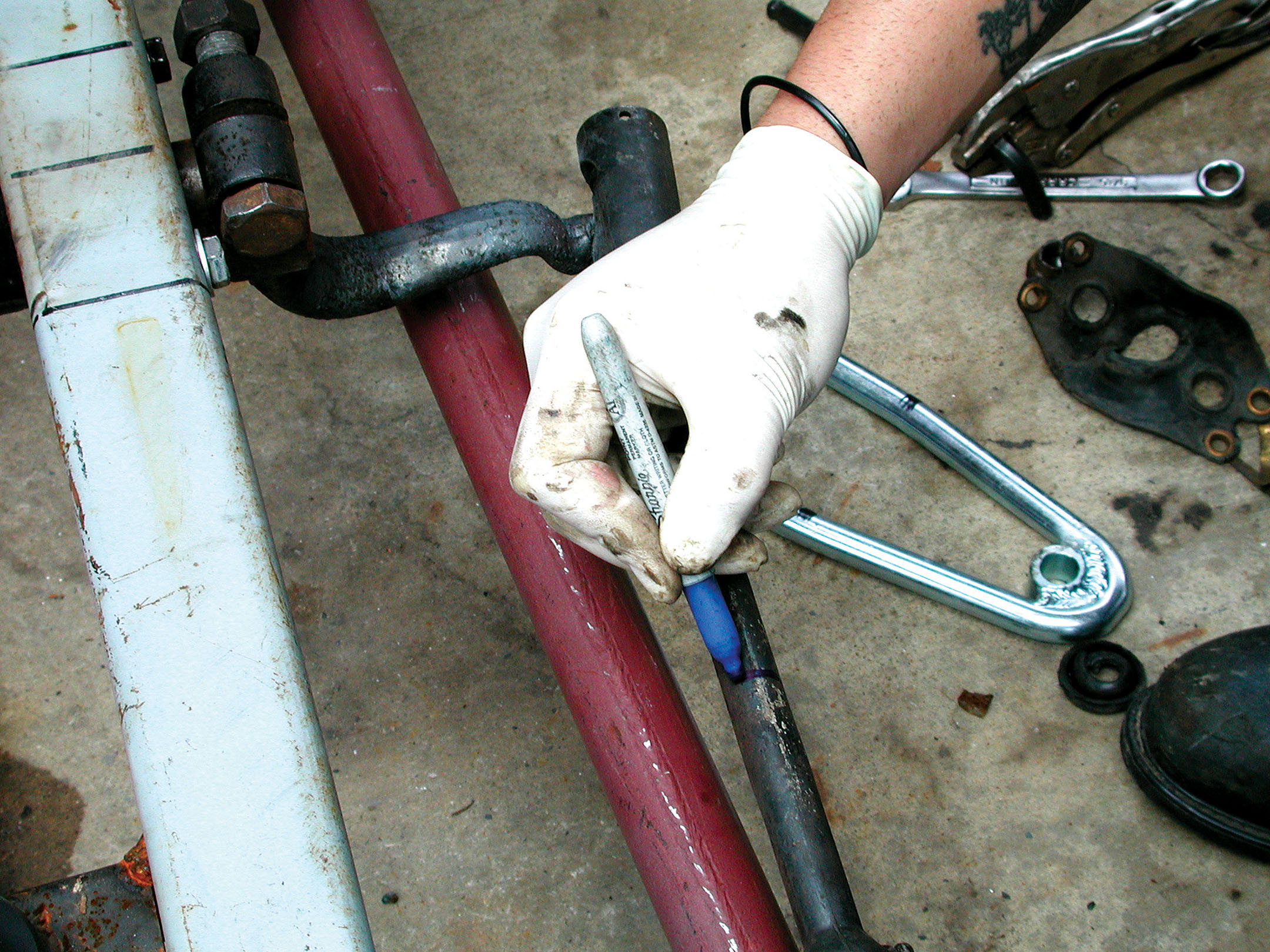
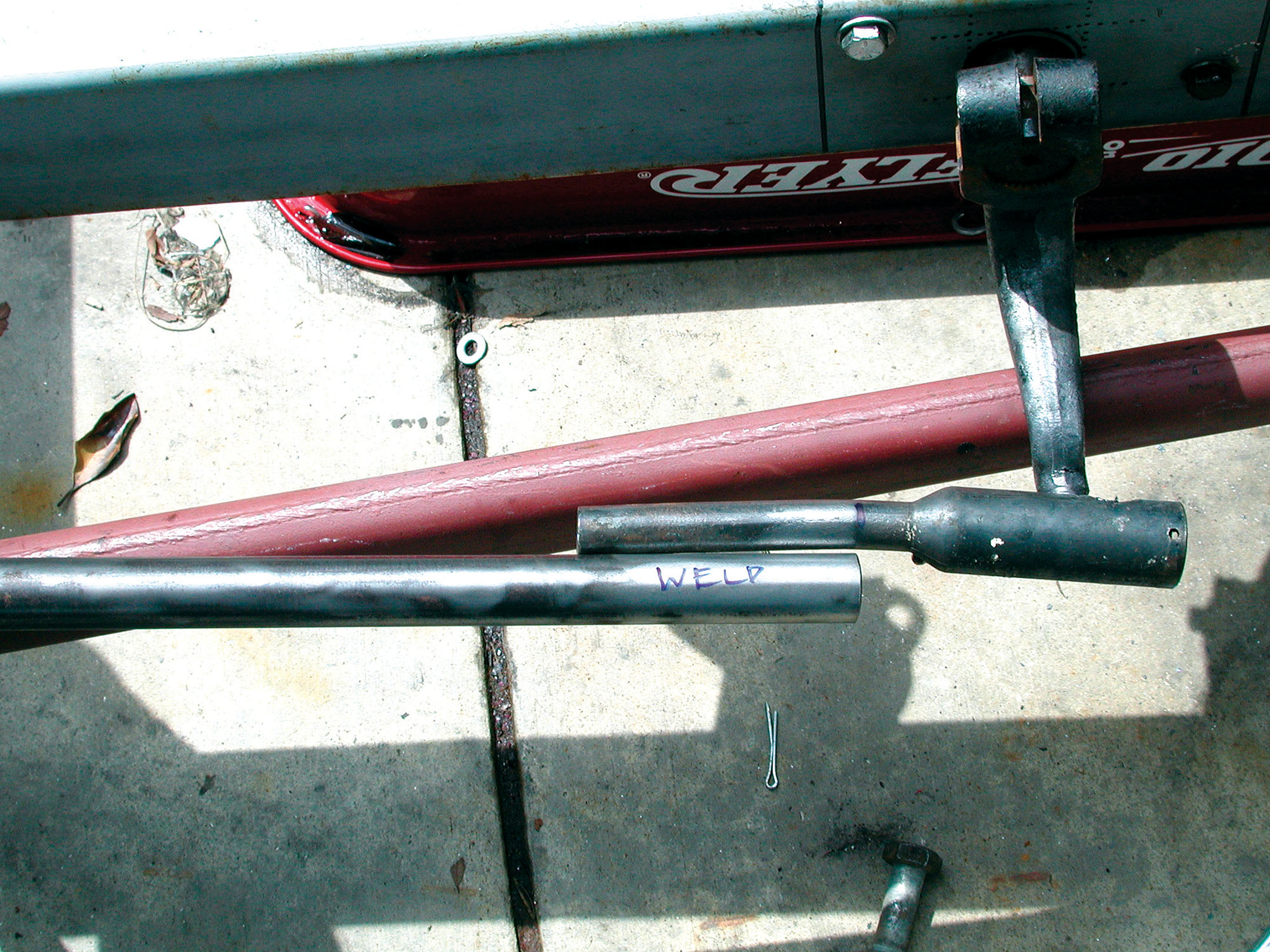
30. The original ’56 Ford steering link was used, but it will have to be modified to work in this configuration. On the steering box end the original ball unit will remain, but on the other end the Ford end will be used. In order to accomplish this, the steering arm had to be cut 5 inches forward of the ball end.
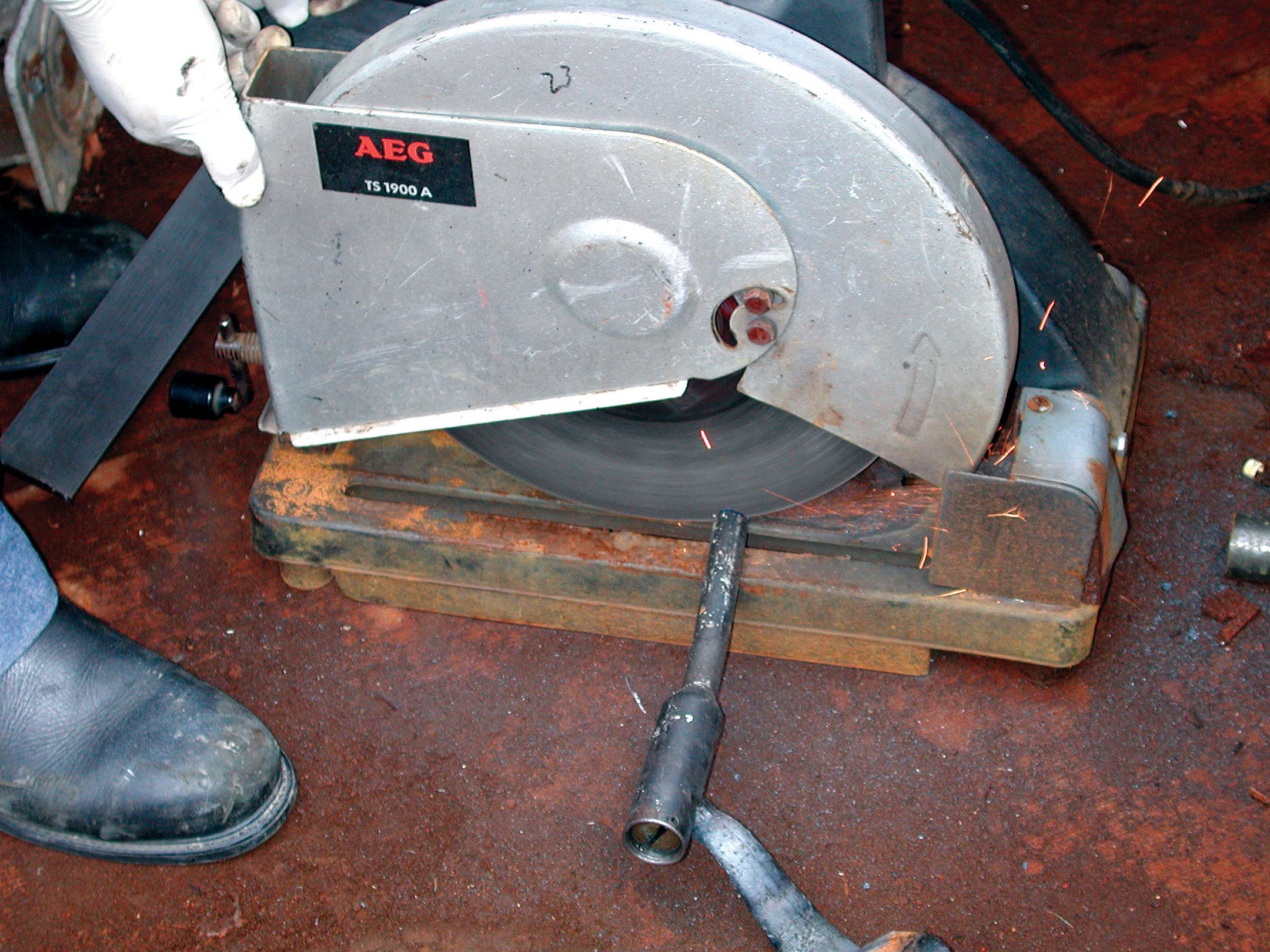
31. After the mark was made for cutting the steering link it was cut with a large chop saw.
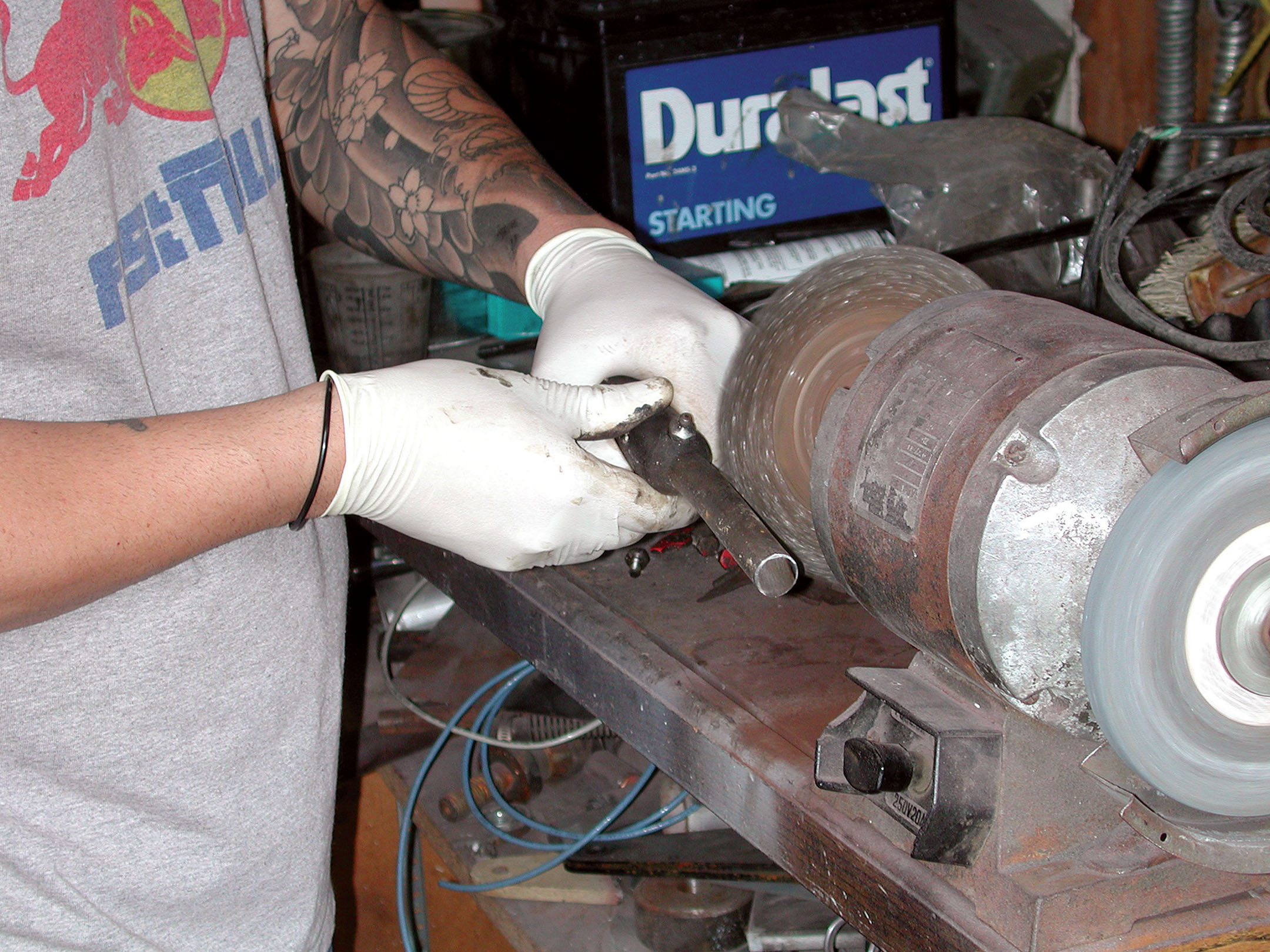
32. The end of the steering arm was dressed with a wire wheel to remove the burrs and get it down to bare metal in preparation for welding.
33. The remainder of the original steering link will be connected to the chromoly tube. The inner dimension of the tube is slightly smaller than the diameter of the steering arm.
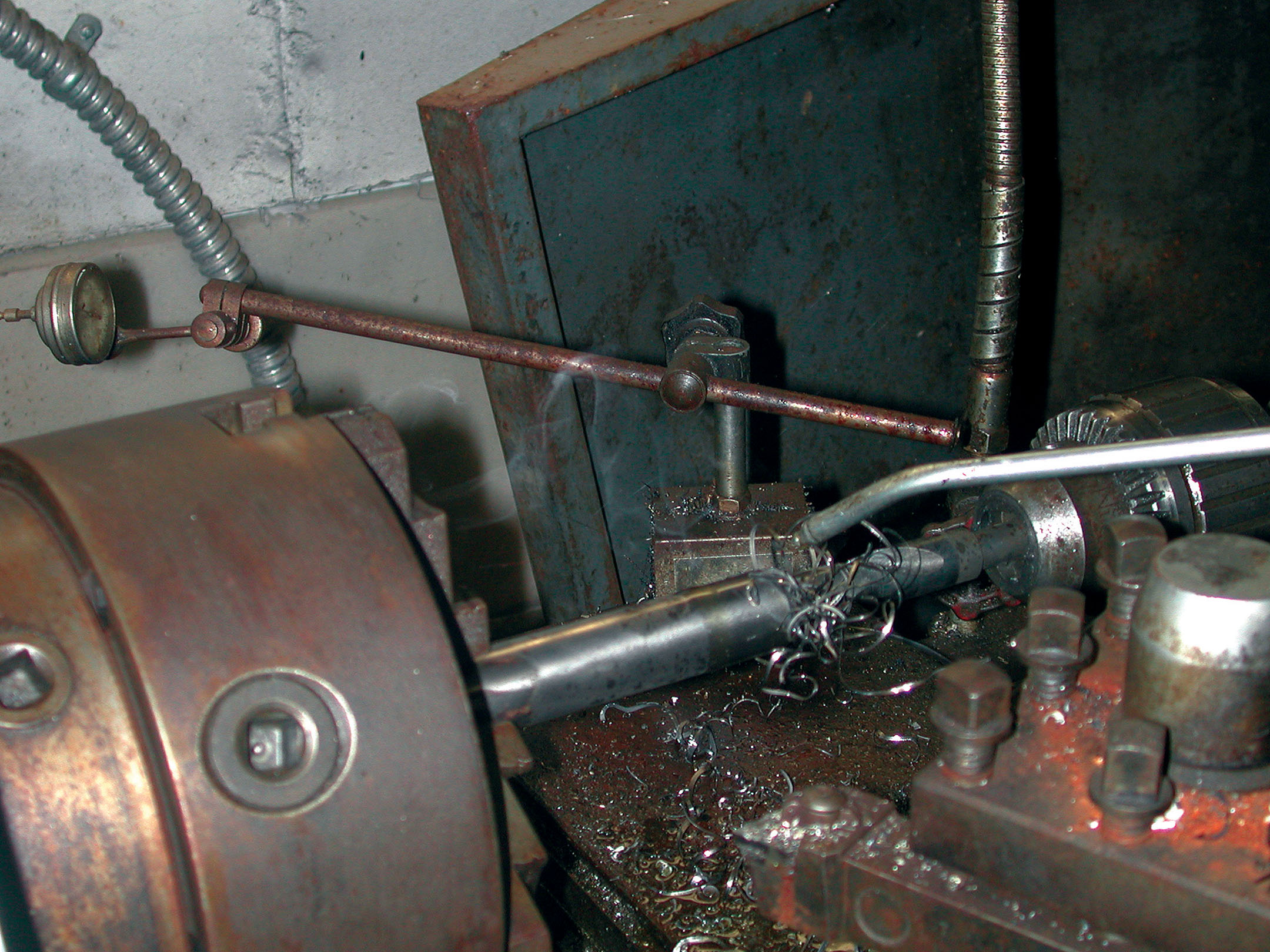
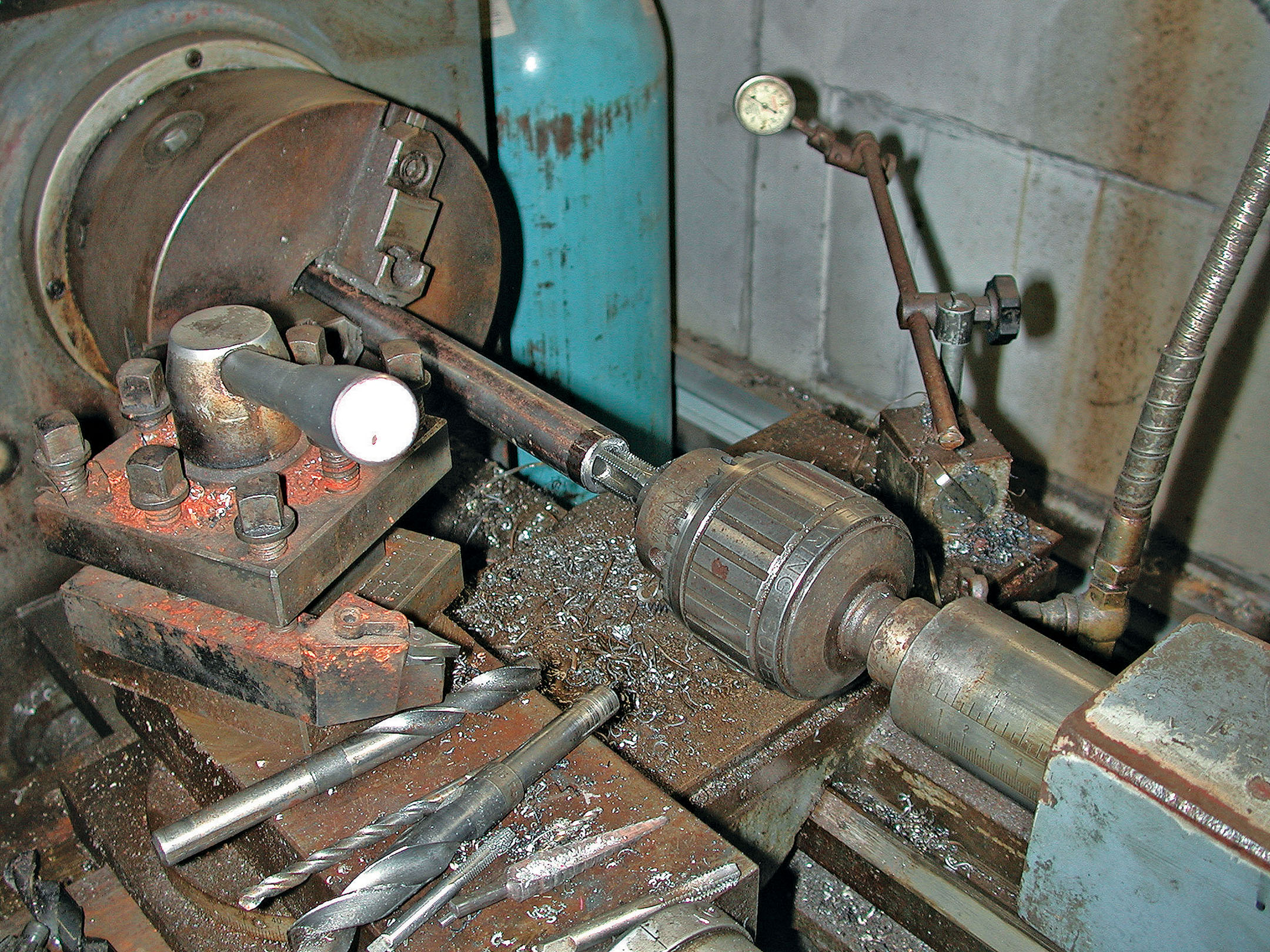
34. The inner dimension of the chromoly tube had to be drilled to the size of the steering link.
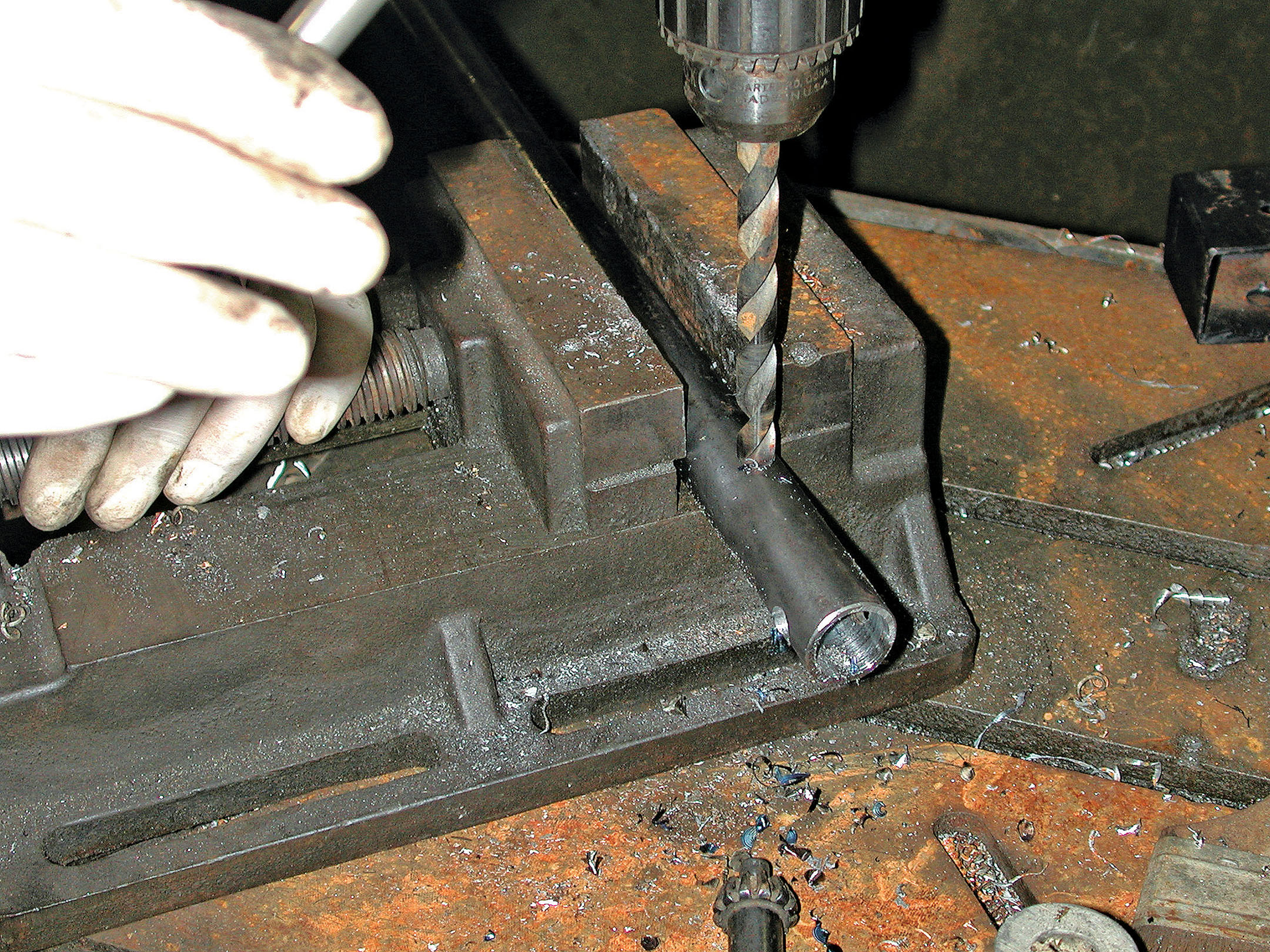
35. Four holes were drilled through the tube, because in these areas the tube will be rosette welded to the steering arm for added strength.
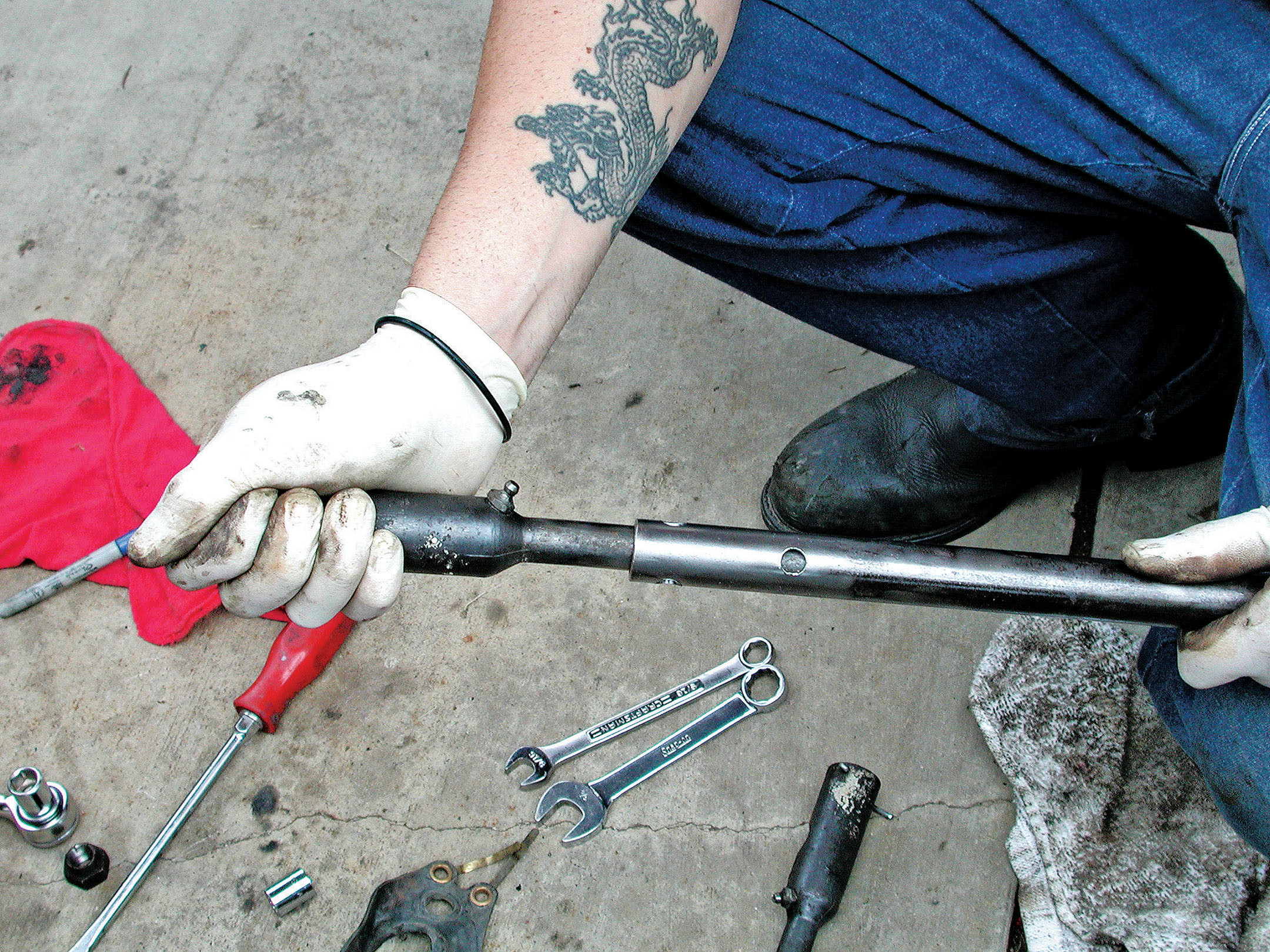
36. The steering link was installed in the tube, and it was a nice, tight fit. When it is finished it will look like a factory item.
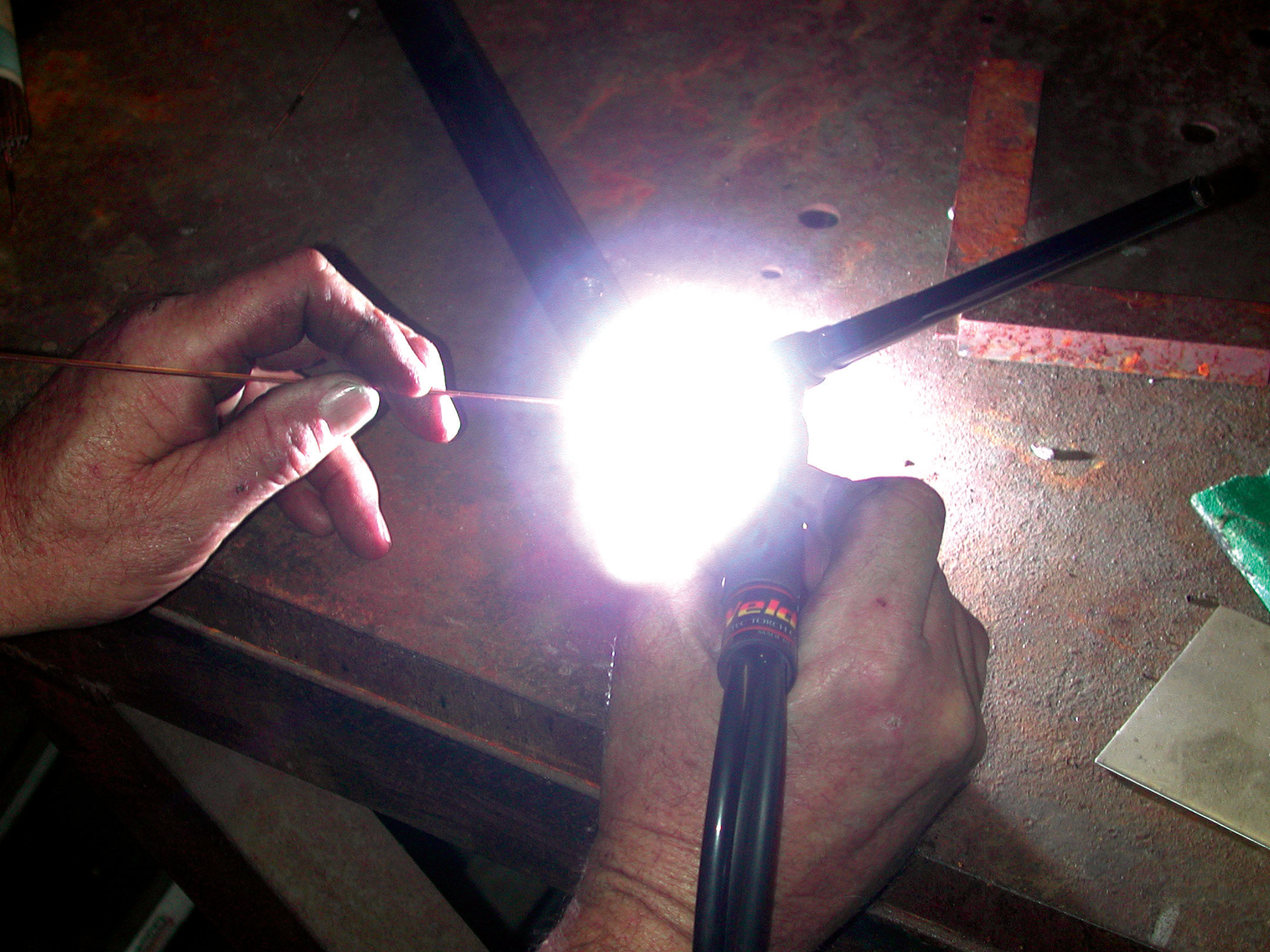
37. The steering arm was welded to the tube with a TIG welder for added strength. Here the welds are being made.
38. The other end of the tube was drilled and tapped for the Ford steering end.
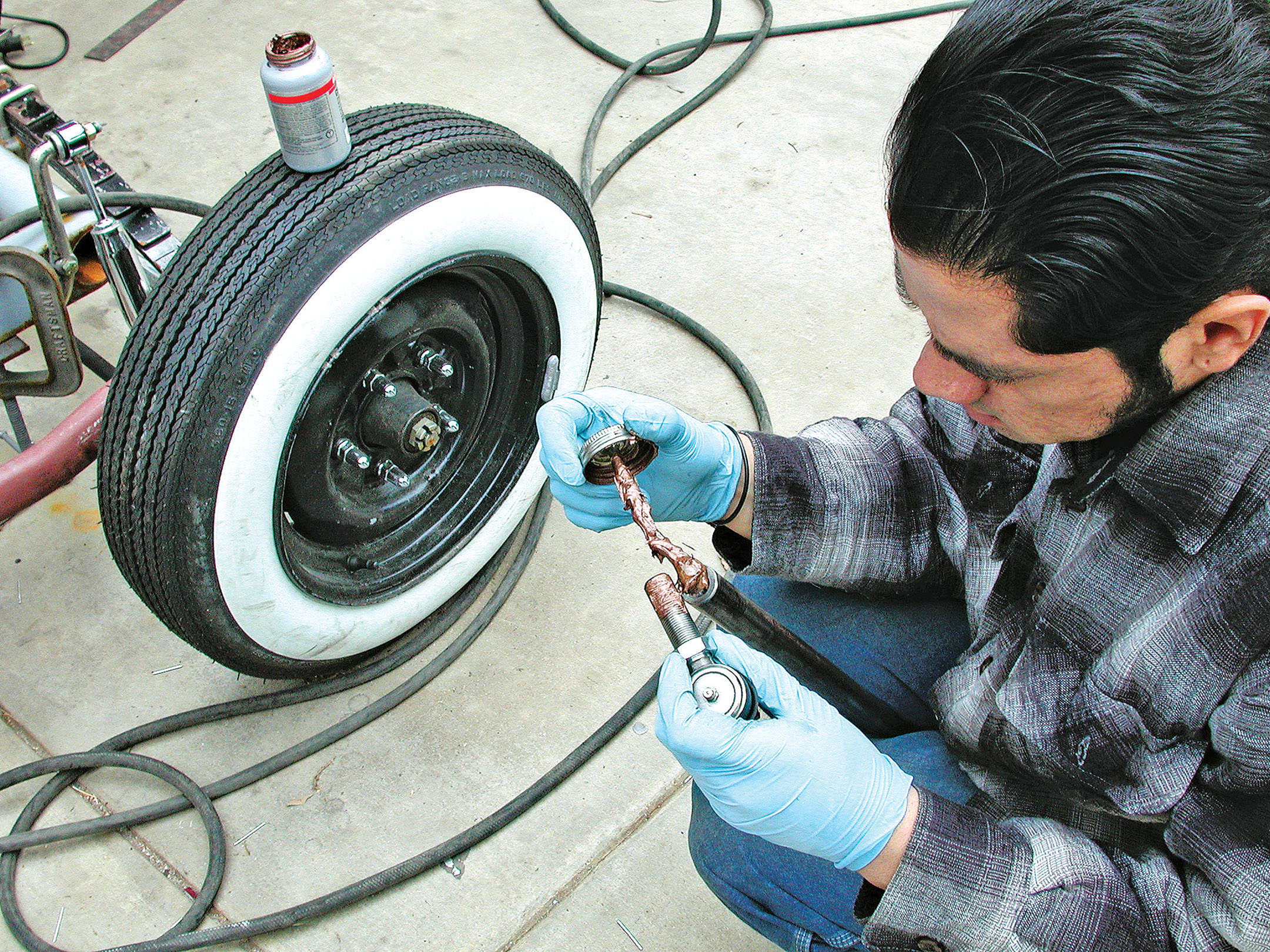
39. The Ford steering end was coated with antiseize lubrication so adjustments can be made. The lubrication will keep the parts from rusting together.
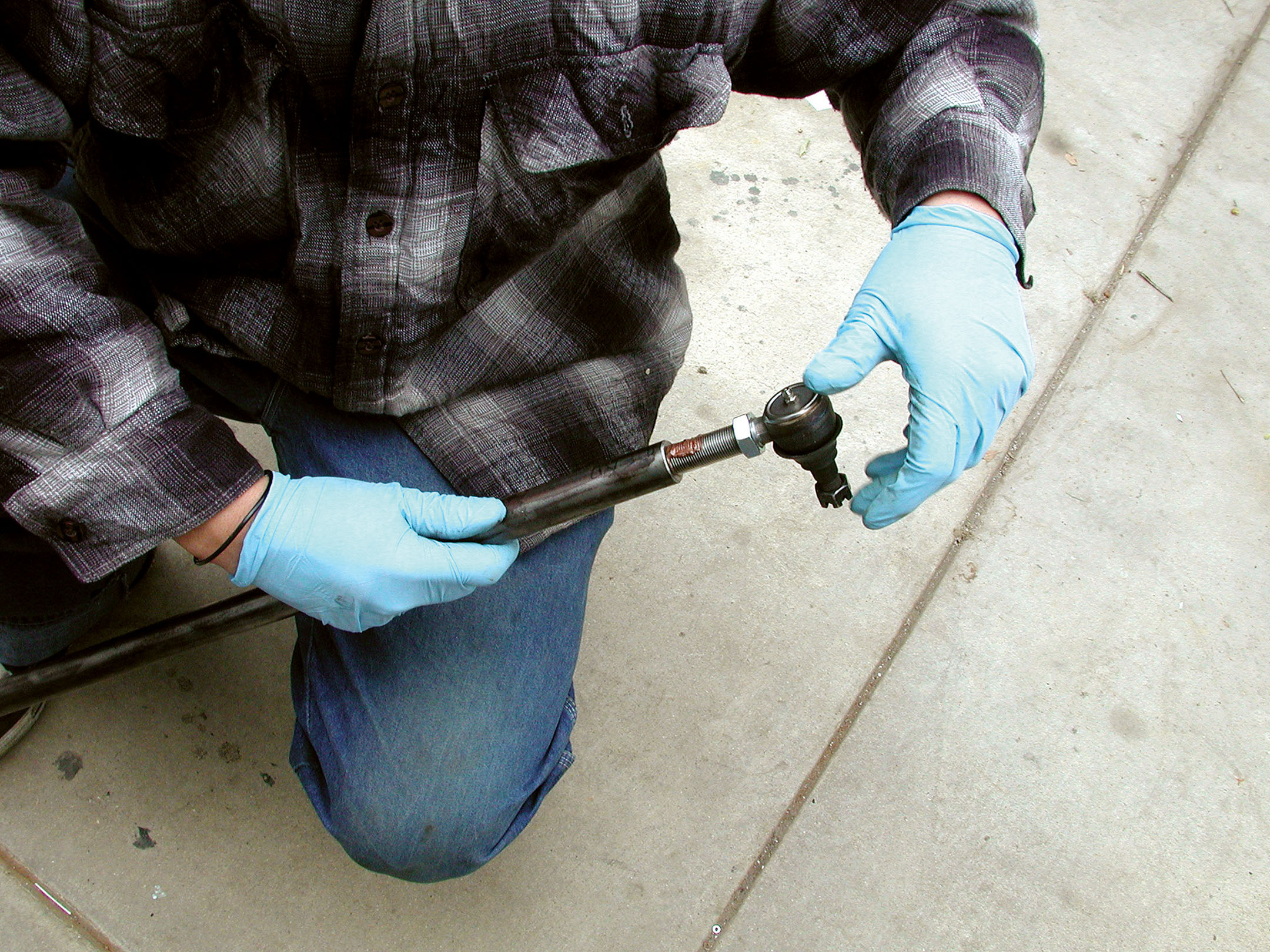
40. Here the Ford end is being screwed into the steering rod. There is a jam nut that will keep the end in place.
41. The ball-end nut was unscrewed and the arm was installed over the ball in the steering arm.
42. After the steering arm was connected to the ball, the end nut had to be tightened. It is important to install the large cotter key in the end of the rod to keep the end nut in place.
43. After the ball end was connected to the steering box, the Ford end was connected. Here the nut is being tightened to secure the ball joint to the steering arm. This is a castle nut so it will require a cotter key.
44. Here is the steering system after the connections have been made. The steering arm leverage was changed when the arm was bent, but the steering was still easy and should work fine.