A Lifetime of Custom Passion
When we asked Don Chamberlain when he first got involved with custom automobiles, he thought for a moment then decided—heʼd been involved forever!
The Beginning of a Unique Build
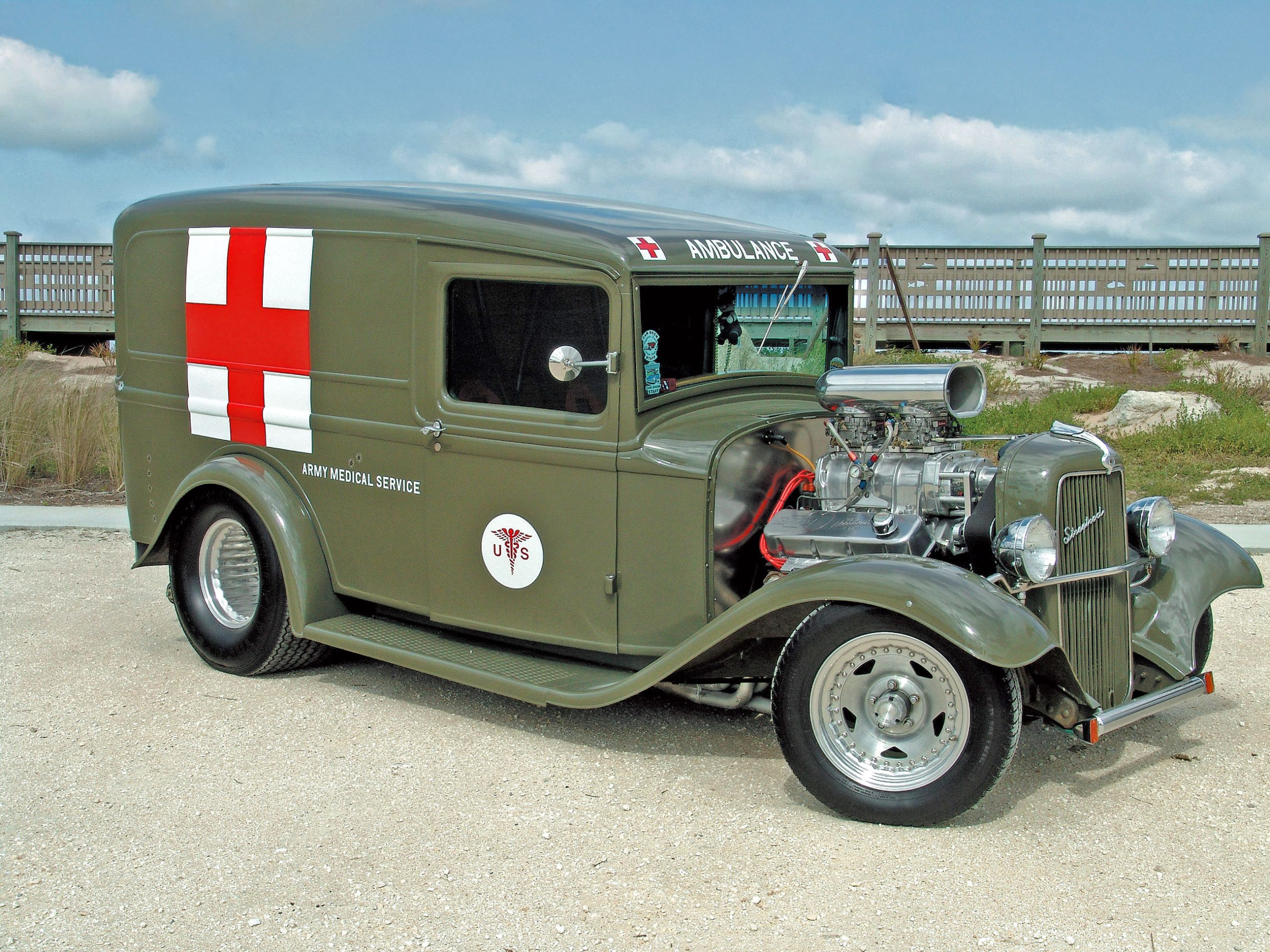
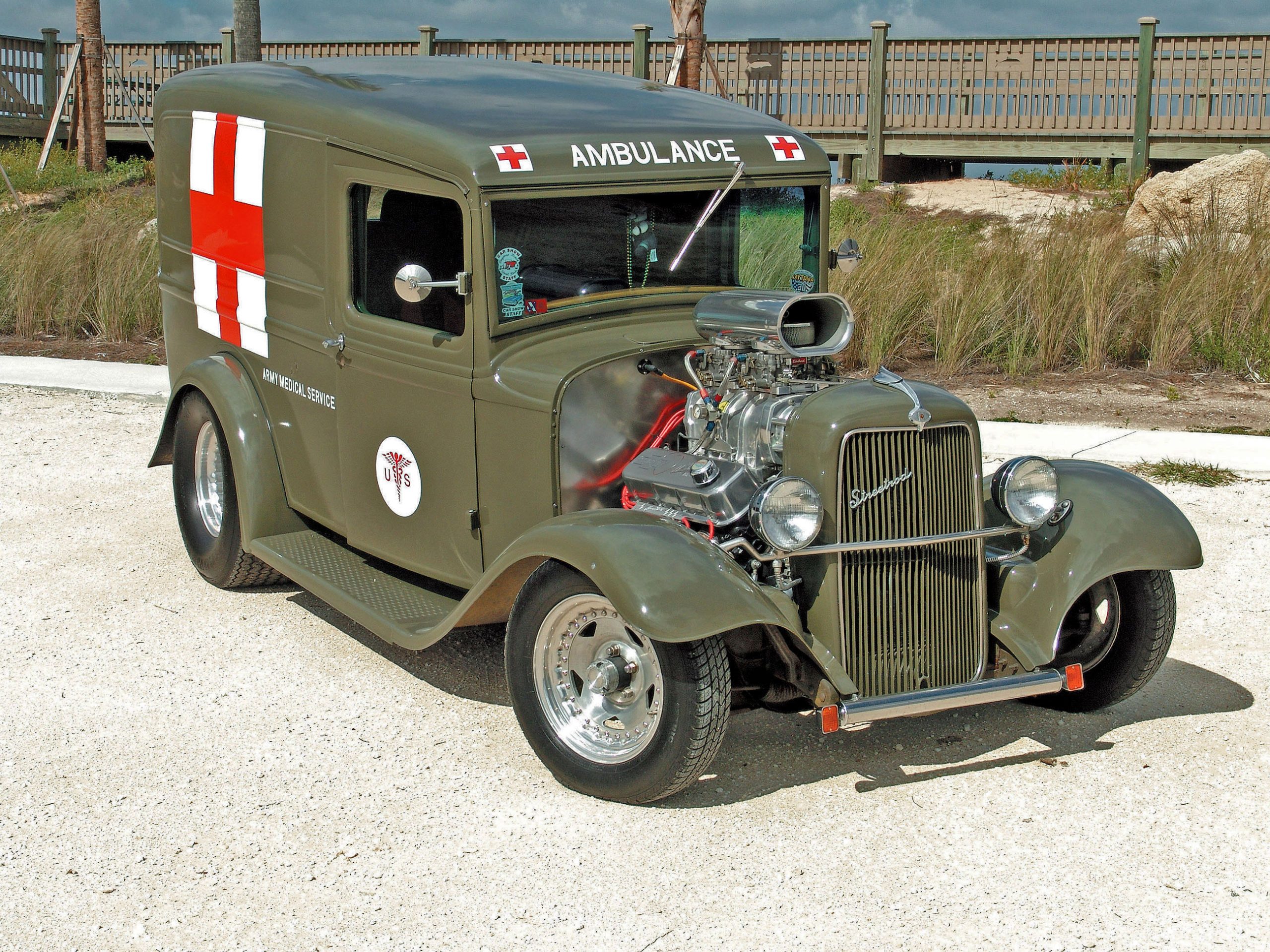
Chamberlainʼs a truck mechanic in Daytona, Florida, and has been enjoying custom automobiles for the last 40 years. In addition to nine previous customs, this is his fourth sedan delivery and this latest one is clearly the best of the bunch. He saw the ʼ34 Ford panel truck body in Hemmings, and bought it sight unseen over the phone. He knew it was going to be in rough shape, but he was wrong—it was worse than that. Undaunted, he trailered the truck from its Nevada location to his home in Daytona, and while repairing the body, began trying to work out a theme for the vehicle. He enjoyed the look of a Pro Street panel truck, but not much suggested itself until the most unlikely of situations occurred. During an episode of the TV show, “The Waltons,” there was a scene that showed a vintage military ambulance. From that moment, Chamberlain had the image of the truck in his mind and set out to transform the panel into a street rod style, vintage ambulance.
Engineering the Foundation
Starting from the ground up, Chamberlain and his good friend Owen Hopes created a new chassis for the truck using 2X4 boxed steel tubing. Since he was intrigued with the Pro Street look, Chamberlain located some of the widest street legal tires made at the time, knowing they would set the tone for the rest of the project. Almost fat enough to qualify for separate zip codes, the 21-inch wide Mickey Thompson tires were rolled into position and Chamberlain began adjusting everything until they fit.
Custom Suspension and Rear End
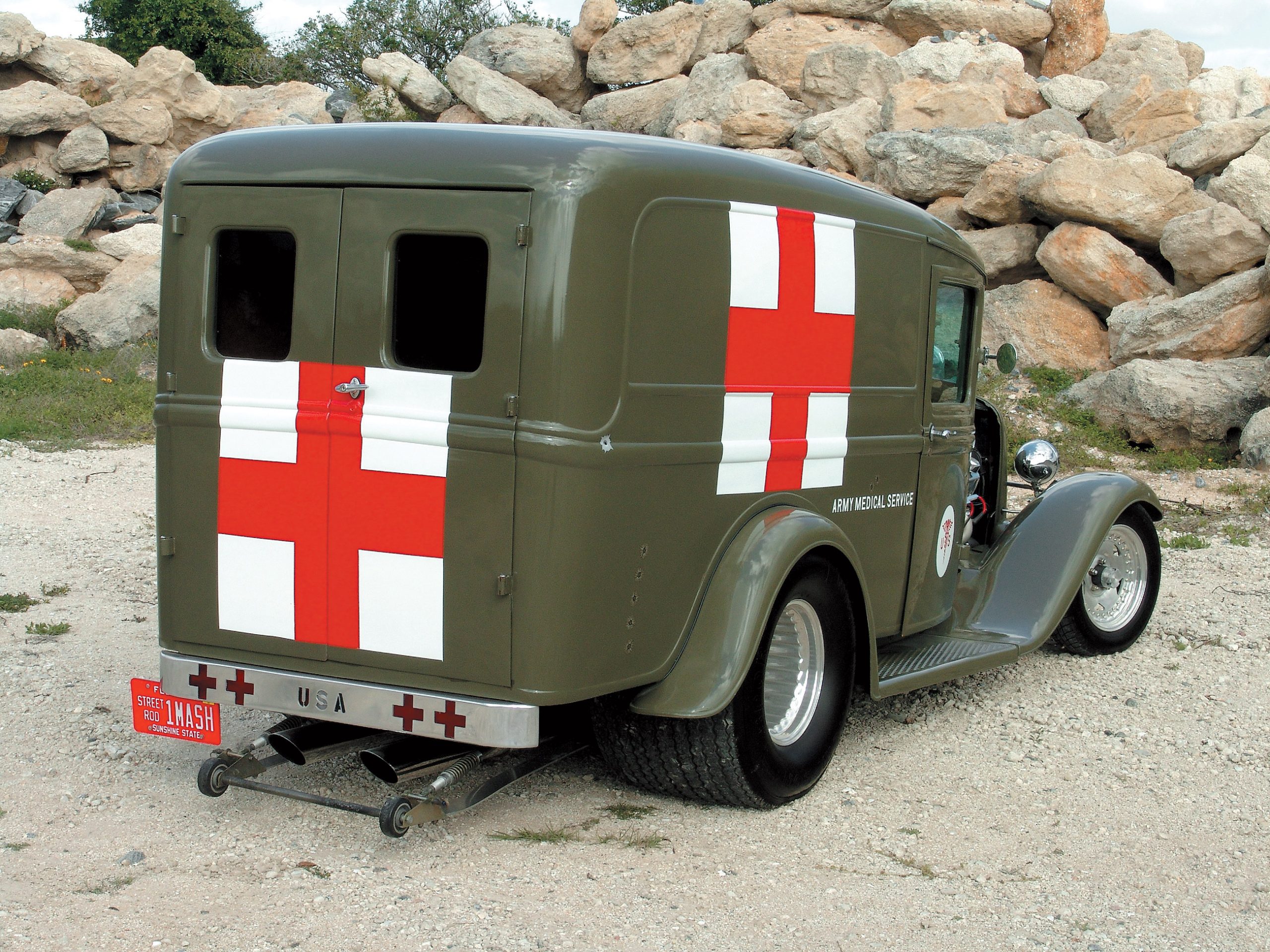
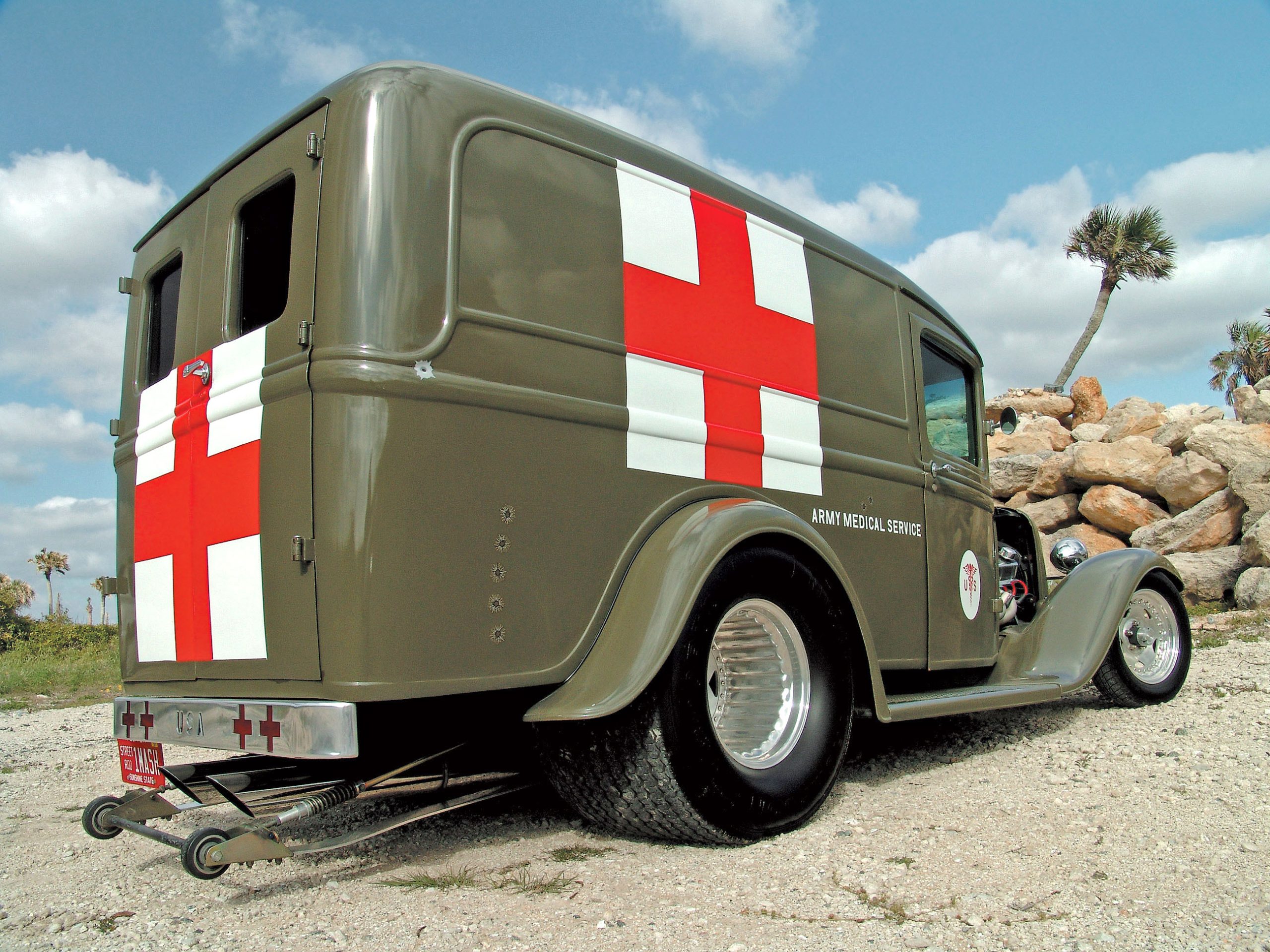
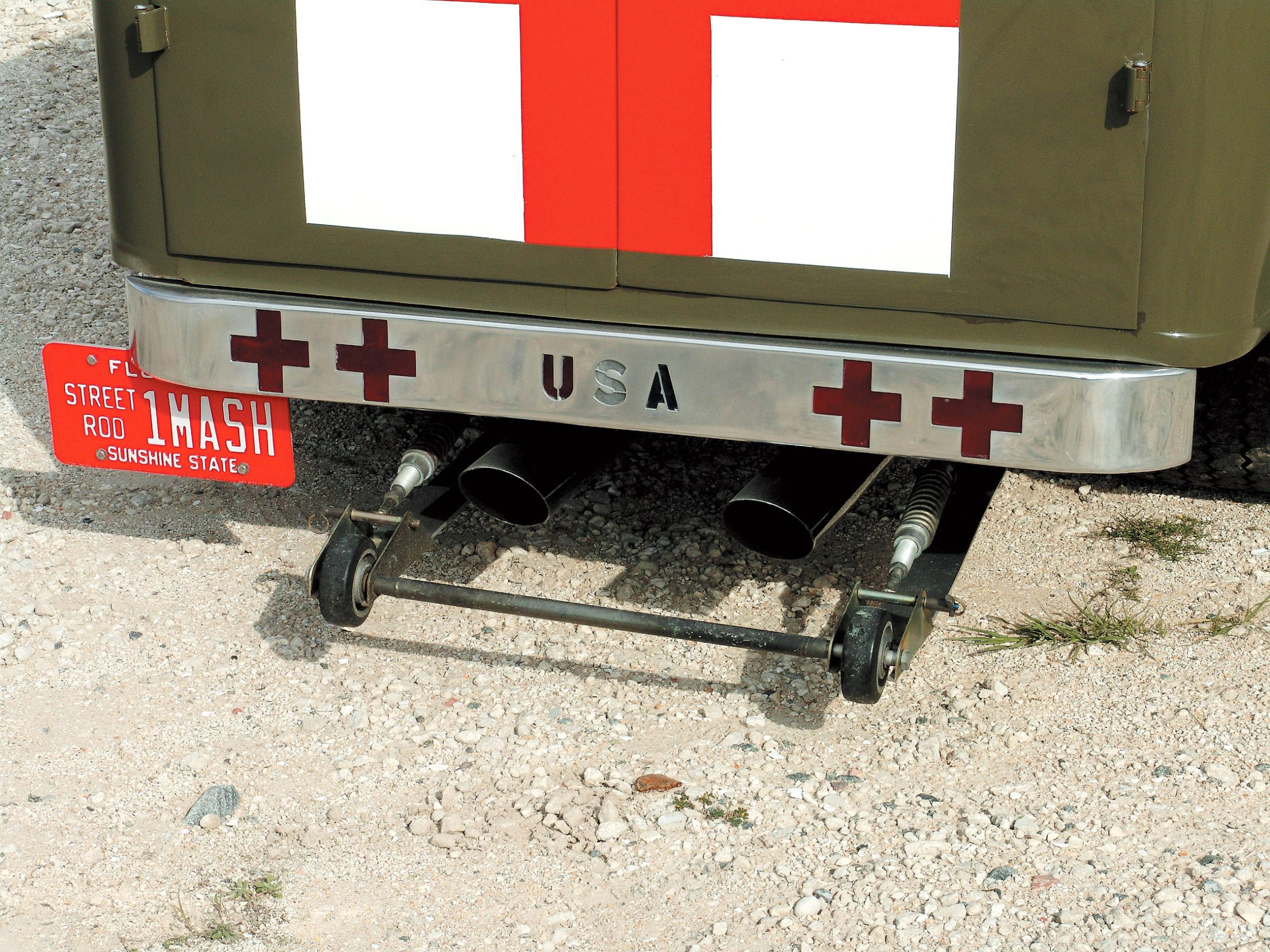
The Ford 9-inch rear, upgraded with a Detroit Locker, Strange axles, and Richmond 4.11 gears, is now less than 3 feet across after the surgery necessary to accommodate the steamroller rubber. Holding the shortened new axle in place, they adapted a four-link rear suspension and coilovers along with a set of handmade wheelie bars. Serving two purposes, the bars not only provide a traction and steering device when Chamberlain gets on the loud pedal, but also contribute to the competition theme of the truck. The pair adapted an original Mustang II front end, trimming it to match the chassis and adding new tubular A-arms and Carrera coilovers. Large 11-inch front disk brakes and drum brakes in the rear handle stopping chores. Rims for the rubber use narrow 15×5 Center Line discs up front along with ultra wide 15×15 Center Line rims in the rear. No airbags or hydraulics are employed. Chamberlain built the ride height into the chassis during the construction phase.
Big Block Powerplant and Drivetrain
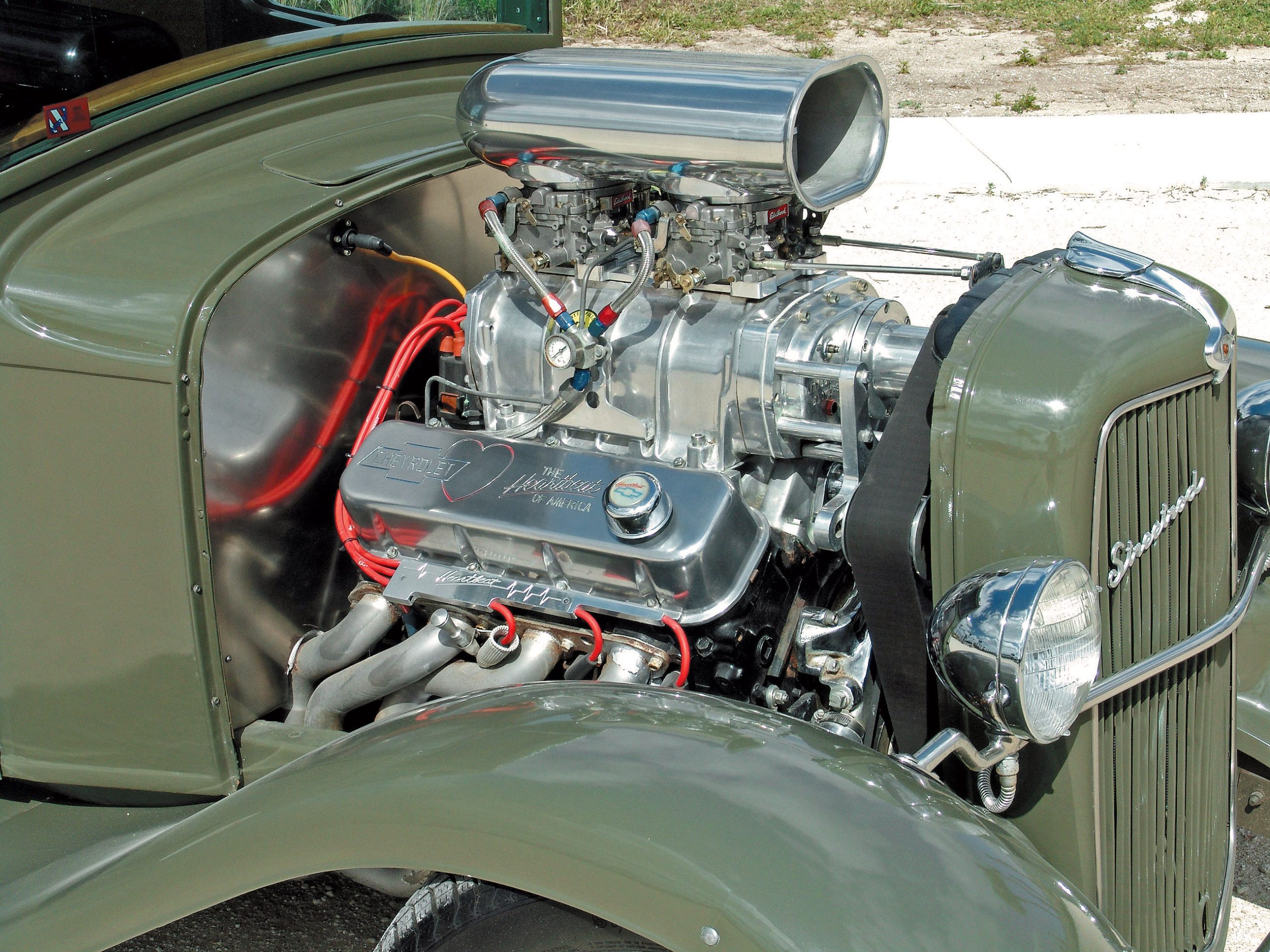
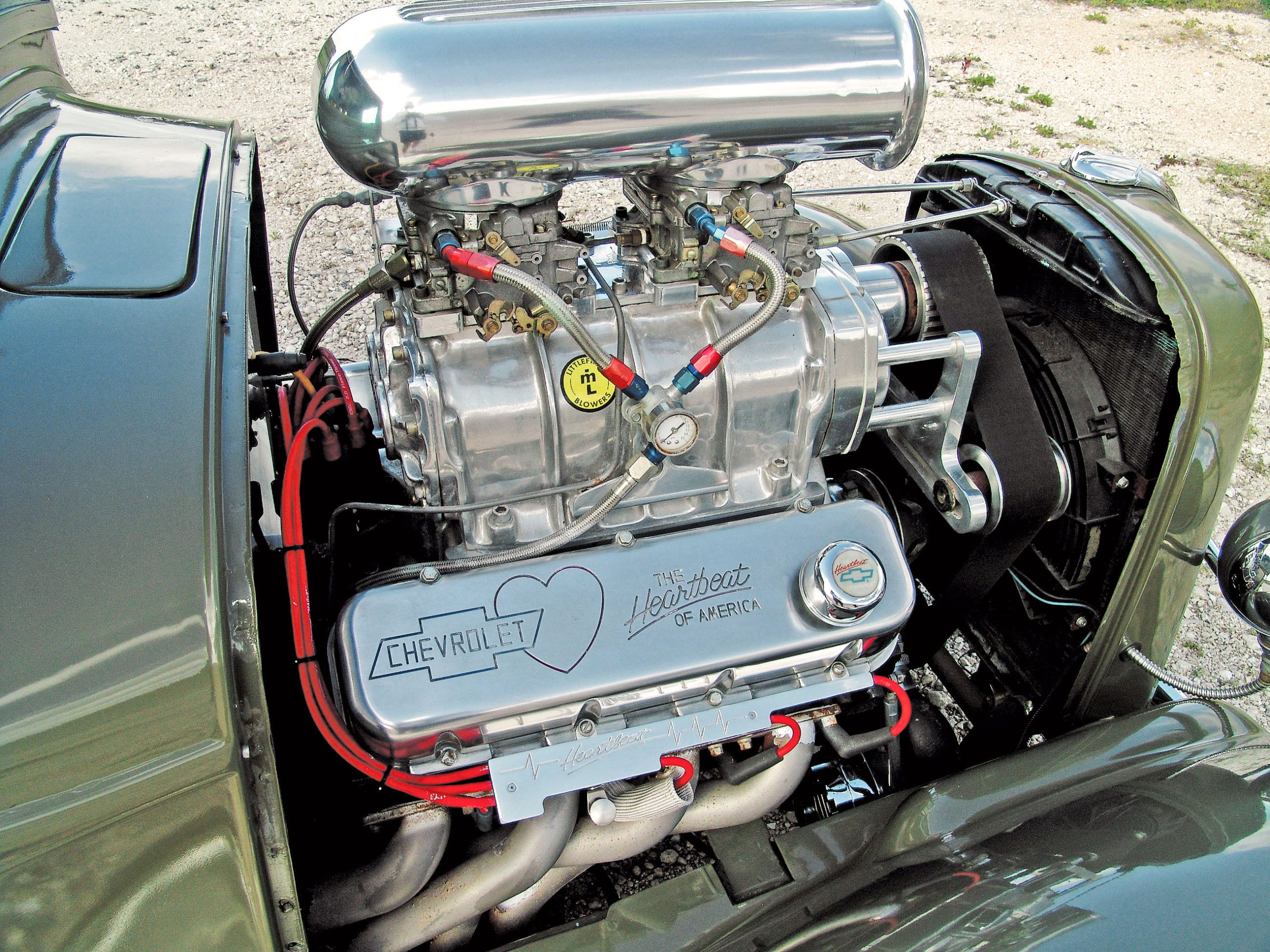
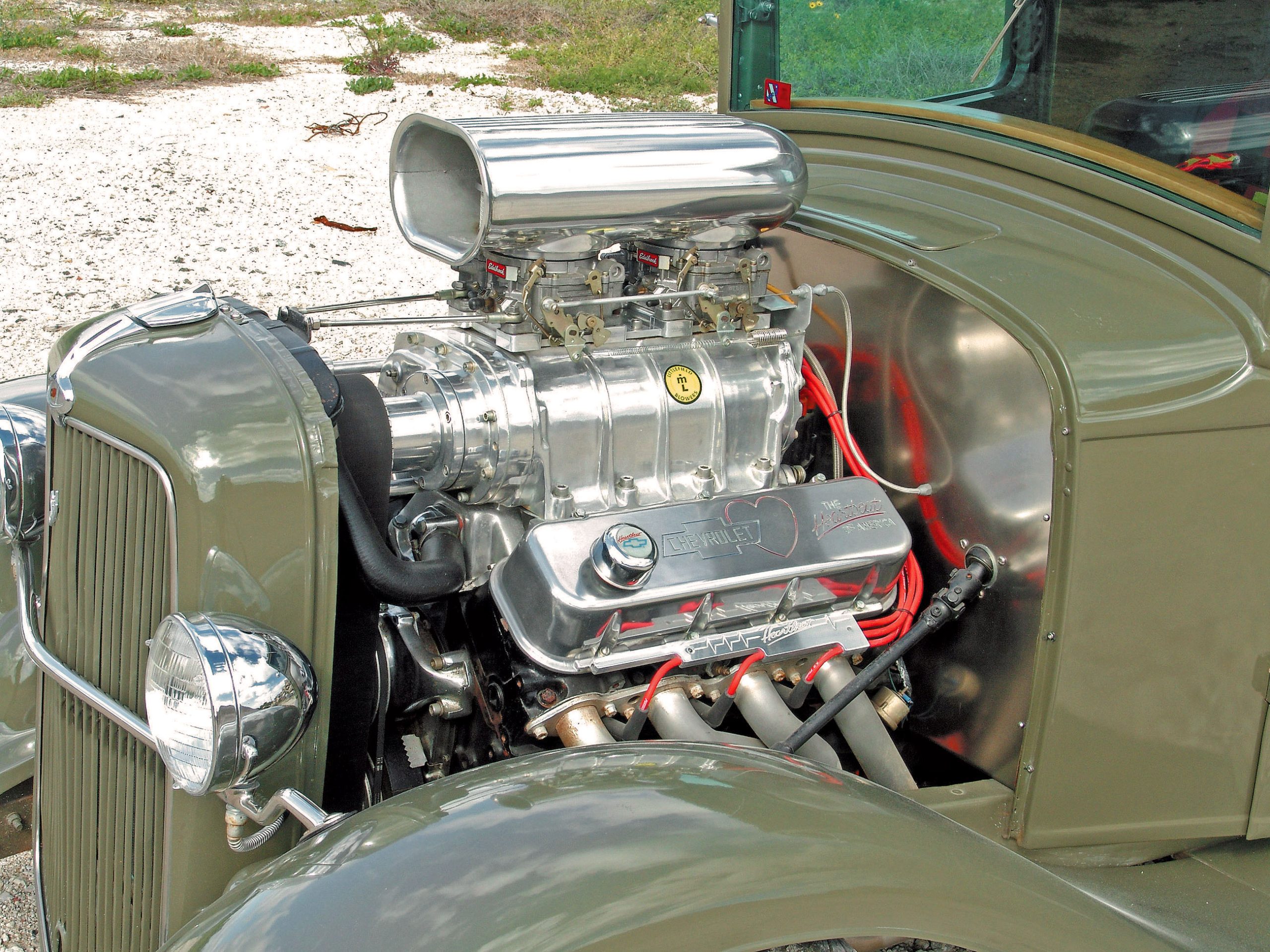
Since it ainʼt fun if it donʼt run, Chamberlain chose a big 454 V-8, squeezing it between the boxed framerails, then doubling the grins by equipping it with a shopping cart load of speed options. The monster motor was strong to begin with but gets considerable belt from a Littlefield 671 blower, dual quad 800 CFM Edelbrock carbs on a Weiand manifold, Crane roller cam, and 2-inch long tube, Hooker Competition Headers feeding twin DynoMax mufflers. A new 80-amp alternator and MSD electronic ignition creates the spark while the modern Ford radiator keeps everything cool. A Turbo 400 automatic trans with a B&M shifter and custom driveshaft gets the power to the ground.
Reworking the Body and Style
Once the powertrain was in place, it was time to mount the body to the frame. After eliminating the rust and rejuvenating the vintage sheetmetal, Chamberlain channeled the body 4 inches over the frame and raised the repro fiberglass rear fenders to enclose the rear skins. On the inside, tubs were designed and fitted to the body. The reproduction front fenders were modified, trimming additional space for the upper A-arms. Stock headlights now rest on a reworked chrome bar that spans both fenders. The choice of paint for the new body was easy. Olive Drab was the perfect shade, modified slightly with a glossy finish instead of a flat. Chamberlain ʼs friend Mud Flap‚ handled the spray gun, shooting the military green color, then creating the Red Crosses on both sides. Chamberlain found all the original markings in an Army surplus manual with the decals adding an authentic wartime look to the rejuvenated ambulance.
A Simple but Bold Interior
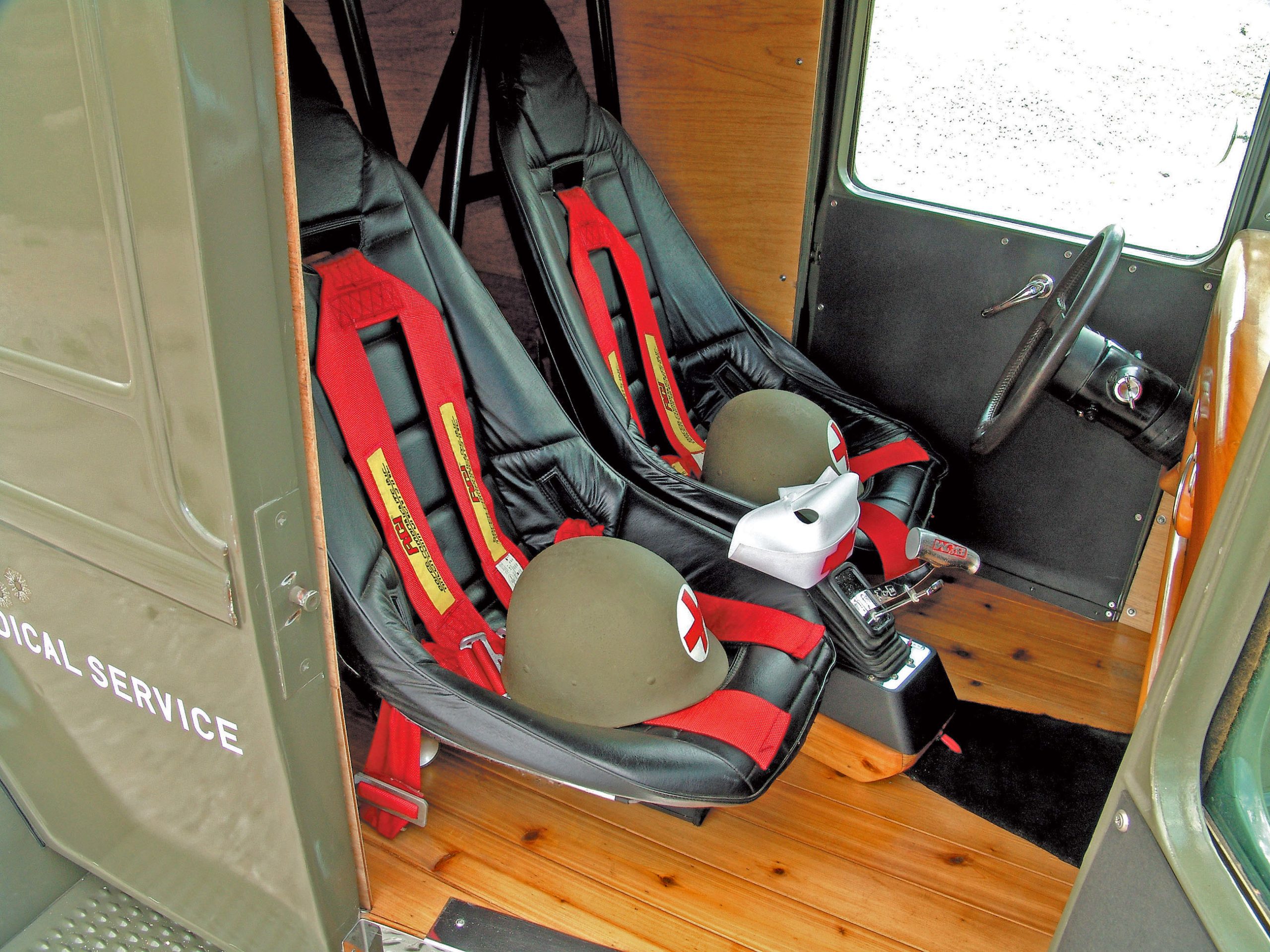
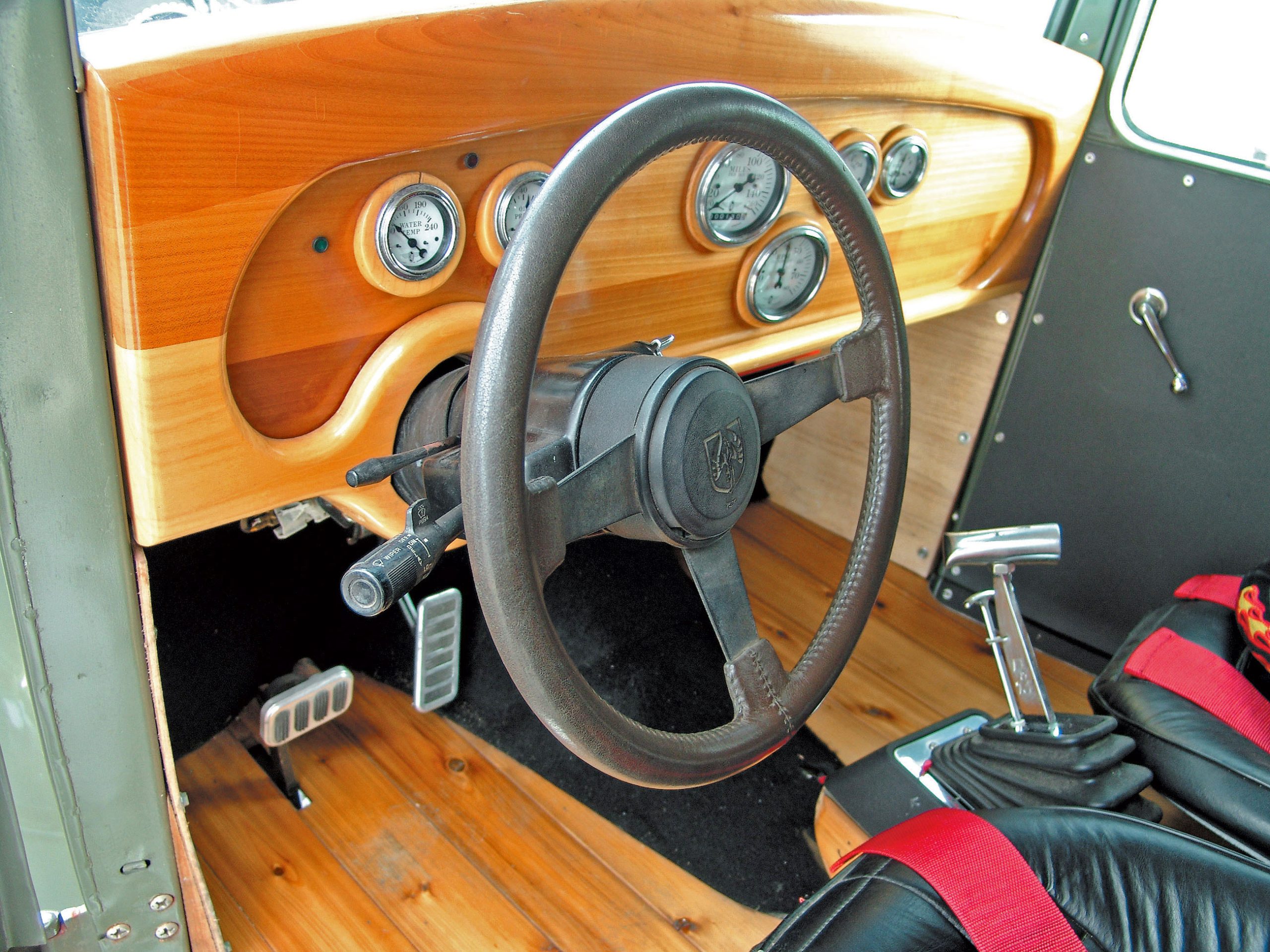
The interior was next on the list. Keeping it plain and simple, wood paneling was used for the headliner and walls with cedar planks covering the floor. A hardwood dashboard, made by Dave Jeffries, holds the Stewart Warner instruments, angled toward the driver with individual wood bezels. The tilt column and steering wheel were liberated from a Fiero, while the Summit racing seats, fitted with five-point RCI racing harnesses, add comfort and safety. Now that itʼs complete, Chamberlain enjoys cruising in his high-powered ambulance and taking it to car shows. “This is one of those trucks that you plan on keeping forever,” he told us. When you get one as pretty as this one, we couldnʼt agree more.