When GM introduced the Gen III small block in the F-body, it rekindled a dying performance flame with its new-generation small block. While the Gen I small block actually kick-started the hobby and got it into gear, it’s the latest family of small-block engines that has grabbed the attention of enthusiasts everywhere—and for good reason.
The Evolution of the Small Block Engine
Displacing 346 ci, the LS1 weighs less than the engine it replaces, thanks in large part to its all-aluminum construction, and the LS engines are relatively affordable and offer great drivability. At no time in the history of the small block has it been as easy to make 300 efficient horsepower, and with the reliability today’s LS engines offer. And then there is the added advantage of 24 to 26 mpg (depending on the weight of the car, the gearing and the transmission).
The Advantages of the LS1 Engine
When Mark Turner decided he wanted to add a little more zip to this ’67 Nova II, he brought the car to Greg Blaydes at G&S Custom Fabrication and Suspension in Athens, Alabama (256/232-9512). The stock Nova had received an upgrade in the engine compartment a few years back with the addition of a 350 small block, but Turner thought it was still lacking elsewhere. After installing a custom IFS and a rear four-link, Turner decided to upgrade the powerplant. While the 350 ran okay, it simply lacked the level of power that Turner was looking for. To remedy the situation, Turner sought out a wrecked F-body and pulled the LS1 and automatic transmission that he would use in the Nova.
Upgrading the ’67 Nova II with an LS1 Engine
To accomplish the swap, Blaydes and Turner decided that, rather than purchase adapters and fight the engine, it would be far easier to utilize the factory LS1 engine mounts and incorporate them with a set of fabricated stands. This approach made a lot of sense, as the factory engine mounts work great and are plentiful at any local parts store.
Fabricating Custom Engine Mounts
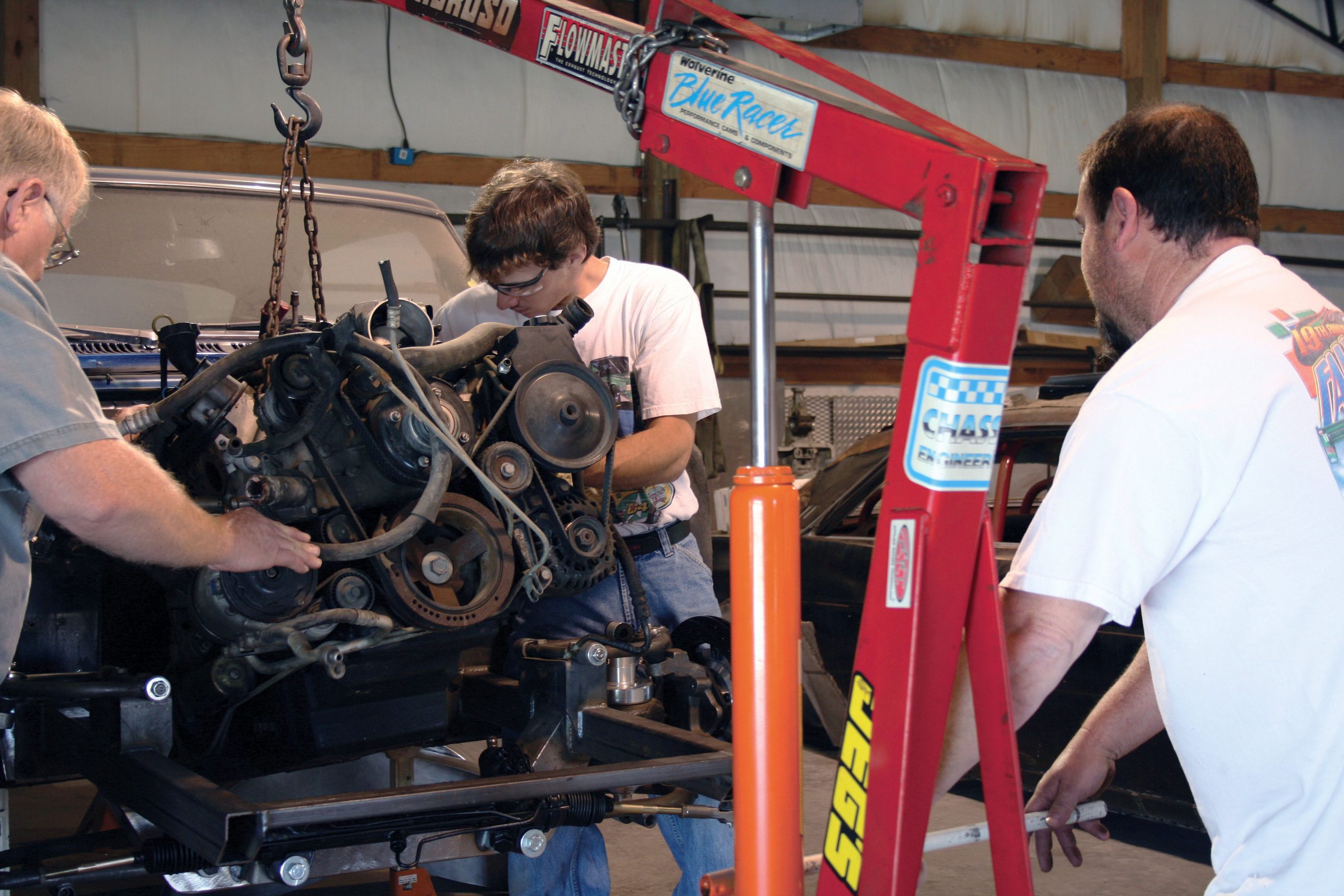
Once the engine was stripped of its manifolds, factory mounts and wiring, it was hoisted into the Nova frame to be mocked up. Using about $15 worth of 2×3/16-inch flat stock, 1-1/2×1-1/2-inch-square tubing, and four hours of work, Blaydes fabricated a set of motor-mount stands that utilize the factory GM engine mounts. The factory Nova transmission crossmember required only minor tweaking, and a pair of small plates had to be fabricated, using about $2 worth of steel. So, using about $20 worth of materials and four hours of labor, Blaydes installed the LS1 into the ’67 Nova II.
Cost-Effective Engine Swap Solutions
As you may already know, similar kits can be purchased for $150 to $200, but with a little imagination and a bit hands-on work, building a set of motor mounts such as these can be easily done at home, and in far less time than you may think. While it may take you a little longer to fabricate these mounts than it did Blaydes, building a set does require a sheet metal brake (which you can have done) or bender, a welder, a measuring tape and simple hand tools. An experienced welder is recommended, however, as you want to ensure you get the proper penetration.
Tips for Successful Motor Mount Fabrication
Motor mounts take a lot of abuse, so be sure you approach the welding portion of the fabrication properly, or tack it together and have it finished-welded by a pro. The rest is easy. Follow along as Blaydes tackles this LS1 engine swap, and see for yourself if this is something you would want to tackle.