A Husband-and-Wife Built 1955 Ford F-100 With Pro Street Attitude
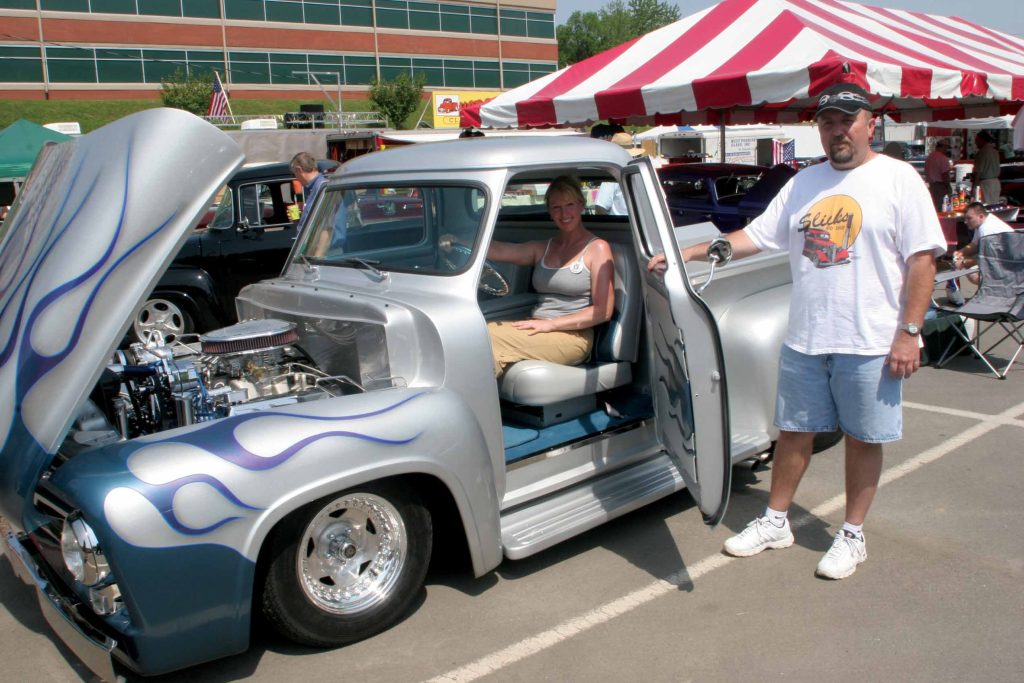
Bob Dillon built an F-100. Okay, so it’s not that Bob Dillon, but in this case it’s better. How, you ask? Well, there are two Bob Dillons: Bob Dillon owns this truck, but he does so with his wife, Bobbi. See, that explains it. Now let’s move on.
According to the Dillons, “We did 90 percent of all the work” on the truck, and only had the guys at Cars do the final sanding, paint and assembly. The Dillons bought the 1955 Ford F-100 nearly 12 years ago and have worked at it off and on ever since. They had a definite vision for the truck, if not a timeframe, and judging from the results, it was time well spent.
Custom Chassis and Pro Street Suspension Setup
The Dillons used the frame that originally came with the Ford but wanted to go a little better for the suspension than what was available in 1955. Thanks to Fat Man Fabrications, the F-100 now sports a Mustang II frontend equipped with a set of Aldan coilover shocks. The Fat Man IFS unit was installed by Bob Dillon and friends, who also boxed the frame, filled the extraneous holes and smoothed the entire frame.
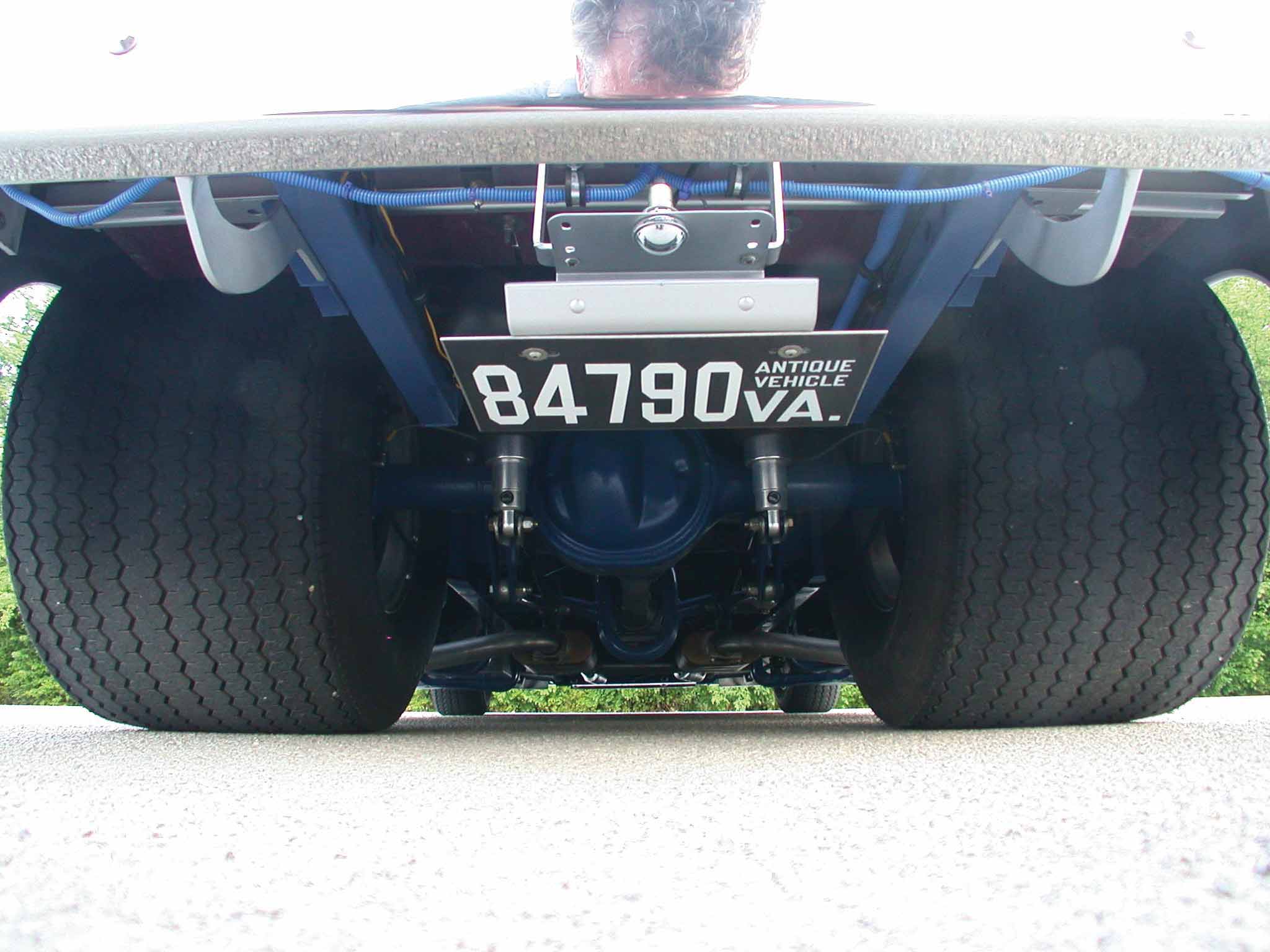
For the rear suspension, Dillon again was responsible for all of the work. He had a Ford 9-inch rearend narrowed and then used Air Ride ShockWaves to hold it in place. To give the truck good highway manners, Dillon installed 3.50:1 Richmond gears as well as a posi unit. The front has disc brakes thanks to the Fat Man IFS unit, but Dillon also installed a set of Wilwood disc brakes in the rear and used Wilwood four-piston calipers to boot.
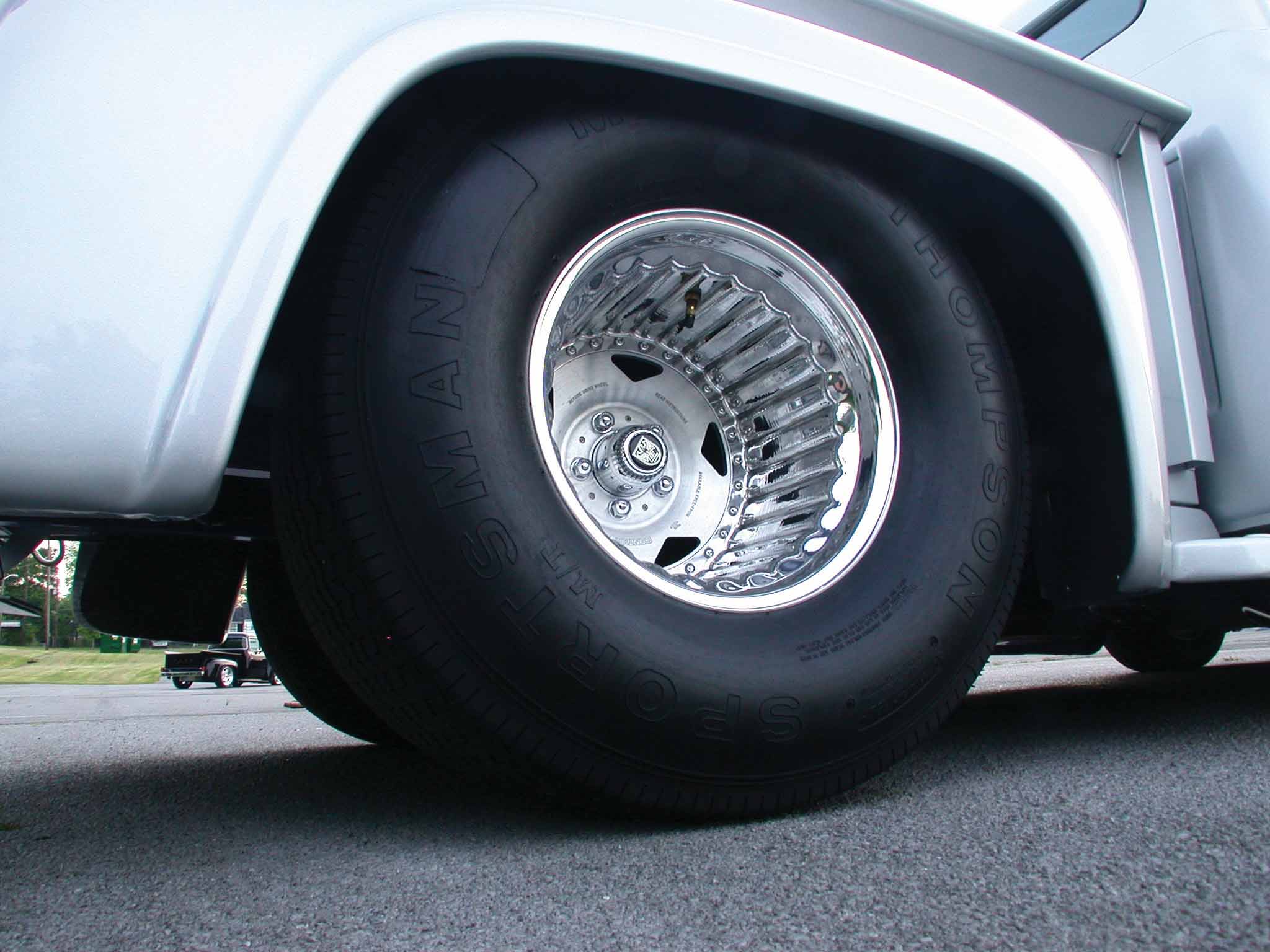
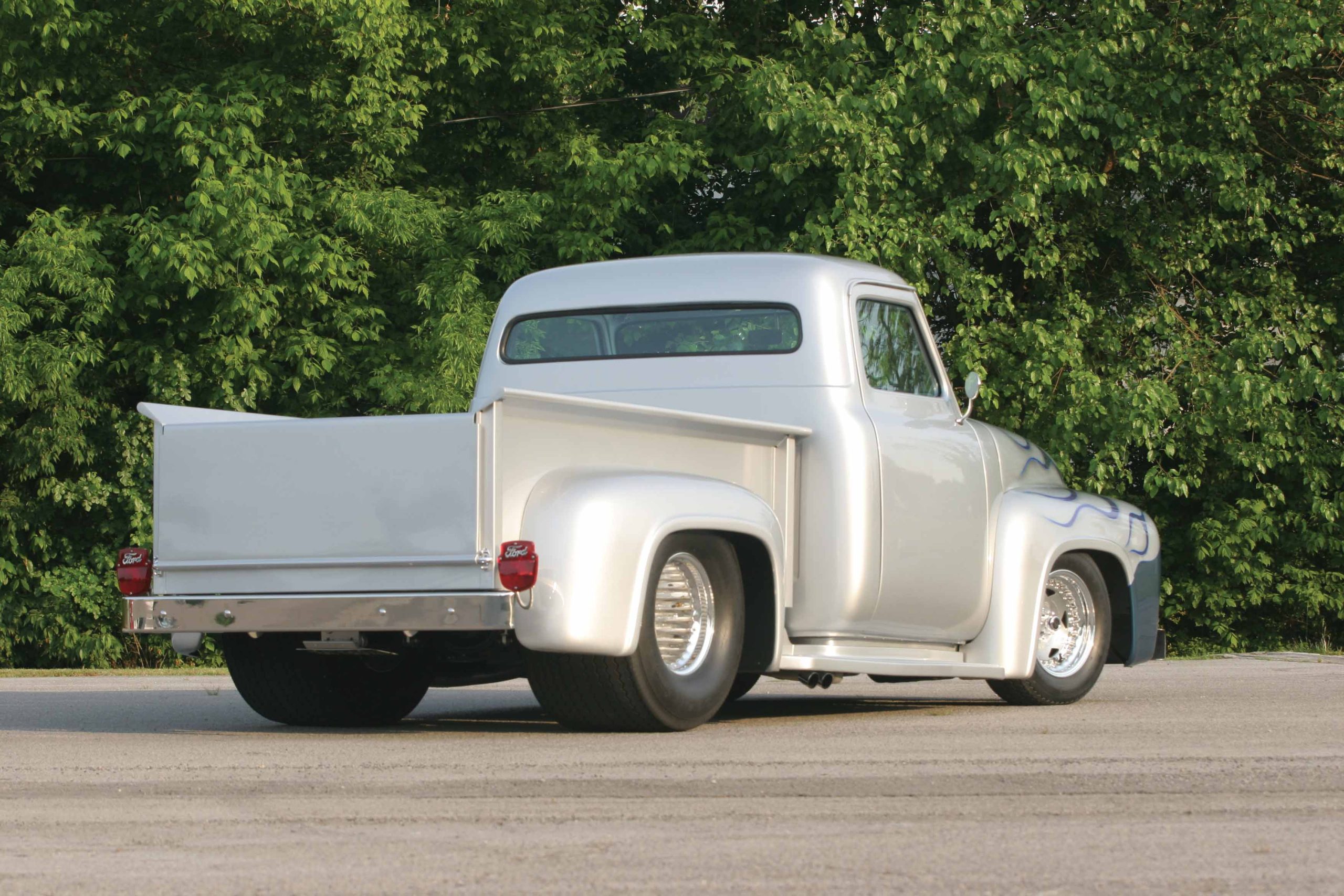
Make no mistake about it: This is a Pro Street truck, so the rear meats on this thing are huge! Mickey Thompson Sportsman tires are found on both ends, but the rears measure a massive 33×21.5-15 and have been mounted on 15-inch Center Line Convo Pro wheels.
Big-Block 460 Ford Power
What would a Pro Street truck be without the motor to back up the claims? Dillon thought that bigger is better when it came to the tires, and he had the same outlook for the engine. Residing in his truck is a 460 Ford big-block that has been bored .020-inch over and equipped with all of the parts that speed enthusiasts look for.
It takes a lot of fuel to keep a 460 happy, so Dillon chose a Barry Grant Speed Demon 750cfm carburetor sitting atop a Weiand Stealth intake manifold. Once the fuel gets past the intake, it runs headlong into the Keith Black pistons and rings. The name Keith Black is legendary in drag racing, and the slugs housed in the Ford give it a healthy 10:1 compression ratio.
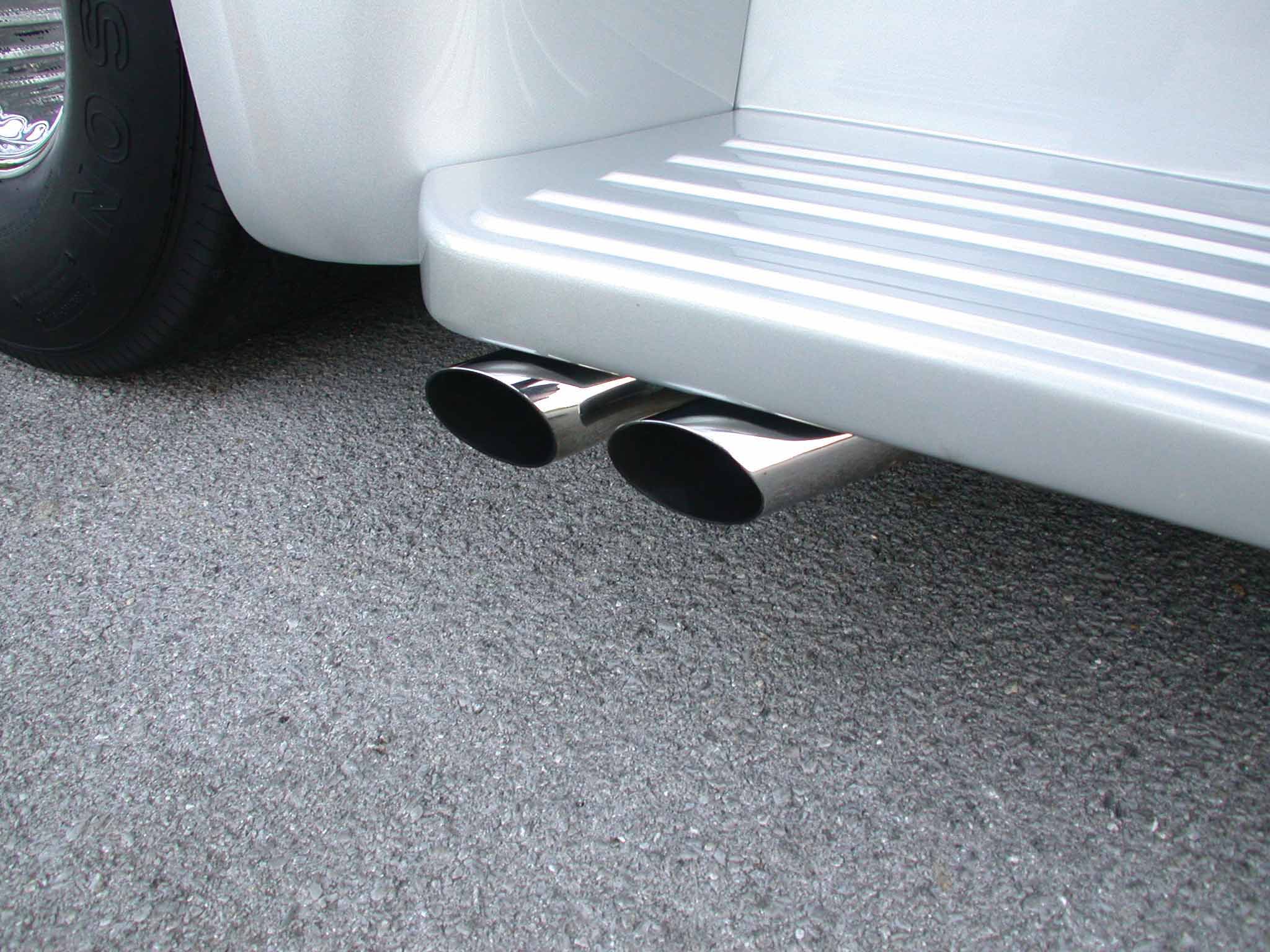
Other items that scream “high performance” are the Competition Cams camshaft (with lift and duration of 484/260, respectively) and the MSD ignition system. Dillon used a set of Sanderson block-hugger headers, followed by Flowmaster mufflers. Adding looks as well as performance are the Billet Specialties air cleaner, the Street & Performance serpentine pulley system and the Ford Racing chromed valve covers.
With the engine producing an estimated 415 horsepower, Dillon can be rightly proud of himself, as it was he who did the work to the big-block.
Ford C6 Transmission and Driveline
Getting that power to the narrowed rearend could be a problem, so Dillon used a Ford C6 transmission equipped with a Specialty Auto-Tech transmission cooler and an aluminum driveshaft spun up by Salem Spring Works in Salem, Virginia.
Body Mods, Chop Top and Custom Paint
As handy as Dillon is with a wrench, he did have a little help when it came to the major cutting and grinding. The Dillons described the condition of the F-100 when they got it as a “rust bucket” but acknowledged that the purchase price was only $400. Apparently they had to completely repair the floor and cab corners, and they decided to toss the stock fenders and bed because they were too far gone.
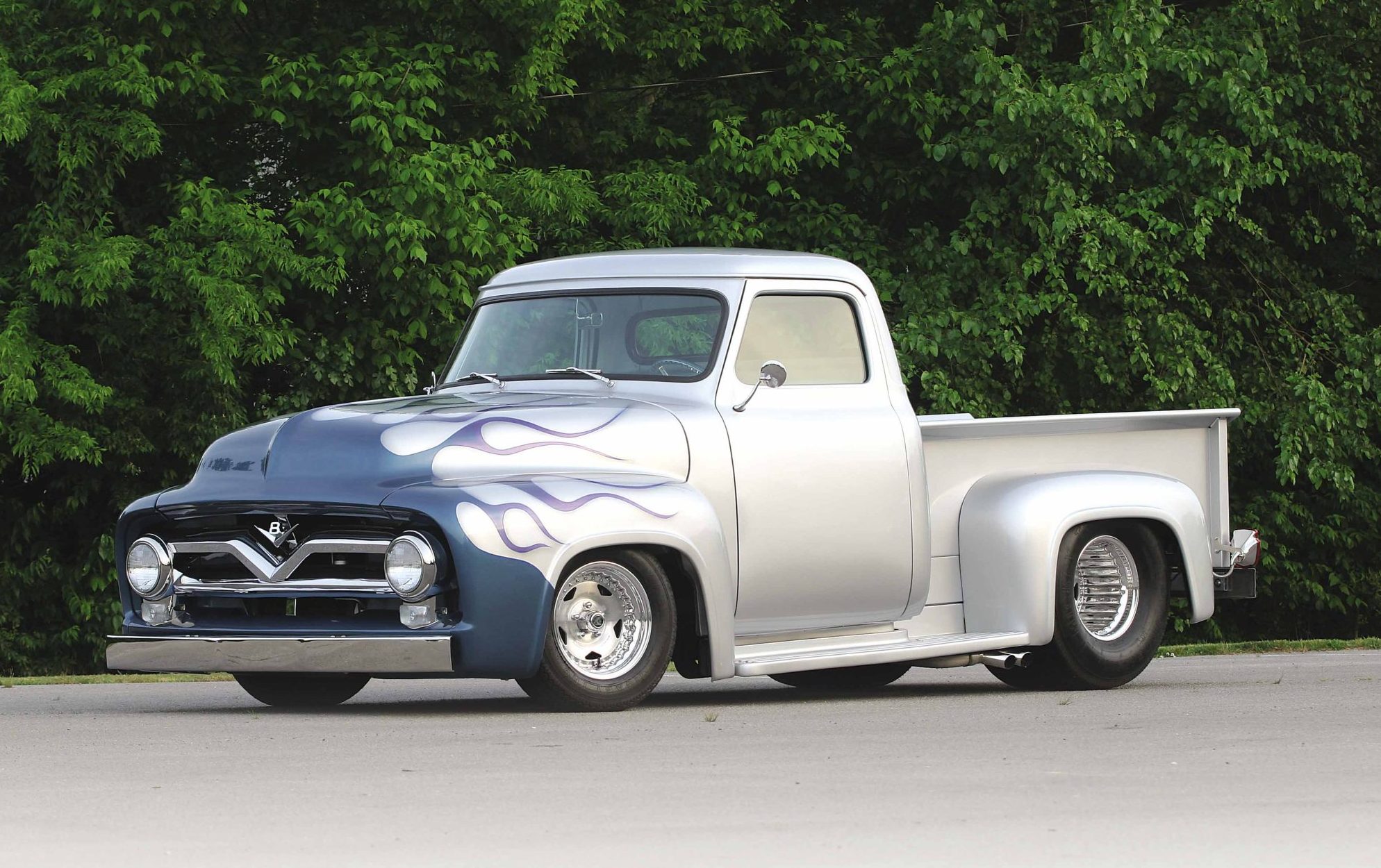
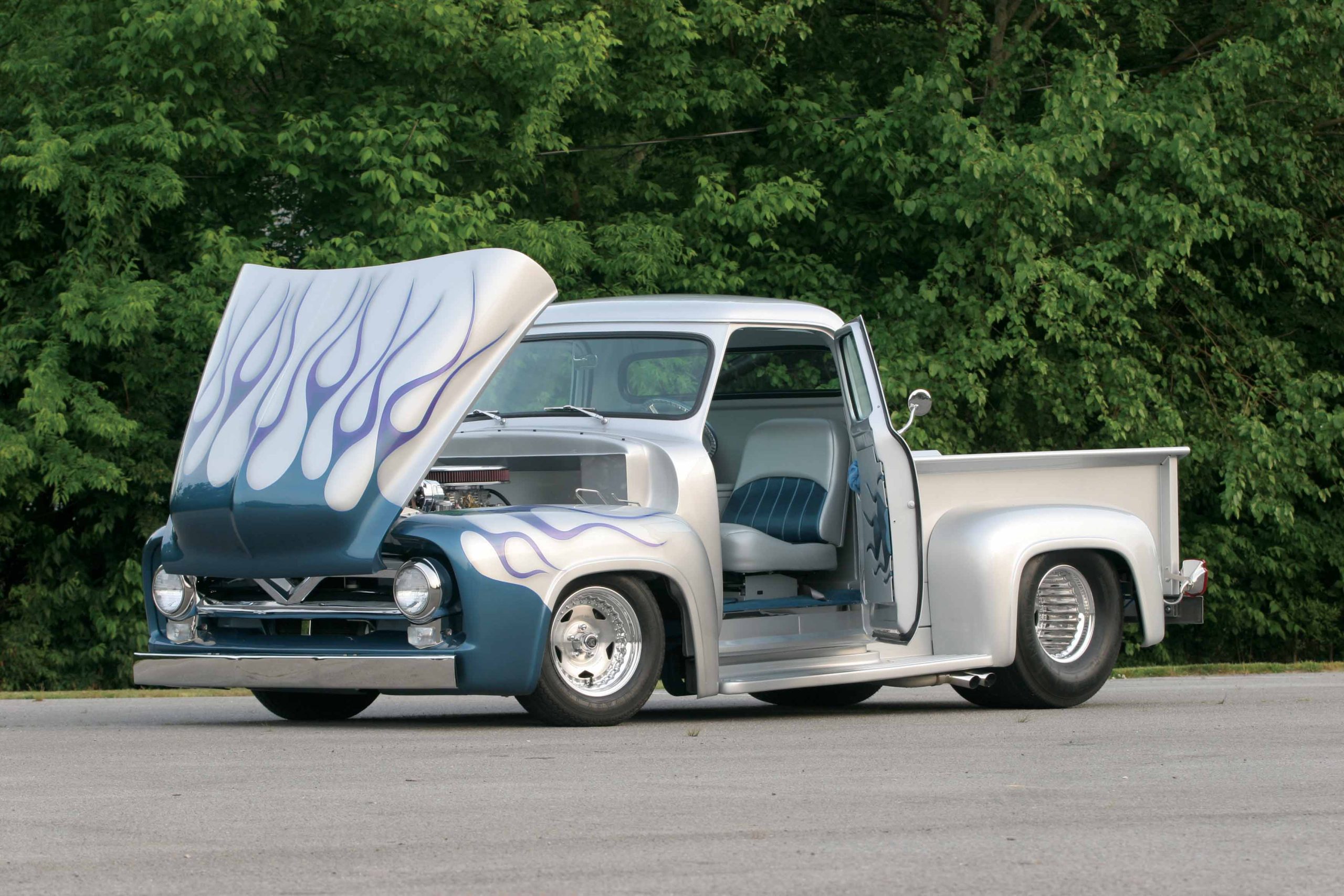
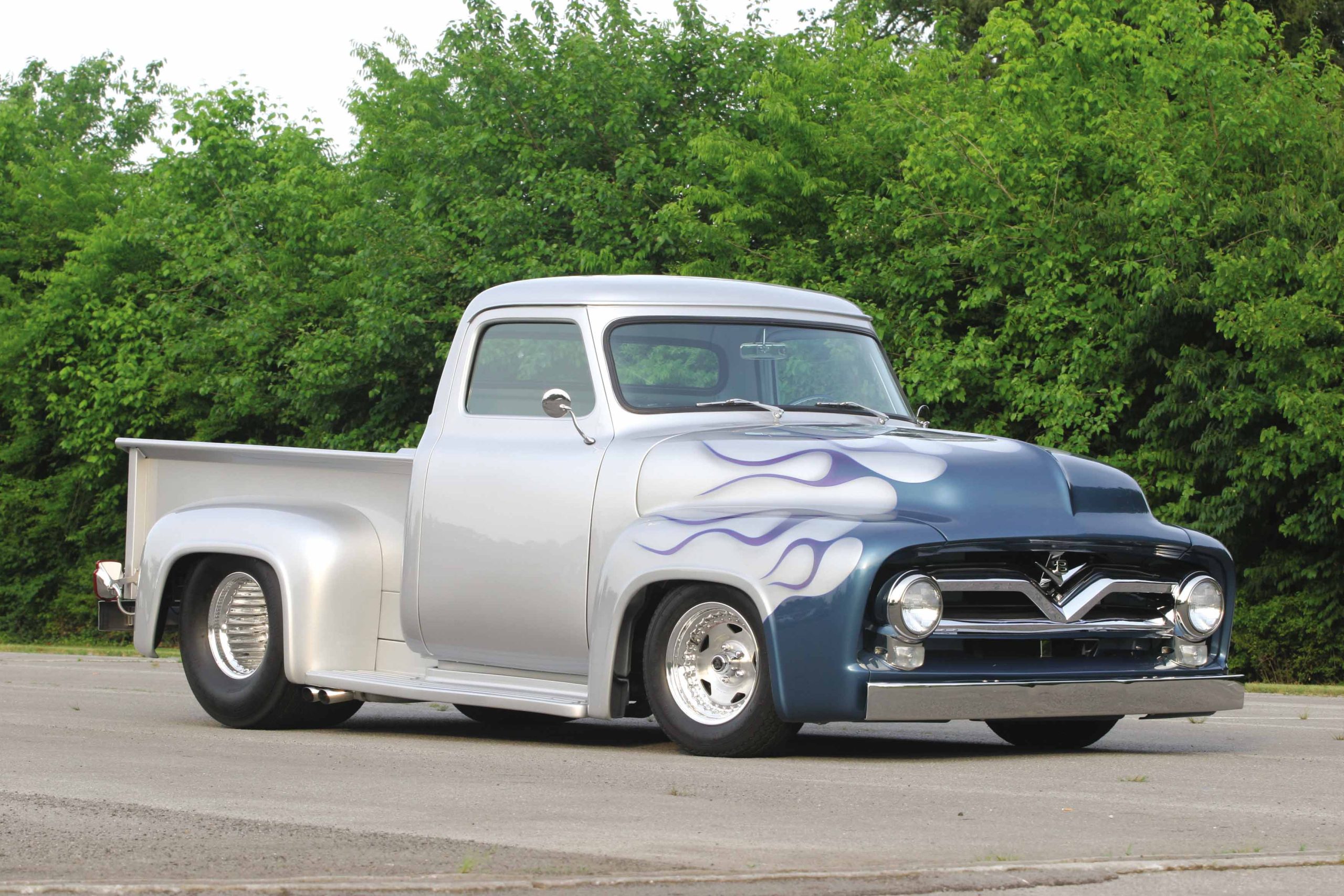
Bob also wanted to give his truck a little off the top, so he had Cars of Belews Creek, North Carolina, take 4 inches off the front and 3.5 inches off the rear. As if that weren’t enough, he then chose to suicide the doors to really give the Ford a full custom look.
Another touch that sets this truck apart from the rest is that the bumper horns were shortened so the stainless bumpers could be mounted closer, removing the gap that appears in stock trucks. Dillon also fabricated the wheel tubs that now adorn the bed. The wood used is called purple heart. A set of mid-’50s front fenders replaced the worn stock units, while the inner fender panels are polished stainless steel pieces.
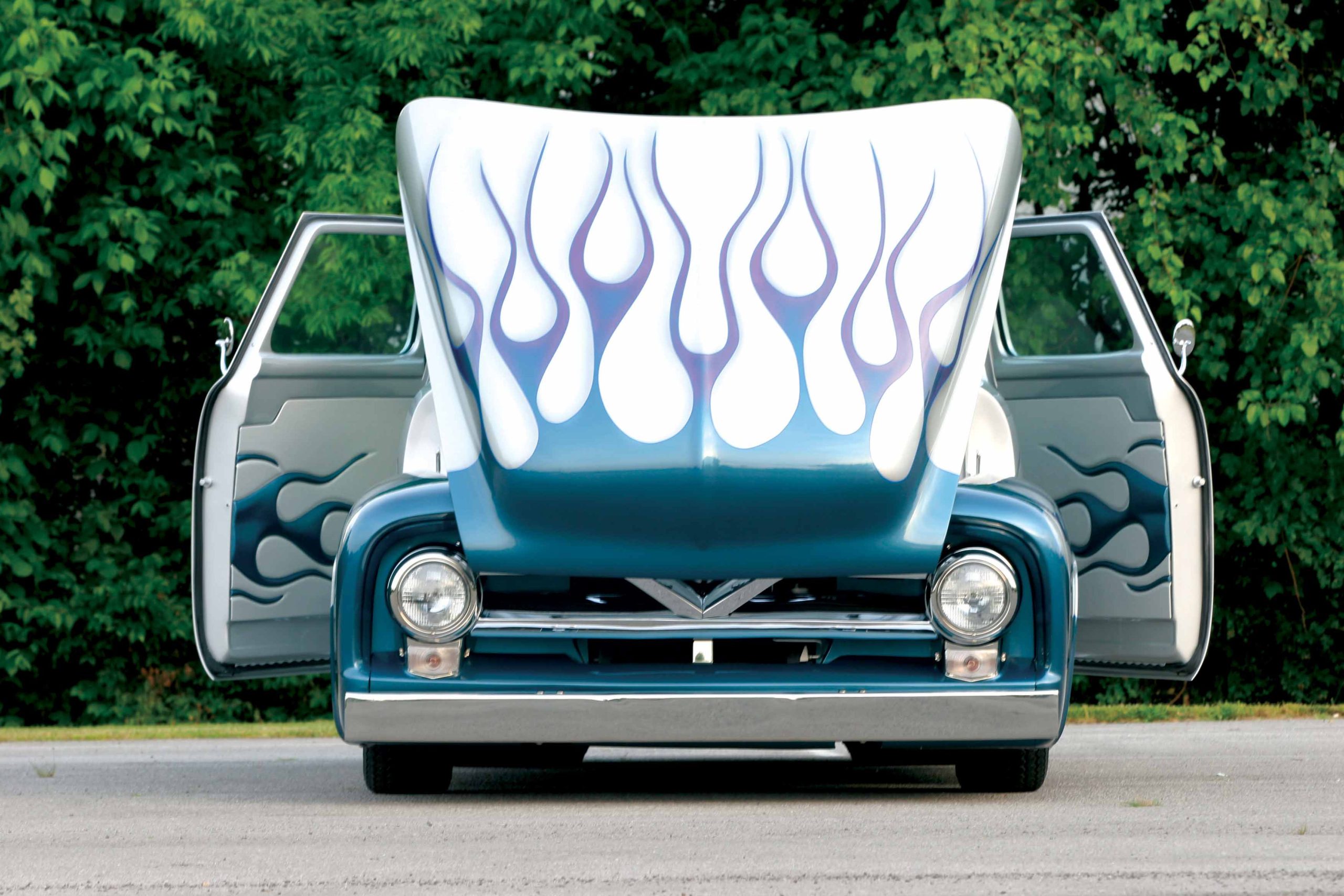
When all was ready, the crew at Cars applied the killer paint job using DuPont Silver Blue for the basecoat and purple for the vintage-style flames.
Custom Interior With Modern Comforts
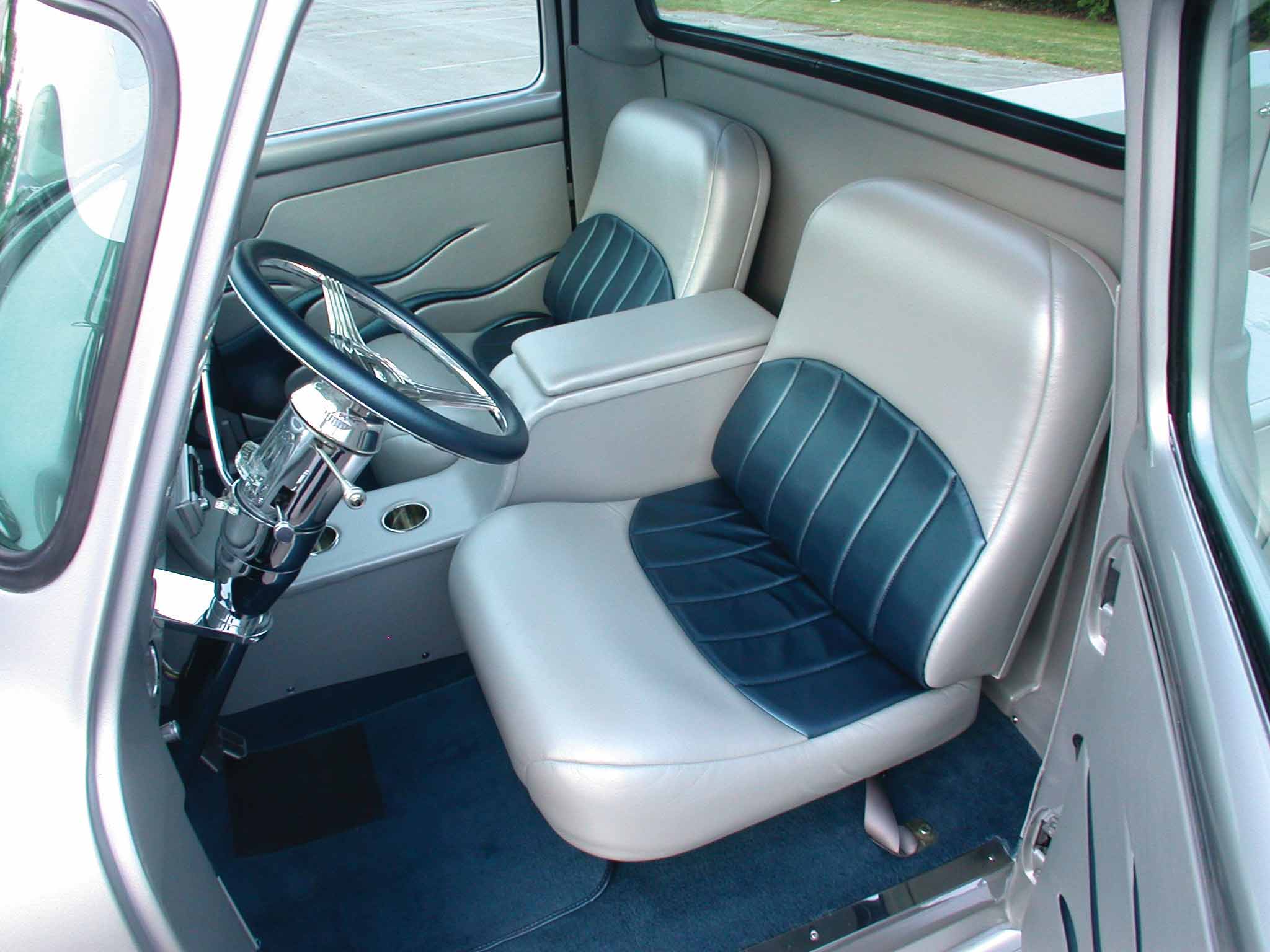
Although this truck is indeed a Pro Street-style hot rod, that didn’t mean the interior had to be uncomfortable. The inside is as nice and comfy as anyone could ask for while driving down the road, even if that road is only a quarter-mile long.
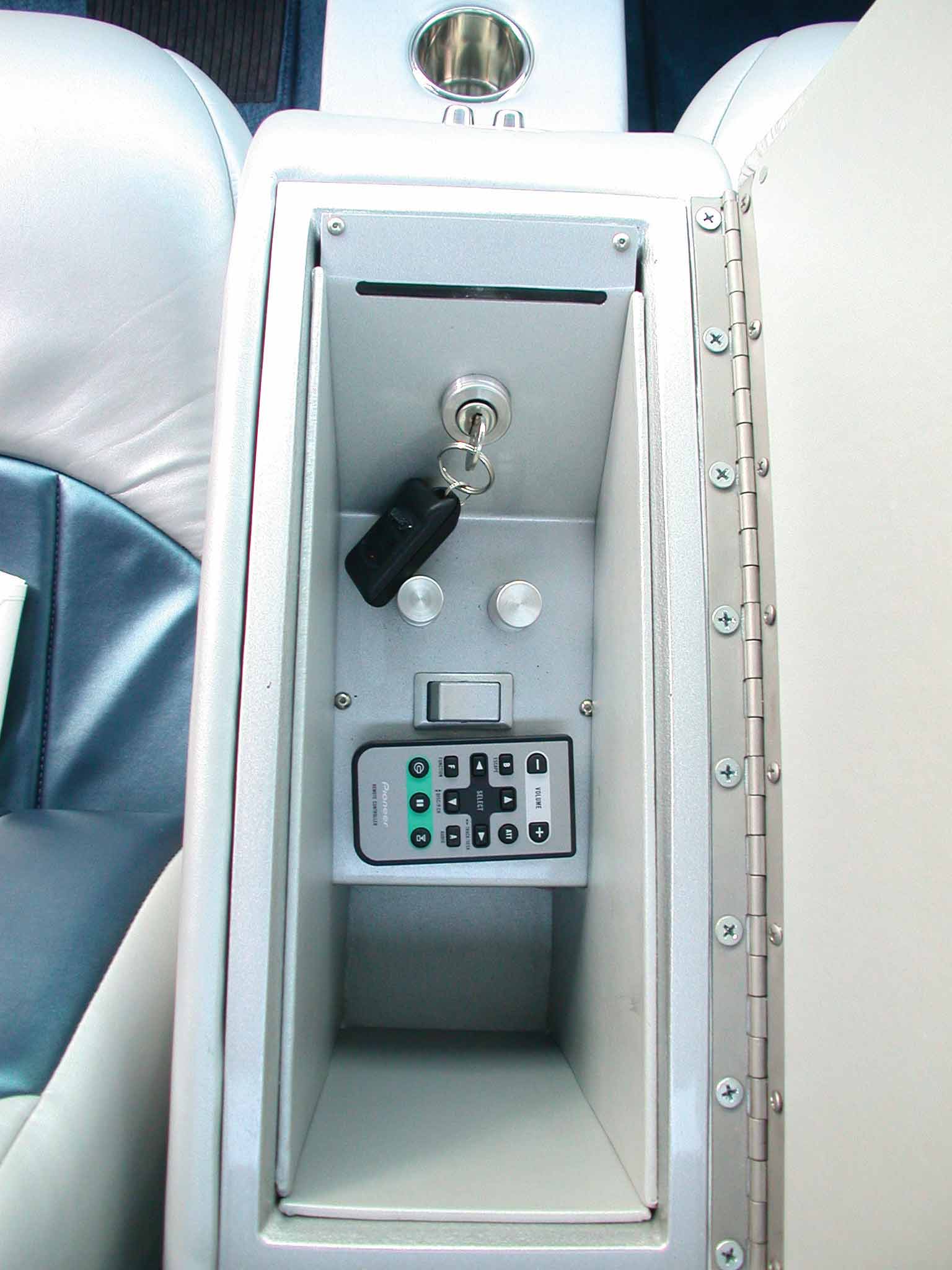
The first thing to be tossed was the stock bench seat, and in its place is a pair of bucket seats from Rod Doors. These share the upholstery theme of silver and blue leather with the door panels and headliner. A very nice center console separates the seats and is covered in silver leather.
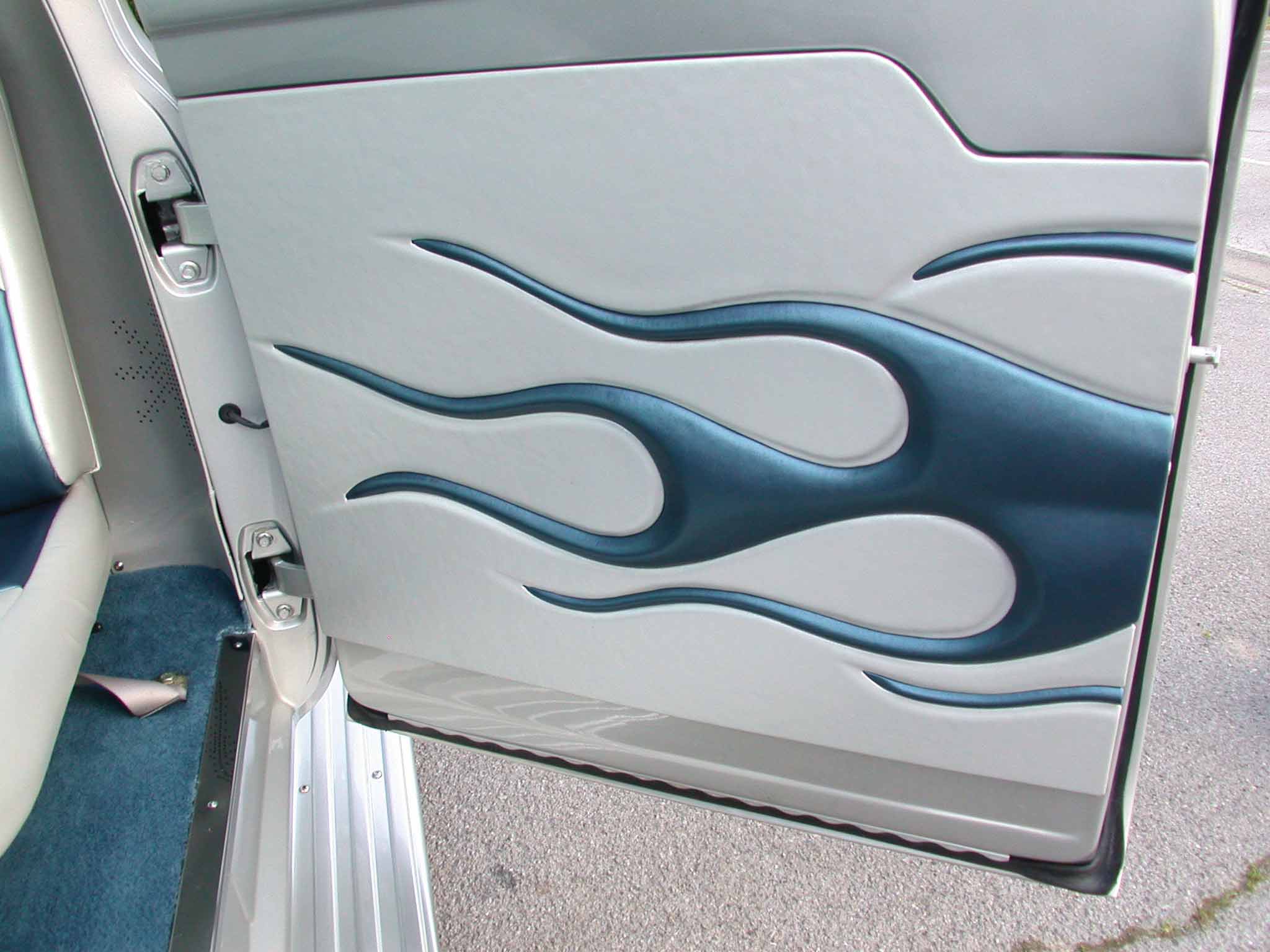
The door panels have been enhanced with a set of flames of their own; in fact, the flames in the door panels are the same design as those on the body. A Ford V-8 emblem has been embossed into the headliner, just in case you had forgotten about the big engine under the tilting hood.
The stock dash has been replaced with a smoothed unit equipped with a set of Ford Motorsport gauges installed into a highly polished mid-’50s six-gauge cluster. The only other thing found in the dash is the control panel for the Vintage Air Sure Fit air conditioning system. The vents are installed into a panel that runs along the lower edge of the dash.
A chromed ididit steering column replaces the stock unit, and a Budnik Banjo steering wheel sits atop it. A Painless wiring system connects all of the many electrical components. One of those electrical pieces is the Pioneer stereo system, with a Pioneer head unit connected to a set of Kenwood speakers.
A Labor of Love Dedicated to Family
This truck was a true labor of love for the Dillons. Like many enthusiasts who love rebuilding old trucks, they took it one step at a time and did the work as they could afford it. Bob jokes that he would figure out how much overtime he needed to work to afford the next part they wanted to buy.
But with all that, the Dillons say they have only one regret. When asked about the name “Weesie” pinstriped on the bed floor, Bob replied:
“Weesie was my mother-in-law’s nickname. She loved this old truck and was very supportive of our project. We lost her in April 2004, and she never got to see the truck finished. We have dedicated it to her, the fun she would have had riding around in it and the pride she would have had showing it and seeing it in a magazine. We will miss her and wish she had the chance to take a ride.”
We wish that could have happened, too.