Edit Template





THE AUTO BUILDER
Menu
Featured

PRODUCT SPOTLIGHT: BTR’s 4130 Chromoly Steel Pushrods
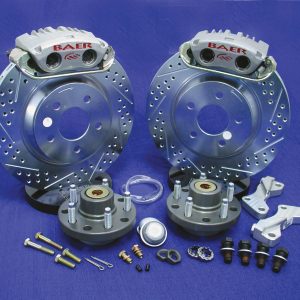
Let’s talk about something that doesn’t always get the glory it deserves but is crucial for any high-performance build—pushrods. And who better to get the job done right than Brian Tooley Racing (BTR)? These guys know their stuff, and their pushrods are proof.
Old School, Perfected: Blue Ribbon Roadster Is the 2026 America’s Most Beautiful Roadster
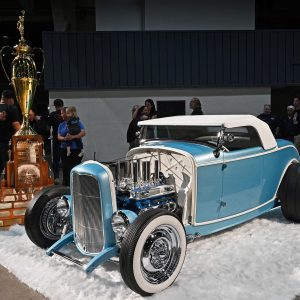
At the 2026 Grand National Roadster Show, the spotlight wasn’t just on speed or style—it was on craftsmanship at the highest level. Among nine jaw-dropping roadsters displayed in Building 4, one car quietly—and then undeniably—rose to the top. Nicole Baird’s 1932 Ford Roadster, built by Squeeg’s Kustoms, claimed the coveted America’s Most Beautiful Roadster (AMBR) title, proving once again that traditional hot rod values, when executed flawlessly, still reign supreme.
Straight Shooter
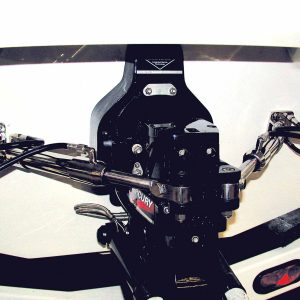
IMCO’s Stern Advantage is the perfect example of a retrofit kit that will bail a boat owner out of a bad situation and allow him to end up with a safer, better performing boat. Maveric Marine invited us to watch its crew install a Stern Advantage on a Nordic 28 that was in the shop for repairs, and we jumped at the chance. This Nordic has a 496 Mag HO with a Bravo One X in it, and the owner understood that the worn out steering problem wasn’t going to go away, so the external hydraulic steering system made a lot of sense.



Spotlighter
POPULAR READS
-
The Auto Builder’s Hottest Product Picks from The Triple Crown of Rodding 2026
-
Product Spotlight: Bill Mitchell Products Aluminum LS Engine Block
-
PRODUCT SPOTLIGHT: 60-66 Chevy C10 Fresh Air Vent Block Off Plate
-
Product Spotlight: Pyramid Optimized Design Sequential Aurora Taillight for 1964½–1966 Mustang
INTRODUCING: SMOKIN’ SS – Part 1
With a NASCAR Guru as Their Instructor, Two Students Build a Killer ’86 Monte Carlo to Test the Limits of Versatility
If you’ve ever built a car from scratch, then you know that getting the basic body and chassis together is not the tough part. What’s tough are all the details that eat up hours, days and weeks, but without this attention to detail, the project would suffer.
Author

Tommy Lee Byrd & Mark Davis
Photography by Cynthia Davis
In a hobby where enthusiasts try to merge performance with style, it’s an ongoing battle to stay up to date and have the fastest or best-handling car out there. And while some cars quickly become dated and struggle to retain a level of driveability, we’ve run across a project that, when completed, will remain current for quite some time. Sure, drag cars and road-race cars can stand the test of time in their own environments, but the project we’re following here shows no signs of boundaries. With a fully tunable suspension and a healthy powerplant, this car will be versatile, and let’s not forget the ultimate factor on this build—it will be a street car.
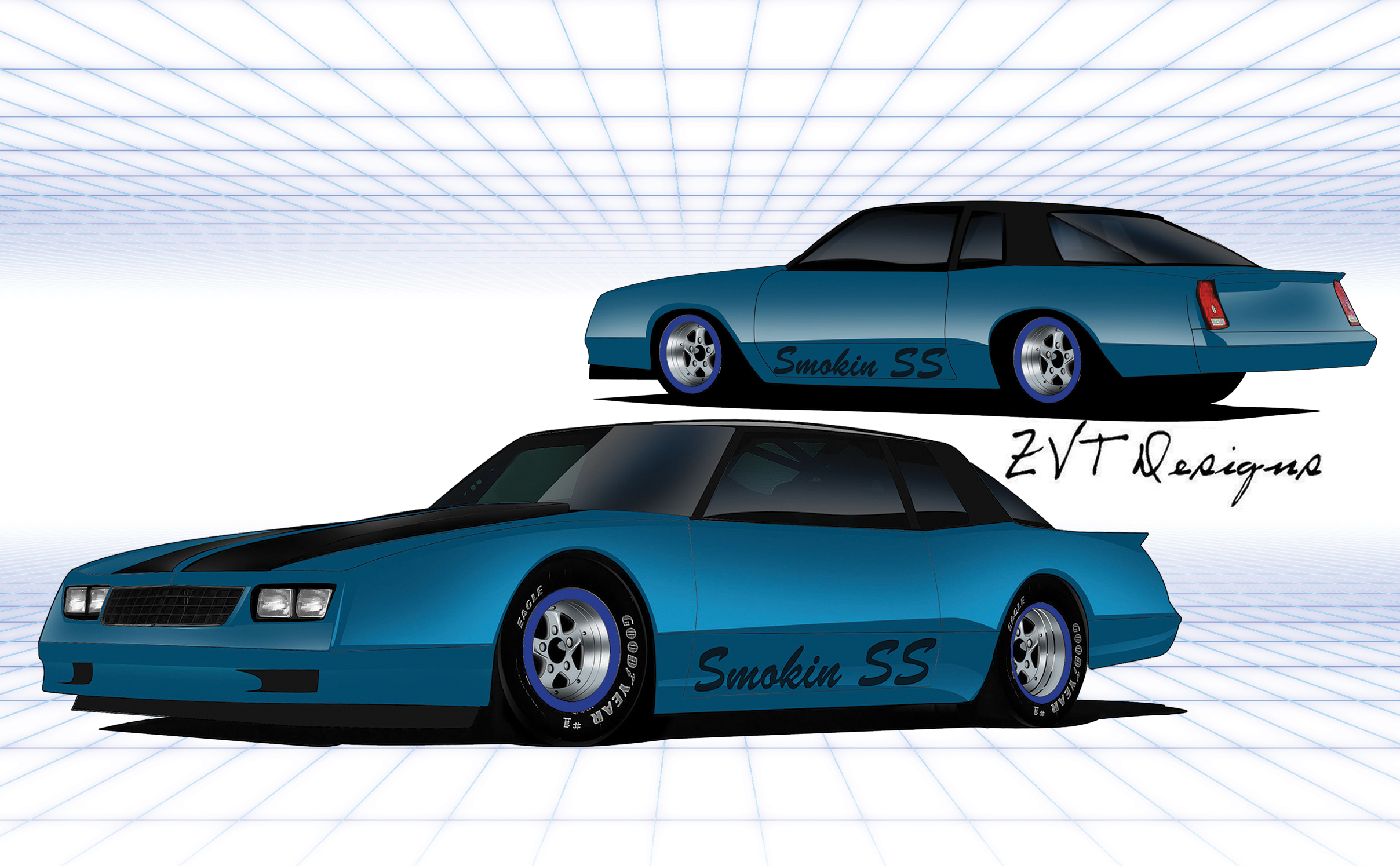
The Smokin’ SS project is being built in Crossville, Tennessee, at Metalcraft Tools SkillCenter. Mark Davis is the instructor and executive director at the school, and he has a few decades of fabrication experience under his belt. Davis is a perfectionist and has built many racecars, but this time he’s building the ultimate street car from a rough and ragged ’86 Monte Carlo acquired from a local junkyard. Davis has built a number of racecars based on this platform, but this will be his chance to build a great all-around street car with the looks of a mid-’80s NASCAR racer.
Though Davis could easily build this car on his own, he’s decided to extend his knowledge to Tennessee locals Daniel Keys and Chris Wilson, both students at Metalcraft Tools SkillCenter. As the instructor, Davis has to decide when his students are ready to progress and exercise their skills on a daily basis, so a full-on project such as this is the perfect way to see how a student would handle such a large task in a fabrication or race shop. The two students involved with the Smokin’ SS project are both dedicated individuals, and when this Monte Carlo is finished, they can honestly say, “We built that car!”
We’re following along with the entire build, and we must say, it is an extensive process, but the result will be worth the effort for the students—especially when they see this car being thrashed on the dragstrip, autocross course and paved oval. Those three tests, along with some street cruising, will decide just how versatile this Monte Carlo can be and how well the suspension is tuned. This car may even make a few passes at the Bonneville Salt Flats, with an engine and planned mods to break the 200-mph barrier.
One of the initial drawbacks of this body style is its aerodynamics, or lack thereof. For all the racers who raced a Monte Carlo Stock Car, this drawback presented handling problems at high speeds due to interrupted airflow created by the nearly vertical rear window. For the 1986 model year, GM introduced the Aerocoupe option for the Monte Carlo, and it produced only 200 models, which just so happened to be the magic number for NASCAR to approve this new rear window design. One of the advantages of the new rear glass was a 2.7 percent reduction in drag coefficient, which equaled an approximate 5-mph gain on the superspeedways.
The following year, Chevrolet made a little more than 6,000 Aerocoupes, so finding one today can be quite a chore. Davis knew that an Aerocoupe would be costly, so he opted for a regular Monte Carlo when it came time to explore the junkyard. Davis will incorporate an Aerocoupe back glass and a custom decklid to the Smokin’ SS project, and will drop the rubber nose down, just as the NASCAR teams did back in the ’80s. These body modifications, including a chopped top and hand-fabricated body panels, will certainly help in the aerodynamics department and give the scratch-built street car a distinctive look. This will not be your average street car. Davis also plans to tour around the country with this car and eventually auction it off, with all proceeds going toward tuition grants for the Metalcraft Tools SkillCenter.
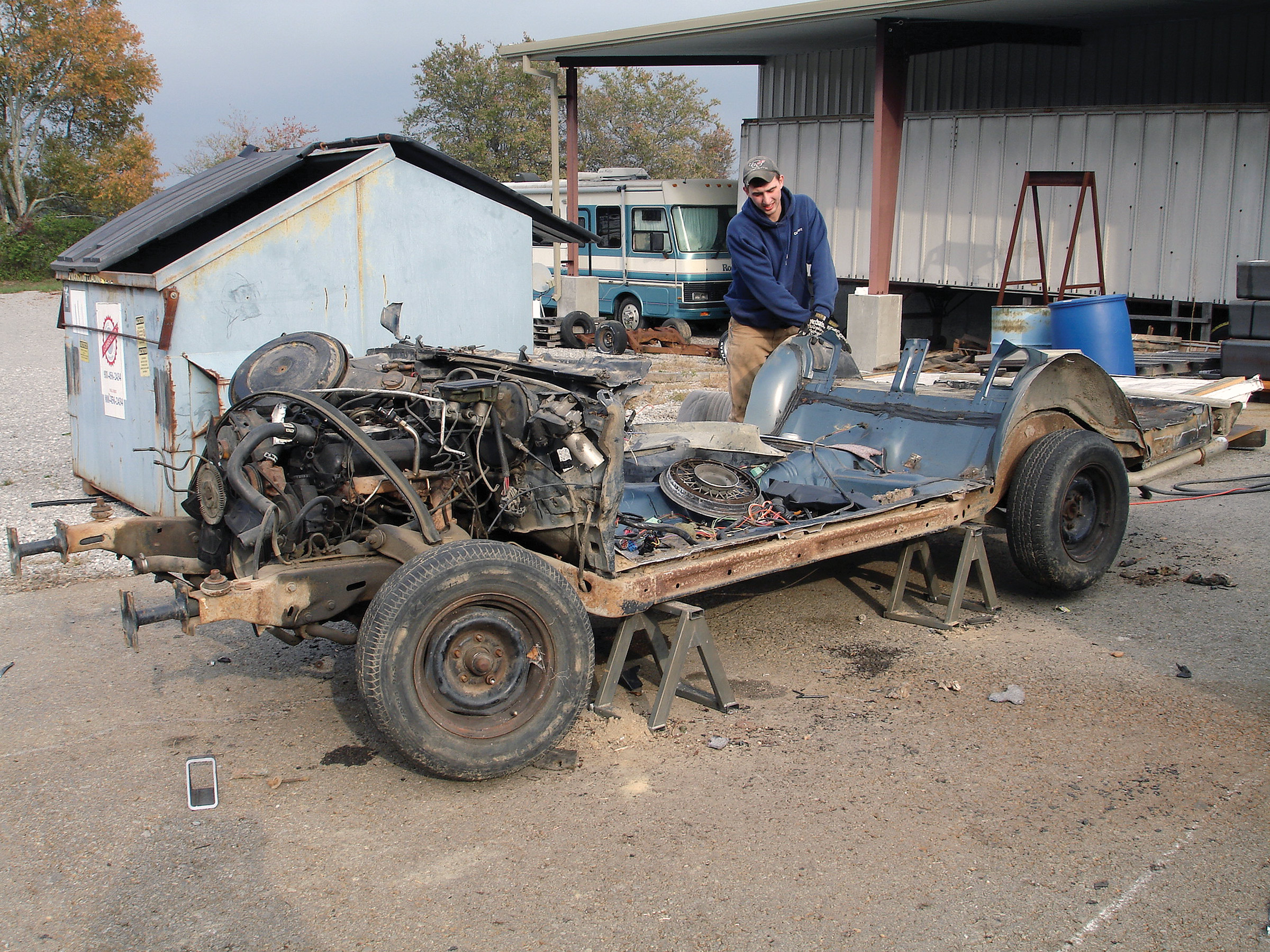
1. It won’t be hard to upgrade from this car, as the frame and drivetrain certainly had seen better days. Instructor Mark Davis and the students quickly began cutting the junkyard Monte Carlo to pieces and saved only the body—what you see here will not be used.
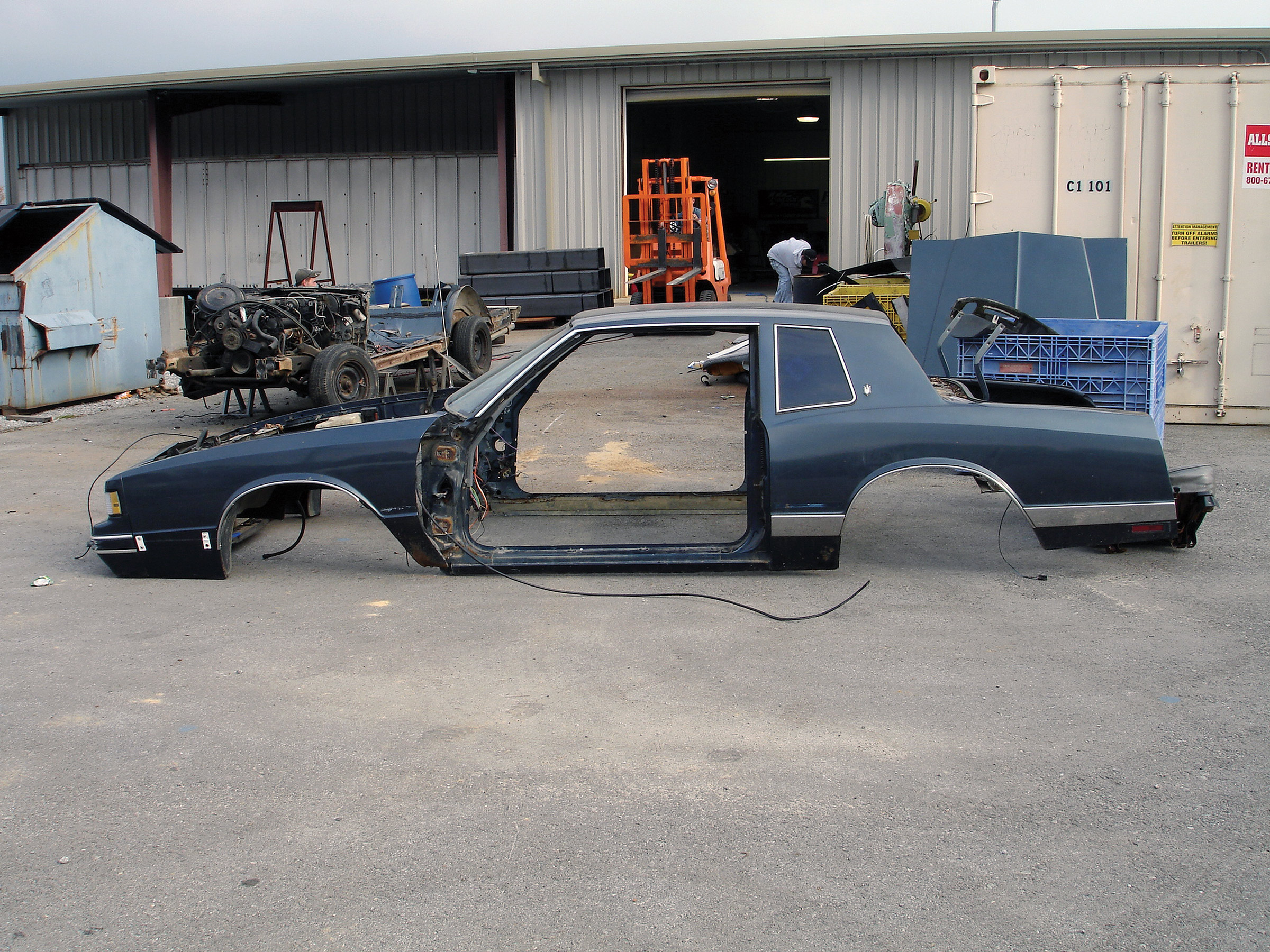
2. Here’s the important part: the rest of that junk can be discarded, and the guys can start building the new chassis to meet the Monte Carlo specifications. The bare hulk you see here will be heavily modified and more aerodynamically efficient.
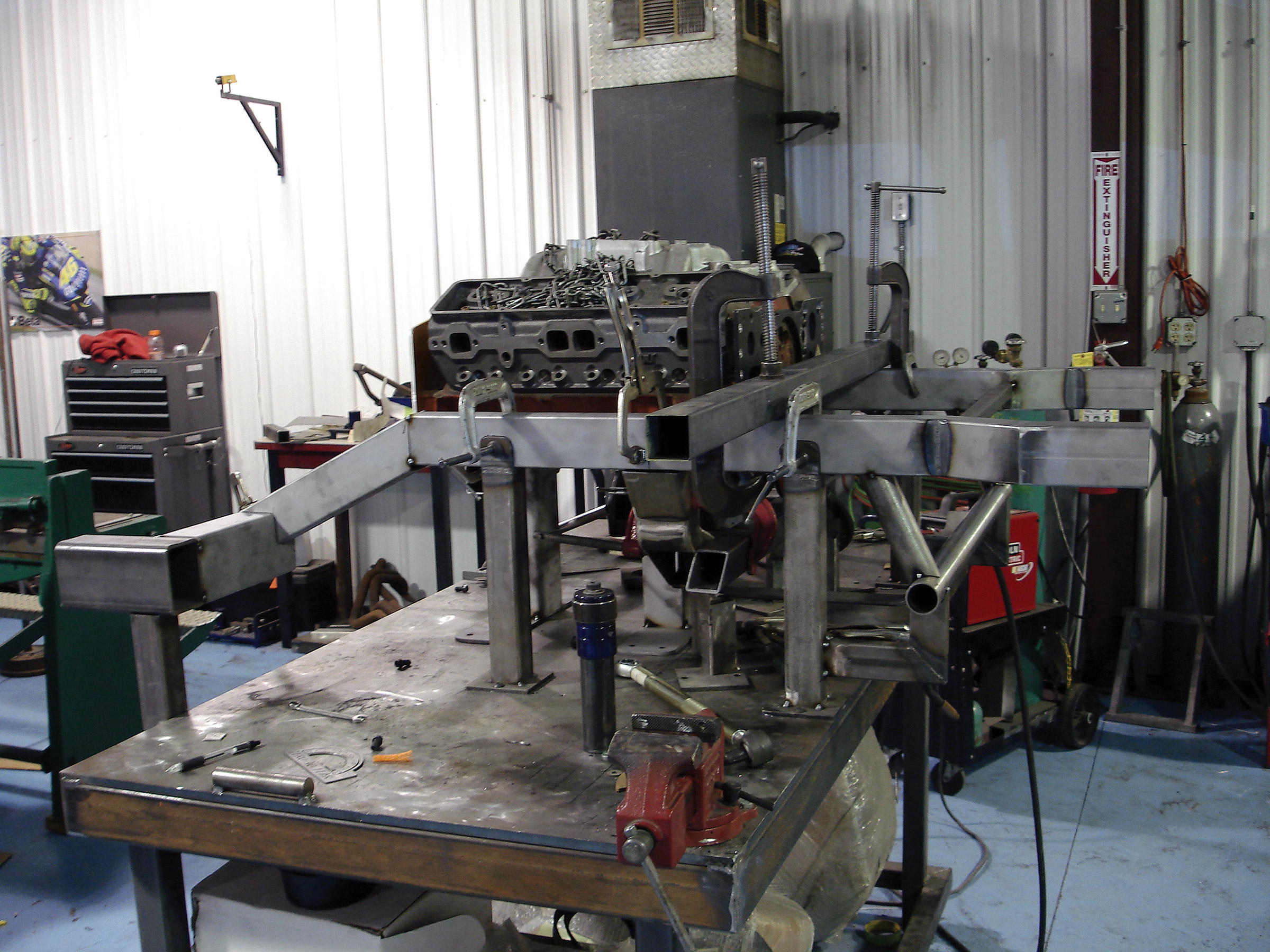
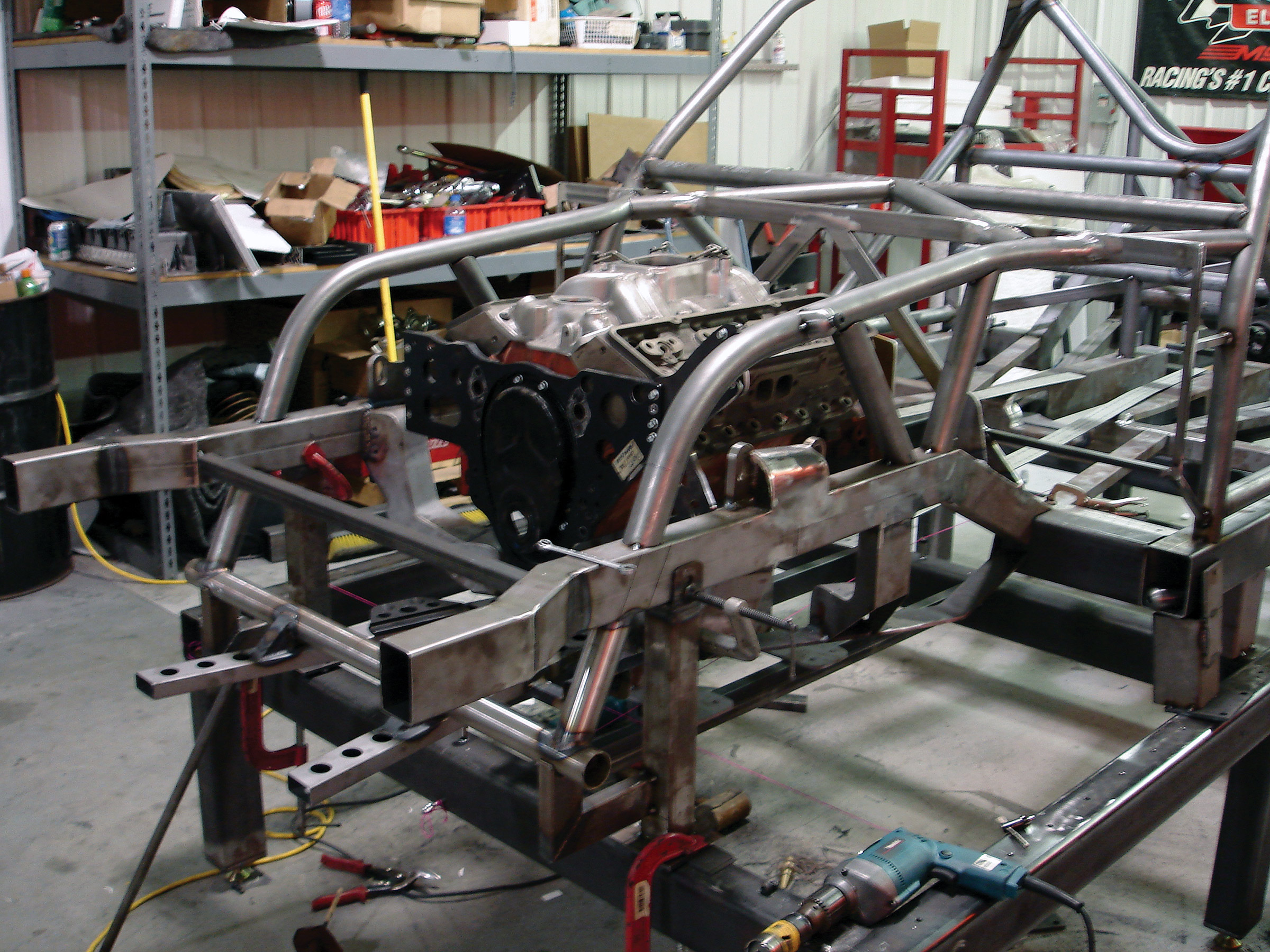
3. Davis and his students start fabrication with the front portion of the chassis. Built on a custom jig, the front portion of the chassis will be formed and welded on this fixture and later welded to the main frame. For now, this gives Keys and Wilson a chance to mock up the engine.
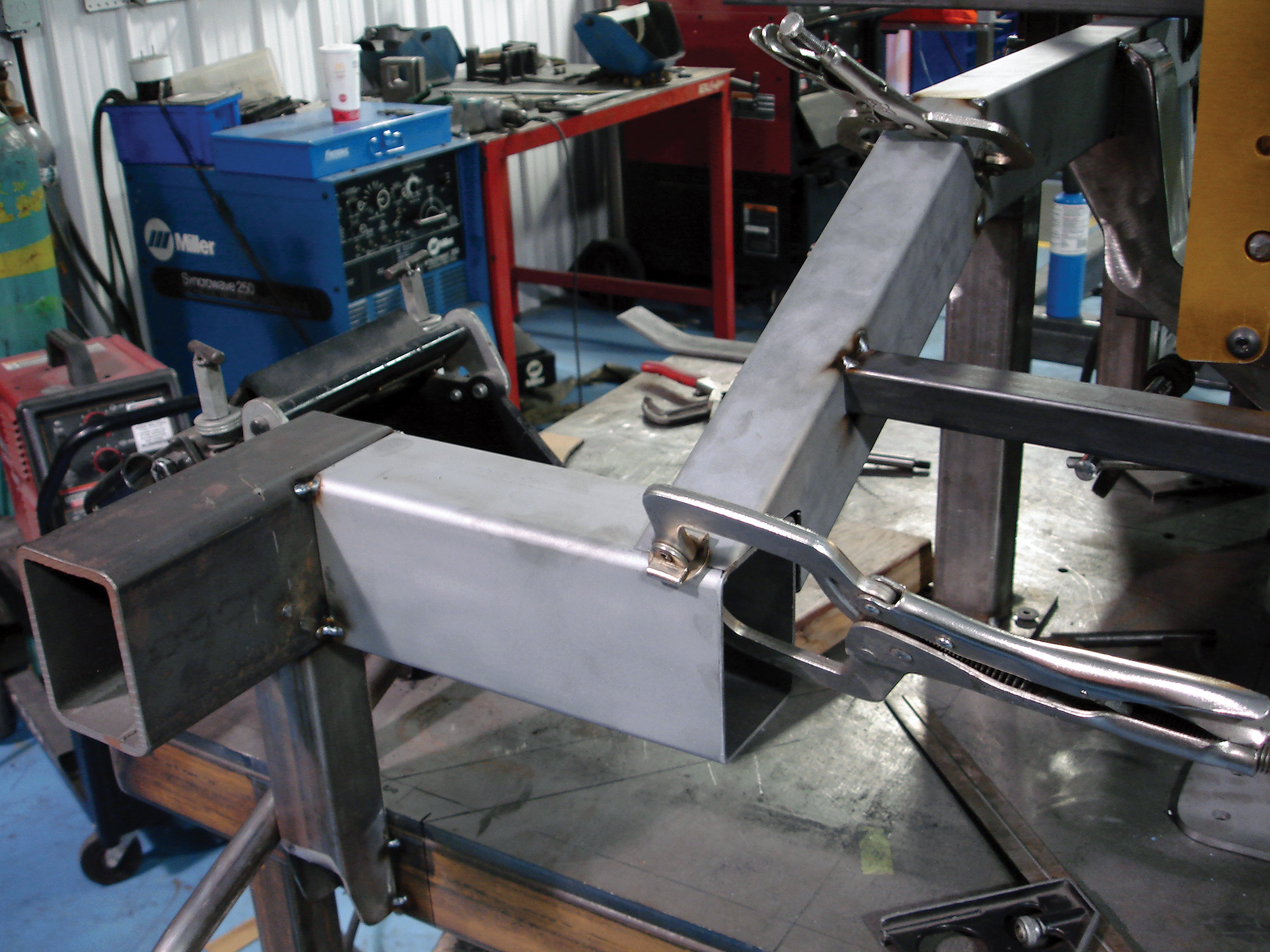
4. Boxed tubing is the material of choice because of its great strength and easy assembly. The main chassis will have a design similar to the original Monte Carlo, but with many advantages in handling and strength. Here, the kick-up portion of the front framerail is notched and clamped into place.
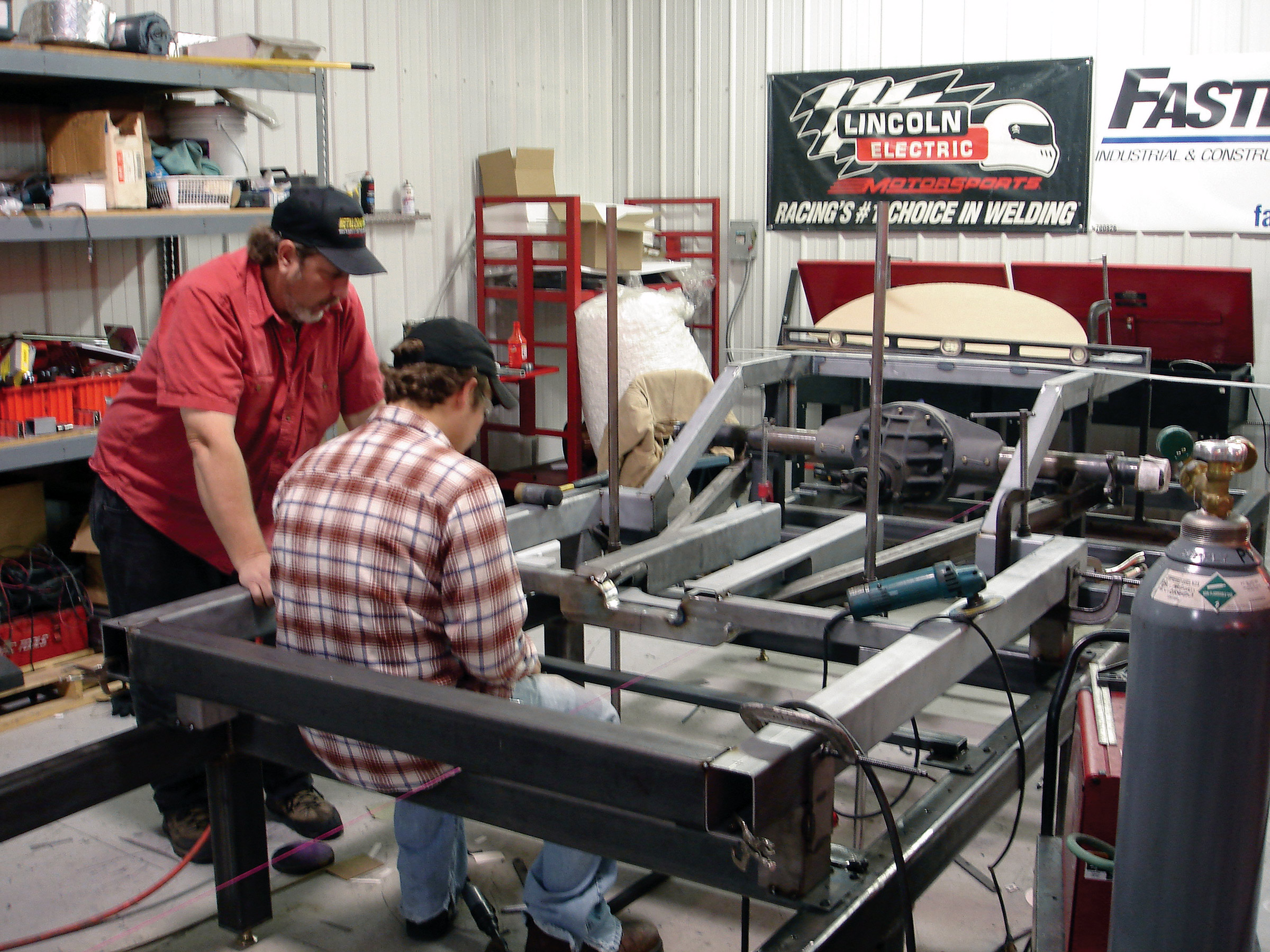
5. Davis and Chris Wilson discuss the frame design and contemplate the next steps in the construction process. The mid and rear sections of the frame are also built on a jig to keep everything square and level.
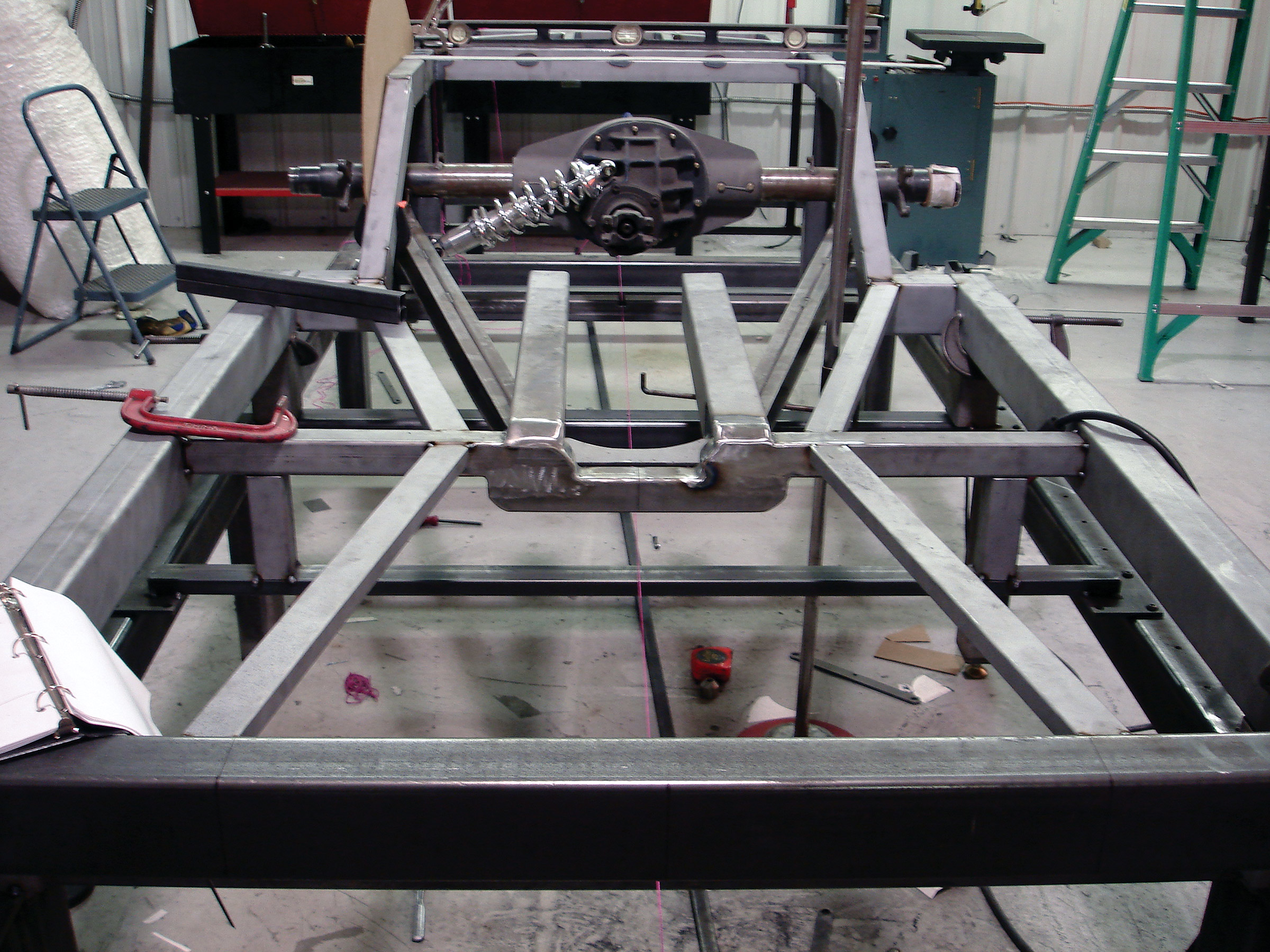
6. The beginning of chassis construction usually goes quickly, but the crew at Metalcraft Tools SkillCenter want to make sure every inch of this chassis is built with the greatest strength and efficiency. The truck-arm rear suspension will greatly increase this car’s handling capabilities.
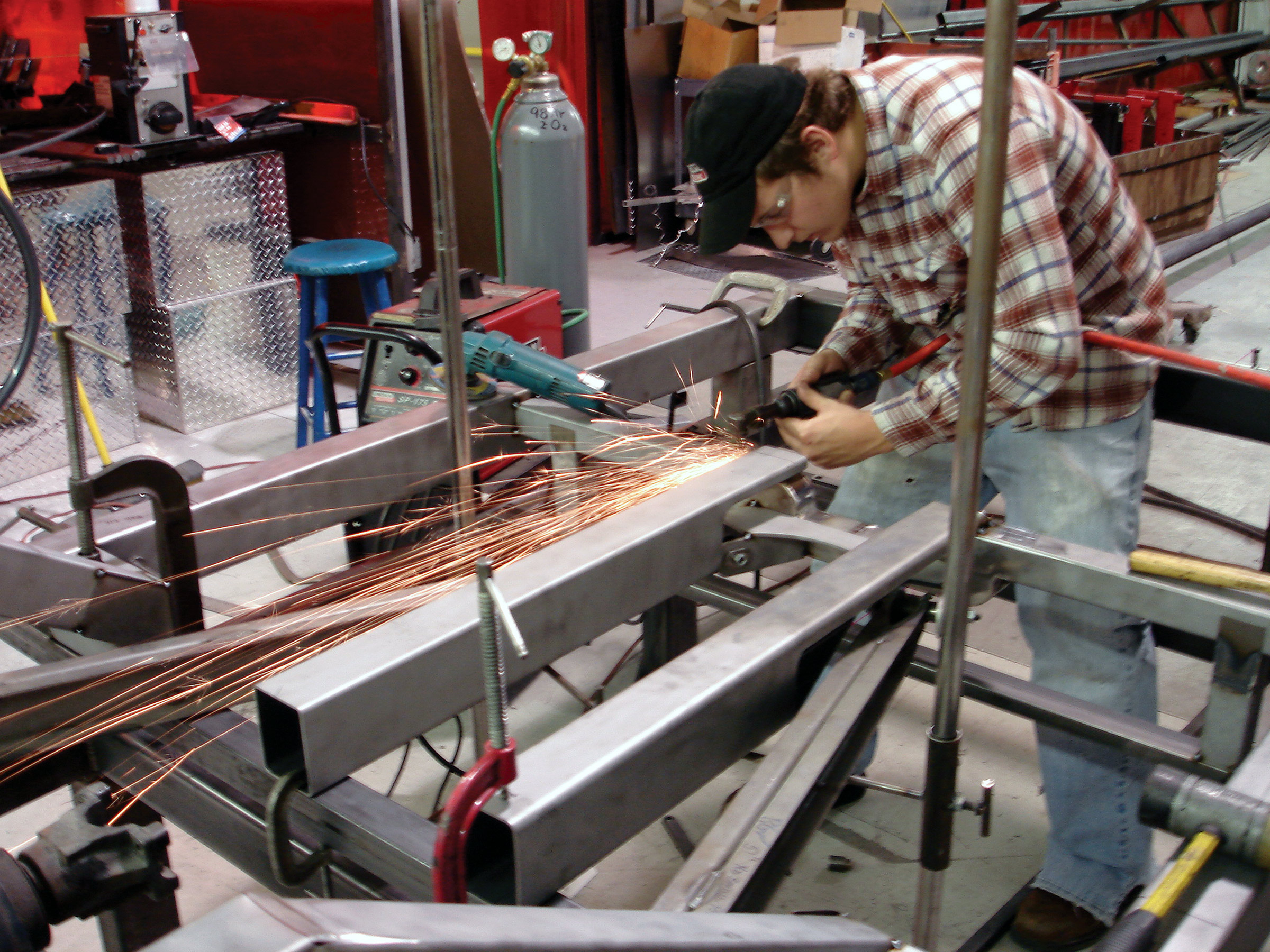
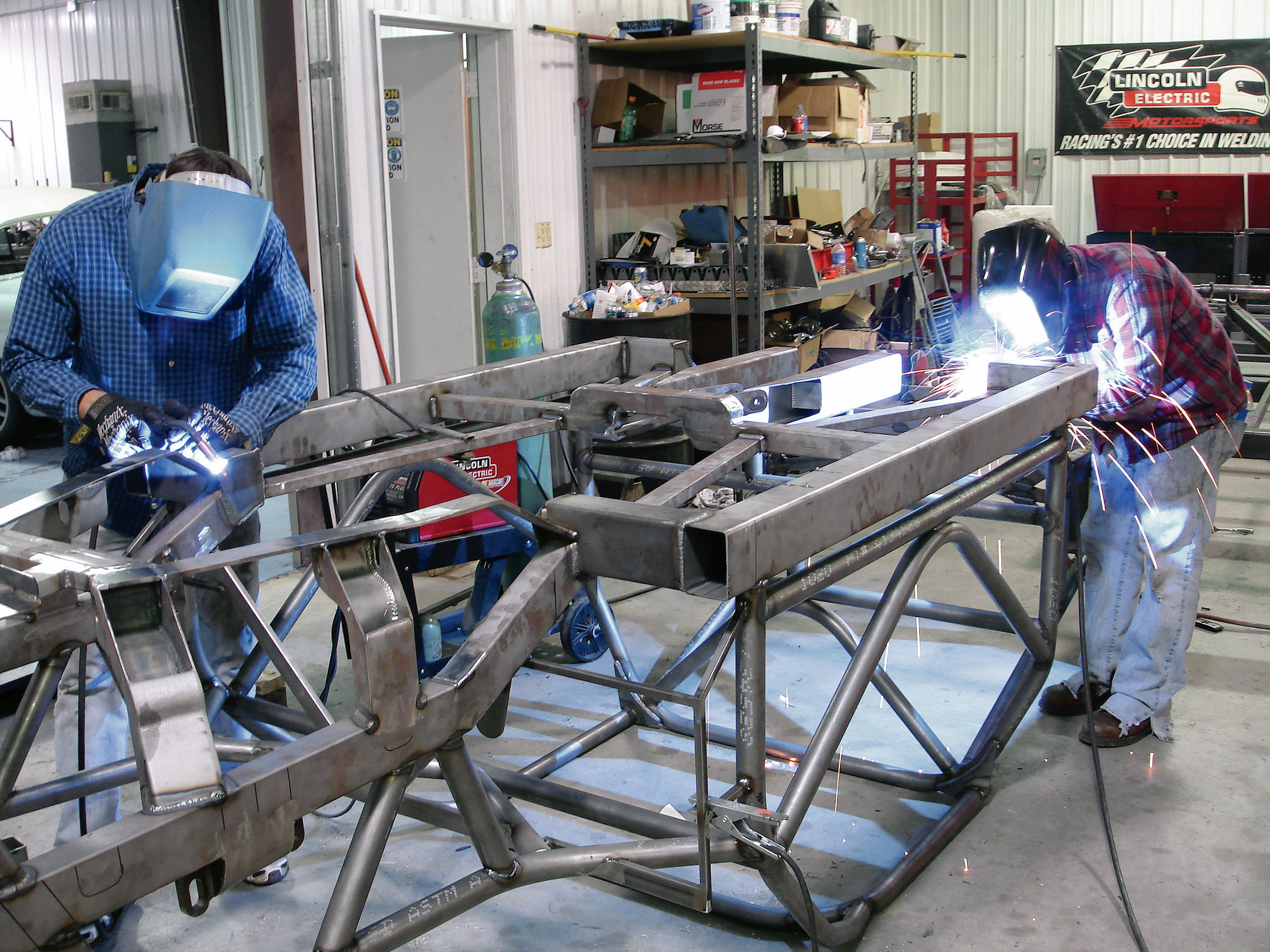
7. Sparks fly as work on the transmission crossmember continues and progress is quickly made. Davis’ experience in multiple race shops has taught him to build jigs for every component he fabricates—it promotes equality, especially concerning control arms, spindles and other parts that have to be perfectly matched from one side to the other.
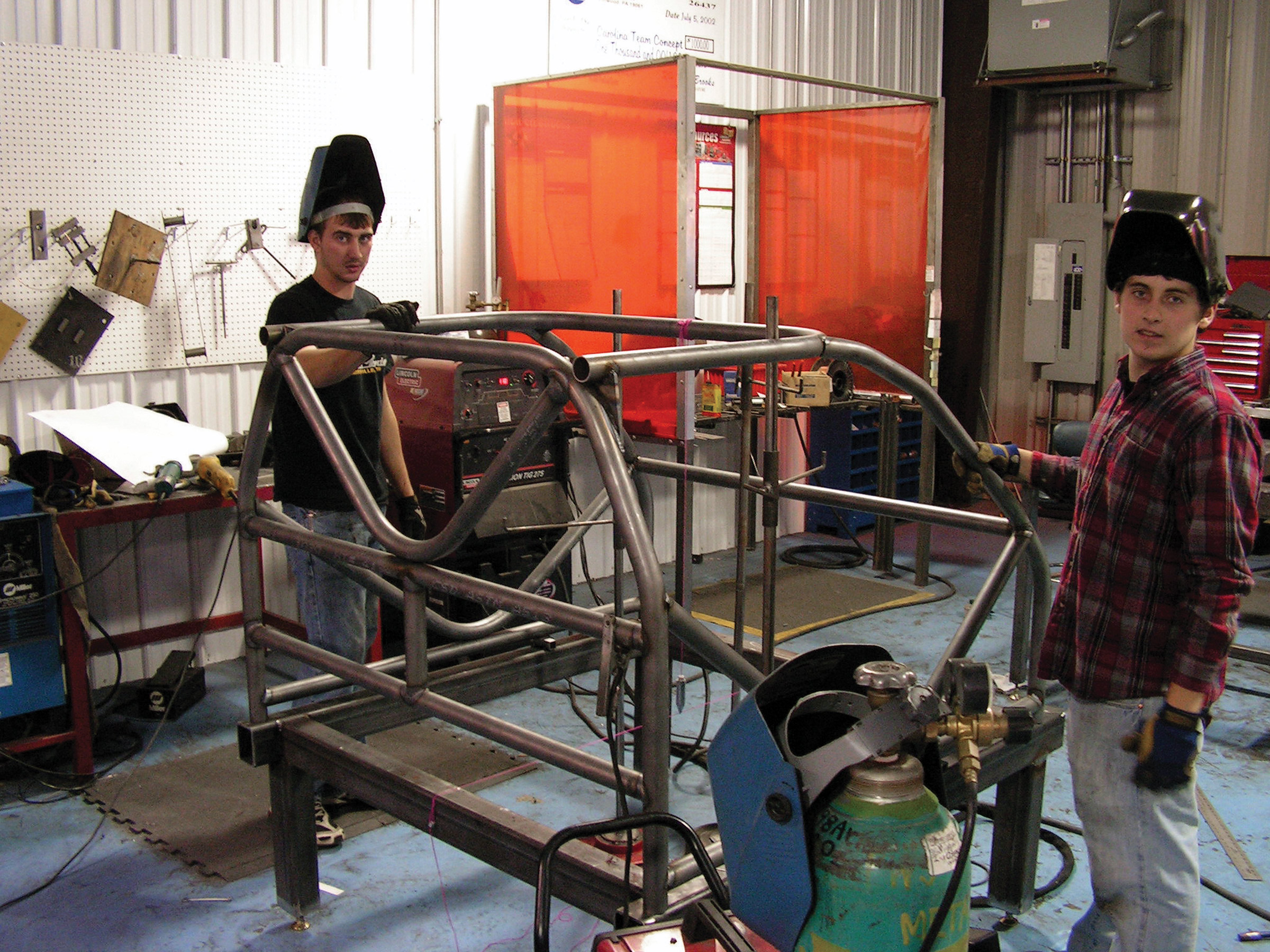
8. Daniel Keys (left) and Chris Wilson (right) made quick work of the rollcage, which also rests on a custom fixture. The tack welds will be cut and the entire cage will be transferred to the main frame after welding is complete.
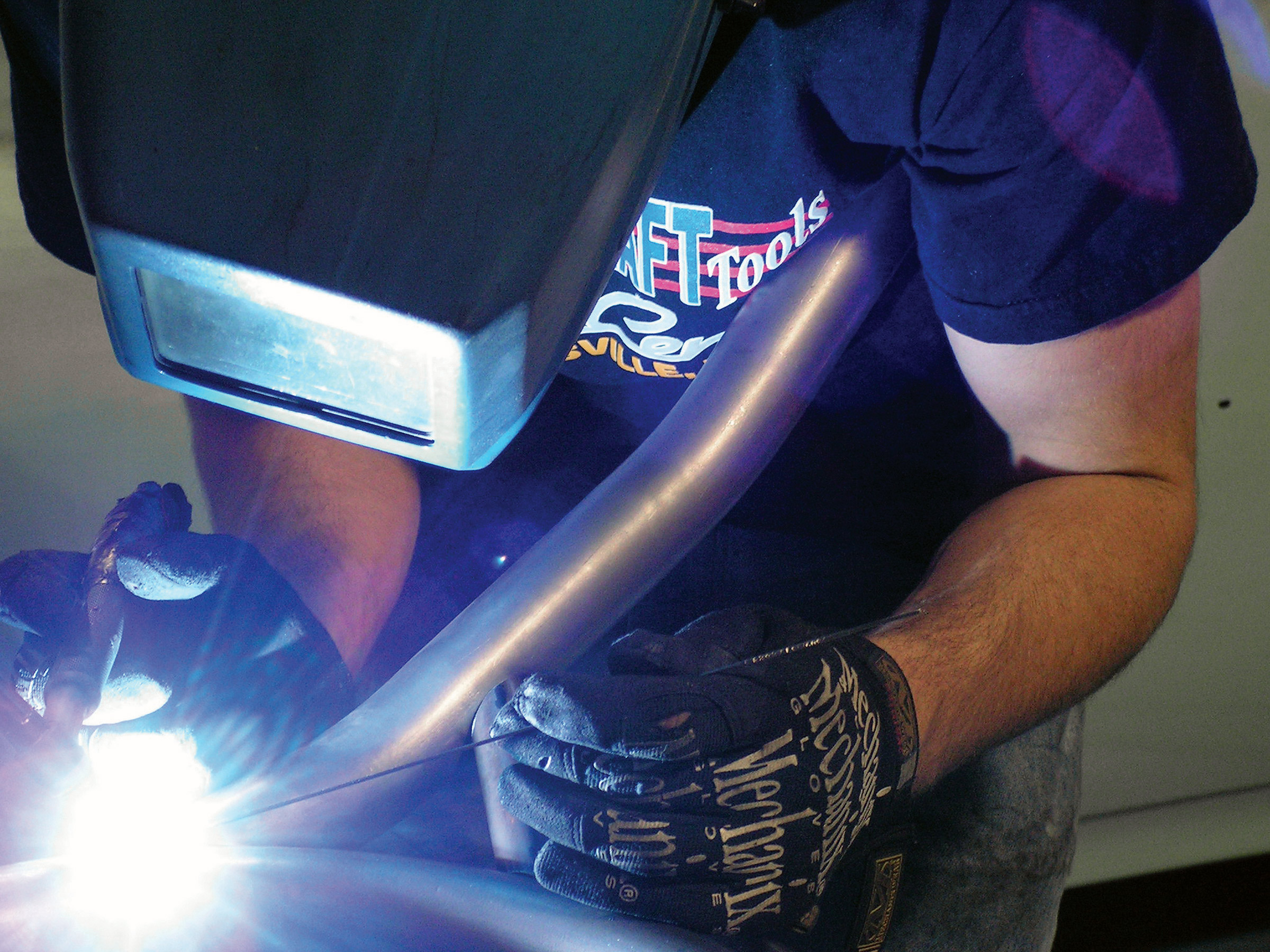
9. Reaching all the corners of round tubing can be difficult, especially when welding the tubing on a rollcage, but the crew flipped the cage and finish-welded all the hard-to-reach areas. Though a MIG could be used with the steel tubing, it’s important for the students to become accustomed to TIG welding; it also creates a much cleaner weld.
10. With the front portion of the frame welded to the mid section, Keys and Wilson cut the rollcage free from its jig and carried it to the chassis. From there, Davis explained the routing of the tubes, which will connect the rollcage to the front portion of the chassis for maximum rigidity.
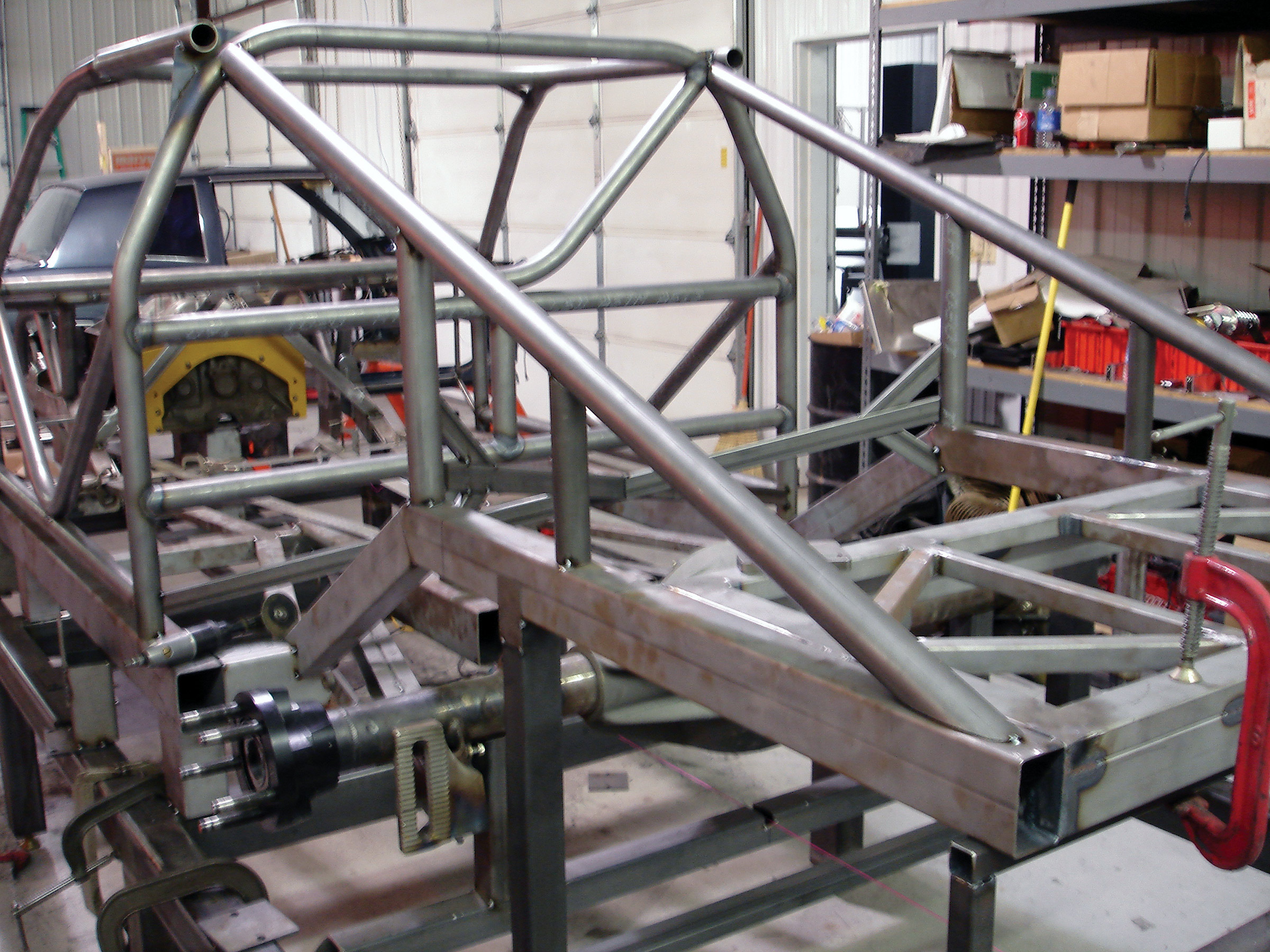
11. Out back, the main hoop supports can be run to the rear of the chassis and additional tubular supports are placed vertically between the support bars and the framerail. This not only prevents tubing collapse in the event of a rollover, but it also stiffens the chassis.
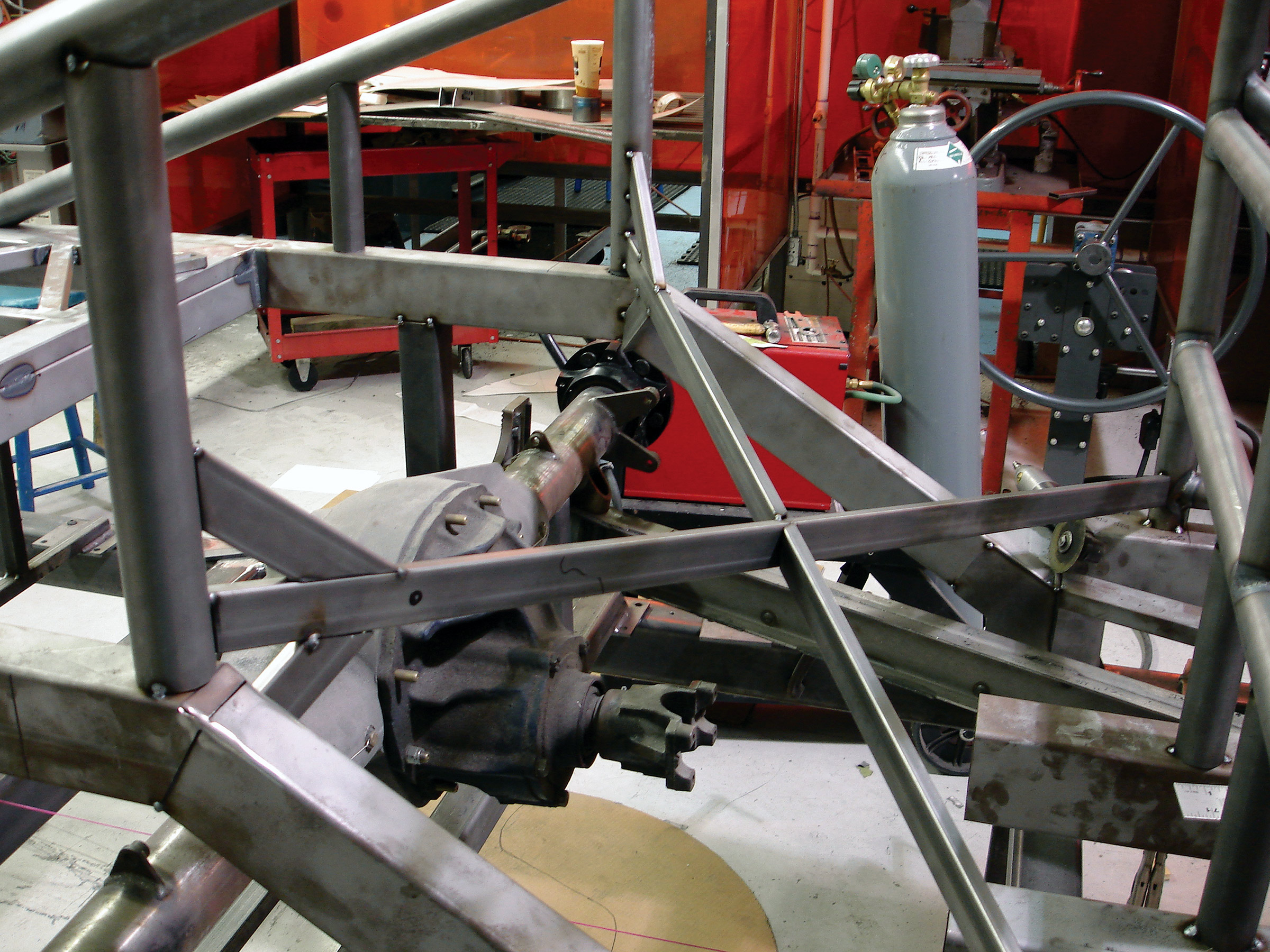
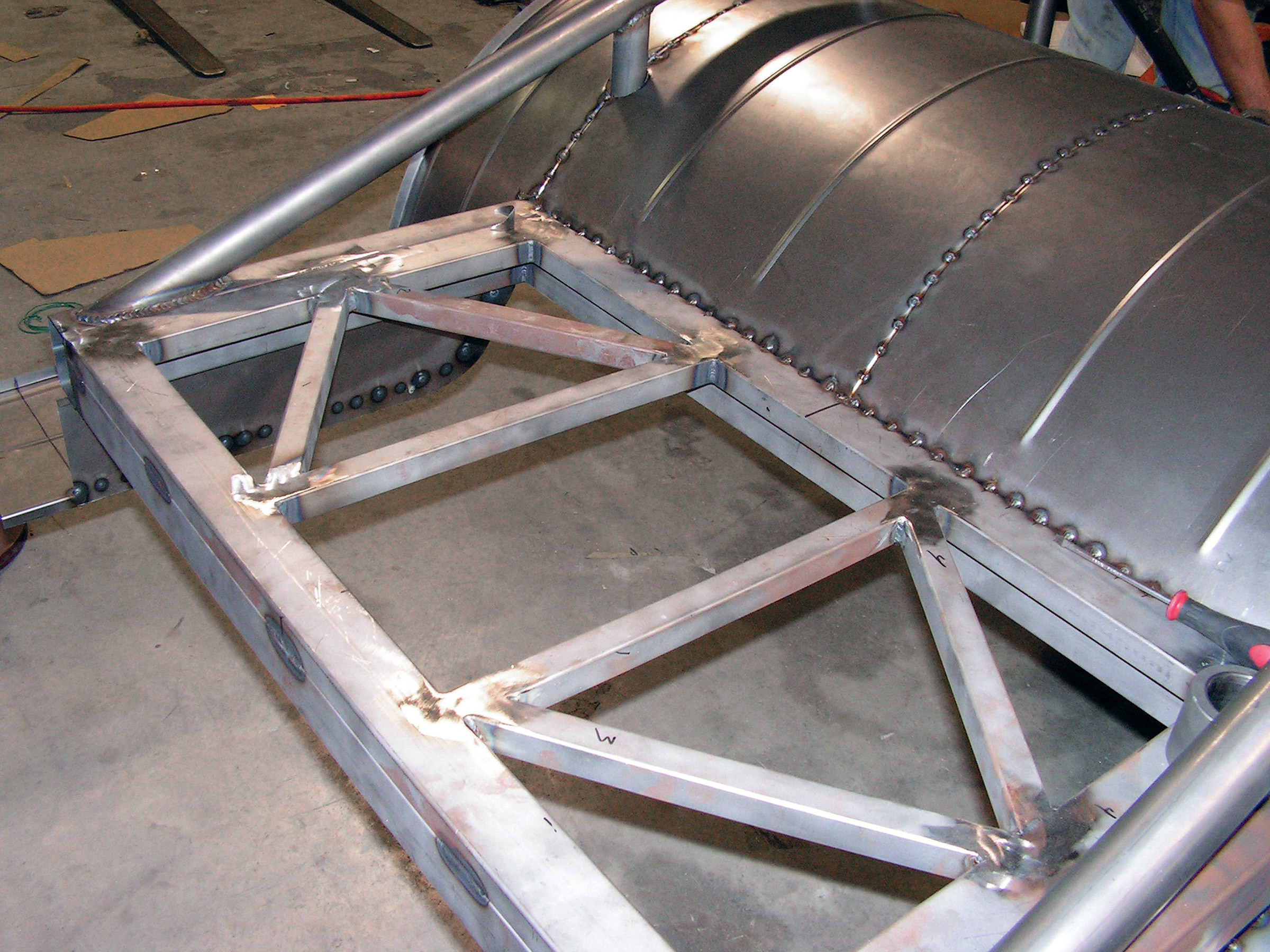
12. The rear kick-up in the chassis is always susceptible to flex, but Keys and Wilson prevented that by welding in diagonal braces. Note that the rectangular tubing is not welded to the framerails but to the rollcage tubing. For now, it is tack-welded in place.
13. As we mentioned, reaching all areas of a structure can be difficult, but with some assistance, the guys flipped the chassis on its top and welded the bottom side of the framerails and anything else they could find.
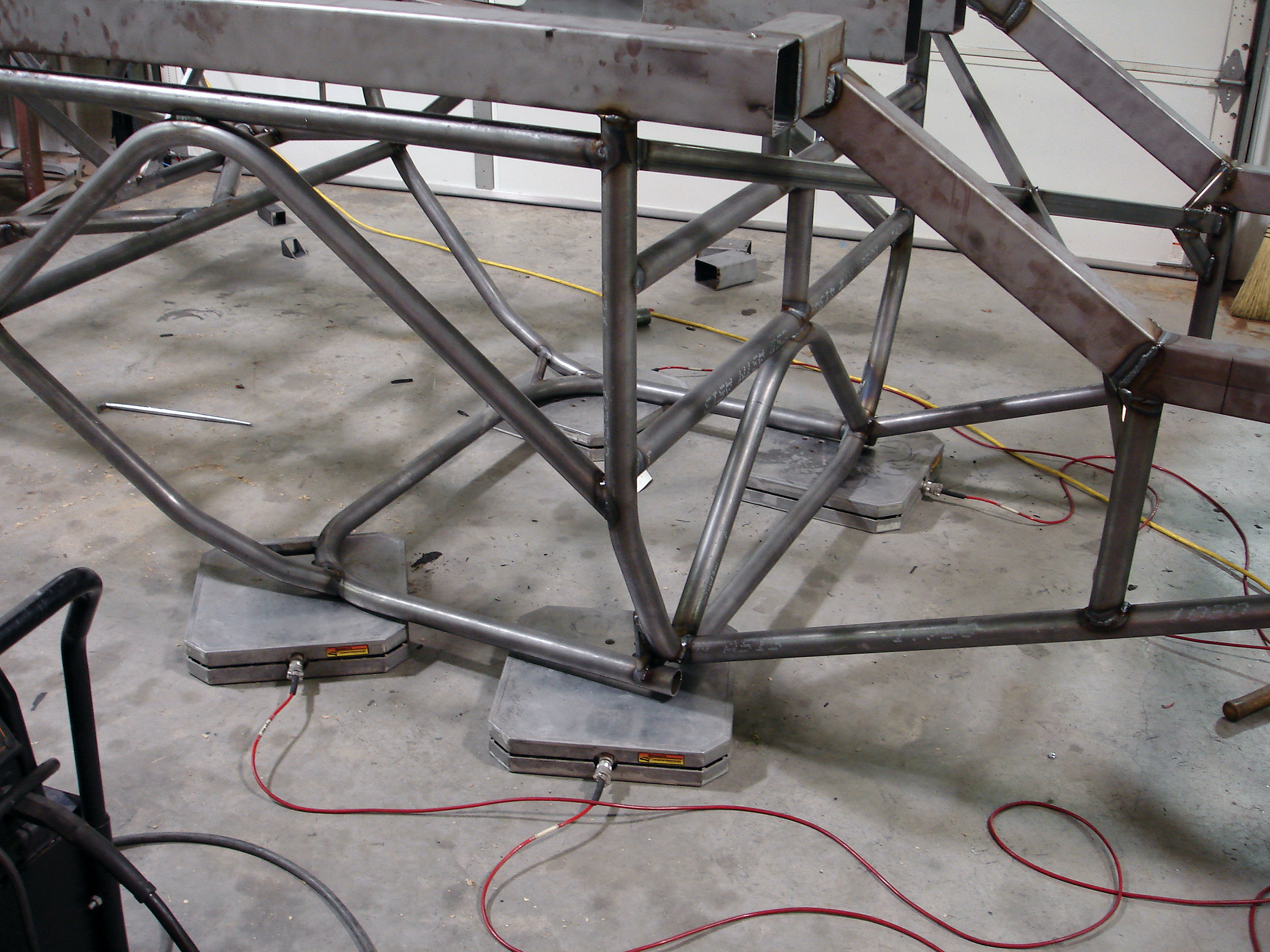
14. After the welding was complete, Davis placed his Longacre scales on the shop floor and weighed the bare chassis. At this point in construction, the chassis is light, but that will certainly change when the suspension components and drivetrain are installed.
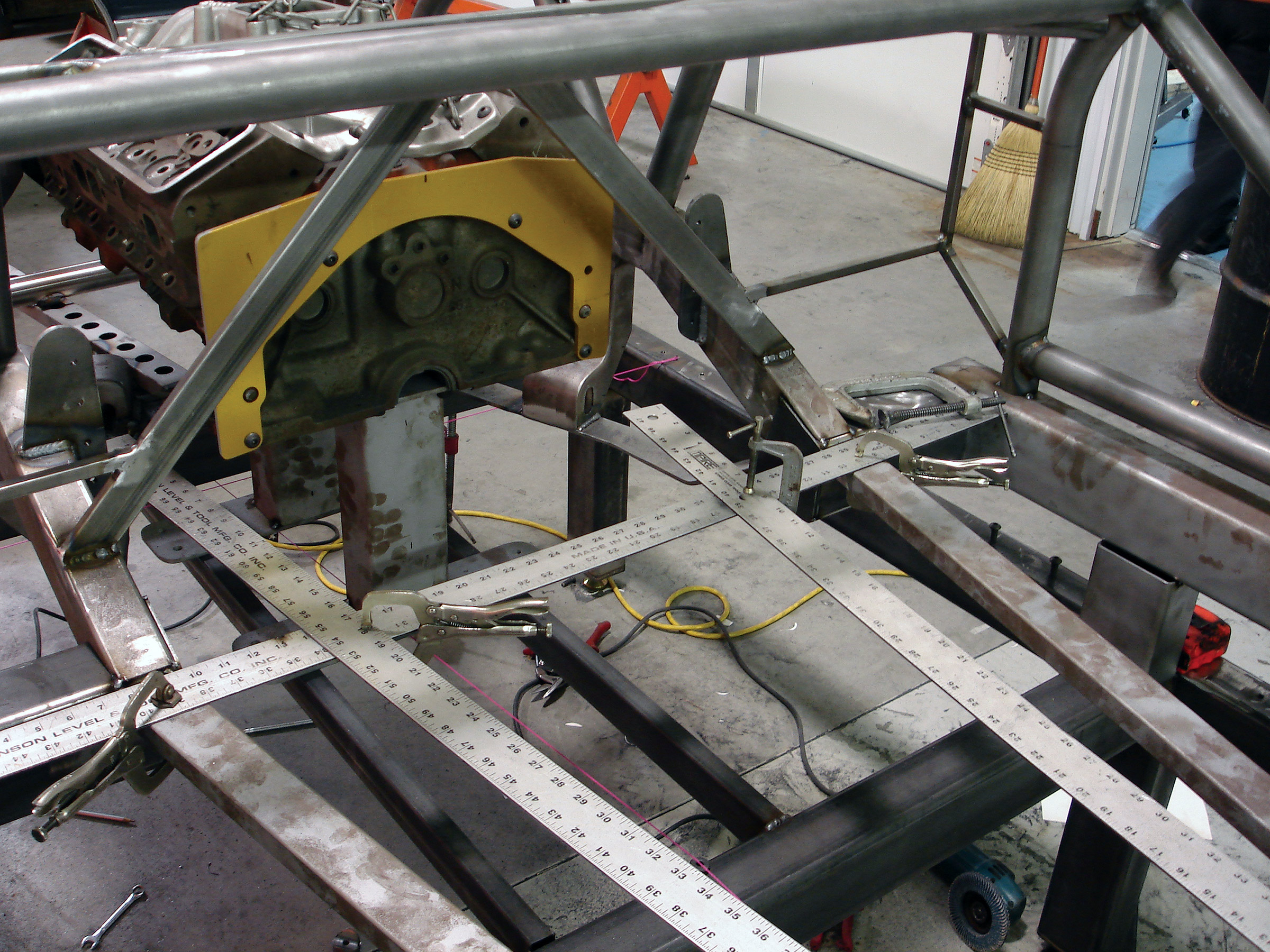
15. The students will completely fabricate the floor pans in this race-inspired Monte Carlo with the use of Davis’ own line of Metalcraft Tools. Here, the crew uses aluminum measuring sticks to calculate the transmission tunnel location.
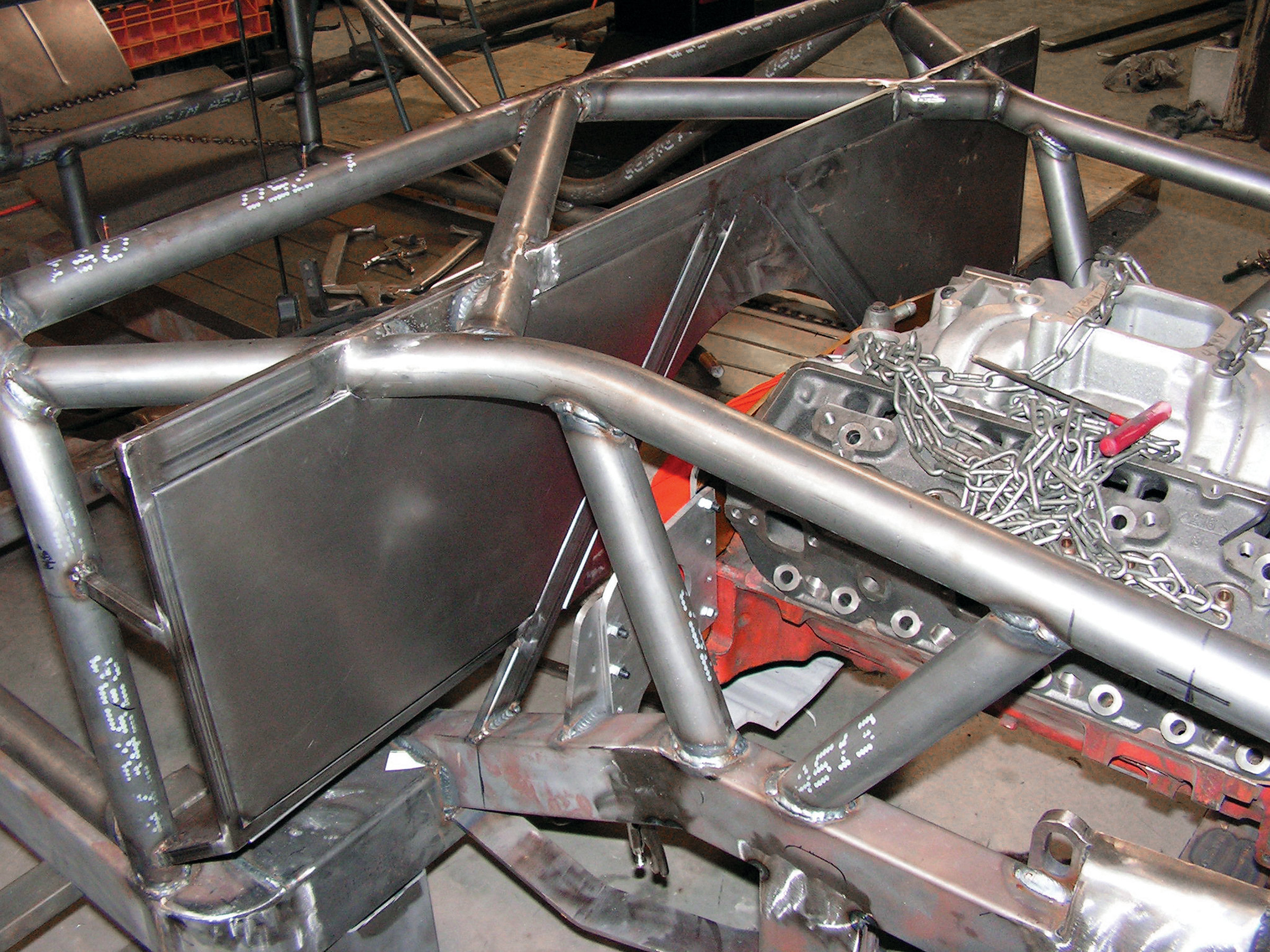
16. Always at a steady pace, Keys and Wilson fabricated the firewall surround from rectangular tubing and later filled it in with sheetmetal. Notice how the rectangular tubing is merged with the round tubing that connects the main cage to the front chassis support bars.
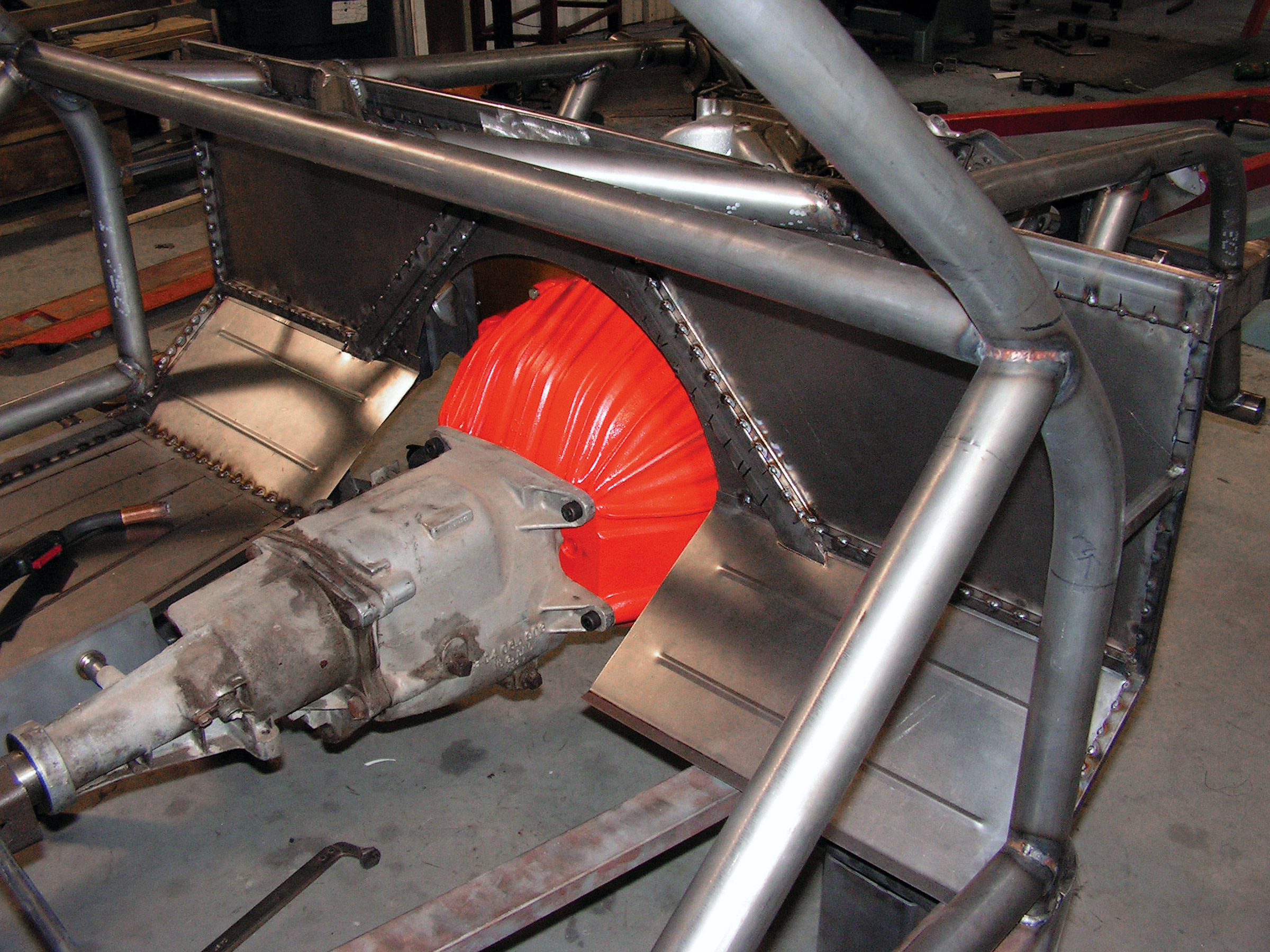
17. The mock-up engine has been in place for most of the chassis build, but to fabricate the floor pans, Davis and the crew installed a mock-up transmission and bell housing. For now, a stock-style bell housing is in place, but a blow-proof housing will be installed with a new transmission behind it.
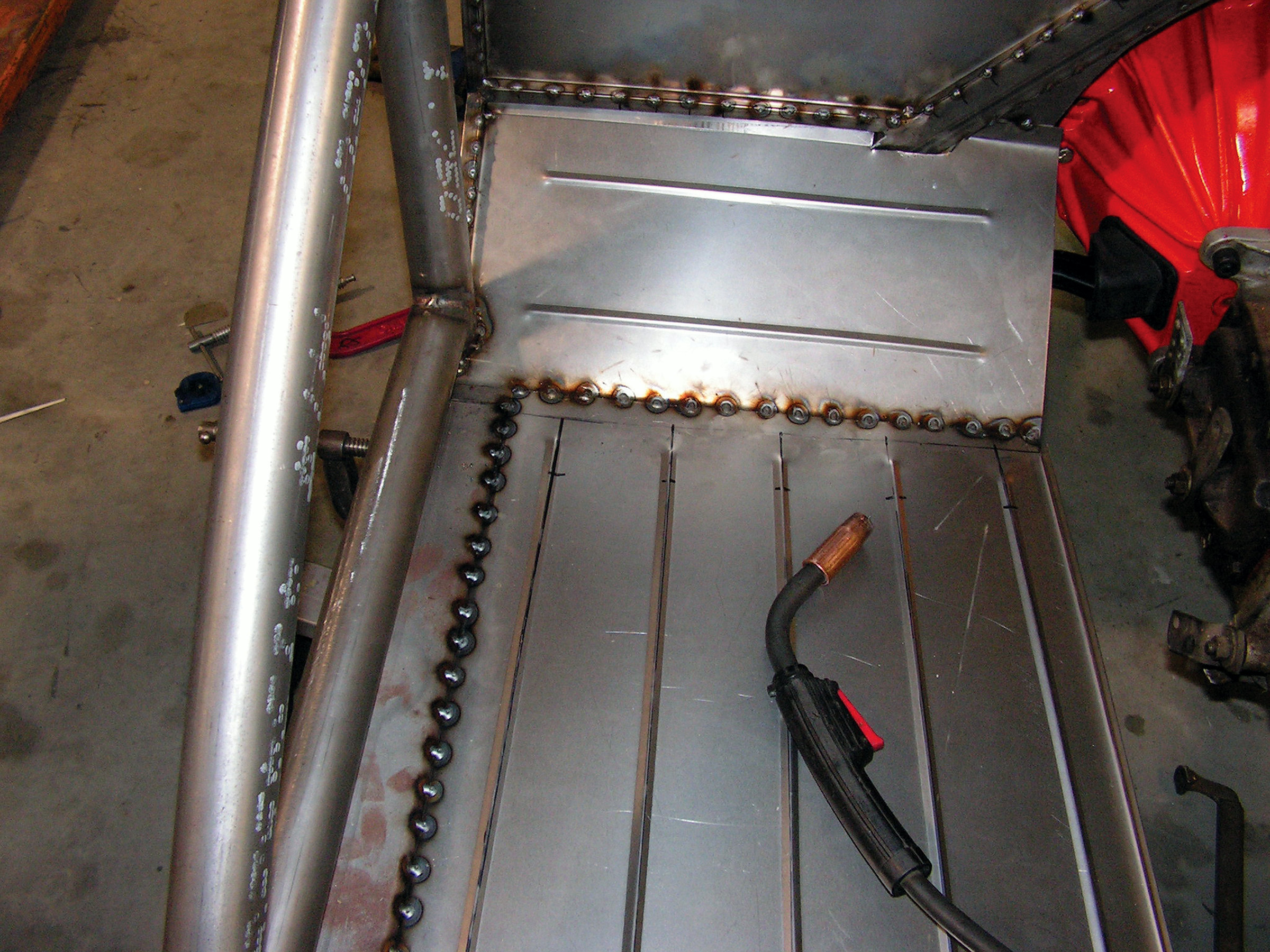
18. Fabricating the kick panels and main floor pans proved to be an easy job compared to the previous fabrication efforts of Keys and Wilson. Running the flat steel through the bead roller greatly strengthens the floor, and each panel is welded to a structural point in the chassis for maximum strength.
19. Here, Wilson tweaks on the transmission and driveshaft tunnel. The hole for the shifter is yet to be cut, since the kind of transmission that will be used is still in the air at this point—all we know is it will have to be a manual transmission that can hold up to at least 600 hp.
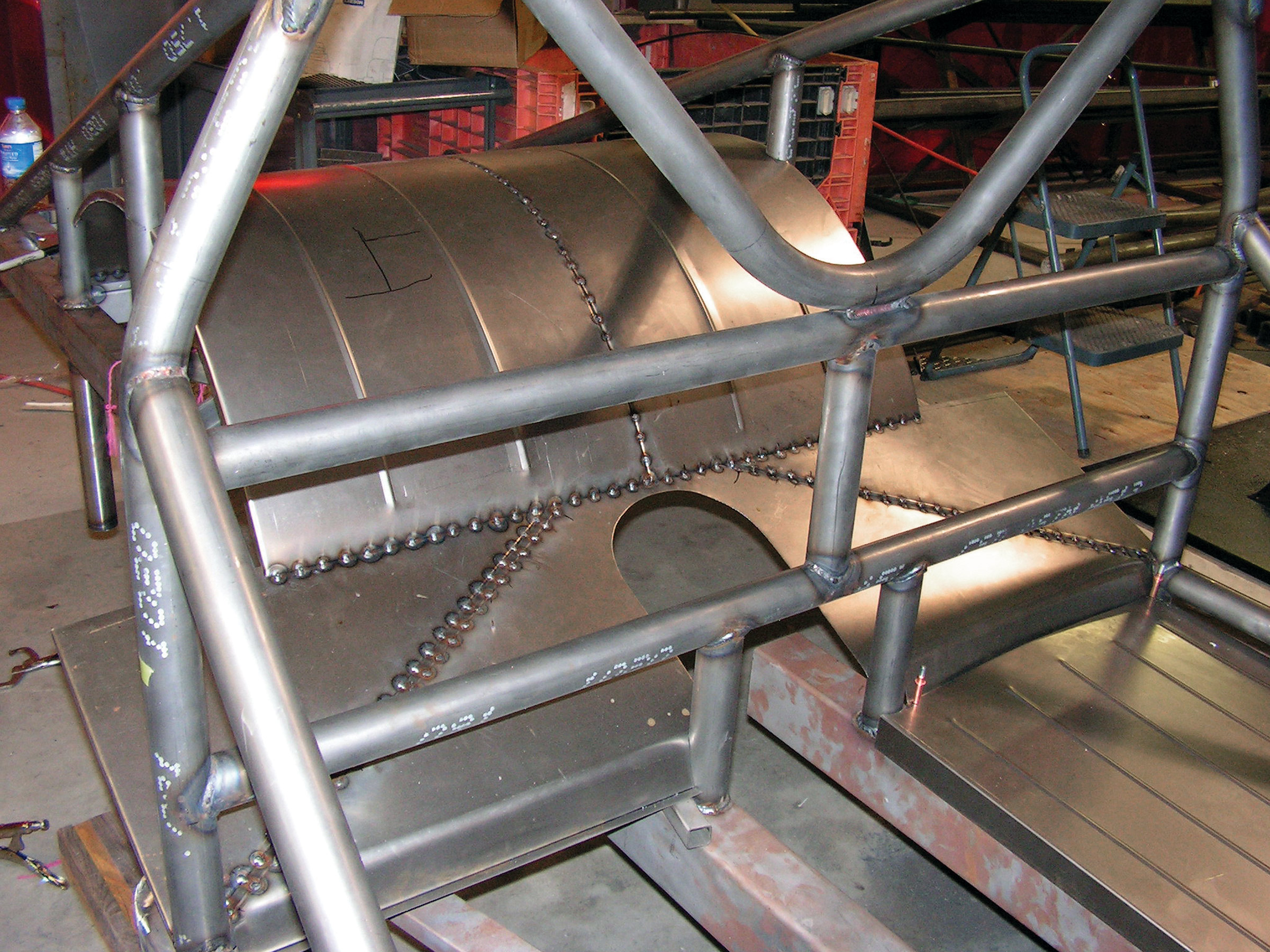
20. Work continues toward the rear of the car and progress is quickly made on the floor pans. The large single wheel tub is outlawed in NASCAR racing because of its aerodynamic advantages, but Davis is building this car to his specifications, not NASCAR’s.
21. The rear section of the chassis is equally as strong as the front but still lacks a rear pan. This allows us to see the additional bracing within the chassis before the pans are fabricated and installed. Later, we’ll cover the installation and plumbing of the fuel cell, which will ride back here.
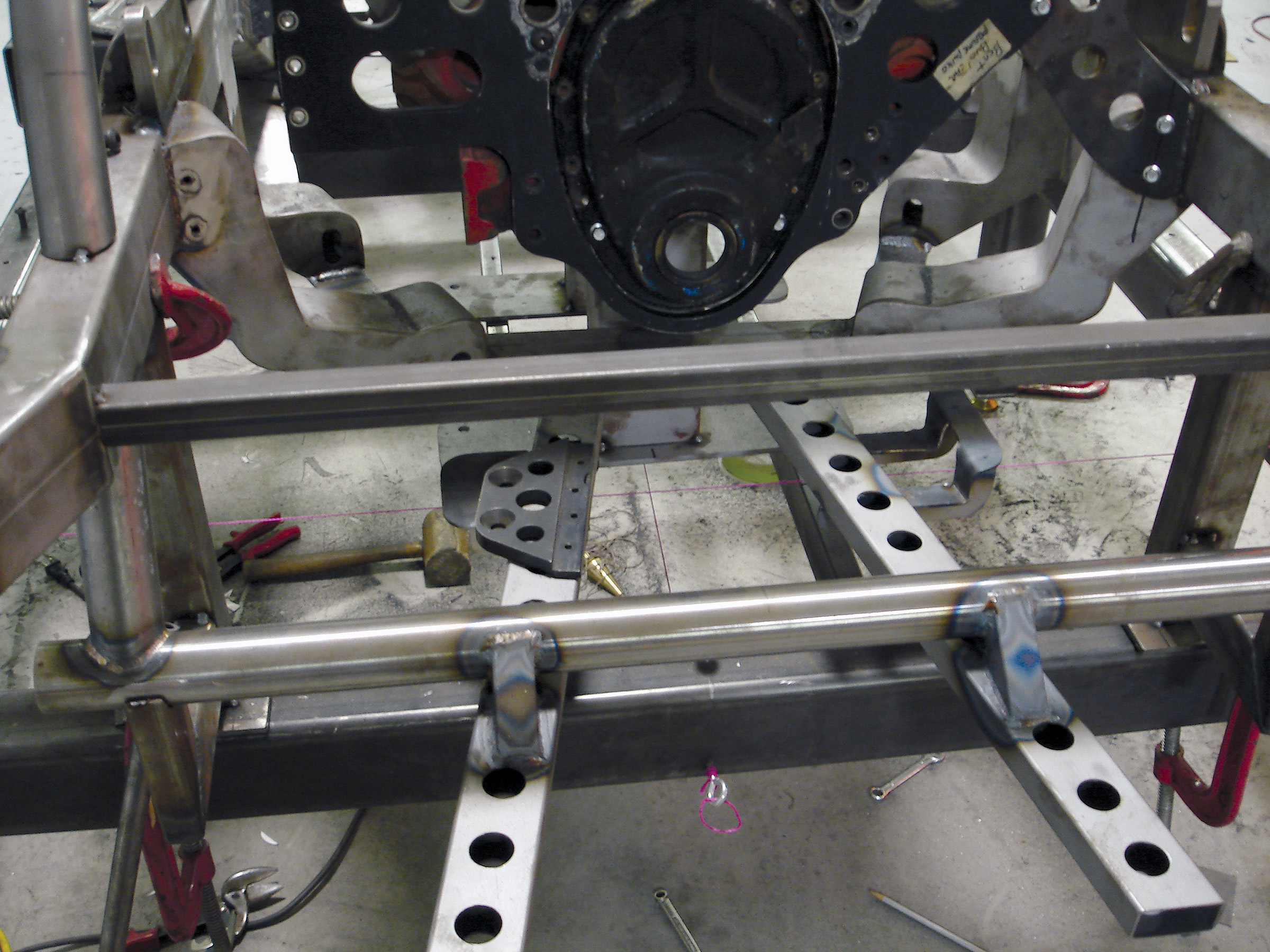
22. Mounts for the front suspension were built using a combination of boxed tubing and flat steel, while the support bars for the radiator mounts and rack-and-pinion mounts consist of round tubing. The chassis will have 6 inches of ground clearance on all four corners.
23. You can see how the radiator and rack-and-pinion mounts will be configured. The round-tube support bars hold the two pieces of drilled rectangular tubing, which will provide ample mounting points and reduce overall weight.
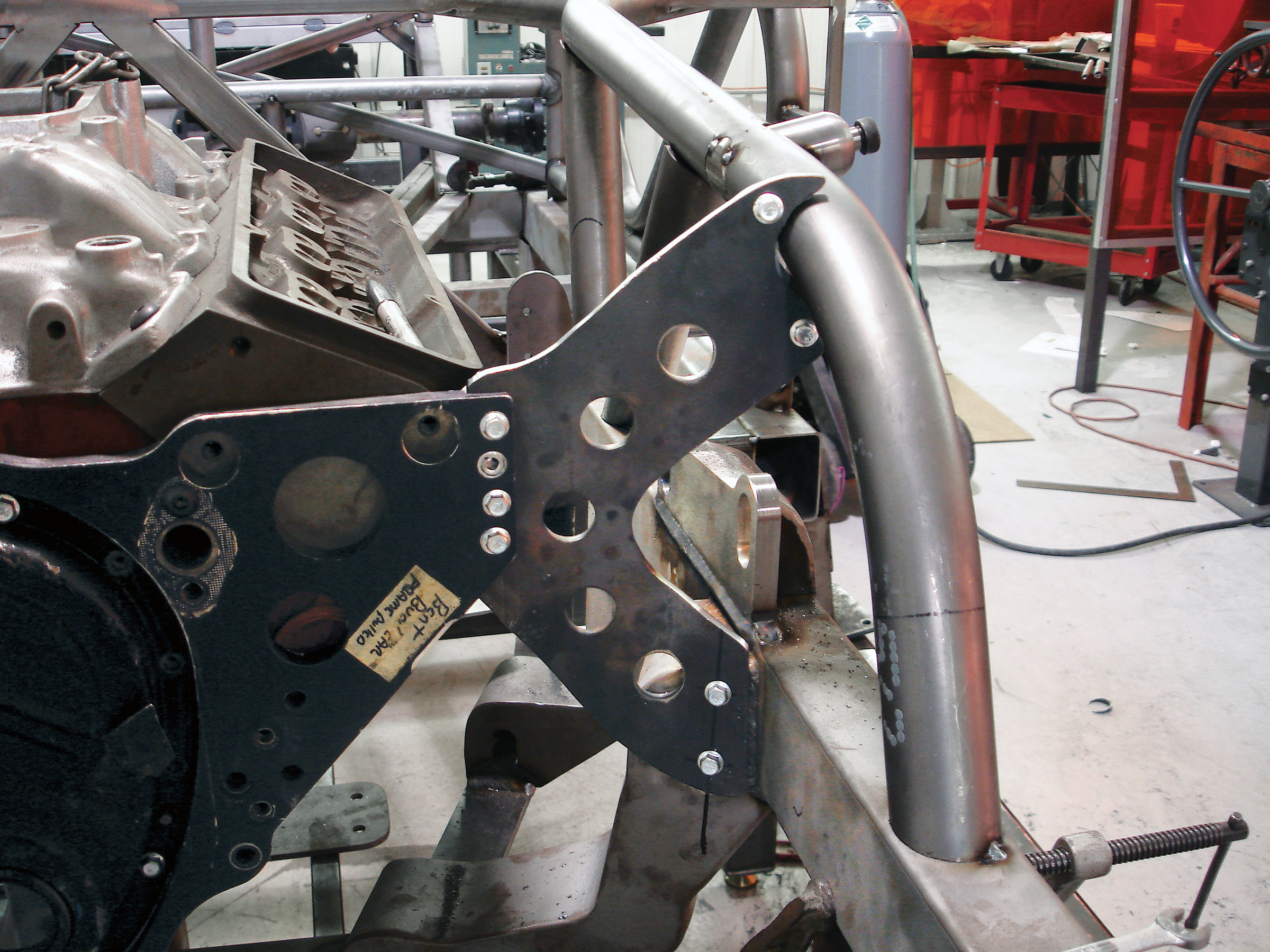
24. The mock-up engine is a basic small-block Chevy, which is what Davis plans to run because of its reduced weight and capability to produce the amount of power he wants. This engine will remain in place until the final few steps of the build, but the engine plate and mid plate could be fabricated and mounted in the early stages of the build.
AN OVERVIEW FROM THE INSTRUCTOR
“The Smokin’ SS build is a tribute to all the performance fabricators that have endured the evolution of the American Stock Car.
“Many of today’s car builders started with Saturday night racing as a motivation on dragstrips, road courses, dirt and paved ovals. Many came up through the NASCAR ranks. This build offers respect to not only a car that achieved superstar status as the winningest brand/model in the history of NASCAR, but also to the drivers, engineers and fabricators that developed a platform of performance that has endured nearly 50 years. Many times as I built a competition Stock Car, I’d whisper under my breath, ‘If we could build a street car, it would be like this.’ The Smokin’ SS is that car—30 years of notebooks, track testing, and competition incorporated into one ultimate street car. Rules, templates and measurements that were frustrating nonetheless; sanctioned structures stood in the way of ultimate performance. These boundaries will not be an issue in this build. Every advantage that can be used in this build will be used. Dusty notes from wind-tunnel days will be incorporated into the body; track-tuning and suspension design notes will be used to build a vehicle capable of performing on any surface.
“Student technicians will build, assemble and refinish the Smokin’ SS to perfection using skills from 16 areas of study. They will utilize a competition-proven methodology to build a light, simple and fast performance street machine capable of withstanding the tests of the blacktop dyno.”
With that said, let’s take a look at the Smokin’ SS project to see exactly what it takes to build such an all-around performer. When the Monte Carlo is complete, we’ll also bring you those test results. For now, we’ll look at the earliest beginnings of the Smokin’ SS and see how it evolves into a full-on performance machine. Next installment, we’ll cover the extensive body modifications on the Smokin’ SS project car as it begins its journey and evolves into the ultimate street car.
ARTICLE SOURCES
Metalcraft Tools SkillCenter
17 Park Lane Spur
Crossville, TN 38571
931/707-7778