
THE AUTO BUILDER
Menu
Featured

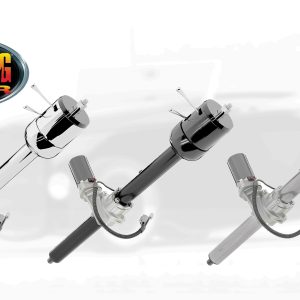
PRODUCT SPOTLIGHT: BellaTilt Microsteer Roadster Column by Flaming River
Top-tier quality and a solid three-year warranty set Flaming River apart as the best in the business. Their tilt steering columns come fully equipped with an aluminum dress-up kit, featuring a turn signal arm with a Phillips screw, a tilt lever, a hazard knob with a screw, and a steering wheel hold nut. Additionally, Flaming River offers a comprehensive array of steering column accessories, including steering wheels, custom wheel adapters, floor mounts, and column drops.

SUPERCHARGING FOR BIG POWER
Building an engine that produces more horsepower than its stock configuration can be done in many ways. However, supercharging has proven to be one of the best ways to make the most horsepower over stock. Superchargers are air pumps that force a “super” charge of air into an engine, which in turn allows the engine to make more power. A Roots supercharger or blower is a sealed case with two rotors inside. It is driven through the crankshaft by belts and pulleys, causing the spinning rotors to force compressed air into an engine.




Spotlighter
POPULAR READS
-
The Auto Builder’s Hottest Product Picks from The Triple Crown of Rodding 2026
-
Product Spotlight: Bill Mitchell Products Aluminum LS Engine Block
-
PRODUCT SPOTLIGHT: 60-66 Chevy C10 Fresh Air Vent Block Off Plate
-
Product Spotlight: Pyramid Optimized Design Sequential Aurora Taillight for 1964½–1966 Mustang




How-to Get Shorty
Building a Vintage Tahoe from a 69 Chevy Suburban
Author

Josh Kaylor
Photography By Mike Dempsey
In 1967, GM introduced the modern-day Suburban, and for the first time in nearly 40 years, the Suburban had three doors, one on the driver’s side and two on the passenger side. This odd configuration was only the beginning, though, as the massive ’67 Suburban also had quite a few never-before-seen conveniences. Owners could now order A/C, tilt steering, a 400ci big block and an automatic transmission. The big plus for the Suburban, however, was the massive amount of space inside the cabin. Equipped with either a single bench seat or buckets up front and a smaller bench seat in the rear, the Suburban offered room for up to six adult passengers, not to mention an additional 4 feet in the rear for cargo. This interior improvement makes the Suburban quite a massive vehicle with a 127-inch wheelbase.
After purchasing this ’69 Chevy Suburban a few years ago, Mike Dempsey decided that while he enjoyed all the interior space, the overall size of the Suburban was just too much. Besides being more difficult to park, Dempsey’s Suburban barely fit inside the family garage. So after several renderings, he finalized a concept that shortened the Suburban to that of a vintage-style Tahoe. The initial plan for the Tahoe-inspired Suburban included a 12-inch wheelbase reduction, and the removal of 8 inches from the rear of the body (beyond the wheels). To make the entire package work well together, he would remove 20 inches from the roof. This was no easy task, but it was necessary to complete the overall package reduction. Overall, this reduction in size would give the Suburban a new wheelbase of 115 inches.
So after more than a year of planning, Dempsey began to tackle the arduous task of shortening the full-size Chevy. To shorten this classic, he had to fabricate several new mounts using several specialized tools. A welder, a cutting tool, several clamps and levels, along with basic hand tools and a knowledge in chassis fabrication is recommended when performing this task, and if you have chassis building experience that’s all the better. Since the body modification requires that the frame be cut, reinforced and rewelded, we strongly recommend that a certified welder handle this task if you plan to attempt a job like this on your own. In order to reinforce the frame, Dempsey purchased a set of frame stiffening reinforcements from Early Classic Enterprises. Since they cost only $35, this improvement will be cheap insurance down the road, as these reinforcement plates help to restore the integrity of the frame once it is cut. Since he removed 20 inches from the roof to complete the job, Dempsey also purchased new custom rear-quarter glass and weatherstripping. Dempsey finished off the shortened Suburban with a set of 18-inch and 20-inch polished Coys. This transformation took several weekends to complete, but the result speaks for itself. Now follow along as Dempsey transforms this vintage Suburban into a phantom ’69 Tahoe that never existed.
Those who longed for their engines to look as they did back in the old days of multiple-carb setups were out of luck. Cool as they were to look at, there are lots of reasons why the multi-carb setup fell out of favor, and most of them had to do with the fact that they were a bear to sync. The advent of the four-barrel carb was the death for these systems, though the purists among us prayed for a breakthrough.
Thanks to Ken Farrell and his company, Retro Tek, those prayers have been answered. Farrell started off converting old mechanical fuel injection systems (Hilborn & Enderle) when the first aftermarket EFI systems became available. His new system, which uses the latest in EFI mated together with the classic Stromburg 97 design, came about when Farrell saw that there was interest in the benefits of EFI, but he also knew that they were lacking in the looks department. The idea was simple take the best aspects of both and add them together.
One of the problems with the EFI systems was the need for an engineering degree just to get them to work. Retro Tek has addressed that, as its new Injection Logic ECU was designed to give the novice a chance to get with the program. The Retro Tek QTC brings the tech stuff to real terms so that any person who can tune a carb can understand how to work the new system. Retro Tek says that its new PC software takes the ease of tuning to a new level.
While this customer wanted to use an external coiled HEI GM distributor, the Retro Tek system will work with the majority of factory and aftermarket ignition systems. For those with an LS1 engine, operating systems will be available soon, so call for information.
For those who want to have the muscle car look, Retro Tek also has a new 2×4 system that will fit on any existing four-barrel manifold, and 2×4 intakes are available new and used. It is a similar bolt-on using the same ECU, but the regulator is built in and the fuel system is a low-pressure design. According to Farrell, dyno results at Westech have been exceptional, and this is a great kit for a budget-minded build ranging from $1,200 for a single to $2,500 for a polished 2×4 setup.
We were on hand as the crew at Barry White s Street Rod Repair Company installed the system onto this 40 Ford pickup. The truck has been equipped with a Chevy engine, but the Retro Tek system will work on any engine. The install took only about half a day, and it is one that most folks can do in their own garages.
Retro Tek is a family-owned business with Ken as the engineer, Susan Farrell handling the phones and computer programming, and Ken, Jr. and Rebecca helping out where they can.
So, if you like the benefits of the latest technology but love the look of the old days, the Retro Tek system may be for you. Read on and see.
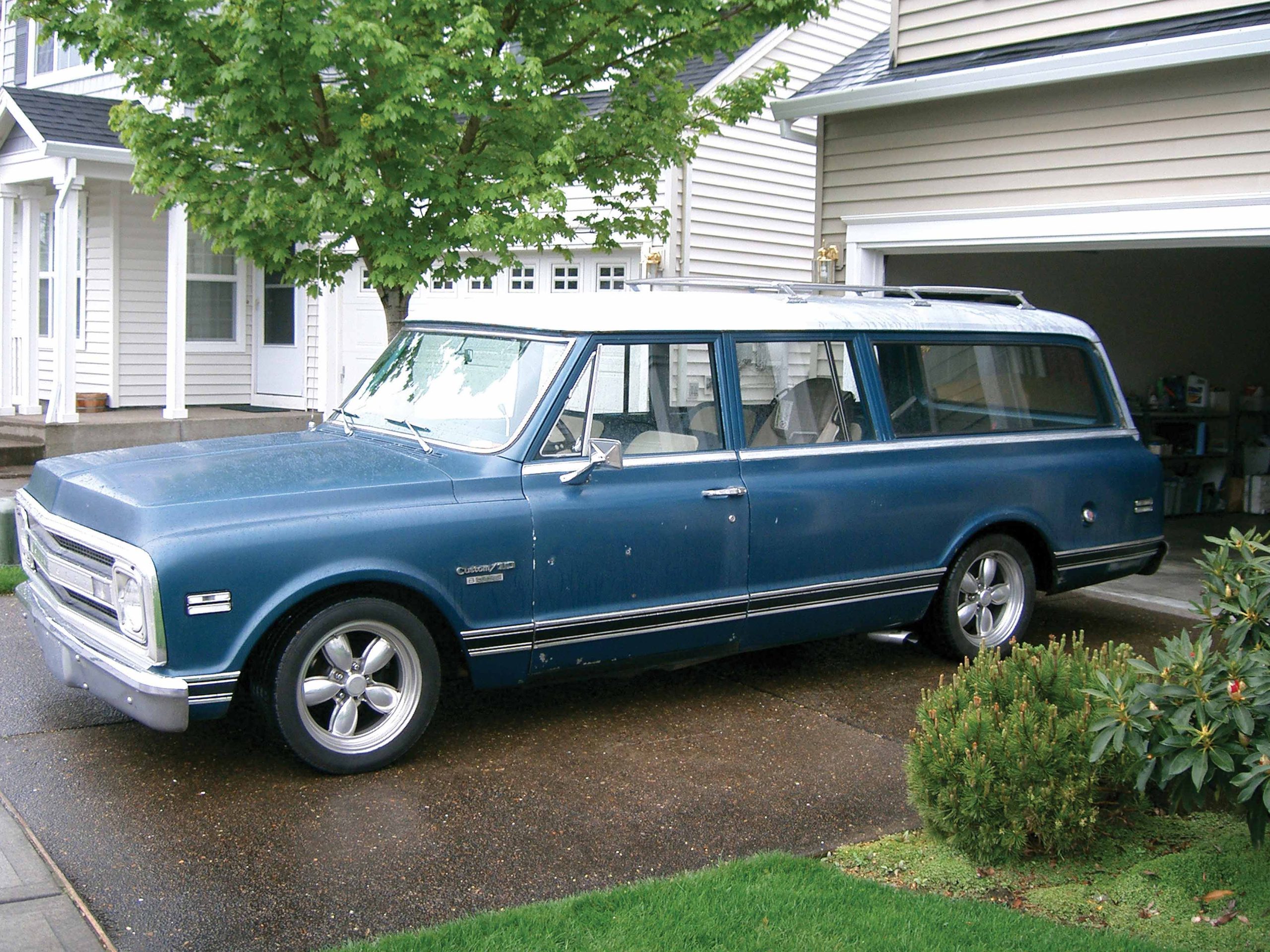
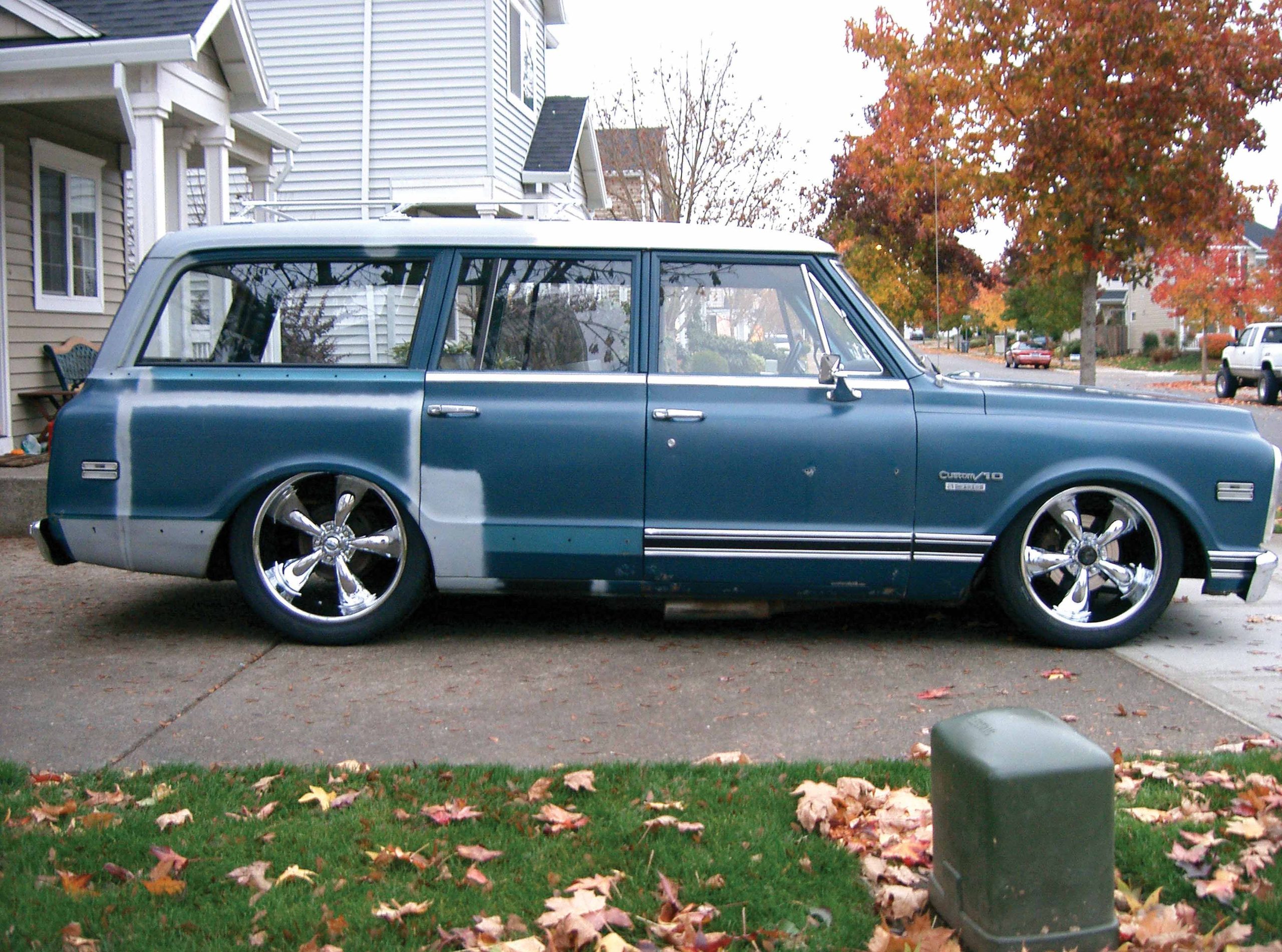
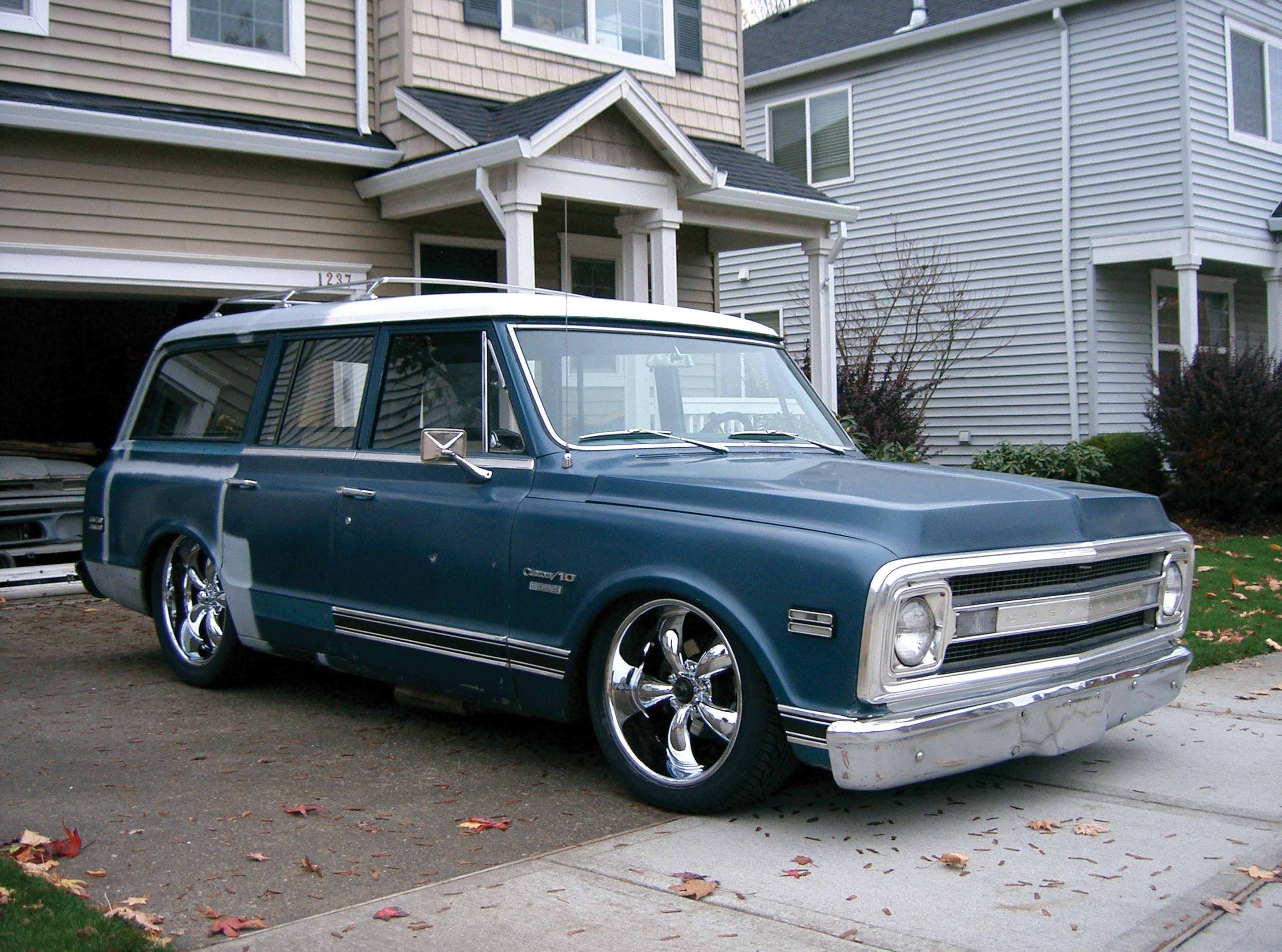
1. The canvas for this modification will be this rust-free daily driven ’69 Suburban. Before it is over, the 127-inch wheelbase will be shortened to 115 inches, the same as short wheelbase trucks of this era.
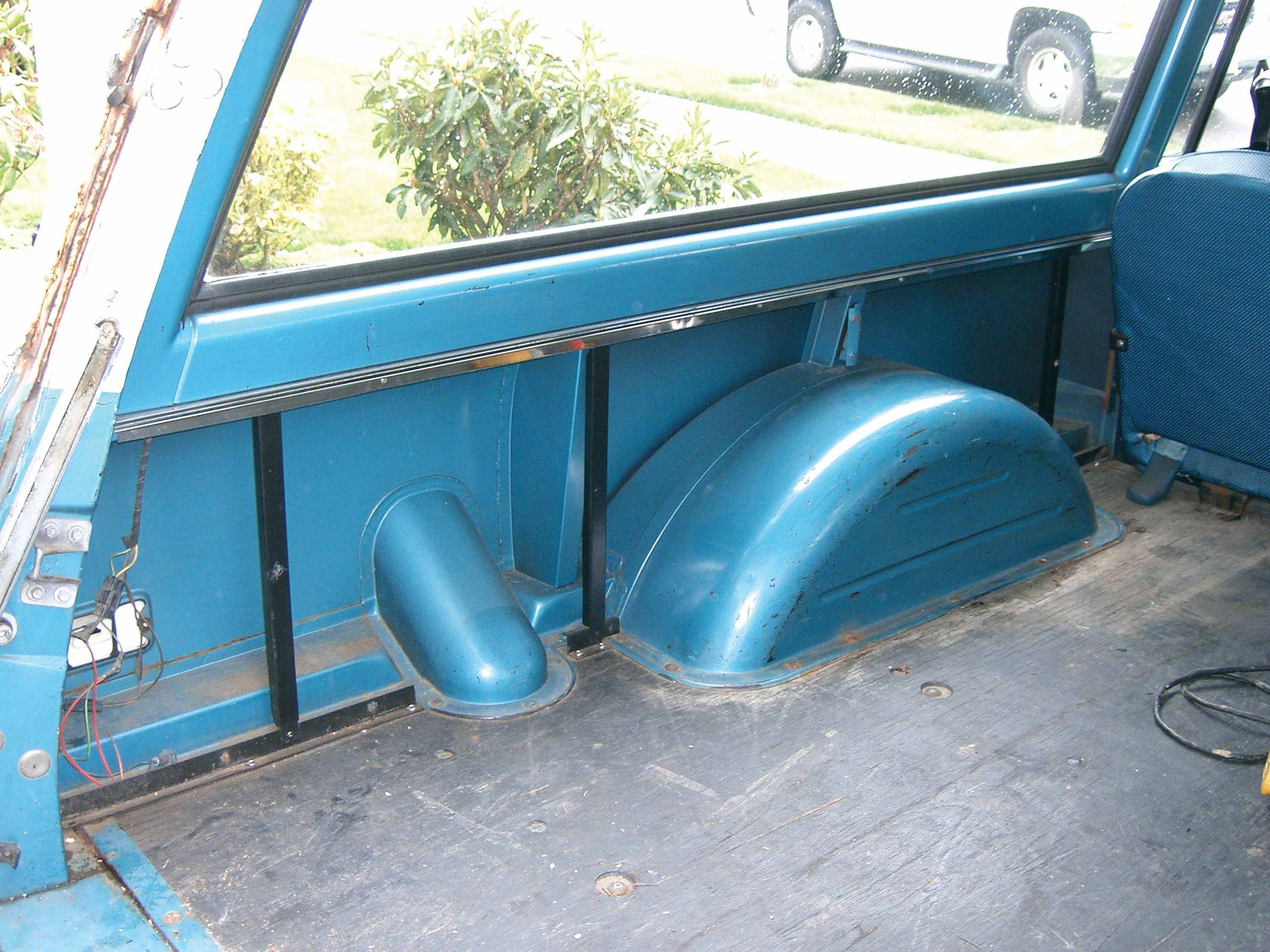
2. Before cutting the Suburban apart, the interior panels are removed from the truck. New panels will be fabricated once the job is complete.
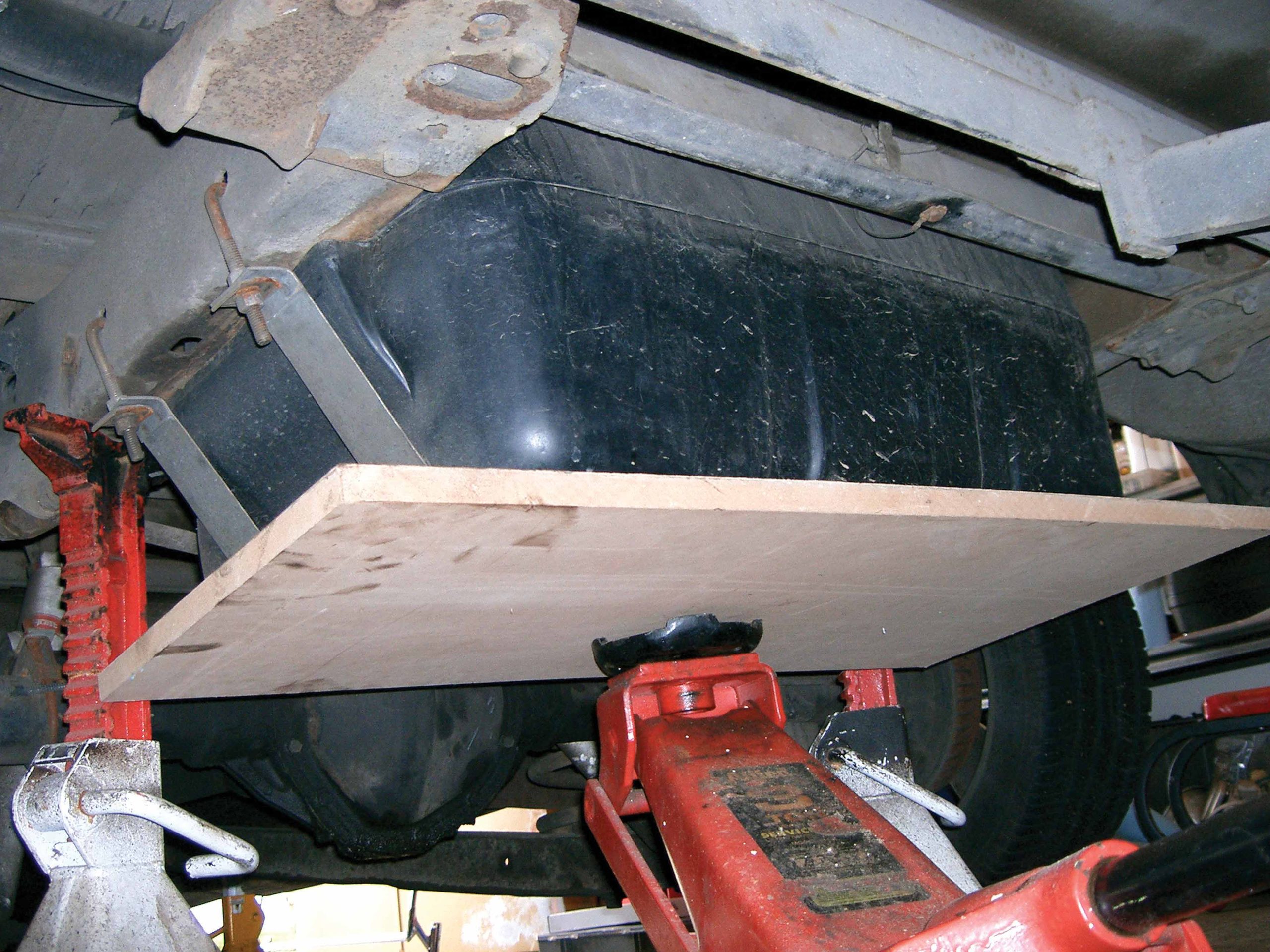
3. Dempsey begins the chassis teardown with the removal of the fuel tank from between the rear framerails.
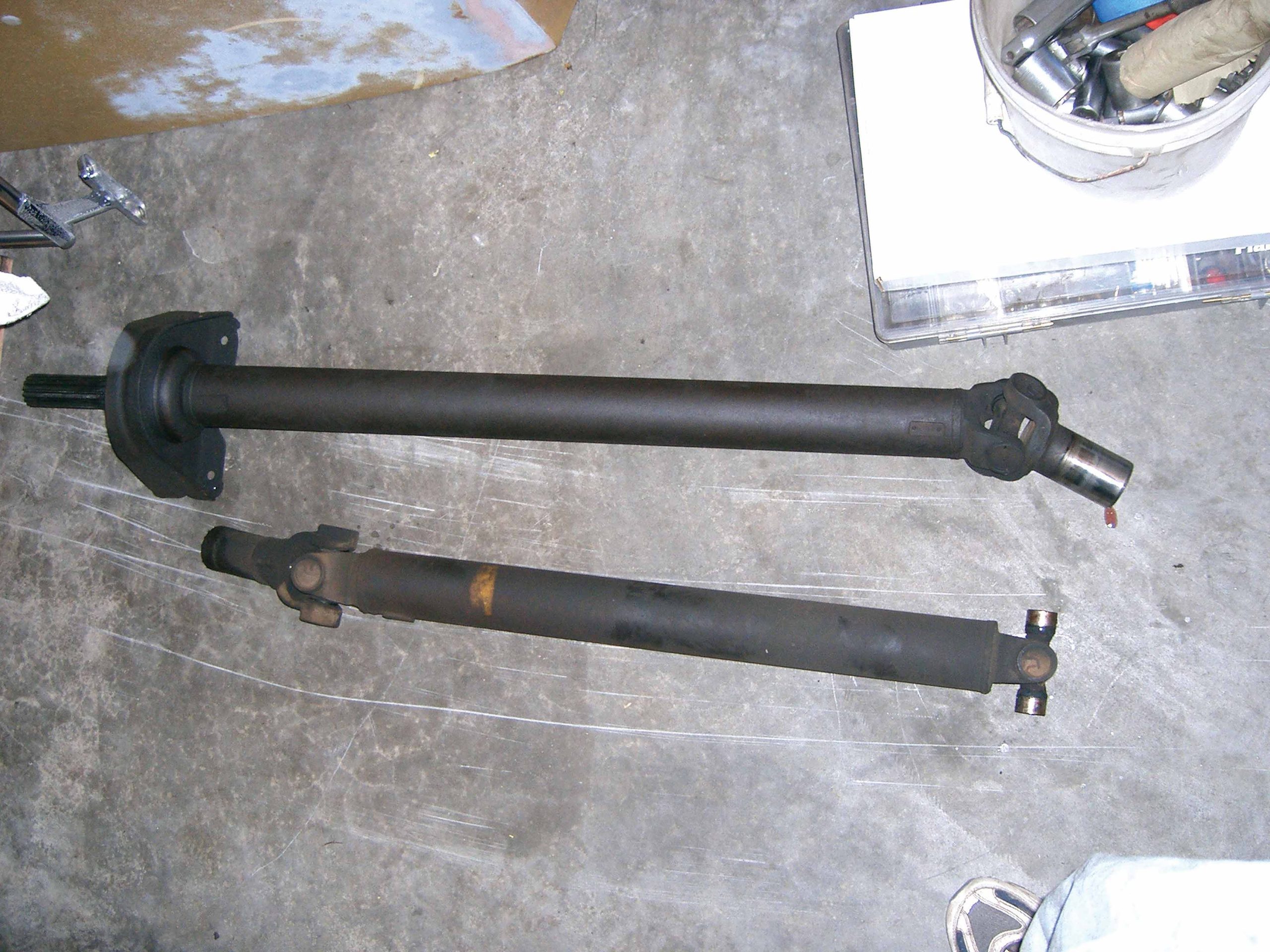
4. The two-piece driveshaft is removed from the driveline. Since Dempsey is shortening the wheelbase, a new one-piece driveshaft will be custom made.
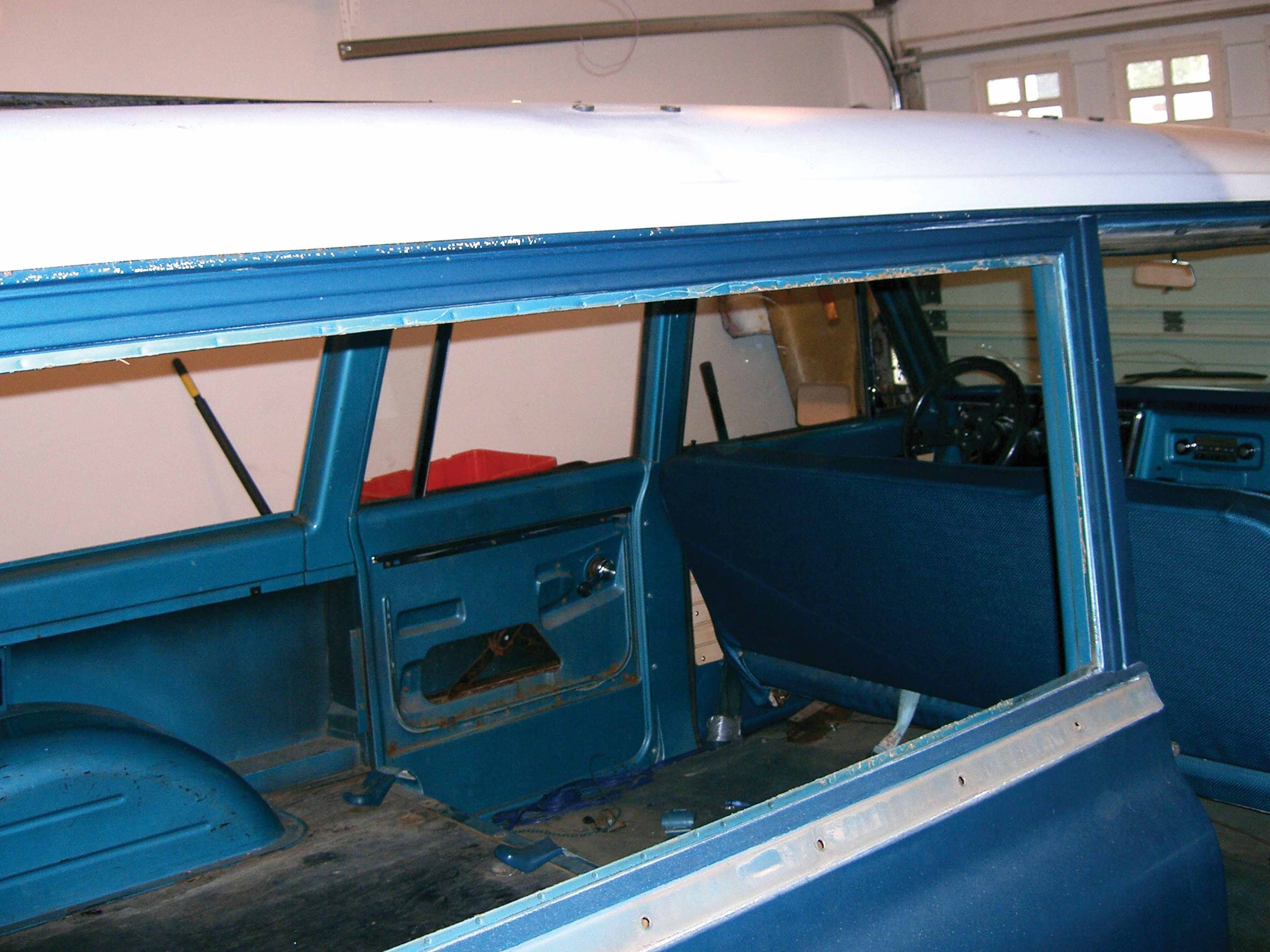
5. The quarter windows and weatherstripping are removed from the body. New glass will need to be cut once the panels are shortened.
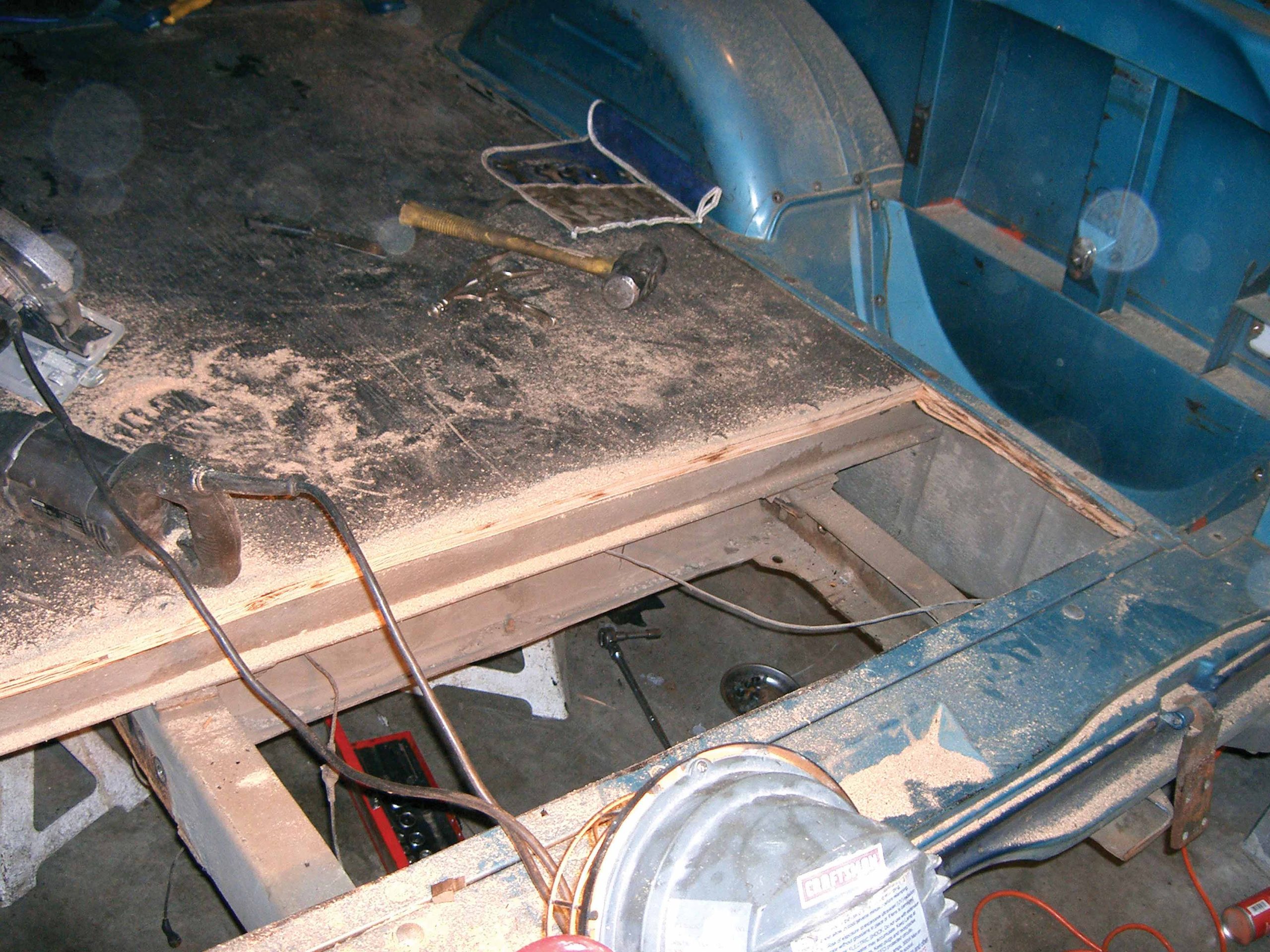
6. Using a circular saw and hammer, the wooden rear floor section is removed from the truck. Chevrolet used wood in the rear of the panel and Suburban up until 1972.
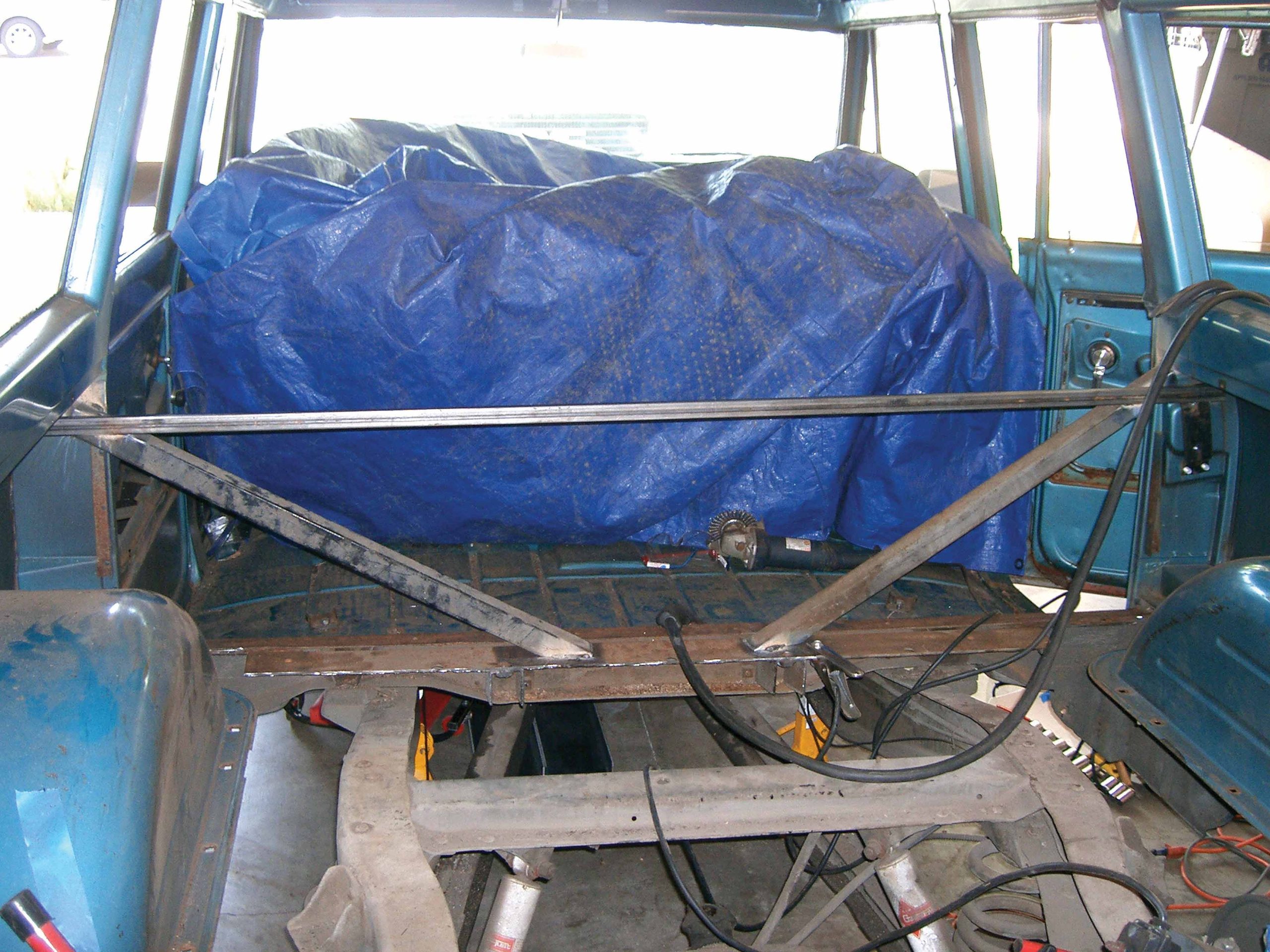
7. Since the Suburban will practically be cut in half, Dempsey installs several cross braces throughout the body to eliminate the chances of flexing and warpage.
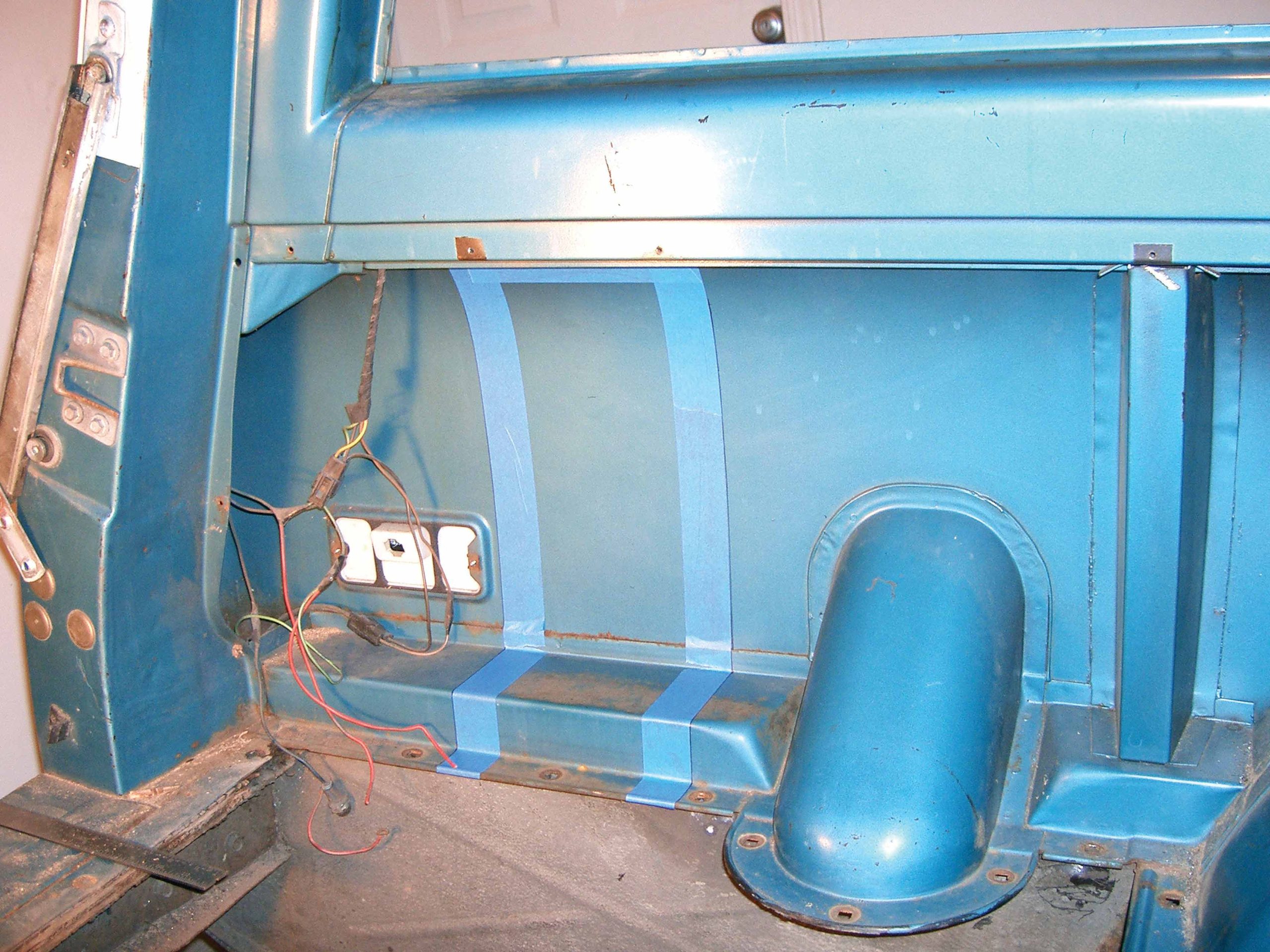
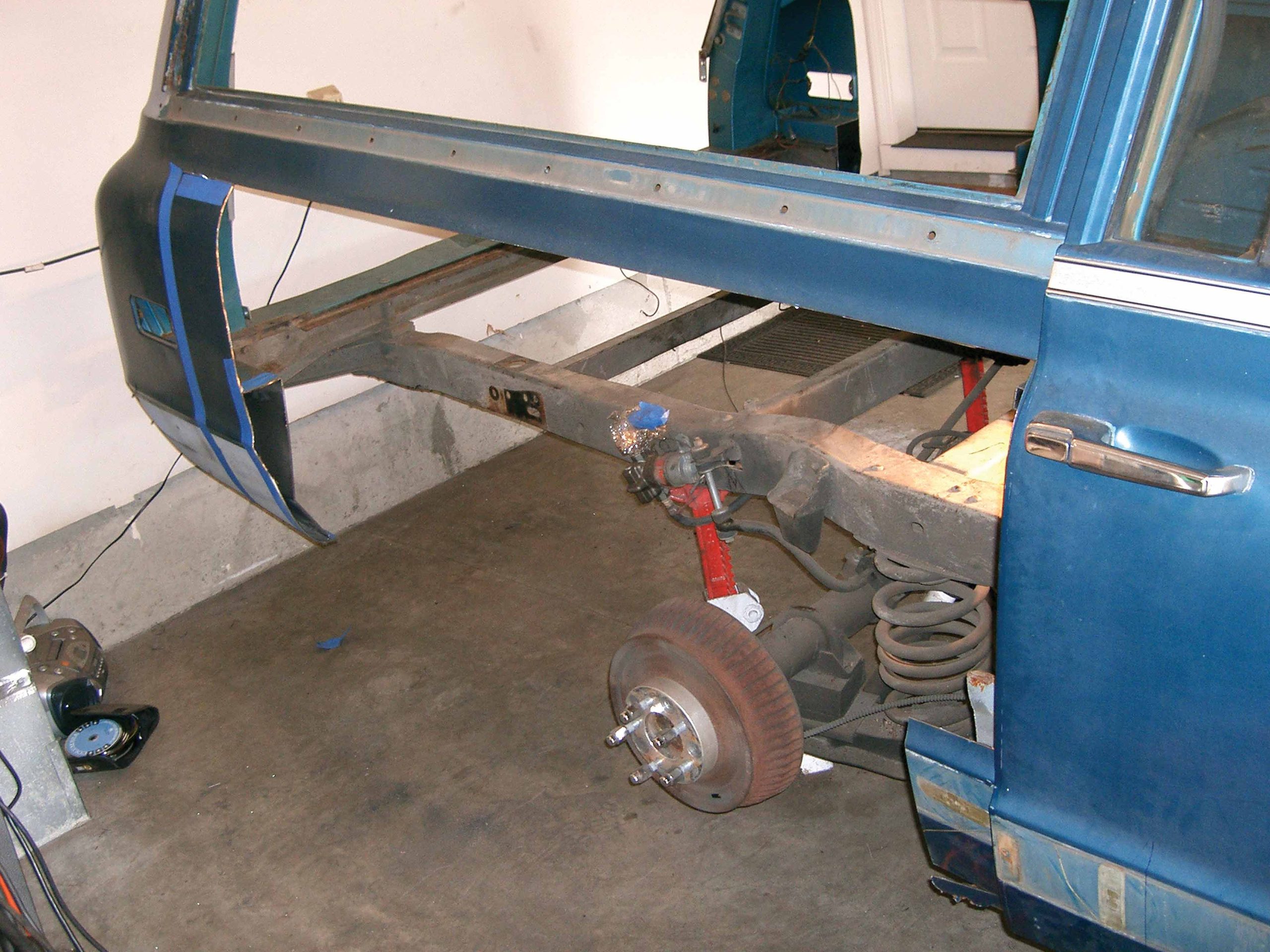
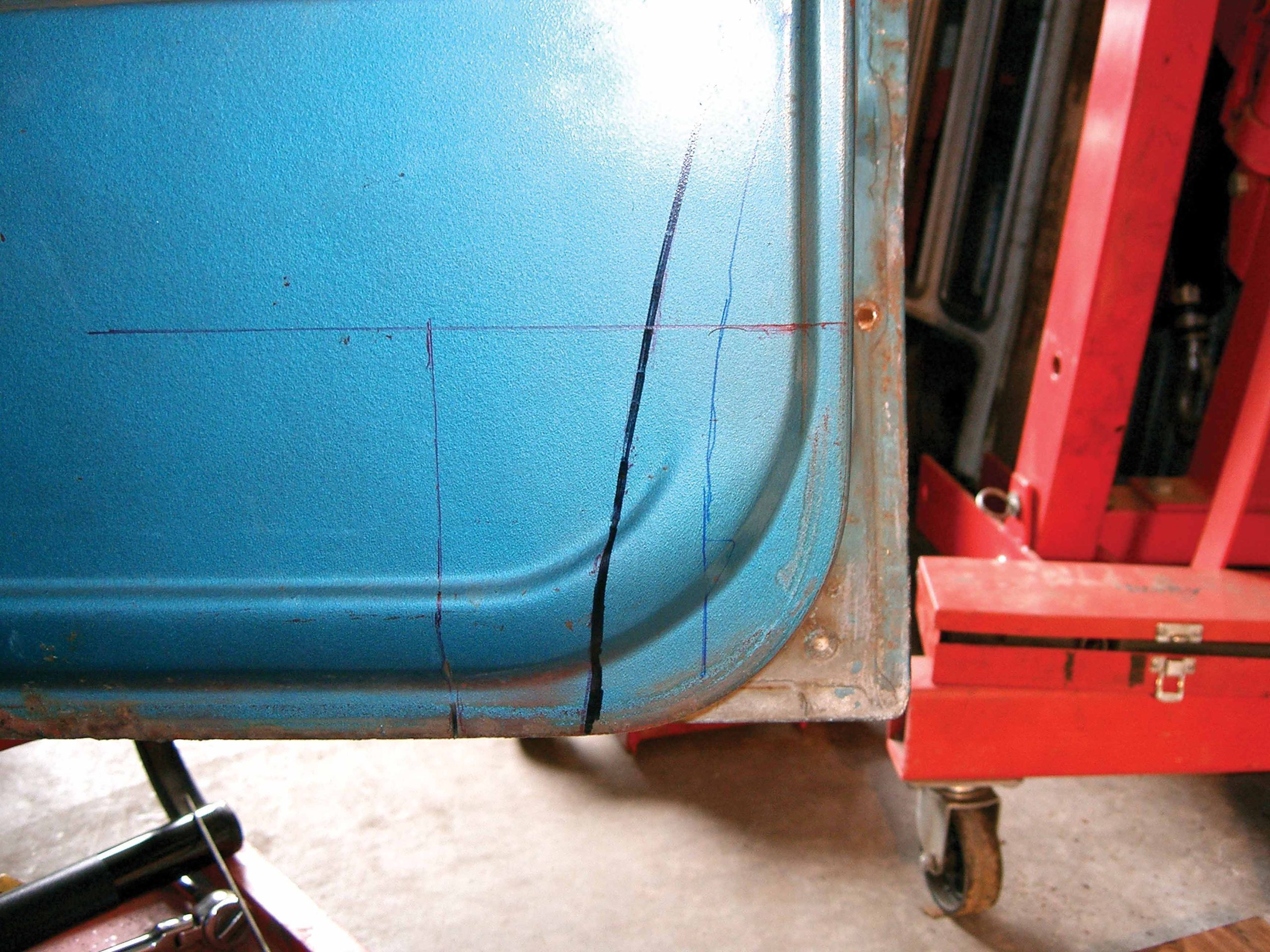
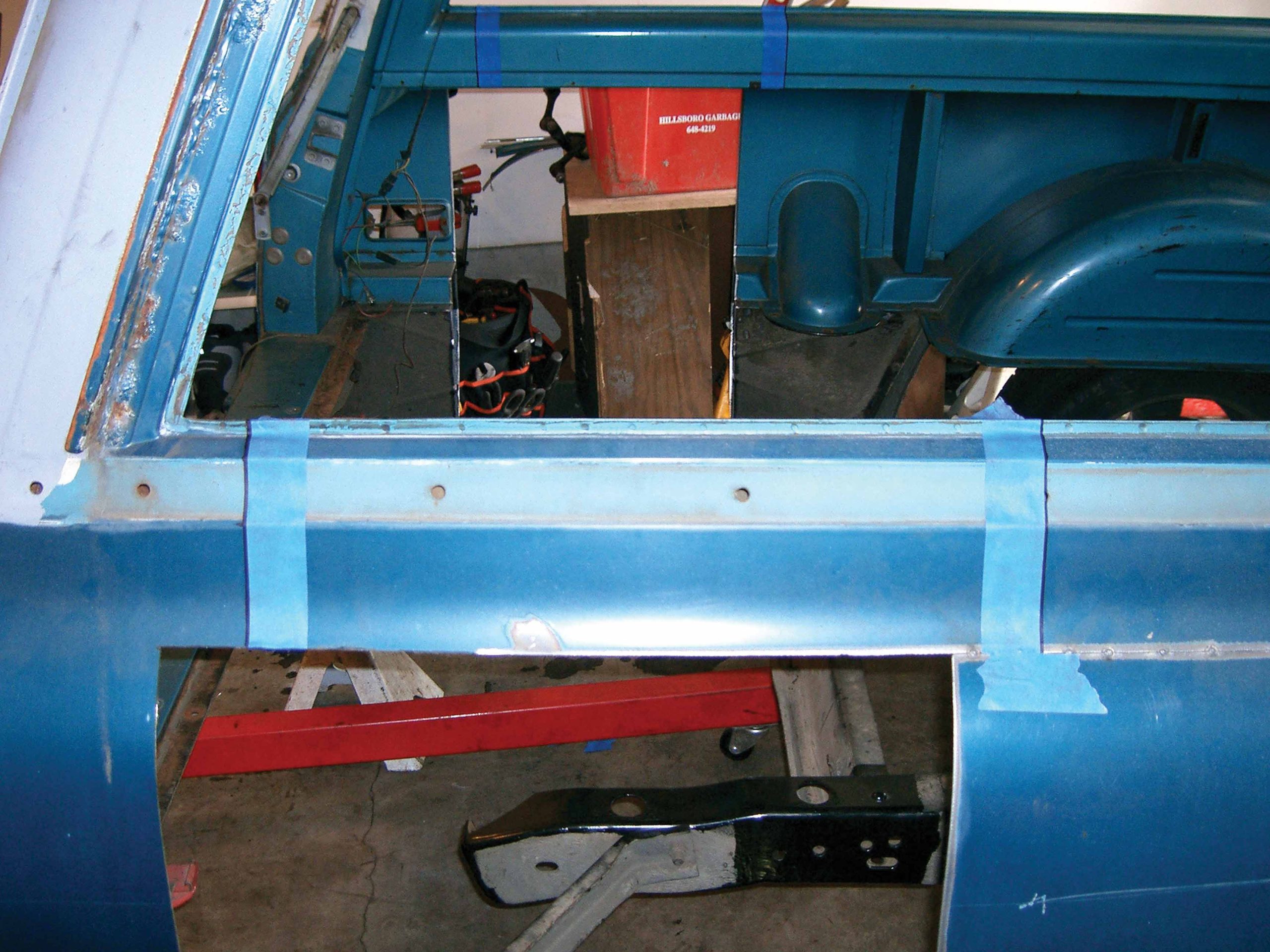
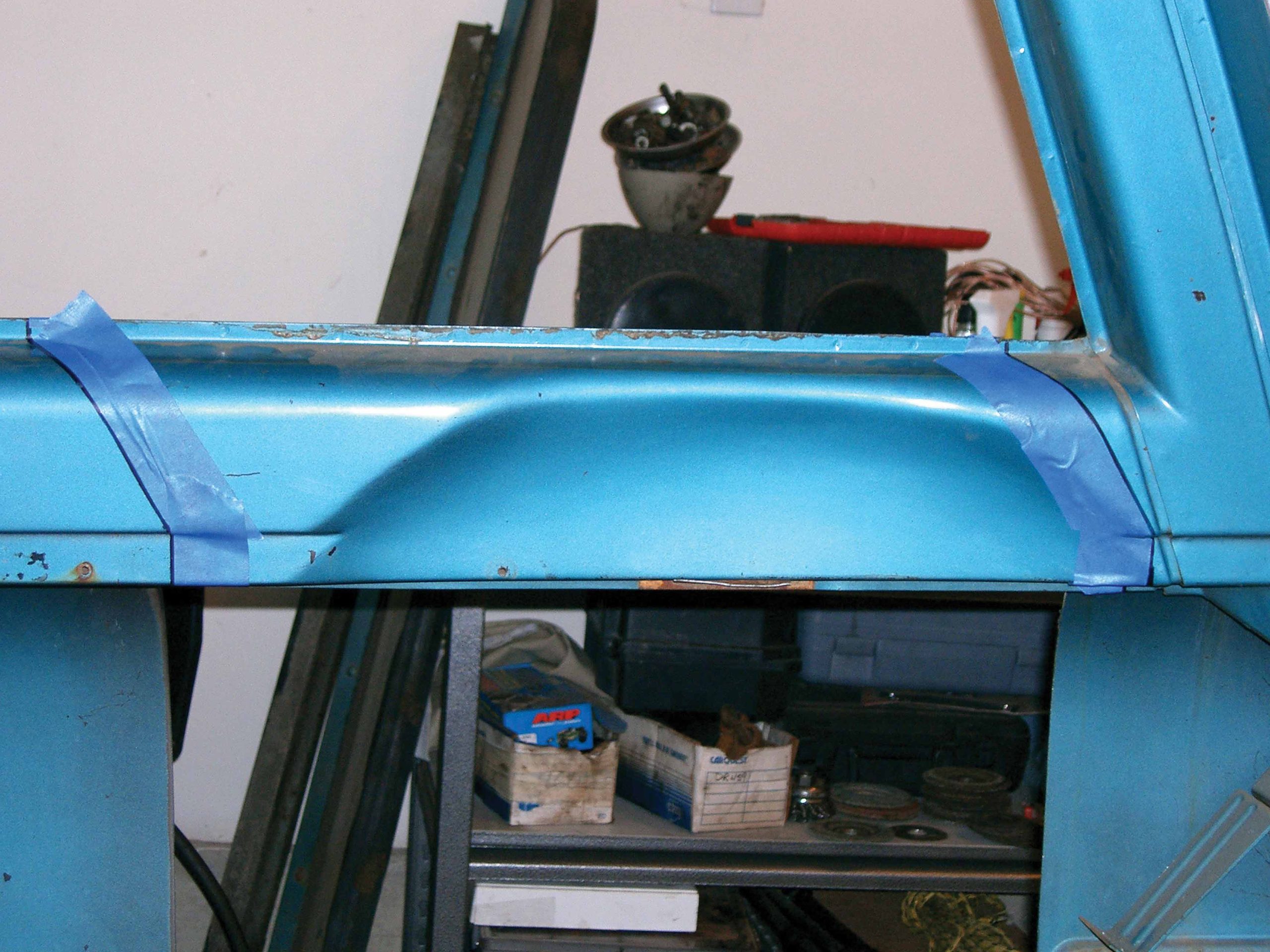
8A-B. Before making any major cuts, the inner and outer quarter panels are marked where they will be cut. These 8-inch rear sections will be cut out of the body, allowing the rear section to be moved forward.
8A-B. Before making any major cuts, the inner and outer quarter panels are marked where they will be cut. These 8-inch rear sections will be cut out of the body, allowing the rear section to be moved forward.
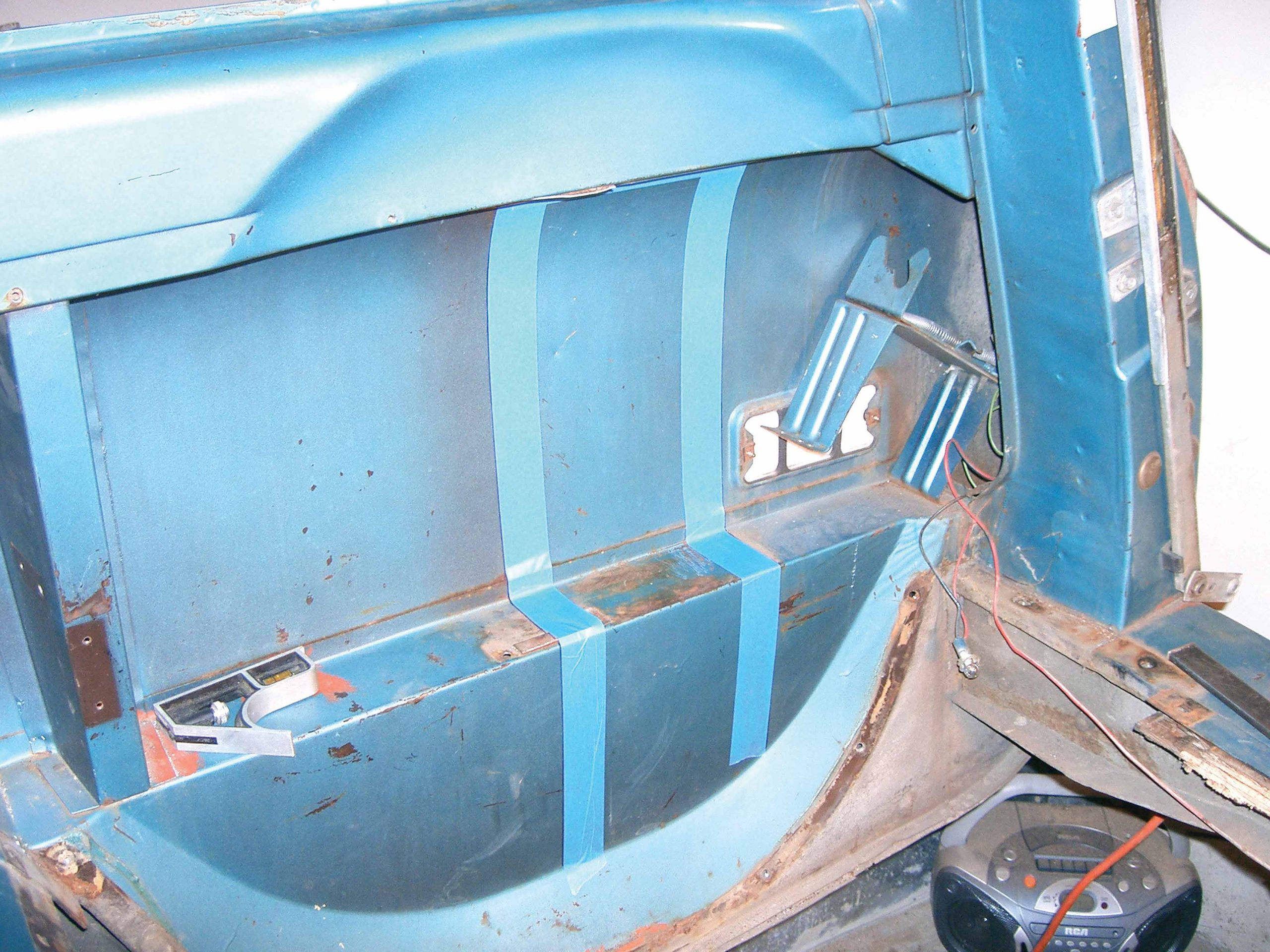
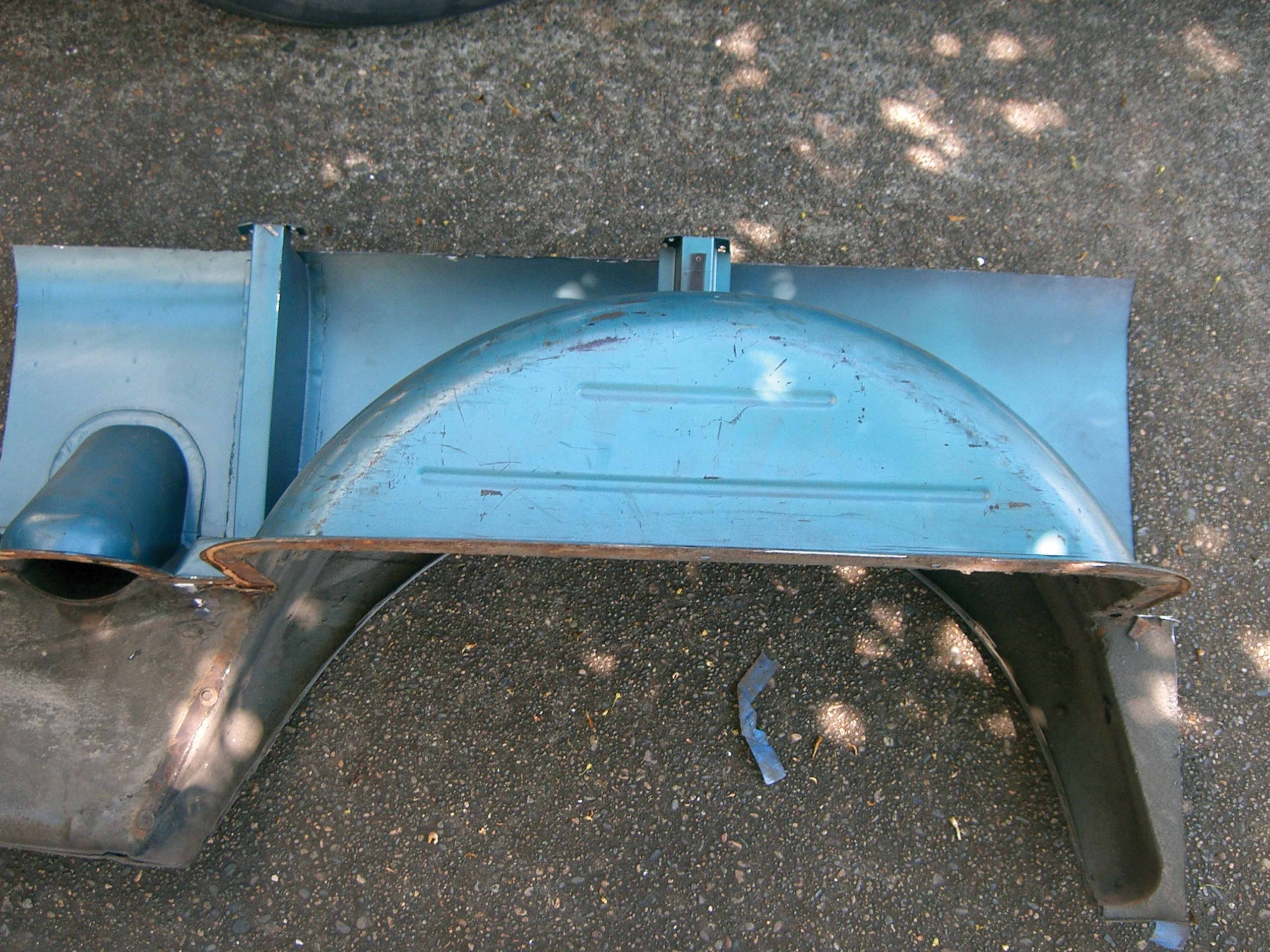
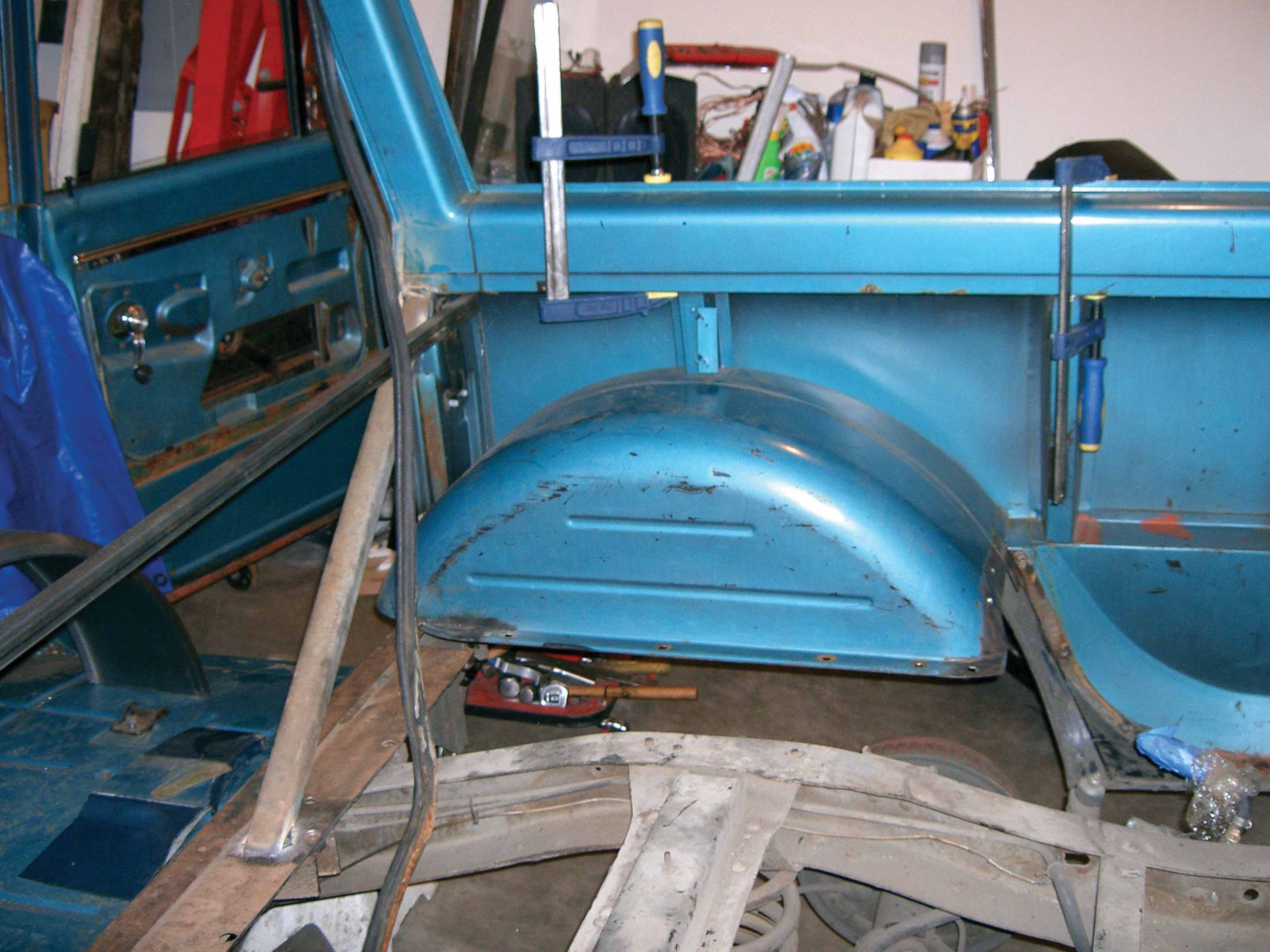
9. Dempsey first cuts the inner fenders from the truck as a complete unit. By cutting this as an entire unit, Dempsey can include the fuel filler passage and braces as a whole.
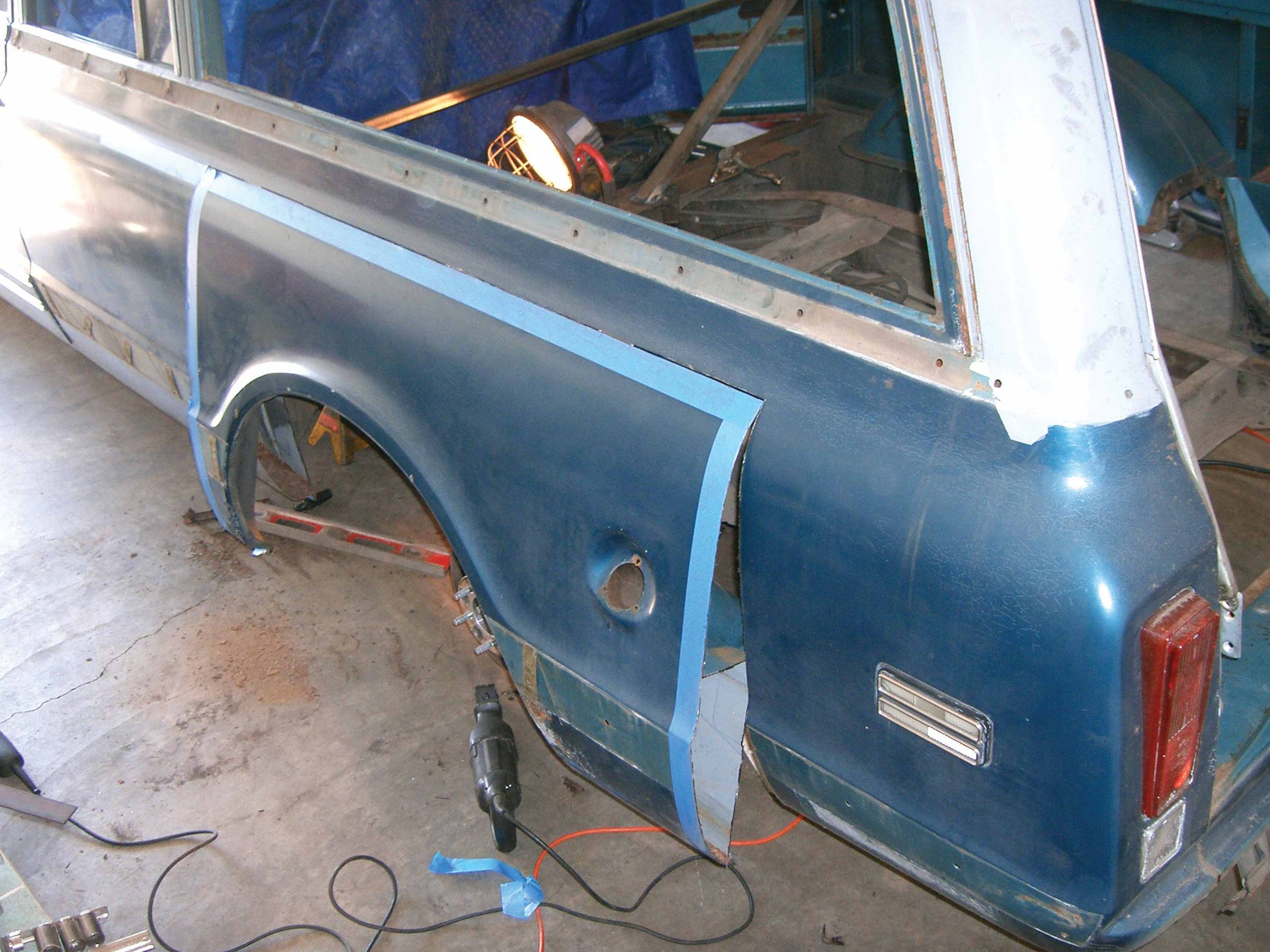
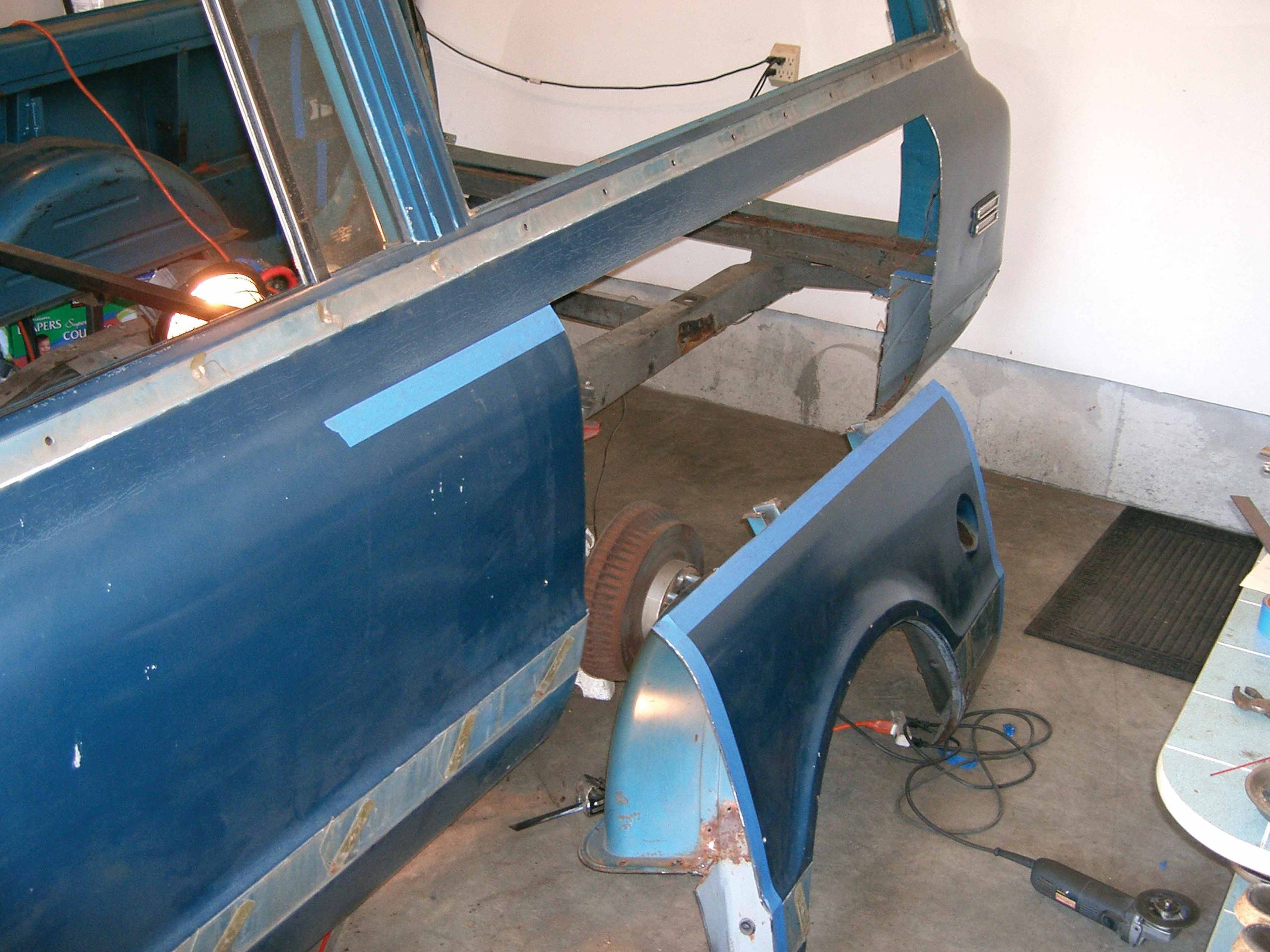
10. After several measurements, Dempsey makes the first cut. The rear wheel opening is cut free from the body.
11. By cutting the quarter panel in this fashion, the gas filler hardware can remain in its original location. This section will be welded 12 inches ahead of the factory location.
12. The front tape mark designates where the remaining 12 inches of sheetmetal will be cut and the wheel opening will be reinstalled.
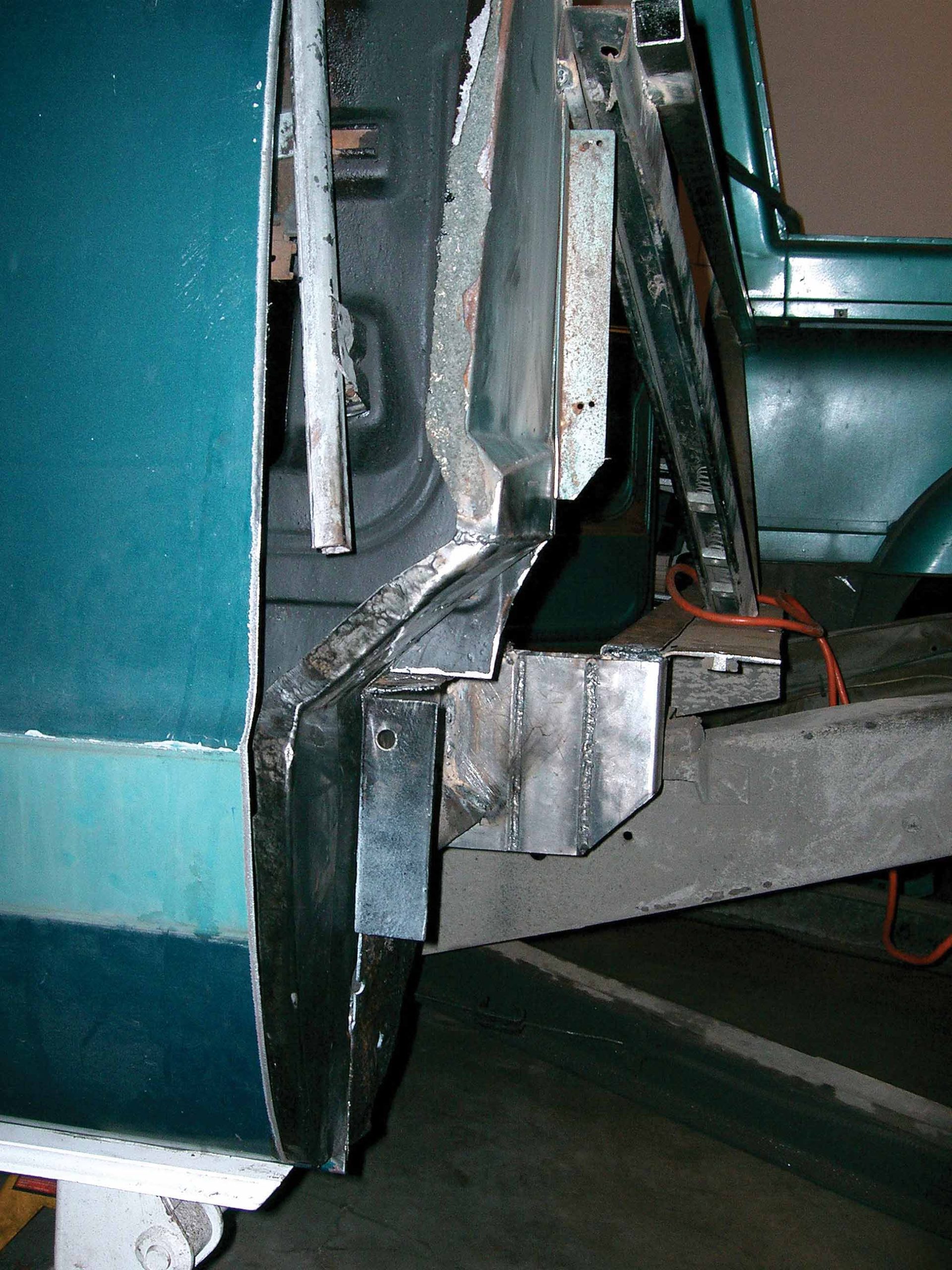
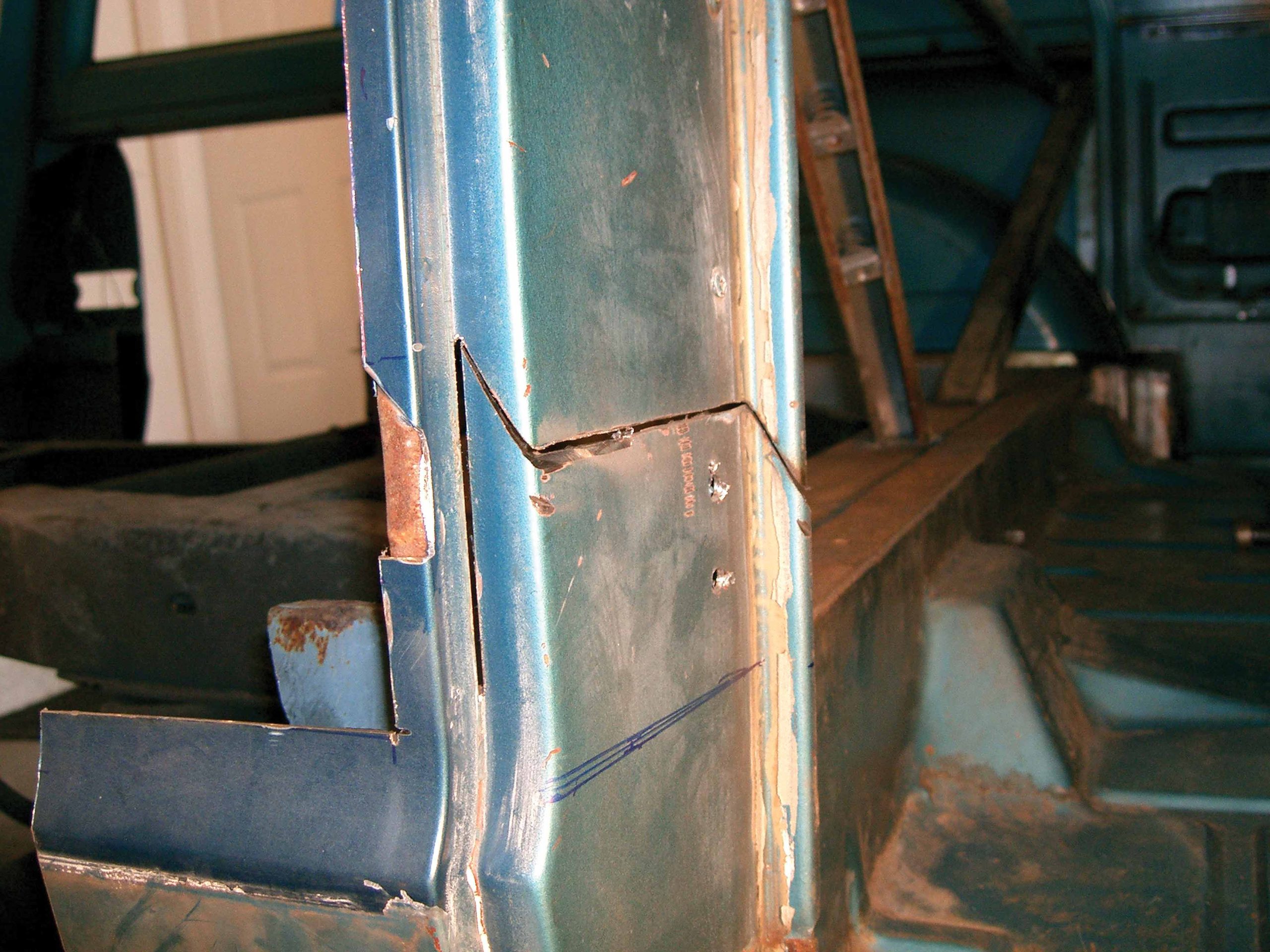
13. Before the rear-quarter panel section can be mocked in place, the driver’s-side C-pillar must be trimmed to accommodate the inner fender. Everything below the mark is moved forward by several inches and reworked into place.
14. Here is the finished C-pillar after the panel has been relocated forward. Dempsey also redesigned the body support bracket to allow better fitment of the inner fender.
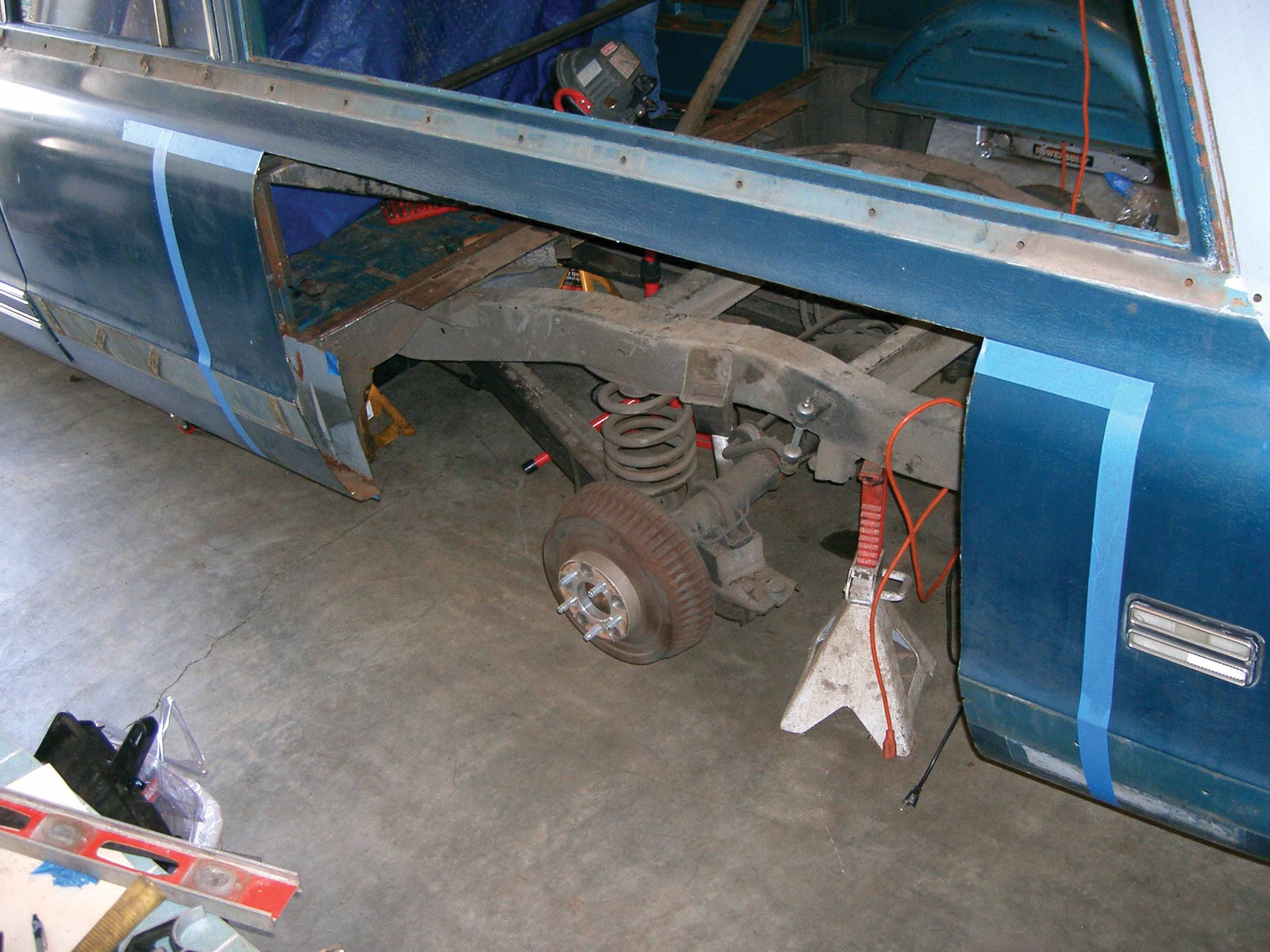
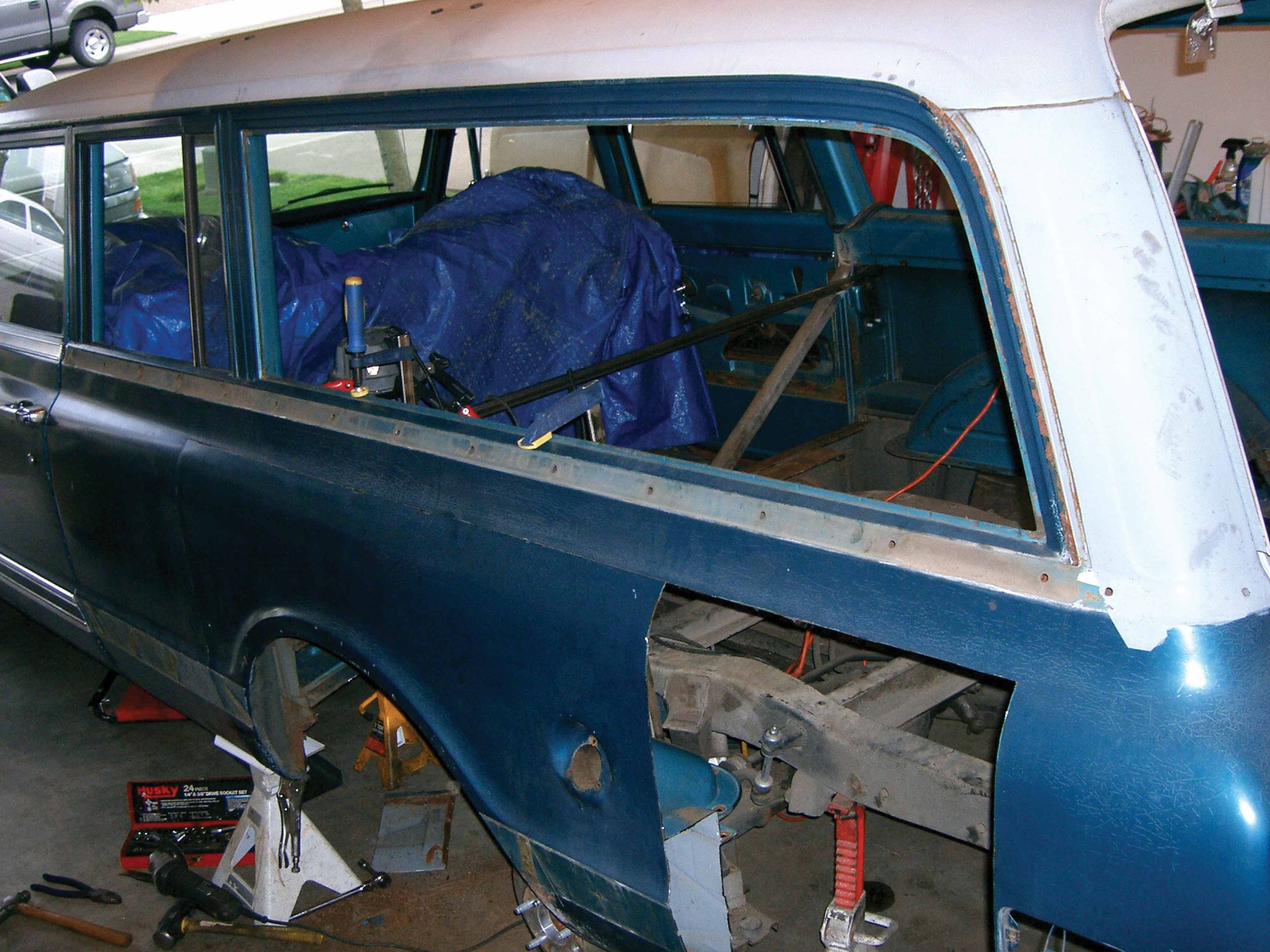
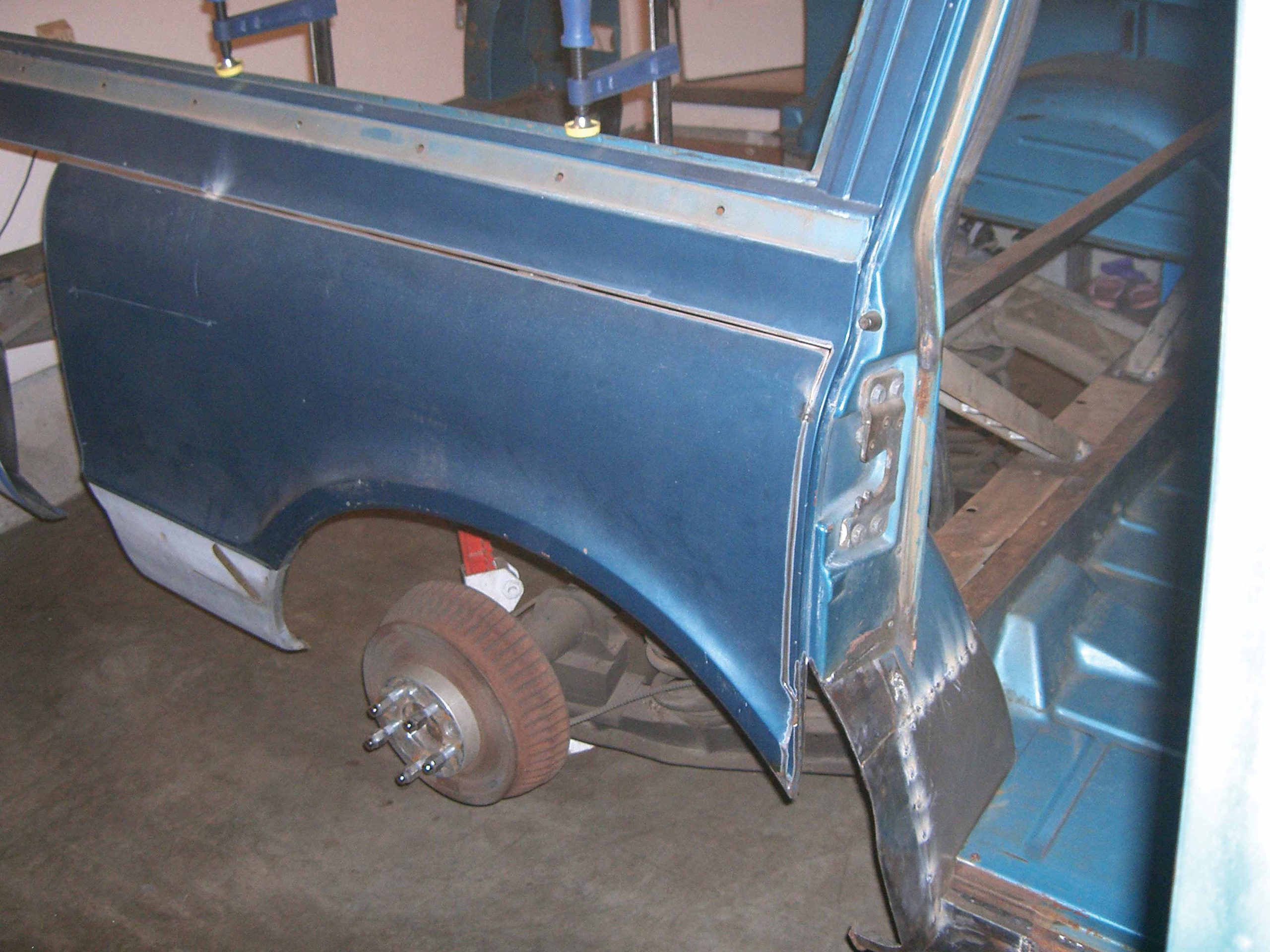
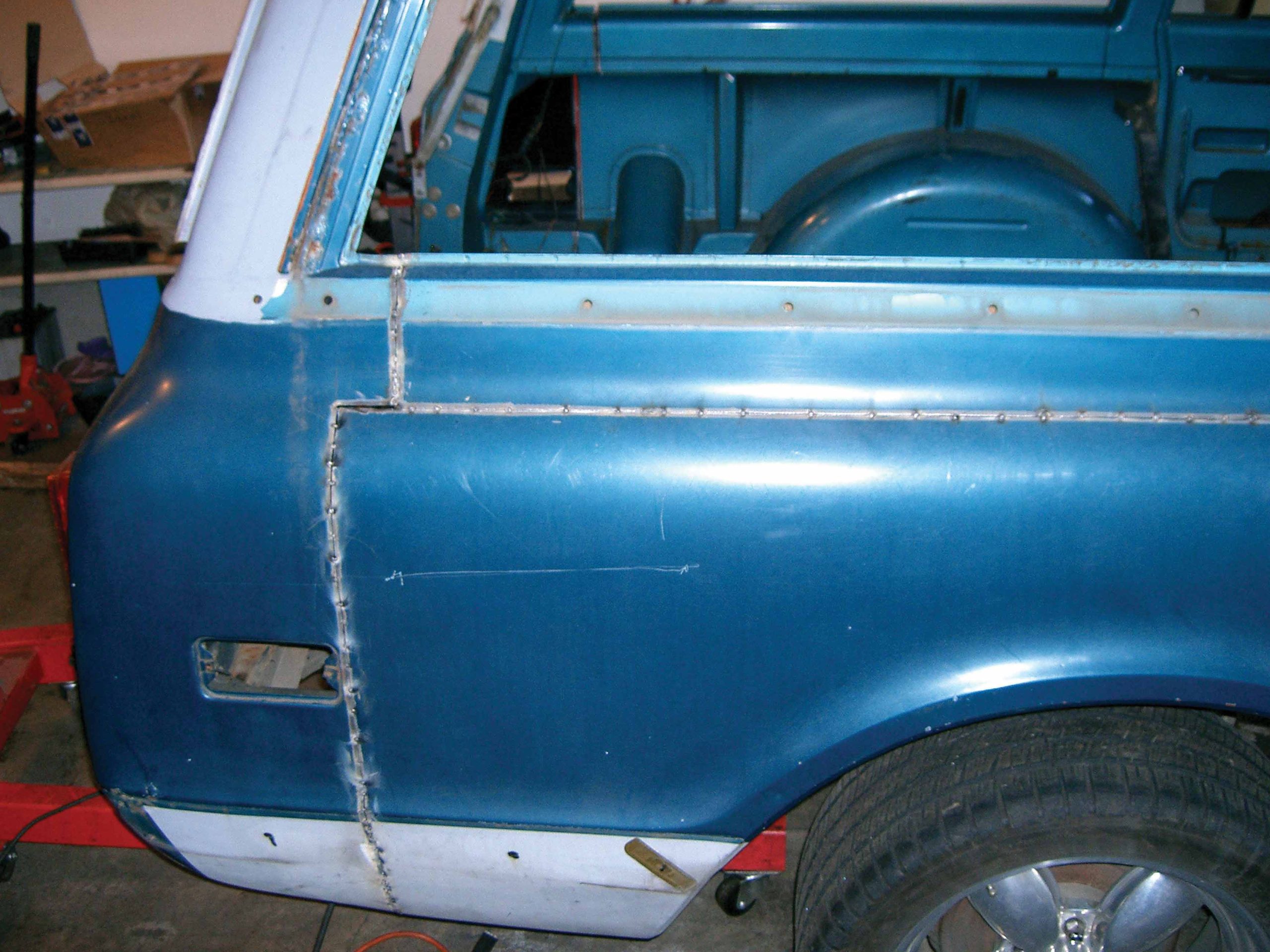
15. After reshaping the C-pillar and cutting the marked section, the quarter panel is clamped into place 12 inches forward of the stock location and tack welded. The remaining 8-inch gap will be closed once the back half is cut and slid forward.
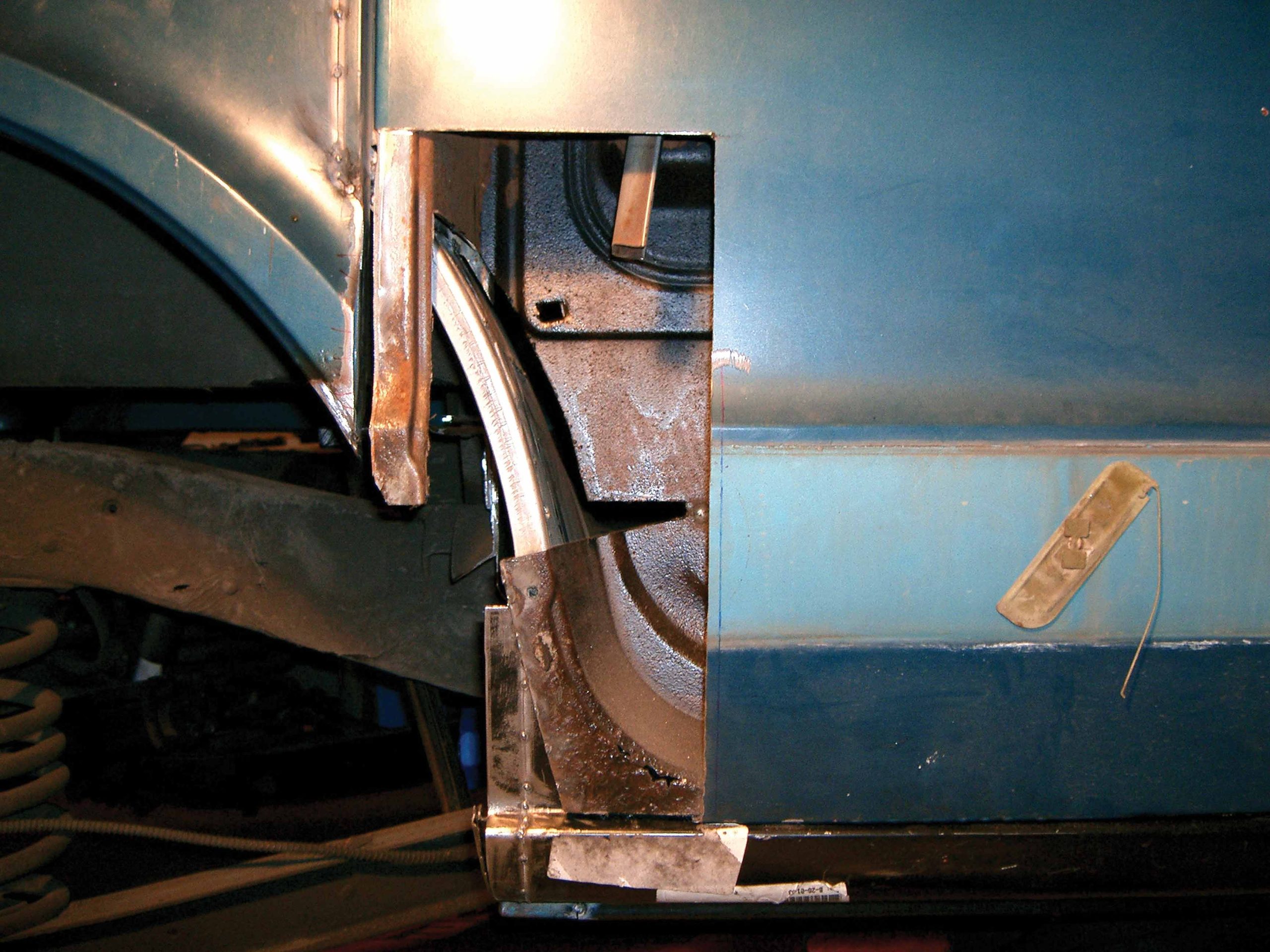
16. The passenger side is cut in the same fashion as the driver’s side. However, since there is a rear passenger door, the door will need to be cut and reshaped to accommodate the wheel well.
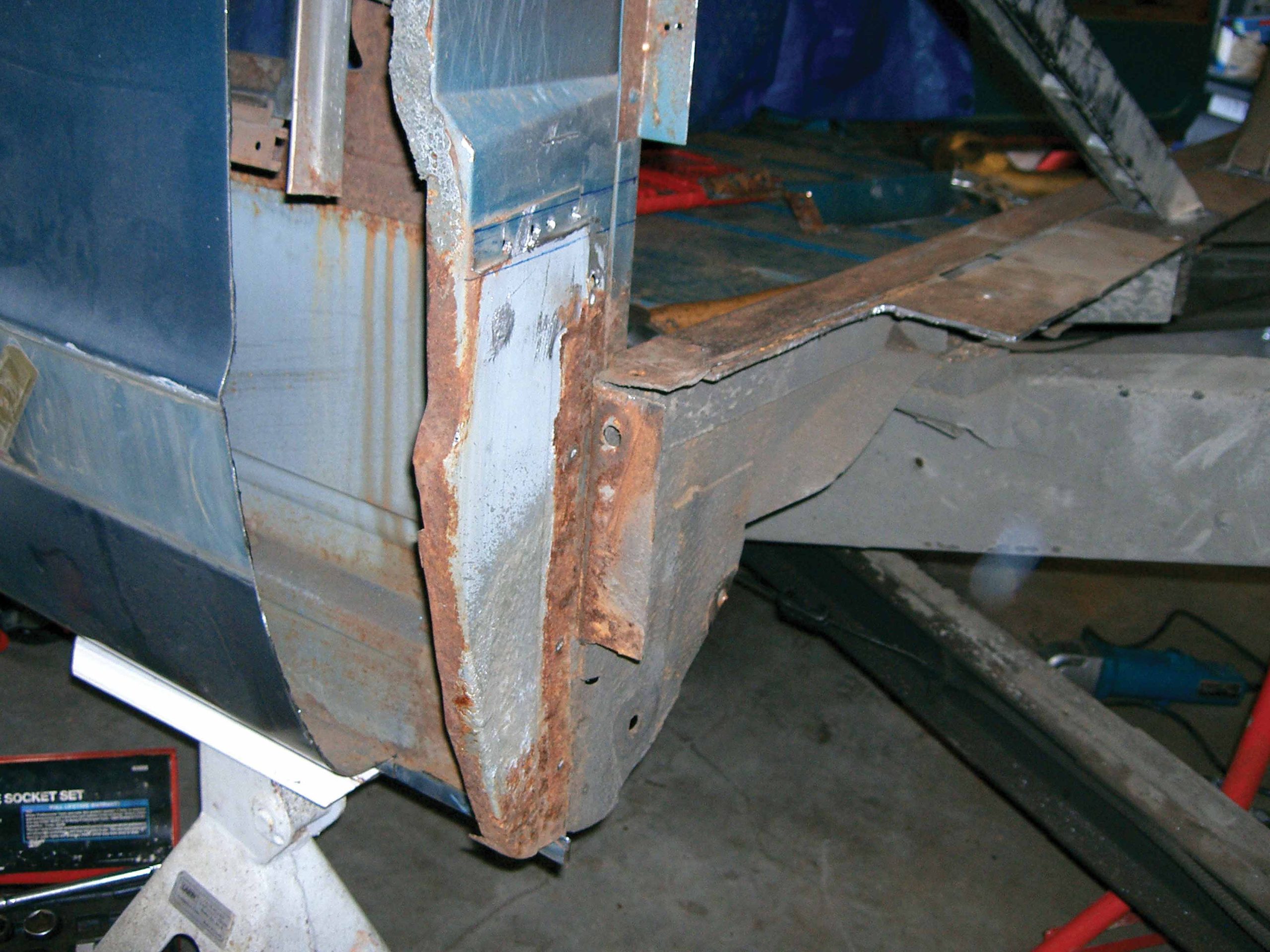
17. Not only will the door require cutting but also the inner wheel well will have to be molded into the doorjamb. Dempsey makes the first of several extensive cuts to the jamb.
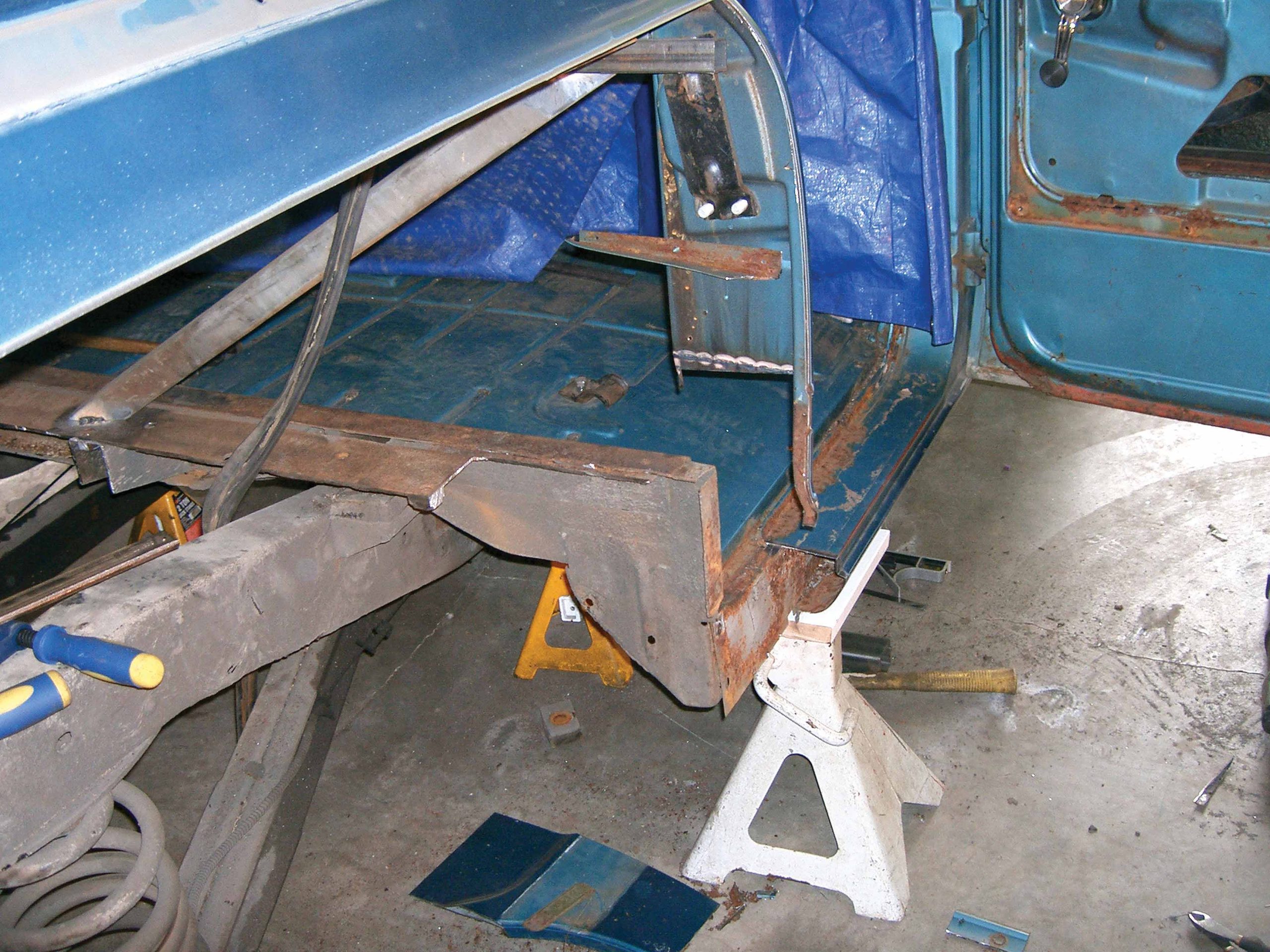
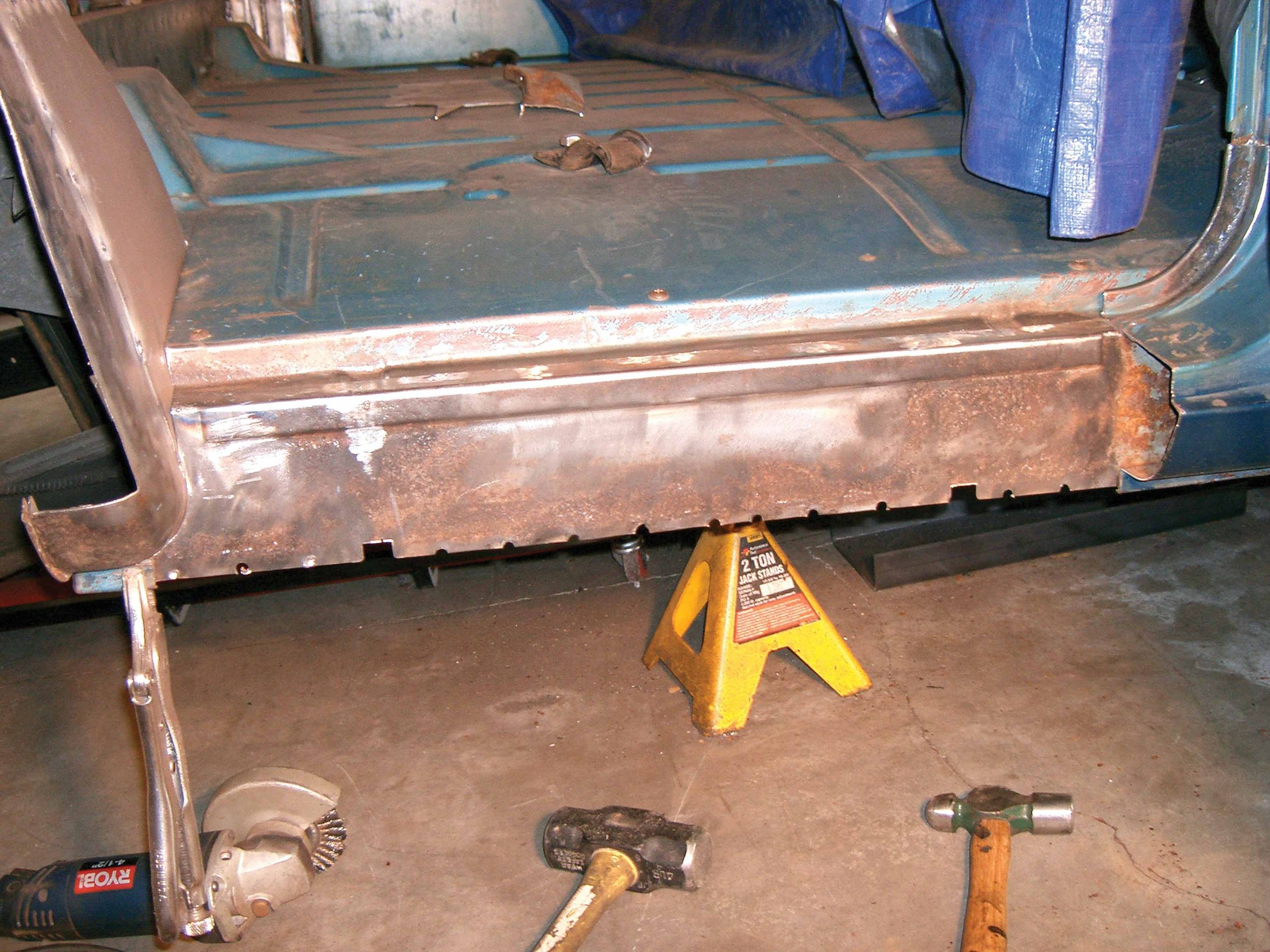
18. After cutting away the doorjamb and rocker, several pockets of rust were discovered. This rust will need to be addressed while the sheetmetal is open and fully repaired.
19. With the jamb cut away, the rear section is moved forward 12 inches and clamped into place.
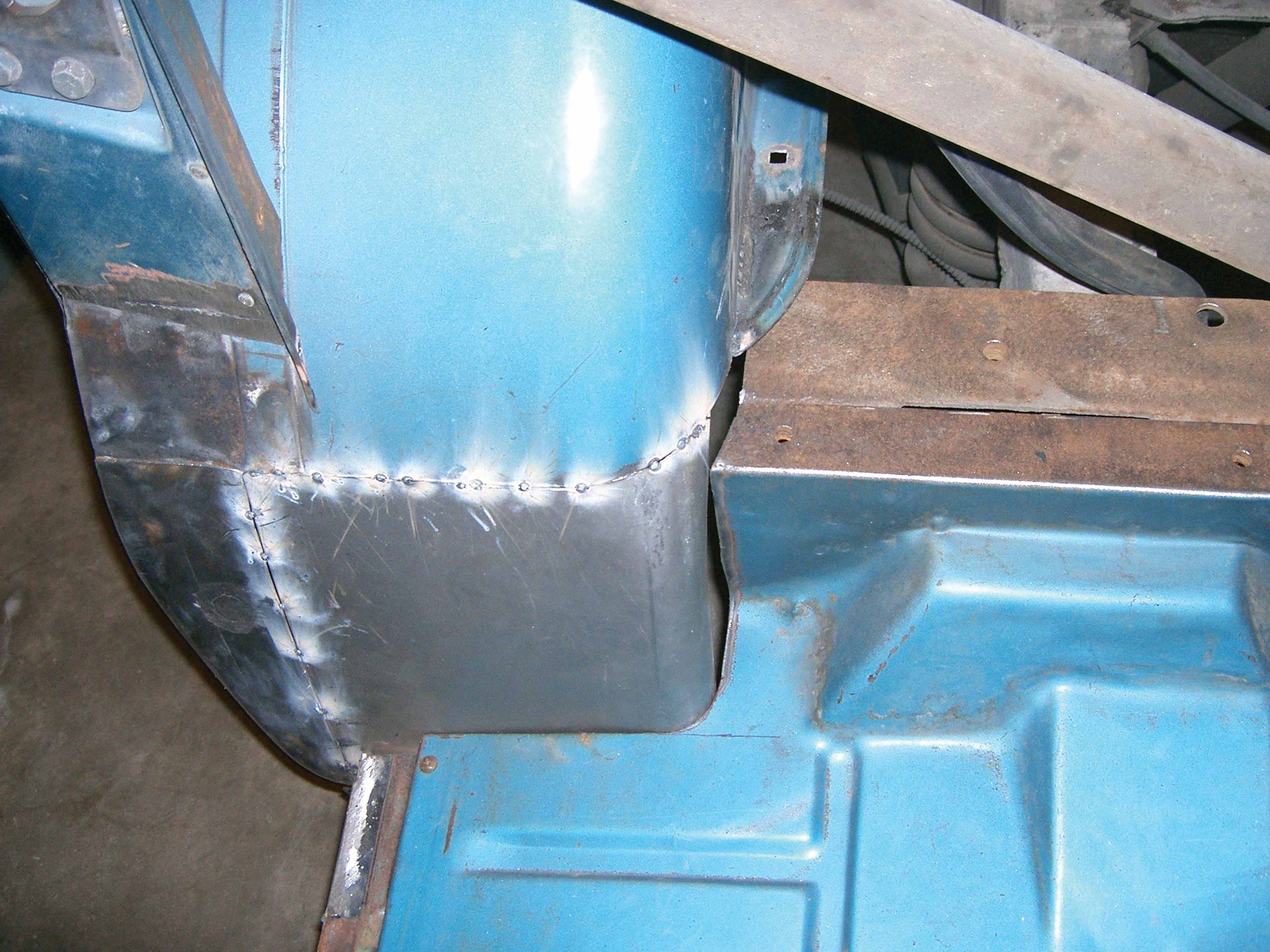
20. From the outside, it is obvious the door will need to be cut and reshaped to accommodate the wheel opening. Dempsey begins by first repairing the inner fender section.
21. Before beginning on the door and jamb, the outer rocker is removed from the body. The inner rocker is stripped of any surface rust and will receive a coat of POR-15 before the outer rocker is installed.
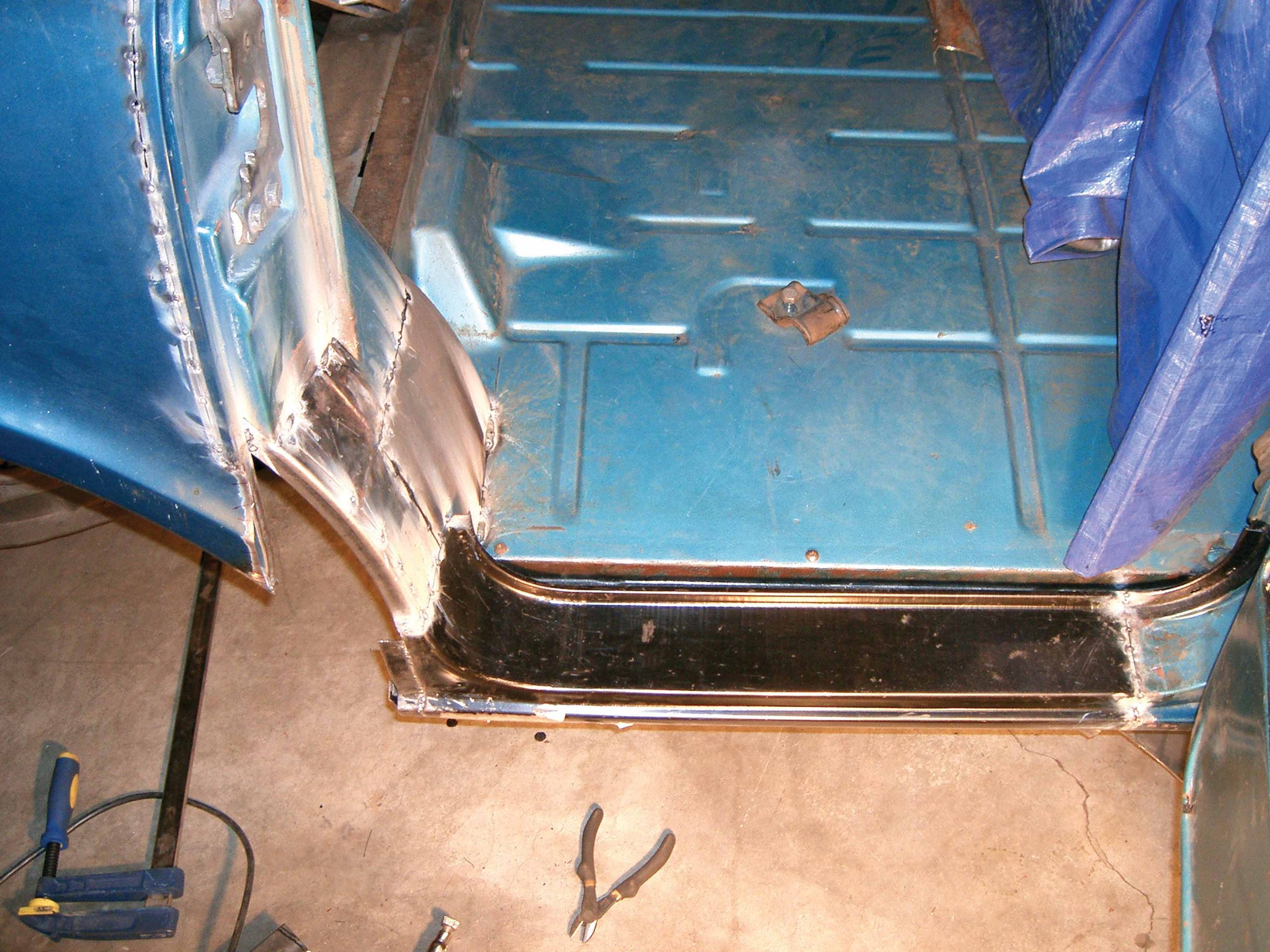
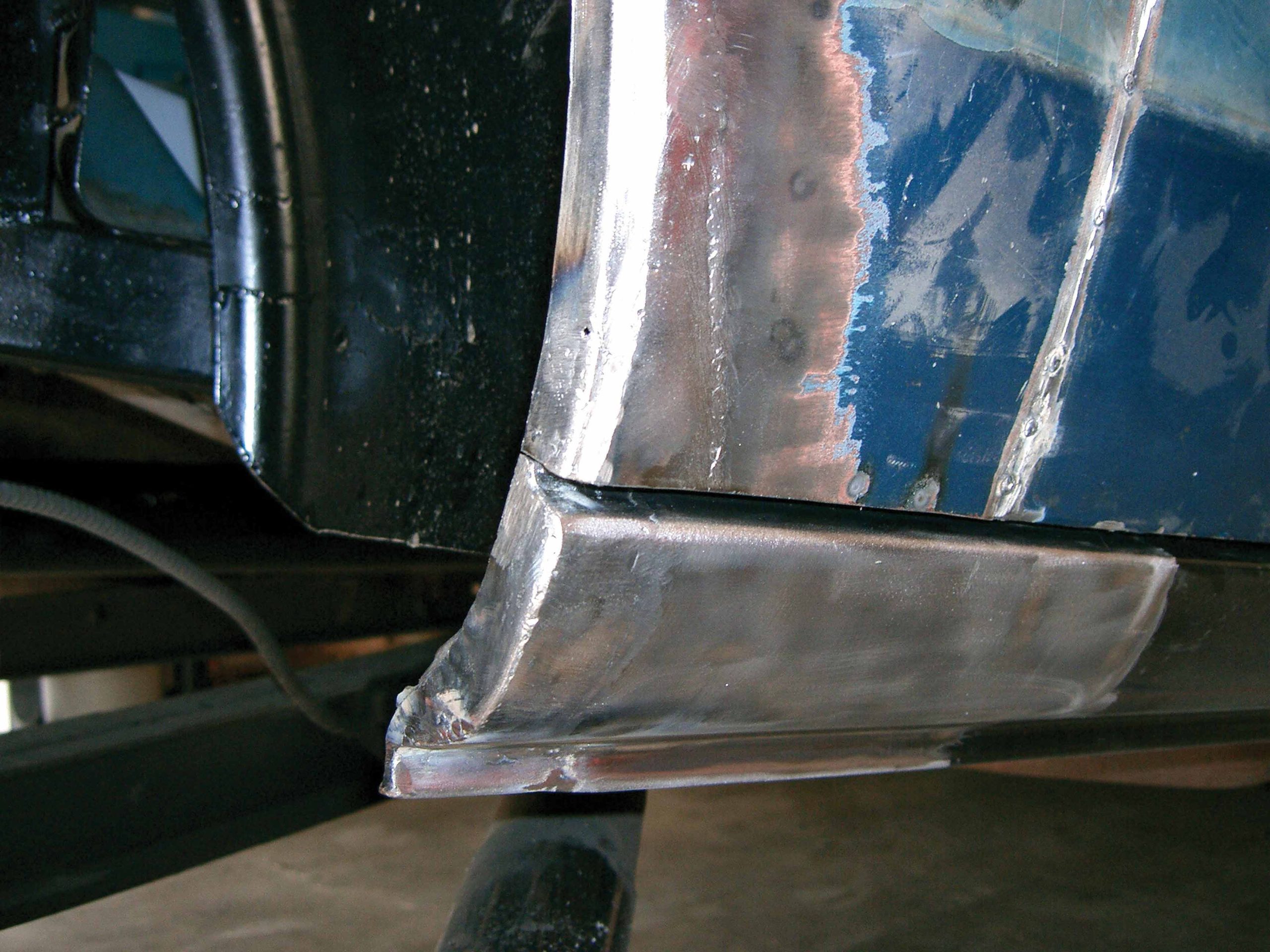
22. The new outer rocker panel is installed and Dempsey proceeds with reshaping the doorjamb. To get the desired arch in the jamb and inner fender, Dempsey implemented an aftermarket trailer fender.
23. The completed doorjamb and inner fender look great. It is now time to begin cutting the door.
24. Dempsey transfers the fender shape to the inside of the door designating where the cuts will need to be made.
25. After removing the lower door skin section, Dempsey makes a relief cut to allow the inside of the door to conform to the newly formed doorjamb.
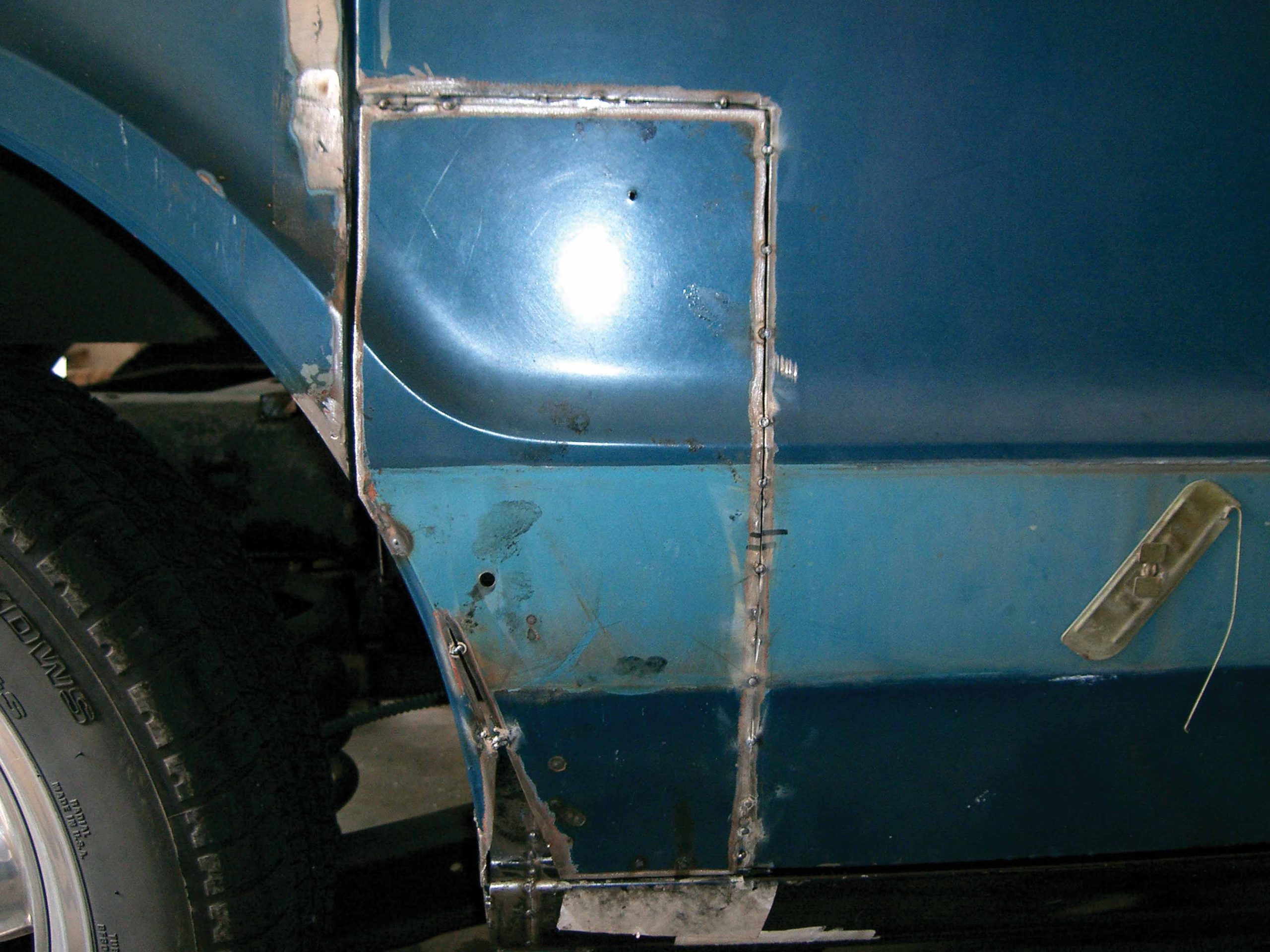
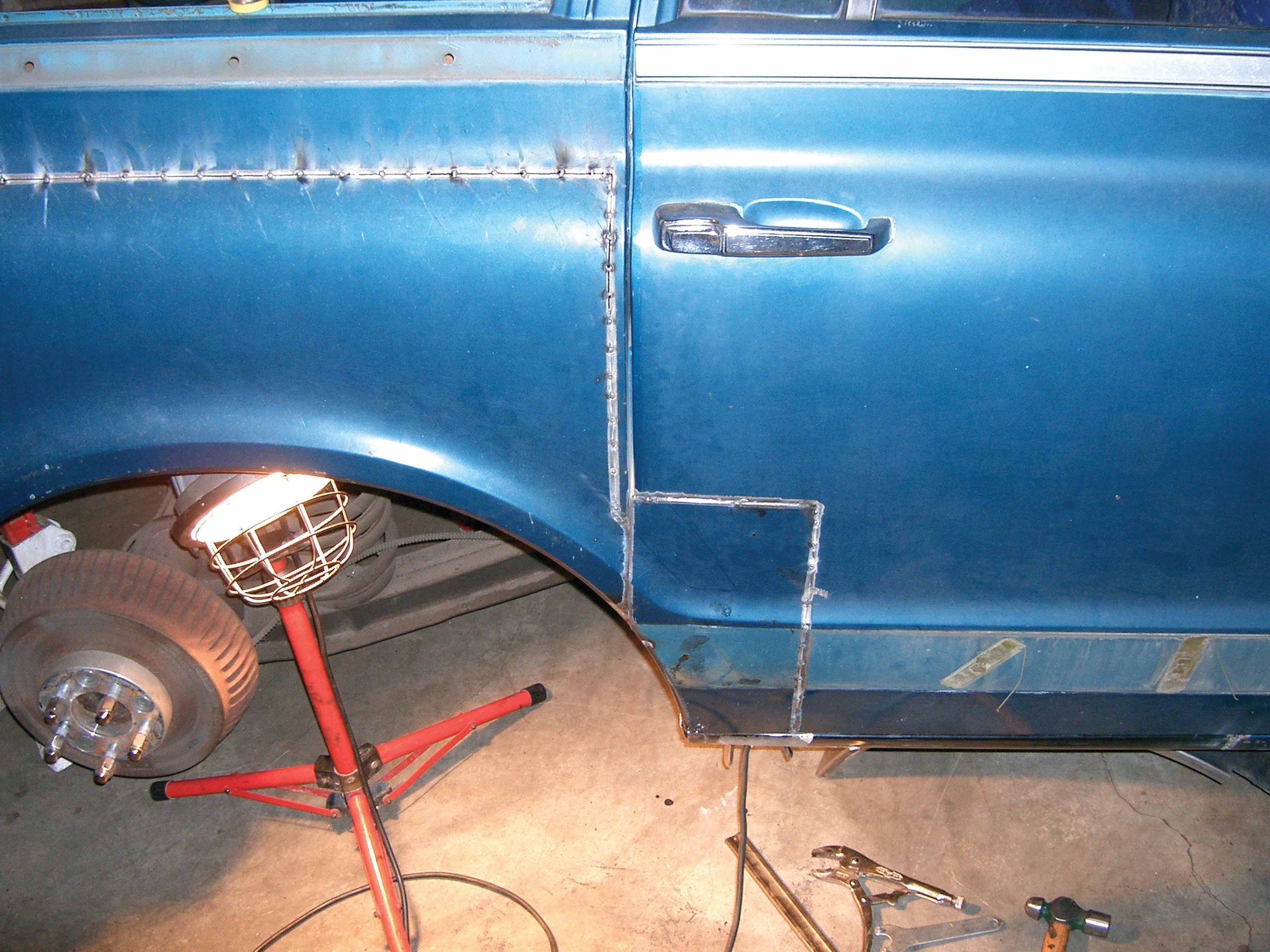
26A-B. The section of the door that was cut is rewelded onto the door. A small patch panel is cut and welded into place to fill the small hole remaining at the bottom of the door.
26A-B. The section of the door that was cut is rewelded onto the door. A small patch panel is cut and welded into place to fill the small hole remaining at the bottom of the door.
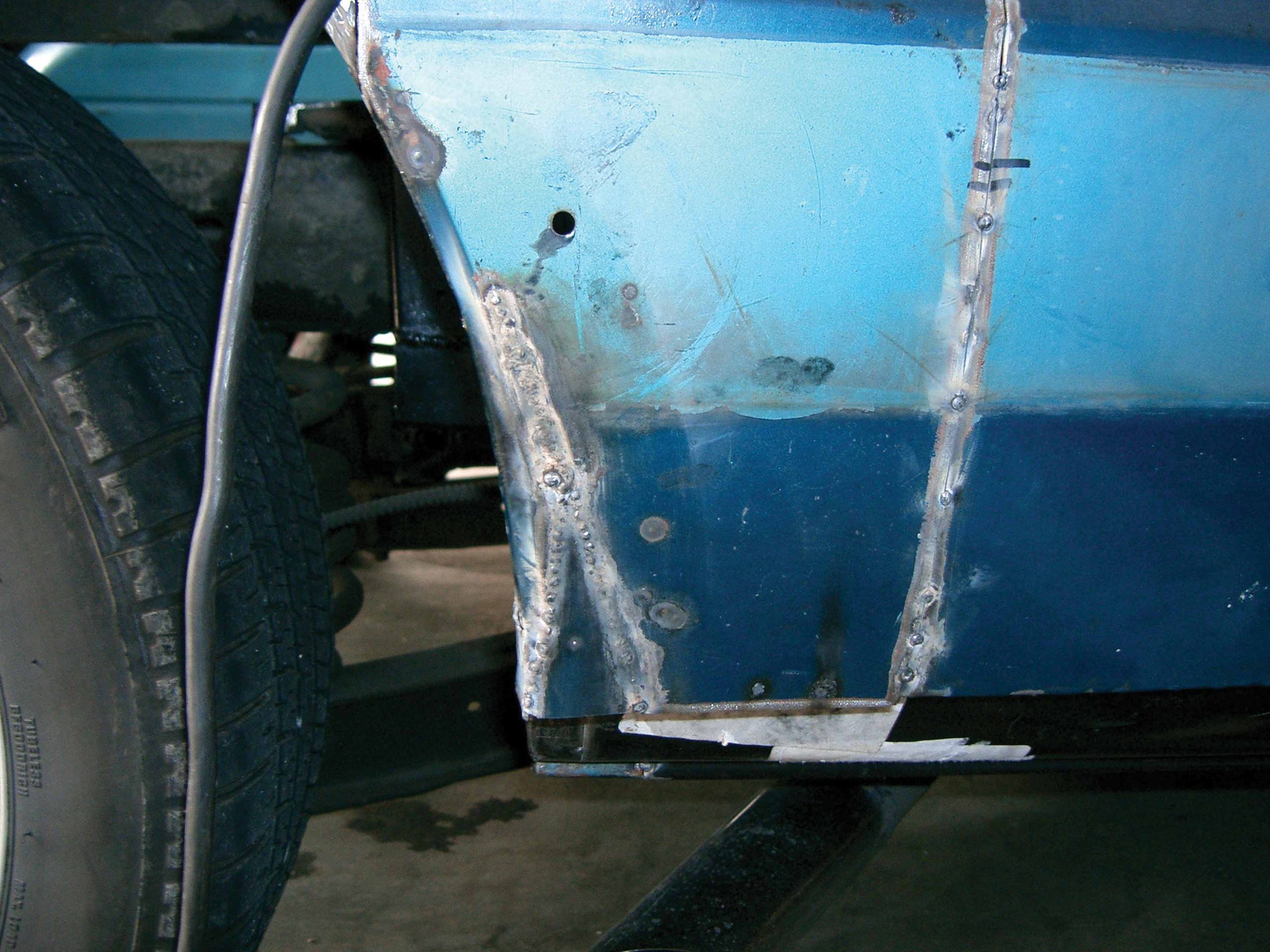
27A-B. Before moving on to the framerails, the reworked area is ground smooth. The modification is so well executed that it appears factory.
27A-B. Before moving on to the framerails, the reworked area is ground smooth. The modification is so well executed that it appears factory.
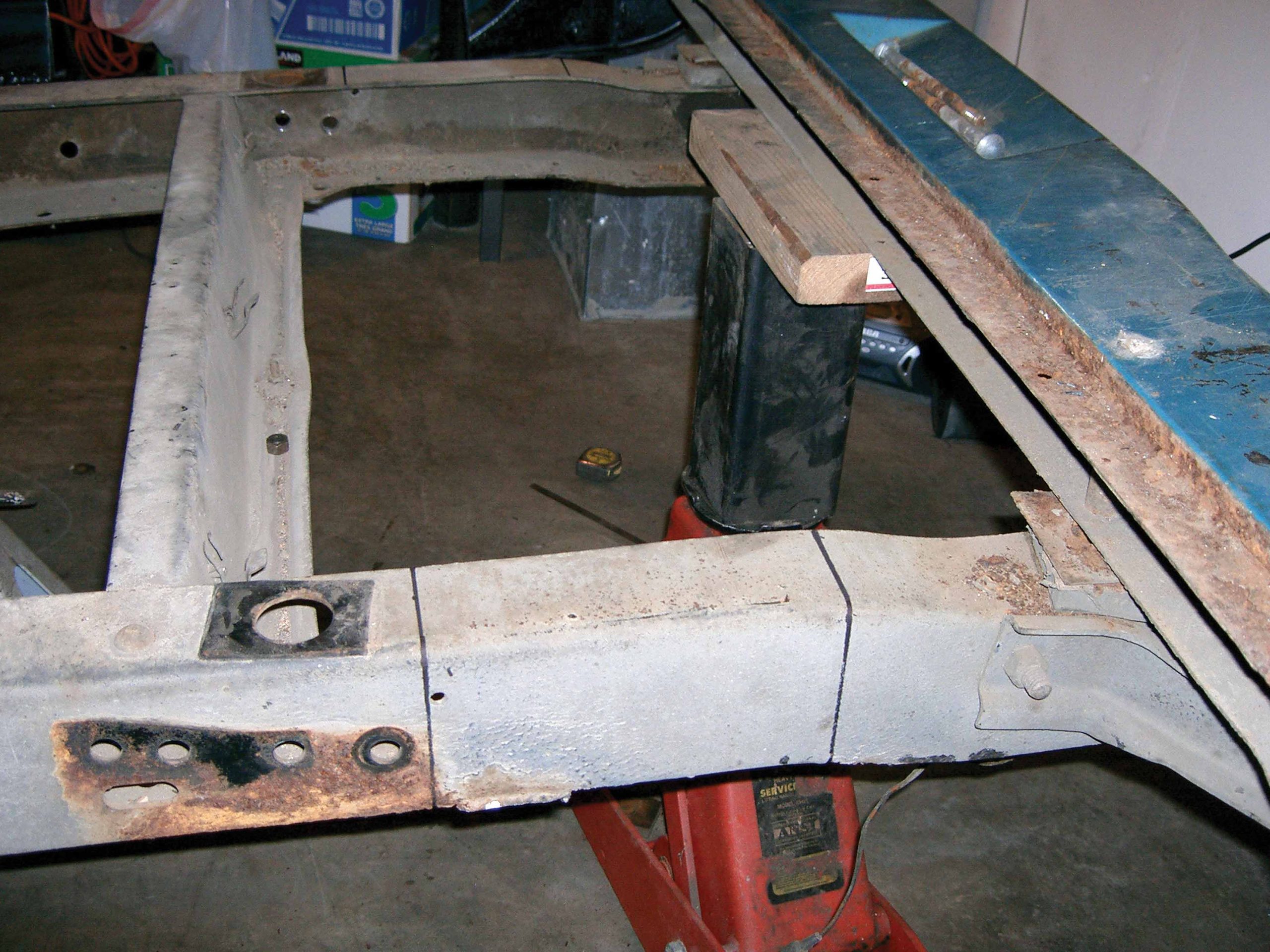
28. With the sheetmetal work completed, Dempsey marks the 8-inch section of framerail that will be removed from the rear of the frame post-axle.
29. Using a cut-off tool, Dempsey cuts the entire rear of the frame off.
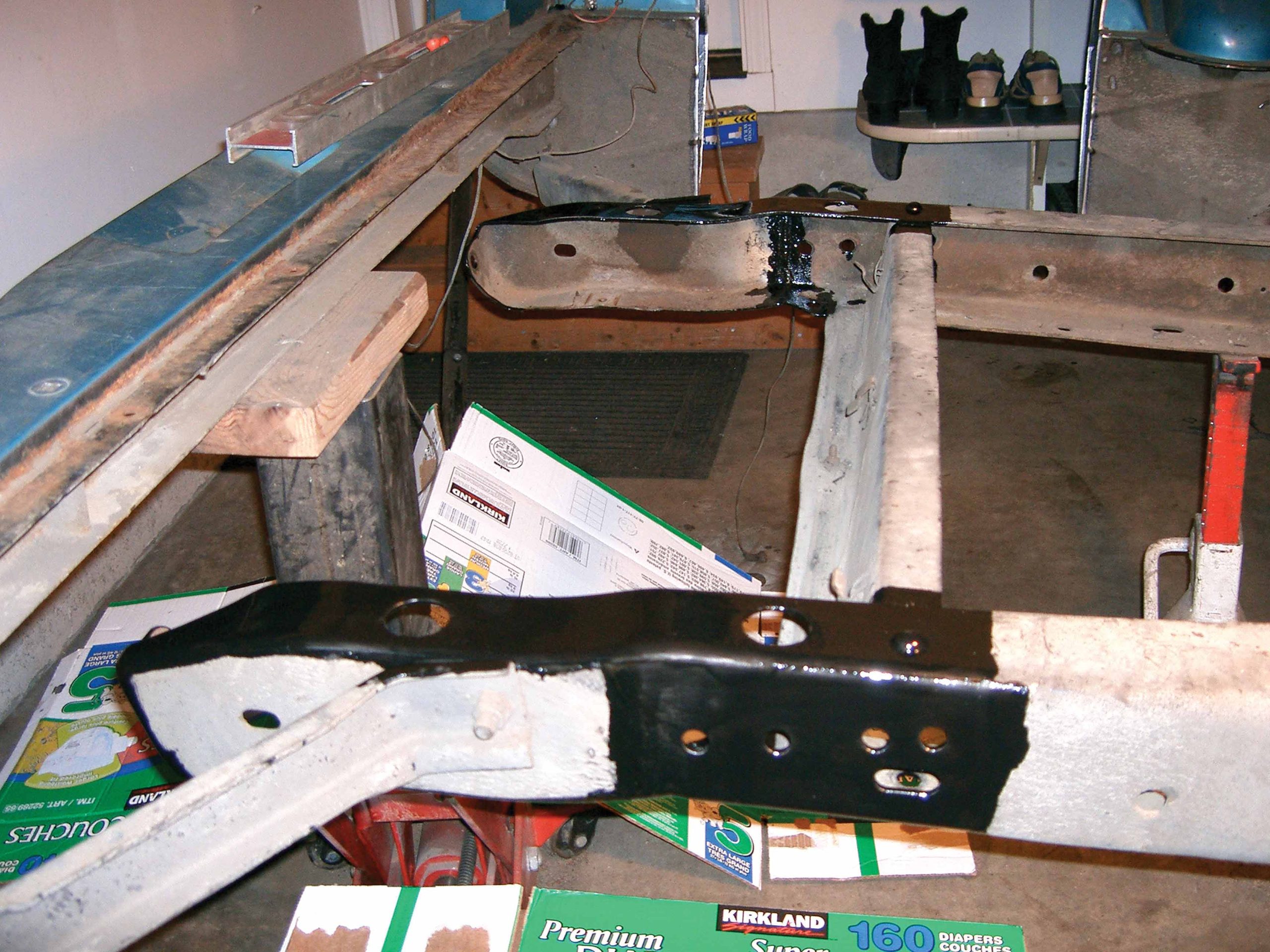
30. After cutting the 8-inch section out, the ends of the framerails are rewelded to the frame and coated in POR-15 to prevent rusting.
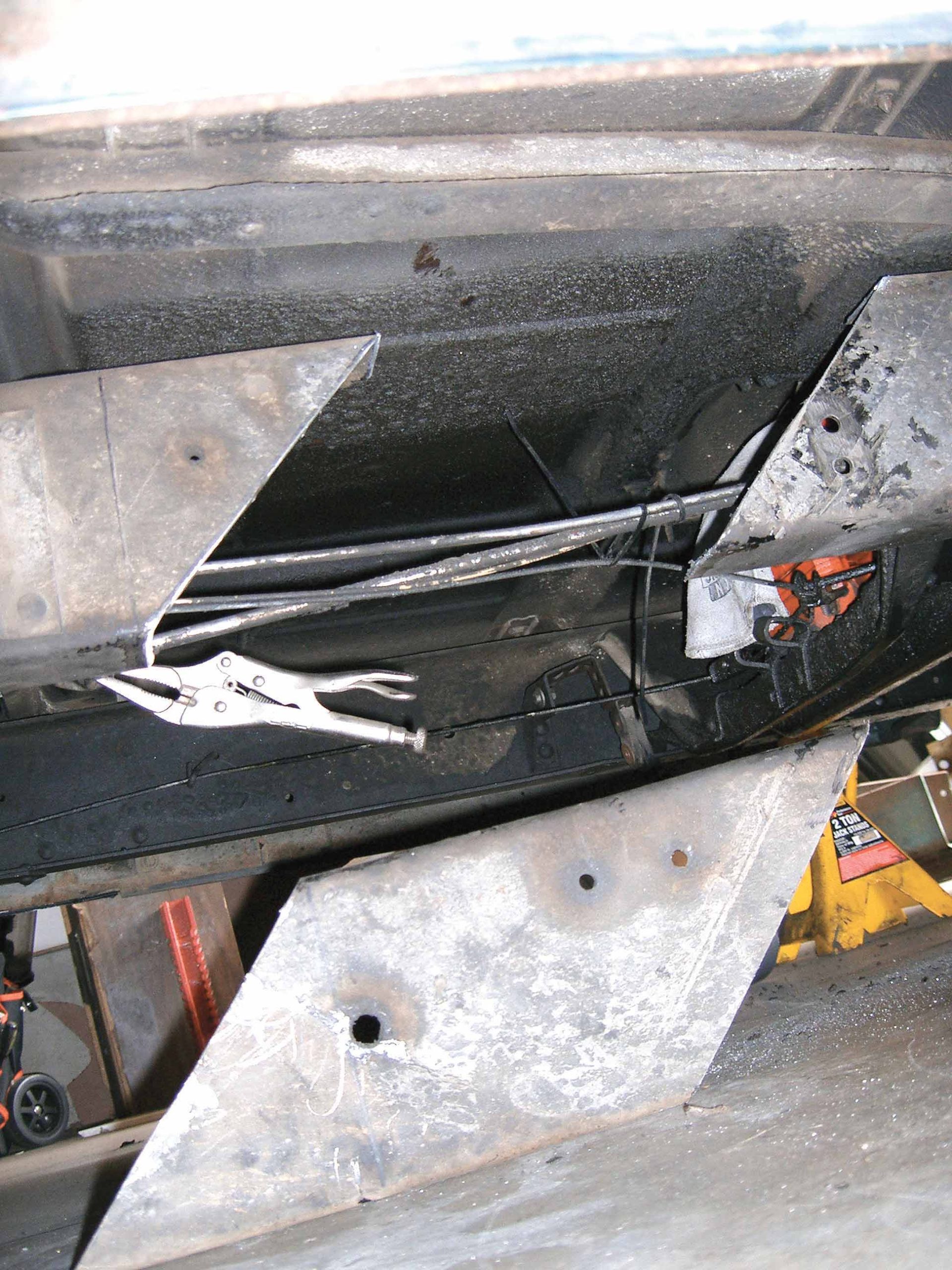
31. The 12-inch wheelbase reduction is cut just behind the transmission crossmember. Dempsey is careful not to cut any electrical or fuel lines in the process.
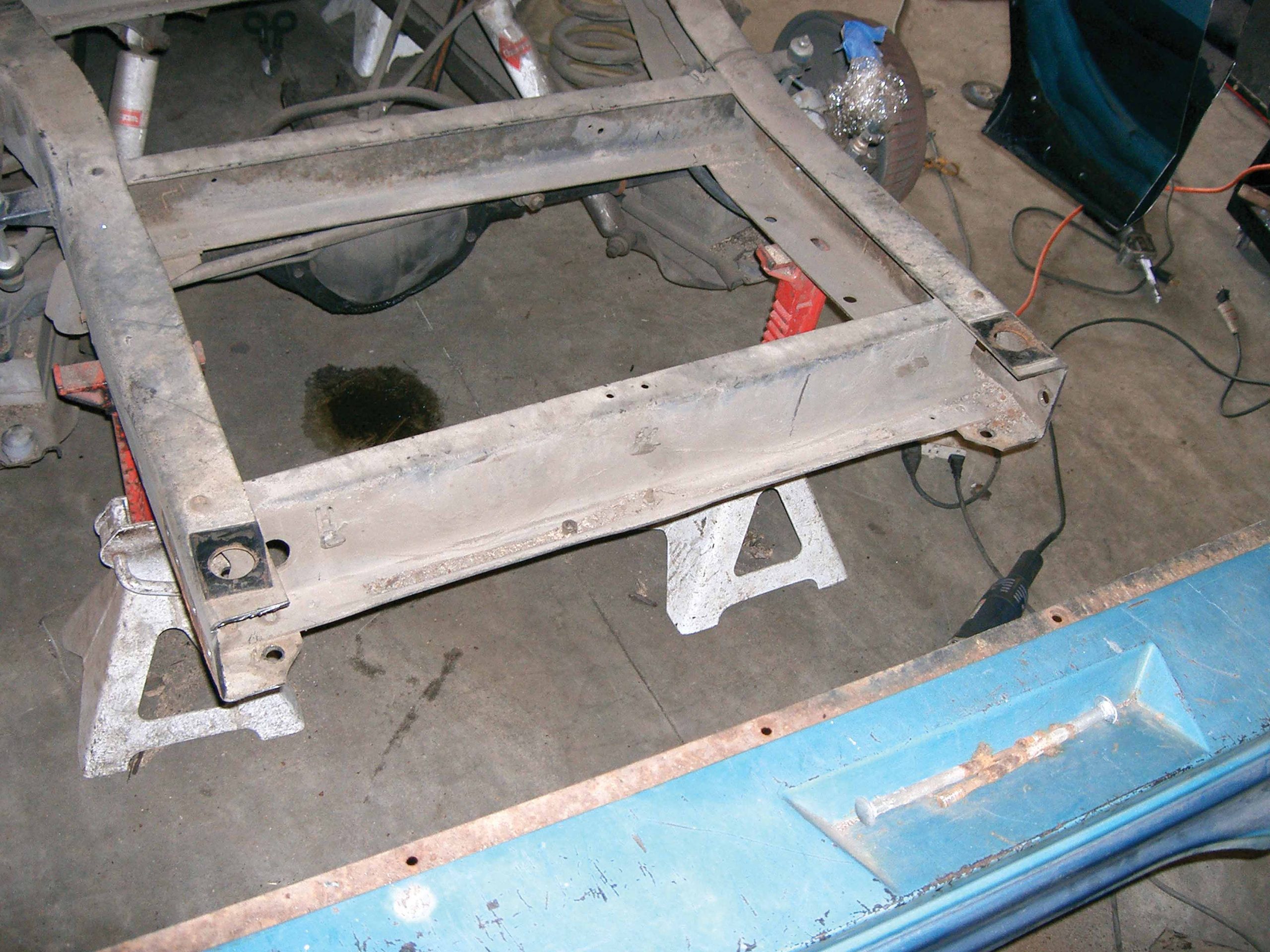
32. Once the 12-inch section is removed and several measurements are made to ensure the frame is square, Dempsey reconnects the framerails.
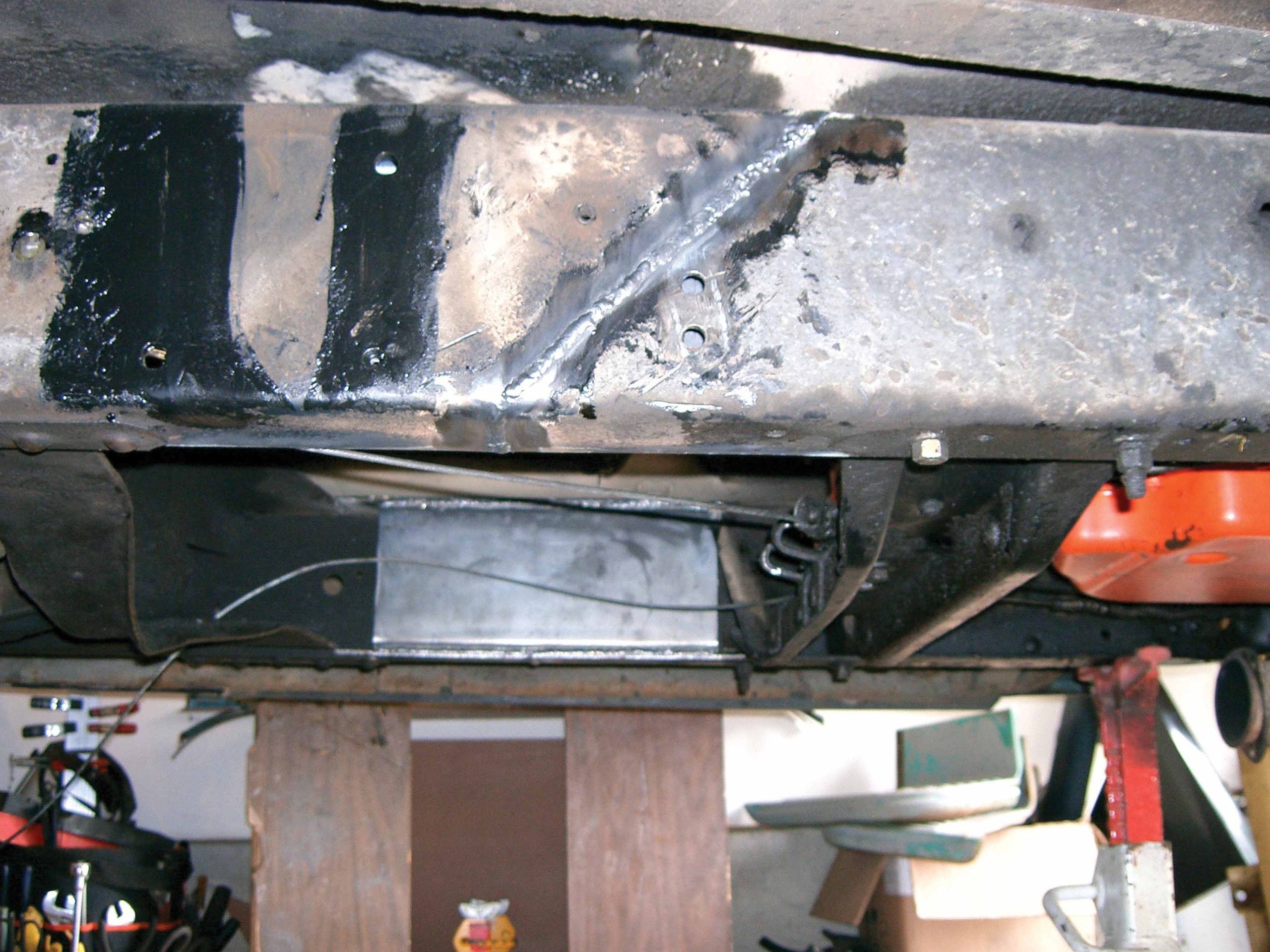
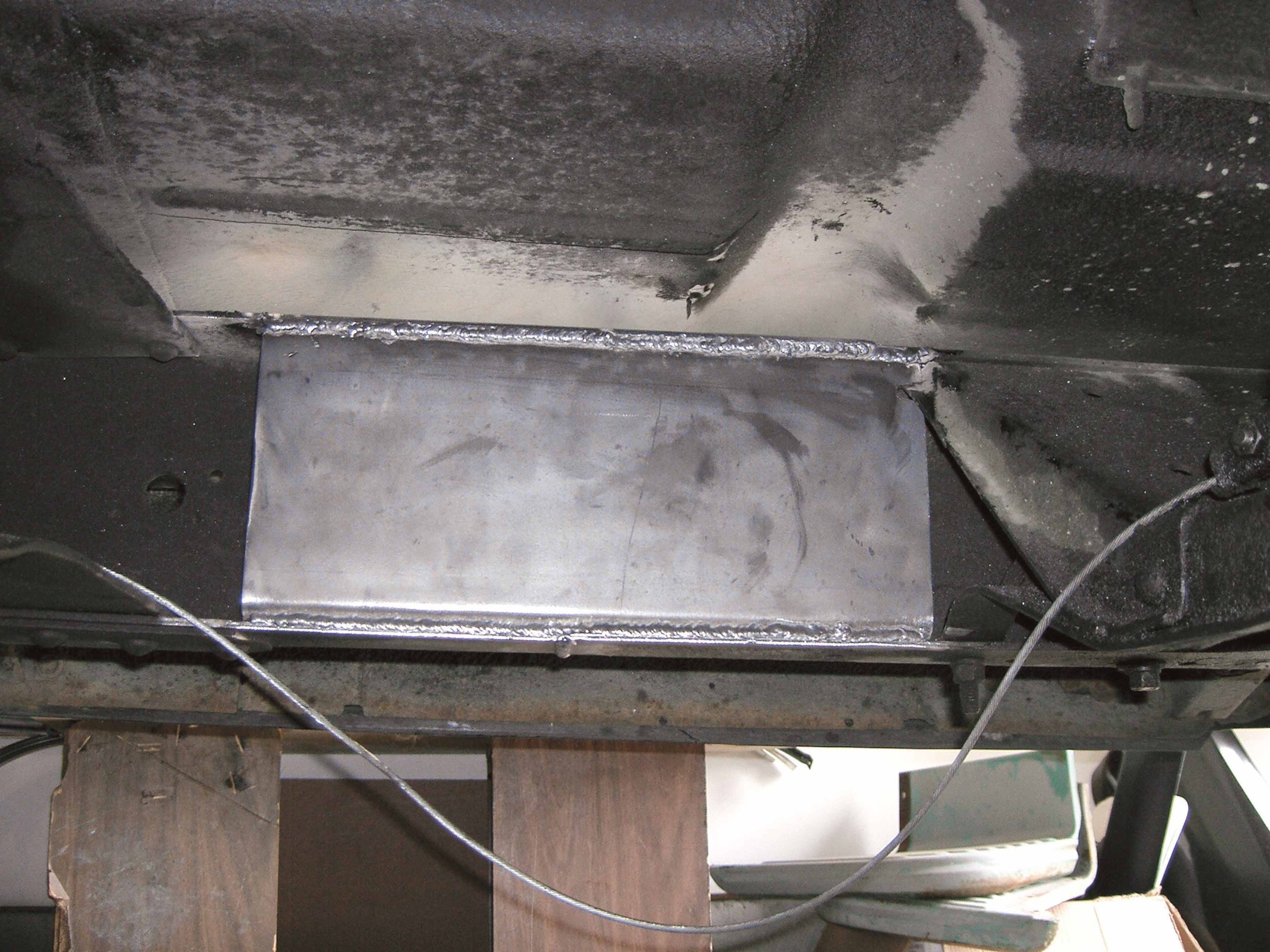
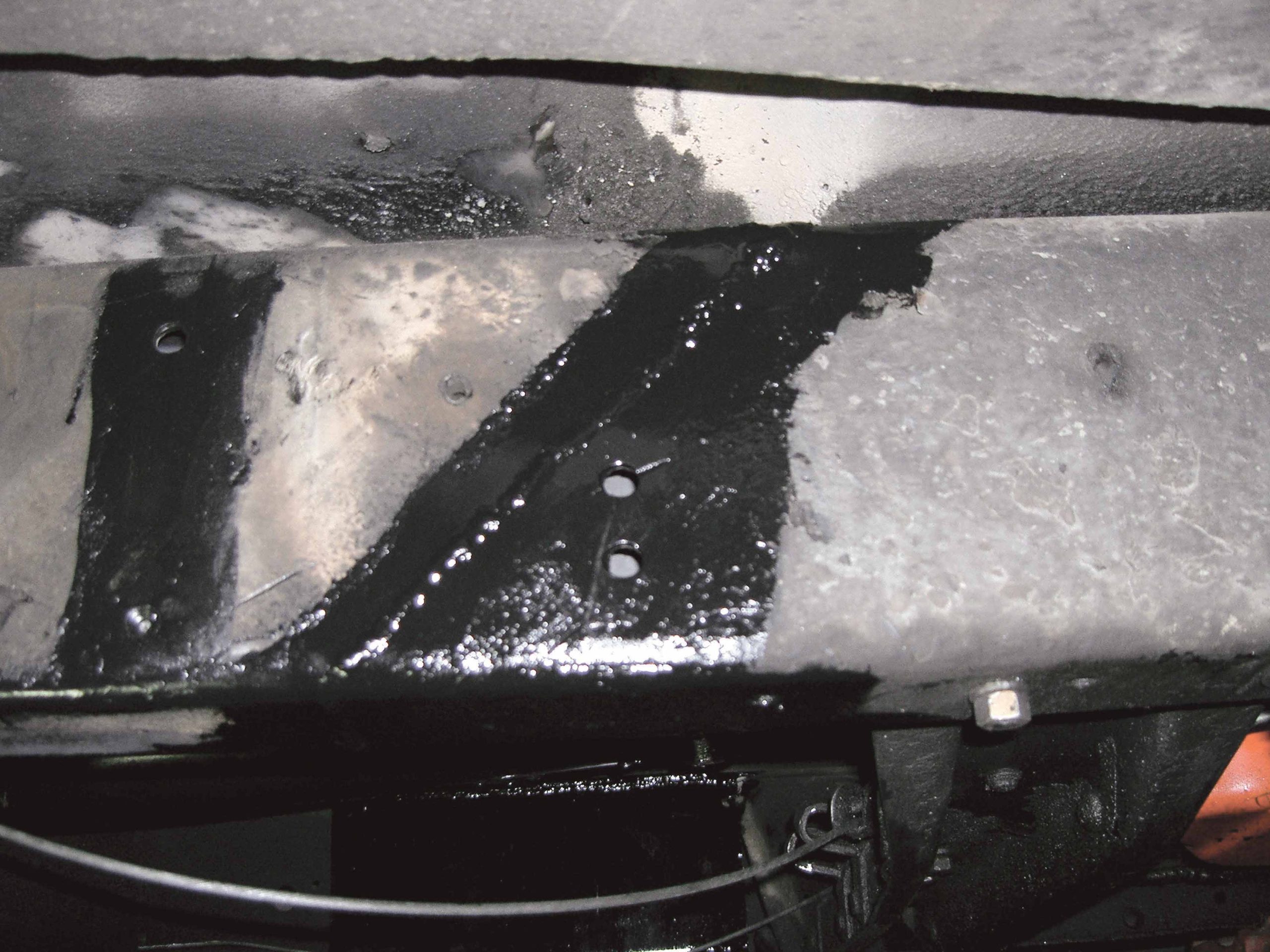
33. Inside the frame, Dempsey installs the Early Classic Enterprises boxing plates. These plates are designed for long-to-short wheelbase conversions and will help strengthen the reworked framerails.
34. Again, Dempsey coats the bare metal frame sections with POR-15 paint. The POR-15 will prevent any rust from ever reoccurring.
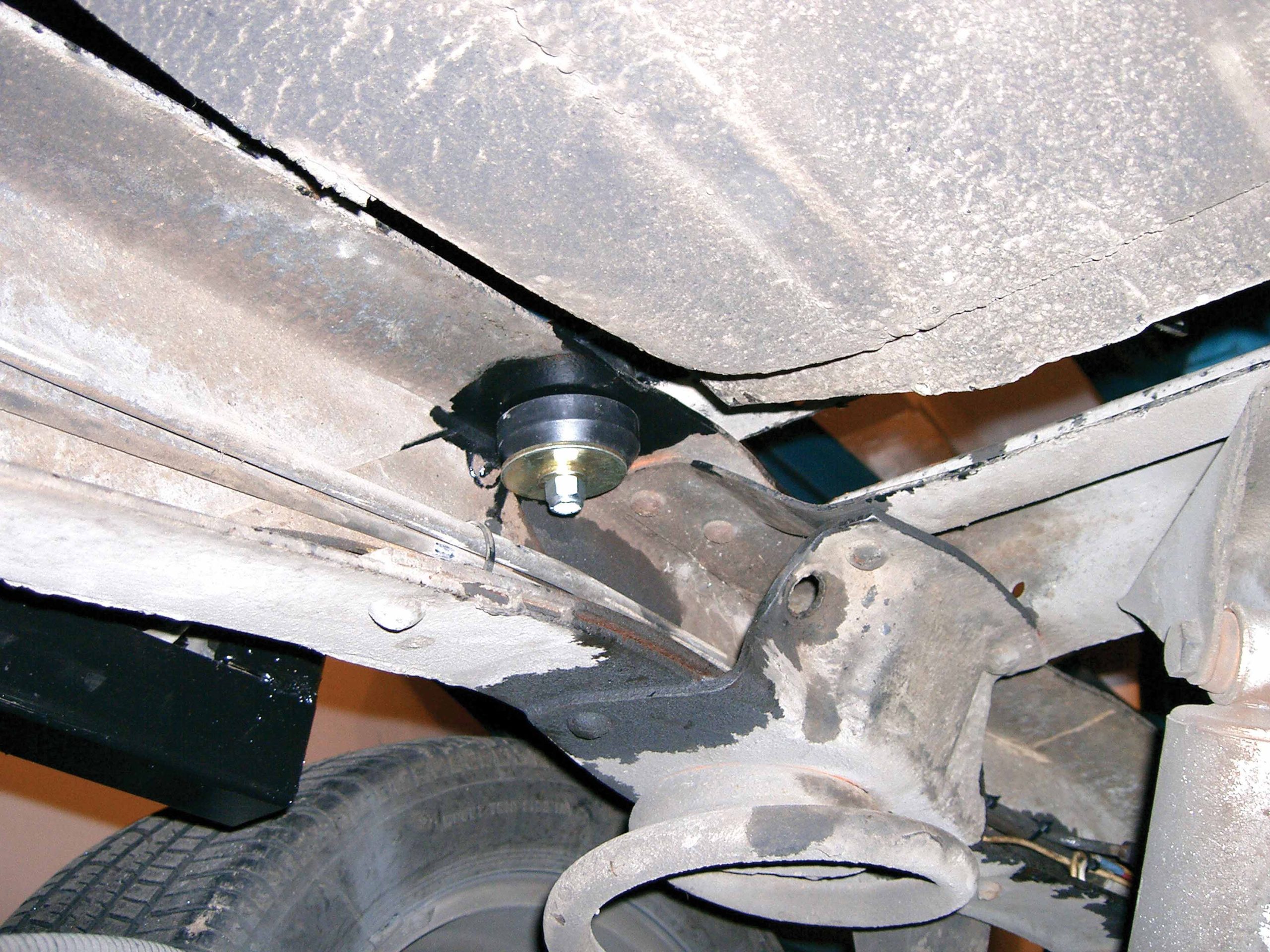
35. While underneath the chassis, Dempsey installed new body mount rubber and hardware, as the original rubber had deteriorated, leaving the Suburban with a harsh ride.
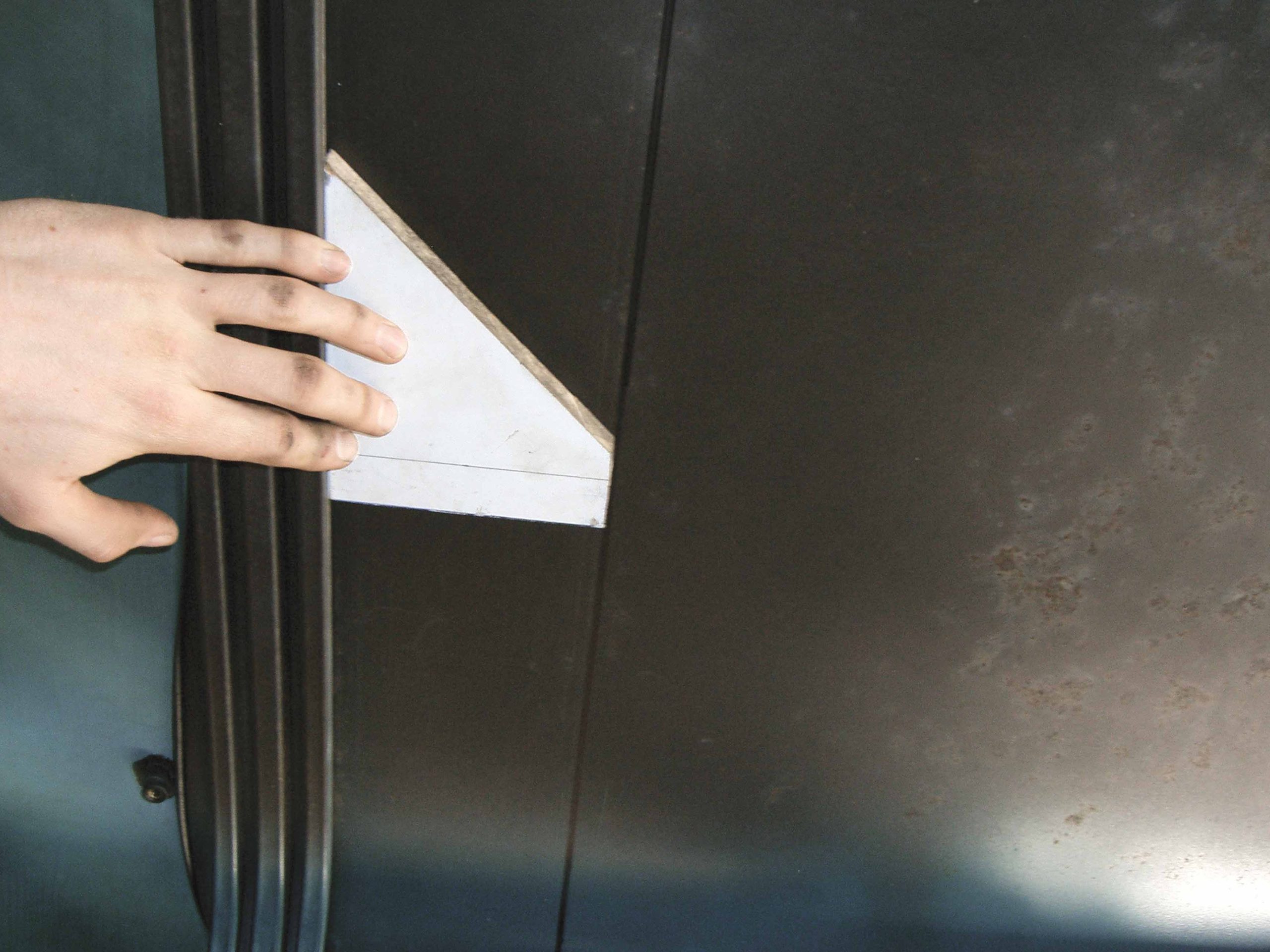
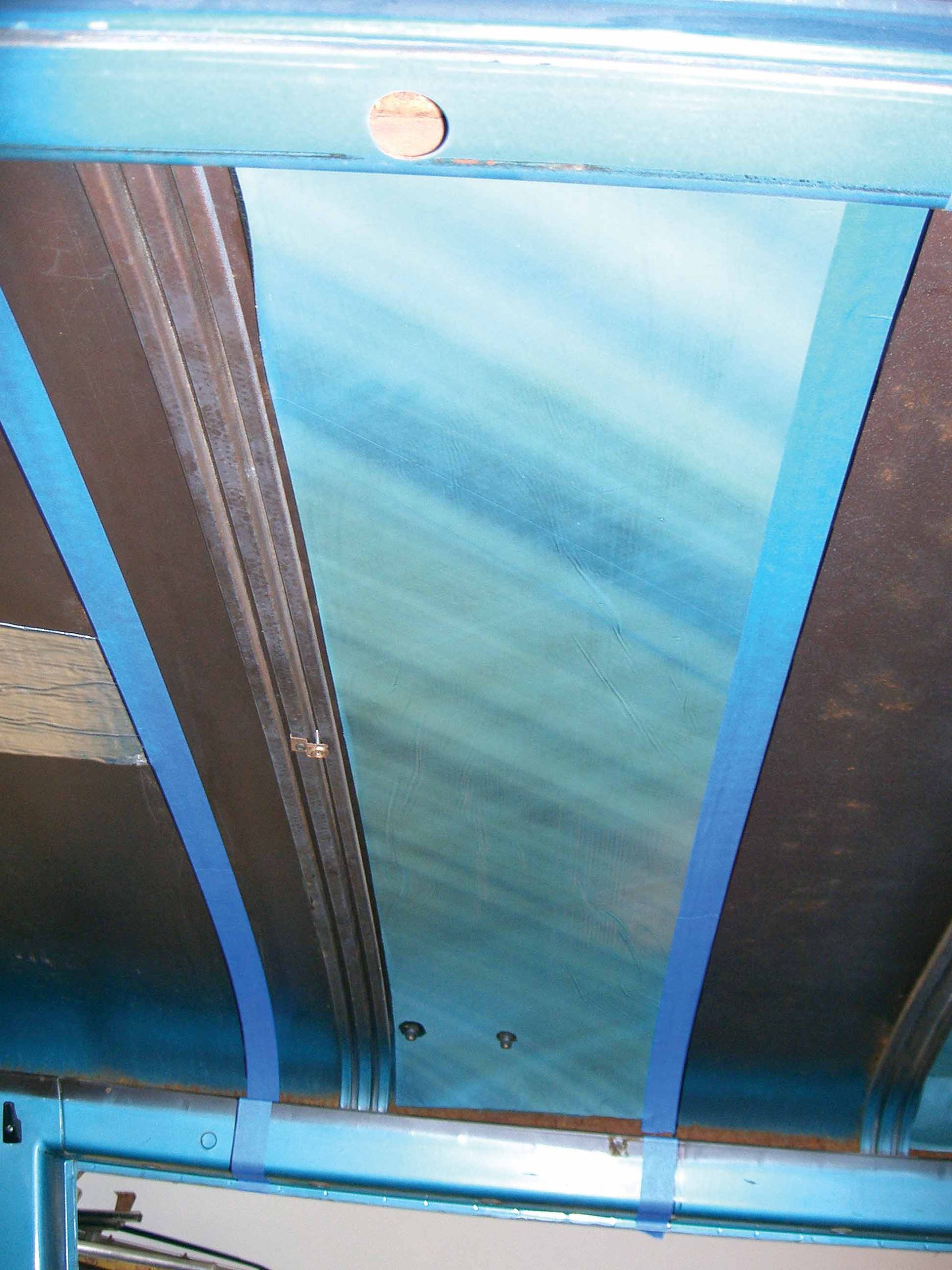
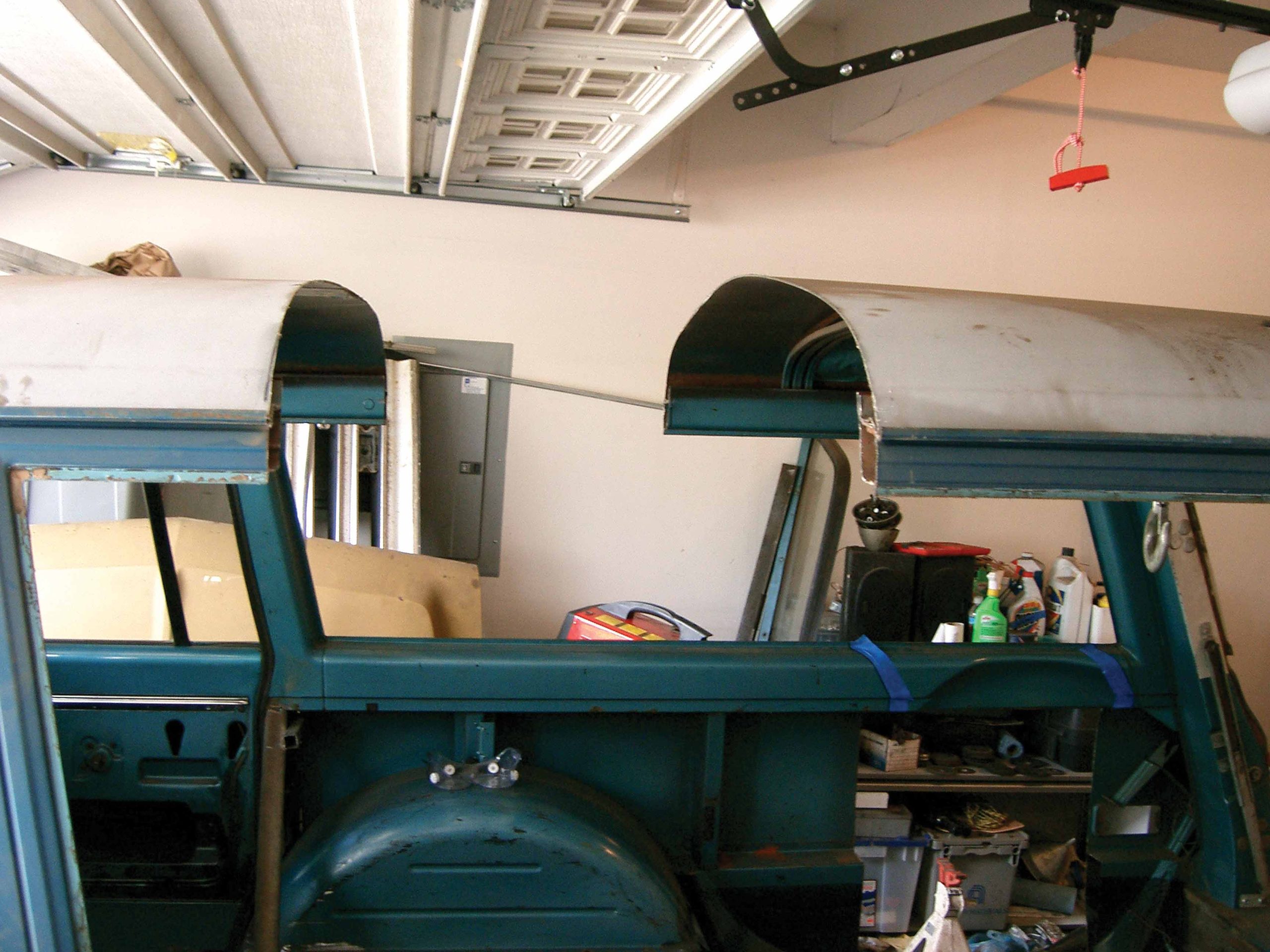
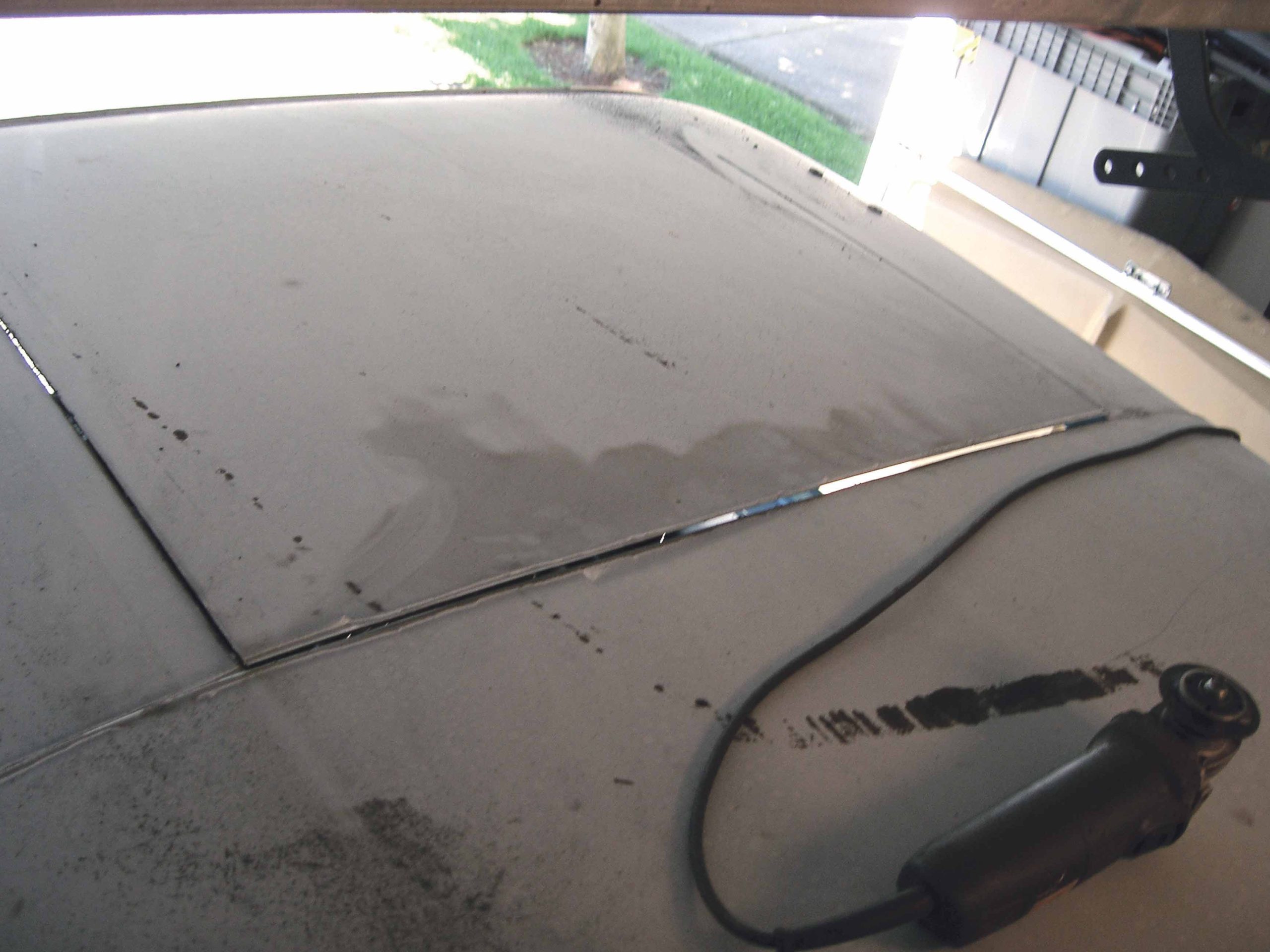
36A-B. Using the roof support as a guide, Dempsey marks a straight line across the roof as far forward as possible. Using tape, Dempsey outlines the 20 inches of roof that will be removed.
36A-B. Using the roof support as a guide, Dempsey marks a straight line across the roof as far forward as possible. Using tape, Dempsey outlines the 20 inches of roof that will be removed.
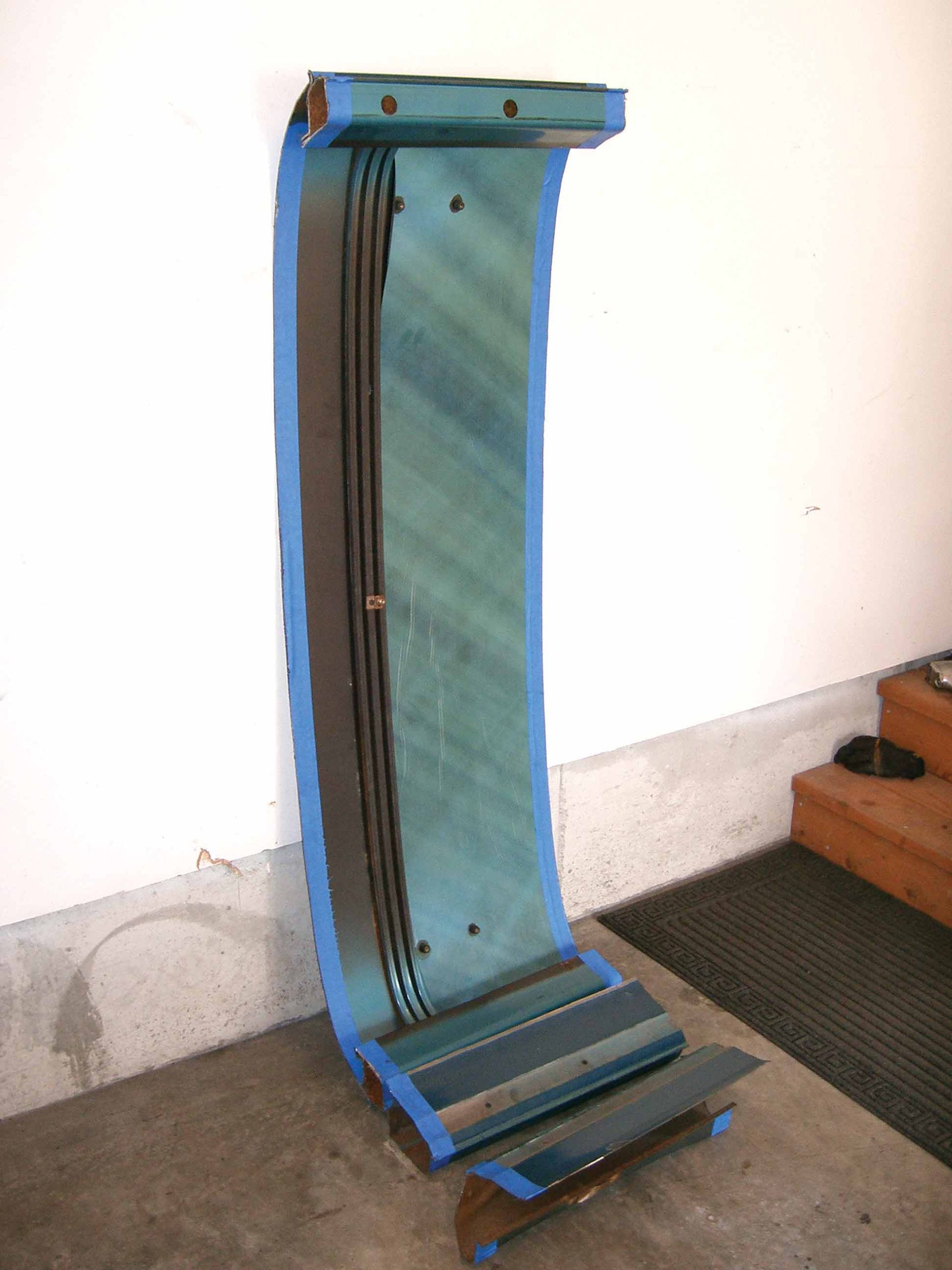
37A-B. Careful not to veer off course, Dempsey uses a high-speed cut-off wheel to slowly remove the 20-inch section of roof. The roof section is put aside as it will no longer be needed.
37A-B. Careful not to veer off course, Dempsey uses a high-speed cut-off wheel to slowly remove the 20-inch section of roof. The roof section is put aside as it will no longer be needed.
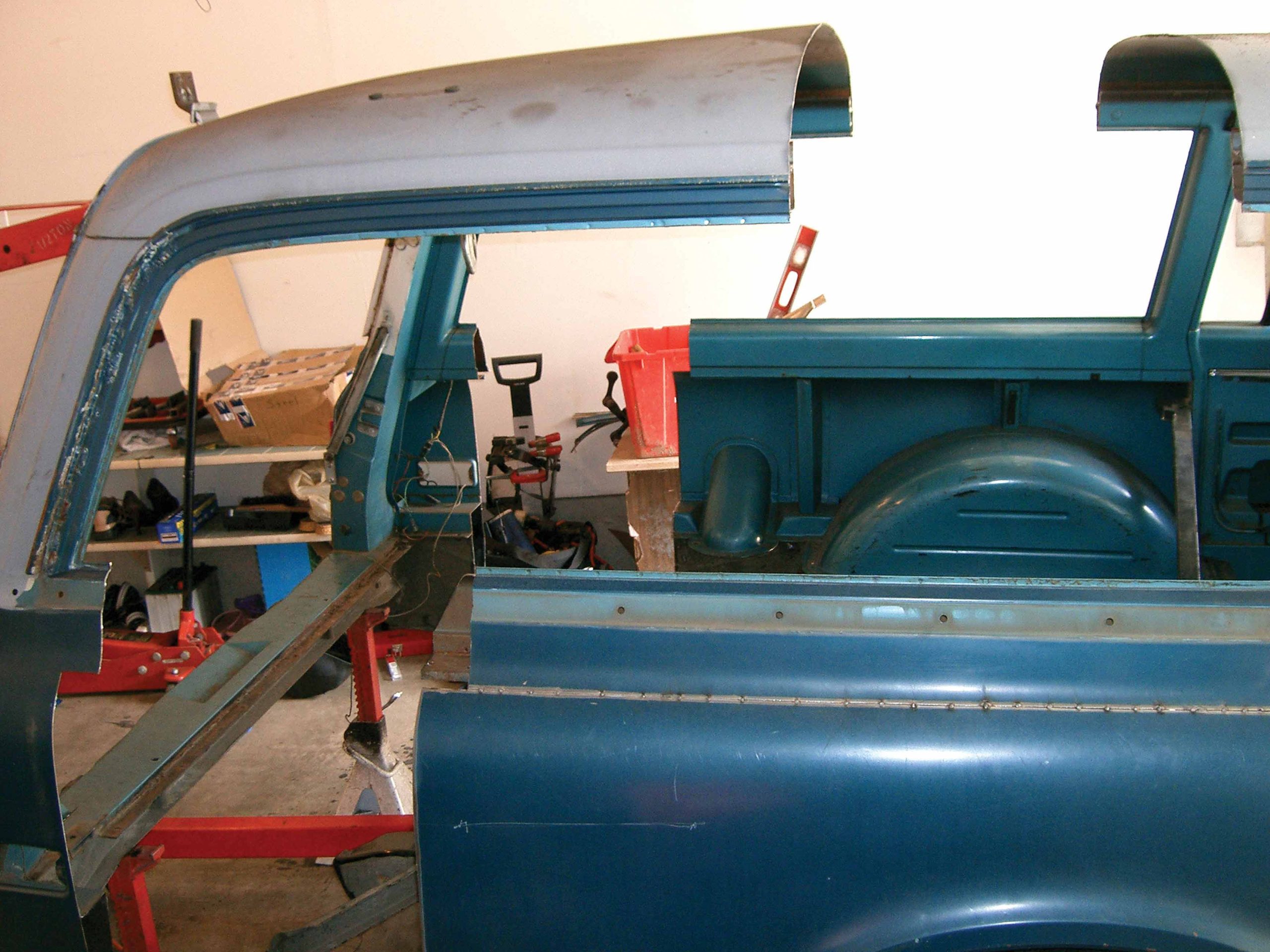
38. To complete the reduction, Dempsey must first remove 20 inches from the top of the rear quarter panel.
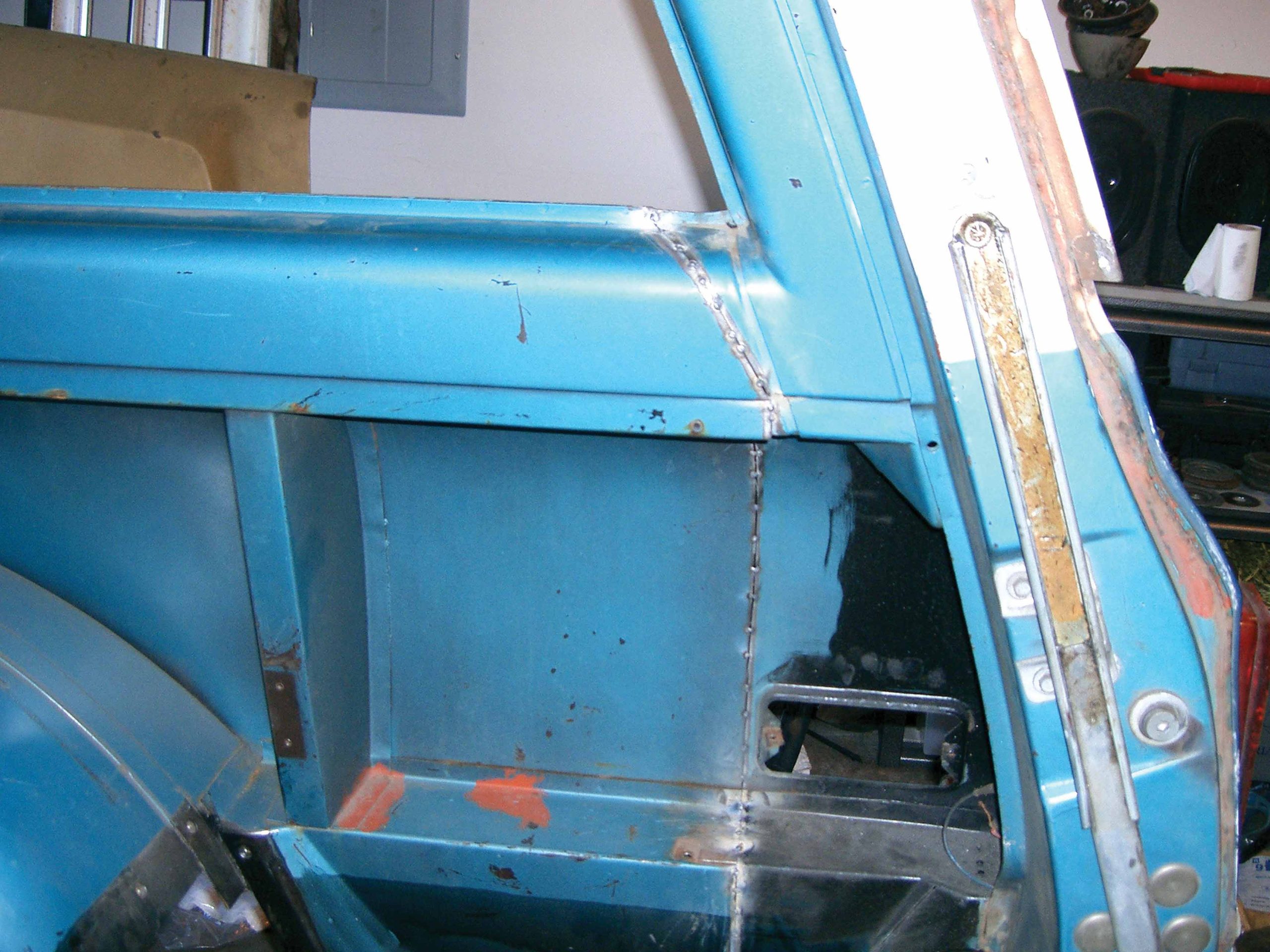
39. Since Dempsey removed the spare tire well from the floor, he designed the 20-inch cut on the passenger side to remove the spare tire dimple from the upper interior panel.
40. Appearing more like a science experiment than a vintage Suburban, the Chevy is now missing 20 inches from the roof and 8 inches from the quarter panel.
41A-B. With the rear section slid forward, Dempsey welds up the quarter panel working his way inward. Several hundred spot welds are placed along the sheetmetal to prevent warping the panels.
41A-B. With the rear section slid forward, Dempsey welds up the quarter panel working his way inward. Several hundred spot welds are placed along the sheetmetal to prevent warping the panels.
42. Since 20 inches had been removed from the roof, what remains will need to be cut and reworked. To correct the roof crown, Dempsey makes two forward cuts and reworks the angle of the roof.
43A-B. Finally, Dempsey bolts on a set of 18- and 20-inch chrome Coys before rolling the Suburban outside for the first time in several weeks. After removing 12 inches from the wheelbase and 8 inches from the rear, the Suburban now fits in the garage with room to spare, and it looks cool.
43A-B. Finally, Dempsey bolts on a set of 18- and 20-inch chrome Coys before rolling the Suburban outside for the first time in several weeks. After removing 12 inches from the wheelbase and 8 inches from the rear, the Suburban now fits in the garage with room to spare, and it looks cool.
ARTICLE SOURCES

Early Classic Enterprises -CLOSED
1840 Shaw Ave, Suite 105-106
Clovis, CA 93611
888/777-0395