




THE AUTO BUILDER
Menu
Featured


Well Worth The Wait
Is a love for fast cars—specifically those that are Chevrolet-powered—hereditary? If you were to ask C.A.T. Operations Engineer Kevin Christensen of Castaic, California, he would definitely say that it is.
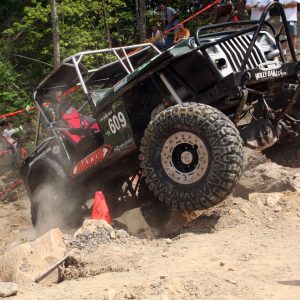
Rock Crawling the Sport That Defines Champions
Competitors from across the country converged on Jellico, TN to compete in the Eastern US Nationals held by W.E. ROCK (World Extreme Rock Crawling Series). White Oak, a small community located just outside Jellico, TN is where the event was held. Lil’ Rich, course designer for W.E.ROCK stayed true to his reputation for designing some of the most technical obstacles in the rock crawling world, and Jellico was no exception.

THE ONE THAT DIDN’T GET AWAY
The story of Terry Beaty’s ’50 Ford F-1 is no whopper of a fishing tale—this is the one that did not get away, a pickup that has been in possession of the Beaty family since the truck was nearly new.


Spotlighter
POPULAR READS
-
The Auto Builder’s Hottest Product Picks from The Triple Crown of Rodding 2026
-
Product Spotlight: Bill Mitchell Products Aluminum LS Engine Block
-
PRODUCT SPOTLIGHT: 60-66 Chevy C10 Fresh Air Vent Block Off Plate
-
Product Spotlight: Pyramid Optimized Design Sequential Aurora Taillight for 1964½–1966 Mustang
ENGINE BAY ART FORM
Going the Extra Mile to Make an Engine Compartment Stylish and Unique
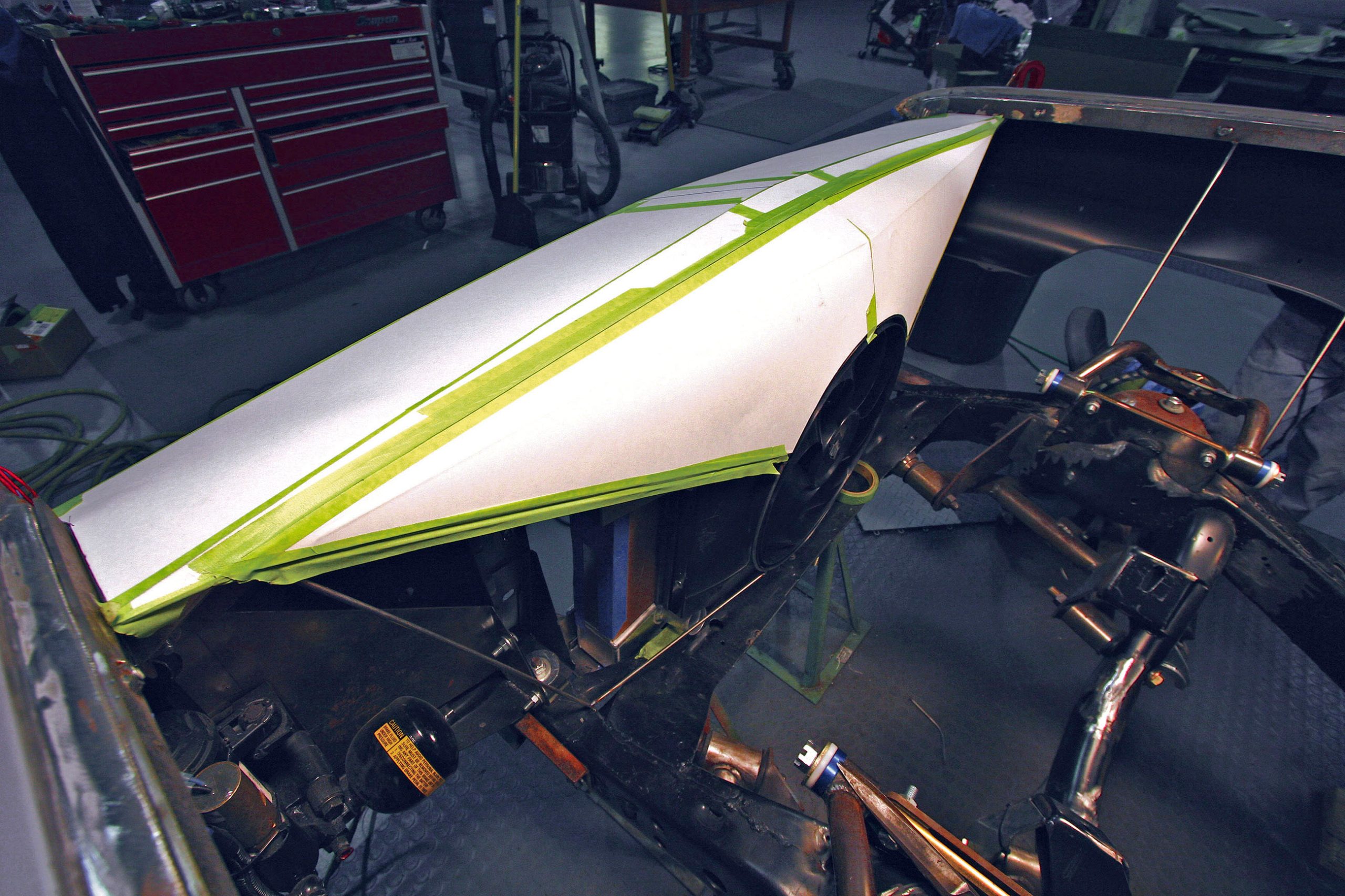
Author

Jeff Lilly
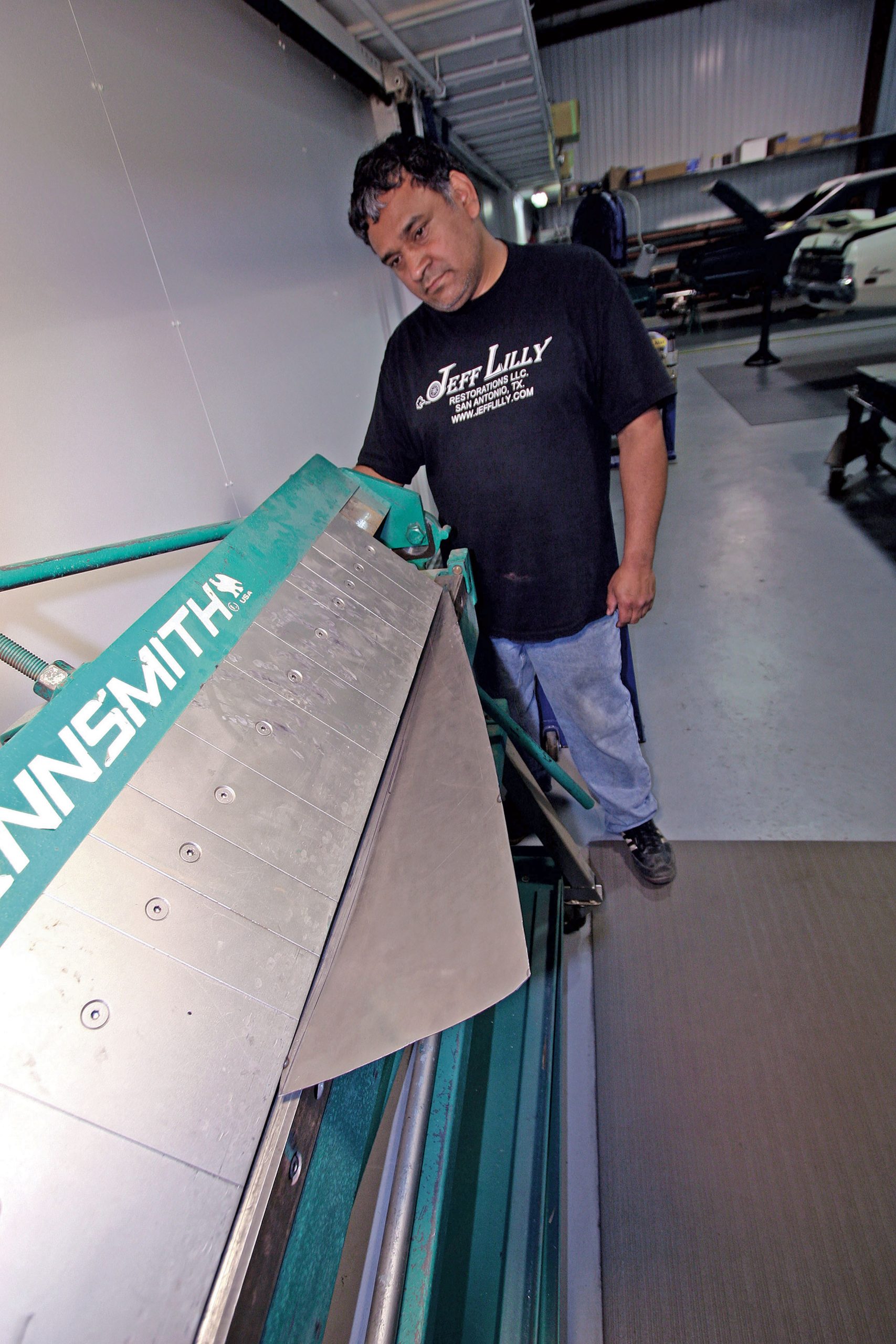
Words & Photography
Creating New Trends in Hot Rodding
The goal of many builders in today’s high-class, high-dollar world of rodding is to develop new trends to help keep the hobby fresh with new ideas. For some time, the focus has been on the bigger picture—the external appearance of a vehicle. Now builders are focusing a lot more on the details and areas such as the engine compartment, as they become a canvas on which to display the latest and slickest art form.
The Vision for a Custom Ford Galaxie Engine Bay
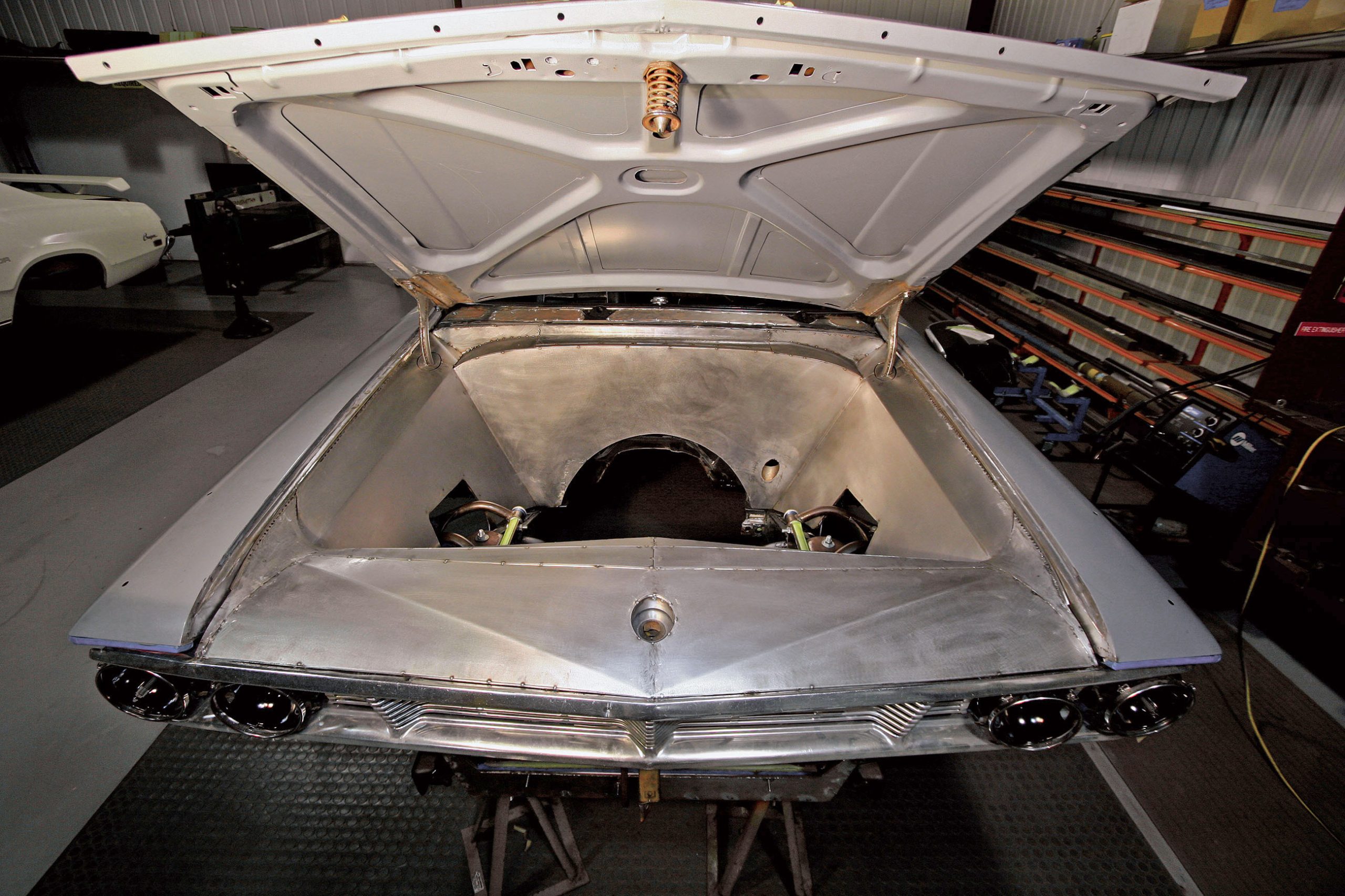
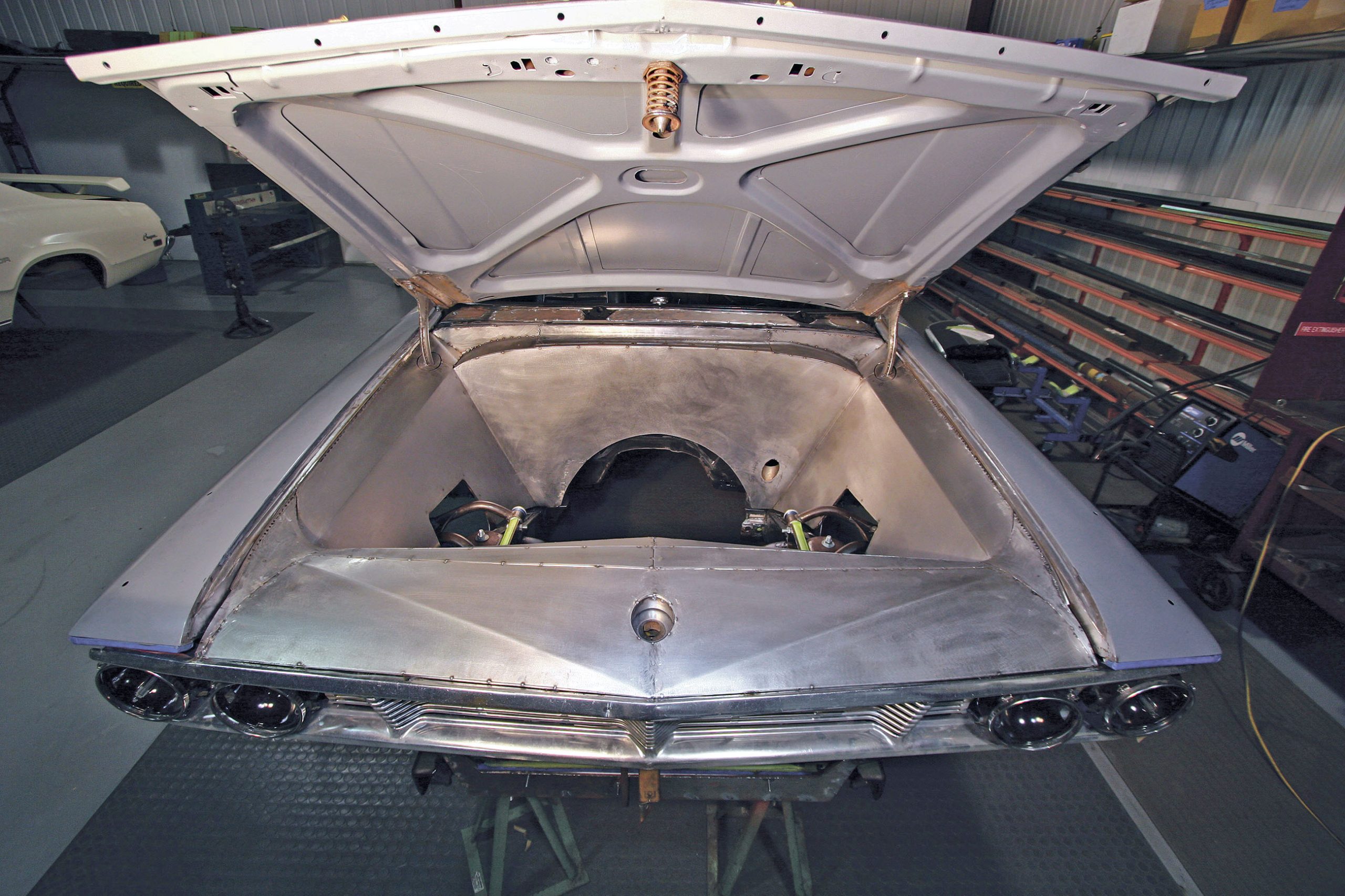
The objective in most cases is to hide any wires, cables or fasteners, and that’s the goal with this Ford Galaxie engine compartment. It could be any engine bay, but it just so happens that this is what the crew at Jeff Lilly Restorations will be working on here as they take every step possible to make this engine bay clean and smooth. In this case, that includes building the inner fenders, firewall and various covers for the radiator support and other components.
Setting New Standards in Automotive Design
The crew at Jeff Lilly Restorations work at creating something new, even when they are doing something not so new as they strive to set new standards and create innovative designs that will be used in the super rod movement in years to come. The methods on this project can be easily transferred to nearly any make or model of car. Obviously, this is a big project, simply by the sheer size of the vehicle. You can count on spending several days getting the panels just right, and metalworking tools are essential to making the project a little easier. The worse the condition going in, the longer the project will take to complete. The modifications will take this once-bland Galaxie engine compartment to another level, and by adding detail, moving certain components, and keeping them from interrupting the smoothed new lines in the sea of sheetmetal, it will add to the art form that requires thinking through the whole project.
The Importance of Structural Integrity
Also keep in mind that the inner fenders and firewall help support the body and fenders, allowing minimal flex, so replacement material must be adequate. The 16-gauge flat sheet steel will be easy to weld and will provide plenty of strength. Every panel on this Galaxie has been mounted in its final position with 3/16-inch gaps between them. A lot of hours were spent on the panel gapping, but the extra work is worth the effort when building a car of this caliber. The car has already received its share of attention, and the custom hinges and supports for the hood were recently built.
Essential Tools and Safety Precautions
There will be a lot cutting and welding during the process, so it’s best to have a variety of cutting and grinding tools at your side, in addition to a welder and a selection of sheetmetal brakes, rollers and shears. Eye protection is a major necessity in this project, so keep a pair of safety glasses or a welding helmet handy at all times.
Achieving a Show-Worthy Finish
This painstaking work is being performed to make the engine bay as nice as the exterior, and it’s important that the appropriate amount of time is taken to ensure a perfect fit and finish. This may be more difficult than your average weekend project, but the efforts produce outstanding results that will give this Galaxie an edge over the competition.
The Process of Custom Fabrication
Many of the steps will begin with 3/16-inch-diameter wire to obtain the basic shape of the structure and will continue with poster-board templates and will finish with 16-gauge sheetmetal to close it all in. The firewall was completed beforehand, and it will flow seamlessly into the inner fenders with no fasteners or hardware showing. After the metalwork is complete, bodywork can be performed to make the panels perfectly straight.
Transforming an Engine Bay into Automotive Art
It took a lot of work to create this engine-bay art form, but the photos show how much it helped this mid-’60s Ford and how such a project can make a huge difference in any super rod. Take a look at the following photos and see if there’s not something you might like to try on your own ride. Whether you complete the whole project, as the crew here at Jeff Lilly Restorations did, or try something totally different or even a partial cleanup, you will have a car that is unique with its own engine compartment artwork.

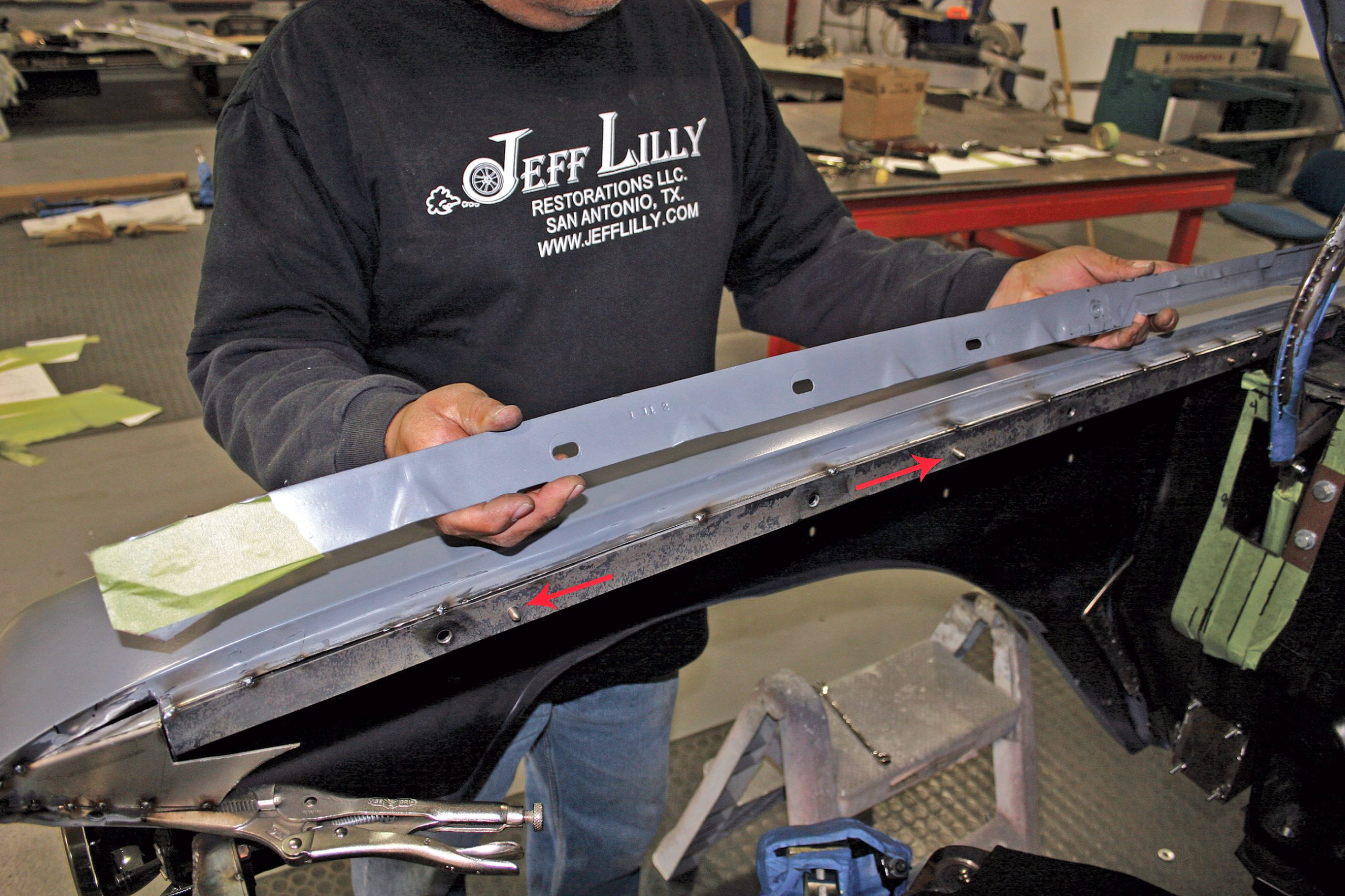
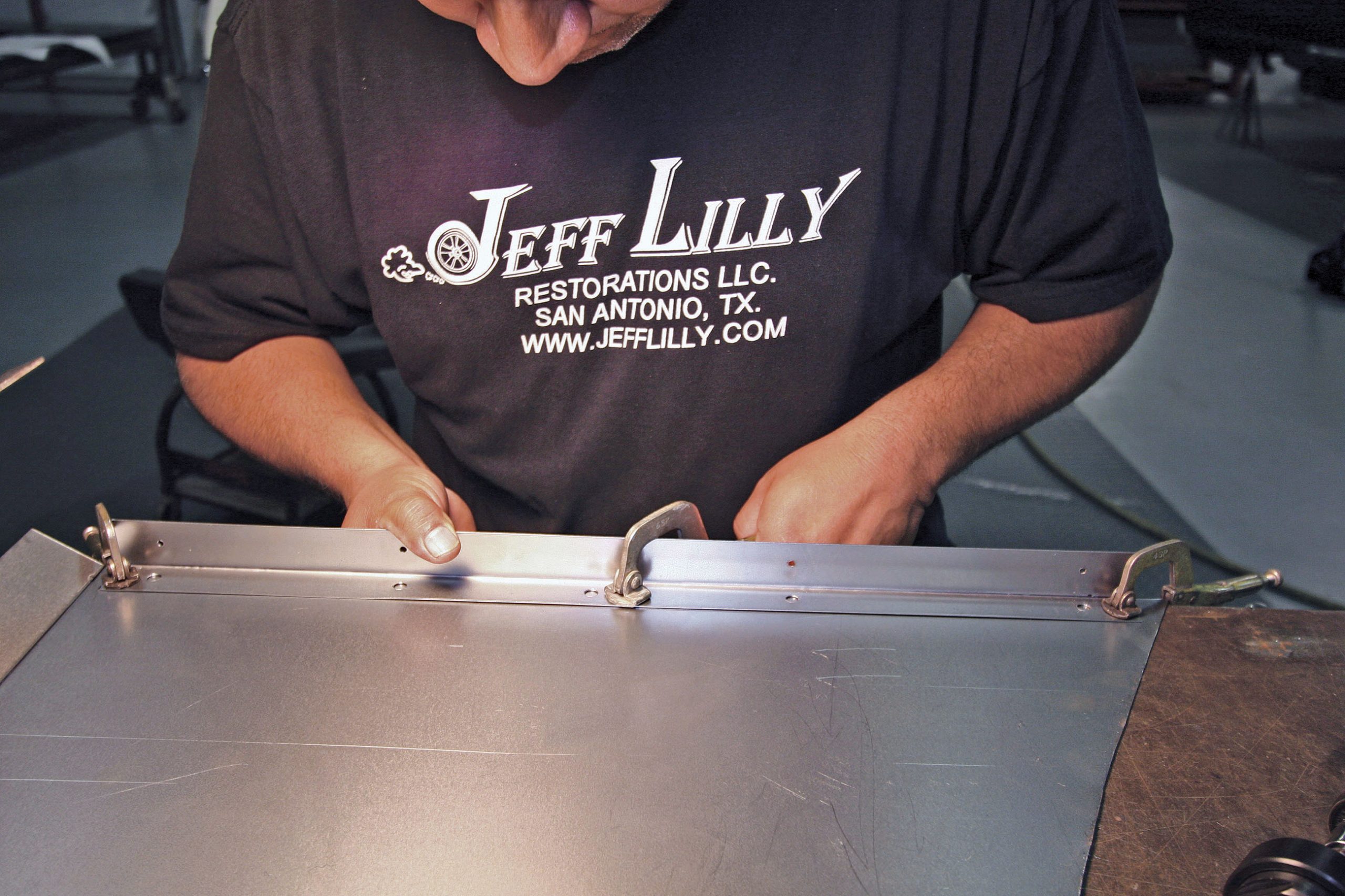
1. After aligning all of the front-end components, including the hood, fenders and grille, the crew at Jeff Lilly Restorations cut the original flange from the fender and made their own matching double flanges from 1/8-inch steel. The red arrows point out the line-up pins that allow for quick attachment when final assembly takes place.
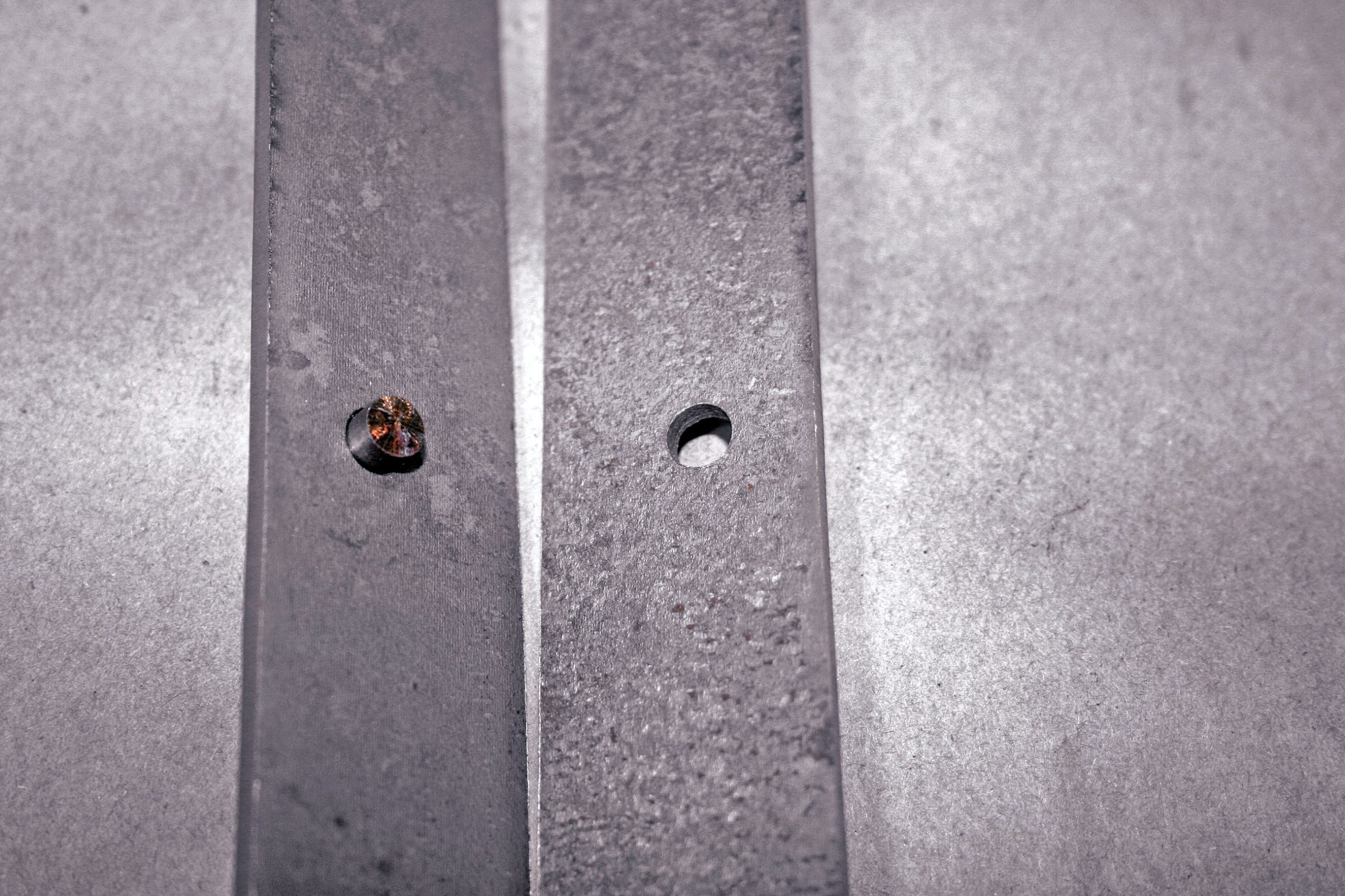
2. Here are the two matching flanges with the line-up pin installed. One half was welded to the fender and the other will be welded to the inner apron that will be fabricated.
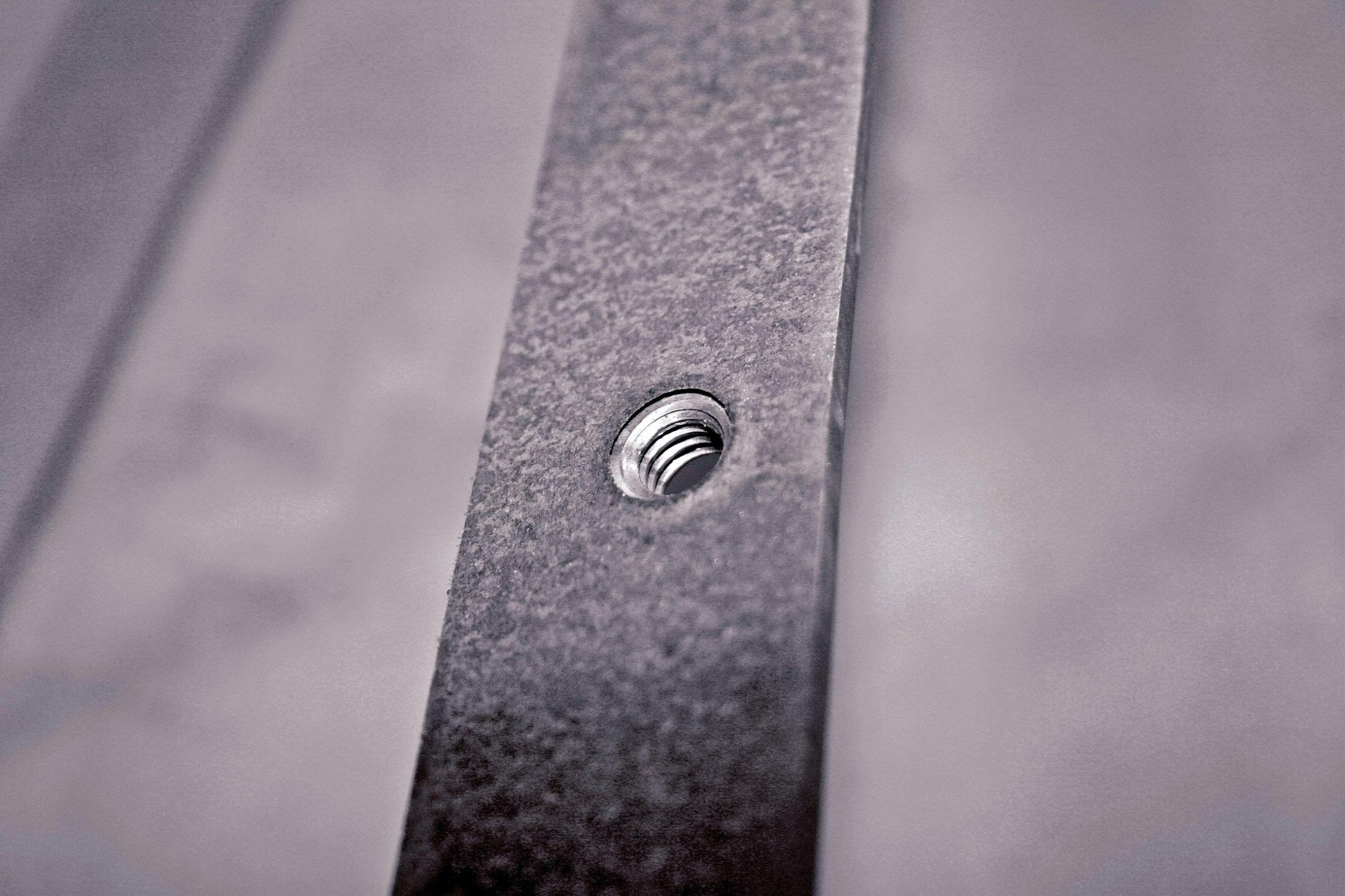
3. The 5/16-inch nuts were welded on the inner apron flanges so the bolts will draw the apron in from under the front fenders. The bolts will be only about 1/2 inch long so that they do not hit the inner apron when installed.
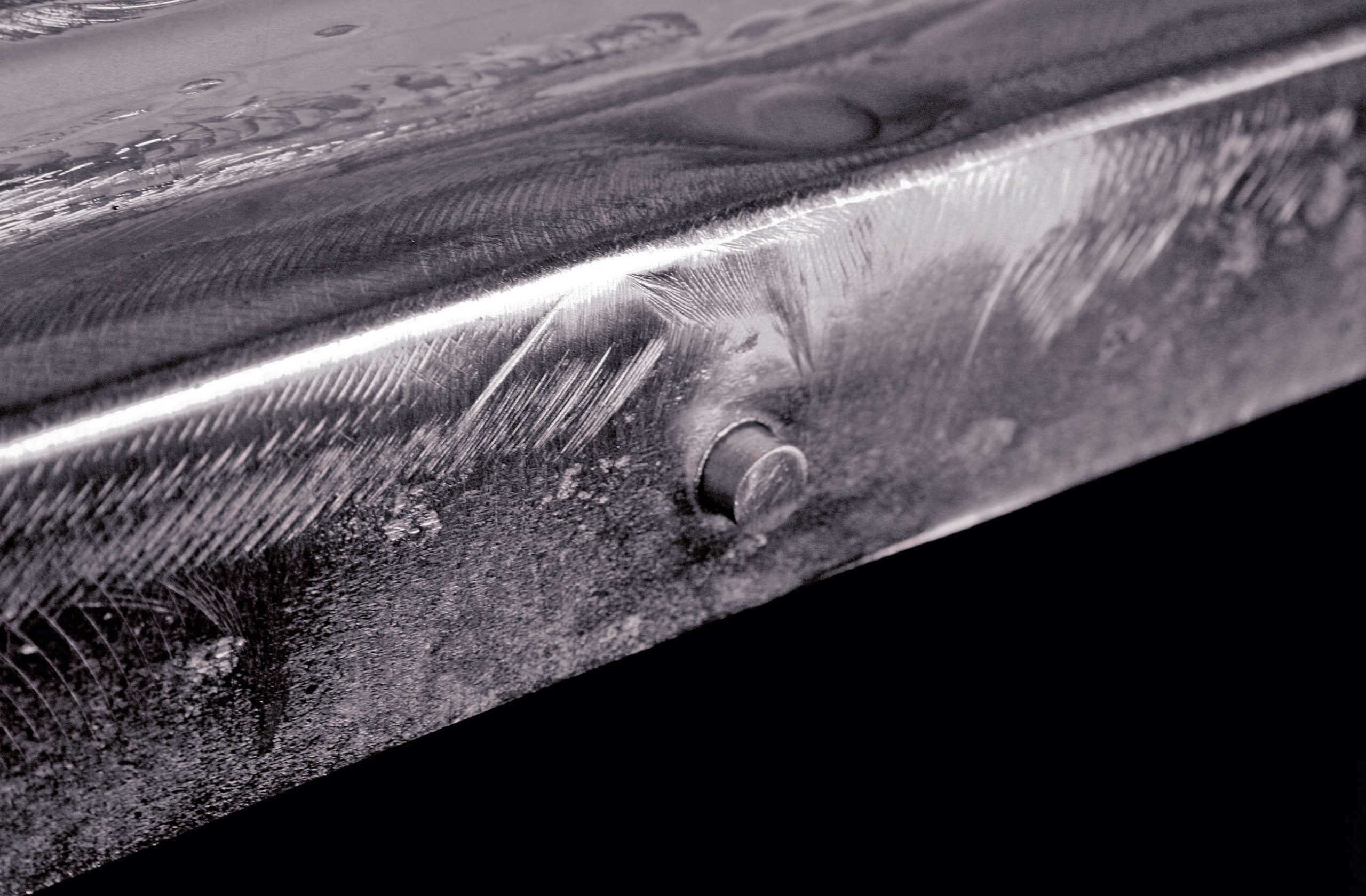
4. This photo shows the new flange fully welded to the inside edge of the front fender. This is a tedious part of the project, since the heat from welding has the potential to do major damage to the fender. Sections were welded in until it was fully welded and then the metal was cooled with an air blower.
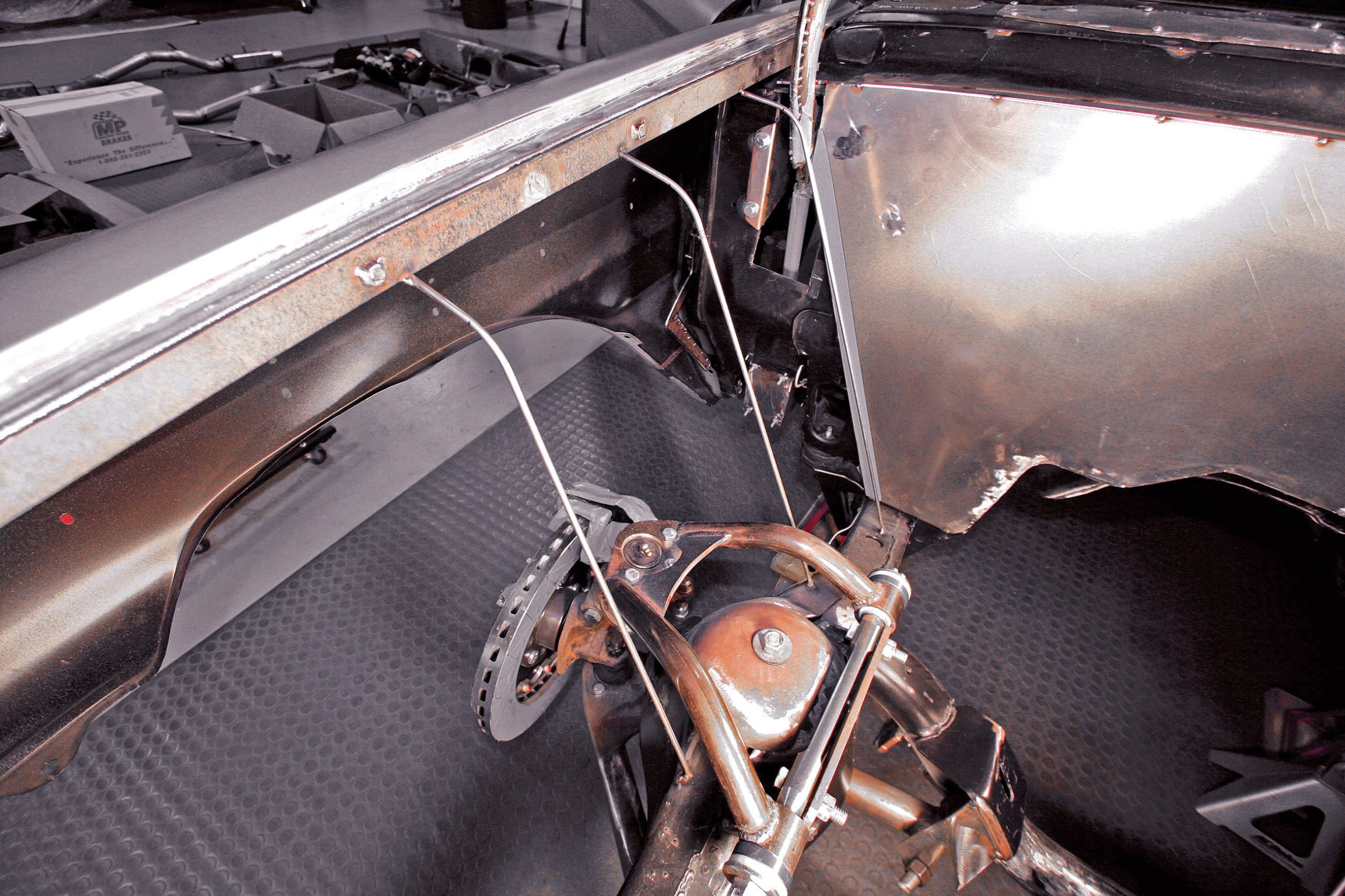
5. The next step is to bolt the apron flange to its matching flange and start running out support-form wires in the basic shape desired. The crew used 3/16-inch stainless wire instead of carbon steel for its strength and tack-welded it into place.
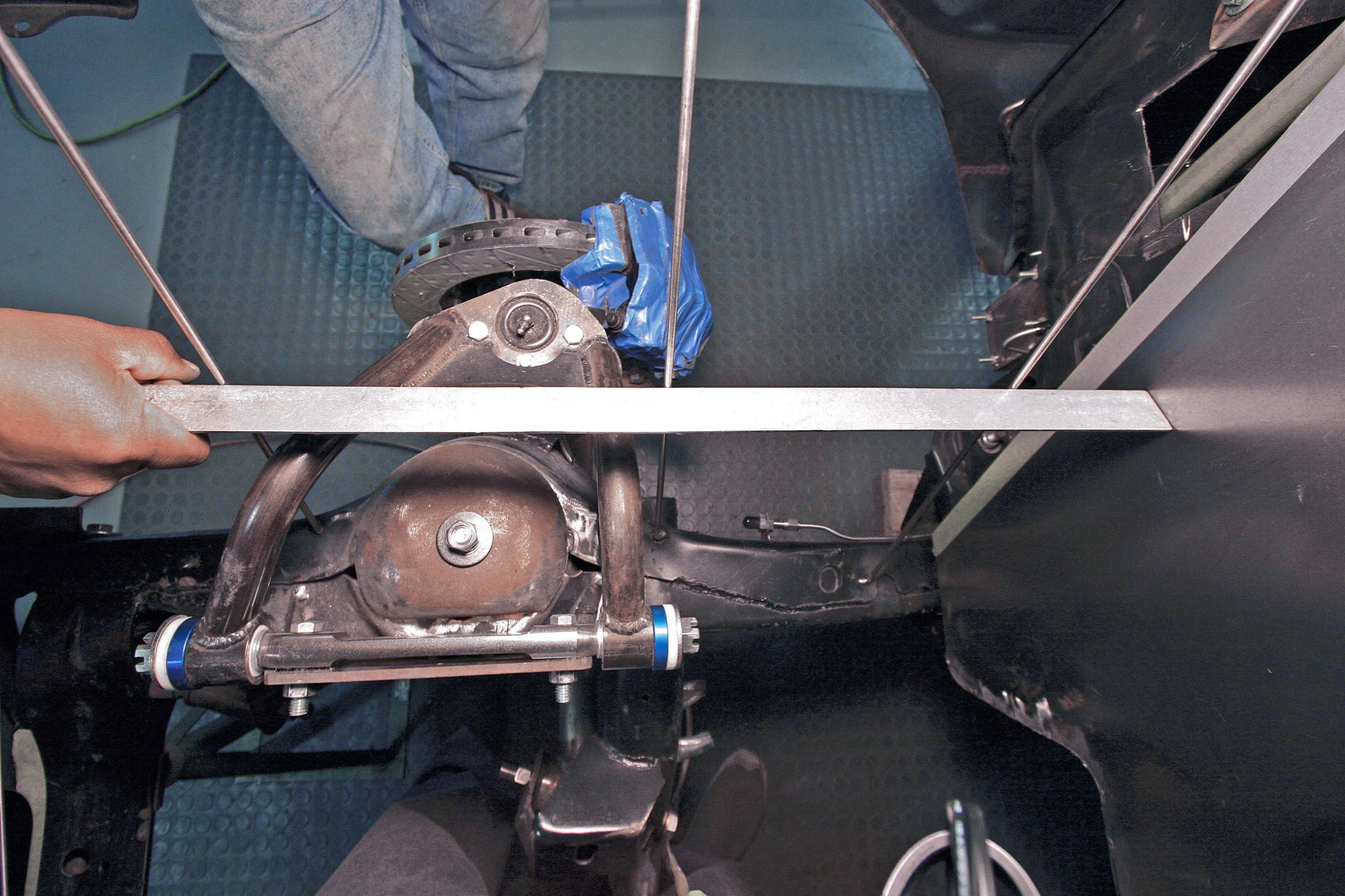
6. Using a straightedge, the crew made sure the wires were in line with each other. This will provide a great guide line when it comes time to form the sheetmetal to try to match the other side as well.
7. After a few hours of measuring and tack welding, the design work was finished, and the poster board can be shaped to fit the desired lines. It’s much easier to get the primary shape formed in poster board before moving on to the steel.
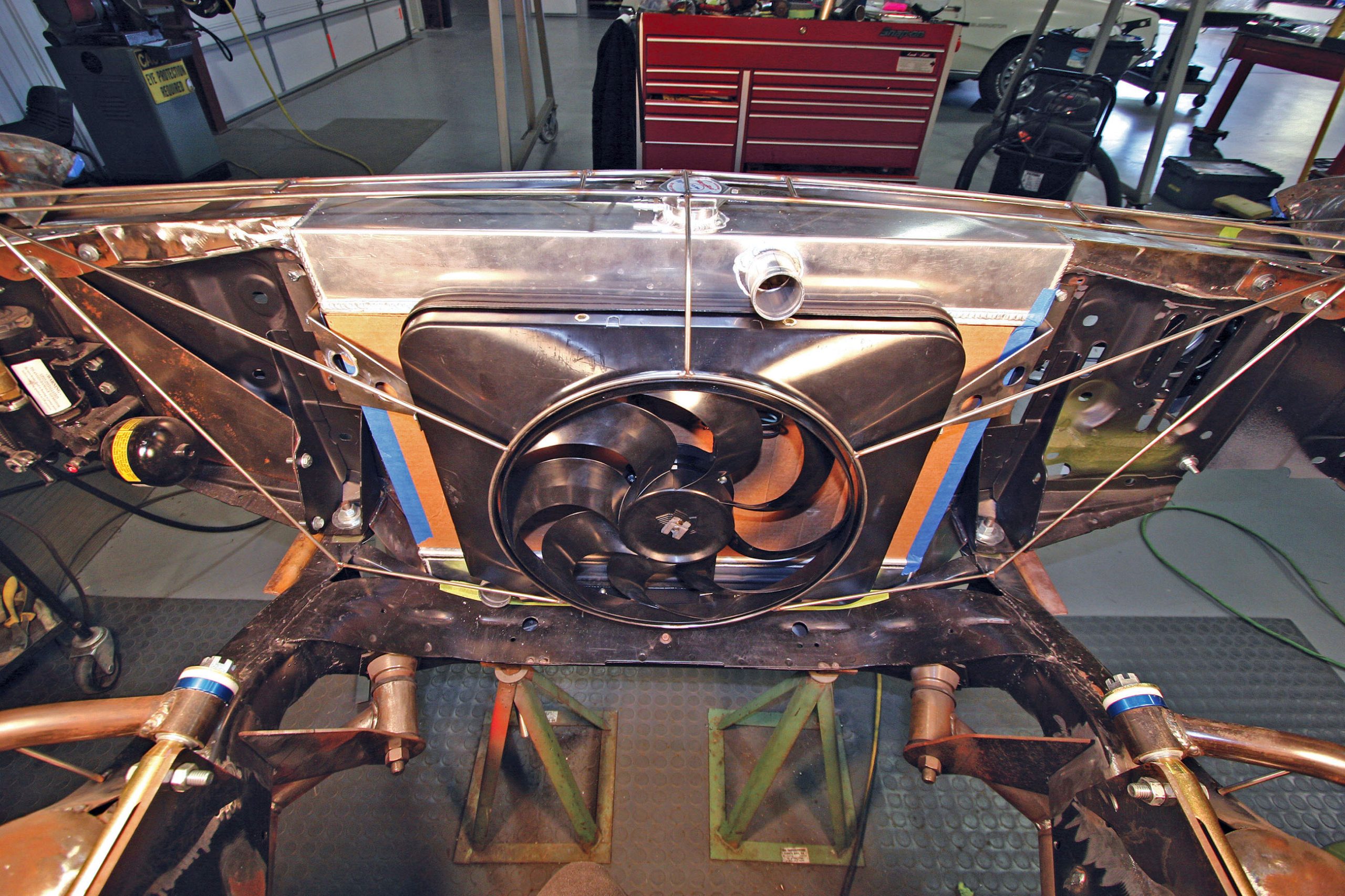
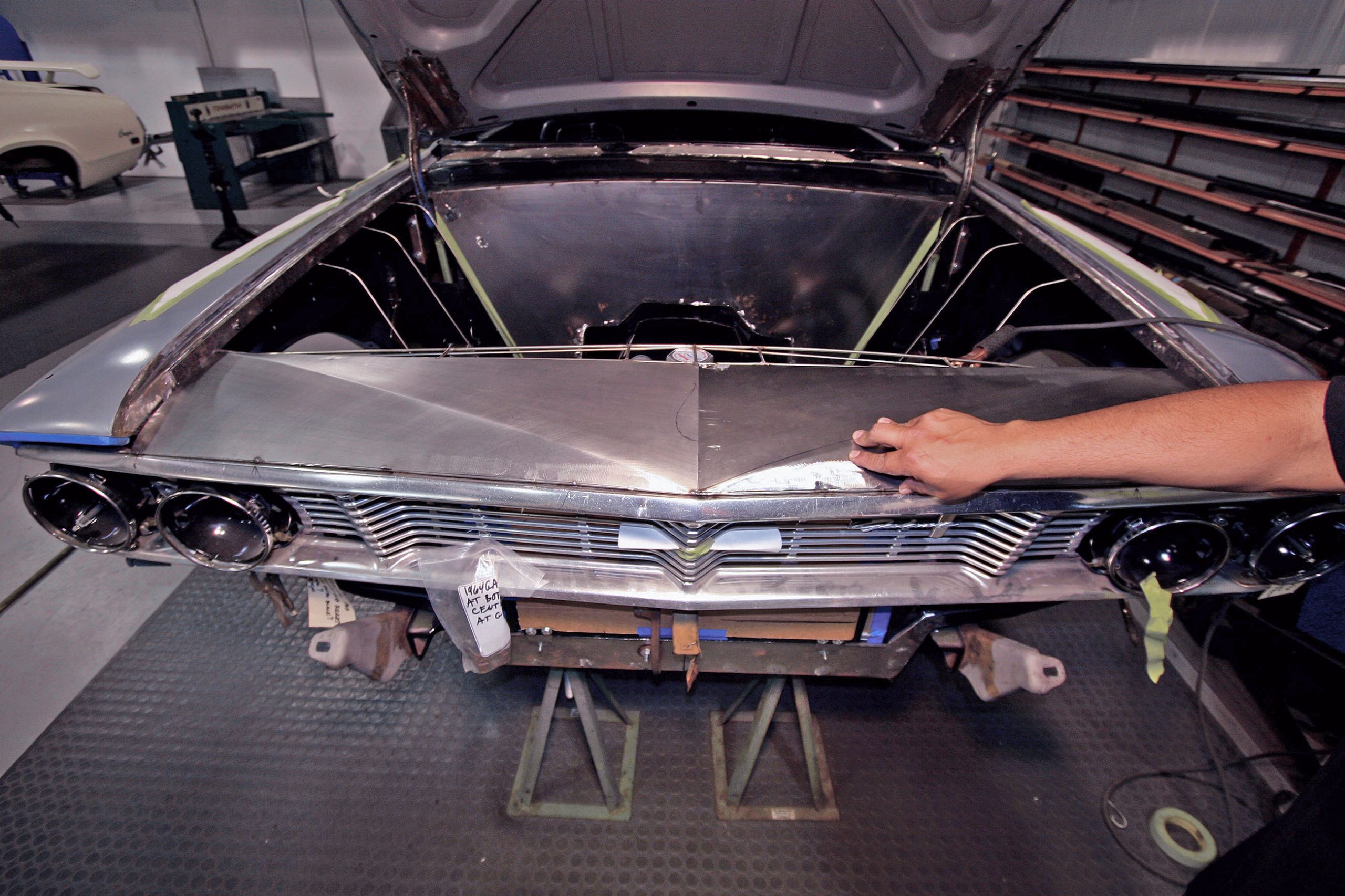
8. With the aluminum radiator and 3,300cfm electric fan in place, the stainless rod can be formed to the preferred shape. The radiator mounting point was lowered by 3 inches to make sure the radiator cap will fit under the steel surroundings.
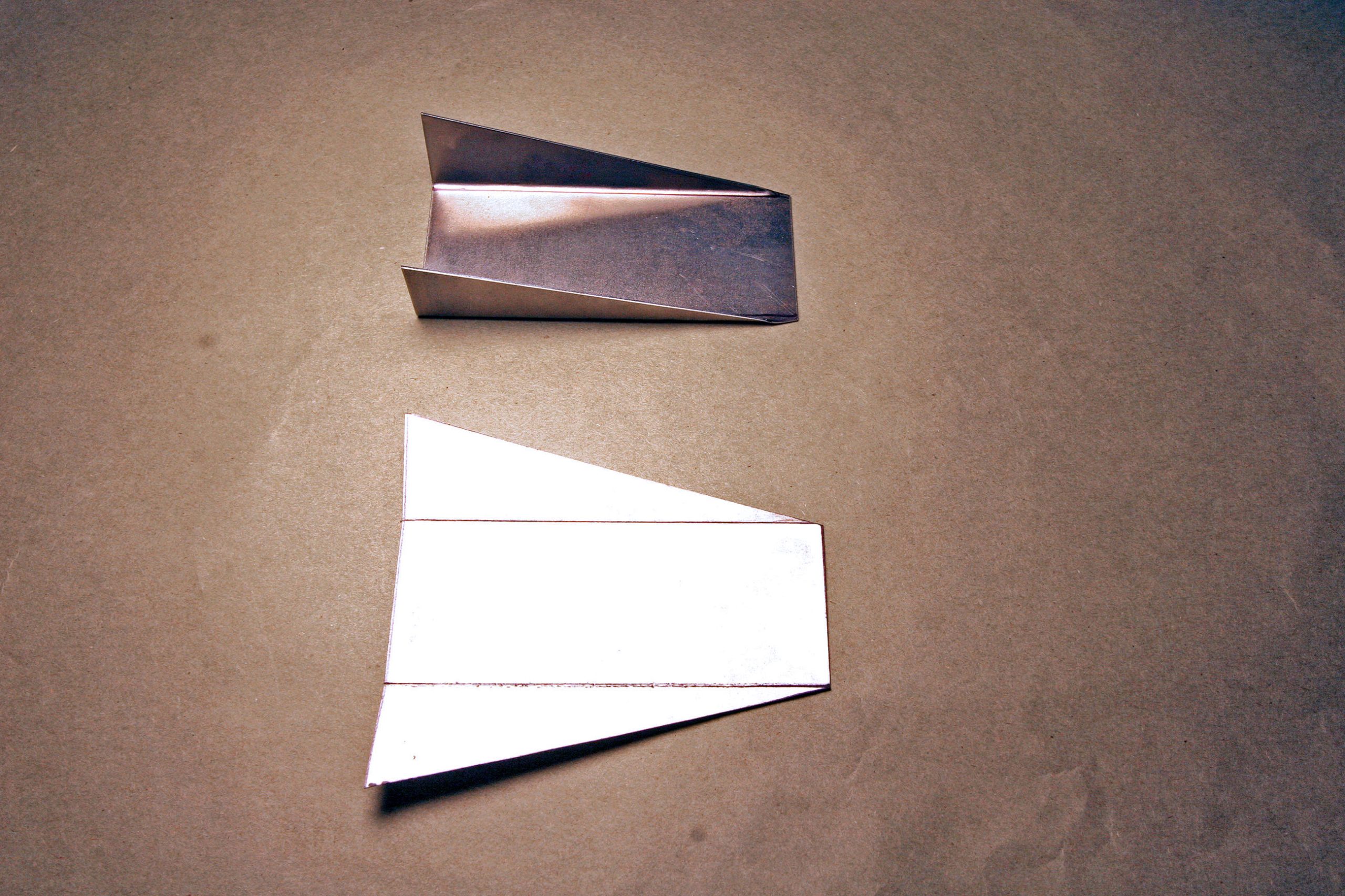
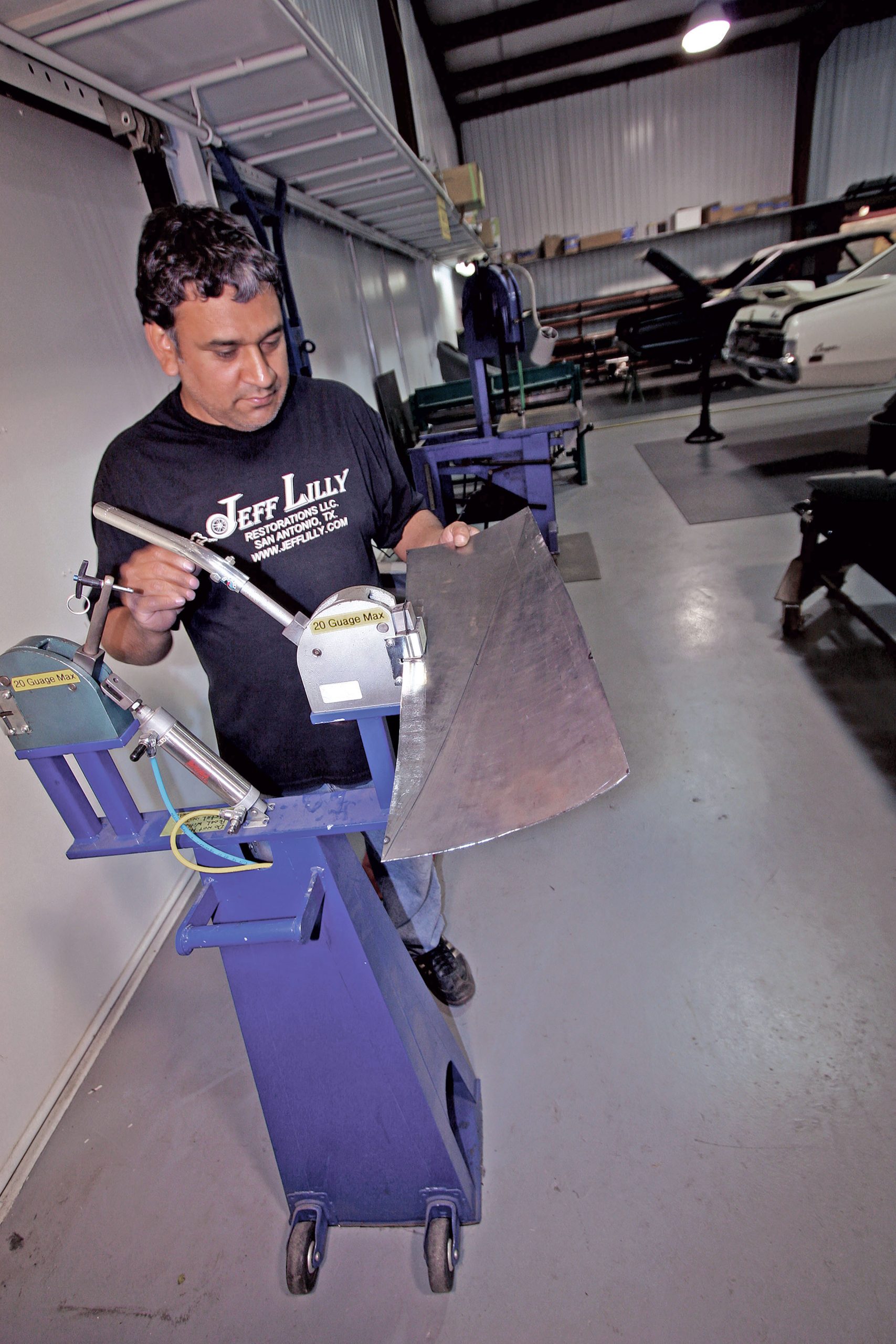
9. It’s best to be able to attach the panels without seeing any fasteners. Here, the crew simply bent two brackets to weld to the modified radiator support. It was a simple process that required a shear to cut the flat steel into the right shape and a brake to fold the corners and give it strength.
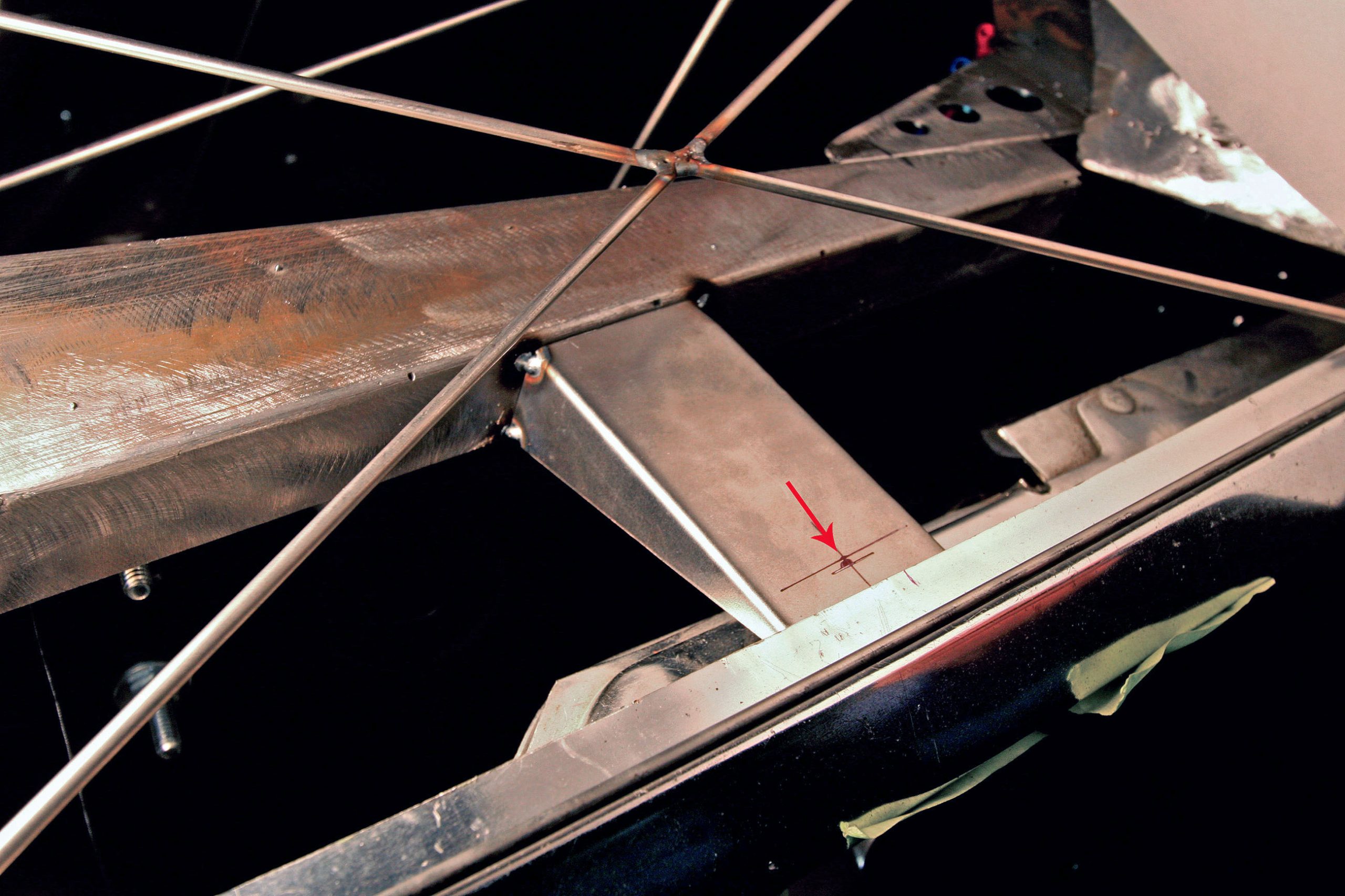
10. After the metal was formed, it was tack-welded to the custom radiator support. The bracket will be drilled at the marked area and then 5/16-inch nuts will be welded into place to secure this part of the cover.
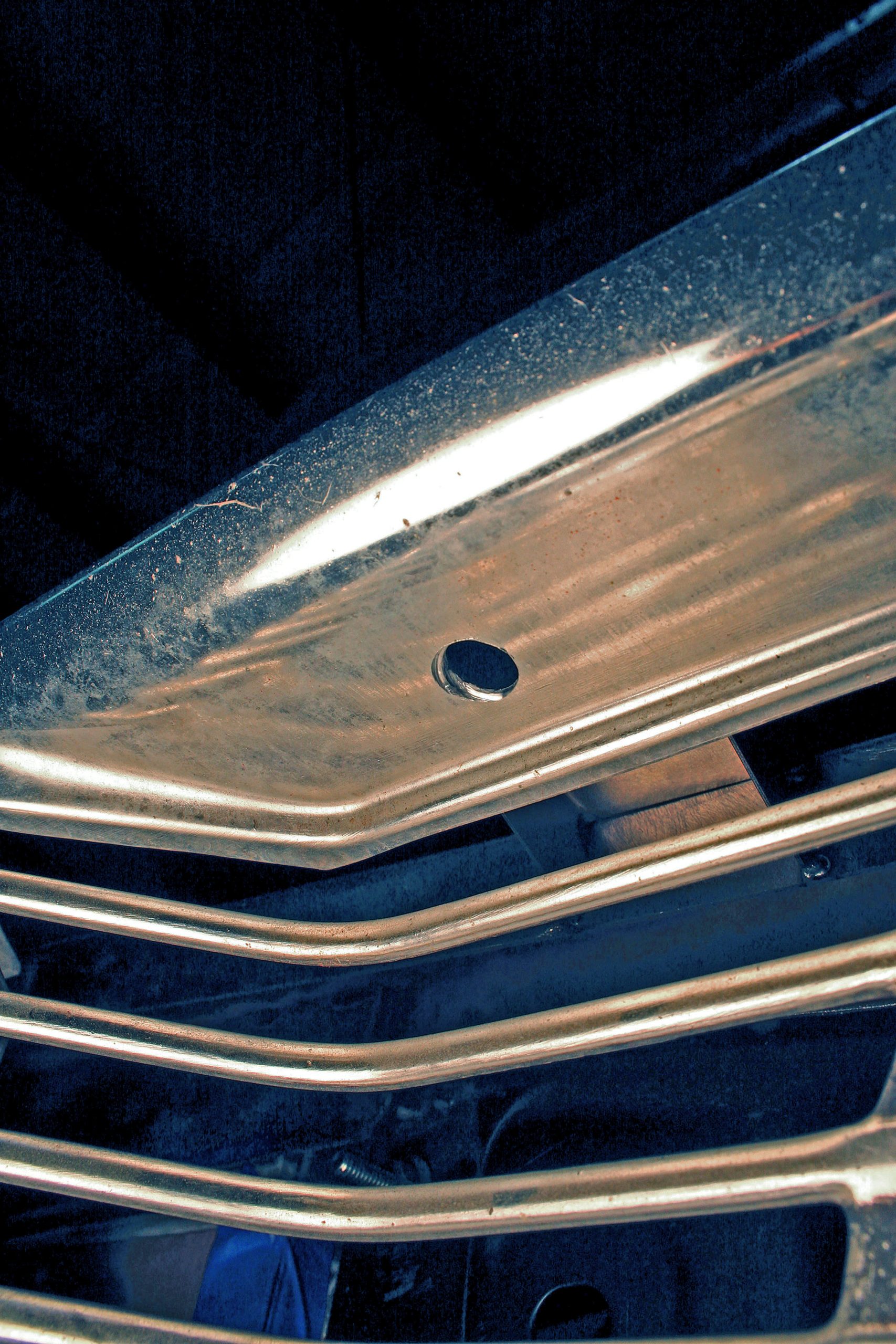
11. On the bottom of the grille, a few small 3/8-inch holes were drilled where no one will see them. A 1/4-inch drive extension with small fasteners will secure the cover, and this area will have satin-black paint to make sure the holes go undetected.
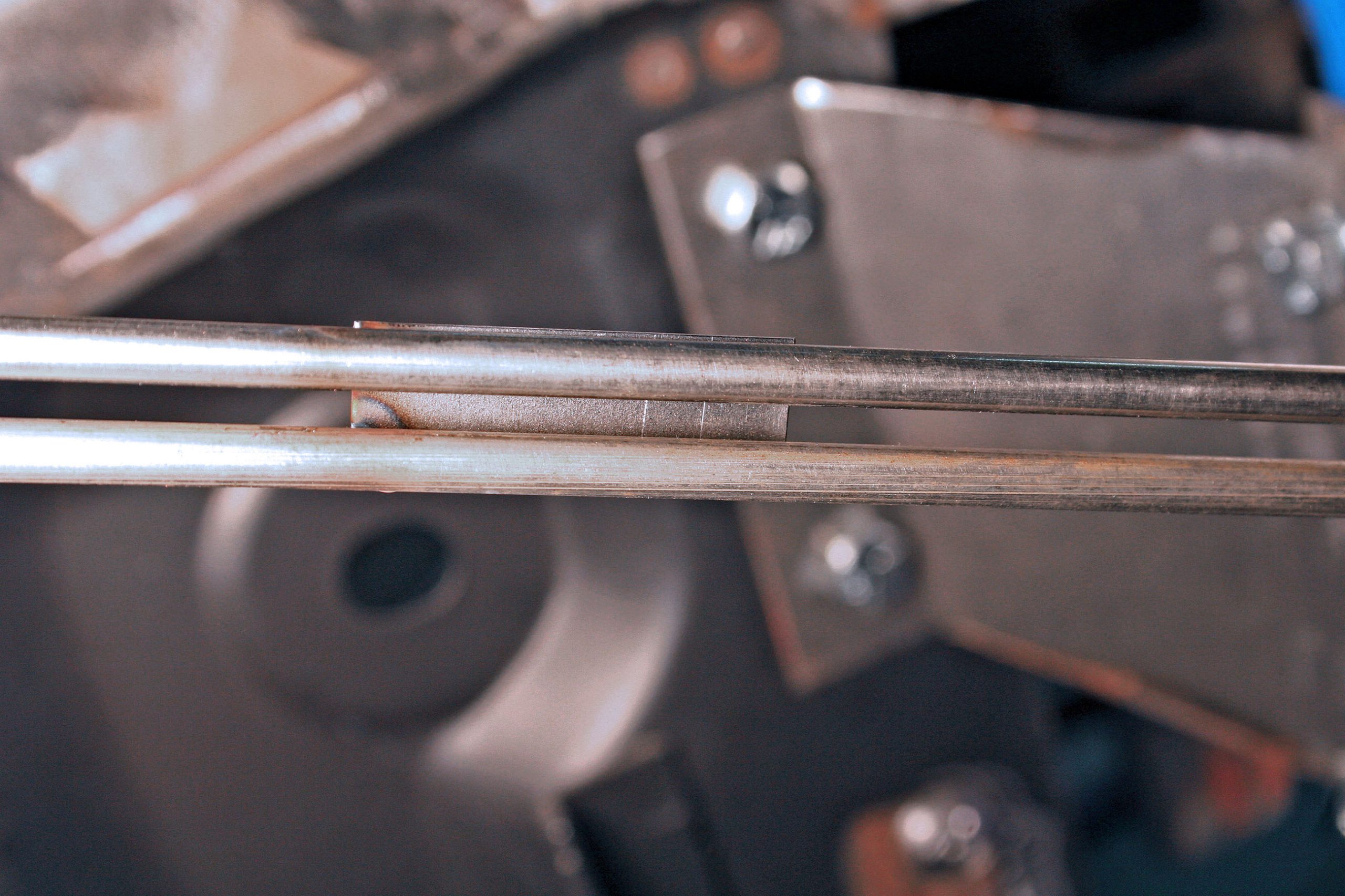
12A-B. The upper radiator cover will be separated from the lower half by only 1/8 inch. To make sure the gap was right, the crew tacked a piece of sheetmetal between the two stainless rods. When the metal is formed and complete, a cutoff wheel can be used to remove this piece, making the two pieces separate.
12A-B. The upper radiator cover will be separated from the lower half by only 1/8 inch. To make sure the gap was right, the crew tacked a piece of sheetmetal between the two stainless rods. When the metal is formed and complete, a cutoff wheel can be used to remove this piece, making the two pieces separate.12A-B. The upper radiator cover will be separated from the lower half by only 1/8 inch. To make sure the gap was right, the crew tacked a piece of sheetmetal between the two stainless rods. When the metal is formed and complete, a cutoff wheel can be used to remove this piece, making the two pieces separate.
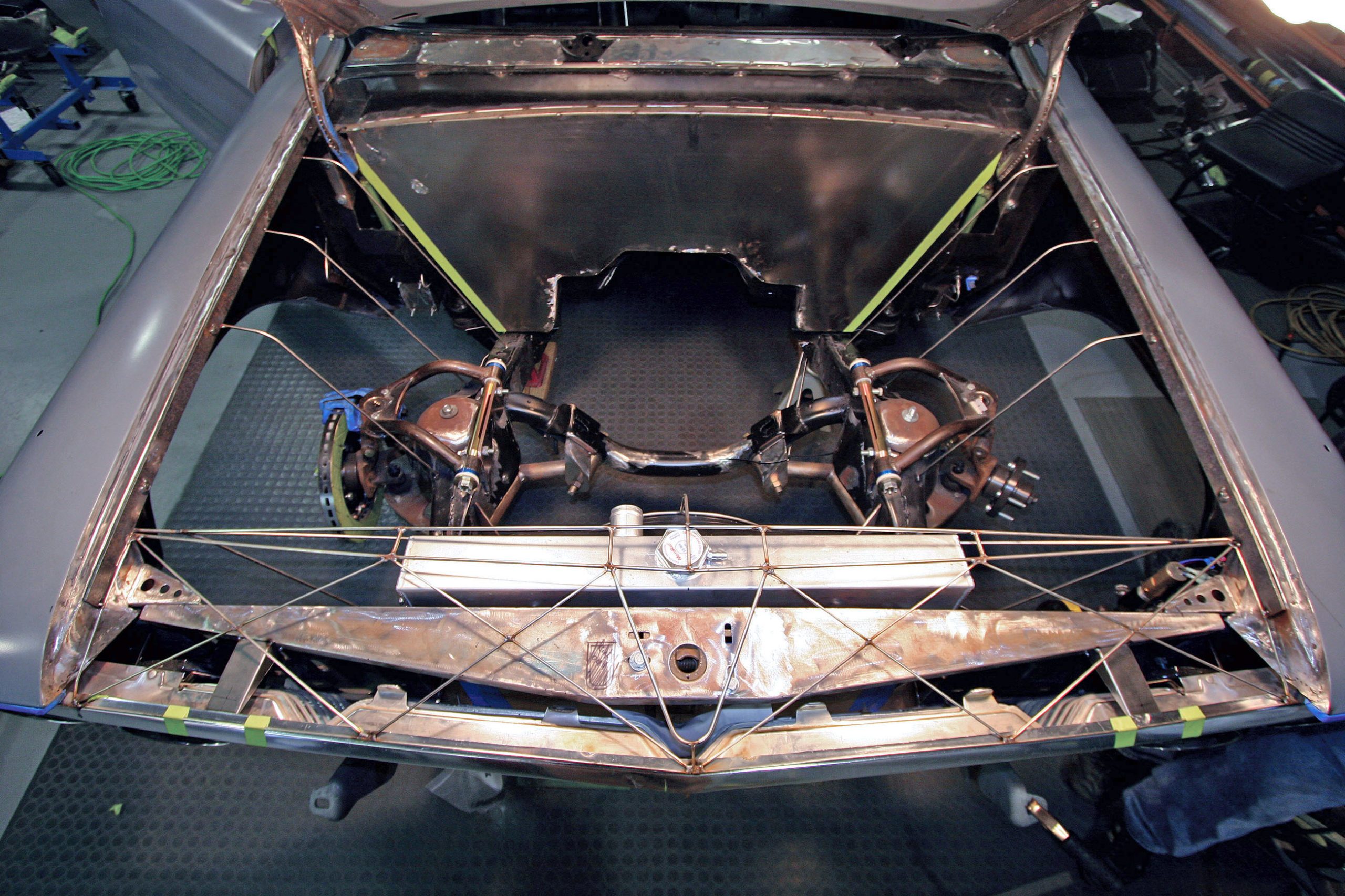
13. This is starting to look a lot better, and you can finally see a rough vision of what the finished product will look like. If any changes to the stainless rods are to be made, now is the time, but the crew is happy with this shape, so they’re moving on to the sheetmetal.
14. The upper radiator cover will be made first, and it will be made in several sections because of the extreme angles and bends. When all of the metal is formed, it can be welded together to make a strong bond.
15. Minor tweaking was needed to get the desired shape, so the Jeff Lilly crew fired up the Mittler shrinker/stretcher and made it just right. Using the handle instead of the foot-operated hydraulic system allows a little more precision with the panels.
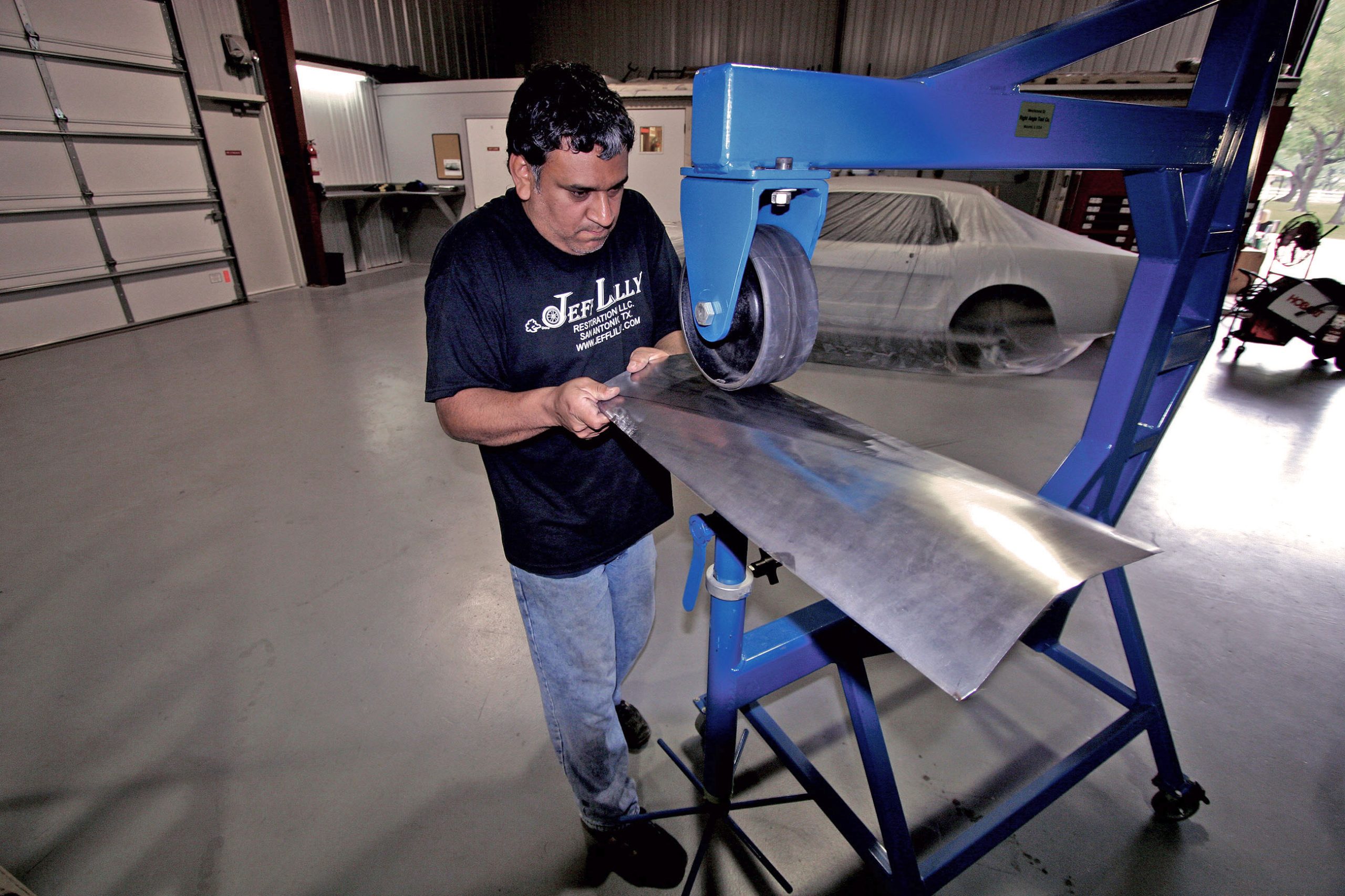
16. The unusual shape that was needed required extra work with the English wheel to get the contours just right. The upper wheel features a rubber surrounding that allows the material to stretch to the shape you want with little to no marring of the panel.
17. No doubt the crew was headed in the right direction with the radiator cover, but it still needed more tweaking. It takes a few tries to get it perfect, but it’s better to go a little at a time rather than too far.
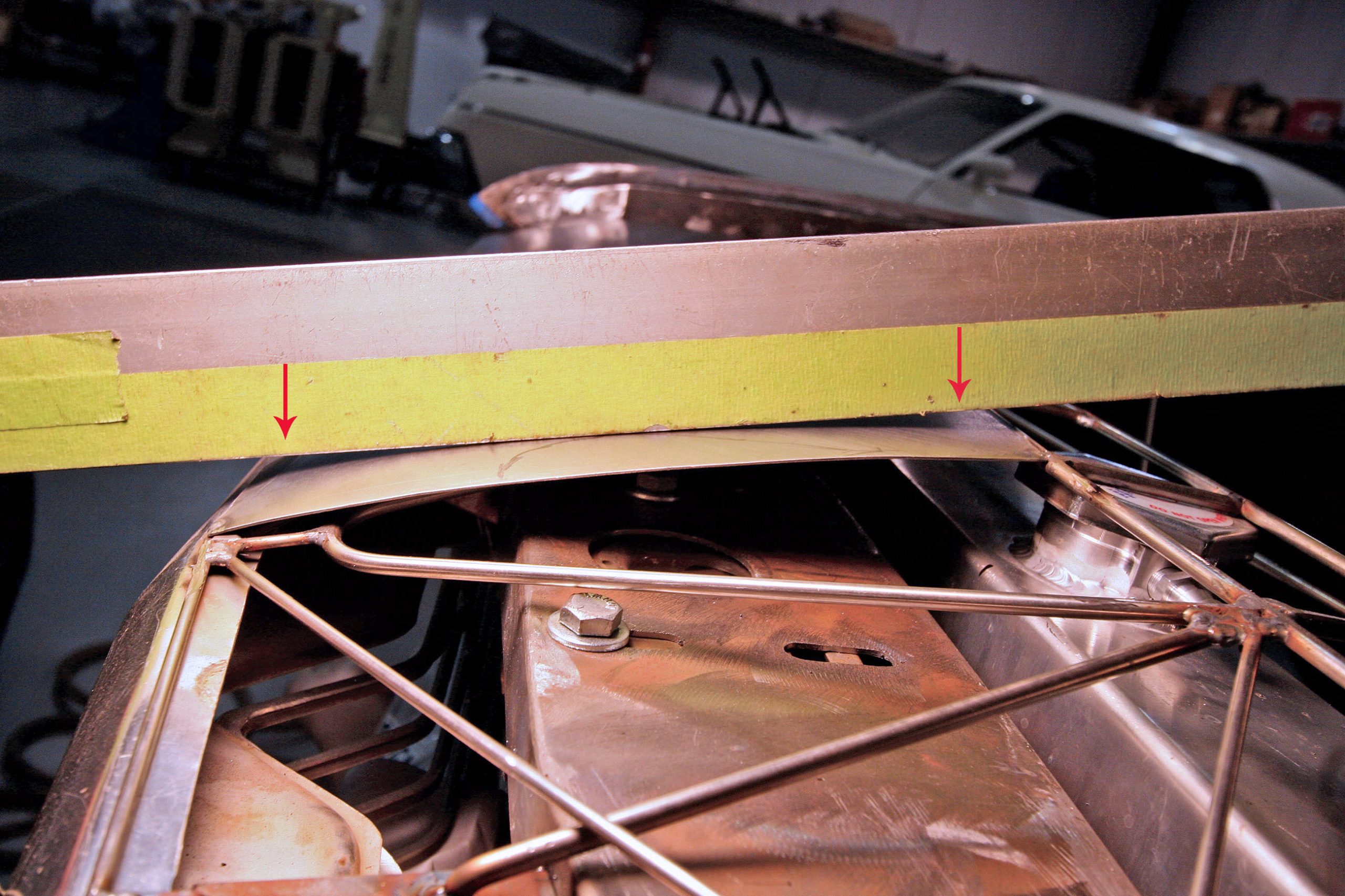
18. The contour was checked to see how it slopes on both the front and rear section. Since this is the first panel, it will have to be matched to the second panel so it is perfectly symmetrical.
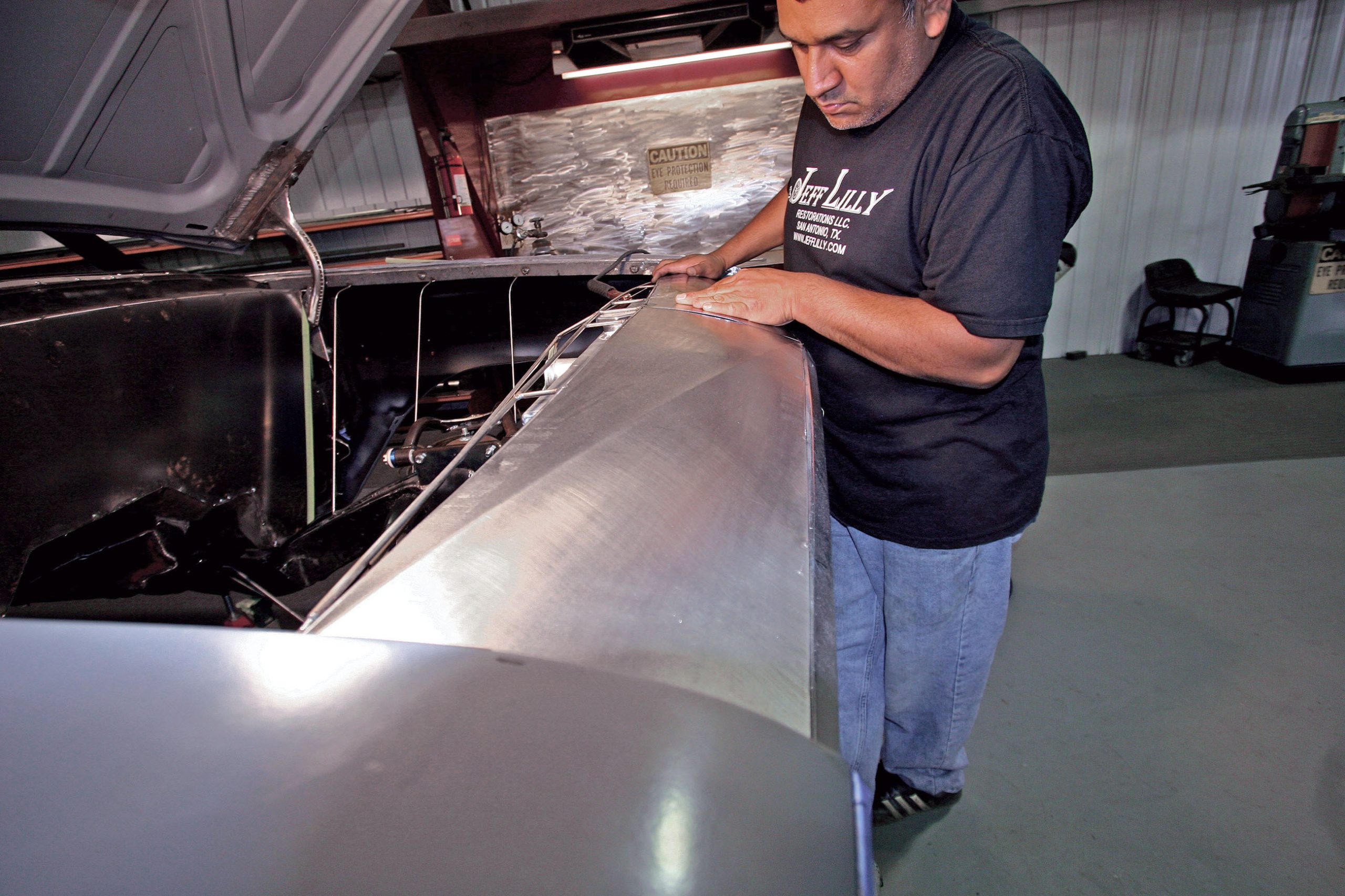
19. The two sides should fit perfectly flush. The metal was rolled until it fit as desired and then it will be tacked into place and the crew will move on to the other part of the radiator cover.
20. The top portion of the fan cover was finished and welded to the radiator support cover, making it all one piece. This metal is totally flat, and no wheeling, bending or rolling was needed to obtain the preferred shape.
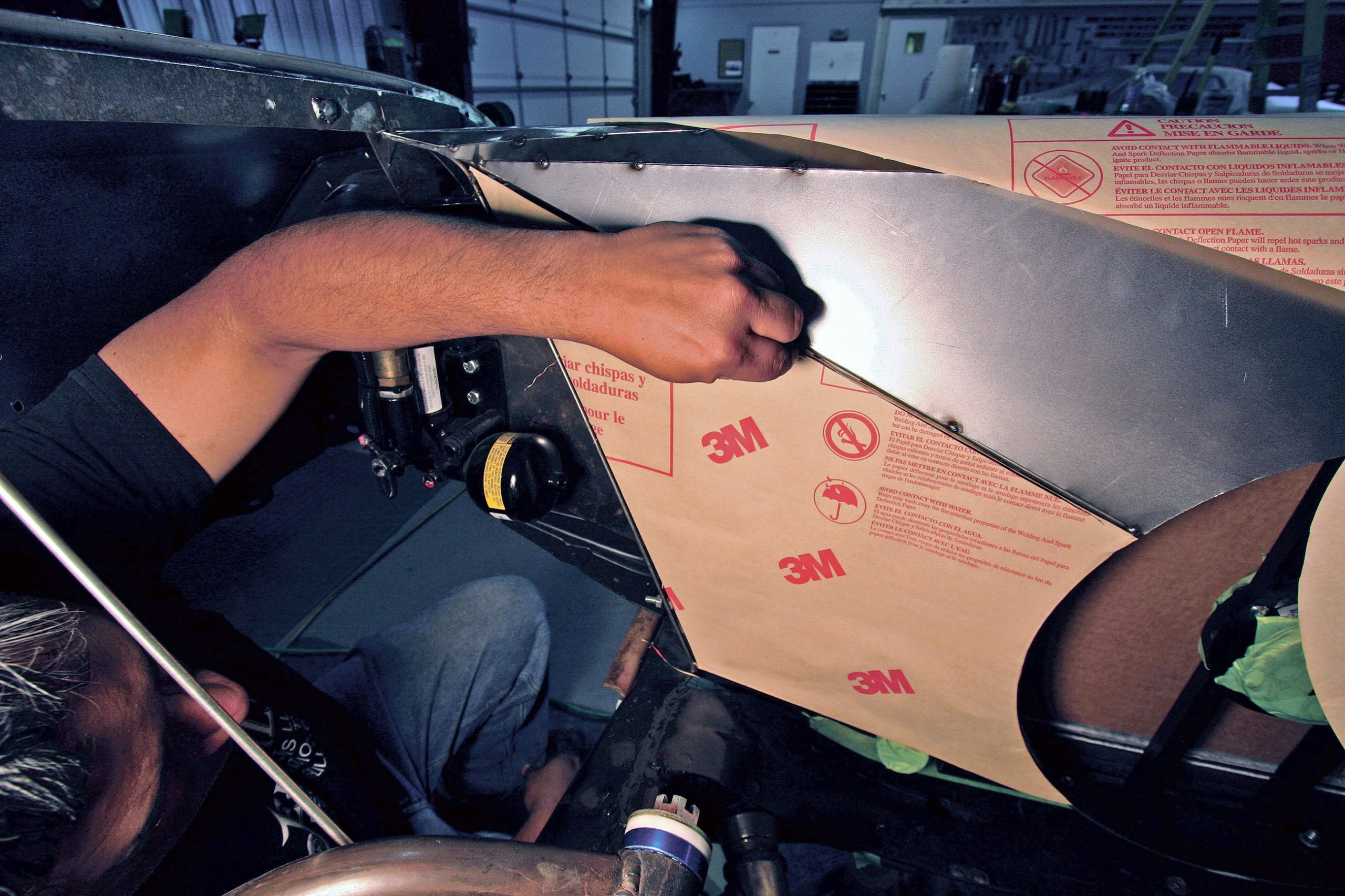
21. Although poster board is normally used for mock-ups, this adhesive, heat-resistant paper from 3M also works well. Luie used a razor blade to trim off the excess against the wire frame. He will peel it off to transfer it to the sheetmetal.
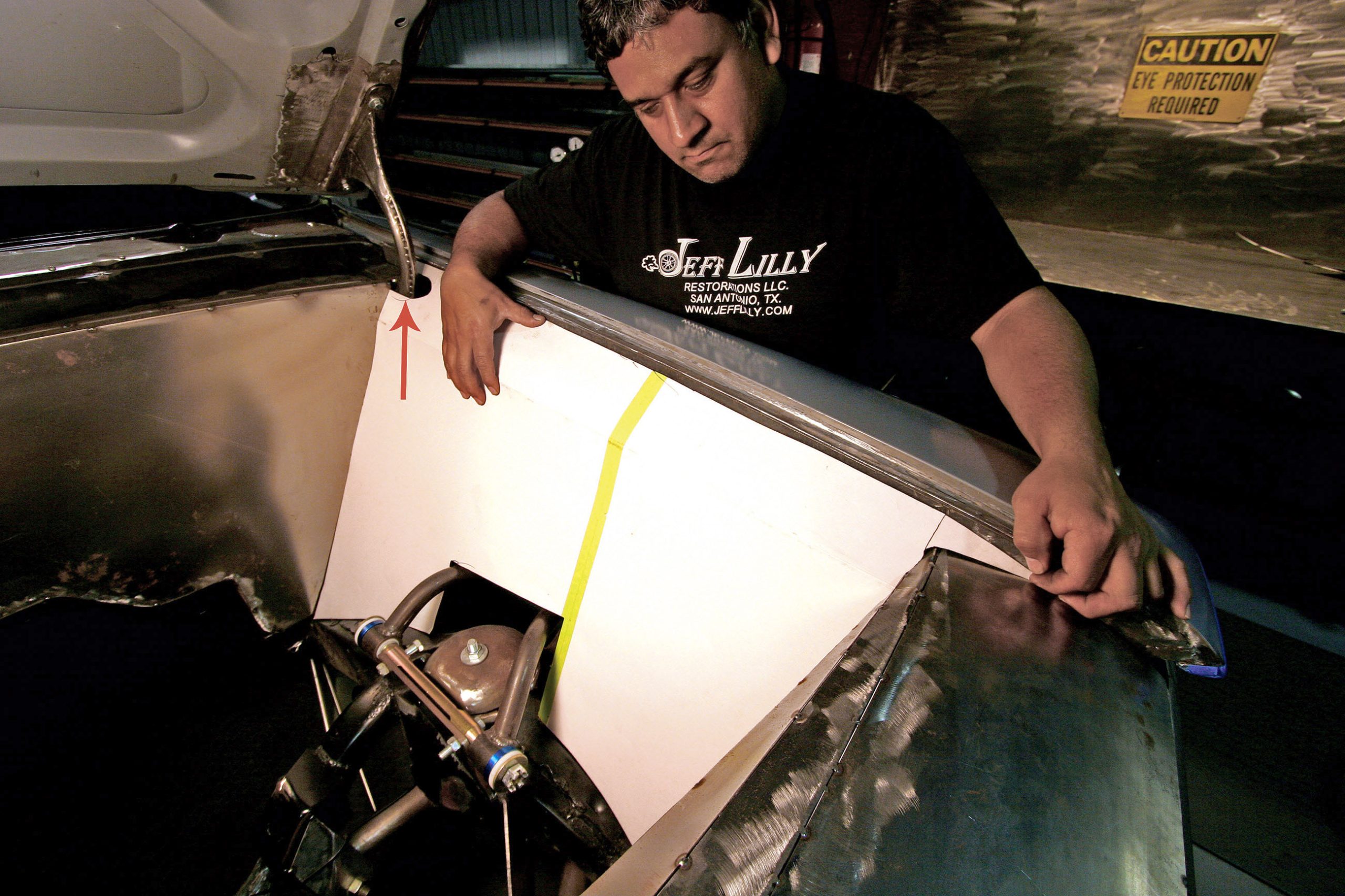
22. The inner aprons are mocked up and ready to be transferred to metal. Notice the red arrow—it points out the oval relief cut made to clear the custom hood hinges, but more on that later.
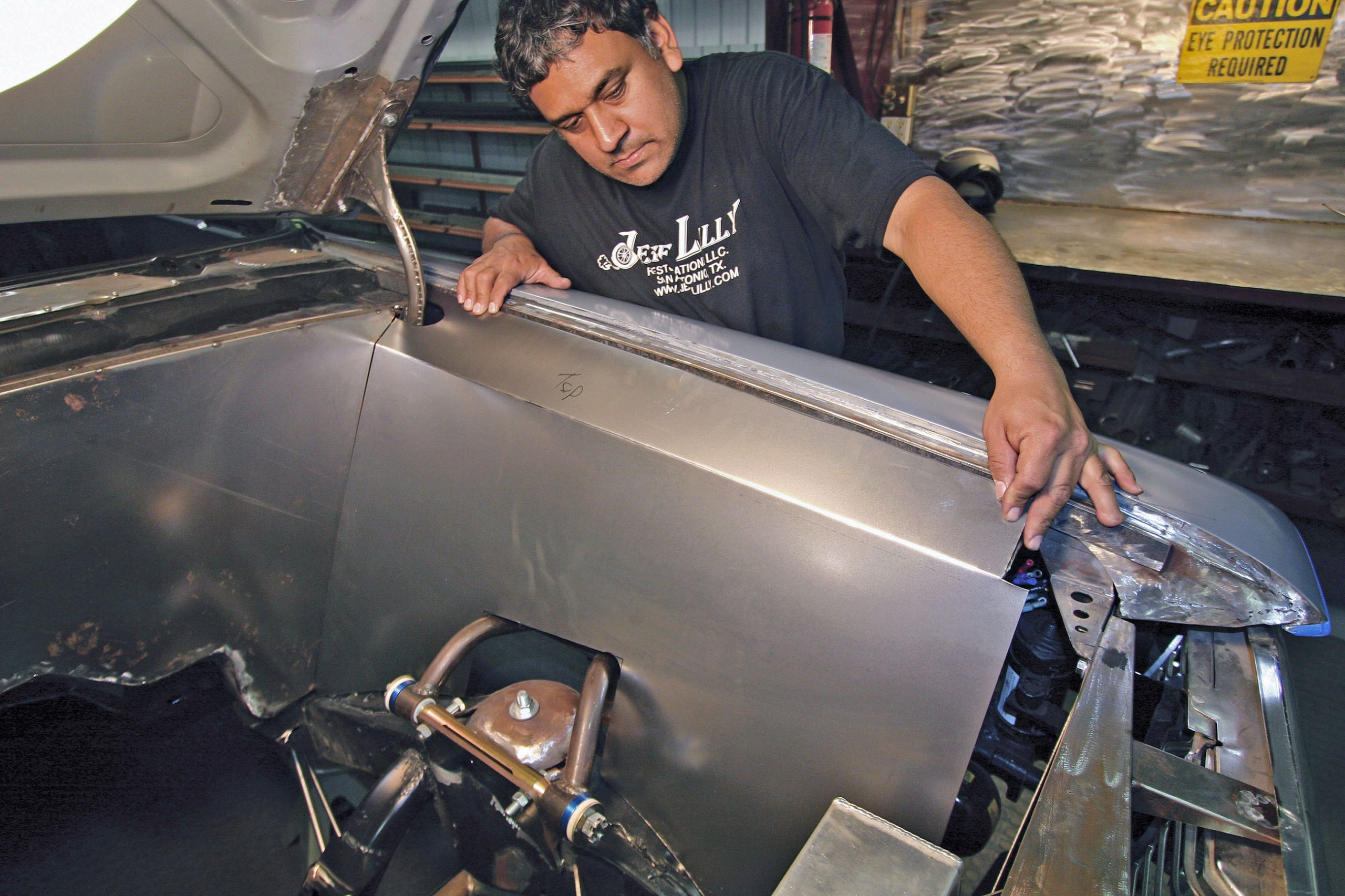
23. Using the mock-up paper as a guide, Luie cut the metal to size and bent it on the brake. Several test fits were made to ensure a perfect fit. The relief for the control arm should be made with the suspension completely bottomed out to prevent interference later.
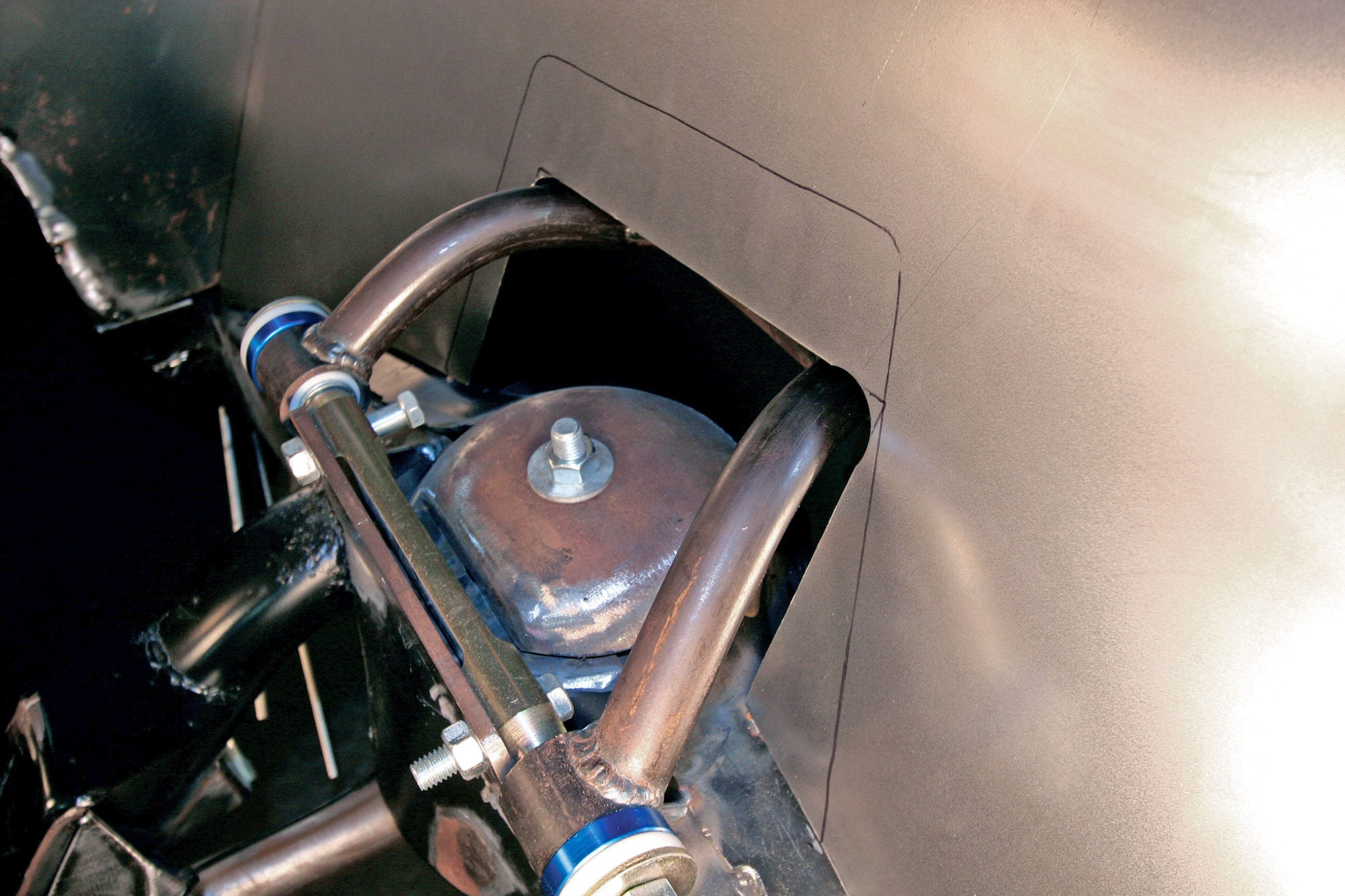
24. A template and marker were used to mark the area that needs relieving. Hard cornering or bumps could cause major problems, so the crew didn’t take any chances with this killer engine compartment.
25A-B. Nibblers and saws are great for straight-line cuts or slight turns, but they do not fare so well in tight corners. An appropriately sized hole saw usually does the trick, but the crew here used a round die punch for a burr-free finish. Then the nibblers or a saw are used to cut the straight parts.
25A-B. Nibblers and saws are great for straight-line cuts or slight turns, but they do not fare so well in tight corners. An appropriately sized hole saw usually does the trick, but the crew here used a round die punch for a burr-free finish. Then the nibblers or a saw are used to cut the straight parts.
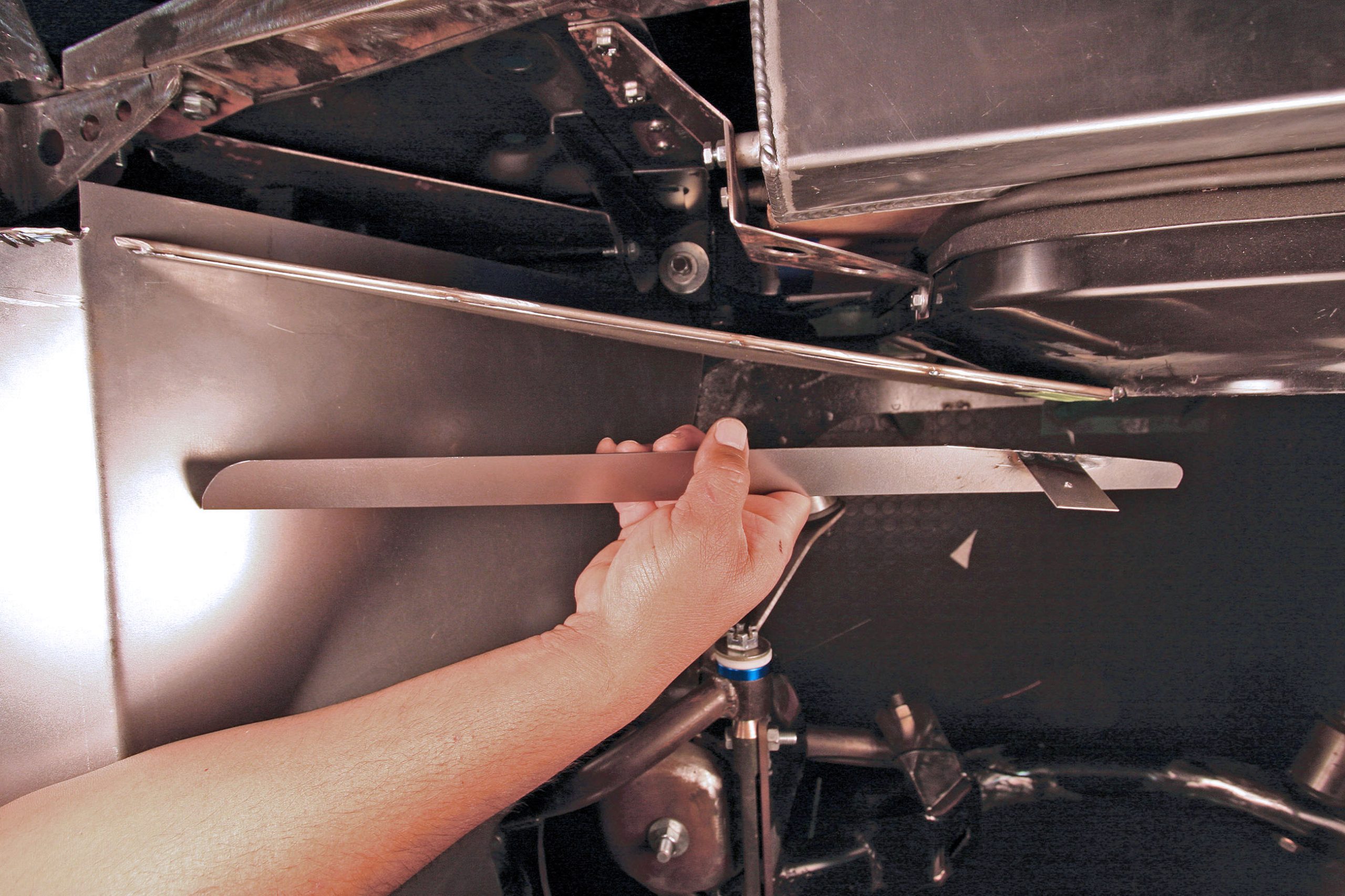
26. Using sheetmetal, the trim pieces were bent to 90 degrees and clamped into place before welding. This will strengthen the ends of the inner fenders and provide attaching points for easy assembly.
27. With the basic shape of the inner fender formed, the crew moved on to the lower side of the fan cover by bending a 90-degree flange. A mounting ear was also fabricated to mount to the fan housing.
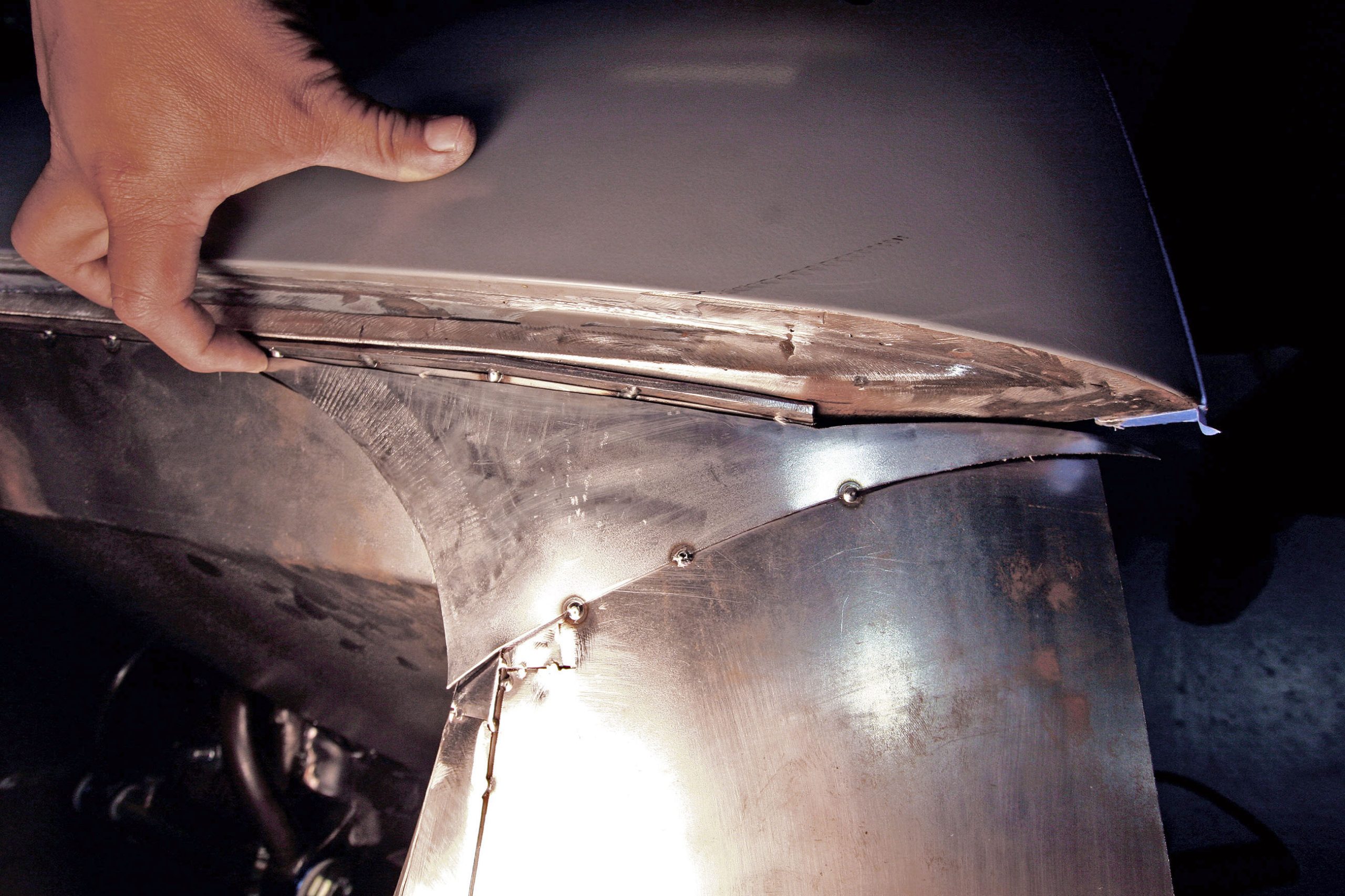
28. The transition from the inner fender to the radiator cover needs to be smooth, so this piece of sheetmetal was formed and trimmed to fit. It looked great and was tacked into place.
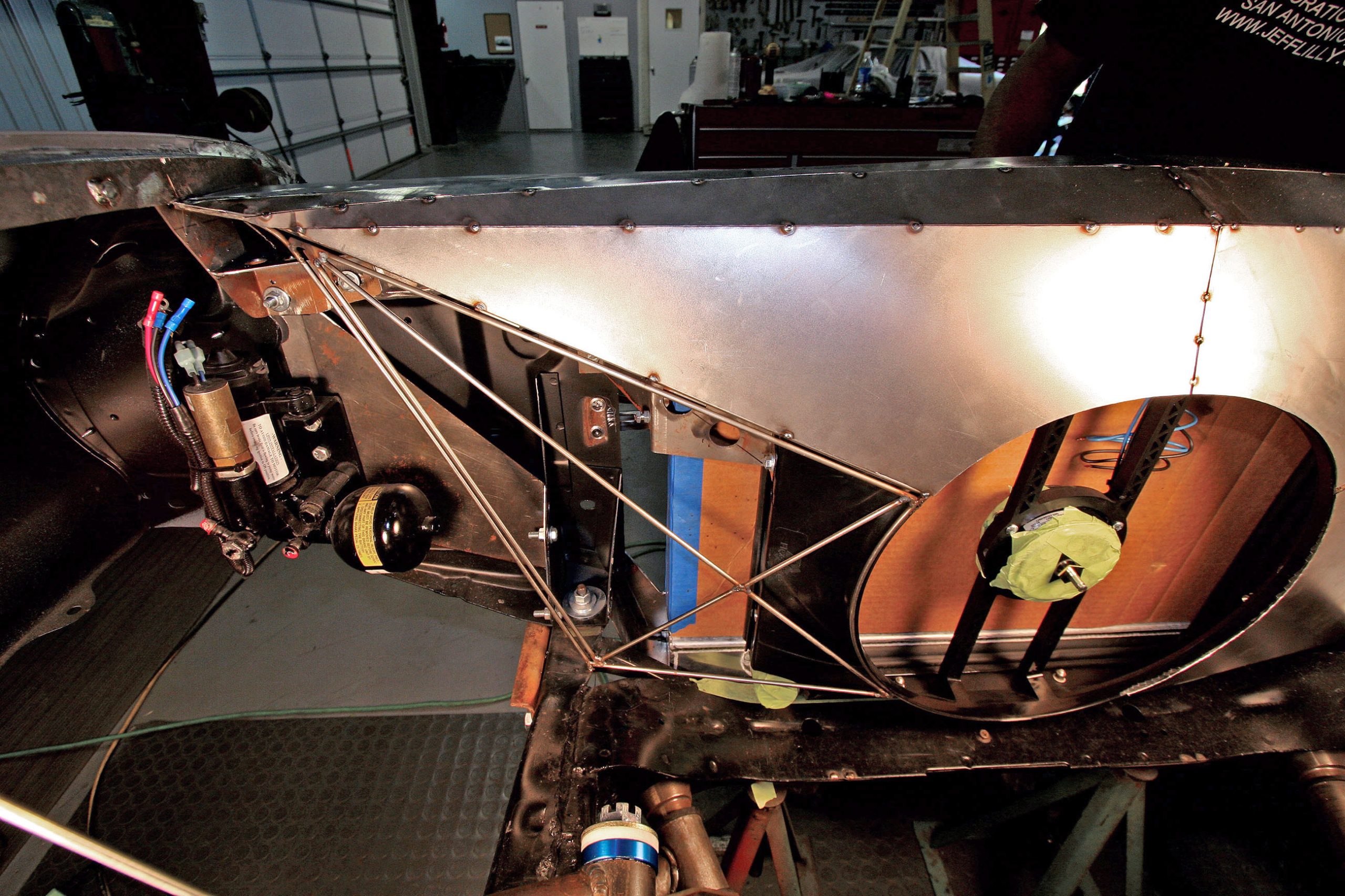
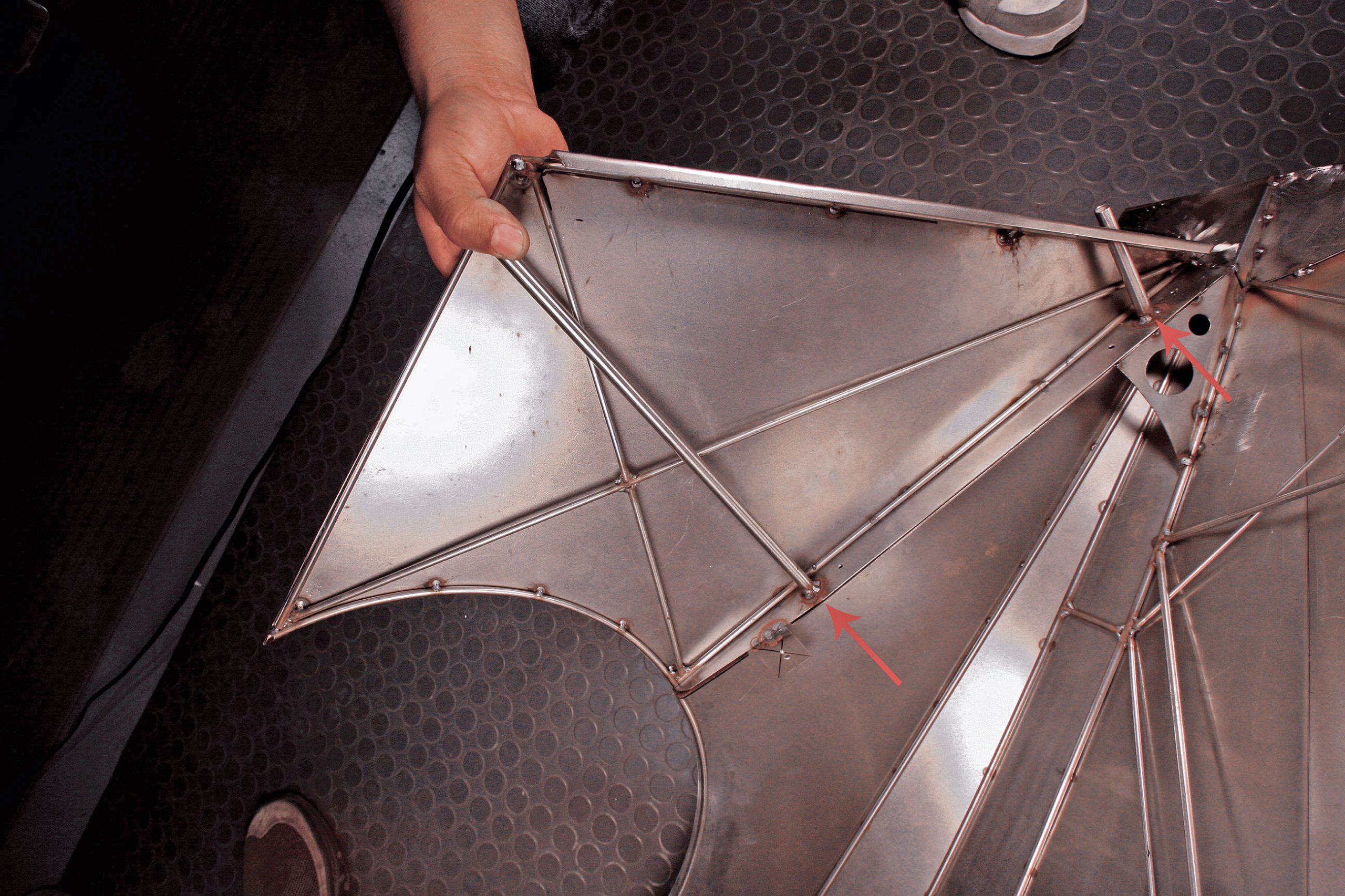
29A-B. After removing the radiator cover, it was flipped over to make sure everything was okay. The wire structure looks cool, in addition to adding strength, even while the sheetmetal is only tacked together. Triangular braces were welded in to ensure stability so the mounting points would remain true.
29A-B. After removing the radiator cover, it was flipped over to make sure everything was okay. The wire structure looks cool, in addition to adding strength, even while the sheetmetal is only tacked together. Triangular braces were welded in to ensure stability so the mounting points would remain true.
30. The lower fan cover fits perfectly against the upper cover. The red arrows show where the attaching threaded rod bolts will keep the two pieces tightly together.
31A-B. Thin-wall tubing runs from top to bottom and provides a path for the threaded rod to travel. It will protrude through the fan trim panel. The bolt was pointed a bit to allow easy insertion when under the car attaching the panel.
31A-B. Thin-wall tubing runs from top to bottom and provides a path for the threaded rod to travel. It will protrude through the fan trim panel. The bolt was pointed a bit to allow easy insertion when under the car attaching the panel.
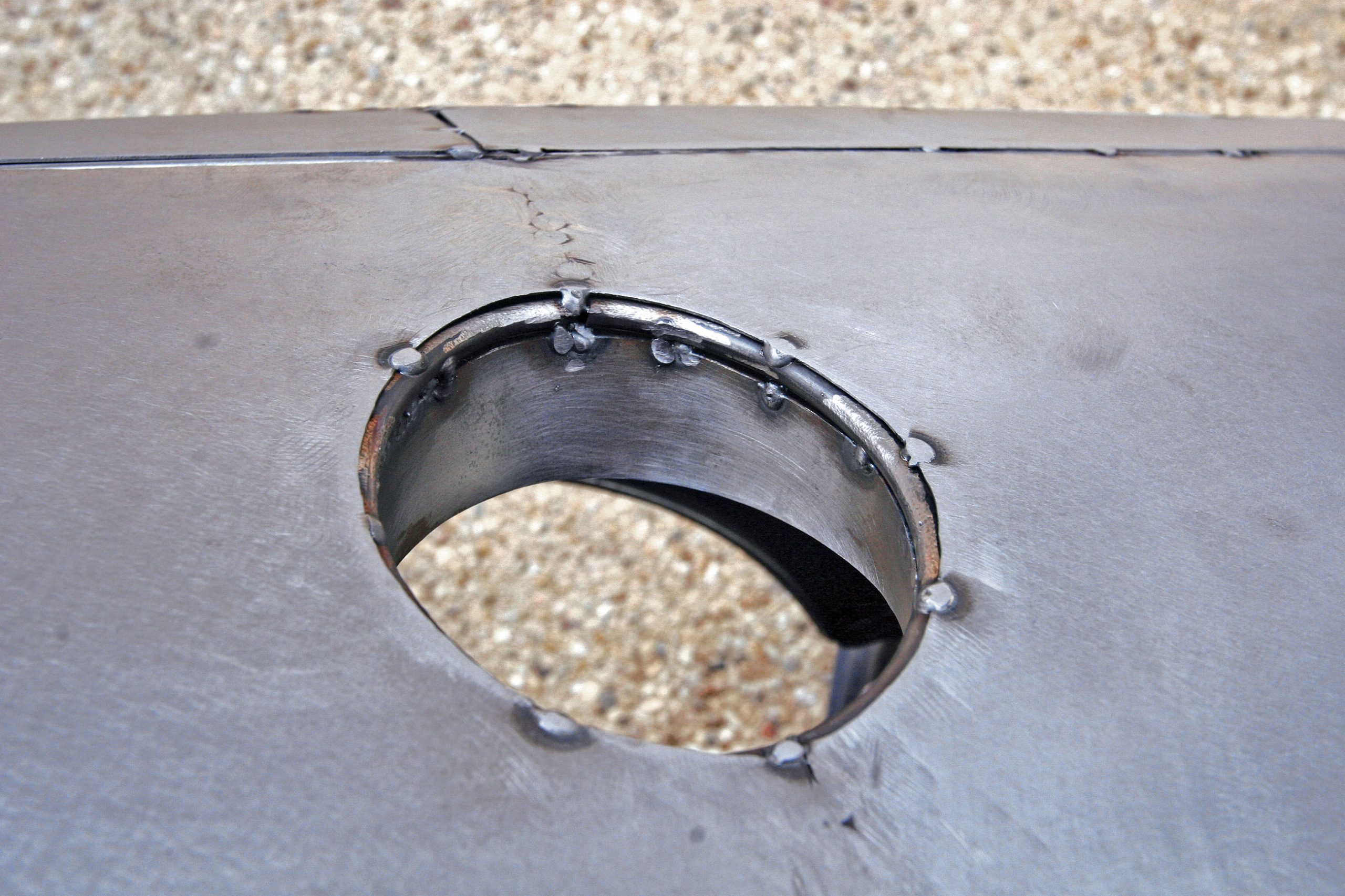
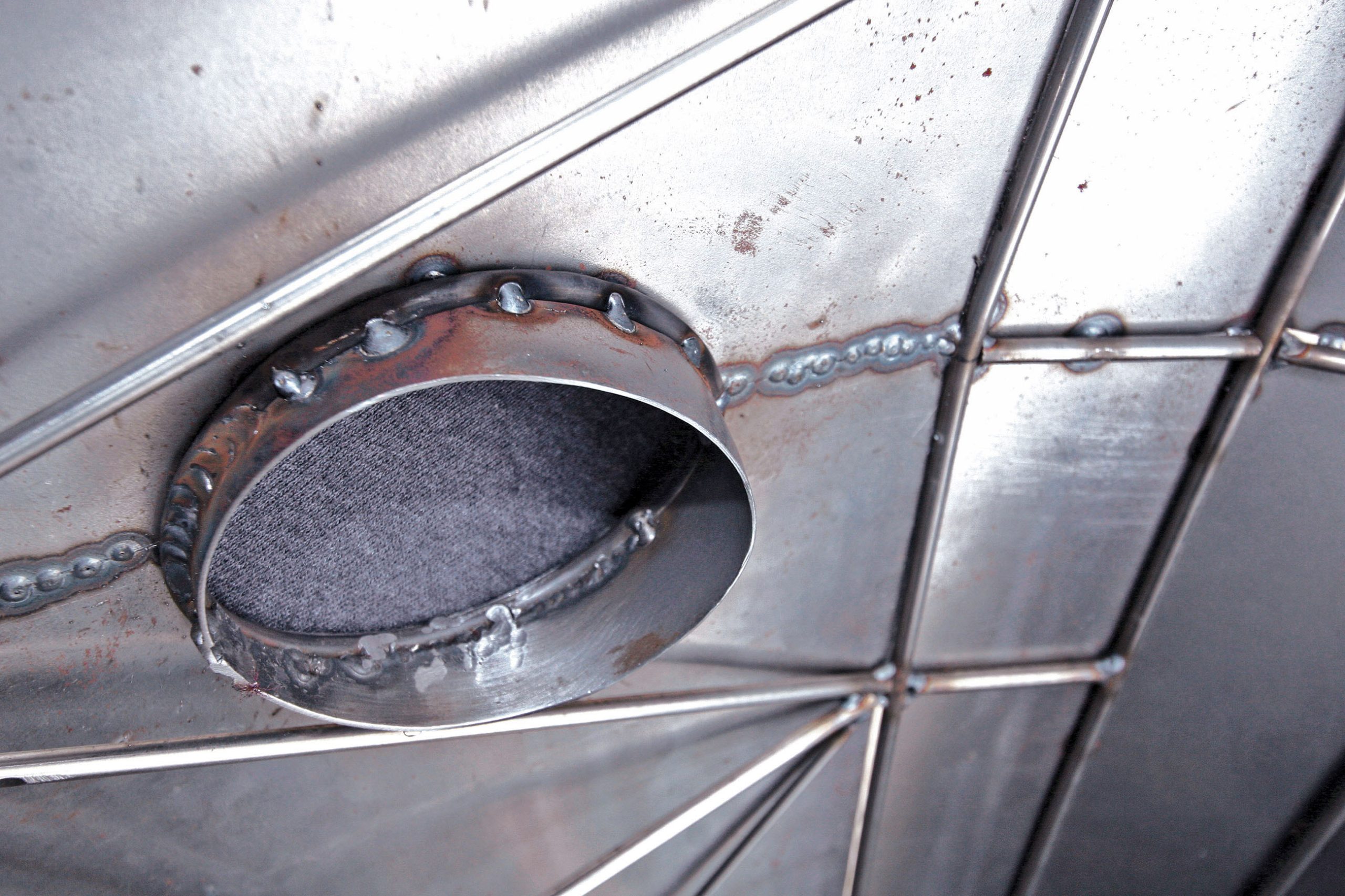
32A-B. The hood latch interfered with the upper radiator cover, so a relief cut was made and a piece of 1/8-inch stainless rod was bent and welded into place. Sheetmetal was bent and welded to the small tubing in order to sleeve the hole, making it smooth and stylish.
32A-B. The hood latch interfered with the upper radiator cover, so a relief cut was made and a piece of 1/8-inch stainless rod was bent and welded into place. Sheetmetal was bent and welded to the small tubing in order to sleeve the hole, making it smooth and stylish.
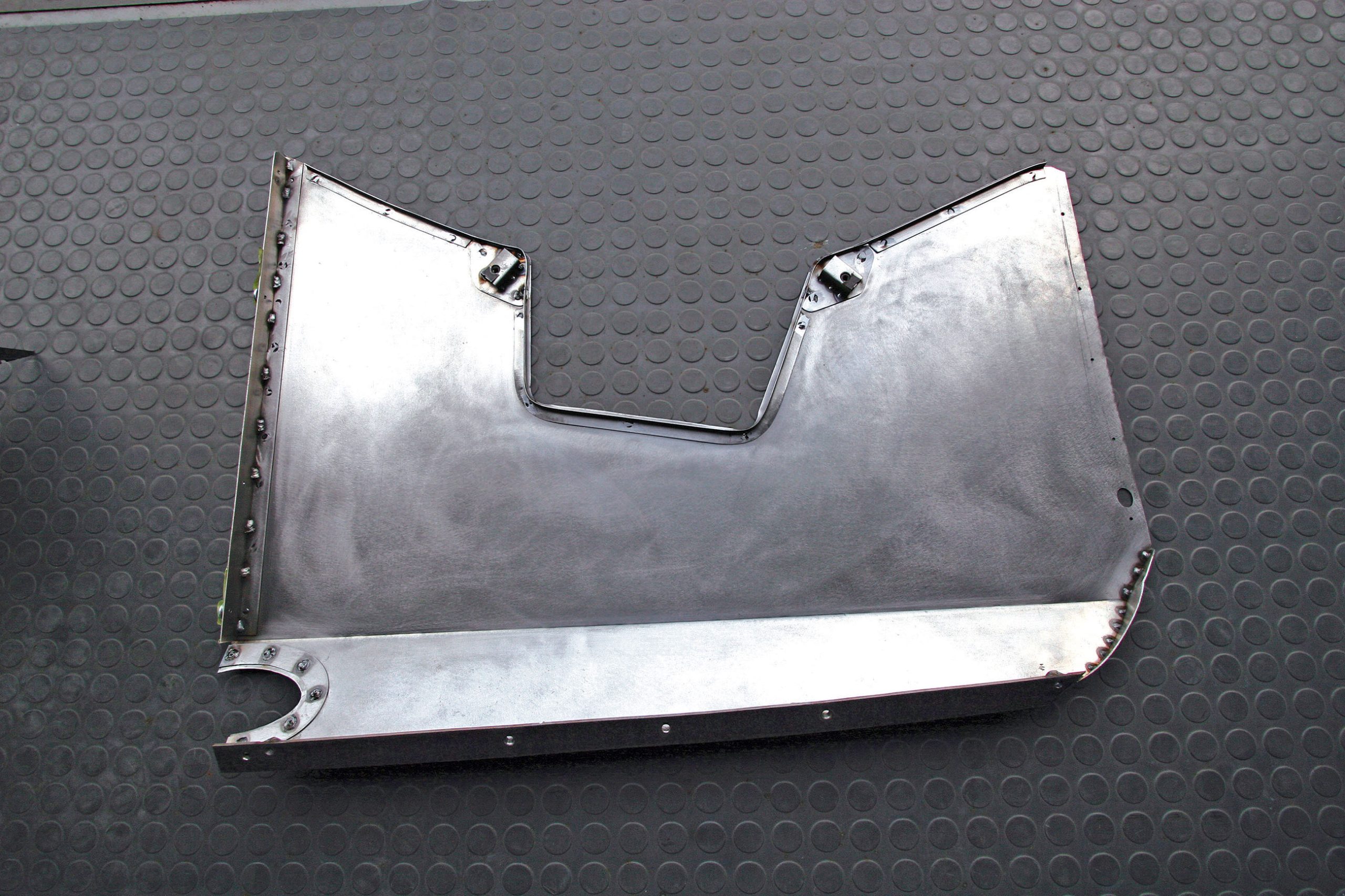
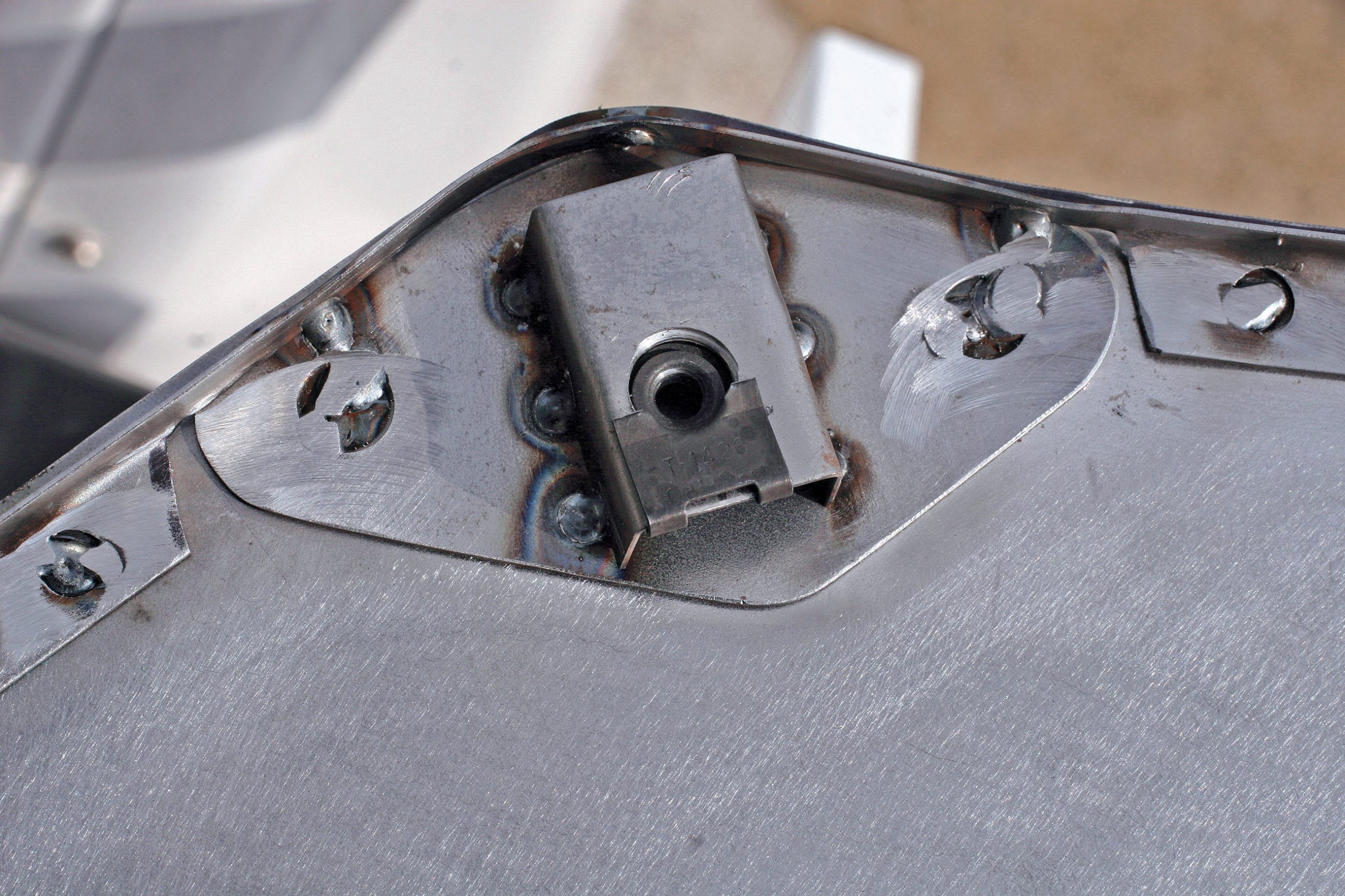
33A-B. With the inner fenders turned over, you can see the flanges and attaching brackets in addition to the top flange. The shrinker-stretcher was used to make the bends for the control arm relief and additional mounting brackets were welded in.
33A-B. With the inner fenders turned over, you can see the flanges and attaching brackets in addition to the top flange. The shrinker-stretcher was used to make the bends for the control arm relief and additional mounting brackets were welded in.
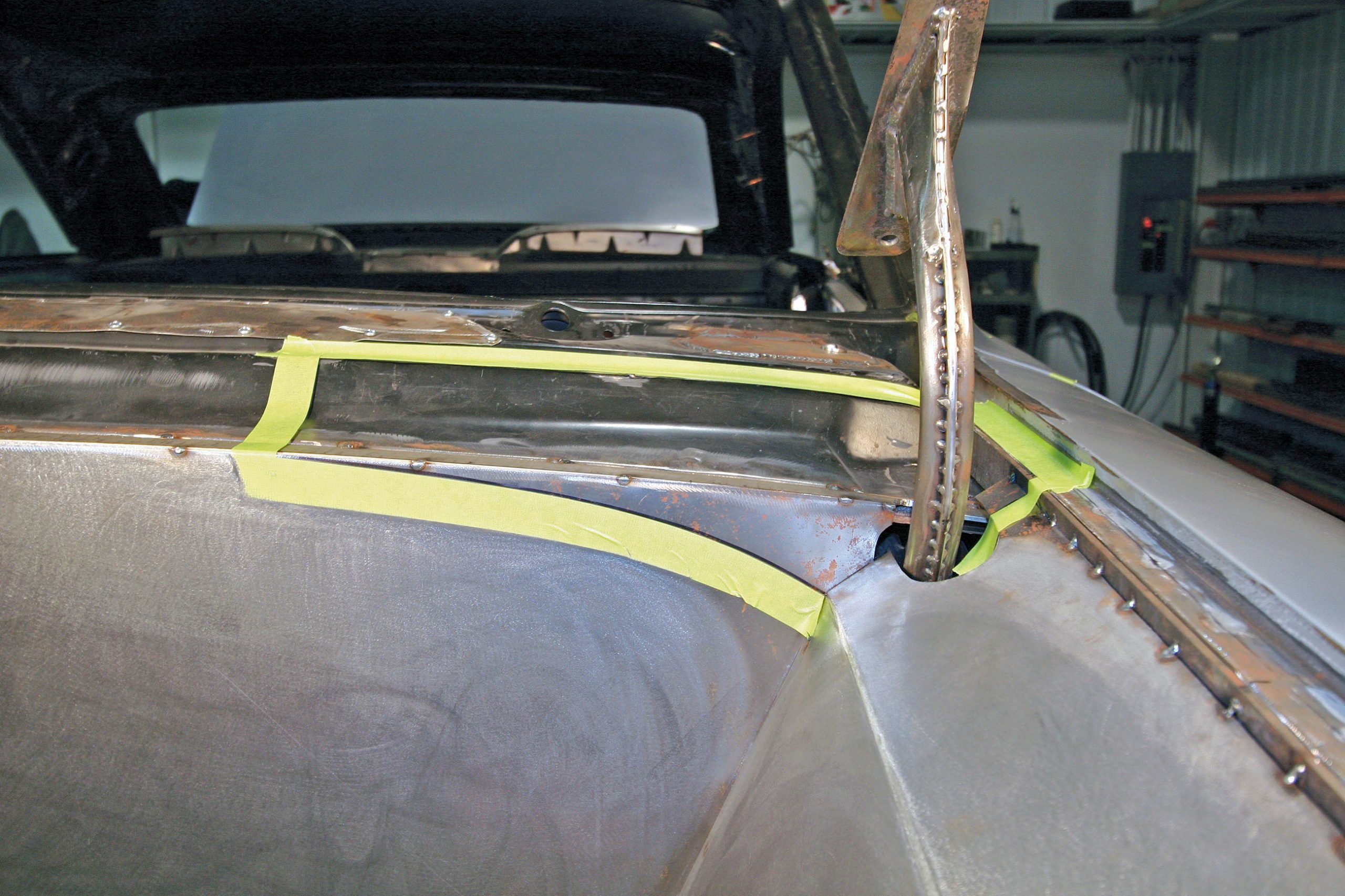
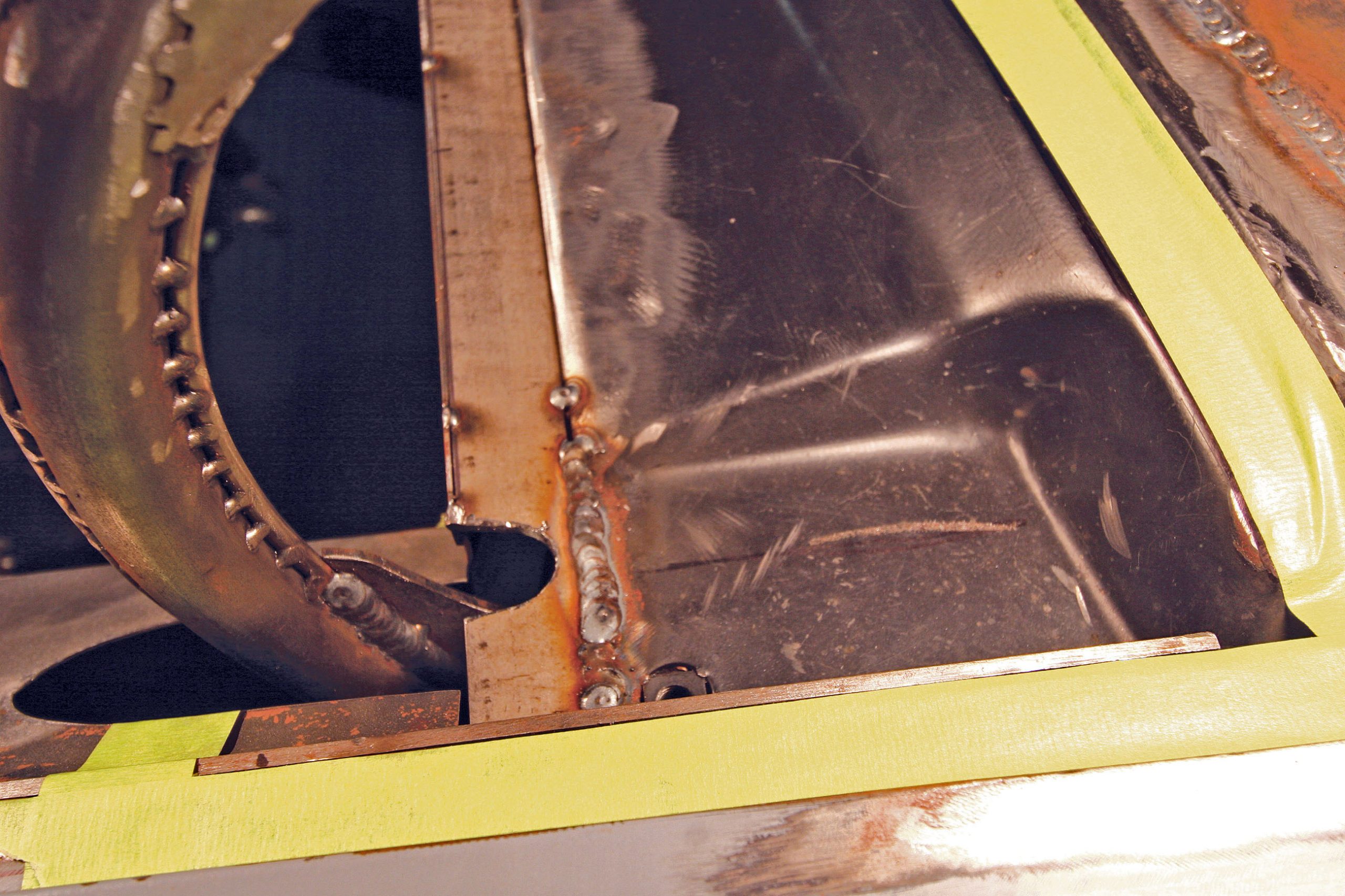
34. There was a major transition problem in the cowl and inner fender area, so the crew taped an area where the cutting will occur. This will be much smoother and will fit perfectly with the flowing lines that will surround the engine.
35. The pocket in the corner of the cowl is where the original hood hinge would sit when the hood was closed. A custom pair of hood hinges was fabricated, so this pocket is no longer needed.
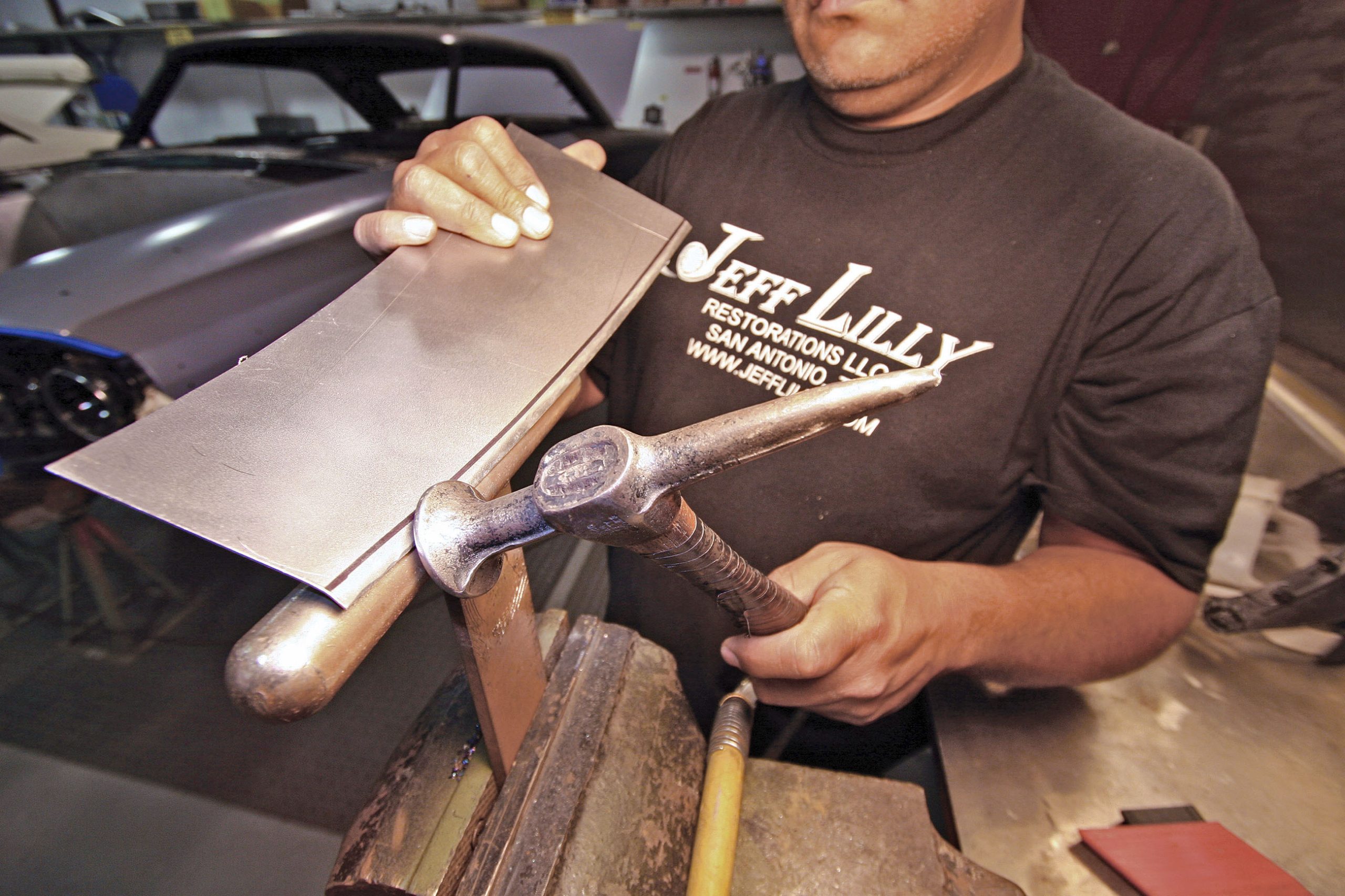
36. The panels were mocked up and the pattern was transferred to metal and cut out. Here, Luie uses the T-dolly to put a bead on the edge, matching the factory cowl shape while transitioning to the new fabricated panels.
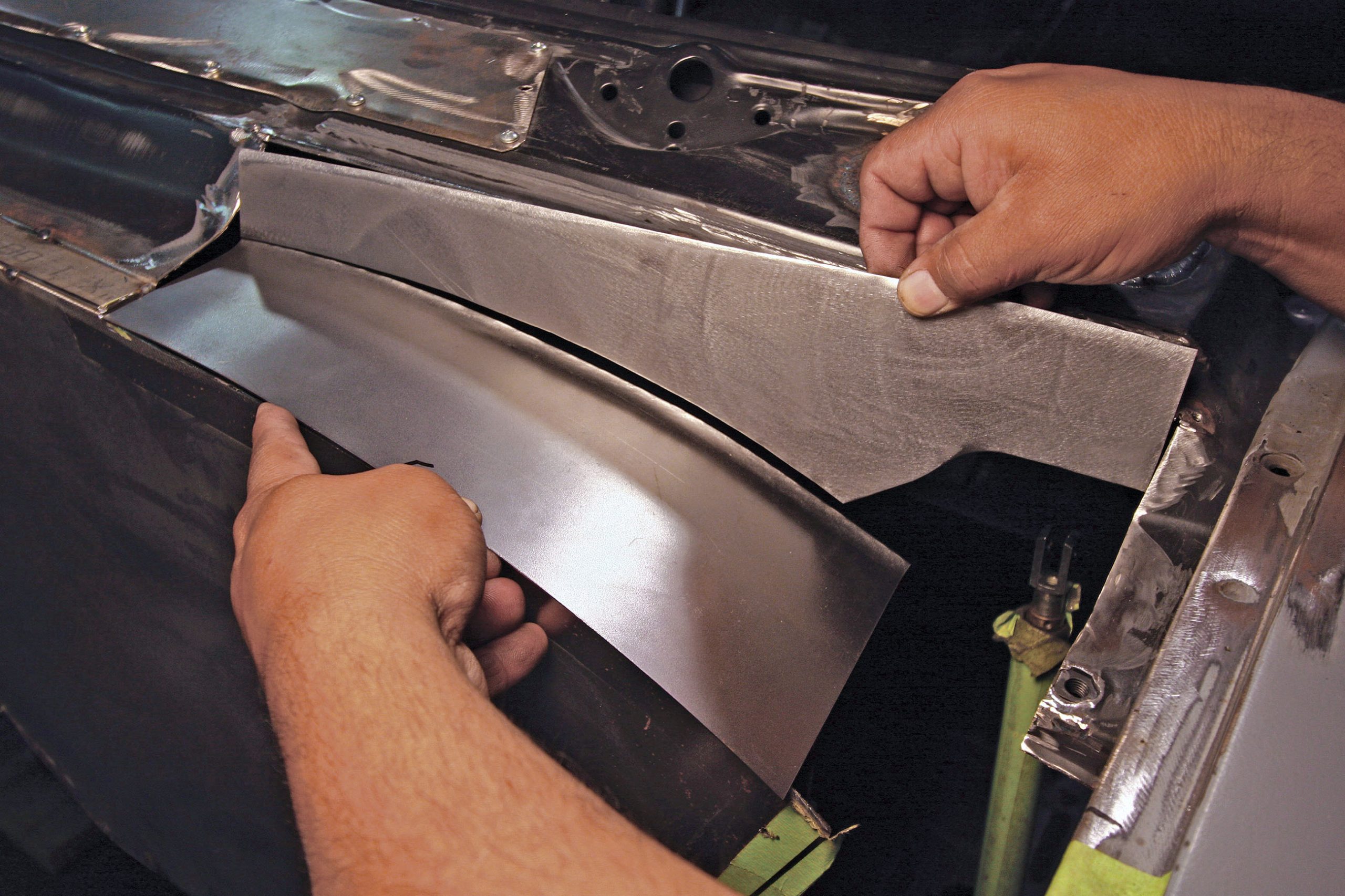
37. The new pieces match the factory area with a blend to make a natural curve in the top of the panel. After a few test fits and measurements, they were tacked into place.
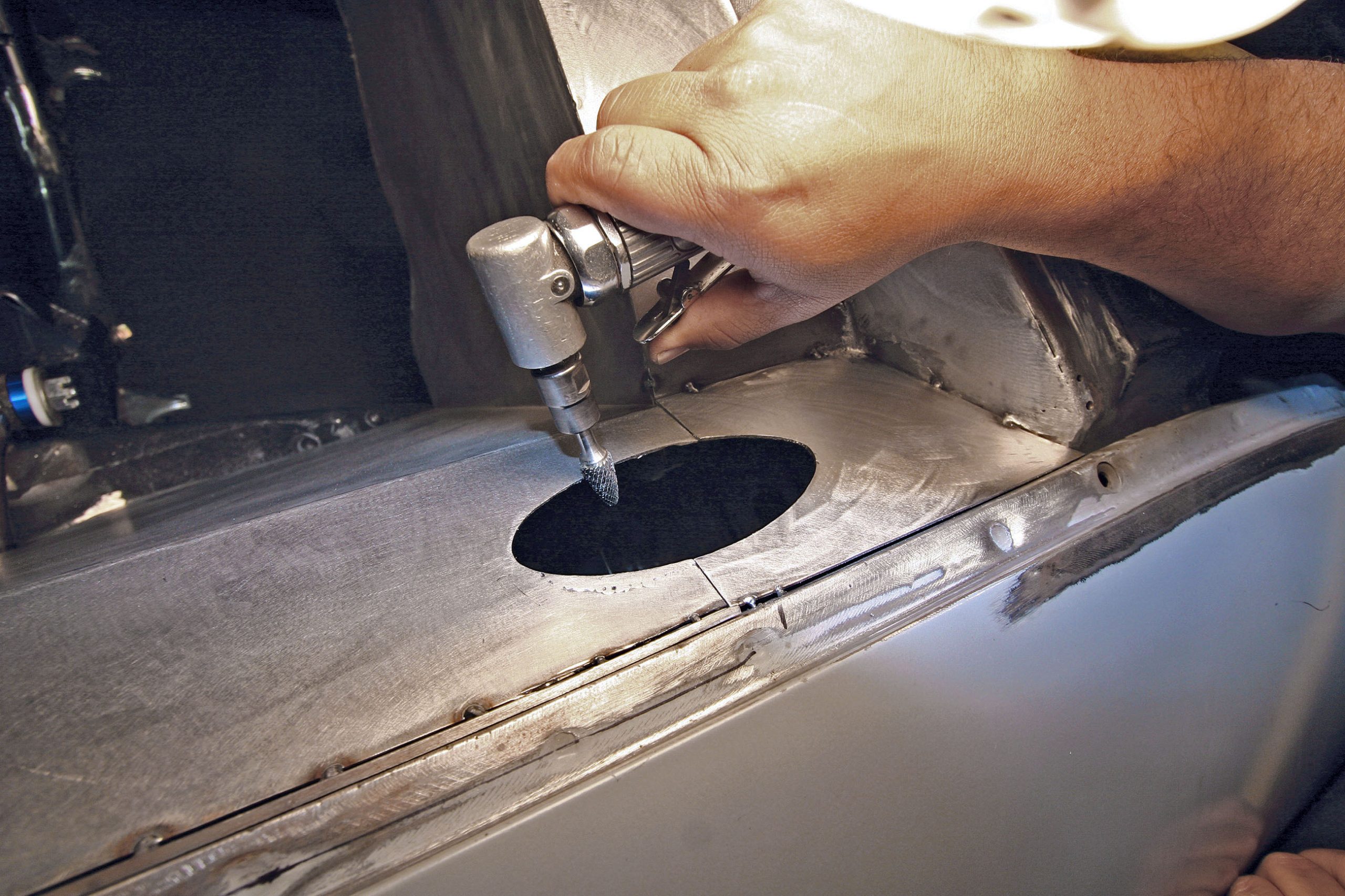
38A-B. The hood hinge oval was laid out to match both sides and traced onto tape for an exact cutout template. Using a hole saw, the ends were cut and the template was roughed out with an air saw and finalized with an angle grinder equipped with a burr attachment.
38A-B. The hood hinge oval was laid out to match both sides and traced onto tape for an exact cutout template. Using a hole saw, the ends were cut and the template was roughed out with an air saw and finalized with an angle grinder equipped with a burr attachment.
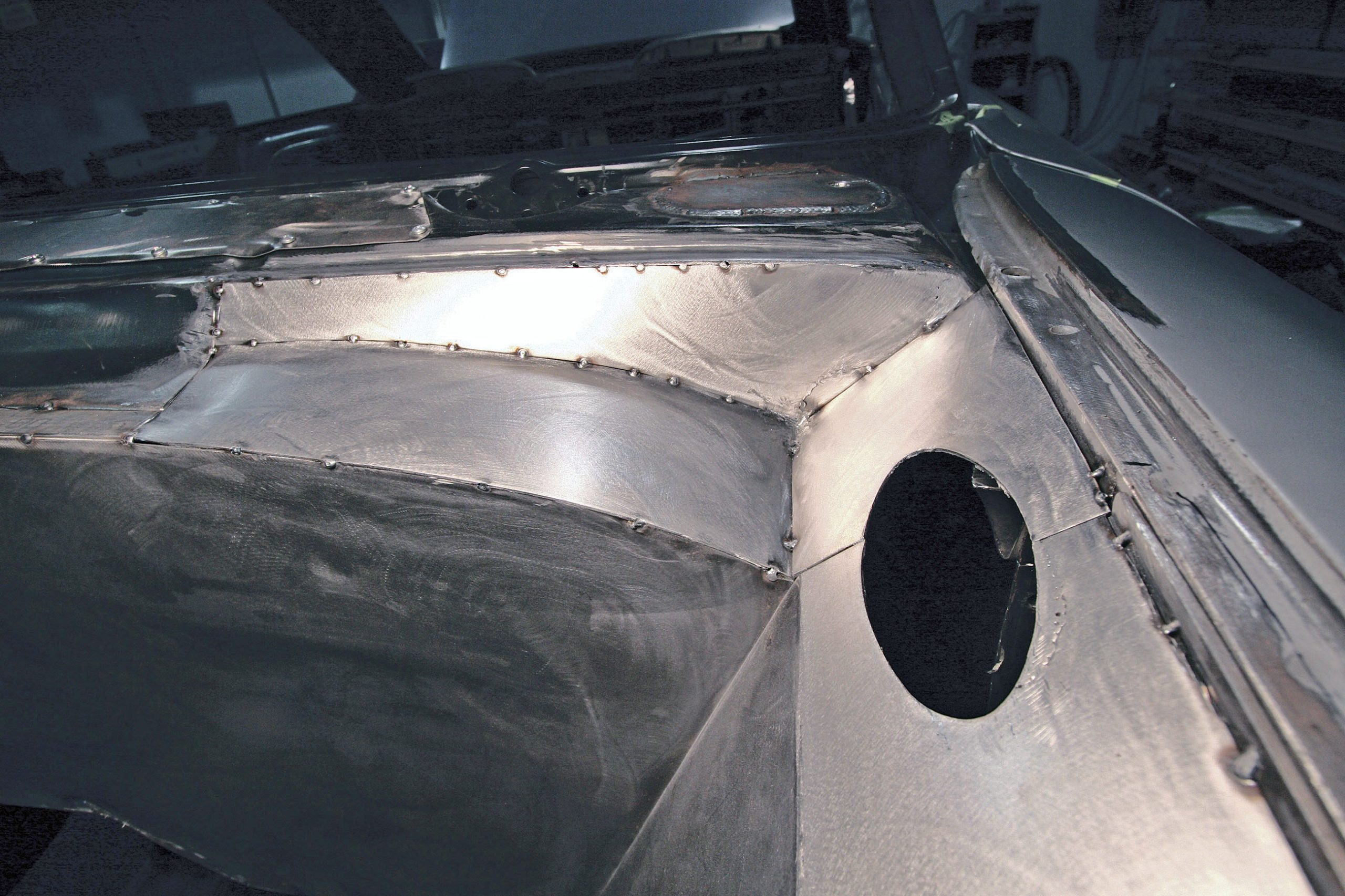
39. Now this is much better! You can see a noticeable difference from the stock configuration and the lines flow nicely. When all is said and done, this will look seamless and will give this Galaxie a super-smooth engine bay.
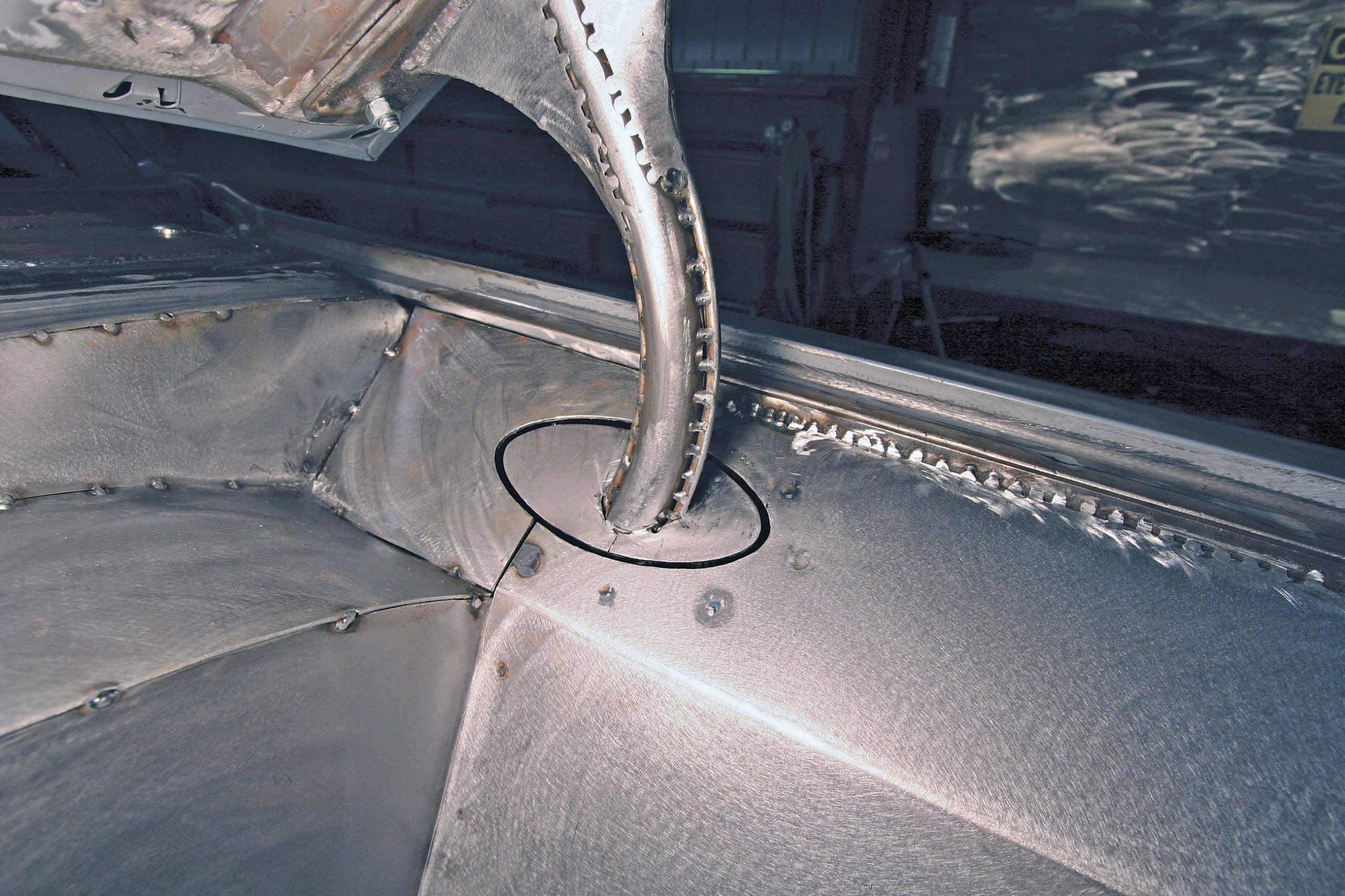
40. The result looks nice with the oval section attached to the hinge. The oval section will travel with the hinge when the hood is lowered and have a flush fit when the hood is open.
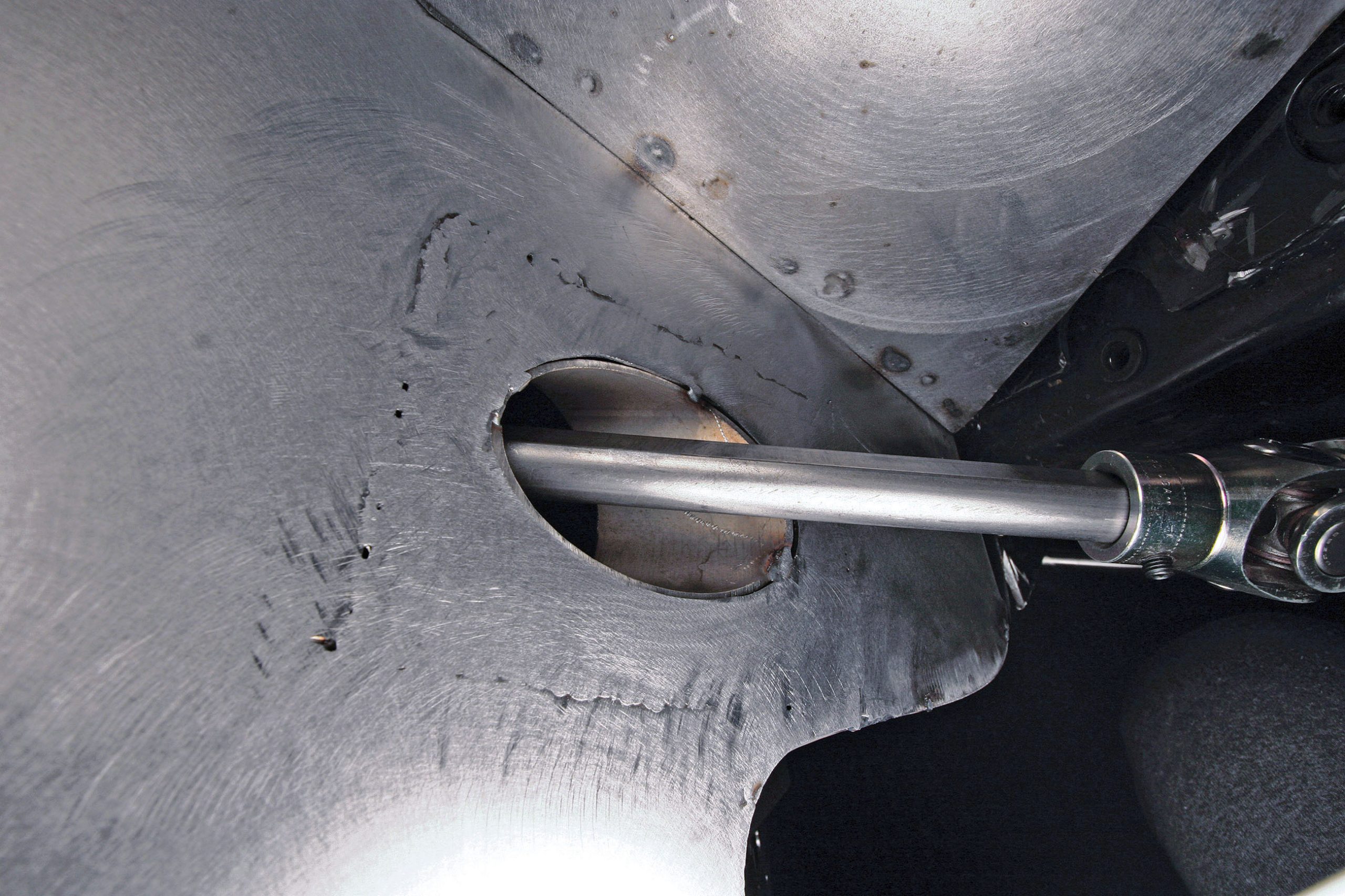
41. The firewall was complete, aside from the steering shaft exit. It was made in an oval shape to match the rest of the design under the hood of the Galaxie. The surroundings behind it give it a tunneled appearance, adding the look of depth to the firewall.
ARTICLE SOURCES