


FALKEN TIRE DRIFT SHOWOFF
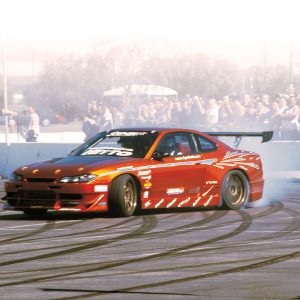
THE FALKEN Tire Drift Showoff was a hit, to say the least. The event was held at Irwindale Motor Speedway on a beautiful, sunny afternoon. Thousands of people attended, which goes to show the outstanding marketing job that Falken Tire is doing to help make a difference in the tuner car movement. The company took it upon itself to give us a taste of what the Japanese market has been enjoying for so many years. Among the thousands of spectators, a healthy number of show cars showed up as well—and why wouldn’t they? This was an Import Showoff event, but this car show was a bit different from the norm. It was a JDM versus DTM show. In other words, Japanese against Euro. The cars that came out were very hot, with enough JDM and DTM on hand to kill you. All the heavy hitters and the big crews such as Team Hybrid, Flux, Tuningwerks Competition and Art-N-Motion came out to show their stuff. While this was a huge attraction, it was far from the main one.
From Vegas with Horsepower
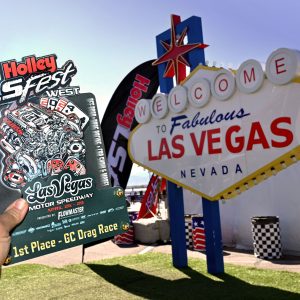
Las Vegas, Nevada, baby! Picture this: the Holley LS Fest West roaring into town like a beast on four wheels, revving up the asphalt at the Las Vegas Motor Speedway from April 26-28, 2024. This shindig ain’t your average car meet; nah, it’s a full-throttle celebration of all things LS engine from GM. You got your gearheads from every corner gathering round, ready to rip it up in Autocross, Drifting, Drag Racing, Off-Road showdowns, and then some. But it’s not just about the racing; it’s about the vibe, man. Folks bonding over their love for LS-powered rides, swapping stories, and soaking in that sweet, sweet automotive culture.
Passing The Bar
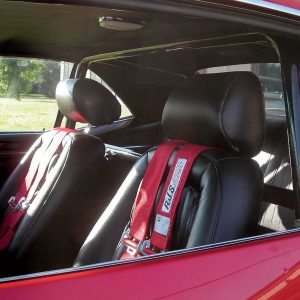
In the fall of 2003, I wanted to attend an open-track lapping day with my ʼ67 RS/SS Camaro. I have owned the car for several years and have autocrossed and drag raced it, but I never had the opportunity to run it at one of the local tracks, such as Nelson Ledges of mid Ohio, or BeaverRun.

Marty Harp’s Unique Perspective
Attending more events than most, Marty Harp has a unique perspective on this hobby, as his opinion often has a great deal to do with the outcome of many cars—or at least the methods and materials used to coat them. You see, Harp is the point man at the DuPont big rig, often working side by side with other paint specialists, including Ron Skyrme and Dennis Silva, two of the prime initiators of the Hot Hues paint division of DuPont.
Harp’s Busy Event Schedule
From the time the gates open to the end of many events, Harp is kept busy talking with fellow enthusiasts seeking knowledge about Hot Hues and other DuPont products. Constantly fielding questions about preparation materials, clearcoats, and the endless array of colors that make the most important statement in between, Harp comes away from his day tired but enthusiastic. After all, his efforts often provide an opportunity to be a part of someone’s automotive vision. It also enables Harp and his associates to pass some of what they hear from their friends and customers to others, at least in a general sense, as a paint scheme is one of if not the most personal aspect of building a car.
Learning from Customers
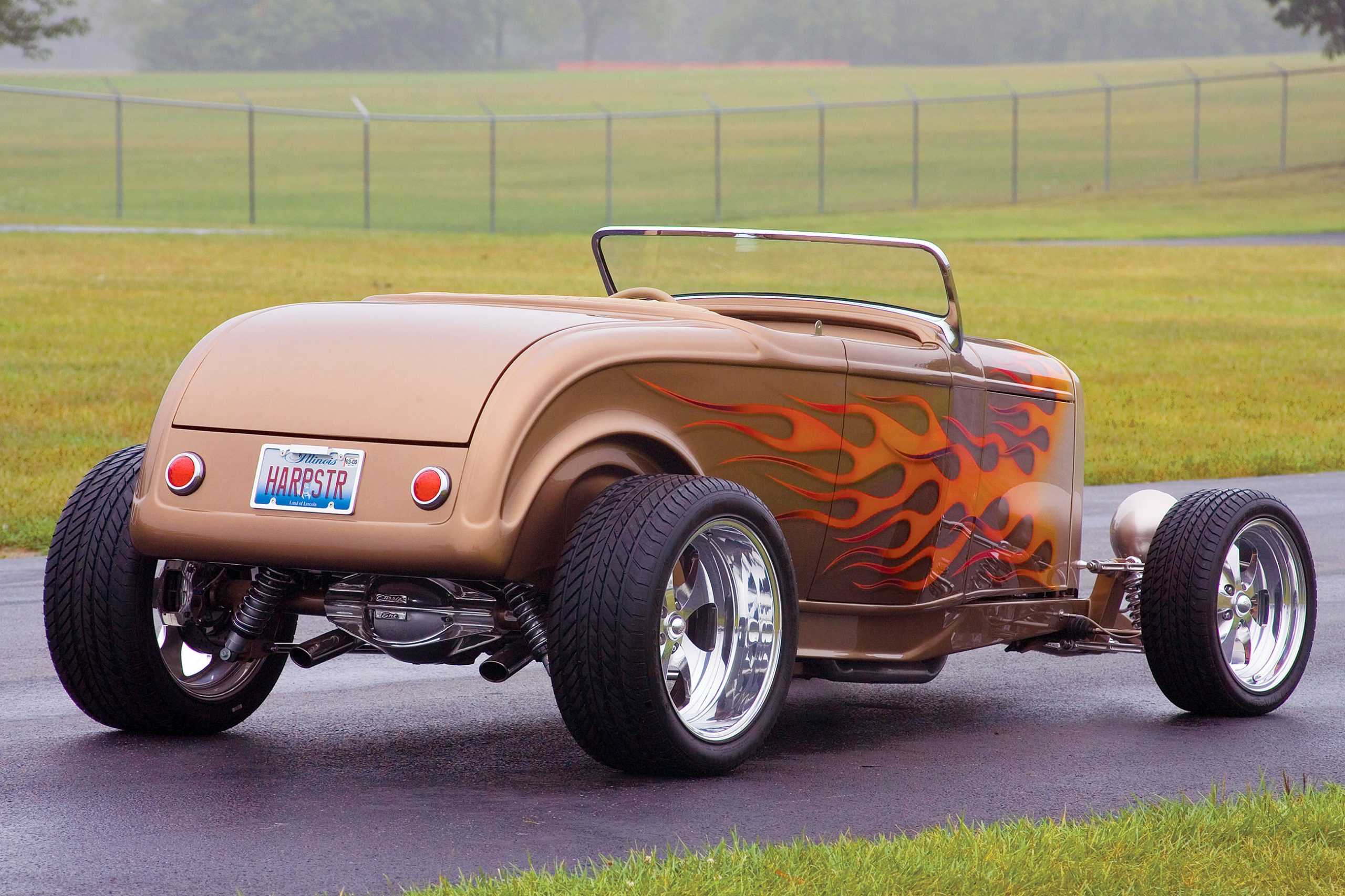
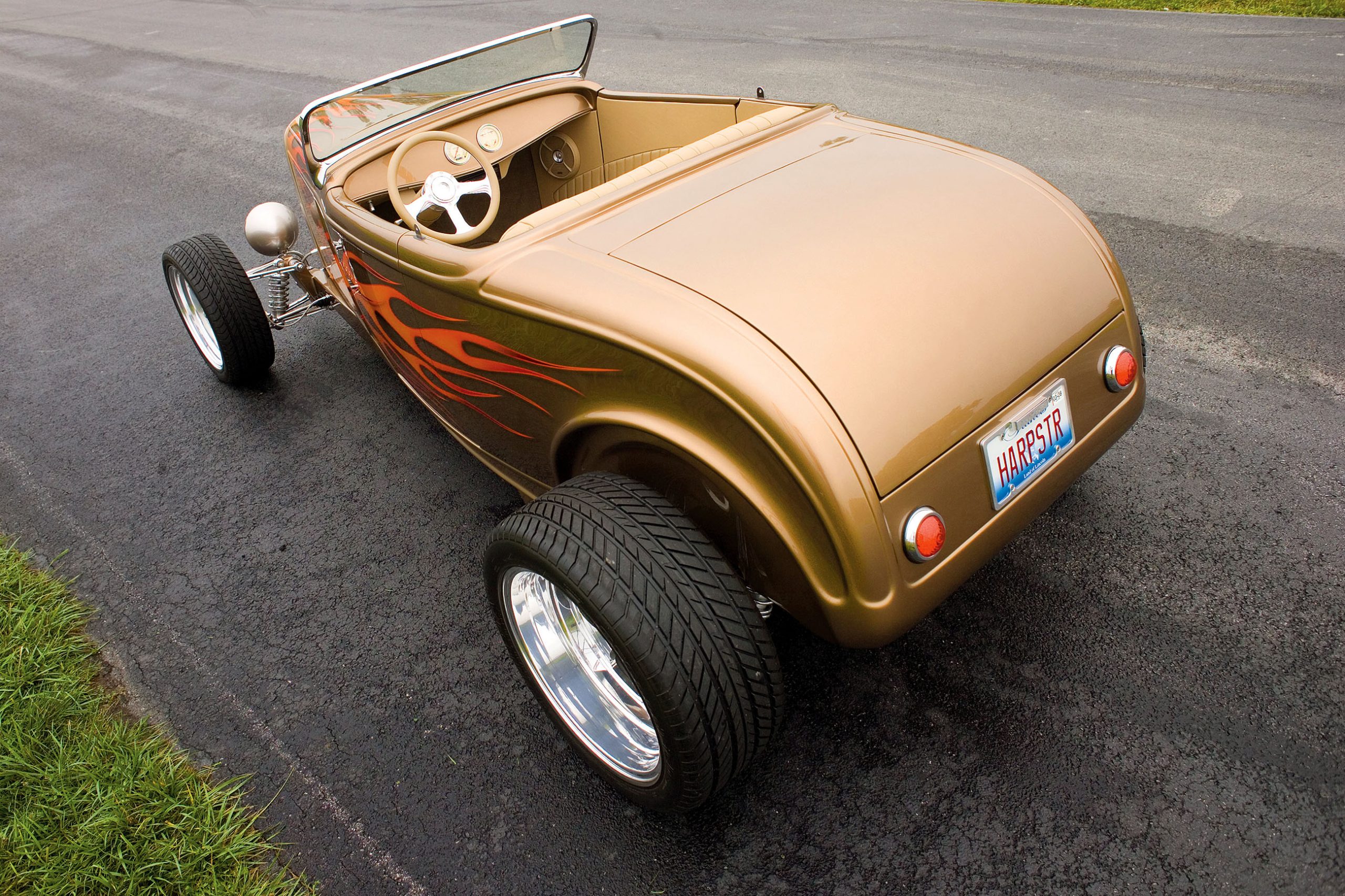
Beyond the assistance he provides to others, Harp has also learned a great deal about every aspect of automotive concepts, construction, and styling from his customers, which often centers on the paint. In fact, the color of his latest car, this richly coated ’32 Ford roadster, was determined in part by conversations he had with others, mulling over countless varieties of colors, offsetting hues, and even the interior. While the results were determined by Harp alone, there’s no question his palate was balanced by the vision and passion of others who came up with their preferences by way of the input of people like Harp.
Chassis Construction & Components
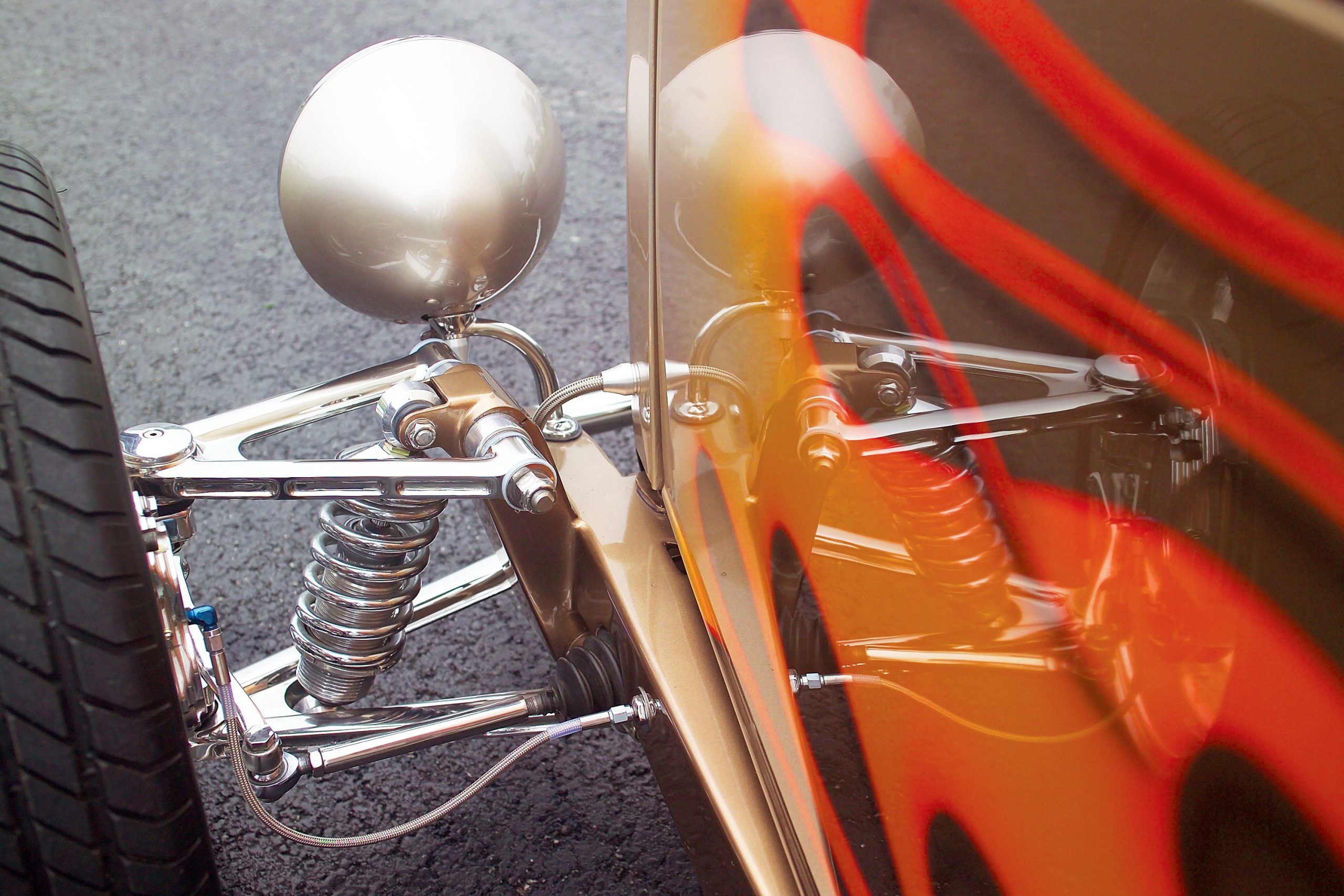
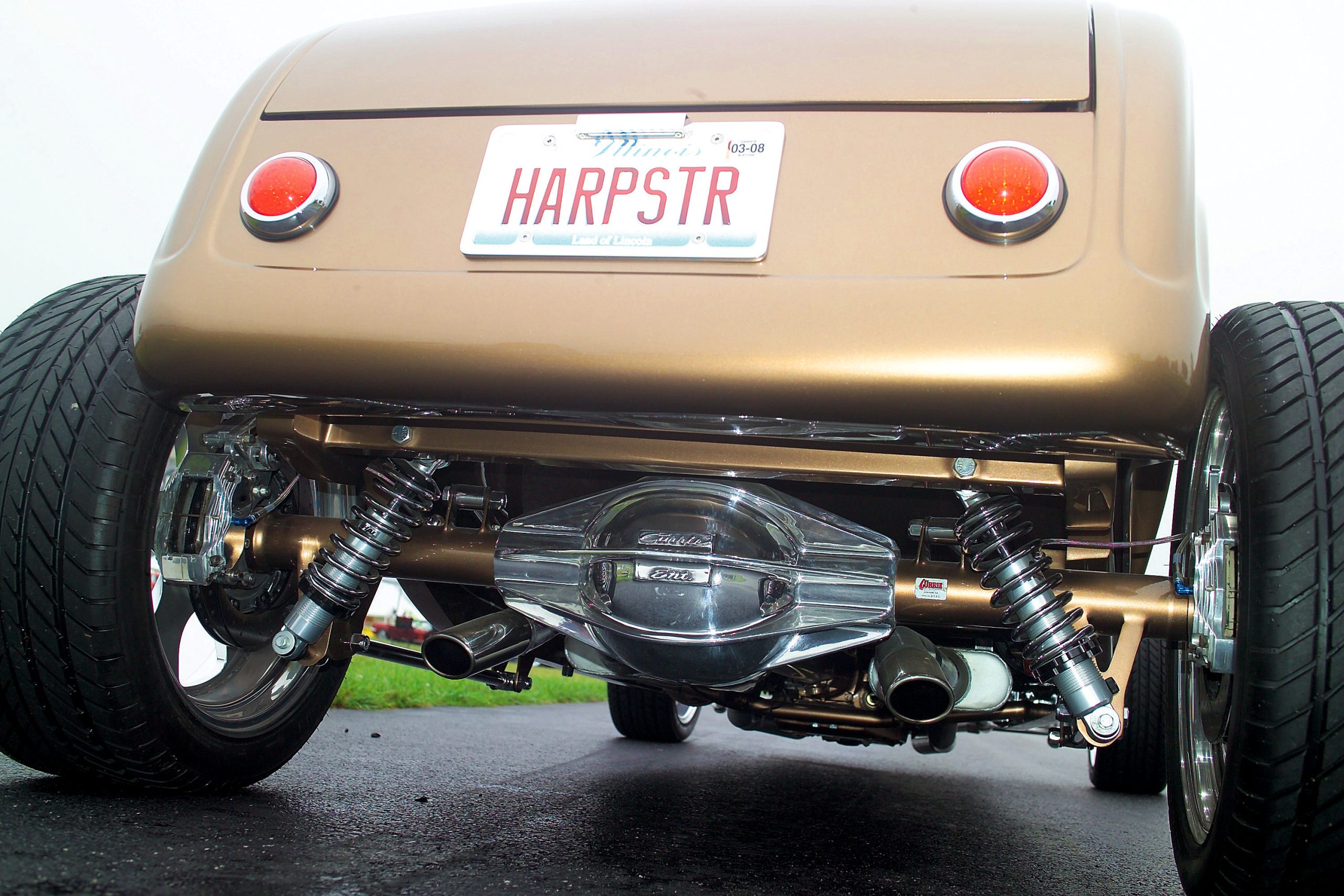
To make the most of this Deuce, Harp thought back to conversations he’d enjoyed with rodders concerning just about every aspect of the car, starting with the chassis. While basic enough, it still incorporates a wide range of concepts and components assembled with help from Doug Nall at Kilbourne Rod Shop. Using well-proven reinforced framerails, a 9-inch Ford axle, narrowed to 56 inches, was fitted in back along with Pro Shocks four-link control arms and a Panhard rod to secure the assembly for hard use with good looks. At the opposite end of the frame, an independent suspension package from Kugel Komponents utilized billet A-arms, American shocks, rack-and-pinion steering, and a capable set of Wilwood calipers and rotors, much like those found in back. Once all of these components were united along with stainless brake lines, proportioning valve, and master cylinder that provide braking energy, and components such as the stainless fuel tank and other tasty stuff, detailing was considered, although nothing was done until after the exterior and interior hues were finalized.
Engine & Transmission
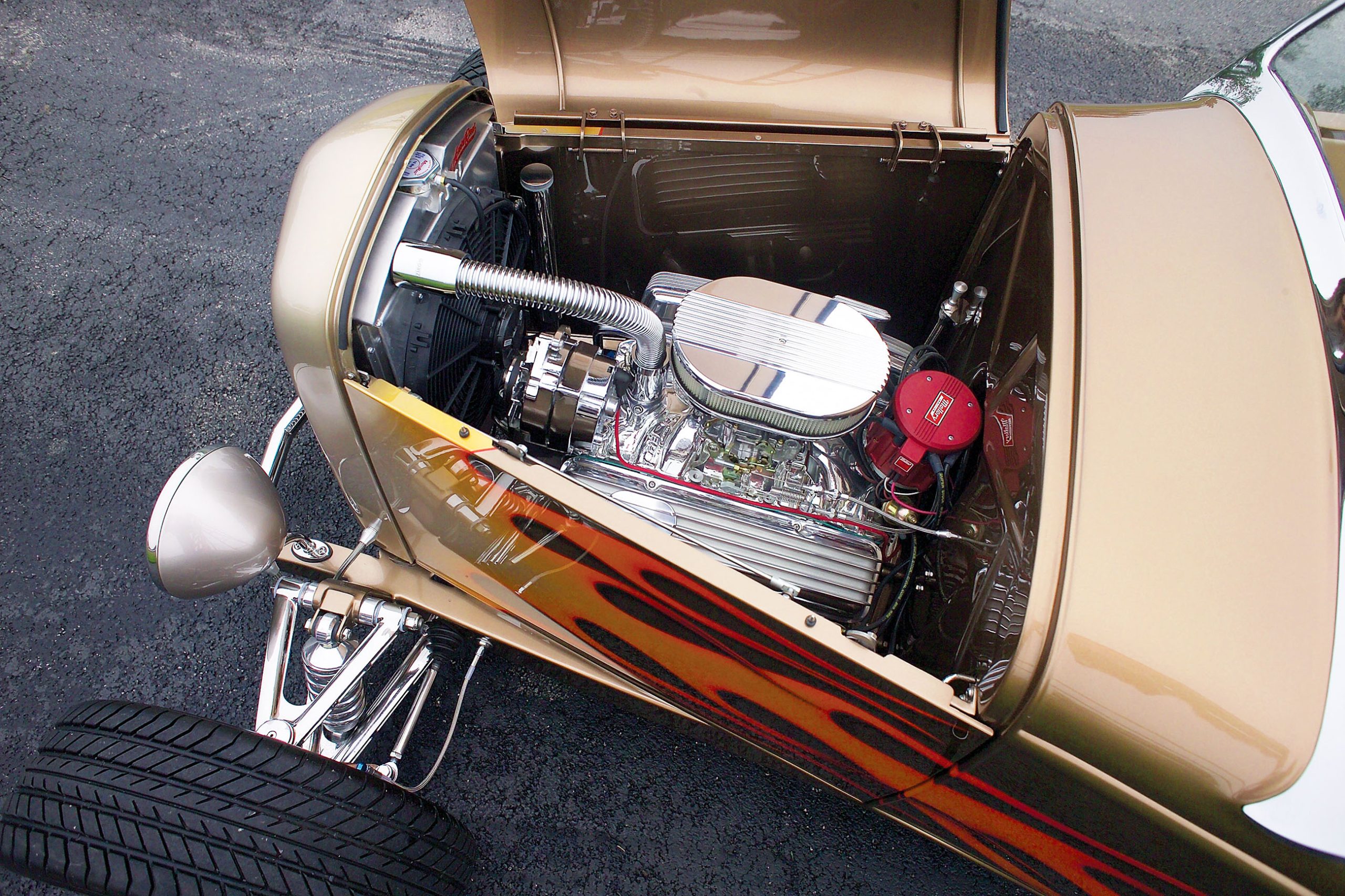
Next came the ’06 Chevy 350 crate engine, which, even in its stock configuration, provided more than enough power to press this little topless beauty into motion without any trouble. In fact, mated to a Turbo 350 automatic transmission, this combination actually turned out to be exactly what Harp and his wife, Kelly, needed in their travels. As with the chassis, most engine details were left for installation later, even though the Edelbrock carburetor, Streamline valve covers, Billet Specialties air cleaner, Mallory ignition, and Sanderson headers were already on the bench. Awaiting the paint detail to be applied to the block, heads, and other elements, it wouldn’t be long before these and other components were ready for installation.

Body & Paint Details
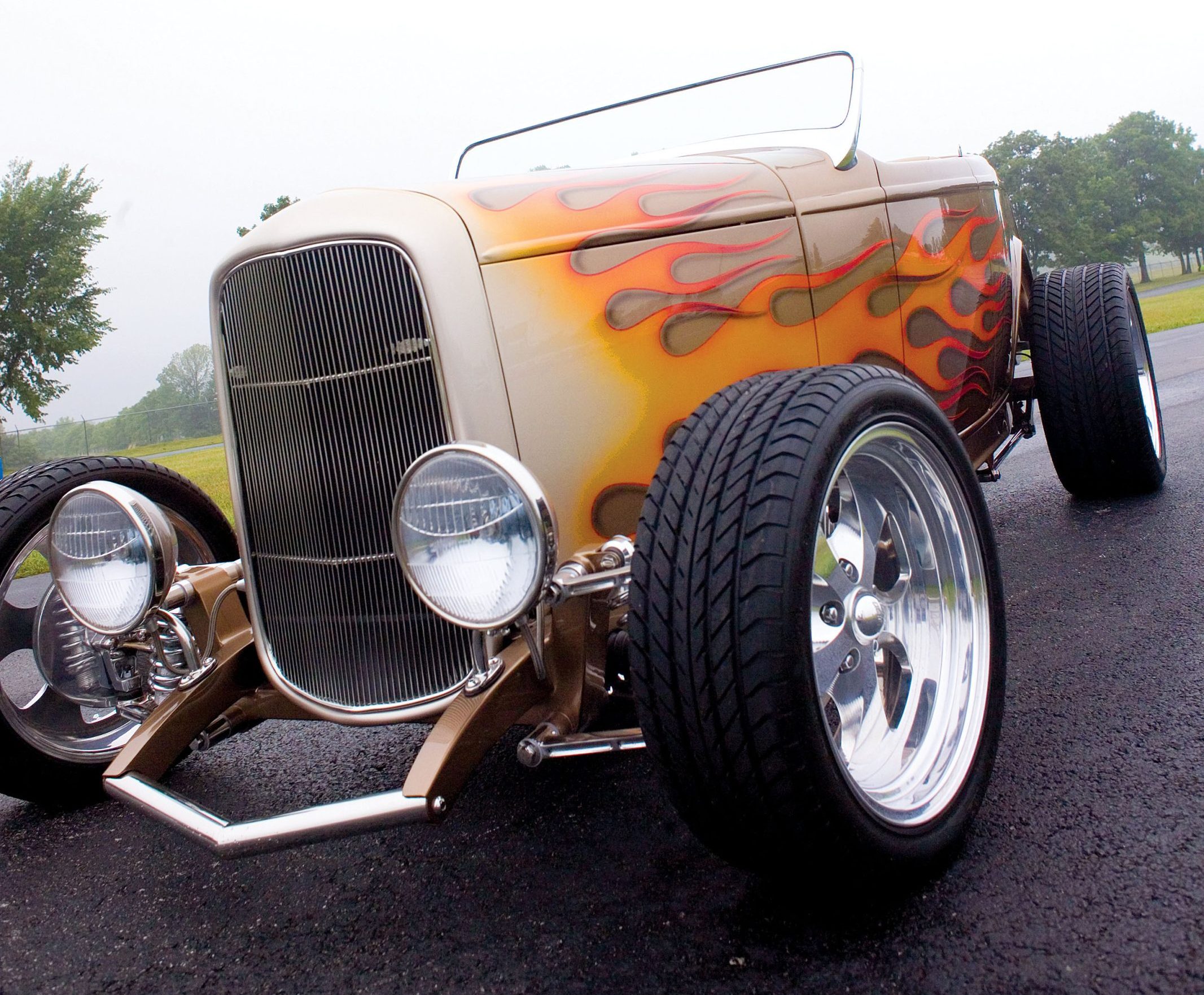
As ideas about the eventual colors to be applied formed at locations everywhere across the United States, Harp looked into and eventually purchased a ’32 Ford roadster body from Kilbourne Rod Shop. Soon the familiar contours were smoothed further at Harp’s shop, Main Street Auto Body in Mason City, Illinois, a place often filled with enthusiasts looking for their own inspiration. Applying skills long perfected on countless cars that came before, the fiberglass contours were soon ready for paint, which by this time had been narrowed down to the colors seen here, Hot Hues by DuPont, of course. All that remained was to install the ’32 Ford commercial headlights and the ’55 Pontiac taillights to kick things off.
Final Paint Application
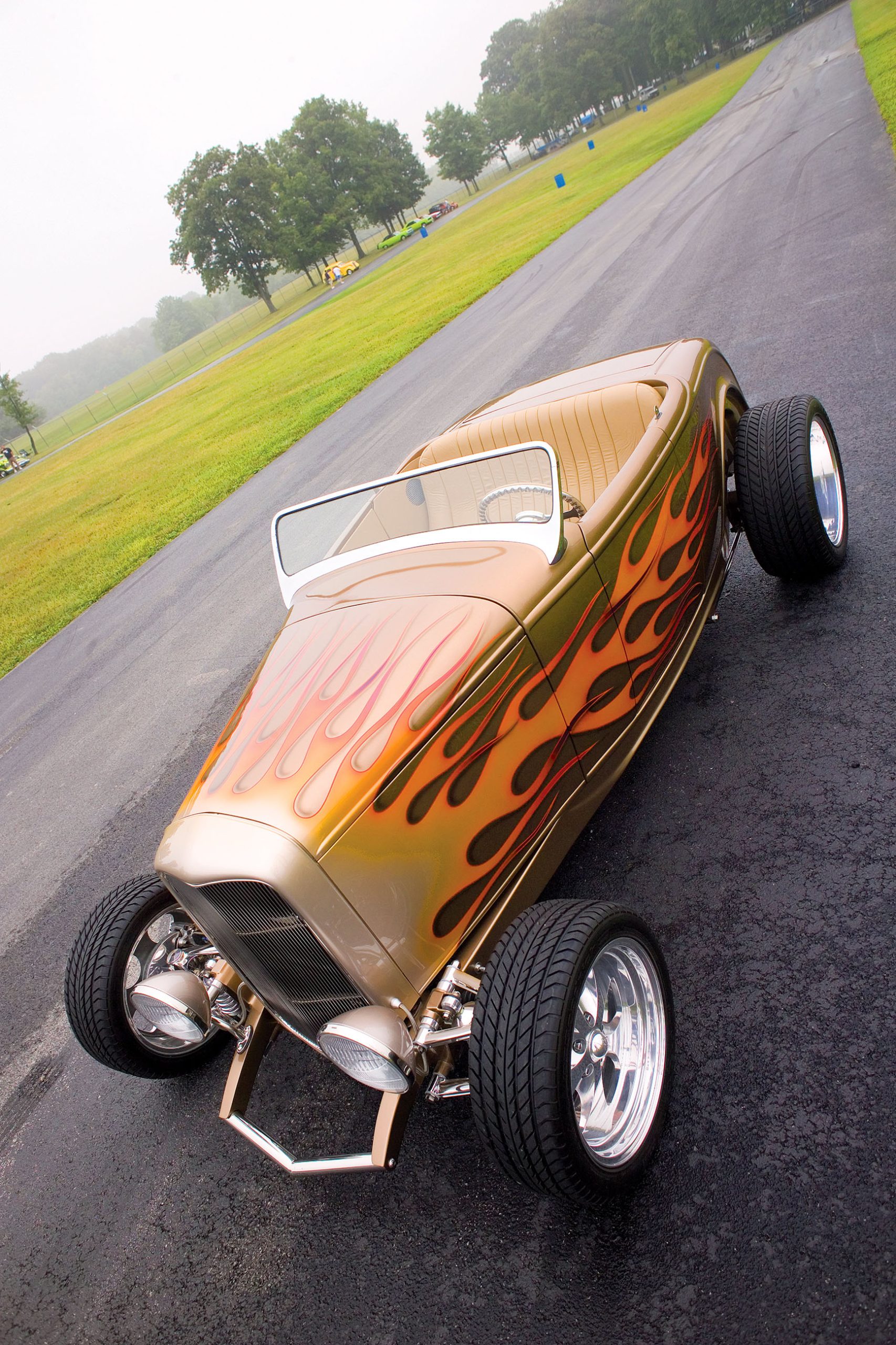
Using Sedona Dust Sandstorm for the basecoat, the stylized flames were laid out in a Hot Hues shade called Tango before Hot Efx Brilliantz was caringly laid down over the entire car. Well known and often applied by top painters, Brilliantz brings with it diffractive pigments that create a three-dimensional illusion of movement that is both dramatic and elegant. Meanwhile, these same materials were used to enhance other aspects of the car, including portions of the interior, before other polished, chromed, and coated components were fitted. The last detail is a So-Cal windshield and a removable Bop Top from the Sid Chavers Company.
Interior Touches & Final Details
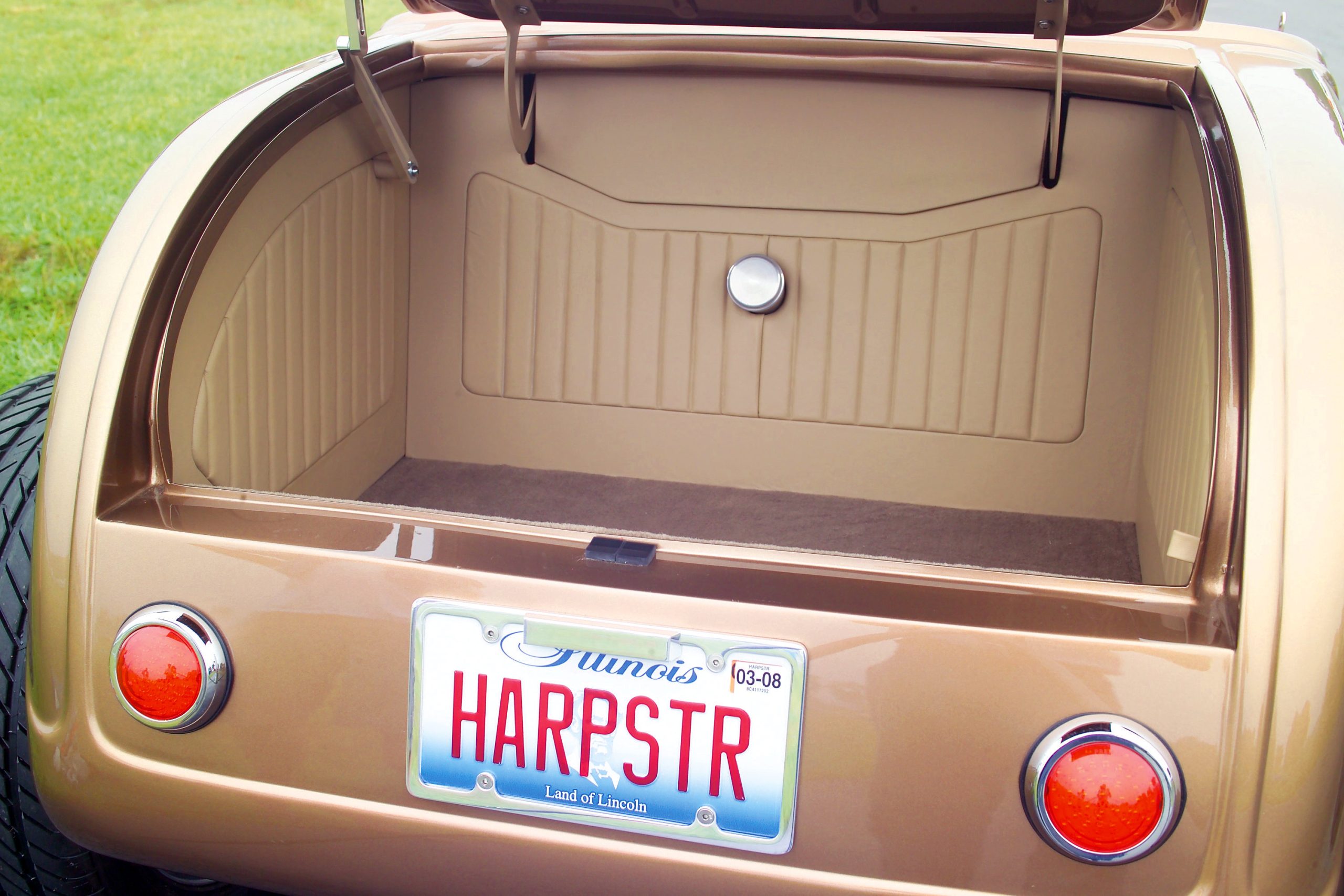
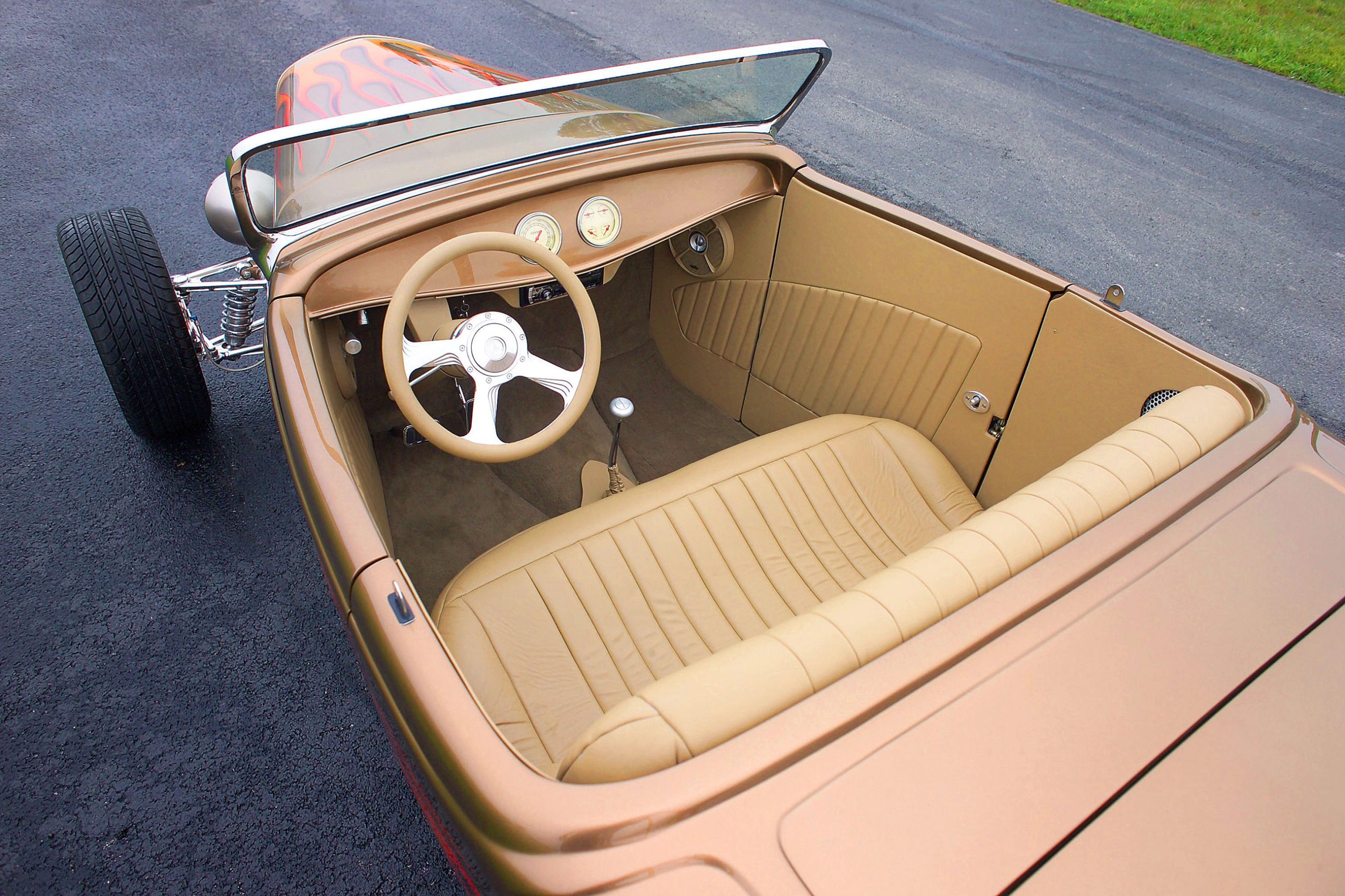
Offsetting the coloring perfectly, the tan leather and wool carpet were outfitted by Harp himself, showing yet another side of his capability that few will know about unless they ask. Even then, it’s hard to get Harp to talk about his skills, as he would rather hear what others are saying about their cars and DuPont and Hot Hues products. After all, that’s how he learned what he knows today, so why stop listening now? So it’s up to us to tell you how Harp built the seats himself, and that he laid out the Haywire wiring to power up the Classic Instruments gauges and various switches, a Pioneer audio system, and a few more goodies scattered throughout the interior and trunk.
Wheels & Stance
Once the special details were bolted down to accent the stunning flamed paint scheme, the last detail came by way of Billet Specialties rims fitted at all four corners; 215/45-17 BFGoodrich T/As were fitted in front, while wider and taller 295/40s tires in back give the car a great raked stance. However, don’t let us convince you of this car’s appeal, as you’ll soon be able to see how good this car really looks—it’s likely you’ll be seeing it one place or another when you stop by the DuPont big rig at events throughout the nation in 2008.
Conclusion
While each of us has our own take on what is and what is not right for the cars we cherish, it’s unlikely most of these ideas came out of the blue or from the well-read. And for that, we should be thankful there are so many voices to be heard and ideas to be had in determining our choices. Better yet is that because of people such as Harp who inform, advise, and even teach others, and companies such as DuPont and Hot Hues that provide quality products from which to choose, we can all come up with cool ways to bring our hottest rides to life.