






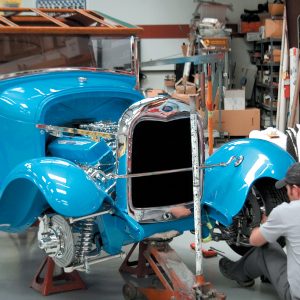
Final Assembly Tips From The Pros
When building a street rod there are a great many facets of the construction process that go into making the car an award-winning creation. First, there’s planning. The planning of the car can and should include attention to each and every area of the car, from concept to reality. Even the most basic of projects should have the proper planning involved, no matter what the final product might be. Once work has begun on the project, countless hours are generally involved in attending to every detail. From making the many modifications to the chassis to attain the desired drive train, to the matching and mating of the different components together, this becomes an involved process requiring a great deal of skill in fabrication and engineering.

MR. OCTOBER’S CAMARO
To baseball fans, Reggie Jackson is one of the all-time greats, earning the nickname “Mr. October” with his stellar performance in the 1977 World Series. And yet, beyond his passion for baseball, Jackson has always enjoyed a strong appreciation for special cars, as evidenced by the extensive Chevy collection he’s explored throughout most of his life.

ROAD-STIR
For the most part, street rodding is viewed as part of our American heritage, every bit as much as the blues and jazz, hot dogs and apple pie. It incorporates many of the traits we Yanks are known for,
combining ingenuity and individuality, plus a large dose of style gleaned from the numerous vehicles of our past. If you have any doubts, just look at the enthusiasts throughout Europe, Australia and other rodding hotbeds around the globe. They love American rodding.