THE AUTO BUILDER
Featured

Remembering the Life of Andy Brizio
Andy Brizio, the man known as “The Rodfather,” has left an indelible mark on the world of hot rods and custom cars. On August 1, 2023, Brizio’s journey came to an end, leaving behind a legacy of passion, creativity, and innovation that will forever be cherished in the hearts of car enthusiasts around the globe. Let us take a moment to reflect on the incredible life of Andy Brizio and the enduring impact he has made on the automotive industry.

IN THE CLUTCH
Changed the clutch in your drag Honda lately? This has to be one of the worst jobs in all of compact car drag racing. Turbocharged, nitrous-fed Honda engines inflict severe damage on clutches after round upon round of heated competition—even some very good “hot rod” clutches.

Grumpy’s Toy
Jim Batson from Deltona, Florida, is a retired Navy man and a veteran’s employment representative for the state of Florida. New to the truck scene at age 57, this is his first custom, and he did most of the work himself, learning as he went. Inspiration for the project came after seeing a friend’s custom truck. He liked the looks and, since friends told him that trucks were easier for the first-time builder, he jumped in with both feet, deciding it would make the perfect retirement project. The undertaking began in April 1999 and wasn’t completed until March 2005. Looking back, Jim confesses to having some second thoughts about that ease-of-construction notion, and he tells us that somehow along the way he picked up the nickname Grumpy!
Spotlighter
POPULAR READS
-
Product Spotlight: Bill Mitchell Products Aluminum LS Engine Block
-
PRODUCT SPOTLIGHT: 60-66 Chevy C10 Fresh Air Vent Block Off Plate
-
Product Spotlight: Pyramid Optimized Design Sequential Aurora Taillight for 1964½–1966 Mustang
-
PRODUCT SPOTLIGHT: Cam Covers for GEN/3 Coyote from Pyramid Optimized Design
BACK TO BASICS
Ernie Lankford’s Bare-Bones ’55 Chevy May Look Tame, But It Packs Big Big-Block Power
Author
Tommy Lee Byrd
Story and Photography
Simplicity Over Luxuries
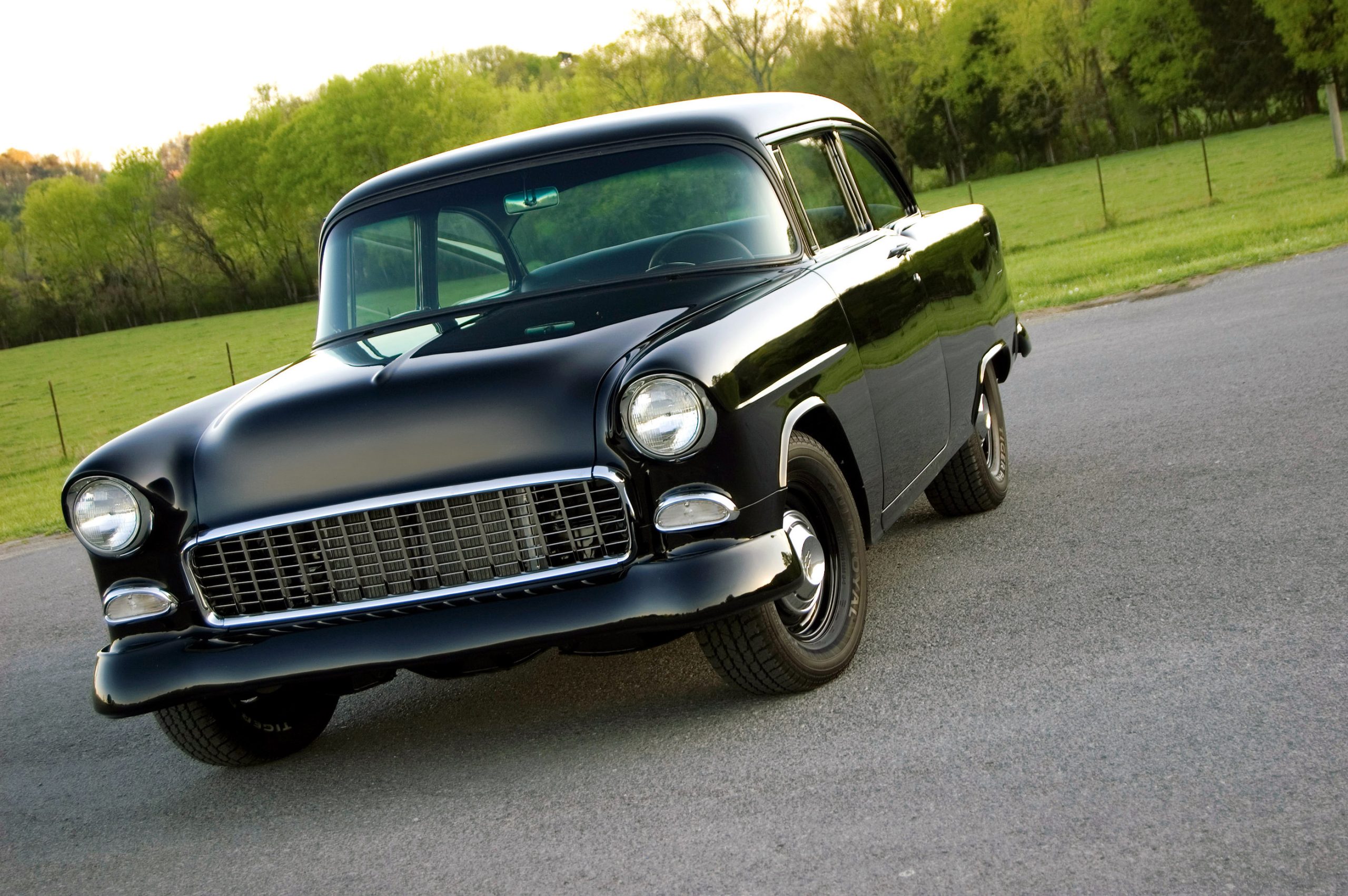
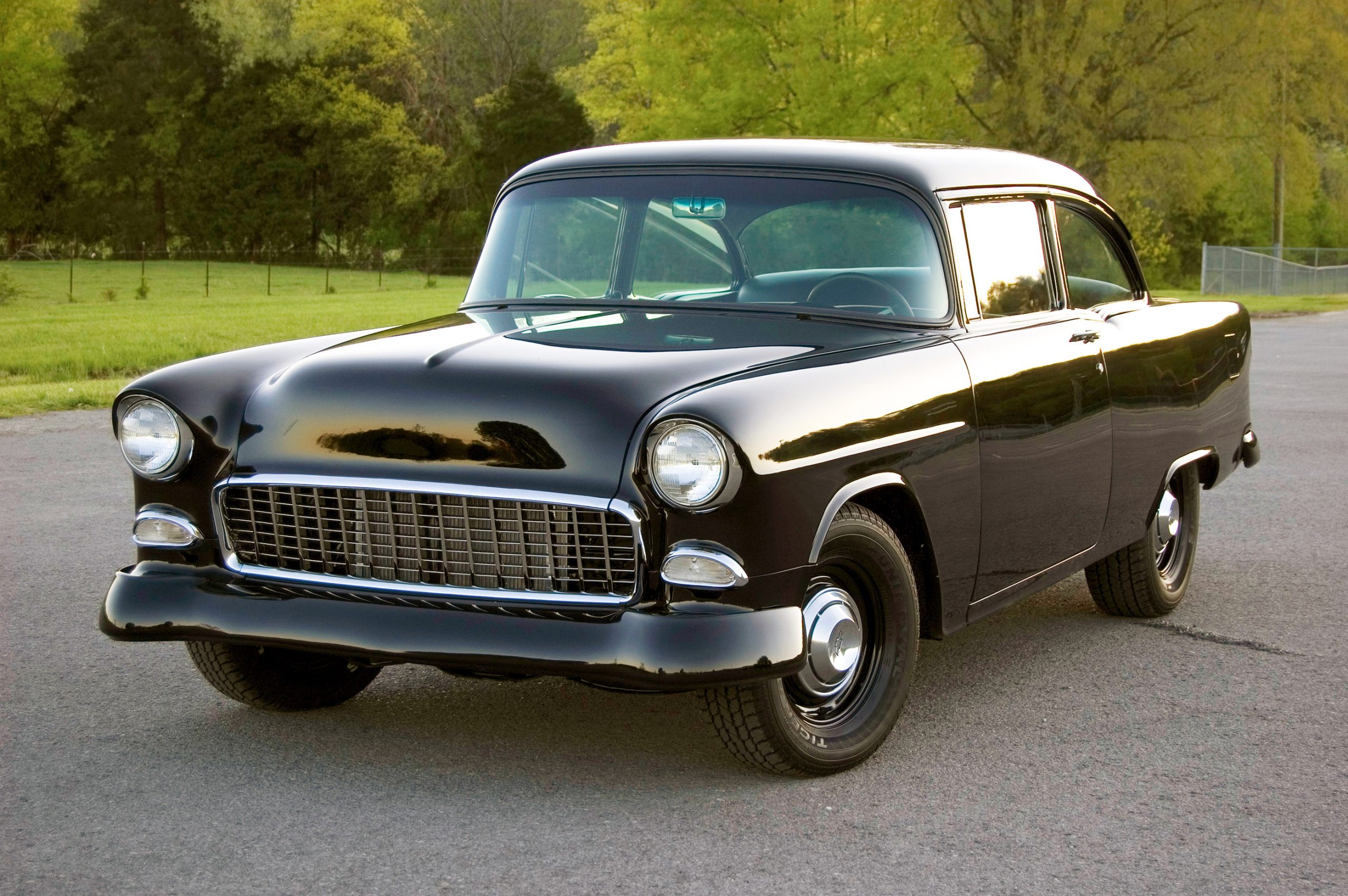
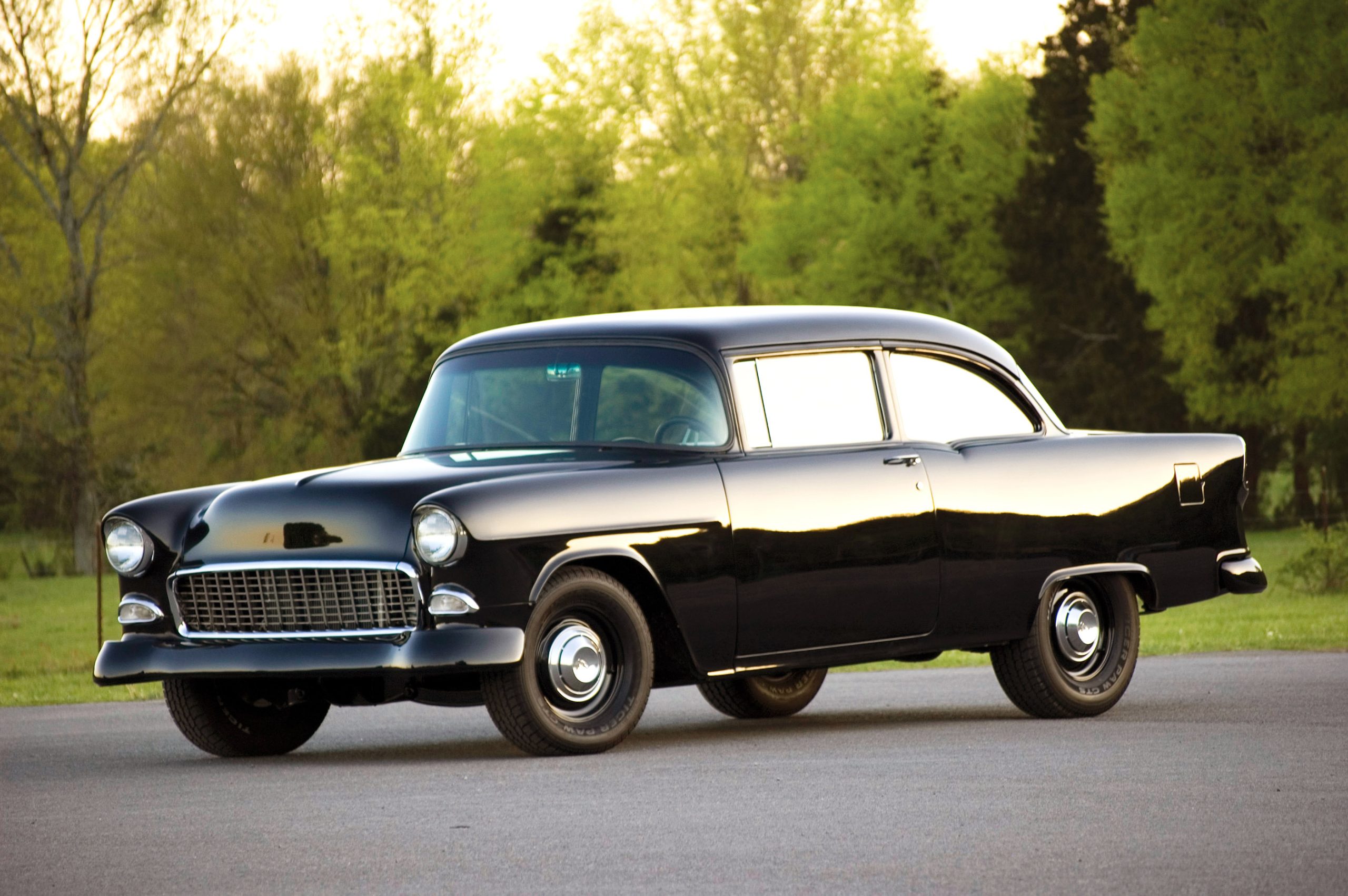
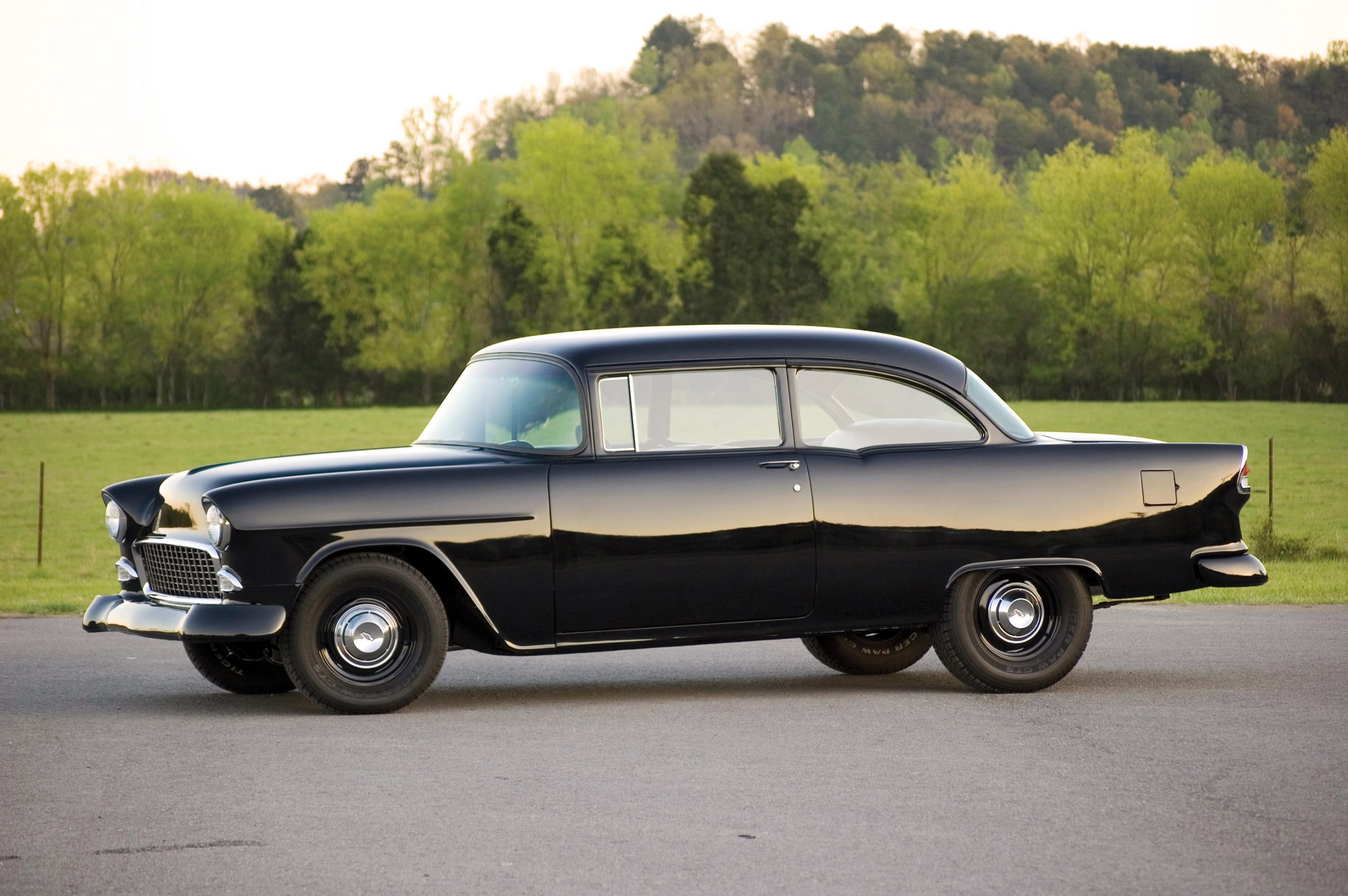
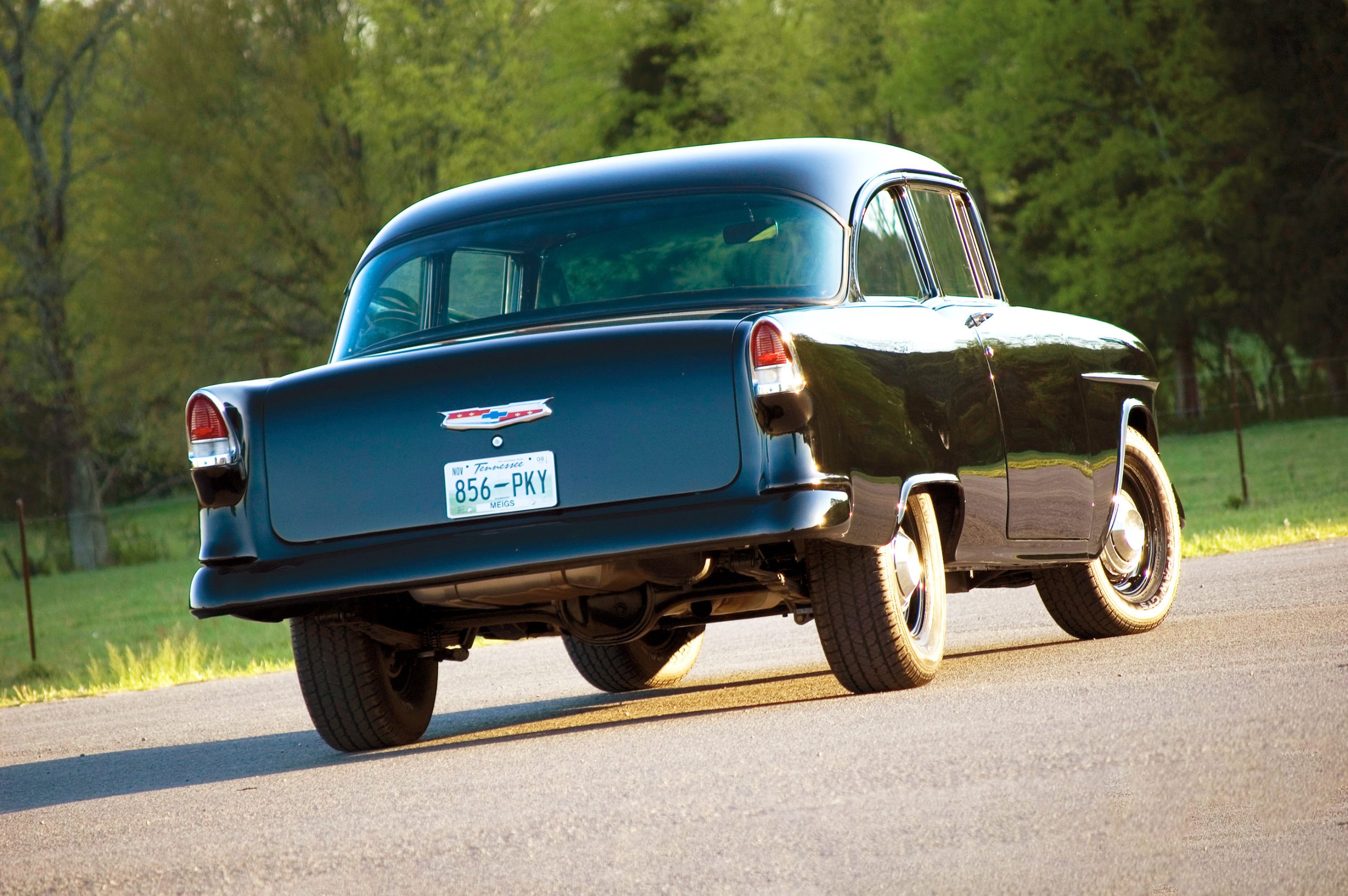
Big billet wheels, air suspension, and a kickin’ audio system—all are great additions, but you won’t find them on this car. Power steering, a smooth hydraulic clutch, and air conditioning—again, great additions, but this black ’55 doesn’t call upon such luxuries to get the job done. Simplicity is the key here, as this ’55 Chevy perfectly embodies the sleeper theme with a no-frills look and monster power. It doesn’t even feature all the stainless Bel Air or 210 trim you normally find on most tri-5 models; but even though this is a plain-Jane 150 devoid of trim, Ernie Lankford’s all-black ’55 certainly doesn’t get overlooked.
Evolution of the Build
Lankford’s initial plans called for a gasser-style ’55 street car with the obligatory fenderwell headers, radiused wheel wells, and nose-high stance, but plans changed as the build progressed. Originally wanting a flat-black budget beater, the car was just too good to cut up and cover in satin paint. So the project snowballed into this truly sinister ’55 that even looks mean sitting still and really shows its teeth when the rowdy big block is fired.
Under the Hood
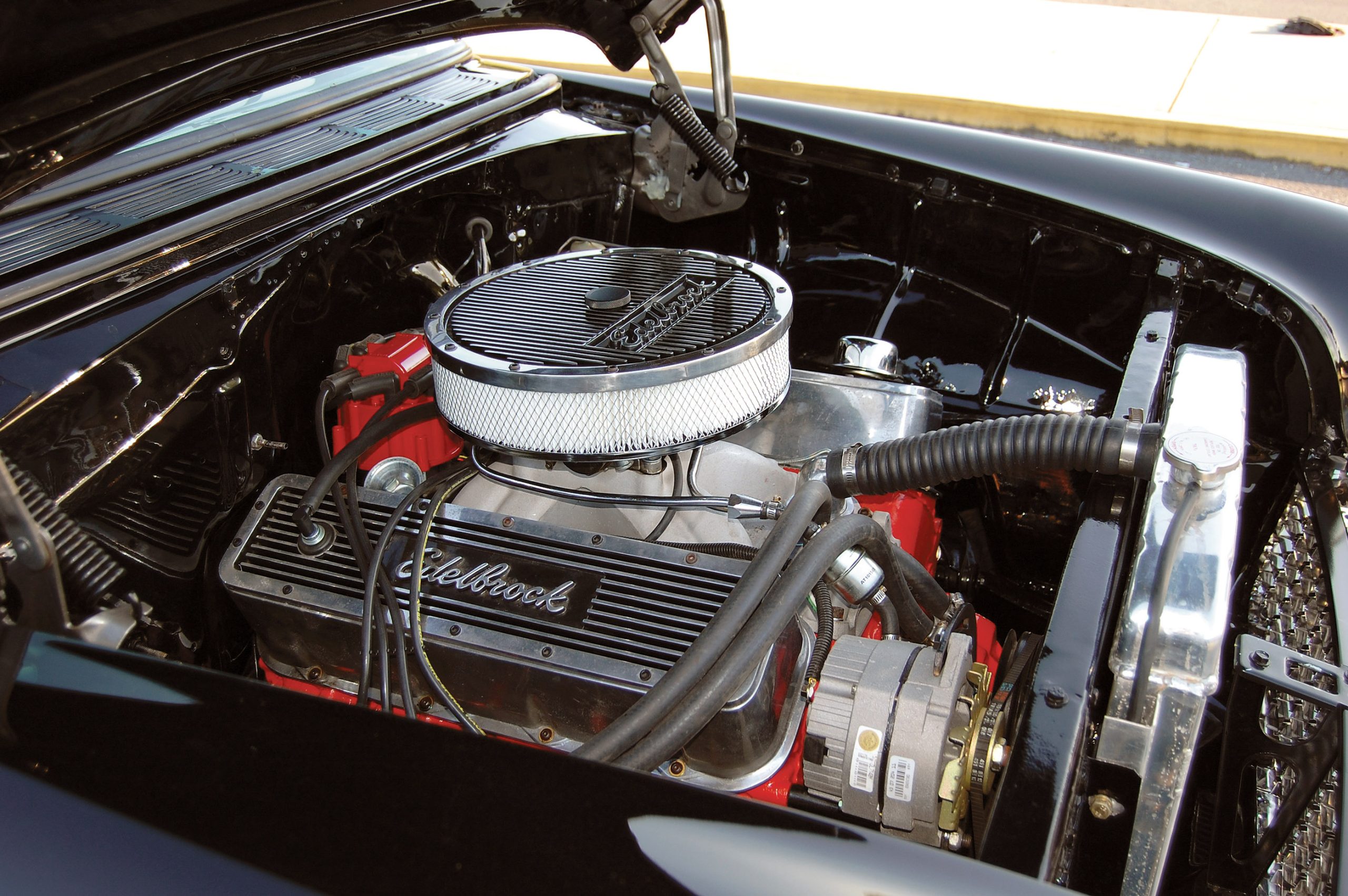
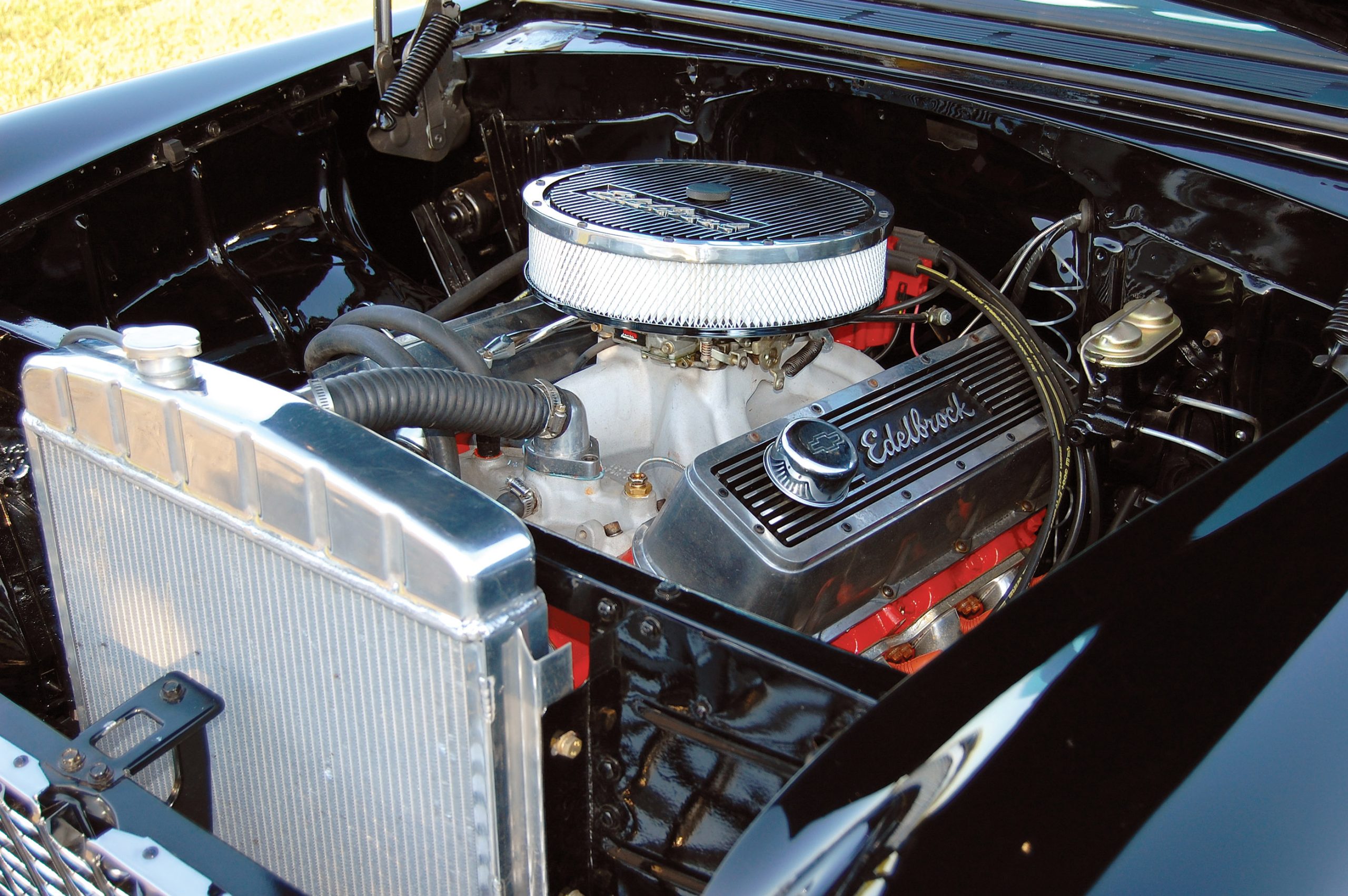
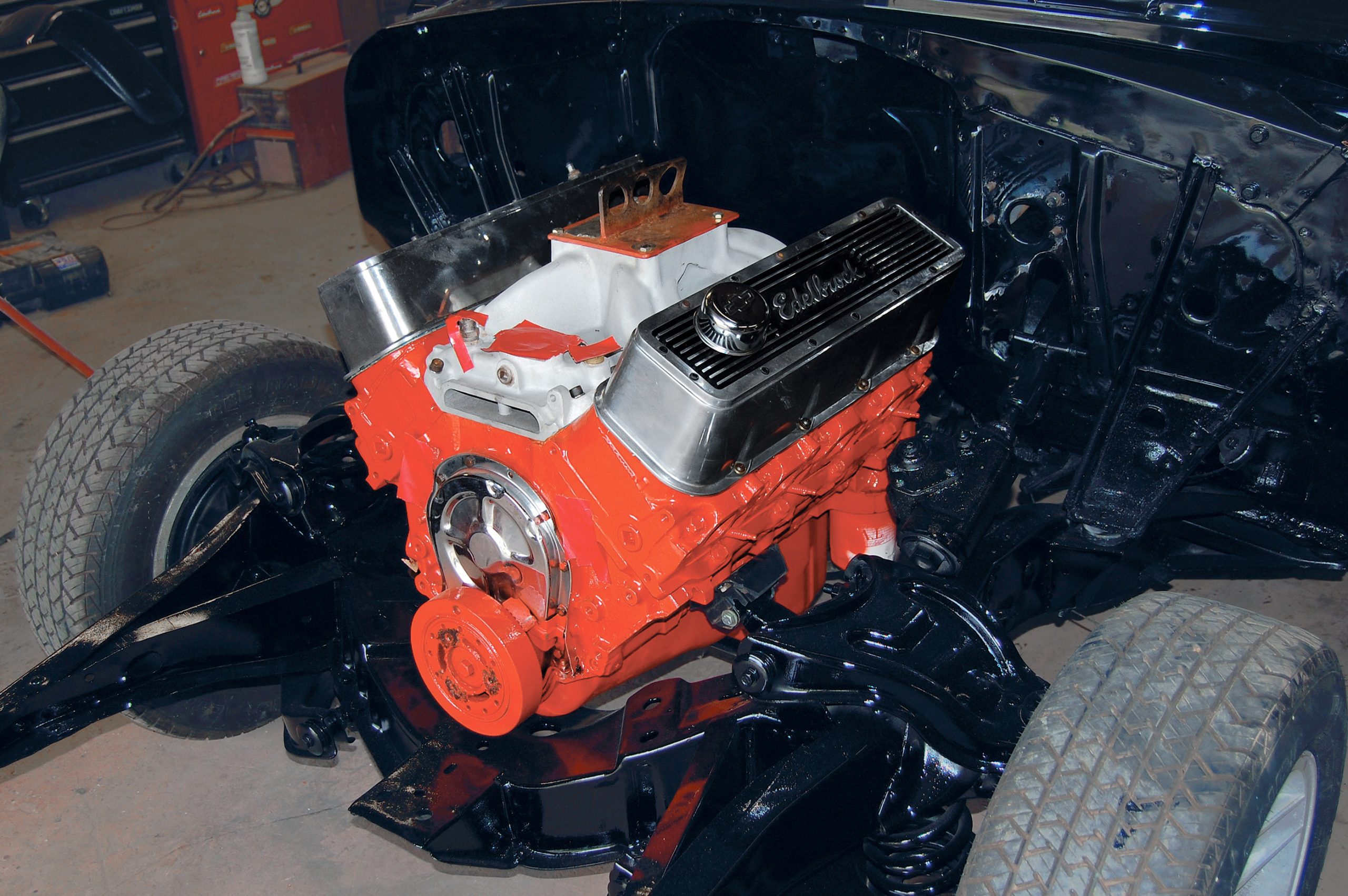
The nearly stock ride height is an intentional attempt to make this two-door post look like a base-model stocker, but any Chevy guy worth his salt would know better than to expect a 235ci Blue Flame six to still be under the hood. One might expect a small block, even with mild modifications, but lifting the smoothed hood reveals a healthy 402ci big block. Inside is a well-equipped rotating assembly featuring domed pistons for an 11:1 compression ratio and an aluminum single-plane intake that draws air from the 750cfm Holley carburetor, sending the charge through ported GM heads. A Comp hydraulic camshaft moves the valves with a 310-degree duration and 0.540-inch lift, while a set of Comp roller rockers decreases friction in the valvetrain. Even with its internal upgrades, the engine is rather simple in terms of style, with old-school valve covers and lack of belt-driven accessories—no power steering and no air conditioning.
Driving Experience
If you’re behind the wheel of this bare-bones ’55, it immediately becomes obvious you’re in an old car—a firm clutch pedal actuates mechanical linkage and applies power to a Saginaw four-speed. Lankford wanted that old-car feeling, so you won’t find urethane bushings, big sway bars, or a quick-ratio steering box; you will, however, find a rebuilt suspension both front and rear with new rubber bushings and all the essentials to make this Chevy drive just as it did in the mid-’50s. Up front, a slightly lower stance is achieved from the additional weight of the big block, and a pair of late-model disc brakes rides behind the steel wheels on either side. Nothing drastic here—just plain and simple upgrades, the way hot rodding got its start.
Rear End and Rolling Stock
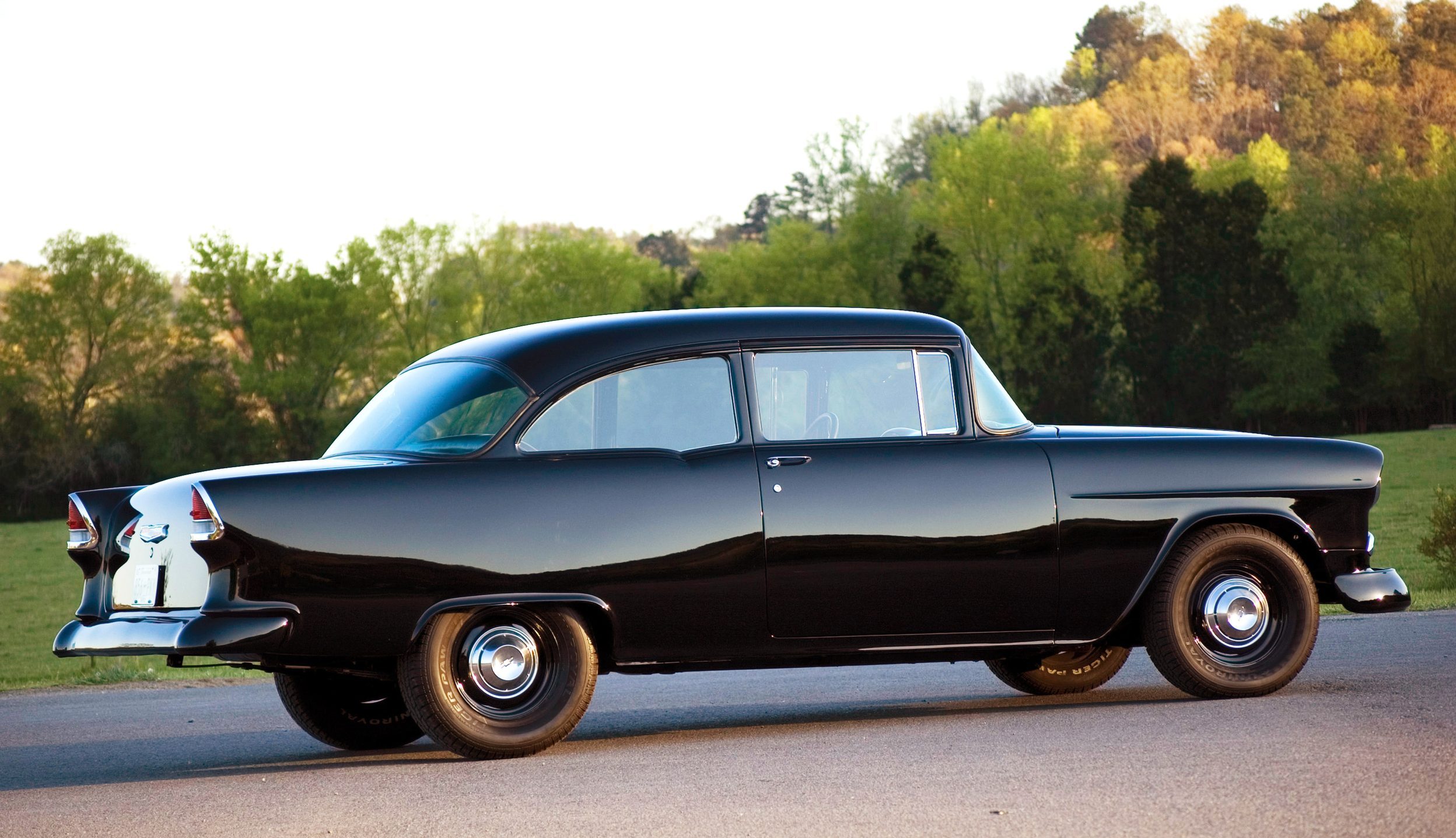
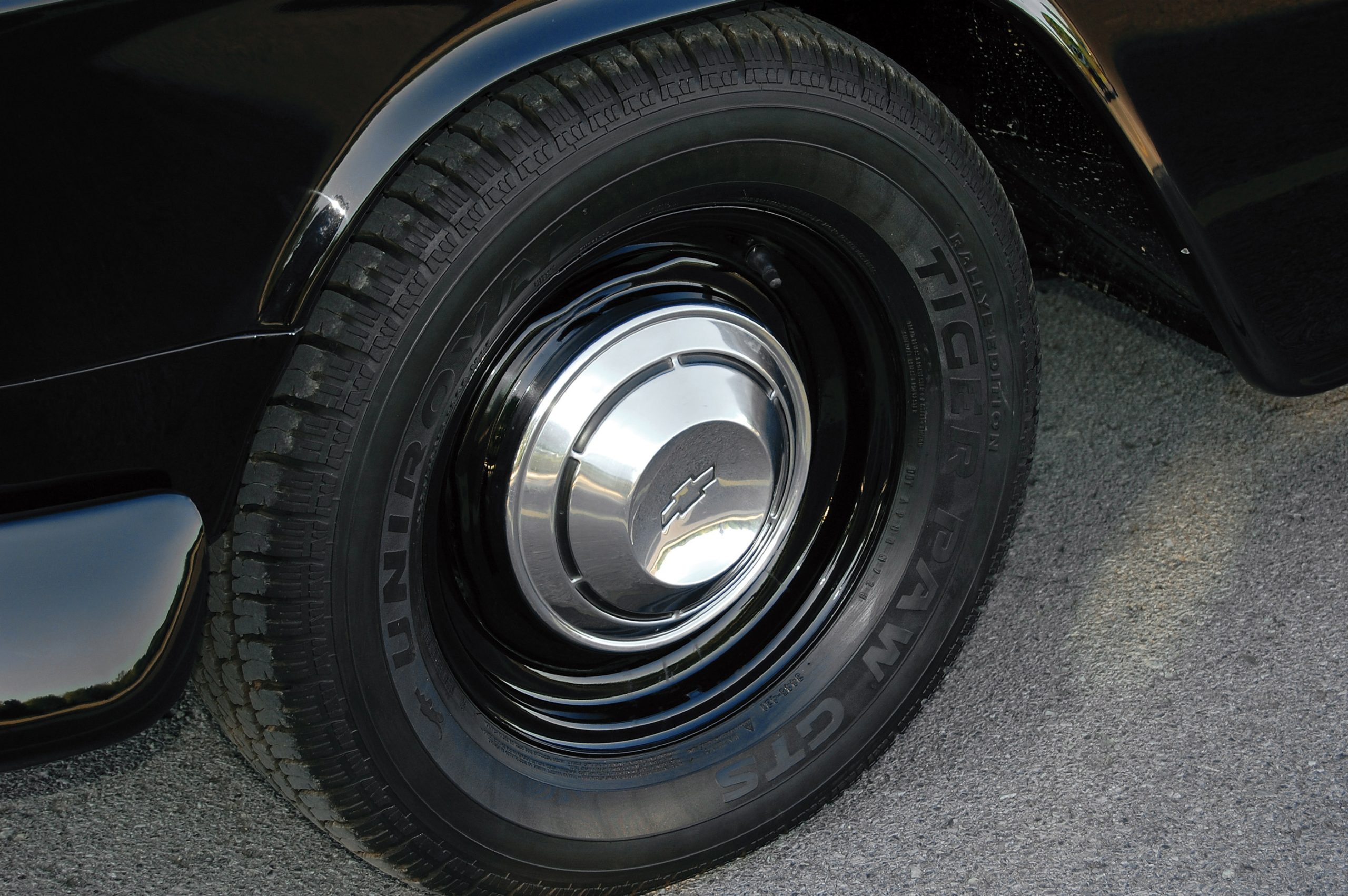
Out back, Lankford’s Chevy uses an original front-load rear housing packed with 3.36 gears and a Positraction differential. Original plans called for a 9-inch Ford, but that was when Lankford wanted an old-school gasser. Once he concluded the car was too nice, he also decided to keep it all GM and bolted the original-style rearend to the modified leaf springs. Drum brakes ride on either side of the rear housing and assist the front discs in bringing this two-door post to a halt. Another step to making Lankford’s Chevy look the sleeper that it is, is the simple and bold rolling stock. Steel wheels measuring 15×6 and 15×7 inches are covered in DuPont black acrylic enamel to match the body and wear ’68 Nova caps to finish off the look. Slightly larger tires out back give the ’55 a nice rake, and the tall sidewalls are old school all the way.

A No-Frills Exterior
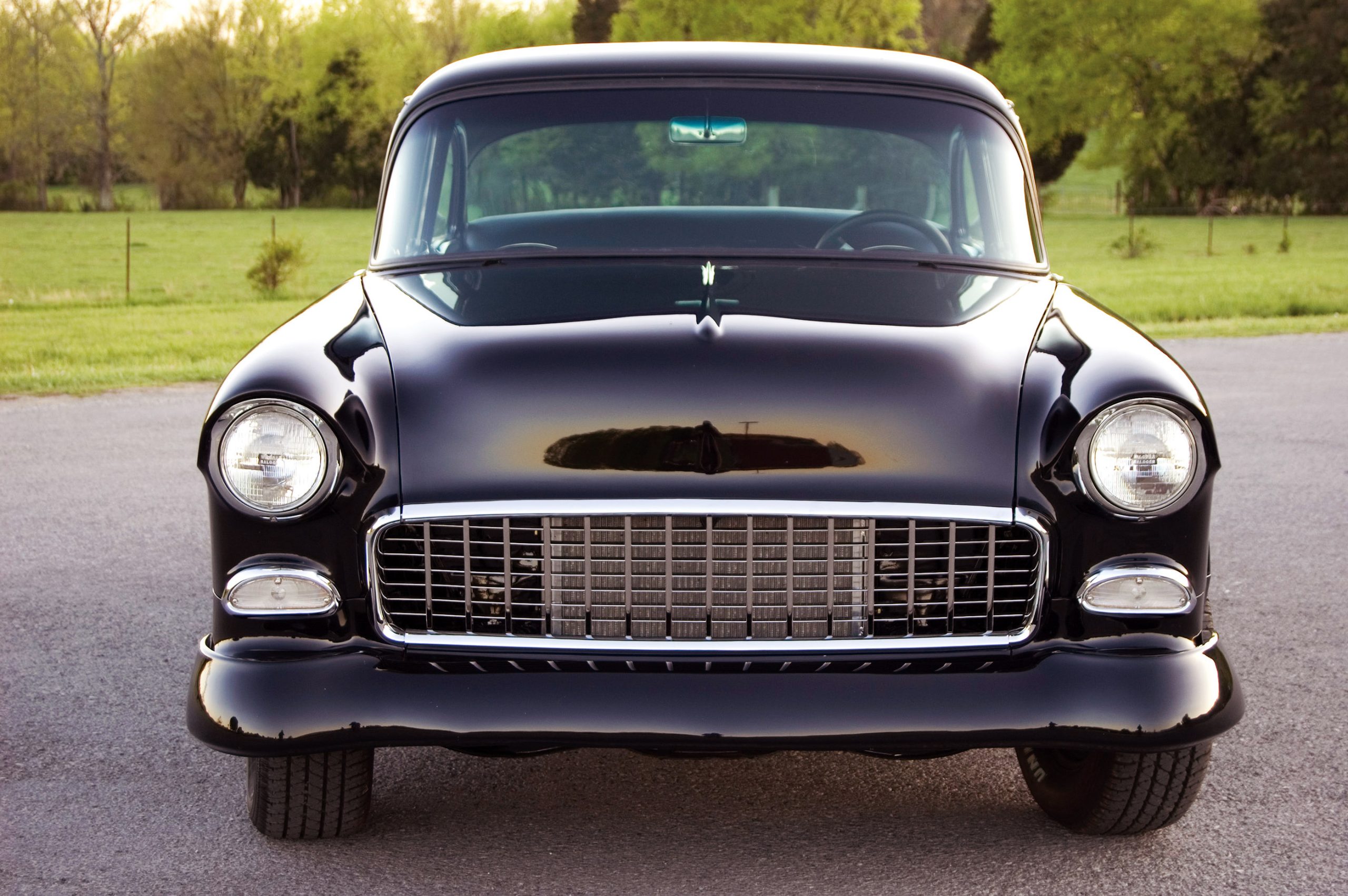
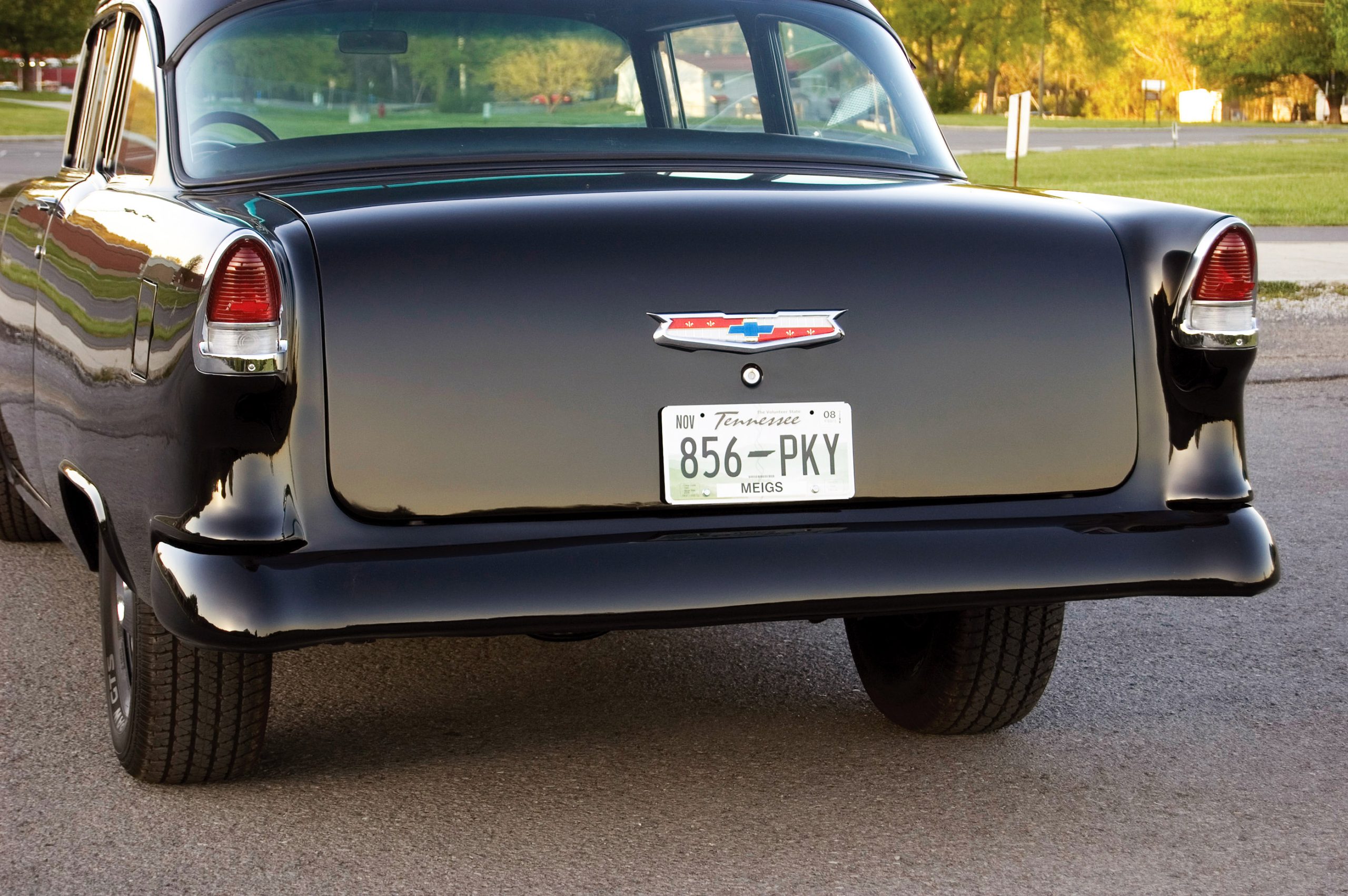
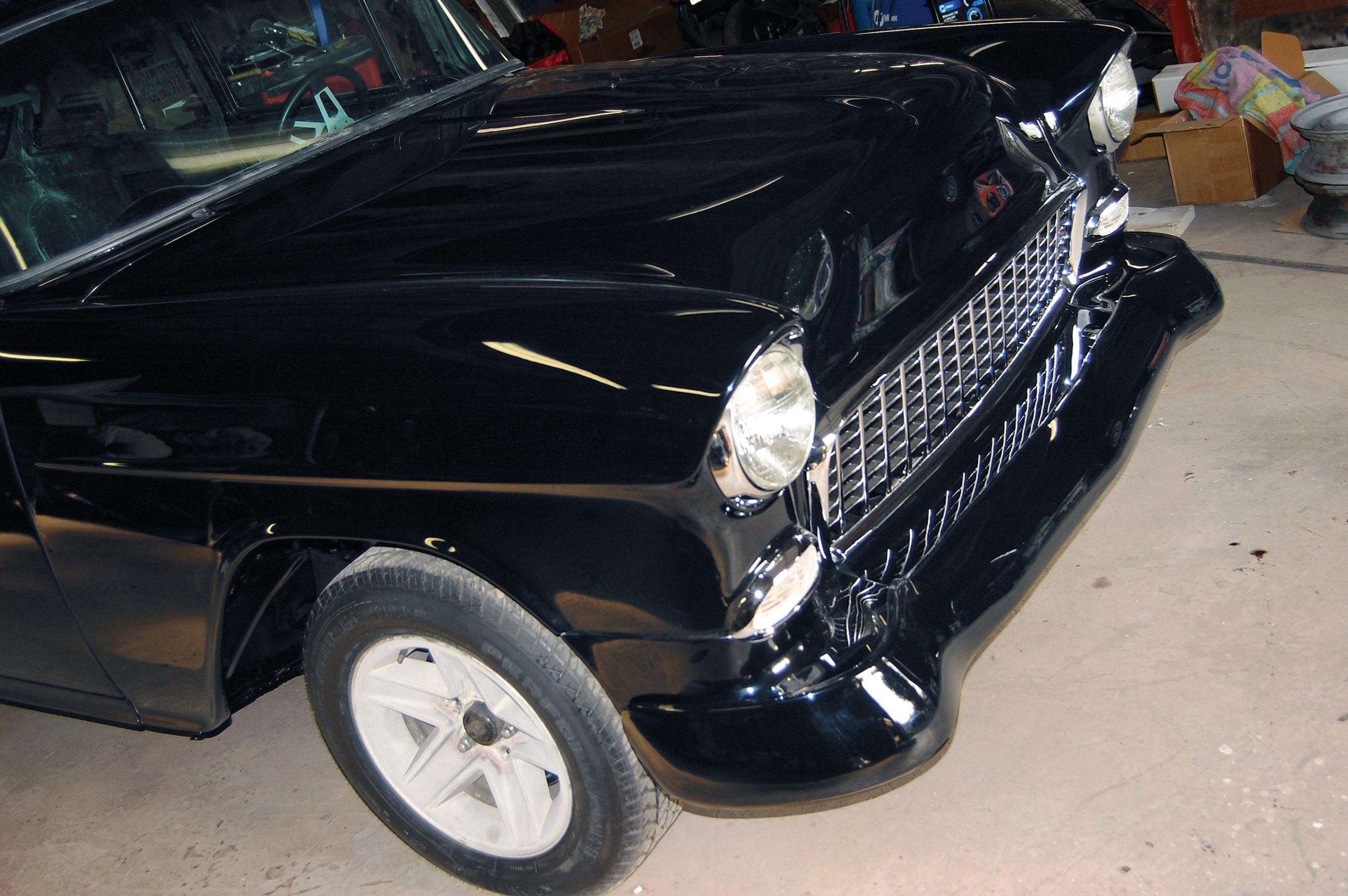
The body on Lankford’s Chevy is strictly business. There is no stainless trim whatsoever, which was the original intention for this model when it was introduced. This was Chevrolet’s cheapest model, featuring a totally plain body with utilitarian qualities throughout—to save both on the production cost and the retail price. This plain body wasn’t considered “cool” in its day, compared to the popular Bel Airs, but a V-8-powered 150 would outperform its more embellished siblings—with the same power—because of the significant weight differences.
The Legacy of the 150 Model
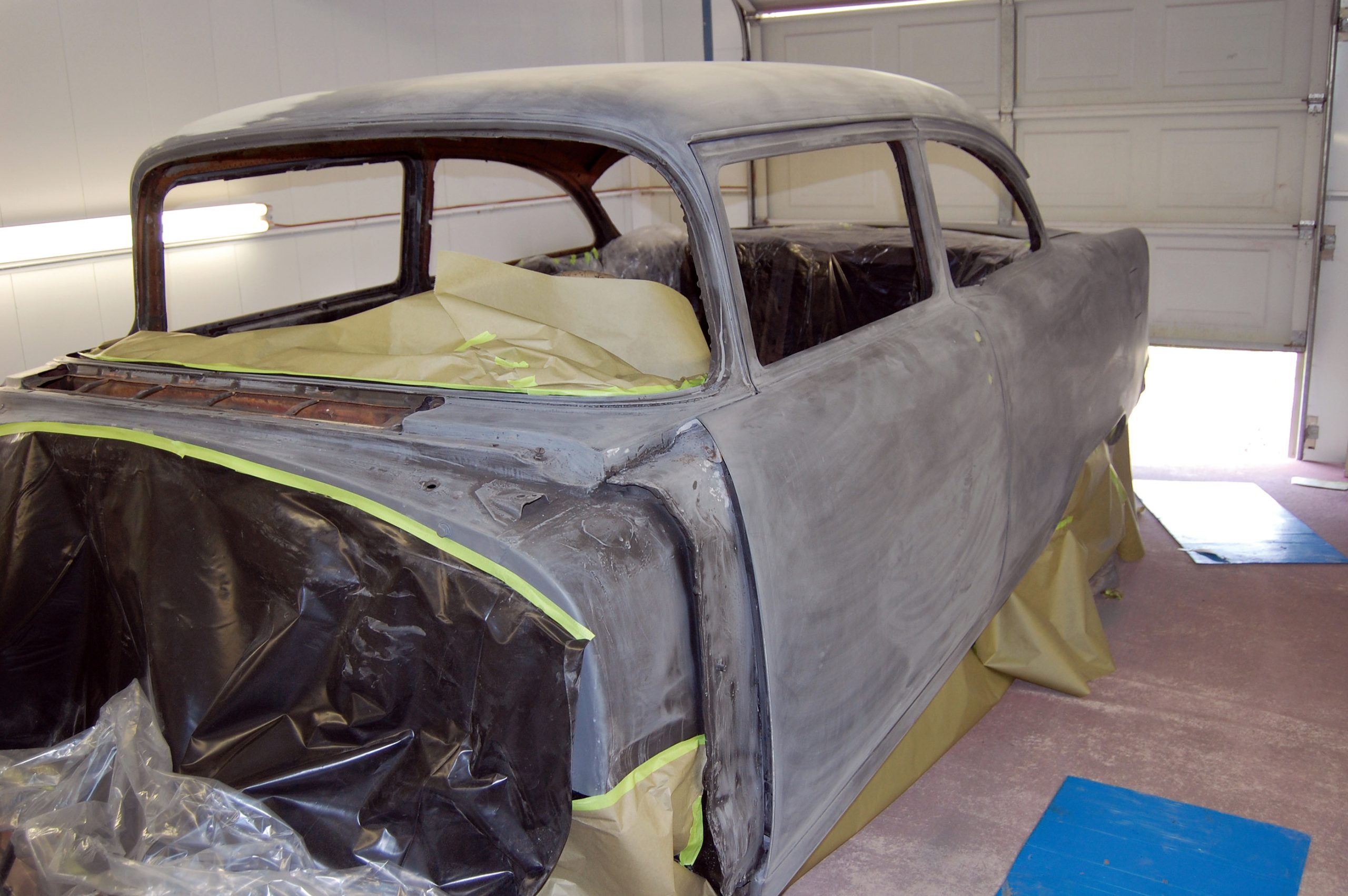
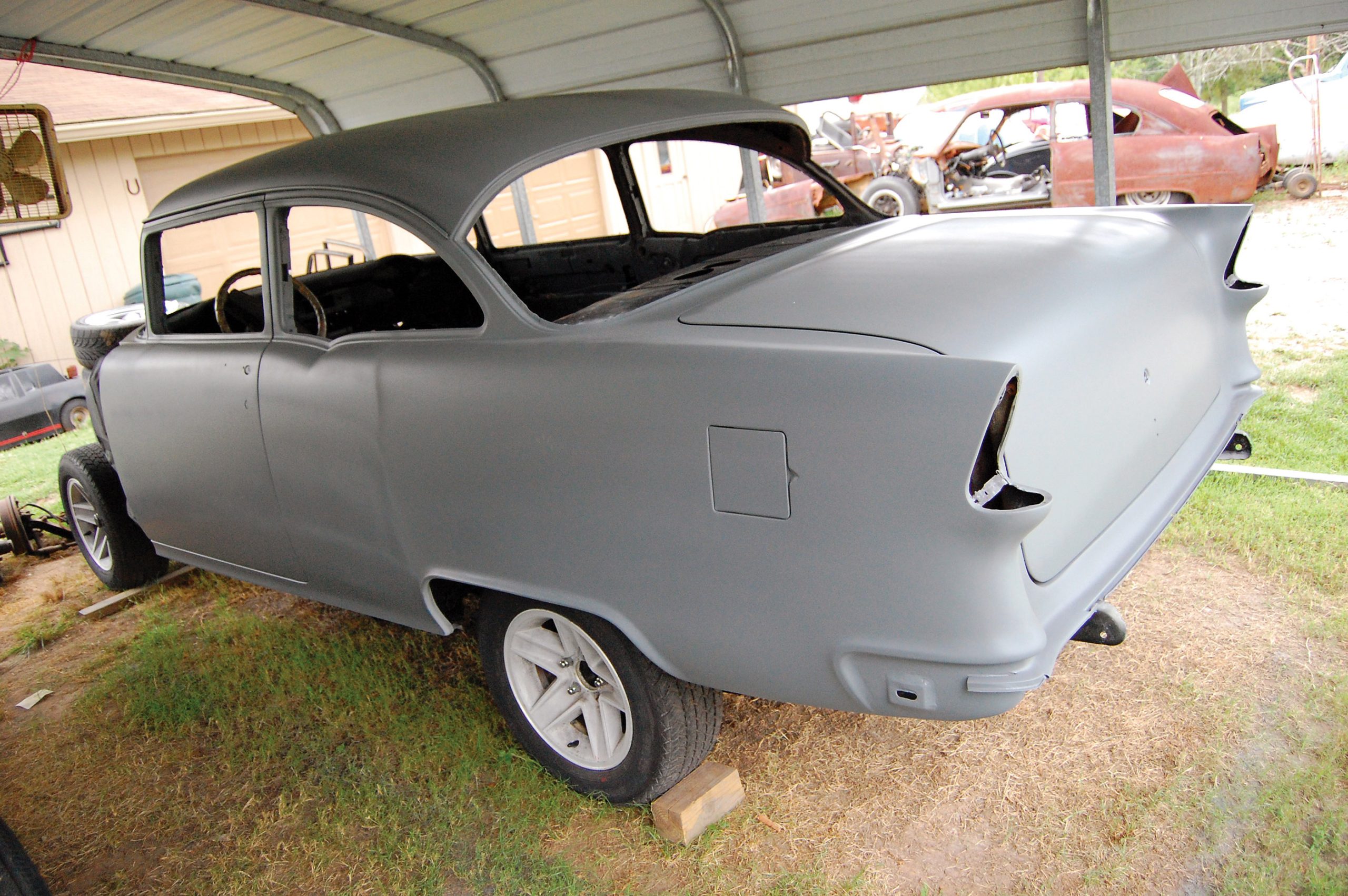
Always considered sleepers, even in their day, among rodders, the 150 two-door saw a lot of use at the dragstrips across America, as did the 210 two-door. The 150, however, used none of the interior appointments that added weight, and it was as stripped as a model could be, which was perfect for Lankford’s tastes. The example he found boasted rust-free quarter panels and doors, but the floor pans, trunk pans, and lower front fenders needed repair.
Restoration and Body Work
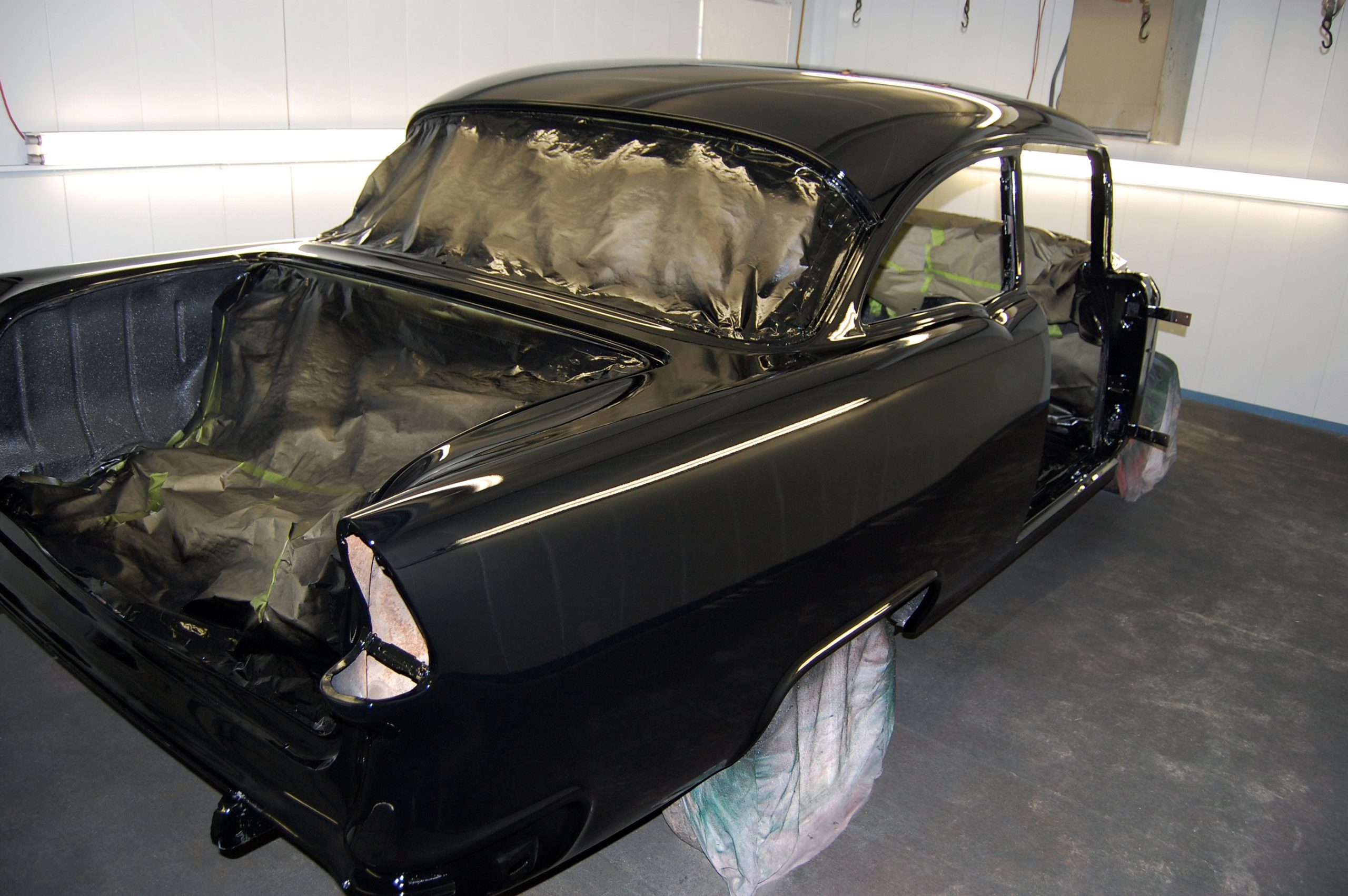
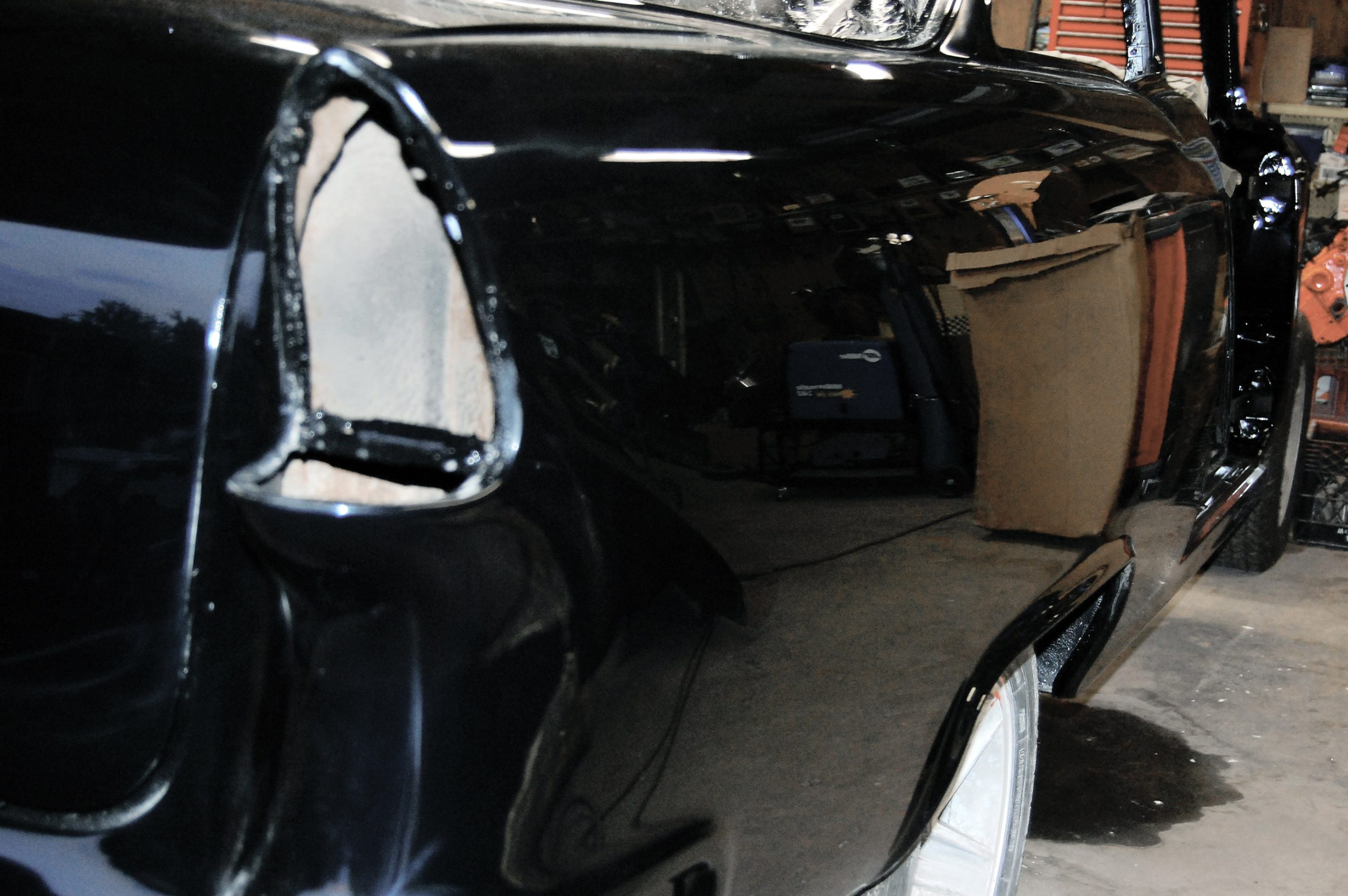
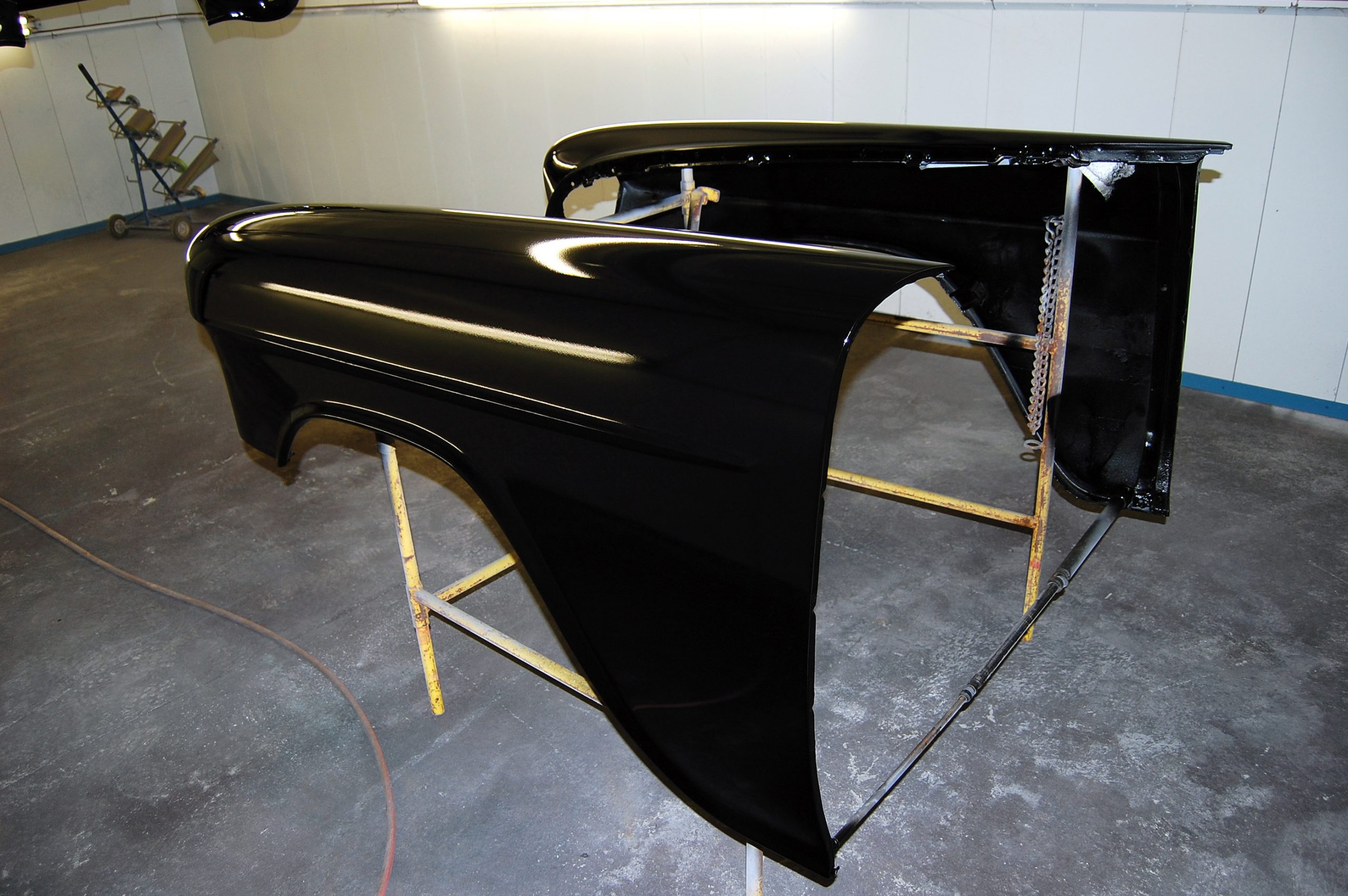
When the car arrived at Troy Byrd’s shop, it had already received some rust repair but needed lots of finesse and more work to prepare it for black paint. Straightening the panels required lots of work, but the two-man crew of Troy Byrd and Wally Smith tackled it quickly. Fast-forward a month and the primer dust had settled long enough for Wally Smith to blast several coats of DuPont Centari black acrylic enamel on the heavily massaged body. The single-stage paint is old school in terms of technology, but it’s perfect for the mile-deep finish the crew was striving for, and it looked even better when sanded and buffed. Byrd handled the color-sanding and buffing duties, and the pair spent hours making sure every aspect of the ’55 had the same reflective finish.
A Simple, Classic Interior
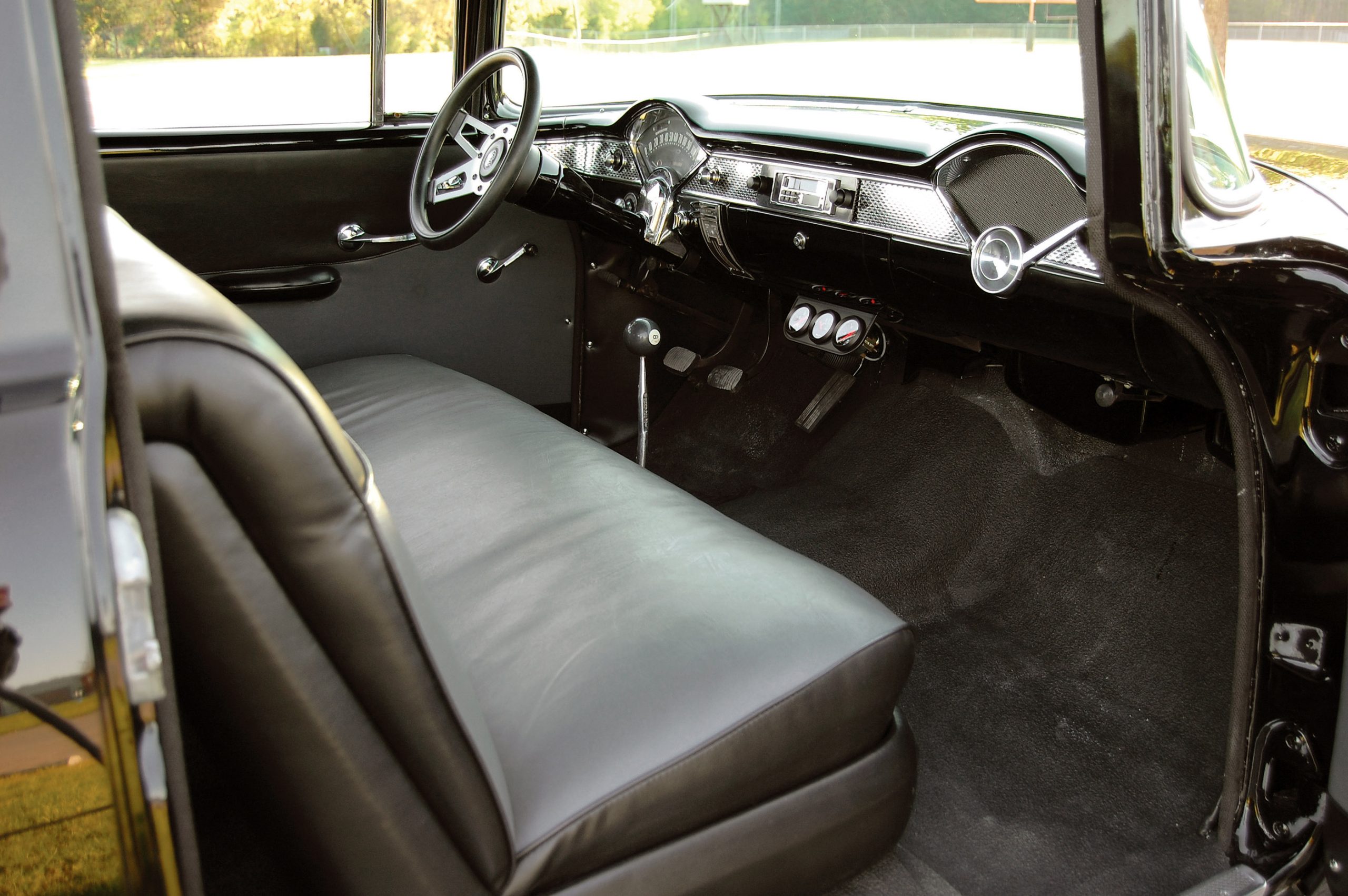
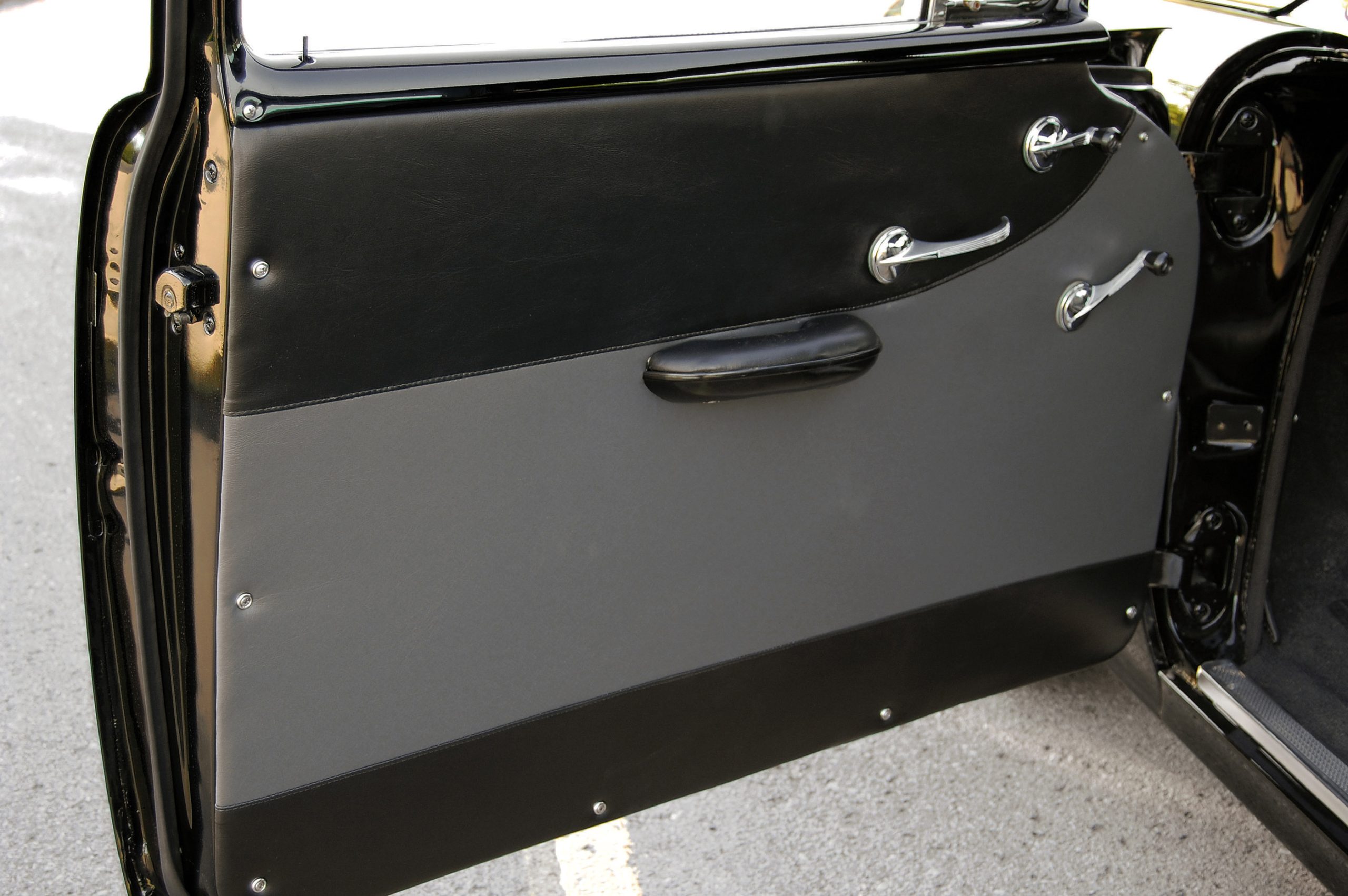
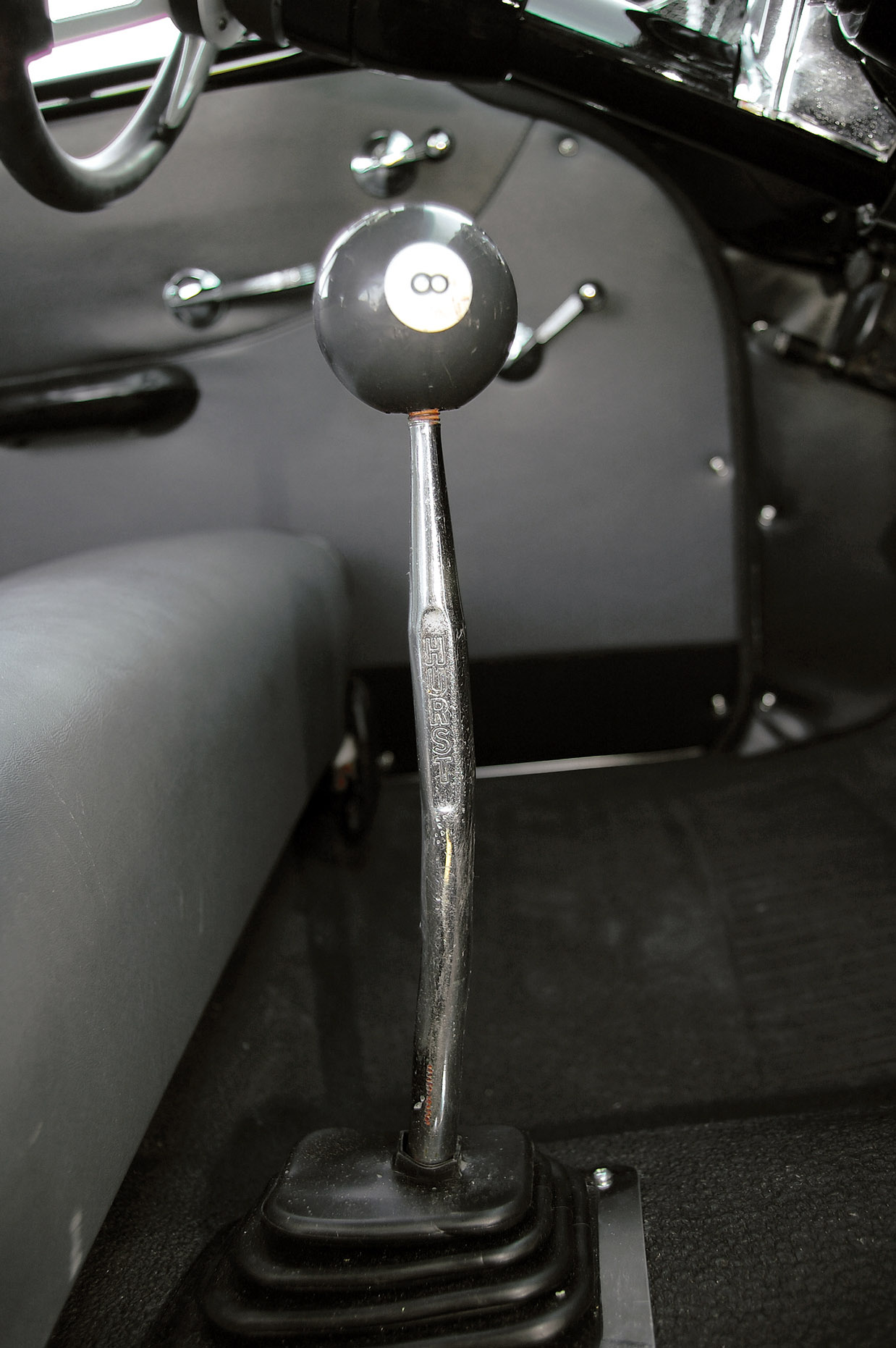
Inside Lankford’s Chevy is a super-simple interior, which consists of stock seating wrapped in black and gray vinyl. The entire theme of the car was to build something an enthusiast would have built on a budget back in the ’60s, and the interior reflects just such an approach. A Grant steering wheel tops it off, as does a Hurst shifter for the four-speed, and it’s just what you would expect from a car of that era.
The Perfect Sleeper
In all, Lankford’s Chevy is as simple and clean as you can get, but it packs a serious punch in traditional hot rod fashion. Black-on-black is controversial, as some folks love bright colors and lots of gleaming chrome, but the all-black treatment is a perfect fit for the sleeper look. Lankford can thank Troy Byrd for talking him out of the gasser theme, and for saving this pristine example of the day, but he still has plans to build a gasser, a true driver he can thrash on and something he’s not afraid to tear up. For now, however, he’s more than content with how nicely this plain and simple 150 two-door post was done, and he enjoys shocking the unexpected with its surprising power.
Editor’s Note: I was honored to photograph this ’55 Chevy and write the story behind the car, because the man who inspired me to become a car guy built it. Troy Byrd is my best friend, and he builds a killer car, but more important, he is my dad. Not everyone can grow up in such cool car surroundings, so I’m lucky in a variety of ways. And now that I, too, make my living surrounded by restored and modified cars, I have him to thank for that inspiration. He’s built a number of cool machines over the years, but Ernie Lankford’s ’55 is the first to be featured in a magazine, and it is one of my personal favorites. —T. Byrd