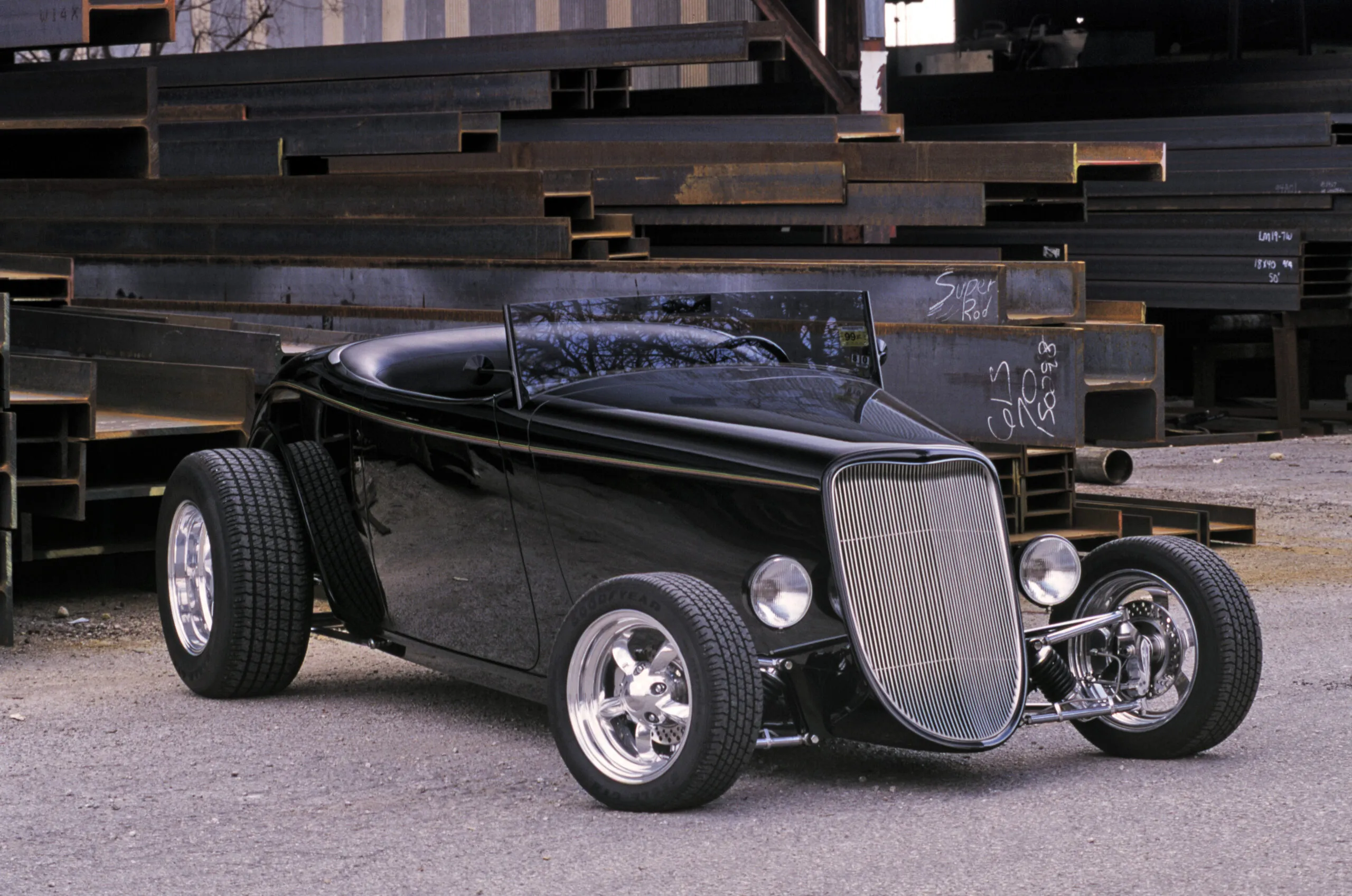
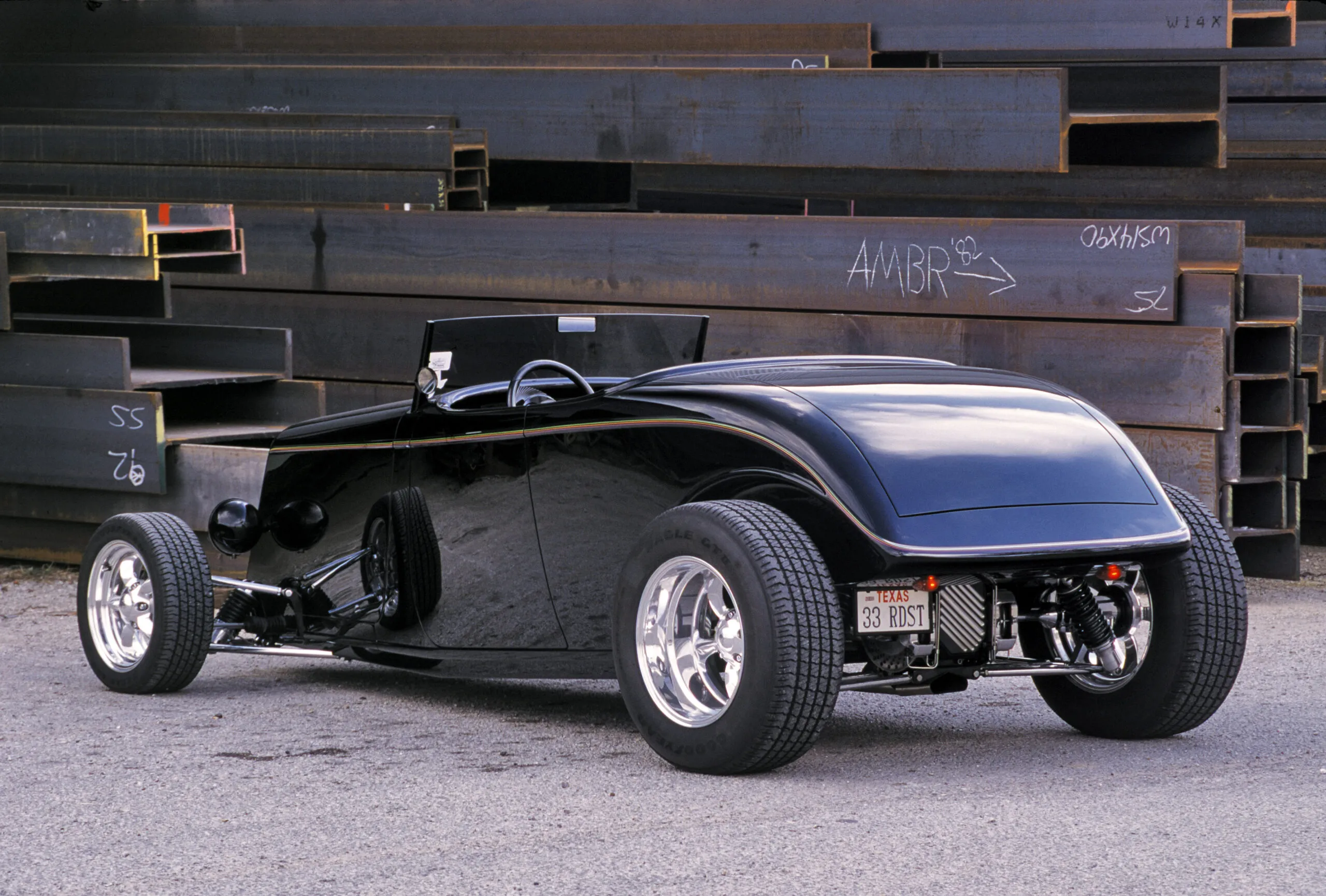
When Jamie Musselman first conceived this beautiful ’33 Ford Roadster in 1982, it’s unlikely he realized the impact it would have then or in the future.
Forty-four years have passed since Musselman teamed with Boyd Coddington in creating one of the most amazing rods of its day, an excetpional car that took its place in history as the Oakland Roadster Show‘s “America’s Most Beautiful Roadster” in 1982. This was also due, in part, to the efforts of many top fabricators including Lil’ John Buttera, Dan Fink, Steve Davis, Thom Taylor who designed the car.
A Boyd Coddington Collaboration in Hot Rod History
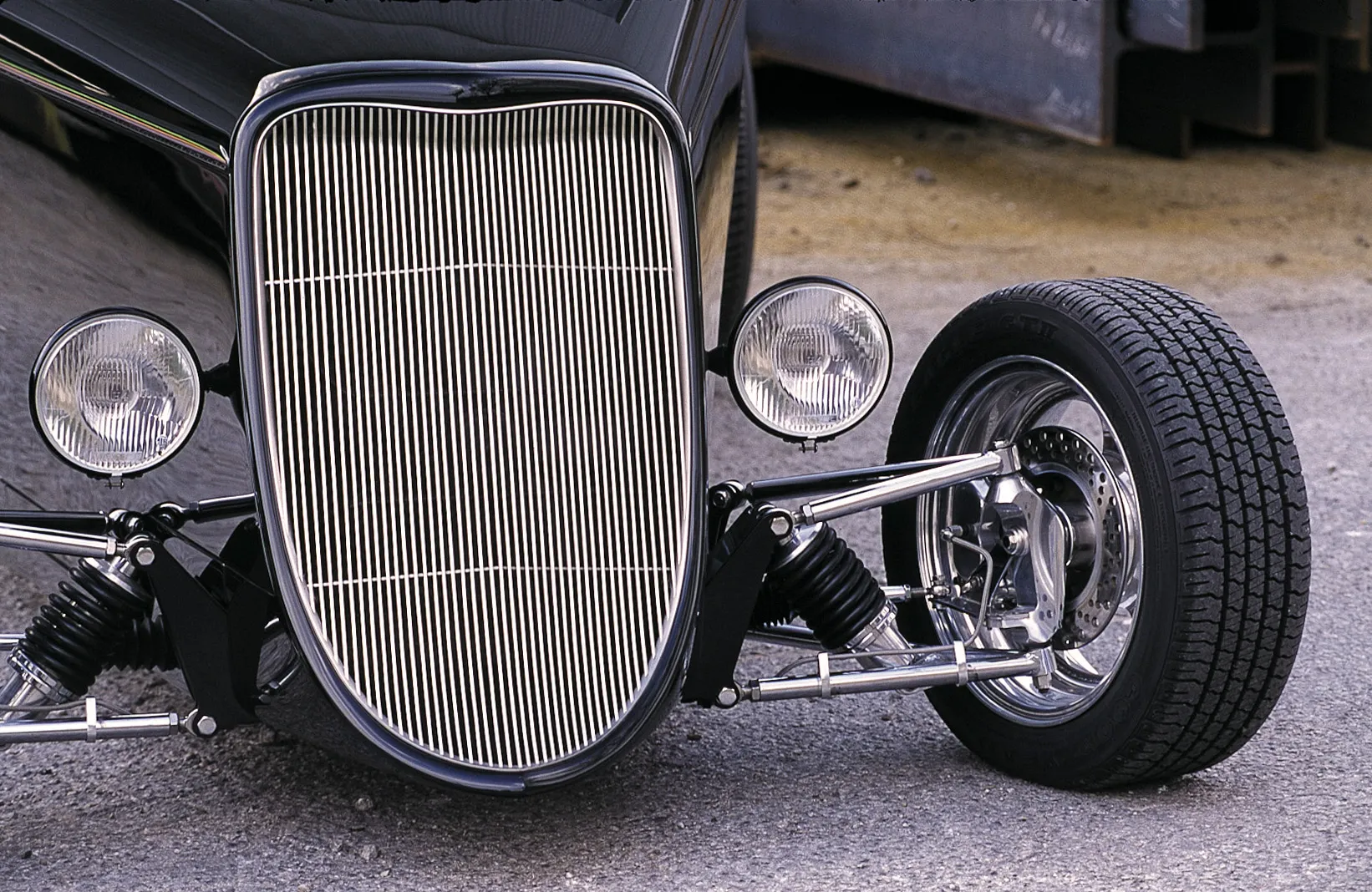
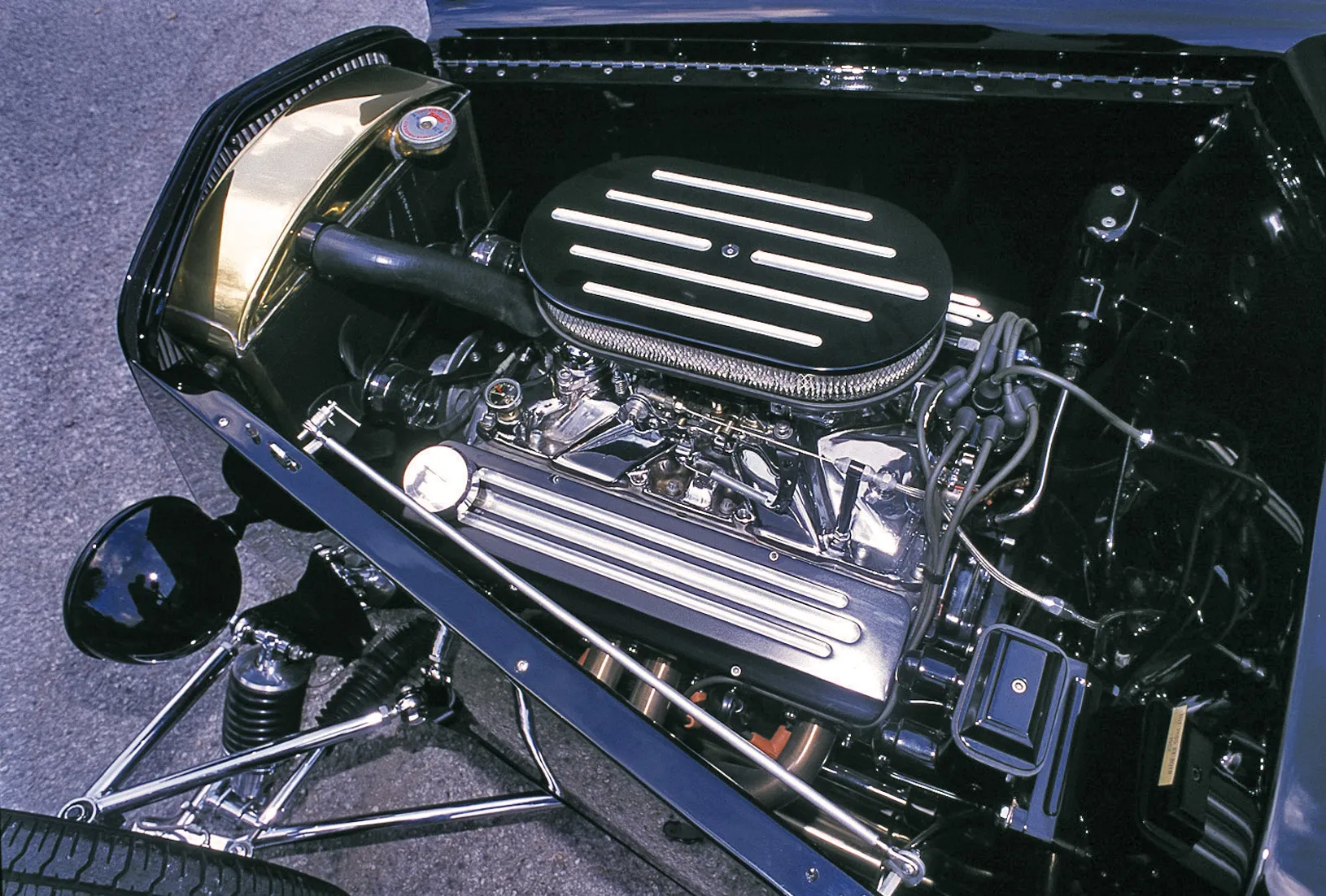
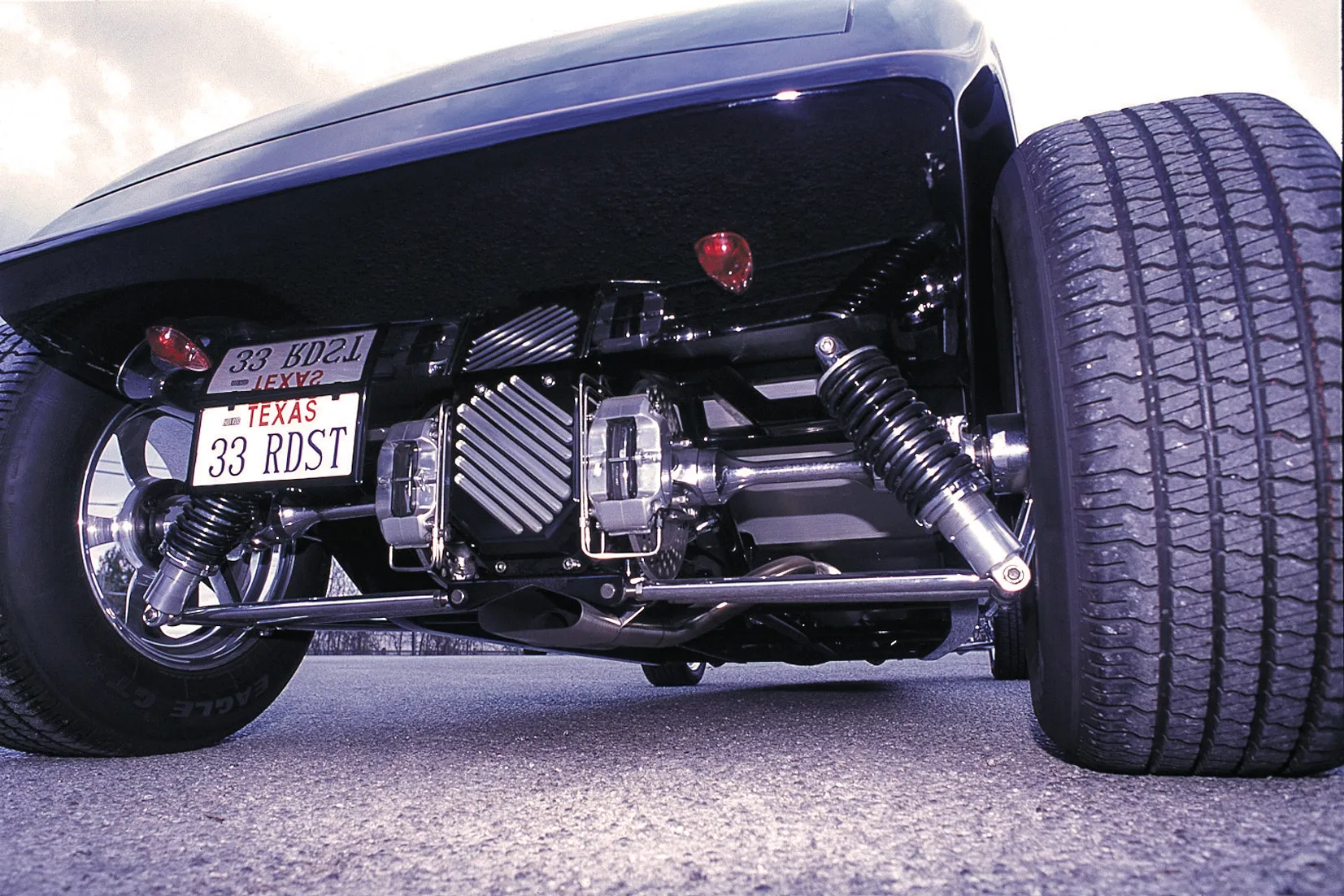
At the time, its combination of leading-edge components and sleek design elements set a new standard in the hot rodding world, one that found its way to many other cars in the years that followed. From the fully independent suspension incorporating billet aluminum components, rack-and-pinion steering, and cross-drilled JFZ disc brakes to the small-block Chevy adorned with black anodized, milled aluminum trim and alloy heads, and a Doug Nash five-speed, this car really captured its share of attention. These components may seem commonplace today, but it was pretty cool stuff when this ’33 Ford Roadster stood alone.
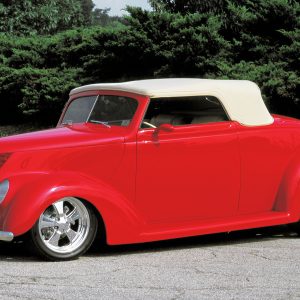
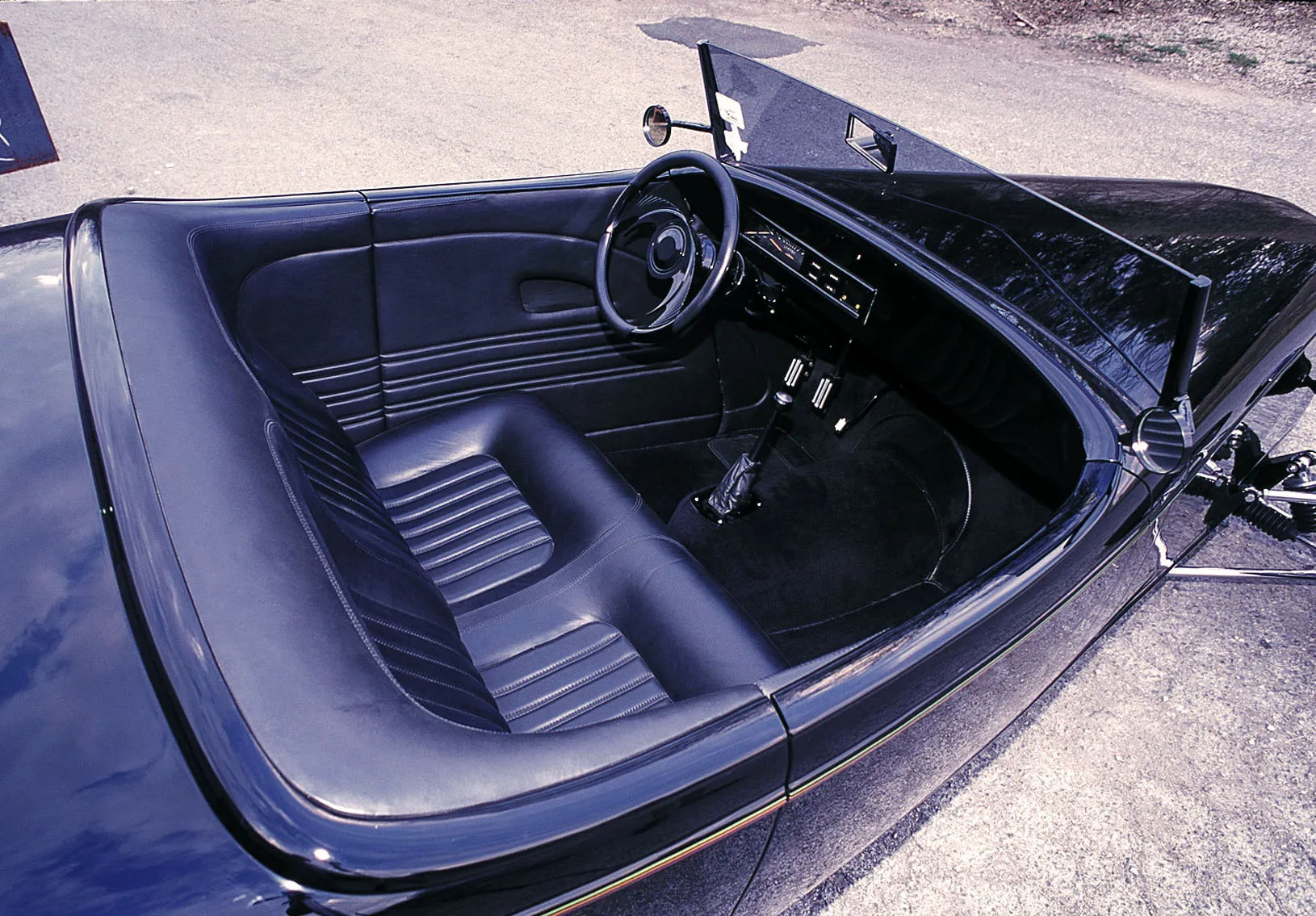
While Musselman envisioned this car in black from the beginning, he knew that if it were going to find its way into the various rodding publications, another choice would have to be made. As it turned out, red was the color of choice with black leather inside. It became the darling of the newsstands before long. People went wild over its special blend of subtle detail and absolute simplicity; items like the tiny taillights tucked beneath the rear pan and the milled gauge cluster brought it all together.
From Red to Back in Black
Many miles have been logged in this ’33 Ford Roadster over the past few decades, and when it came time to freshen this sleek ride, Musselman decided to follow-up on his initial plan of painting the car black. For this he again looked to Boyd Coddington who wiped away the effects of time before his team applied the deeply refelctive coating. He also fitted four corners with a set of B. Coddington wheels and fat Goodyear rubber for a great new look, while a Jim Inglese-modified Holley carburetor replaced the Webers.
Interestingly, this fine machine still stands out with a timeless style that is as fresh today as it was when the term “high-tech” was applied to few other cars. As one of the cars that defined a new generation of super rods, this ’33 Ford Roadster is now the rule instead of the exception of next-century rodding.