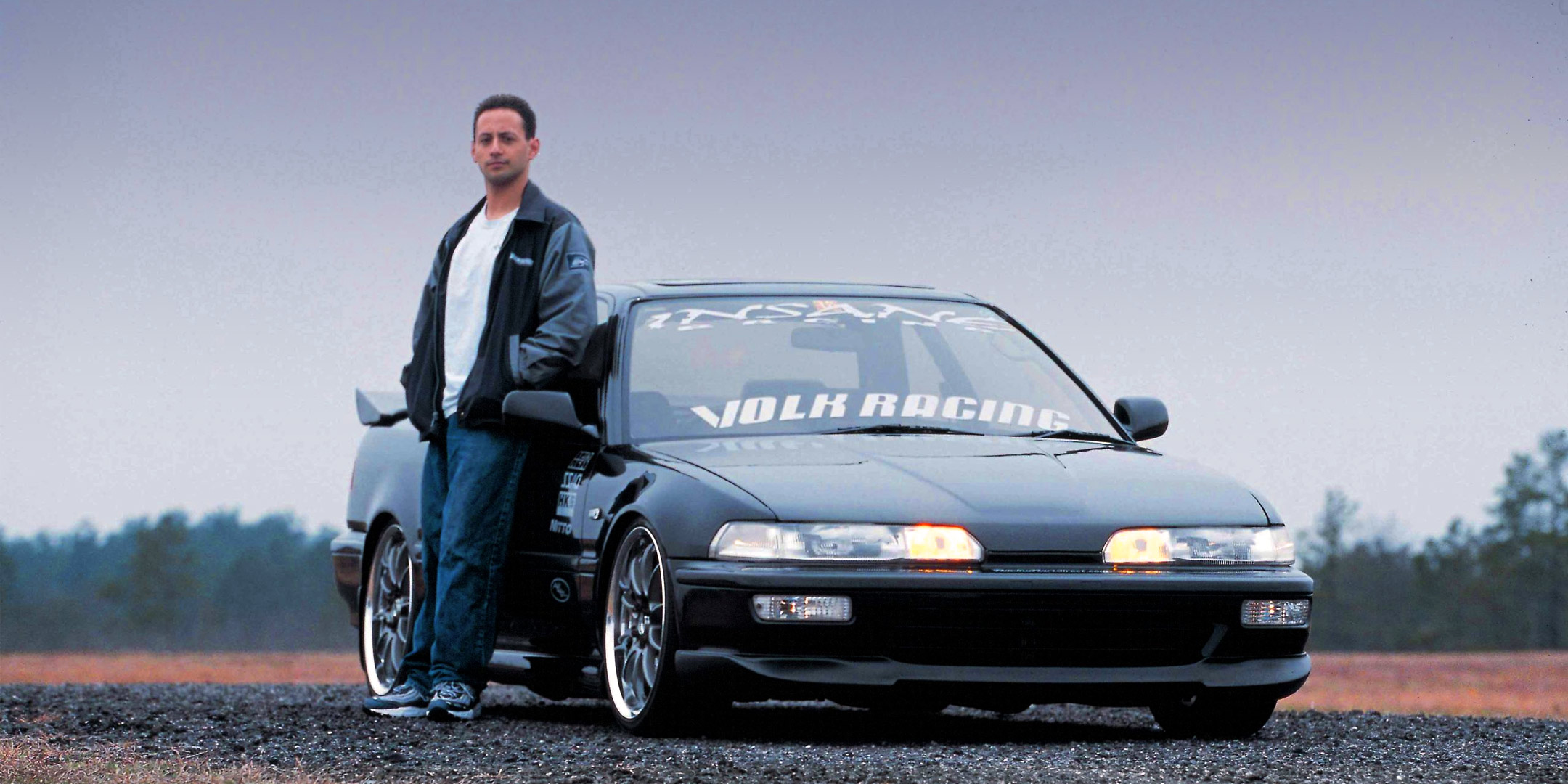
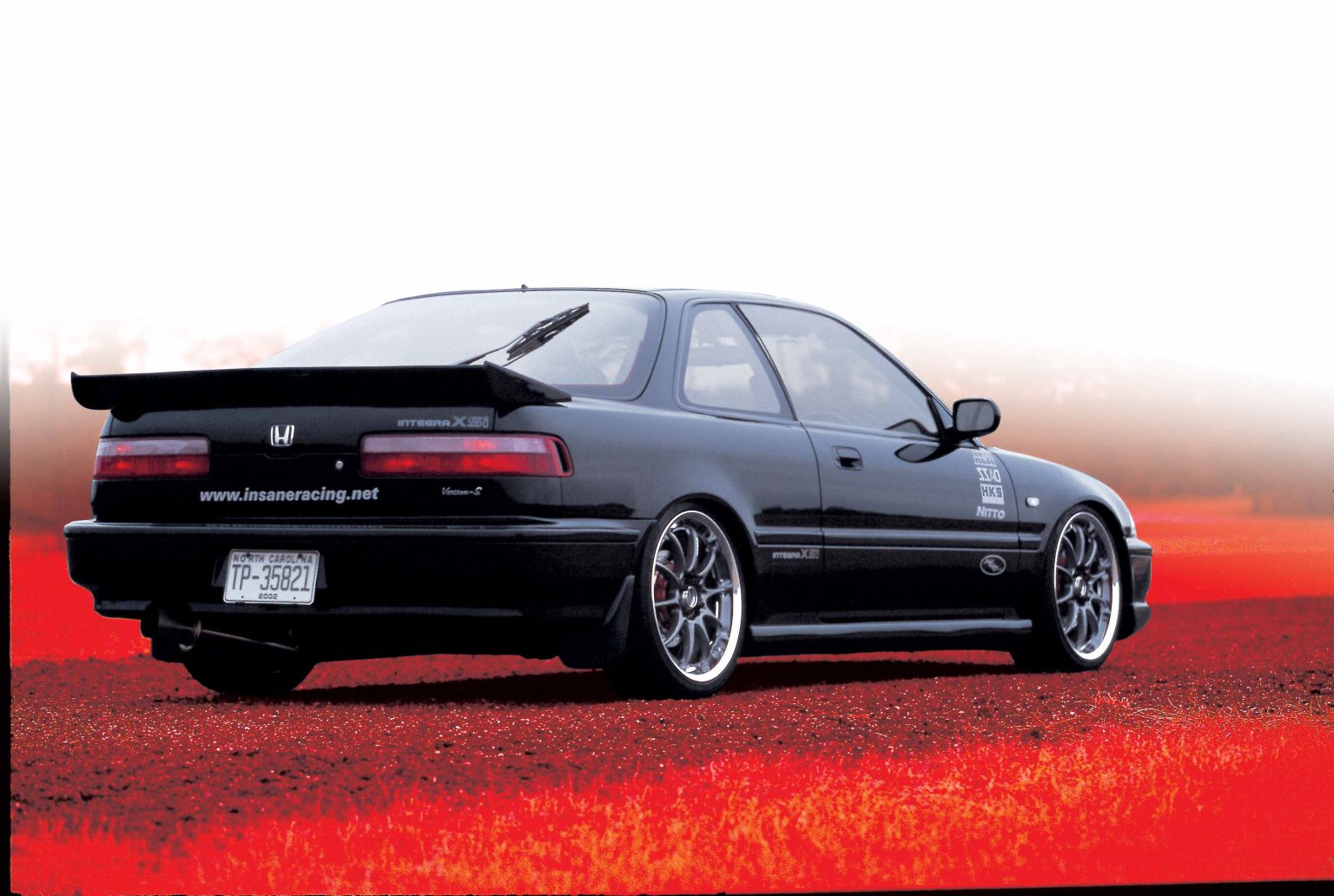
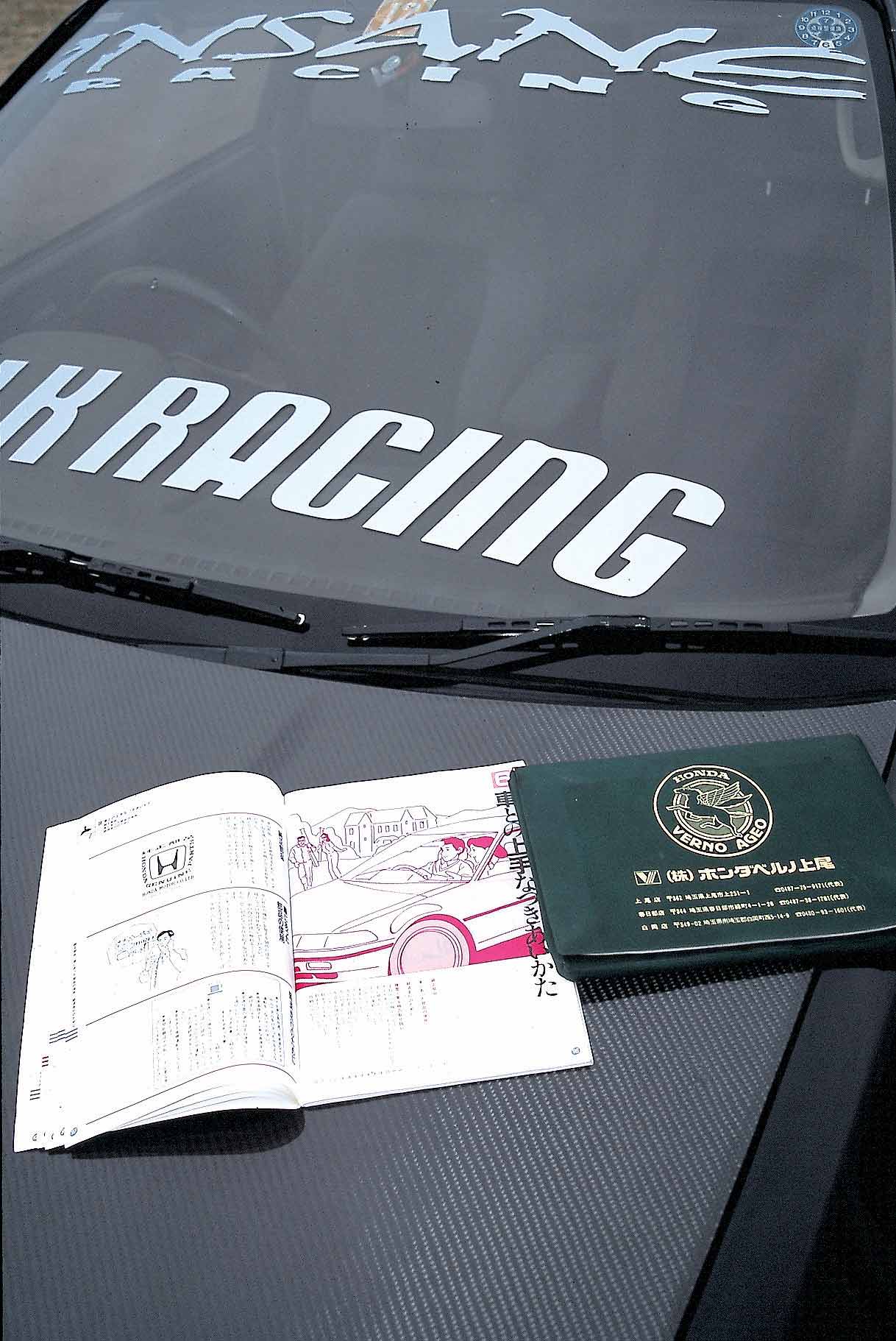
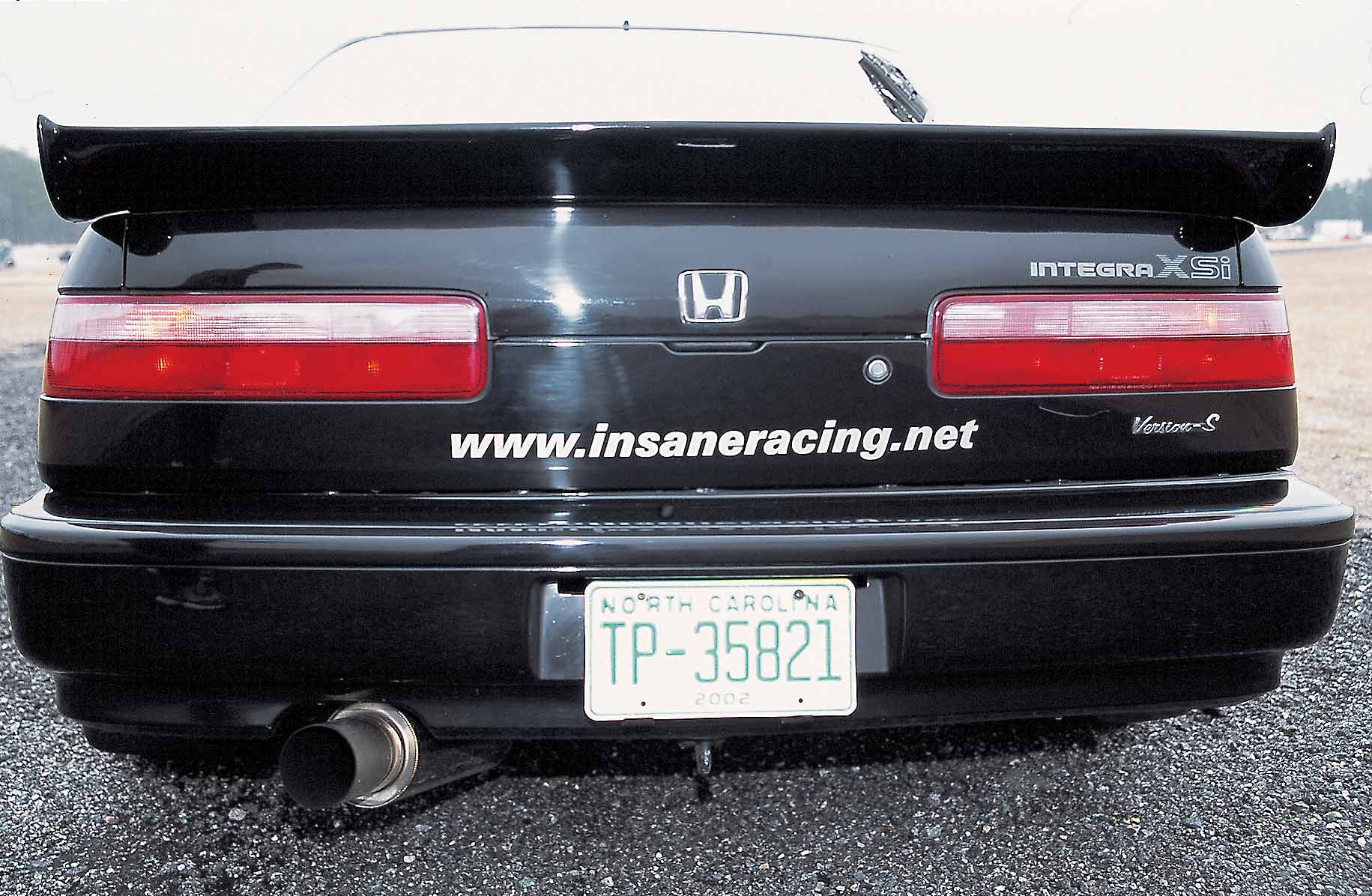
Keeping on the subject of form following function, Bauer had his DC2 painted Nissan Xterra Camoflauge Green Effect while it was totally stripped down in shell form—meaning every last corner of this DC2 was painted to match, both inside and out. Except, of course, the roof skin, which was sprayed black—but you get the idea. After the shell was painted, Bauer added a ViS carbon hood that was matched to the rear ViS carbon hatch, which flows perfectly with the black roof skin. Bauer also added a JDM ITR front clip including headlights, fenders, bumper with lip, and radiator support. These materials all arrived courtesy of a ’98 spec JDM Integra Type-R front half cut clip. Incidentally, this is where he got the rest of the accessories needed to convert this DC2 to the flip side.
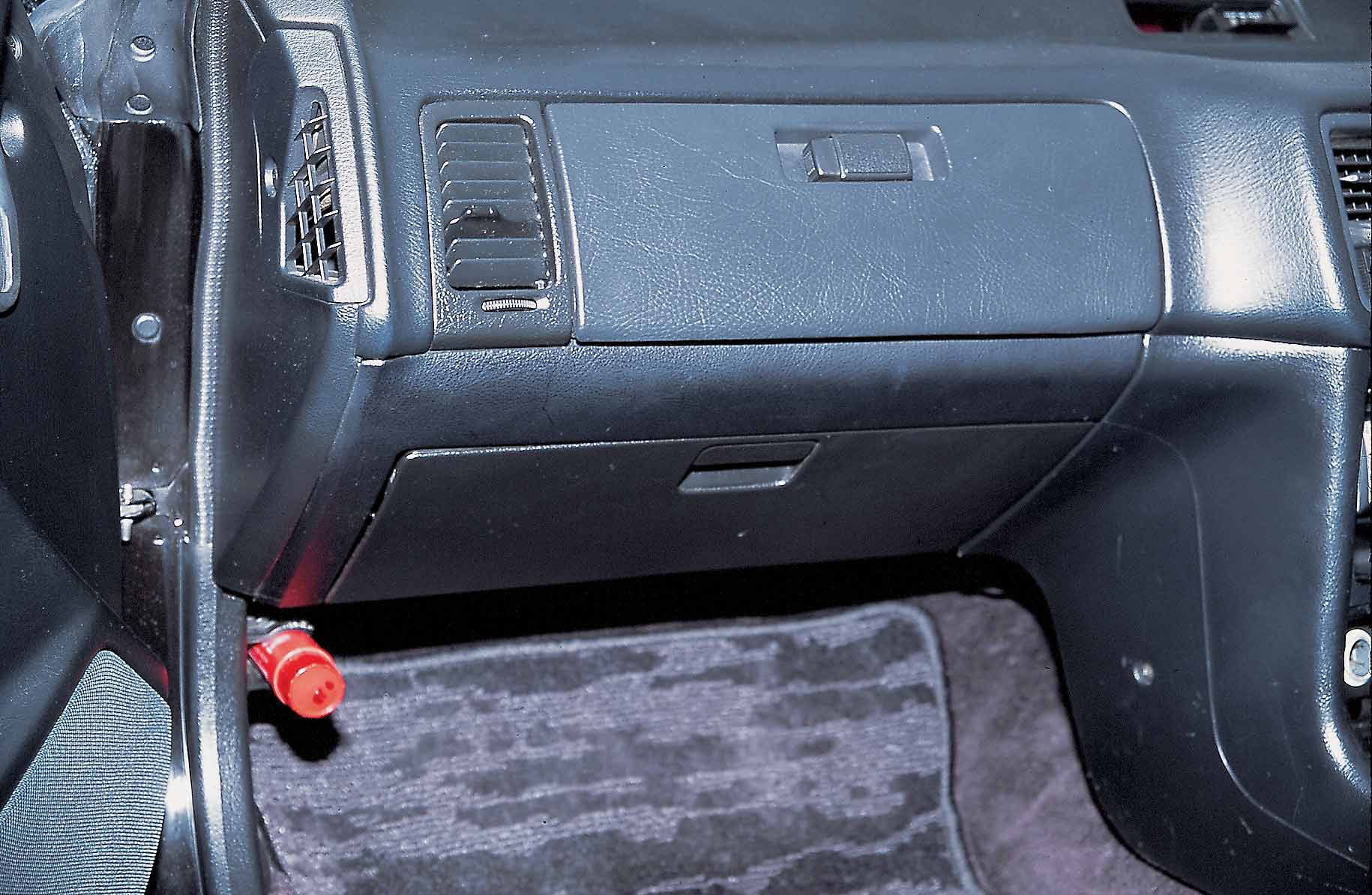
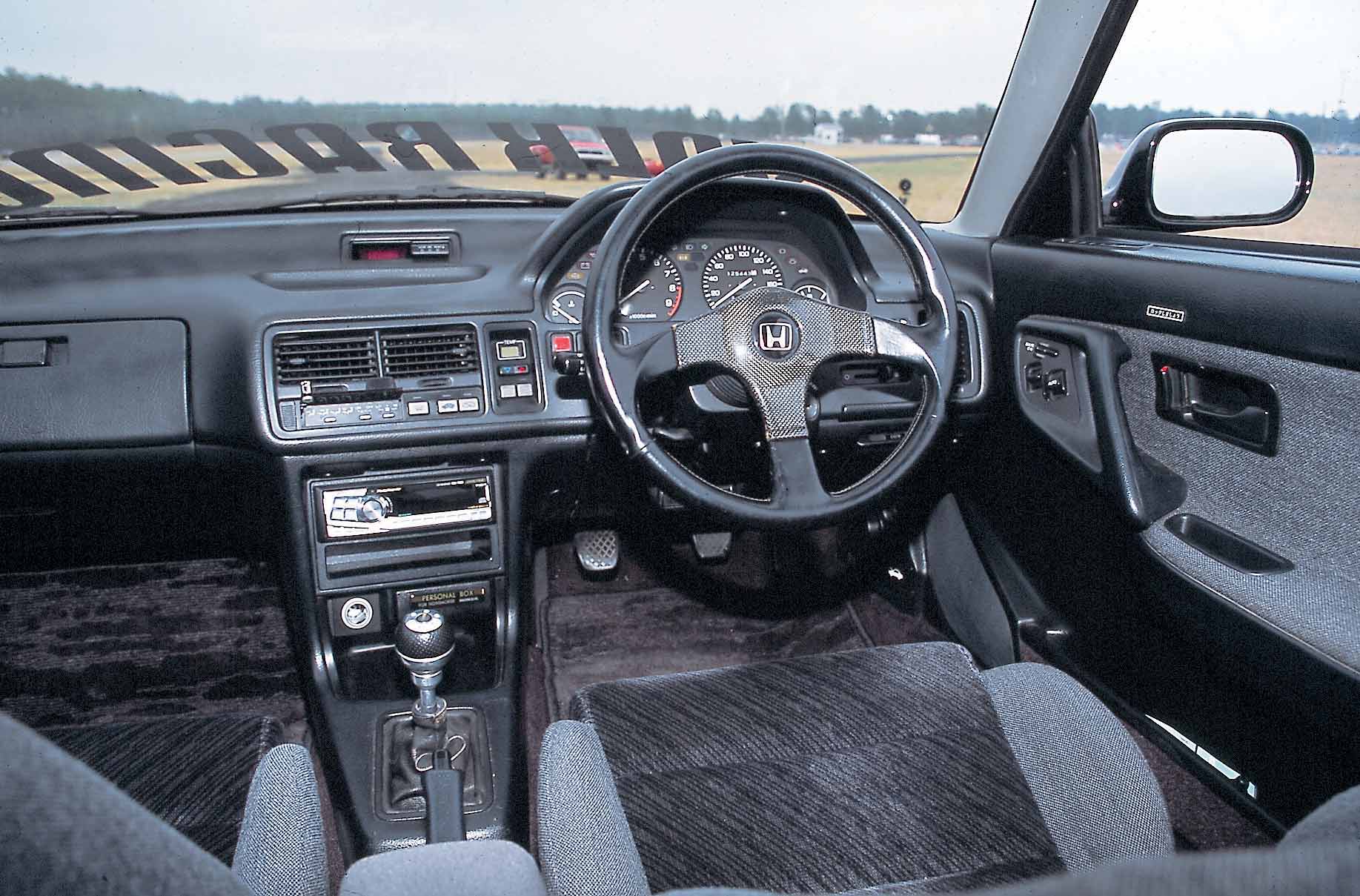
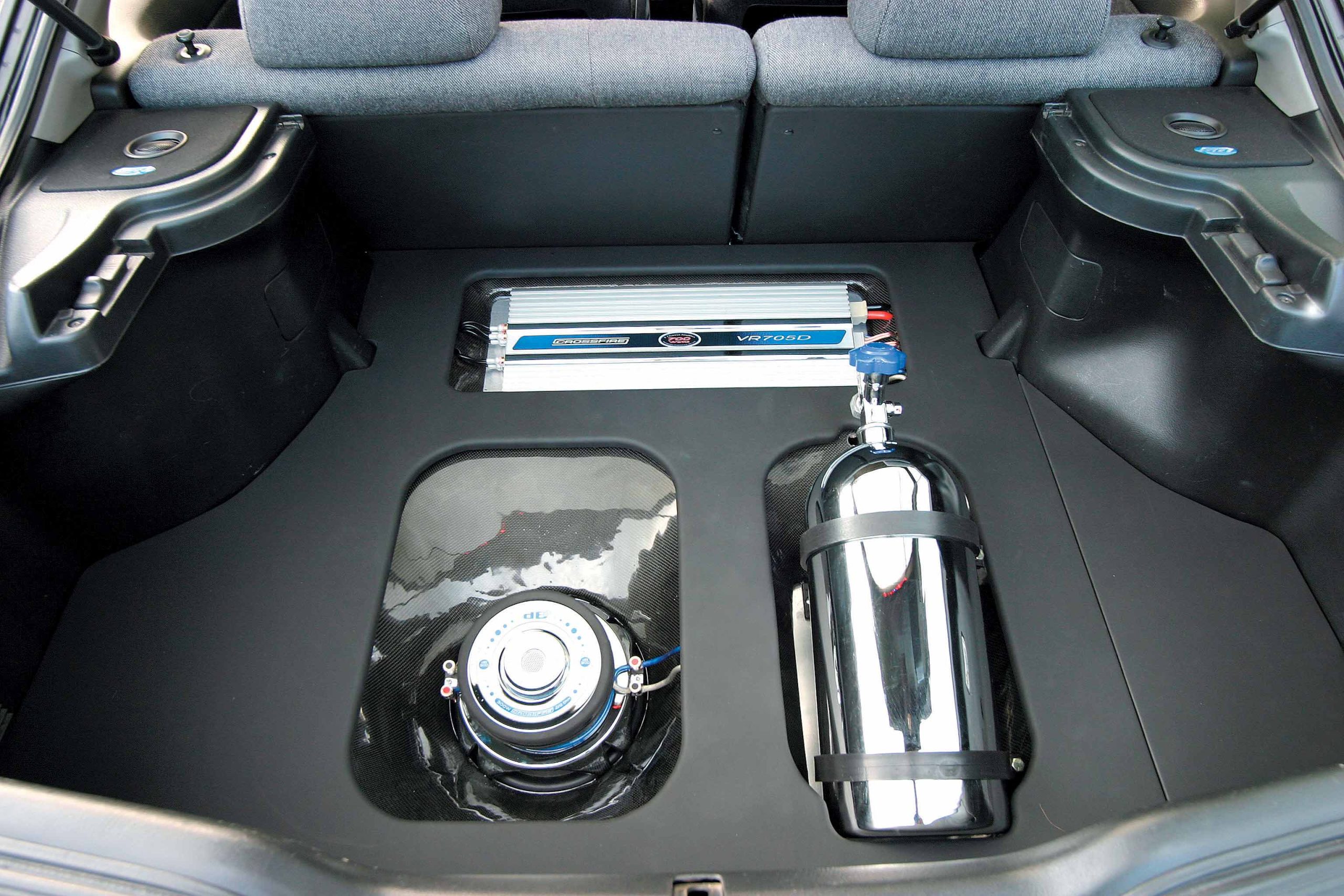
Stealing all of the attention from any other interior accessory that was added to this DC2 is the fact that the ’97 spec JDM ITR steering wheel is on the right side of the vehicle. The clip that Bauer received had all its accessories including dashboard, gauge cluster, clock block plate, and full carbon climate controls transferred over to his already stripped bare shell. Keeping occupants in driving position is a set of Sparco Torino reclineable bucket seats, accompanied by a set of Sparco four-point racing harnesses. For added safety, and in the event of a roll over, a four-point roll bar was included in the assembly of this DC2. In-car entertainment is handled by an Alpine CTA-1502 head unit that powers a set of Boston Acoustic midrange speakers. The painted color-matched floors are kept from getting dirty and gritty by a rare set of JDM Honda access RHD floor mats. In the trunk, a fully functional Triangle Engineering 10-gallon formed fuel cell holds on to fuel reserves while Auto Meter units monitor fuel level and pressure gauge.
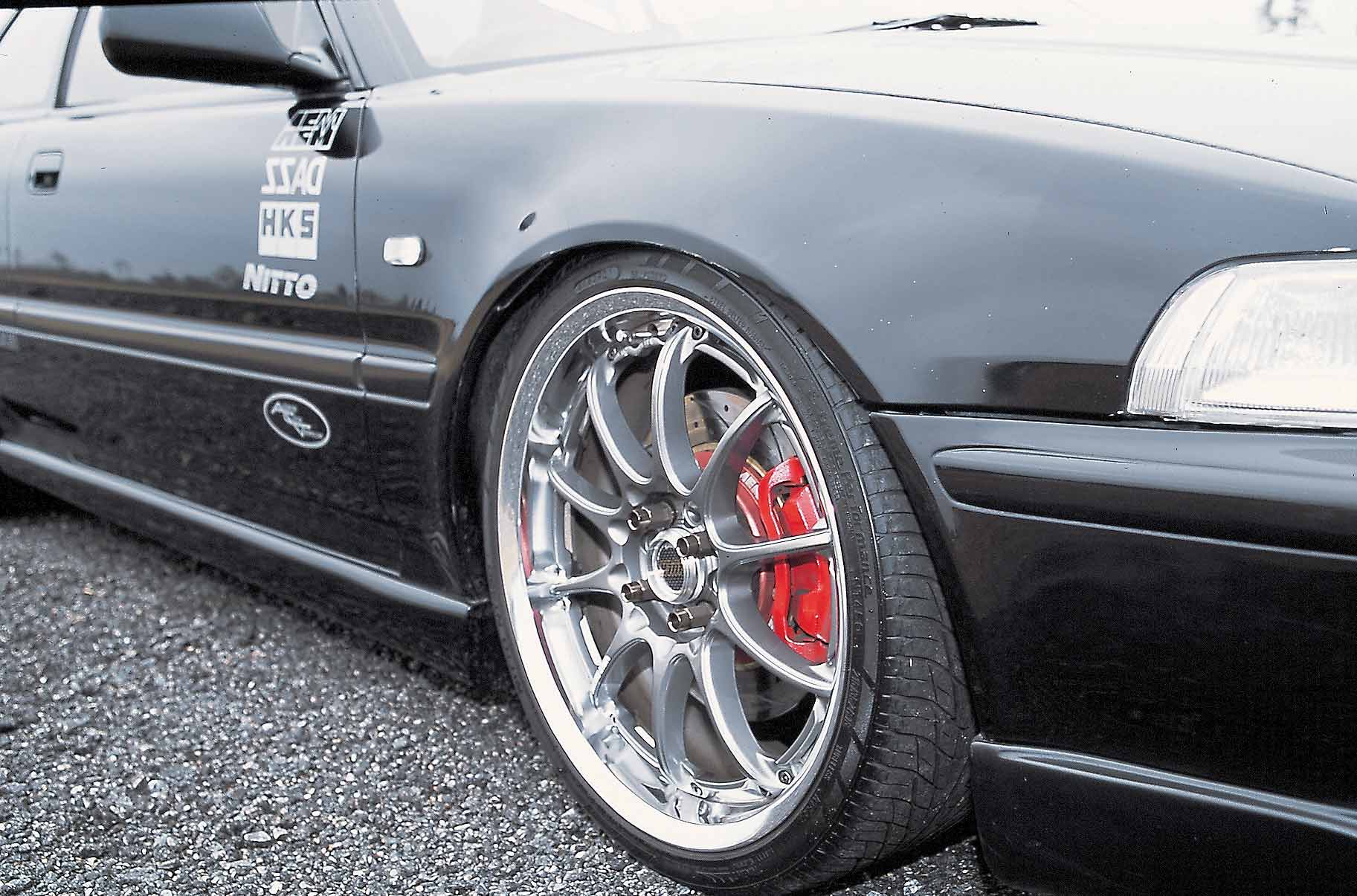
So let’s get into what’s holding this thing from scraping the ground. Ride height and quality are taken care of by A’PEXi World Sport coilovers, paired to A’PEXi pillowball mounts. Energy Suspension bushings rid the ride of any excess body roll with their reinforced bushings, which work side-by-side with a JDM ITR front upper strut bar and JDM ITR front sway bar. Bauer went shopping for a set of 5×114.5 16×7-inch Ray’s Gramlight wheels, wrapped in Falken Azenis rubber. Due to the JDM ITR five-lug conversion complete with Brembo cross-drilled and slotted rotors and stainless brake lines, the car is assured of the proper stopping power.
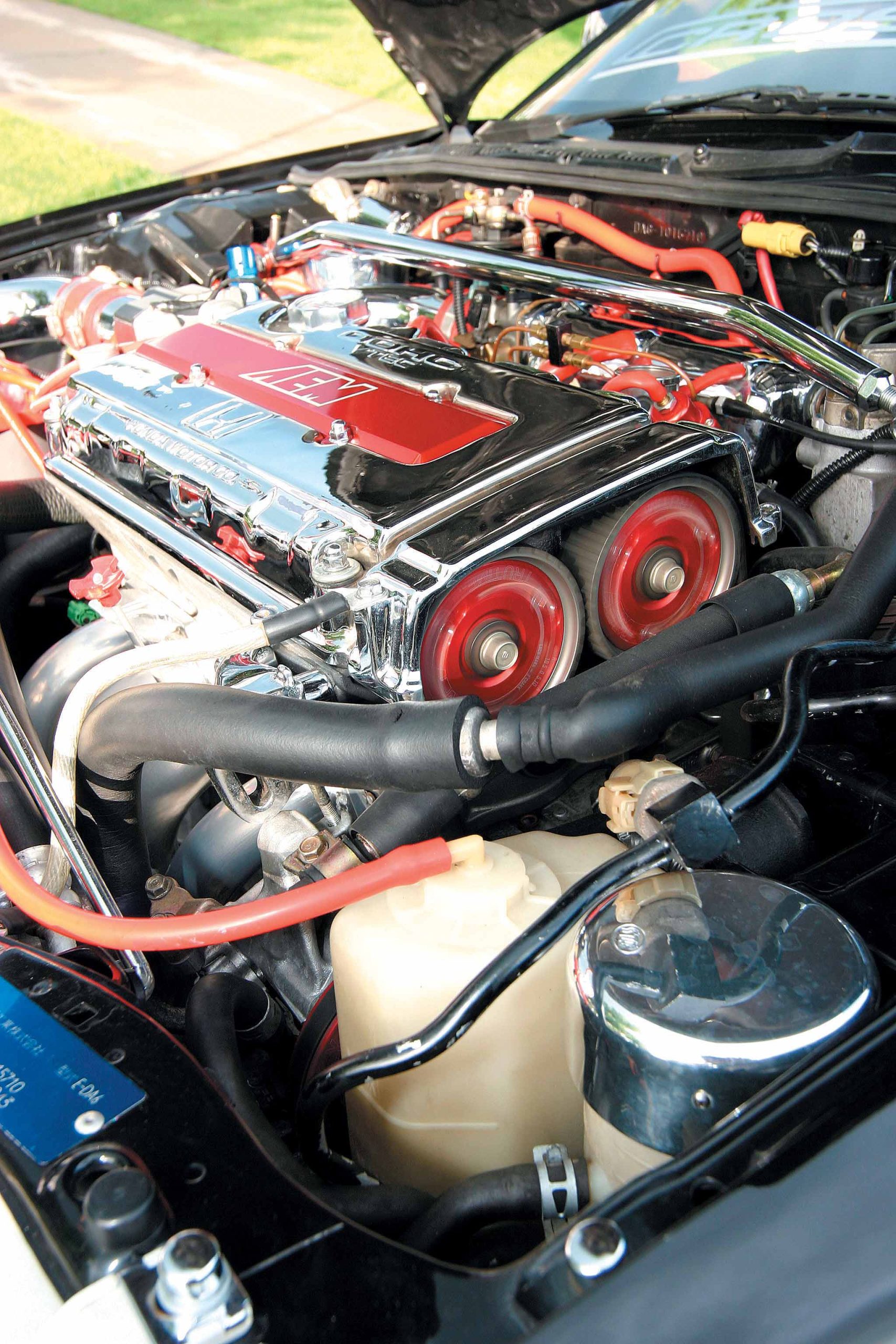
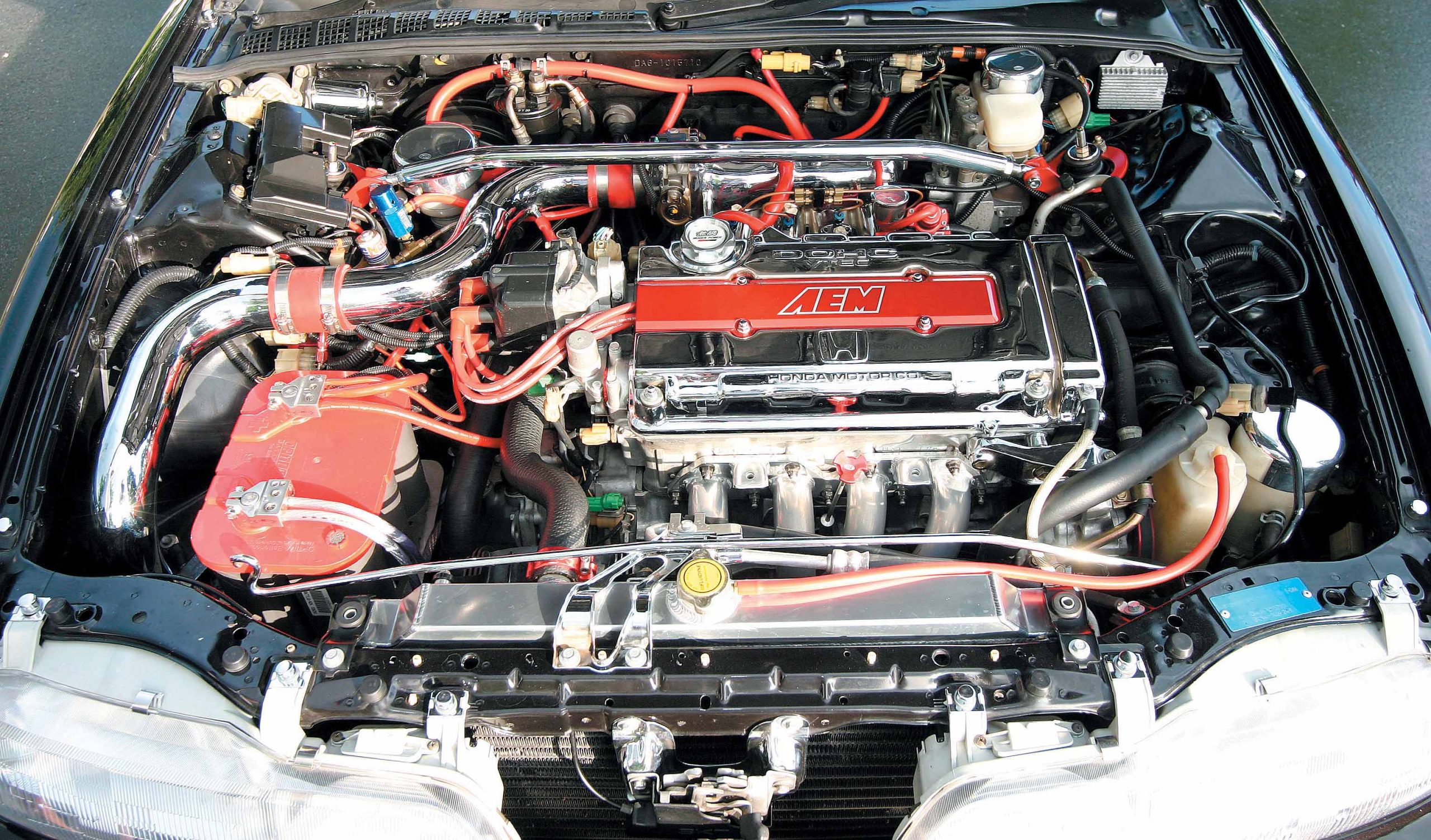
We would find it funny to learn that Bauer didn’t have something under the hood to back up the rest of the car. In this case, we were not disappointed, as Bauer points with a smile on his face at the 210hp JDM B18C ITR engine swap. Staying true to the form-follows-function theme, Bauer relieved the engine of the power steering and air conditioning in order to shave some weight, and get rid of some of the clutter in the engine compartment. Next, he made sure that the motor stayed in place under heavy shifting with a set of Energy Suspension motor mount bushings. Fuel is fed to this JDM beast through an external fuel pump that sucks fuel from the fuel cell mounted in the trunk. This runs straight to an Earl’s fuel filter, then branches off to an AEM fuel rail, accompanied by a matching pressure regulator and gauge.
A JDM ITR 4-to-1 header works in collaboration with a Comptech cat-back exhaust to get rid of spent gasses. A carbon spark plug cover accentuates the radiant JDM ITR valve cover. This B18C is kept at the proper temperatures due to a set of Flex-a-Lite electric fans and Samco’s sport radiator hoses. Getting the wheels to spin is a JDM ITR transmission, with a factory limited slip winding out the 4.785 gear ratio. Between the transmission engine, you will find an ACT 6-puck clutch disk with an Extreme pressure plate. Finally a JDM ITR flywheel takes care of the quick revs.
Hopefully all this wasn’t too much for you guys to take in, considering the huge undertaking on this car. Bauer’s ride most definitely sticks out from a crowded field, and now you know the obvious reasons why.